


In the 1930’s, a white man by the name of Grey Owl, living in the Canadian wilderness, made his living trapping. He married an Iroquois woman named Anahareo. He had no remorse about his profession until one day he killed a mother beaver leaving two young kits. As he was about to raise his gun to shoot them, Anahareo intervened. “Let us save them,” she cried. “it is up to us, after what we’ve done.” And so began Grey Owl’s transformation.

Grey Owl and beaver kit
Beavers are among the 2% of land mammals that live in social groups. His beaver kits quickly became part of his family. He described how they were like children–playful, intelligent, mischievous, and hungry for affection. They liked to sleep against their pillows, cuddle with him and Anahareo, and were extremely sensitive to the moods of their human caretakers.
Grey Owl began to understand those animals which he previously sought to only kill for their pelts. He vowed to give up trapping altogether, though he didn’t take this lightly as it was his sole means of livelihood being a mountain man.
A number of incidents had contributed to this line of thought. About the first of these was the sight of a mother beaver nursing one of her kittens whilst fast by one foot in a trap. She was moaning with pain, yet when I liberated her, minus a foot, she waited nearby for the tardy and inquisitive kitten, seeming by her actions to realize that she had nothing to fear from me….The spectacle of a crippled beaver with only one hind leg and three stumps, doing his best to carry on, had moved me to put him out of his misery…I was getting sick of the constant butchery…but this had not, however, prevented me from going on to the next lodge, and setting my traps as carefully as ever; and like many another good business man I had justified myself…they had seemed to me to be just foolish dupes who took my lures, beasts that were put on earth for my convenience, dumb brutes who didn’t know the difference.
And now had come these small and willing captives, with their almost child-like intimacies and murmurings of affection…they seemed to be almost like little folk from some other planet, whose language we could not yet quite understand. To kill such creatures seemed monstrous.
Grey Owl was not an educated man. His winter with Anahareo and the two beaver kits was long and desolate, deep in the wooded backcountry of Canada in a one room cabin which they’d quickly built during a November snowstorm. Swearing off trapping, Grey Owl no longer had any means to pay off his debts accrued in buying supplies for winter. He had the idea to write an article on the beaver kits and his experiences as a woodsman. He walked 40 miles to town in January, dropped the article in the mail off to a prestigious English magazine, and so began his writing and speaking career to save the beavers of Canada.
Trappers had outtrapped Canada; loggers had cut down large swaths of forest. Things didn’t look good for the beavers of Canada in the 1930s. Yet Grey Owl continued to write and speak and gained enough notoriety that the Government of Canada approached him about making a short silent, film with his beavers. 
Soon the Canadian Government had found a new home for Grey Owl and his beavers where trapping and logging was illegal. At Prince Albert National Park, a new cabin for Grey Owl became his permanent home. The cabin can be visited today. Grey Owl had turned from avid trapper to a prominent and vocal conservationist for wildlife and wildlands. You can see a very interesting 9 minute documentary here and another a narrated one here in the Canadian archives.
In 1999 David Attenborough directed a film called Grey Owl, starring Pierce Brosnan. Attenborough as a boy had seen Grey Owl speak, and was greatly affected, perhaps even to the point of influencing his future profession.
Grey Owl’s book Pilgrims of the Wild chronicles the journey I’ve described above. A wonderful read.
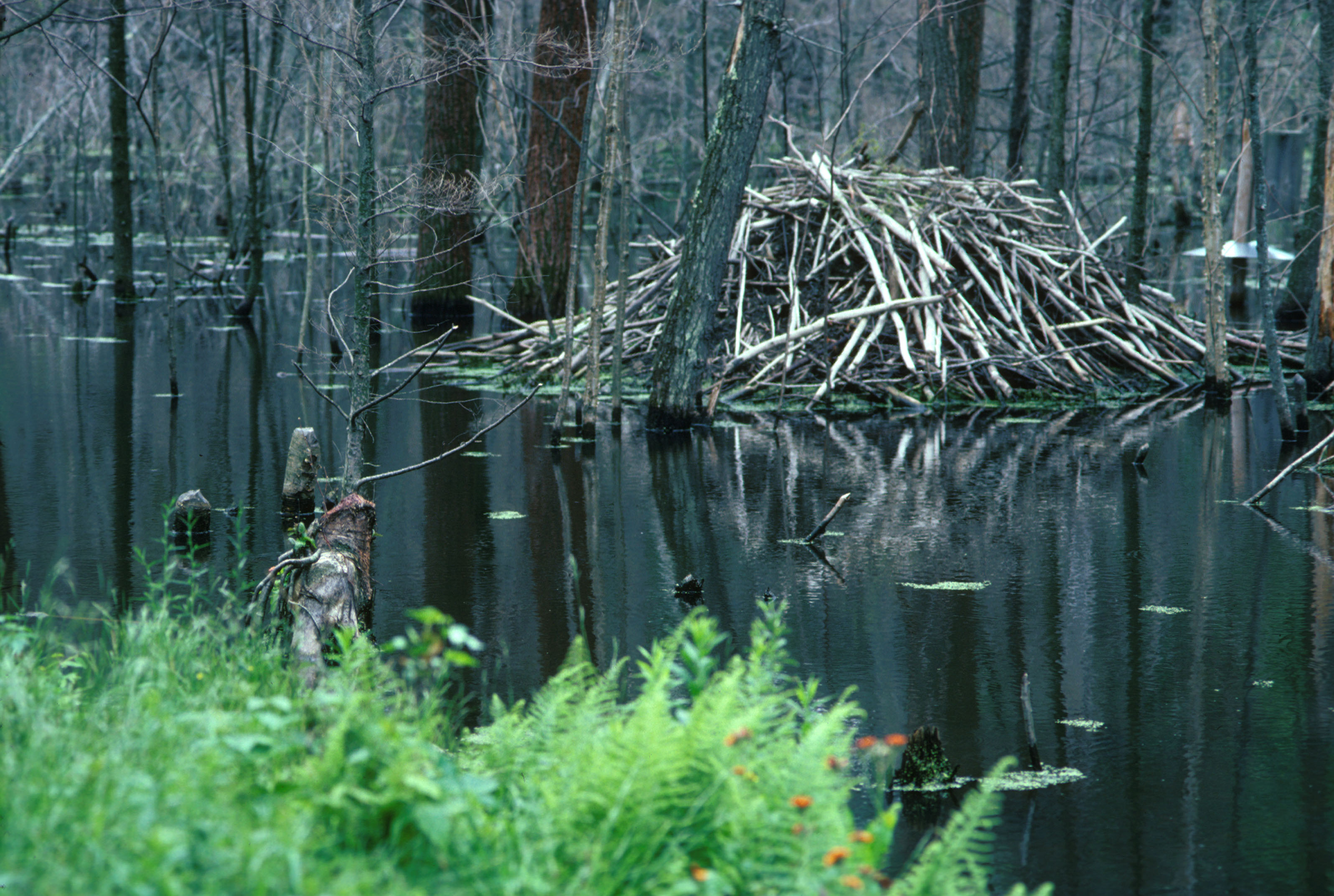
We need to re-examine our views on beavers. We can work with beavers, using them as a tool to:
- store water and off-set some of the problems we face with a warming climate and declining water sources
- restore salmon and trout populations
- create good habitat for our declining moose populations due to a warming climate
- create wetland habitats for songbirds and other wildlife, especially as the climate warms.
- repair stream incision
Here are some good, easy-to-read references on line. As well as some short talks by experts.
- Will Harling, director of the Mid Klamath Watershed Council, “we need to encourage beavers to build dams and to increase fish habitat where it’s feasible.”
- Working together to restore beavers to fight climate change
- This is a very interesting article how to channel beavers to work for us in designs that we want.
Filed under: Beavers, New ideas | Tagged: Beavers, climate change and beavers, Grey Owl, Prince Albert National Park, trapping | 2 Comments »



 Leslie Patten Books: Wild Places, Sacred Spaces