


Winter is slowly creeping in. Our temps are above normal for December ( daytime 30s and some 40s) but the wind has been arctic fierce. So different than when I first moved here in 2006. December wasn’t always our snowiest month, but definitely our coldest. Back in December fifteen years ago was when I first experienced a -35 degree night. I learned the trick of throwing a cup of boiling water in the air and watching it quickly vaporize.
Cold temperatures aren’t as tough on the wildlife as deep deep snow is. Deer aren’t very equipped to handle six foot or more snow that doesn’t get windblown. They can’t paw through it. In places like Jackson WY with tremendous amounts of snow, as winter arrives elk move in but deer migrate south. Even that pattern is an anomaly. Elk that summered in the Jackson area used to head to southern Wyoming and as far south as the Red Desert for winter. But as the town grew in the early 1900s, elk abandoned their annual migration and fed on the stored hay of cattle ranchers. To mitigate this, the federal government set up the National Elk Refuge. The Refuge began artificial feeding of elk in winter, luring them away from local ranches. Over time these elk lost their traditional migration memory and they now stay in Jackson, fed on the Refuge and several other sites.
Deer don’t usually like to hang with elk. I’m not sure why. Yet in tough winters, I’ve watched deer stick near the outside of large herds of elk. Hundreds of elk in wind blown areas not only tamp down the snow but can use their long powerful legs to scrape areas clear, helping deer out.
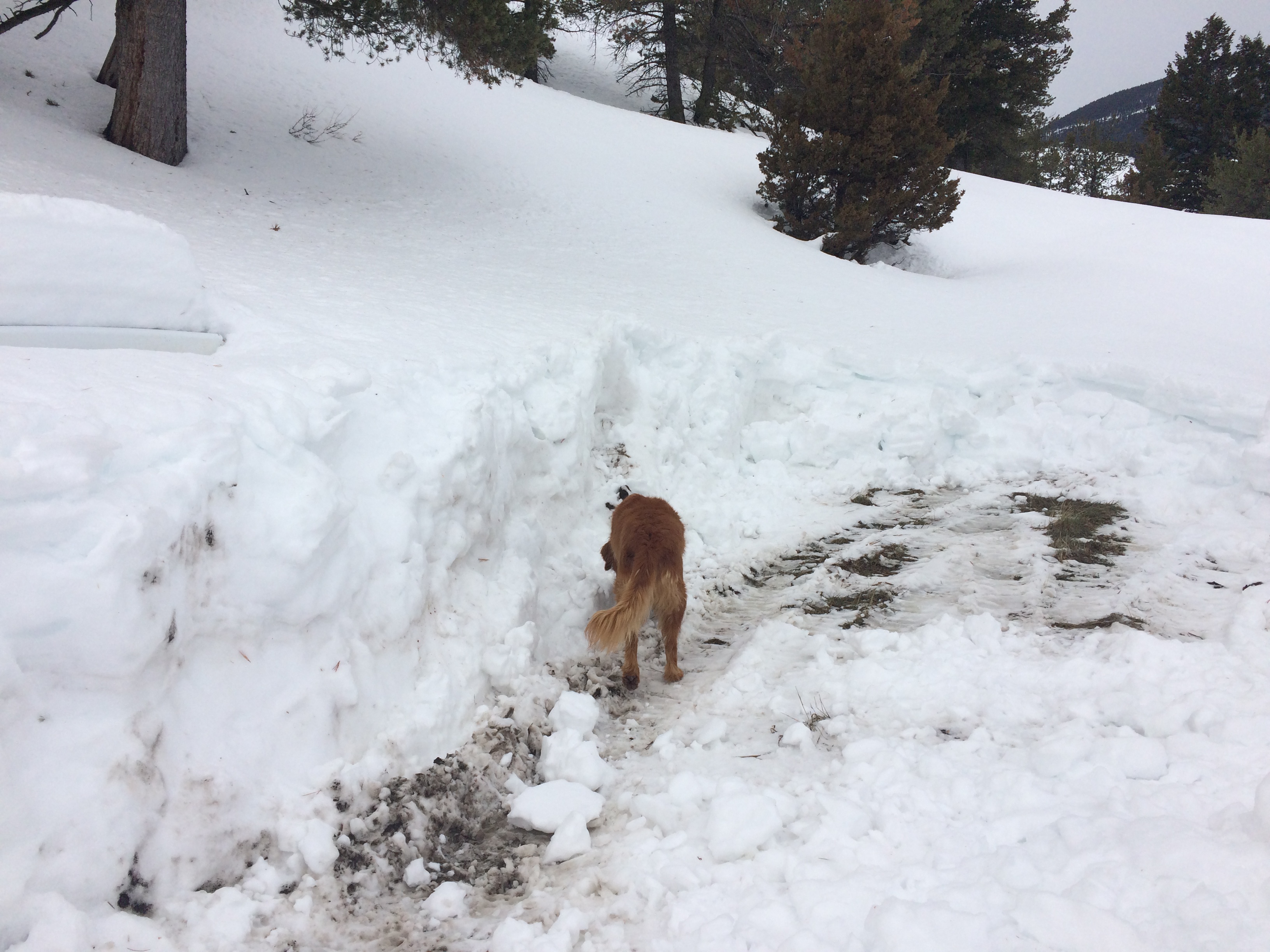
Moose on the other hand are built for deep snow. The winter of 2016 was a doozy, with epic amounts of snow. With 6 feet on the level in my front yard, I once watched a moose and her calf easily plow through. No other wildlife could manage. That winter was hard on our migratory mule deer herd. Deer are faithful to their home ranges. They were starving, and when the first grasses poked through the snow, they ate voraciously. The game warden told me those first shoots have little nutrition, so although they were filling up they died quickly. Hiking around the valley in April, I kept finding dead deer that no predator had touched, only their eyes pecked out. In contrast, elk are not so faithful and most of the herd descended into the lower elevations to escape the deep snows. Where we once had 2000 elk in winter, the last count was about half that. I suspect a lot of those elk kept that different migratory pattern finding how it benefitted them .
Wolves seem very fit for cold and snow. I can remember watching my dog sink in snow while following tracks of wolves that were gliding on top. Even at 100+ pounds and large paws, they are built to cover long distances and deep snow.


Our climate is changing, and fast. In the 18 years I’ve lived here full time, I’ve watched dramatic changes in winter. Our winters are compressed and milder. Instead of a deeply frigid December, we have mild Decembers, usually with little snow. For the last 4 to 5 years, now February is our coldest month. One February a few years ago the temperatures didn’t crack zero all month. Snows are late. There’s still snow accumulation in the high country (8000-10,000 feet), but lower elevations 6000-8000 feet have droughty conditions. That means come spring and summer, smaller creeks and drainages that used to supply wildlife with water dry up quickly. Sustained cold temperatures (negative 30s for several weeks) that used to kill beetle larvae in winter are no longer. Instead, between drought, beetles, and budworm moths, our forests are full of dead trees with a ground cover maze of downed logs, impassable for wildlife and humans.
Changing climate means we have to account for changes that wildlife will need to sustain themselves. That means protected landscapes and corridors for passage.
Filed under: New ideas | Tagged: adventure, hiking, nature, travel, Wildlife, winter, yellowstone |
 Leslie Patten Books: Wild Places, Sacred Spaces
Leave a comment