• MY BOOKS ON WILDLIFE, GARDENING AND MORE

  • The Wild Excellence

  • True stories of wildlife encounters around the Greater Yellowstone
  • Award winning eBook on Decomposed Granite, tips, how to's, what to watch for
  • Children's book. True stories of a dog and wolves. In a dog's voice
  • Written for dry Mediterranean climates in California, north and south

Turning my head upside down about Grizzlies

The Grizzly Bear, by William H. Wright, first published in 1909, is one of the best all around books ever written on the subject.  His books shows a hunter becoming a naturalist:  Wright first studied the grizzly in order to hunt him, then he came to hunt him in order to study him.”  Frank C. Craighead, Jr.

That’s quite a recommendation from Frank Craighead, one of the most well known grizzly bear experts.  Craighead was instrumental in having this out of print book republished.  Not only is this a highly readable book, but fascinating if you can get over all the grizzly bear hunts and killing he describes in the first half.  But Wright was a product of his time.  No hunting quotas, tags or seasons.

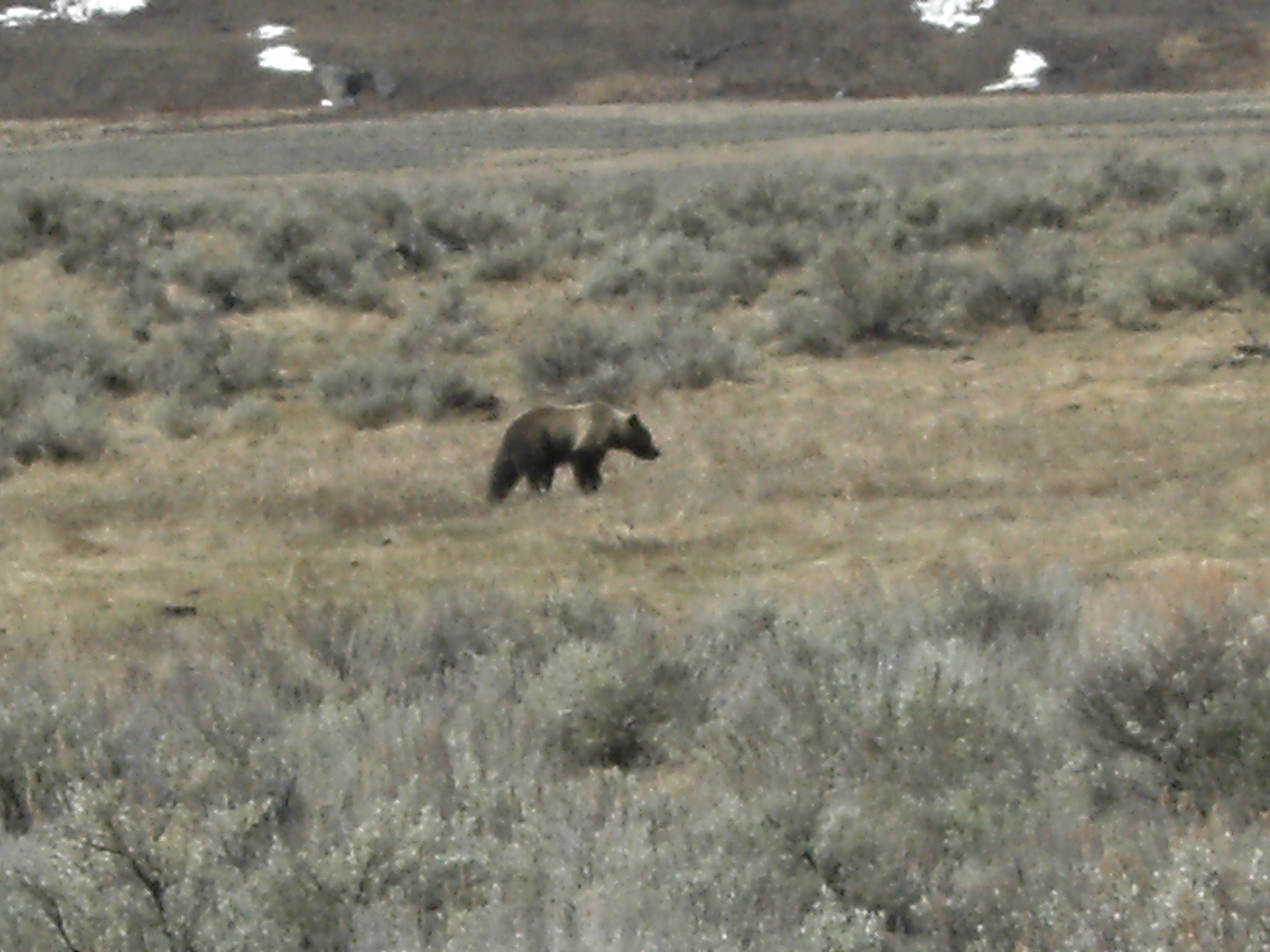
Grizzly in Lamar

Grizzly in Lamar

But Wright is not just a bear hunter; he’s a fascinating character.  He knows grizzlies inside and out.  He sees a track and, even if he is not hunting bears, he gets in the mood to follow the griz for two days.  He’s eight hours behind him, but because he understands grizzly habits, he figures he’ll eventually catch up.  He describes where and when the bear was digging, if the bear was successful at catching his marmot or ground squirrel (and how many), when the bear took a nap, how it paused to sniff for danger…all in the tracks.  Then when night comes and he still hasn’t caught up with the bear, Wright finds a large rock, builds a lean-too and a fire and beds down.  Then he starts out again the next morning, all in unfamiliar territory. At last he finds the bear in dense shrubbery and kills it.  Wright never baits bears as he considers it not fair chase.  He only uses his own cunning pitted against the bear, whom he considers the smartest animal there is.Grizzly cub

In one narrative, Wright is guiding two fellows on a bear hunt in the Bitterroots.  The men are back at camp while Wright is fishing with the dogs.  Wright and the dogs spot a grizzly.  The dogs run after the bear and corral him in a hole.  As the bear swats at the dogs, Wright, who left his gun back at camp and  in his attempt to save the dogs, takes out his pocket knife and starts swinging at the bear.  Long story short, Wright kills the bear with his pocket knife.

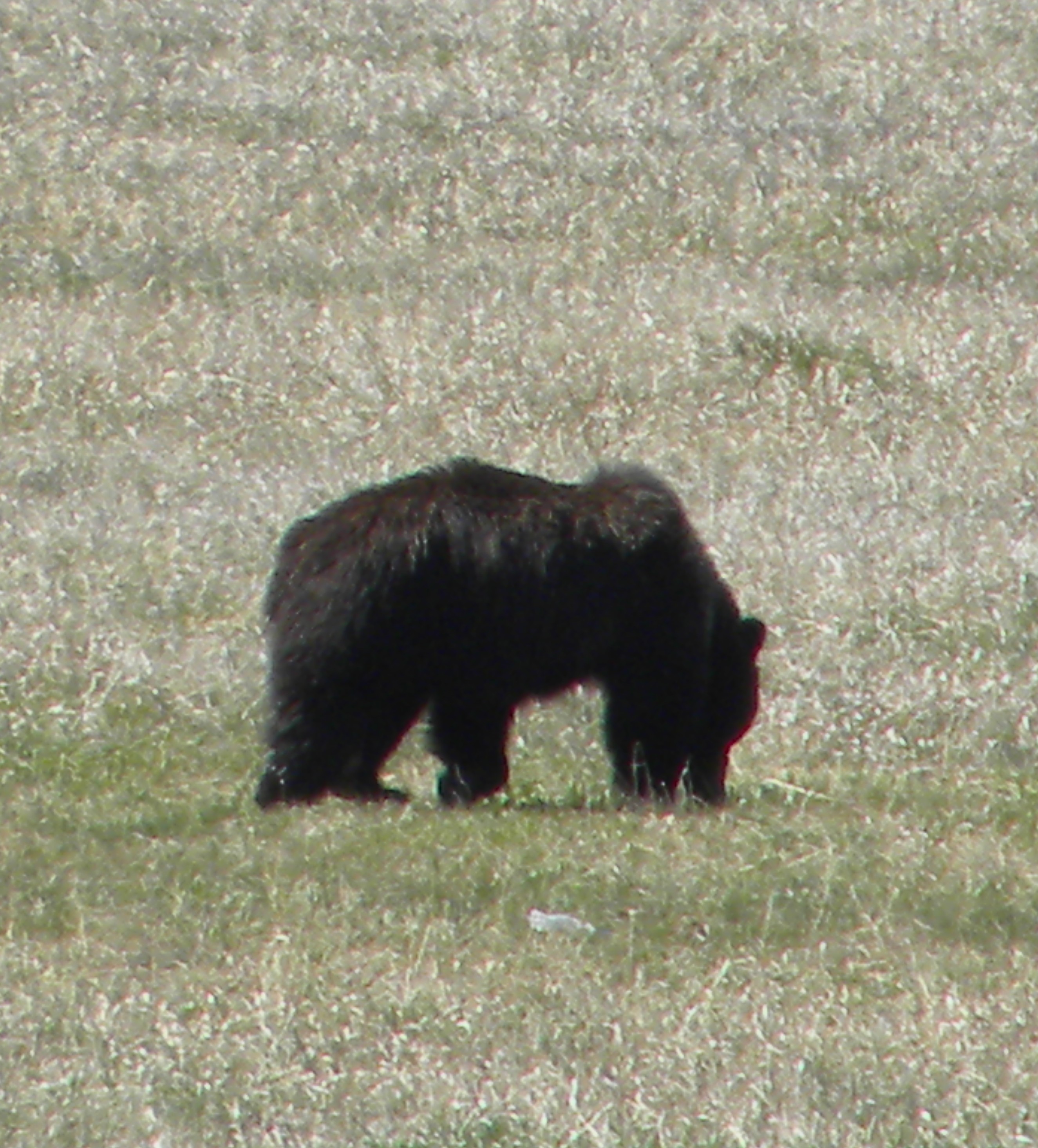
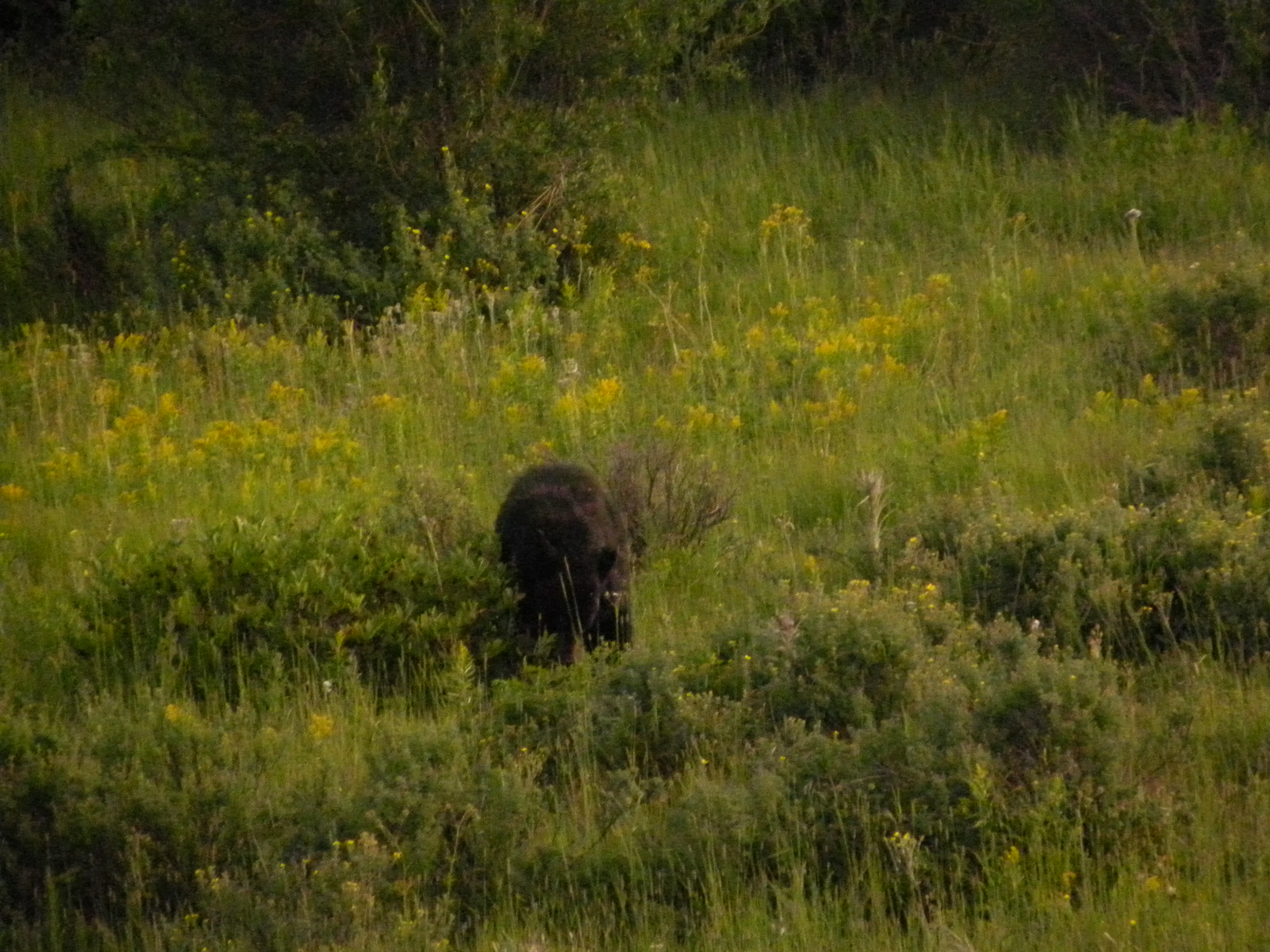
Grizzly minding his own business

Grizzly minding his own business

Wright realized that grizzlies were endangered and becoming extinct.  He loved these bears and admired their intelligence and had already begun photographing them in the wild in the attempt to save them.  In 1906 he went to Yellowstone National Park to use some new photography methods.  His was essentially the first ‘trail camera’.  He used a sewing thread as a trip wire.  One end he attached to an electric switch which exploded a flash and sprung the shutter of his camera.  The other end of the trip wire was tied to a small stake driven into the ground beyond the trail.  He located a heavily used bear trail, set up the apparatus, then hid in the bushes to watch, mostly at dusk and into the night.Grizzly front foot

From there he reports on the various bears that came bye.  In every instance, whether mom with cubs, or three year olds, or old boars, the bears all stopped short of the thread, sniffed the thread, sometimes bolted, sometimes explored the thread up to the stake and down to the switch.  Most all of them refused to go beyond the thread.

So Wright left the Mt. Washburn area and headed toward Lake.  He set up the apparatus, but this time he found the thinnest wire he could, so thin that he himself couldn’t see it from ten feet away.  He then chose a trail that was covered with grass in order to conceal the wire.  Then he waited some two hundred yards up the trail and watched.  Again, all the bears detected the wire, nosing along it inquisitively.  Wright even recognized a few of the bears from the Washburn area on this trail.  Grizzly scratches on pine tree

Thinking that maybe these Yellowstone bears were quite adapted to people, Wright tried walking up and down the trail first to human scent it, then hiding behind the tree.  But this only made the bears more inquisitive, some of whom came, under cover of darkness, within ten feet of him.  Wright remained still in order not to frighten them.  When they got close enough to figure out he wasn’t a stump, they all ran off.

Wright describes the grizzly temperament as very wary of danger.  He says they are habitually cautious and alert, and the veru least scent or sound or sight sends them into the farthest hills.  

Reading Wright has made me think again about grizzlies.  My usual take on grizzlies is that they have not a care in the world as they are top predators.  I think of them as swaggering through the woods, meandering from food source to food source.  Yet Wright describes them completely differently, and says he found the protected Yellowstone bears no different than any other wild bears he had encountered in the Selkirks or the Bitterroots.  Reading his tracking narratives, it appears these grizzlies are peaceable animals, not only wary of dangers, but mostly interested in sleeping and digging for foods.  Without having such direct and repeated experiences with grizzlies, it’s impossible for a person to know their nature like Wright does.  So instead, tales get told and assumptions are made, and all we can go on is what we’re told to do in case we actually run into a bear while hiking or camping, and usually this involves a gun or bear spray.  With more bears inhabiting our region, it’s good to read all we can.  I highly recommend Wright’s book.

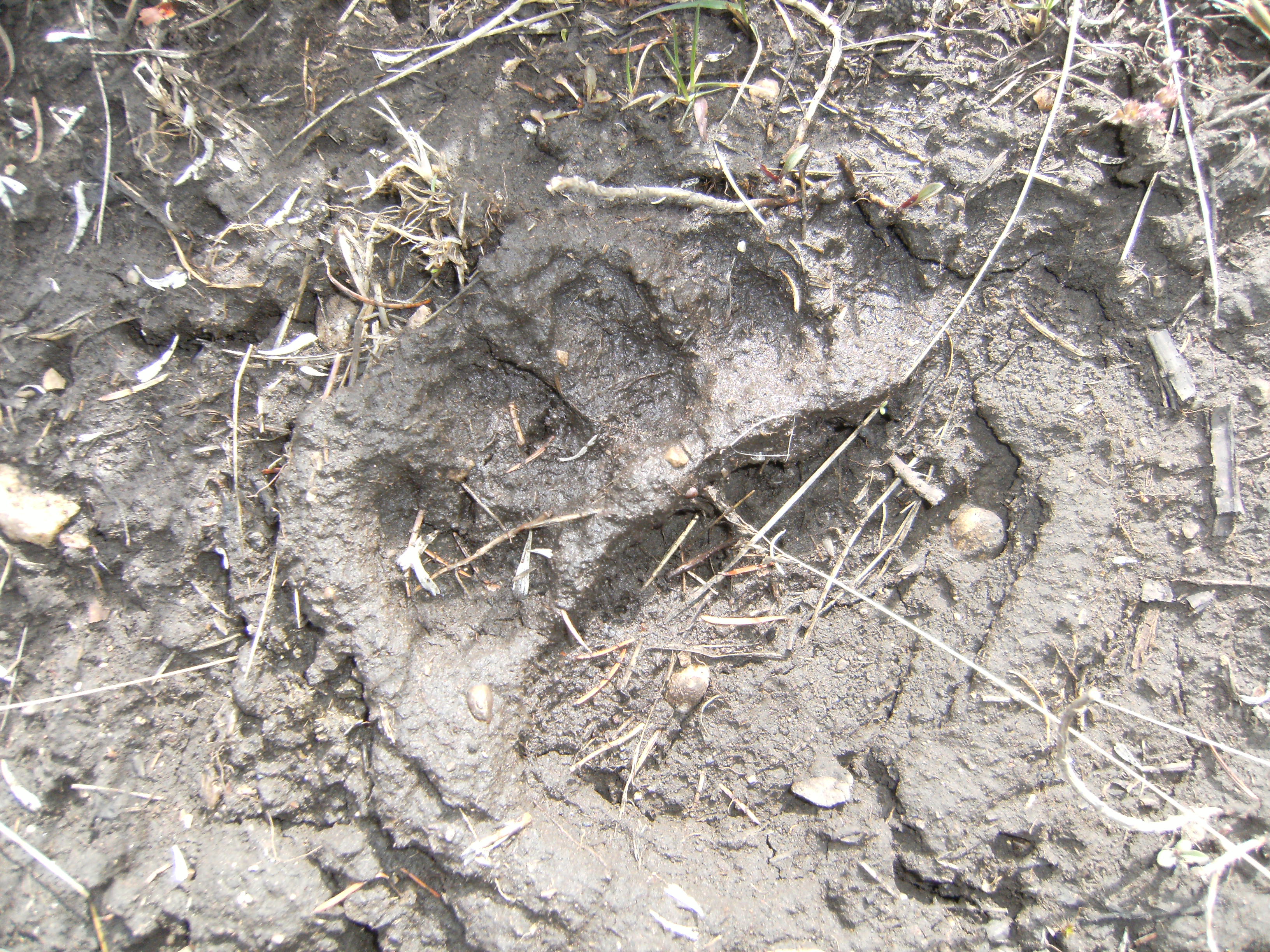
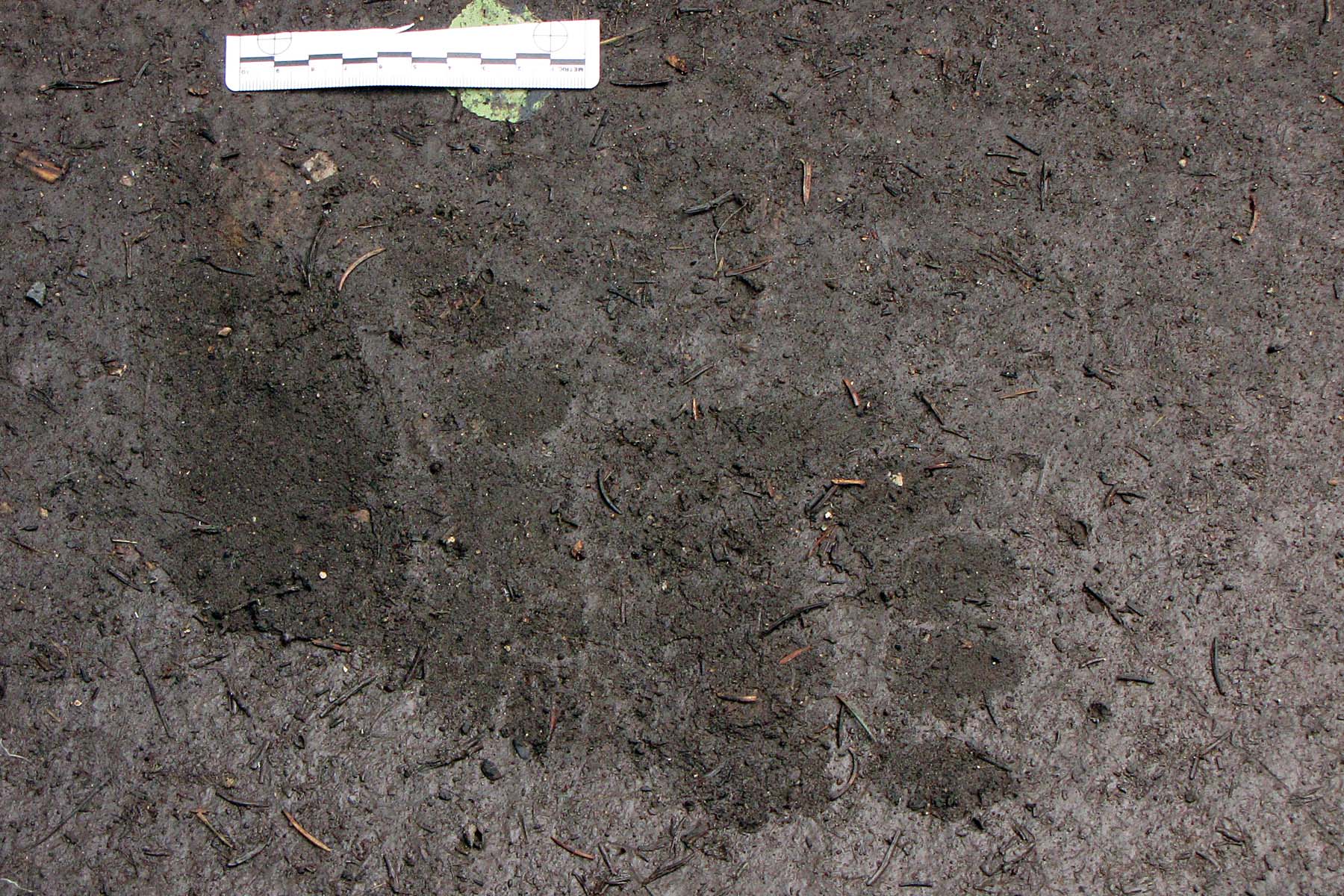
A Grizzly track found by the river

A Grizzly track found by the river

Ernest Hemingway, Bears, and Sunlight

My neighbor who was born in the valley in 1924 told me the other day that September 16 was his cut-off day.  “Usually snows on that day, or anytime soon afterwards”, he said.  Well, things are definitely a’changin because it rained, hard, on Sept. 16.

Besides the climate, Sunlight has changed a lot since my neighbor homesteaded here.  In 1929, when he was just 5 years old, Ernest Hemingway came to the Basin and stayed at a ranch called the L-T, owned by the Copelands.  Hemingway, with his wife Pauline and their young son, came to write, rest and hunt in these mountains intermittently over the next 10 years. Apparently, he wrote “The Green Hills of Africa”“Death in the Afternoon” and “To Have and Have Not”  here in a small cabin.

But these facts are findable online.  What interested me was a wild story I heard from a reliable local; a story that apparently is famous around Cody.  Here’s the tale I was told:

Hemingway made a bet with some friends that a grizzly bear could take on an African lion.  In order to prove it, he concocted up a scheme.  He hired one of the Crandall locals to catch him a live grizzly.  Being that this was in the 1930’s, there were of course no tranquilizer guns nor other easy methods to catch a live bear.  So the hired fellows dug a very large and deep pit; threw in some attractive bait, then covered up the pit and waited.  Soon enough a griz appeared and fell into the pit.  The question now was how to haul the bear up, and keep him alive.  One of these locals was an excellent roper.  He roped the bear’s front and back legs, and after a lot of pulling, they got the bear out of the pit.  They tied a rope around the bears neck, and apparently easily led the bear to a waiting cage.  This poor unsuspecting grizzly was then transported to Las Vegas, where an African lion awaited him.  The griz was led into the ring with the lion, and within seconds killed that lion. So Hemingway won his bet.

What happened to that grizzly after the match?  That part of the story was omitted, but I suspect he was made into a rug which lies somewhere now.

This is such a wild story that I’d love to hear from any locals that can add tidbits or fill in with details.

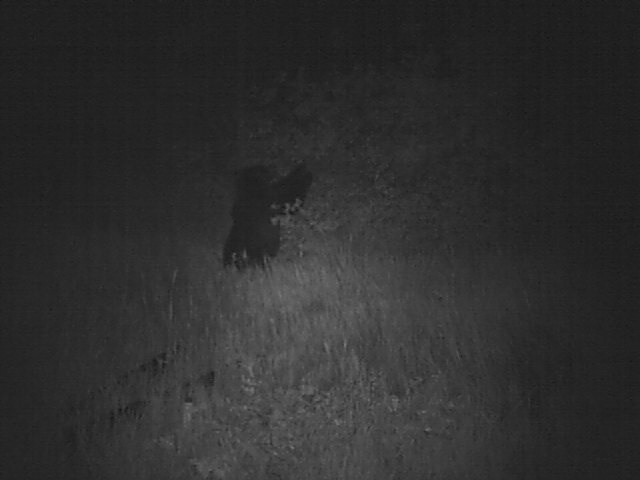
Grizzly minding his own business

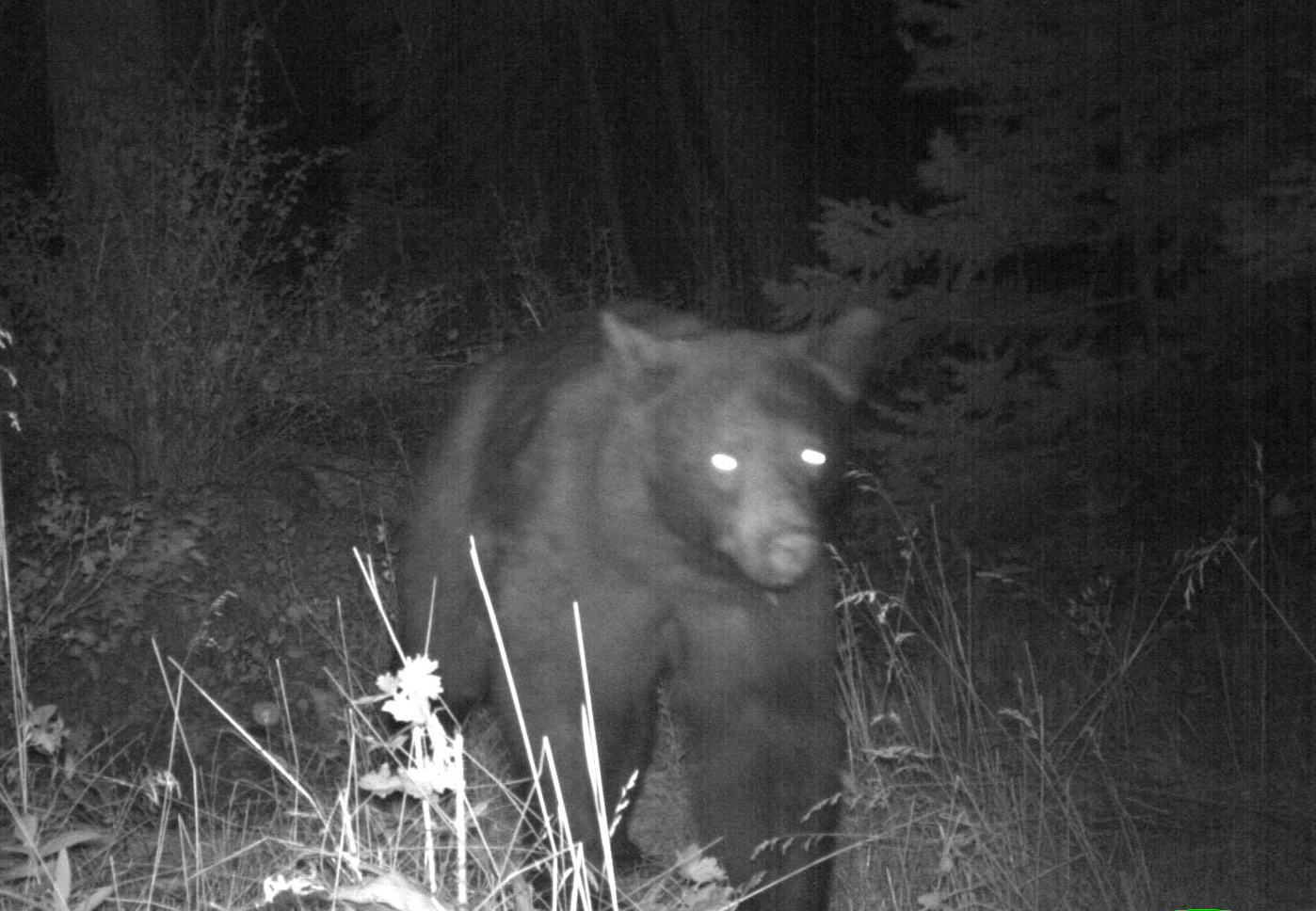
And it is the season to tell bear stories as the bears come low down, in hyperphagia and getting ready for winter.  Here’s a cute grizzly cub I caught on my trail camera the other day–way too small to take on a lion.

Bear Search in the Centennials

Several weeks ago I joined a NRDC funded project in the Centennials under the leadership of Greg Treinish of Adventurers and Scientists for Conservation looking for sign of Grizzly Bears there.  If we found sufficient evidence for the great bear, then more protections would be put in place.

This was the 2nd of 3 ‘adventures’ Greg is conducting; the next and last one is in October. Greg gave us an introduction and short class in Grizzly vs. Black bear hair, where and how to look for tree and fence post rubbings, and use of a GPS.  We bagged any hair we found and took a GPS reading.  Most of the two days were walking along old fence line, looking for hair caught in the barbed wires.

The Centennials border the Red Rock Lakes National Wildlife Refuge, rising more than 9,000 feet above the Centennial valley wetlands.  The wetlands provide habitat for dozens of species of birds including the Trumpeter Swan.  On the second day, I walked across the valley along a road, watching for hair samples along the fenceline.  Harriers accompanied us most of the day.

Here is a nice short video David Gaillard of Defenders of Wildlife put together of our weekend.  Scroll down to the 9/22 entry entitled ‘Short Movie of Centennial Bear Study in September’

Grizzly videos from my driveway

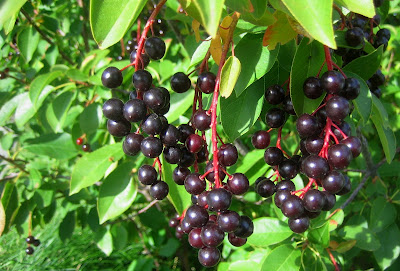
A large (pregnant maybe?) grizzly has been visiting my chokecherry bushes nightly. Since I can’t post video, but I’ve got lots of 30 second clips from my trail camera, start here  at my Youtube site for a great shot of her shaking her butt on the way to the berry bush.  Then see my other clips of her from 2 nights ago.

Bears are now in hyperphagia or that stage of eating where they are gorging, trying to fatten up for winter hibernation.  This is the time to really be careful.  Its hunting season, and a bear on a gut pile is a very protective bear not to mess with.

Griz on chokecherries at 1 a.m.


More elk calves and a lesson in Life and Death

“…that feeling in your stomach of “I don’t want this to be happening.” You try to escape it in some way, but if somehow you could stay present and touch the rawness of the experience, you can really learn something.”  Pema Chodron

Yesterday, this morning, and today were all one large event, the event that is Life.

In my post yesterday, I wrote about the dead elk calf.  This morning the mama spent a long time bugling for her calf behind my house on the top of the rise…a mournful sound of a mother calling desperately for her newborn calf.  I went outside and watched her.   I felt tremendous sadness for her.  I knew she didn’t know what happened to her calf, just that it was gone.

It reminded me of a time two years ago in the spring in the Beartooths.  A car hit and killed a cub of the year.  The grizzly mom spent a week roaming and calling for her cub.

There is nothing so sad in the animal world as that sound–a mother calling for her baby that is dead.  But I felt it was important for me to allow myself to feel this elk mother’s cries fully, and not push my own feelings away, even though it was difficult.

I stayed with her and listened.  And those bugles were low, guttural; not the high pitched sounds you hear in the fall from the elk.  Her cries came from a deep and ancient place, not unlike the cries of humans mourning intensely.

Today was the first really warm, beautiful day.  I decided to go up to a favorite spot, a place that overlooks a deep canyon, and have lunch there. (Unfortunately, I took my cheap camera) Its about a 2 1/2 mile hike up to the top of this ridge-line.  You pass through a forest until you top out at some high meadows.  At the end of the meadows are sheer cliff drop-offs.

View from afar of the spot where elk is. This is the meadow and cliff

As soon as I broke through the trees and began crossing the meadow to the cliff edges, I spied a lone elk.  She seemed a bit nervous at my presence (not unusual) but then I saw something else.  A calf lay nearby.  A wet calf.  She had just given birth and probably just finished licking the calf clean of the afterbirth.  I made a large circle and hid behind some rocks out of the wind.

Mom had taken off and left her baby there, probably hoping that I’d be more interested in following her and so not find her newborn.  I watched that little guy for about an hour.  Within about 10 minutes, he tried to stand up.  He struggled unsuccessfully with his weak legs.  Exhausted, he spent another 10 minutes resting.  But soon he tried again.  This time, although he still couldn’t stand up easily, he was getting stronger.

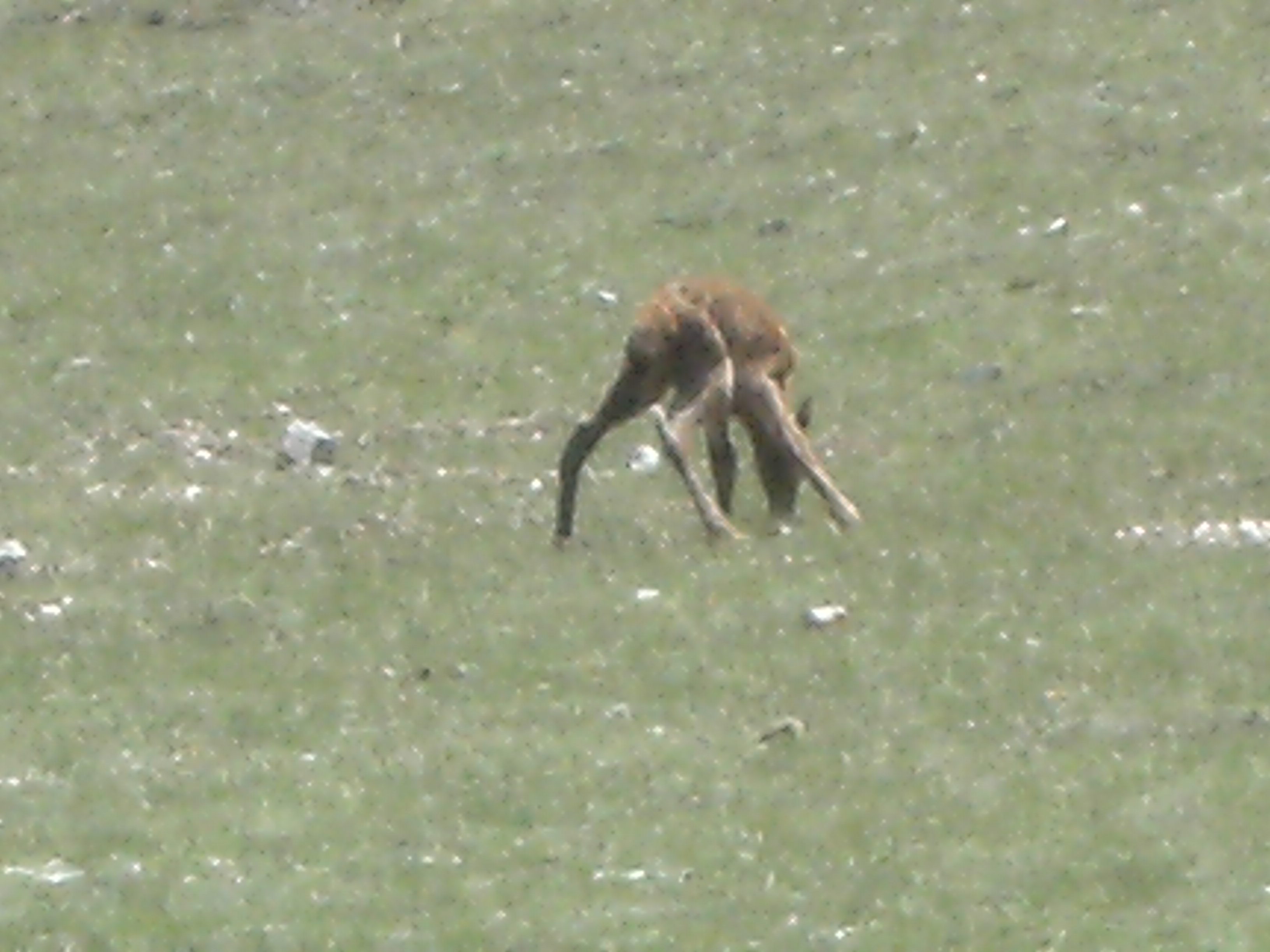
Keep trying...

First attempt to stand

I had a good feeling about this mom and her choice of a birthplace.  High up, the only entrance was on one side.  She placed the calf near a rock that had similar coloring as the calf.  And not too far beyond the calf was the cliff, where no predator could come from.  On my hike up through the trees, I saw no grizzly sign.  Grizzly sign was on the other side of the canyon down below near the creek.  If this calf makes it past a few weeks, he’ll be too fast for the bears.  But then he’ll still have to contend with wolves, who do frequent the area.

Cliff edge near where calf lies

If he makes it through a month or so, when the snows melt, his mom will probably take him up to the Absaroka Divide and head to the Lamar.  He’ll have a good year this year, more similar to what his ancestors used to experience before the long drought, because the grasses will stay greener for longer.  Then next January I might see him again when he migrates back down here for the winter.  He’ll be taller but still a youngster and still vulnerable to the wolves and the deep winter snows.  But he might just be one of the tougher ones, the lucky ones, and live into his adulthood.  Live to mate and make more elk and not be caught by a hunter’s bullet.   I surely hope so.

Grizzlies and elk calves

Its unusual to see  the Cody backcountry herd grazing every morning and night this time of year.  Usually, by now, they’re headed over the passes to calve in the Lamar. But the snows in the high country are still too deep and the melt hasn’t even begun.

I’ve been watching this small herd from my window.  They come early morning and evening.

Elk May 20, 2011 still in Sunlight

The other morning I spied a lone elk.  I watched her for a few days going back and forth between the herd in the pasture and a patch of willows in the nearby forest.  She’d disappear into the willows and the forest by the road and seemed concerned.  I had a feeling she had a calf hidden in the brush there.

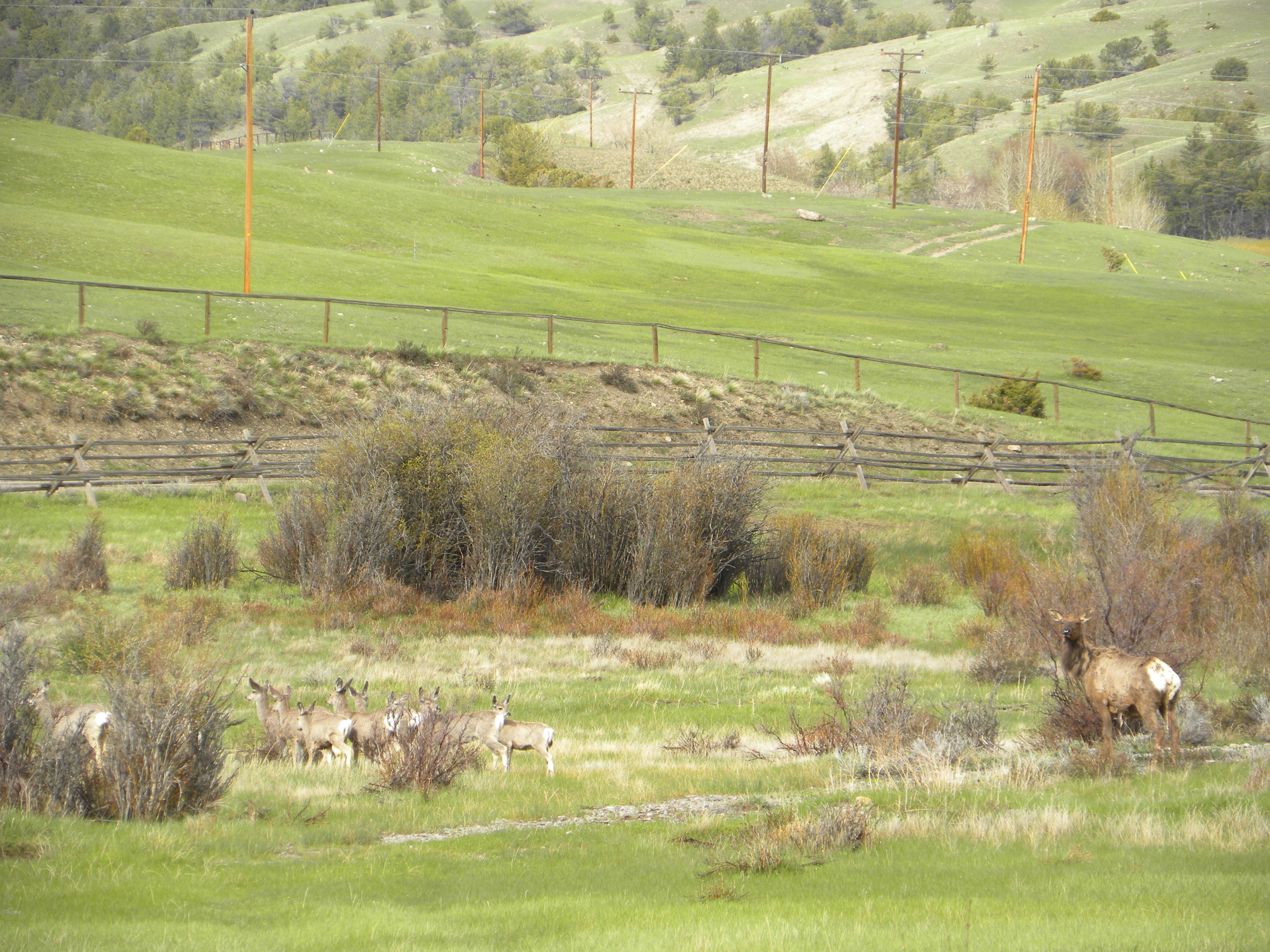
The lone cow with deer

But last night something strange happened which made me wonder if I was correct.  Instead of just this lone cow wandering over to this marshy area, a cadre of about 7 elk wandered over there with her and disappeared into the forest.

So this afternoon I took my bear spray and cautiously investigated while the elk were grazing.  In a muddy area of the creek, now widened by slash and blow downs from the logging last year, I spied a grizzly track moving in the direction of a small clearing.  A few yards up from the track, there was the calf, completely consumed.  Only the skin and legs remained.   It had been predated right where it had lain, for it was in a heap in the grass by a freshly fallen spruce bough.  I inspected the little legs and skin.  The small thing was deftly and perfectly skinned.  Certainly a bear, and my guess is it was that grizzly who made the track just a few feet away.

Grizzly in the Lamar feeding amongst the willows

I had hoped to spy a living calf, so I had a sicken and sad feeling.

Six out of 10 elk calves are predated within their first 10 days.  They are fairly helpless for those first two weeks.  Many people say the calves don’t have a scent, but I would disagree. I haven’t seen tracks in those marshy areas and this griz went directly to that calf.  The calf was not too far from the road, but at the edge of a wide swath of logged forest that includes a lot of swampy areas.  That bear did not wander about through the open woods looking for an elk, but clearly walked from the nearby meadow into the woods right to the calf.  Handling the calf’s skin, I could smell it on my hands.  It doesn’t have a strong smell, and staying on the ground low keeps it’s smell down.  But it does have a smell and to a grizzly, I’m sure its pretty strong.

I was in the Lamar Valley a few days ago and within an hour saw three grizzly boars in the valley. A friend told me in 2 days she saw 20 bears just in Lamar Valley.  The Lamar is becoming a favorite of the grizzlies.  I have wondered if these migratory elk, who usually calve in the Lamar, might have better success here.  Certainly there are bears here, but not as many as in the Lamar.  That’s a question I can’t answer.  Unfortunately for this little elk, it wasn’t the case.

And one more question I had:  Why, last night, did I see 7 or 8 elk accompany mama elk into the willows, not a route the elk ever take around here?  Was that a show of sympathy and support?  After that, the lone elk has not been alone anymore, and I haven’t seen her nor any of the others wander into the willows.

My heart felt saddened for that little calf and her mother.  But I can’t blame the grizzly.  How could I…I went home and enjoyed a BBQ’d bison steak myself.

Sleeping grizzly.

The Bear Facts

When I took Jim Halfpenny’s tracking class last year, he gave me a small pamphlet entitled  Bear Ecology.  Yellowstone Ecosystem. The pamphlet consists of lots of charts, so I’ll try and digest a few for you, literally.

Since I’ve been watching bear evidence and their scats a lot lately, here are a few facts:  About 80% of the nutritive value of Grizzly bear food comes from herbs. From this they get mostly protein.  Less than 20& comes from animals, where they get fat and protein.  The rest comes from shrubs and pine nuts.

Of the plants that Grizzlies in Yellowstone National Park consume:  78% or more of their plant diet comes from Sedges and grasses.  A whopping 6% comes from Claytonia lanceolata or Spring Beauties.  Further down in value importance are Cirsium (thistle), Clovers, Yampa, Biscuit root, onion grass, horsetail, and whitebark pine.  But if you look at the nutritive values of food, the only two that provide fat as well as protein are animal and pine nuts.  Therefore, they need these to increase their brown fat for winter hibernation.

On this chart, as far as animal foods, cutthroat trout are at the top of importance.  After that comes gopher, voles and marmots, elk, deer, and bison.  Below that are ants.

Another interesting chart is about the differences between Black Bear and Grizzly Bear den types.

Black Bears evenly split their types of dens between boulders, crevices, and outcrops.  They only dig 13% of their dens.

black bear digging for ?

Grizzlies, on the other hand, dig 86% of their dens and rarely use caves.  Which might explain why in these charts, which are not that up to date, Black bears were denning almost a month earlier than Grizzlies.  Grizzlies need to wait for more snow cover.

I’ve been intrigued with bear diet this year especially since I know that the White Bark Pine Crop is poor.  I keep wondering how these bears, that are so huge and strong, survive on mostly vegetarian diets.  These breakdowns help explain some of how they are able to use plants and convert them into useable proteins.  

So far, living at 7000′, we’ve had no snow yet on the eastern side of the Absarokas.  Today it rained some, October 17th.  I wonder how global warming will affect the denning times of black and grizzlies.  I wonder what plants they will find when its not cold enough to den but not warm enough, nor the days long enough, for good plant growth.

Mark Bruscino was on Wyoming PBS friday night.  He said an interesting thing.  He said that Grizzly bears are as intelligent as the Great Apes, making them the most intelligent wild animal in North America.  Surely they are an animal worth protecting, and giving more room to move into habitat that supports their needs as we, and the bears, face new challenges ahead.

The Year of the Poor Pine Harvest

Well, what a drag.  After a week of frustration with my Bushnell Trophy Cam, I finally diagnosed that the camera is broken.  And the reason it’s a drag is because yesterday someone left a gut pile at the bottom of my driveway.  Here’s the story:

Early yesterday morning some deer came out to graze in the private pasture across the road.  It’s deer hunting season and I noticed a nice 3 point buck hanging with the does.   Around 1 pm I heard 2 shots coming from behind my property.  At sunset, Koda and I took a walk beyond my back acreage and returned via the main dirt road.  It was almost dark when we crossed over the cattle guard marking the forest service boundary line.  I petted the horses on one side of the road while Koda was busy in the ditch on the other side.  I went to investigate and in the dark I could see the gut pile left from the buck, lying by the roadside.  With my camera not working, all I could do was check the area in the morning, knowing that probably a grizzly would be bye during the night.  With the pile so close to the house, I made sure Koda and I stayed inside that night.

In the morning, after walking around the area, from the blood evidence, this hunter illegally shot from the road.  He waited till the deer wasn’t on private property, then shot him.  But the easy access was through private property, so he dragged the deer under the boundary fence and through my neighbors’ property to the nearby road just about 25 feet away.  I can’t say I hate hunters because I know quite a few.  Many are ethical and kill for the meat.  I myself like elk and deer meat.  But I do despise the ones that break the law, or are too lazy to walk or ride in, or hunt just for trophy, or complain incessantly about wolves making it harder for them to find elk.

What giveth, taketh away, and then giveth again.  My little buck friend saw its last day and had its last meal this morning.  But grizzlies are hungry this year.  It is the Year of the Poor Pine Nut Crop, and that is what fattens grizzlies up for their long winter sleep.  This grizzly gorged himself on the gut pile, then left a scat of his last meal or meals, which clearly consisted of rose hips.  His scat was full of rose leaves and fruit, and although rose hips don’t taste too bad, especially after a frost or two, they’re not gonna put much weight on the bear.


Bear scat consisting of lots of wild rose and hips


I felt sad for the buck, but it was a nice stroke of luck for this grizzly and I was glad for him.

After checking the area, I went for a hike down a spectacular secret slot canyon.  Its secret because most of the year there’s a stream running through it.  In summer the brush is so thick you can’t paw your way through.  But in the late fall, the leaves of the Cornus (Dogwood) shrubs are gone and the stream has dried up.  Its only about 50 yards through the 5′ wide canyon to the main creek.  The creek, surrounded by high canyon walls, is inaccessible except for this narrow slot canyon.  But the game know the way and there were grizzly tracks down through the muddy canyon floor.  I crossed the creek and came into a wide wooded valley surrounded by high granite walls.  Large Junipers, Douglas Firs and a few Pines populated the area.  Exploring the canyon, it was obvious a grizzly had been hanging around here for quite some time.  He too was eating rose hips, but he had been spending a lot of time invading middens for pine nuts.  These aren’t from Pinus albicaulis, the White Bark Pine, but Pinus flexilis which is also in the white bark family.  The grizzlies seem to have been eating quite a lot of these this year.  Even the grizzly who ate the gut pile had old scat nearby with Limber Pine shells in it.   Although Limber Pine has been hit heavily by blister rust and beetles, we still have large stands around here and apparently the grizzlies are taking advantage of them in a bad White Bark year.  They certainly are not as big and fat as White Bark, but they’ll do in a bad year.

I’ve been thinking a lot about the bears, how resourceful they must be, how they’re mostly herbivores, how they have to spend so much of their energy foraging for food with so little calories.  I’ve been thinking about those reports I’ve read this summer about undernourished bears.  I am amazed how they are able to make a living out there.  What a wondrous animal.

The magnificent and endangered grizzly

There’s been plenty of hubbub regarding bears this summer in the Greater Yellowstone Ecosystem, mainly grizzlies.  If you haven’t followed it, we had two deaths just on the eastern side of the Absarokas from grizzlies this summer, one of them occurred just up the road from where I live.  In addition, there’s been 38 grizzly deaths just this year, 31 on those caused by humans.  And many of the bears causing trouble have been found to be underweight, or their cubs were malnourished.  Grizzlies were put back on the Endangered Species list just this summer because one of their main food sources, White Bark pine nuts, is also in trouble and in major decline.

Grizzlies have been coming down into hay fields, down into the flats where there are towns and farms.  Why? Because they need more habitat, they need food.  Let’s not forget that grizzlies were actually plains animals, following the Bison and ‘Buffalo Wolves’ on the prairie.  Grizzlies can’t climb trees and their enormous claws are adapted for digging.


Grizzly rooting around


On the other hand, the smaller Black Bear is a forest bear.  It can climb trees.

It’s not just that ‘we have too many bears’.  Its that we’ve decided Grizzlies can only be in places where people don’t want to live year round–the high mountains–or where we’ve protected the land, such as Yellowstone Park.  And even in those places we barely tolerant them, calling on the feds to move or kill a bear (Grizzlies get three strikes before they’re out, dead out that is) that interferes with our ‘rights’.  In an area north of Gardiner, a sow with her two underweight cubs were moved for raiding a chicken coup.  Chickens are bear bait, and having one just north of the north entrance to the Park makes your chickens a restaurant for a bear.  I don’t understand why we have to waste good tax dollars and federal employees’ time on moving bears for stupid people.

My valley happens to be one of the places the U.S. Fish and Wildlife Service moves bad bears, with the hopes they’ll go into Yellowstone.  My valley has good access into the Park, but most of these bears just quickly ‘home’ or return to their territory.  This I’ve been told by one of the bear coordinators. (“You don’t have to worry about the relocated bears.  They leave fairly quickly.”)

So why relocate?  These dedicated federal employees seem to spend a lot of their summer moving ‘bad’ bears here and there–from Jackson to the East Entrance, from Dubois to Cooke City, from Cody area back to Jackson–or they have the dirty and terrible job of euthanizing ‘problem’ bears.  Problem hardly ever means human/bear conflicts, but mostly cattle/sheep/horse/chicken conflicts or just too-darn-close-for-comfort conflicts.

We just have to begin to make a concerted effort to live with bears and give them more habitat.  A few things I can suggest (and there are many more that could be added to the list by people ‘in the know’):

1.  Use bear-proof garbage cans and food containers.  Several bears were euthanized in 2010 because of ‘food rewards’.  The article above said that after euthanizing a bear roaming around West Yellowstone, the feds discovered lots of unsecured food containers.  That’s just a crime!  West Yellowstone is exactly adjacent to the Park.  If you want to live there, secure your food or pay the consequences.  Should the bears pay the consequences for stupid people?

2.  We need contiguous wildlife corridors from here to the Canadian Border, with planned wildlife crossings over highways.  This is very important.  These bears and other wildlife need to be able to migrate out into other food sources when their own territories get too cramped.  And for God’s sake, at least slow down in Yellowstone.  This summer alone there were several bears killed by cars in the Park.

California is now putting the grizzly bear on all CDL.  If you hold your license up to the light, there’s a bear there; the same bear that’s on their flag and the exact same one that was shot to extinction in the early 1900’s.  If you’re going to tout it, then bring it back.  California has good habitat for grizzlies.  Let’s move some there.

3.  We need prairie where Grizzlies and Bison and wolves can roam again.  Grizzlies are already moving into eastern Montana.  Support the American Prairie Foundation and tell them to not just bring Bison back (already beginning to happen there) but wolves and grizzlies as well.  With the extinction of the White Bark Pine by the end of this next decade, bears will need a different food source.  We need to be thinking about recreating some of the kinds of habitat they lived in when Lewis & Clark were here.  L&C didn’t find game in the mountains; the game was abundant in the prairies.  Restoring bison to the prairies along with wolves makes for more game for grizzlies, along with all the small mammals and roots they like to dig for.

This summer I was fortunate enough to see three grizzlies–2 in the Park and the other one we slowed down while the bear crossed the road near here.  What a beautiful magnificent animal.  There is nothing like hiking in grizzly county, knowing that you are not at the top of the food chain.  It makes you alert, alive and aware.  Let’s preserve that.  It keeps our human ‘hubris’ in check.


Grizzly track with penny for sizing


Mothers: Bears and Elk

Last week an elk calf was killed right in the little meadow by my house.  Koda discovered the leg, lying in the disturbed grass near a solitary aspen.  The mother elk had been hanging around all morning, calling and calling for her baby.

Now, almost a week later, I heard her early this morning, still calling.

Cow elk sniffs where calf was killed

It breaks my heart to hear her.  I saw her last week quite a lot, coming closer and closer into the meadow, unperturbed by my presence or the dog, obviously confused as to where her baby might be.

Koda and I walked the trail through the little adjacent forest.  Fresh black bear tracks, a mother and her cubs, had wandered amongst the springs.  I set up my trail camera and found another leg from the calf.

The little elk had disappeared almost without a trace.  I’ve walked and walked around the area looking for more evidence.  One leg in the meadow; one in the woods; where’s the rest of her remains?  She barely lived, barely had a chance.

Yet, maybe these two little bear cubs will now have a chance.

Black Bear cubs

Its bear hunting season and although you can’t shoot a mother or her cubs, the young male whose been hanging around, digging for roots and insects, is fair game so to speak.

Its sad, but yet true.  One life feeds another.  I sing for the bear mother.  I cry for the elk mother.  One does not negate the other nor hold more value than the other.  Its’ the old and ancient dance.  Don’t be fooled.  Despite all the latest new fangled technologies, extended life, genetic transformations, new pills, greed on Wall Street, fat cat politicians and the usual rhetoric, we too are dancing.