• MY BOOKS ON WILDLIFE, GARDENING AND MORE

  • The Wild Excellence

  • True stories of wildlife encounters around the Greater Yellowstone
  • Award winning eBook on Decomposed Granite, tips, how to's, what to watch for
  • Children's book. True stories of a dog and wolves. In a dog's voice
  • Written for dry Mediterranean climates in California, north and south

More about Bears, Pine Nuts and Delisting

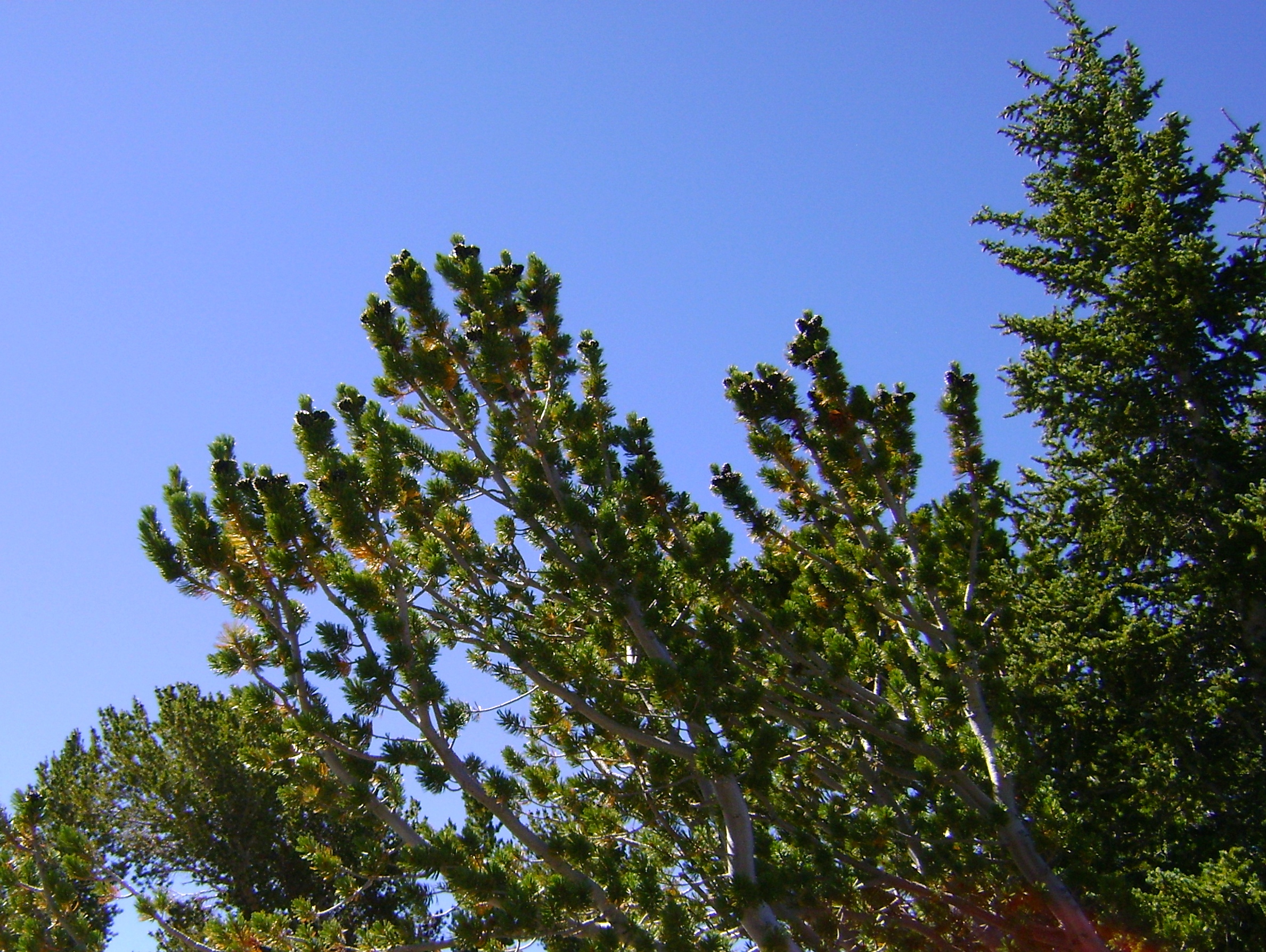
The Clark’s Nutcrackers are starting to hang around, making a ruckus with their characteristic nasal loud call.  They’re waiting for the Limber Pine cones to ripen.  The cones are still green; maybe a few more weeks.  But they’re anxious to begin their ancient fall ritual of collecting and storing seeds–tens of thousands each year–and incredibly they remember these locations.  The seeds that aren’t retrieved might just grow into young pines.

A Forest Service botanist gave me two hints when planting Limber Pine seedlings:

1.  Put two or three seedlings in one hole to imitate how a Nutcracker might have stored those seeds and

2.  Collect some soil from around a mature Limber Pine and place it in the planting hole.  That soil has the correct mycorrhiza (fungi) that is symbiotic with the pines.

I’ve been inspecting the cone production this year and although it seemed better than last year’s very low production, it appears not to be a boon year.  Many trees have no cones.  Others just a few.  I’d judge that around my home the production is going to be medium-low.

I was curious what the Whitebark production is this year.  Sometimes the Limber mirrors the Whitebark, other times it’s a good substitute.  In a hike up Windy Mountain yesterday, our last remaining live stands of Whitebark are up there.  There are lots of dead trees and a few young trees, but there are still some standing mature live trees.Grizzly cub

Whitebarks and Limber Pines cone at the top growth only.  Trees that are in the open will produce more cones.  Windy mountain has a fairly tight forest with upright trees.  Looking at the potential 2014 cone production, I estimated about the same amount as my Limbers. That got me wondering what the official report for 2014 of the Interagency Grizzly Bear Study Team is from the transects they use.

The IGBST is reporting a medium high cone production for 2014.  They define a ‘good’ production of average of 20 cones per tree, vs. 5 cones per tree last year. But here is the catch.  Total mortality on their transects (read ‘dead trees’ from beetles specifically) since 2002 is 75%.    So there are 3/4 less trees from which to obtain food, even if there is good production on those remaining trees.

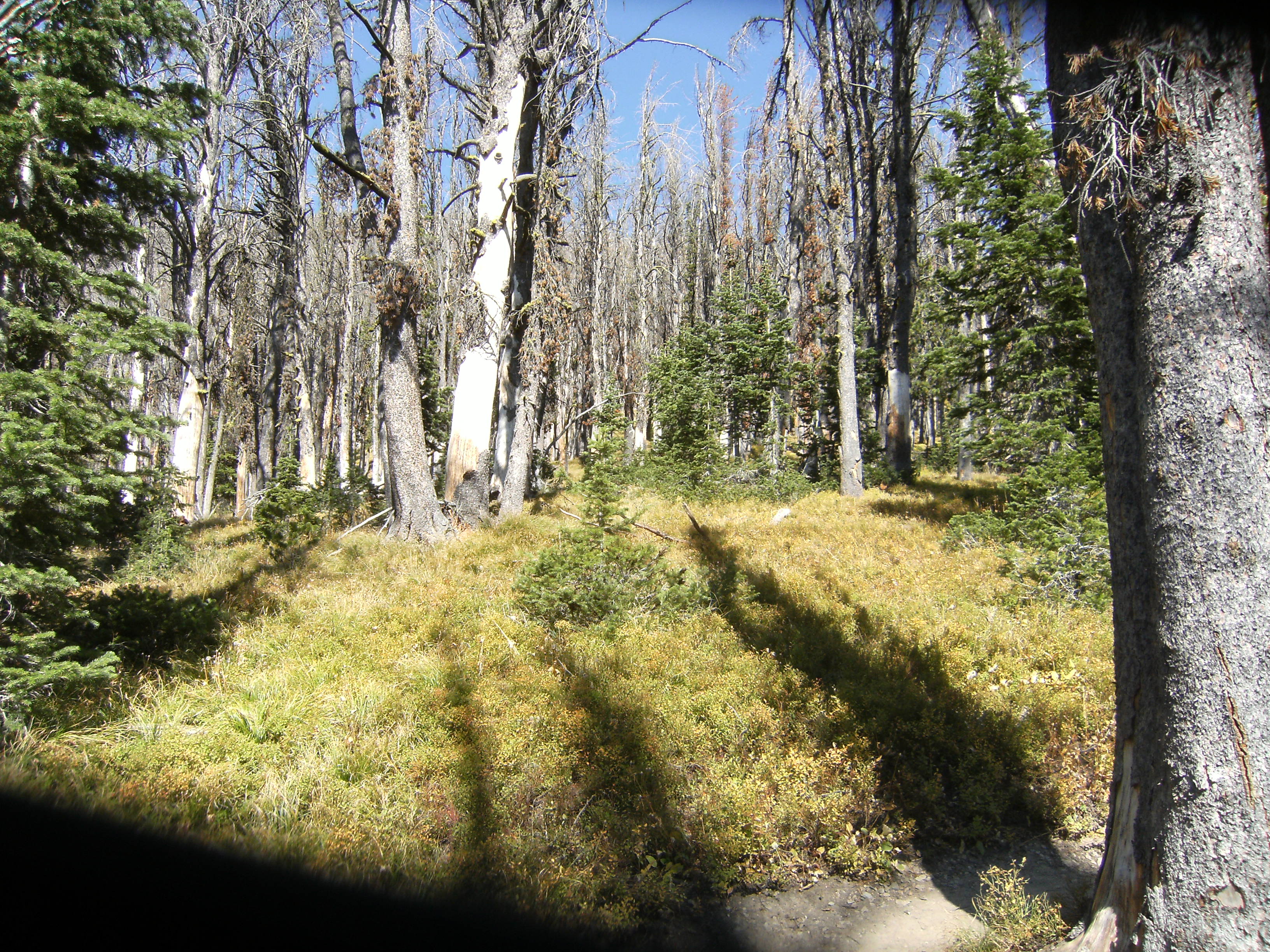
At least 75% of this Whitebark forest is dead; in other places on Windy it is more like 90%

At least 75% of this Whitebark forest is dead; in other places on Windy it is more like 90%

The IGBST did the Whitebark Pine study required by a judge before delisting.  They concluded that the bears will find other foods in the ecosystem and so can be delisted.  The states are pushing for that delisting status in order to begin a hunt, for which they can charge high dollars for a grizzly bear tag.

Recently I was at a landowners’ meeting where a county commissioner gave a short talk. He mentioned he was on the grizzly bear committee, representing Park County.  This man is no scientist.  He is a politician first and foremost; and he said to this group of landowners that the study ‘proved’ the bear is doing fine without Whitebark pine nuts.  Don’t believe it.  He was simply chanting the line that politicians and state managers have been saying for years in order to delist.griz

I firmly disagree with delisting the Grizzly.  The bear has been dependent on these nuts for making ‘brown fat’ for hibernation.  Without this nut you can be sure to see the Greater Yellowstone Grizzly wandering into the bottomlands where more people live, eating foods like Russian Olive nuts that grow in the drainages, or even livestock.

There are several reasons why I am NOT for delisting the Grizzly:

1.  Grizzly bears are highly intelligent animals, at least as smart as the Great Apes, which puts them on par with humans.

2.  Bears primary food sources–pine nuts and cutthroat trout–are compromised

3.  Climate Change is a big unknown for food for these large carnivores.  Moths that the bears rely on are also a fragile food given pesticides loads in the prairie states.

and one of the most important reasons:

4.  Bears confined to the GYE do not, at this point, have adequate corridors for genetic diversity and may over time die out.   The IGBST delisting plan calls for flying in bears to the ecosystem if and when genetic diversity is compromised.  I’ll say that again  “FLYING IN BEARS”!

To compensate for reduced primary foods, as well as provide a buffer for climate change and provide genetic diversity, bears need to be able to move in and out of the GYE. Yellowstone to Yukon (Y2Y) targets this need.  Presently there are large bear unoccupied areas of this natural corridor; swaths of public and private lands that were formerly bear territory (Central Idaho Complex is an unoccupied example).

It took over 30 years to bring the GYE grizzly numbers up to about 650 bears, from less than 200.  If delisting, and hunting, returns, it won’t be long before those numbers begin to decline again.

Grizzly bears are not just critical to the ecosystem.  They provide something critical to man–the power of the Present moment.  There is nothing more wonderful than that ‘alive’ feeling of walking through woods where grizzly bears at present.  The grizzly bears gift to man is the Power of the Present.  Let us honor that.

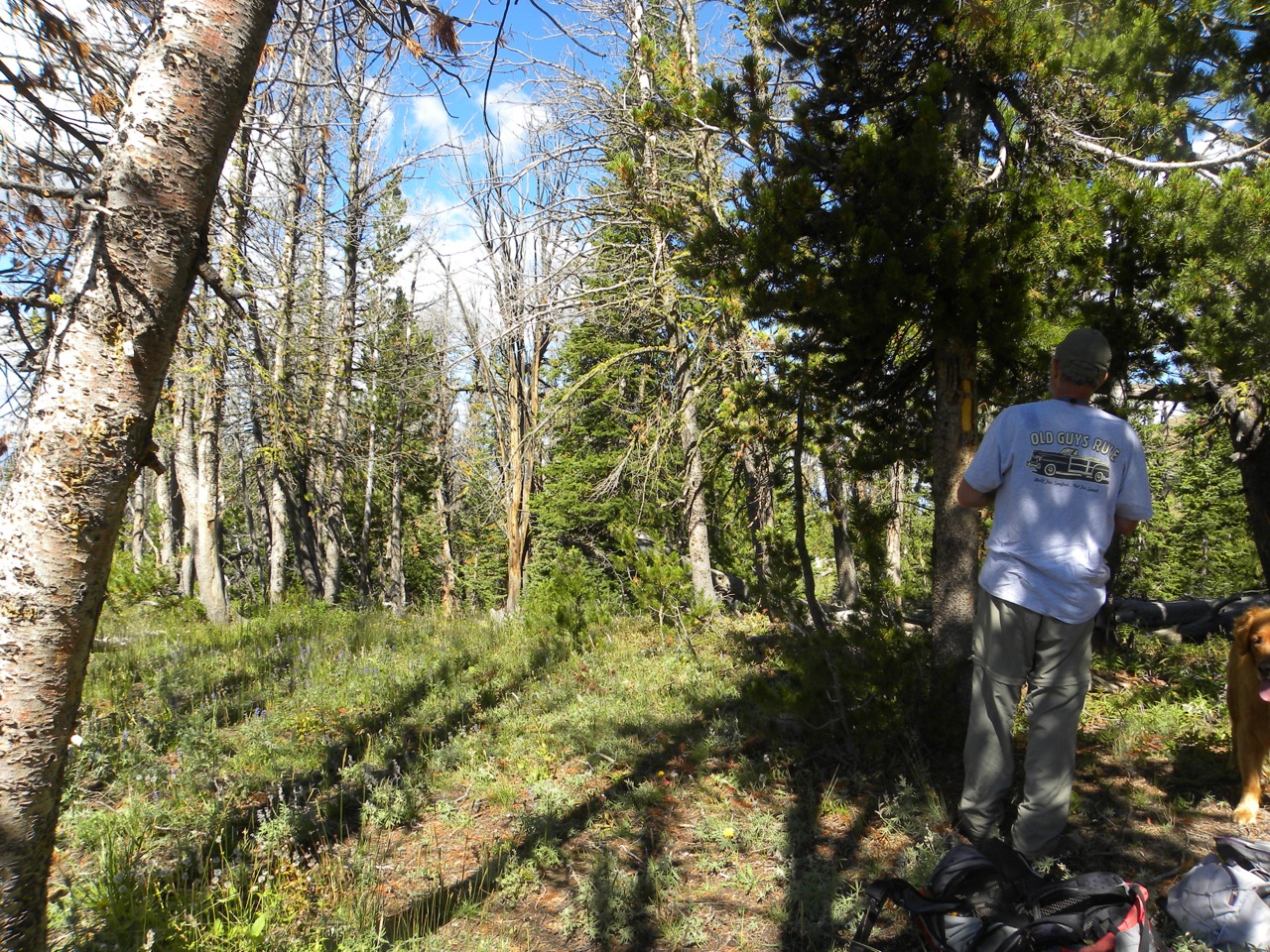
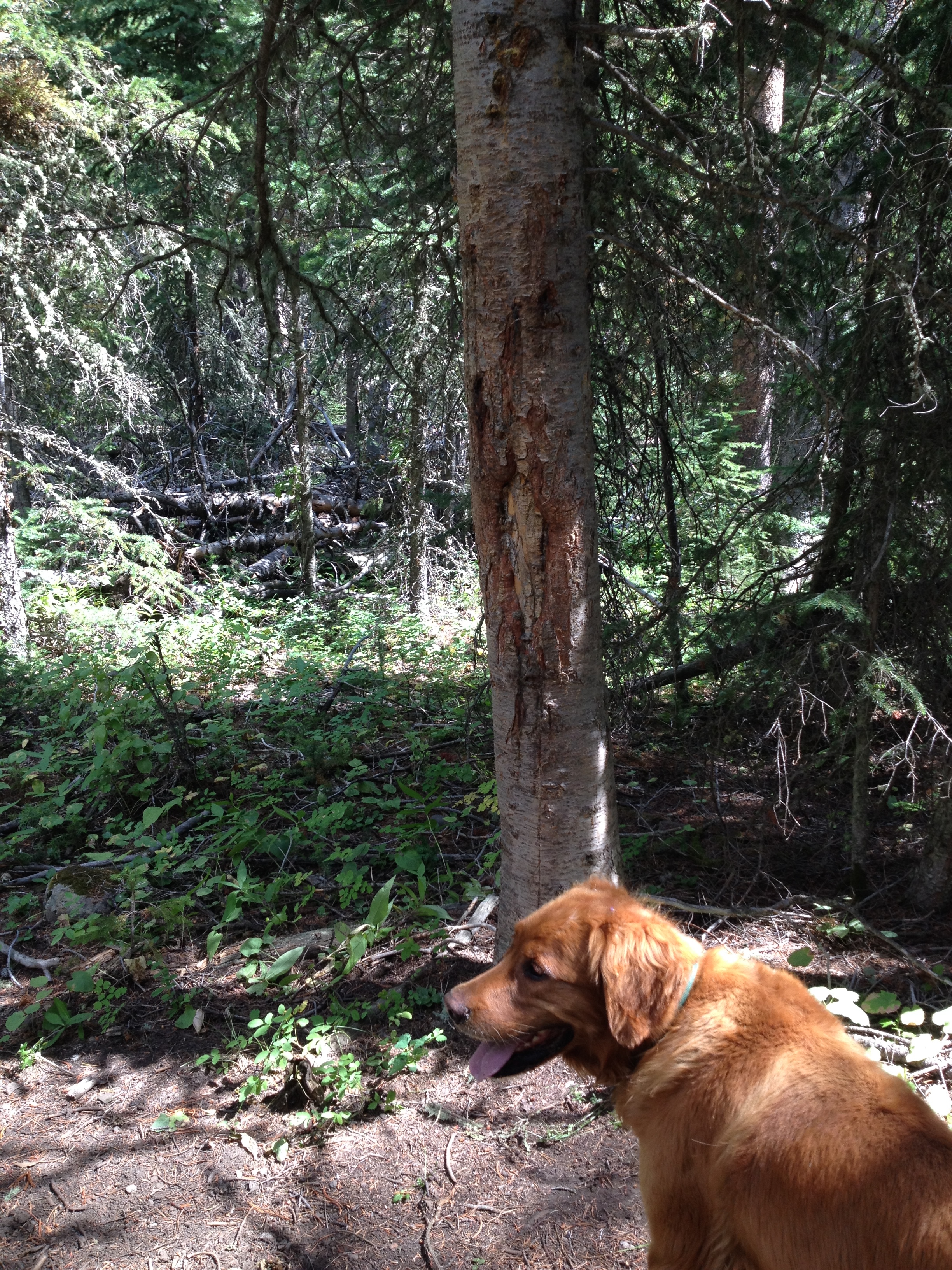
This tree has a blaze and to the left a bear left its own blaze

This tree has a blaze and to the left a bear left its own blaze

The Power of the Bear

There are lots of ‘Trail Creeks’ around Park County.  One of them travels through private lands from Cody to Pat O’Hara and into Dead Indian.  There are dozens of Tipi rings along the now faint trail through the valley.  This was the major route tribes used to StinkingWater river (now the Shoshone River) and its hot springs.

But in my valley there is a Trail Creek as well, also a major travel route from the north ends of the Park, through Sunlight Basin and down either towards Cody or the Clark’s Fork.  The Nez Perce came this way while fleeing the calvary.  An ancient route used for thousands of years, it’s quick access over the mountains north or south.

I love this area.  Most of it was devastated by the ’88 Yellowstone fires, but for some reason the south side of the pass adverted most of the flames and a small perennial creek (Trail Creek) feeds the narrow valley.

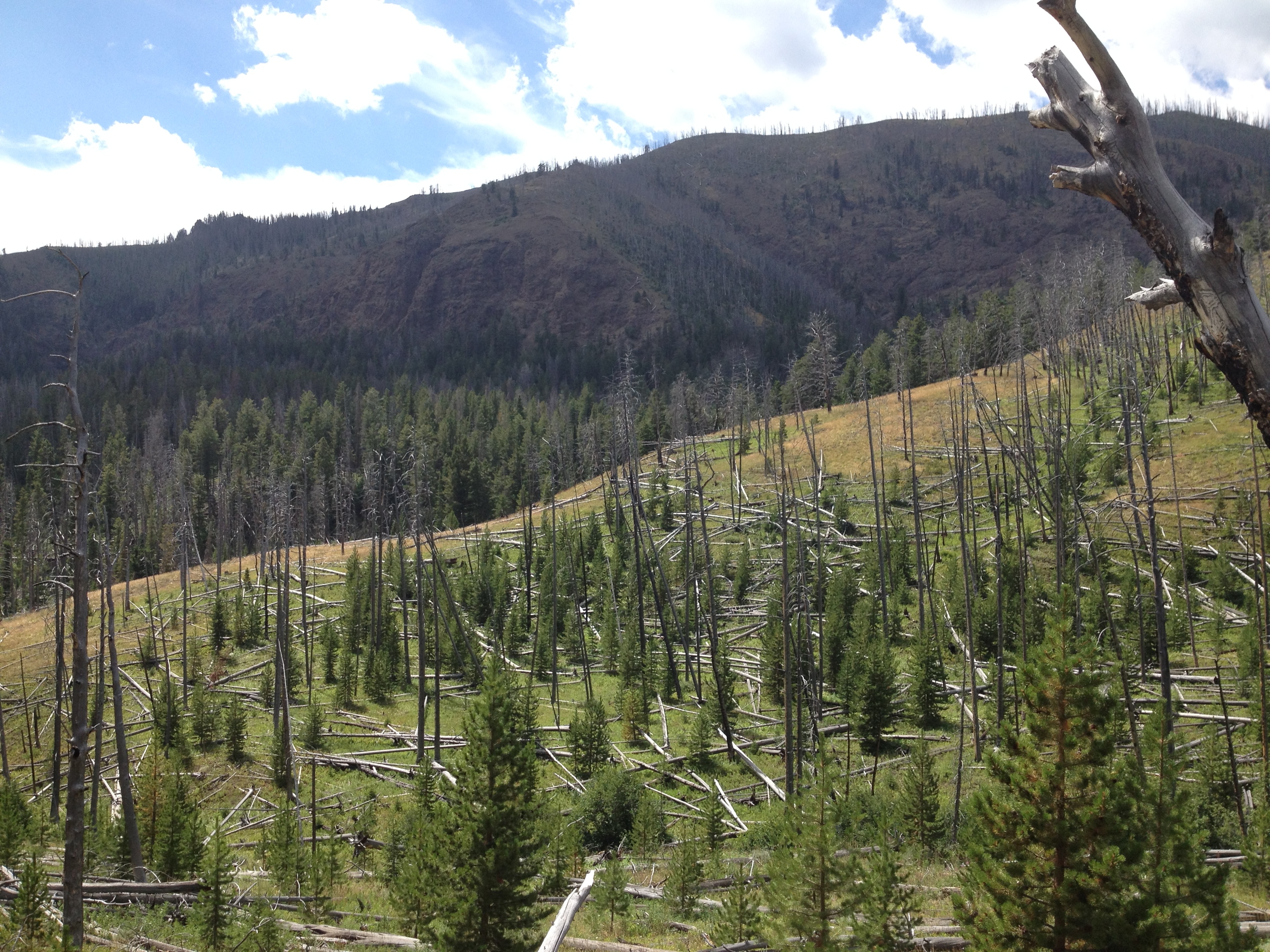
Near Trail Creek.  '88 Fire burn

Near Trail Creek. ’88 Fire burn

The route isn’t just favored by humans.  Nowadays wolves, bears, elk and deer use the access more than horses or people on foot.  In fact, if you take the trail, make sure to have bear spray handy.

I did a short run up the south side of the trail today (on the north side the trail name changes and is called ‘Lodgepole’.  Lodgepole creek trail was completely burned during the fires.  The trail is hot with standing dead trees…not so pleasant).  The access road has been closed most of the season due to flooding but is open now.  Go to the end of the dirt road, park, and then you have to pick your way through downed burnt trees to find the trail which turns sharply up a narrow access valley.

Looking west on Trail Creek

Looking west on Trail Creek

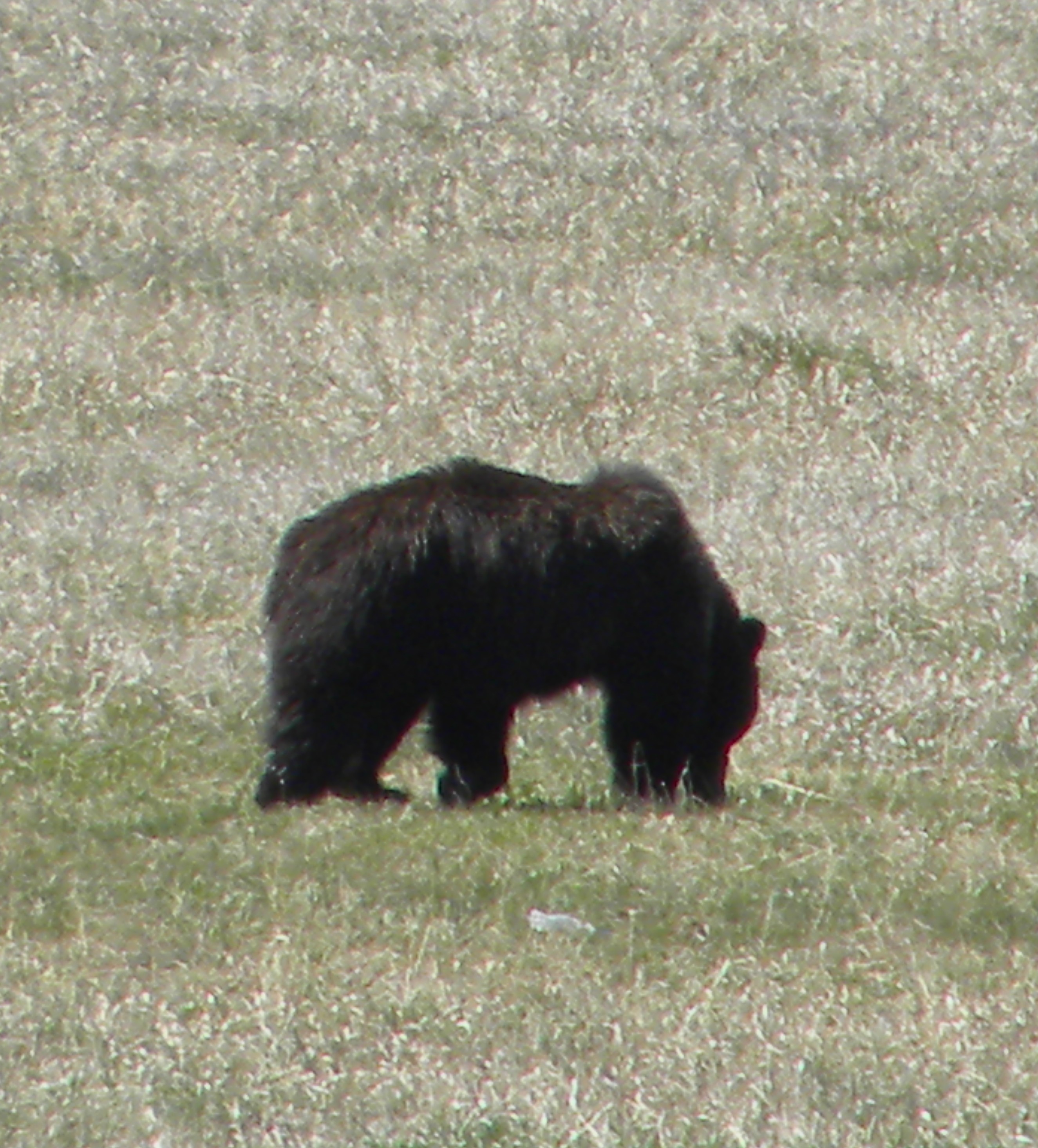
As you near the route to the pass, the trail leaves the forest, and enters open areas that have burnt and downed trees.  It was there I saw the young black bear.  He crossed from our side of the creek to the other, and fed continuously, oblivious to our presence.  Although it was true the wind was in my face, once he saw us, he could care less and just kept feeding.  It was then I realized that his hyperphagia (excessive eating to ready for hibernation) had begun.  I watched him for quite a while, trying to decipher what he was eating.  Bears love old burned areas.  For one, they can tear up decaying logs.  For another there are lots of fresh new plants and foliage to eat. And watching a bear move over those logs is a sight, as it is nothing for them.  At one point, my bear had all four paws sideways on the log, like you might see bears on a circus stump.

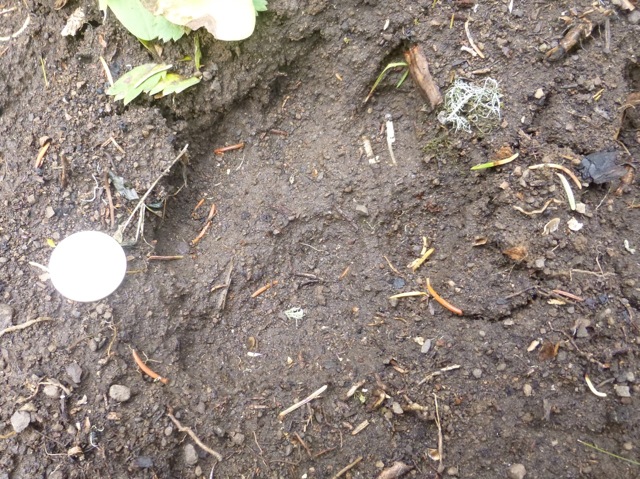
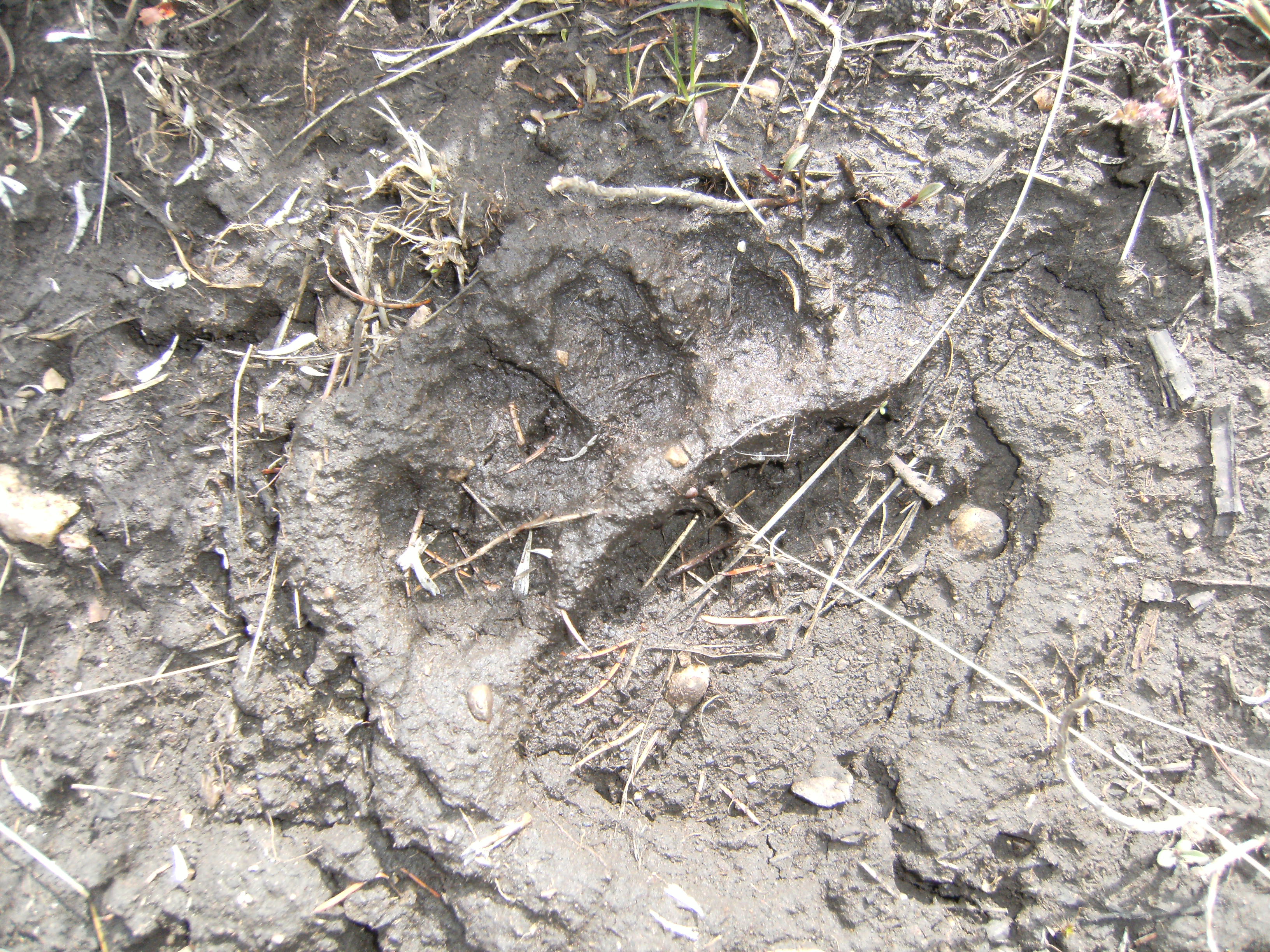
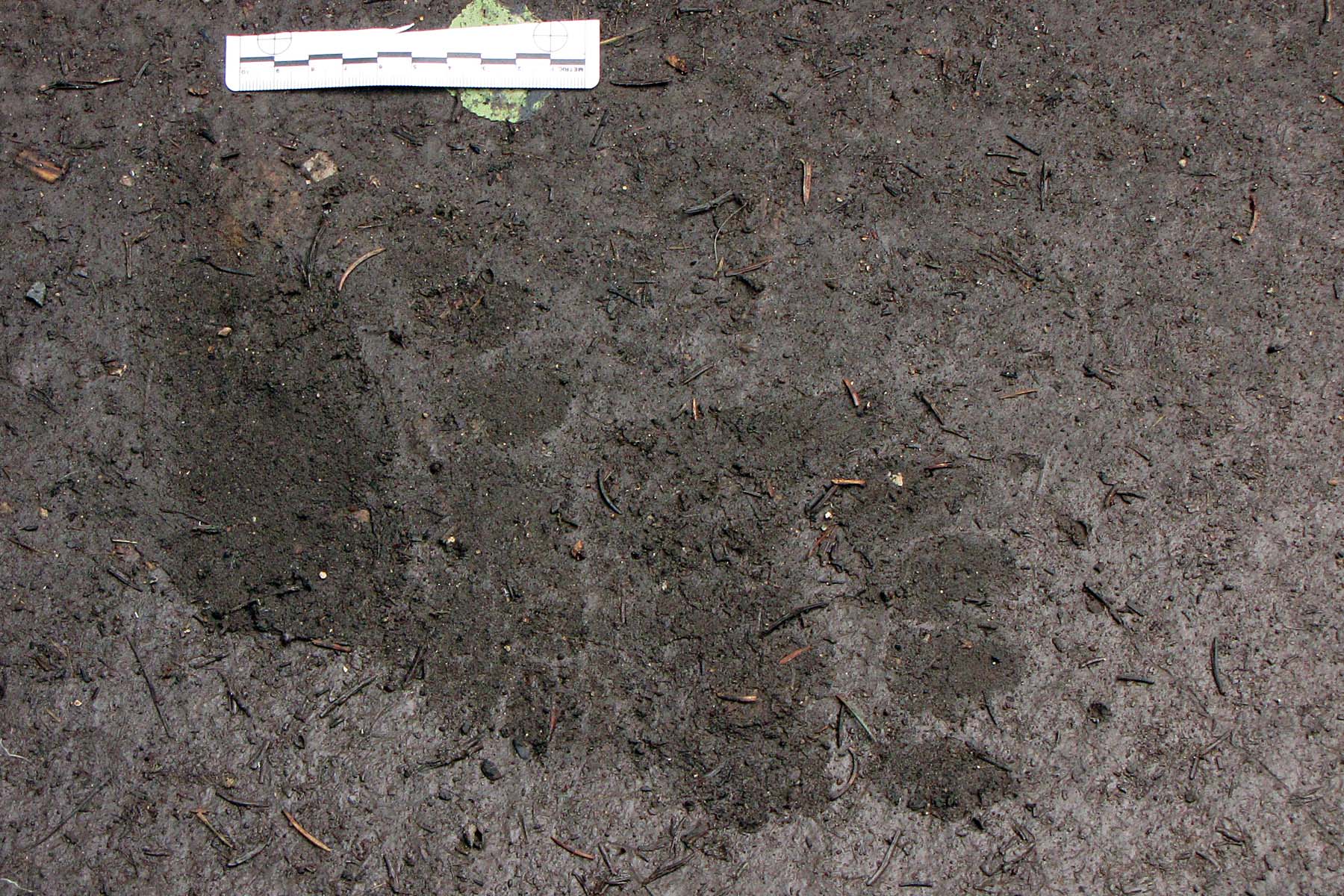
My photo below isn’t very good, because it wasn’t till he was farther away that I realized I’d brought my iPhone.  I’d seen a partial track down the trail in hard mud, but being incomplete I wasn’t sure if he was a two year old grizzly or a black bear. (3″x3.5″)

Sorry he looks so far away.  iPhone photo, but he is just across the creek looking back at me and Koda

Sorry he looks so far away. iPhone photo, but he is just across the creek looking back at me and Koda

Black bear track 3"x3.5"

His track

After about 1/2 hour and a snack on the trail, I left the bear to his eating.  He never was bothered by Koda and I watching him.  But I decided to revisit his track and spend time looking for bear rubs on the way back.

Fall is definitely in the air.  The berries are beginning and by mid-September a great crop of rose hips will ripen.  It’s been a quick summer because we had a long winter and compressed late spring.  The bears are definitely feeling it as evidenced by this little bear.

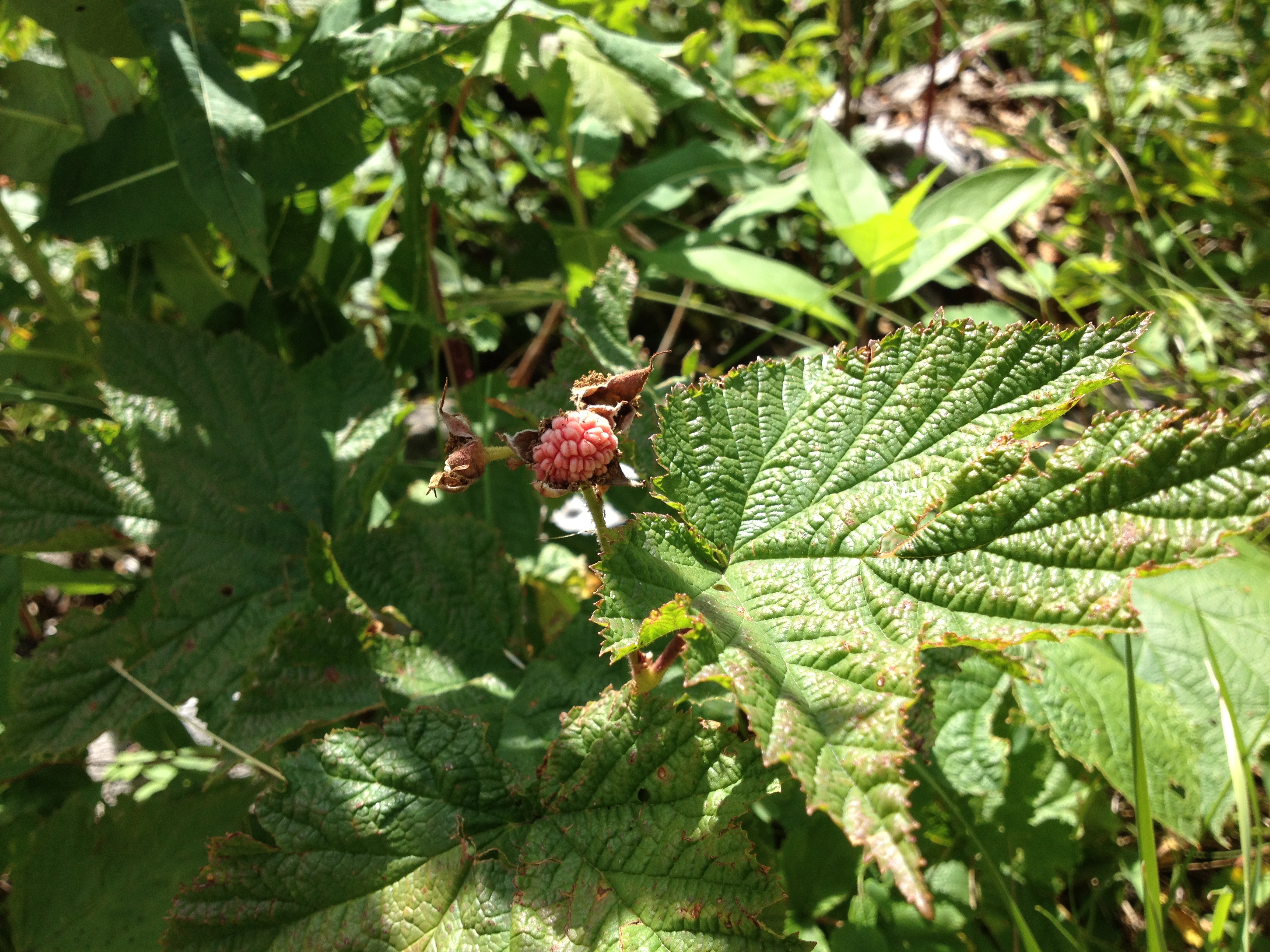
Thimbleberry not quite ripe.  Yummy

Thimbleberry not quite ripe. Yummy

Buffalo Berries

I love these, but you have to develop a taste for them. After a little frost time, they are at first sweet, then a really tart after taste.

These are not edible.  They are in the honeysuckle family.

These are not edible. They are in the honeysuckle family.  Notice they are in ‘twins’

You recognize this garden delectible

You recognize this garden delectable.  Strawberry.  The raspberries were ripe as well.

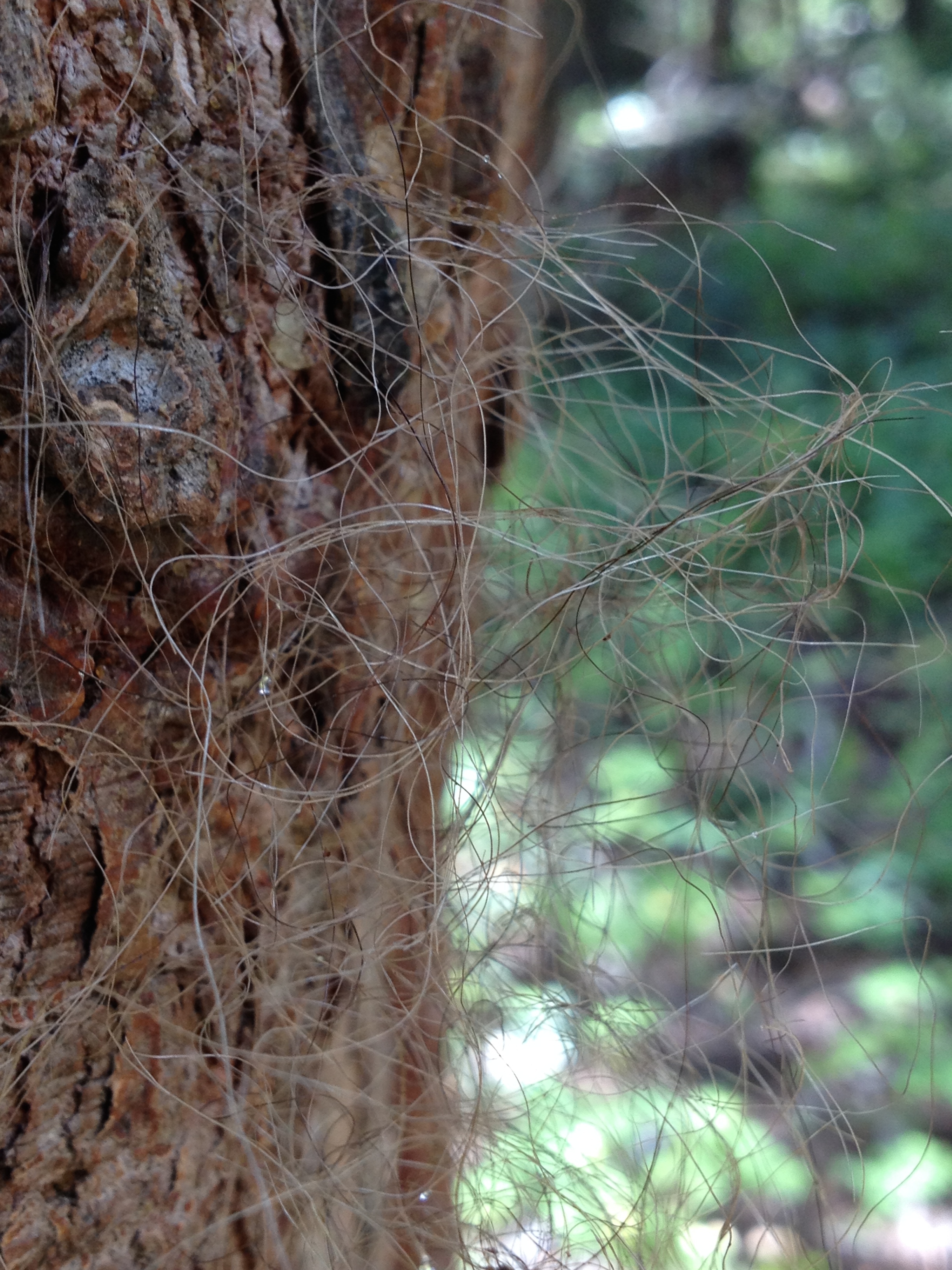
On the way down, I found three distinct bear rub trees–all of them had hair and none of them had my bear’s hair.  All of them had blond grizzly hair.  Grizzly bears are called Silver-tipped because the ends of their hair follicles are silver.  If you hold a hair to the light and you see it fade to ‘white’, then you have a grizzly hair.

bear rub tree

bear rub tree

Grizzly bear rub tree

Grizzly bear rub tree

All those rubs within a mile and a half indicated to me this is a prime bear travel corridor, and that grizzly had been leaving his scent along the trail on the trees.  In the winter, the area is closed to people for habitat protection and that’s a good thing.  Wolves as well as large ungulates use this trail for easy travel into and out of the back country.

It was a great pleasure to watch that bear undisturbed for a while.  Seeing bears on the side of the road in Yellowstone is common, but watching one alone in the backcountry contains an intimacy and magic that is indescribable.

Little Black bear in Yellowstone

Little Black bear in Yellowstone.  My bear was bigger than this little guy.

Bears and wolves

They usually go together–bears and wolves that is.  They’ve adapted and lived with each other for thousands of years; more than we’ve been around.  So it was no surprise when I saw some fairly fresh wolf tracks and then saw a nice looking grizzly bear scouting around for food before his winter slumber.

Wolf Print

Wolf Print; Quarter for size at left

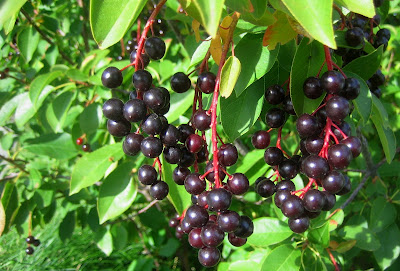
Symphoricarpos berries

They say this year’s White Bark Pine crop is down which drives grizzlies elevationally lower looking for food.  Those lower elevations are where we, people that is, like to live.  White Bark Pines grow around 9000 feet or higher.  Their seeds, collected by squirrels and placed in middens, are robbed by bears and provide a lot of fat and nutrition, concentrated in a small seed.  Bears are physiologically driven in the fall to put on weight for their long sleep, during which time they do not eat, drink, urinate or defecate till spring.

I went out yesterday in pursuit of a Sorbus bush to dig up–Mountain Ash. They provide good berry food for critters and I want some in my yard. Although I found no Sorbus, I did find a lot of bear scat, so I knew there was a bear in the neighborhood.  Besides a lot of grass and rose hip seeds in the scat, what surprised me were Snowberries (Symphoricarpos albus).  I’d always read that snowberries (named as such because they are pure white and usually white berries are poisonous) were poisonous and not edible.  On the other hand, in general, 80% of a bear’s diet can be eaten by humans, except grass which we can’t digest.  What I’d been finding in Grizzly and Black Bear scat is A LOT of snowberries, and they looked fairly intact, as if they went through whole and didn’t provide much of anything nutritionally.

Grizzly bear

Grizzly bear

Snowberries are a member of the Honeysuckle family, along with another familiar berry–Elderberries. Their berries contain saponins which is widely found in plants and is a glucoside poison:  it destroys the membranes of red blood cells and releases the hemoglobin. Fortunately, saponin is not easily absorbed by the digestive system, and most of what we eat passes straight through the body.  So plants like beans, spinach, and tomatoes that contain saponin are rendered harmless to us.  Saponins stimulate the digestion and clean out the intestine.  They facilitate the body’s use of certain substances like calcium and silicon.  And they forth or whip up into a white foam that can be used as a soap.  They also can be used (illegally though) as a fish poison because fish assimilate saponin into the blood stream directly through their gills, but won’t harm the fisherman who eats them. Plant books say snowberries are poisonous, causing vomiting and diarrhea.  Yet here are some Native American uses:

Common snowberry fruit was eaten fresh but was not favored by Native Americans in Washington and Oregon. The fruits were also dried for winter use. Common snowberry was used on hair as soap, and the fruits and leaves mashed and applied to cuts or skin sores as a poultice and to soothe sore, runny eyes. Tea from the bark was used as a remedy for tuberculosis and sexually transmitted diseases. A brew made from the entire plant was used as a physic tonic. Arrowshafts and pipestems were made from the stems

And one more thing:  Snowberries make a great garden plant addition.

Fall is a’coming

The Clark’s Nutcrackers are congregating, waiting for the Limber Pine cones to ripen.  You can tell they’ve arrived as they are a noisy bunch.  As Jays, they are super-intelligent birds.  Every year they cache tens of thousands of seeds and are able to memorize the location of their stashes.  Clark Nutcrackers have a distinctive ‘wing-whirl’, which is a loud noise they make when flying.  Although the pine cones aren’t ready yet, they seem anxious, waiting for just the right moment to steal the seeds away from the waiting red squirrels who also cache the cones for winter food.  I’ve been watching the birds  eating insects while they while away their time.

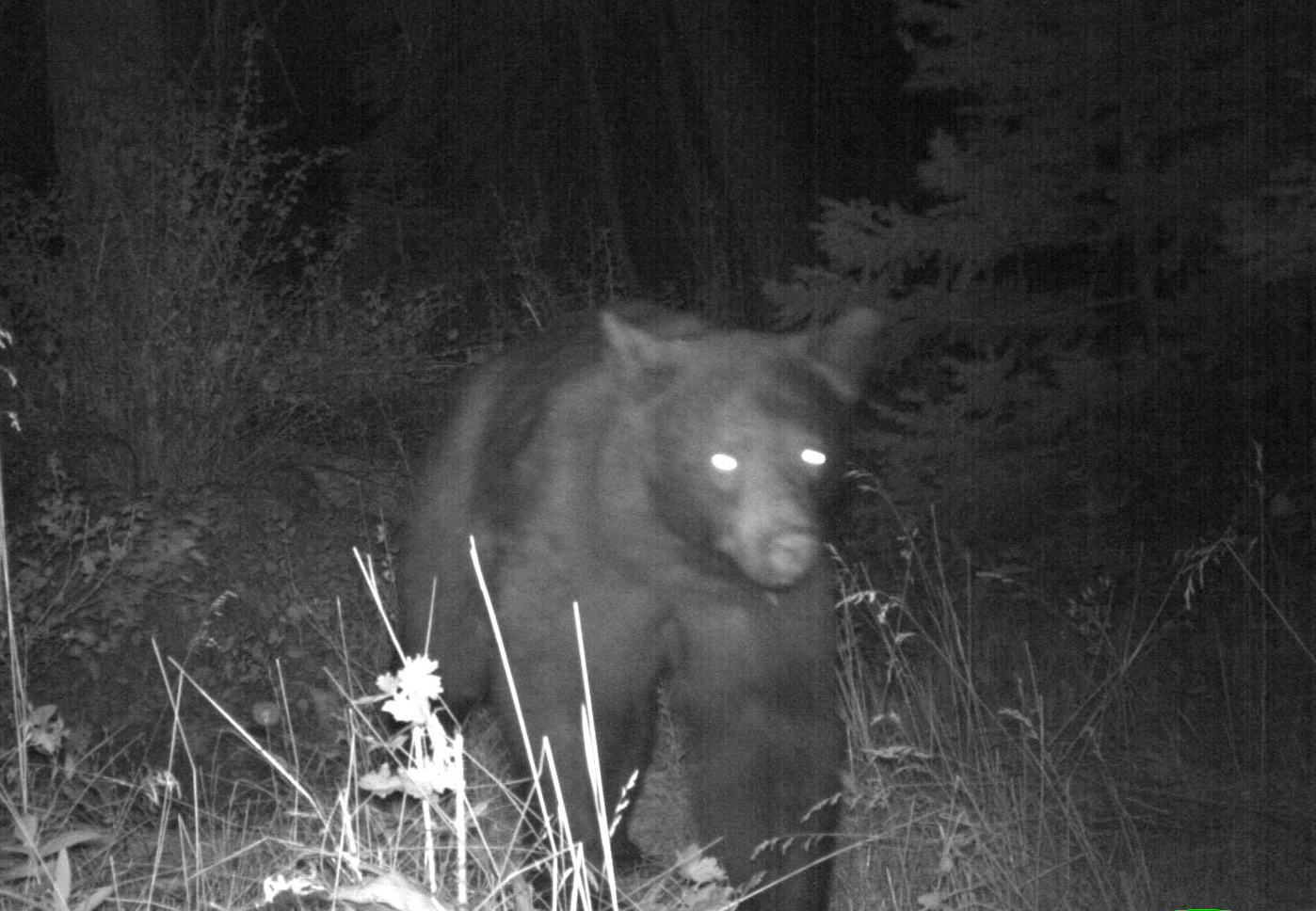
This year is not only a bad cone year for White Bark pines, but the Limber Pine cone production is  down as well.  This bodes poorly for bears.  But the good news is that with all the rain we’ve had, the berry crop is up.  The chokecherry crop is one of the best in years and I’m waiting with my trail cam for some bears to spend time stripping the berries off the branches before the birds get to them.  The bears seem to know the exact time when they’re ripe, and come around for that week only. And with all the beetle kill, the forests are opening up and changing.  I’ve seen new understories packed with chokecherry bushes–all full of cherries.  

Grizzly bears evolved in the plains.  They can’t climb trees like their forest adapted cousins, the black bears, and their massive claws were meant to dig out roots.  Pushed from their native habitat into the mountains, they prefer burn areas and meadows, places that emulate their native past.  Our mountain forests are rapidly changing with all the downed timber, creating good habitat for the Great Bear.

Young bear yesterday coming to look for berries

Young bear yesterday coming to look for berries

The little forest next to my house is a perfect example and a fine study area of a rapidly evolving landscape.  With seven springs emerging from the limestone base, there is sufficient water ground water.  The  old growth Englemann Spruce are dead and dying, falling to the ground and leaving large openings where new chokecherry bushes, dogwoods, raspberries, gooseberries, and aspens are rapidly emerging.  This is an area we specifically asked the Forest Service NOT to put in their logging plans.

In contrast, the lands adjacent to the springs are private and were logged by the homeowners through the State Forestry Office (who were concerned about fire protective barriers) 5 years ago.  Approximately 90% of the trees were cut or were blow downs.  This land too has aspens, gooseberries, and grasses–but much of it has a very high ratio, maybe 10:1, of invasives, particularly Canada Thistle.  The combination of moisture, sun, and rapid disturbance provided a perfect storm for the invasives.  The invasives rob moisture and space for other natives that might get a stronghold.  In the non-logged side, the lesson is clear:   slower is better and the forest can naturally restore itself with little interference by man.


Turning my head upside down about Grizzlies

The Grizzly Bear, by William H. Wright, first published in 1909, is one of the best all around books ever written on the subject.  His books shows a hunter becoming a naturalist:  Wright first studied the grizzly in order to hunt him, then he came to hunt him in order to study him.”  Frank C. Craighead, Jr.

That’s quite a recommendation from Frank Craighead, one of the most well known grizzly bear experts.  Craighead was instrumental in having this out of print book republished.  Not only is this a highly readable book, but fascinating if you can get over all the grizzly bear hunts and killing he describes in the first half.  But Wright was a product of his time.  No hunting quotas, tags or seasons.

Grizzly in Lamar

Grizzly in Lamar

But Wright is not just a bear hunter; he’s a fascinating character.  He knows grizzlies inside and out.  He sees a track and, even if he is not hunting bears, he gets in the mood to follow the griz for two days.  He’s eight hours behind him, but because he understands grizzly habits, he figures he’ll eventually catch up.  He describes where and when the bear was digging, if the bear was successful at catching his marmot or ground squirrel (and how many), when the bear took a nap, how it paused to sniff for danger…all in the tracks.  Then when night comes and he still hasn’t caught up with the bear, Wright finds a large rock, builds a lean-too and a fire and beds down.  Then he starts out again the next morning, all in unfamiliar territory. At last he finds the bear in dense shrubbery and kills it.  Wright never baits bears as he considers it not fair chase.  He only uses his own cunning pitted against the bear, whom he considers the smartest animal there is.Grizzly cub

In one narrative, Wright is guiding two fellows on a bear hunt in the Bitterroots.  The men are back at camp while Wright is fishing with the dogs.  Wright and the dogs spot a grizzly.  The dogs run after the bear and corral him in a hole.  As the bear swats at the dogs, Wright, who left his gun back at camp and  in his attempt to save the dogs, takes out his pocket knife and starts swinging at the bear.  Long story short, Wright kills the bear with his pocket knife.

Grizzly minding his own business

Grizzly minding his own business

Wright realized that grizzlies were endangered and becoming extinct.  He loved these bears and admired their intelligence and had already begun photographing them in the wild in the attempt to save them.  In 1906 he went to Yellowstone National Park to use some new photography methods.  His was essentially the first ‘trail camera’.  He used a sewing thread as a trip wire.  One end he attached to an electric switch which exploded a flash and sprung the shutter of his camera.  The other end of the trip wire was tied to a small stake driven into the ground beyond the trail.  He located a heavily used bear trail, set up the apparatus, then hid in the bushes to watch, mostly at dusk and into the night.Grizzly front foot

From there he reports on the various bears that came bye.  In every instance, whether mom with cubs, or three year olds, or old boars, the bears all stopped short of the thread, sniffed the thread, sometimes bolted, sometimes explored the thread up to the stake and down to the switch.  Most all of them refused to go beyond the thread.

So Wright left the Mt. Washburn area and headed toward Lake.  He set up the apparatus, but this time he found the thinnest wire he could, so thin that he himself couldn’t see it from ten feet away.  He then chose a trail that was covered with grass in order to conceal the wire.  Then he waited some two hundred yards up the trail and watched.  Again, all the bears detected the wire, nosing along it inquisitively.  Wright even recognized a few of the bears from the Washburn area on this trail.  Grizzly scratches on pine tree

Thinking that maybe these Yellowstone bears were quite adapted to people, Wright tried walking up and down the trail first to human scent it, then hiding behind the tree.  But this only made the bears more inquisitive, some of whom came, under cover of darkness, within ten feet of him.  Wright remained still in order not to frighten them.  When they got close enough to figure out he wasn’t a stump, they all ran off.

Wright describes the grizzly temperament as very wary of danger.  He says they are habitually cautious and alert, and the veru least scent or sound or sight sends them into the farthest hills.  

Reading Wright has made me think again about grizzlies.  My usual take on grizzlies is that they have not a care in the world as they are top predators.  I think of them as swaggering through the woods, meandering from food source to food source.  Yet Wright describes them completely differently, and says he found the protected Yellowstone bears no different than any other wild bears he had encountered in the Selkirks or the Bitterroots.  Reading his tracking narratives, it appears these grizzlies are peaceable animals, not only wary of dangers, but mostly interested in sleeping and digging for foods.  Without having such direct and repeated experiences with grizzlies, it’s impossible for a person to know their nature like Wright does.  So instead, tales get told and assumptions are made, and all we can go on is what we’re told to do in case we actually run into a bear while hiking or camping, and usually this involves a gun or bear spray.  With more bears inhabiting our region, it’s good to read all we can.  I highly recommend Wright’s book.

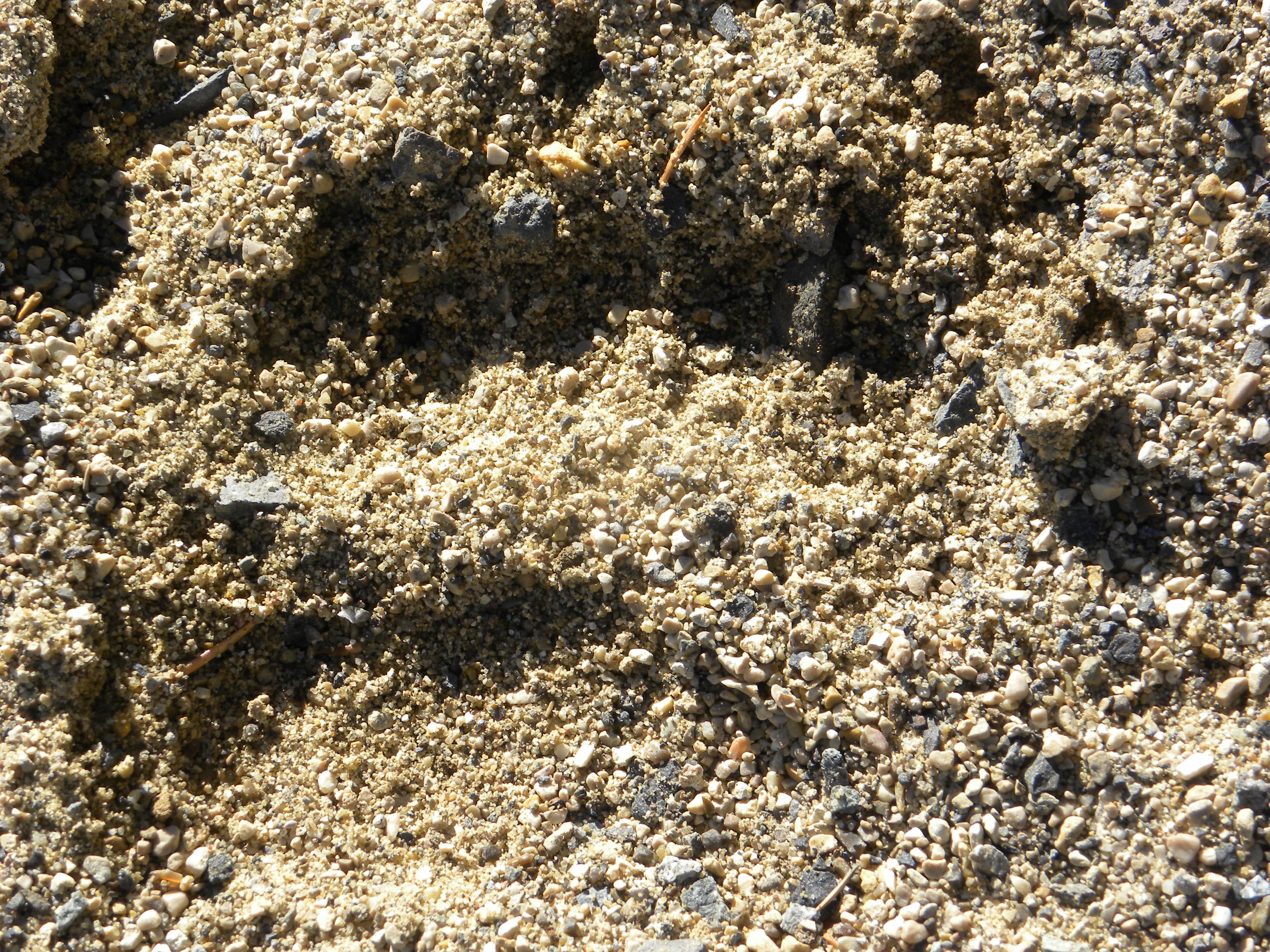
A Grizzly track found by the river

A Grizzly track found by the river

Ernest Hemingway, Bears, and Sunlight

My neighbor who was born in the valley in 1924 told me the other day that September 16 was his cut-off day.  “Usually snows on that day, or anytime soon afterwards”, he said.  Well, things are definitely a’changin because it rained, hard, on Sept. 16.

Besides the climate, Sunlight has changed a lot since my neighbor homesteaded here.  In 1929, when he was just 5 years old, Ernest Hemingway came to the Basin and stayed at a ranch called the L-T, owned by the Copelands.  Hemingway, with his wife Pauline and their young son, came to write, rest and hunt in these mountains intermittently over the next 10 years. Apparently, he wrote “The Green Hills of Africa”“Death in the Afternoon” and “To Have and Have Not”  here in a small cabin.

But these facts are findable online.  What interested me was a wild story I heard from a reliable local; a story that apparently is famous around Cody.  Here’s the tale I was told:

Hemingway made a bet with some friends that a grizzly bear could take on an African lion.  In order to prove it, he concocted up a scheme.  He hired one of the Crandall locals to catch him a live grizzly.  Being that this was in the 1930’s, there were of course no tranquilizer guns nor other easy methods to catch a live bear.  So the hired fellows dug a very large and deep pit; threw in some attractive bait, then covered up the pit and waited.  Soon enough a griz appeared and fell into the pit.  The question now was how to haul the bear up, and keep him alive.  One of these locals was an excellent roper.  He roped the bear’s front and back legs, and after a lot of pulling, they got the bear out of the pit.  They tied a rope around the bears neck, and apparently easily led the bear to a waiting cage.  This poor unsuspecting grizzly was then transported to Las Vegas, where an African lion awaited him.  The griz was led into the ring with the lion, and within seconds killed that lion. So Hemingway won his bet.

What happened to that grizzly after the match?  That part of the story was omitted, but I suspect he was made into a rug which lies somewhere now.

This is such a wild story that I’d love to hear from any locals that can add tidbits or fill in with details.

Grizzly minding his own business

And it is the season to tell bear stories as the bears come low down, in hyperphagia and getting ready for winter.  Here’s a cute grizzly cub I caught on my trail camera the other day–way too small to take on a lion.

An old bear experience

Its a good time of year to tell bear stories.  The bears are coming low, getting ready for winter.  I’ve heard a few stories in my valley from hunters.  Last week a ‘bad’ bear was dropped off just a bit north of the valley. Game and Fish spends a lot of their time moving bears around that get into trouble with livestock or grain, or just too close to towns.  My valley is one of the places where the bears are deposited.  Soon after this bears relocation, a hunting party killed a large buck and hung it outside their house to cool.  That night a grizzly came through and ate their kill.  A few nights later, a grizzly ate part of an elk that was hanging outside another home about 20 miles up the road.

This time of year I  imagine the bears hanging around outside the soda shop, talking, laughing, just waiting for a hunter’s gunshot to go off, then heading for their easy meal.

Yes, this is always the time of year we think about bears the most.  Which makes me remember my first, and closest, bear encounter.  Its great to see bears, especially from the car or through binoculars.  This is a great story and I would never want to get this close again.

My first bear experience took place in the backwoods of Glacier-Waterton National Park, on the Canadian side.  I was 17, fresh out of high school, and hitch-hiking across the West with two girlfriends.  It was the early 70’s when you could safely do those kinds of things.  We’d been dropped off in Vancouver by a friend who had received a new Volvo for graduation.  The four of us had talked about driving to the Canadian Rockies.  But as soon as we arrived across the Canadian border, Terri announced she was going to Alaska–alone.  So the three of us piled out of the car with our backpacks and that’s when our adventure really began.

After a few rides through southern British Columbia, we were picked up by a station wagon driven by an aging drunken vagabond and his side-kick.  Pretty soon we were doing the driving while the owners drank.  All three of us had spent our high school years backpacking the San Bernadino and Sierra Nevada mountains in a co-ed section of the Boy Scouts called the Explorers.  We felt ready for anything and certainly very experienced backpackers, or so we thought.

In fact. Karen and I had spent the previous summer studying at Banff  School of Fine Arts.  Every weekend we’d head for the Canadian mountains and explore some new uncharted territory.  We had our share of adventures there too, with blizzards, mosquitoes, and getting lost.  My constant amusement was to test myself to see if I could start a fire with just one match no matter what the conditions.  I’d gotten pretty good at it too.  So when our hosts dropped us off at the Waterton Lakes Park ranger station, we were all feeling completely prepared for trekking into the wilderness.

We headed into the main ranger station, asking about permits and hiking conditions.  I’ll never forget those Canadian rangers look of disbelief.

“You girls are going hiking, by yourselves? How much camping experience do you have?  You know there’s bears in the backcountry.”

We shrugged them off, got the appropriate permits, and began our 10 mile hike to our backcountry campsite.  Our first night took us to a site beside a large lake.  We arrived before evening, set up our sleeping areas, made a fire and dinner, cleaned up our meal and hung our food in a tree 100 feet away.  We were sitting around the fire when we noticed a large black bear come out of the woods and towards the tree where the food hung.

After exploring the hanging bag of food and realizing that he couldn’t get to it, the bear began walking towards us.  He must have smelled our dinner.  In the early days of backpacking, there wasn’t freeze-dried or dehydrated food available.  We brought parts of meals and cooked them; lots of rice, lentils, peas.  These meals required usually an hour of preparation and cooking, so the smells wafted with it.

We knew what to do next, we thought.  The protocol at that time was ‘make lots of noise’.  We banged on our pots and pans until they were full of dents, but the bear just kept coming.  Bears don’t see well, they’re very far-sighted, but their sense of smell is impeccable.

As the bear came nearer, we all contemplated what to do next—jump in the Lake?  Out of the question as it was glacier fed.  Climb a tree?  We looked around but at this latitude and elevation all the trees are spindly sticks their limbs starting at around 20’.  At a loss, we began building the fire up into a roar and huddled together on our rock seats.

The bear, in retrospect, was probably a young male, inexperienced and curious.  Black bears can be more deadly than grizzlies.  When a black bear charges, he’s out to kill.  When a grizzly charges, they’re usually out to frighten you out of their territory or protecting their young.  Most of the time they bluff charge.  But we didn’t know all this at the time.

Our packs were leaning against a nearby tree, and although there wasn’t any food in them, they had the smell of food on them.  The bear went directly over to the packs and explored them thoroughly.  Soon this curious bear was approaching us.  Having exhausted making lots of noise and waving our hands, we sat perfectly still, not knowing what to do next.  I was sitting sandwiched between my two friends.  Karen on my left had her down jacket on.  It must have smelled like the pea soup we’d just finished cooking and eating.  The bear nibbled at her jacket, grabbing her skin in the process.  She yelled and jerked back. The bear, startled, jumped back too.

I suppose he’d never seen fire before, and probably hadn’t encountered people before either.  The next thing he did was wild.  This bear thrust his nose between me and Karen and put it right into the fire!  Of course, he pulled it right back out, and with his face next to my chest, he brought up a paw and patted his stinging nose.  It was like having your dog nuzzle right next to you and your friend, his face was that close.

Now oddly enough, I felt no fear at all, and was amused at this bears’ antics.  After his fire encounter, the bear walked over toward Sarajo on my right and was about to test her jacket out when she made a loud noise.  The bear sauntered over to our tents to explore them.  It seemed like we were never going to get rid of this bear.  He’d been in our campground over 45 minutes now.  I was glad I hadn’t jumped into the Lake!  Suddenly I had an idea.  When I was a kid, I loved to watch cowboy black and white movies on TV.  A common ruse in the movies was for the cowboy trying to sneak around a guard to throw pebbles in another direction.  That way the sentinel checked out the noise while the cowboy snuck around him.  I started throwing pebbles way out into the forest hoping that would get this bear’s natural curiosity going.  It worked and the bear headed out into the woods not to be seen again.

The next morning we packed up and walked around the lake to a backcountry ranger station.  The resident ranger told us how grizzly bears go after menstruating women.  He told us a story which he said happened just the year before (actually it happened in 1967, several years before, but he embellished it for effect I suppose), where in one night two women were killed by either one or several grizzlies and both had their period.  That mama grizzlies are very territorial and think its another bear in their area.  This idea has since been studied and dispelled, but at that time it was believed to link the two incidents together.    And since one of my friends started her period just that day, we were particularly alarmed.  We spent the next 4 or 5 days hanging around that back country ranger station, taking day hikes, shouting and wearing bells, and watching all wildlife within hundreds of yards from us run away as fast as they could.   The routine was so tiresome, not what we envisioned as backcountry camping, that we high-tailed it out of Glacier to the Tetons where we spent several glorious weeks in the back country not worrying about Grizzlies.

The next morning at the ranger station, there was a nice bathroom. Karen took her shirt off and she had large bruises in the outline of a jaw, top and bottom, with teeth marks, along her back, although luckily the bear hadn’t broken the skin.

I always wondered about myself and why I wasn’t afraid.  I knew that if I’d been in the city and some strange man had invaded our space, I’d be afraid.  I wondered if my innate instincts had become so removed from the natural world that I’d become a kind of freak, unable to judge danger.  Years later I was reading a small book by Jim Corbett about his early life in India.  Corbett has a National Park named after him.  He hunted and killed man eating tigers.  He said in this book that fear is an instinctual emotion that is triggered when the situation is threatening.  He had many encounters with leopards and tigers where, because these animals were not threatening him, he felt no fear.  Fear is appropriate to the appropriate circumstances, and where there is no real threat, fear does not arise.  I finally understood that, even though that bear was right next to my face, the reason I never felt afraid was because he was not challenging us.  He was just curious.  Not being afraid, keeping my cool, probably also kept the bear in a non-threatened state.

Black bear print

Bear Search in the Centennials

Several weeks ago I joined a NRDC funded project in the Centennials under the leadership of Greg Treinish of Adventurers and Scientists for Conservation looking for sign of Grizzly Bears there.  If we found sufficient evidence for the great bear, then more protections would be put in place.

This was the 2nd of 3 ‘adventures’ Greg is conducting; the next and last one is in October. Greg gave us an introduction and short class in Grizzly vs. Black bear hair, where and how to look for tree and fence post rubbings, and use of a GPS.  We bagged any hair we found and took a GPS reading.  Most of the two days were walking along old fence line, looking for hair caught in the barbed wires.

The Centennials border the Red Rock Lakes National Wildlife Refuge, rising more than 9,000 feet above the Centennial valley wetlands.  The wetlands provide habitat for dozens of species of birds including the Trumpeter Swan.  On the second day, I walked across the valley along a road, watching for hair samples along the fenceline.  Harriers accompanied us most of the day.

Here is a nice short video David Gaillard of Defenders of Wildlife put together of our weekend.  Scroll down to the 9/22 entry entitled ‘Short Movie of Centennial Bear Study in September’

Grizzly videos from my driveway

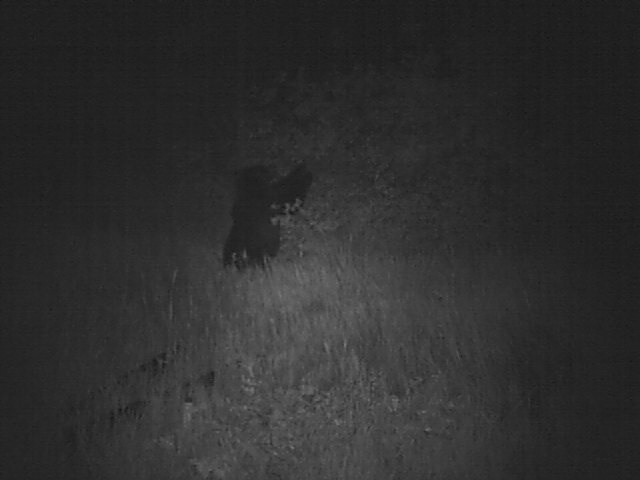
A large (pregnant maybe?) grizzly has been visiting my chokecherry bushes nightly. Since I can’t post video, but I’ve got lots of 30 second clips from my trail camera, start here  at my Youtube site for a great shot of her shaking her butt on the way to the berry bush.  Then see my other clips of her from 2 nights ago.

Bears are now in hyperphagia or that stage of eating where they are gorging, trying to fatten up for winter hibernation.  This is the time to really be careful.  Its hunting season, and a bear on a gut pile is a very protective bear not to mess with.

Griz on chokecherries at 1 a.m.


More elk calves and a lesson in Life and Death

“…that feeling in your stomach of “I don’t want this to be happening.” You try to escape it in some way, but if somehow you could stay present and touch the rawness of the experience, you can really learn something.”  Pema Chodron

Yesterday, this morning, and today were all one large event, the event that is Life.

In my post yesterday, I wrote about the dead elk calf.  This morning the mama spent a long time bugling for her calf behind my house on the top of the rise…a mournful sound of a mother calling desperately for her newborn calf.  I went outside and watched her.   I felt tremendous sadness for her.  I knew she didn’t know what happened to her calf, just that it was gone.

It reminded me of a time two years ago in the spring in the Beartooths.  A car hit and killed a cub of the year.  The grizzly mom spent a week roaming and calling for her cub.

There is nothing so sad in the animal world as that sound–a mother calling for her baby that is dead.  But I felt it was important for me to allow myself to feel this elk mother’s cries fully, and not push my own feelings away, even though it was difficult.

I stayed with her and listened.  And those bugles were low, guttural; not the high pitched sounds you hear in the fall from the elk.  Her cries came from a deep and ancient place, not unlike the cries of humans mourning intensely.

Today was the first really warm, beautiful day.  I decided to go up to a favorite spot, a place that overlooks a deep canyon, and have lunch there. (Unfortunately, I took my cheap camera) Its about a 2 1/2 mile hike up to the top of this ridge-line.  You pass through a forest until you top out at some high meadows.  At the end of the meadows are sheer cliff drop-offs.

View from afar of the spot where elk is. This is the meadow and cliff

As soon as I broke through the trees and began crossing the meadow to the cliff edges, I spied a lone elk.  She seemed a bit nervous at my presence (not unusual) but then I saw something else.  A calf lay nearby.  A wet calf.  She had just given birth and probably just finished licking the calf clean of the afterbirth.  I made a large circle and hid behind some rocks out of the wind.

Mom had taken off and left her baby there, probably hoping that I’d be more interested in following her and so not find her newborn.  I watched that little guy for about an hour.  Within about 10 minutes, he tried to stand up.  He struggled unsuccessfully with his weak legs.  Exhausted, he spent another 10 minutes resting.  But soon he tried again.  This time, although he still couldn’t stand up easily, he was getting stronger.

Keep trying...

First attempt to stand

I had a good feeling about this mom and her choice of a birthplace.  High up, the only entrance was on one side.  She placed the calf near a rock that had similar coloring as the calf.  And not too far beyond the calf was the cliff, where no predator could come from.  On my hike up through the trees, I saw no grizzly sign.  Grizzly sign was on the other side of the canyon down below near the creek.  If this calf makes it past a few weeks, he’ll be too fast for the bears.  But then he’ll still have to contend with wolves, who do frequent the area.

Cliff edge near where calf lies

If he makes it through a month or so, when the snows melt, his mom will probably take him up to the Absaroka Divide and head to the Lamar.  He’ll have a good year this year, more similar to what his ancestors used to experience before the long drought, because the grasses will stay greener for longer.  Then next January I might see him again when he migrates back down here for the winter.  He’ll be taller but still a youngster and still vulnerable to the wolves and the deep winter snows.  But he might just be one of the tougher ones, the lucky ones, and live into his adulthood.  Live to mate and make more elk and not be caught by a hunter’s bullet.   I surely hope so.