• MY BOOKS ON WILDLIFE, GARDENING AND MORE

  • Coming Fall 2024. Pre-order and use code 6AF24 for a 40% discount

  • The Wild Excellence

  • Award winning ebook on DG Primer

Trail Cameras

Trail cameras for wildlife spying have become a popular pastime. Not only has the video and photo quality improved, but the price point for high quality cameras is lower every year. I’ve been using trail cameras since around 2010. I thought it would be interesting to do a short post on my personal evolution of my use and what I’ve discovered.

Professional photographers and folks that are handy with manual camera adjustments have switched from store-bought trail cams to DSLR cameras. Using a DSLR camera trap requires a lot of knowledge of not just wildlife tracking but lighting positioning and camera settings, but the payoff is great. For my expanded Ghostwalker book out this year from University of Nebraska, even though I have thousands of great mountain lion photos and video, I needed to engage these experts for high quality photos that would reproduce in print. I’ve never been great with manual adjustments so point/shoot cameras, like trail cams, are my go-to.
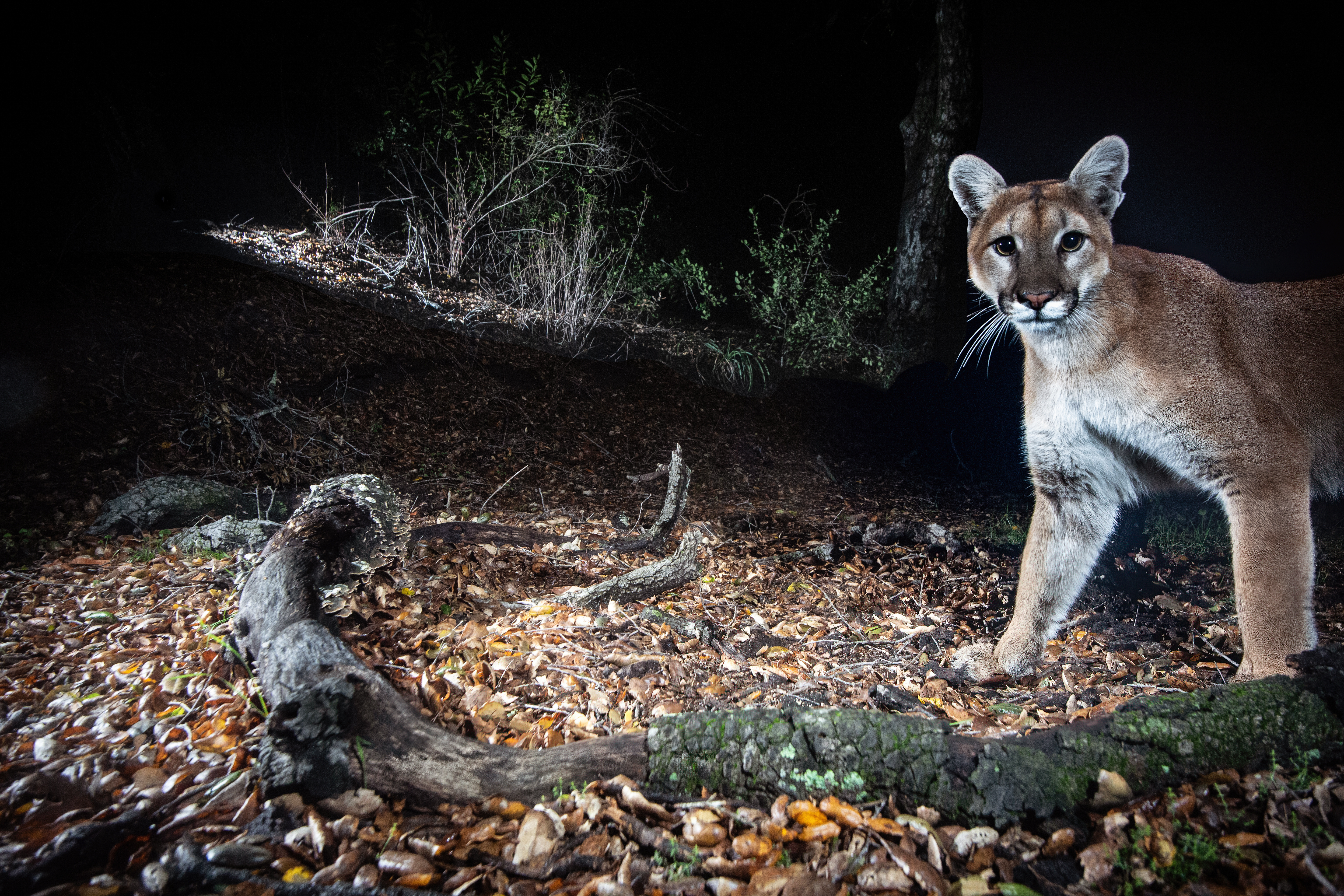
Amazing capture by Jeff Wirth using a DSLR. Wirth graciously consented to let me use some of his photos in Ghostwalker: Tracking a Mountain Lion’s Soul through Science and Story

When I first started using trail cameras their quality was very poor, but I was mainly interested in who was visiting the nearby forest. I caught grizzly and black bears on the animal trails, along with deer, coyotes, and wolves. I was anxious to catch martens who don’t follow trails. To that end I built a box trappers use, baited it, and put a camera on it (of course I didn’t put a trap inside!). Bobcats also don’t follow trails very much and since I do have bobcat trapping in my area in winter, the animals were rare on the landscape. I hung shiny objects to attract the cats with a camera positioned on it. Still, I almost never captured a photo of a bobcat.

After two years of camera trapping, I had several epiphanies that changed the course my experiments. First, after watching trapping in my area, I became aware that my baiting was contributing to these animals becoming less wary of actual kill traps. Therefore I stopped all baiting and scenting. But the biggest revelation was how to reliably capture animals on camera.

Elk on frozen river at a crossing point. I could see the crossing using track I.D.

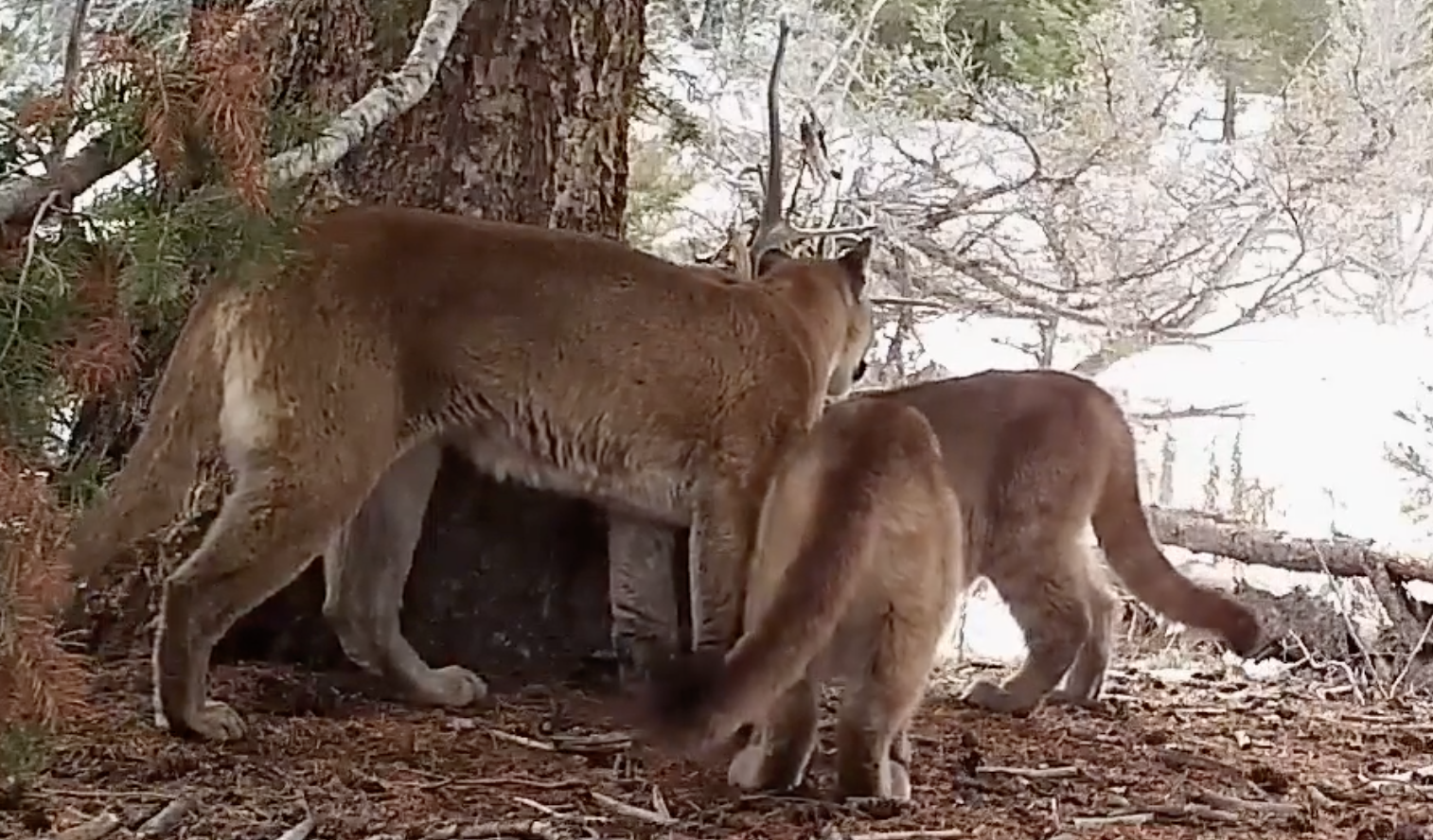
I had been lucky to capture several mountain lions, and found lion tracks in different areas. That piqued my interest so I attended a class on mountain lions by researcher Toni Ruth in Yellowstone. During that class I watched a video of wildlife on a mountain lion scrape site. I knew about scrapes but had never seen one nor did I know how to find them. A scrape is made by a male lion with his back feet, usually urinated on, to mark territory. Lion scrapes apparently are big attractants for all sorts of wildlife. Once I learned where to find scrapes, I sought these out and placed cameras on them. Scrapes draw almost all the prey and predators in an ecosystem. By continuing to use these same locations for over 15 years, I’ve captured amazing photos, but the real gold here is monitoring sites for so long that you get a read on the ebb and flow of wildlife activity.

(ABOVE VIDEO OF WOLVES HAD CAMERA PLACED ON A TRAIL HEAVY WITH SCRAPE SITES)

A friend who is a feline researcher told me keeping cameras at the same location for many years provides a good indication of the health of the local mountain lion population. Houndsmen and researchers use dogs to find lions, which gives a good clue to the waxing and waning of lions in a designated area. Would monitoring scrape sites alone give me a general idea of lion health?

Lions are impossible to identify. Puma concolor, their latin name, means cat of one color. Unless they have scars such as nicks in an ear, etc. they look alike. And in a hunted area, males usually don’t last long; but another young male will come to fill the void. I did get an indication that I could monitor lions this way a few years ago. In 2015-2016 we had record snows. Our mule deer population crashed. By early spring when the first grass emerged, the landscape was littered with dead deer. Predator populations lag behind prey drop, but it wasn’t long before I noticed I wasn’t catching females with kittens on my camera. Without sufficient prey, females will have smaller litters or none at all. 2017 was the last photo of a mom with young kittens. Although I did catch young dispersers, there seemed to be a dearth of females in my area until 2021. coinciding with a rebound in the mule deer population.
Additionally, the same thing was going on with cottontails and bobcats. Bobcats also visit lion scrape sites, and male bobcats like to scrape over lion scrapes. Rabbits go through seven year cycles and sometime around 2014 I noticed fewer and fewer rabbit tracks in my study area. I also stopped picking up bobcats on my cameras. The rabbit population had crashed and with it bobcat food. Then around 2020 a rabbit took up residence at one of my camera sites. Within a year, more rabbits at other sites, and soon there were rabbits everywhere. The bobcat population rebounded. Now I was catching bobcats with kittens frequently. An indication of how keeping cameras in situ for an extended period can tell the story of the land’s health.
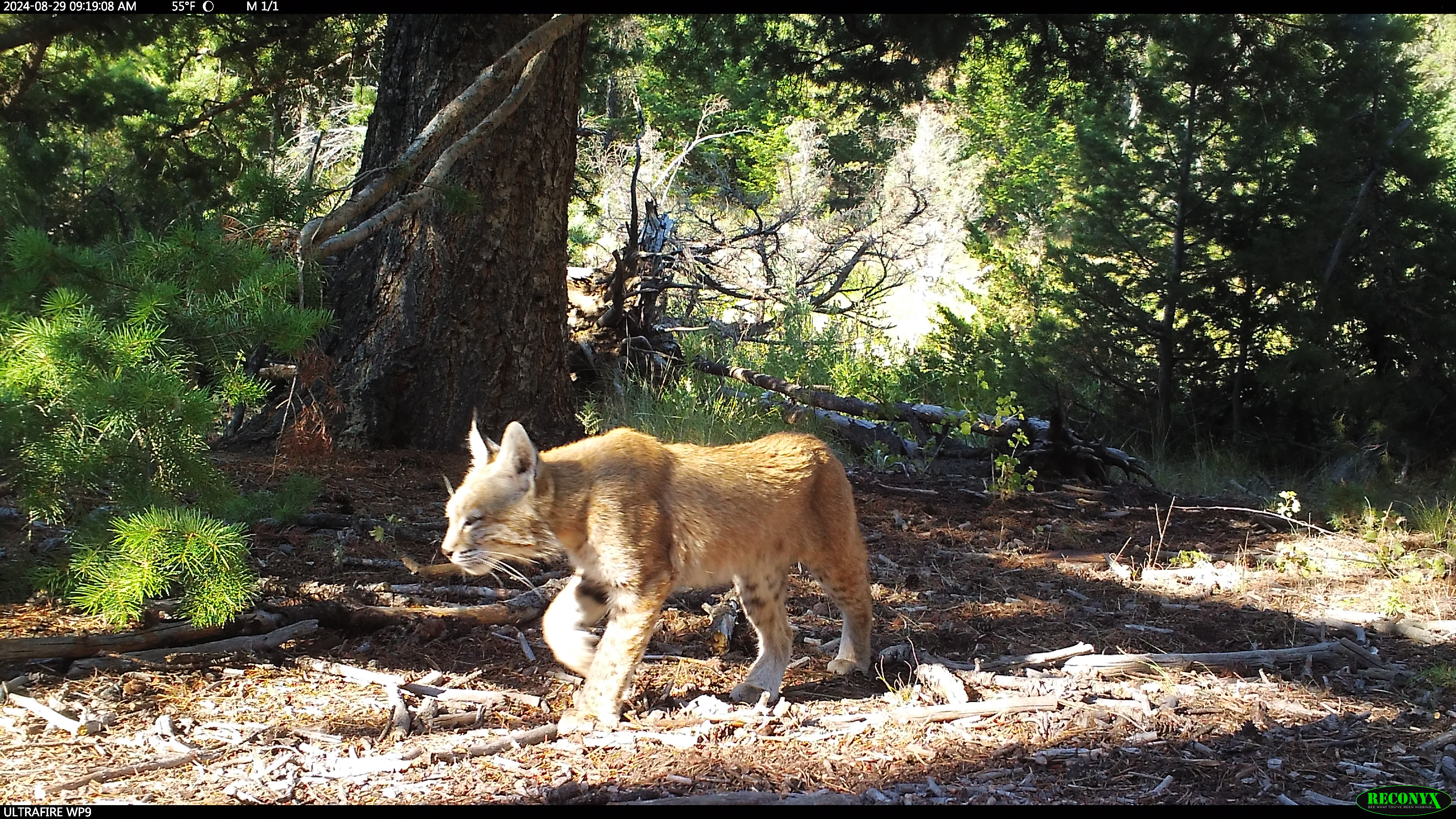
Bobcat visits lion scrape site

In summary, there are many ways to use trail cams. Research, exploration, pleasure. For me it’s become a tool not just to see who is visiting, but to monitor over time the swings of the ecosystem: how weather patterns, food availability, habitat health, and natural cycles affect the wildlife in my study area.

For more videos from my trail camera captures, see my YouTube site

Cats in an ancient labyrinth

Here’s another excerpt that was cut from the final draft of Ghostwalker

Comb Ridge rises dramatically in the Utah skyline of desert. A geologic fold, the impressive eighty mile north-south ridgeline rises slowly from the east to a steep, formidable drop-off on its western side. Only a mile wide, the eastern approach contains deep canyons harboring ancient dwellings. These prehistoric homes lie under overhangs, fill canyon recesses, and are stuffed into cliff niches. Then there are the most obtuse communities where no entry can be found, except by rope ladders that long vanished with the desert elements. A hike into these canyon ruins reveals 1000-year-old dried up corn cobs, enormous metates, pottery shards, and walls spattered with clay-red handprints where women once ground corn into meal. Locals tell of an ancient highway that connected Comb Ridge to Chaco Canyon, two hundred miles away. There are stories of footholds etched into the western cliffs, enabling athletic Puebloans to climb the ridge, and complete their journey on the road to the sacred lands beyond.

I spent two months hiking Comb Ridge, and other canyons. One of the largest, Mule Canyon, is a wide valley wash surrounded by sheer sandstone cliffs. Mostly an open, sunny, easy hike, the few ruins are hard-to-spot since they hang far up the canyon walls. I was following a bobcat, his prints easily visible along the sandy canyon bottom.


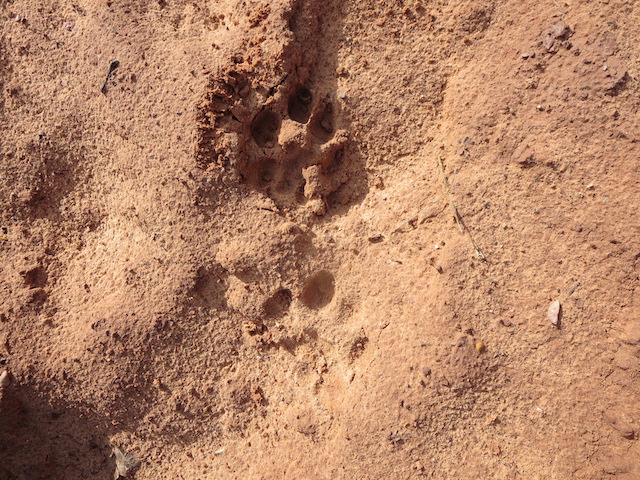
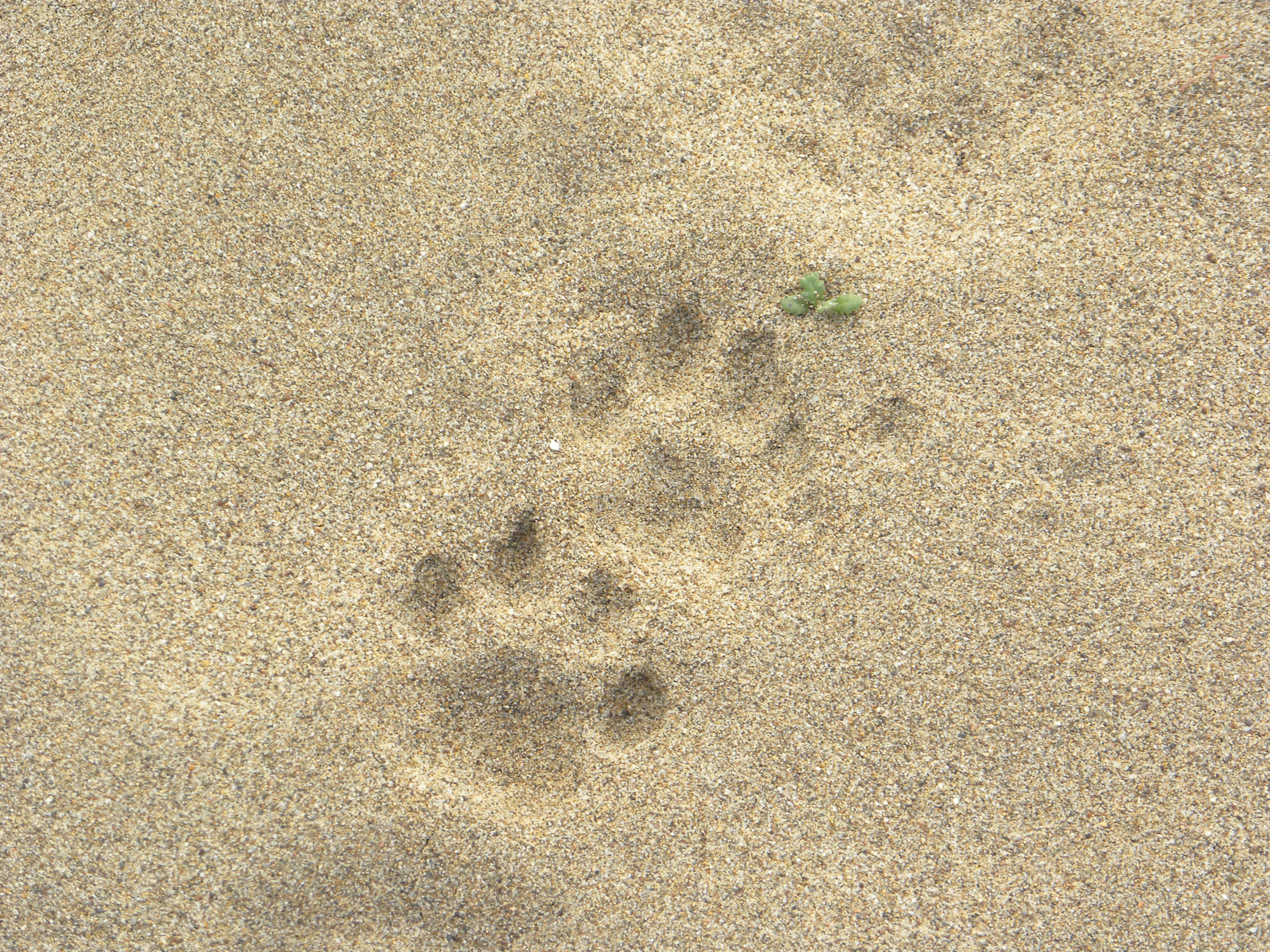
Bobcat prints in sand

Bobcat prints in soft sand

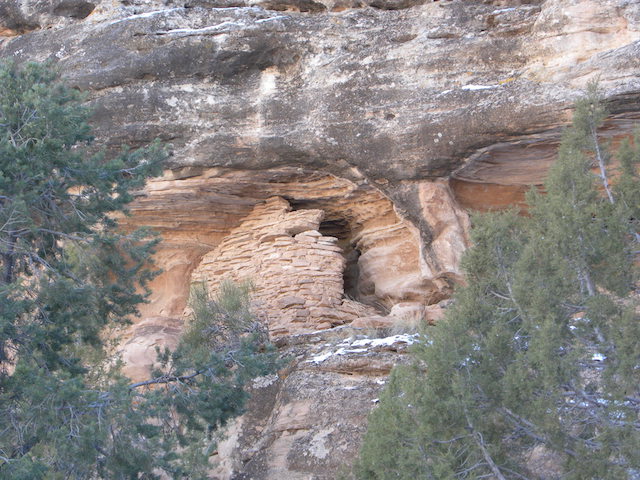
He was on a direct route, according to his tracks, probably returning from a nightly hunt. The tracks engrossed me for over a mile, when suddenly they veered off to the right, into a narrow steep ravine. As I changed course to follow them, I looked up, and higher than I could climb, was my bobcat, sitting unperturbed amidst the alcoves of man-made walls and rooms. This large habitation, unoccupied since the 12th century, accessible only by rope or ladder, was now home to this shadowy predator, the perfect apartment for this nimble animal as a safe-house from humans.

habitationhigh

The apartments were inaccessible by foot

____________________

Frank C. Hibben, author of the colorful and captivating Hunting American Lions, was given a grant from Southwestern Conservation League to spend a year studying mountain lions. Although Hibben documented prey and collected scat, researching lions in the 1930s mainly meant hanging out with professional lion hunters and going on hunts for control kills. In his book, Hibben tells of riding with his houndsman Giles Goswick, deep into the canyons of Arizona tracking a cattle-killing cougar.

The cougar was a skilled stealth artist, following narrow ledges along gulches with steep overhanging cliffs, perplexing the dogs who kept losing track of the animal. Following their lead dog through a narrow ravine, Hibben and Giles scrambled over centuries old fallen trees and canyon pools, with the barking of dogs echoing down the canyon. As the canyon walls became steeper, the chasm grew dimmer, the mysterious noises along with the din of barking grew louder, the little gulch grew eerier.

Canyon Moab

The canyon walls grew steeper as the echoing of dogs grew louder

Giles stayed ahead, concentrating on trying to find a lion track in the patches of sand on the canyon floor when suddenly Hibben shouted to him “Look up there—to the left. Up there in that shadow,” pointing and waving his hand. Giles undoubtedly thought Hibben had seen the lion on an overhang, but instead he found, shaded by the overhanging cliff, two caves, one above the other, with fragments of man-made adobe masonry and mortar housing a window cut-out.

Canyon in Moab

“Look up there—to the left. Up there in that shadow,” Hibben shouted.

Even with all the excitement of their lion chase, the dogs still howling in the distance, the men stopped to examine this ancient ruin. They surmounted a low ledge and stood at the lower cave entrance. Fragments of walls and partitions still clung to the cave floor.

habitat in Bears ears

They surmounted the wall and stood at the lower cave entrance.


Fingerprints of the long-dead builders were outlined in the mortar where they had pressed it hard between the stones. The usual pack rat occupants were making the cave their home, but perched on top of the rat’s stick and cacti mounds was a yucca sandal with the ties and strings still intact. There was even a visible hole in the heel of the sandal. Yet it was the cave fifty feet above this one that had the startling discovery. Not big enough for human habitation, as their eyes became accustomed to the shadows in this darkened environment, this small arched opening of the cave had sticks protruding outward in all directions. The ‘sticks’ were bound with bands of dark material, rings of blue and yellow color, with feathers on their ends.

Cave in Blanding

Yet it was the cave fifty feet above that had the startling discovery


“Giles! They’re arrows,” Hibben exclaimed, while Giles was already pulling out his lariat rope that he carried around his waist. Deftly, Giles threw his rope, barely reaching the lowermost of the protruding shafts, and three arrows fell at the men’s feet. The arrows were preserved perfectly by the dry climate—wooden arrows fitted with three feathers and a notch for the bow string. Maybe two or three hundred of these arrows protruded from the small opening above.

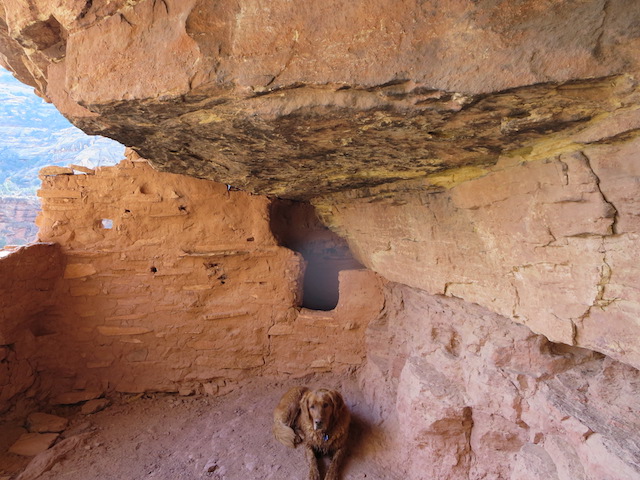
Koda in ancient cave dwelling

For a few moments, time stood still

For a few moments, time stood still. The men forgot where they were or why they were there, when suddenly the barking of the dogs brought them back. The cougar that had led them to this place had been forgotten momentarily. Carefully, they placed the arrows and the sandal on a ledge in the lower cave, to remain in situ, and as they looked up, they saw the dogs had treed their victim, who was hanging from a gnarled spruce limb at the end of the canyon.

Hibben ends his story by saying “The long-deserted cliff house in the narrow canyon with the ceremonial arrow cave above it created an atmosphere of antiquity which was not ordinary background for any cougar. Perhaps this lion was the reincarnation of one of the old cliff dwellers prowling yet the tumbled masonry and the dark caves of his forefathers.”

hands painted


More cat stories from Ghostwalker – Lynx, Bobcat, and Snowshoe Hare

Another story that was cut from the final version of my new book Ghostwalker, Here is one about lynx and their prey, snowshoe hares.

Today was a beautiful clear day, seventeen degrees when I started out on a snowshoe trek.  I’d heard from my friend Don that while hunting up Reef Creek last October, an area closed in winter except to foot traffic, he’d seen so many snowshoe hare tracks they were like scribbles in the snow.  Most winter visitors head farther north to the Beartooth Mountains to snowmobile, so this off-limits trek is a quiet respite.  Being a north-facing slope, the road had accumulated over three feet of snow.  A recent snowstorm left the snow soft and snowshoeing was a workout.

These “reefs” are a series of layered limestone plateaus. The access road climbs along the far edge of the two benches, winding to the second reef, where a maze of old logging roads carve even higher up into the mountains. Spring through fall, this is a wet place, as hidden springs run underground, emerging through the cracks in the limestone.

dscf0034.jpg

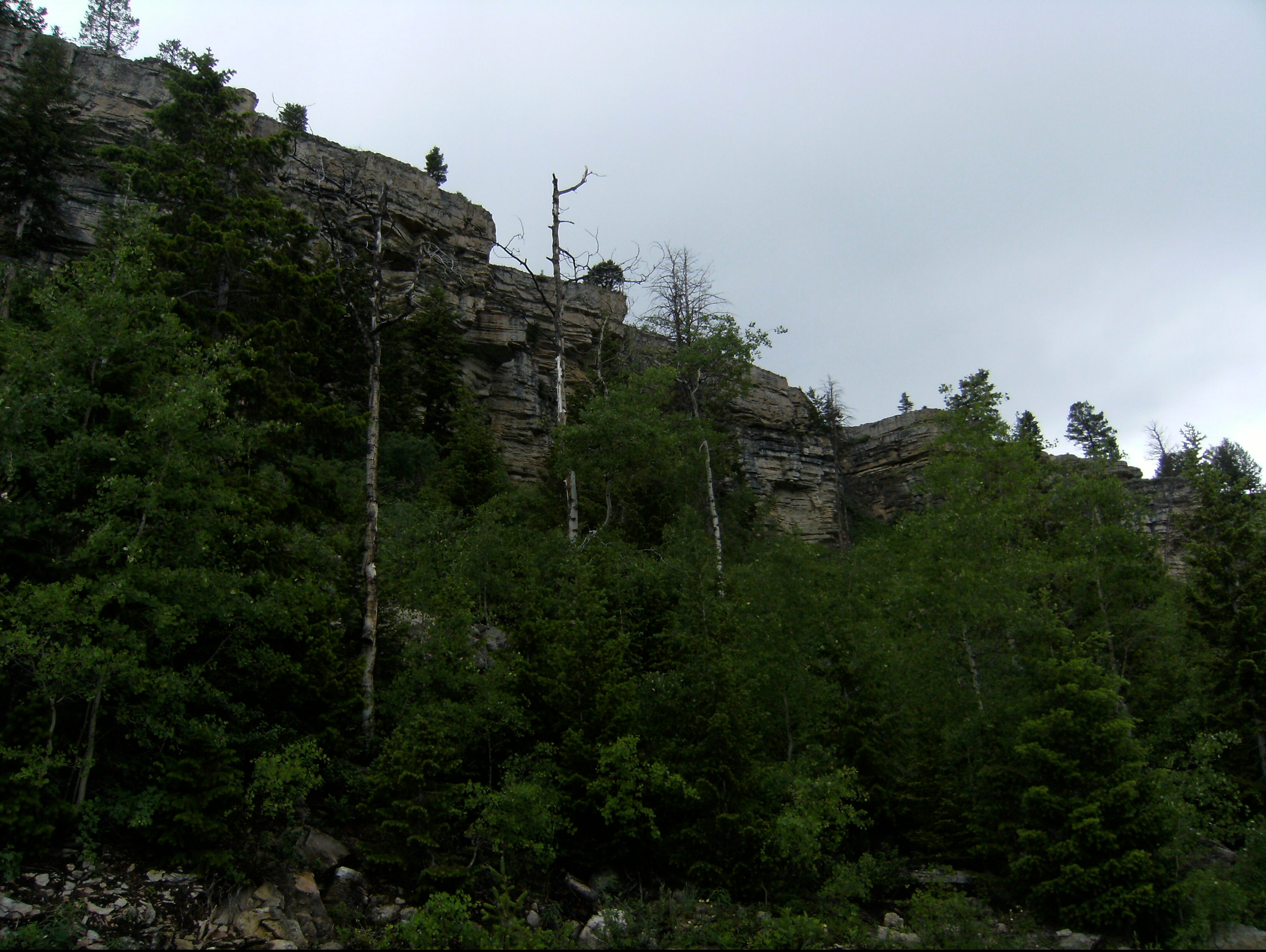
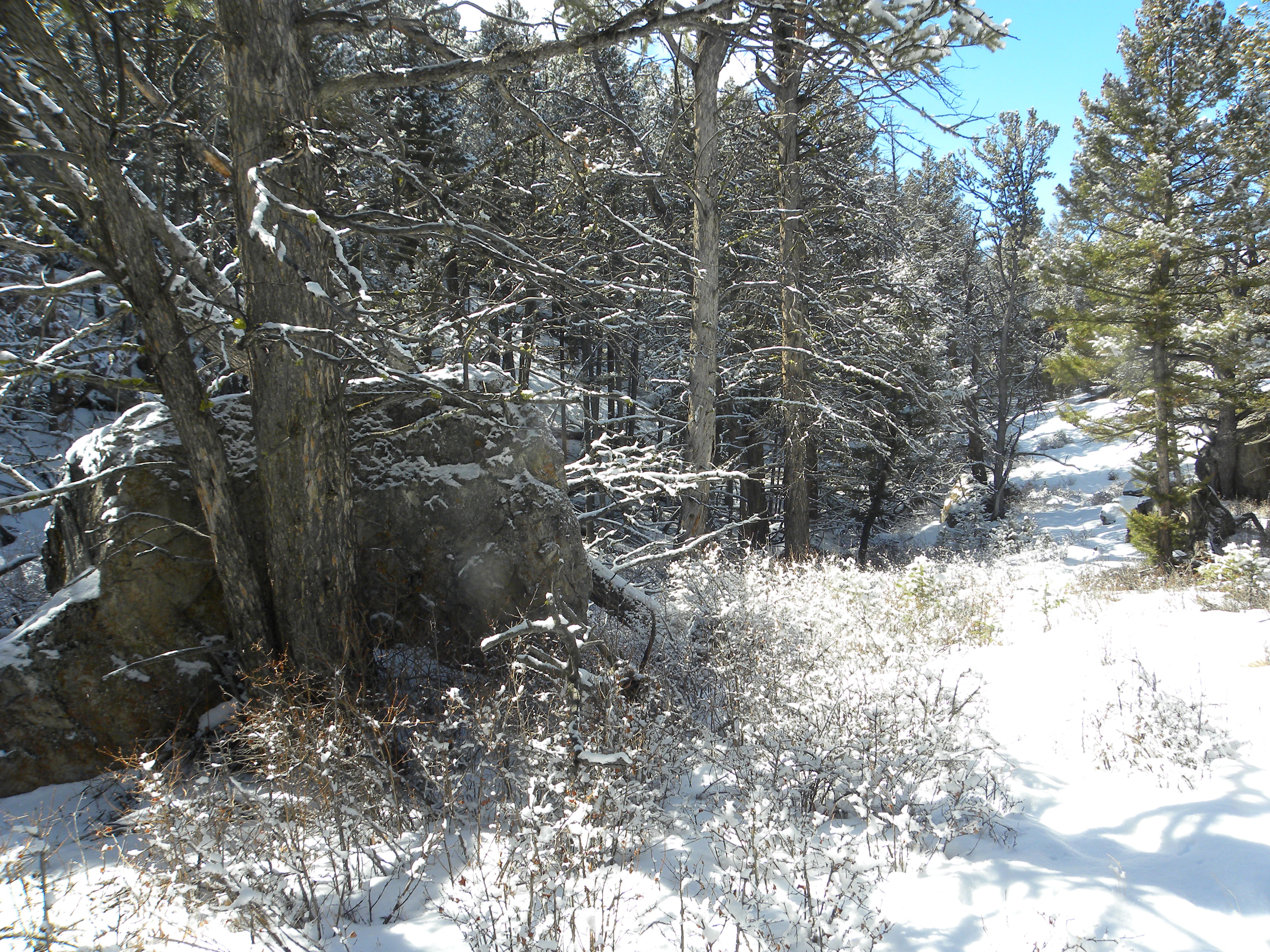
Limestone reef

With deep snow, it’s a heart workout in my snowshoes, through thick forest on both sides, to reach a sharp turn in the road where a locked gate accesses a telephone line service road. I know that after I pass this first bend, the climb steepens, hugging layered slabs of limestone cliffs on one side, with a vertical drop on the other, until I reach the second reef. Don told me this second reef was where he saw the hare runs. I’m thinking of heading there, until I see the road is blocked farther ahead by an avalanche of snow at its most narrow juncture. I decide to explore the first reef that lies beyond the access road, but while snowshoeing back down to the gate, I’m hit with an explosion of hare tracks. Snowshoe hare tracks are exciting because they are so big, and testify to how well adapted these animals are to snow-covered habitat. Their oversized hind feet are generously covered with fur, and where I’m sinking they are having a party in the snow.

snowshoe hare tracks

Snowshoe hare tracks

DSCN5632

What’s interesting to me is not just these tracks, but their feeding evidence. This mountain has experienced a lot of logging as well as fire activity, resulting in numerous copses of young spruce. The evidence testifies the hares are standing on their feet, chewing off the lower tips of spruce branches. Nipped twigs and gnawed off branches are strewn everywhere underneath these groves.

Several summers ago, I saw a woman juggling armloads of equipment walking to the forest across from my home. We chatted for a while, and I asked what she was doing. She told me she was an independent contractor doing a job for the Forest Service.  “I’m working on a vegetation study.”

The Forest Service, she said, was using her information to understand if this was good lynx habitat. I knew the Shoshone Forest Service was working on their twenty year management plan at that time, a massive undertaking that revisits guidelines for everything from timber to grazing, oil and gas, to wildlife issues. I asked her how her work was helping the Forest decide management for lynx; what was the connection between our local vegetation and the meat-eating lynx? The connection, it turns out, is the hare; that speedy animal that the well-adapted lynx prey on.

Lynx, being listed under the Endangered Species Act as a threatened species, needed proper consideration and protection in the Forest’s plan. It wasn’t clear exactly how this woman was measuring good habitat with her surveying equipment by tying flagging of various colors to trees.  But that conversation piqued my interest in lynx. So I’m heading up to Reef Creek on this February day to investigate—are there any lynx here along with these hares?

640px-Canada_Lynx_(6187103428)

Lynx

I’d occasionally seen snowshoe hare in the forest she was surveying, as well as few tracks in other locations around the valley. We also have white-tailed Jackrabbits, and their tracks are very similar in size to snowshoe hares so easily confused. Today though, this higher elevation spruce forest was clearly snowshoe hare habitat. After a few hours of exploring for tracks, the only other spoor I saw came from coyotes. With increasing access roads and snowmobiles trails, coyotes are having an easier time venturing farther into deep snow areas of the winter backcountry where snowshoes live. One theory goes that coyotes are competing with lynx for food by reducing the snowshoe population. Less snowshoe hares, less lynx.

Lynx are made for snow with their huge paws, and the Yellowstone region is at the southern tip of their historic range, which made them uncommon historically in the Park. But there have been several sightings in the last fifteen years, mostly through confirmed tracks. A set of tracks was found in 2014 near the northeast entrance, just a skip and jump over the mountains from Reef Creek. In fact, looking on the Park’s website, they have a map with some red dots indicating confirmed DNA lynx evidence. There are only two measly dots in my valley.

Truthfully, I wasn’t sure if I could tell a lynx from a large bobcat, which I’d seen many times, hanging out in trees along my driveway or hunting in the neighbor’s yard. Anecdotally I’d also heard that our mail lady, who lived here most of her life, (which immediately qualified her, in the mind of the local gossip machine, to be able to discriminate between a lynx and a bobcat) had seen a lynx at my mailbox. Maybe a case of mistaken identity, but maybe not.

bobcat tracks

Bobcat tracks

Those nipped buds and twigs, along with the large tracks, in a dense yet young spruce/fir forest, educated me about proper lynx habitat. Ten miles up my dirt road, heading west just a few miles from the Yellowstone Park boundary line, in an area that like Reef Creek had experienced burns and logging in the 1940s and 50s, has similar habitat. The following spring I looked around and sure enough, lots of snowshoe hare evidence there as well. So we have hares!

Hare populations, like other rabbit populations, run in cycles. Dr. Charles Preston at the Draper Museum, when I asked him what caused these cycles, joked that if he could figure that out he’d die happy. These boom and bust cycles regulate the rabbit populations, and with it the bobcat and lynx as well. Yet nature always throws a wrench in the works, and I’d read that in some southernmost hare populations, like the area around Yellowstone, these cycles don’t occur, but instead the hares remain stable at low densities. Maybe this might explain the persistent low population of lynx around here?

Even with all my exploring, lynx tracks weren’t forthcoming. Yet I did begin to consider the three cats that live here, their interactions, and what kinds of ‘cat fights’ might ensue. Lynx and bobcat obviously share similar food preferences. Mark Elbroch says that makes it difficult for them to share similar habitat.

“Where they share range, lynx typically stick to the higher elevations, where deeper snows give them the competitive advantage, and bobcats take control of the lowlands, where they assume the dominant role and exclude lynx through aggressive interactions.”

Elbroch also goes on to say that they occasionally hybridize. My winter explorations of the valley’s higher elevations had borne this out. Although I wasn’t seeing lynx tracks, the hares seemed to be living higher up, in densely wooded areas, whereas I knew cottontails filled the plateaus in the lower end of our valley at 6500’. Since I’d seen bobcats (and not lynx) with my own eyes, I decided to begin my quest for their tracks in winter, with the intention of understanding their habits.

bobcat


Bobcats

Trapping season for bobcats and martens is over!  Living here, it seems wildlife never get a break.  Between hunting, collaring, trapping, logging, snowmobiling, ATV’s, there’s always some disturbance, sometimes quite major like hunting, that is going on.  Cougar hunting is still on till the end of this month, although we have almost no snow and black bear spring hunt season begins soon.

Regardless, I have been worried that I haven’t seen any bobcat prints in the usual spots all winter.  Bobcat trapping is becoming of major concern because pelts are fetching up to $1000.  The Chinese and Russian market in particular are driving the prices, and every Tom, Dick and Harry is trapping the cats.  A big story out in the California desert is trappers who are scanning the internet for bobcat pictures unsuspecting amateur photographers post, then placing traps right outside these people’s backyards.  Other trappers are putting tons of leg hold traps on the border of Joshua Tree National Monument.

Although the rabbit populations are down in the desert, they are not doing so bad up here.  The cottontails are beginning to rebound, and the snowshoe hare population seems to be doing just fine.  But where are the bobcats?

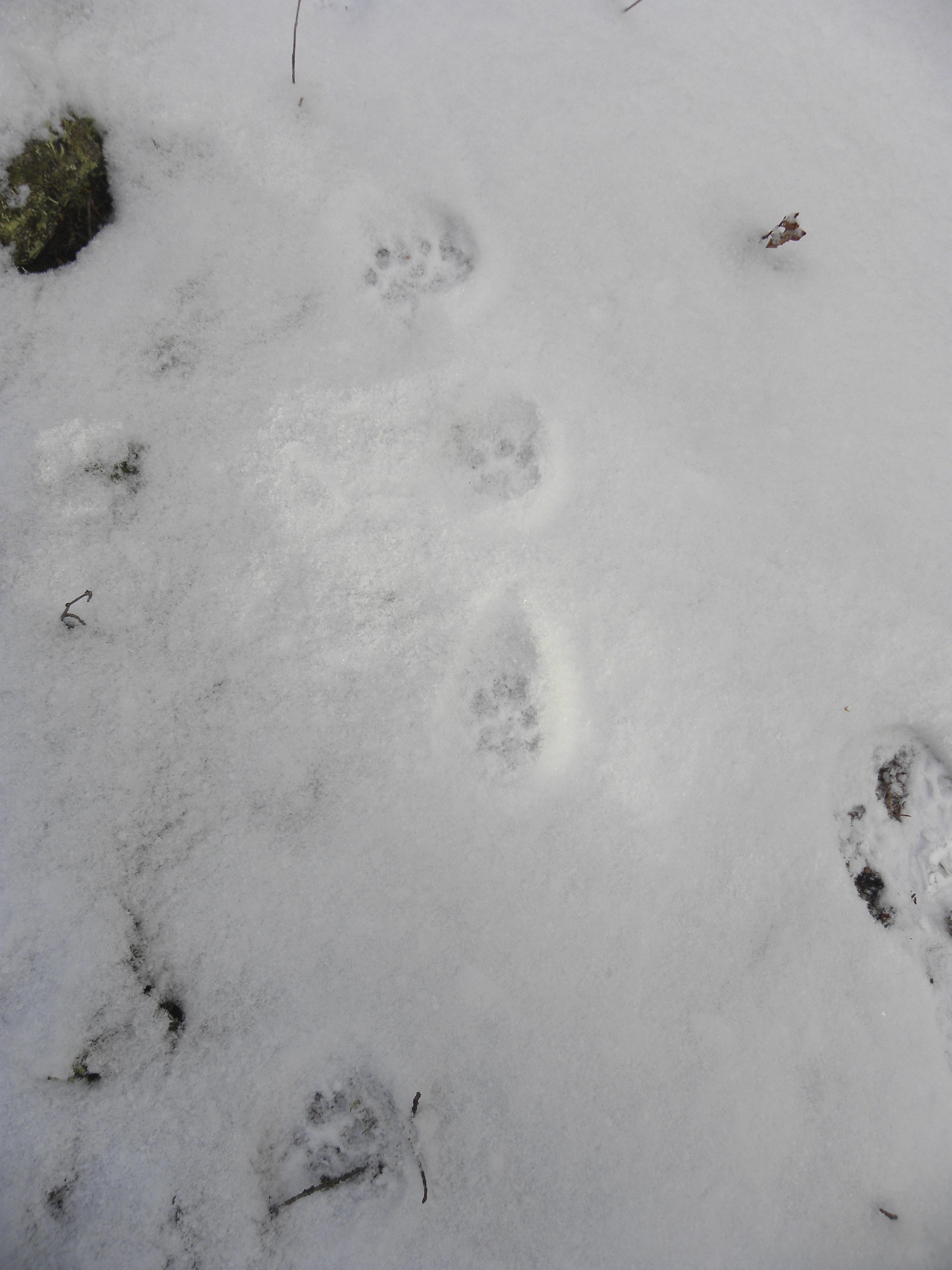
So I was happy when right after a fresh snow the other day I came across this bobcat trail.

21" stride direct register made me think he was trotting or just a big bobcat walking

21″ stride direct register made me think he was trotting or just a big bobcat walking

I tracked the fellow for over two hours and let me tell you it was strenuous.  He seemed to be on a mission, heading directly, and mostly at a trot, up the steep slopes until finally, once high up, he stopped to stand on a boulder and look down over the valley.

Bobcat takes me up high

Bobcat takes me up high

Then he made a sharp left and zigged and zagged even higher up.  As the snow got patchier with the daytime temperatures warming, I was having a harder time finding his tracks. Finally, he led me way high, into the snow-covered scree base of the mountain. I figured he was going back to his daytime den, as the tracks were made early morning.  Everything in me wanted to follow him, but the difficult terrain and my own exhaustion said ‘Another Day’.

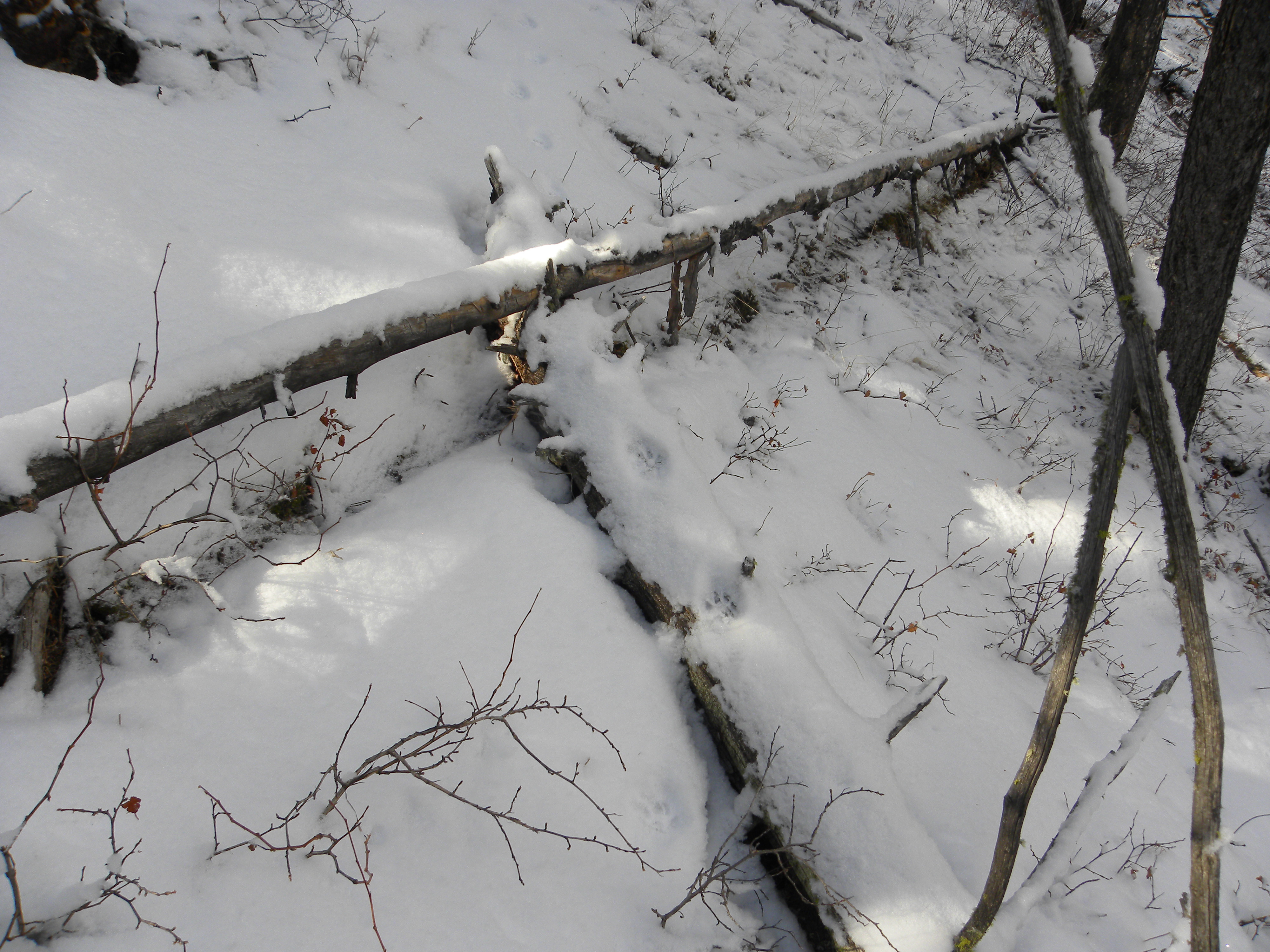
Cats like to walk on downed logs to help hide their scent

Cats like to walk on downed logs to help hide their scent

Nice direct register print with my 3' tape measure for size

Nice direct register print with my 3′ tape measure for size

This cat was almost completely direct registering but here he did a curious things

This cat was almost completely direct registering but here he did a curious thing.  Not sure of what happened with his gait here.  Any ideas?

Here’s another question to answer:  Bobcats are very habitual animals, using the same territory over and over again.  This bobcat was occupying cougar territory.  He was denning and hunting in an area where I’ve seen cougar sign over and over again.  I understand cougars sometimes kill bobcats. Last year I found bobcat and cougar tracks together in another area with almost the same freshness.  I wonder about this tenuous relationship, and how these bobcats are avoiding cougars.

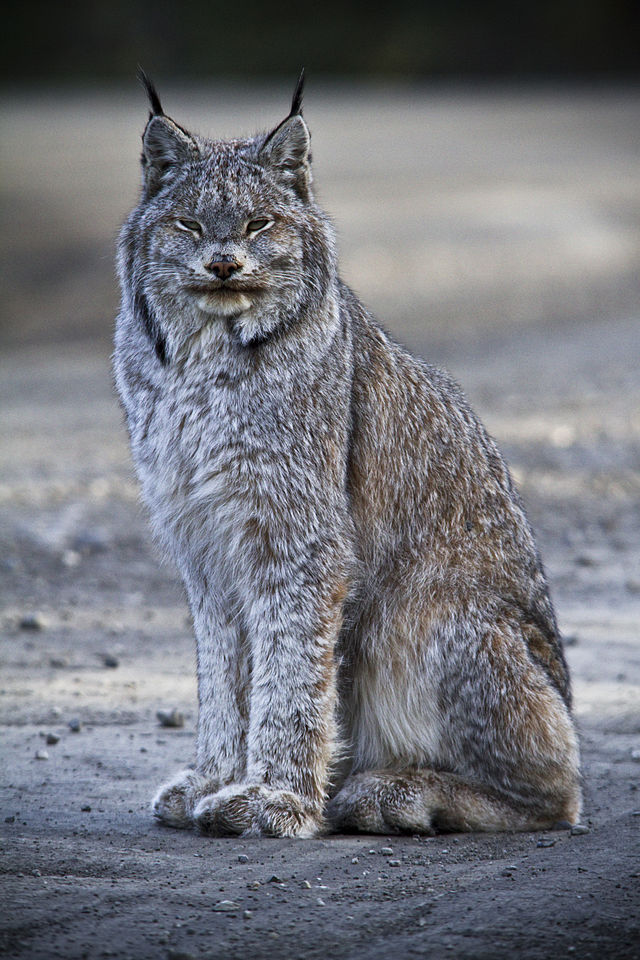
Photo I took of a bobcat in Palm Springs wildlife zoo.  He looks like he wants to get out there.

Photo I took of a bobcat in Palm Springs wildlife zoo. He looks like he wants to get out there.