• MY BOOKS ON WILDLIFE, GARDENING AND MORE

  • The Wild Excellence

  • True stories of wildlife encounters around the Greater Yellowstone
  • Award winning eBook on Decomposed Granite, tips, how to's, what to watch for
  • Children's book. True stories of a dog and wolves. In a dog's voice
  • Written for dry Mediterranean climates in California, north and south

The Mysterious Cougar

I find cougars fascinating.  The perfect predator, they are so large yet rarely seen.  In fact, if you do see one in your lifetime, consider yourself lucky.  I’ve tracked cougars around here many times, but never seen one. I’ve seen their kills, and other sign, but never a real live cougar.

A long term major study is taking place around Jackson, WY, called The Teton Cougar Project, sponsored by Panthera and Craighead Beringia South.
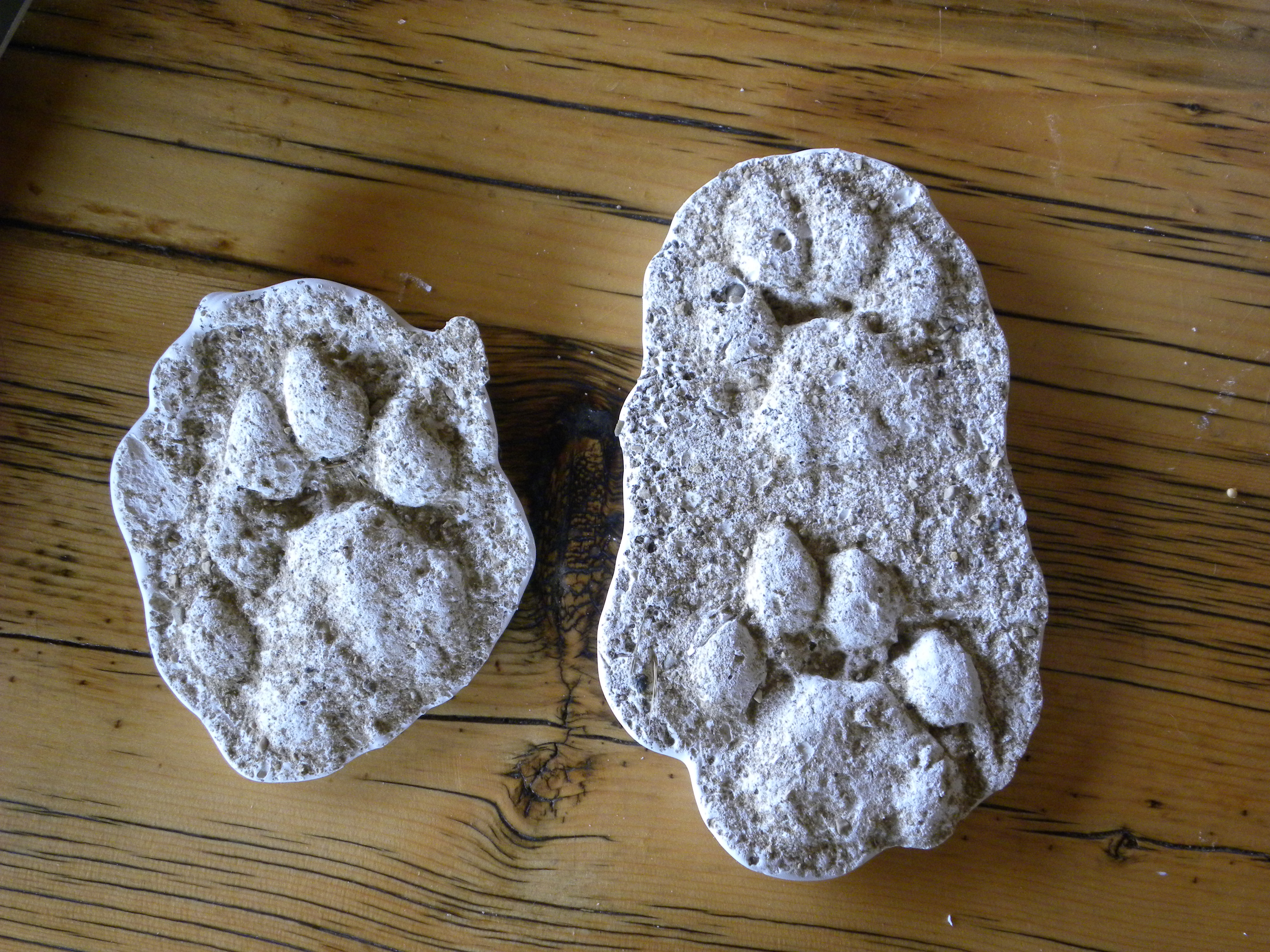
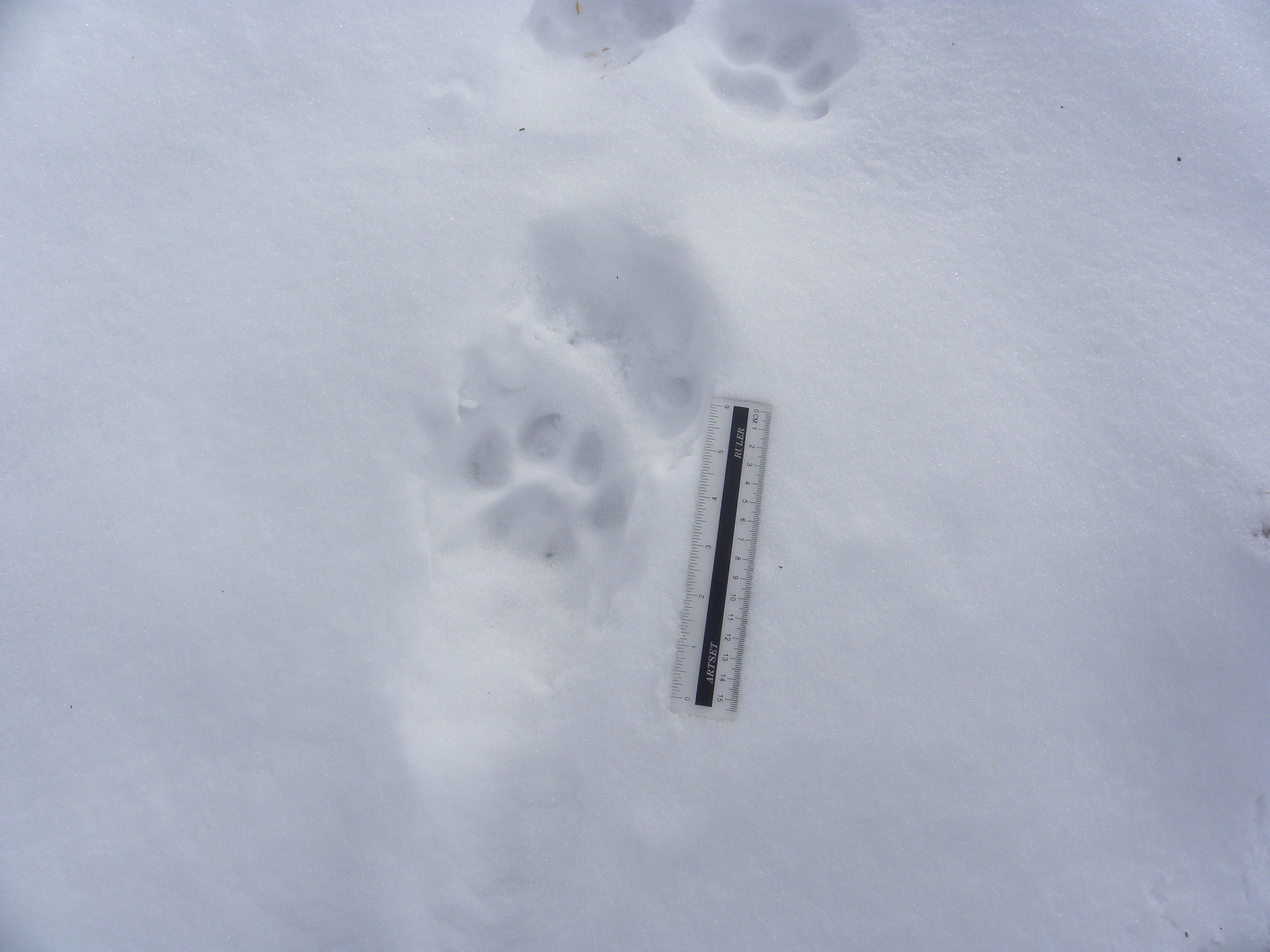
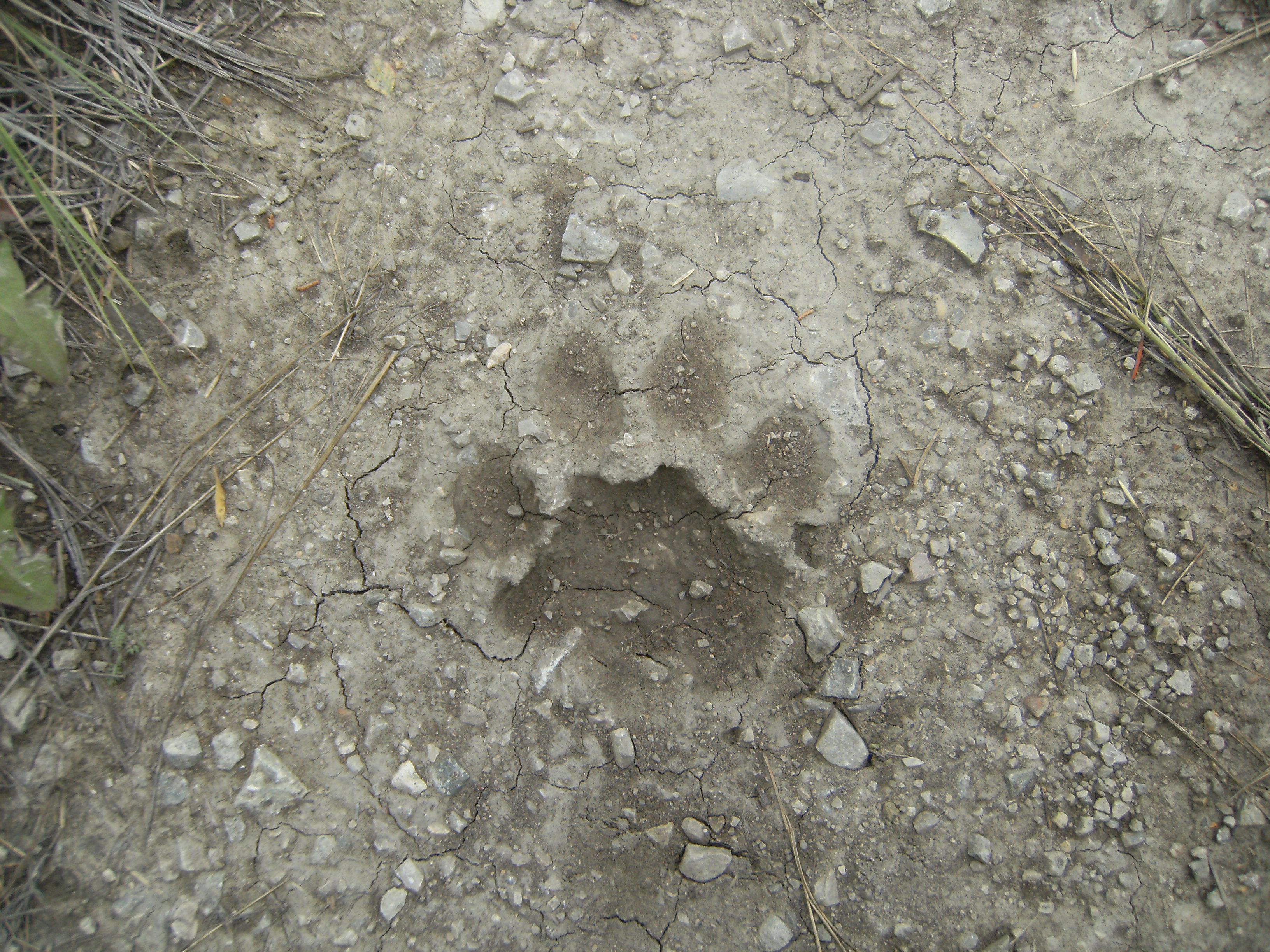
Cast of cougar prints--right side is rear on top, front on bottom.  Cougar was going at a fast trot.  Left print is a direct register

Cast of cougar prints–right side is rear on top, front on bottom. 

In a 900 square mile area, the project estimates there are around 15-20 resident adult cougars and these numbers have declined in the last 7-8 years.  Complete project data should be out soon when the study finalizes.  But some interesting tidbits they’ve found has been the social nature of cougars.  Previously thought to be solitary animals, with males and females coming together for only a short time to breed, the Cougar Project has documented, through VHS and GPS collars, females with young kittens helping feed orphaned yearling kittens as well as adult females spending time together.  They’ve seen males who not only know where the females are at all times, but pay visits when not mating.  Truly, the fabric of cougar society is complex, with a lot more communication and interaction than previously thought.

One of the major reasons for the Jackson study was to find out how three top predators are defining territory and their interactions–grizzly bears, wolves, and cougars.  It seems the cougars have been suffering losses of kittens to wolves.  And having to share their kills.  A recent National Geographic show called Cougar vs. Wolf featured cougar tracker Boone Smith looking for cougar/wolf interactions in the Bitterroots of Montana.  According to the documentary, Smith found cougars would win out defending their kills when the number of wolves in any pack (or interaction) was low.  A single wolf, or a small wolf pack, tended to leave cougar kills once the cougar showed up.  Not only that, but dead wolves killed by cougars have been found in the Jackson Hole study as well as the Bitterroots.  Smith shows a wolf killed by a lion in the NG show.  If you haven’t caught these two shows,  I highly recommend them.Cougar paw
Cougar hunting goes on during the entire snow season here in Wyoming, from September 1 through March 31, until the area quota is filled.  Some areas have unlimited quotas.  I called WG&F and asked how they set their mortality limits.  The answer proved that it’s vague.  When a hunter kills a lion, he or she is required to present the pelt and skull to the department.  At that time they determine the sex and take a premolar tooth to determine the animals age.  From this data, somehow they are extrapolating population sizes in each zone.  cougar teeth copy

Given the secretiveness of lions and the necessity of collaring in order to obtain the data of the Jackson thirteen year study, I highly doubt that a premolar check is going to give the required full data for setting kill quotas.  I tried doing a rough square area count.  For my zone, I came up with approximately 3000 square miles and the quota is 20 lions.  The area north of Jackson, zone 2, is roughly 2000 or 2200 square miles with a quota of 5, and now at the end of the season, is still one short at 4 killed.  Wyoming Game and Fish is helping fund the Jackson study.  From this study they now have a good idea of the number of lions in that area, and the quota is 1/4 the amount of my area.  A lot of my area, zone 19, borders the east side of the park, but more than half is in the desert which is in the wolf predator (or shoot on sight) zone.  Cougars might be more abundant. Still, doing the math used by Panthera of 15-20 resident cougars in 900 sq.miles, that means 1/3 of the adult cougar population is being hunted and killed every year!

Was this a cougar scratch that was next to a stashed kill?

Was this a cougar scratch that was next to a stashed kill?

I’d like to learn more about cougars.  I know where to reliably find tracks in the winter in my area.  I’ve tried to study how to identify the signs of a cougar kill.  I’ve heard people say ‘”Found a dead deer killed by a cougar near such and such a place”; but just finding a dead deer (cougars main prey is deer in the summer; and deer and elk in the winter) does not qualify it for a cougar kill.

When I go out to the area where I know I’ll find tracks, I spend time looking in obvious places for a kill.  Cougars like to drag their kills into brushy or more hidden areas.

Cougar dragged this kill to the forest edge where Koda now is enjoying it

Cougar dragged this kill to the forest edge where Koda now is enjoying it

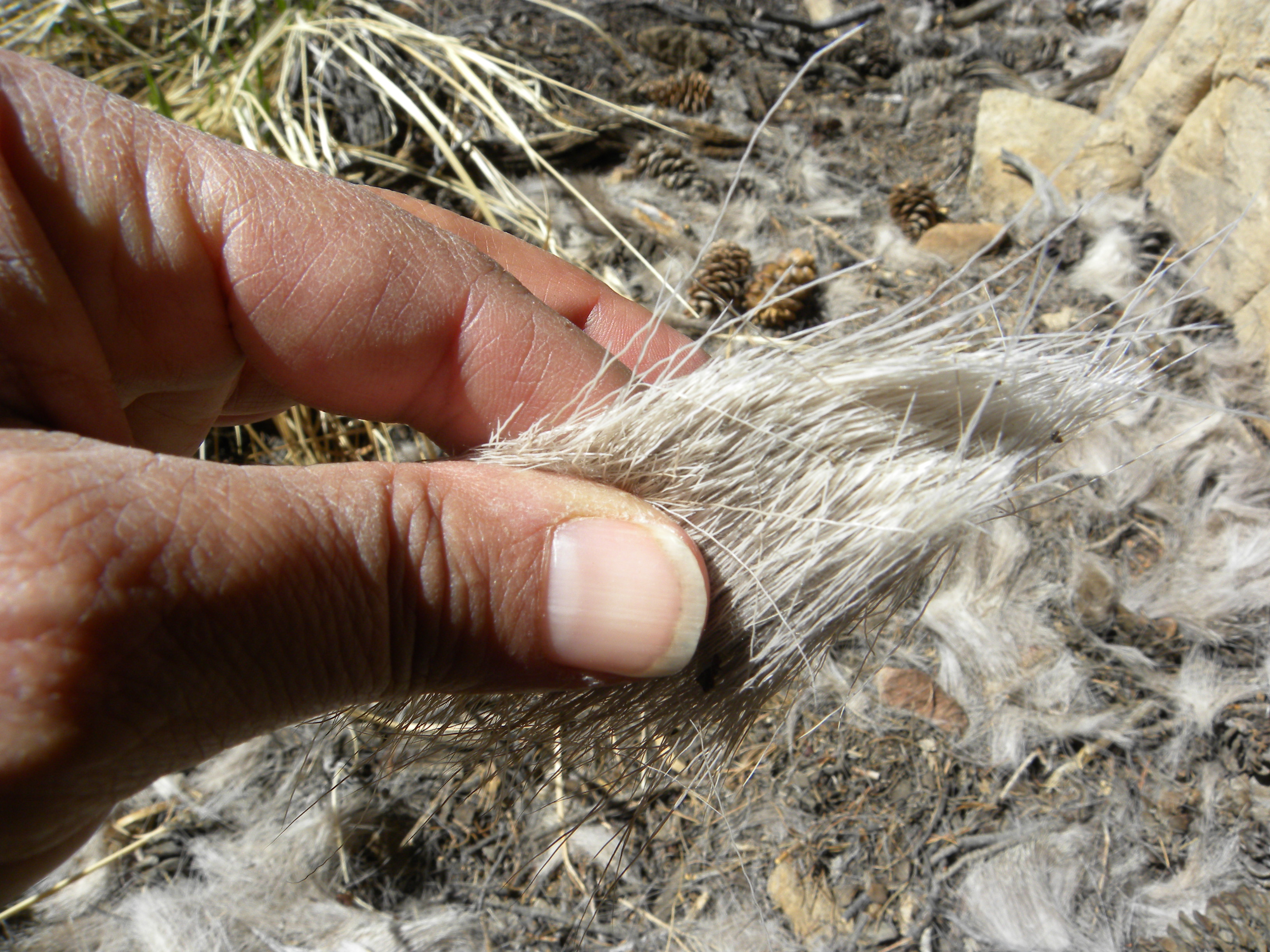
They tend to cover their kill and continue to return till its gone.  Sometimes they just eat the internal organs.  A few tell-tale signs are the way the hair on the prey is taken off.  A canine will just rip the hair, tearing it away with skin attached.  A cougar shears the hair, making it look like the animal received a scissor-like haircut.
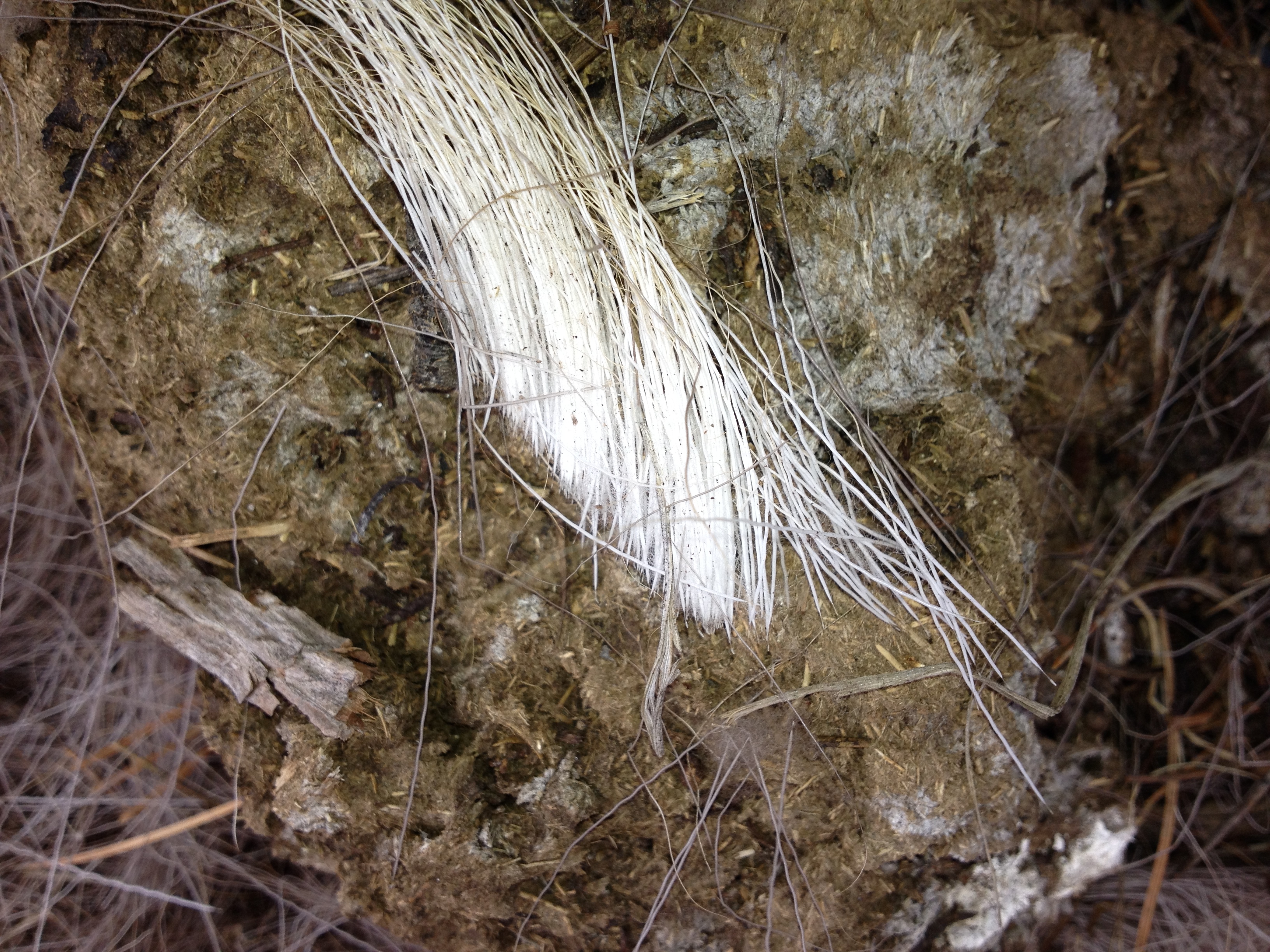
Haircut look.  Hair is sheared off.

Haircut look. Hair is sheared off.

A few days ago I found a dead elk. It had been killed in the open and dragged under some nearby trees.  I checked the skull and found two puncture wounds. All the evidence pointed to a lion kill.
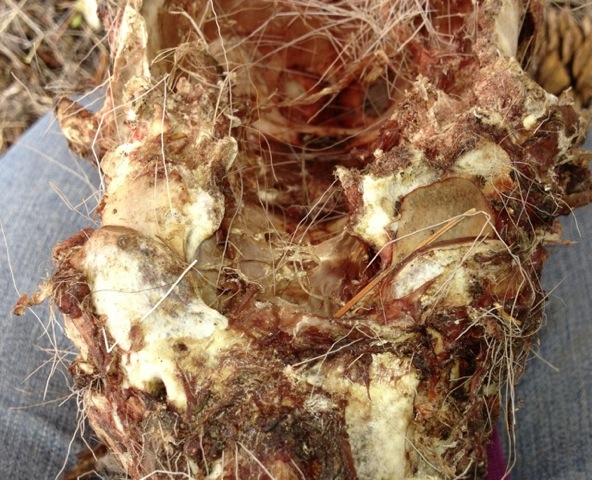
Look closely on the left lower side of the photo and you will see 1 large and 1 small puncture hole

Look closely on the left lower side of the photo and you will see 1 large and 1 small puncture hole

I returned to a drainage where in the past I’d seen lion tracks.  I followed it until I came to a 1400′ drop down into the canyon.
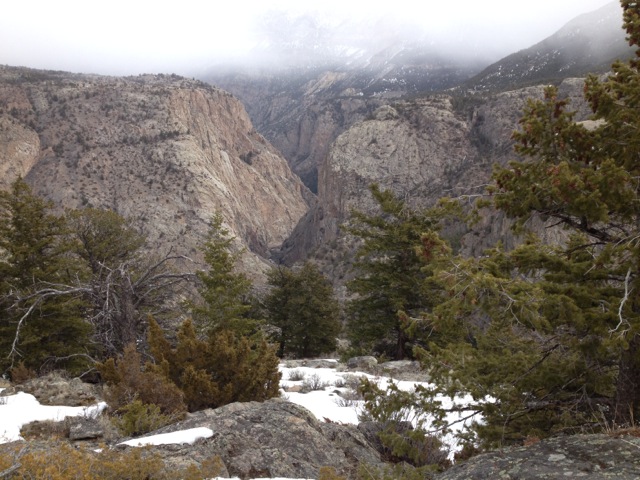
What was the cat doing down here

What was the cat doing down here

I had wondered if the lion, whose tracks frequented this drainage, had a den here, but I saw no sign.  What was he doing down here?  There were no deer or elk in this area.  If I walked along the canyon edge, a precipice jutted out where I’d seen mountain goats a lot (but not today).  Could the lion be hunting them? When more snow melts and I can follow a steep trail to the precipice safely, I’ll go back and see if I can solve the mystery of the cougar.

Cougars and Wolves-A puzzle

Finally time to post a cougar entry.  Days have been warm, so when we’ve had snow, it melts off quickly.  But I’ve had two interesting cougar tracking experiences.

Several days after a very nice snow I ventured out to an area where I’ve seen cat tracks many times.  Its a landscape full of boulders with low cliffs easily passable for humans–perfect cougar tracking.  I headed straight for some high cliffs where I found cougar tracks last year, and lo and behold, there were fresh puma tracks.  Because the terrain is fairly easy, I was able to follow these tracks for over an hour, mostly up, down and over boulders.  A coyote occasionally mirrored this cougars’ trail.

Left Hind

Nice front print

Right front (Rt.) Left hind over front foot (lt) cougar

Right front (Rt.) Left hind over front foot (lt) cougar

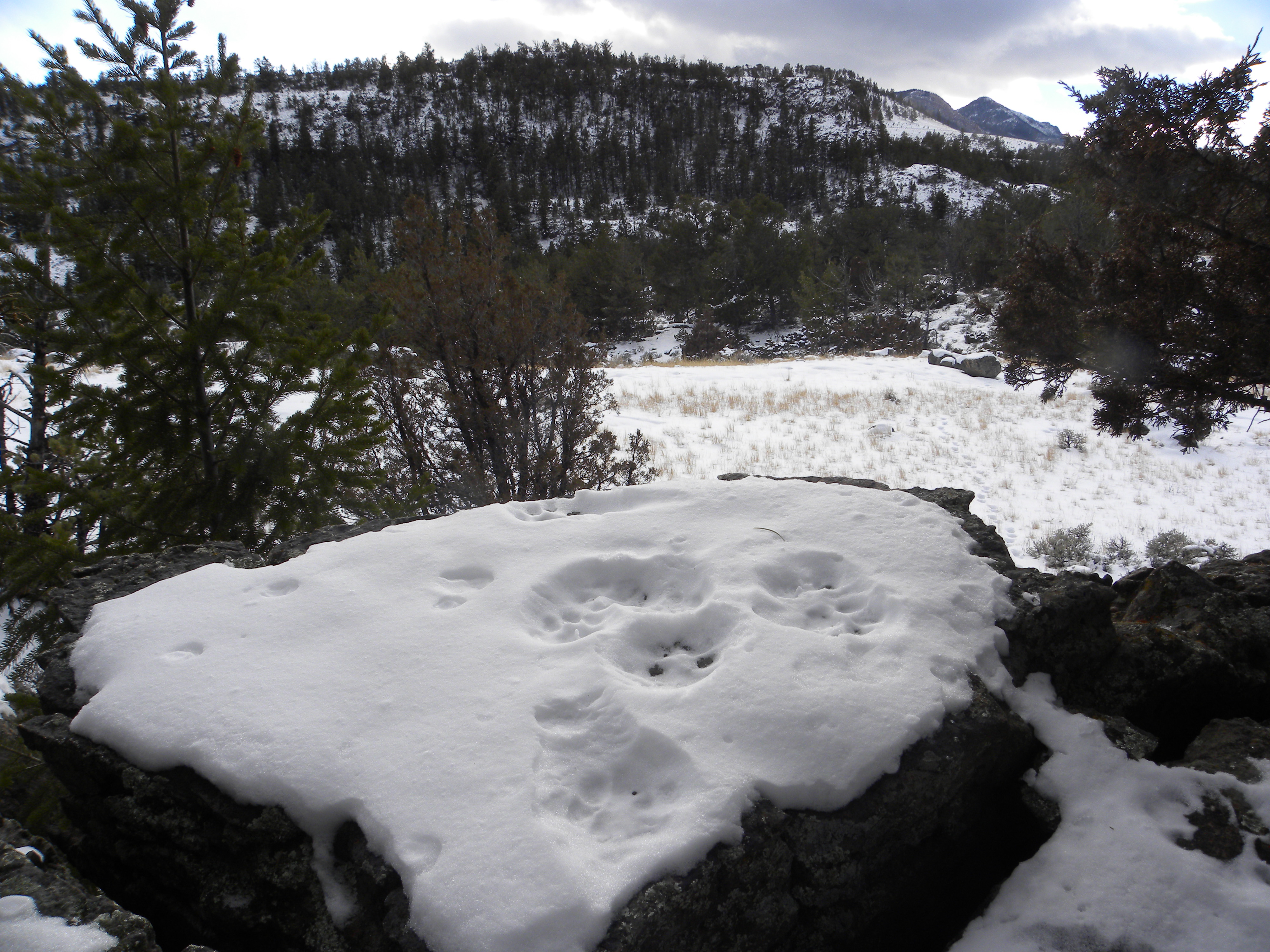
Moving with an easy gait, occasionally jumping high up on a boulder or down into a gully (where I had to go around.  Following a cougar isn’t easy), the cougar stopped on a rock at an overlook to size up the terrain.  All this indicated that this cougar was relaxed.

DSCN1154

I’d seen wolf tracks when I began early on, but not coinciding with my cougars tracks.  Yet suddenly the wolf pack’s tracks appeared atop a ridge, fresh as the cougars’.  The wolves and the cougar headed down a narrow path to a ravine below, where I lost the cougar tracks in an array of wolf tracks.  I searched everywhere but the plethora of canine tracks obscured all other sign.  What were those wolves doing? There was no sign of a kill in the area.  Usually Koda is pretty good at finding carcasses when I can’t.  I even went back on another day, combing the area for a kill, but nothing.

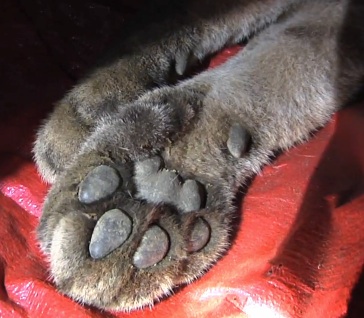
Cougar paw

cougar teeth

Anesthesized cougar teeth

A few days ago I hiked up the mountain behind my home.  A series of terraces stair steps up the mountain side.  It’s a north facing wooded area and some of the shelfs are quite steep.  I climbed fairly high when I came across a fresh cougar track.  The cat scrambled to the next level, the final mesa before the mountainside turns to scree.  It’s an area full of large boulders.  The cougar easily and deftly walked up the slope toward a giant granite boulder which she jumped on top of.  Yet what caught my attention were the wolf tracks that ran right in front of the boulder and over the cougar tracks–same freshness.  Here again were cat and canine tracks together.

Again losing the cat tracks, I followed the wolf tracks back to the woods by my house.  There I found not only cougar and wolf tracks, but a deer kill already picked over by birds, probably from the night before.  Did the cougar kill the deer, only to be driven off by the wolves?

So, this leaves me with more questions than answers.  Do wolves keep a pretty good bead on cougars?  Cougar kills are easy food for other predators and that’s why they take time to cover their kills.  But what were those wolves doing around that cougar on my first tracking excursion?  What kind of competition are those wolves presenting to that cougar?  And it also lead me to think about people who hunt cougars with dogs.  Eight dogs have been killed by wolves in Montana this year while hunting cougars.  Are those dogs more susceptible to being caught and killed by wolves because they are following cougars?  There have been a series of dogs lost in Sunlight over the years, some for a few weeks, yet all the lost dogs have turned up, not killed by wolves.  Yet a few years ago a hound hunting cougars was killed by the wolf pack.

I am curious about the relationship between cougars and wolves, two top predators competing for similar prey.


Cougars–Ghost of the Mountain

With this post begins a series on cougars and cougar tracking.

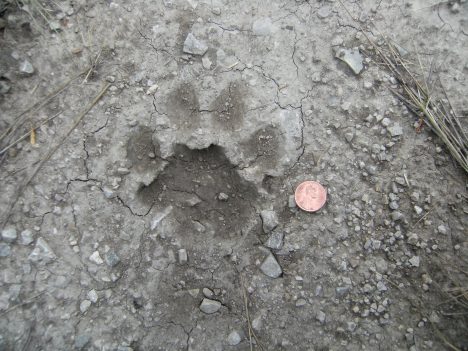
The first cougar print I ever saw was at a tracking class around Davenport near Santa Cruz CA.  Davenport is an ocean town, backed by rolling hills and wild lands.  After a morning of tracking lessons, the group split up into smaller bands and we walked around the edges of a large field.  In the middle of a dirt two-track road was one cougar print.

cougar track with penny for reference

cougar track with penny for reference

When I lived in Marin County, my neighbors and friends had plenty of cougar sightings.  With a plethora of deer and no hunting, along with a lot of preserved lands up and down the coast, Marin has its share of wildlife, including cougars.  But its still rare to see one.

I lived in a subdivision that abutted a large swath of open space.  Thirty years ago, the early residents had the foresight to purchase the hills behind their new homes to preserve forever.  They gave the management of these lands over to the Marin County Open Space District.  Once on a trail in these hills, you could literally walk to the ocean about twenty miles away through vast expanses of preserved lands and ranches.  From the Golden Gate National Recreation Areas north to Sonoma County, here is where cougars roam.  IMG_3259

Marin County.  Gateway to lots of hiking, Mt. Tamalpais, Muir Woods.

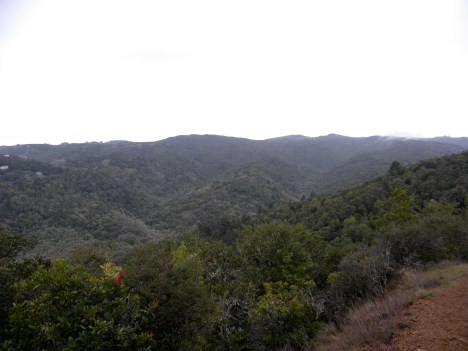
View looking over the vast protected hillscapes of Marin that stretch all the way to Sonoma County.  This is good deer and cougar country.

Although I walked those hills almost daily, and for years, I never once encountered a lion.  In September, the driest month of the year, the deer would come down from the hills to the perennial stream that ran alongside Lucas Valley Road where I lived.  And the lions follow the deer.  It was at this time that most sightings occurred.  One day a neighbor who lived next to the Open Space area, told me she was washing dishes in the kitchen when she looked out her window and saw a cougar.  Another friend was walking his dog and saw a lion.   Another friend told me her son was hiking on Mt. Tamalpais when he spied a cougar on a rock above him, watching. Sadly, I never had the pleasure of seeing one.

Because of the extraordinary amount of deer in Marin, cougars are living close to people.  California voters outlawed cougar hunting in 1996, yet there has never been one incident in Marin of a cougar attacking a person.  In July of this year a Marin county man was attacked in a remote area of the Sierra foothills by a cougar.  He was alone, in his sleeping bag, awakened by a large paw on the side of his head.  He survived.  This is such a rare incident.  One sound theory to explain this attack is that the man’s snoring sounded like a wounded animal to the cat.   https://i0.wp.com/animal.discovery.com/mammals/cougar/pictures/cougar-picture.jpg

California does give out kill tags to people who claim livestock loss from cats.  But you have to ask yourself:  other states have a hunt on cougars in order to limit their numbers and protect people.  Yet in a state as big as California, these kinds of attacks are incredibly rare.  From 1890 to the present, only 19 verifiable cougar caused deaths have taken place in all of North America–one of those was in California in 2004, the only death since California’s no hunting law began, with an estimated 4000-6000 cats statewide.

More cougar photos

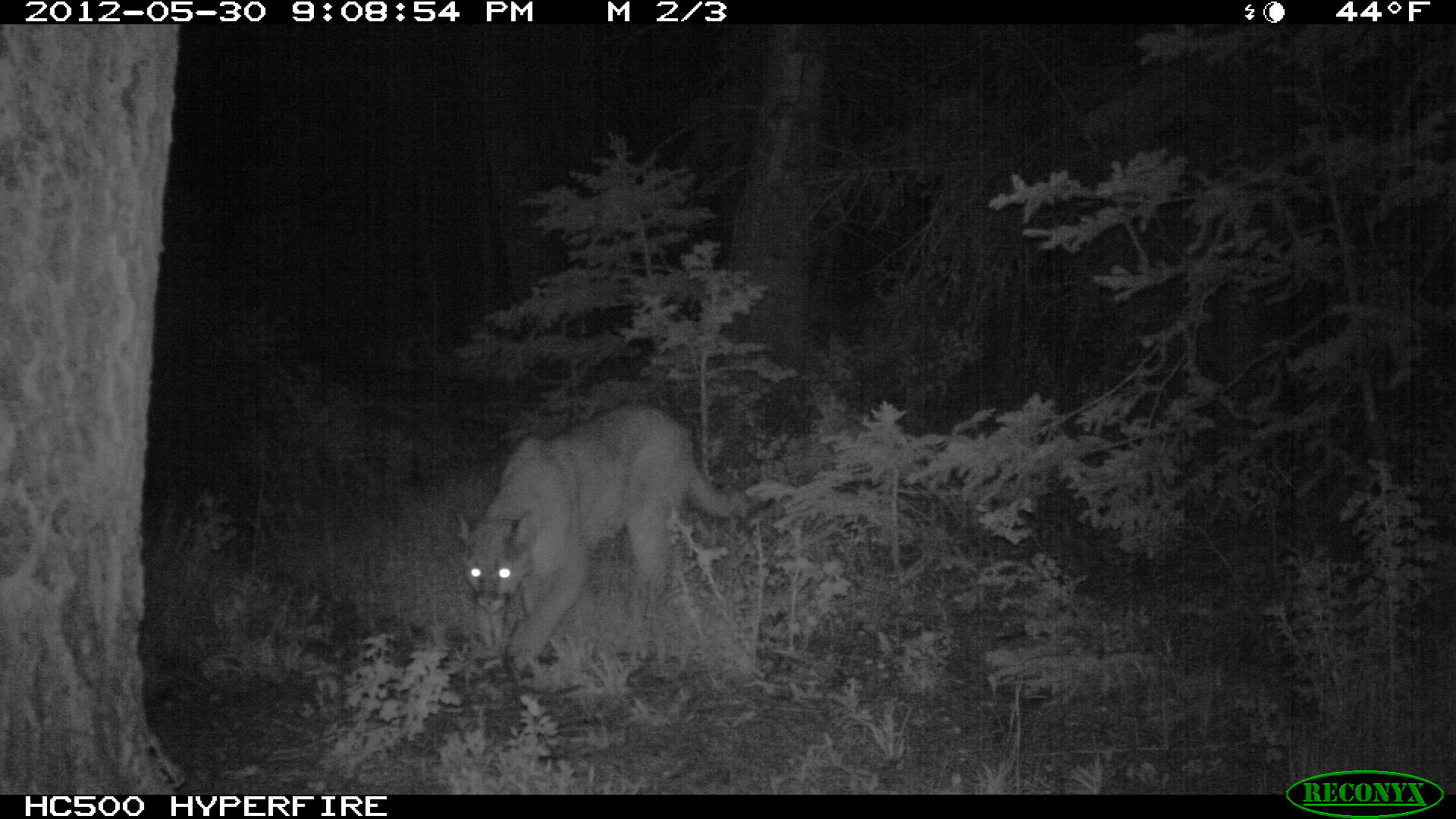
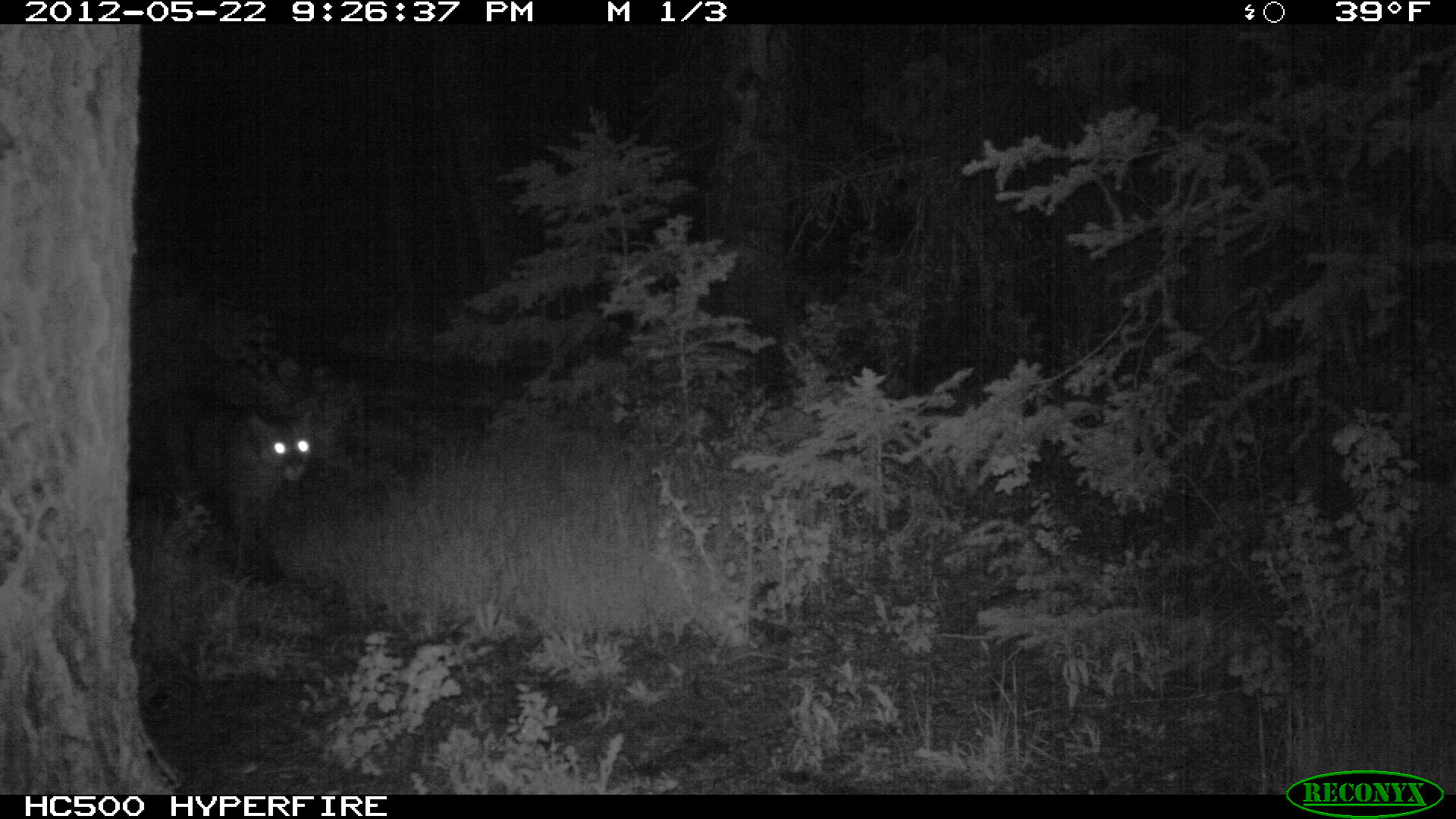
This cougar is still hanging around.  This series shows her coming directly to the trail cam and marking right in front of it.  I suspect it’s the red infared light she’s reacting to.


Cougar photos

OK, I’m wrong. Cougar do sometimes use human trails.  And here’s the proof. Caught on my trail camera…

A cautious cougar

Cougar coming through

More Cougars with some Wolves thrown in

I’ve said it before and I’ll write it again:  animals present themselves to you, not the other way around.  And for the last six months, cougars are what have been presenting themselves to me to learn about.

If you’ve been reading my blog, you’ve seen that cougars have been constantly coming into my awareness now since the winter.  Last winter I tracked a cougar in the snows and found over 5 of her kill sites.  Then the last several weeks I found some cougar scat on the edge of the little forest by me.  A week later I found a fairly fresh kill site, just 25 feet from my trail camera.  Too bad cougars don’t use trails.  The kill site was just off-camera by a little bit.

Last week I hiked up a drainage located  within a smallish draw.  I climbed high, then worked my way horizontally around the draw, finally descending via a creek with snow-melt in it.  As I was climbing to the ridgeline that was a rocky crescent, I pushed aside some brush and saw a large cave rock shelter.

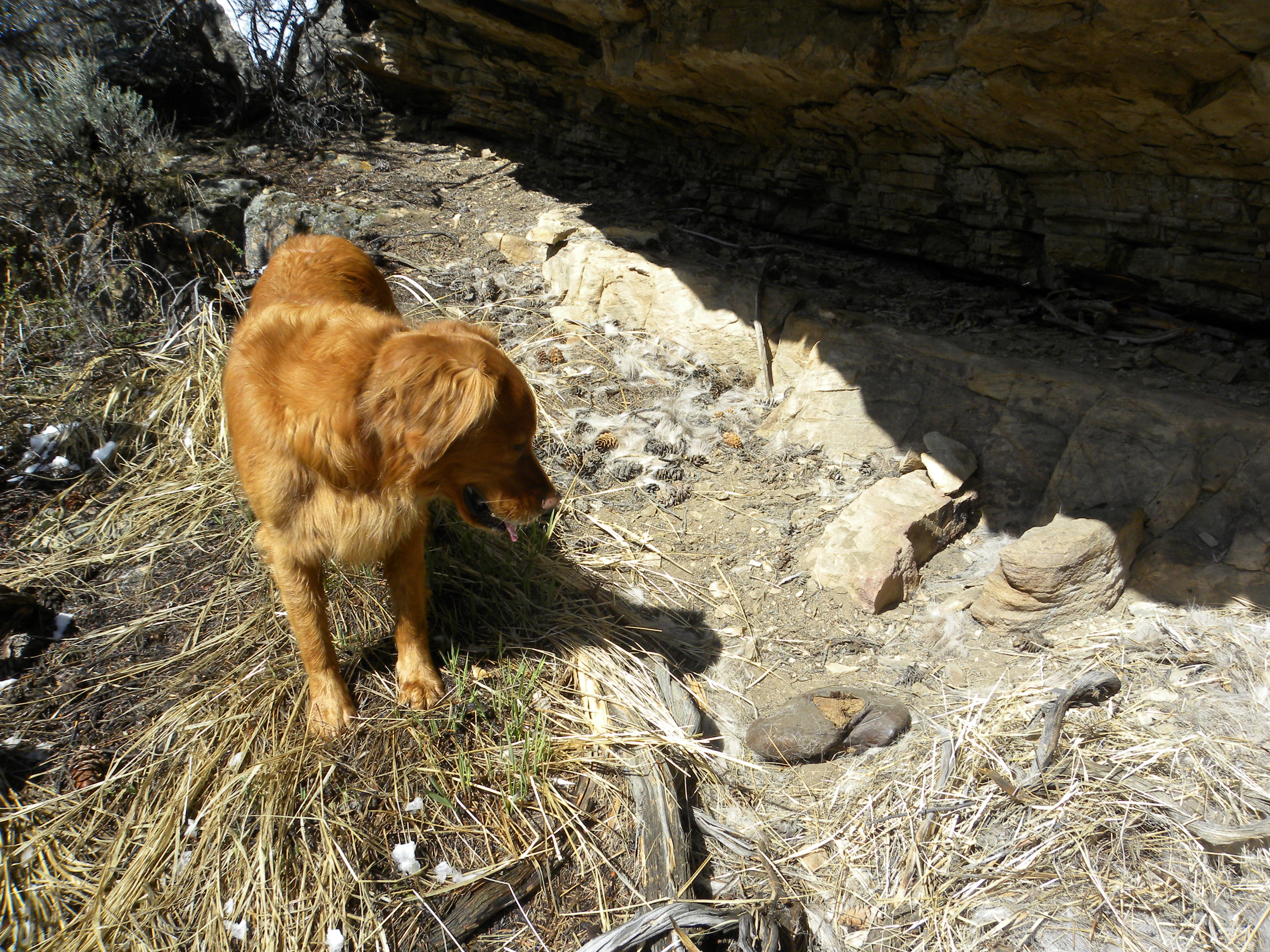
Koda guards a cougar densite

Koda was ever anxious to run right in and stick his nose inside.  I called him off.  There might be something dangerous inside.

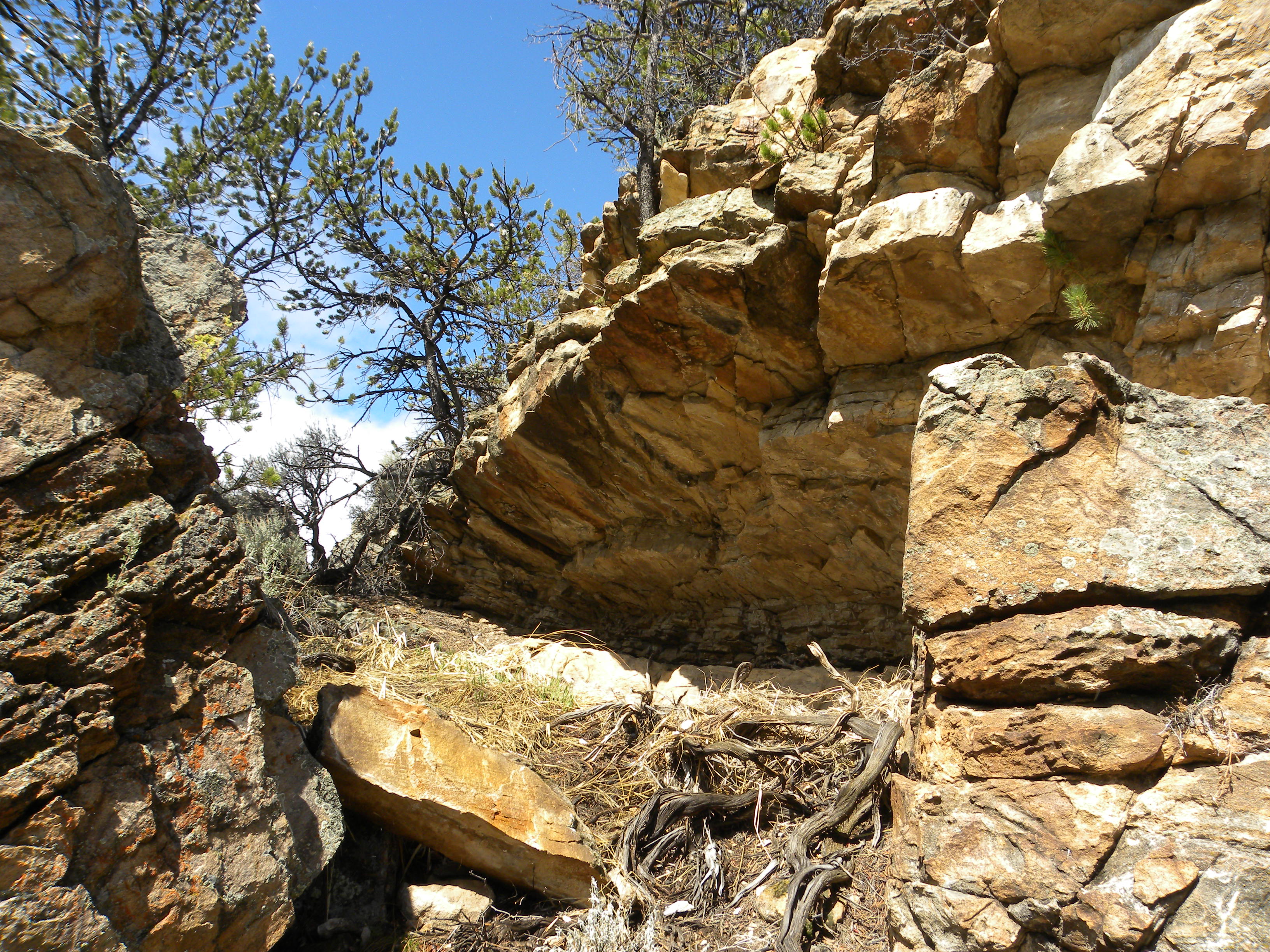
After determining all was quiet, I went to investigate.  This had been a cougar den, and one used this year.  I could tell from the smelly scat at the entrance.  The sticks and duff had all been pushed consciously to the front, and at the farthest rear of the cave was a neat round bed.  This was really exciting.

Den site of a cougar. Duff in front.  Bed at back end (where it’s dark in photo)

I began pushing farther uphill towards the rocks, looking out for sign of kills along the way.  Sure enough, there was a lot of evidence of deer predation here.

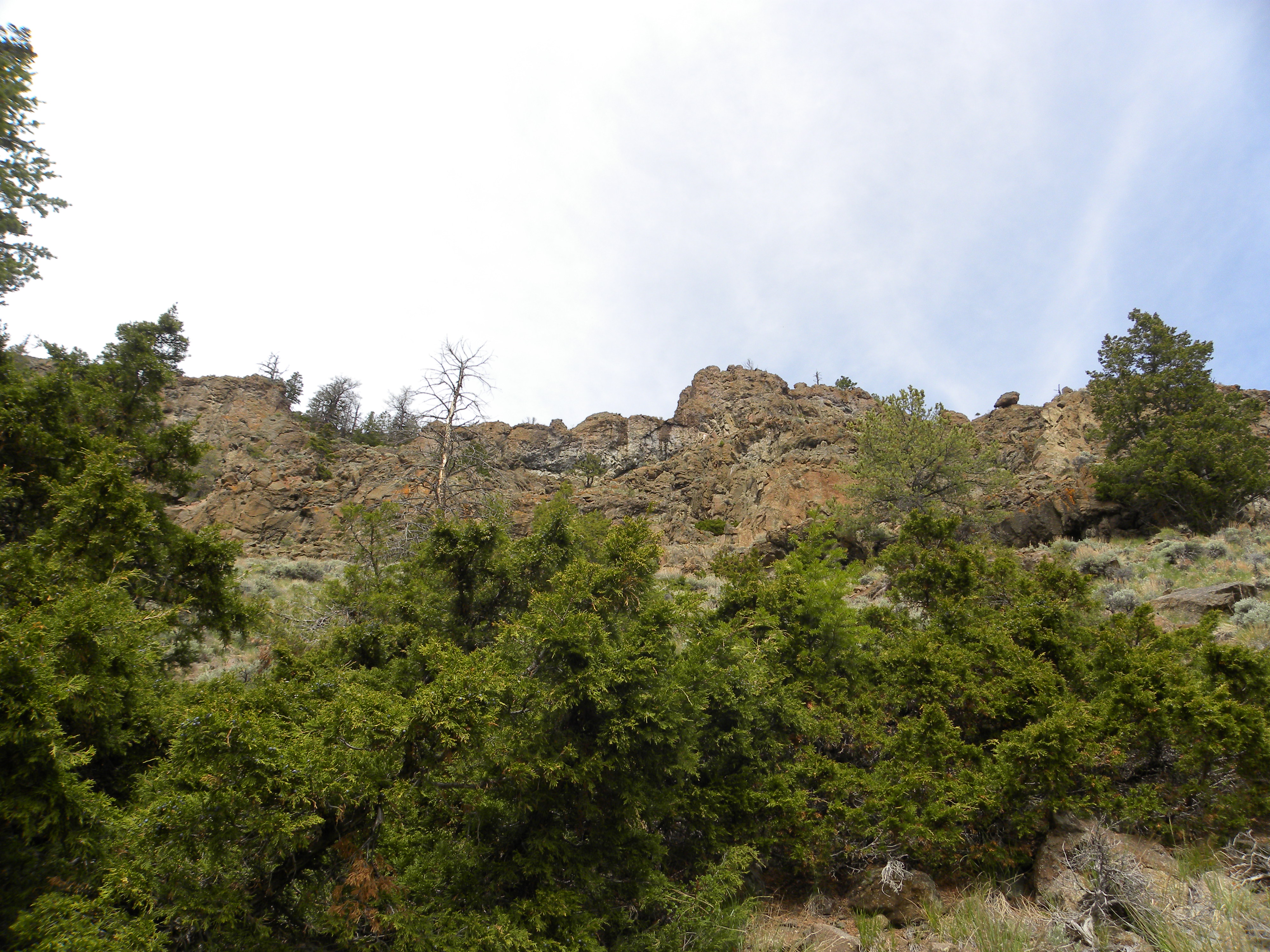
Rocky ridge I hiked to.

One thing I pondered was the lack of water.  A small creek was running several drainages over with snowmelt, but all the other drainages were bone-dry.  The canid dens I’ve seen are all close to a water source.  I thought about cougars in the Southwest, a super-dry area, and wondered about their use of water, especially with kittens.

Eventually I worked my way over to the drainage with water.

Drainage with some water I followed and found lion tracks

Coming round a curve, I found a large cougar print in the mud.  I understand that instead of following trails, like bears or wolves, cougars like to follow drainages.  I wished I could have taken a cast of that.

I followed the drainage down until I came to a downed large tree .  I went one way and Koda went around the tree on the opposite side. Above the creek,  I was following a deer trail now and called the dog back to me.  As he came across the creek, I noticed something move behind a tree about 25 feet ahead on the trail.  It was grey.  I peered to get a better look and there was the  yearling wolf I’d caught on the trail camera just days before.

This curious yearling wolf was watching me from behind a tree.  

She’d been curious, watching me.  When she noticed I’d seen her, she bolted.  I called the dog, who luckily was behind me, to a ‘heel’ and we moved ahead until we had a view of the hillside meadows.  There was her collared mom.  I kept the dog beside me, tried to take some photos while I walked out of the area, all the while we kept our eyes on each other.  She’d move a bit away, then stop and eye me.

Female collared wolf.  She’d move uphill, then stop to see where I was

I thought about how curious wolves are, and how these wolves, though cautious, are fairly used to people.  Most of the time I see wolves around here, they prance ahead, then stop to watch; easy targets once hunting season on wolves will begin next fall.  I fear these two wolves won’t live to see another spring.

I was still stoked from that morning for several days.  What a lot of wonderful wildlife adventures.  Then just a few days later, I walked at dusk to the mailbox.  Cougar prints crossed the driveway, still damp from recent rains.  Now I had my casts!  A perfect week and a lot of cougar lessons besides.

Cast of cougar prints–right side is rear on top, front on bottom. Cougar was going at a fast trot. Left print is a direct register


Wolves, cougars, and the little woods

There is so much wildlife activity in the little piece of woods and meadows next to my home that I don’t need to venture much farther than ‘around the block’.  Sometimes just sitting on my front patio is enough.

Besides the nesting bluebirds and house wrens, the red-tailed hawk making its’ rounds, and the pair of Golden Eagles soaring above, there are morning and evening visits from does and bucks in velvet, and an occasional turkey.

But the unseen action is taking place when I’m sleeping.  Now I’ve caught two different wolves on my trail camera set up in the woods.  On the 2nd of May I clocked this black female passing south early morning.

Solitary female probably from the old Sunlight Pack that was killed off last year by another pack

And now on the 12th I caught another wolf, unknown, heading north almost at the same time in the morning.

first shot from trail camera

Yearling pup from the pack presently occupying the valley

Of course, coyote is always running through the woods so trail photos of him abound.

Coyote. Easy to tell wolf and coyote apart

Usually when I retrieve my trail camera I’m expecting to see dozens of only deer photos so I have been pleasantly surprised.  Here’s a nice buck photo.

Lastly though, here’s the most unexpected.  Last week Koda dragged me over to some strong smelling scat.  It was a large pile on top of an older pile, definitely cat, and I mean big cat.  The deer are still low and some must be having their fawns.  Of course, this winter I spent tracking a cougar and understanding in greater depth their sign.  Yet I was surprised to see that a cougar was this low and so close to the houses.  Granted, the summer residents aren’t here yet, but there is the occasional activity still.  I made a mental note of where the scat was–on the far side of the woods–but saw nothing else.

Then today while returning the chip to the trail camera, Koda got a sudden urge.  I’ve learned to trust his instincts and smeller so I followed him.  And not more than 50 feet off trail from my camera was a cat kill.  The deer had already been consumed with just its legs left, but there was the tell-tale mound of the formerly covered carcass, the plucked fur, and another smelly scat on top of it all.

Cougars pluck their carcasses. Bears pull the skin back.

I found a jaw of a young deer, although the legs were too big to be a fawn, so maybe this deer had been a yearling.  This is the first time I’ve seen cougar sign in the woods or a cougar kill so low.  The crazy thing is those cougars are so stealthy that there were no tracks, and besides, my trail camera was almost right there and I didn’t get any photos.  The cat, you see, didn’t use the game trail like the Canids and Ungulates do.

Telltale sign of where a cougar covered its’ kill. Plucked fur abounds.

Cougar Town

Somehow it just works this way.  I dream up an animal I want to study and know more about, then decide to try and track it.  But it just doesn’t work as I plan.  This winter it was martens, yet I didn’t see one track.  But instead of the animal I had in mind, another one presents itself.  This time its cats, and not just little cats, but cougars.

Remember I saw that mountain lion track, tried to follow it, but lost it pretty quickly.

cougar track with my measuring tape

Yesterday I went back to the area and ran into two older cougar deer kills.  Today I went with my camera to record them and inspect them better.  First I headed to a small rock ledge where the cougar obviously dragged his kill.

Cougar dragged kill to this site

What was left was a lot of fur and the rumen, still perfectly intact.  What I discovered is that cougars open the carcass and remove the rumen like a surgeon.  When you find a canine kill site, the rumen remains are scattered and opened up.  Canines tear their prey apart messily.  Cats are very methodical.  Cats are unable to synthesize vitamin A, so they must get it from the internal organs of their prey, what they gorge on first usually.

Kill site where cougar surgically removed rumen before eating

This site had absolutely no bones, only tons of plucked hair, the rumen, and a large pile of scat.  There was a cache mound but only hair underneath.

Cougars use their lower incisors to shear fur from skin

Cougar scat at a kill site, very meaty smelling

I headed for another site I’d seen yesterday where a male fawn was killed.  It’s near a meadow, so I assumed the fawn was killed in the meadow and dragged to this secluded spot in the trees.  Again the rumen and testicles this time, still intact from over the winter, the fur plucked and a very few bones–mostly the skull which was split in two.

Deer paunch surgically removed

Now after I left this spot I’d found yesterday, I ran into three more old stashed kills in the same general area.  Wow, cougars are an efficient killing machine.  All these other sites were old and had one thing in common that was interesting:  all the sites had a lot of plucked hair and had covered mounds.  Underneath all these covered mounds was only hair, no bones or carcass.  I assumed that this was where the carcass was first dragged to, then plucked.  The carcass was moved after that for a second feeding, but only after the original area was covered.  I am perplexed why the site with no carcass remains anymore still needed to be covered.  If the carcass with covered, then re-visited and consumed, it would seem unnecessary to then re-cover it.  Under all these mounds, only fur.  A mystery yet for me to solve.

One site had scratch marks on the ground (you can see the mound and in front of it the area is clean where the cat scratched with its back legs.  There were scratch marks in the dirt that are visible too).  I understand that mostly it’s males that scratch like this.

Cougar kill that was dragged under this tree and then covered


In middle of photo are cougar scratches. mound behind full of hair

A tree in this cache circle had these marks on it that were old–are these cougar scratches?

Was this a cougar scratch that was next to a stashed kill?

Not too far away Koda found a leg here or there.  I found the hide scattered as well.  This was an older kill, not this winter, so scavengers probably already got to it long ago.

I found several other sites like this, all in a fairly small radius–all around a rocky rise.  How exciting this was to explore this cougar(s) territory and see his tracks.  I learned a lot just reading, exploring, observing, tracking.  I went home with the desire to find a good cougar video, but just couldn’t find any; then by serendipity, I turned on the Monday night National Geographic Channel featuring Wild America with an hour feature on cougar tracking!  What a great cougar day.  Now I hope to see one of these beautiful elusive  animals some day.


Mountain Lions, Pumas, and Cougars

Cougar trackI’ve just finished a read that really got me thinking.  The book, The Beast in the Garden by David Baron, I bought from Jim Halfpenny.  That’s because Jim is featured prominently in the story as an independent tracker and researcher who forewarned of the dangers that were coming.

In detective style, Baron weaves the true story of Boulder, CO in the late ‘80’s, a rapidly developing community impinging upon mountain lion territory, while at the same time a ban on deer hunting exploded their prey population.  Deer were wandering city streets and suburban backyards.  Naïve ex-city folks encouraged their tameness by feeding them.  And the mountain lions followed the deer, as they’re known to do.  Soon they were killing deer in people’s yards on the outskirts of town.  Before long, the lions, stalking deer in suburbia, had studied the people as well, and knew their habits and routines.

Interestingly enough, Baron explains that the natural enemy of mountain lions are wolves—cats and dogs.  With wolves so long out of the picture, lions no longer had the natural instincts to fear dogs aka ‘tame’ wolves (mountain lions are hunted with dogs but these hunting dogs are highly trained to focus on running down just lions, not other types of prey).  So it wasn’t unusual that the first aberrant sign began with lions killing and eating dogs left in outside fenced runs, or running free.

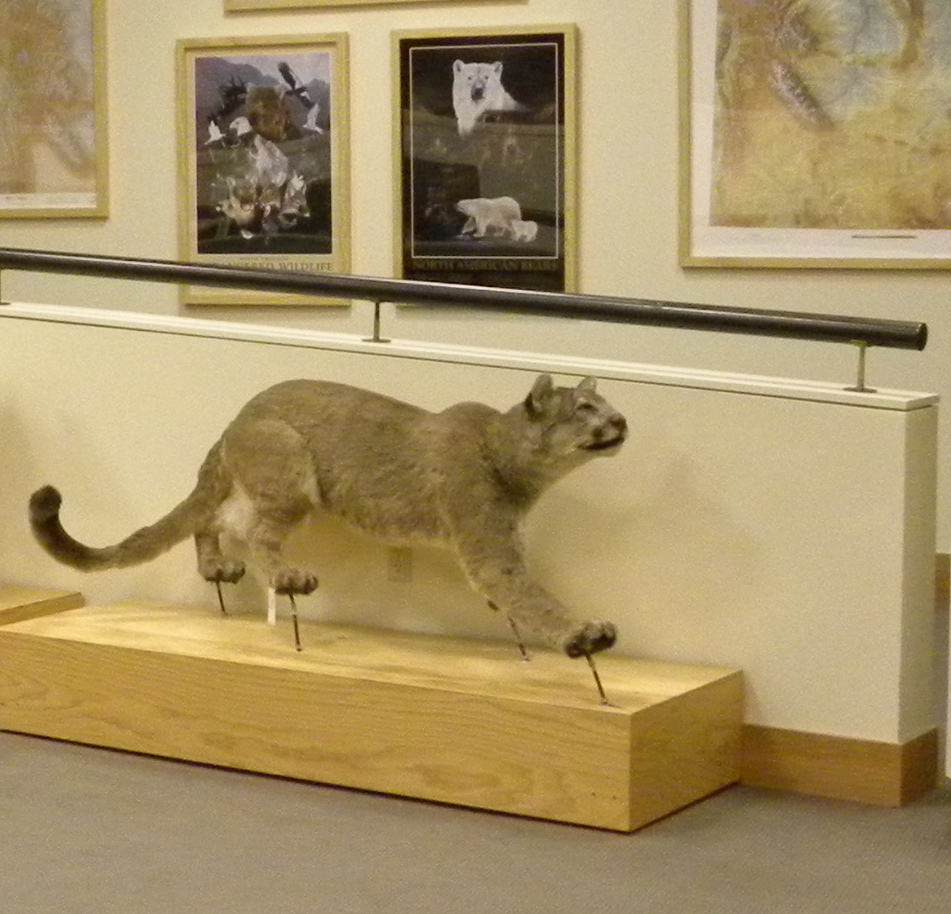
People started seeing lions not just occasionally at dusk or dawn, but during daylight hours, and sightings increased.  The lions  soon roamed city streets at night.  One policeman came across a lion late at night on a city street eating a deer.  The old tried and true method of ‘look big, wave your arms and yell’ only elicited yawns at best, and more often snarls and growls.  It was only a matter of time before there was a human attack.  When a high school student was killed and eaten while training for a track meet running in the hills near his school, the Colorado Wildlife agency took action by relocating problem cougars, or using rubber bullets and other measures.Stuffed mountain lion

Why did I find this book so compelling?

The book highlights a lot of questions and new situations we face (more incredible cat stories in the news).  We have lost our wilds, our wilderness areas.   All wilderness is surrounded or encroached upon by civilization in some fashion or another, whether it be farmlands, suburbs or town.  In nature there are no empty lots that wildlife can move into.  Expand your footprint, buy some acreage in the Oak woodlands and the wildlife are still there.  Take down the old Oaks and put in your personal vineyard, the wildlife now lurks in the background, but are still around.

This situation just happened to me in an amusing way the other day.  While camping in the redwoods on the weekend, all the campgrounds around me were full.  People had their coolers, lights, etc.  They seem to have brought the suburbs with them.  I could hear growling in the shadows by the creek below.  The dog kept running in the brush.  What was there?  After all the campers went to bed and the fires had died down, a family of raccoons started marauding the area.  They knew exactly what these humans habits were.  But the following night, on a Sunday, I was the lone camper and the raccoons had retreated, only to be heard squabbling over some leftovers in a distant campground.

Jim Halfpenny, the book states, worries that the next predator/prey aberration will be with the wolves.  In the quote from James Schultz, he says that Native Americans were never bothered by wolves; they never feared when they heard wolves around, which was all the time, every night.  But he also says that there was plenty of prey, so there was no need to be afraid.  And, what he doesn’t need to say in the 1880’s, is that there was plenty of habitat.

We need to think through exactly what we are doing in our wild lands.  Most recently I read an article in Scientific America proposing growing our foods in high rise buildings in our cities, saying it would be more economical and efficient.  We could use all our grey water that way.

Of course, I added in my mind, leave all the rest of the land to the ancient wilds, restore the Bison, jam the GPS units, and live or visit there at your own risk.  As one of my friends in Cody says, when hiking in wolf and grizzly country, with a dog, you take certain risks and just live with that knowledge and be prepared.

All in all, the score is still in favor of the bipedals–66,665 cougars killed by humans in the last 50 years to 15 humans killed in the entire last century (100 years) by the big cats.  Obviously we are still the deadlier of the two species.