• MY BOOKS ON WILDLIFE, GARDENING AND MORE

  • The Wild Excellence

  • True stories of wildlife encounters around the Greater Yellowstone
  • Award winning eBook on Decomposed Granite, tips, how to's, what to watch for
  • Children's book. True stories of a dog and wolves. In a dog's voice
  • Written for dry Mediterranean climates in California, north and south

Learning gaits

I’ve been working hard to learn animal gaits.  What, you may ask, is that?  Its the pattern you’re going to see on the ground when an animal is moving, either walking, running, loping, trotting, hopping…you get the idea.

I’d been studying track identification for a number of years.  When I was in California last month I went to my old tracking club that meets once a month at Abbot’s Lagoon in Point Reyes.  We walk about a mile to reach a sand dune spit which is always full of life–bobcats, deer, coyotes, raccoons, otters, skunks and more.  This particular morning was a coyote and a bobcat station.  Both stations were about gait analysis.  The coyote switched from a trot, the natural rhythm for a coyote, to a side trot, then looked to the side, then stopped and started walking.  I really was confronted with my limited knowledge of gaits.

Gaits overwhelm me.  I have gait dyslexia it seems.  So what I did was use stiff cardboard and cut out footprints–F for front and R for rear.  Then I’ve been arranging them, using Mark Elbroch book ‘Mammal Tracks and Sign‘ as a guide, in different typical patterns.  Once arranged, I use all fours and mimic the gait.  I think its the only way to get this into my brain, as a kinesthetic exercise.  I once heard that you have to see an advertisement 300 times before its in the brain.  Probably I’ll have to do each gait 300 times before it begins to connect.

Straddle trot turning into a Side Trot (canines)


Transverse Lope

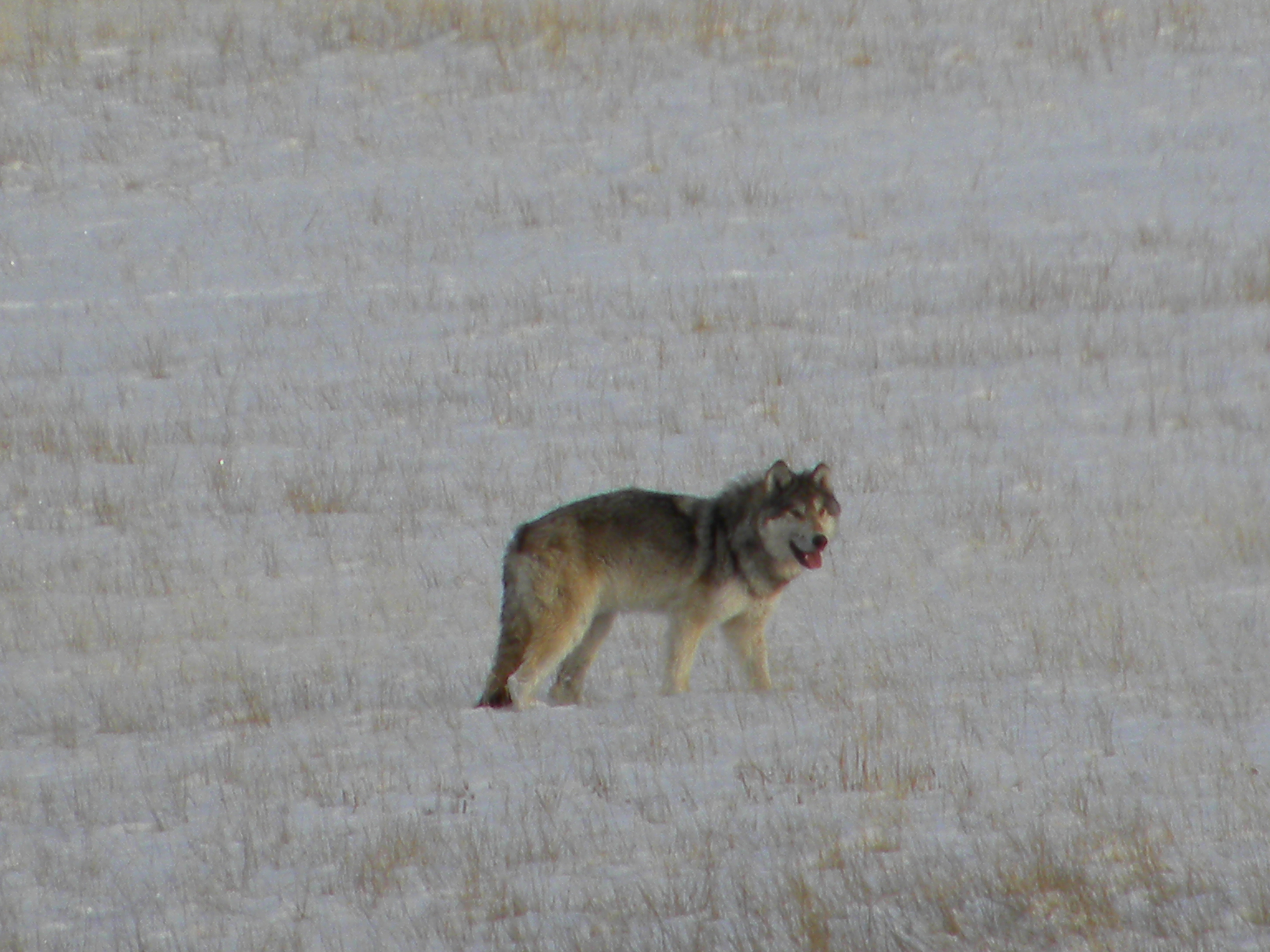
And of course, then you’ve got to go to the field.  Today I went out to a well-traveled back road that’s closed in the winter.  Well-traveled that is, by bunnies, coyotes, and especially the local wolf pack.  Last week the snow was very deep, but today it was hard packed with mostly wolf prints running back and forth.  I still am not very good at figuring out how many wolves were running down the trail, especially since there were tons of prints in both directions.  But at least 4 or 5 wolves.  I could see where they’d made a kill on the other side of the creek, but only a few parts were visible through my binoculars.

As I traveled further up the trail, one wolf was occasionally dripping blood.  I thought it might be too early for her to be in estrus.  The wound though wasn’t coming from the foot.  At one point the wolf shook and there were drips of blood in either direction of her trail.

I followed one wolf track that went off to the side of the trail.  The track stopped at a wide swath of compacted snow, like a lay.  But it didn’t seem that it was a wolf lay.  For one thing there were ungulate hairs in the depression.  Also the wolf’s tracks were fairly unbroken.  Koda was very interested, digging and sniffing the outline.

The bigger track is the front foot

We trekked a bit further to another spot where the wolf went off to the side again, with another depression.  Koda began digging furiously, and came up with a fresh deer skull!  That wolf had stashed the skull there.  Probably the other spot was a possible stash area, but then he changed his mind and stashed it further up.  That was fun and revealing for me because I had wondered if maybe that wolf had laid down.  But it didn’t add up with the ungulate hairs and no deer tracks leading to or from it.  Tracking is kind of like solving a mystery.

Koda, upon finding that wolf’s ‘stash’, took that deer skull and stashed it somewhere else.  I told him that that wolf would be mad with him for messing with his ‘stash’!

The wolves veered off the old road, under a fence line and into the woods.  I followed them out to where they crossed an iced over portion of the river.  They were just making their rounds and I was getting an idea of their route.  Interestingly enough, I saw some old bear tracks.  They were very degraded but were certainly bear.  Yet they weren’t that old because they were in the snow.  Although the winds have been blowing for days, this was a protected area under cover.  But our last snowfall was about a week ago.  These tracks were fairly fresh.  The fact that some bears are out still gave me pause.

So far in the last week, I’ve noticed a few things relative to the wolf pack here.  They use the easy routes to patrol the area.  They like to go up and down the main dirt road, then cut across the meadow through the willows to cross the river.  They circuit around from the closed road on the north side of the creek back to the main road.  When I walked the closed road all the way to the Game and Fish (which is closed during the winter for wildlife habitat), I’d thought the wolves would have continued on their trek through the boundary line.  Elk are in the meadows up there, but the snow is deep, so they use the easier routes for now.  Last year for certain they were coming and going through the habitat boundary, but last year held much less snow.

Also, last year the kills I saw were mainly elk.  So far this year, in just the two weeks that I’ve been watching along the road, they’ve killed not only elk (I saw one elk kill) but a yearling moose and now this deer.

Abbie Nelson out of University of Wyoming, worked up here for 2 summers and fall doing a wolf study.  She told me deer were the preferred food in summer when the elk are gone.  With thousands of elk now in the valley, all along the meadows beside the roads, I was surprised to see this deer kill in the creek bottom.

Tracking animals always gets me into their mindset.  And if I can begin to learn gaits, then I might be able to get in to their heads even more.  You can see which way an animal was looking, if they paused or speed up, and  then you ask yourself ‘Why?’.  It is a real study for sure.  I’m working on it.

Mystery of the Cache

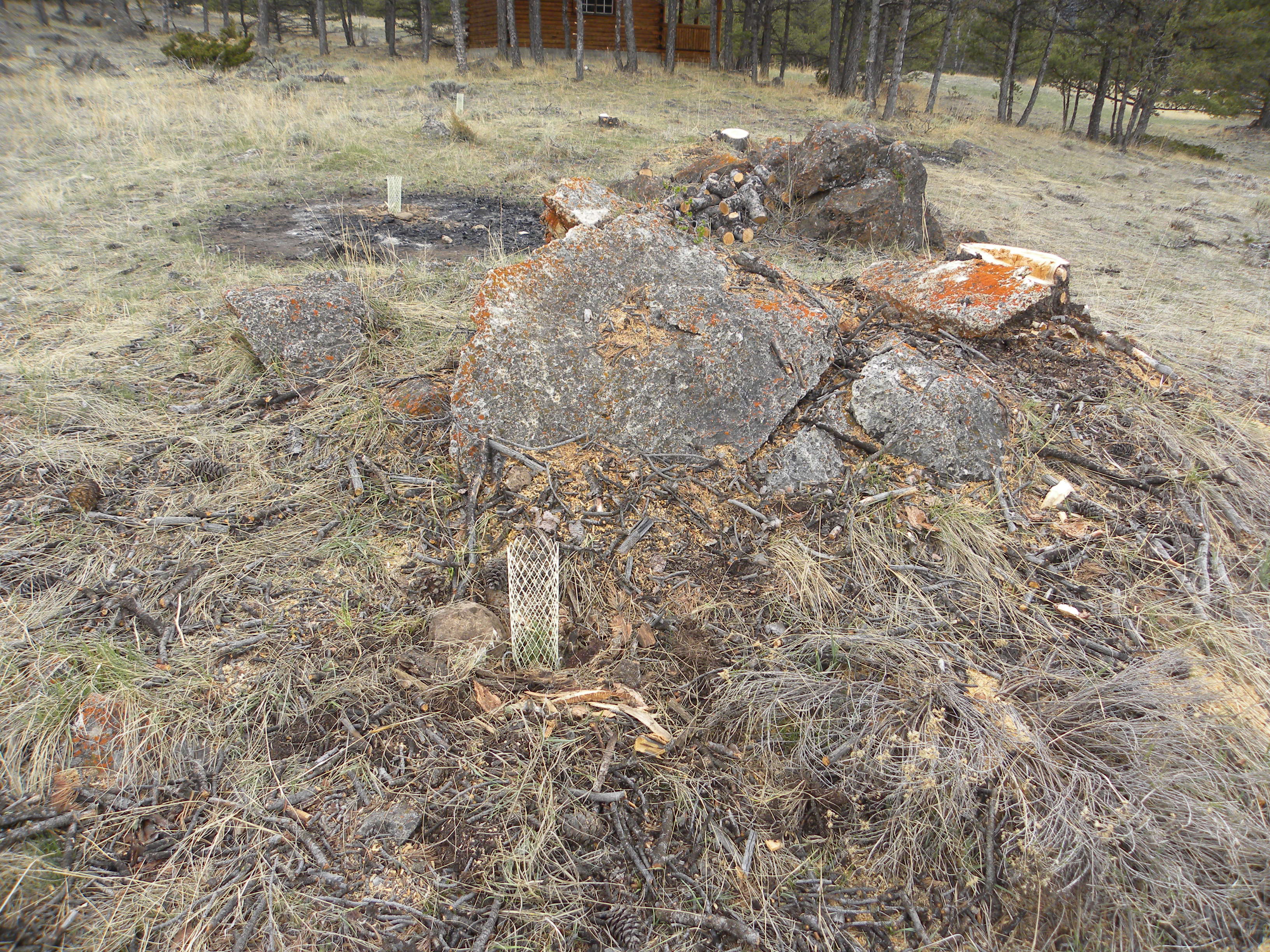
Several weeks ago I wrote in my post about planting seedling trees that I accidentally dug up a cache of clean red fresh chunks of meat.  I’d noticed a freshly dug area right by a rock and thought it would be easier to plant there.  To my surprise out came about 4 or 5 pieces of meat, about 3″ or 4″ size.

Where the meat was cached by the mystery animal

Koda immediately re-cached them.  Here is a video of him caching a found deer leg out on a hike for reference.

Error
This video doesn’t exist

I wondered who put that meat there.  It smelled quite fresh, although it probably was buried when there had been some snow on the ground.

It snowed a few inches the next day and while walking in the woods by the cabin, I noticed Black Bear tracks.  The bear had walked the trail, circled around the tree at the base of my spring, then walked back the way he came and up the hillside.  Could that bear be the culprit?

I work once a week at the Museum in the Natural History Lab preparing specimens.  I asked my boss, the assistant curator, for his opinion.

“Could it have been a bear or coyote?”

“Coyotes eat everything all up.  They don’t cache.”  he said.  “Maybe a crow or raven.”

Yesterday I walked to the upper area to check on my seedlings.  We’d had rain and bits of snow so I figured they’d be fine.  All looked good, even putting on new growth.  But then I noticed that seedling in the old cache hole.  The protective cage was scattered, the plant was dug up and pushed aside, the rocks I’d dug up and used for mulch were helter-skelter, and a nice hole was there that had all the markings of a larger animal–kind of like my dog might dig.  Whoever dug that hole was definitely NOT a corvid!

The animal had come back looking for his cache.  I felt badly.  He or she must have been sorely disappointed, a meal gone without.  Koda was all over the place with his nose and although I didn’t see anything, I assumed that animal had left a calling card there to let other animals know this was his place.

I found where Koda had cached the meat, dug up a piece and froze it for later I.D.

Frozen piece of cached meat. Notice hairs.

I went back and asked my boss the question again.

“Well, could’ve been a badger.”

The mystery continues.  I’m going to find out who that animal is.  Any hints, readers?

Bear tracking

According to an article I read, the GYE has 1.1 Grizzly Bears per 100 square kilometers (38.6 sq. miles).  I’m not sure how many bears live in the Sunlight area of Cody, but I know its a drop-off place for problem bears.  I was told by a Forest Service contract employee last summer that they collared 25 bears here last spring.

That same article estimated grizzly density during the time of Lewis and Clark at  3.1 bears per 100 square kilometers.  Three times as many bears.  I’d be curious to know the density around here.

What I do know is that although its common to see lots of fresh bear sign every spring, its not so common to run into bears.  1 bear per 40 square miles is a lot of miles.  But I also know that bears like to use the same trails we do and precaution and care are important.  I carry bear spray, watch the dog and stay alert, especially around blind corners and try to stay out of heavily wooded areas in the spring.

Grizzly in spring

That being said, I took a nice hike up Elk Creek the other day and spent about 1/2 hour investigating some wonderful bear tracks.  After taking Jim Halfpenny’s tracking class last fall, I’ve become accustomed to looking at tracks from many different angles, including getting down on the ground and eyeballing them.  Jim also urges his students to use all their senses.  Feeling the imprints with your sensitive finger tips is just as important as the visuals.

By mapping out one track distance to the next, I was able to estimate where the next track might be even if I couldn’t detect it.  Then by putting my face right down next to the ground I could make out the faint imprint of the track.  After doing this for several non-discernible tracks, I was soon able to pick them out easily.  I started noticing how, even if there was no visible track, the grass was flattened or there might be the slightest disturbance in the soil.

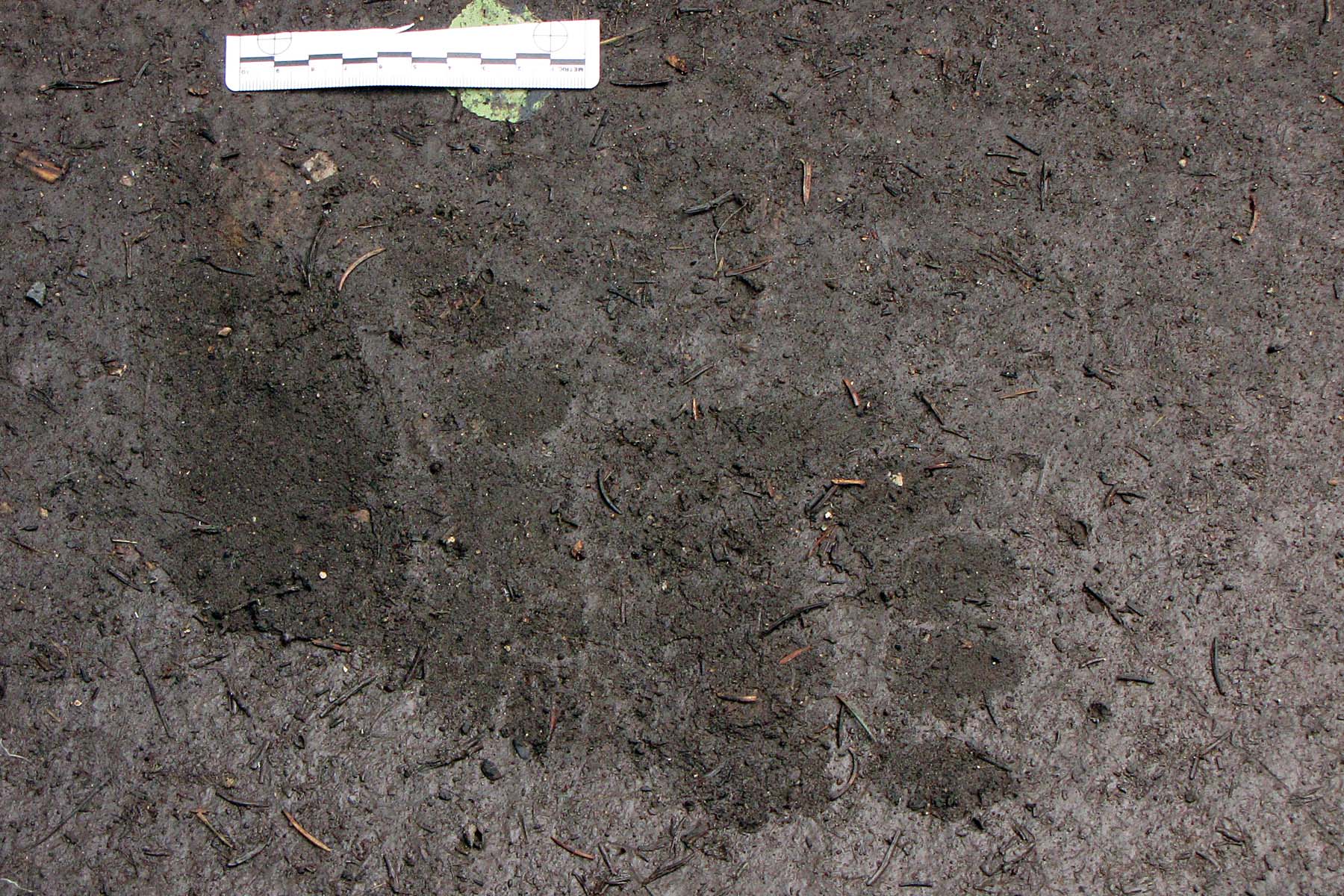
I spent a lot of time trying to understand this bears’ gait.  Bears usually amble, where the back larger foot oversteps the front.  For some reason I don’t yet understand, this bears’ hind foot hardly imprinted and it was mostly his front foot that was registering deeply in the mud.

Grizzly typical walk or amble

I backtracked the bear, who was headed towards Elk Creek valley not too far from my cabin.  He’d come up a spur trail by the creek.  I wondered what the bear was looking for, what he was eating, where he found food.  I put my fingers in the track of his front foot and felt all the ridges.  With my palm pressed against the large pad, I realized here I was ‘touching’ this bear’s foot.  It held all the mystery and magic of bears themselves, all in a print.

The ancient footprints–Dinosaurs

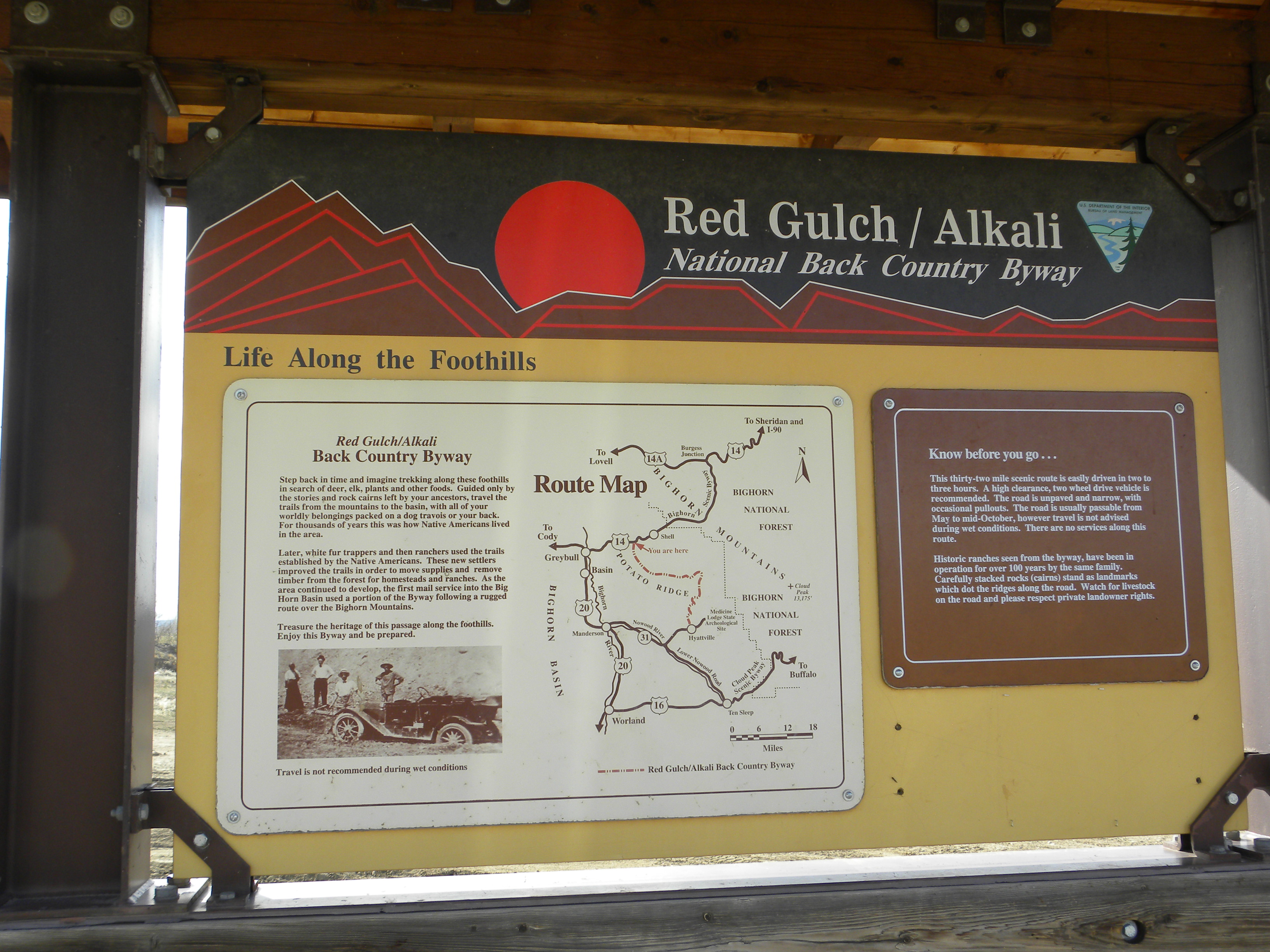
Yesterday I went with some friends to see the Dinosaur footprints at Red Gulch/Alkali.  Located on BLM land outside of Shell, WY,  its about an hour from Cody towards Greybull.  The turnoff is a good dirt road that goes about 35 miles and ends in Hyattville, where there’s an archeological site with petroglyphs. 

Detail of sign at turn off showing map

Today we were just going about 5 miles down the road to some dinosaur tracks, discovered in only 1997 by hikers.

Its a beautiful spot--Badlands against the Big Horns

According to the signage, the discovery changed paleontologists view of the Wyoming landscape 160 million years ago.  Just 15 years ago, it was thought that all of Wyoming was covered by ancient seas in the past.  With the discovery of these footprints, it appears that parts of the landscape had beaches and mudflats.  Of course, 160 million years ago Wyoming was located about the latitude of Cancun, and these dinosaurs were lounging around beaches, eating plants and each other with a nice view of the ocean.

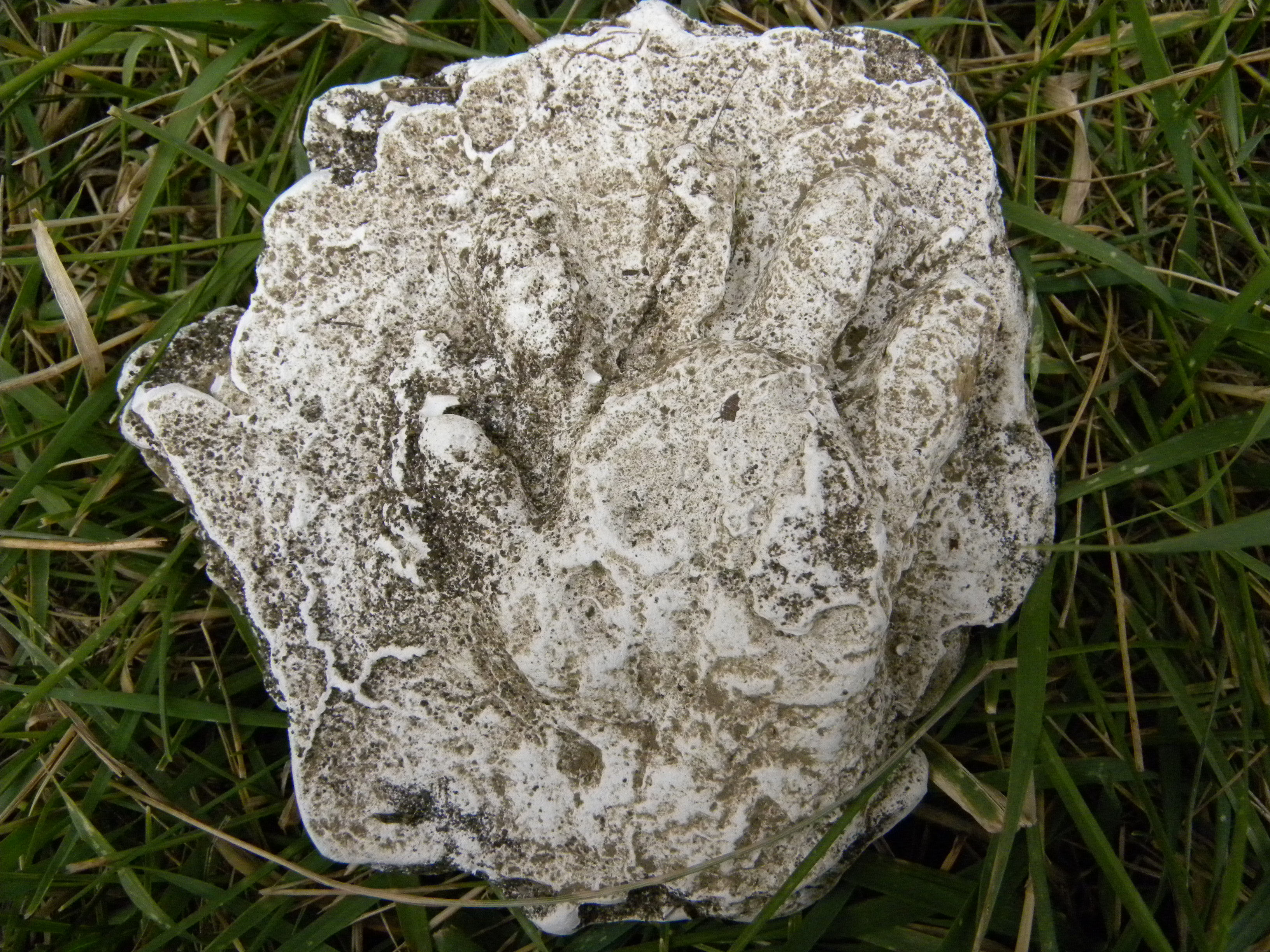
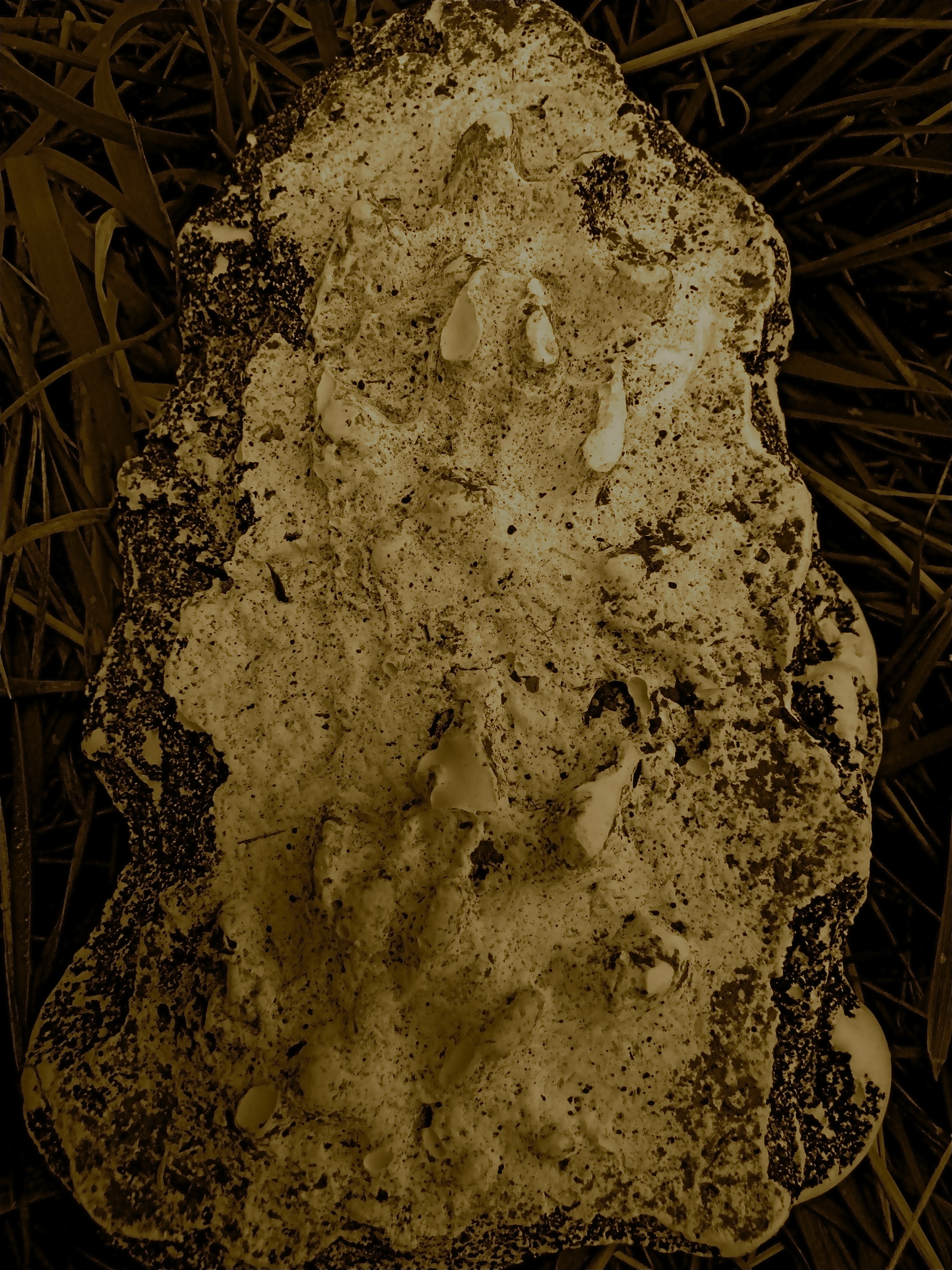
Dinosaur footprint

Sunglasses show scale of footprint

The crazy thing about seeing the footprints was knowing these animals are now gone, long gone, extinct…yet the ghosts of their presence is imprinted in these rocks.

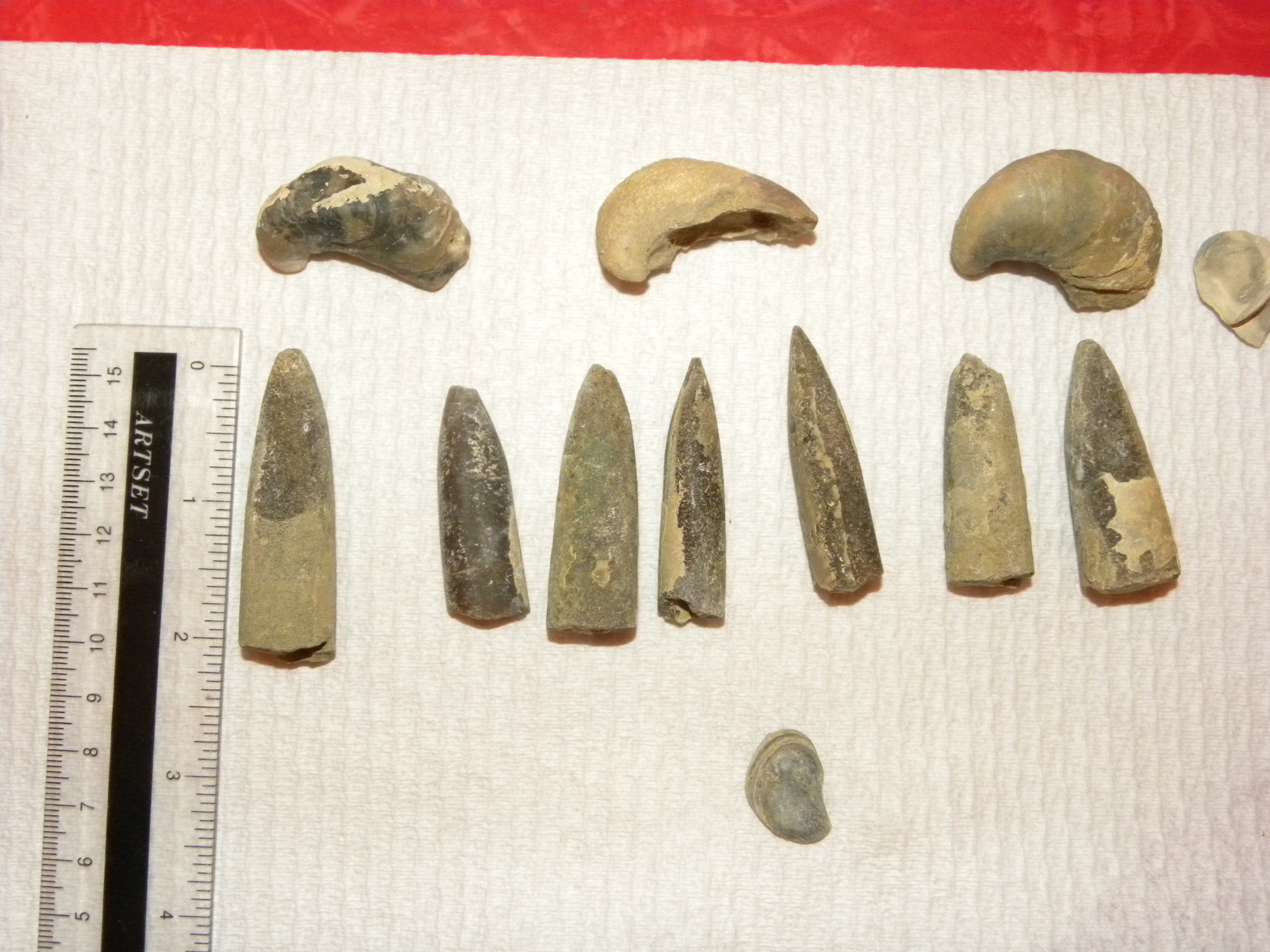
After lunch, a few of us hiked up into the nearby hills.  The whole hillside seemed to made up of fossilized shells.  The shells were in the sandstone cliffs, but also covering the gully and hillsides.  We collected a few shells and some unusual ‘teeth-like’ fossils called Belemnites, ancient squid-like creatures.

Belemnites and Devils toes

As one of my friends’ said, Wyoming is so interesting.  You could be out every day for the rest of your life seeing and doing something new and unique.  This certainly was one of those days.

The wolves have a good day

What a day!  Let’s begin with 4″ of fresh snow.  Then add 5 wolves running past my property, 4 greys and 1 black.    Throw in back tracking and tracking the wolves to explore what route they are using to come down into the valley.  And for the day’s finale, watching the wolves on two kills they’d made by the road this morning.

Lots of elk tracks too on this beautiful day

Around 1 pm, we heard the dogs barking and looked out the front window to see 4 beautiful wolves running along the nearby pastures through a herd of horses.  Those horses are used to dogs so they didn’t seem perturbed one bit.  And those wolves were ‘booking’.  They had someplace to go or a meeting to attend.  Within just a few minutes they were up on the opposite hillside and over the divide, a hike that takes me at least 45 minutes!  Then along came a limpy grey following way behind.  They all looked amazingly healthy, no mange.

Limpy wolf but seems to be doing fine

These are the new Sunlight Pack, pushed slightly south into Elk Creek because of a much larger pack of 10 wolves occupying their northern range.  Last winter I didn’t get a chance to see the Sunlight Pack as they were hanging deeper west in the valley, moving with ease back and forth (north and south) across the valley floor.  This has been their home range for several years.

There’s an elk study going on, in its fifth season, in the valley and they’ve been able to do some good collaring this year of wolves.  And so they’ve learned that the Sunlight Pack has been bullied a bit by this larger pack to the north.  In fact, all that howling I heard on Valentines’ day was the Hoodoo Pack making a kill on the northern side of the river, a side that used to belong to the Sunlight pack.

Tracks of four wolves 'booking it'

At around dusk I went up the road to get a closer look at the kills and see if there were any wolves still  on them.  The UofW crew said they processed the kills and they were two older cow elks, about 10 and 12 years old.  “How old is old for an elk?”  I asked.  “About 15.  Some can live till 20, but that’s really old. These were in pretty good shape,” they informed me.  

Error
This video doesn’t exist

With some quick and dirty math, I figure that’s about 50 or 60 years in human terms.

Tracking Club of Marin at Point Reyes

Sorry I forgot my camera.

This morning I finally made it to Tracking Club, a group  I used to frequent when I lived here full time.  The last Sunday of every month the club meets out at Abbots’ Lagoon in Point Reyes.  The club leaders are fabulous, many schooled personally by Jon Young, Tom Brown, or Mark Elbroch. Stations are set up beforehand, people divided into groups, and off we go.

Abbot’s Lagoon is part of Point Reyes National Seashore and a protected sandy dune beach full of habitat.  Its a mile walk out to the lagoon and the tracking often begins with the hike out.  A deer watching us from the shrubs, brush bunnies run bye, and lots of tracks and scat to explore along the way.

My first station with John took the group up along a bluff overlooking the Lagoon.  As we slowly ascended, John pointed out some scat at a crossroads of trails.

“If you were an animal, which way might you travel here?  What would you be doing?  Why do you think the scat is right in the middle of several trail crossings?”  The method is to question, not to answer.  The technique is to get us to think, explore, be interested, become the animal itself, whatever one it might be.  Looked like an old bobcat latrine to me, marking his/her territory.

Higher up we saw some small holes and a ledge with bird droppings, what looked like old pellets, and nearby on the same outcropping was mustelid type scat.  John asked us questions about color, aging, smell, and what we thought the story might have been here.  “Look at the whole environment, all the surroundings”, he kept gently reminding us.

The next station was a muddy trail full of wonderful tracks, some perfect.  Perfect sets of skunk tracks abounded there and a discussion pursued regarding skunk gait–this was a 3-4 gait–and what a lope really was.  Richard got on all fours and demonstrated a skunk lope and how the gait in the mud was so different then the one we always see in the sand.  Besides skunks, there were birds and several types of rodents running around that mud.  “Even mice slip in the mud” Richard observed humorously.

In the final station, Melissa had us investigating an interesting set of large tracks that were grouped like a four-square.  She asked us questions like “Which do you think we the hind feet?”  “What differences do you notice between front and rear feet?”  “How do you think this animal moved?”  Three sets of tracks with long strides eventually made their way into the lagoon.  “What animal might be comfortable going into the water?”

After this, without revealing the animal, we went farther up the dune where a party of these animals had taken place.  Seeing the same tracks made on a slope in dry sand (vs. the wet sand below) was interesting.  What the tracks looked like going uphill vs. downhill was informative.  You could see where the animals finished by sliding down the dune into the water.  What fun.  Otters at play.  And the kick-off was seeing where they had peed, scratched, then rolled in it.  We all smelled that strong mustelid odor.

Later, one of the participants commented that he saw an otter in the water nearby watching us.  I wondered if the otter thought it amusing that we all were smelling his pee.

I love tracking club.  When I started with it, over 3 years ago, the attendance was small, less than 10 people at any time.  Today there were more than 30, including kids, coming from all over the Bay Area.  I love the method of questioning, and taking in all the animal and plant interactions interpreted through track and sign.   This will be my last class this visit.  I can’t wait to do some snow tracking in Wyoming, coming up soon.

So, today we saw tracks/sign for at least these animals that I could figure out:  Skunk, Otter, Coyote, various birds, assorted rodents, deer, Bobcat, Brush Bunnies.  All this just in the small dunes of Abbots Lagoon.

Tracking class

I just finished the most awesome week in a tracking class with world renown tracking expert, Jim Halfpenny.   Lucky for me the class took place at a dude ranch 5 minutes down the road and although many of the ranch’s clients participated, the final day, Friday, on gaits. was attended by only myself.  So, I had a private lesson.  And as it turns out, gaits have always been difficult for me to understand.  I’m that person when you say “Raise your left hand”, you have to tell me “No, the other left!”.  And that’s why four-legged animals, with double the rights and lefts, confuse me no end.  Jim is a fantastic teacher and was able to simplify the whole gait thing for me.

Monday was a general introduction day.  Tuesday we all headed for the Park, leaving here at 5:00 am sharp.  We spent about 3 hours in the Lamar looking for wolves.  We did finally find one lazing around in the grass.  While everyone was waiting for that wolf to wake up, I spent some time checking the ridgelines and found 30 Bighorn sheep.  Then it was off to Canyon for a look at their new visitors’ center which opened this year.  I hadn’t seen it and I must say it was very impressive.  The displays were all centered around the volcanic activity in the Park.

After watching some coyotes catch grasshoppers and a lunch byt the river, Jim took us to a bear cave.  We hiked in about 1/2 mile.  This cave has been used on and off by bears for many years.  It looked tiny from the opening, but once you crawled inside, all 14 of us fit quite easily and we could even stand up.  It wasn’t smelly at all.  Quite comfortable I must say.

In the bear cave.  We all fit.

In the bear cave. We all fit.

Thursday was devoted to time in the field finding tracks and casting them.  I was so excited because I’ve been wanting to learn to cast but wasn’t sure about proper technique.  We casted several different Grizzlies tracks, as well as raccoon, mink, and wolf.

Raccoon

Raccoon

Raccoon

Raccoon

Hard to see but these are mink prints!

Hard to see but these are mink prints!

A Grizzly track found by the river

A Grizzly track found by the river

Here I am on Friday with my ‘graduation’ exercise.

I'm happy because I passed my final test and the hardest for me: gait I.D.

I'm happy because I passed my final test and the hardest for me: gait I.D.

Jim found a series of large dog tracks and I had to interpret what the dog was doing as well as  each foot.  I PASSED!   We also found more grizzly, moose, tons of deer, horse, and cattle (ugh!).  Now all I have to do is practice, practice, practice.

More Scats and Tracks

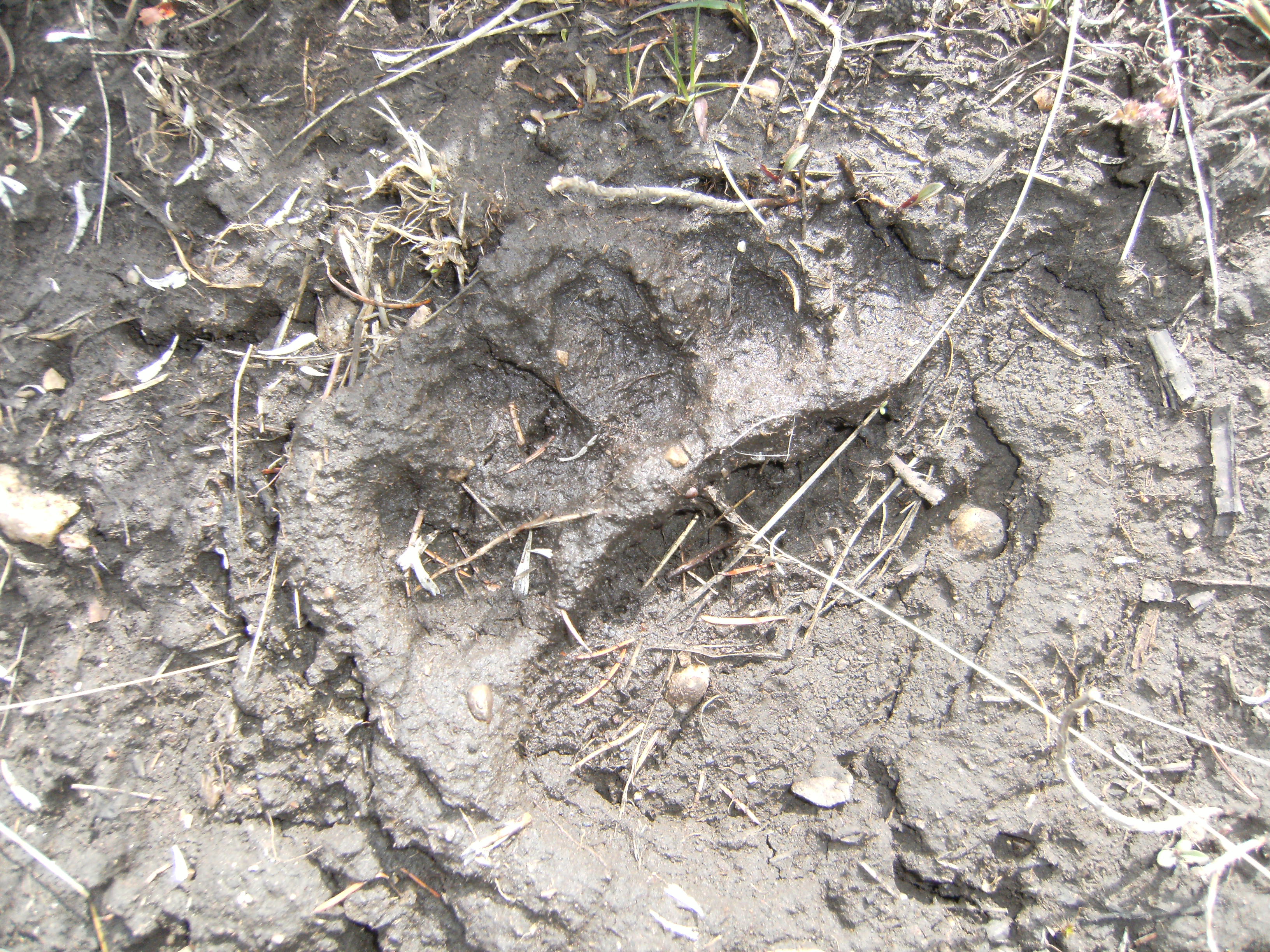
Yesterday I found a cougar track in the mud.  I know there’s a cougar on that side of the creek because a friend of mine saw one a few months ago driving from the Cody Pow Wow down Dead Indian highway.  It was around 9pm, he said, and the cougar was just standing along the side of the road.  He stopped the car and watched the impressive animal for about 10 minutes.  Only one other car, a neighbor as well, came along, stopped and watched.

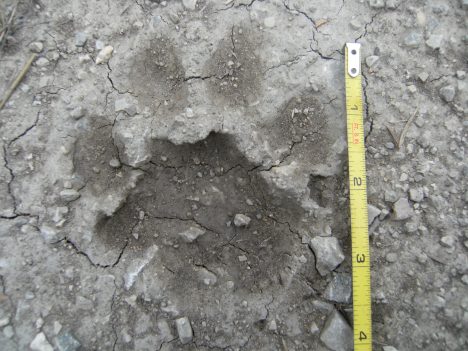
The track was right along the trail, not too far from the trail head. This part of the trail is in eyeshot of the main road, which climbs steeply up the mountain.  The track, measured out about 3 3/4″ length by 4″ wide.

cougar track in mud

cougar track in mud

cougar track with penny for reference

cougar track with penny for reference

Being that the ‘Scat’ post is popular, here are a few more gems!

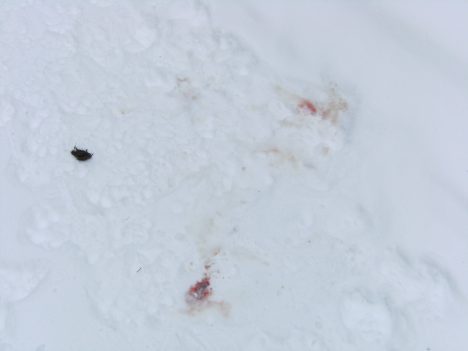
Wolf blood and urine from wolf in estrus

Wolf blood and urine from wolf in estrus

Wolf scat

Wolf scat

Comparison of elk and deer scat

Comparison of elk and deer scat

Moose scat

Moose scat

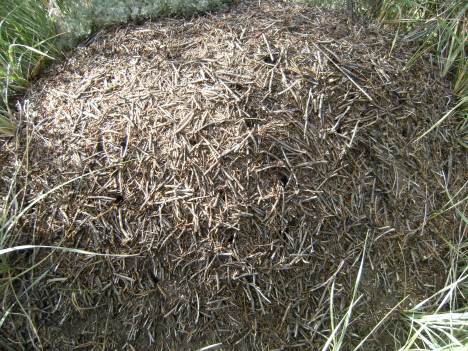
Ant hill

Ant hill

Ant hill destroyed by a grizzly looking for grubs

Ant hill destroyed by a grizzly looking for grubs

Turkey tracks

Turkey tracks

Idle thoughts and Realizing the Way

“Haven’t you met someone seasoned in the Way of Ease, a person with nothing to do and nothing to master?” …Yung Chia The Song of Realizing the Way.

I suspect it will take me a long time to actually be on mountain time–for my mind, impulses, and need for distractions to slow enough that my actual speed synchronizes with the tempo of a sunset, or the arrival of spring, or the way an elk moves across the deep snow, or press into the deep breaths of bears lumbering through forests.  I still make lists in the recesses of my brain of projects–fix the fence, clean the attic, hike those hills.

Trying to capture a full double rainbow--impossible!

Trying to capture a full double rainbow--impossible!

The best of me is spent wandering with no intention or direction.  I might begin with a ‘goal’ in mind, perhaps find some arrowheads or evidence of the nights’ activities in the woods.  Soon I’m wandering–“tooling around”  I like to call it.  My feet guide me while my mind rests, open, no thought, just present, alert for the dangers of the wilds.  Then I am my happiest.

Strangely, in those hours, I’ve accomplished nothing, built nothing, cleaned nothing, fixed nothing and probably not even seen one person.  But my body is relaxed, my mind free, and many times I’ve discovered a new flower, or scat; noticed animal evidence I might have missed or discovered obsidian shavings, maybe a buffalo tooth.

Vulture chicks

Vulture chicks

“Idle hands do the devil’s work” joked a friend with me the other day.

“Never heard that before”, I replied. Must come from deep in our puritan work ethics.

I, for one, want to become comfortable with idleness, daydreaming, and random muckiness.  Yung Chia might agree.  For me, it seems so much harder to cleave and sunder the addiction to speed our society perpetuates; to be comfortable traveling at the mph of a drying dewdrop, to sit with boredom and feel my smallness in the universe, to allow the silence of a night sky.

These are primeval rhythms, hidden deep in the recesses and folds of old human time.  I suspect that, with enough patience, these familiarities will surface and subsume me.  At least, I ride on that hope.

Occasionally my dreaming connects with these old stories–I know the future or suddenly I’m wise.  These channels are there and can be opened, but for now I am mostly like the rusty cans I find along my walks, relics of modern life lying on ancient earth.

Home

Home

More Grizzly news around town

The Wyoming Game and Fish is finally starting their bear trapping and collaring in my valley.  They were supposed to start weeks ago, but the weather was too incremental, with several wet snowstorms, making it impossible to get far enough in to place the traps.  I know this only because one of the students who worked on the elk project this winter was supposed to help with the trapping.  Instead, because the work was delayed, he’s already off to Canada to work with bears there.

Our main dirt road travels directly west, ending about 7 miles from the Yellowstone boundary.  But those seven miles are straight up, through the shale and scree of the Absaroka Mountains.  If you can make it over the pass, you’ll end up in the Hoodoos, one of the most remote areas of Yellowstone.

Past the bear gate, the Absarokas are the eastern border of Yellowstone's wilds

Past the bear gate, the Absarokas are the eastern border of Yellowstone's wilds

The dirt road is maintained for about 25 miles from the Chief Joseph Highway.  After that its strictly four-wheel condition, and mostly only ATV’s can cross some of the creeks at the upper ends.

Past the bear gate its rugged and wild country.

Past the bear gate its rugged and wild country.

About 20 miles from the main highway, the road is closed till July 15.  That’s the ‘Bear Gate’.  People ask “Is that so the bears don’t get into the populated part of the valley?”  But the gate is so cars don’t go up there and disturb the bears.  The idea is that the Grizzlies can have their own space, undisturbed by cars, atv’s, people, when they emerge from their dens.  Its a great idea, but of course the grizzlies do what they want and roam free, which means they are up the valley this direction if they please.  But it does help to discourage weekenders and reduce human-bear conflicts.

Where do they go after July 15th?

Just 10 or 15 years ago, no one knew where Grizzlies went when they suddenly disappeared from the Park in early July.  One day a private plane was flying over the Absarokas and saw bears, lots of them, congregating on slopes of scree above timberline.  They were turning over rocks and boulders.  Usually solitary, this was a strange site to see groups of bears together.  It turned out they were looking for cut-worm moths and eating them at the rate of up to 40,000 a day.  I once saw these moths in the Wind River Mountains.  Thousands of them hanging under a rock crevice.  It was a sight I won’t forget.

The moths provide the bears with much needed fat for the winter.  At the end of my valley there is a glacier.  Its not uncommon to find the bears in the talus slopes in August.

Moths at high altitudes attract bears in my valley in late summer

Moths at high altitudes attract bears in my valley in late summer

Today I drove up the valley for a short hike across the river to a Sulphur Lakebed.

Sulphur deposits around the lake.  Lots of grizzly sign here

Sulphur deposits around the lake. Lots of grizzly sign here

On the way, I stopped and chatted with some new young forest rangers.  I asked about the collaring and if it had begun.

“They’re trapping at the bear gate.  Just a bit beyond it.” They informed me.

I said I wished they’d let us residents know so we don’t hike there.  They put carcasses out as bait and I don’t want to be nearby. “I wish they’d tell us”, the young rangers replied.

I suppose its good science to have them counted and collared.  But I can’t help but feel “let the bears be bears.”

My hike today on the south side of the creek, quite a ways down from the bear gate, was full of fresh bear tracks and scat.

Front and back grizzly tracks.

Front and back grizzly tracks. Notice the penny for size. See the straight line of the grass under the toes

On the way back home, I met a neighbor who told me there were fresh tracks behind his ranch and he’d led the G&F fellows up to where they could place their traps.  There was a huge pile of scat on the road as well. Last week I ran into fresh tracks in two drainages on the north side of the road.

Bear scat with trash collected on my hike today.

Bear scat with trash collected on my hike today.

My valley is where ‘problem bears’ are dropped off.  They take them to the bear gate, or beyond, and let them go, with the hopes they’ll go into Yellowstone.  A problem bear was dropped off just last week.  I think we average about 4 or 5 problem bears a summer.

Several years ago, I had the privilege of riding around with Mark Bruscino for an afternoon of bear education up the North Fork.  We didn’t see any bears, but I learned a lot talking with Mark.  Mark is the bear specialist for Wyoming Game and Fish.  He’s been working to restore the Grizzly population for over fifteen years.  I asked about the problem bears.

“Tell people that the bears they really don’t have to worry about are the problem ones we drop off.  Within days they ‘home’ back to where they came from.”

I think the relocation is an exercise in public relations, with a hope and a prayer that the bear learns something once he gets ‘home’.

The cool thing about hiking in grizzly country is the need to stay alert and aware.  In California, I could hike, think, talk, and space out all at the same time.  But hiking here, in the Greater Yellowstone area, I have to stay aware of my environment all the time.  I listen, I slow down, I look around; and so I notice so much more.  That doesn’t mean being tense. It means being conscious.  I think that’s how we’re all meant to be living all the time.  Taking the predators away, well, we’ve just forgotten.

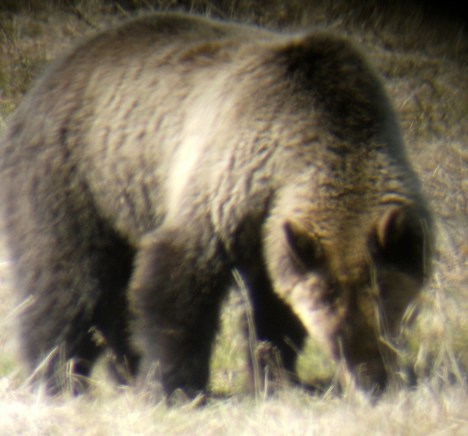
Grizzly photo taken in Lamar Valley last sunday, mother's day

Grizzly photo taken in Lamar Valley last sunday, mother's day