• MY BOOKS ON WILDLIFE, GARDENING AND MORE

  • The Wild Excellence

  • True stories of wildlife encounters around the Greater Yellowstone
  • Award winning eBook on Decomposed Granite, tips, how to's, what to watch for
  • Children's book. True stories of a dog and wolves. In a dog's voice
  • Written for dry Mediterranean climates in California, north and south

Yellowstone spring

I’m doing some work here, adding a utility room.  With all the noise and construction, it was a great opportunity to escape to the park and let the workers watch the dog.

Since it only takes me 40 minutes to the NE entrance, I escaped around eleven and was back by 5.  The day was overcast and on the cold side.  I’d planned to do a day hike, but chucked the idea with a cold wind blowing through the Lamar.  There was enough activity to view right from the road.

I’ts early June, the kids are still in school, and usually May and June the Park is still quiet during the week.  Yet last summer was the busiest the Park has ever seen and its predicted to be the same again this year.  The Lamar Valley had plenty of people today, but they all seemed serious wildlife watchers and so the atmosphere was calm and peaceful.

I do have to say, with all the hubbub around the ecosystem about wolves–rallies in Jackson and Cody recently, sponsored by outfitters and the Elk Foundation, complaining about wolves taking their business away [i.e. “biggest slaughter since the bison” meaning the wolves are eating all the elk, like when we killed all the bison] and wanting Wyoming wolves hunted as predators–it seems to be completely forgotten that wolves have created an incredible tourist attraction that benefits Wyoming.  I only talked with a few tourists in the valley, but they were all looking for wolves.  I ran into a carload of tourists from Oklahoma who had gotten out of their car to use the restroom when they heard a wolf howl.  They walked out to an overlook of the Lamar river and saw a black wolf–a thrilling experience for them.

Another man stopped and asked what I was looking at through my scope.  When I told him ‘a black bear’, he said “We already saw that.  We’re looking for wolves.”

It seems to be one of the main draws to the Park these days.  Wolves have fueled the attendance to record numbers!

With the Druid Pack all but gone, I didn’t expect to hear or see wolves in the Lamar, but there was a black wolf running around there, plus a tourist told me she’d seen one on a kill earlier.

Mostly though, since I see wolves in my own valley, I love to see the Bison and especially their babies at this time of year.  They are the only wildlife that cannot leave the Park so I have none in my valley.

Error
This video doesn’t exist

There were a lot of Bison in the Lamar this day.  I always try and imagine the great herds that once roamed everywhere just a few hundred years ago.

Loads of Bison

Besides Bison, wolves, and black bears, on the way out I saw 2 beautiful old bull moose hanging by the side of the road (until a crazy tourist tried to get a close up picture.  Fortunately for the tourist, the Bulls decided to head up the hillside instead of into the tourist).

Yellowstone for mine eyes only

A friend came up late morning to help me plant more trees.  A squall came in and with it a fierce cold wind.  After several minutes the weather settled down, the sun shone through brilliant cumulus clouds but it was still hovering above freezing.  This continued several times all morning until I’d had enough.  Hungry and cold I suggested we quit for the day and head to the house for lunch.

Since I’m needing some poles to repair a gate, we decided to see if we could make it up to Beartooth Lake to cut some lodgepole poles.  The road was clear and this typical May weather had brought new snow into the mountains.  Pilot and Index Peaks were covered white in snow, the deep of the blue sky setting them off.

We got a little past the maintenance yard and then got stuck in the snow.  I let the dogs out while my friend shoveled and I pushed the truck.  The dogs, like 2 kids, went wildly romping around the deep snow pack.

That adventure foiled, my friend suggested we see how far we could get towards Cooke City.  About 5 miles from Cooke, the road was full of snow, although a plow had gone over it.  The sign said ‘Road Closed’ but we kept on.  My friend said they run a plow now so that the heat of the sun will melt the rest off.  That way there’ll be less work to do come May 7th when the NE entrance officially opens.

Once into Cooke, the road was clear and dry and we decided to head for the Lamar.  By now it was about 6:30 pm and a perfect time to catch some wildlife watching.  But as we drove into the park, a deep fog appeared and it started to snow…sleet really.  My friend commented that he’d been coming here for 50 years and during that entire time the willows had never been able to grow.

“You’d have to have come here for that long to see the difference.  The willows are growing now.  They’ve never been this big.  The elk used to use the Lamar like cattle.  They’d be down in the river bottoms.  Now the wolves keep them on the move and the brush is coming back.”

As we continued towards the Buffalo Ranch, the sky cleared.  We kept commenting that we wished we’d brought our cameras.  I thought about it as I walked out the door, but figured I was just going to cut poles.  Instead, the air, the sky, the mountains, the weather was magnificent…a special day, a special light.

We watched a grizzly for a while nosing around for food.  Three sand hill cranes hunted nearby.  Elk grazed easily in the valley, while a Bison, beginning to shed, rubbed his back on a rock.  No one was in the valley.  It was left to the wildlife.

Coming a little north of Crandall on the way home, a grizzly bounded across the road in front of us.  It was about 7:30 and I suppose he was headed out for his evening rounds.  We stopped and watched him climb up the rocky cliffs on the other side of the highway, so close to the homes around there.

A spontaneous surprise, the day was full of typical May weather, my favorite time of the year.  Snow, sleet, sun….dry, wet, foggy, brilliant need-your-sunglasses light.  And lots of wildlife. Although we kept commenting how, of course, where’s your camera when you need it, I reminded my friend “This was a day just for our eyes only.”

Old first hand Stories of Yellowstone

My old neighbor JB told me this story today.   Its impossible to place it in time.  In JB’s mind it was like yesterday, but probably in reality sometime in the late ’50’s or early 60’s.

“My job was to plow the road from Mammoth to Cooke City.  There were two plows going and it was Christmas day.  It was 60 below zero, really really cold.  Those plows aren’t heated, you know.  You’ve gotta keep the window cracked too, otherwise the windshield freezes up with ice and you can’t see.  So it’s 60 below outside, no heat, and the window’s cracked.”

I asked him how he stayed warm.

“You just put on more clothes!  The snow was 4 or 5 feet deep and I got a call on the radio from the couple staying at the Buffalo Ranch.  His wife was going into labor and they were stuck.   I was going around a curve on my way to Tower, as fast as I could which wasn’t too fast in a plow, when I saw a patch of clear road ahead.  I knew that meant trouble.  The other plow was a few minutes ahead and a clear patch meant he’d gone off the road.  When I got there the plow was completely off the road, tipped over, and the driver was buried under the snow.  At 60 below he didn’t have much time and it was good I was just behind him.”

“I started digging him out and when I got to him he said ‘Lunch box’.  He kept repeating that.  I didn’t know he had a heart condition and his medication was in his lunchbox.  I never found that lunchbox.  They got him over to Billings.  He was pretty mangled up and didn’t work for over 2 years.”

“Then I started plowing my way to the Buffalo Ranch.  I finally got that couple unstuck.  She never got further than Mammoth where she had her baby.  That was Christmas Day.  I didn’t get home till 3 am.”

I had a client whose father, Merrill Daum, worked in Yellowstone from 1925 to 1930, first as the Chief Engineer then eventually as Assistant Superintendent to Horace Albright.  Daum spent the first several years working on oiling the roads.  Here are a few story excerpts from a memoir my client gave me.

We had an epidemic there one year.  They had quite a few cases of the tourists coming down sick after they’d been there at Old Faithful Inn during the afternoon and evening.  They came down with vomiting.  They really were sick.  It broke out at the Lake.  Then to Canyon.  The Lake was where they really had the epidemic.  One hundred or so sick people there.  We had to go around shooting them all with a needle.  I don’t know what we injected them with.  To relax them so they wouldn’t vomit themselves to death.  They put four of us at the table morning, noon, and night at the Lake Hotel and we were each to eat different things, not the same thing to see what food was causing our troubles.  None of us got sick.  THey just threw up on the floors, every place they got caught.

Bears came on our porch on that duplex we lived in at Mammoth.  I finally got tired of bears once and I took an apple, filled it with red pepper, pinned it together and put it on the porch.  That bear came up and swallowed that and all of a sudden he was blowing and wiping his nose in the snow, trying to get cool.  He really was hot.  He never bothered us again.

At Yellowstone we were building a highway out near Canyon and Lake areas and our construction crew was in tents.  The bears would keep coming in and get the food out of the kitchen.  I was there once in the daytime and here was a Grizzly.  They’re beautiful animals.  The sun would glisten on the beautiful points on their fur.  This darn grizzly was walking home with a sack of oats.  Just walking right off with it.  A sack of oats about 75 pounds.  Nothing we could do about it.  They did take a lot that first year.  You weren’t allowed to kill them.  You could sit right there next to the garbage and they wouldn’t bother you.  All they wanted was to dig in the garbage.  The worst place where I chased one bear was at West Thumb.  The bear came in there that fall, before the snows.  I happened to go around the store which had candies and things like that and the shopkeeper had the windows all closed.  The place was broken into and there was the bear inside, just gorging himself on candy.  I’ll never forget how surprised that bear was for somebody to come in and find him.

We had to get ready to remove the snow in the spring. We started at Cody, about 30 miles from Cody up to the entrance.  We got as far as the Park with snow 12-20 feet deep.  We’d blast it out with TNT which Uncle Sam gave us.  That would start it thawing and then we’d take a big power shovel and shovel the stuff so we had a two-way highway through there to the east entrance of the Park.  From there on in we’d use our own equipment.  The deep snow was right there at the entrance.  That was the high point.  We’d generally try to get open by June 1st.  By June 6th we were officially open, I believe.  But you couldn’t make some of the interior trips that early.  It would be long in July before you could get away from the snow.

Yellowstone in winter

Planning a trip to Yellowstone?  I recommend the winter!

There are so many reasons to choose winter over summer, but I’ll just give you a few.

First, the lack of crowds.  Yellowstone might get 100,000 visitors a week in the summer, whereas they get that total for the whole winter.

Next, the wildlife.  The wolves are roaming and highly visible in winter.  In the summer they’re attending to their young and following elk to higher grounds.  If you go in February, the wolves are in heat and you might catch courting and mating behavior.  Even better, spring for the cash to stay at the Yellowstone Institute at the Buffalo Ranch in the Lamar Valley and take a wolf class.  You’ll get educated and see wolves.

Elk, Bison, Bald Eagles, Coyotes, Foxes…so much wildlife and it’s mighty quiet with just one road open for cars (the North Road).  All the other roads are groomed for cross-country skiing or snowshoeing, and there are snow coaches to take you to groomed trails.  Although you can travel by snowmobile with a guide, I don’t really recommend it.  It might be fun, but you can do that outside the Park.  Snowmobiling is about tunnel vision, noise and speed–all things that don’t go along with wildlife watching; all things that Yellowstone has to offer.

Thermal features in the winter are amazing.  The deep greens or turquoises shimmer against the whiteness of the snow.  Bison like to hang around the warm grounds.

Several years ago I took a GYC wolf watching tour at the Buffalo Ranch.  We’d get up around 7am every morning, step outside our cabins, set up scopes and watch the Druid Pack of 17 wolves while we sipped our morning coffee.  In the afternoons we hiked or skied.  I stayed a few extra days to ski other parts of the park.  It was some of the best money I ever spent.

Yellowstone in the winter is one of the best kept secrets.

Yellowstone after Arnica

This will be my last trip to Yellowstone this fall. The Park is winding down and, because of the fires and snow, a lot of the roads were closed.  I went with some friends from BBHC through the East entrance.  Dunraven Pass and the road to Lake were closed.  Old Faithful access from the south (Madison to Norris access has been closed for repairs for the season a long time ago) was closed as well, but open from 12-1 only, I suppose so people could get out of the hotels. So, we had no choice but to head towards Canyon and Mammoth via Norris.

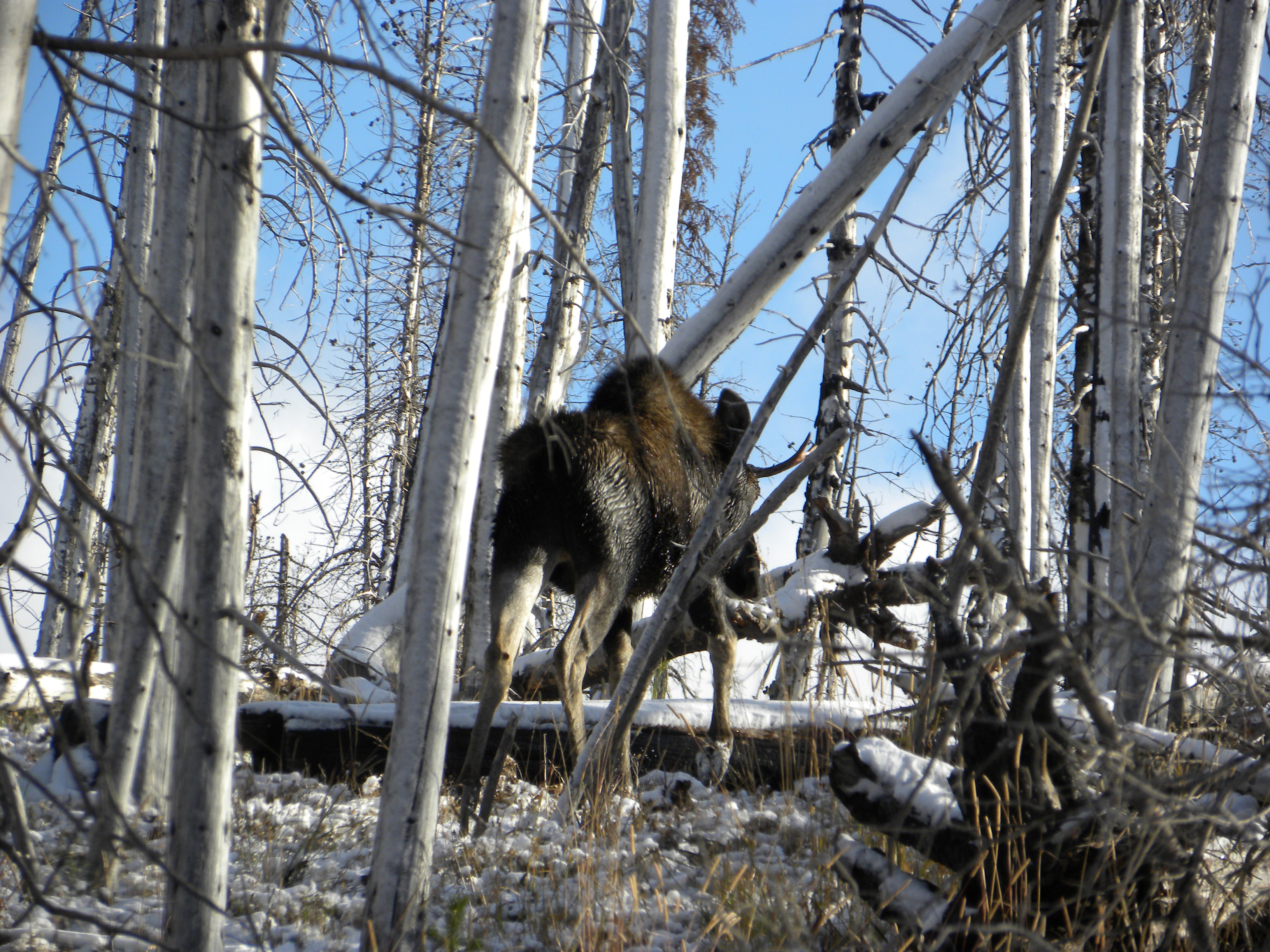
The day started late, around 8 am, but with a bang.  Way before the Park gate, on the Northfork, we spotted two moose–a young bull and a cow.  On the way up Sylvan pass there was another young cow moose.

Near Sylvan Pass

Near Sylvan Pass

There was lots of snow up and over the pass, and Sylvan Lake had a partial ice cover.  We headed for Norris Geyser Basin with a stop at the Mud Volcano.  Mud Volcano

Norris Geyser Basin

mud pot

mud pot

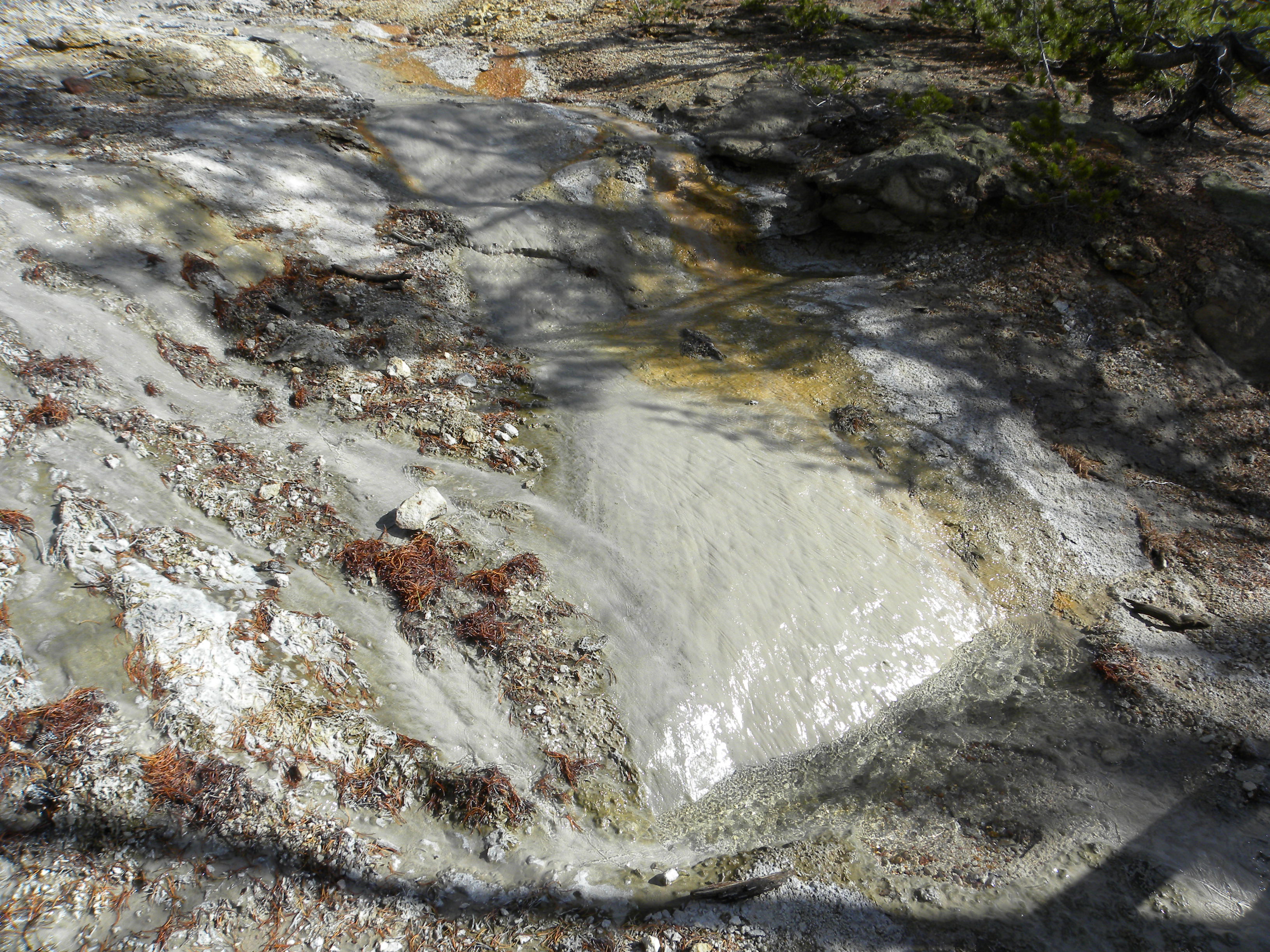
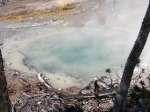
Colors in hot springs

Colors in hot springs

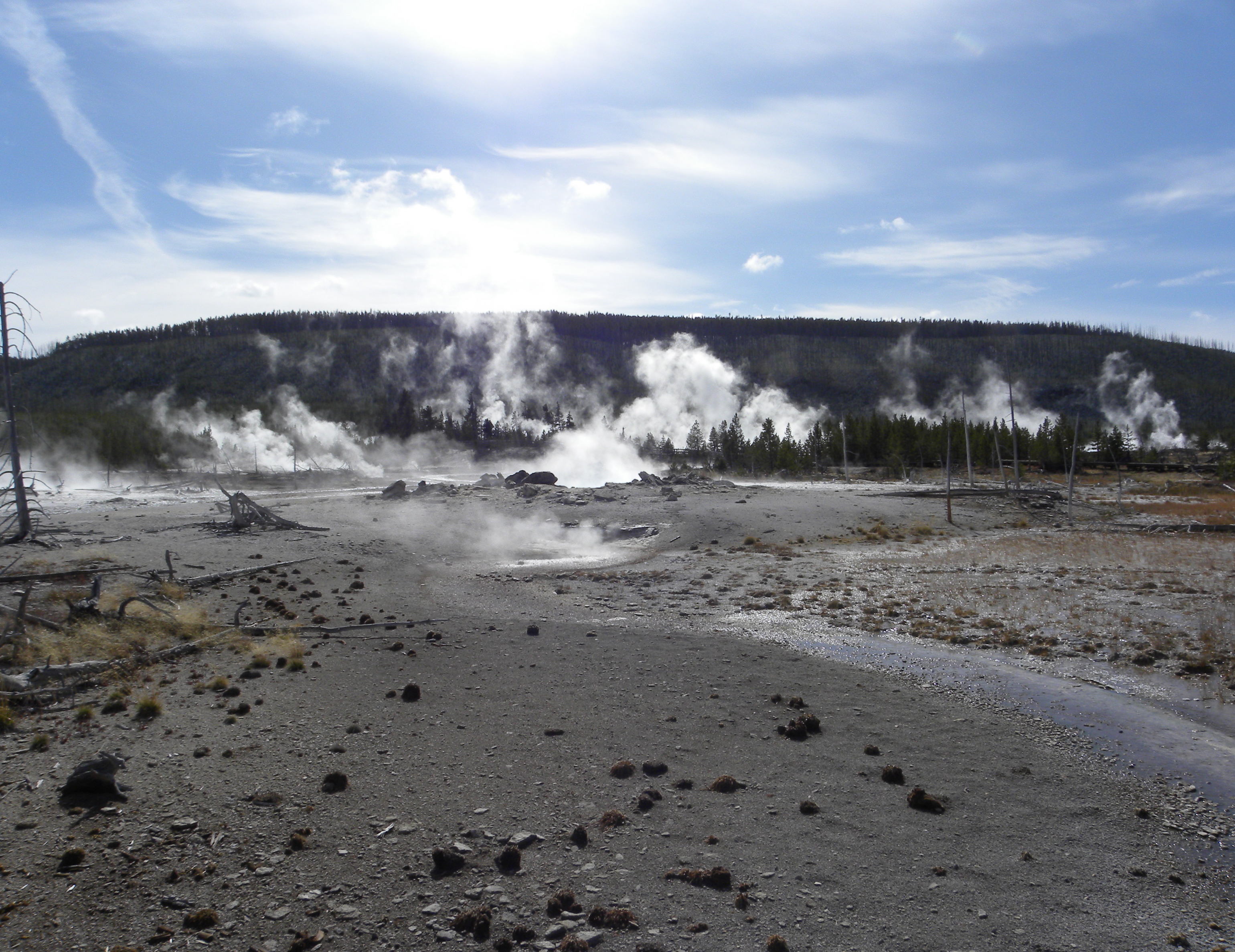
I realized that I’d overlooked this wonderful area.  Norris Geyser Basin has got to be one of the best geothermal spectacles in the Park, and yet its tucked way back in near the Junction so I think people whiz bye without thinking to stop.

Norris Geyser Basin

Norris Geyser Basin

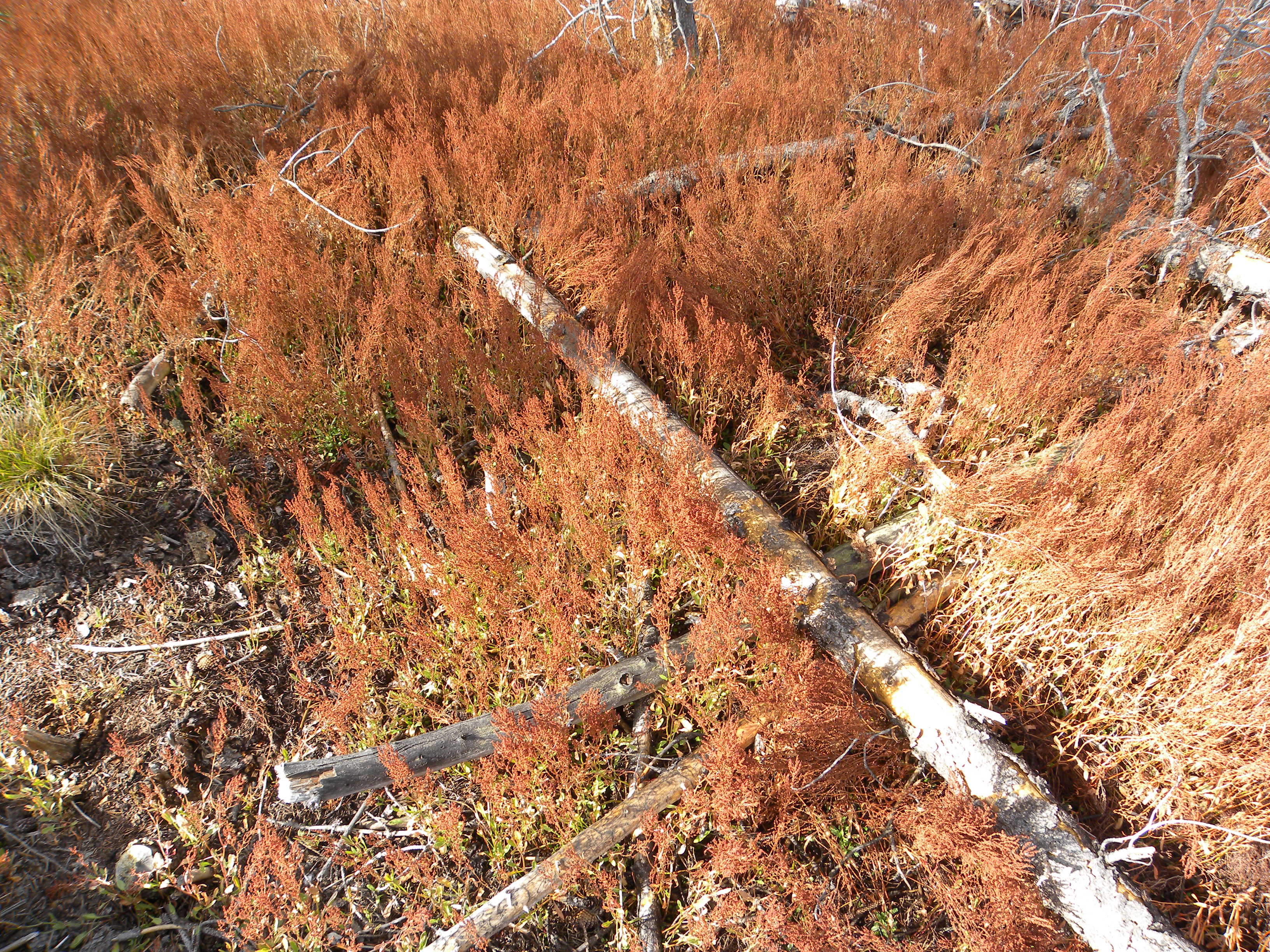
Hot springs plants in fall color

Hot springs plants in fall color

Norris

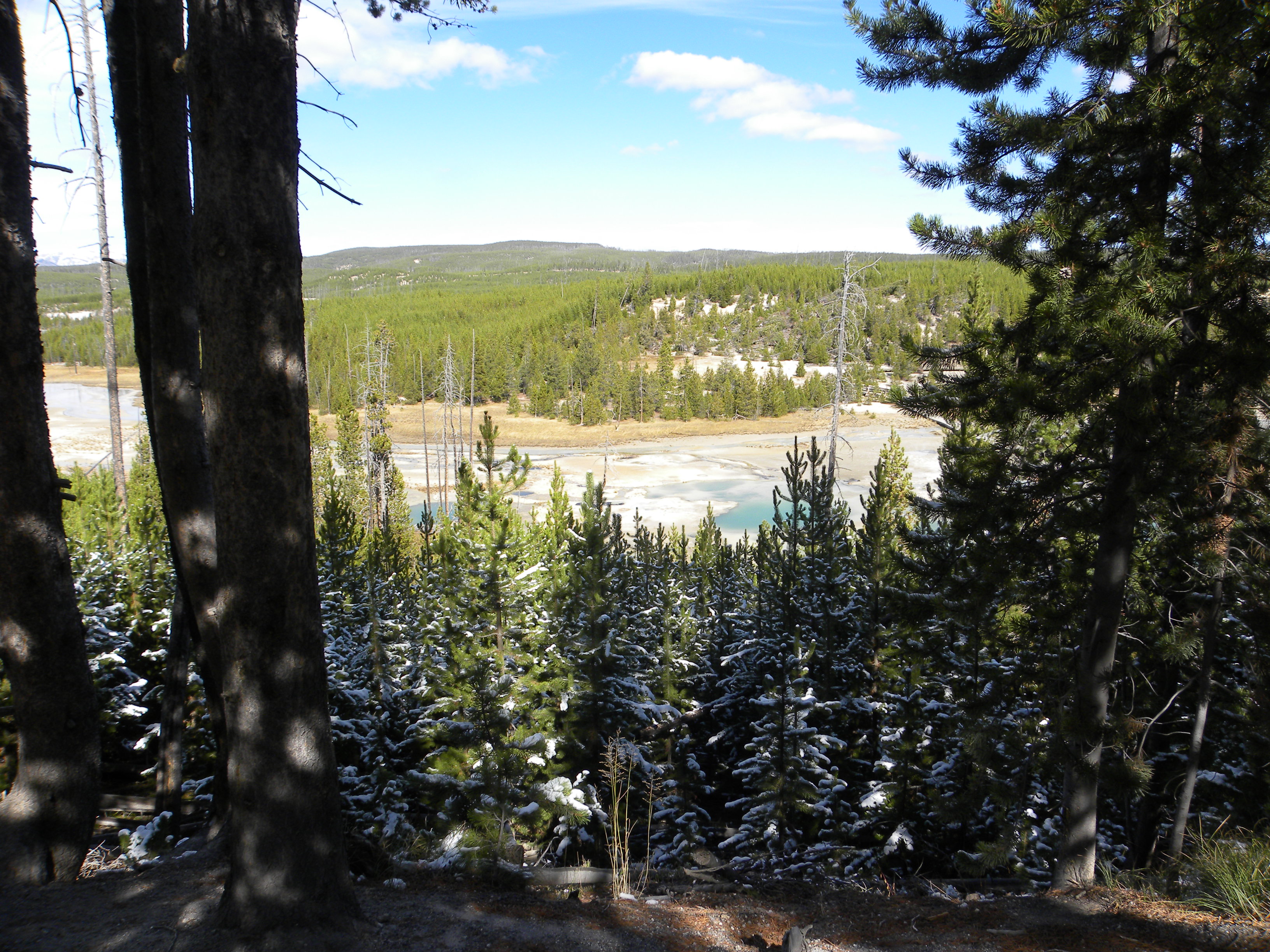
View of part of the lower basin at Norris

View of part of the lower basin at Norris

Once in the car and on the road we spotted some tourists standing literally at the edge of a hot pool in the meadow, taking photos!  Yikes I could just imagine that thin crust breaking and cooking them.  Really folks, that’s a stupid idea as those pools are hot.

After lunch at Mammoth, we headed down towards the Lamar.  We hadn’t gone too far when we spotted a wolf.   Besides spotting wildlife yourself, the trick is to watch the tourists.  Check for the ones with the spotting scopes set up.  These are the real serious wildlife watchers, usually looking for wolves or bears.

We parked and watched a collared wolf hunting voles in the grass along the river bank.  Every so often he’d pounce way up in the air for his prey.  One of the bystanders said “That’s a coyote.  I’m leaving.”  Well yes, the coloring was similar, but the size and shape of the head was the giveaway.  Besides, he had a collar.

Collared wolf.  Compare his size and colors to coyote

Collared wolf. Compare his size and colors to coyote

He (or she) looked pretty healthy.  No mange and that was good to see.  On down the road we saw about our 10th coyote for the day.  So many tricksters in one day, and all were busy hunting voles.  I’d swear the purpose of rodents on this earth is for eating.

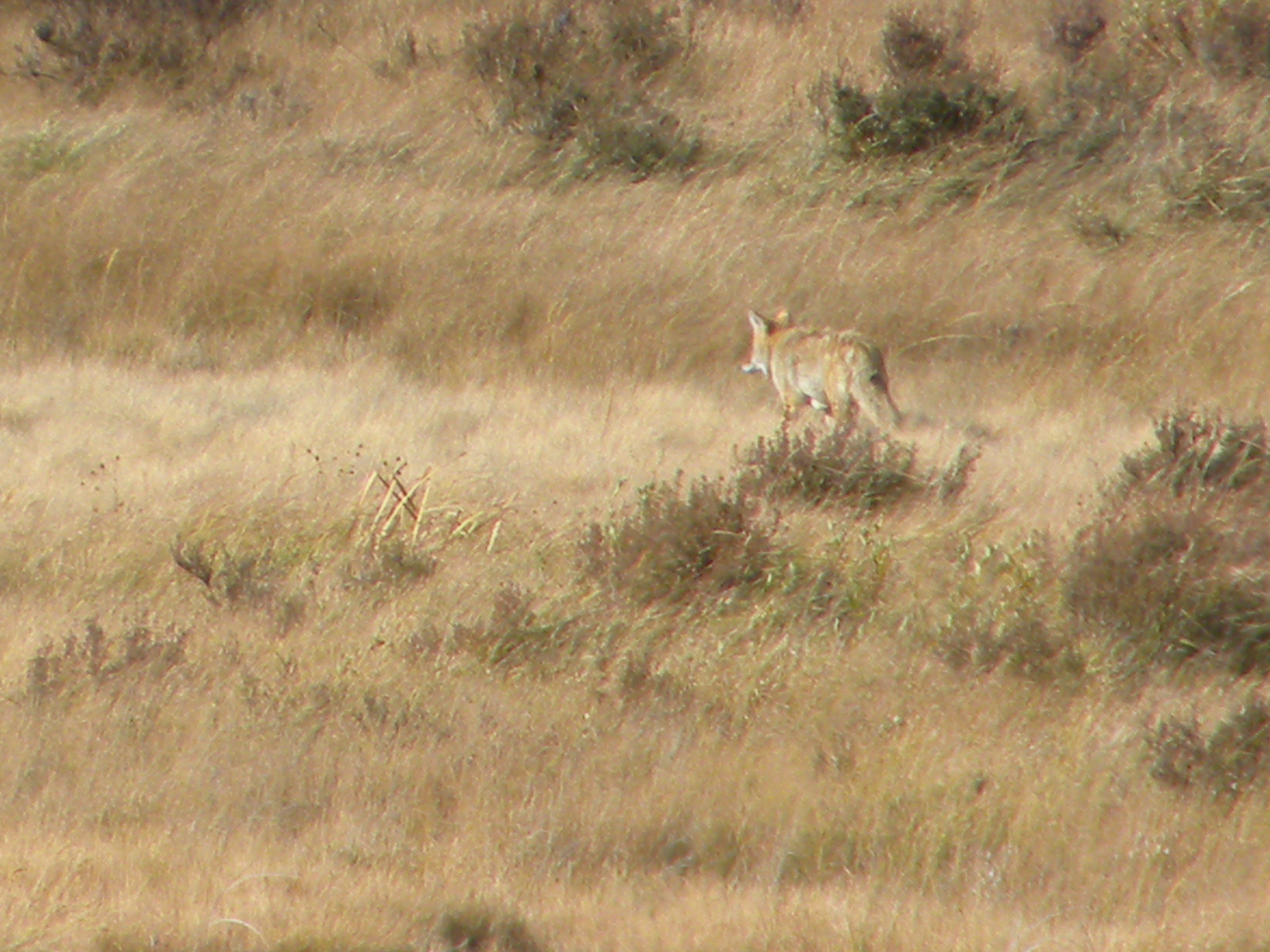
Coyote hunting voles

Coyote hunting voles

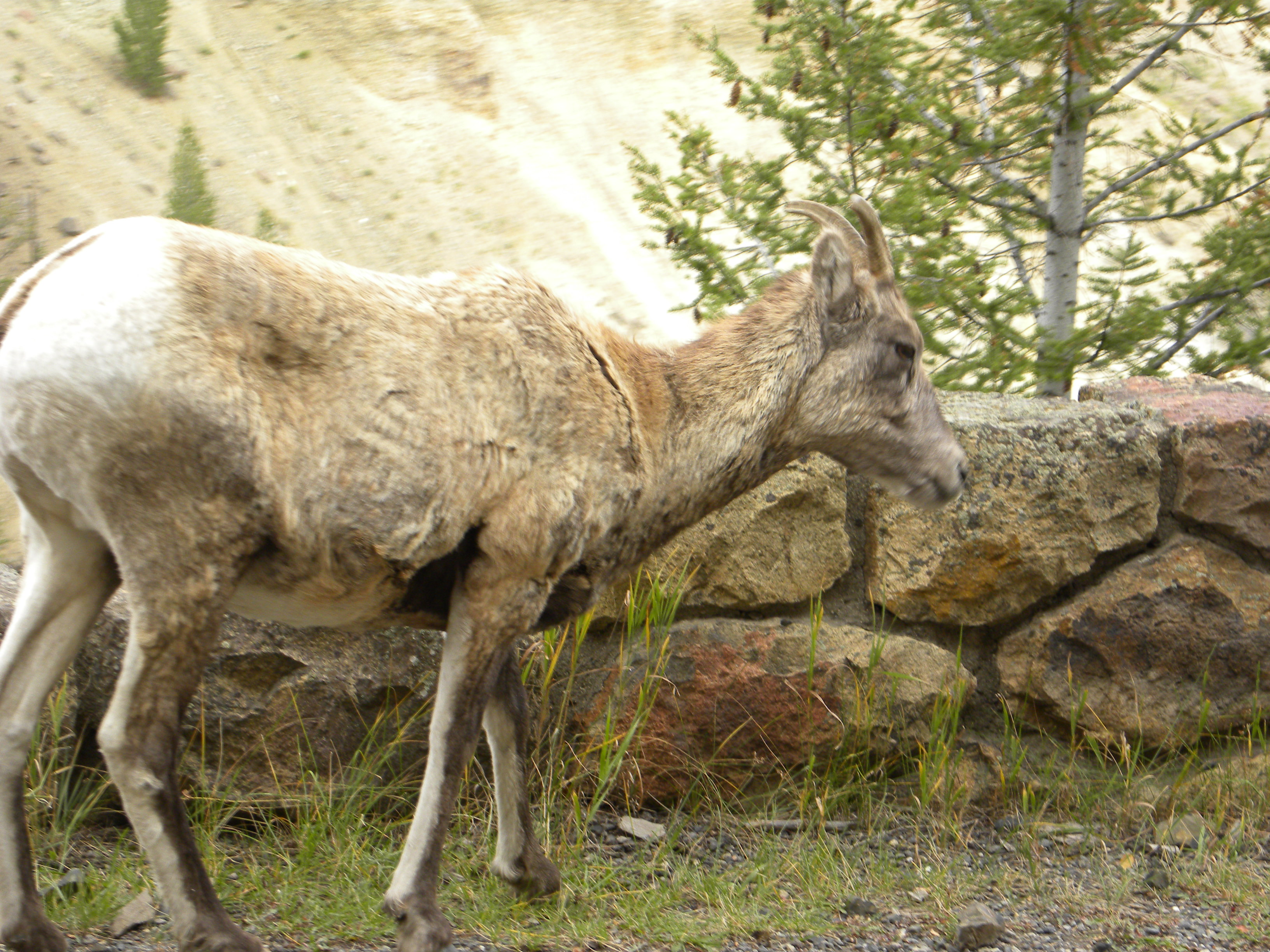
Although Dunraven was closed, we were able to get up from the Lamar side as far as the Specimen Ridge overlook.  Several ewes were grazing along the road.  It is incredible to realize that they get up and down the sides of these mountains with ease.  Way down below near the river there’s natural mineral licks they’ve used since ancient times.Ewe and view

Ewe

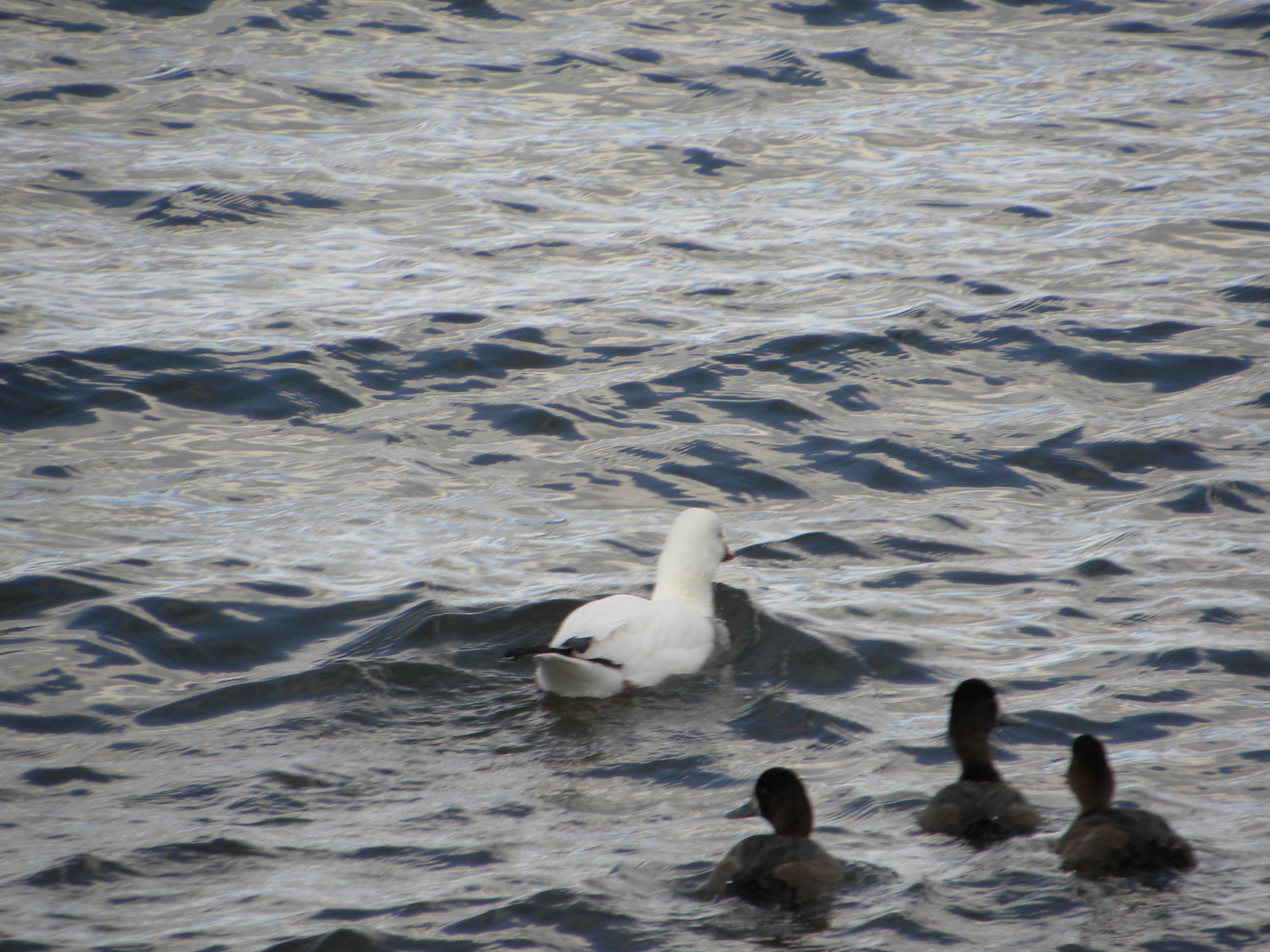
On the way out of the East Gate, we spotted a snow goose, rare in these parts.

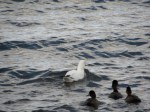
Snow Goose

Snow Goose

All in all, we spotted six moose.  The last one was on the way out again, past the East Entrance, not too far from Pashaska Teepee on the National Forest.  Another nice thing is seeing Bison on Shoshone National Forest.  There are no grazing allotments on the forest outside the East Exit of the Park so the Bison wander there, especially in winter.  I sure wish Montana would ‘cowboy up’ and do the same at the North and West Exits.

All in all, for one day in the park that’s a lot of wildlife watching–6 moose, 10 coyotes, lots of bison and elk, one wolf, several bighorn sheep, trumpeter swans and various waterfowl.  A woman we met said she saw a cougar near Mammoth that morning.  One fall day in the Park can’t be beat!

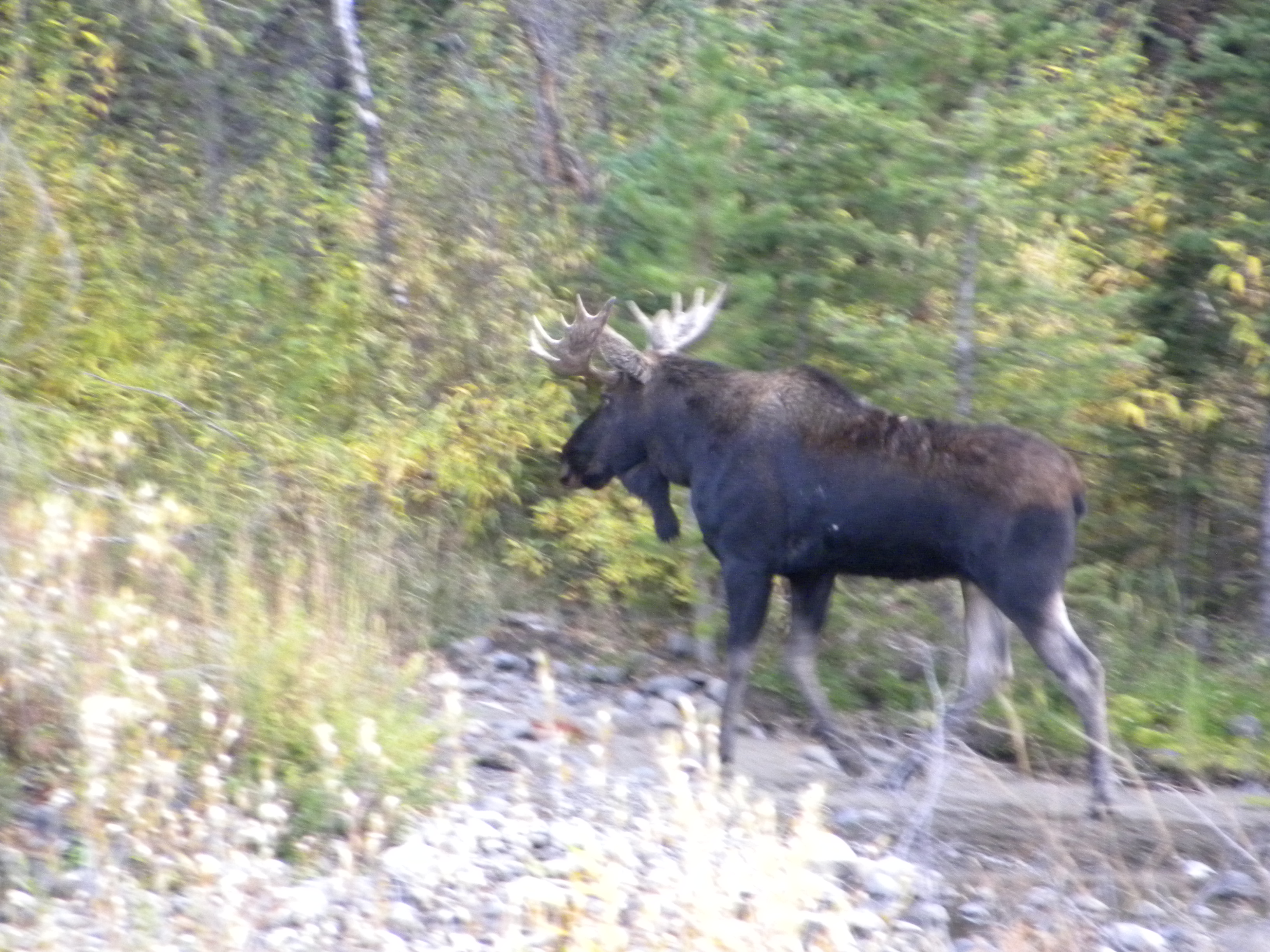
Northfork moose

Northfork moose

Yellowstone Autumn

I decided to spend a few days in Yellowstone.  I like to bask in Boiling River but I especially wanted to hear the elk bugling.  The bulls are in rut and if you’ve never heard an elk bugle, you’re missing out.  Its the eeriest sound, the most beautiful sound, a sound that seems other worldly.

The Park, usually nice and quiet this time of year with all the crowds gone, was jammed pack. They’re having the busiest fall in 10 years.   I couldn’t get a campground anywhere, so I had to drive outside of Mammoth 20 miles down the road to a National Forest campground.  That was a real surprise.  And even that campground was just about full.  I think I found the very last site!

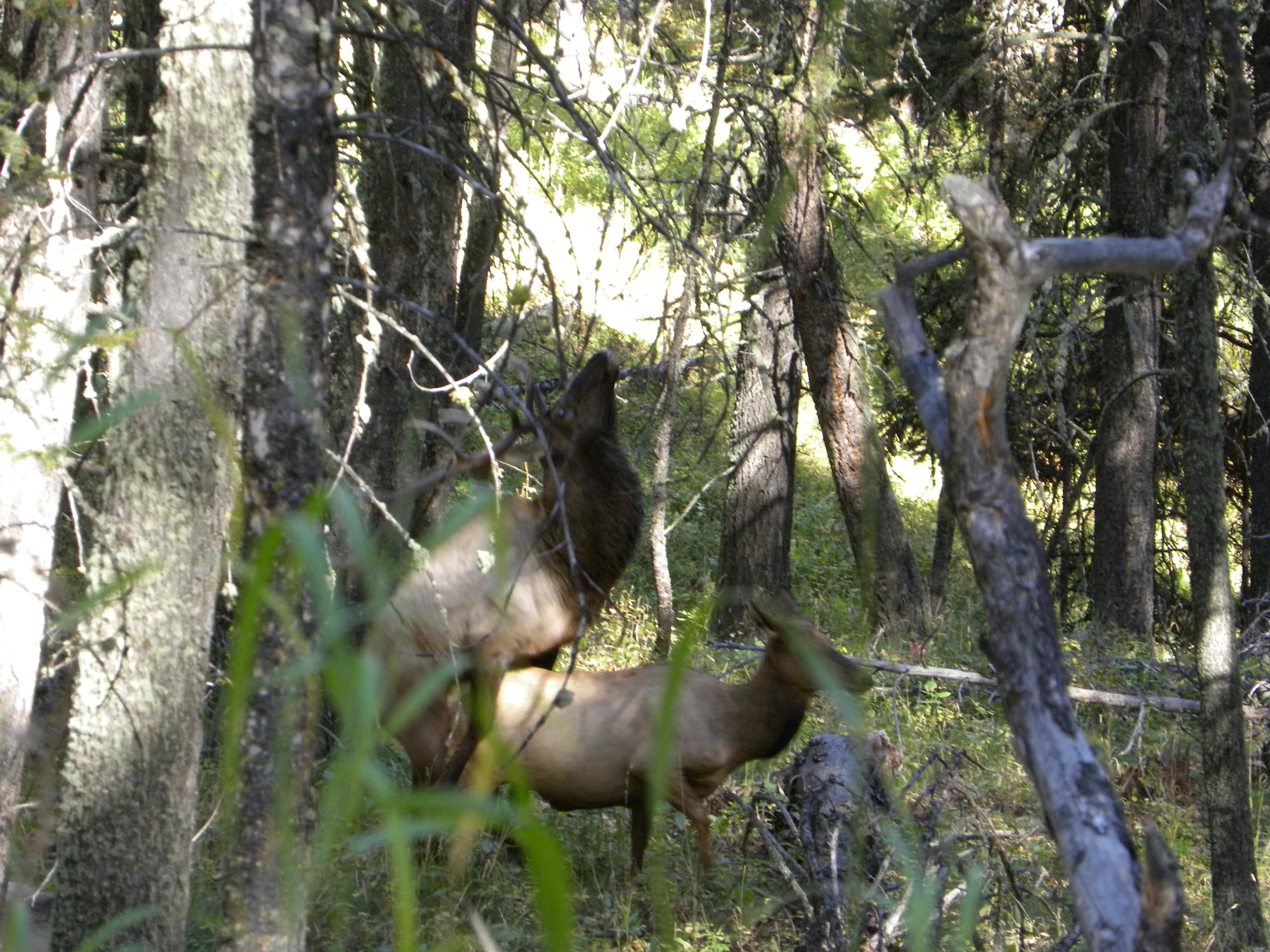
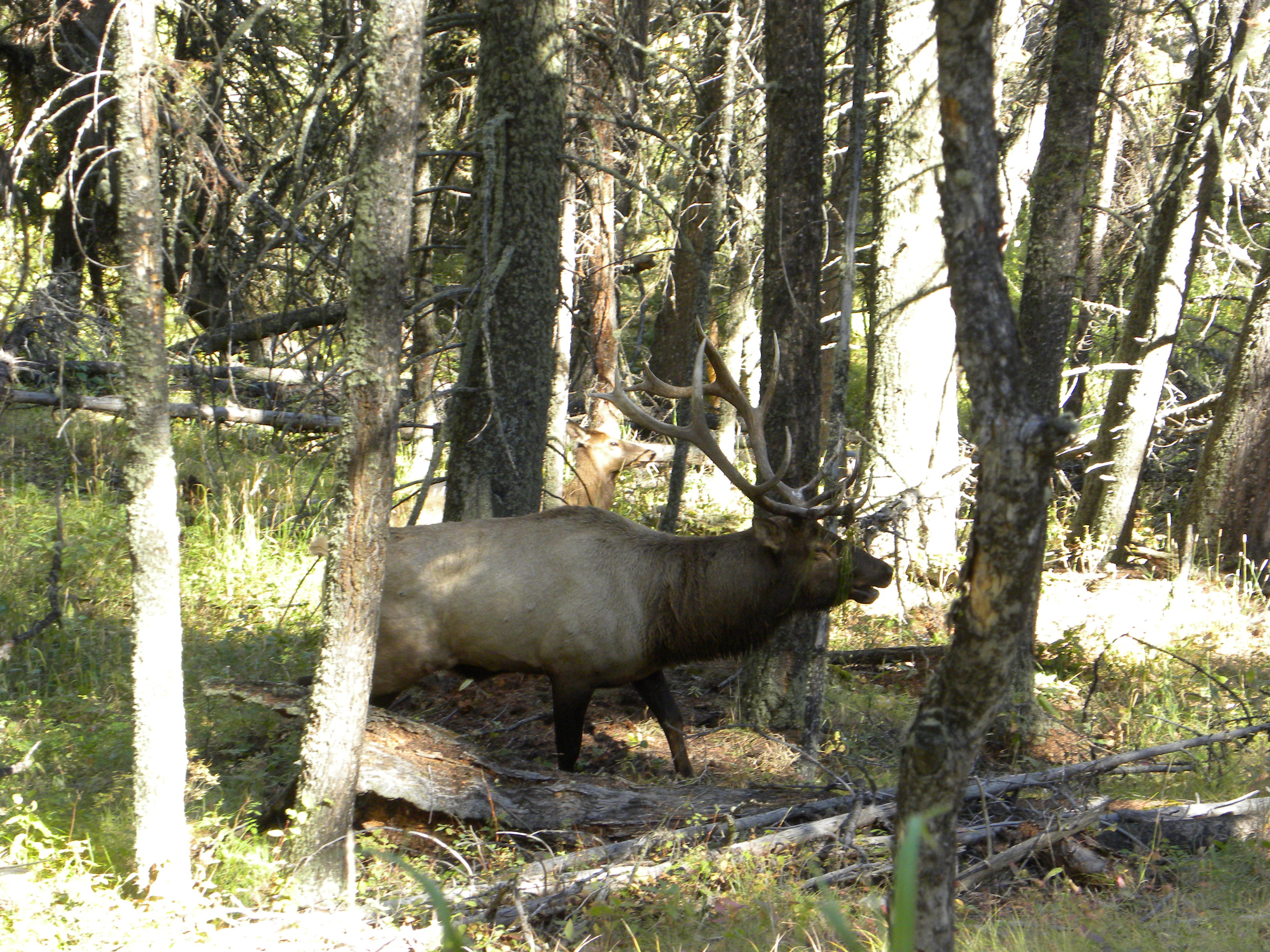
Waking up early, I soaked in the river, then headed up the trail to the Beaver ponds.  Its a fairly short loop of 5 miles.  Since I was early on the trail, I didn’t see anyone for the first hour.  The trail winds along the open hillside overlooking Gardiner, but soon dips into a conifer glade with seeps.  The day was already hot (as we’re having our summer now in fall), and as I moved into the cool shade I noticed about 20 elk, mostly cows and calves, lying around.  One bull was there.  This was his harem.  The cows were relaxed.  The calves were curious.  And the bull was keyed up.Elk mating

I lay down on the trail and watched for ten minutes.  As I continued on, I later heard that some hikers had come around the corner and gotten chased a bit by that bull.Bull Elk

Although there were no beavers to be seen when I arrived at the ponds, their evidence was.Beaver evidence

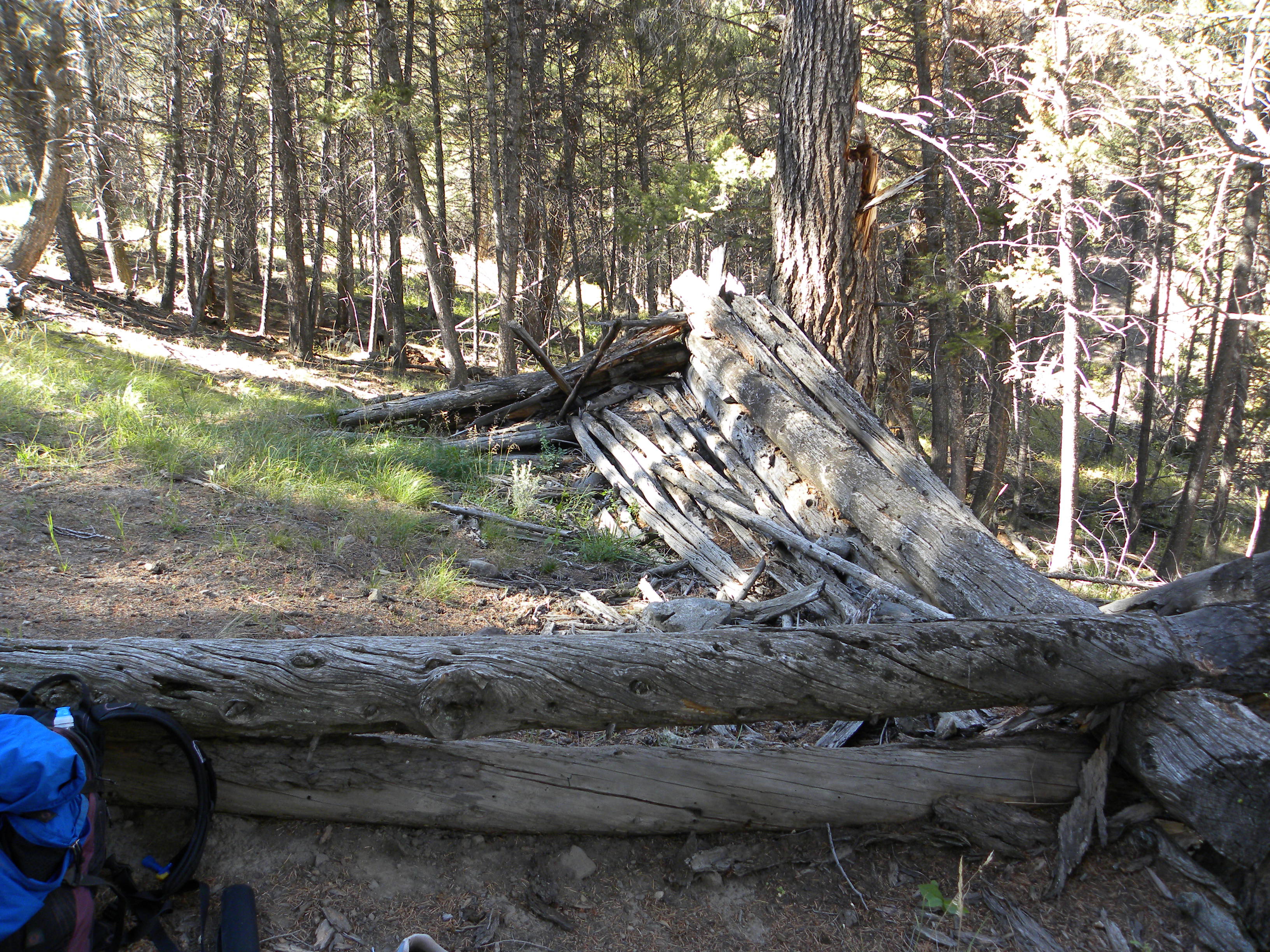
On the last leg of the trail, I noticed an old structure that looked like it had been a cabin.  I couldn’t find references to it in the guidebooks.  Wondering if anyone knows what it used to be?

Old Structure along Beaver Pond trail

Old Structure along Beaver Pond trail

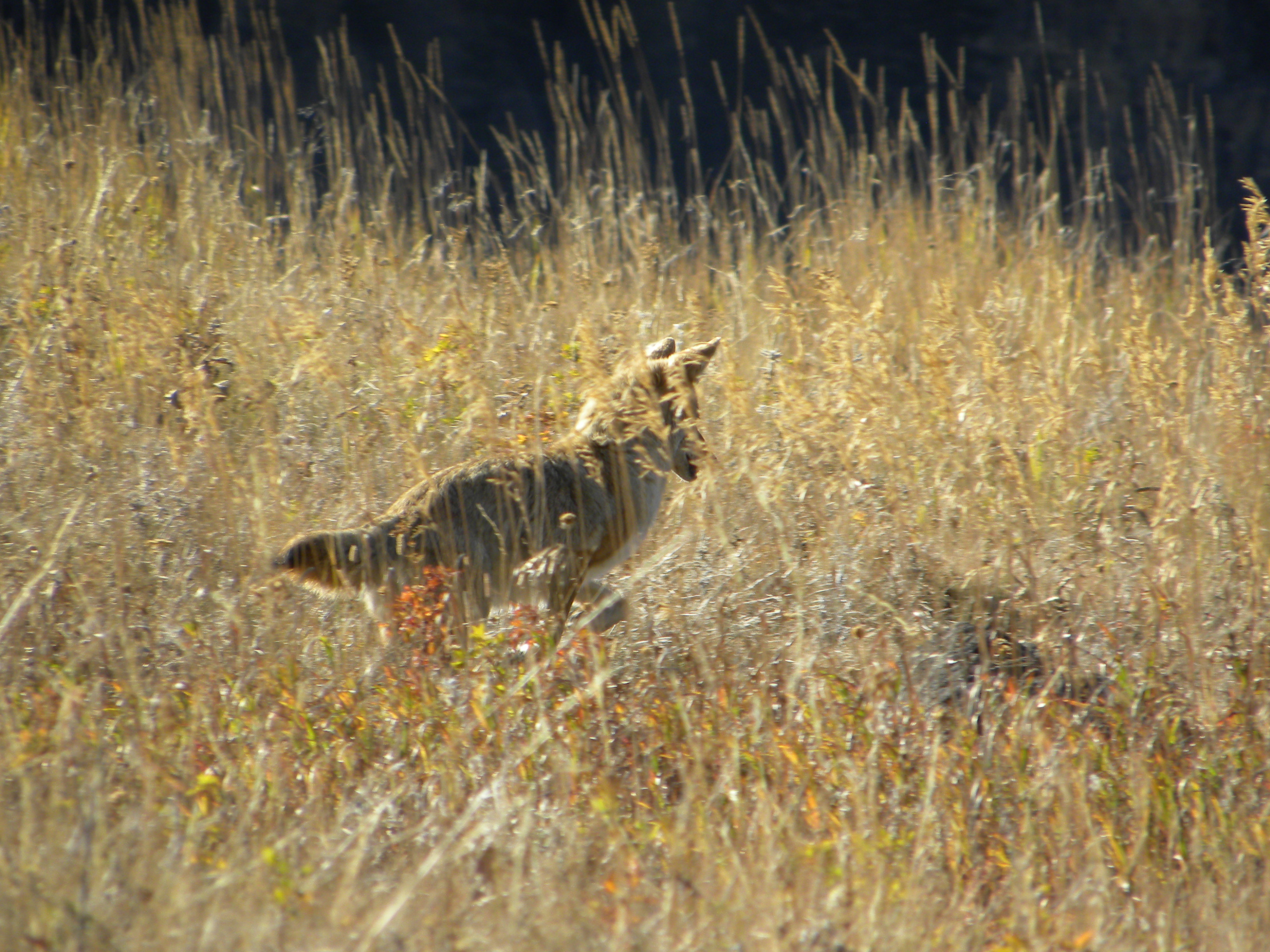
After a late lunch, I headed back towards the Lamar.  A coyote was catching grasshoppers.  He was terribly cute pouncing around.

Coyote catching grasshoppers

Coyote catching grasshoppers

And the light was perfect for this herd of Bison.

The light was perfect

The light was perfect

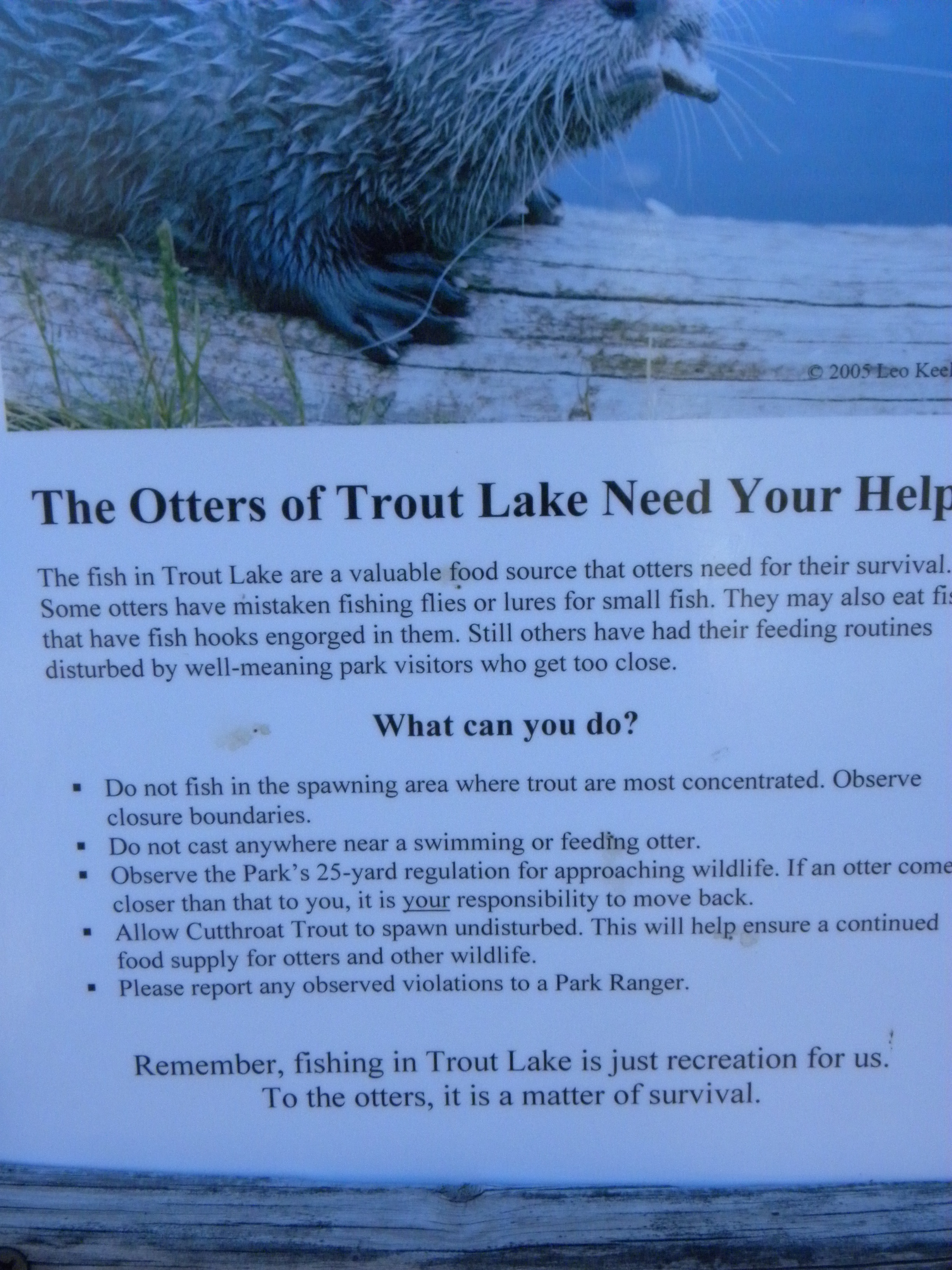
I stopped for a while and watched a second coyote, before heading up to Trout Lake.  I wondered if the otters were active.  Trout Lake is a very short hike/walk.  Otters are often seen playing there.  I didn’t see any otters today, but the lake was beautiful.  I spent time snapping some photos of the Lake, of a gigantic ladybug, and a dragonfly.

Trout Lake

Trout Lake

Ladybug

Dragonfly

Trout Lake signage

In order to get into the Park, you must rise in elevation.  That’s because of the bulge from the hot spot that Yellowstone sits upon.  I used to wonder why that special feeling seemed to almost begin and end at those entrances and exits, until it was explained to me.

I met a woman from California on the trail.  She comes to Yellowstone every fall for 3 weeks.  At the campground I met some people from Seattle who come every year at this time.  I met a man several years ago who comes every spring from Iowa.  Yellowstone is just like that.  It is a very powerful place.  A healing place.  Once it gets under your skin, you can’t help but dream the dream of returning again and again.

Heart Lake

I took a few days off and went into the park.  My plan was to hike into Heart Lake, possibly around the lake if the ford was passable.

Heart Lake view

Heart Lake view

I wouldn’t exactly call going backpacking in the park ‘wild’.  It’s wild in terms of the animals that you have to watch out for–grizzlies, moose, bison.  But the back country is very regulated.  That’s a good thing; and a bad thing.

The good part is that registering and being assigned designated campsites each night assures your safety and especially preserves the park.  There are bear poles at each site; there are only a certain number of sites in order to preserve the wilderness and your solitude; and a ranger who is stationed at Heart Lake checks on your paperwork and informs you of bear activity.

The bad thing is that its hardly a wilderness experience.  I actually had trouble getting a campsite for 2 nights because the Park Service now lets people reserve sites in advance for $20.  Or without a reservation its free.   This was the second time I’ve tried to get in and was lucky to find a space.

Enough of the gripping.   I can say that Heart Lake is well worth the 8 miles to get in.  Its a unique and beautiful spot with natural thermals right at the Lake.  Mt. Sheridan presides over the lake, while moose, elk, and grizzlies hang out there.  I would too if I were a grizzly.  Lots of wildflowers to see, plenty of bird activity.

Dusk

Dusk

Thermals

Thermals

The mosquitos were bad as we’ve been having lots of late rains.  With a little wind, they are quite tolerable.  I was having some foot problems so I didn’t do much hiking except the 16 there and back with an overnight.

Mt. Sheridan at dawn

Mt. Sheridan at dawn

Dawn

Dawn

Highly recommended and an easy fairly flat hike.

Camassia quamash-most prized food of the first Americans

Camassia quamash-most prized food of the first Americans

An Advertisement for Yellowstone!

Happy Mother’s day.

Since my son is in New York, I gave myself a present.  The last few days have been either too busy or too cold to go into the Park.  I heard the road opened earlier than the scheduled date, Friday, the 8th.   So on Thursday I headed up towards Cooke City.  I never made it because of a snow storm.  Not that the snow was so bad, but I figured the animals wouldn’t be out.

This morning I woke up early and was out the door by 7am.  I’m only 40 minutes from the Park’s entrance; an hour from the Yellowstone Institute in the Lamar Valley.  Because I had the dog, my plan was to visit for 1/2 day, and take a hike outside the Park the other half, with the dog.

In the span of those 3 hours in the Lamar (or on my way there), I saw: (disclaimer…sorry my photos up close are not great.  I just have a small digital camera that I use because its lightweight for hiking.  Maybe I need to get a better one as well.)
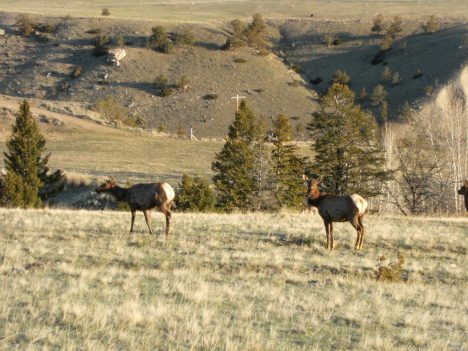
Elk in my Valley.  I thought elk on left looked quite pregnant.

Elk in my Valley. I thought elk on left looked quite pregnant.

First thing on the way to Chief Joseph were some early morning grazing elk.  They are getting ready to calf soon.  My neighbor, on whose pasture these elk are grazing, called me yesterday to tell me to watch my dog as a wolf walked past her daughter yesterday.
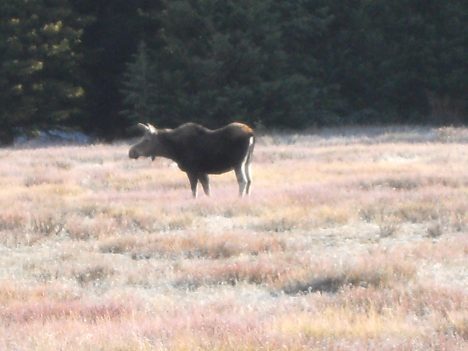
Moose on Chief Joseph Highway

Moose on Chief Joseph Highway

These two moose were up past the 212 turnoff to the Park, right alongside the road.  I didn’t see any moose in the Park, although usually some hang out in the river right past the NE entrance.

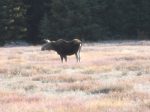
This one just sat and watched me.  She had frost on her fur.

This one just sat and watched me. She had frost on her fur.

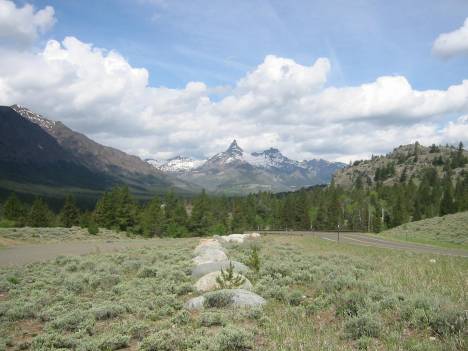
Here’s the approach to the NE entrance.  There was no ranger at the gate today, so no entrance fees.  Happy Mother’s day.

Entrance to Park

Not too far into the Lamar Valley, I stopped by a crowd with scopes.  I watched 2 wolves for a long time, one a collared gray female and the other a black.  They seemed to be trying to figure out how to cross the creek and road to get back to their den on the other side.  There was a lot of howling and prowling.
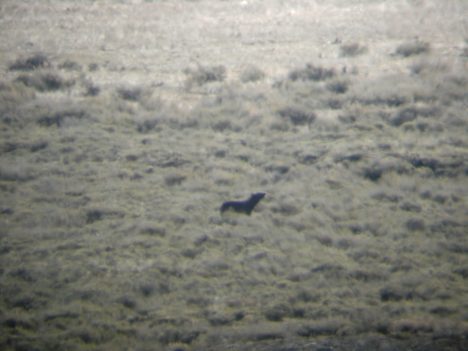
This is through the scope.  He was way across the Lamar river.

This is through the scope. He was way across the Lamar river.

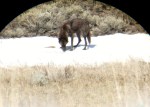
Pronghorn were all over the hillsides.  Bighorn sheep were grazing high up.  I continued down the road a bit, still wanting to see some Bison babies, when I was distracted by another black wolf of the Druid pack, very close to the road.  I stopped and watched with my naked eye.  He was walking back and forth along the stream bed.  He was so close to the road that I thought he wanted to go to the other side as well.   Suddenly, he had something in his mouth.  It was a fish!  He brought the fish over to a nearby snowbank (all this within 200 feet or so of the road), played with it,  rolled on top of it, then devoured it as a magpie watched.

Wolf eating a fish he just caught
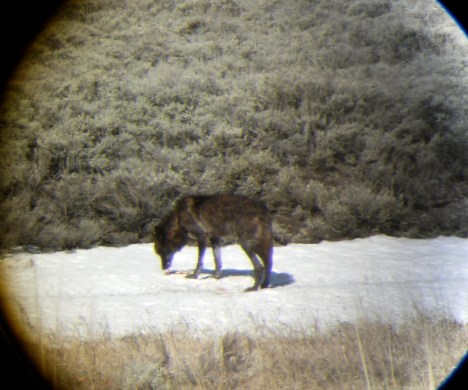
Wolf eating a fish he just caught

Wolf eating a fish

Wolf eating a fish

Finally I moved on to see the Bison calves.  The one animal we don’t have in our valley next to Yellowstone is Bison.  They wouldn’t be allowed to migrate out of the park.  Granted, they do shoot a lot of wolves outside the park, but they return and soon reform local packs.  In addition, each state is required to have a certain amount of wolves in their delisting program.  But Bison no state will tolerate because of the perceived threat of brucellosis to cattle.

Here are the baby pictures:
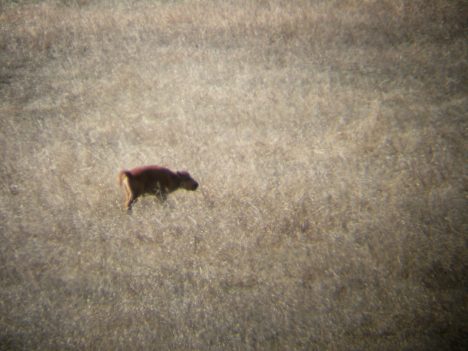
Bison calf

Bison calf

Mom with two calves in the grass nearby

Mom with two calves in the grass nearby

If all this wasn’t enough (I’d barely driven a mile within the Lamar), I went a short distance down the road to view the Grizzly hanging out within 100 feet of the highway.  He’d been there all morning.  On my way, another black wolf walked through a herd of grizzlies.  He was joined by a grey and they both began howling.  They were answered by a wolf on the other side of the road, not visible to me, near their den site.  A coyote began yipping in tune to the wolves, and then he sauntered across the road.  Several Red Tail hawks circled overhead, while Sandhill Cranes walked along the water’s edge.

Here is the bear:

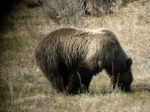
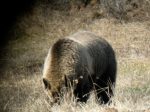
This grizzly spent hours upturning Bison paddies for insects underneath
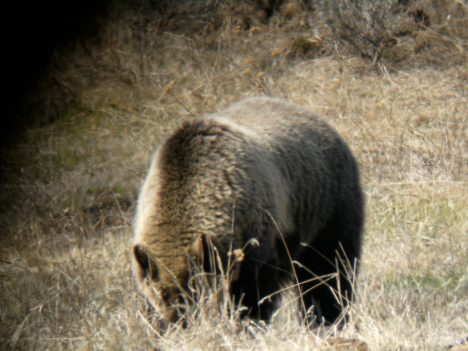
This grizzly spent hours upturning Bison paddies for insects underneath

Grizzly rooting around

Grizzly rooting around

I’ve oftened pondered what makes for that special nurturing quality of Yellowstone.  I left the valley and could feel its warm embrace.  There is so much life there.  The animals seem at peace, not threatened.   They are simply doing what they do, going about their business.  There is always a palpable feeling in the air there, like a slice of heaven.  Is it the volcano living underneath?  All the hot springs?  I think its where the natural order of things are in place.  In Yellowstone, man is not the top predator.  This has been so for generations upon generations of wildlife and they ‘know’ it.

It is time to acknowledge Yellowstone for what it truly is–the serengeti of North America–and treat its surrounding environs as such.  Outside of the Park, they are supposedly ‘protected’, but special interests always come first.  Buffalo cannot migrate to lower ground in the winter or they are killed; wolves even when they weren’t delisted were killed regularly (they know what the sound of a helicopter means outside of the Park); right now is bear hunting season in my valley.

The income from open grazing or from hunting tags pales in comparison to tourists coming to see our ‘Serengeti of wildlife’.  Having the Cattle or Sheep lobbyists win every legislative battle is old school.  It is time we see what we have here that is truly of value, and so unique.  It is time to preserve this land of the Greater Yellowstone Ecosystem, not just Yellowstone Park, and manage it with wildlife as the number one priority.

There couldn’t have been a better advertisement for Yellowstone as this mornings two hours in the Lamar Valley.

The Orphan Road

I am just counting down the days until the Park opens. Its frustrating because we seem to be last on the list.  The Park newsletter says May 8, if conditions allow, Chief Joseph will open to the Northeast entrance.  Yet treacherous Sylvan Pass opens May 1 with no conditions attached.Pilot and Index Peaks from Chief Joseph Highway, May/June

There are only eleven miles of unplowed good highway between Chief Joseph/Beartooth highway and Cooke City.  I’ve asked my neighbors several times to explain the politics of plowing that road.  Its complex because it would seem to be the responsibility of Montana, as Wyoming plows their side.  But from what I understand, no one wants to claim it.  Its the ‘orphan road’.  The Park maintains the Beartooth (hwy 212) because that’s a federal highway.  But the Beartooth highway is not plowed in winter, for obvious reasons.  And they don’t want to plow the small stretch from the Wyoming border to Cooke City in the winter, which would leave Hwy. 296 (via 212) fully open to traffic from Cooke City to Cody in the winter.  Instead, a local in Crandall grooms that stretch for snowmobilers.

The odd thing is that once you’re in Cooke City, the North Road in Yellowstone is plowed so the kids can get to school and Cooke City isn’t landlocked.  So if, for instance, I drove to the end of Chief Joseph and parked at Pilot Creek, skied the 11 miles to Cooke City, then how do I get into the Park without a car?    It’s 11 miles of sheer frustration.  The town of Cooke City would like it plowed (at least that’s what some of the local businesses have suggested to me), but they must be too small for political clout with the feds.

The town of Cody on the other hand has lots of political clout it seems.  They’ve pushed the Park every year to keep Sylvan Pass open as a groomed road for snowmobilers.  They seem to be under the illusion that keeping that entrance open attracts winter tourists and money for the town.  The figures for 2009 are in and only 97 snowmobilers went in through the East Entrance, at a cost of $325,000 to the Park.  That’s $3500 per snowmobile!  No snow coaches went through.

I’ve only been here 4 years, but here’s the logic the way I see it.  Sylvan pass is dangerous.  To keep the pass open and safe in the winter, the Park has to induce avalanches.  Its a treacherous road.  It’s beautiful but dangerous.  Chief Joseph highway via Dead Indian Pass, on the other hand, is plowed all winter.  It’s also incredibly beautiful and accessible via Cody and Codys’ airport.  The extra 11 miles of highway is a good road and not over a 8530′ pass.  My neighbor tells me they paved Chief Joseph always with the intention of it being the winter access into the Park.  So why doesn’t Cody push to open that in the winter?

It is because there is a false view that Cody is receiving winter business from their East gate.  Numbers say they aren’t.  But people could fly into Cody and drive into Mammoth or vice versa if those 11 miles were plowed.  I’m sure the costs wouldn’t be $325,000 to the Park.  Just the cost of paying the guy already plowing the North road a few extra bucks.

One group pushing to keep that part of the road closed is Cody Country Snowmobile Association. They argue that the area is world class snowmobiling, it attracts lots of people from out of state, and money is made for the state on the tickets for snowmobiles, as well as money spent in town by the tourists.

I’m no fan of snowmobiling.  They are too noisy for me.  I am a hiker and like to feel the quiet of the woods and see the animals.  But I’m sure if $325,000/year wasn’t spent on Sylvan Pass (the snowmobilers prefer the Beartooths anyways for its challenge and freedom), some of that money could be redirected (maybe in partnership with other state agencies that are likely to benefit) to create new access trails for snowmobiles, working out a plan that would please both the CCSA and people like me who want to gain access into the Park in the winter, as well as provide that extra revenue from tourists that Cody is looking for.

On the bright side, keeping that road unploughed, although we have lots of weekend car traffic from Cody to Pilot Creek with snowmobiles in tow, helps insure that my area of the valley is nice and quiet in the winter.   Maybe things are well enough left alone.  Regardless, I’m anxious for May 8 to take an afternoon drive into the Lamar and see the Bison babies.  Pronghorn in Lamar in spring--Northeast entrance

Spring storm brewing in Yellowstone, NE entrance

Lamar Valley, springtime