• MY BOOKS ON WILDLIFE, GARDENING AND MORE

  • Coming Fall 2024. Pre-order and use code 6AF24 for a 40% discount

  • The Wild Excellence

  • Award winning ebook on DG Primer

Do Wolves Change Rivers or Do Men Change Wolves?

I’m thrilled today because for the first time in a long time I followed wolf tracks, three wolves who were on a mission. Why so excited? In the past on this blog I’ve written about following wolf tracks, about watching wolves in our valley in the winter, and encountering them on hikes. But since Wyoming began yearly hunts starting in 2016, wolves quickly became very elusive. They were no longer curious who these 2-legged creatures were. They now knew.
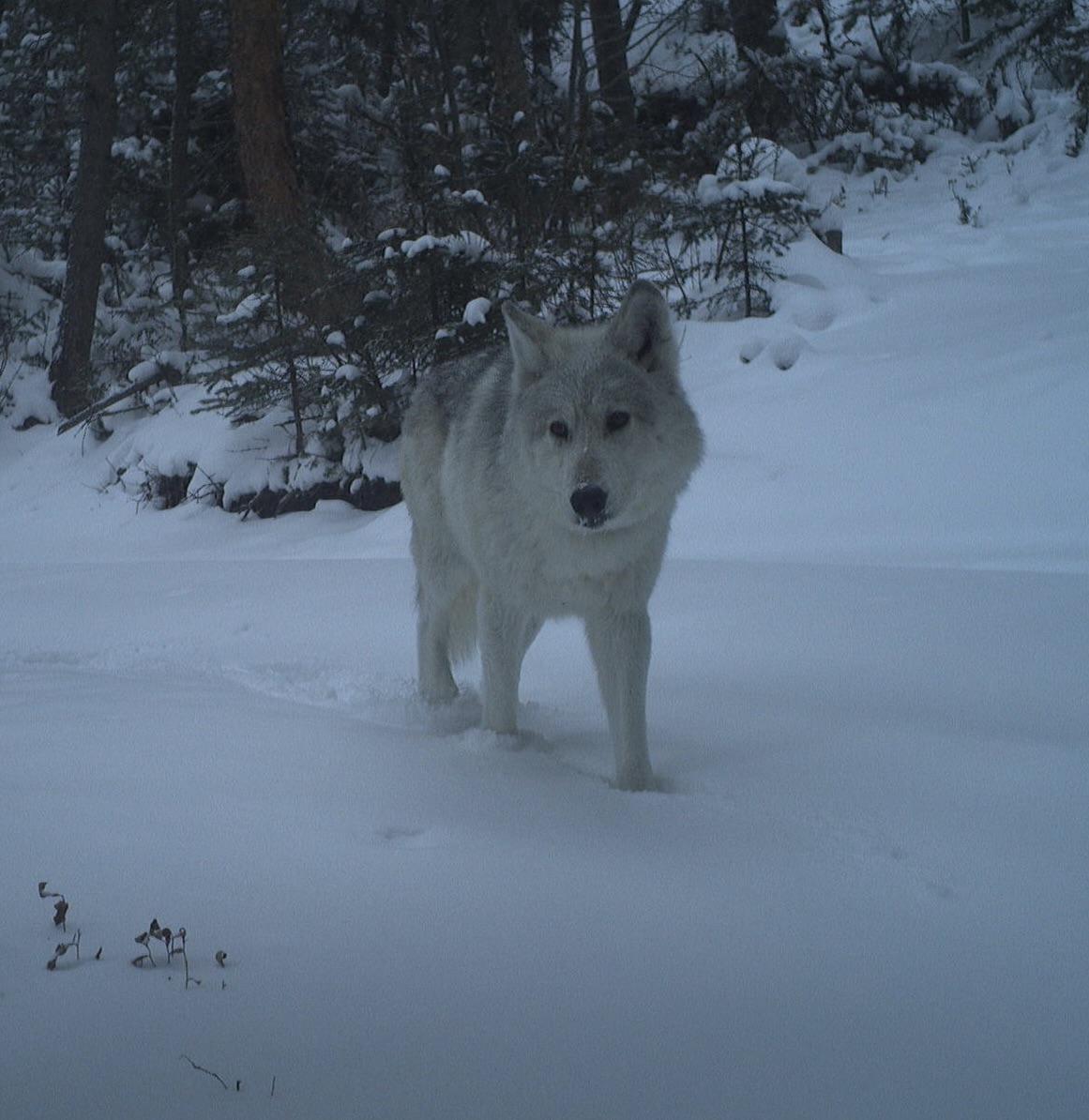
White wolf of the Wapiti Pack

I’ve written about how I no longer hear wolves howling in winter in the valley. Some of these changes go along with habitat changes in our elk herds that dovetails with less snow cover and a quickly changing climate. But overall the change in how wolves are using the landscape coincides with human hunts.

I live in the regulated area of Wyoming where there is a season and a quota on wolf hunting, mid-September to December 31. But in 85% of the state, wolves are classified as “predators”. That’s not a biological designation. Here in Wyoming a “predatory animal”is defined by our state legislature and under the control of Wyoming Animal Damage Management Board and USDA Wildlife Services. All other wildlife falls under management by Wyoming Game and Fish (WGF). Predator status comprises a weird group—coyote, jackrabbit, porcupine, raccoon, red fox, skunk, stray cat and of course wolves (in 85% of our state.)

But in the managed hunting zone, called the Trophy Zone, basically in the Northwest corner of the state, wolves are tightly managed. A bit of background as to how Wyoming sets their quota limit year to year and on what basis the WGF determine what their target number of wolves is.

When U.S. Fish & Wildlife Service began their long process of input from the public regarding bringing wolves back to the states, transplanting and moving wolves had never been done before. They knew they’d be bringing them in from Canada (just an aside, there is no such thing as a “Canadian wolf”. Wolves don’t have countries. These are all Canis lupus who occupied almost the entire range of North America. Only the red wolf is a different species Canis rufus, now almost extinct.) because the lower 48 no longer had any wolves. Since this was a novel experiment, many biologists thought the transplanted wolves would just “home” back to their natal range. They also had no idea what constituted a “minimum” number of wolves that would be viable for genetic diversity, and what number an area could support. So they literally just made up a minimum number of wolves per state and noted in the supporting documents that if the number of wolves, and the number of breeding pairs, fell below those numbers in any one state wolves would be automatically relisted. That number is 150 wolves and 10 breeding pairs. Wyoming was allowed to use Yellowstone Park to help support their numbers. The breakdown is 100 wolves and 10 breeding pairs outside the Park; 50 wolves and 5 breeding pairs inside the Park.

What surprised biologists is that the wolves didn’t return to Canada, but adapted quickly to their new environs. And very soon it became obvious that 150 wolves per state (especially states like Idaho and Montana with a lot of high quality habitat and prey versus Wyoming which has a lot of high desert with isolated mountain ranges) is a ridiculously low number, a made up number that should never have been used as a base metric. Yet the states hold that number up like religion, overjoyed at how low they can go in their hunt quotas.

One other thing to note in the original agreement with the states is something called the 10J rule. Although wolves were protected under the ESA, they were returned as an experimental population which limited some of their protections. The 10J rule was the compromise that got ranchers on board. Basically it said that wolves that predated on livestock could be dispatched by the USFWS. The Service took a while to figure it out. In the beginning they indiscriminately took out wolves, many times the entire pack. But over time they learned how to remove wolves surgically without disrupting entire packs or creating areas devoid of wolves. When delisting occurred, the culling of wolves and all the management was handed over to the states.

Back to Wyoming hunt quotas in our trophy zone…Wyoming Game & Fish manages wolves as a tight science. They want to keep our wolves at around 150, hedging their bets with an excess of 50 wolves outside Yellowstone. They know anything can happen like disease that can quickly decimate a population. One year we only had 11 breeding pairs, dangerously close to an automatic relist. The one good thing about their tight management is that WGF GPS collars wolves every winter, attempting to get at least one collar in every identified pack. Thus they have an exact count of wolves in the trophy zone.

Montana and Idaho, on the other hand, don’t collar, but use either game cameras and hunter success forms or include a sketchy method of habitat suitability with approximate number of wolves. Both states assume high numbers of wolves in the state, set their seasons and quotas long and high. They allow guns, trapping, baiting, night goggles, bounty payments and all sorts of dubious types of kill methods that would never pass for ethical hunting.

Why then has it been so hard to see or track wolves in my area for the last several years. Wolves, like bears, are notorious for using roads for passage. That makes perfect sense as roads are easy navigation through difficult terrain. With wolves wary of humans, that isn’t the case in winter anymore, making tracking or seeing them more difficult.
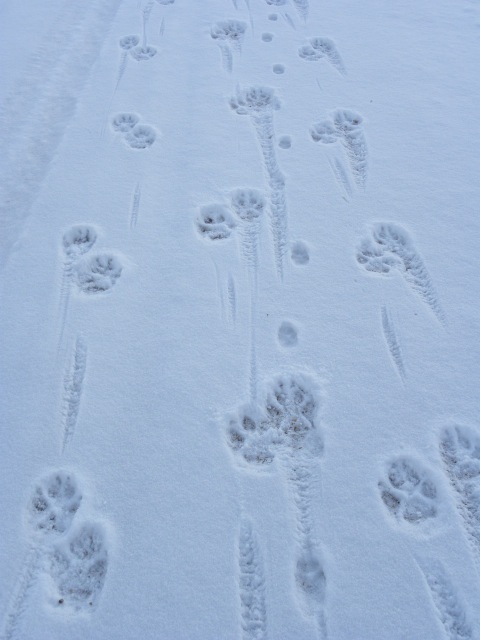
This coyote ran right over three wolf tracks on the main dirt road

But there’s another element. More wolves are killed in “controls” for livestock damage then in the annual hunt. For instance, in the 2024 annual hunt report 31 wolves were killed in legal hunts in the managed area versus 43 wolves killed in controls (8 of those in the predator zone by the Agency. That doesn’t include the 51 wolves killed in exclusively the Predator Zone). The main pack in my area, the Beartooth Pack, had 7 wolves killed in a pack of 9 for predation on 3 cows. Basically, almost the entire pack was eliminated. There are thousands of cattle on our public lands during the summer, almost all of them belong to one producer. Cattle die from many things. During that same summer, Game & Fish hauled off the highway 5 dead cows that were struck by cars so bears and other wildlife wouldn’t feed on them. One year over 50 cows were killed by Larkspur, a plant that can be poisonous to cattle. Plus the state of Wyoming pays the producer 7 times the market price of a cow killed by wolves (3x killed by grizzly bears).
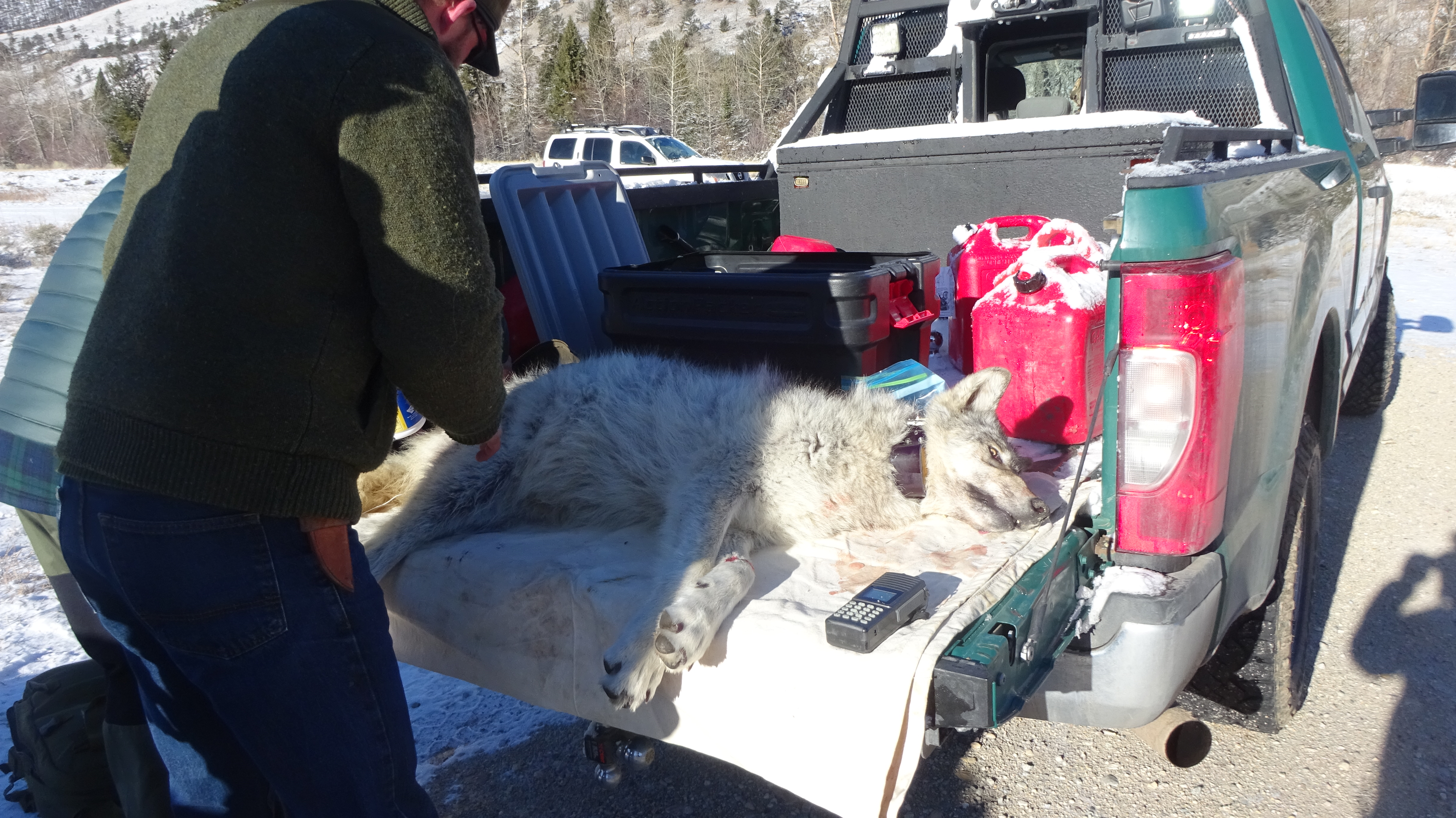
Wyoming Game and Fish collaring a young sedated wolf

All this history, living in the same area for twenty years, living through ten years of wolf protections and 10 years of hunting has given me perspective plus a lot of time to think about what might be a better way of managing wolves. I don’t have the answers, but I have some thoughts as to a start.

What we are lacking is overall federal management guidelines based on good science. These would be binding for all states that have wolves that are delisted and under state management. This would include:

  • Humane methods of hunting only (NO baiting, trapping, night goggles, night hunting, limited seasons, no hunting when pups are too young to travel with their pack, no hunting during breeding and pup season, so generally this means Oct-December or January)
  • New minimums based on updated science tailored to each state that would trigger relisting
  • Areas with large tracts of public suitable lands for wolves such as around Yellowstone Park need to be treated differently than areas with private and public lands mixture. Landscapes with an expanse of wilderness, wolves will self-regulate and there is little need for hunting. [I call them Science Zones]. In addition these areas are critical for genetic exchange. My area used to provide support for wolf packs in the Lamar Valley and vice versa. With annual hunt culling of wolves in this valley, we no longer have that kind of exchange.
  • Proven methods and support for livestock producers. Instead of paying producers for losses, pay them for equipment and training for non-lethal methods of protection. Encourage and provide help for Co-ops to buy equipment such as fladry or horns cheaper in bulk. Those methods must be in place before there is any legal take tag given. California has a 2 and 3 strikes rule for a depredation tag for mountain lions, based on where in the state it occurs. That should be mandatory for producers and wolf protections.
  • Public education as to the value of wolves. This is a critical piece. There is an unbridled hatred of wolves, leftover from our European background and Manifest Destiny doctrine. Thousands of people come to Yellowstone to get an opportunity of a lifetime to view wolves. Education needs to go hand-in-hand with that opportunity. I still hear people talk about “Canadian wolves killing all our elk” while they watch wolves.
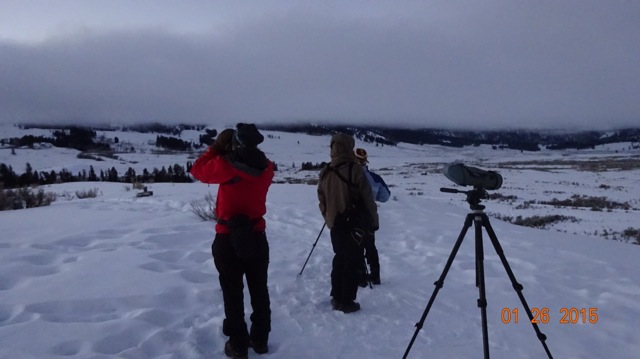
Hearing wolf howls in Lamar Valley YNP

There was a time in my valley, pre Wyoming hunts, when our area had the most wolves in the Northern Range, about 40 wolves in 3 packs. During that winter I watched the packs vie for the best territory. The Hoodoo pack killed off the Sunlight Pack’s pregnant Alpha female. I was seeing these wolves self-regulate, confirming that they didn’t need hunting to control their numbers.

That said, I’m not completely decided on some limited hunting versus no hunting at all. I thought the USFWS did a good job when they were in charge of the 10J Rule with surgical culls. Packs that focus on livestock predation after a producer has honestly tried non-lethal methods can certainly be warranted.

It’s past time for an honest, open discussion about humane and science-based management for wolves, with the vitriol and lies turned off.

My children’s book on wolves told from the point of view of a dog. True stories

Coda: I had the opportunity to measure skulls in the Draper Natural History Lab for a study. I also went to Yellowstone and the Denver Museum of Nature and Science to measure skulls. A few photos below.

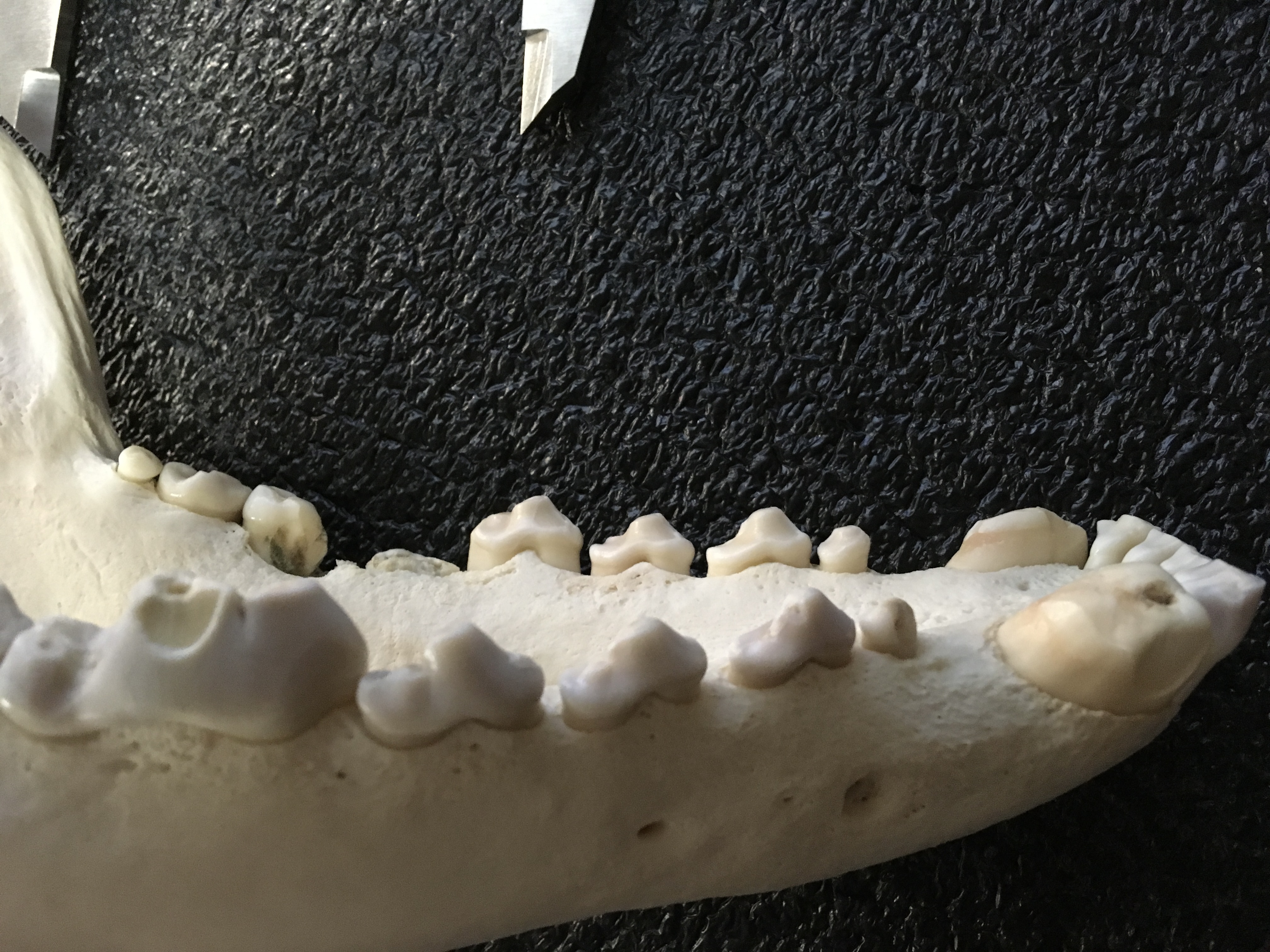
Control kill by USFWS during 10J rule. This was a wolf pup. You can see molars and pre-molars still emerging
Another control kill by USFWS. This is an old wolf. Worn teeth and broken canines
This is one of the last wolves (a female) killed by USDA Biological Survey (now Wildlife Services) in Colorado November 1921. Held in the archives at the Denver Museum of Nature and Science by W. Caymond, a hired hunter who killed off the last wolves in the state. Caymond’s story is told in full in Wild New World by Dan Flores

HOW TO TRACK A MOUNTAIN LION

“She’s close.” 

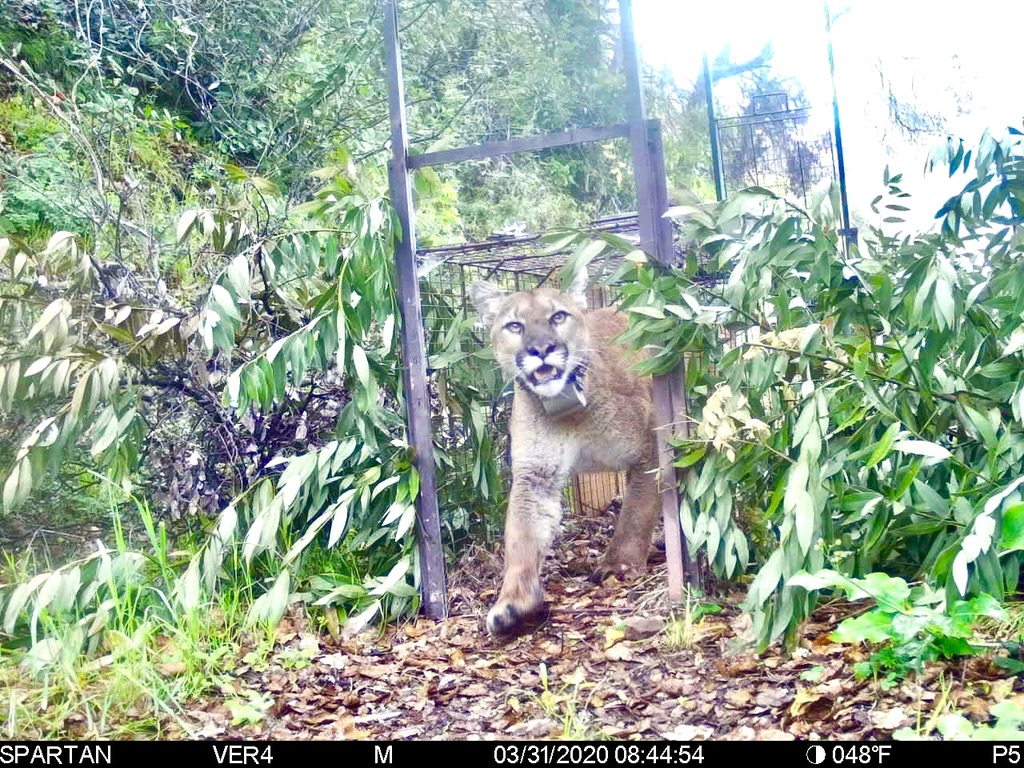
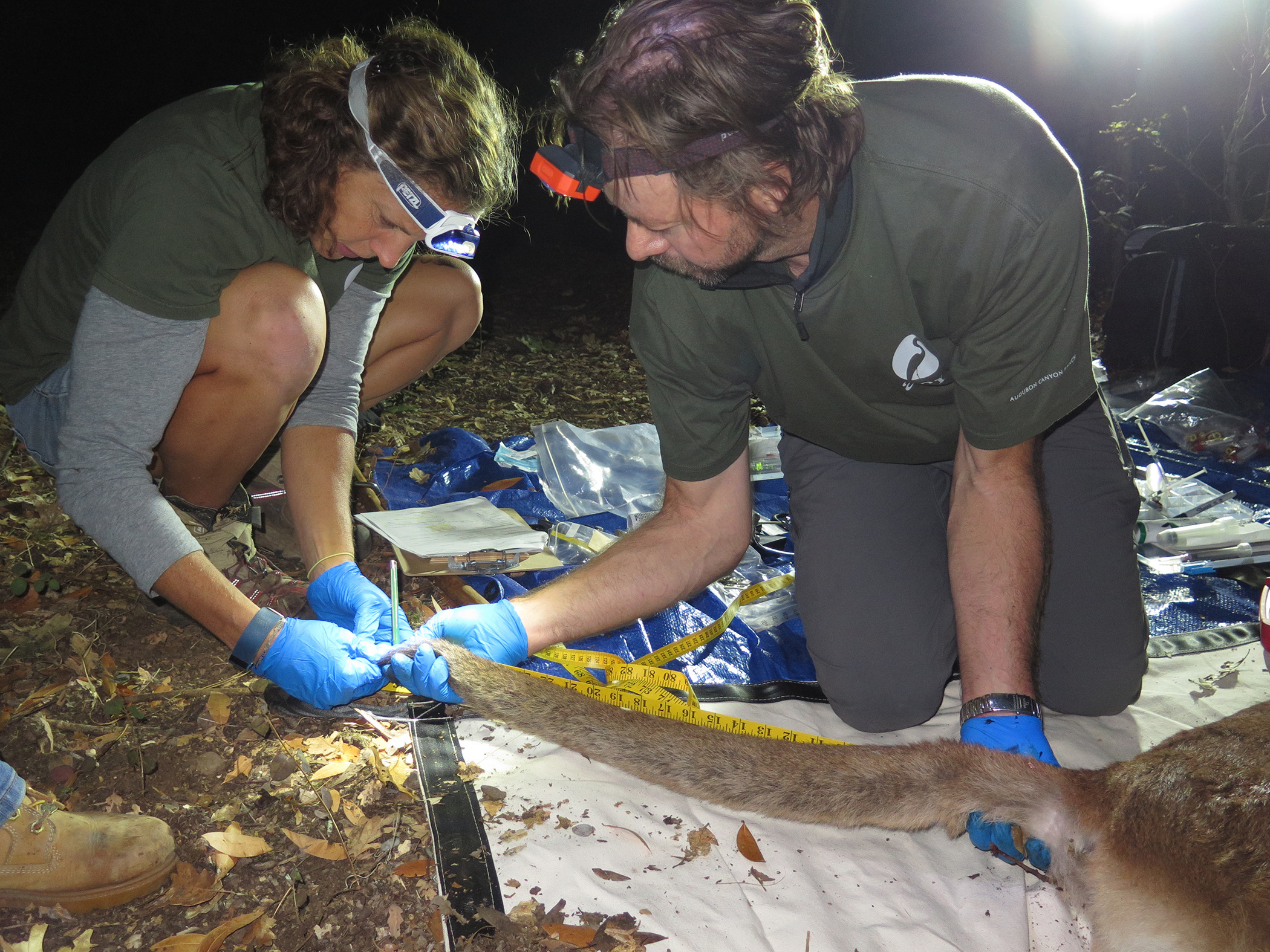
Mountain lion biologist Quinton Martins holds up an antenna while listening to a series of beeps from his hand-held receiver. Martins is searching for a female mountain lion wearing a failing GPS collar that needs replacing. As he leads us across a stream towards the oak and bay hillside, these locator pings indicate she’s alternating between two areas on either side of the creek. Martins thinks she may have a kill, which would be great news. If she does, then he can place a cage trap to recollar her.

Sharon Negri of the Mountain Lion Foundation and I are tagging along, hoping to catch a glimpse of this elusive animal. The hillside is steep with no clear trail as we trudge through tight brush and poison oak, occasionally stopping as Martins rechecks the lion’s location.

“She’s very close. On the other side now, maybe forty meters away in those trees.”

This particular cat, Martins tells us, had at least one kitten who would be eight months old. But the resident male recently died of bacterial bronchial pneumonia linked to Feline Leukemia Virus, opening the territory for a new male. If that’s the case, it could mean this new male might kill the kitten in order to entice the female to breed again.

Martins unique trap system. It triggers by weight avoiding triggering non-target animals

Martins has been running a mountain lion study in partnership with the Audubon Canyon Ranch in Sonoma County since 2016. True Wild, his company with his wife, focuses on coexistence with wildlife and offers customized African safaris as part of their conservation efforts, connecting people to nature in a profound way and working with participants to become more involved in conservation initiatives where possible.

We stop again for another location check. Now Martins’ receiver displays a significantly stronger signal, indicating the cat is on the opposite bank exactly where the second ping showed up on his computer yesterday. Sharon and I carefully navigate the streambed around an enormous jumble of jagged boulders, possibly dumped from soil preparations for the vineyard whose private lands we have permissions to be on. At the ping site there is no indication of a kill while the cat has disappeared through thick bush and over a rise. Knowing this female was so close, yet we never saw her, leaves us frustrated. It is a repeat of a common scenario: cougars watch people yet we humans never see them.

Heading back to the car, Martins points out fresh tracks in the soft dirt. “She’s been here, going back and forth. This cat has been incredibly difficult to find.”

Luckily, Martins has one other lion he wants to sleuth out. P49 has a good working collar that indicates she might have a kill. Martins’ goal with this cat is to find out if she has kittens. As we drive 45 minutes west to the opposite end of Sonoma County, Martins lays out the unique difficulty of doing a wildlife study in a highly populated rural area.

Martins getting data from a sedated lion he is collaring

“The males we have collared—P5 has 17,000 private properties in his territory. P31 has 11,000 private properties. How do you contact that many people and access all those properties to inspect fences or signs of prey? This dilemma is confounded by an increase in weekend private property owners. When you overlap a land parcel map it is as if you are looking at 50,000 or 100,000 mini ecosystems, so you can’t just throw a vegetation layer over it and say ‘OK, this is what the cats are doing.’ As their primary prey is deer, it might look like great deer habitat on a map, but in many cases these properties are fenced to keep deer out. So there might be no deer in areas where you expect deer, but cannot tell because you can’t access the properties very easily. And walking each individual land parcel, one finds different plant and animal resources, a variety of fence types that block or allow animals to move through, and each parcel managed differently to some degree.”

Martins tell us lions are using fences of any type to strategically block or corner and kill deer. In fact, when we approached the previous property, Martins pointed out a cougar-killed deer carcass hanging against the fence that enclosed the vineyard.

Our second property owner is an animal lover excited to discover there’s a lion hanging around his property. He has a large piece of wooded land, over 200 acres, nestled in the hills of Sebastopol. He greets us at his main house and we follow him down the road to where Martins recorded a series of GPS fixes the night before. The dense cluster of pings is a hopeful sign this cat has made a kill and is still hanging around. Cougars can spend up to three days or more consuming an adult deer. They will cover their kill to preserve its freshness as well as deter scavengers while they rest nearby.

The GPS telemetry data indicates the cat traveled along a hillside where an overgrown two-track is still visible. A short hike leads us to her kill—a yearling deer. Cougars kill with a bite to the neck, then consume the internal organs first. Big cats, along with their small domestic cousins, lost the ability somewhere in evolutionary time to convert carotenoids like beta carotene into Vitamin A, so they have to obtain it directly from these nutritious organ meats. That’s exactly what this cat has done. I also see she has begun to pull the fur away with her incisors. Although this is a small deer, Martins thinks there’s enough meat on the carcass that the cat will return, and if she does we’ll find out if she has kittens. The VHF radio signal from her collar indicates she is resting on the opposite hillside only a few hundred yards away.

“She’ll return under cover of night,” Martins tells us as he sets up three trail cameras focused on the carcass.

Even though we never did see a mountain lion, the day was exciting as well as instructive. Conducting a mountain lion study in an urban/rural area has tremendous challenges and complexities that studies in vast wilderness areas like where I live in Wyoming do not. First there is no snow, so finding tracks is as elusive as the animal itself. Second, most mountain lion studies rely on dogs to do the tracking and treeing of the animal. Once treed, biologists can easily dart the lion and lower him to the ground to be collared and released. Obviously dogs can’t be utilized in areas where there are so many people on small private land parcels. In addition, while there are some public lands in Sonoma County—mostly small county parks dotted throughout his study area—Martins’ lions live in territories encompassed by thousands of private properties, meaning he has to obtain permissions from each owner before visiting. Most, but not all owners are happy to help, but even when he has their cooperation, each visit requires one or several phone calls to gain access. It’s a lot of human PR work.

A few days later, Martins relays the good news. P49 has two healthy cubs with her and sends us a photo of the family dining on the carcass. I realize that instead of one lion, there were three nearby, none of whom we saw. But to be fair, mountain lion mothers sometimes stash their kittens while they hunt, then bring them to the kill site afterwards.

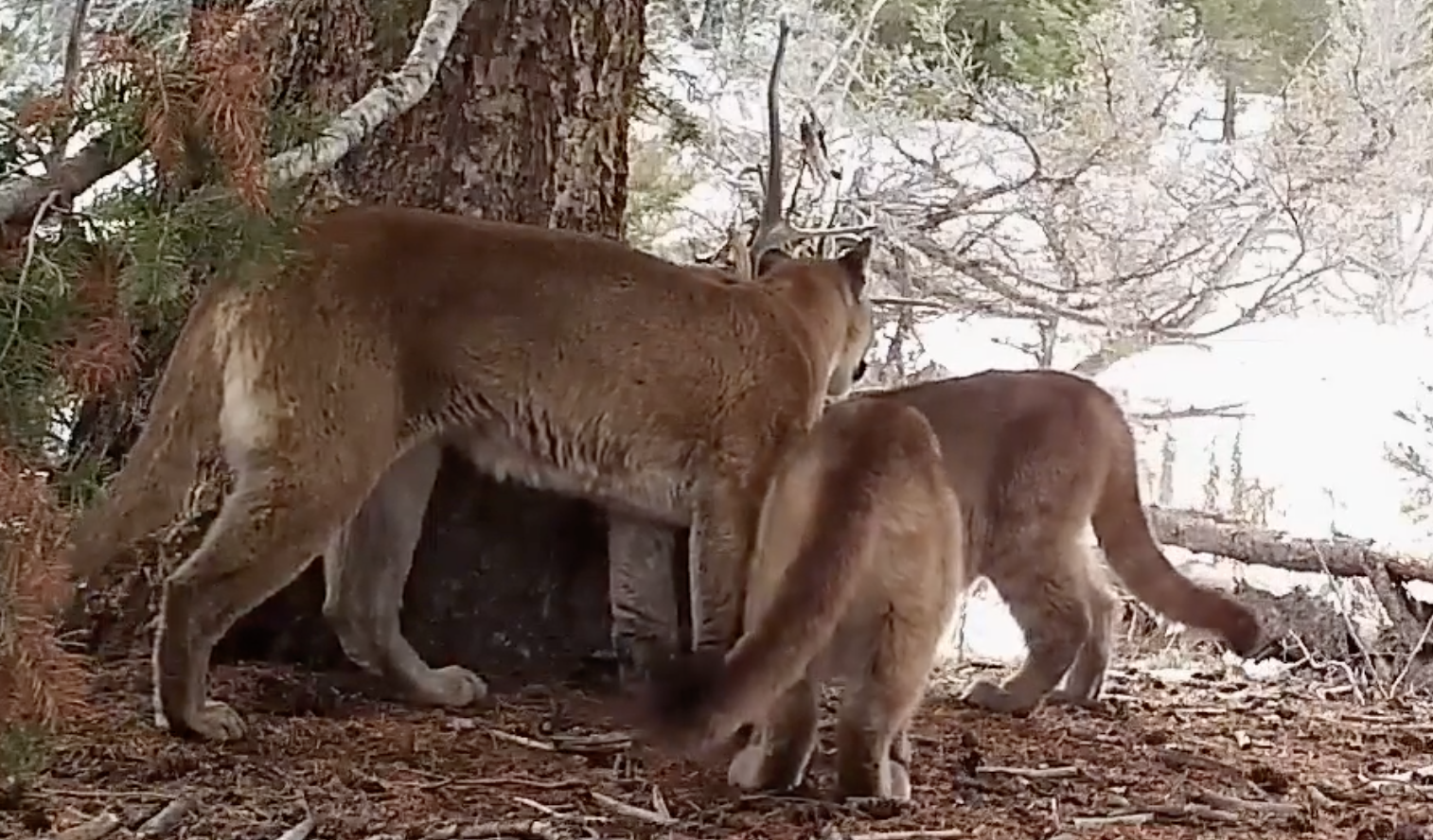
P49 with her two kittens on the kill we found.

These kittens are highly dependent upon their mother’s hunting skills throughout their first year. The span between six and eighteen months is especially important for the cubs because they are learning the art of hunting and killing prey. In addition they are exploring their natal range and learning how to deal with potential enemies. Dispersal occurs usually between 12 and 24 months. Lion dispersal is critically important for genetic diversity, as well as for geographic expansion. Females tend to stay close to their birth mother’s range, while males need to find an empty slot devoid of a dominant male. The odds are tough for dispersing males, who roam much farther than females and have to contend with other territorial males. In an urban/rural landscape, these kittens will need to learn to avoic livestock plus they have a higher chance of contacting diseases from domestic cats like Feline Leukemia Virus and the H5N1 virus, commonly referred to as bird flu which cats have a higher than 70% chance of dying from.

Through Martins work we hope to have a better understanding of mountain lions living in a unique situation sharing their territories with a high density of people in a complex urban/rural landscape. Plus, this coexistence with California’s communities work will hopefully give these iconic cats increased odds of survival, ensuring their vital role in helping ecosystem integrity is maintained.

More info on Martins work and California mountain lions can be found in my book Ghostwalker

If you want to follow updates of Martins’ Sonoma study…

True Wild’s work stems from our love for wild places. We are driven to find ways for people to appreciate and make an effort to protect wild places and the wildlife that shares the world with us. We believe that people can coexist with wildlife through practical and achievable methods and in doing so, serve people, domestic animals, wildlife and the environment we are all living in. 

True Wild (www.truewild.org) and Audubon Canyon Ranch in partnership with Sonoma County Wildlife Rescue , are spearheading an essential mountain lion research and education project in California’s San Francisco North Bay Region. We are a key community resource for people to be able to coexist with wildlife, particularly mountain lions. In Africa, we support high impact, coexistence-focused projects that will protect large wild places while benefitting local communities. 

We want to maximize impact with minimum overhead, seeking to achieve win-win situations for everyone involved. Donations become investments, involvement leads to tangible returns. We encourage and actively seek both intellectual and financial support to offer solutions to the growing ecological issues our world is facing. 

We offer impactful and extraordinary safari opportunities, connecting people to nature in the most profound way in some of the most beautiful places in the world. We view our safaris as a platform for providing a valuable life experience as well as highlighting the significance of wild places that need protection. Each safari is tailor-made to maximize the personal experience. 

If you must hunt, how to better manage mountain lion populations

Last week I attended The Mountain Lion Conference which is held every 3 years. This is the first in-person conference since 2017 because of covid. The Conference agenda is divided between presentations from biologists discussing findings from their recent studies, and state wildlife managers giving a summary of any particular aspect of their management they might choose to present.

Most of the science presented wasn’t new to me. It’s all in my book Ghostwalker: Tracking a Mountain Lion’s Soul through Science and Story. For instance, Kyle Dougherty presented studies done on California connectivity issues, discussing how the Tehachapis are critical for genetic diversity for lions there. I did extensive interviews on connectivity and the challenges in my California chapter. One interesting note was that mountain lions in that critical corridor (where there is no highway crossing yet) spent 19.8 hours on average observing, trying to decide if and where they might cross. None of their collared cats attempted crossing the highway.

Some of the most promising studies are taking place in Texas, the only western state that still lists mountain lions as “predator” status, meaning they have no seasons and no protections. Chloe Nouzille and her crew are studying the impacts of the border wall on mountain lions and other large mammals. So far they’ve found no lions crossing the wall in places where contractors place small pass throughs. These breaks are not placed in known wildlife corridors, but randomly placed about every mile. Not all contractors are doing this. Usually it’s at the request of the landowner. What the team has found is more minimal barriers such as fences were being used by lions, although these fences are too high for deer to jump over. Another Texas study was presented by Lisanne Petracca. Her team is trying to understand the genetics of western Texas lions. Are most of these lions coming from Mexico, New Mexico, or in-breed? There haven’t been studies in Texas since 2008. This renewed attention to mountain lions is very positive and hopefully will push their state legislature to make changes in lion status.

I personally had a few takeaways from Mark Vieira’s presentation on Colorado’s mountain lion female harvest presentation. Colorado doesn’t have limits for females but like most hunting states groups together their quota for both sexes for each zone. Let’s be clear: mountain lion hunting is absolutely a choice and not necessary for lion management. Lion hunting is all about hunting opportunity, not about food. But in all our Western states except California (which outlawed lion hunting through a 1990 ballot initiative. Colorado last year rejected a similar ballot initiative which would have outlawed lion hunting) that’s a fight that is a long time out.

In the meanwhile, I strongly feel good management means a female quota. And if hunting is part of the mix, then ideally the female quota should be 0 or 1 ( where there is boot hunting). Once that limited female quota is met, the zone is shut down to female take. Mountain lions are notoriously impossible to sex unless they are treed. Even then it can be difficult but a person needs to look for a black spot below the anus indicating the lion is a male.

So what has Colorado done since they have no separate quotas? First they have included discussions with houndsmen asking them to voluntarily reduce the female harvest. Second they are now reporting the amount of females taken in live time on their quota page. Third, they require a class to learn how to identify male from a female. (try taking the I.D. exam yourself) Studies have found the difference with an identification class is 10% less killing of females and with these extra minimal efforts, Colorado has reduced their female take another 10% to 39%. Most seasoned houndsmen can distinguish male from female once a cat is treed, along with recognition of track size. States like Wyoming where I live have no required class for new or out-of-state lion hunters, and don’t have a female quota.

One other note on why mountain lion trophy states should have a female quota along with classes on lion biology—mountain lion females are either pregnant, with kittens, or in estrus. If kittens lose their mother before one year old, they almost certainly will not survive. Many states, including Wyoming, do not allow hunters to kill lions traveling with other lions (which most of the time would mean they are kittens even though kittens can be as big or bigger than mom). But females frequently stash their kittens, especially ones under six months old and many times up to one year old when they go hunting.

The Infamous Ben Lily

I’m in the Silver City area for a few weeks waiting until March 15th when I am speaking at the Tucson Book Fair. Hiking around the Gila National Forest (our first Wilderness thanks to Aldo Leopold), I can’t help but contemplate Ben Lilly.

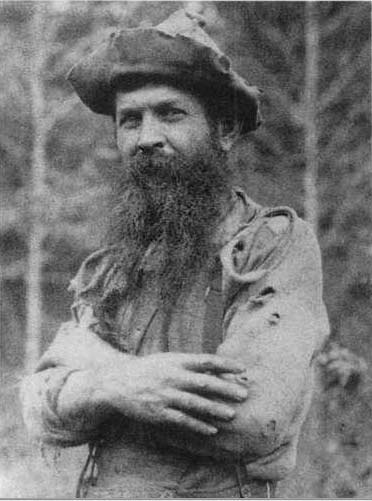
Ben Lily features prominently in the second chapter of my latest book Ghostwalker: Tracking a Mountain Lion’s Souls through Science and Story. Lily was single-handedly responsible for the deaths of 500 mountain lions, over 600 bears, and the last grizzlies in the Southwest. He was a predator-killing machine epitomizing the hatred for predators in the early 20th century.

Today I took a short hike to what locals call Ben Lilly Pond, a 1/2 mile turn-off from Highway 15 before the Ben Lily Memorial.

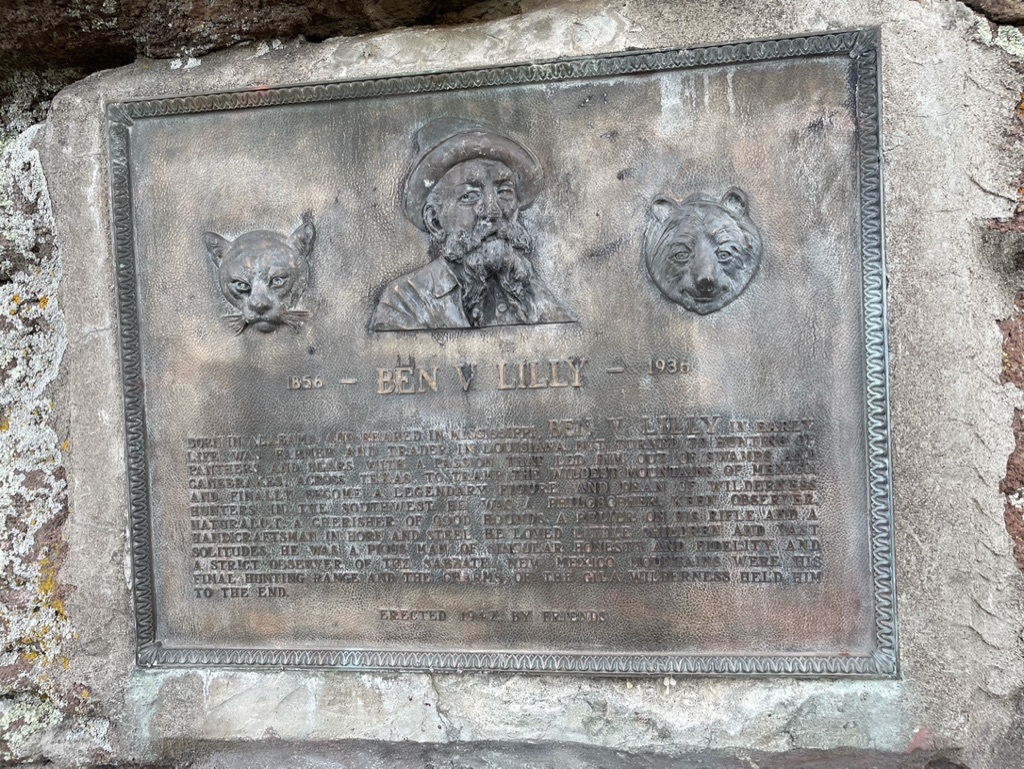
The Ben Lilly Memorial plaque in the Gila National Forest against a large boulder overlook. See the lion and bear on either side

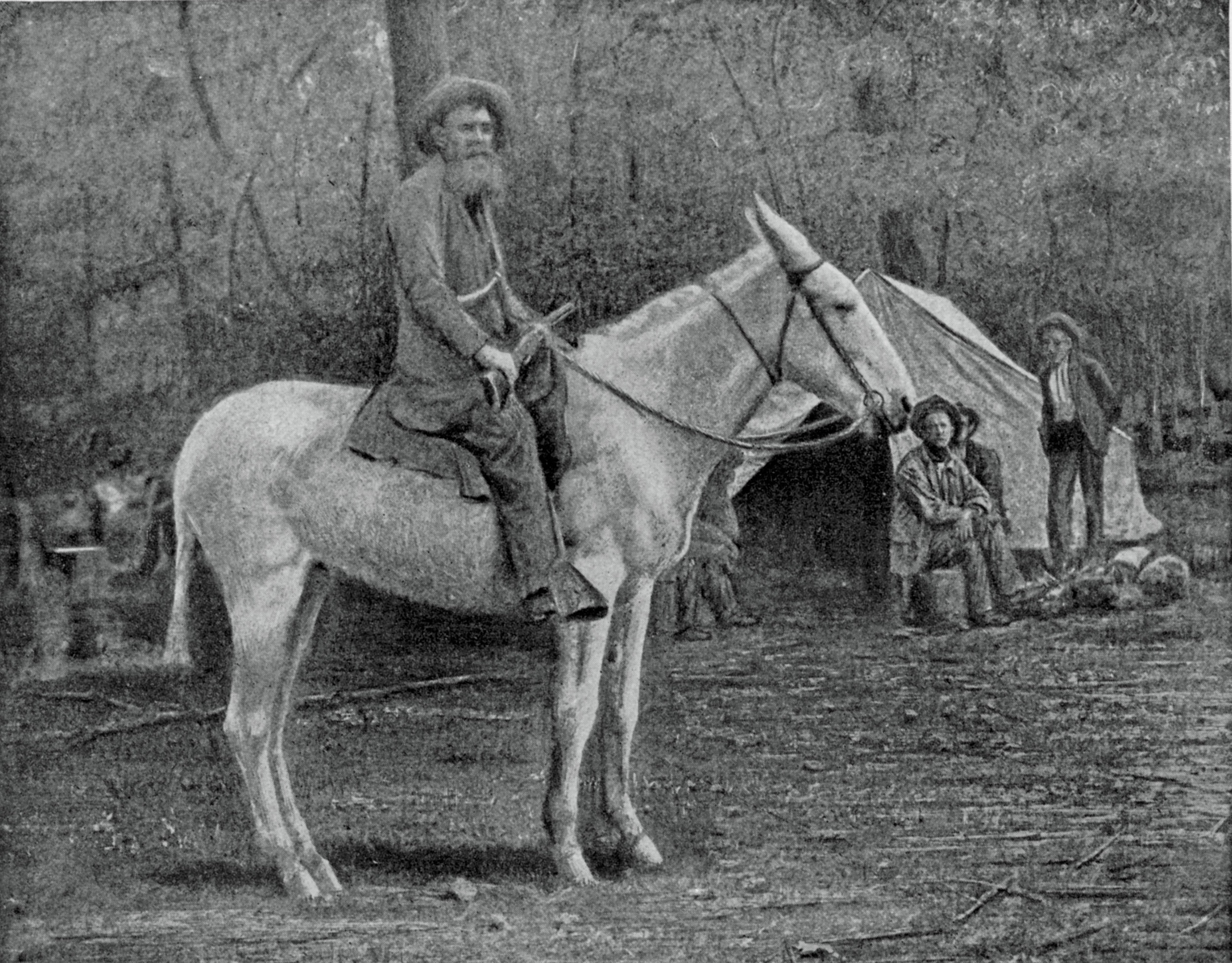
At the age of forty-five, in 1901, Lilly called his second wife and three children together, kissed them goodbye, and left them everything he owned except five dollars. Leaving his home state of Louisiana, he headed west for a land where the big predators remained. His life philosophy was now well formed. He regarded himself as the policeman of the wild, “a self-appointed leavener of nature.” Bears and lions specifically were, by their very nature, evil. Lilly considered it his biblical duty to set things straight by killing these “devil” animals. He had evolved into a religious fanatic, mixed with a special kind of mysticism. As Lilly traveled west, he left behind a wake of wildlife destruction. But his folk-hero status was growing. While hunting in Texas in 1907, Lilly received a telegram summoning him to a presidential camp on Tensas Bayou for a bear hunt with President Theodore Roosevelt.

1908 Scribner’s article: Theodore Roosevelt “In the Louisiana Canebrakes,” Scribner’s XLIII (January 1908) Courtesy Avery Island Archives, Avery Island, La.

In 1908, Lilly hunted grizzlies, mountain lions, and black bears in Mexico for three years, sending skeletons and skins back to the Smithsonian Institution. He returned to the United States, entering through the boot heel of New Mexico. Now in his mid-fifties, his predator killing career was waxing as a new era of government eradication programs for predators began. His reputation was widespread, his services were in high demand among ranchers, and he was finally well paid for a passion previously pursued only as a personal vendetta.

On the road to Ben Lilly Pond. An old ranch entrance now shot full of bullet holes

When trailing with his dogs, Lilly would forget to eat and drink, sometimes for days on end. Then he’d gorge himself on his kill and the bit of corn meal he carried with him. He never kept the skins of the animals he killed for himself, considering them a worthless piece of clothing. He was on a mission, and that intensity of focus molded him into an expert woodsman. He had no coat, but piled on layers of shirts. If he was cold, he’d build a fire, push aside the coals, and sleep on the warm ground. At least once a week he bathed in a stream, sometimes breaking away the ice, then rolling in snow to dry off. The air in a town was toxic to him, and when offered a bed, he preferred to sleep outside on the ground with his dogs.

To the men who knew him, Lilly was a man of complete honesty and character. He never swore, drank, or smoked, and famously rested on Sunday, his holy day. If his dogs treed a cougar on Saturday night, the animal had a stay until Monday morning. But his religious beliefs extended to the supernatural. Lilly’s favorite meats were bear and especially lion, which he felt would endow him with exceptional instinct, prowess, and agility to pursue his quarry. He expected no less of his dogs than he did of himself—running them for days without food. He would go out of his way to make sure they had water before he did, took great pleasure in watching them work, and valued a dog’s intelligence rather than a specific breed. Yet ultimately, they were simply tools of his trade. If a dog began running trash or quit the trail, he had no need for him, and the dog was beaten or shot to death.

Ben Lilly was unquestionably one of the most destructive figures in North American wildlife history, contributing to the demise of the grizzly bear and the wholesale reduction of mountain lions and black bears in the Southwest. The plaque above was erected by friends who knew him, back in the 1930s. But there are some folks today that revere Lily as the ultimate hunter, apparently ignorant of the havoc and destruction he left behind in the Southwest.

The terrain and vegetation of the Gila

Walking the jeep road to the pond (which was completely dry), I did have to marvel at how this strange man maneuvered these mountains. The scrubby oaks, pines and junipers are so thick they are almost impossible to pass through. The ground is rocky and the going rough. But I wonder how many people who take these short hikes even know who Lilly was and the devastation he caused to our wildlife.

Ben Lilly

Lilly’s lack of true reverence for life is the antithesis of our values of ethical hunting and wildlife conservation—a misguided, warped sense of nature that viewed large predators as “endowed by their very nature with a capacity to wreak evil…and should be destroyed.” A misshapen, exaggerated product of his era, one could consider Lilly a vessel—a queer, half-crazed man who performed his executions as a service for others, for the government, and in his own mind, for God. Genocidal war on predators had been codified as our nation’s God-given right, and Lilly was their proxy.

If you are in Tucson on March 15th, come to the Tucson Book Fair. It’s huge with a wide variety of authors and speakers. I’ll be speaking at 10am at the Western National Parks Association Stage

Trail Cameras

Trail cameras for wildlife spying have become a popular pastime. Not only has the video and photo quality improved, but the price point for high quality cameras is lower every year. I’ve been using trail cameras since around 2010. I thought it would be interesting to do a short post on my personal evolution of my use and what I’ve discovered.

Professional photographers and folks that are handy with manual camera adjustments have switched from store-bought trail cams to DSLR cameras. Using a DSLR camera trap requires a lot of knowledge of not just wildlife tracking but lighting positioning and camera settings, but the payoff is great. For my expanded Ghostwalker book out this year from University of Nebraska, even though I have thousands of great mountain lion photos and video, I needed to engage these experts for high quality photos that would reproduce in print. I’ve never been great with manual adjustments so point/shoot cameras, like trail cams, are my go-to.

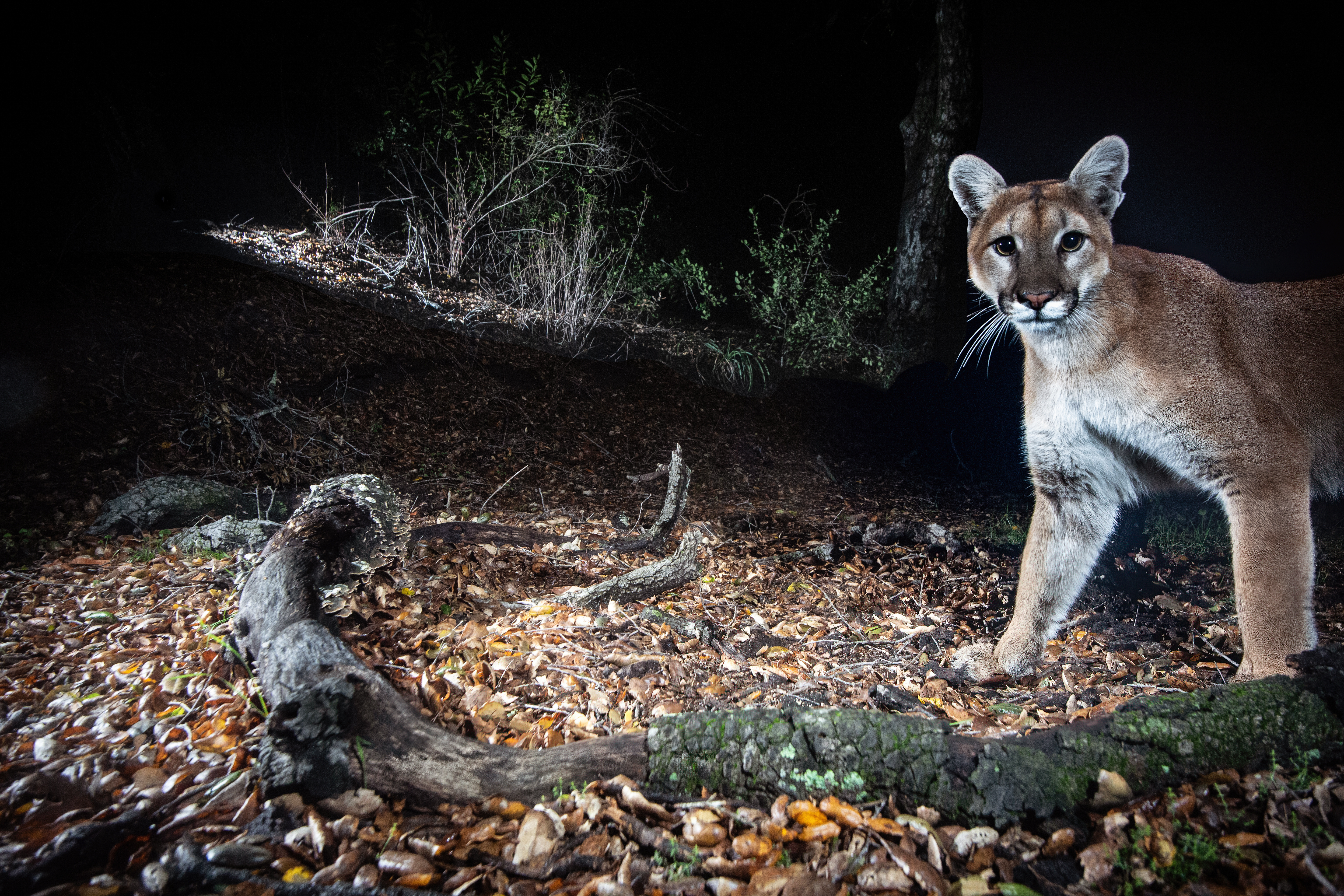
Amazing capture by Jeff Wirth using a DSLR. Wirth graciously consented to let me use some of his photos in Ghostwalker: Tracking a Mountain Lion’s Soul through Science and Story

When I first started using trail cameras their quality was very poor, but I was mainly interested in who was visiting the nearby forest. I caught grizzly and black bears on the animal trails, along with deer, coyotes, and wolves. I was anxious to catch martens who don’t follow trails. To that end I built a box trappers use, baited it, and put a camera on it (of course I didn’t put a trap inside!). Bobcats also don’t follow trails very much and since I do have bobcat trapping in my area in winter, the animals were rare on the landscape. I hung shiny objects to attract the cats with a camera positioned on it. Still, I almost never captured a photo of a bobcat.

After two years of camera trapping, I had several epiphanies that changed the course my experiments. First, after watching trapping in my area, I became aware that my baiting was contributing to these animals becoming less wary of actual kill traps. Therefore I stopped all baiting and scenting. But the biggest revelation was how to reliably capture animals on camera.

Elk on frozen river at a crossing point. I could see the crossing using track I.D.

I had been lucky to capture several mountain lions, and found lion tracks in different areas. That piqued my interest so I attended a class on mountain lions by researcher Toni Ruth in Yellowstone. During that class I watched a video of wildlife on a mountain lion scrape site. I knew about scrapes but had never seen one nor did I know how to find them. A scrape is made by a male lion with his back feet, usually urinated on, to mark territory. Lion scrapes apparently are big attractants for all sorts of wildlife. Once I learned where to find scrapes, I sought these out and placed cameras on them. Scrapes draw almost all the prey and predators in an ecosystem. By continuing to use these same locations for over 15 years, I’ve captured amazing photos, but the real gold here is monitoring sites for so long that you get a read on the ebb and flow of wildlife activity.

(ABOVE VIDEO OF WOLVES HAD CAMERA PLACED ON A TRAIL HEAVY WITH SCRAPE SITES)

A friend who is a feline researcher told me keeping cameras at the same location for many years provides a good indication of the health of the local mountain lion population. Houndsmen and researchers use dogs to find lions, which gives a good clue to the waxing and waning of lions in a designated area. Would monitoring scrape sites alone give me a general idea of lion health?

Lions are impossible to identify. Puma concolor, their latin name, means cat of one color. Unless they have scars such as nicks in an ear, etc. they look alike. And in a hunted area, males usually don’t last long; but another young male will come to fill the void. I did get an indication that I could monitor lions this way a few years ago. In 2015-2016 we had record snows. Our mule deer population crashed. By early spring when the first grass emerged, the landscape was littered with dead deer. Predator populations lag behind prey drop, but it wasn’t long before I noticed I wasn’t catching females with kittens on my camera. Without sufficient prey, females will have smaller litters or none at all. 2017 was the last photo of a mom with young kittens. Although I did catch young dispersers, there seemed to be a dearth of females in my area until 2021. coinciding with a rebound in the mule deer population.

Additionally, the same thing was going on with cottontails and bobcats. Bobcats also visit lion scrape sites, and male bobcats like to scrape over lion scrapes. Rabbits go through seven year cycles and sometime around 2014 I noticed fewer and fewer rabbit tracks in my study area. I also stopped picking up bobcats on my cameras. The rabbit population had crashed and with it bobcat food. Then around 2020 a rabbit took up residence at one of my camera sites. Within a year, more rabbits at other sites, and soon there were rabbits everywhere. The bobcat population rebounded. Now I was catching bobcats with kittens frequently. An indication of how keeping cameras in situ for an extended period can tell the story of the land’s health.

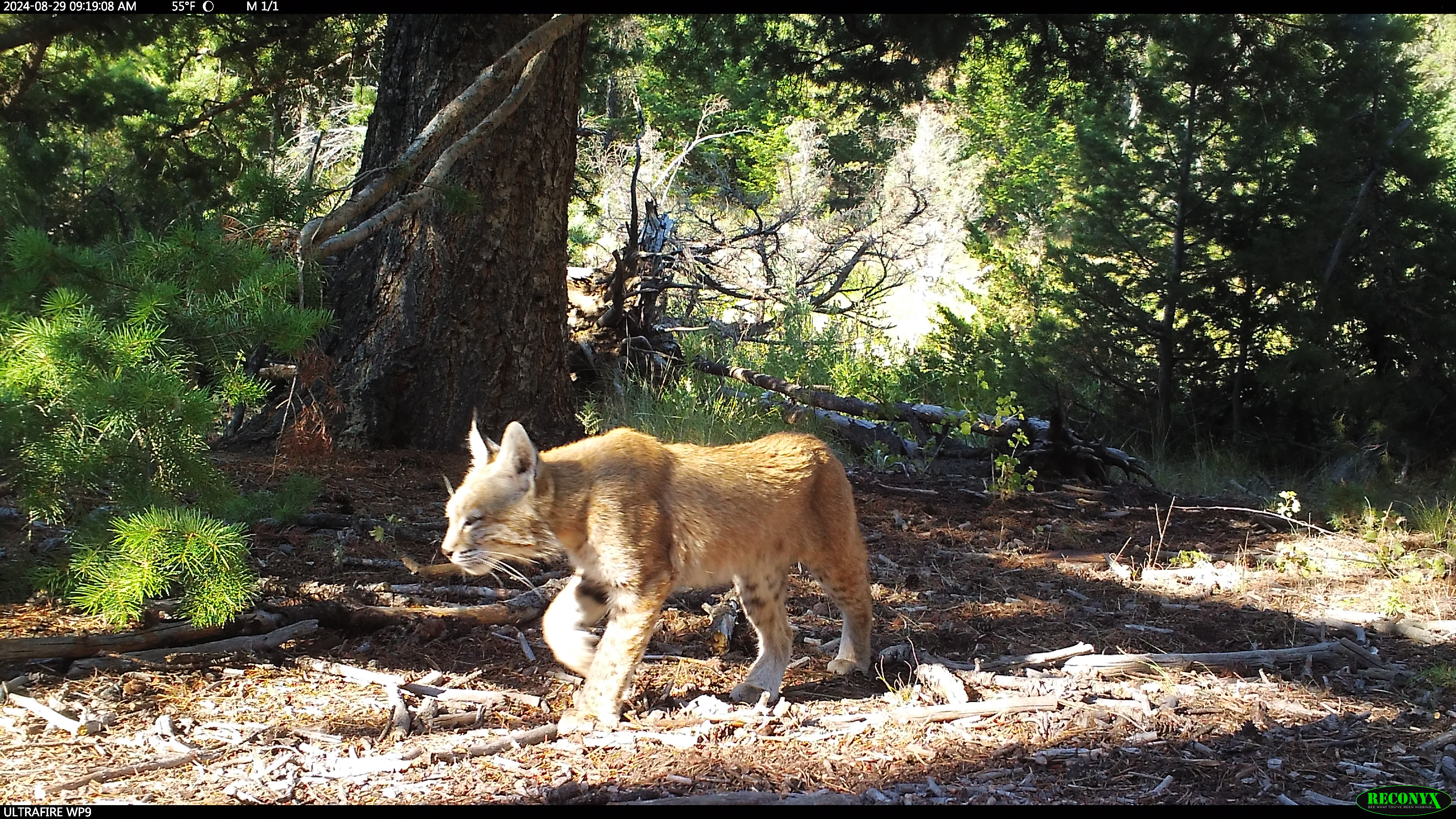
Bobcat visits lion scrape site

In summary, there are many ways to use trail cams. Research, exploration, pleasure. For me it’s become a tool not just to see who is visiting, but to monitor over time the swings of the ecosystem: how weather patterns, food availability, habitat health, and natural cycles affect the wildlife in my study area.

For more videos from my trail camera captures, see my YouTube site

What’s the Story? Cougars, Wolves, Grizzlies

There’s one place in my area where I’ve seen Glacier Lilies, but as soon as the melt starts the access road usually closes due to flooding. Since the weather has been cool, and next week predictions say it will be in the 70s, I decided to check out the spot to see if the lilies are up yet before the road closure. It’s a fairly remote less traveled trail and this time of year grizzlies are down low foraging while wolves are denning. The trail begins at the road’s end with a stream crossing, winds through a burnt valley before turning up a small drainage where the trail heads to a ridgeline pass.

Immediately grizzly tracks began faintly appearing on the dry ground.

When I turned into the forest drainage, the wet ground revealed two grizzly bears. That could only mean a mom and cub. The grizzly cub footprint appeared to be at least a one year old. I became more alert, unlocked my bear spray.

Smaller bear on the left

The area I’d seen the lilies years before was about a mile up the trail near the pass. Bear tracks followed the trail plus revealed a 2 day old scat that said they’d been eating grass mixed with fur.

Closing in on my lily hillside, I found a clear wolf print in the mud. I hadn’t seen wolf tracks earlier on the trail.

wolf track

About 150 yards before the lily area , I came upon what these bears (and wolves) were doing here. An elk kill right by the trail, completely consumed but about a week or less old. Clearly a cougar kill. I searched around the site a bit. No skull, only one leg left plus the spine and pelvis.

What a cougar kill looks like. Rumen pulled out to the left. The fur in a neat circular pattern cut off with the cat’s incisors

What did the tracks and the kill sign say about the story here? Of course, the only thing I can be certain of was this elk was killed by a cougar. But let’s think about what might have happened. Wolves and bears (grizzlies and black) push lions off their kill. With only one leg, and few fresh wolf prints, I imagined the wolves kicked the lion off the kill site, and hauled the other legs off, maybe to their den site over the ridge. The wolves probably consumed most of the elk before the grizzly mom and cub came along (their tracks fairly fresh) to finish off what was left. The fresh wolf track I found was probably a wolf returning to check on any left-overs, and maybe even encountering the grizzlies.

Unfortunately, I didn’t find my Glacier Lilies. Maybe just too early or maybe those bears ate them. But here is some other cool bear sign I found along the trail.

Bears use their claws to strip bark from a tree, then feed on the sapwood by scraping it from the heartwood with their teeth. 

To learn more about mountain lions and their interactions with wolves and bears, read my upcoming book Ghostwalker: Tracking a Mountain Lion’s Soul through Science and Story out this fall University of Nebraska Bison Books. To pre-order a copy and receive a 40% discount, go to this link and use the code 6AF24 

Mountain Lion News

I recently attended a presentation by Wyoming Game and Fish large carnivore biologist Luke Ellsbury on, what else, large carnivores. I was mostly interested to know any results from Justin Clapp’s study on CWD and mountain lions. The field research is done but the analysis hasn’t been published yet. Luke confirmed that mountain lions were definitely targeting CWD deer and elk.

Another study measured the amount of prions in scat from mountain lions intentionally fed CWD infested deer meat. On the first defecation, the meat contained only 3% prions. And no detection on defecations after that. Luke said with these results in hand, the Service is definitely looking at adjusting mountain lion quotas in areas where they want to target reducing CWD in deer and elk. They are also planning on repeating this study with other predators—wolves and bears—and are presently testing CWD meat on bobcats in the field.

The study also corroborated findings from Elbroch’s Jackson study that as lions age they tend to prey switch to elk more heavily. That means if WGF wants to reduce elk CWD through mountain lion predation, reducing hunt quotas will allow more older mountain lions on the landscape. The critical age for prey switching seems to be five years old.

In other more personal mountain lion news, Luke confirmed for me that my one-eyed female lion was not harvested this year. In my area which is the northern end of Hunt Area 19, only one female was harvested this winter. I showed Luke the last video I captured of one of One-Eyed cubs. I thought he looked pretty rough. Luke agreed he didn’t look in good shape, confirming to me that most likely the mother and other cub are dead. And this cub, probably a male because he was always the bigger of the two cubs, isn’t likely to survive either. Cubs under one year old that lose their mother have a very low survival rate as they haven’t developed their hunting skills yet.

Lone Kitten of One-Eye captured early March 2024

Luke told me that this winter one lion was killed by wolves in my area, and that he had a call about another lion recently killed by wolves. Lions in my area aren’t collared, so these would be lions that hunters or hikers encounter and report. We’ve also had one report of a mountain lion dying of bird flu in the North Fork area of Cody.

Happier times. One-eye with her family in December 2023

I’ll continue to check cameras and hope to see One-Eye. I’ve followed her since she arrived in my area in 2021 as a young lion. She was probably born with her blindness. This was her second litter and I thought she was going to be really successful. The last time I saw the family together, those cubs looked happy and healthy at probably around seven or eight months old. Life is definitely rough out in the wild.

To pre-order the expanded edition of Ghostwalker out this fall, and to be receive a 40% discount, go to https://www.nebraskapress.unl.edu/bison-books/9781496238474/ and enter code 6AF24

2021 This is One-Eye caterwauling when she first arrived into my valley as a young lion looking for a mate

New Expanded Edition of Ghostwalker

Hi Friends,

I’m very excited that University of Nebraska Bison Books picked up an expanded edition of Ghostwalker to be released Fall 2024. A preview of what’s new:

  • A new chapter exploring mountain lion management for desert bighorn sheep reintroductions in the southwest US. A highly complex and controversial issue, we look at and compare the approach of three states: New Mexico, Arizona, and California. This issue has never been addressed in depth. Mountain lions are dying unnecessarily through egregious state game agency directives.
  • What’s with California these days? The California chapter, completely revised, goes in depth on their problems with genetic bottlenecks in Southern California and coastal areas as far north as Santa Cruz. We’ll explore the findings of the Sonoma County study by Quinton Martins, the recent results of CDFW Justin Dellinger’s analysis, and the enormous task of building corridors and passageways for lions to continue to exist.
  • What’s new in the conservation scene for wildlife? I speak with Kevin Bixby about his new organization Wildlife for All. Panthera’s Veronica Yovovich tells me about their study on non-lethal methods for livestock protections.
  • New stories and updates throughout the book.
  • 23 new interviews with researchers in addition to the 1st edition interviews
  • 22 new photos
To pre-order and receive a 40% discount, use this link and enter code 6AF24

For those of you who haven’t read the first edition, I did several years of research and interviews with prominent biologists working actively with mountain lion research today. The three studies in Yellowstone National Park, a 16 year study in Grand Teton National Park, revealed the secret lives of mountain lions, their interactions with wolves, bears and other wildlife. A full chapter on California, the only state where mountain lions are fully protected from hunting; a look at mountain lions from the angle of trackers; what houndsmen who have worked with biologists have to say; along with how lions care for their young, how they find each other to mate, what a scrape is and more.

I’ll be posting short clips of many of the interviews I did with researchers in the coming months. First interview will be posted here and on YouTube in a few weeks with Sean Murphy, a biologist who worked for New Mexico Game and Fish. He’ll talk about the indiscriminate and ongoing culling of mountain lions by the department in order to transplant desert bighorns.

To pre-order and receive a 40% discount, use this link and enter code 6AF24