


Last evening I took a short bike ride and noticed two WG&F biologists walking up the hill from the swampy area of the creek. They said they were setting up a bat net and invited me to watch them capture between 9 and 11:30.
By 9pm it was getting dark. I grabbed my headlamp and headed down the road. They were already beginning to catch bats in the nets.
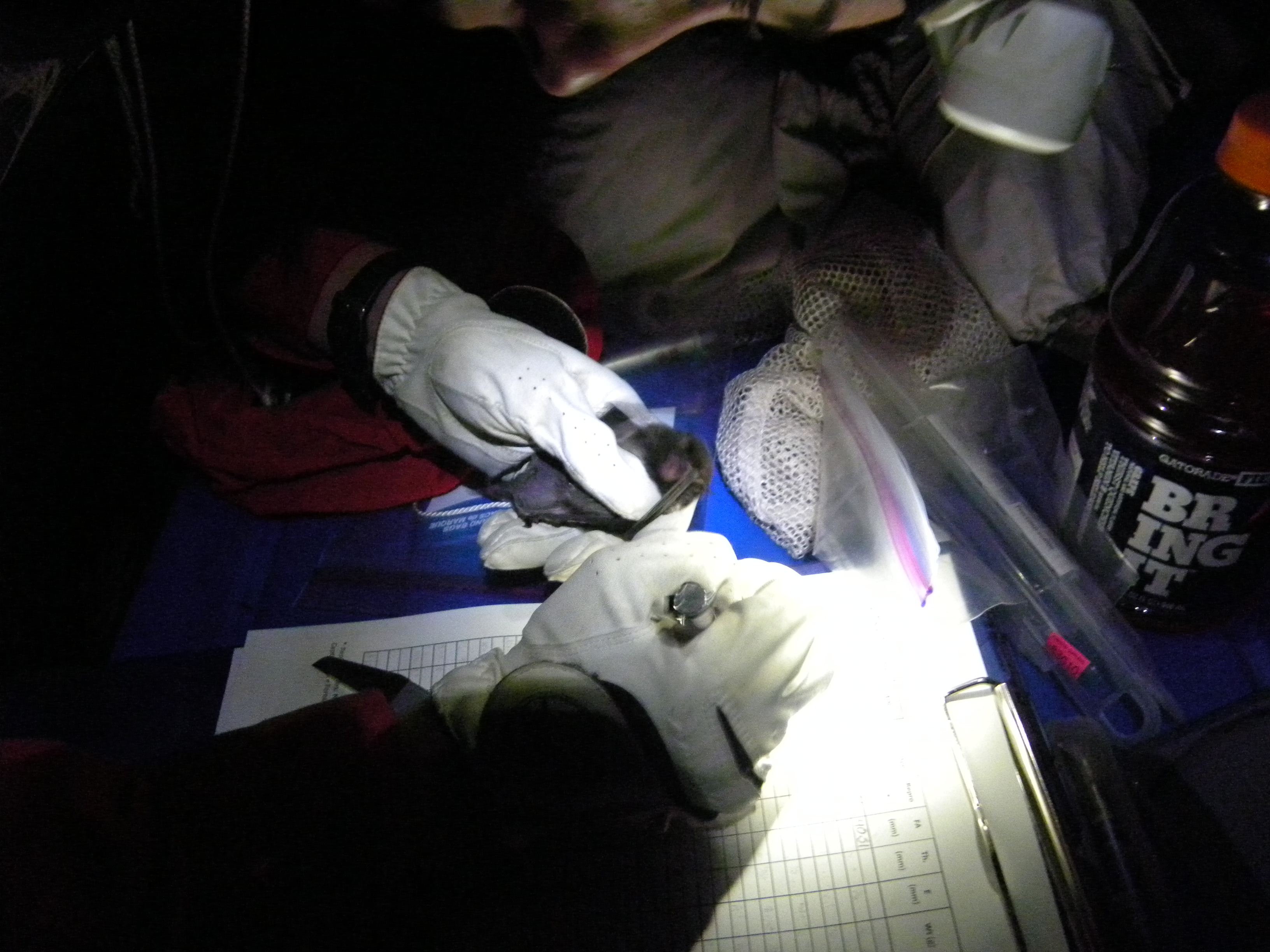
The net set-up was in an ‘L’ shape, with fine nets about 10′ high. I spent the evening watching and helping a bit while they measured forearm lengths, ear lengths, weight, sex (I learned how to sex a bat!), determining juvenile or adult. They said it was one of the most productive evenings they’d had, with their count at 27 by the time I left at 11:30. Included in their equipment was a sonar detector, which allowed us to hear the bats at frequencies which aren’t auditory to the human ear.
Three kinds of bats were caught, and released: Brown, Hoary, and Silver-haired. WG&F is in their 2nd year of a four year study. The Brown is a Wyoming resident, but the Hoary and Silver-haired are migrants (What Wyomingites might call ‘snow birds’ in reference to people who live here but leave for the winter). I asked where they went and was told its not known.
It was such an awesome night, with the bats flying around, getting to see them up close (they are beautiful creatures), the Perseid meteor shower and clear skies, and finally around 11:30 an orange-yellow moon rising in the east. I couldn’t ask for more.

Brown bat

Brown bat's wingH
Here you can see the bat’s fingers, with the thumb at the very end. The thumb length was measured as well as the forearm.
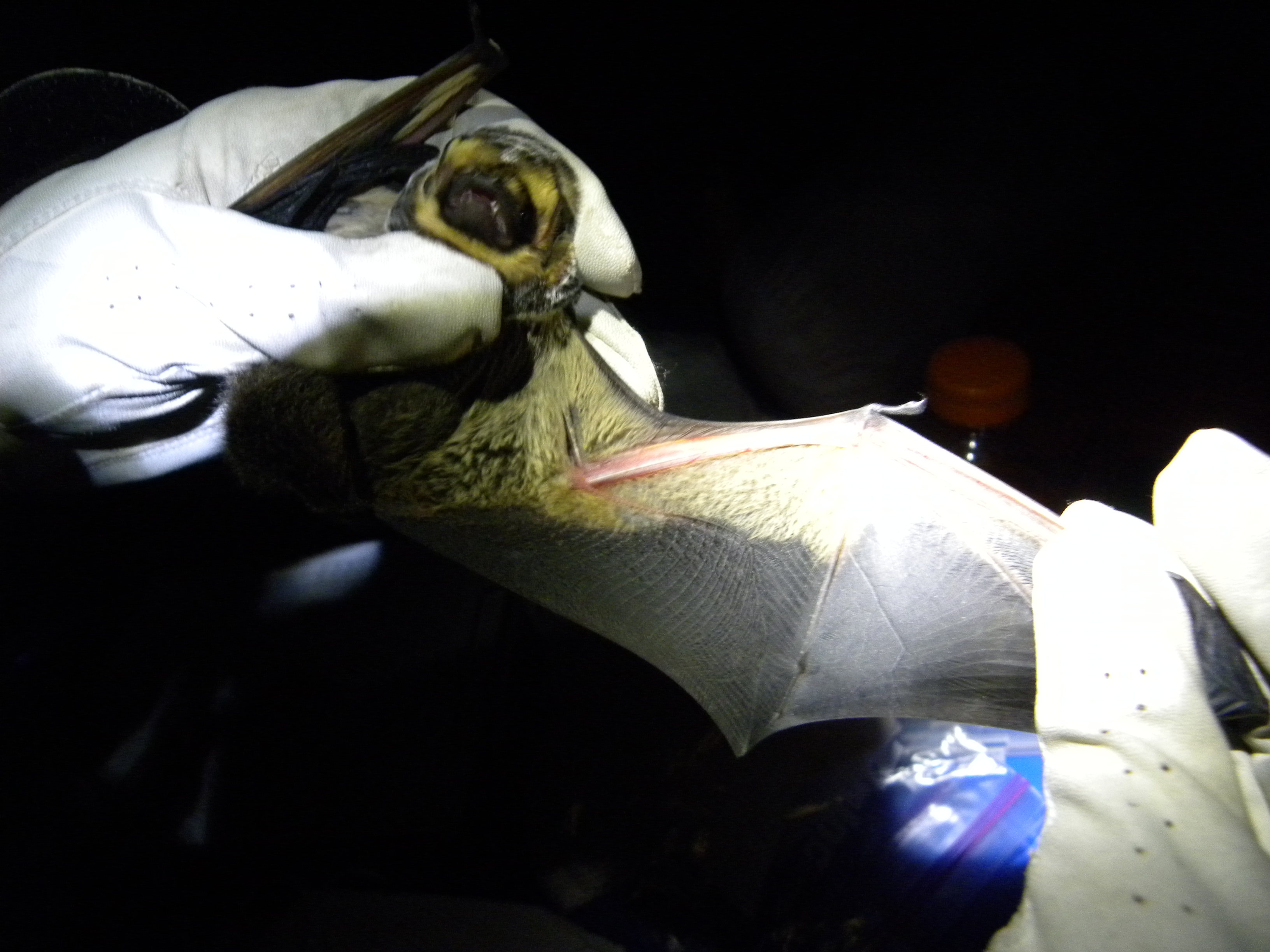
Hoary bat with wing fur and cool face
Hoary bats are big bats and low fliers. They are moth specialists. They were fierce little guys when caught, with astounding faces. Their wings have hair on them.
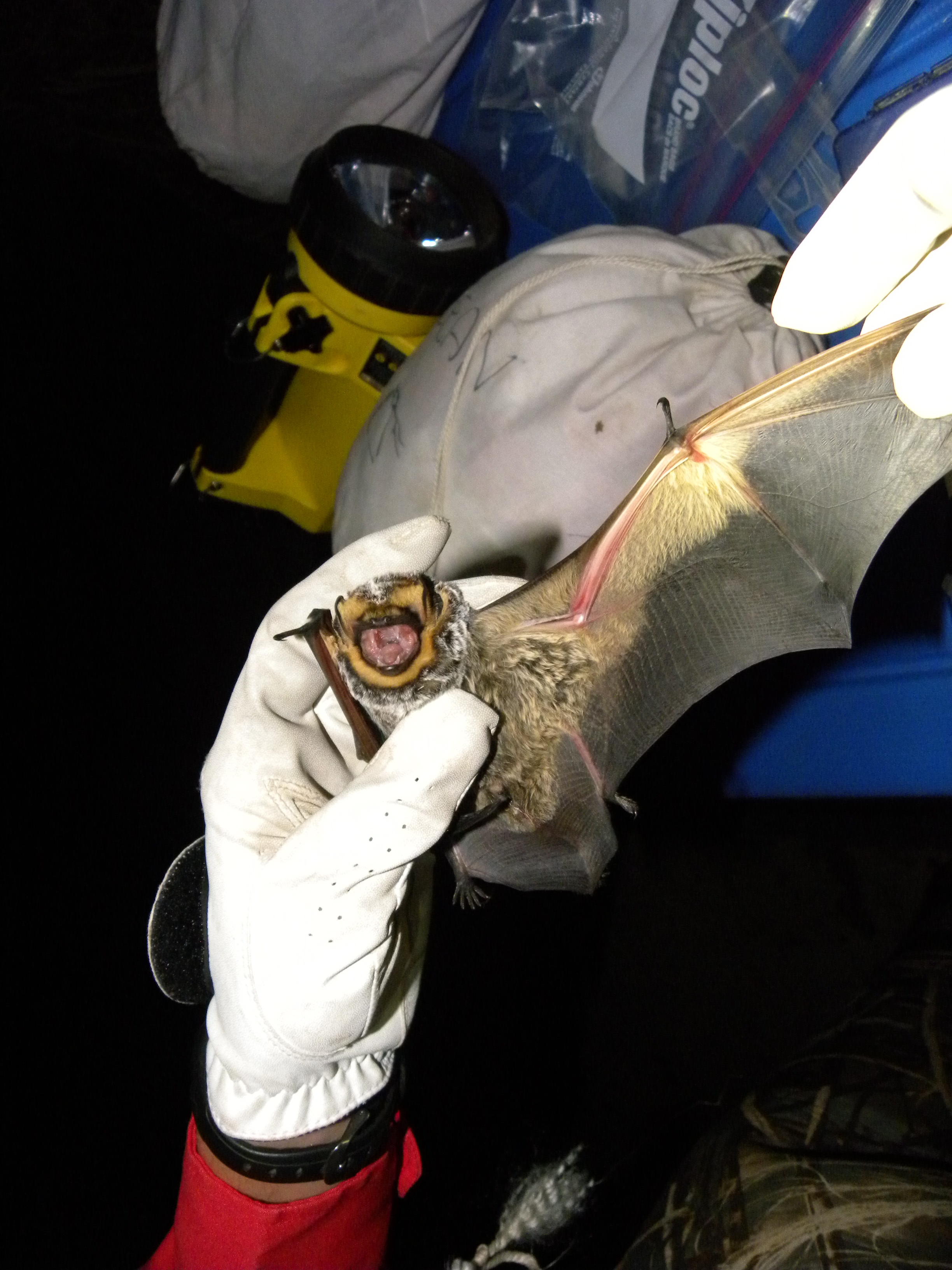
Hoary, another pose
Bats of different species emit sonar at different frequencies. The frequency has to do with what their specialty food is they are catching.
These silver-haired bats were fairly calm and gentle, and small.

Silver haired bat
Bats have a ‘hook’ around the outside of their ear. The mammalogist told me that its function is unknown.
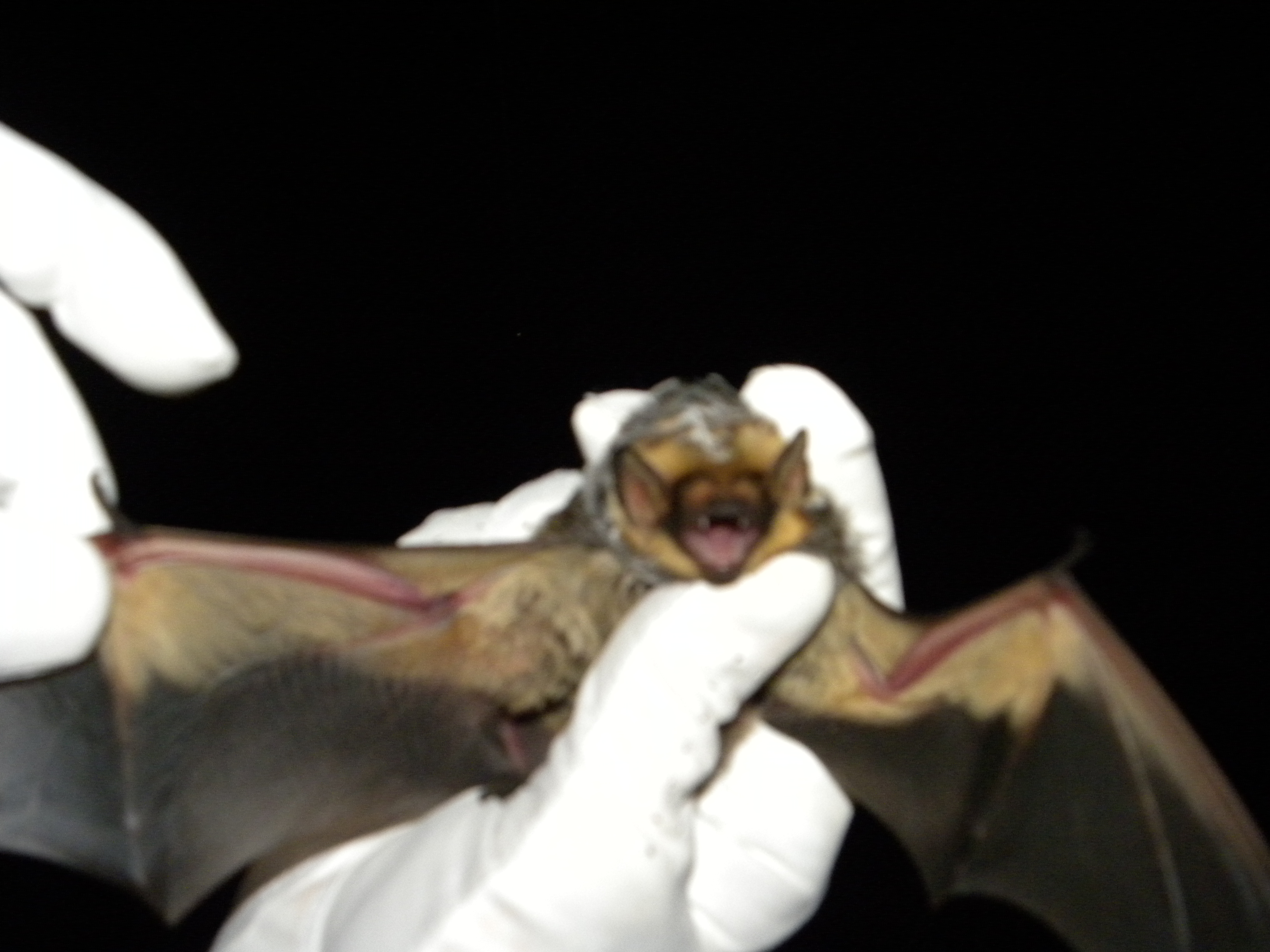
Hoary bat. I love this bat. Hoaries are the coolest.
Most of the bats we caught were males. Apparently that’s not unusual, with the females flying in a different location or tending the young.

Measuring a brown bat's thumb!
Brown bats are generalists. A small percentage do carry rabies, while the Hoaries do not carry rabies.
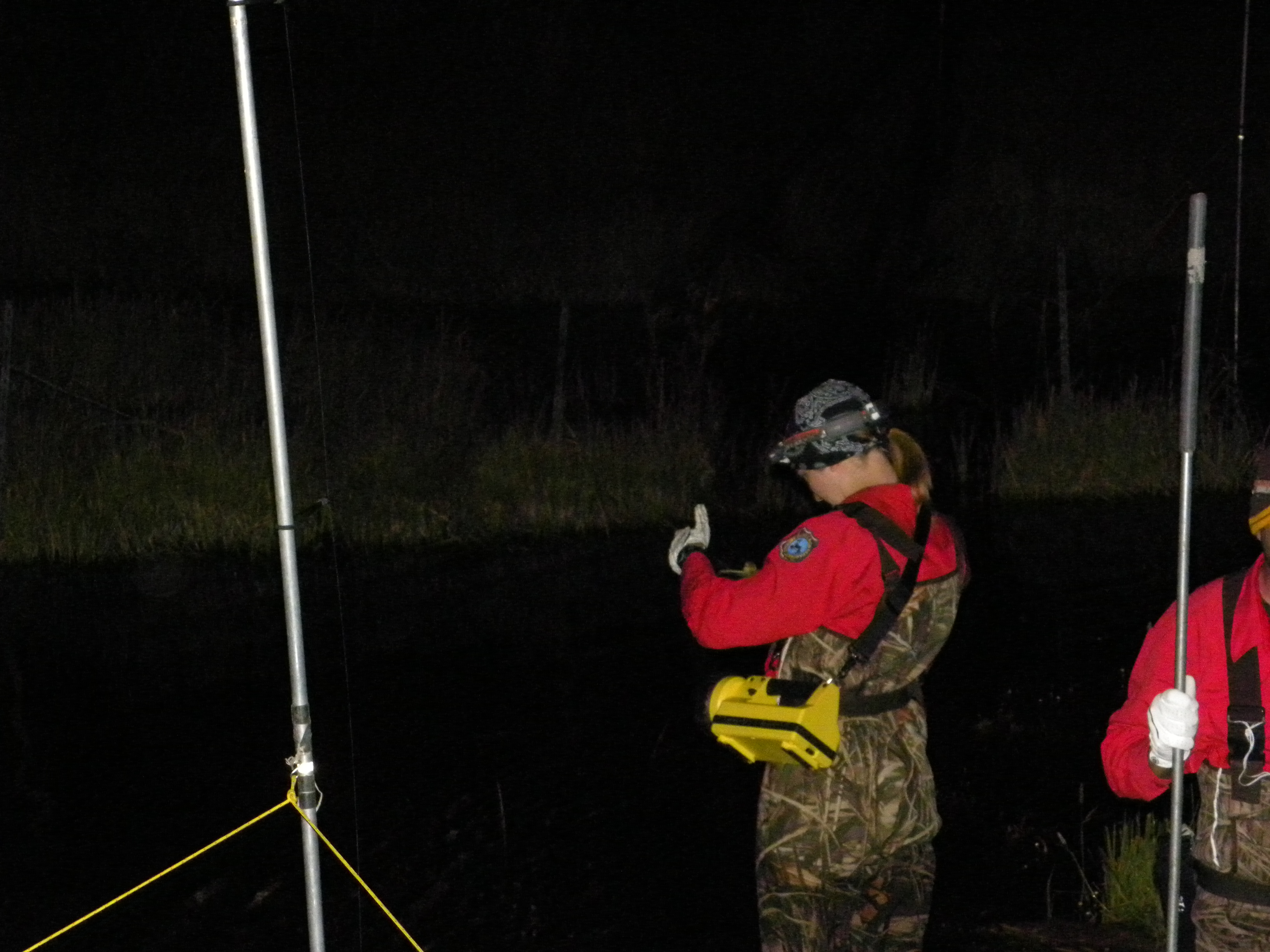
The net, releasing a bat.
If they set up another night in the same area, hardy any bats would come. The bats learn quickly how to avoid the nets. They are smart!
Filed under: Bats | Tagged: Bats | 5 Comments »
 Leslie Patten Books: Wild Places, Sacred Spaces