


Today I took a hike along a high reef, or what they call here in NW Wyoming a “reef”, probably because at one time this limestone plateau was under one of the oceans that covered this area. It’s a flat mesa with cliffs to one side and forested ridges on the other. The soil as you can image is very thin, but allows a sparse forest of lodgepole pines and open meadows. It’s a great place to see wildflowers right now, especially before the cattle come in to free range the area.

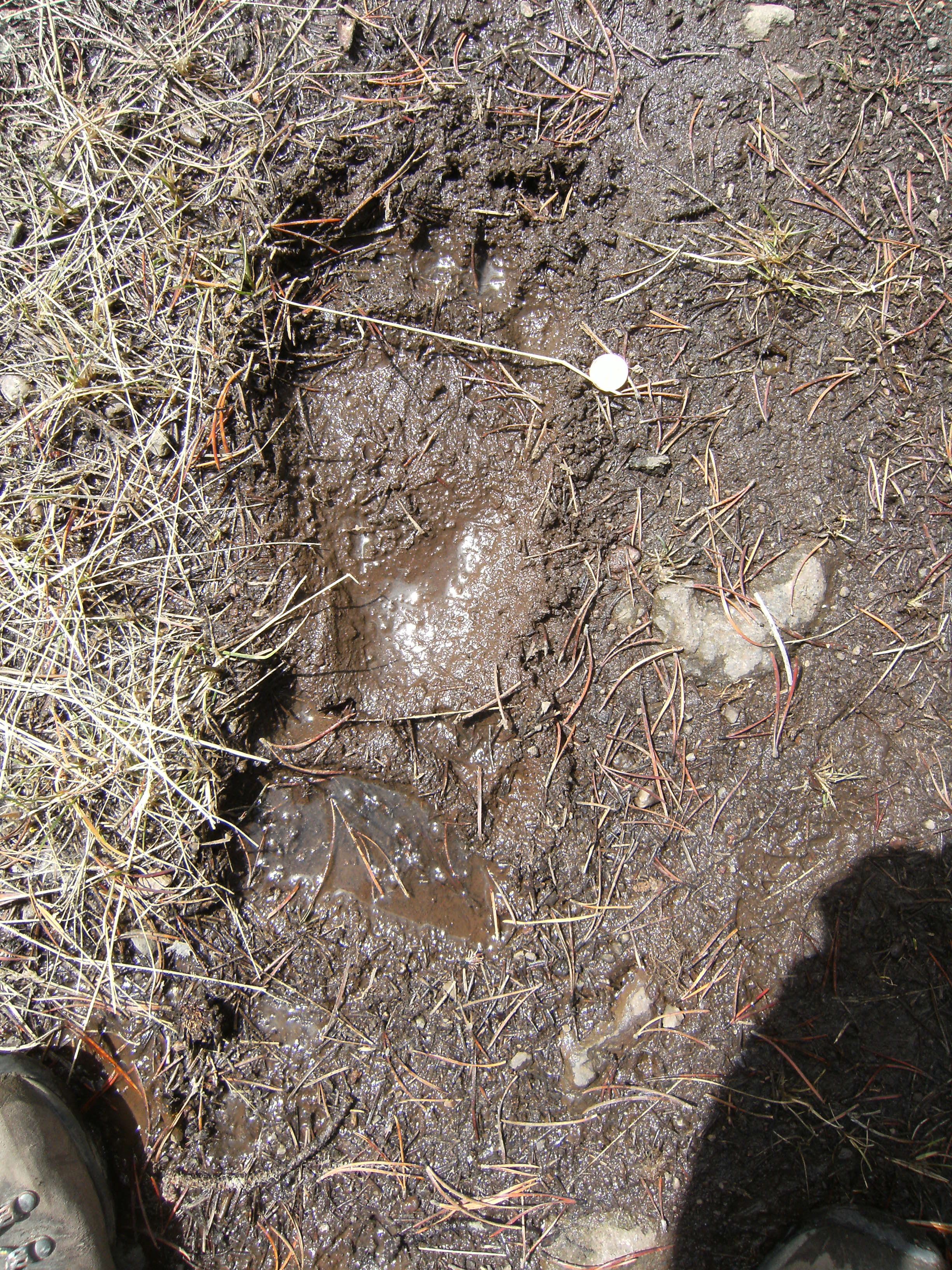
A known place for grizzlies in the spring and fall, Wyoming Game and Fish even use this area every 4 or 5 years to set traps to collar the bears. The hike begins on a closed dirt road (not open for vehicles until mid-July to protect the bears). Elk and grizzly tracks are easily visible.
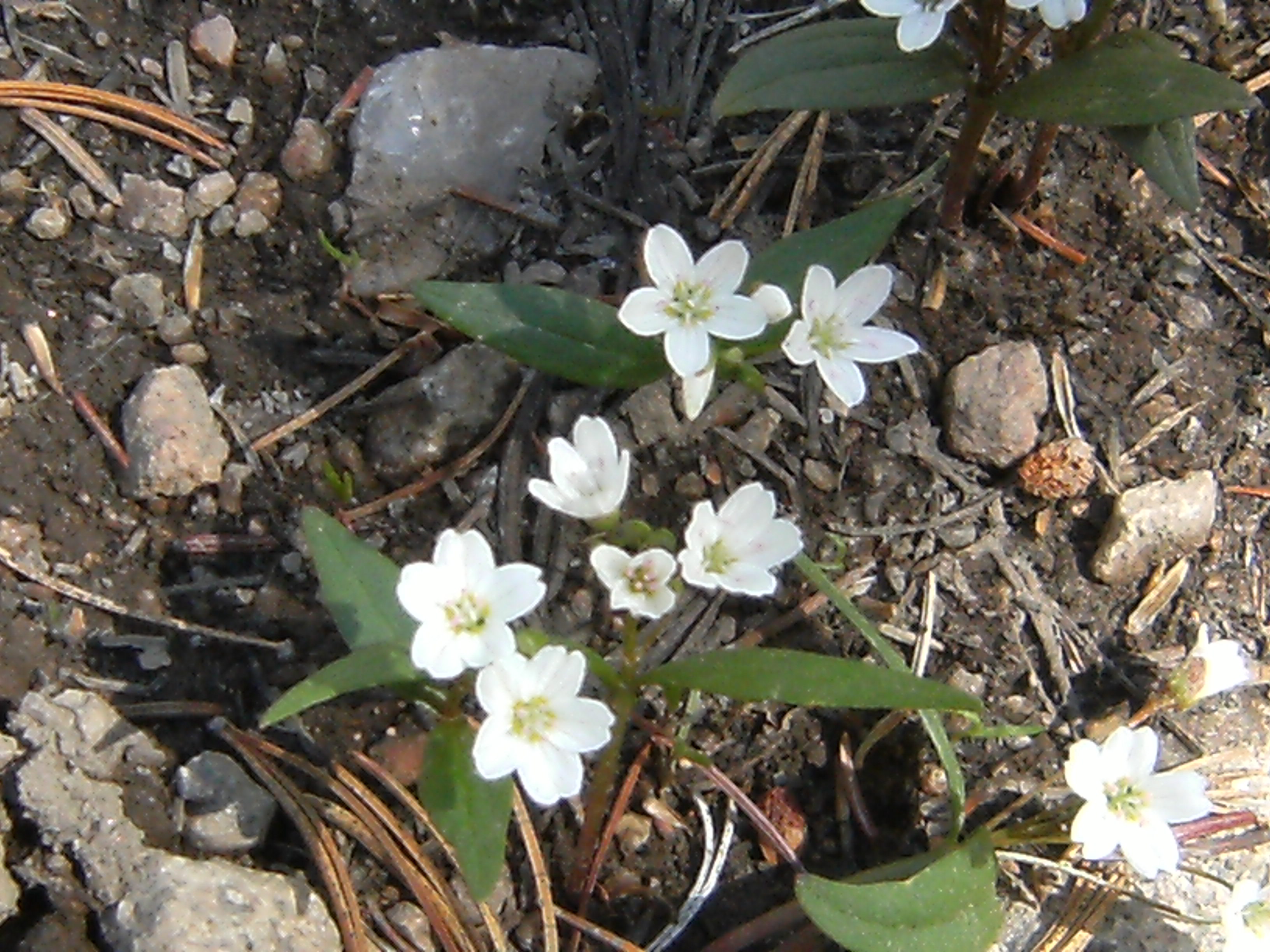
Along the way I’m tasting the tips of young fireweed. Great crunchy texture, mild flavor until the very last then there’s a bitterness. Emerging Indian Paintbrush is also edible but pretty bitter all the way through. Vast carpets of my favorite, Spring Beauties, make a great salad addition.
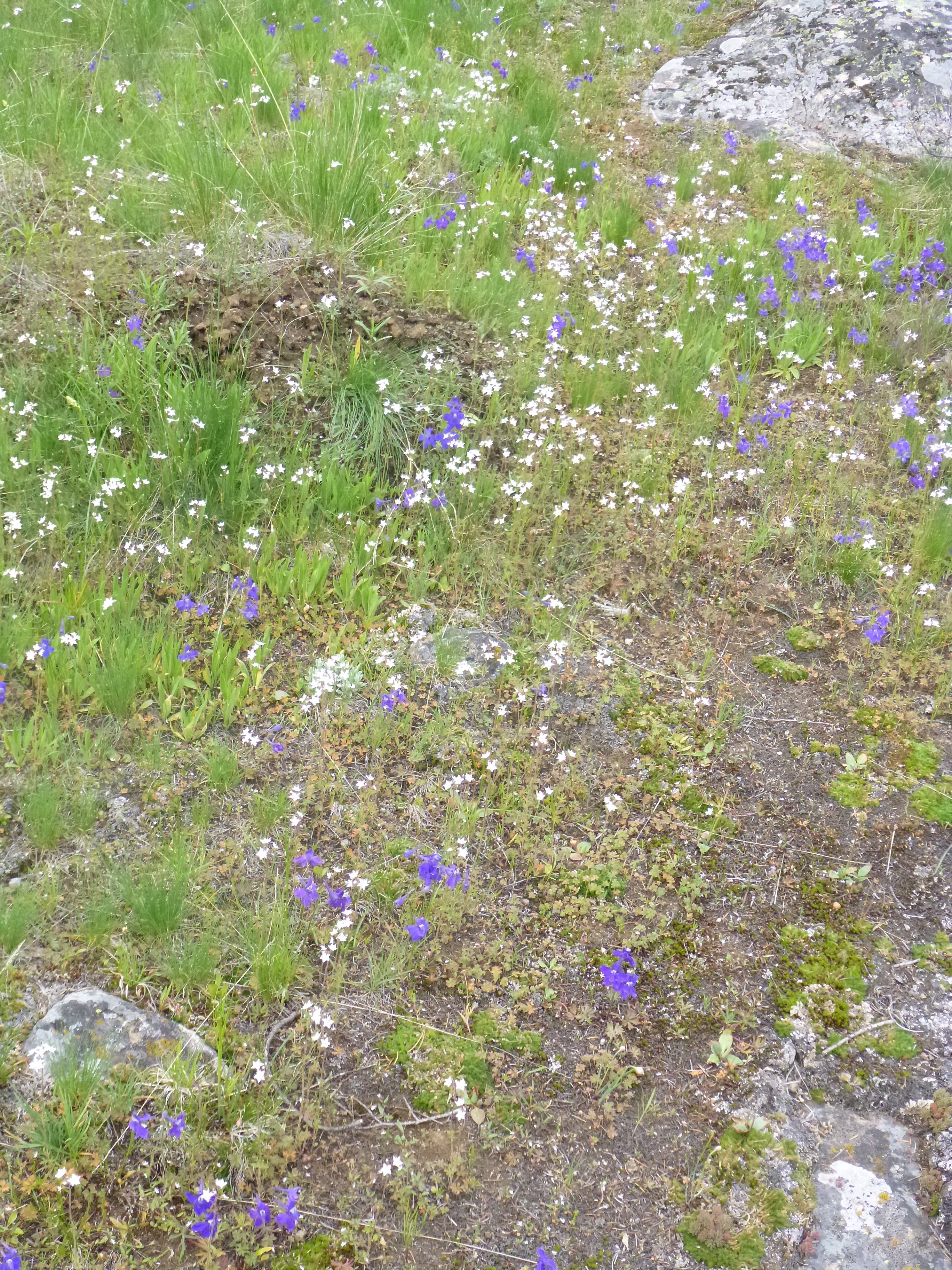
We’ve had a cool and rainy May, inhibiting the emergence of a lot of spring flowers. But with the recent warm days, it seems everything is out all at once. Shooting stars, usually almost gone by now, are everywhere. Their flowers are delicious along with mountain bluebell flowers, both in the borage family and have that similar taste. White flowered onions and biscuit root (lomatian) are out. Larkspur, not edible but poisonous, is emerging. Larkspur is fatal to cattle. I’ve seen some years dozens of cattle die from eating larkspur on the national forests.
Some Pasque flowers (not edible), usually done by now, are still around, some even just opening. Even Phlox is still blooming. And my favorite shrub, Buffalo berries, are just leafing out. Buffalo berries are dioecious, meaning male and female reproductive structures are on separate individual plants, not a common thing in the plant world. I also spy some American Bistort just starting to bloom. Although I’ve never tried them, their roots can be dug and eaten raw. Arrowleaf balsamroot (supposedly starvation food for Natives), strawberries and fritallaria are all blooming. Non-edibles like woodland star are blooming and elephant’s head has sent its spike up, ready to open.



While I forage, a bear has been busy. I’m trying to figure out what’s going on here. I think mama grizzly is clawing the bark on this tree to get at the sweet spring sap that’s flowing while her cub climbs up the tree. I’d normally say a black bear as adult grizzlies don’t climb, but this is a grizzly area and on the way up I ran into a black bear archery hunter with four llamas. He’s been camping on the reef for a few nights. He saw several grizzlies but no black bears. Black bears don’t hang around areas where there’s a lot of grizzlies.


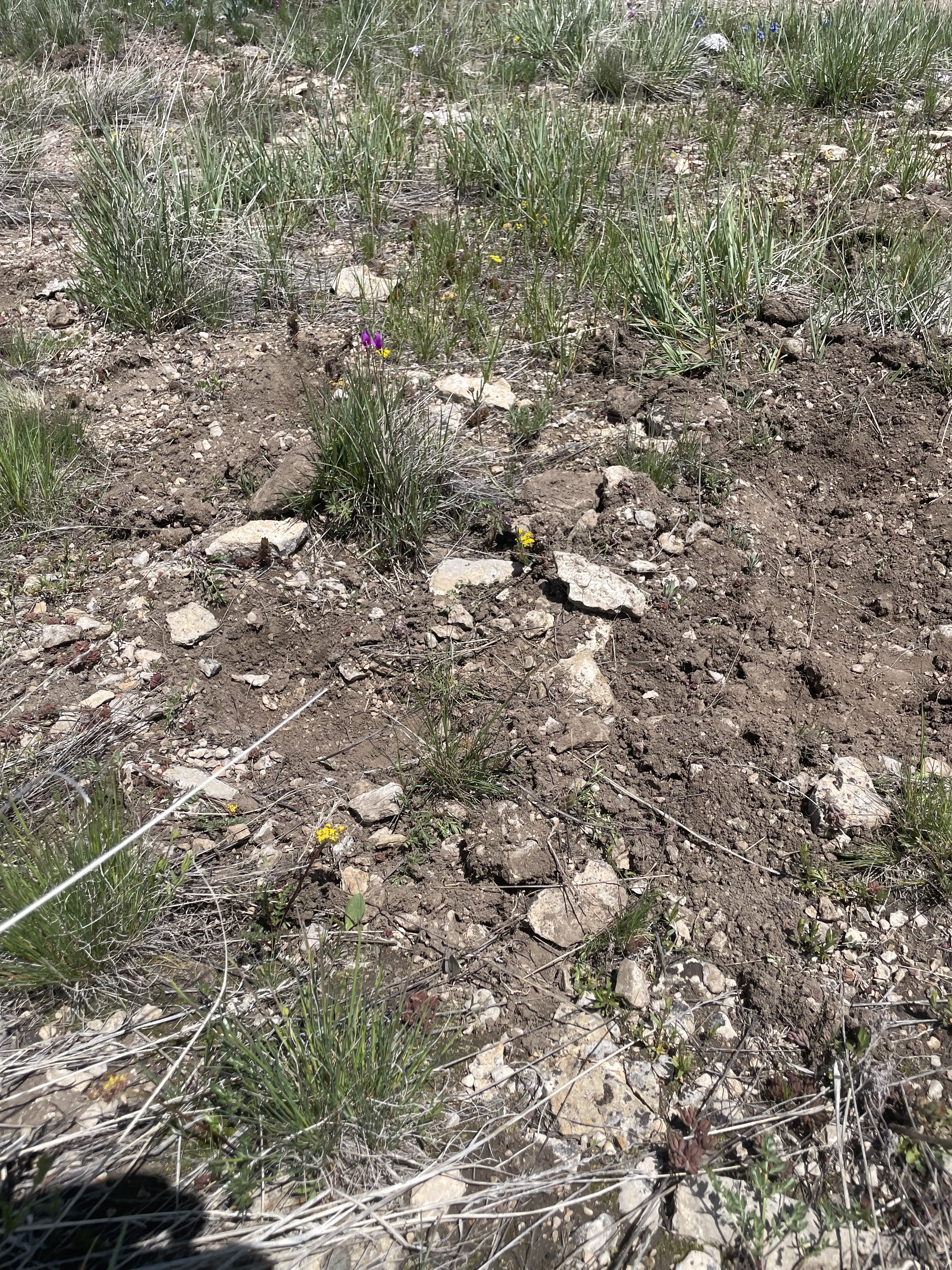
On the plateau, a bear has been busy foraging for biscuit roots. I uses my knife to dig one up. Luckily the soil is soft since its been raining as these roots grow in tight dry soils. I have to dig pretty carefully and deep.

You can see how deep these bears have to dig in order to extract the whole root. Of course, with their long claws, that’s easy for them. Bears will till up an area with biscuit roots, a favorite treat. But they always leave some. That ensures more will come back next year.

So while we humans are foraging, bears are too. In past times, humans watched bears to see what foods were good to eat. 80% of a bear’s diet is edible for humans, The other 20% are grasses, which we cannot digest. Co-existence isn’t hard. We just have to take a cue from the bears and always make sure to leave some plants for next year’s harvest.
Filed under: New ideas | Tagged: bear-diet, Bears, edible-wildflowers, flowers, grizzlies, hiking, nature | Leave a comment »
 Leslie Patten Books: Wild Places, Sacred Spaces