• MY BOOKS ON WILDLIFE, GARDENING AND MORE

  • Coming Fall 2024. Pre-order and use code 6AF24 for a 40% discount

  • The Wild Excellence

  • Award winning ebook on DG Primer

Hiking Northwest Wyoming – Dream Lake Wind River Mountains

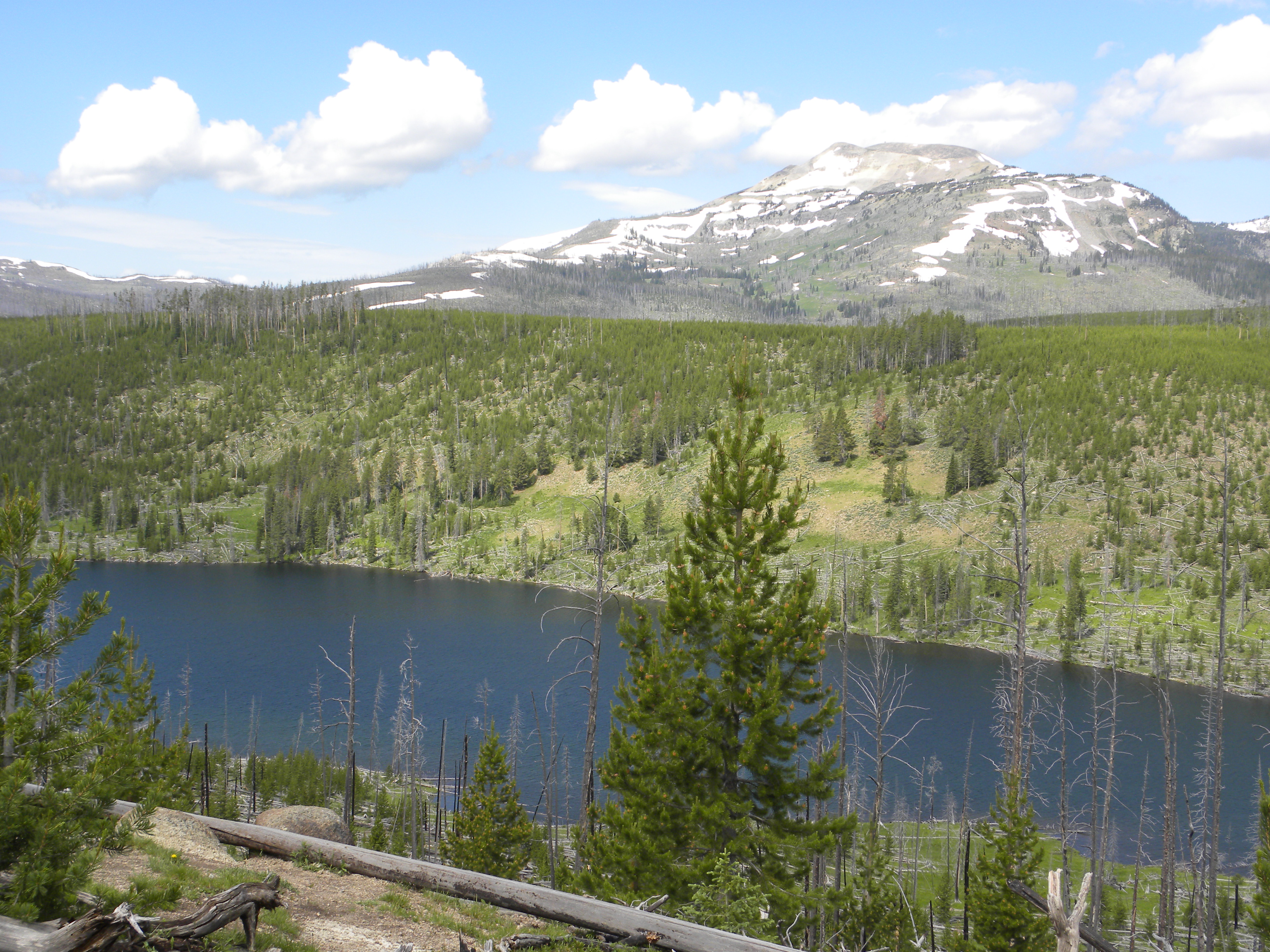
IN 2012 I hiked to Dream Lake. Dream Lake is an access point to the central Continental Divide in the Wind Rivers. I planned a 7 day backpack loop with a side trip up to Europe Canyon. The Europe Canyon trail access wasn’t marked. Instead a cryptic sign said “trail abandoned” and there was no map indication of where to turn. But using some map navigating, this was the correct route to the lake.

Cryptic Sign to Europe Lake. “Trail Abandoned. Not Maintained”

Taking the abandoned trail, I arrived at Europe Lake, a beautiful gem that sits at the base of the crest of the Continental Divide. A fire on the east side made for a smokey view. Two backpackers from London were camped there. Experienced hikers, they’d cross-countried to the lake. They shared some stories with me of their travels. Because in England they received six weeks work vacation every summer, they had some great adventures. One story they relayed stood out of when they’d rescued inexperienced and unprepared hikers from severe altitude sickness in the Himalayas.

Two young men were hiking with a woman. All three were huddling in a rest cabin at over 15,000 feet. The woman had severe altitude sickness, yet the fellows were planning on continuing without her. This woman would die if she couldn’t get to a lower elevation immediately. These British backpackers changed their itinerary and assisted her down the mountain for medical care.

British hikers who rescued a woman in the Himalayas

That night I returned towards the main trail and camped among the rocks near timberline. I awakened in the middle of the night to a strange loud animal sound which I couldn’t place. Come morning I checked the tracks on the trail and felt it must have been a single domestic sheep looking for the rest of its herd. Domestic sheep have since been removed from the Winds Wilderness areas.

On the way to Europe Canyon

On my final evening I camped with a group of retired Air Force. They’d hiked along the Divide from the south end, probably starting at Sweetwater Gap entrance. One fellow had joined the crew from Ohio and didn’t take the time to acclimate. He had terrible altitude sickness, throwing up and splitting headaches. I suppose it ruined his trip. By the time I camped with them, he’d pretty much acclimated. He’s not the first person I’ve encountered in the Winds that had altitude sickness. Taking time to acclimate can be essential.

A lake not far from Dream Lake. Lone horseback rider

But the real story here is when I made it to the take-out where my car was waiting. We all hiked down together. As the Air Force guys were meeting their ride and I too was packing up, a backpacker who was loaded up with heavy gear came down the trail followed by a Labrador Retriever. That poor dog looked half crippled limping slowly all the way to the vehicle.

I asked this hiker where he’d come from. Most backpackers only do a few days and their dogs do just fine as long as their feet are protected when necessary.

“I’ve been out a month. It’s been fantastic. I’ve hike the entire Winds,” he answered. I asked how old his dog was. “Eleven”, he said. And when I told him his dog looked in very poor shape, he just replied “He’s fine.”

I felt angry. Eleven years is old for a Lab and that dog was not fine. He was suffering. His feet and joints hurt, and his owner was being completely insensitive to his dog’s needs, thinking only of himself.

There’s a few lessons here. People tend to be worried about grizzly bears in Northwest Wyoming. But they’re not the worry. Mosquitos, insufficient preparation, overdoing it yourself or to your pets are more to the point. Be safe and enjoy out there.

My dog and I at Europe Lake in the Wind River Mountains

Foraging with Bears

Today I took a hike along a high reef, or what they call here in NW Wyoming a “reef”, probably because at one time this limestone plateau was under one of the oceans that covered this area. It’s a flat mesa with cliffs to one side and forested ridges on the other. The soil as you can image is very thin, but allows a sparse forest of lodgepole pines and open meadows. It’s a great place to see wildflowers right now, especially before the cattle come in to free range the area.

A known place for grizzlies in the spring and fall, Wyoming Game and Fish even use this area every 4 or 5 years to set traps to collar the bears. The hike begins on a closed dirt road (not open for vehicles until mid-July to protect the bears). Elk and grizzly tracks are easily visible.

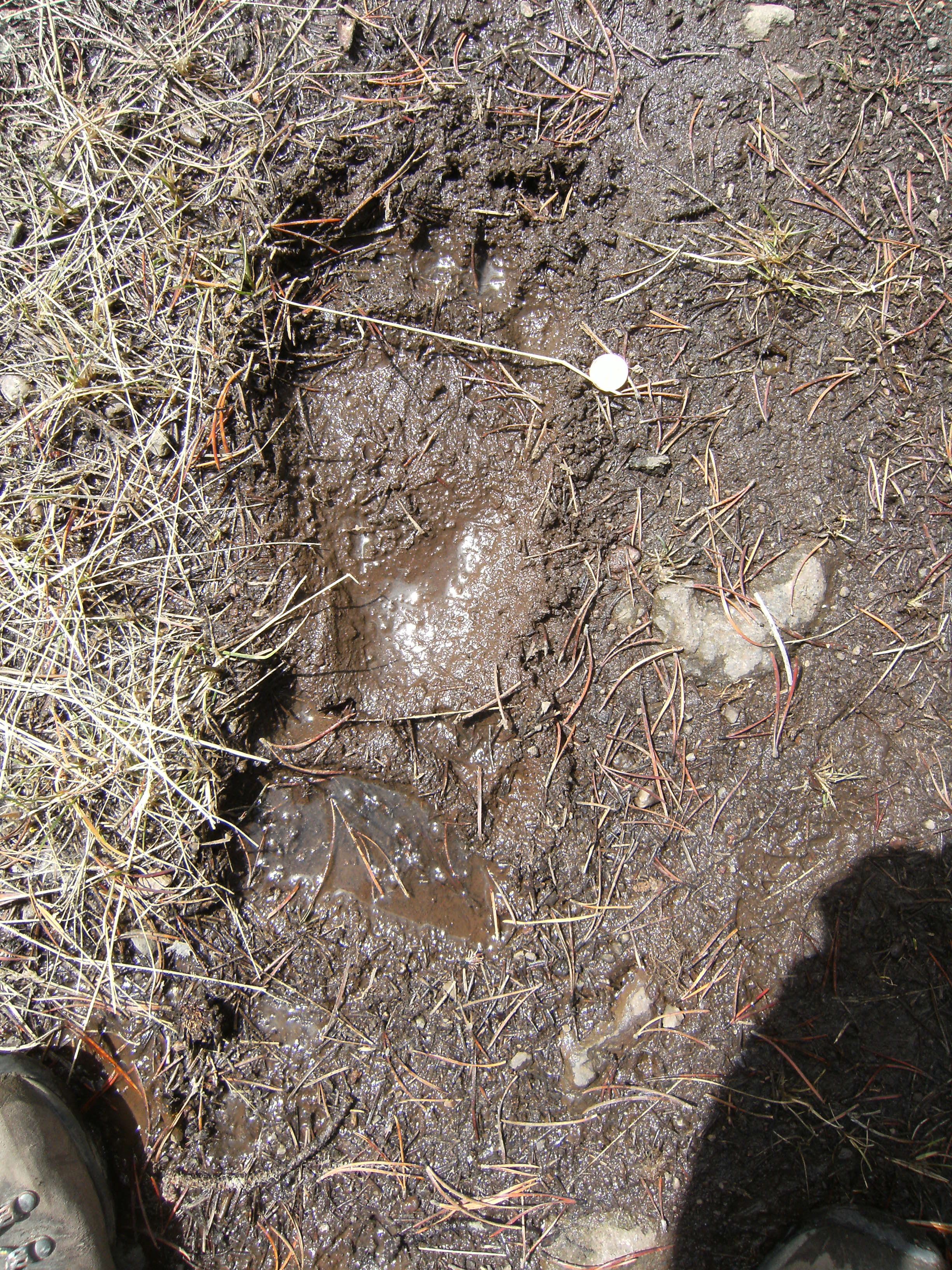
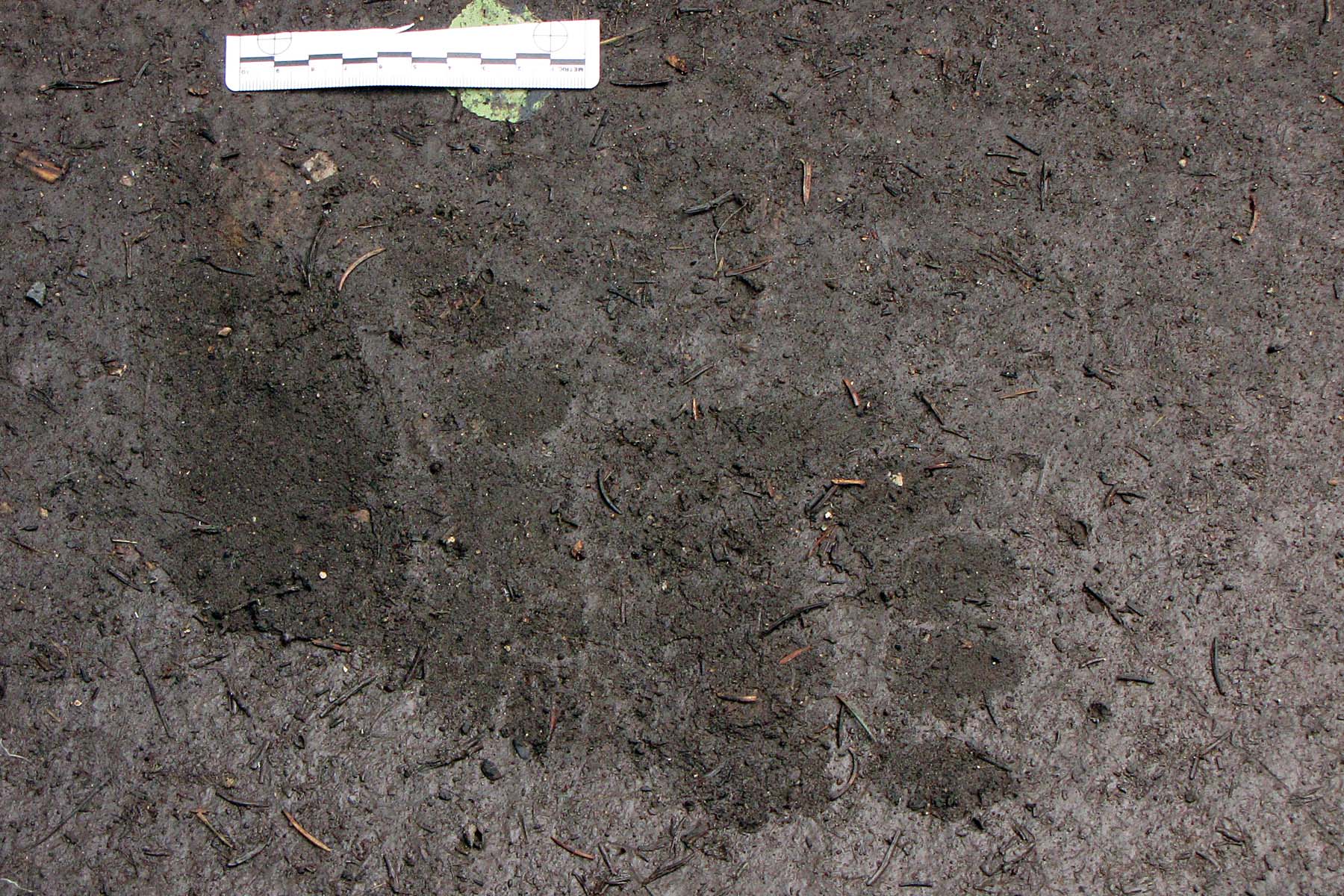
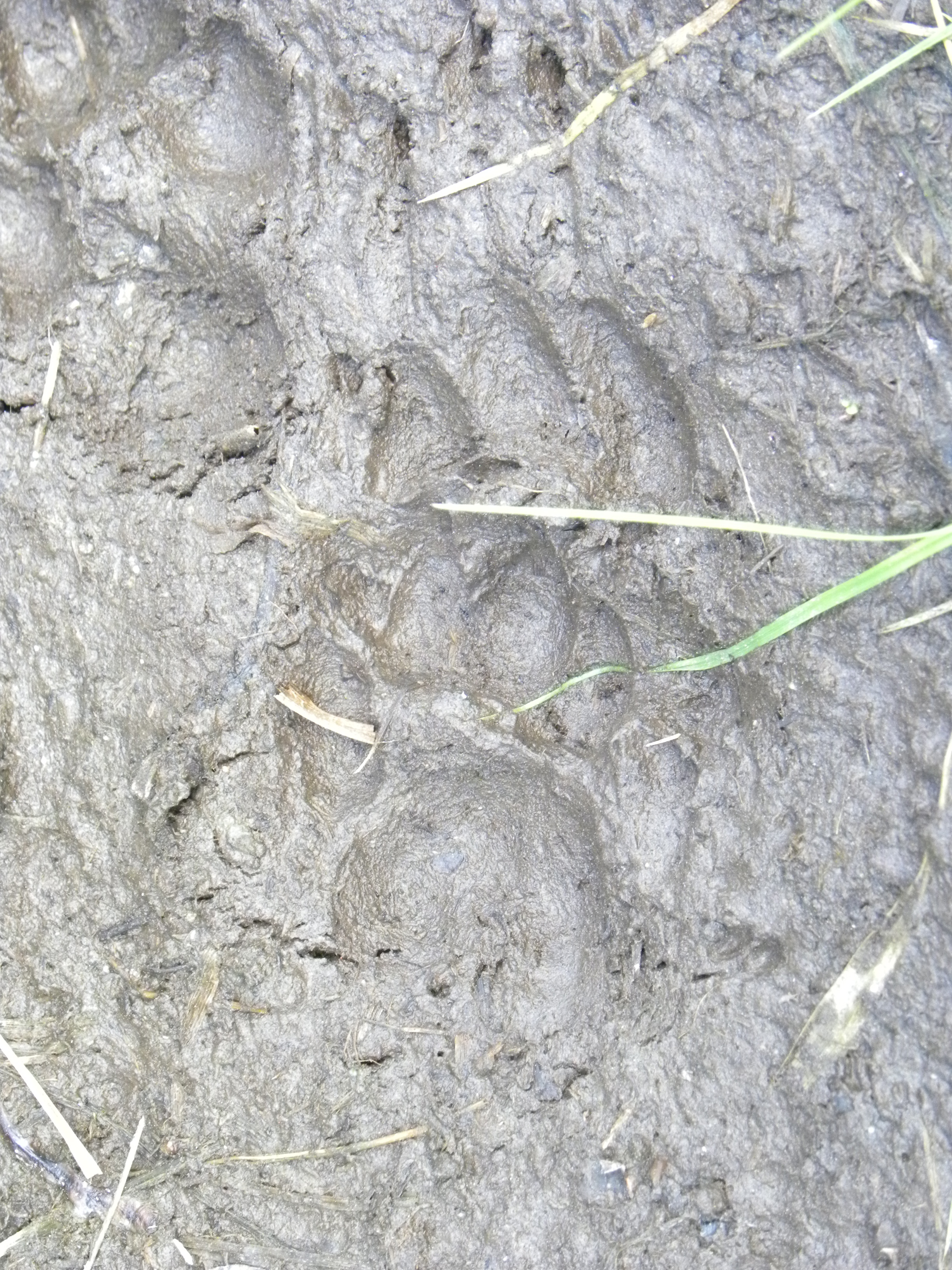
Front and back grizzly tracks.

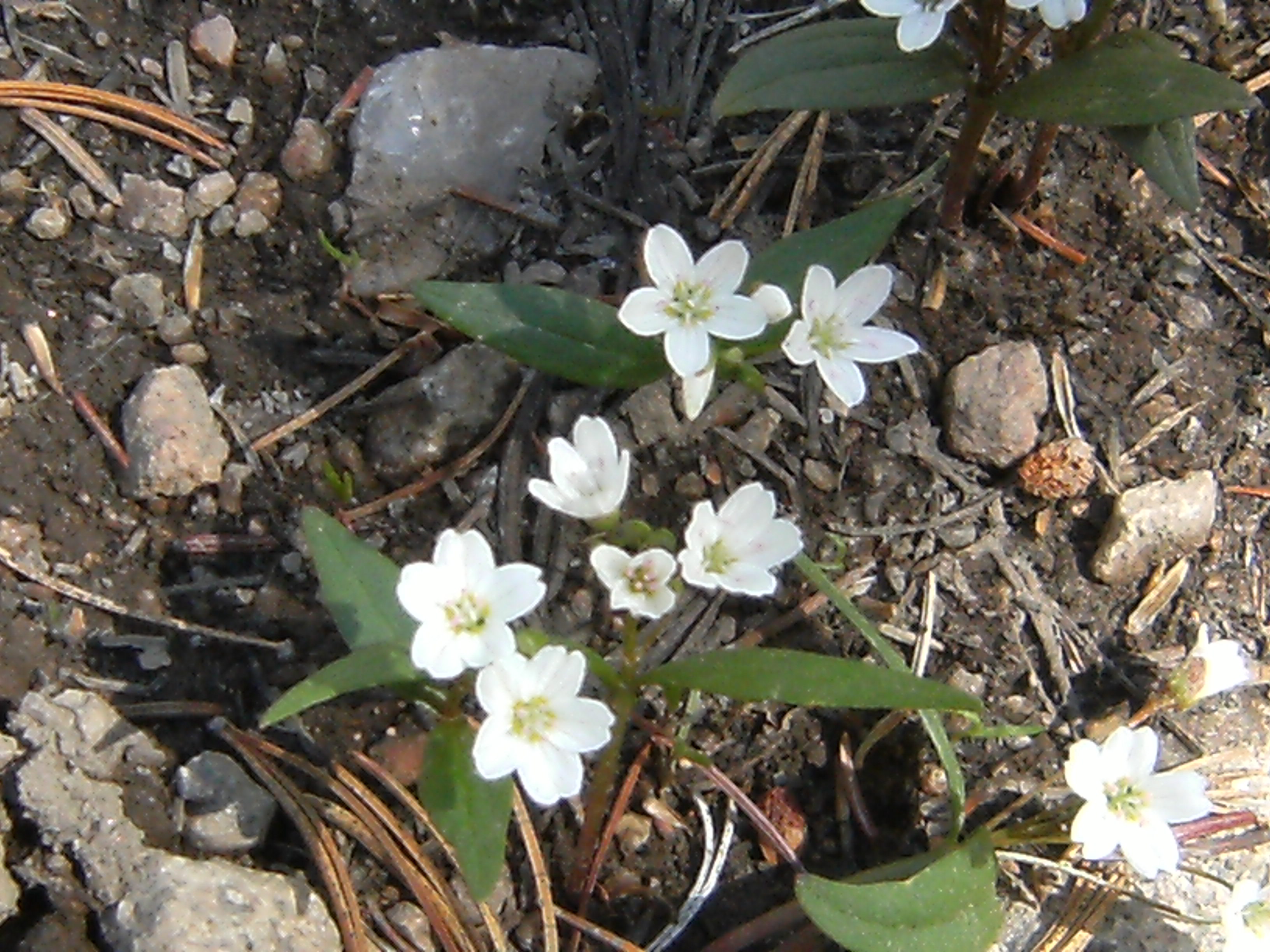
Along the way I’m tasting the tips of young fireweed. Great crunchy texture, mild flavor until the very last then there’s a bitterness. Emerging Indian Paintbrush is also edible but pretty bitter all the way through. Vast carpets of my favorite, Spring Beauties, make a great salad addition.

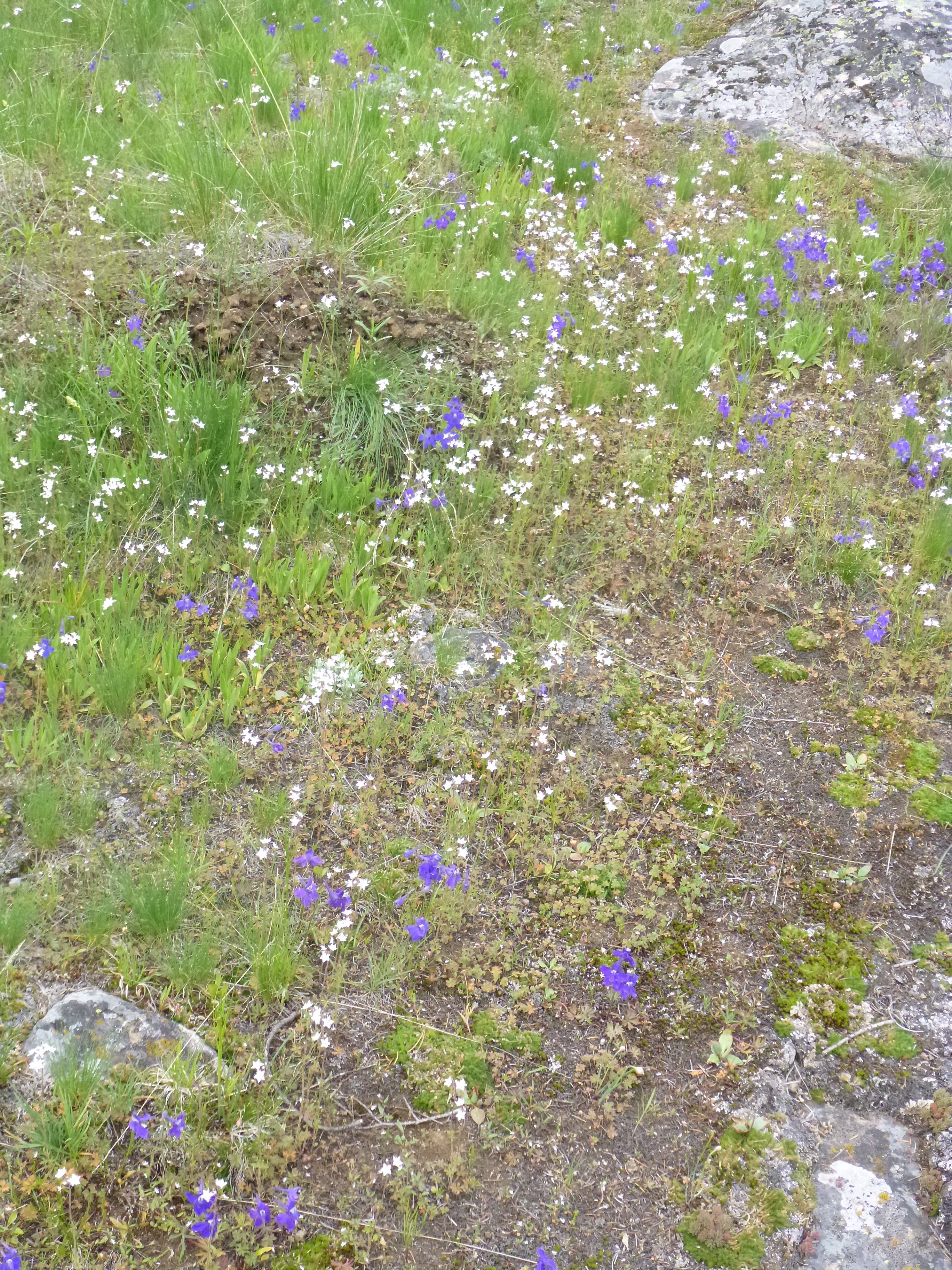
We’ve had a cool and rainy May, inhibiting the emergence of a lot of spring flowers. But with the recent warm days, it seems everything is out all at once. Shooting stars, usually almost gone by now, are everywhere. Their flowers are delicious along with mountain bluebell flowers, both in the borage family and have that similar taste. White flowered onions and biscuit root (lomatian) are out. Larkspur, not edible but poisonous, is emerging. Larkspur is fatal to cattle. I’ve seen some years dozens of cattle die from eating larkspur on the national forests.

Spring Beauties

Some Pasque flowers (not edible), usually done by now, are still around, some even just opening. Even Phlox is still blooming. And my favorite shrub, Buffalo berries, are just leafing out. Buffalo berries are dioecious, meaning male and female reproductive structures are on separate individual plants, not a common thing in the plant world. I also spy some American Bistort just starting to bloom. Although I’ve never tried them, their roots can be dug and eaten raw. Arrowleaf balsamroot (supposedly starvation food for Natives), strawberries and fritallaria are all blooming. Non-edibles like woodland star are blooming and elephant’s head has sent its spike up, ready to open.

Woodland star
Lots of Woodland star mixed with larkspur
Fritallaria
Elephant's head
Elephant’s head

While I forage, a bear has been busy. I’m trying to figure out what’s going on here. I think mama grizzly is clawing the bark on this tree to get at the sweet spring sap that’s flowing while her cub climbs up the tree. I’d normally say a black bear as adult grizzlies don’t climb, but this is a grizzly area and on the way up I ran into a black bear archery hunter with four llamas. He’s been camping on the reef for a few nights. He saw several grizzlies but no black bears. Black bears don’t hang around areas where there’s a lot of grizzlies.

Bear sign

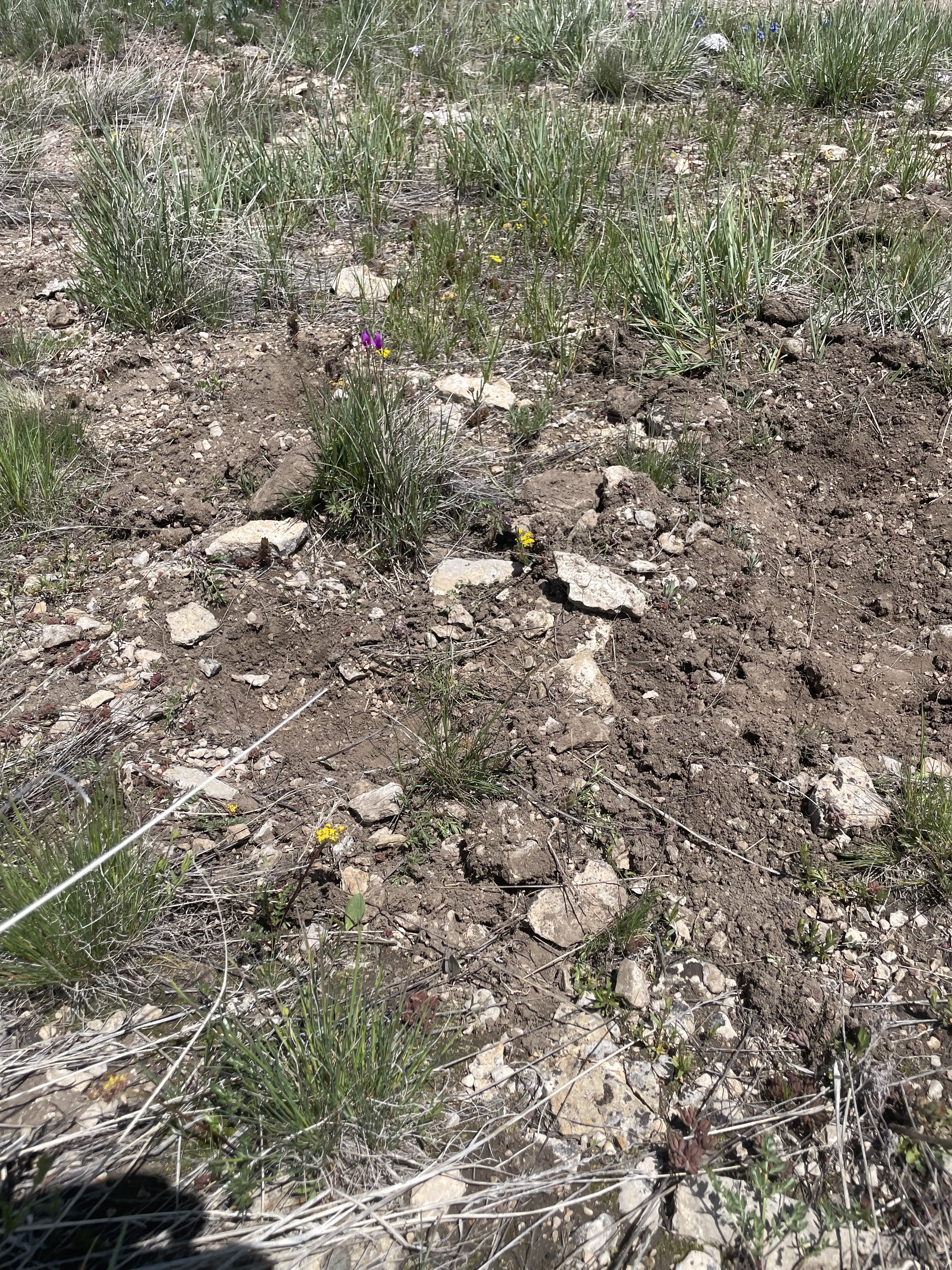
On the plateau, a bear has been busy foraging for biscuit roots. I uses my knife to dig one up. Luckily the soil is soft since its been raining as these roots grow in tight dry soils. I have to dig pretty carefully and deep.

Biscuit root

You can see how deep these bears have to dig in order to extract the whole root. Of course, with their long claws, that’s easy for them. Bears will till up an area with biscuit roots, a favorite treat. But they always leave some. That ensures more will come back next year.

Bear scat with digs
He won’t dig all the biscuit root up

So while we humans are foraging, bears are too. In past times, humans watched bears to see what foods were good to eat. 80% of a bear’s diet is edible for humans, The other 20% are grasses, which we cannot digest. Co-existence isn’t hard. We just have to take a cue from the bears and always make sure to leave some plants for next year’s harvest.

Grizzly Bears and Delisting

It’s pretty well known that unless you see a grizzly with cubs, its extremely difficult, if impossible, to tell male from female grizzly bears. Recently this was confirmed to me on a trip to Alaska to bear watch. We flew to a small lake contained within the vast wilderness of Lake Clark National Park. The flight took about an hour leaving from Anchorage, landed on the lake, where about fifteen of us boarded pontoons and spent the day circling the lakeshore watching grizzly bears catch salmon.

This image has an empty alt attribute; its file name is img_8817.jpeg
Mom with 2 cubs fishing for salmon

Because these bears are in hyperphagia and also very used to the boat, we could approach quite close, say fifty feet away while the bears fished. Our boat captain was a veteran with thirteen summers under his belt of guiding and watching these bears. He knew the best spots around the lake where the fishing was good for the bears. And he told us something interesting. When we’d see a single bear (versus a mom with cubs), he had no way of knowing if that bear was a male or female. There was no size comparison to use or any other metric, and he’d been watching these bears for over a decade. In all, we saw over thirty bears in one day.

This image has an empty alt attribute; its file name is img_8812.jpeg
Bear catches a salmon
This image has an empty alt attribute; its file name is img_8778.jpeg
Pontoon boats left. This small lake was where we watched grizzly bears fishing all day

That brings me to the status of grizzly bears in the Northern Rockies. The U.S. Fish and Wildlife Agency is setting the stage to delist the Great Bear next year. Wyoming, Montana, and Idaho are actively pushing for a hunt. The local media is telling stories to encourage a hunt. (“While he doesn’t want grizzlies gone, he thinks hunting them would control their numbers and deter them from attacking people and livestock.”)

If delisting didn’t automatically include hunting, I’d be all in. We delisted bald eagles but don’t hunt them. The narrative around “a hunt” is that grizzly bears will “learn” to stay away from humans, or as the quote above, “control their numbers”.

This image has an empty alt attribute; its file name is screenshot-2024-09-27-at-5.37.17e280afpm.png

Let’s take the second one first, “control their numbers”. Females don’t begin to have cubs until their 5th or 6th year. Cubs are born in the den the first winter, then stay with mom for 2 more winters. That brings a reproducing female to almost 10 years of age before she can hopefully replicate herself with another female. Grizzlies were the first mammal listed under the ESA in 1975. Fifteen years later, in the mid-80s, most biologists felt they were going to go extinct in the Greater Yellowstone Ecosystem (GYE). It took almost fifty years to go from about 200 grizzlies in the GYE to 1000 bears! Every year about fifty grizzlies are killed for a variety of reasons, mostly human caused (euthanized for livestock depredation, killed by hunters, killed by other bears. 53 so far this year 2024). Add a hunt to that and we can very quickly decimate the population once again.

This image has an empty alt attribute; its file name is img_8808.jpeg

Does killing a solitary animal communicate to other solitary bears to stay away from livestock and human? There’s a sub-adult grizzly that’s been foraging clover this fall in the meadow on the Game Management Area. You can drive your car and watch that bear. If you drive too close, he runs away. But if there’s a hunt, one can legally shoot from a dirt road in Wyoming and he’s certainly close enough, and busy enough foraging, that shooting him would be like shooting fish in a barrel (which is how I see grizzlies in the fall, very absorbed in rooting around because they are in hyperphagia). An easy target for a bear hunter and would killing that sub-adult teach other bears a lesson? Of course not.

Do we need to control grizzly bear numbers? Besides the fact that in the GYE we are already killing over fifty bears a year without a hunt, if GYE grizzlies are to survive long term, they MUST connect naturally with bears in Montana (Northern Rockies). So far they haven’t done this. Wyoming’s plan is to keep killing bears on the edges, the very place where grizzlies must venture in order to connect and foster genetic diversity. Montana’s “plan” is to fly bears into the GYE to maintain genetic diversity, a completely absurd idea!

Anyone who has watched grizzly bears, and any bear biologist will tell you, that these animals are as smart (or smarter) than the Great Apes. They are on par with humans in terms of shear intelligence. Hunting them is simply painful and mean-spirited. Over 100 tribes signed a treaty against a hunt. Grizzly bears are sacred to these tribes. Moving “problem” bears to tribes that want them make more sense. As well as…

  1. Protect your livestock, feed and garbage
  2. Most maulings take place in the fall when hunters are prowling quietly through the woods and bears are getting ready for winter. Carry bear spray and if you are not familiar with hiking/hunting in grizzly country, there are plenty of deer and elk all over this country where there are no grizzly bears. What was shocking to me in this article was that these guys had been charged three times over the last several years. I’ve hiked in grizzly country for twenty years and haven’t had an encounter like they described. I don’t know the details of their situation, but it does make me wonder what they are doing wrong.
  3. I certainly have sympathy for small producers who lose stock to grizzlies on public lands. But public lands are all that our wildlife have and free range cattle should be “at your own risk”, though those risks can be minimized. As noted in my previous post, the ballooning of maximum stock levels on public lands provides a reason for bears to stay low during summer months instead of ranging to higher ground. Are we just feeding these bears with easy prey? There’s been a lot of recent research on non-lethal deterrents. It’s time that the state provides support for that instead of Wildlife Services or direct compensation for losses (grizzly kills in WY are compensated at 3 times the going rate of a cow).
This image has an empty alt attribute; its file name is db231-grizzly-mom-and-cubs.jpg

What’s the Story? Cougars, Wolves, Grizzlies

There’s one place in my area where I’ve seen Glacier Lilies, but as soon as the melt starts the access road usually closes due to flooding. Since the weather has been cool, and next week predictions say it will be in the 70s, I decided to check out the spot to see if the lilies are up yet before the road closure. It’s a fairly remote less traveled trail and this time of year grizzlies are down low foraging while wolves are denning. The trail begins at the road’s end with a stream crossing, winds through a burnt valley before turning up a small drainage where the trail heads to a ridgeline pass.

Immediately grizzly tracks began faintly appearing on the dry ground.

When I turned into the forest drainage, the wet ground revealed two grizzly bears. That could only mean a mom and cub. The grizzly cub footprint appeared to be at least a one year old. I became more alert, unlocked my bear spray.

Smaller bear on the left

The area I’d seen the lilies years before was about a mile up the trail near the pass. Bear tracks followed the trail plus revealed a 2 day old scat that said they’d been eating grass mixed with fur.

Closing in on my lily hillside, I found a clear wolf print in the mud. I hadn’t seen wolf tracks earlier on the trail.

wolf track

About 150 yards before the lily area , I came upon what these bears (and wolves) were doing here. An elk kill right by the trail, completely consumed but about a week or less old. Clearly a cougar kill. I searched around the site a bit. No skull, only one leg left plus the spine and pelvis.

What a cougar kill looks like. Rumen pulled out to the left. The fur in a neat circular pattern cut off with the cat’s incisors

What did the tracks and the kill sign say about the story here? Of course, the only thing I can be certain of was this elk was killed by a cougar. But let’s think about what might have happened. Wolves and bears (grizzlies and black) push lions off their kill. With only one leg, and few fresh wolf prints, I imagined the wolves kicked the lion off the kill site, and hauled the other legs off, maybe to their den site over the ridge. The wolves probably consumed most of the elk before the grizzly mom and cub came along (their tracks fairly fresh) to finish off what was left. The fresh wolf track I found was probably a wolf returning to check on any left-overs, and maybe even encountering the grizzlies.

Unfortunately, I didn’t find my Glacier Lilies. Maybe just too early or maybe those bears ate them. But here is some other cool bear sign I found along the trail.

Bears use their claws to strip bark from a tree, then feed on the sapwood by scraping it from the heartwood with their teeth. 

To learn more about mountain lions and their interactions with wolves and bears, read my upcoming book Ghostwalker: Tracking a Mountain Lion’s Soul through Science and Story out this fall University of Nebraska Bison Books. To pre-order a copy and receive a 40% discount, go to this link and use the code 6AF24 

How the Eastern U.S. Puma was exterminated

This excerpt, edited out of the final version of my new book Ghostwalker: Tracking a Mountain Lion’s Soul through Science and Story, is a quick history of how the mountain lion was exterminated from the eastern U.S. due to attitudes brought by European settlers.


Europeans had long since removed their own top predators, and from the beginning of stepping foot on new soil, they carried with them an attitude of removing wolves, bears, and cats in the New World as well. With their arrival, a dark chapter began for the mountain lion, and all large predators, in North America.

As early as the late 1500s, barely a century after the Spanish stepped foot in the Americas, Jesuit priests in California were offering a bull for the killing of a cougar.  The first recorded cougar bounty on the East Coast was in 1680 and by 1742 Massachusetts followed suit. In early America, these new inhabitants feared and loathed lions, wolves and bears. Stories were spun that cougars were malevolent, evil, even supernatural beings that killed wantonly. Europeans brought their pigs and cows into the New World under a silent compact that they would flourish. And indeed the domestic animals did thrive, in the marshlands, in the oyster beds of coastal New England, and in the newly cleared forests. Euro-Americans left behind a homeland where African lions had been exterminated centuries before, and wolf extermination began in earnest after the Black Death in the mid-1300s. By 1684 in Scotland, and 1770 in Ireland, wolves were gone, while the rest of European wolves quickly followed. Now the colonists were confronted with a wide new array of predators, and their stance was stanch that extermination without mercy was their God-given right.

DSCN0978.JPG

Wolves, who traveled in packs, and howled across the countryside, were easily spotted by men who carried with them the folklore and prejudices from the old country. Because of this, they received the most visible and ongoing persecution. Cougars, on the other hand, with their secretive, surreptitious nature, received less attention in lore but were persecuted and eliminated none the less. A story from Jon Coleman’s Vicious illustrates not only the settlers relentless cruelty towards wolves, but also their attitude towards all predators, from the largest to smallest meso-predators such as raccoons and fishers. On the Maine coast in the 1660s, a group hunting for waterfowl along the beach happened upon a wolf. Their dogs, led by a large female mastiff, chased after the wolf up the coastline and pinned it down by the throat.

“The hunters bound the animal’s paws and carried him home swinging ‘like a calf upon a staff between two men.’ That night, they unleashed the predator inside their living room. The beast sank to the floor. No biting, no snarling, he just slouched there, staring at the door. The men tried to rile him up with the dogs, but the pack was listless and uninterested, too worn out to care following that afternoon’s long chase. Their evening’s entertainment ruined, the hunters took the wolf outside and crushed his skull with a log.”

Individuals in early America who took matters into their own hands, enjoyed weaving tales that celebrated their valor, and manhood, while also characterizing the animals they killed as vicious and aggressive to bolster their reputation. As more people arrived with their livestock, individual efforts were soon not enough. Circle or drive hunts soon emerged in eastern frontier towns. These drives killed many more animals in a shorter period of time with less effort. Some of these drives were duly recorded.

img_0032.jpg

In 1753 citizens of three surrounding villages in Massachusetts combined forces to rid the forests of wolves and other predators. In 1810 in Vermont, a large group of men, women, and children used an ever enclosing circle to capture and kill six wolves. Local papers and fliers announced these drives, asking citizens to turn out with the hopes of killing sheep-eating predators. These early hunts laid the groundwork for the ritual of circle hunts throughout New England. The preferred method was a ringleader would send out an invitation to the men living in the surrounding areas. A description of one of these drives included over 400 men, advancing to the center “under the direction of the local militia officers. When the hunters could hear the shouts of their cohorts across the circle, their commanders ordered a halt….the best marksman among them, entered the ring and killed the wolves and foxes trapped there. The farmers scalped the wolves and marched to the town clerk’s office to collect the bounty.” Just as colonists came together for barn raising, and other tasks done as a community effort, the circle hunt became part of the communal tradition: first build the cabin, then clear the woods of predators

A vivid accounting of a circle hunt took place in the woods of Pennsylvania in 1760. Black Jack Schwartz organized two hundred townspeople into a drive so wide it practically encircled the entire county. Men armed with guns, fire, and noisemakers created a circle thirty miles in diameter, slowly driving all the game towards the center, then began shooting indiscriminately for several hours. A few terrified animals escaped the ring, yet the final tally revealed a slaughter of 41 Panthers, 109 wolves, 112 foxes, 114 mountain cats, 17 black bears, 111 buffalo, 98 deer, and more than 500 smaller animals. The animals were skinned, the bison tongues taken, and all the carcasses were heaped in a pile “as tall as the tallest trees” and burned. The stench was so dreadful that settlers vacated their homes for over three miles. Black Jack’s reputation with the Indians of the area, who only killed game as needed for food and clothing, was so unpopular after the drive that he was ambushed and killed while on a hunting trip. The last of these drives was held in 1849 in Pennsylvania.

IMG_0292.JPG

On the Pacific coast, the Spanish tradition of roping grizzlies and pitting them against bulls for sport is well-documented. These bull-bear fights included betting and even after-church festivities in arenas built specifically for the sport. In California Grizzly Storer and Tevis describe a bear-panther fight near Big Sur that took place after California was admitted to the Union. The gold rush brought in hundreds of thousands of new settlers, and with the arrival of these new residents, grizzlies were being killed in greater and greater numbers. The Spanish bull-bear spectacle continued for a few years until the dearth of bears caused the sport to dwindle. The event in 1865 was described by a young Frank Post who witnessed the event when he was only 6 years, yet never forgot it.

“The lion, which seemed to have no fear, leaped onto the bear’s back and while clinging there and facing forward scratched the grizzly’s eyes and nose with its claws. The bear repeatedly rolled over onto the ground to rid himself of his adversary; but as soon as the bear was upright, the cat would leap onto his back again. This agility finally decided the struggle in favor of the lion.”

The old growth hardwood forests of the East were cleared so quickly that by 1800 residents of the Hudson Valley in New York worried about the scarcity of firewood. By the mid 1800s, from 50% to 90% of the eastern landscape had been cleared for agriculture. Game were so diminished that even by 1639 hunting seasons were closed. Between habitat and food loss, along with human persecution, cougars were effectively eliminated east of the Mississippi River by the mid- to late 1800s. The rugged, arid West and Southwest remained as the only suitable hiding places and cover for mountain lions.

rcnx0004.jpg

Grizzly Bears in the News

Grizzly bears have been in the news a lot.  On August 13 a seasonal employee, Lance Crosby, was hiking a short loop trail by Lake in Yellowstone National Park when he was attacked, killed, and partially consumed by a female grizzly with two cubs.  Although Crosby was 1. off-trail and 2. not carrying bear spray, there is absolutely no need to blame the hiker.  Possibly even with bear spray Crosby might not have survived or prevented an attack, especially if he came upon the bear at extremely close range.

A grizzly bear was recently rummaging around trash for food just five miles north of Cody. Since the bear had been moved for breaking into trash before, this bear was euthanized. People were talking about how close to town the bear was.

Heart Mountain, a prominent feature outside the Cody area, has been seeing more bears than ever this year–something like 5 grizzlies have been spotted on the mountain. Heart Mountain was part of grizzly bears native original habitat and where one of the last bears was killed in the early 1900s.

A recent headline in the Billings Gazette states that more livestock was killed by bears in Montana than in 2014.

Grizzly Bear

All this news comes on the heels of the USF&W preparing to announce whether they are going to delist the bear this year.  These kinds of headlines puts bears in the crosshairs.  But let’s take a breath and consider the whole picture.

The states have been putting a lot of pressure on the feds for quite a while to delist. There will be a lot of money in tags for grizzly bear hunts and the states, already experiencing declining revenue with decreased hunters, are itching for those dollars.  One writer writes in the Enterprise “Grizzly Bear attacks will continue as long as species remain protected”.  But what does that mean?  Dead bears are taught a lesson?  Grizzly bears are normally solitary animals except for moms with cubs.  Unlike wolves who might see pack members killed by hunters, bears will just be dead without bear company to learn from.  Black bears are hunted and I still see them.  In fact, in Wyoming, black bear baiting is legal in most areas.  Does baiting bears mean live bears will no longer seek human garbage?  Of course not.

If grizzlies are delisted, we’ll see images such as this one

This article in the Cody Enterprise sums up the arguments for and against delisting pretty well.  Pro delisting: bears are above the delisting quota of 550 (officially the present count is 756 but it seems that the numbers being thrown around liberally are 1000 bears.  Bears are hard to count because they are solitary) and it’s time. Although Whitebark pines are 90% dead in the ecosystem, bears are creative and can find other food sources.  Con delisting: Those numbers are not accurate because bears are moving farther out looking for other food sources as their primary fall fattening-up food, pine nuts, is diminished.  Climate change is unpredictable as to what will be happening with the ecosystem’s food sources, and so bears need to be able to have connective corridors to roam north–for food and for genetic connectivity. The delisting plan does not account for connectivity but confines grizzlies to a virtual zoo in the GYE PCA.

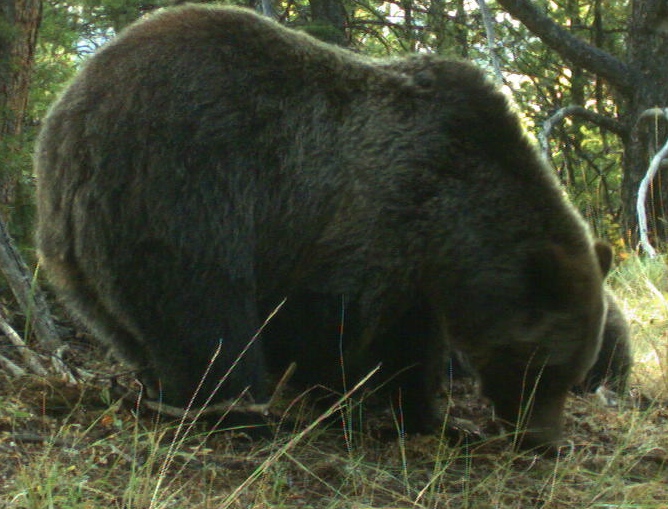
Grizzly bear

Grizzly bear

I have several thoughts here:

Just looking at this year’s fall foods for bears, we’ve had strange weather.  Lots of spring rains instead of snows made for good grass for ungulates, but a poor berry crop. My chokecherries are having the worst crop since I’ve been living here for 10 years and I’ve noticed the huckleberry, buffalo berries and raspberry crops are very poor.  In addition, there are almost no cones on my limber pines, an alternative crop when Whitebark crops are poor. The transects done this year on the Whitebark pine crop indicates a poor year according to Dustin Lasseter, who spoke with me at a Landowner’s meeting in early August.  He’d accompanied the IGBT checking a transect.  The 2015 report will be available here when published.

According to Doug Peacock, around the Greater Yellowstone Ecosystem, the most important fat-containing foods for bears in the fall are moths and whitebark pine nuts.  Boar bears will eat more meat than females, as they are able to displace females and younger bears.  Fat is essential for hibernation.  Without whitebark, or the limber pine nut to substitute (Limber pine nuts are smaller, but nutritious and high in fat.  They are stolen from squirrel middens just as the whitebark nuts are), where are these bears going to get enough fall fat?

Grizzly mom and cubsChris Servheen, the biologist who helped bring the bear back from the brink says ““Bears will tend to move around more, looking for alternative foods, and movement usually increases conflicts”.  But Servheen goes on to say:

Even with a poor berry crop, however, Servheen said grizzly diets can include hundreds of different foods, so the bears still have plenty of options available. While huckleberries can provide an easy source of calories as the bears begin to fatten up for their winter sleep, they will also find roots, tubers, moths, ants, hornet nests and a variety of other berries such as those from hawthorn and mountain ash.

According to Peacock, none of these can substitute for fat-rich pine nuts in the GYE.

But whitebark pine in the Yellowstone park area is nearly gone: No amount of science or management will bring the trees back in our lifetime. With whitebark pine nuts eliminated from grizzly bear diets — and this seems to be the case — grizzlies in this island ecosystem will be severely stressed. The bears could be on their way out.

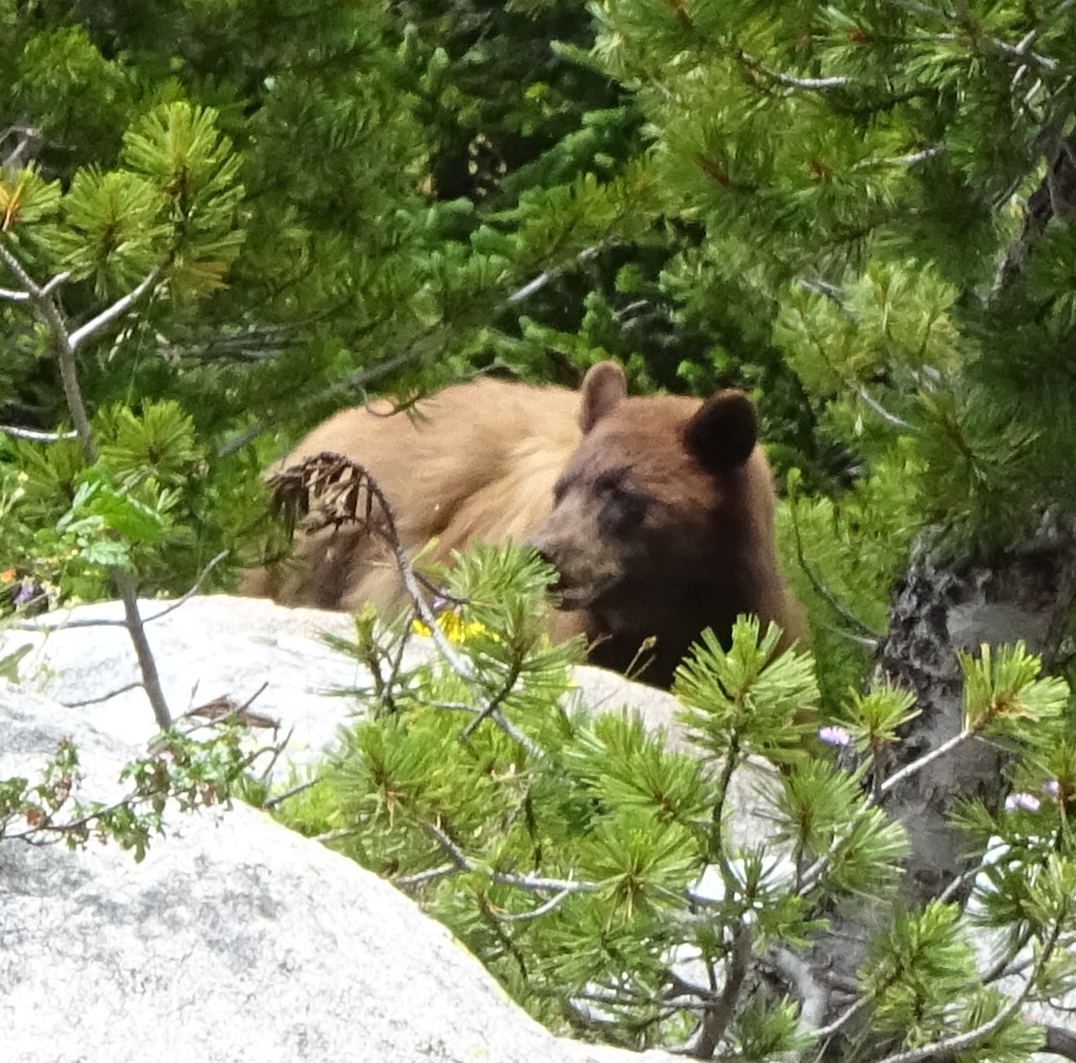
Grizzly bear

Second, as Peacock says in the linked article above, bears will need room to roam to connect with alternative food sources as well as linkage to other bears.  This one issue addressed may save, in the long run, the grizzly bear population in the Greater Yellowstone ecosystem.

Third, people and bears can co-exist and it is up to us humans to make that effort.  In short, that means protecting food sources such as chickens, grain, and human garbage.  The bear that had to be killed near Cody was trash adapted.  Maybe those residences never expected a bear that close, but it’s time we all did. Take for instance the black bears of the California Sierras. They have completely changed their habits because backpackers are now required to use a bear canister.  If you don’t, then a ticket is issued.  Bear canisters can even be rented for next to nothing from the Park or Forest Service in the Sierras.

Cattle and sheep that are on Forest Service allotments in sensitive bear corridors of the GYE, such as the Green River basin, should be reduced in herd size or eliminated, and a range rider needs to be with them.  Those animals lost to bears are already being compensated at 3 times market value.

Lastly, we need new stories about bears, not just horror stories.  We need to re-imagine what it’s like living with this awesome creature and realize we are blessed to live in the last remaining place in the lower 48 where these bears still exist–less than 2% of their former range.  We can give them at least that little bit.  We’ve spent the last forty years restoring their population–from 125 bears to around 750 bears.  Delisting the bear at this critical juncture is too premature, as we are just starting to feel and understand the forces of climate change.  Once delisted, hunting will take place. Hunting an animal as smart as the Great Apes just for trophy is close to a crime. The world was up in arms over trophy hunting a lion named Cecil in Africa.  Why would this magnificent animal be so different?

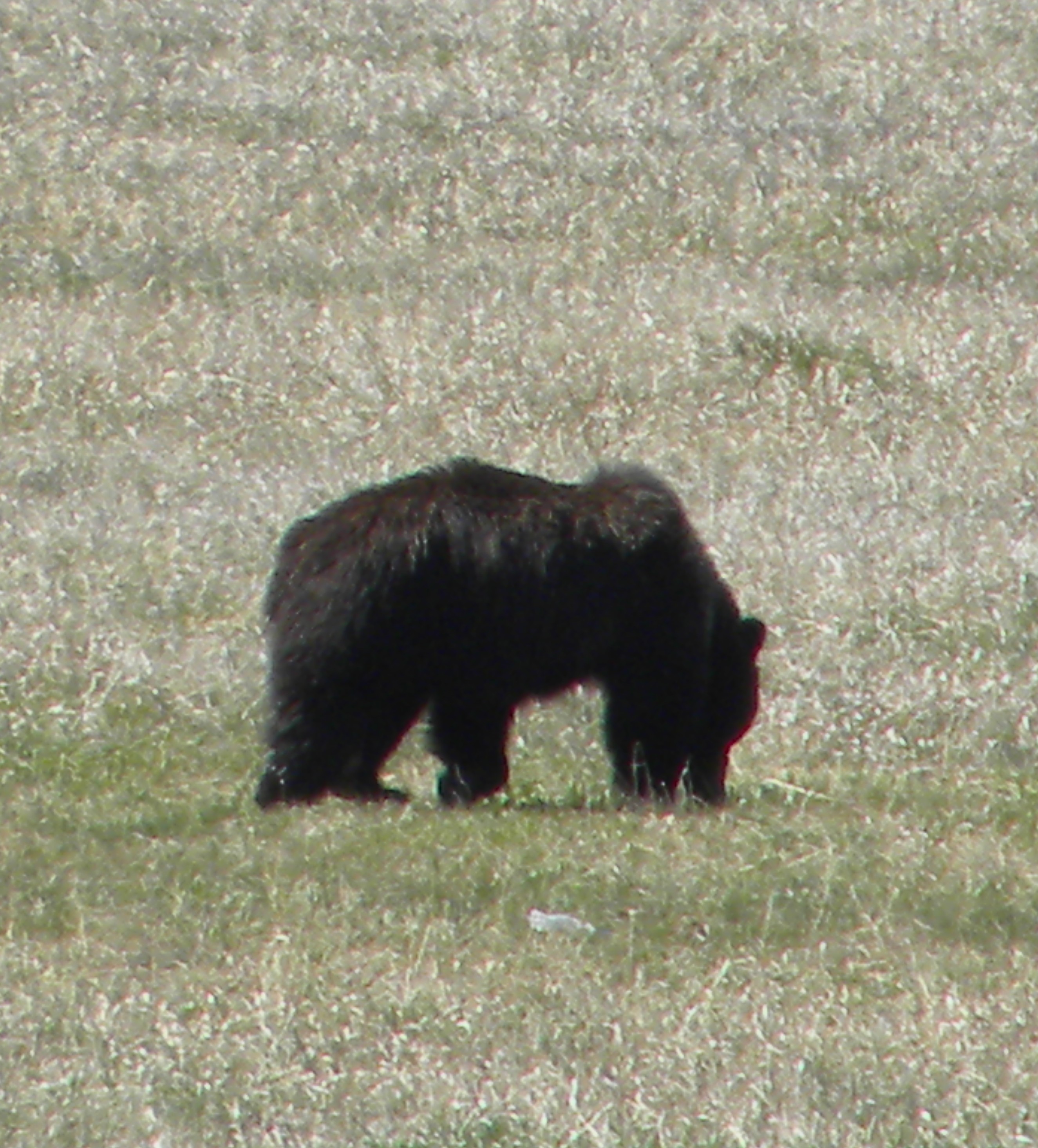
Young grizzly bear

Young grizzly bear

Co-existing with Predators

In helping homeowners over the years deal in natural ways with small critters like moles and gophers, as well as larger animals like deer, I found that there is one necessary ingredient–the homeowner has to want to co-exist rather than resort  to lethal controls.

That same principle applies to larger predators in the landscape such as cougars, wolves, bears, or coyotes.  The wolf reintroduction has generated a lot of fear.  But if we want wolves to remain in the landscape, then ranchers will need to learn new methods.  I have always advocated that, just like the homeowners I helped and educated, ranchers need and deserve a helping hand.  This should include public and private monies for education and training.  Instead of ranchers just given a ‘kill tag’ or being reimbursed ad infinitum for predations, they need to be aided in new protection methods with the goal of incorporating those techniques into their regular routine.

There are several private organizations doing just that:  working with ranchers to discover ways to protect their herds and flocks.  Below is a fantastic informative video I hope you’ll watch.  Well produced with the added benefit of wonderful scenery and wildlife footage, ‘A Season of Predators’ gives you a vision of where we must be headed if we are to have bears and wolves remain in the landscape.

One additional note I’d make:  Although this video concentrates on wolf management, we, the public, are spending millions of dollars a year funding government killing of predators and ‘nuisance’ animals.  This arm of the USF&W is called Wildlife Services and its main job, unlike its title, is killing predators.  One local man who works for WS told me that he trapped and killed 400 raccoons last year for one farmer.  He also had to kill dozens of feral cats as part of his job.  Ironically, he was also killing the local coyotes that would have kept the raccoon and feral cat population in check.  This is the kind of government subsidization that is ‘old school’.  Instead of simply killing wildlife as well as throwing away all that money that not only doesn’t teach the farmer any practices, but doesn’t teach the local wildlife anything, Wildlife Services could have used those dollars exploring new methods and instructing this farmer in sustainable practices in co-existence.

Having worked with over-populations of deer in suburban areas, I know that deer damage can be controlled.  For instance, deer actually are trainable.  Does teach their fawns what to eat.  Deer can be browsing on one type of flower in the landscape, but miles away won’t touch that plant but prefer another.  Through a variety of means that don’t even include fencing, deer can be ‘taught’ not to eat a particular plant.  As you’ll see in this video, wolves can be taught too, but it takes a bit more work than simply a trap, a gun, or a poison.  This is the kind of ‘work’ where your psyche and body meld into the land.  You’ll have some loss, but the goal is to minimize.  You are working with the wild, not against it, and in doing so there is great pleasure and satisfaction, with the rewards being a feeling of oneness with the Land.


Turning my head upside down about Grizzlies

The Grizzly Bear, by William H. Wright, first published in 1909, is one of the best all around books ever written on the subject.  His books shows a hunter becoming a naturalist:  Wright first studied the grizzly in order to hunt him, then he came to hunt him in order to study him.”  Frank C. Craighead, Jr.

That’s quite a recommendation from Frank Craighead, one of the most well known grizzly bear experts.  Craighead was instrumental in having this out of print book republished.  Not only is this a highly readable book, but fascinating if you can get over all the grizzly bear hunts and killing he describes in the first half.  But Wright was a product of his time.  No hunting quotas, tags or seasons.

Grizzly in Lamar

Grizzly in Lamar

But Wright is not just a bear hunter; he’s a fascinating character.  He knows grizzlies inside and out.  He sees a track and, even if he is not hunting bears, he gets in the mood to follow the griz for two days.  He’s eight hours behind him, but because he understands grizzly habits, he figures he’ll eventually catch up.  He describes where and when the bear was digging, if the bear was successful at catching his marmot or ground squirrel (and how many), when the bear took a nap, how it paused to sniff for danger…all in the tracks.  Then when night comes and he still hasn’t caught up with the bear, Wright finds a large rock, builds a lean-too and a fire and beds down.  Then he starts out again the next morning, all in unfamiliar territory. At last he finds the bear in dense shrubbery and kills it.  Wright never baits bears as he considers it not fair chase.  He only uses his own cunning pitted against the bear, whom he considers the smartest animal there is.Grizzly cub

In one narrative, Wright is guiding two fellows on a bear hunt in the Bitterroots.  The men are back at camp while Wright is fishing with the dogs.  Wright and the dogs spot a grizzly.  The dogs run after the bear and corral him in a hole.  As the bear swats at the dogs, Wright, who left his gun back at camp and  in his attempt to save the dogs, takes out his pocket knife and starts swinging at the bear.  Long story short, Wright kills the bear with his pocket knife.

Grizzly minding his own business

Grizzly minding his own business

Wright realized that grizzlies were endangered and becoming extinct.  He loved these bears and admired their intelligence and had already begun photographing them in the wild in the attempt to save them.  In 1906 he went to Yellowstone National Park to use some new photography methods.  His was essentially the first ‘trail camera’.  He used a sewing thread as a trip wire.  One end he attached to an electric switch which exploded a flash and sprung the shutter of his camera.  The other end of the trip wire was tied to a small stake driven into the ground beyond the trail.  He located a heavily used bear trail, set up the apparatus, then hid in the bushes to watch, mostly at dusk and into the night.Grizzly front foot

From there he reports on the various bears that came bye.  In every instance, whether mom with cubs, or three year olds, or old boars, the bears all stopped short of the thread, sniffed the thread, sometimes bolted, sometimes explored the thread up to the stake and down to the switch.  Most all of them refused to go beyond the thread.

So Wright left the Mt. Washburn area and headed toward Lake.  He set up the apparatus, but this time he found the thinnest wire he could, so thin that he himself couldn’t see it from ten feet away.  He then chose a trail that was covered with grass in order to conceal the wire.  Then he waited some two hundred yards up the trail and watched.  Again, all the bears detected the wire, nosing along it inquisitively.  Wright even recognized a few of the bears from the Washburn area on this trail.  Grizzly scratches on pine tree

Thinking that maybe these Yellowstone bears were quite adapted to people, Wright tried walking up and down the trail first to human scent it, then hiding behind the tree.  But this only made the bears more inquisitive, some of whom came, under cover of darkness, within ten feet of him.  Wright remained still in order not to frighten them.  When they got close enough to figure out he wasn’t a stump, they all ran off.

Wright describes the grizzly temperament as very wary of danger.  He says they are habitually cautious and alert, and the veru least scent or sound or sight sends them into the farthest hills.  

Reading Wright has made me think again about grizzlies.  My usual take on grizzlies is that they have not a care in the world as they are top predators.  I think of them as swaggering through the woods, meandering from food source to food source.  Yet Wright describes them completely differently, and says he found the protected Yellowstone bears no different than any other wild bears he had encountered in the Selkirks or the Bitterroots.  Reading his tracking narratives, it appears these grizzlies are peaceable animals, not only wary of dangers, but mostly interested in sleeping and digging for foods.  Without having such direct and repeated experiences with grizzlies, it’s impossible for a person to know their nature like Wright does.  So instead, tales get told and assumptions are made, and all we can go on is what we’re told to do in case we actually run into a bear while hiking or camping, and usually this involves a gun or bear spray.  With more bears inhabiting our region, it’s good to read all we can.  I highly recommend Wright’s book.

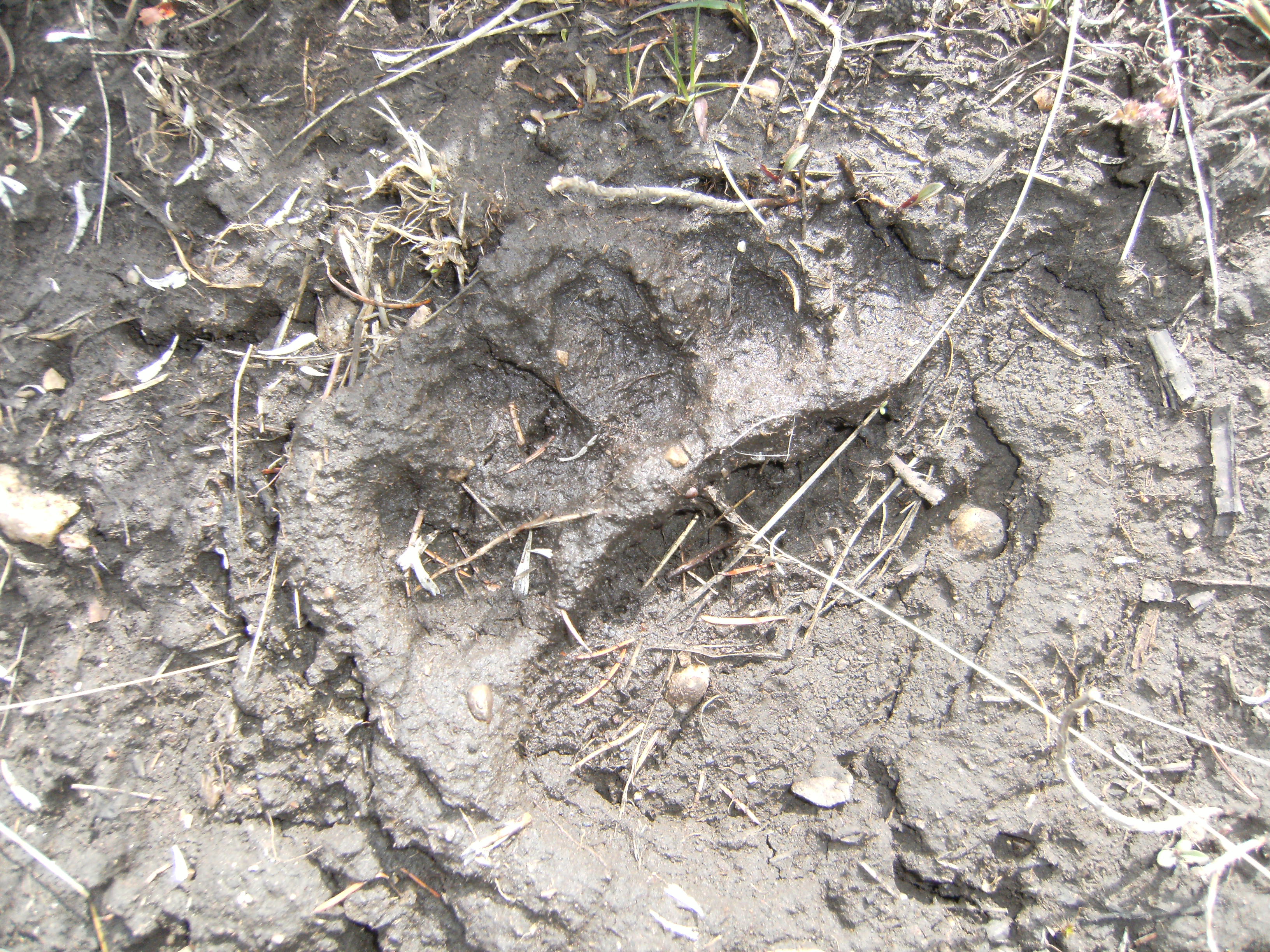
A Grizzly track found by the river

A Grizzly track found by the river

Grizzly videos from my driveway

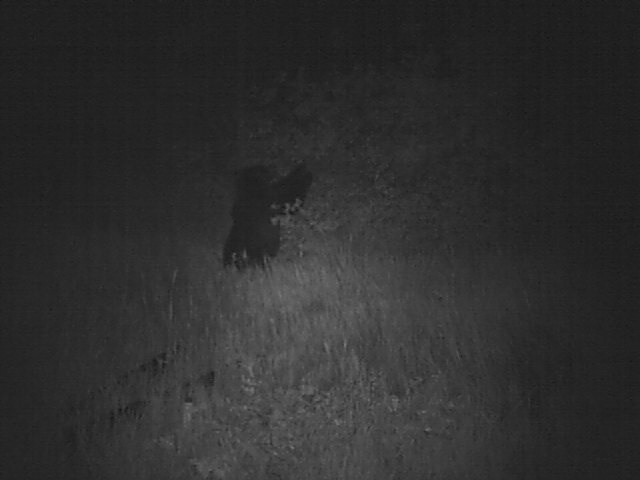
A large (pregnant maybe?) grizzly has been visiting my chokecherry bushes nightly. Since I can’t post video, but I’ve got lots of 30 second clips from my trail camera, start here  at my Youtube site for a great shot of her shaking her butt on the way to the berry bush.  Then see my other clips of her from 2 nights ago.

Bears are now in hyperphagia or that stage of eating where they are gorging, trying to fatten up for winter hibernation.  This is the time to really be careful.  Its hunting season, and a bear on a gut pile is a very protective bear not to mess with.

Griz on chokecherries at 1 a.m.


Yellowstone adventures and a close call

I came back a few weeks ago from an advanced tracking class with Jim Halfpenny in Gardiner.  But before the class, I spent a day and an evening hiking around the Park.

Tuesday late afternoon called for a trek up Mt. Washburn, which I’d never done.  They say if you only have time for one hike, Mt. Washburn is your ticket.  Its a great view for sure of the Yellowstone volcano, but what’s more impressive is that during the ice age only 30,000 years ago, Mt. Washburn was the only land not covered with glaciers from there to the Tetons.  The hike is not far but a good uphill and the alpine wildflowers were impressive.  A group descending came bye and told me to watch for a grizzly they’d seen near the summit.

View from Mt. Washburn of the Yellowstone caldera

Polemonium

Pedicularis

Gentian close-up

At the top, a ranger is stationed and there’s a free telescope for viewing (Wow, something actually free!).

Wednesday morning after camping at Mammoth, I headed up past the Golden Gate looking for a nice dayhike.  I thought I’d do Solfatara Creek.  I parked at the isolated trailhead.  Not my favorite kind of trail presented itself.  An ’88 burn area, the trail was thick on both sides with young lodgepoles so tight you can’t move nor see ahead.  Essentially, these kinds of trails are like tunnels and I don’t like them because if you come upon a bear there’s no where to go.

I decided to try the trail and see if it opened up.  If it didn’t, I’d find another to hike.  Sure enough, after about 700 yards, the trail opened to meadow and an unburned forest.  As I approached the hot springs of Solfatara Creek, the trail showed lots of fresh bear sign.  The creek was a beautiful and unusual greenish-blue, warm, slow water, but the mosquitos were thick.  Between the bugs and the bear scat, which was thickening in tune with the mosquitos, I decided that since I was hiking alone I’d prefer to find another trail, one more open and less buggy.

I retraced my steps and when I got to the meadows, I noticed a troop of rangers off trail looking like they were doing some kind of vegetation studies.  I figured they must have come through the ‘tunnel’ that was approaching, so maybe they’d scared off any bears.  But just in case, as I always do when I can’t see well in front of me, I took my bear spray out of its holster, uncapped it, and held it in my right hand as I came through the trees.

About halfway through the forest, I came around a corner almost directly into a lone bison bull rubbing its horns on a sapling.  I watched for a moment while debating where to go to get out of its way.  He was coming my direction and I was headed towards him.  If I went backwards from whence I came, I’d be stuck in the narrow thicket of trees on the trail in his way.  I couldn’t slip pass him. Beside me was a teeny, tiny clearing of about 5′ square.  I moved as far as I could into the clearing.  He began to trot on the trail past me, but just at the last second he changed his mind and decided to charge me.  At only about 6′ away, he lowered his head; his horns now directly facing my chest.  Instinctively, I sprayed him with the bear spray I’d luckily been carrying unhinged and uncapped.

Immediately he made a right turn and trotted off down the trail, swinging his head side to side since his eyes were stinging.  I left the trail, totally beefed up on adrenaline and thanking my lucky stars that it wasn’t my day to die.  Bison scar me way more than bears as I feel they are much more unpredictable, way more dangerous, and definitely not as smart.  This guy didn’t seem threatened by me.  For him, it was more like I was challenging him, offering him a chance to have a sparing match. An old lone bull like him is a cranky old man.

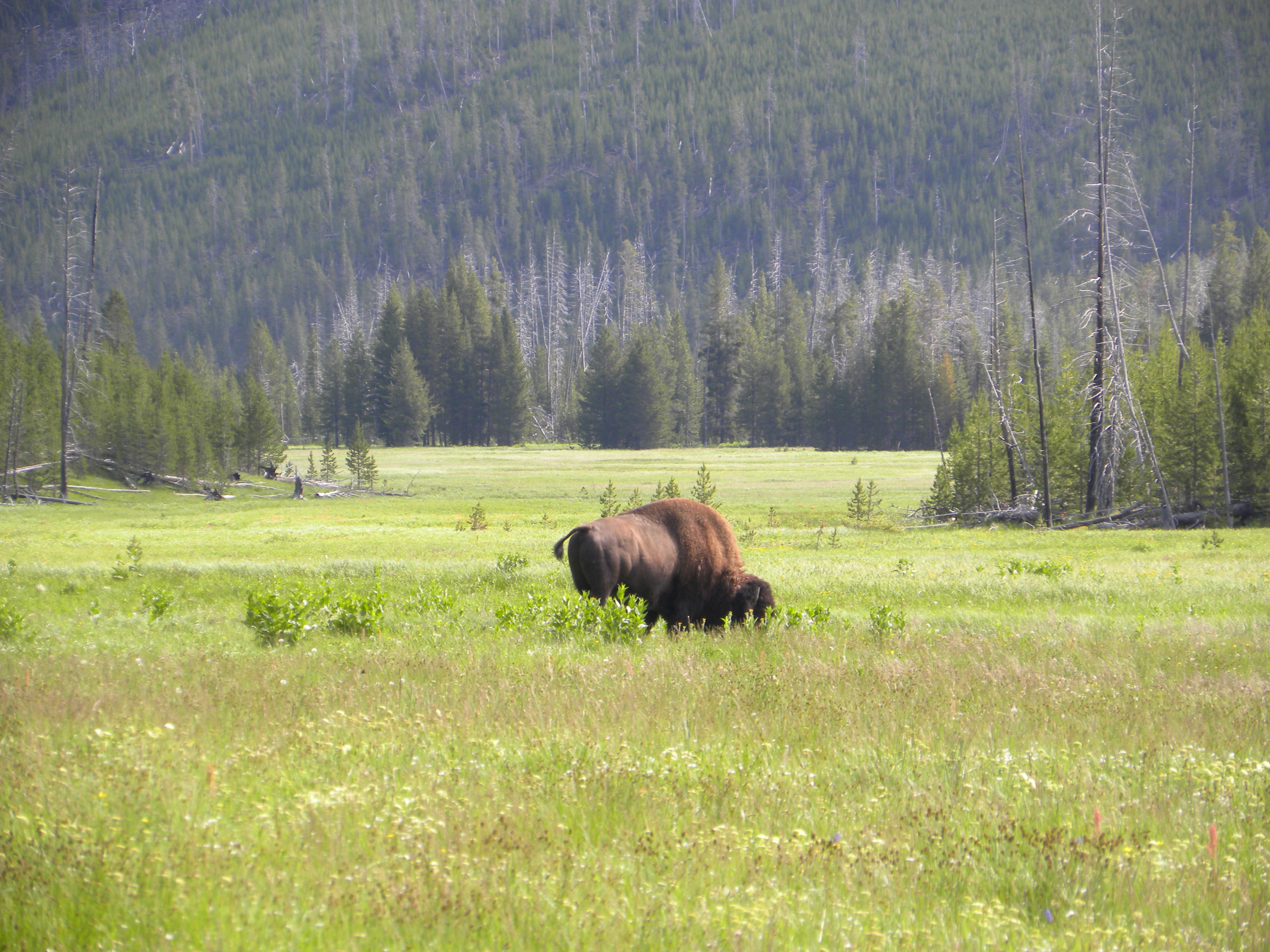
Lone bison but not my bison

Grizzly lake, my destination after Solfaterre

On the way back to Mammoth, I got stuck in a bear jam.  Two black bears were feeding on one side of the road and decided to cross over.  What amazed me wasn’t the bears, but that people got out of their cars and ran as fast as they could towards the bears, getting as close as they dared to take photos.  Luckily these bears were used to people, but not all bears in the park are that amenable.

Guy in the white T shirt on left is almost right on the bear

In this one you can see the bear and the lady in front not even paying attention!

Halfpenny always leads a fabulous class, highly recommended.  The mornings were spent in the classroom and the tracking museum.  He has a fantastic collection of plaster casts and other assorted items to help you to learn to track.  The afternoons were spent in the field.  Here is a track of a badger of which I made a cast.  The upper left hand corner contains a coyote track as a bonus.

Badger track (coyote track upper left). Notice long claws

Young bull moose