


“The Grizzly Bear, by William H. Wright, first published in 1909, is one of the best all around books ever written on the subject. His books shows a hunter becoming a naturalist: Wright first studied the grizzly in order to hunt him, then he came to hunt him in order to study him.” Frank C. Craighead, Jr.
That’s quite a recommendation from Frank Craighead, one of the most well known grizzly bear experts. Craighead was instrumental in having this out of print book republished. Not only is this a highly readable book, but fascinating if you can get over all the grizzly bear hunts and killing he describes in the first half. But Wright was a product of his time. No hunting quotas, tags or seasons.
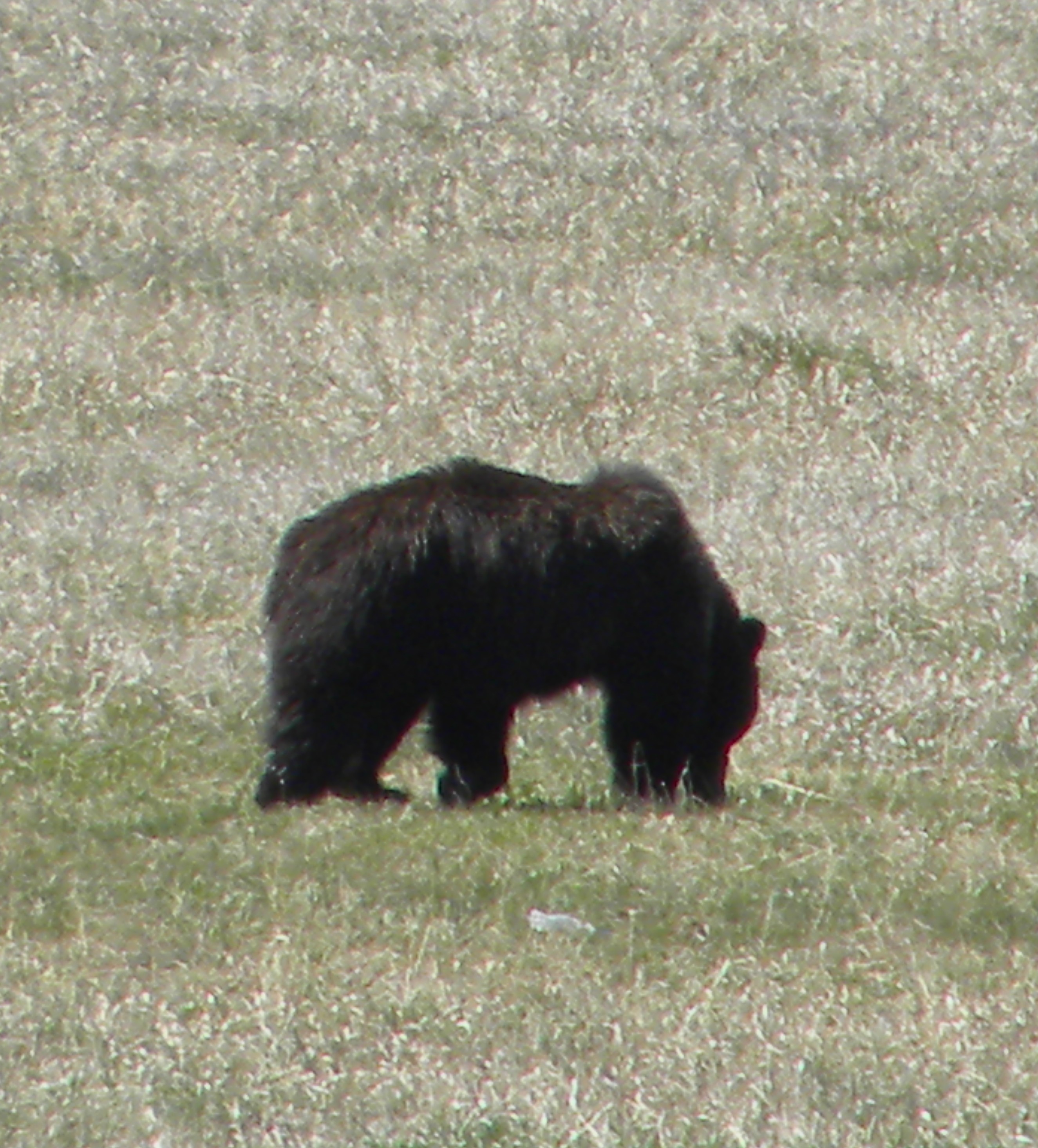
Grizzly in Lamar
But Wright is not just a bear hunter; he’s a fascinating character. He knows grizzlies inside and out. He sees a track and, even if he is not hunting bears, he gets in the mood to follow the griz for two days. He’s eight hours behind him, but because he understands grizzly habits, he figures he’ll eventually catch up. He describes where and when the bear was digging, if the bear was successful at catching his marmot or ground squirrel (and how many), when the bear took a nap, how it paused to sniff for danger…all in the tracks. Then when night comes and he still hasn’t caught up with the bear, Wright finds a large rock, builds a lean-too and a fire and beds down. Then he starts out again the next morning, all in unfamiliar territory. At last he finds the bear in dense shrubbery and kills it. Wright never baits bears as he considers it not fair chase. He only uses his own cunning pitted against the bear, whom he considers the smartest animal there is.
In one narrative, Wright is guiding two fellows on a bear hunt in the Bitterroots. The men are back at camp while Wright is fishing with the dogs. Wright and the dogs spot a grizzly. The dogs run after the bear and corral him in a hole. As the bear swats at the dogs, Wright, who left his gun back at camp and in his attempt to save the dogs, takes out his pocket knife and starts swinging at the bear. Long story short, Wright kills the bear with his pocket knife.

Grizzly minding his own business
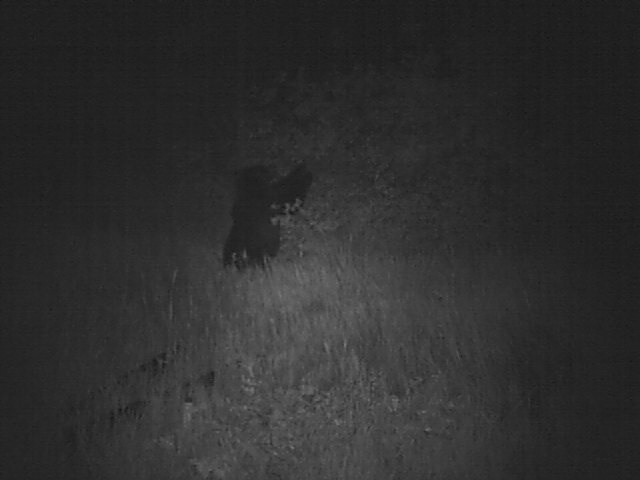
Wright realized that grizzlies were endangered and becoming extinct. He loved these bears and admired their intelligence and had already begun photographing them in the wild in the attempt to save them. In 1906 he went to Yellowstone National Park to use some new photography methods. His was essentially the first ‘trail camera’. He used a sewing thread as a trip wire. One end he attached to an electric switch which exploded a flash and sprung the shutter of his camera. The other end of the trip wire was tied to a small stake driven into the ground beyond the trail. He located a heavily used bear trail, set up the apparatus, then hid in the bushes to watch, mostly at dusk and into the night.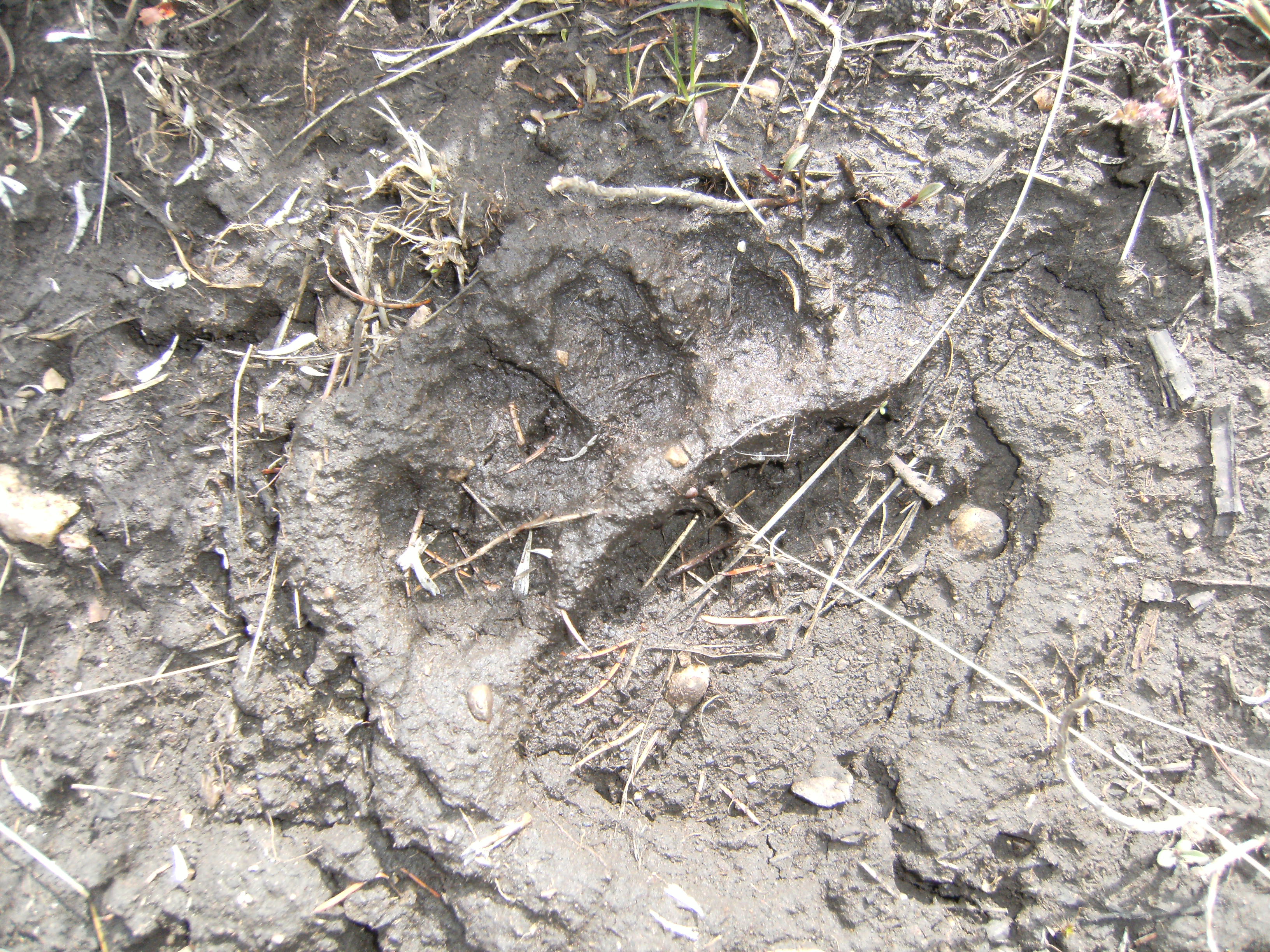
From there he reports on the various bears that came bye. In every instance, whether mom with cubs, or three year olds, or old boars, the bears all stopped short of the thread, sniffed the thread, sometimes bolted, sometimes explored the thread up to the stake and down to the switch. Most all of them refused to go beyond the thread.
So Wright left the Mt. Washburn area and headed toward Lake. He set up the apparatus, but this time he found the thinnest wire he could, so thin that he himself couldn’t see it from ten feet away. He then chose a trail that was covered with grass in order to conceal the wire. Then he waited some two hundred yards up the trail and watched. Again, all the bears detected the wire, nosing along it inquisitively. Wright even recognized a few of the bears from the Washburn area on this trail. 
Thinking that maybe these Yellowstone bears were quite adapted to people, Wright tried walking up and down the trail first to human scent it, then hiding behind the tree. But this only made the bears more inquisitive, some of whom came, under cover of darkness, within ten feet of him. Wright remained still in order not to frighten them. When they got close enough to figure out he wasn’t a stump, they all ran off.
Wright describes the grizzly temperament as very wary of danger. He says they are habitually cautious and alert, and the veru least scent or sound or sight sends them into the farthest hills. 
Reading Wright has made me think again about grizzlies. My usual take on grizzlies is that they have not a care in the world as they are top predators. I think of them as swaggering through the woods, meandering from food source to food source. Yet Wright describes them completely differently, and says he found the protected Yellowstone bears no different than any other wild bears he had encountered in the Selkirks or the Bitterroots. Reading his tracking narratives, it appears these grizzlies are peaceable animals, not only wary of dangers, but mostly interested in sleeping and digging for foods. Without having such direct and repeated experiences with grizzlies, it’s impossible for a person to know their nature like Wright does. So instead, tales get told and assumptions are made, and all we can go on is what we’re told to do in case we actually run into a bear while hiking or camping, and usually this involves a gun or bear spray. With more bears inhabiting our region, it’s good to read all we can. I highly recommend Wright’s book.
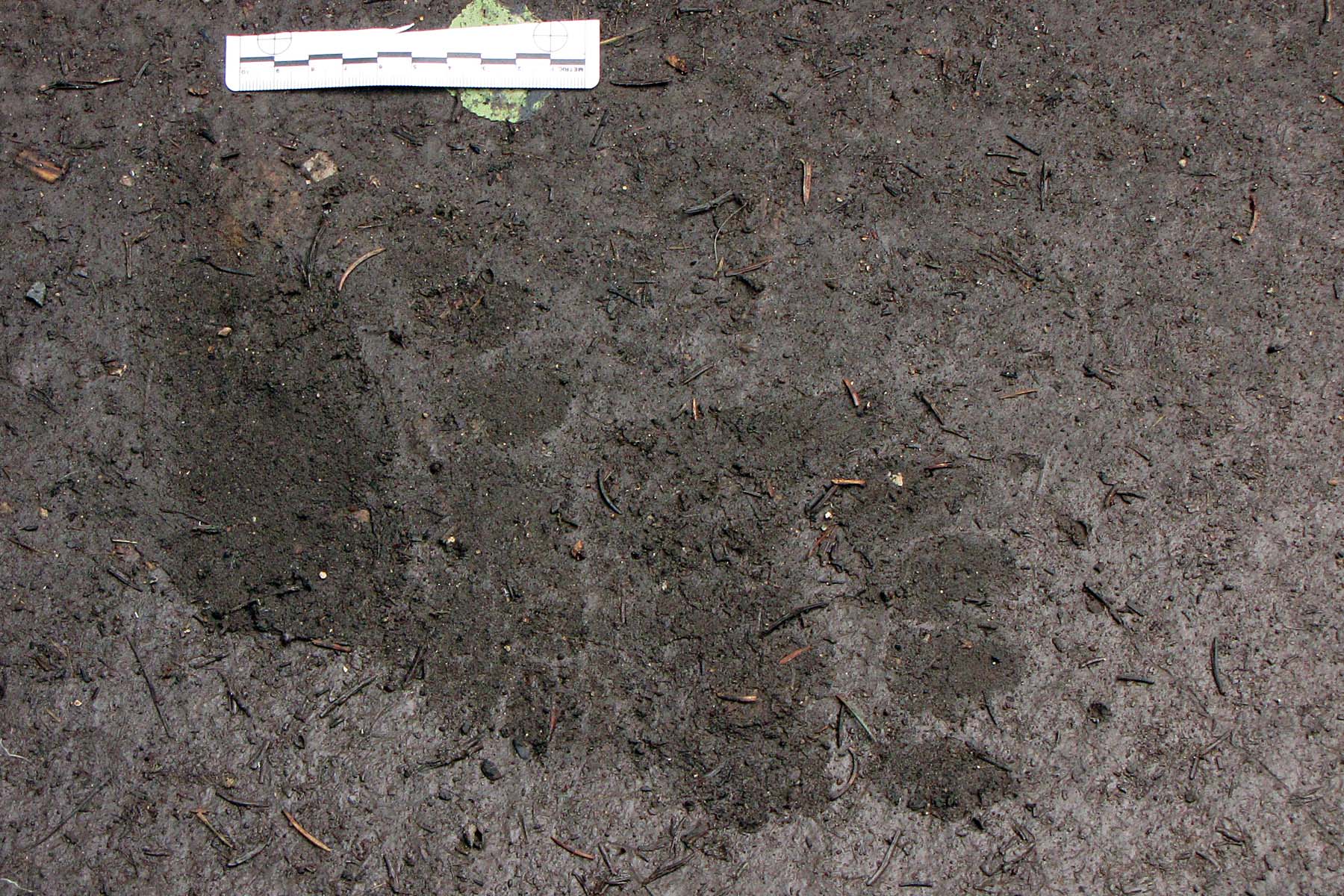
A Grizzly track found by the river
Filed under: Grizzlies | Tagged: Bears, grizzlies | 3 Comments »


 Leslie Patten Books: Wild Places, Sacred Spaces