• MY BOOKS ON WILDLIFE, GARDENING AND MORE

  • Coming Fall 2024. Pre-order and use code 6AF24 for a 40% discount

  • The Wild Excellence

  • Award winning ebook on DG Primer

If you must hunt, how to better manage mountain lion populations

Last week I attended The Mountain Lion Conference which is held every 3 years. This is the first in-person conference since 2017 because of covid. The Conference agenda is divided between presentations from biologists discussing findings from their recent studies, and state wildlife managers giving a summary of any particular aspect of their management they might choose to present.

Most of the science presented wasn’t new to me. It’s all in my book Ghostwalker: Tracking a Mountain Lion’s Soul through Science and Story. For instance, Kyle Dougherty presented studies done on California connectivity issues, discussing how the Tehachapis are critical for genetic diversity for lions there. I did extensive interviews on connectivity and the challenges in my California chapter. One interesting note was that mountain lions in that critical corridor (where there is no highway crossing yet) spent 19.8 hours on average observing, trying to decide if and where they might cross. None of their collared cats attempted crossing the highway.

Some of the most promising studies are taking place in Texas, the only western state that still lists mountain lions as “predator” status, meaning they have no seasons and no protections. Chloe Nouzille and her crew are studying the impacts of the border wall on mountain lions and other large mammals. So far they’ve found no lions crossing the wall in places where contractors place small pass throughs. These breaks are not placed in known wildlife corridors, but randomly placed about every mile. Not all contractors are doing this. Usually it’s at the request of the landowner. What the team has found is more minimal barriers such as fences were being used by lions, although these fences are too high for deer to jump over. Another Texas study was presented by Lisanne Petracca. Her team is trying to understand the genetics of western Texas lions. Are most of these lions coming from Mexico, New Mexico, or in-breed? There haven’t been studies in Texas since 2008. This renewed attention to mountain lions is very positive and hopefully will push their state legislature to make changes in lion status.

I personally had a few takeaways from Mark Vieira’s presentation on Colorado’s mountain lion female harvest presentation. Colorado doesn’t have limits for females but like most hunting states groups together their quota for both sexes for each zone. Let’s be clear: mountain lion hunting is absolutely a choice and not necessary for lion management. Lion hunting is all about hunting opportunity, not about food. But in all our Western states except California (which outlawed lion hunting through a 1990 ballot initiative. Colorado last year rejected a similar ballot initiative which would have outlawed lion hunting) that’s a fight that is a long time out.

In the meanwhile, I strongly feel good management means a female quota. And if hunting is part of the mix, then ideally the female quota should be 0 or 1 ( where there is boot hunting). Once that limited female quota is met, the zone is shut down to female take. Mountain lions are notoriously impossible to sex unless they are treed. Even then it can be difficult but a person needs to look for a black spot below the anus indicating the lion is a male.

So what has Colorado done since they have no separate quotas? First they have included discussions with houndsmen asking them to voluntarily reduce the female harvest. Second they are now reporting the amount of females taken in live time on their quota page. Third, they require a class to learn how to identify male from a female. (try taking the I.D. exam yourself) Studies have found the difference with an identification class is 10% less killing of females and with these extra minimal efforts, Colorado has reduced their female take another 10% to 39%. Most seasoned houndsmen can distinguish male from female once a cat is treed, along with recognition of track size. States like Wyoming where I live have no required class for new or out-of-state lion hunters, and don’t have a female quota.

One other note on why mountain lion trophy states should have a female quota along with classes on lion biology—mountain lion females are either pregnant, with kittens, or in estrus. If kittens lose their mother before one year old, they almost certainly will not survive. Many states, including Wyoming, do not allow hunters to kill lions traveling with other lions (which most of the time would mean they are kittens even though kittens can be as big or bigger than mom). But females frequently stash their kittens, especially ones under six months old and many times up to one year old when they go hunting.

The Infamous Ben Lily

I’m in the Silver City area for a few weeks waiting until March 15th when I am speaking at the Tucson Book Fair. Hiking around the Gila National Forest (our first Wilderness thanks to Aldo Leopold), I can’t help but contemplate Ben Lilly.

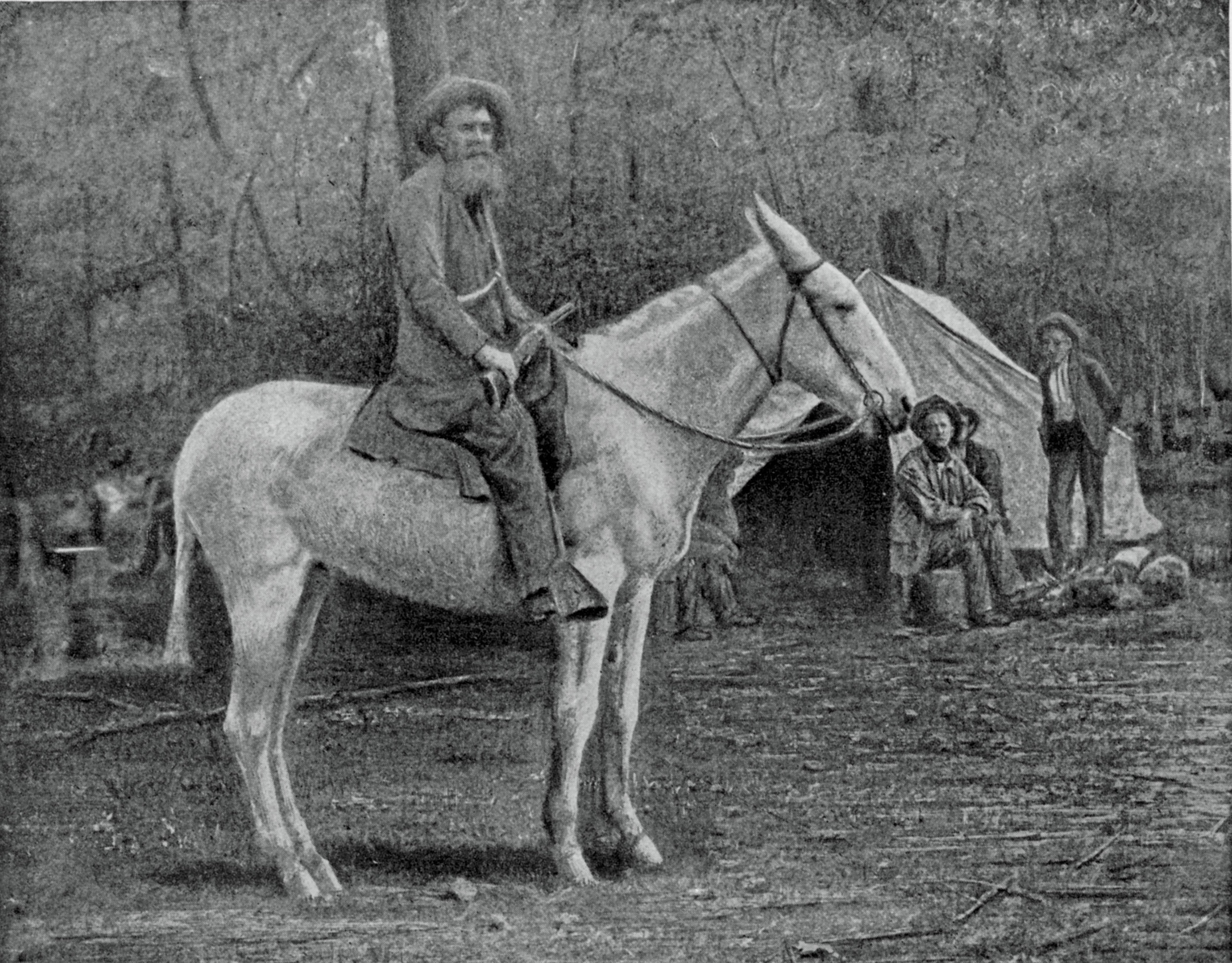
Ben Lily features prominently in the second chapter of my latest book Ghostwalker: Tracking a Mountain Lion’s Souls through Science and Story. Lily was single-handedly responsible for the deaths of 500 mountain lions, over 600 bears, and the last grizzlies in the Southwest. He was a predator-killing machine epitomizing the hatred for predators in the early 20th century.

Today I took a short hike to what locals call Ben Lilly Pond, a 1/2 mile turn-off from Highway 15 before the Ben Lily Memorial.

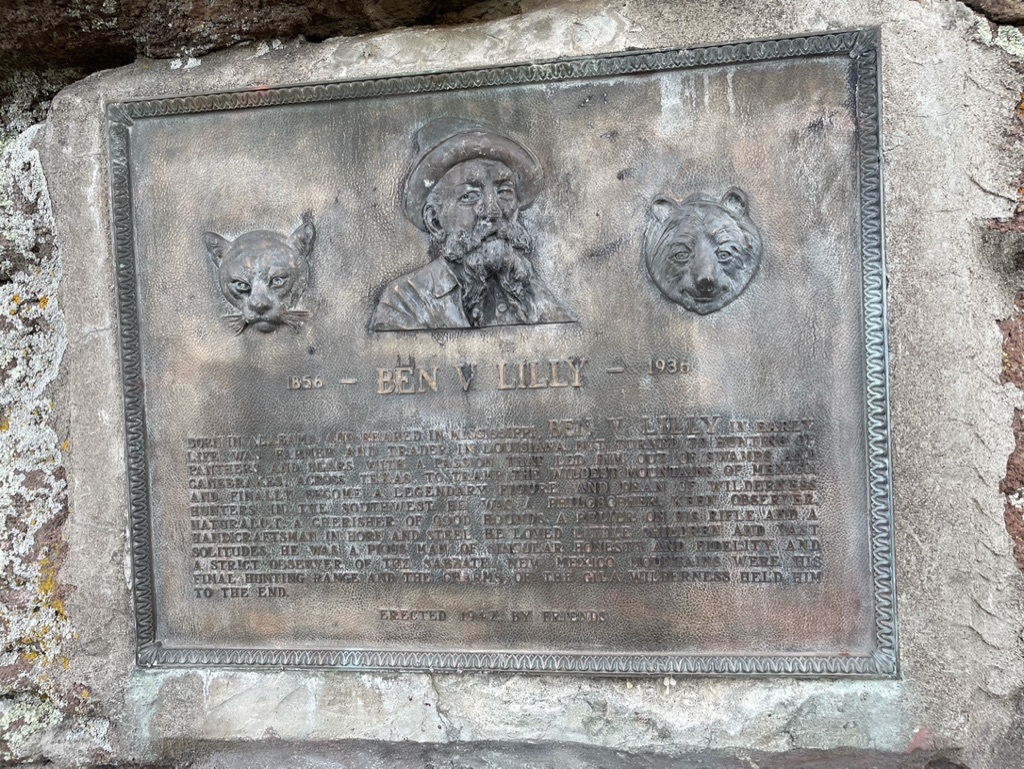
The Ben Lilly Memorial plaque in the Gila National Forest against a large boulder overlook. See the lion and bear on either side

At the age of forty-five, in 1901, Lilly called his second wife and three children together, kissed them goodbye, and left them everything he owned except five dollars. Leaving his home state of Louisiana, he headed west for a land where the big predators remained. His life philosophy was now well formed. He regarded himself as the policeman of the wild, “a self-appointed leavener of nature.” Bears and lions specifically were, by their very nature, evil. Lilly considered it his biblical duty to set things straight by killing these “devil” animals. He had evolved into a religious fanatic, mixed with a special kind of mysticism. As Lilly traveled west, he left behind a wake of wildlife destruction. But his folk-hero status was growing. While hunting in Texas in 1907, Lilly received a telegram summoning him to a presidential camp on Tensas Bayou for a bear hunt with President Theodore Roosevelt.

1908 Scribner’s article: Theodore Roosevelt “In the Louisiana Canebrakes,” Scribner’s XLIII (January 1908) Courtesy Avery Island Archives, Avery Island, La.

In 1908, Lilly hunted grizzlies, mountain lions, and black bears in Mexico for three years, sending skeletons and skins back to the Smithsonian Institution. He returned to the United States, entering through the boot heel of New Mexico. Now in his mid-fifties, his predator killing career was waxing as a new era of government eradication programs for predators began. His reputation was widespread, his services were in high demand among ranchers, and he was finally well paid for a passion previously pursued only as a personal vendetta.

On the road to Ben Lilly Pond. An old ranch entrance now shot full of bullet holes

When trailing with his dogs, Lilly would forget to eat and drink, sometimes for days on end. Then he’d gorge himself on his kill and the bit of corn meal he carried with him. He never kept the skins of the animals he killed for himself, considering them a worthless piece of clothing. He was on a mission, and that intensity of focus molded him into an expert woodsman. He had no coat, but piled on layers of shirts. If he was cold, he’d build a fire, push aside the coals, and sleep on the warm ground. At least once a week he bathed in a stream, sometimes breaking away the ice, then rolling in snow to dry off. The air in a town was toxic to him, and when offered a bed, he preferred to sleep outside on the ground with his dogs.

To the men who knew him, Lilly was a man of complete honesty and character. He never swore, drank, or smoked, and famously rested on Sunday, his holy day. If his dogs treed a cougar on Saturday night, the animal had a stay until Monday morning. But his religious beliefs extended to the supernatural. Lilly’s favorite meats were bear and especially lion, which he felt would endow him with exceptional instinct, prowess, and agility to pursue his quarry. He expected no less of his dogs than he did of himself—running them for days without food. He would go out of his way to make sure they had water before he did, took great pleasure in watching them work, and valued a dog’s intelligence rather than a specific breed. Yet ultimately, they were simply tools of his trade. If a dog began running trash or quit the trail, he had no need for him, and the dog was beaten or shot to death.

Ben Lilly was unquestionably one of the most destructive figures in North American wildlife history, contributing to the demise of the grizzly bear and the wholesale reduction of mountain lions and black bears in the Southwest. The plaque above was erected by friends who knew him, back in the 1930s. But there are some folks today that revere Lily as the ultimate hunter, apparently ignorant of the havoc and destruction he left behind in the Southwest.

The terrain and vegetation of the Gila

Walking the jeep road to the pond (which was completely dry), I did have to marvel at how this strange man maneuvered these mountains. The scrubby oaks, pines and junipers are so thick they are almost impossible to pass through. The ground is rocky and the going rough. But I wonder how many people who take these short hikes even know who Lilly was and the devastation he caused to our wildlife.

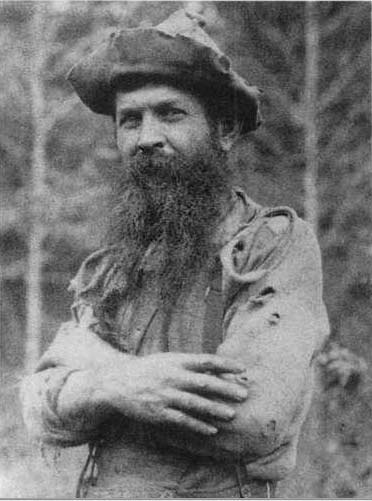
Ben Lilly

Lilly’s lack of true reverence for life is the antithesis of our values of ethical hunting and wildlife conservation—a misguided, warped sense of nature that viewed large predators as “endowed by their very nature with a capacity to wreak evil…and should be destroyed.” A misshapen, exaggerated product of his era, one could consider Lilly a vessel—a queer, half-crazed man who performed his executions as a service for others, for the government, and in his own mind, for God. Genocidal war on predators had been codified as our nation’s God-given right, and Lilly was their proxy.

If you are in Tucson on March 15th, come to the Tucson Book Fair. It’s huge with a wide variety of authors and speakers. I’ll be speaking at 10am at the Western National Parks Association Stage