


This is a post about something I regularly and randomly think about: What is the impact on grizzly bears when they are captured and moved? Or even captured and tagged for research?
Obviously a capture is a very close encounter with humans. Some captures are used solely for research where the grizzly is ear tagged, collared, or tattooed or both. Then there are captures that move problem bears (grizzlies in the Greater Yellowstone area are moved usually for killing livestock) to more remote areas of the GYE that the bear isn’t familiar with. How does that affect a bears’ perception of humans? I also wonder how moving a grizzly in the fall affects their ability to find food sources in an unknown territory.
When I first moved to Wyoming, our local landowners association’s yearly meeting had a speaker from the Wyoming Game & Fish Department who specialized in bear management. I live in an area where problem bears are dropped off. The hope is that they’ll roam into Yellowstone or adjacent wilderness areas. This bear biologist told the crowd “You don’t have to worry about the bears that are dropped off here. They’ll just ‘home back’ to where they came from.”

One story sticks in my mind that illustrates all my questions. In the fall of 2017 our local game warden Chris Queen, was off-duty and hunting elk up a remote drainage. It was dusk and he was walking out, back to his truck, without any success. On the way he encountered a female grizzly with three cubs. Queen later told me that he knew this bear. She was aggressive and hornery. The wind wasn’t with him, she charged, and he shot her to protect himself.
“I didn’t want my kids to be fatherless,” he told me. I knew Chris had used bear spray previously in a grizzly encounter. And when we discussed the incident he was on his way to help with some spring bear captures. I didn’t blame Chris. You never know what you’ll do in an encounter and he had a lot of experience with bears and using bear spray. The incident was thoroughly investigated by the Department and Chris was cleared. The three cubs were 2 year olds and the WGFD felt they had a good chance of making it on their own so they didn’t try and capture them. Winter was near and the cubs would be denning.
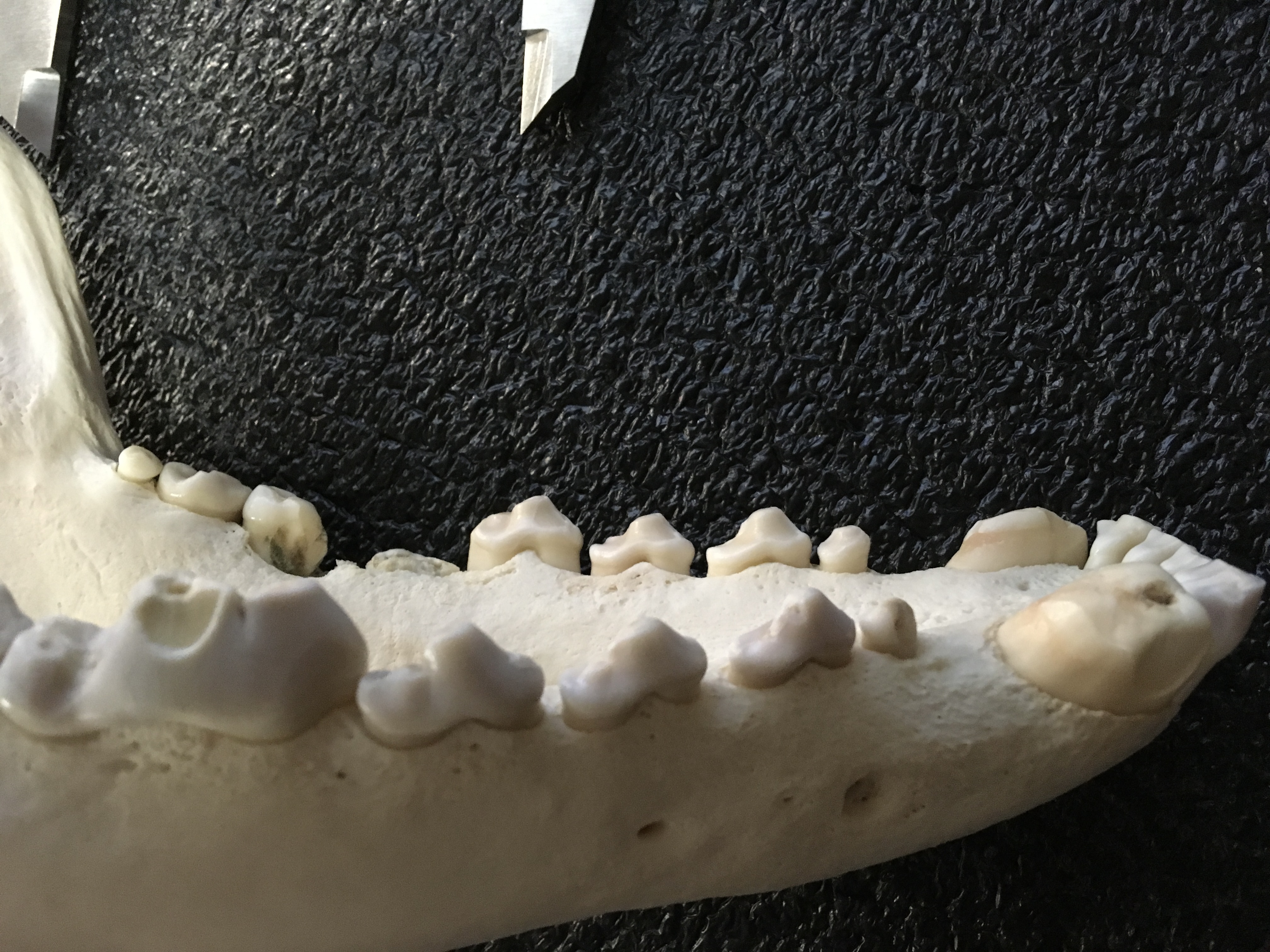
What stuck with me was the story of grizzly bear No. 423, the bear Queen killed. She was known to WGFD because she had a tattoo on her inner lip. 423 was born in Sunlight basin around 1996. When she was 5 or 6 she broke into an unsecured building, probably in one of the ranches in the valley, and received a grain reward. She was captured and moved to the East Fork of the Wind River. From there she ‘homed’ back to Sunlight, a distance of about 80 miles as the crow flies over rugged terrain and scoured treeless peaks. In 2011 at fifteen years old, 423 was trapped again in Sunlight Basin after she was found eating a cow calf. Although it wasn’t clear if she had actually killed the calf (cattle die from many things), she was moved again, this time to the Idaho/Wyoming border near Jackson. Again 423 homed back to Sunlight, this time venturing over 100 miles through several mountain ranges. (WGFD documented her in 2013 in Sunlight up Trail Creek drainage). When Chris encountered 423 six years later, 423 had three cubs, making her more dangerous as grizzly sows will protect their cubs if they feel threatened.
Besides the obvious question of how these bears are able to find their way back to their natal range, I have to wonder the impact these long distance moves had on 423’s temperament. Now she was an much older bear, 21 years old, with three cubs and a series of unpleasant experiences with humans. Was she thinking “No way you’re gonna move me again, and separate me from my cubs.”
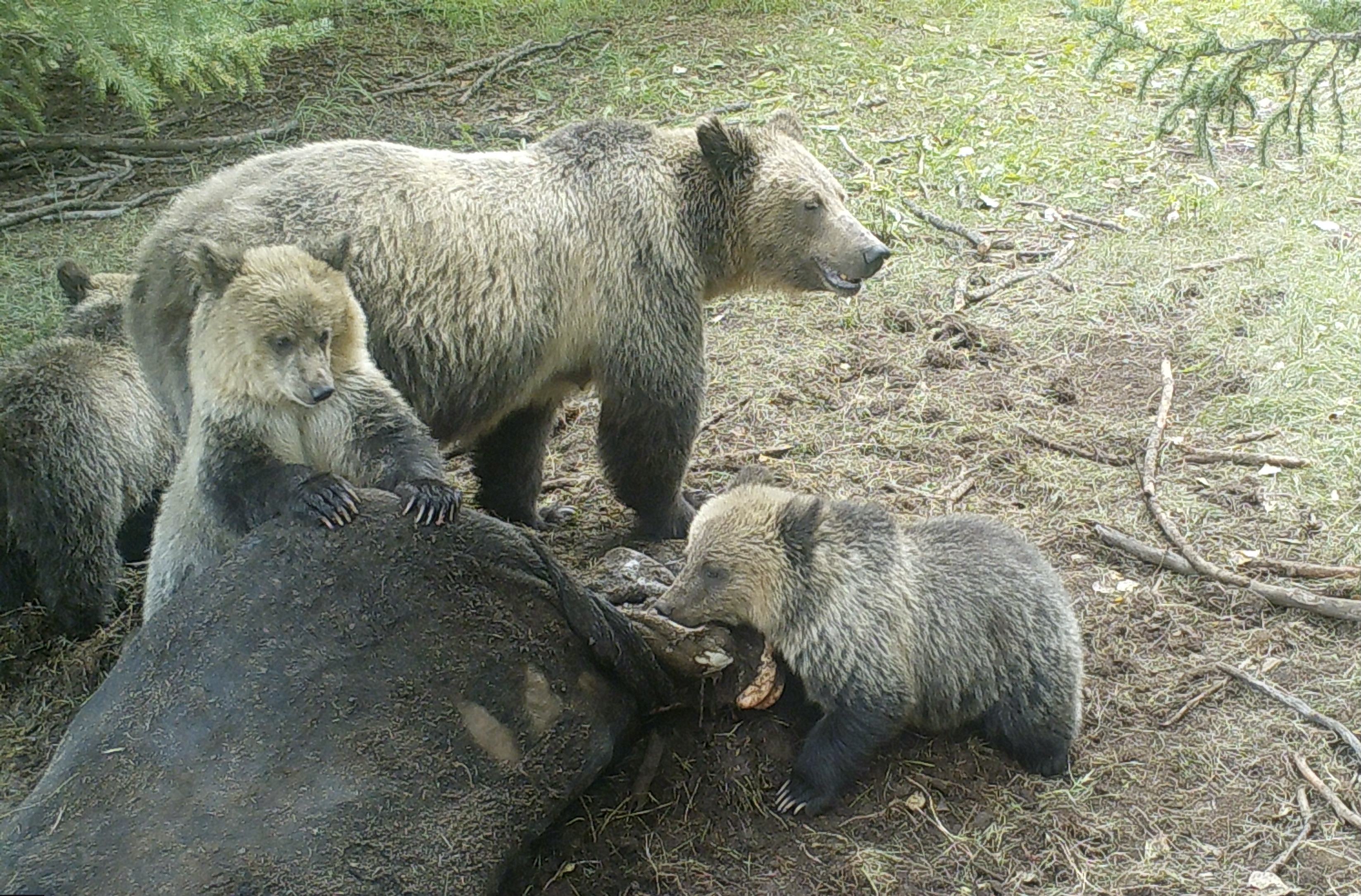
I’ve been using trail cameras for over fifteen years. I regularly get captures of grizzly bears. My personal experience is that grizzly bears rarely mess with my cameras. Sometimes cubs will explore them but adult males or females hardly ever do. On the other hand, male black bears (and sometimes female black bears) regularly disturb my cameras. I think of grizzlies as the top of the food chain. They have nothing to prove. Black bears though, as subordinate predators in an environment where an encounter with a grizzly can mean death, have to act tough. They stomp around the area, leaving their scent, and bite the cameras to prove their dominance. Yet I have had a few incidents where grizzlies pawed my camera. One was set up on a freshly dead deer. The grizzly bit the camera up, then dragged the deer far up the hillside. That’s typical protective behavior on a large meal. But the other grizzlies that chewed the cameras all had been ear tagged or collared. Two were females with cubs.

I’d love to see a study on the effect of handling and/or moving grizzlies. I’d like to know if grizzlies that are moved in the fall have time to home back, or how they find enough food in an unknown area to make it through the winter.
Bears are smart and they also have individual personalities. I once read a book by a retired Montana warden who helped out on captures. He commented that some bears repeatedly went into cage traps for the free meal (usually road-killed deer are the bait in the trap). Grizzlies are one of the most studied mammals. But I’ve yet to see a study answering these questions.
Filed under: Grizzlies, New ideas | Tagged: Grizzly bears, hiking, nature, travel, Wildlife, yellowstone, Yellowstone National Park | Leave a comment »










 Leslie Patten Books: Wild Places, Sacred Spaces