• MY BOOKS ON WILDLIFE, GARDENING AND MORE

  • The Wild Excellence

  • True stories of wildlife encounters around the Greater Yellowstone
  • Award winning eBook on Decomposed Granite, tips, how to's, what to watch for
  • Children's book. True stories of a dog and wolves. In a dog's voice
  • Written for dry Mediterranean climates in California, north and south

More on Mountain Lions

A few weeks ago I attended Toni Ruth‘s Cougar Class in Yellowstone National Park through the Yellowstone Association.  That class gave me some extra hints about tracking cougars.  I had a sense where to find tracks in my area, but identifying scraps, and finding lays and dens was another thing.  Applying what I learned, I headed out and found a kill site.  I’ve found them before, but Toni suggested that cougars usually bed down close to their kill (if its a large kill they might want to eat some more later), and also usually have a toilet within 300 feet or so.

Once I found this young deer kill in a rock crevice, I began investigating for a bedding site and a toilet.
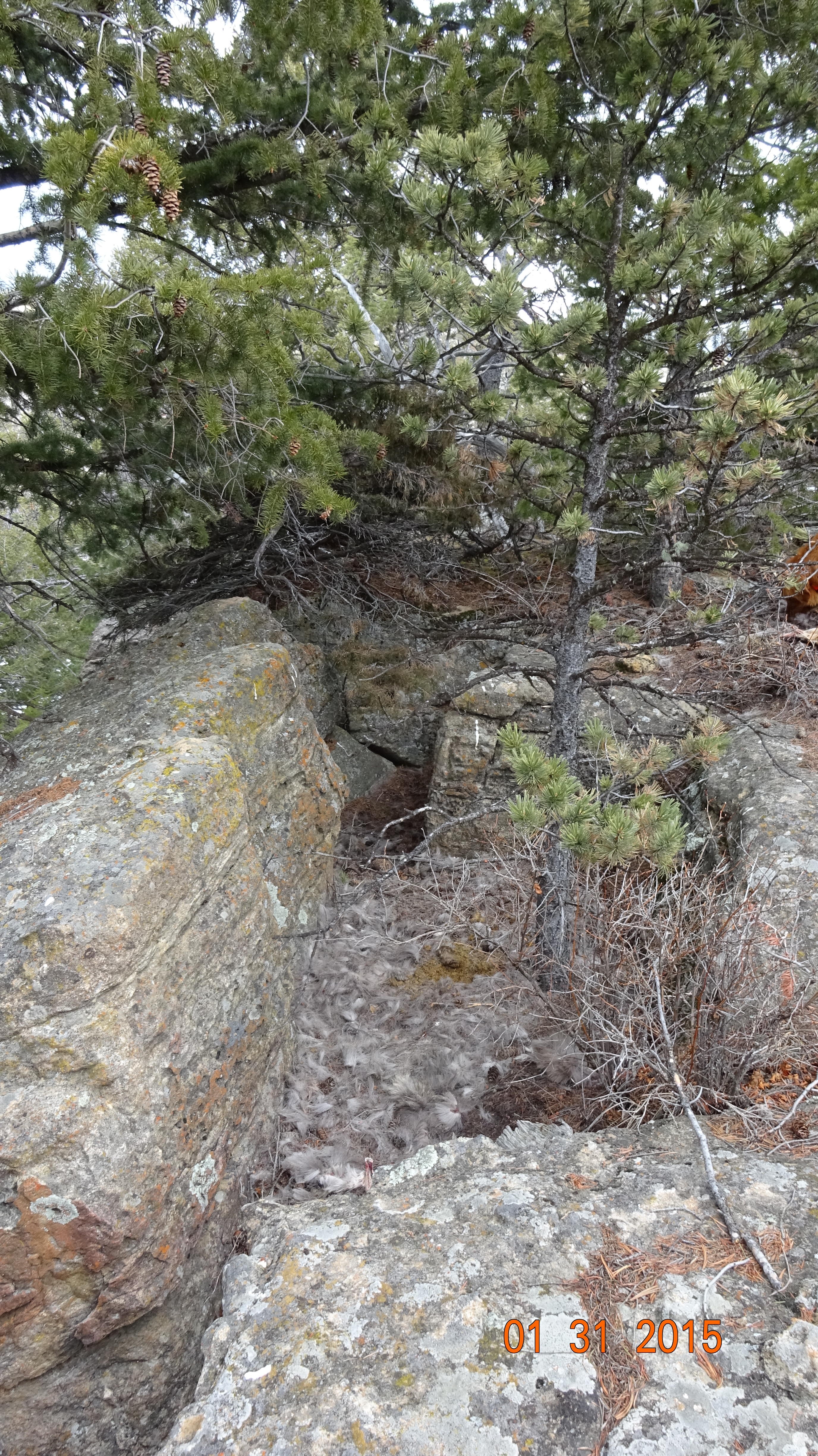
Cougar deer kill dragged to rock crevice

Cougar deer kill dragged to rock crevice

Within 50 feet of the kill, I found the toilet.  Cats are extremely clean and meticulous.  They tend to use the same area to defecate and then make sure to cover it each time.  This toilet had obviously been used for years.  I knew the area and there’s a ravine about 300 yards to the east.  I’d found lots of cat kill evidence there before so this was a good place for this cat.

Then I began looking around for a bed site.  The toilet was on the flats, but the kill had been dragged below to a small cliff area.  I began investigating the rock edges.  Toni had pointed out how the cats she collared in Yellowstone were traveling at the base of very high cathedral-type cliffs.  I figured this cat might be doing the same.  And lo and behold I found a very nice small cave–big enough for a cat to bed down in.  Toni had told me that when I find these, to crawl inside and look for ‘guard hairs’, the white hairs on the belly of the cat.  They apparently shed easily.  Following her instructions, I found several white hairs.
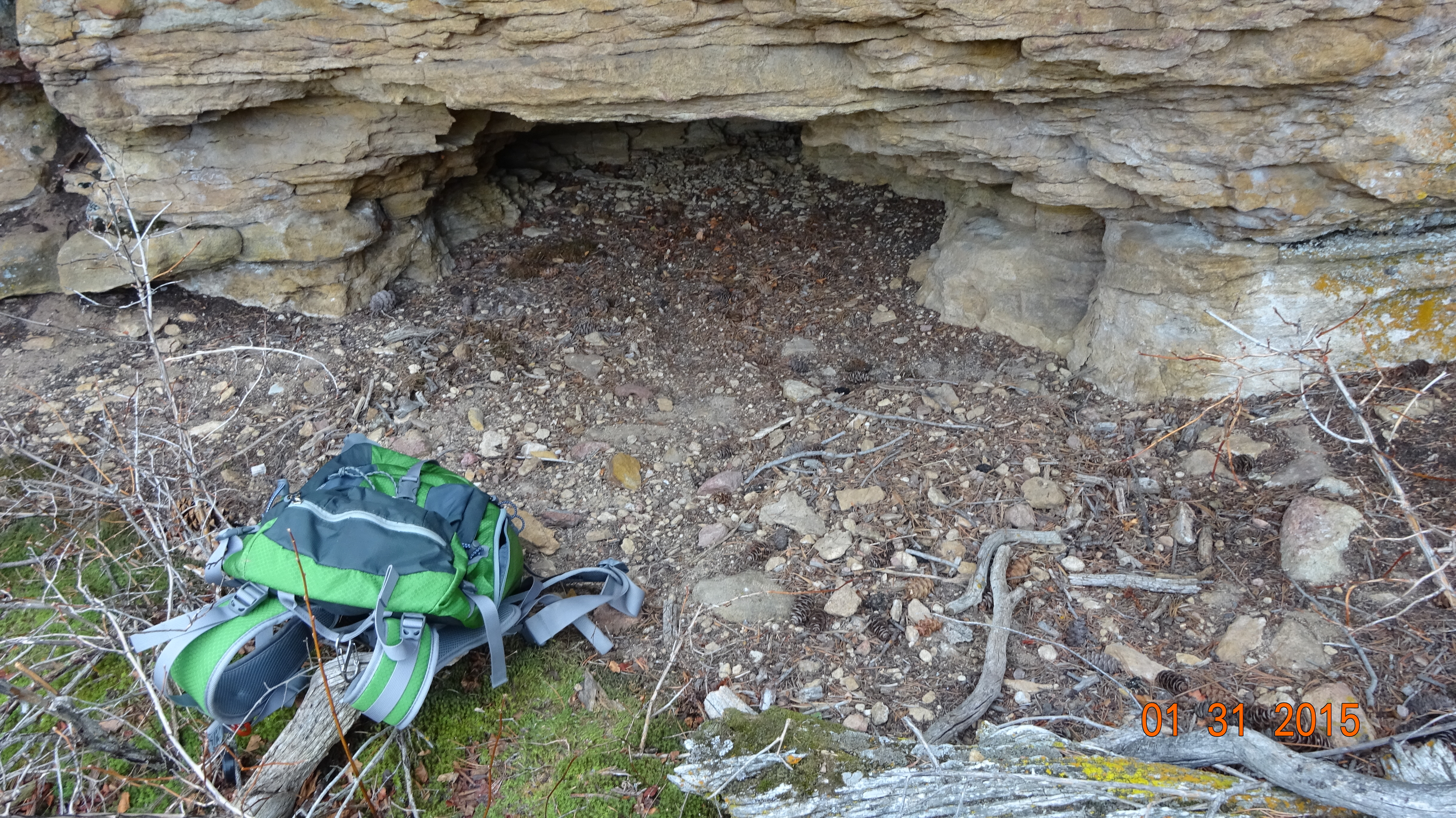
Cougar bed site

Cougar bed site

Judging from the location, knowing that deer had been killed for many years in the nearby ravine, I hypothesized that this was a bed site that cat (or other cats) frequented. Toni said that cats use bed sites over and over, and that multiple cats will use them.

I returned a few days later with a trail camera and set it on the small cave.  I anticipated that if I got anything, it might be months of waiting.

Another thing I learned from the class was that a better place to site a trail camera for lions is a scrape.  This is because male lions use scrapes (a scent mark) to communicate a lot of information, especially to find females.  And a lot of other animals will visit these scrapes.  Dan Stahler who visited the class for a morning had a video of a grizzly bear taking a full days nap on a cougar scrape!

So today I went to put my camera on that scrape I found.  I stopped to check the bed site cam and look what I found.Cougar
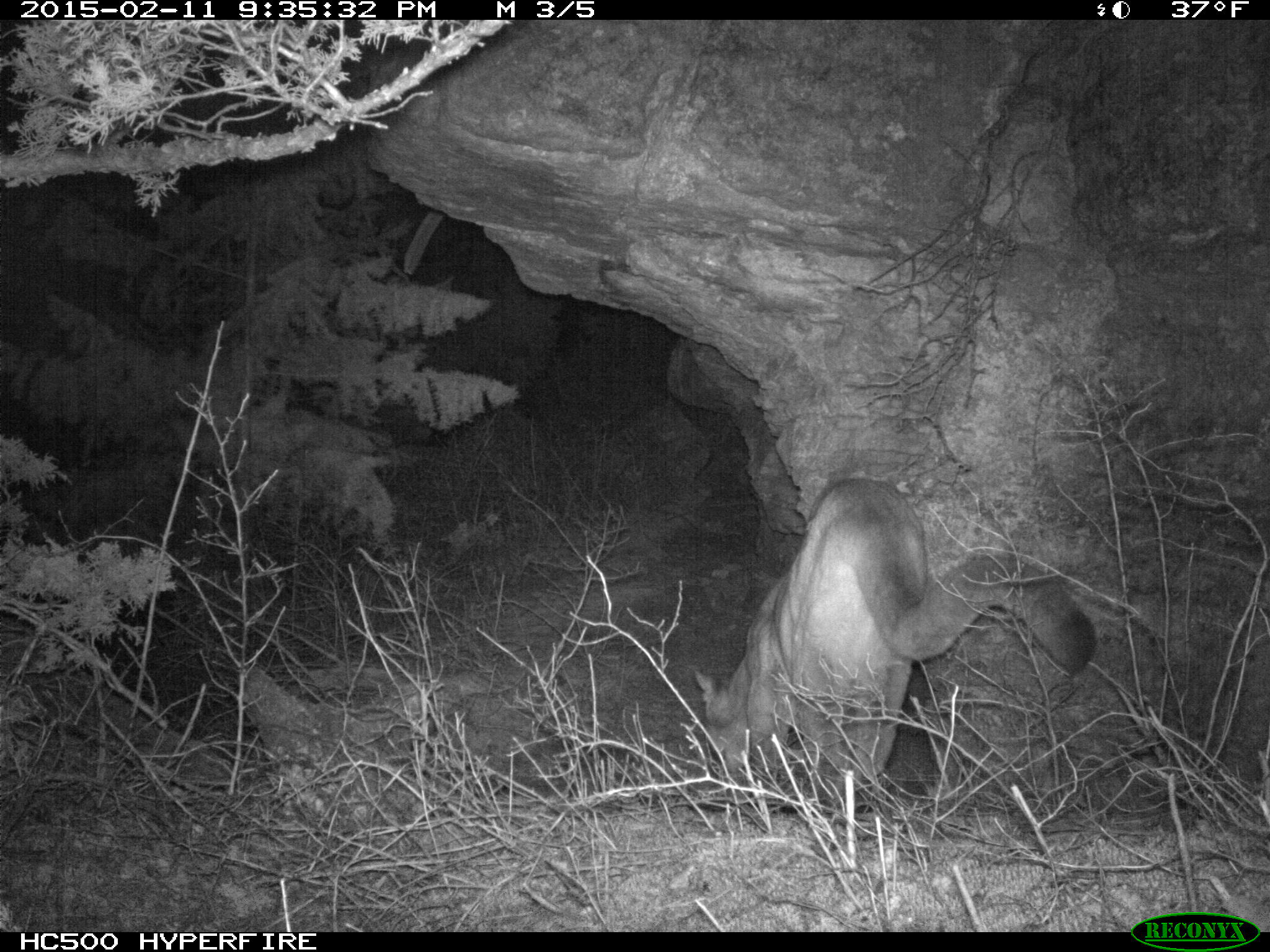
Cougar exhibits a flehmen response

Cougar exhibits a flehmen response

Cats, including your common housecat, have what’s called a Jacobson’s organ on the roof of their mouth.  This puma was smelling what had taken place in his bed site (myself as well as my dog had been there when we placed the trail cam), then drew that scent up into the roof of its mouth for a better smell. The Flehmen response is similar to smelling but the vomeronasal organ is interfacing separately with the brain. It is usually employed for detecting sexual pheromones from the urine but may also be used for supplemental analysis of any interesting smell.

I asked Toni in her seven years of cougar studies in YNP, how many times she saw mountain lions (not counting the collaring done with dogs).  Her reply–3 times!   I still have yet to see a cougar despite all this tracking.

Cougars, Pumas and Mountain Lions in Yellowstone National Park

I just completed a fabulous Yellowstone Association class in Yellowstone National Park at the Lamar Buffalo Ranch.  Renowned Puma expert, Toni Ruth, led the three day seminar.  After an initial morning of introduction to the cat family, we went out looking for the elusive cat and her sign.  If you come to a cougar class thinking you’ll see a cougar, then you’ll be highly disappointed.  But you might see some sign.

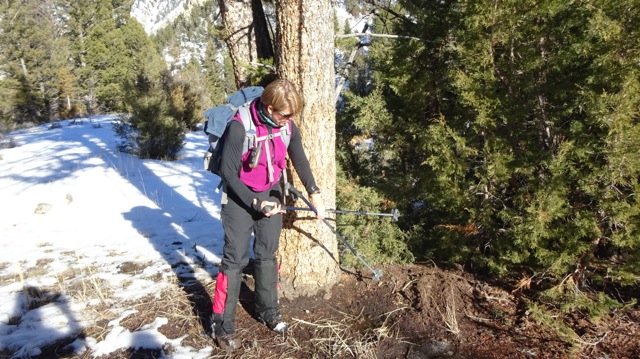
Our outing on day one consisted of snowshoeing down into a steep canyon. We saw no cougar sign, but did find some bear beds.  Toni pointed out what kind of areas we might find scraps.  Scraps, usually made by males to mark territory and also to signal females, consist of a cougar scenting while pushing backwards with his back feet, not unlike a dog might do.  Usually about 12″ long with two distinct marks and a pile at one end.

Where a Scrap might be under a large conifer

Where a Scrap might be under a large conifer

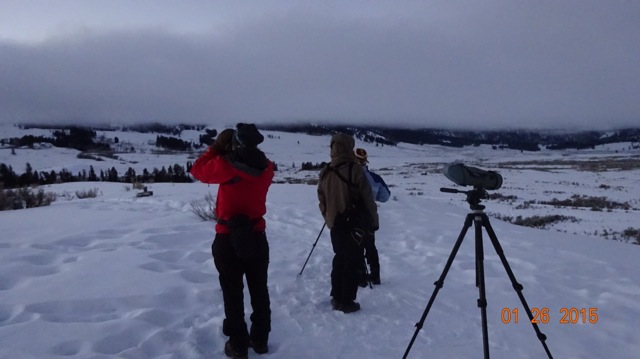
Early the following morning, some of us went out to Slough Creek to find wolves.  Lots of howling and some coyotes and eagles on a kill made it all worthwhile.

Hearing wolf howls

Hearing wolf howls

On the second morning, Dan Stahler spoke about the Yellowstone Cougar Project. During the ‘pre-wolf’ days, over 80 cougars were tagged in the park. Using this as a baseline, Toni Ruth did a cougar study in the park from 1998-2005, tagging 83 cougars of all ages.  During this period, wolf and elk densities were high.  Since 2005, there hasn’t been a study in Yellowstone National Park regarding pumas.  In 2014, Dan began a five year cougar study. This study should reveal some interesting data since elk densities are now much lower.  As wolves, bears and cougars compete for the same food, it will be interesting to see how these top predators deal with one another and their prey base.

Collecting cougar scat the scientific way with tweezers

Collecting cougar scat the scientific way with tweezers

Toni pointed out that cougars need to make a kill approximately every 7 days. Wolf packs need to kill every 3-4 days.  But wolves are feeding an entire pack, whereas cougars are feeding only themselves.  Cougars with kittens would need to kill more often.  Therefore, cougars kill more often than wolves.

One rumor I hear a lot in these parts is that hunting will control cougar numbers.  In fact it is just the opposite.  Adult males are very territorial, with an average territory of 462 sq. miles (220-704 sq. miles) Dispersing juvenile males need to find their own territory and can have a hard time at it.  If they are in another adult males’ territory, they can be injured or killed.  Adult males that have secured their territory will be known to the females in the area.  These females will tolerate them on a kill, and even around their kittens, which may most likely have been fathered by them.  But dispersing males are what are really the threat to females with young, as they might kill the young in order to bring the female into estrus. Therefore, when hunters are killing trophy adult males in an area, they are changing the social structure and creating a constant turnover of young males.  Interestingly Toni pointed out that in her personal experience, houndsmen who have assisted scientific collaring ‘hunts’ (where cougars are tracked by dogs but instead of being killed, they are fitted with GPS collars and released for study purposes), wind up learning so much about cougars that they abandon hunting them.

Cougar hind track measuring 2.75 x 3.25

Cougar hind track measuring 2.75 x 3.25

I asked Toni about the method Wyoming Game & Fish use to set cougar hunting quotas.  WG&F takes a tooth from hunter kills and ‘ages’ it.  Toni said that unless methods have greatly improved recently, tooth aging is not reliable and cannot accurately age a cat.

After an extensive hike with little results on the second day, we spent the entire last day hiking down to and along Hellroaring Creek.  Finally we had the luck we were hoping for.  Some cougar scat and good tracks!  While we were trying to measure the tracks, three bison were trying to stroll down our trail. Never mess with bison; so we gave them the room they wanted and lost our cat tracks.  Toni said since we were backtracking this cat, he was probably watching us the whole time.

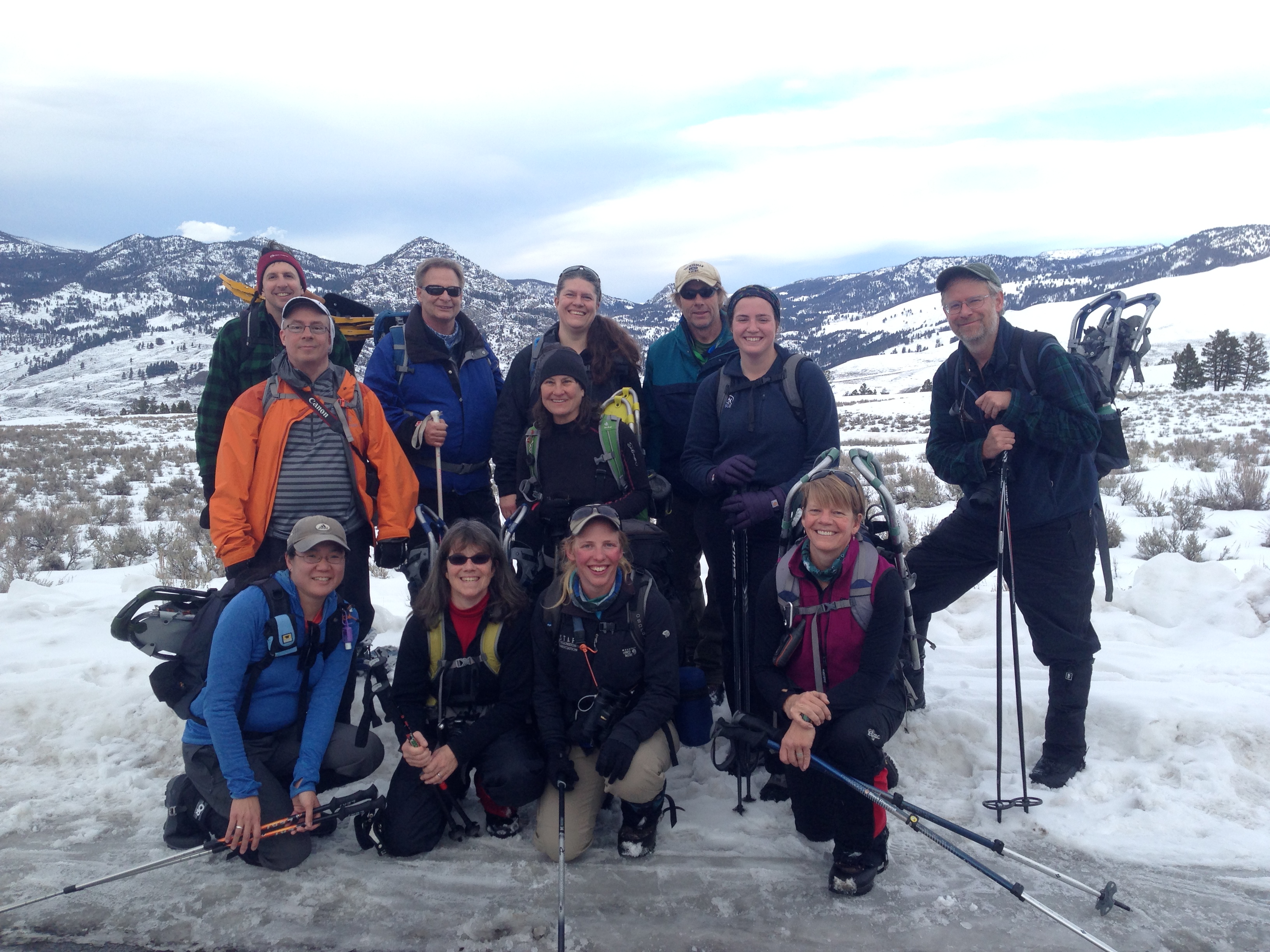
Our class!  We had fun.

Our class! We had fun.

Finally, I put this little video together from stills from my trail camera.  I also recorded the sounds separately on a Zoom recorder in front of my house this January.