Buffalo Bill Center of the West today’s lunchtime speaker was Mike Jimenez of the U.S. Fish and Wildlife Wolf Recovery program. Mike was scheduled months ago to speak about the success of the federal wolf reintroduction. But as timing would have it, just days ago wolves were relisted in Wyoming.
Mike has been a wolf biologist for over thirty years. He headed up the Rocky Mountain Region (RMR) wolf recovery for USF&W and still works for them. The re-listing put him in an awkward position, as the Feds along with Wyoming are the defendants in the lawsuit. His talk stuck to the history of wolves in the U.S., when they were listed under the ESA and why, and how the program was conducted and how it progressed. He’s a biologist, not a lawyer or a politician, and he tried to be non-biased and fair in his assessment of this extremely controversial issue–wolves!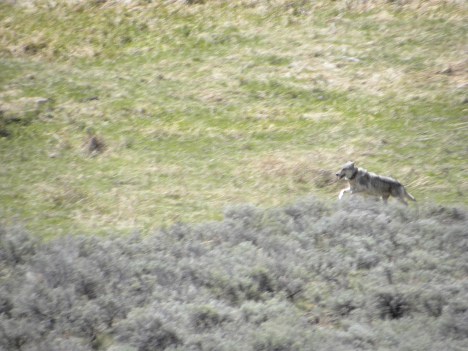
Personally, I think the Wyoming Game and Fish has struggled to maintain wolves above the minimum level and done a good job. Although I disagree with how their hunt zones have been managed [I’d like to see either a science zone label for areas around the Park with no hunting; or at a minimum have the areas around the Park have a one month season in October when wolves are not following elk as they move outside the Park]. But WG&F has their hands tied politically, just as the Feds do. And that is why things have ended up back in the courts.
Jimenez’s assessment of the ‘two’ sides of the wolf issue was, I thought, overly-simplistic–characterized as the pro- or anti-wolf—cuddly/cute, or killing machines. People who think about wolves know it is more nuanced than that and I’m sure Jimenez knows that too.

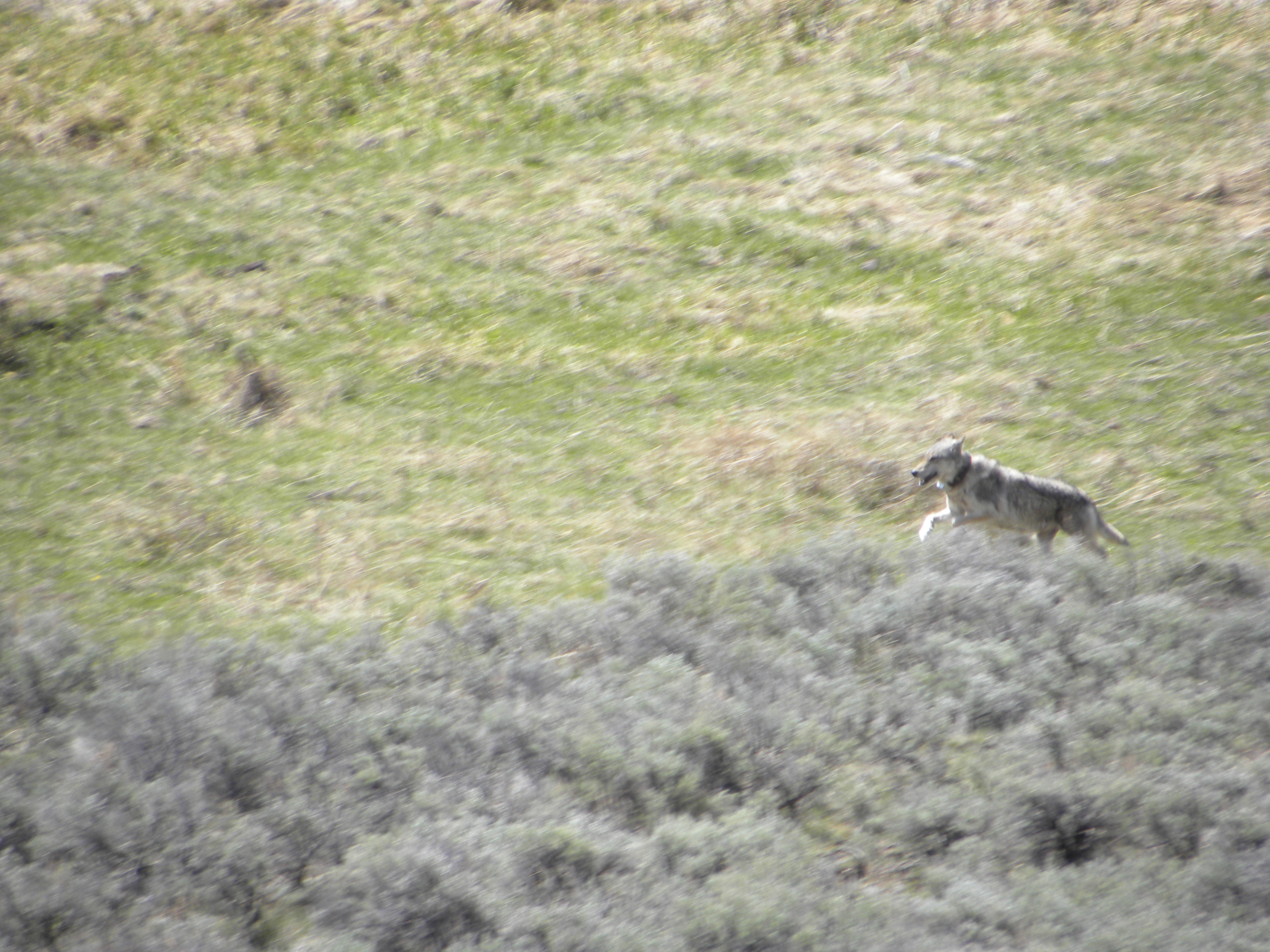
Collaring a wolf by Wyoming Game and Fish
I’d like to address my feelings on some of these issues.
First why was Wyoming targeted for a relisting lawsuit?
Wyoming is the ONLY state that has a predator listing for wolves in the RMR. Although one could argue that most of the state is unsuitable habitat for wolves (true), Montana has the same issue. Montana is a bigger area state, with its entire eastern side unsuitable habitat. But Montana does not have a predator zone. Predator status means that an animal can be shot, run over, trapped at any time of the year. There are other animals, such as foxes and coyotes or badgers that receive that status in Wyoming. In general, ‘predator’ status in most U.S. states was abandoned back in the 1920’s and replaced with hunting/trapping seasons. Wyoming is still in the caveman era on this.
As wolves are delisted in other states, such as Washington and Oregon, a ‘predator’ zone will not fly. Wyoming is a lone wolf here so to speak here. The Predator Zone must go before wolves should be de-listed here.
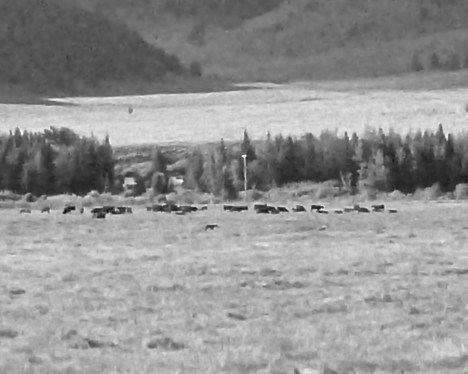
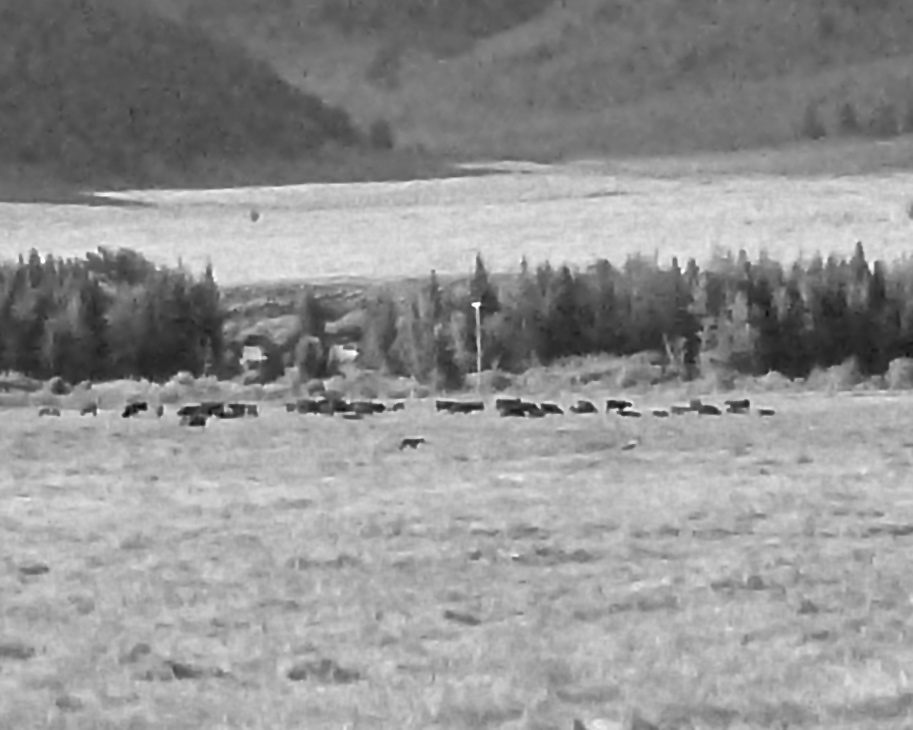
Hard to see, but the small dot in the foreground is a wolf mousing amongst cattle
In addition, Wyoming, in a back door deal with Governor Mead and, at that time, Secretary of the Interior Salazar, came up with a ‘flex-zone’, ostensibly to insure habitat connectivity for genetic diversity. In other words, a portion of the state near the Idaho border is a trophy zone during the hunt season, then a short few months rest, then reverts to predator status. This too is ridiculous and no other state has this, nor will they. This was a pure political ploy, and not based on science.
But apart from how Wyoming got itself into this relisting mess, I want to address the issue of predation and wolves. As far as objections to wolves because they eat elk and ‘hurt’ hunters, this is not even an issue to address, but just whining on the part of hunters. Hunter elk success in Wyoming has been at an all time high for the past two years. And although elk numbers in some areas are down, there are many reasons, including wolves, for this. In fact, some of the reasons, like in the Northern Range in Montana, have to do with over-hunting by humans! Wolves as competition for hunters is a non-issue.
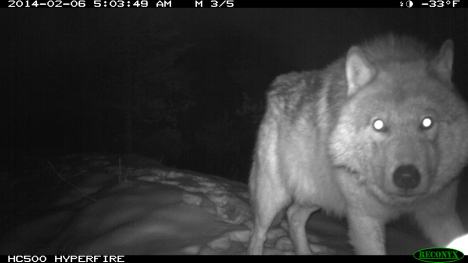
But wolves predation on livestock is an issue that needs addressing. Jimenez rightfully pointed out that wolves will and do take down cattle and sheep, especially when their preferred prey–elk and deer–is unavailable.
When wolves were brought into the RMR under the ESA, Jimenez pointed out that the agreement with ranchers was that they wouldn’t have to change any of their practices. Under the 10J rule, the USF&W would surgically kill wolves that had predated on livestock, and Defenders of Wildlife would pay compensation. As a general rule, that seemed to work out well. Cattle predation since 2006 went down, wolf population in the states went up. This kind of agreement was necessary to keep ranchers happy. But it is not a long-term solution, and I will tell you why.
Mike pointed out the Service tried several non-lethal means like fladry and loudspeaker noise to deter wolves, but because wolves are smart, they all failed as solutions for large ranches.
In my work as a landscape designer and horticulturist, although I didn’t work with livestock, I did work with wildlife issues relative to plants. In Marin county where there is essentially no hunting, deer are abundant and people have made their homes in deer habitat. Deer are a big problem in terms of a nice garden. Especially in August/September, plants that deer normally might not touch, deer will eat in order to find water. Deer, like wolves actually, are very smart and adapt to your methods of ‘control’. And like wolves and bears teach their young what to eat, deer will do the same. Even in a small county like the North Bay of San Francisco, deer in different areas will eat different plant material. And non-lethal control methods have to be constantly changed.
In addition, a much bigger issue than deer are gophers and moles. Gophers are abundant in Marin’s Open Space. Once you till soil, they move in even if they weren’t there before. They can destroy even a 5 year old Redwood Tree, making it disappear into hole overnight. Moles don’t eat plants, but dig tunnels next to roots. The roots of the plants than dry up and the plant dies.
Skunks and Raccoons are abundant too. They eat grubs and love to dig in gardens, especially new lawns or new plants, seeking insects.
These are all big problems for homeowners who spend big bucks on their landscape installation; or for small farmers who supply specialty crops to restaurants. I’ve worked with all these critter problems.

Expensive landscape losses are no different for a rich homeowner than the loss of cattle for a wealthy cattleman
These folks, and especially the farmers [which is a direct equivalent to ranchers because this is their livelihood] experience the same sorts of frustrations that ranchers do with wolves or coyotes. I know, because I’ve been on the other end. It becomes easy to ‘hate’ something that continues to damage your crops or your cattle. It is then not much of a step to turn to lethal, and easy, means to deal with the problem. Poison the rodents, kill the deer, shoot the coyote or wolf, etc.
Yet our wildlife is valuable. They are making a living themselves; plus they have value on the landscape. Wolves control the coyote population. Coyotes control the rodent and raccoon population. etc.
Over the course of twenty years of working with wildlife ‘problems’ in the landscape, my solutions evolved to be non-lethal yet creative. If the wildlife are outsmarting you and your only solution is to kill them–how smart are you? Wildlife can be outsmarted non-lethally, but it’s a matter of working with the land, with your livestock or your plants. Really, its part of your job as a grower or a rancher.
I’ve created entire wedding flower gardens in deer areas and the neighbors were amazed. How did you do that? They’d ask. I used plants that deer like but also didn’t like, interspersing them in certain ways so as to deter, and fool, deer. Instead of endlessly poisoning gophers, we used a bitter tablet that plant roots uptake and makes the plant taste bitter to them. Edible gardens must be fenced and so on.
I have worked creatively with the land to minimize wildlife damage in non-lethal ways. That is the pact one takes on when working with plants and animals. Aldo Leopold called it ‘The Land Ethic’ and it still holds today.
So although the initial ‘promise‘ to ranchers when reintroduction began was that ‘things won’t change’, now that wolves are to stay, things with the ranching industry must change. Ranchers need help and education in how to manage creatively. And it’s time they make that commitment. These predators, such as wolves and grizzlies, have so few areas they can live, the RMR needs to be one of the places where wildlife comes first. Federal lands should not have ‘kill’ orders’ Federal lands are where wolves, and bears, survive. Ranch at your own risk on public lands would be the first important change. If that means cowboying more frequently, or not putting calves out on the allotments, then the ranchers need to make those changes if they want less predation.

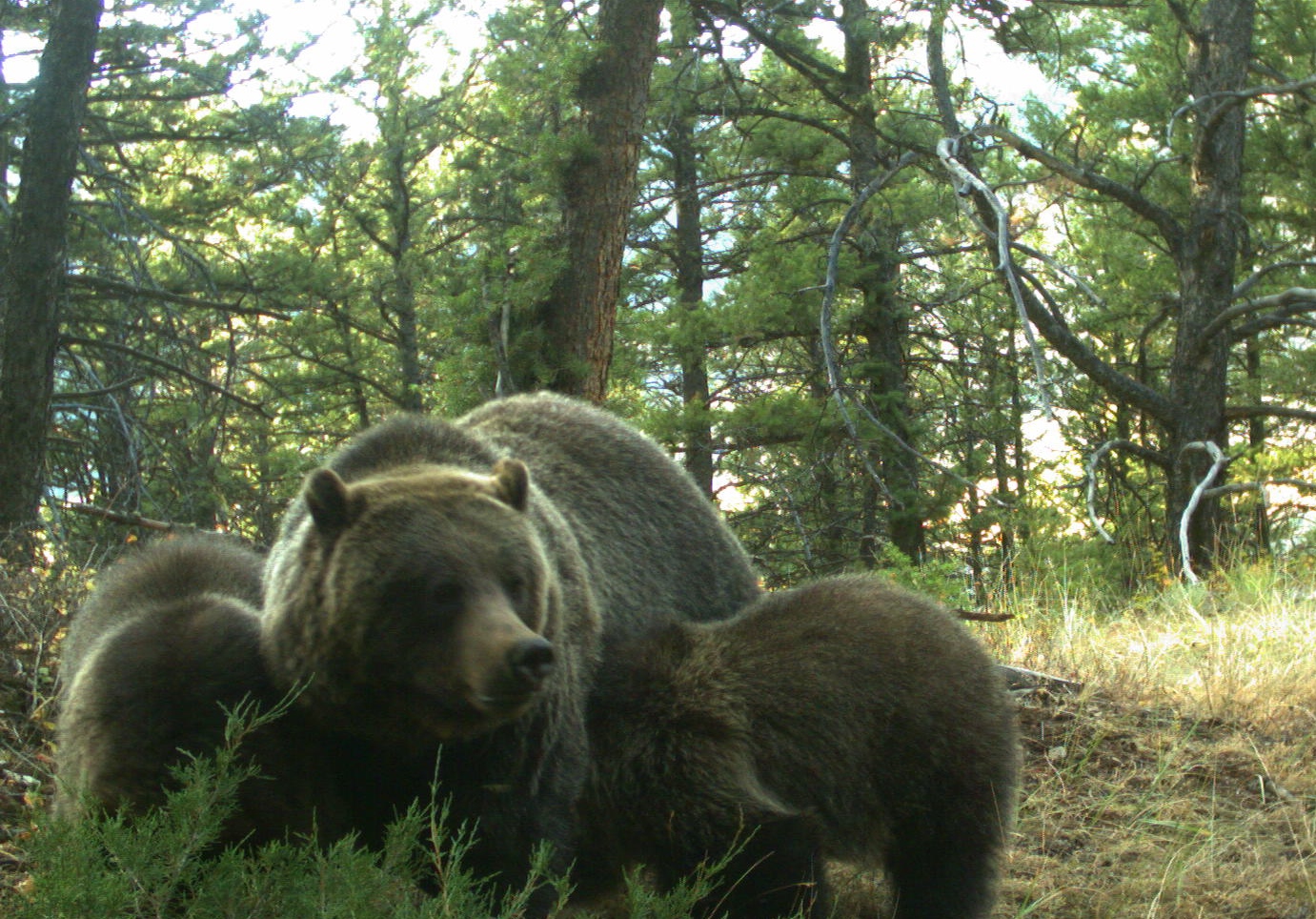
Grizzlies too are killed for cattle predation on public lands
It also would mean that a rancher is not reimbursed on federal lands. Every year I see cattle killed on the highway by me. They are on the road because the rancher, whose cattle are on public land allotments, doesn’t want to bother to turn the electric fence on or cowboy them off the road. I’ve been told ranchers just factor these losses into their bottom line. Its easier and more economical than sending a cowboy out. So if car losses don’t matter on public lands, why should the miniscule amount of wolf predation?
On private lands, ranchers will probably have to be issued a shoot-to-kill permit. But this should come with help and education, implementing methods to reduce predation. Livestock reimbursement, and Wildlife Services, should be phased out slowly. Reimbursement should only come with evidence of livestock non-lethal predation management. Money should be spent helping the rancher, not giving him a handout which only encourages complacency. I’ve run many businesses, and the federal or state government never reimbursed me for business losses.
Lastly, there are now many ranches in our state that are not making a living ranching, but using the generous subsidies that come with livestock to reduce taxes for extremely wealthy one-percenters. These billionaires are still receiving not only reimbursement for predation losses, but receive Wildlife Services assistance on our public lands to kill wolves and other predators. This is plain abuse of even our existing broken system which was implemented to assist subsistence ranchers.
Especially in our Western States, we need a new model.
Filed under: Wolf | Tagged: Buffalo Bill Museum of the West, Greater Yellowstone Wolves, Mike Jimenez, U.S. Fish and Wildlife Services, Wolves, wolves relisted in Wyoming, wyoming wolves | 2 Comments »








 Leslie Patten Books: Wild Places, Sacred Spaces