


I’ve got a theory. Bear with me as I tell my story.
This last June I was exploring a drainage that burned in the 1988 Yellowstone fires. There’s no trail but I’ve encountered coyotes denning farther up the draw; a place I like to go and investigate. The northeast side of the draw is filling in fast with a thick cover of young lodgepole tree. The ground, however, is a maze of burnt and rotting timber you have to clamber over.
June is when the free-ranging cattle are trucked into the valley. The major livestock producer runs several thousand head of cattle, all yearling males, which he rotates through a range of Forest Service allotments throughout the summer. Mid-June is a time when grizzly bears are foraging at lower elevations. By early July, summer heat and the lure of Army Cutworm moths drives the bears to higher elevations. These young naive yearling cattle roaming freely, especially in heavy timber, are easy Spring prey for hungry grizzlies.
The access to this side draw begins on an open hillside. Right away I notice fresh cow pies indicating that the yearlings have been here recently. As soon as I enter the dense lodgepole pine forest, something didn’t feel right. I pull my bear spray out of its holster, release the safety, and keep my dog at a heel. A large pile of grizzly scat—soupy, wet, and clearly from a meat meal—greets me amidst the tight tree cover. Then a waft of a dead animal fills my nose. The air is still but as the aroma is getting stronger, I can tell it’s coming from somewhere ahead of me. That was my cue to move swiftly to the open meadow on the other side of the creek and high-tail out of there. But I determined to return in a few months to see if what I sensed was correct. Months later in mid-August when I know the bears are up high and the cows are out of that area, I return to see if my instincts were correct. Sure, enough, in short order, after combing the timber, Hintza, my dog, easily locates the dead animal I smelled months ago. Yes, it was a cow. And yes, with all that fresh meaty bear scat, that had been a bear on it.
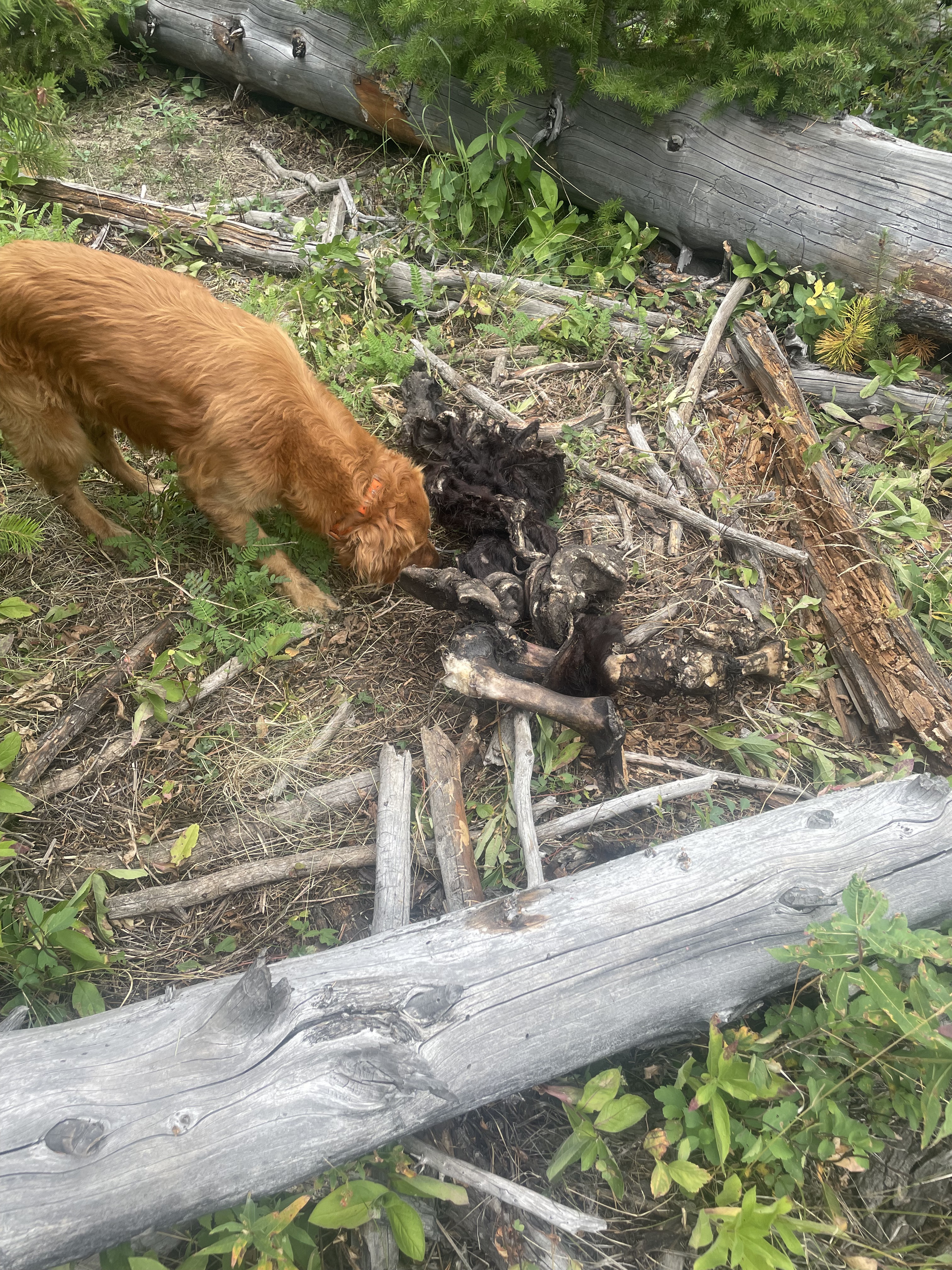
But this wasn’t the first freshly killed cow by a grizzly I’d encountered in the month of June. A few years ago, in an adjacent drainage, I was walking along the gravel road when I saw a strange unnatural hump of dirt and sagebrush. There were drag marks across the road as well. The dirt hump was a covered cow, freshly killed by a bear, one of the most dangerous circumstances you can come across. Bears will defend their kills. The following year and in the same area, the warden rode by on an ATV and warned me I was heading for a dead grizzly-killed cow which he was about to remove. That’s three fresh grizzly kills, a very dangerous situation for a hiker or a horseman. But every summer on hikes I run into dead cattle fully consumed after they’d been predated on—stiff hides with bones scattered.
Those of us who live and recreate in grizzly bear country are instructed to secure our food. I use a bear-proof trash can. Others in the valley keep their garbage locked in their garage. Residents are very conscious of not feeding bears. Yet putting cattle out on public lands in early spring, when grizzlies are hungry and foraging down low, seems akin to putting food out for the bears, especially young naive yearlings. Bears are smart and I’m betting grizzlies here are learning there’s a good source of easy meat. It may even be possible that instead of heading to moth sites and higher elevations, some bears are sticking around throughout the summer. Yearlings who are free-ranging, unfamiliar with the landscape and its risks, are akin to leaving easy food out for bears. That linked article discussing two relocated bears for killing cattle says “bears that are determined to be a threat to public safety are not relocated and might be killed.” But who is creating that risk? If cattle, like our garbage, are not managed correctly, we humans only have ourselves to blame.
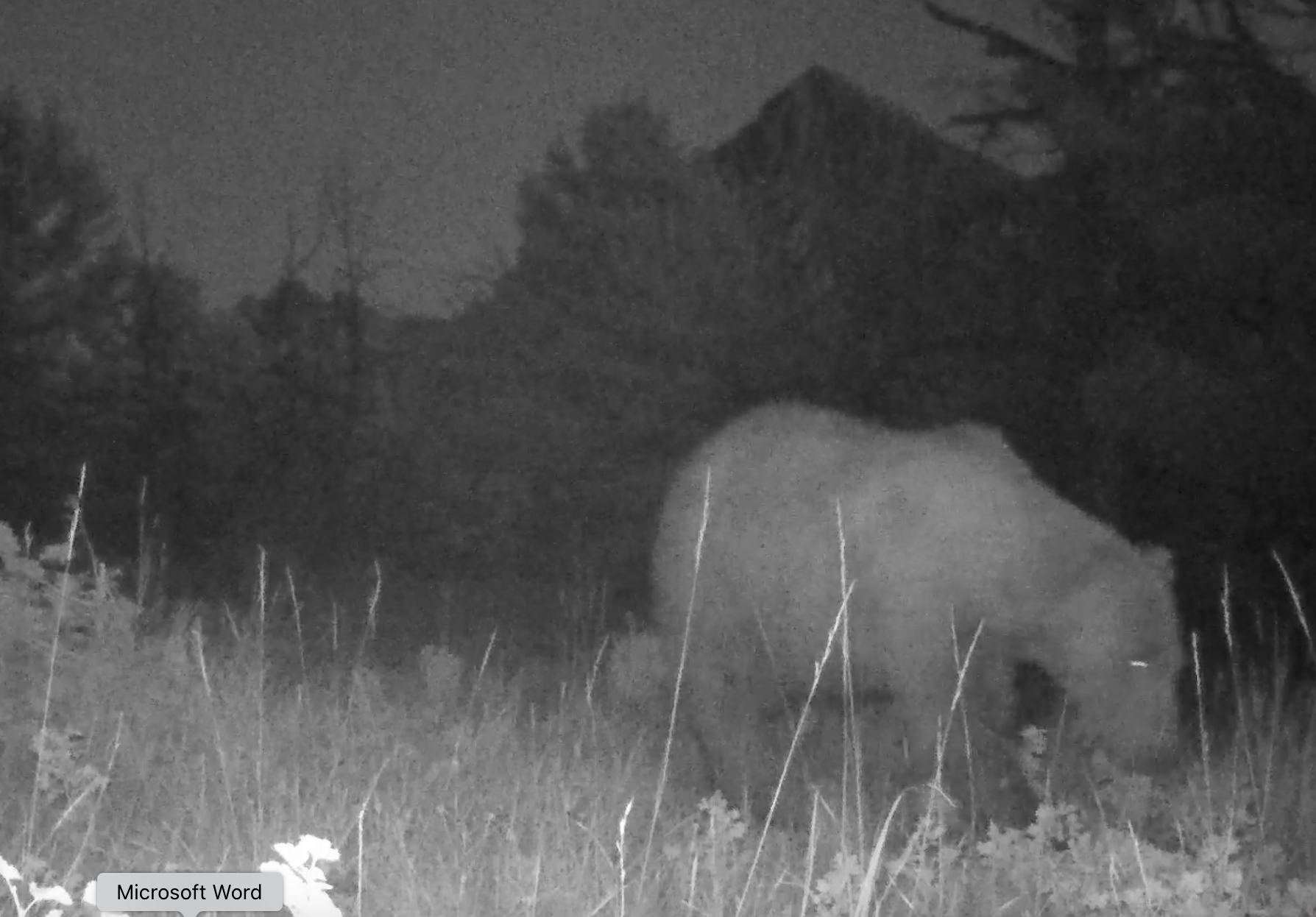

If cows are going to be free-ranging on our forests, (and I feel that livestock on public lands should be “at your own risk” as these are the only lands wildlife have) consideration needs to be given to where and when. Don’t put cattle out in June when grizzlies are down low and hungry. As an alternative, livestock trucked in in June can be placed in areas that are highly visible with a cowboy checking them frequently. Free-ranging cattle in highly populated bear areas are not only endangering the bears (Wyoming has a 3-strikes rule) and livestock, but also hikers, cyclists, horse people and other recreationists.
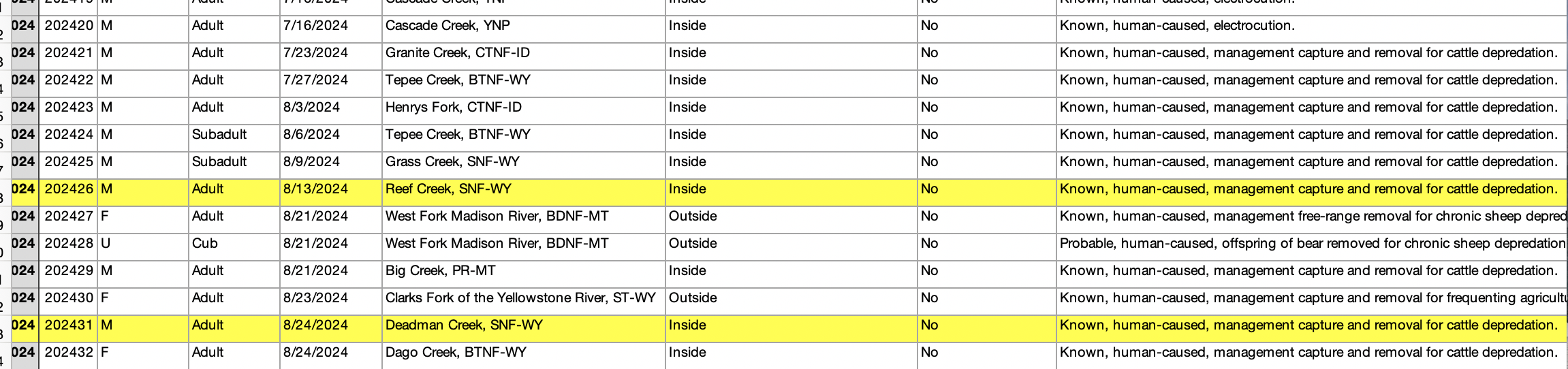
So are we training grizzlies to hang around while the pickings are easy, akin to leaving garbage out for them? I think the Forest Service, who manages timing and allotments, can do a much better job for the bears, the cattle and the people. Ironically, jurisdiction is split. The Forest Service does the range management, but it’s the Game and Fish, through state mandates, that pays producers compensation for cattle killed by grizzly bears. But I think it all comes back to the first defense of proper range management to reduce cattle and grizzly deaths. A radical thought would be to have no free-ranging cattle in grizzly country. Why not! But if the status quo must continue, then shift and limit the timing of when and where cattle are located across the forest.
Filed under: Grizzlies | Tagged: cattle, Grizzly bears, yellowstone, Yellowstone National Park |


Same goes for wolves.
LikeLike