• MY BOOKS ON WILDLIFE, GARDENING AND MORE

  • Coming Fall 2024. Pre-order and use code 6AF24 for a 40% discount

  • The Wild Excellence

  • Award winning ebook on DG Primer

High drama

Nature is full of drama, usually of the life and death kind.

On a rare warm, windless, beautiful day, I loaded up with the dog and headed for a hike down the unplowed part of the main road.   Just over the crest of the flats, I saw about 600 elk corralled within the ‘elk fence’, nervous and jittery.  It was almost 11:00 and these elk should have been resting in the trees.  Besides, you never see elk inside this fence.

Elk stuck inside fence and can't get to safety

I’ve heard two stories about this fences’ beginnings from two different neighbors.  When this ranch was owned by a wealthy man named Bugas in the 70’s, so the first story goes, the county conservation services re-graded and drained the field so he could put his cattle here, or at least more cattle.  Then to keep the elk out of the grazing pasture, the county paid for the fence.  Your tax dollars at work!

The second story isn’t too different from the first but with some variation, yet still with cattle in mind.  In the hard winter of ’77-’78, when the snows were so deep you couldn’t see the tops of the fence posts, Bugas’ cattle were struggling and starving.  The elk were eating the feed that was set out for them.  So a temporary fence was erected for that winter only.

Since that time the property was sold to Earl Holdings, one of the wealthiest men in the world, the fence remains, and the elk can’t move through or over.  So to see the elk inside was very unusual and probably spelled trouble.  The fence borders the creek.  On the other side of the creek is the game preserve where the elk have been gathering every evening and morning to eat.  One gate to the ranch property is open from the creek side, which is how these elk got in.   And that is how they would need to get out of this very large enclosed pasture.

But why they were there was solved when I saw some birds circling in their winter pasture across the creek.  There was a kill over there. These elk were trying to get across the private pasture and into the forest beyond but were being prevented by the fence.  Now they were sitting ducks for the wolves.  The road is between the fence and the forest where they wanted to head but were prevented.  They were hanging around the fence line by the road and every time a car went bye, they stressed, running this way and that, confused, not conserving their energy, unable to head in any safe direction.
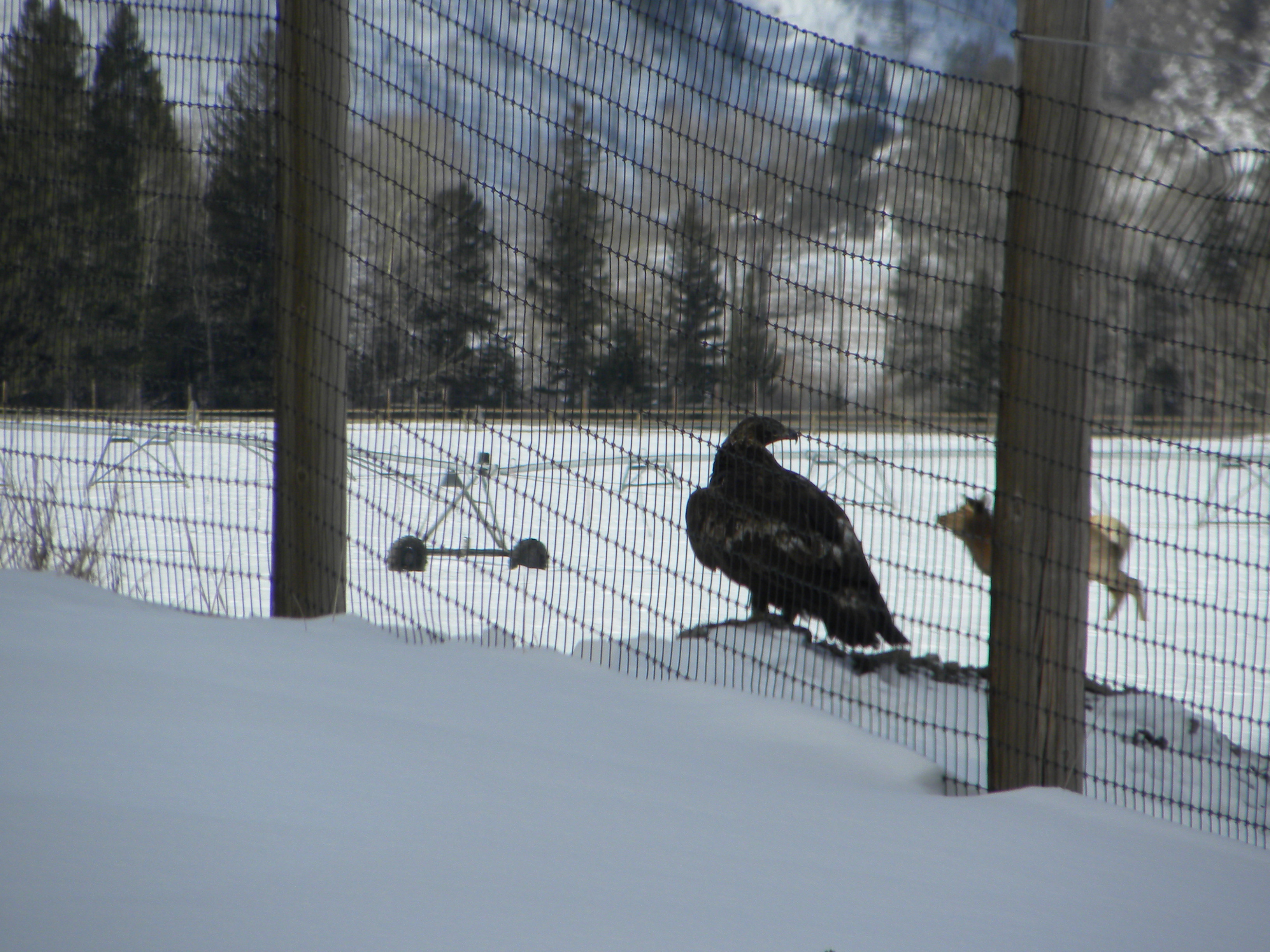
 

Golden eagle resting after feeding on carcass

Needless to say, I’ve hated this fence ever since I’ve been here, and here was more proof why it should go.  When I saw the kill I went back to get my scope,  On the return I ran into Ron.  He’s a citizen ‘Wolfman Jack’.  He does a great service by being totally obsessed with wolves and following them.  He knows more what’s happening with the packs around here than anyone, including the Wildlife Services folks.  He relayed the drama that had unfolded this morning.

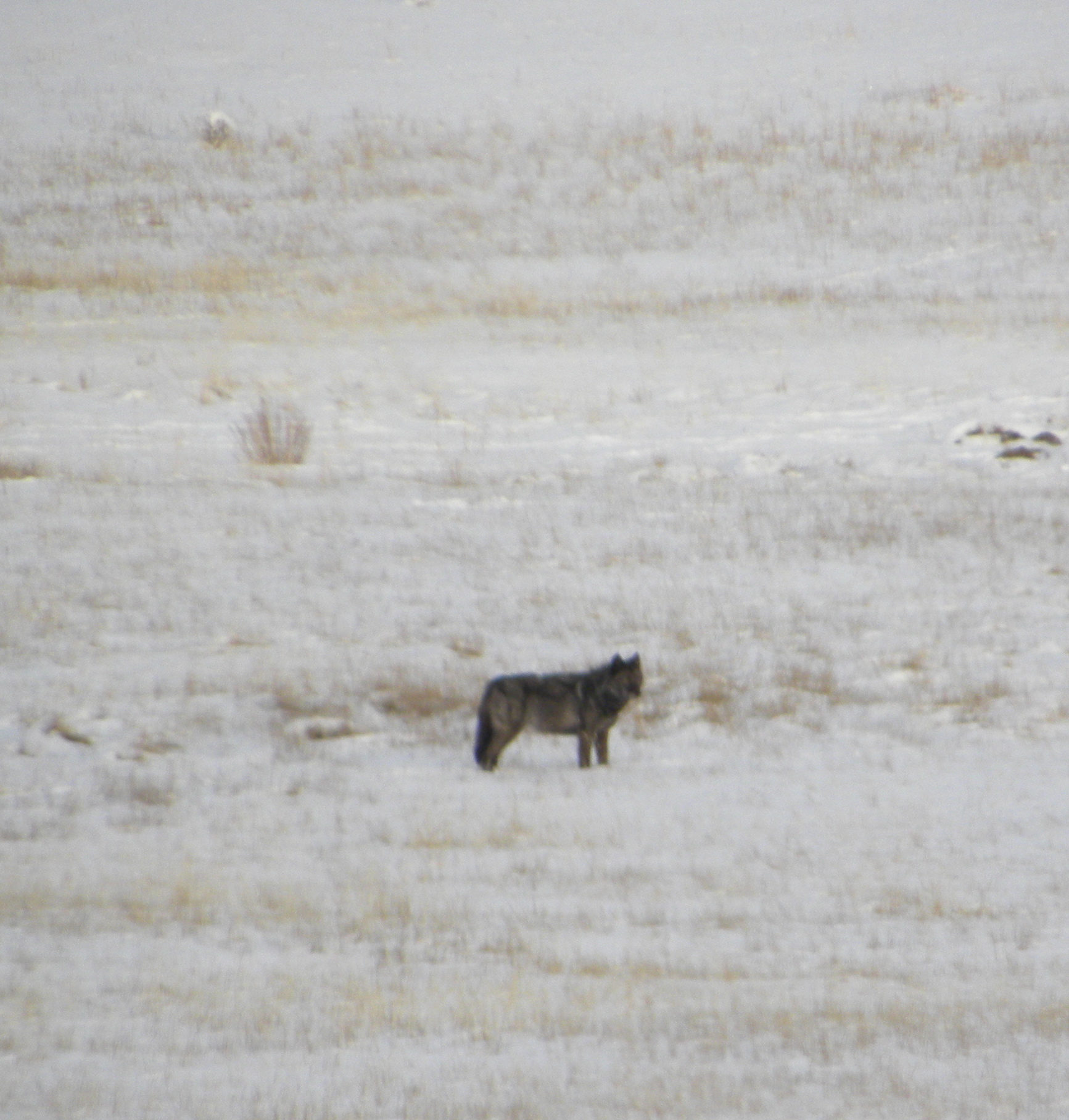
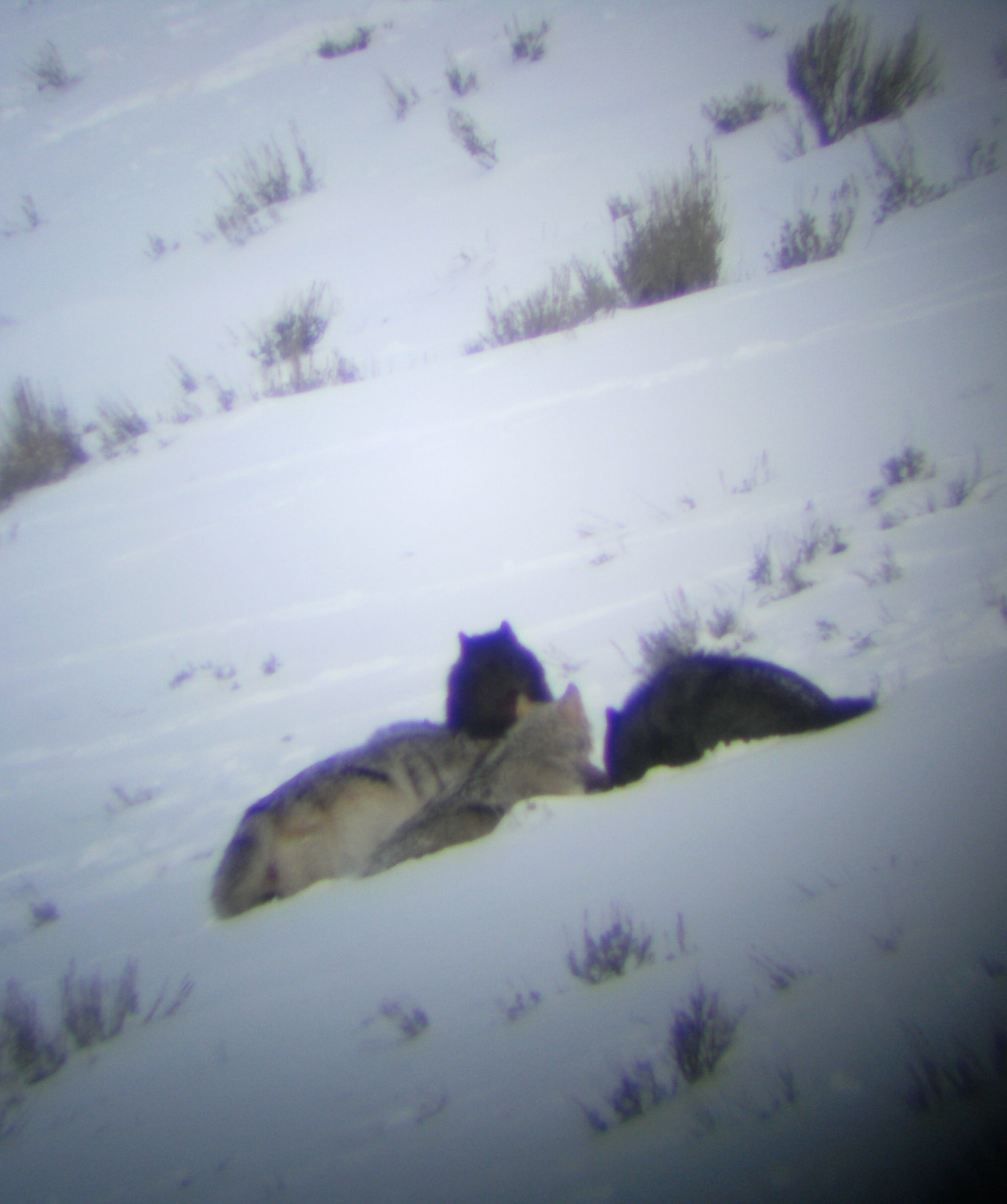
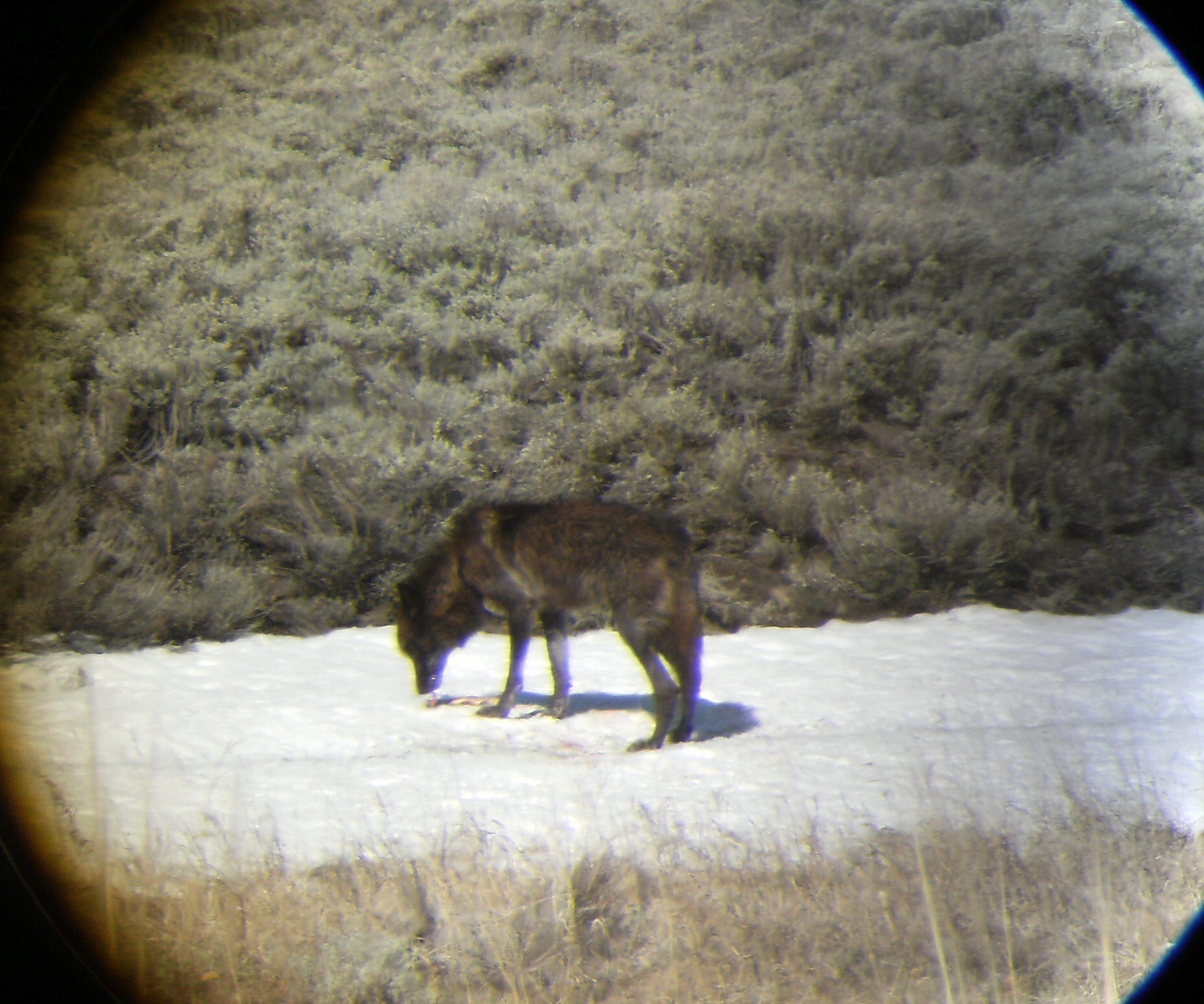
The Sunlight Pack made a kill.  The Sunlight pack is about 10 strong , almost all young wolves.  While they were on the kill, Ron heard some barking.  At first he thought it was the ranch dogs nearby, but then here come the Absaroka Pack, mature wolves 7 strong. They pushed the Sunlight pack off the kill.  While we were talking a black wolf from the Absaroka pack came checking things out.
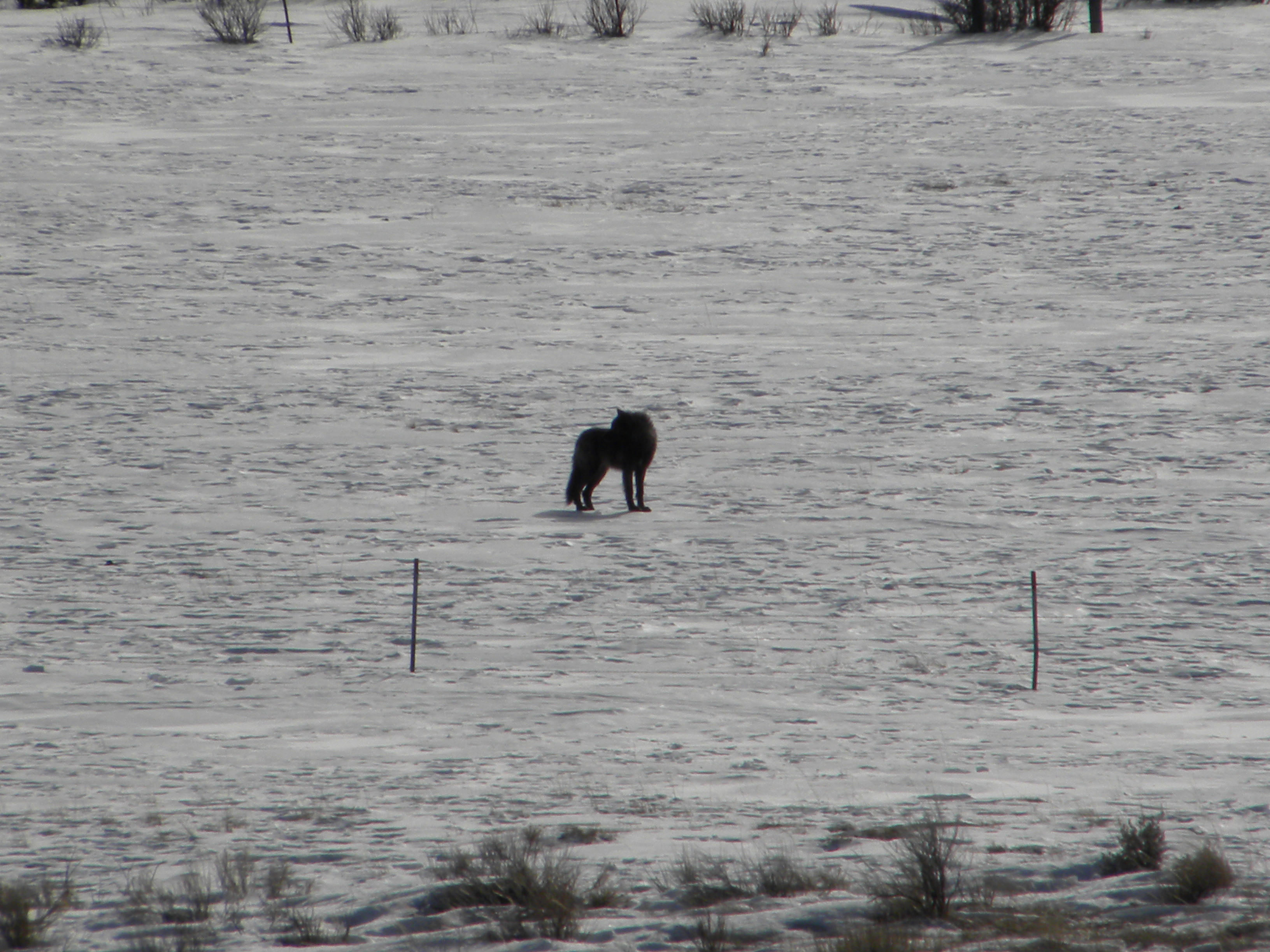
Ron told me that between the Sunlight Pack, the Absaroka Pack which seems to come around here as well, and the Hoodoo pack of 10 wolves up around Crandall (but they frequent the valley here as well), AND the Beartooth pack of now 10, there is more going on in this area than the whole of the Northern Range.  We’ve got a lot of wolves running around this valley.

Wolves are such social animals and their interactions and orders are constantly changing.  The U.S. Fish and Wildlife biologist, Scott Becker, told me that they have few collared wolves at this point.  The dynamics are constantly changing and hard to keep track of.

When Abby was doing her wolf study here several years ago, there were only 2 or 3 wolves in the so-called Beartooth pack.  That pack is located across the Clark’s Fork of the Yellowstone, where there are very few elk.  It didn’t seem like a very hospitable place, especially in winter.  Scott told me they must eat a lot of deer up there.

I continued on down the road and began my hike.  Resting in the pasture, I saw 3 wolves–2 blacks and a grey.  When they saw me, the grey hightailed it out of there, but I was able to get some good video of these blacks.

Error
This video doesn’t exist

Wolf etiquette in the backcountry

The local wolf pack has been starting to get into bits of trouble.  I saw the ranch hand from the dude ranch down the way.  His cows have been calving.  They only keep about 30 cows around in the winter, but this morning, early, one of them calved and they got to it just about 10 seconds before two wolves did.  They fired a shot and scared them away. 

Error
This video doesn’t exist

Just a few days ago, the wolves killed an elk right at the pasture line where the cows hang.  And the students told me they saw the small black female hanging near the cow pasture on the bridge yesterday.

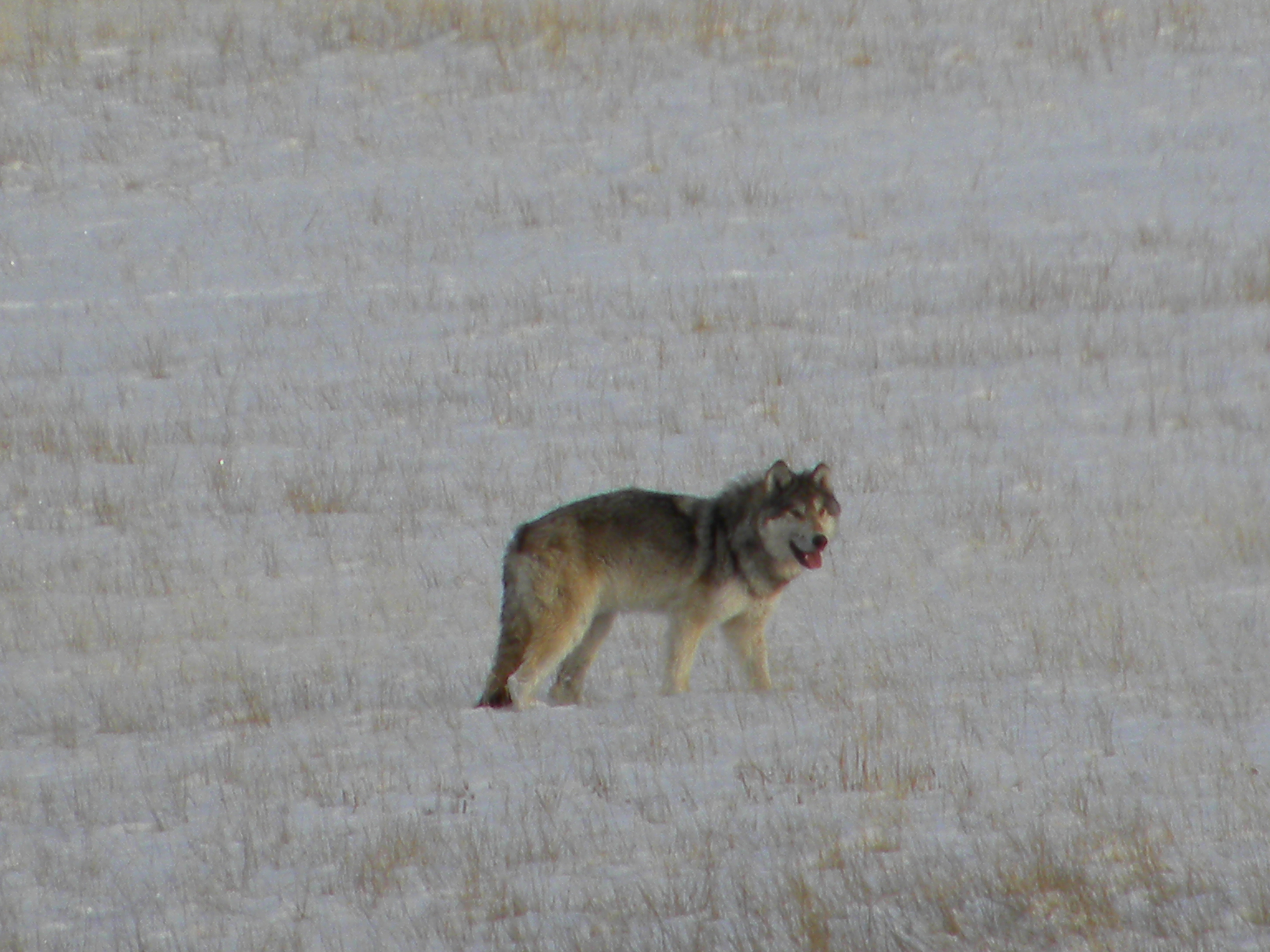
Where all good dogs come from. Black female wolf

The Sunlight Pack has gotten into trouble almost every summer.  In a few weeks, the rancher that owns most of the valley floor will be bringing his cattle up here, maybe over 500 head or more.  They overwinter down near Powell and calf down there.  Last year it was almost all yearlings up here.  Yearlings aren’t too seasoned and are too curious.  Not a good combo for wolf country.

I’m worried for the pack.  This is good wolf country and cattle really shouldn’t be up here anymore.  The open range leases should be retired; ranches for tax write off purposes should be retired as well.  My eternal fantasy is to win the lottery and buy the big ranch.  Then put Bison back on it and don’t worry if the wolves and bears get a few.   Bison belong here.  They used to be here.

Eventually, you can count on the wolves picking off a few cattle.  Wildlife Services, Dept. of Agriculture, can decimate the ‘bad’  packs each year, trying to get them not to have a taste for cows.  But its not that they love cows.  Its sometimes they are handy or easy.  Really, the wolves prefer elk.   You can’t really blame those wolves for hanging around when the cows are calving.  Calves are helpless when they’re first born, and an easy meal.  It’s really a smart strategy.  Just as smart as the little chipmunk who ate a hole in my bucket full of grain for the turkeys.  Easy meal; low expenditure of energy; biology 101 really.

The Valley that Sits in the Middle of the Land

The ranch hand told me his friend went ‘horn hunting’ by horseback last weekend near the ranch in the back country with his two dogs.  The dogs ran off and haven’t been seen since. I showed him the electronic collar I keep Koda on.

“They’re bird dogs, not people dogs like yours.”  We’re both thinking the wolves probably already got them.

Last spring a young experienced hiker and his dog went backpacking up the North Fork near the Park entrance.  There’s a wolf pack up there, and although he kept his dog close, when he went to set up camp in a meadow in the rain, his dog was sniffing around and got attacked a few hundred yards away in the trees by 8 wolves.  There had been a recent human encampment there, probably with some leftovers.  The hiker ran to his dog, the wolves ran off, but the poor dog died.

That hiker didn’t really do anything wrong.  He kept his dog close at least most of the time.  When I told this to a local who hikes with her dog, her reply was telling:  “That’s a risk you take hiking around here.”

I keep Koda close.  I watch him at all times and keep him on a shock collar I got through Cabelas.  He’s a dog’s dog, not really a people dog.  He has come to like people, and he’s loyal to me especially.  When he sees a dog, I can easily control his desire to run up and play.  But his response to a coyote or a wolf is different.  Some ancient wildness overtakes him.  He recognizes the dog part, but he senses the freedom part too.  In a moment he’s off and that could be the difference between life and death for him.  That’s when the shock collar comes in super handy.  But its no guarantee.

Koda with his toy.

Yet I do have to say, those fellows who took their 2 dogs out here, in wolf country, and didn’t watch them, let them run around where ever their noses took them–that is just irresponsible with your dog and certainly you can’t blame the wolves.

However you cut it, with the wolves and grizzlies here, I still prefer that wildness.  One of the students and I were talking about New Zealand.  He did an internship last fall in Antarctica and spent time on the south Island of New Zealand for vacation.

“Compared to Antarctica, it was great to be in a place with plants and trees, lush and fertile, where we could hike.  But to tell you the truth, as a biologist, it lacked.  They have no native animals there, except for a few birds.  The scenery was beautiful, but I missed the wildlife, especially the big animals, those ones that make you aware when you’re hiking around.”

Even if Chief Seattle didn’t really say it, its worth quoting:  “What is man without the beasts?  If all the beasts were gone, men would die from a great loneliness of spirit.”

Amen to that.

We love our dogs. Let's keep them safe.

The wolves have a good day

What a day!  Let’s begin with 4″ of fresh snow.  Then add 5 wolves running past my property, 4 greys and 1 black.    Throw in back tracking and tracking the wolves to explore what route they are using to come down into the valley.  And for the day’s finale, watching the wolves on two kills they’d made by the road this morning.

Lots of elk tracks too on this beautiful day

Around 1 pm, we heard the dogs barking and looked out the front window to see 4 beautiful wolves running along the nearby pastures through a herd of horses.  Those horses are used to dogs so they didn’t seem perturbed one bit.  And those wolves were ‘booking’.  They had someplace to go or a meeting to attend.  Within just a few minutes they were up on the opposite hillside and over the divide, a hike that takes me at least 45 minutes!  Then along came a limpy grey following way behind.  They all looked amazingly healthy, no mange.

Limpy wolf but seems to be doing fine

These are the new Sunlight Pack, pushed slightly south into Elk Creek because of a much larger pack of 10 wolves occupying their northern range.  Last winter I didn’t get a chance to see the Sunlight Pack as they were hanging deeper west in the valley, moving with ease back and forth (north and south) across the valley floor.  This has been their home range for several years.

There’s an elk study going on, in its fifth season, in the valley and they’ve been able to do some good collaring this year of wolves.  And so they’ve learned that the Sunlight Pack has been bullied a bit by this larger pack to the north.  In fact, all that howling I heard on Valentines’ day was the Hoodoo Pack making a kill on the northern side of the river, a side that used to belong to the Sunlight pack.

Tracks of four wolves 'booking it'

At around dusk I went up the road to get a closer look at the kills and see if there were any wolves still  on them.  The UofW crew said they processed the kills and they were two older cow elks, about 10 and 12 years old.  “How old is old for an elk?”  I asked.  “About 15.  Some can live till 20, but that’s really old. These were in pretty good shape,” they informed me.  

Error
This video doesn’t exist

With some quick and dirty math, I figure that’s about 50 or 60 years in human terms.

Blackfeet, Wolves and emblems of the Spirit

I just finished reading a wonderful little book by James Schultz.  Schultz lived with the Blackfeet Indians starting around 1880 and took an Indian wife.  He learned their language and soon, as a very young man who came out from the east coast, became accepted into the tribe as one of their own.  He, along with his friend George Grinnell, helped advocate for Glacier to become a National Park, and wrote many books about his life among the Indians and the wilds of Northern Montana. He’s providing me with a vivid sketch of life in Montana at the close of the 19th century, the final days of the free lives of the Blackfeet , as well as the last days of the Buffalo. With the recent delisting of the wolves of Montana and Idaho, and the hunts that are now taking place there, here’s a little gem of a quote from Blackfeet and Buffalo: Memories of Life among the Indians: “The big, bad wolf?  No indeed!  I once had a pet wolf, as good a friend of mine as any dog I ever owned.  But before I tell of him, I must say that, so far as I can learn, the wolves of North America never attacked human beings.  There was good reason for it:  game animals and birds, were everywhere so plentiful that they had no need to attack their great enemy, man.  The Indians have no tales about big, bad wolves.  They frighten their children into good behavior by threatening them with the bear.  Until the late 1870’s wolves fairly swarmed upon the Montana plains; their long-drawn, melancholy howls were ever  in our ears.  But lone hunters, both Indian and white, when caught out at night and far from home, lay down to sleep without the slightest fear of them.” On of the most intriguing observations about the Blackfeet is contained in the following quote: “The Blackfeet  Indians, and perhaps many others, have a peculiar habit of going up on high hills and bluffs conveniently close to camp and sitting there motionless and rigid as statues for hours.  Near the close of the day seems to be the particular time for indulging in this practice.  Why they do so is a mystery.  I have often asked them the reason, and have invariably received the reply, Kis-tohts, meaning “for nothing.”  Sometimes I have hidden myself in the coarse rye grass which grows so tall and luxuriantly in the river bottoms, and with the aid of a powerful field glass have closely scrutinized their countenances, but  to no purpose.  The expression of their faces never changed.  Their eyes had a far-off dreamy look which could not be interpreted.” Schultz speculated that maybe they were thinking about the passing away of the life they once knew.  But I have a different notion.Weather Living so close to the earth, these people keenly observed not only the animals and their movements, but the whole non-human processes–the weather, the sky, the stars. All was observed in a contemplative disposition of openness.  In their deep observations of animals, they not only learned about them for their hunt, but noticed their simplicity and ease of contemplation.   Animals were direct representations of spiritual communications and powers and so they were highly venerated and used ritually and contemplatively for various purposes.  They were emblems, doorways to Spirit.  In fact, they were a unique display of what was beyond the human, rather than lesser than human as we rate the animal world today.Deer in velvet Going and sitting on a hilltop, motionless at dusk, was a form of communion, as natural as the elk lying in the grass still and silent, or the spider who patiently sits in its web.  It was setting aside time, after the safety and the needs of the body were taken care of, to drop into contemplation.  Living with the Land as they did, there is a natural rhythm and pulse that overwhelms the body and mind when it’s still.   I believe they were just responding to that natural pulsation of contemplation that was everywhere around them, including in the animals. This is the kind of sensitivity we need today in our conversations about our ecosystems, the wolves and bears, the elk and deer and the whole animal world, including ourselves.  We are upside down.  We are not the ‘managers’.  Animals and plants are not just ‘resources’ to be exploited and managed. At one time, 100 years ago, the idea of game management was a necessity when we almost slaughtered much of our animals to extinction.  We saved our game by setting land aside, establishing hunting regulations, careful management, and educating generations of biologists. But it is a new day and a new paradigm is needed.  I don’t know the answers, but I do know where we need to begin from.   Our conversation needs to start from the assumption that all life is conscious.  That’s not an airy fairy granola eating notion.  That’s the logical application of Einsteinian physics.  And looking at animals as emblems of the sacred is a good place to start.Bison

Hunting wolves. Warning: My opinion.

Wolves on a carcass in the Lamar

Wolves on a carcass in the Lamar

Three wolves on a carcass

Four wolves on a carcass

Wolf eating fish it caught in the Lamar

Wolf eating fish it caught in the Lamar

I live in Wyoming and as of 2009, wolves are still on the endangered species list here and are not being hunted.  At least by people who paid for the ‘privilege’.  Yes, they are still being hunted by the Feds here under Wildlife Services.

Today I took a hike in an area where the Beartooth Pack is sometimes spotted.  There is hunting allowed right around Cooke City, Montana.  I suppose wolves from that pack might be wandering in those parts as well right now and get shot, legally.  But for now I was glad that wolf hunting is not allowed where I live.

I’ve already written about some of my feelings regarding hunting.  I have no problem with hunting game for meat, as long as the fight is fair.  But hunting a predator just for the sport of it, or rather the ‘spite’ of it, makes me cringe.  It has the same ring as the extermination of the Bison resounding in its hollows.

Killing a wolf that’s killing one’s lifestock has a purpose.  Killing randomly to ‘manage’ wolves smells of bowing to the sector that vehemently hates wolves.  Wolves are social animals.  We don’t eat them.  Do we eat dogs?

Wolves, you might say, are wild, not domesticated, and therefore we must limit them. But random killing of wolves does not necessarily have any relation to which wolf or wolves will go after livestock.  Its just random killing without our knowledge of pack hierarchy or age.

Basically, dogs are really only a few generations away from being wild and running in packs.  They are the wolves we allow ourselves to love.  They are our companions because, like the wolves they came from, they respond to a family unit, are loyal, and have feelings for each other and for us.  They actually have human-like qualities.

My dog is so human-like!

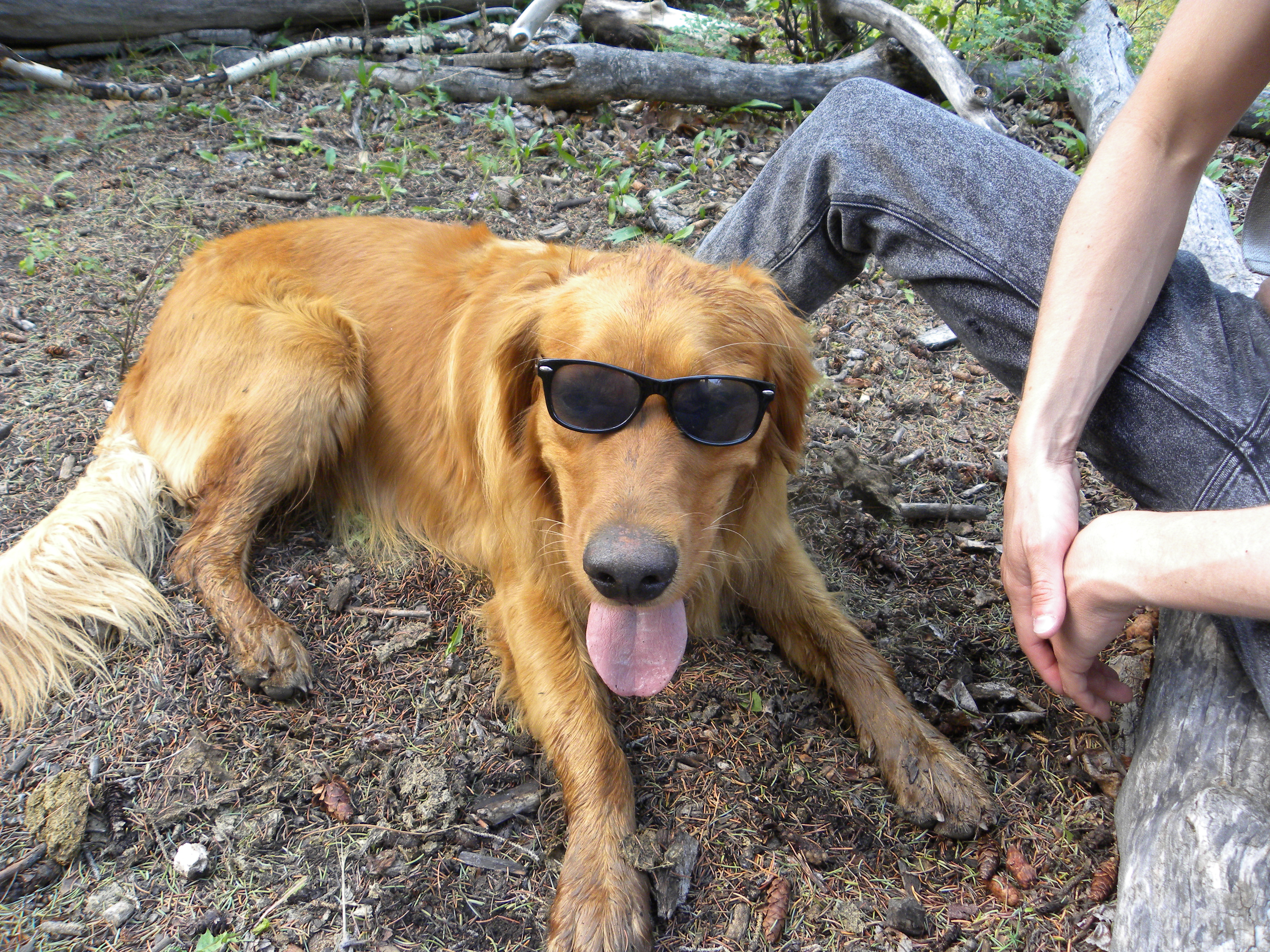
My dog is so human-like! He's the coolest.

My own dog will happily and readily chew on elk and deer bones he finds.  But he shies away from dead coyotes.  He knows the difference.

Killing wolves violates my basic objection to hunting today:  we do not hunt in a sacred manner.  We do not acknowledge the life we are taking to feed our lives.  The prey is only object and its’ very aliveness that we are taking away, is never felt nor honored.

Many people put their animals down humanely.  Most people can acknowledge the suffering and feelings of their cat, dog, or horse.  Somehow this doesn’t translate to the hunt. To actually acknowledge the sentience of living creatures would change a hunter at the core of his or her being.  He would be saying a prayer for that animal while they died.  Hunting would be a sacred ritual, right up there with going to church.

Hunting wolves is purely sport at best, and at its worst it reeks of revenge and hatred.  I cannot emotionally support that kind of a hunt.  It brings out the worst in our humanity.  We can do better.

Clark’s Fork hike and the vilified wolf

The dump is just up the road about 20 minutes.  Its an auxiliary dump, meaning its for locals and basically a large canister with a locked fence around it.  The whole idea is to prevent bears from getting in, and to help locals with their trash and bear management.  Last year though I did see a horse that was dumped off there outside the bear management fence.  Although the bears couldn’t get into the trash, they sure did get into the horse, along with the wolves.

I really don’t know many people up in the Crandall area yet, nor do I know too many of the hikes.  I hiked with the wolf study gals last fall there a lot, but mostly that was through brush directly to GPS sites where their collared wolf had lingered for more than an hour.

So I stopped and introduced myself at the Hunter Peak Ranch.  Its an old dude ranch that now mostly houses guests and horsebackriding.  The owner, Shelley Cary, was very gracious and I talked for a while with her and her family.  They serve dinner to guests and outsiders with advance notice.  Something good to know for any guests I have.  They also had some great ancient photos on the walls of homesteaders from the Crandall area.  Several names I’d heard of.  One of them, Norman  and Mrs. Dodd, homesteaded in my area.  Apparently people always had to refer to Norman’s wife as Mrs. Dodd.  They lived ten hard miles from the meeting house, which was a one room schoolhouse, and came by a team of mules pulling a buckboard.  Another photo was of the old post office, a long wooden building in disrepair.

I took a short 5 mile hike along the Clark’s Fork trailhead. The Clark’s Fork trail is well marked and well used by horses.  Its in open sagebrush, so if a hiker does encounter a bear, there’d be plenty of room to move.

Geum triflorum.  Prairie Smoke

Geum triflorum. Prairie Smoke

Claytonia lanceolata.  Spring beauties.  Edibles.  Purslane family

Claytonia lanceolata. Spring beauties. Edibles. Purslane family

I’ve been on this trail before and knew of a wonderful secret spot where the river drops into a gorge.

Lunch spot

Lunch spot

I wandered off-trail to the waterfall.

Allium.  Wild onion. Spicy addition to lunch.

Allium. Wild onion. Spicy addition to lunch.

There was plenty of moose sign in the willows around the river, as well as a pair of nesting ospreysKoda and I sat and hung with the fish hawks for a while.  The female was sitting on her nest, although she took some time out to try and scare me off.  The male sat nearby with a piece of fish in his talons.

Female sitting on her nest

Female sitting on her nest

Male osprey nearby nest, with fish in talons

Male osprey nearby nest, with fish in talons

There’s always a plethora of anti-wolf talk in our area.  Besides aggrieved hunters and ranchers, I once talked with a woman whose parents ran an outfitting company.  She was only 16 and hated wolves.  She told me a story about how they had taken their supplies in the fall up to a campsite in anticipation of bringing some hunters up there the next day.  They’d left three dogs with the supplies, alone, overnight, way up near the Yellowstone border.  This was something they were used to doing, for years.  But this year was different.  When they returned the following day, one of their dogs had been killed by wolves.

After lunch, on the way back to the trail, I ran into a fellow resting his horse.  I introduced myself and found out he was a local.

“Find any horns?” he asked.

Horns refers to antlers.  People around here spend lots of time looking for antler sheds in the spring.  They can be worth big money.

“Nope, wasn’t looking for any.” I replied.  “But I did find a pair of nesting ospreys and moose sign.”

“I saw four wolves up on table mountain.  They’ll eat your dog, you know.  Just like that.”

“Yep, that’s why I keep him on that electronic collar.  We have an agreement he and I.  I protect him from wolves and he watches for bears.”

“Those frickin’ wolves, they’ve ruined everything.  There used to be so many bull elk here.  I wish they’d never put them here.”

“I like them.”

“They’re everywhere.  They ran after an elk right through the trailer park the other day.”

I didn’t think he heard me so I said it again.  “I like them here.”

“There’s no more moose anymore.  They’re history.  They’ve frickin’ ruined it all.  Things used to be good.”

“I seem to be seeing a lot of moose this year.  Maybe their numbers are coming back.”

“Oh, where you live maybe, but not here.  Wolves have ruined it all.  Last year we found three bull elk kills up Crandall creek.  They just hone in and kill them.  There’s no more left around here.”

I didn’t bother to tell him that I knew the elk study coordinator had hiked up there this winter and taken samples of the bull kills he’d seen.  He said their marrow was like jelly, an indicator of poor health.  I mentioned all the grizzlies in the area.

“Oh, those grizzlies don’t do much.  Its those damn wolves.”

That’s a typical conversation I’ve had many times.  There is a lot of animosity and anger about the wolf introduction.  These are people who live on the land and know the land, at least in a certain way.  They know where the wolves are denning even though the Game & Fish keep it secret.  They see grizzlies when they’re out. They feel comfortable in the outdoors, but they have been used to not having wolves around for a very long time.  And they resent having to take them into account now.

Its a most controversial matter, wolves.  I tend to be on the side of the wolves, but I also am sympathetic towards the ranchers.  I feel that its’ important to work with ranchers and begin to develop practices that protect their livelihood.   I also know that these large ranches are one of the last ways we can protect the land here.  If the ranches and ranchers are not taken into account, if they loose their land, then those large tracts will be sold and chopped up for development.  That in itself is even more of a death blow to wildlife, especially grizzlies and wolves.  New ranching management practices are critical for wildlife protection as well.  As one of the wolf researchers said to me last year “Something’s got to change. There’s just too much killing going on” in reference to all the wolves killed by Wildlife Services in retaliation for calf predation. (For a video of wolves in my valley, click here)

Wolf on carcass

Wolves on carcass

In contrast, I was reading in the Wind River Reservation Wolf Management Plan about how some of the elders of the tribe view wolves.  There is controversy on the reservation as well, the report says, because many Native Americans have livestock.  But there is magic, wisdom, and most importantly, respect, communicated in their ancient views.   Here is an excerpt from that report.

Traditional views recognize wolves as kin, as strong, as deserving of respect and placed here by the Creator for a purpose. The Shoshone word for wolf means “big coyote.” Wolves lived a long time, were very smart and observant, and listened well. When wolves appeared in a vision, one was to follow what the wolf showed you. The wolf was secretive and special and used to talk with people through telepathy. Wolves were helpers. Wolves were sacred and to be left alone, however sometimes people had to kill them. People were to be careful around them. Wolves could teach virtuous things to people. They were an example of how to care for family members because they took good care of the young as well as the old. The packing behavior of wolves showed people that they should not go out hunting alone. Wolves also showed people to use the entire game animal (the meat, bones, hooves, marrow, skin, etc.) – not to waste any of it. Wolves wandered to wherever the food was, like earlier people did. They did not know boundaries. Now wolves are being confined to certain areas like Native Americans have been confined to Reservations.Gray wolf

Wolves, turkeys and free attention

A cacophony of sounds coincided this evening in one unexplainable happening.

I was outside at dusk when the turkeys in the forest started making a huge ruckus.  The last time such a noise came from them, a large hawk flew out of the forest.  But tonight was crazier.  Not only were the turkeys in a frenzy, clucking and screeching, but one of them was screaming uncontrollably.  In my imagination, a turkey was being murdered while the other turkeys scolded the perpetrator.Wild turkeys, not native

In fact, I did once witness this same phenomenon with some small birds.  I walked outside to find a cat that had a wren in its mouth, while dozens of other wrens screamed from the nearby rooftop.

While the turkeys were going wild, Koda, who’d been listening to the birds, began staring westward towards Herman Mountain.  He had picked up the faint sounds of a howling wolf .  As I strained to hear the wolf, several other wolves across the valley began to answer.  The wolves began howling back and forth to each other.  This lasted several minutes–the wolves howling,  the turkeys complaining.  As the turkeys began to settle, the wolves called for a bit longer–then all was still.

Its a mystery to me if there is any connection between these two auditory events.  Its around turkey mating season, so maybe that’s what all the fuss was about.

Yesterday I took a short jaunt around Herman Mountain.  Mt. Herman from my cabinThat mountain is actually named after the man who built my cabin in the 50’s.   Herman Elsbury owned a sawmill near here.  All the logs from my two cabins were from the valley, which he milled.

It took some exploring to discover the high trail a few years ago.  I had used all the deer trails, which climbed from one steep forested area to another with several plateaud meadows between.  The high trail is reached from the backside which is gradual and climbs to the highest plateau.  Its a beautiful hike, and last summer JB showed me how to access the peak.Mt. HermanI haven’t been carrying bear spray yet, although there has been sightings in the Park and on the lower Clarks Fork.  I haven’t seen any tracks around here.  Hiking in the GYE is unlike anywhere else in the U.S.  Its not a jaunt in the woods.  Its a primeval experience.  You have to have all your senses in gear, alert, open, present.  It is a wonderous experience that takes you back to your native, most basic existence.
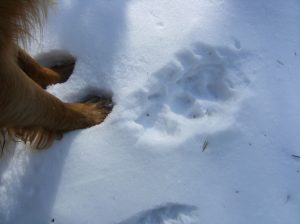
And since I wasn’t thinking about bears, well, I really wasn’t present.  I was on a little mental holiday.  Until I was jolted out of my reverie.  In the deep snow, about a mile up, suddenly huge tracks appeared.  Not of a bear, but of two, maybe three, massive wolves.  They had run easily up the steep side, my side of the mountain, and were heading I assumed towards the meadow where I’d seen 150 head of elk the other day.

I’m not worried about wolves for myself.  They’d be afraid of me.  But I need to be vigilant when I hike for my dog.  Although I’ve heard that if your dog stays close its unlikely anything will happen.  I’ve also heard otherwise.  And by the size of those tracks, those wolves were a lot bigger than Koda.  Wolf tracks with Koda

The wolf howling nearby tonight may have been the same wolves I saw tracks of yesterday on Mt. Herman.  There are supposedly five in the valley; one has a limp.  My friend saw four of them, all black, crossing the road the other evening.  They seemed to have regrouped since last summer, when the pack was mostly killed off for predation, leaving a mother and her yearling pup.

My walk, and this evening of turkeys, was just another reminder:  this place is a wild place; and it is always, in every moment, deserving of my free and total attention.

A Rant for Wolves

Its hard not to go ‘political’ when I heard about Salazar’s decision to delist wolves in Idaho and Montana (not yet Wyoming). I just need to take a moment to reflect.  Forgive me for putting on hold the post I wanted to write today, which was about the obsidian flintknapping site I found yesterday.

Obama’s penchant for compromise just seems to be getting him in trouble with both sides and no one’s happy.  In this case, compromise isn’t the basis for decision.  And compromise is really just politics.

What wildlife needs here is science melded with stewardship.  To be a steward, you have to be a lover.  As has been said before, ‘you only protect what you love’. One of the wildlife students made an interesting observation.  “I’m afraid it will take the wolf being hunted for it to be truly protected.  Hunters go to great lengths to protect what they hunt to ensure the health of its population.”  Certainly true with elk around here.

In the last few years that I’ve been looking at this issue, it seems to me there are so many areas to be addressed in a ‘delisting’ plan.  Simply putting the wolf on the hunted list with target numbers attached is a copout.

Wolves have a highly organized social system.  Packs in my area are constantly being reduced to numbers that are not viable.  When that happens, without the instruction of the Alpha, inexperienced and outnumbered wolves will go for the easiest prey–calves–in order to eat.  Taking down a larger animal like an elk requires pack coordination and is risky.  Just see my post on the coyote with hubris that was kicked and killed by an elk.  That’s just one factor.

Yesterday I found out a bit more about the calf predation that took place on the ranch down the road last spring.  Apparently, the grazing allotment rotation had been changed by the Forest Service in order to combine two ranches at once.  It was pup season, and the Forest Service told the ranchers to graze in the draw just over the hill from the den.  With the late winter the elk were still around in early May, yet farther down the valley from the den site.  That made it much easier for the wolves to go over the hill and get calves for their pups.  That predation was the forest service’s fault, not the ranchers or the wolves.  But because the forest service wasn’t thinking about the whole picture, 3 wolves were shot, one of them was from the initial introduction to Yellowstone 10 years ago!

A very large ranch over the hill has resident elk on it. In the summer, the elk graze the interface between the forest and the open meadows.  The wolves follow the elk along that ecotone.  All summer long the cattle grazed lower in their valley, while the wolves ate elk.  Then, at the end of the summer the cattle were moved near the interface, and within days some calves were killed.  Next of course came the wiping out of the entire pack by Wildlife Services.  With some responsibility on the part of this rancher, this incident would not have happened.

Delisting should require stewardship of all involved parties.  By simply compensating ranchers with money and killing wolves, there is no incentive to protect their flock, especially since so many of the ranchers in my area are the extreme wealthy looking for a tax write off, or ranching because it sounds neat (there are many ranches here owned by wealthy foreigners).

I don’t profess to understand all the problems or solutions, but I can see a few things:

1.  Requirements for ranchers in wolf areas i.e. shepherding.  I have heard about some ranches experimenting with Shepherding Programs (tourists pay to come out and Shepherd, like going to a Dude Ranch).  That’s a win-win situation.  There are many other methods being experimented with as well.

2.  Open Grazing policies need to be re-looked at.  First of all, they are too cheap. Last I heard it was $1.95/month for a Cow/Calf pair!  Wow, that 1898 prices.  You can’t have your cake and eat it too.  Open Grazing, you’re on your own with the wolves and wolves are protected.  That’s that!

3.  I would like to see some tribal involvement in these issues as well.   I’m not sure what that would look like, but I feel they’ve been stewards here for many thousands of years and the perspective they can provide is unique and in many instances is not obtainable through conventional survey techniques.  One native american said to me a lovely thing “The wolves are herding the elk” and that’s a true observation.  As a plant person, I can see that the effect the wolves have had on the aspen/willow population is only positive.

Wolves are magnificent animals.  I’ve seen them here several times in my valley while hiking around.  They are important in our ecosystem in so many ways, and deserve better.  Since I’ve been here, there is just too much killing going on in my  area of our three packs.  Summer comes, packs are wiped out and reduced, other wolves move in, packs reorganize again and shift around.  Just ‘delisting’ is not a solution.

Coyotes and Wolves

W___ says we’re having a ‘false spring’.  It was in the high 50’s today. “Don’t get too used to it” he told me.  For a Mediterranean girl like me, the 50’s are the new 70’s!  The solar and dryness made it downright hot.  Still, the snow cover makes for great tracking.  I’ve been learning about tracking for several years, and even was in a tracking club in California where, of course, they don’t have wolves and bears.

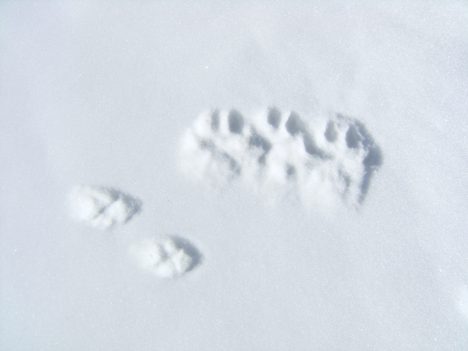
I decided to go hiking up Elk Creek.  My neighbor put down a horse last week and right away I saw tracks of two wolves.  (Note:  Tracks below are wolf and the smaller ones coyote for size.  My 85 lb. dog, Koda, would have tracks more in keeping with the coyote!  See that photo below) Wolf and coyote tracks I followed them for a while until they went down a steep wooded slope.  But later picked them up and, along with coyote tracks, they were headed straight for the dead horse.  Seemed like they weren’t too interested in much of the horse though, as just its organs were gone and the rest of the carcass remained intact.  Even the birds weren’t on it.
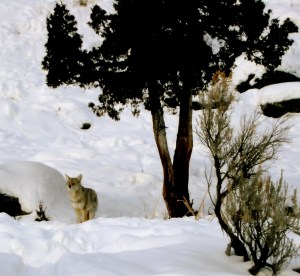
Yesterday I found a dead coyote.  It was in an area where lots of elk graze every evening.  I couldn’t find any sign of a kill, even though wolves had passed through the area not too long before.  Its front leg was exposed down to the bone.  I wondered if it had bleed to death from a trap although I couldn’t find any sign of a trap either.  I took some photos and plan to show it to the ‘elk boys’, the students who are doing the elk studies out here.  They’re very knowledgeable plus they are both hunters and trappers.  The other day when I lead them to two elk kills I found near Game and Fish, they were explaining how to age a kill, what to look for to determine what killed the animal, and what animal parts the lab needs for various stats such as age, health, and diet.

Seeing that coyote reminded me of a fellow I ran into last spring at the small campground down the valley.   This man had raised a coyote.  He knew a fellow that had killed a coyote with pups, so he took one of them.

coyote“They say you can’t raise a coyote, but I did” he told me. “The coyote used to disappear for days or a week at a time.  Sometimes other coyotes would come around and howl, trying to entice the baby out to join them, and sometimes she would.  But she’d always come back.  It was four years before I could pet her.  She’d  sleep against my leg, but wouldn’t let me touch her.  Finally, after four years, she’d let me love her. Smarter than any dog I ever had.”

“I was working with Fish and Game building a road.   My boss on the project would come up and we’d talk across in our trucks.  I didn’t like this man.  He was always down on the work I was doing, which was good work.  And the coyote didn’t like him either.  We’d be talking and when we’d finish and drive away, you know how you have your arm laying on the window.  Well, the coyote would nip at his hand when we’d pass, every time.  And she didn’t do that to no one else.  So that warden started keeping his arms inside.  One day I was working way up on the mountain and here comes the warden.  I don’t know how that coyote recognized him, but she did and she started chasing him down the mountain.  The warden ran down and into his truck and got away as fast as he could.  There was something wrong with that man and the coyote sensed it.”

I went back to look at that coyote again today.  Nothing was eating it.  I felt bad for it.  I’ve seen that coyote many times.  I feel like I’ve lost a neighbor.

The Shepherd

During the elk capture, the ranch hand from the Dude Ranch down the road offered his meadow for us to watch from.  He’s a real character with some funny stories.  I asked if those were his cattle grazing on forest service land in the summer way down towards the end of the valley.  He told me they were.

“The hunters come with their weed-free high quality expensive hay for their horses.  They leave it out in the backcountry and our cattle eat it.  Then they get angry, so I just give them some of our hay, grown here.  Not such good quality you know.  Its a good deal for me.  Then the Ranger comes and says ‘Hey, is that certified?”  And when they say it is, the ranger says ” Where’s your tags?'”  I laughed just thinking about that.

My valley runs from the main highway about 35 miles west and butts up against Yellowstone which is just over the Absaroka Mountains.  Problem grizzlies get dropped off there in the summer.  I’d seen his cattle way far back.  I asked if he’d had much cattle predation.

“Don’t have any.  Never have lost one cow.  The Fish & Game guys always ask ‘What are you doing? How come you have no losses?’ and I tell them “I don’t know why.  I don’t do anything.  Maybe it’s because the cattle are in the trees back there.”

Last summer several calves were killed on the other ranch towards the head of the Valley.  That rancher keeps his cattle mostly enclosed in one area, which is where they were predated on.  I suggested maybe it was a lot easier when you knew exactly where the cattle would be every day, like going to the refrigerator.

C___, the ranch hand, has 17 cows about to give birth and has been coming out every 2 hours in the night to keep the wolves away.  He’s shepherding them.  We asked if we could help birth the calves.  He said its easy.  He’d call us to help.  I hope he does as it sounds fun.

Ranch where cattle were predated upon