• MY BOOKS ON WILDLIFE, GARDENING AND MORE

  • The Wild Excellence

  • True stories of wildlife encounters around the Greater Yellowstone
  • Award winning eBook on Decomposed Granite, tips, how to's, what to watch for
  • Children's book. True stories of a dog and wolves. In a dog's voice
  • Written for dry Mediterranean climates in California, north and south

What is base line?

Driving the road early morning, looking for wildlife, gives me time to ponder questions like–why is it I see grizzly bears during the daytime in Yellowstone National Park vs. where I live just 20 miles east of the Park where they are basically nocturnal?  Bears have not been hunted outside the Park since 1975, and there are plenty of them in my valley.  Yet bears in my wild valley, like all wildlife, avoid the most unpredictable top predator–Man.

Until the hunt began two years ago in Wyoming, I used to see wolves.  In the winter, I’d see them on kills they made near the dirt road.  In the summer hiking in my valley, I had many close encounters with wolves, none of them eliciting fear.  It was obvious they were simply curious.  But since the hunt, they are no longer curious and they are no longer visible.  A good thing if they want to stay alive.

Yearling pup

Yearling pup

Today’s wildlife, and especially predators, are basically nocturnal or crepuscular, feeding, moving, hunting when Man is asleep.  I have to ask:  Has it always been like this?

Reading the journals of Lewis & Clark, they describe seeing herds of bison, wolves, grizzly bears and coyotes in the middle of the day going about their business.

“…we scarcely see a gang of buffaloe without observing a parsel of those faithfull shepherds [wolves] on their skirts in readiness to take care of the mamed & wounded”

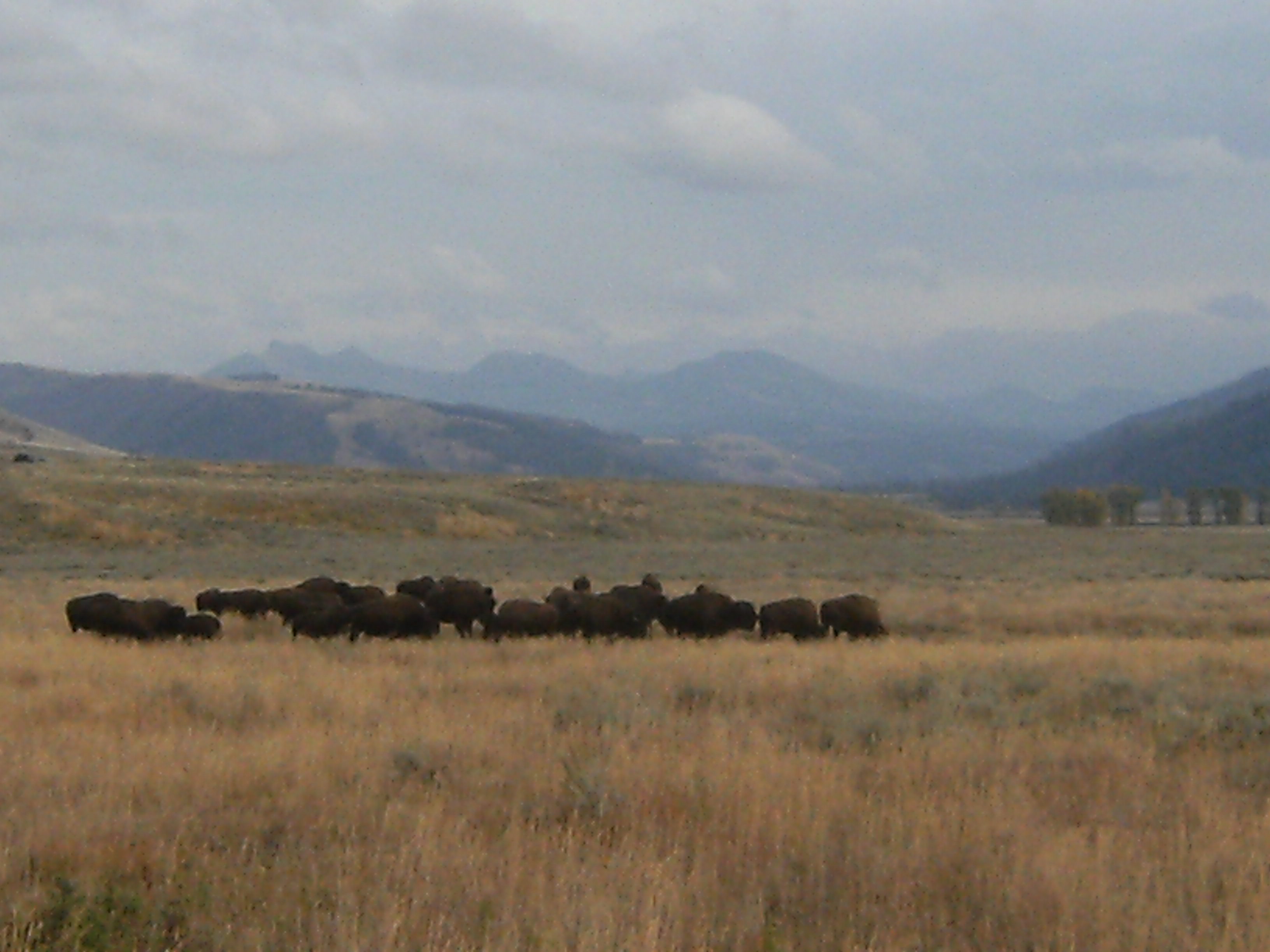
Buffalo in Lamar Valley

Beaver, considered today to be nocturnal, were easily seen during the daytime in the early 1800’s.  A buffalo calf, unfamiliar with humans, followed Lewis around.  Game was “very abundant and gentle”.

“Immence quantities of game in every direction around us as we passed up the river, consisting of herds of Buffaloe, Elk, and Antelopes with some deer and woolves.”

According to Lewis’ account, when the presence of Man is minimized, prey and predator dance together, during the daytime.

WInter elk herd at dusk

When we study the nature, movements, and habits, of today’s wildlife, how can we know what is baseline?  What are their natural rhythms?

Coyote

Coyote during the daytime in Yellowstone National Park

Wildlife in the Park are confined to a virtual zoo, yet they have not been hunted for over 100 years [on the other hand, they are still being controlled.  For example, bison are under an agreement to be kept to around 3000 animals.  When they leave the Park in winter, they are killed to reduce their numbers.] Wildlife outside the Park are hunted and so, particularly the vilified predators, are rarely seen, moving among the shadows of the night.

Wildlife that live around cities, such as raccoons, coyotes, foxes–what we might call mesopredators–also avoid humans by wandering the streets when the humans are asleep.

Before 1492, New World numbers were estimated to be around 54 million peoples.  The pre-European native impact on the landscape reflected the cumulative effects of a growing population over the previous 15,000 years or more.  European entry into the New World abruptly reversed this trend. The decline of native American populations was rapid and severe, the biggest genocide ever. Old World diseases were the primary killer.  In the basin of Mexico, for instance, the population dropped from 1.6 million in 1519 to 180,000 in 1607 (89 percent); and in North America from 3.8 million in 1492 to 1 million in 1800 (74 percent).

So when Lewis & Clark came West in 1805, were they seeing wildlife baseline? Or just the result of a diminished native population? North American native peoples had their own rise and fall of civilizations–Cahokia, Ancestral Pueblo Culture, Poverty Point, and many others that were as equally sophisticated as the Aztecs or Mayans.  What were wildlife interactions during those times when many ancient peoples in the Americas lived in cities? Was wildlife again moving nocturnally?  Were they being hunted out?

Poverty Point artists rendition

What is baseline?  What is the natural rhythm for elk, or wolves, or grizzly bears? Today’s wildlife biologists use observation methods unknown in the past–GPS collars, trail cameras, plane flyovers, computer mapping–all very sophisticated.  But the interactions amongst predator-prey species are probably dictated more by human pressures than by each other.

When we postulate new wildlife theories, such as “The Landscape of Fear“,  what exactly are we observing?  Certainly not what Lewis observed in 1803 when wolves, coyotes, elk, deer and bison all traveled together–wolves following on the outside of these large herds.  New theories enlarge The Landscape of Fear to include not only top-down but bottom-up where the bottom has to do with beavers providing the habitat for willows and aspen rather than just elk avoiding drainages.  And scientists acknowledge that baseline is a moving target.

And so the answers to these questions will always be uncertain.  One thing I can easily observe–wildlife is more afraid of Man than they are of any other predator.  That, I believe, is an unfortunate thing.  Writer Mary Beck says in her book Seven Half-Miles from Home:

This one species has contrived to make himself feared and hated by most other creatures.  Since this fact is rubbed into my consciousness day after day by many creatures with whom I would be friends, I grow sensitive and ashamed of being one of such feared and hated beings.


Filling out the dialogue on trapping

Last week in Casper, a family was walking their three St. Bernard dogs in a public area within a mile from their home.  The dogs were legally off-lease, and under voice command, but the smell of baited traps drew all three of them into the bush where snares choked them to death.  The family and their kids tried desperately to loosen the cables that constitutes a snare trap, but lacking wire cutters, the dogs died within minutes.

Because more people are using public lands to recreate, more and more dogs are being caught in traps placed near trails and roads.  These and other incidents have produced a groundswell of outrage which is growing across the West.  Organizations like Wyoming Untrapped and Footloose Montana  have sprung up to answer this need. Bobcat trapping around the perimeter of Joshua Tree National Park prompted California to establish the Bobcat Protection Act of 2013 banning trapping around national and state parks and other wildlife preserves.

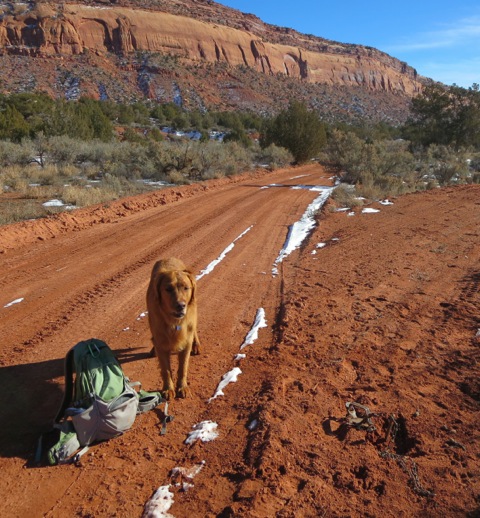
Most of the conversation in the public or with Game Agencies has centered around protecting dogs and humans recreating on public lands.  This discussion includes new measures such as closures and set-backs. It’s an achievable goal–one that even most Trapping Organizations would agree to.  This is a fine first step.  In fact, my own dog was caught in a trap on a public road in Utah; the baited leg-hold trap was placed on a highly used road and covered with dirt, had no signage, and Koda was 12 feet from me.  Fortunately for Koda, I’d taught myself previously how to release these traps.

See the trap to the right of Koda.  That is the spot it was in, about one foot off the road, covered with dirt and no signage

See the leg-hold trap to the right of Koda. That is the spot it was in, about one foot off the road, covered with dirt and no signage

This trapper had set leg-holds all along the roadside for several miles, hoping to catch coyotes.  $50 for the pelt and another $50 incentive thanks to the Utah legislature that set aside several million dollars of taxpayer’s money to kill coyotes.

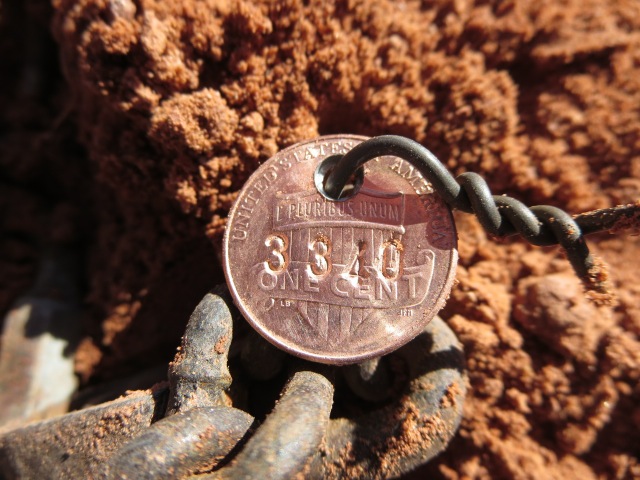
All trappers must have their ID or name on their trap.  Look for it and write it down in case it was illegally placed

All trappers must have their ID or name on their trap. Look for it and write it down in case it was illegally placed

But what’s at the heart of all this?   I’ve written about this before, back in a 2011 post. Demand in Russia and China for fur has sky-rocketed.  Current prices for ‘Lynx Cat’ [Bobcats] on the world market are between $400-$1150/pelt!  And this year was a ‘down’ market due to warmer winters in those two countries. (Question:  Will climate change quell the trapping industry?) With that incentive, every Tom,Dick, and Harry is out there setting traps.  And the ethics among these newcomers is low. 19th century laws that favor trappers are still on the books in most states [i.e. do not touch a trap or you will receive a ticket.  In Utah it’s $500. In Wyoming $250].

I haven't seen a bobcat in years since my area has been heavily trapped.  This photo taken 4 years ago in front of my home

I haven’t seen a bobcat in years since my area has been heavily trapped. This photo taken 4 years ago in front of my home

The critical conversation we need to have about trapping includes some of these points:

  • Fur prices world wide are driving the increase in trapping.
  • We are selling our wildlife overseas!  Its illegal to sell the meat of any wild animal, yet we can sell their pelts?  Wildlife are in the public trust.  Selling wildlife–even pelts–to other countries for individual profit takes away from another individual’s right to see wildlife and appreciate them.
  • Trapping is indiscriminate.  ‘Non-target’ animals are killed every year.  During the 2011/2012 Idaho wolf trapping season, for example, 246 non-target species were trapped, including deer, moose, dogs, raptors, lions, and 21 endangered fishers.  In Wyoming, some animals have trapping seasons, yet others, like coyotes, can be trapped year-round on public lands.
  • People are no longer trapping for food, but for personal profit.  We no longer live in the 19th century.  Attitudes towards wildlife has changed.
  • Finally, trapping is cruel.  Animals are not only killed, but maimed and crippled.  Many suffer for days in traps.  Trapping, unlike hunting, is not fair chase. It’s time to put an end to trapping altogether.

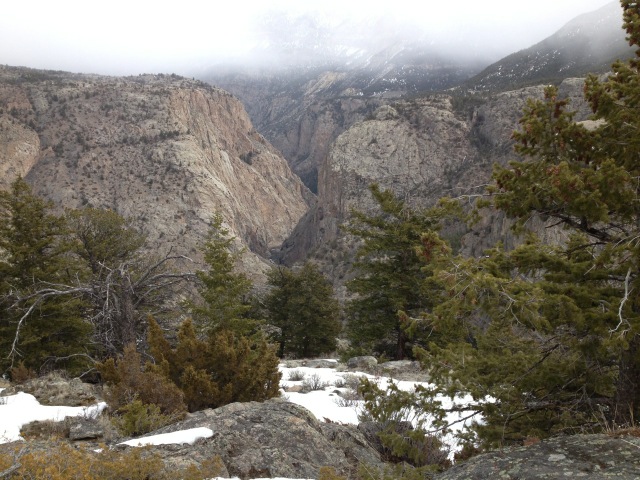
This summer I was hiking along the flats 1000′ feet above the Clark’s Fork Canyon.  Its a wet area, where all the moisture drains from the mountains above, funneling through the limestone walls to the river below.  Old beaver dams are tucked among the overgrown forest of spruce and fir–ancient dams because there are no longer beavers here.

View of the river from the flats above where old beaver ponds are

View of the river from the flats above where old beaver ponds are

Hundreds of years ago mountain men came to these lands and trapped the beavers out, their furs sent to Europe for felt hats.  Beavers were estimated at around 600 million before the Europeans arrived.  Almost exterminated by 1900.  Due to conservation efforts, beaver numbers in North America stand around 6-12 million today.  I’ve never seen a beaver dam in these mountains.  Just last year there was a big fuss about a beaver dam spotted south of Cooke City along the Clark’s Fork.

Selling our wildlife…these are old lessons.  Let’s not have to re-learn them again.


Fox

Here’s the fox video for those who couldn’t see it through facebook

Dog Talk

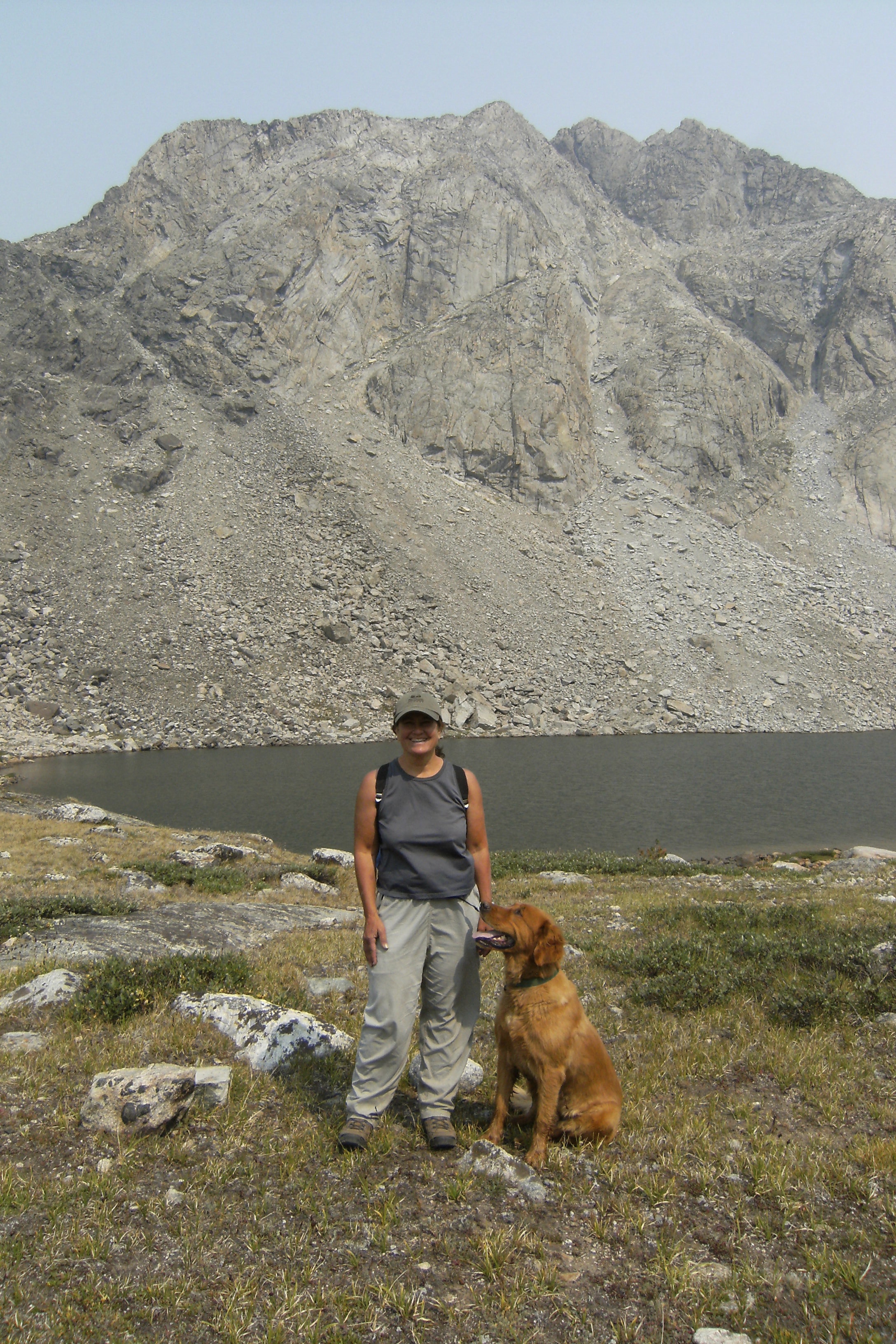
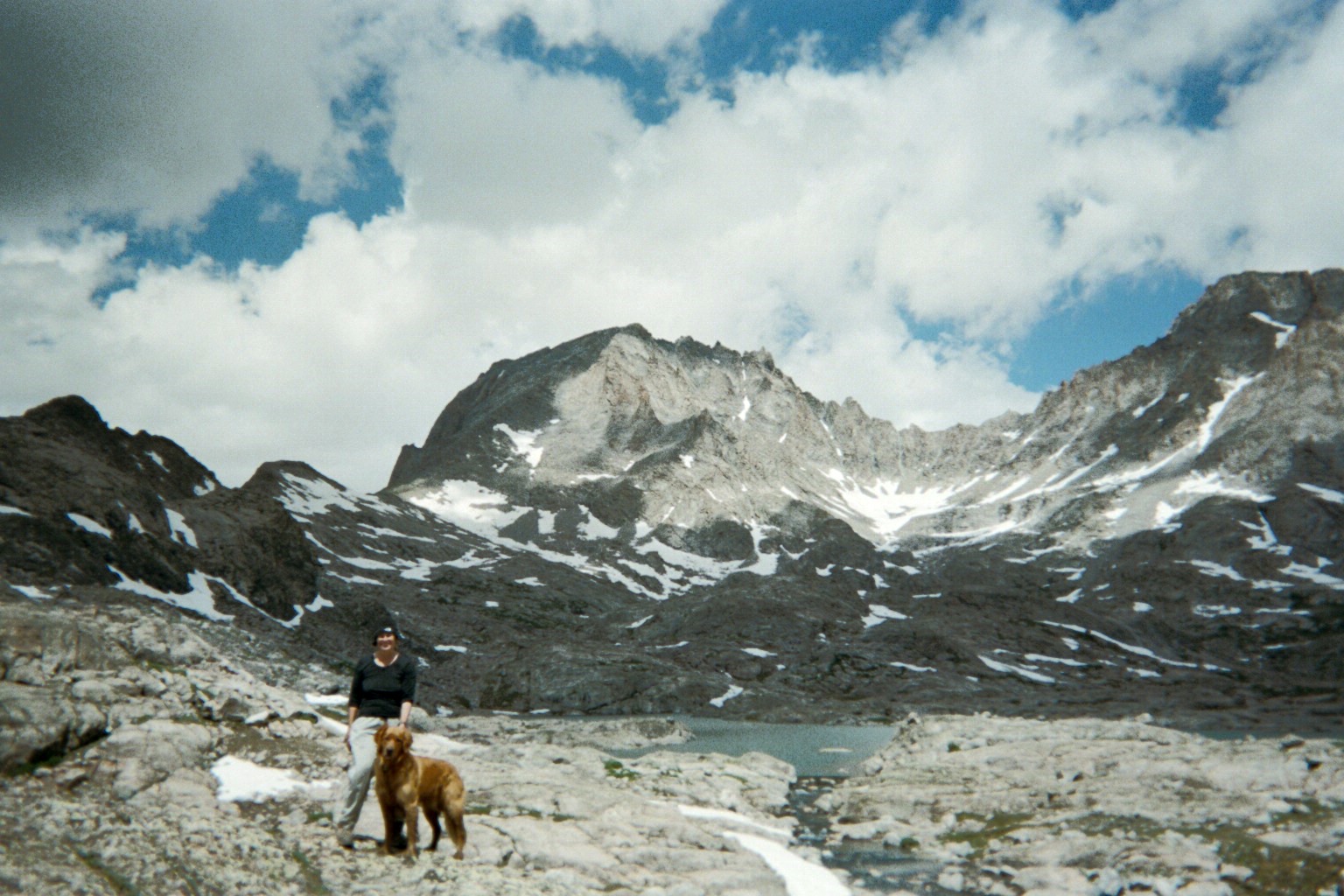
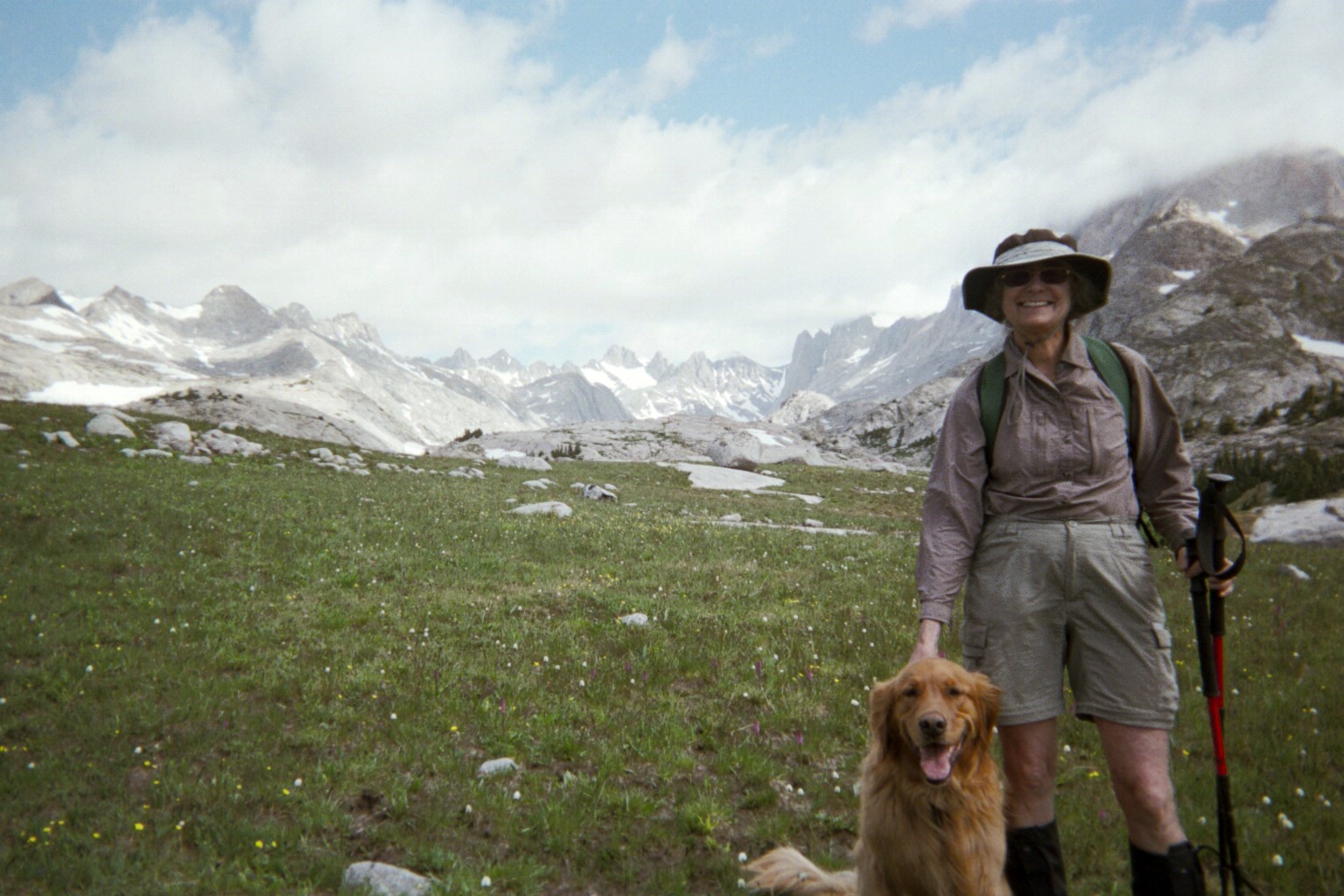
Spring is here, the Park is open, the wildflowers are emerging.  The weather has been on again off again rainy.  But I’m already planning my traditional August trip to the Wind Rivers, with hopefully some shorter backpacks to high country around here.  So when I began to get out my camping gear, I wasn’t surprised when suddenly my big dog started a conversation with me.  Usually he just whines, barks, grunts or groans.  But today he was speaking his mind.  Here’s the conversation.

Great, we’re going backpacking soon cause, you know, I’m working on writing a book.  Humans need real advice when it comes to camping with us canines.  The book?  Oh yes.  It’s called “Every Stream, Every Lake, Every Tarn, a Dogs’ Guide book to the Wind Rivers.

With my person

With my person

With a bit more quizzing, I got Koda to tell me about his pack loads.  Sheep Eater Indians who lived in the Wind River area in the summer used dogs to carry their goods.  I’ve been doing the same.

I’m happy with the canine pack you got me.  Please, no more than 25%-30% of my weight.  I’m 90 pounds so that translates to maximum 25 pounds I’m comfortable with.  I know you’ve been slipping some of your food and gear in with my food in the pack.  I don’t mind.  Makes me feel important.  But just remember–every tarn, every lake…and I’m in it!

I stopped carrying regular dog food quite a while back.  My previous dog, Soona, used to get sick of it by the 5th or 6th day, plus its really heavy.  Some backpacker told me that a bit of cat food is good for dogs as its high protein.  I switched to a lightweight vacuum-sealed food that’s a lot of oats with some dried meats.  Then in the mornings, Koda gets a wet cat food small can with treat or two.

The best part is the beef jerky.  And the cat food.  To change the subject back to water, if you’re going to be in a place where your paws are wet all day, make sure they get dried out good.  We dogs can get a fungal infection between our toes if the hair there doesn’t dry out well.  And for god’s sake, don’t jump in the lake right before dark. I made that mistake once and then it snowed all night and I never dried out.  I would have froze to death if my person didn’t throw that emergency blanket over me.

Watch the paws on this kind of stuff

Watch the paws on this kind of stuff

Because Koda goes into every bit of water with his pack on, this year I’m going to try putting the food in dry sacks, then inside his backpack.  Koda’s an outdoor dog, used to spending his time not on concrete.  But if you have a suburb or city dog, and you are off to the Rockies or Sierras, bring along some dog booties.  One year Soona’s feet got really cut up on talus and I had to give her continual doses of aspirin to get her off the mountain.

And if you take your dog with you backpacking, be sure he or she knows their manners.  Don’t let them run after wildlife, have them stay on the trail, and make sure they are friendly with other people and dogs.

And for goodness sake, remember to just have fun, fun, fun.  And if you need to, push your person over at night in the tent to get more room for yourself.

Canine heaven

Canine heaven


Another view

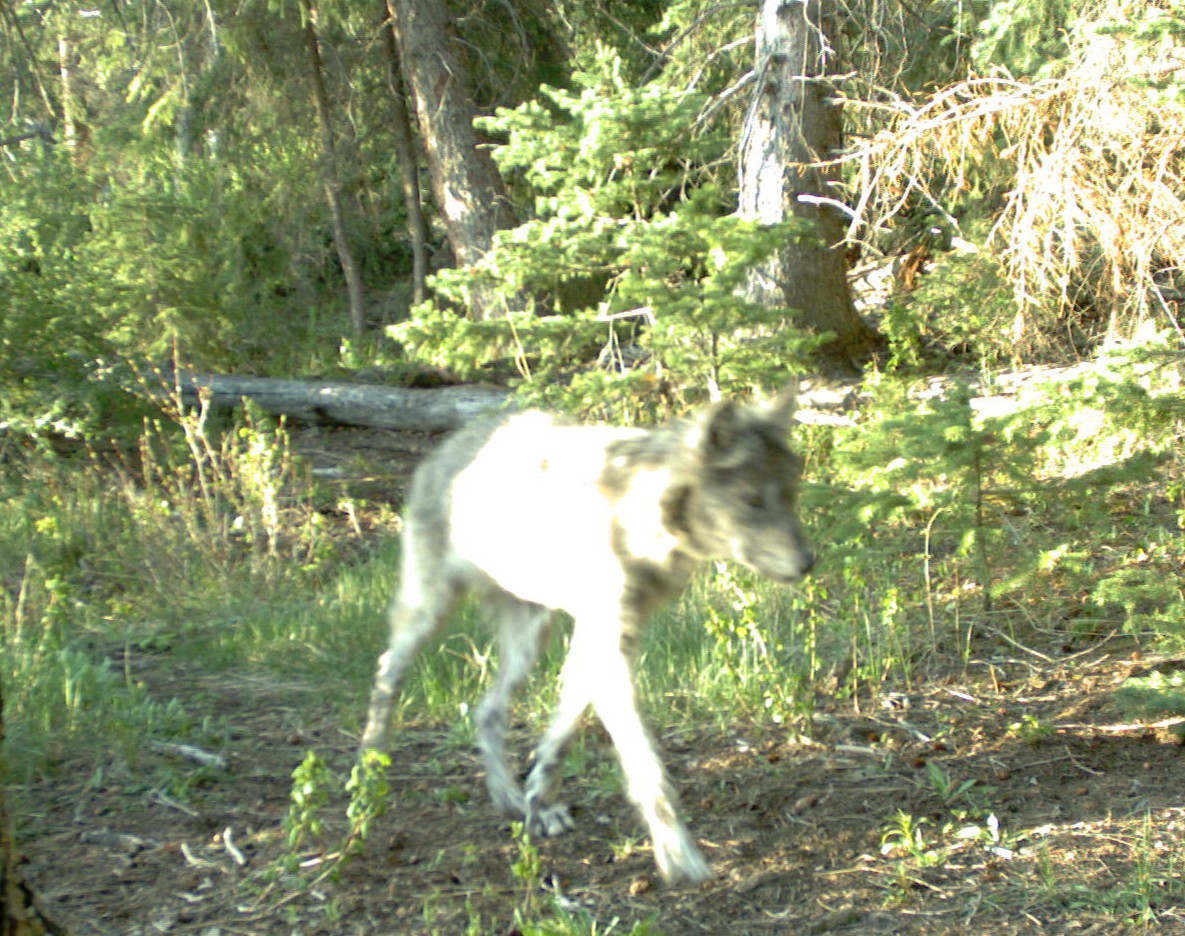
Here’s another video of that wolf. Be patient till about 20 seconds when he comes and checks out the camera for a real close up.

Wolf investigates

I had my trail camera focused on a road killed jackrabbit. A marten spent two days trying to get it down. Then a coyote came bye, the marten scrambled up a tree, and the coyote pulled it from where it hung and devoured it.

Four days later, this wolf came along to investigate the scene of the crime.

Hunting season

Yesterday I enjoyed a great day with Women in the Outdoors.  It was an all day affair where you choose in advance what events you wanted to participate in.  I chose fly fishing in the morning, and archery in the afternoon.

The instructors for Fly Fishing were fantastic.  They provided all the gear, took us to a stocked lake on private land, and coached us step-by-step starting with the parts of the rod and reel, how to tie the knots, and the basic form for casting.  What I love about fly fishermen is that they have an in-depth knowledge of entomology.  I once took a college course on ‘Pond and Stream’.  We went on field trips and looked at river health and bugs.  Fly fishermen can identify the different insects in their various stages of development and what the fish are feeding on at any moment.  They are magnificent conservationists, because only healthy streams and ponds will have the diversity of insects necessary to support fish life.

After lunch and door prizes for all, archery was on the list.  As a kid I did archery with a traditional bow.  I remembered it as great fun and hard to pull.  The instructors had compound and regular bows for us to try.

Compound bow used for hunting

Compound bow used for hunting

Using a compound bow with sight guides, it was pretty easy to hit a bull’s eye.  Using a traditional bow, they call it ‘instinctive aim’ and requires much more skill.  The woman instructor told me she’d been an avid archer for over 17 years.  She competes with a traditional bow, but hunts with a compound bow.  She showed me her hunting bow.  It was so heavy I couldn’t straighten my arm out.

I asked her how she killed game with a bow in a way that was humane and didn’t let them suffer.  She said she was careful, took her time to aim, and most always could bring down her game with one shot. She practiced a lot and consistently to stay that good, she said.

Hunting season is beginning this month and usually starts with archery.  All this made me reflect on my feelings about hunting.

Personally, I have nothing against hunting.  Men (and women) have been hunting since time began.  We are predators by nature.  And I suppose it’s in our DNA.   But I do have some problems with the whole nature of hunting in the 21st century.

Here are some of my issues with hunting: much of our wild game has been confined to tiny, fragmented islands we call ecosystems but they are not whole nor complete;  we don’t have the numbers of wildlife that we used to when we hunted for survival; many of the weapons used by hunters give them an unfair advantage, such as a high powered rifle way beyond the range that a deer or elk can even smell; many hunters are too lazy to actually walk into the back country, use real skills, and they hunt from the road; too many hunters go for the trophy, rather than hunting for their winter meat, and discard the meat or give it to the outfitter.  In fact, many outfitters say that they actually do all the work–find the game, set up the camp, maybe even point the gun!

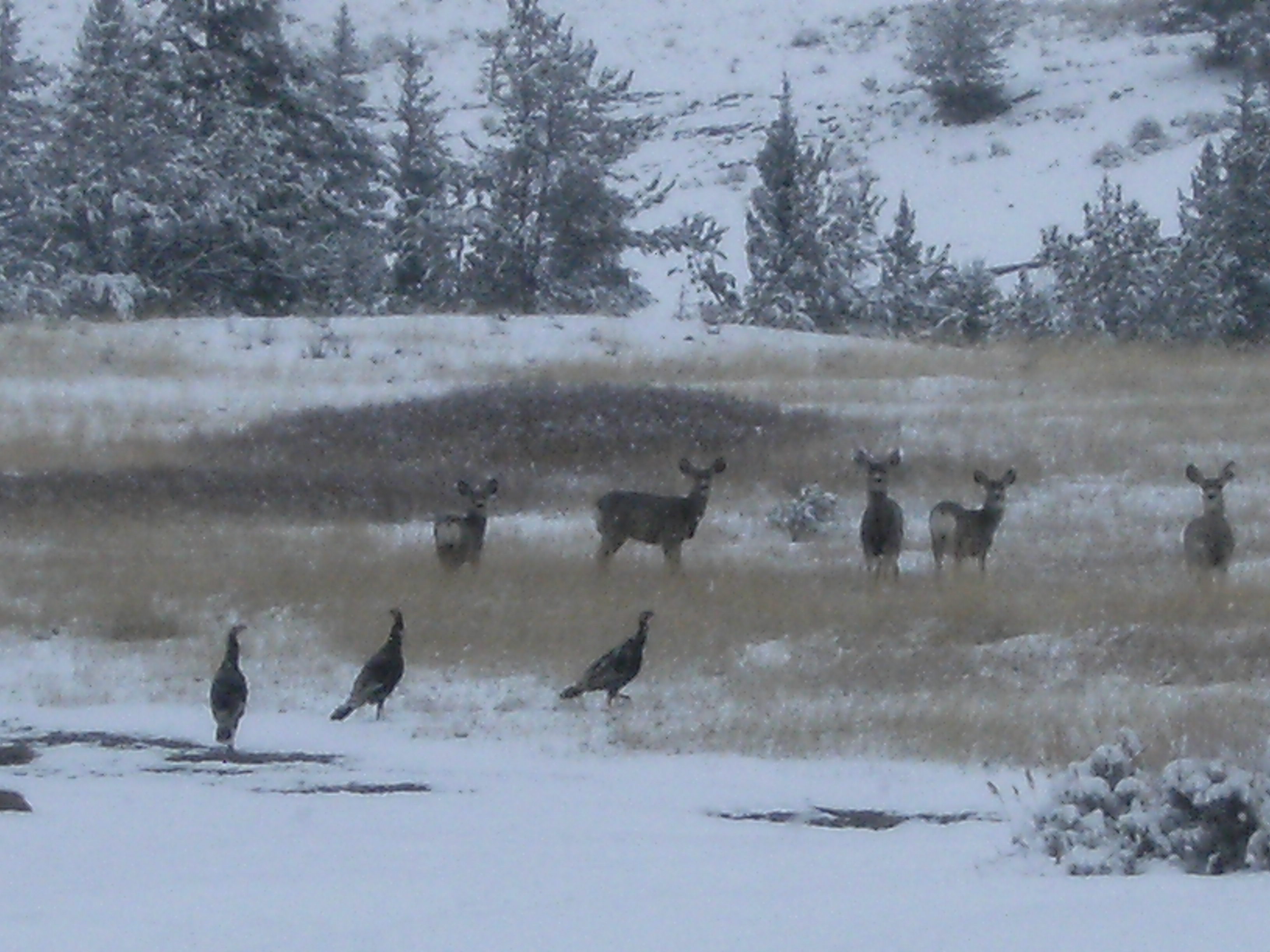
Deer and turkeys

Deer and turkeys

Osborne Russell, the famous trapper who went through Yellowstone in 1835 wrote “an eye could scarcely be cast in any direction around, above or below without seeing the fat [Bighorn] sheep gazing at us with anxious curiosity or lazily feeding among the rocks and scrubby pines.”

That is the norm for this ecosystem.  Now, in the 21st century, you have to take your binoculars and hope to catch a glimpse of a Bighorn sheep.  And if you do, maybe you’ll see 2, or 3.  If you’re lucky in the dead of winter, you’ll see 25 grazing together.  Now those numbers have become ‘the norm’ on which to issue hunting tags and judge a healthy population.

Lastly, and maybe the most important in my mind, hunting is no longer a sacred ritual.  There is not an acknowledgment of the sacrifice involved in the taking of life. In the hunt, animals are seen as ‘things’ without consciousness.  It is a ‘sport’, right up there with other types of consumerism and recreation, and thus not placed in its proper context–the sacrifice of one life to give life to another.

Most of us eat meat, fowl, or fish which is farmed then slaughtered and we have no relationship to what we are eating.  Hunting gives us that connection to our food.  Hunting in the 21st century, unfortunately, has become a caricature of what it once was.  For our ancestors, the hunt was a sacred event, shared by the entire community, deepening our awareness of the sacrificial nature of all existence.

My Friend

I have been pondering some seriously deep mysteries; like why the heck I need to spend 1/2 hour getting dressed to go hiking in 7 degree weather, when Koda can just dash outside stark ‘naked’, from 70 degrees inside.  Maybe we humans just weren’t made for cold.  I’m learning though:  about how the cold can freeze up the deep drifts so I can walk on top of them instead of struggling with each sinking footstep; or how the elk and deer make rutted trails making it easy to hike through the woods; or when the deep cold settles on the landscape, an icy silence settles my soul; or if I feel a bit lonely, I can walk outside and see the evidence of the nights activities as footprints in the snow.

Following an elk trail

Its been cold though for a California girl.  Yesterday the mercury didn’t get above 10 during the day.  In the late afternoon, my 84, going on 85, year old neighbor came to ‘check on me’.  He walked in from down the road, told me he had planned to work on his fence that day but the wind was blowing too hard.  So instead, he got the hay set out for his horses.  He’s pretty hard of hearing, but he likes to talk and his stories are fun, so I just listen mostly.  He was born in this valley.  His family came here around 1915 to homestead.  Considering Wyoming didn’t become a state till 1890,  and that the first homesteaders in my valley came about 1903, and that the road from Cody to this area wasn’t paved until 1993, that’s a long time ago.

Last year he said to me “I’ve got an elk tag and I’m going hunting. You wanna come?”  I sure did and figured that not only does he know this country like I knew my old neighborhood back in California, but his hunting speed was probably about ‘my speed’.

Going hunting

We saddled up the horses and left about 10:30 am.  I always ride his wild horse, Wiley.  Wiley is such a great big guy, really sweet and follows you around like a dog.  My dog, Koda, and him nuzzle each other.  It was October and there’d been a snow a few days before, so we were looking for tracks.  We went up to the next valley and up to the ridgeline.  All the way J___ was pointing out tracks–of black bears, turkeys, moose.  After an hour and a half, we finally got to the ridgeline.  “Let’s rest and have lunch.”  Yep, my kind of hunting for sure.

We sat for an hour and talked.   J___  told me a story about an old timer, who, when J___was six years old, he asked him when he first came to this country.  The old- timer replied “When I got here the mountains were flat!”  We both cracked up.

After lunch J___found some bull elk tracks.  Although all the hunters had gone west along the ridgeline, following the well worn trail,  J___ whispered “There’s a little meadow no one knows about on the east beyond those trees.  I bet they went there.”  The snow was thin, and there was bare ground in most places so it wasn’t easy to track those elk.  We slowly made our way through the timber, and sure enough, there were the elk tracks again, heading down a steep wooded ravine.  J___ said we could get rimrocked that way.

“If I didn’t have the horses, I’d go down there on foot.  But it might be too hard on the horses or get them rimrocked.”  I thought of him hiking downhill.  Yikes!  Glad we had those horses or that old codger might have gone down there.  J___ told me his rifle, which to me just looks like a 22, (As you might have guessed, I know nothing about guns) was a WWI rifle for sniper fire.  He uses sights only.  The thing is heavy.  I kept wondering how close he’d have to be to get a good shot.

We circled around for a few hours, on foot and on horse.  Finally he said “I want to watch this country for a while.”  For a moment I took him to mean “I want to live a bit longer to enjoy this place.” but he meant what he said and we hobbled the horses in an open area and walked back up to a view spot where he could see meadows to the east and west through the timber and just ‘watch this country’.  The view was breathtaking, but after a while I laid down and fell asleep, still tired from the night before, dreaming of all sorts of junk in that maddeningly beautiful country.  It was like the space of all that openness on top of the world was squeezing all the detritus out of me to allow room inside for its’ space.

"I want to look at this country for a while"