


Today, December 11, there is no snow on the ground at 6500 feet, a warm wind blows hard in 50 degree temperatures. I’m wondering what the future might hold for our grizzly bears as climate change marches forward. No one really knows. The sensible prescription is to make sure we provide corridors for passage to alternative foods as ecosystems change. That’s the best planning we can do.
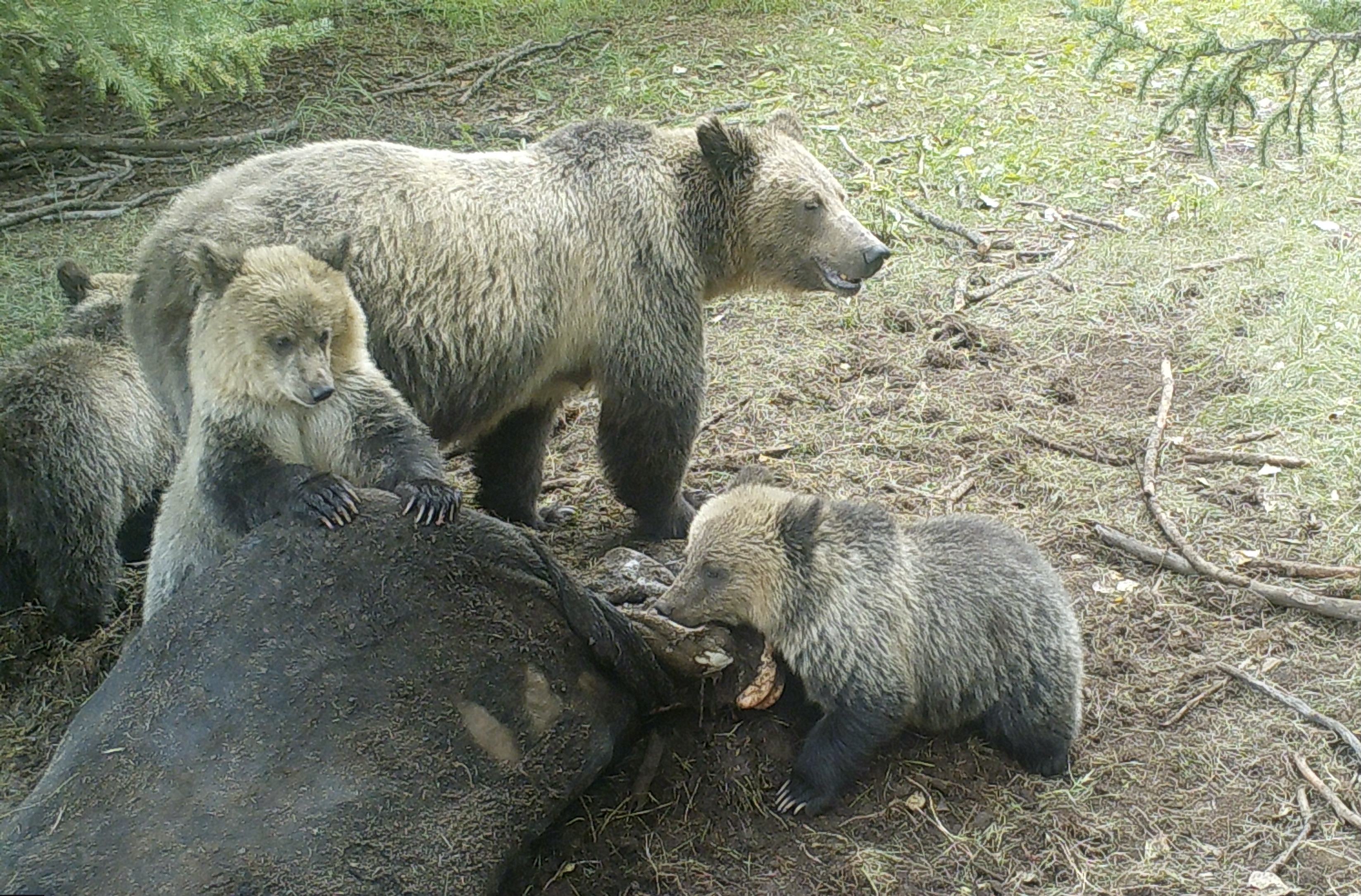
But I thought I’d indulge in visualizing what it could be like for bears, and especially for grizzlies since so few of them remain in the lower 48–only around 2000 in the Yellowstone ecosystem and the Northern Continental Divide, just a fraction of their historic range.
Probably the best place to look to is California where grizzlies once roamed but were extirpated by the early 1900s. Tracy Storer was a zoologist at University of California Davis. He spent years collecting every historical scrap on California grizzlies ever put on paper—in magazines, books, journals, newspaper clippings, Spanish logs, or Mission records. In 1955 he published California Grizzly. We now have better grizzly biology than what’s noted in his book, but the book records the fascinating story of grizzly habits along with Spanish and white men encounters. No one knows how many grizzlies California had. Joseph Grinnell, using suitable habitat and assuming one bear every 20 square miles (at one point the Interagency Grizzly Bear Team was using females with cubs every 19 square miles for population estimates) he estimated 2595 pre-1830.
Other sources estimate 10,000 bears because people met “herds” of bears, or bears in groups. Seeing 16 bears in “one drove…and that grizzly bears were almost an hourly sight, in the vicinity of the streams, and it was not uncommon to see thirty or forty a day.”(1841 Sacramento Valley). Although sightings of grizzlies in groups were common, that’s probably not that different from today where dozens of bears can be seen on moth sights or Alaska bears at salmon runs. Where food is plentiful, bears are tolerant of each other. California acorn season in the fall drew lots of grizzlies, beached whale carcasses, or large fields of clover.

Although there were probably a few grizzlies that denned in the Sierras, those environs were left to black bears, while most of the grizzlies were resident in the lower elevations and along the coast. Storer writes: “We think that, of the grizzlies living at lower elevations, the females with their young cubs were sequestered for a time, but the others were active through much or all the year…”
As our climate warms and conifer forests succumb to beetles and other pests, shrubs and grasses will dominate the landscape. Our National Forests will turn into National Shrublands. This favors grizzlies who are usually 80% meatless in their diet. Grizzlies are opportunists. They’ll find new foods. A warden who spent a lot of time helping biologists tag bears once told me grizzlies were following streams out of the mountains into the lower elevations in fall, feasting on Russian Olive fruits, an invasive species planted here several decades ago which has taken over native cottonwood habitat.
Lack of food is the main driver of bears denning. With warming weather, there might be many types of food year round. Insects will be out year round, rodents that usually hibernate won’t, shrubs will keep their foliage longer, grasses will grow year round.
Grizzlies might do alright, but don’t expect them to hibernate, except for females who need to give birth to their helpless young in the den. Of course, I am being optimistic here. No one knows what the future brings as our climate seems to be warming at a rapid rate. Ensuring protected habitat through partnership with private lands and our federal and state lands, is the best we can do at this point.
Filed under: Bears, Grizzlies, New ideas | Tagged: california, California grizzly bears, chao-2, Climate Change, Grizzly bears, nature, Wildlife, yellowstone | Leave a comment »
 Leslie Patten Books: Wild Places, Sacred Spaces