• MY BOOKS ON WILDLIFE, GARDENING AND MORE

  • Coming Fall 2024. Pre-order and use code 6AF24 for a 40% discount

  • The Wild Excellence

  • Award winning ebook on DG Primer

The right thing to do…Niagara falls and Yellowstone

I just returned from helping my son with location scouting at Niagara falls.  Its strikingly beautiful, especially in the winter.  The crowds are gone and its bitter cold, but there are ice floes in the river and parts of the falls are frozen.  The Canadian side still lights up the falls at night and the sheer power and magnitude of so much water flowing (in fact only 50% is allowed to release as the other 50% is used for power) overwhelms and puts us humans in our proper perspective relative to the awesome power of nature.

Falls at night

Power of the falls

But along with my visit to Sedona, Arizona last year, (which also is a natural wonder but not a National Park) what really stood out was its contrast to where I live now, the Greater Yellowstone Ecosystem.

Although I live next door to a National Park, I don’t of course live within the Park, but within what was designated a few decades ago as its larger ecosystem.  This is an actual mapped area, you could call it a ‘buffer zone’ where its recognized these large megafauna need room to roam to survive.

And, true to its name, I regularly see all the large and small animals that make up this complete ecosystem in the lower 48, which includes wolves, grizzlies, elk, and the occasional bison that is allowed to leave the Park.

So what’s so great about this area  you might say, as opposed to Niagara or Sedona?  Both have the power to overwhelm through their sheer beauty and immense landscape.  The difference are the animals.  Even the Sierras, as incredible a jewel as they are, are NOT a complete ecosystem.  Many animals that were there just 150 years ago are gone forever.

What Lewis and Clark encountered 200 years ago on their journey West is no longer, but a sliver of it can be glimpsed here in the Yellowstone Ecosystem.  Just a sliver, but that sliver is our history, our heritage.  No one would think of selling Monticello to create senior housing or a Walmart!  Why should we not value our original landscapes and the animals that were here before us in the same way?
Everywhere in the United States, with the exception of Alaska, animals have been pushed out to accommodate the biggest and toughest animal–humans.  And that is no exception in the Yellowstone ecosystem.  The controversy rages here too as to who should have primary use of the lands–hunters, atvs, developers, ranchers, oil and gas?.  Wolves are villified for killing elk that hunters could have taken.  Grizzlies are constantly moved around when they get into lands too close to homes or into unprotected garbage.  Bison are not allowed to leave the Park boundary.  Ranches are sold to developers who parcel up the land into lots, crowding out habitat for large animals.  Snowmobilers feel they should have the right to go wherever they choose, including the Park even when the science says differently.  The animals are last on the list.  And when that is how the priorities are set, what becomes of the land is Niagara Falls, Sedona, or at best a ‘safe’ wilderness like the Sierras; at worst we become like Europe, where their natural history is in the so-distant-past that its entirely unreachable in present-time.

Yellowstone and its ecosystem, unlike Alaska, is easily accessible by car to people from all walks of life, rich or poor.  It is an opportunity to view in the flesh our rich natural past.  Any person can do that from the safety of their car, and watch wolves or bears in the Lamar Valley.  Or one can take more risks and venture into the back country.  Even today, with this area protected and the reintroduction of the wolves, thereby completing the ecosystem fauna, the landscape doesn’t hold a candle to the enormous amounts of wildlife that was once beheld by the mountain men in the 1830’s.  Yet, they are all still here, thanks to the enormous efforts of many men and women conservationists through the century.

Black wolf

In the U.S., there are many unique and beautiful areas, but there is no where like this area.  Here we have the Serengeti of North America.  And in my mind, we are not valuing nor protecting it enough, nor are we holding it in the proper perspective.

Our Serengeti

The proper perspective:  This area, as well as more large tracts of contiguous land (Yellowstone to Yukon idea) is a wildlife first policy.  This is our gift to our children and the future.  This is our gift to the wildlife here.

Once we all realize what we have here, a jewel that is found no where else in the U.S. (Do we really want the last place where wild animals roam to be in Alaska, out of the reach of most ordinary folks?), we will change our approach and our views on a daily basis.  No longer will we have on the Wyoming books archaic 1890 laws that allow trapping, an indiscriminate way to kill wildlife.  No longer will we confine bison to the tiny Island of the Park because the cattle industry fears losing their brucellosis stamp.  Nor will people call for the extermination of the wolves because they are having a harder time hunting in the spots they are used to.

We will make new laws to help support the wildlife in any way we can and preserve this area; not for ourselves or for any use we desire today, but because we recognize its’ specialness, and because, frankly, its the right thing to do.

There was a time, not long ago, when out of 60 million Bison that once roamed the entire United States, only 100 survived.  In fact, it was thought that all bison were extinct, and that was what we, as a country, as a government, was trying to achieve.  But in the early 20th century, around 100 Bison were found living in Yellowstone.  An immense effort was made to bring at least some bison back and the bison that you see today living in Yellowstone are the result of that effort–the last pure genetic stand of bison living today.

When you go to Yellowstone, there is a power, a respect, a wordless reverence that wells up in your being just seeing these animals.  Something deep and ancient reverberates in their presence.  Imagine if those bison hadn’t been preserved?  Those conservationists who helped preserve the bison of Yellowstone did an incredible service to future generations.  We, living today, are the beneficiaries of their efforts.

We must make those same efforts today for generations that will be living 100 years from now, just as they did for us 100 years ago.  That is how we should be looking at the Greater Yellowstone Ecosystem.  That is how we should be making our laws, our plans, our actions.

“You may say I’m a dreamer, but I’m not the only one…”

Yellowstone spring

I’m doing some work here, adding a utility room.  With all the noise and construction, it was a great opportunity to escape to the park and let the workers watch the dog.

Since it only takes me 40 minutes to the NE entrance, I escaped around eleven and was back by 5.  The day was overcast and on the cold side.  I’d planned to do a day hike, but chucked the idea with a cold wind blowing through the Lamar.  There was enough activity to view right from the road.

I’ts early June, the kids are still in school, and usually May and June the Park is still quiet during the week.  Yet last summer was the busiest the Park has ever seen and its predicted to be the same again this year.  The Lamar Valley had plenty of people today, but they all seemed serious wildlife watchers and so the atmosphere was calm and peaceful.

I do have to say, with all the hubbub around the ecosystem about wolves–rallies in Jackson and Cody recently, sponsored by outfitters and the Elk Foundation, complaining about wolves taking their business away [i.e. “biggest slaughter since the bison” meaning the wolves are eating all the elk, like when we killed all the bison] and wanting Wyoming wolves hunted as predators–it seems to be completely forgotten that wolves have created an incredible tourist attraction that benefits Wyoming.  I only talked with a few tourists in the valley, but they were all looking for wolves.  I ran into a carload of tourists from Oklahoma who had gotten out of their car to use the restroom when they heard a wolf howl.  They walked out to an overlook of the Lamar river and saw a black wolf–a thrilling experience for them.

Another man stopped and asked what I was looking at through my scope.  When I told him ‘a black bear’, he said “We already saw that.  We’re looking for wolves.”

It seems to be one of the main draws to the Park these days.  Wolves have fueled the attendance to record numbers!

With the Druid Pack all but gone, I didn’t expect to hear or see wolves in the Lamar, but there was a black wolf running around there, plus a tourist told me she’d seen one on a kill earlier.

Mostly though, since I see wolves in my own valley, I love to see the Bison and especially their babies at this time of year.  They are the only wildlife that cannot leave the Park so I have none in my valley.

Error
This video doesn’t exist

There were a lot of Bison in the Lamar this day.  I always try and imagine the great herds that once roamed everywhere just a few hundred years ago.

Loads of Bison

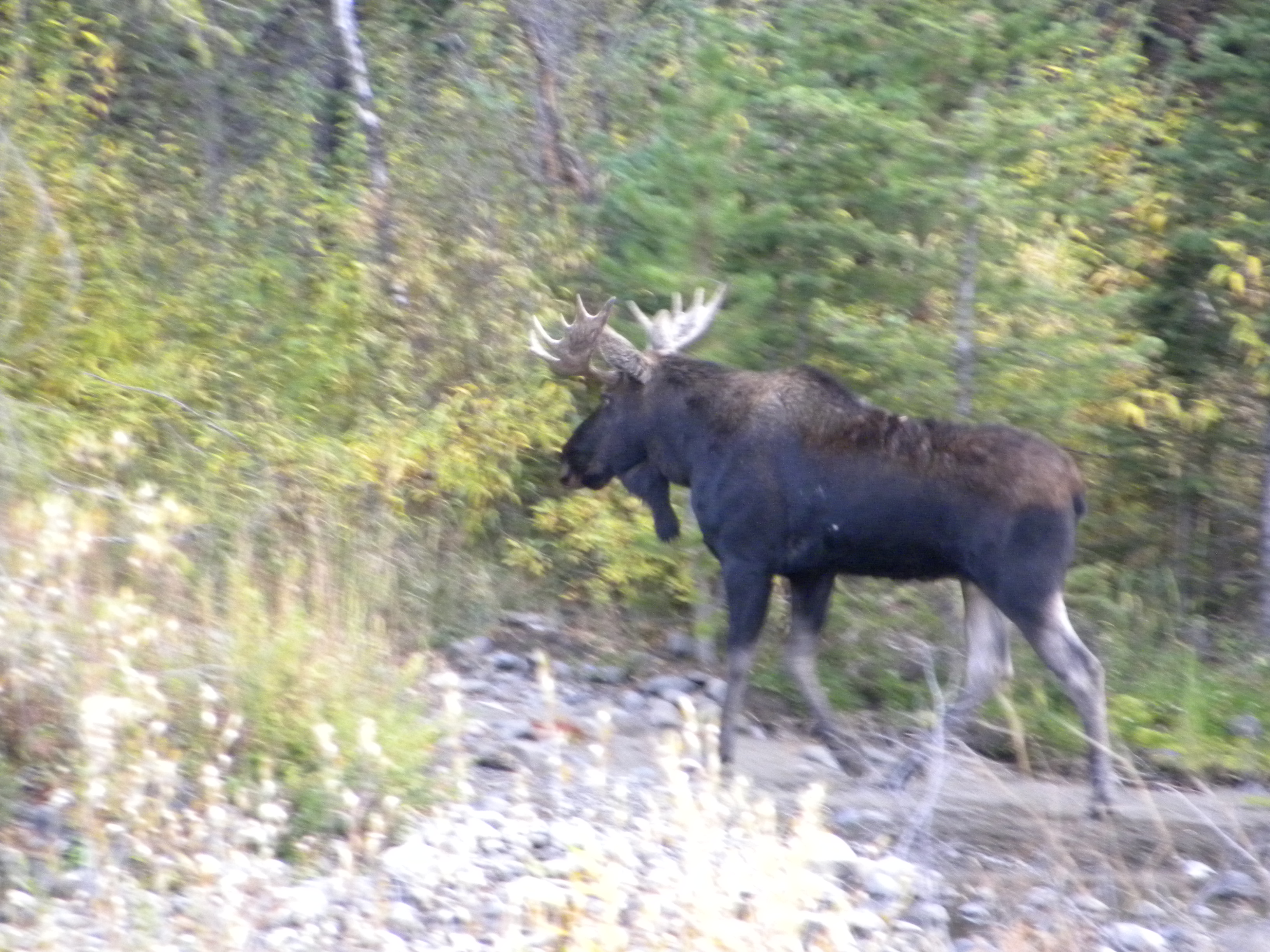
Besides Bison, wolves, and black bears, on the way out I saw 2 beautiful old bull moose hanging by the side of the road (until a crazy tourist tried to get a close up picture.  Fortunately for the tourist, the Bulls decided to head up the hillside instead of into the tourist).

What’s happening with the Moose in NW Wyoming

Moose track

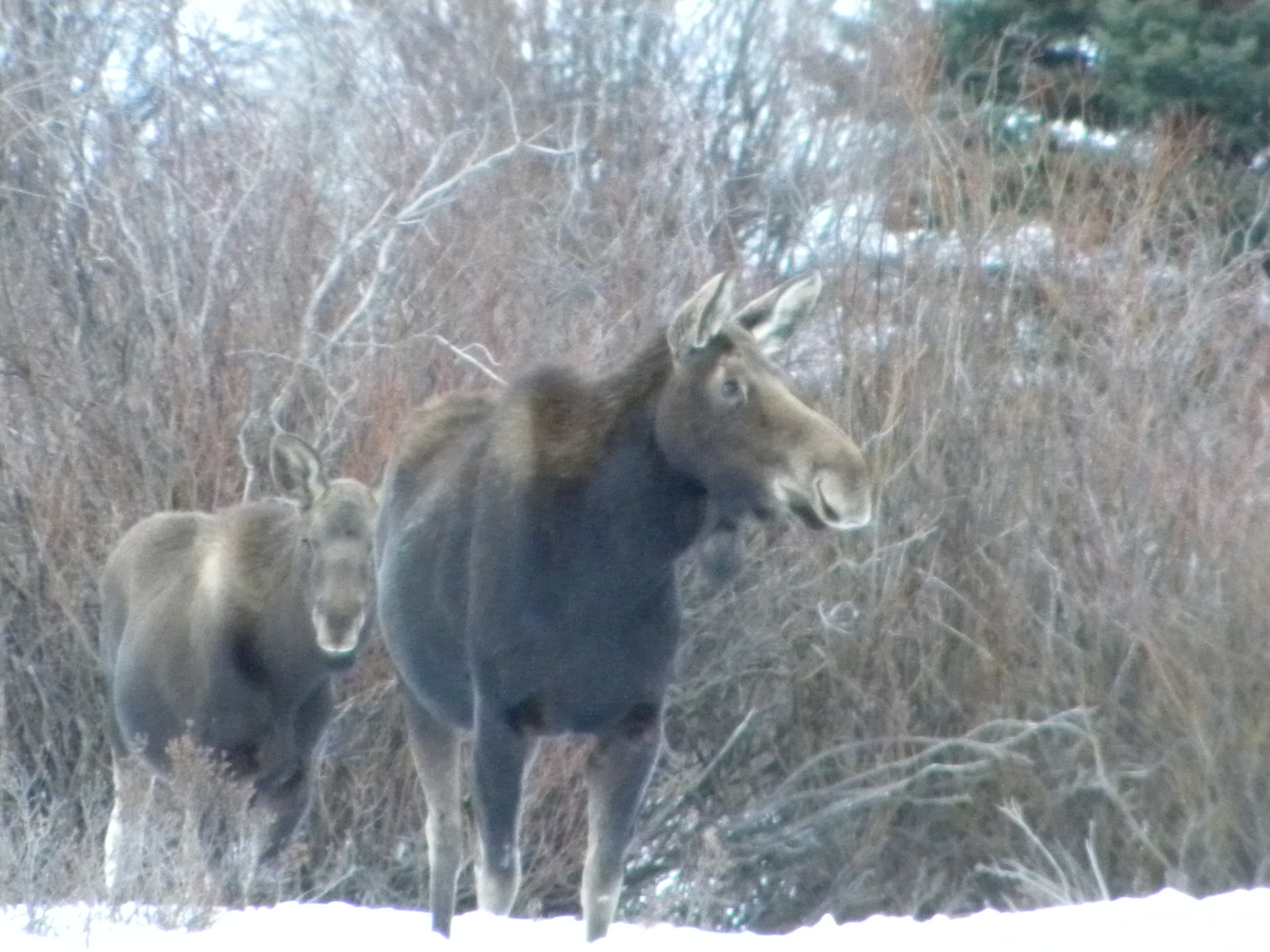
Although I’d been hearing from local hands about moose visiting their properties all winter, I’d seen no sign.  But just the other day, on a walk through the springs area of the nearby forest, 2 yearlings watched my neighbor and I casually as we approached on the trail.  I held the dog, who didn’t even notice them, and we all had a few moments of moose/human communion.  Ah, what bliss!

The yearlings went up the hill, we continued along the springs, when I looked down below into the newly logged private lands to catch a glimpse of Mama Moose, big and beautiful, running through the woods.

Yearling moose tracks next to Koda's track

I’d downloaded Scott Becker’s Master Thesis last fall and finally got around to reading it.  He did a study on the moose around the Jackson area, including Dubois, south Yellowstone, and the Tetons.  Here are some of the highlights from his study:

1.  Few, if any, moose existed in Wyoming prior to 1850.  Sporadic observations of moose occurred in NW Wyoming after 1850, but its believed the population didn’t begin to increase and expand until after the establishment of Yellowstone National Park.

2.  Moose suffer heat stress in winter when temperatures are above -5 degrees celsius (23F); 14 degrees celsius in summer provokes heat stress (57F) and above 27C for extended periods of time is unsuitable for moose without refugia (80F)

3.  Migrations between seasonal ranges follow traditional routes and that knowledge is passed from parent to offspring.  Thus it may takes several generations for moose to adapt to habitat alterations that impact seasonal movements and ranges.

4.  Some of the most important elements of habitat quality include coniferous forests, especially during spring when increasing ambient temperatures limit foraging activities of moose during the day.  Moose movement is very concentrated in winter and dependent on coniferous forests.  Moose population density and calf-cow ratios for the north Jackson herd began to decline shortly after the ’88 Yellowstone fires.

5. The north Jackson herd is in a steady decline.  When female moose are healthy, they usually have twins.  The results of Becker’s study indicate that nutritional quality, rather than the availability of habitat may be the most important determinant limiting population growth.

6.  The impact of predators on calf survival appeared to be minimal.  Although wolves did account for some adult female mortalities, the effect of wolf predation on this population appeared to be minimal.  The apparent preference for elk by wolves in the GYE was likely due to the greater abundance of elk in the area.  Also, because elk are in herds, its easier for wolves to follow and find them.  While moose are solitary and the occasional predation is usually due to happenstance.

7.  Management implications:  Mature coniferous forests are an important component of Shiras moose habitat selection in winter and summer.  Thus disturbances that reduce the amount of mature forests could negatively affect moose population performance.

8.  Becker concludes that nutritional quality of habitat is the most important factor in the declining moose population in the northern Jackson herd.  Habitat quality has been affected by large wildfires, insect outbreaks, widespread drought since the 1990’s, and global warming.  Predators are playing a minor role in the decline of moose in northern Wyoming.

Here’s a video taken last fall of a male and female in the willows just down the road.  You can turn the ridiculous narration off if you want.

Error
This video doesn’t exist

Yellowstone after Arnica

This will be my last trip to Yellowstone this fall. The Park is winding down and, because of the fires and snow, a lot of the roads were closed.  I went with some friends from BBHC through the East entrance.  Dunraven Pass and the road to Lake were closed.  Old Faithful access from the south (Madison to Norris access has been closed for repairs for the season a long time ago) was closed as well, but open from 12-1 only, I suppose so people could get out of the hotels. So, we had no choice but to head towards Canyon and Mammoth via Norris.

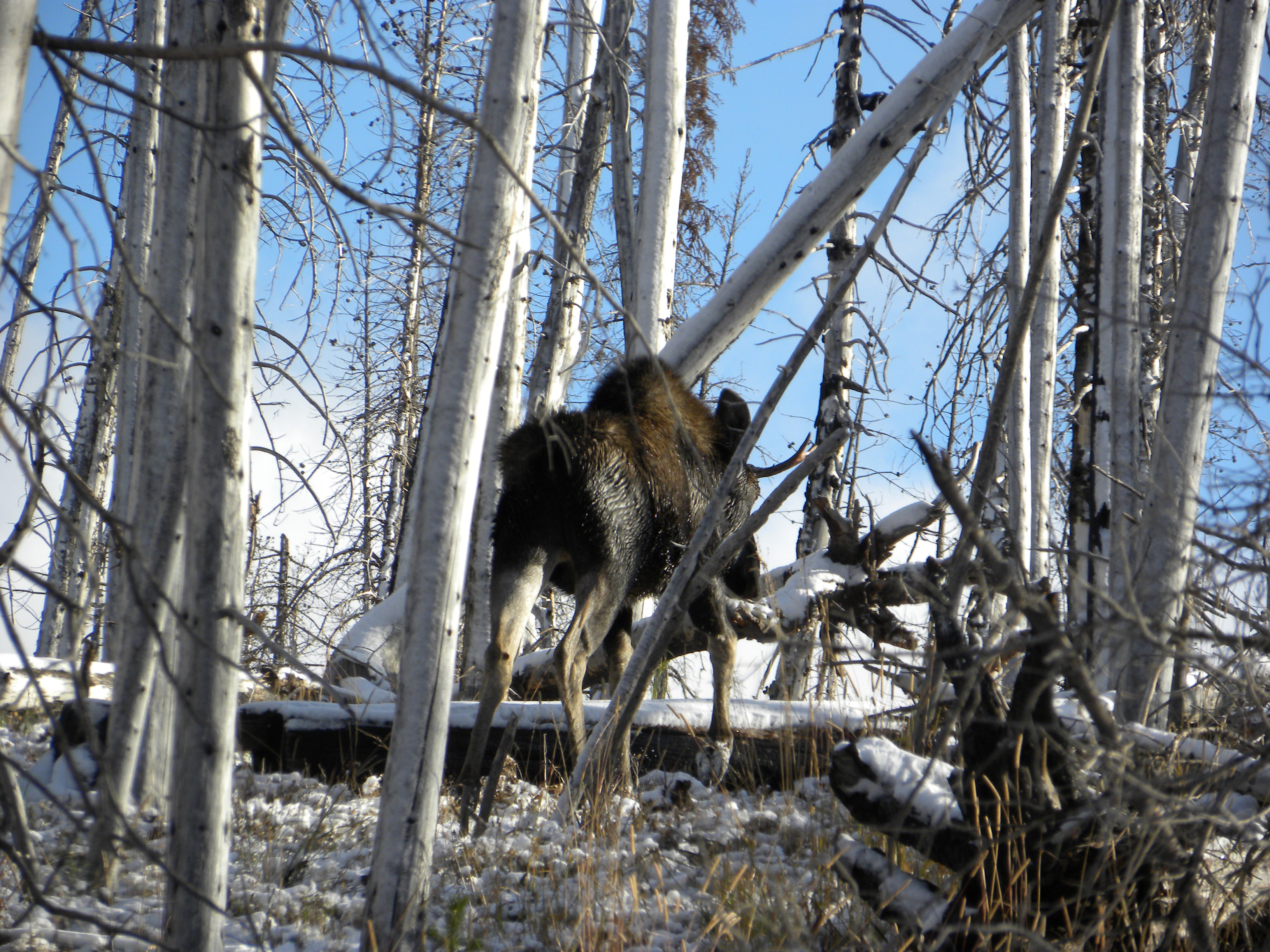
The day started late, around 8 am, but with a bang.  Way before the Park gate, on the Northfork, we spotted two moose–a young bull and a cow.  On the way up Sylvan pass there was another young cow moose.

Near Sylvan Pass

Near Sylvan Pass

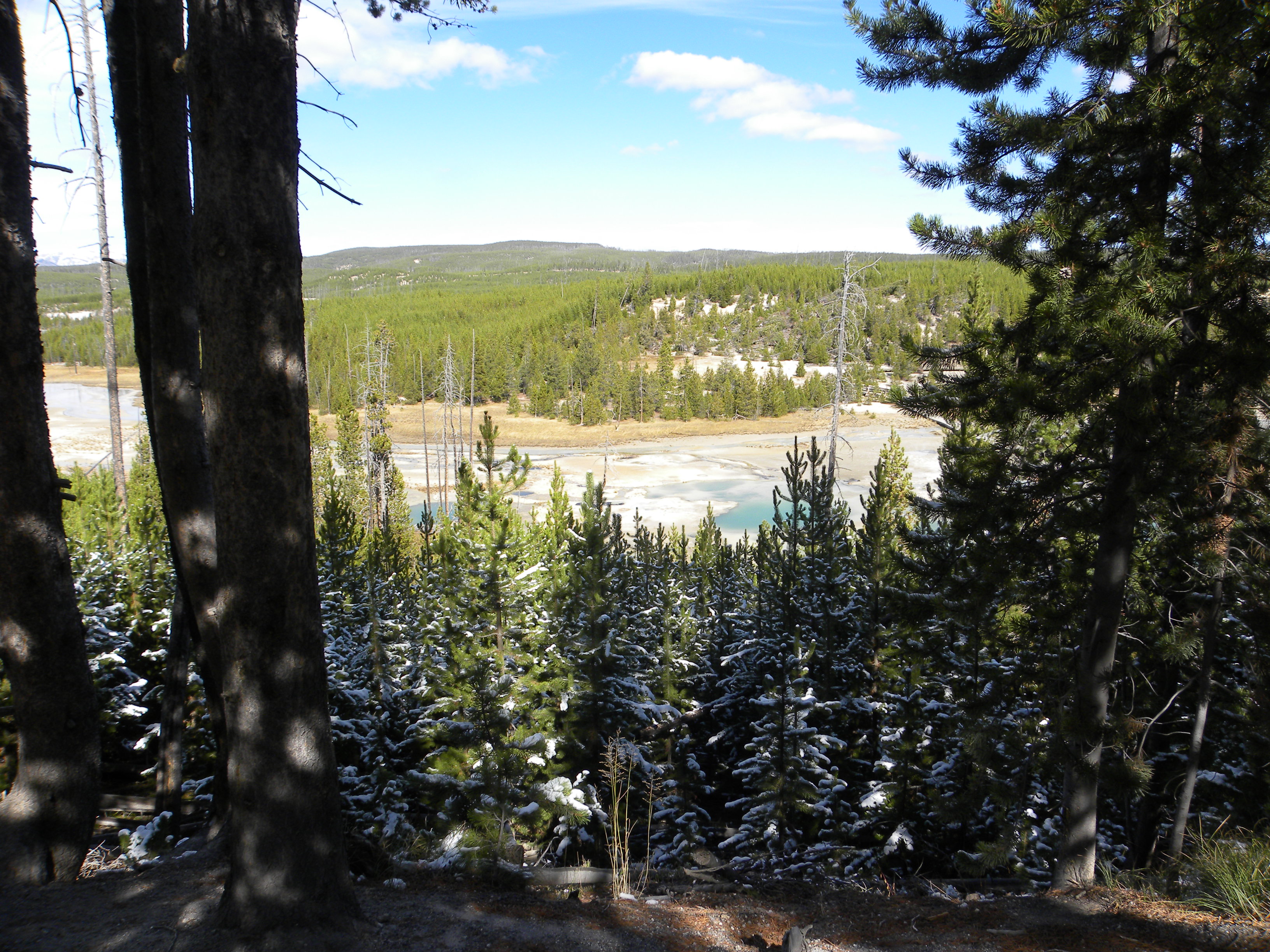
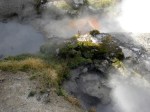
There was lots of snow up and over the pass, and Sylvan Lake had a partial ice cover.  We headed for Norris Geyser Basin with a stop at the Mud Volcano.  Mud Volcano

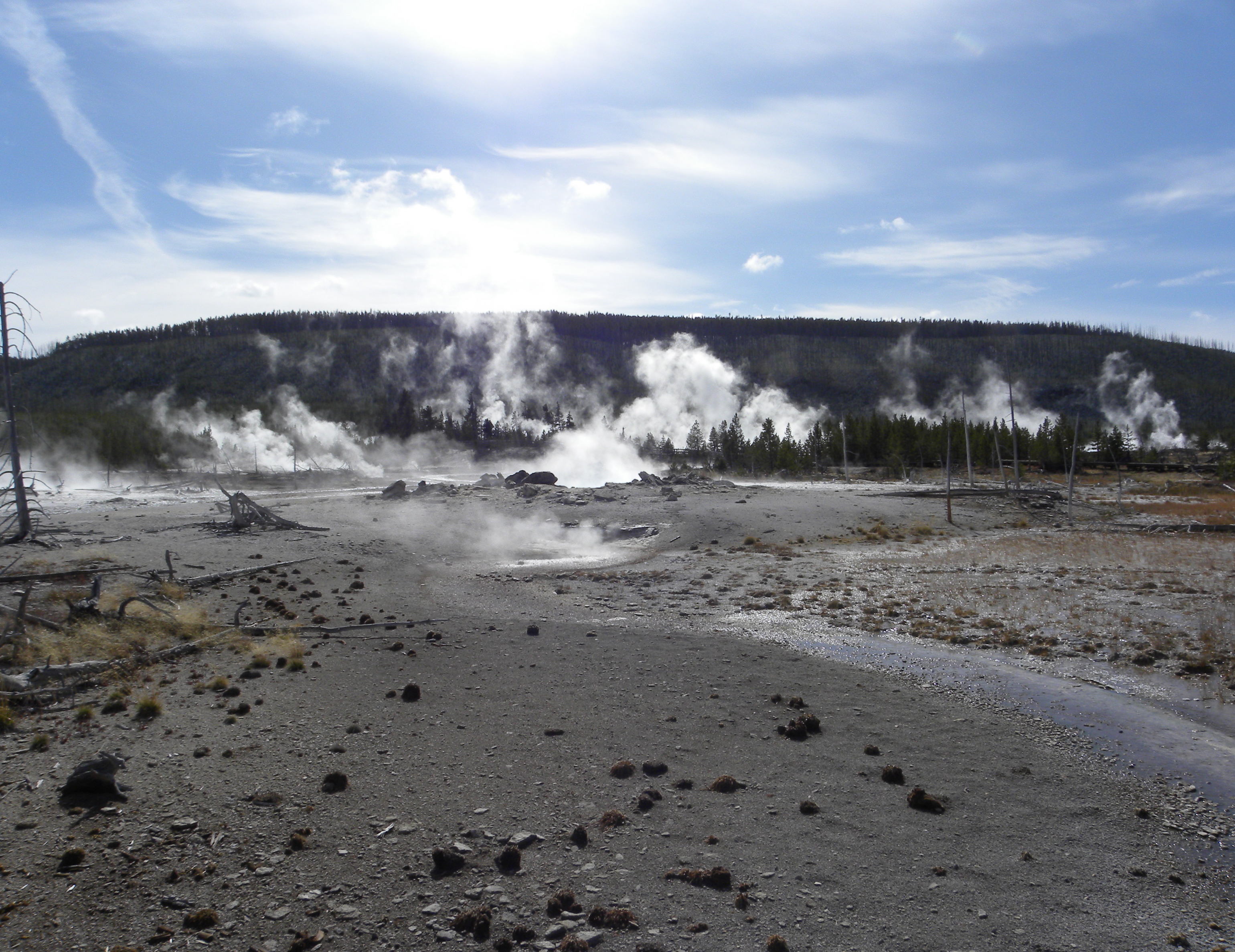
Norris Geyser Basin

mud pot

mud pot

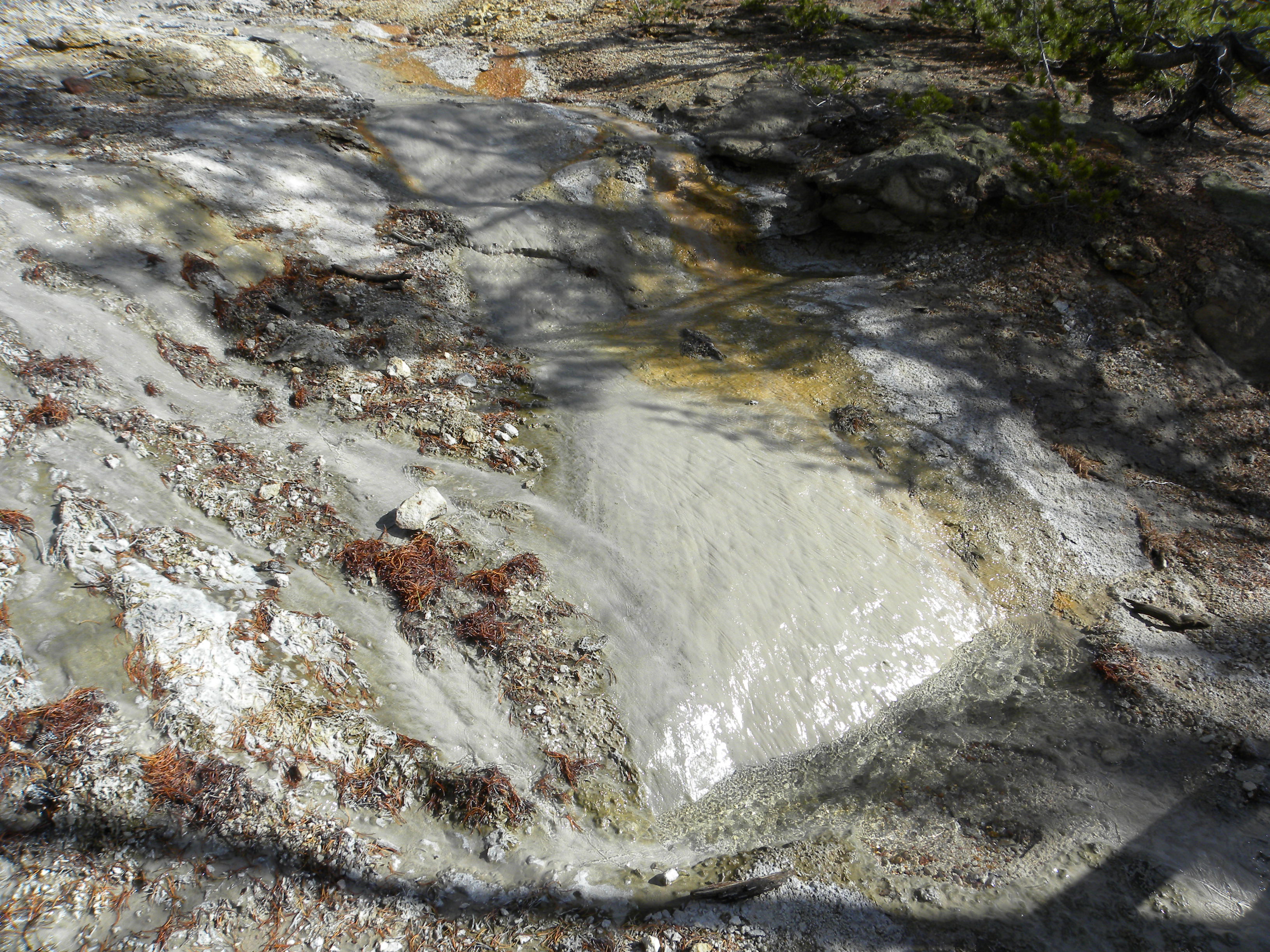
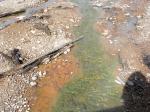
Colors in hot springs

Colors in hot springs

I realized that I’d overlooked this wonderful area.  Norris Geyser Basin has got to be one of the best geothermal spectacles in the Park, and yet its tucked way back in near the Junction so I think people whiz bye without thinking to stop.

Norris Geyser Basin

Norris Geyser Basin

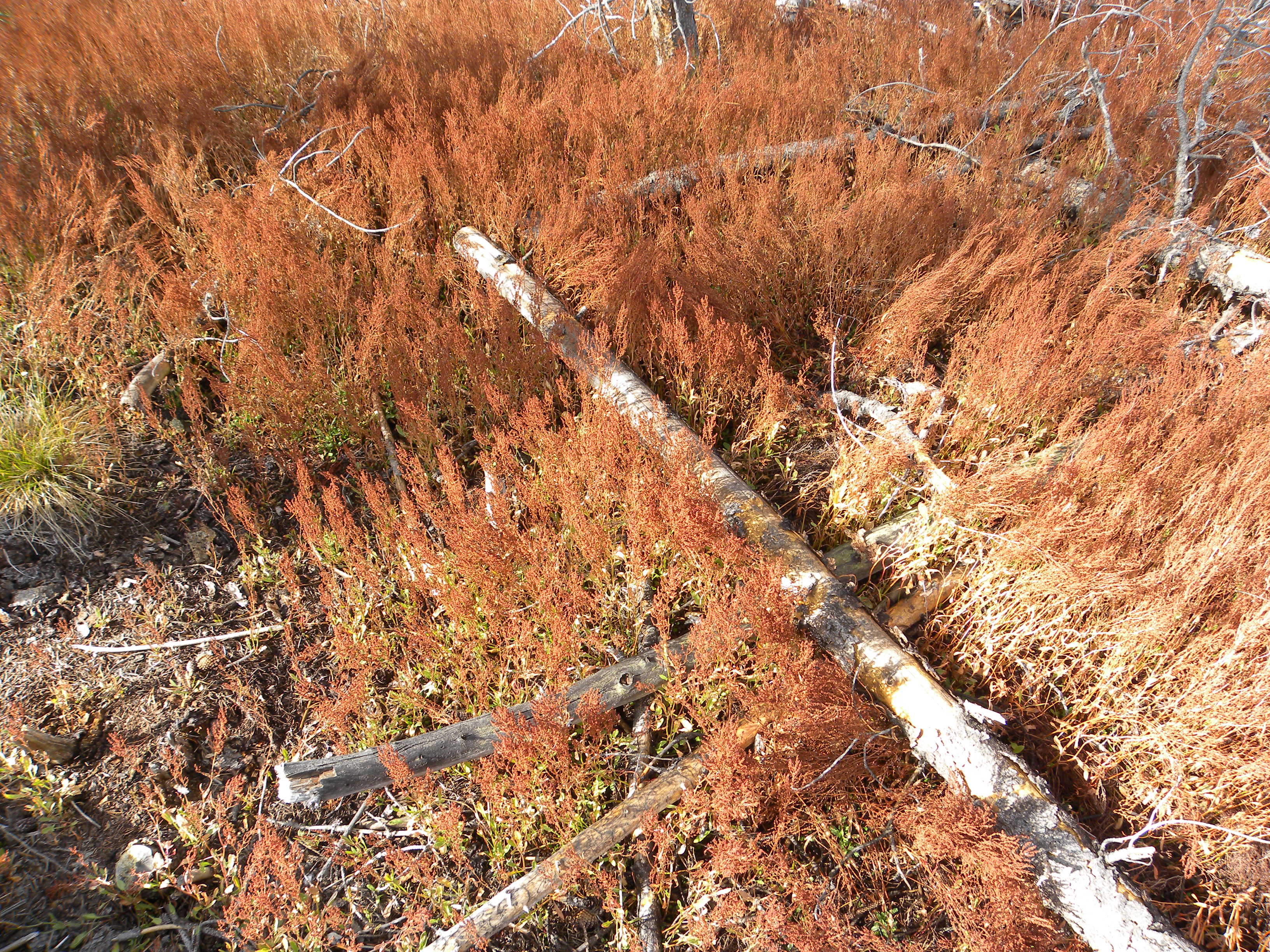
Hot springs plants in fall color

Hot springs plants in fall color

Norris

View of part of the lower basin at Norris

View of part of the lower basin at Norris

Once in the car and on the road we spotted some tourists standing literally at the edge of a hot pool in the meadow, taking photos!  Yikes I could just imagine that thin crust breaking and cooking them.  Really folks, that’s a stupid idea as those pools are hot.

After lunch at Mammoth, we headed down towards the Lamar.  We hadn’t gone too far when we spotted a wolf.   Besides spotting wildlife yourself, the trick is to watch the tourists.  Check for the ones with the spotting scopes set up.  These are the real serious wildlife watchers, usually looking for wolves or bears.

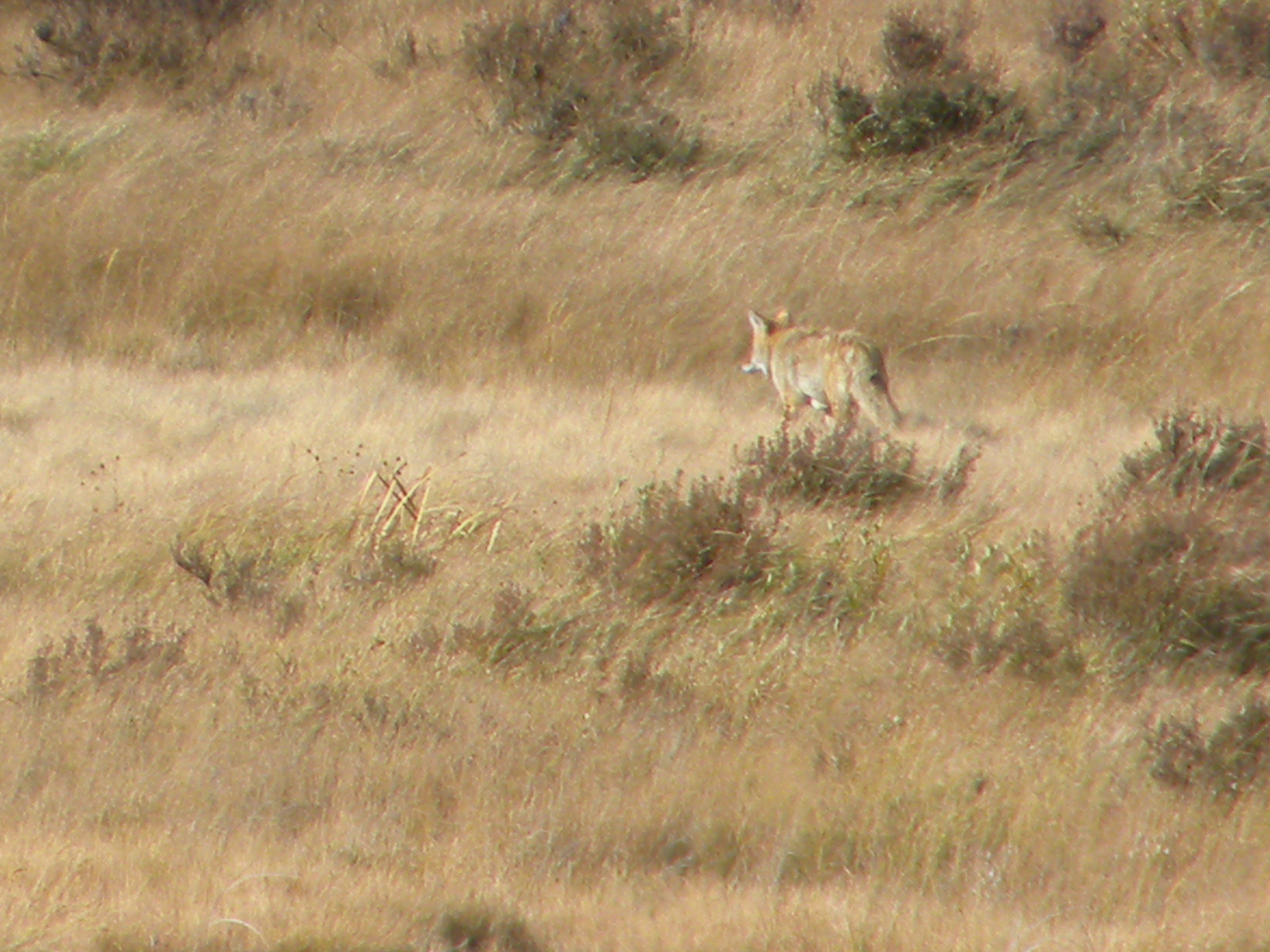
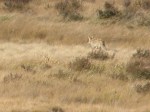
We parked and watched a collared wolf hunting voles in the grass along the river bank.  Every so often he’d pounce way up in the air for his prey.  One of the bystanders said “That’s a coyote.  I’m leaving.”  Well yes, the coloring was similar, but the size and shape of the head was the giveaway.  Besides, he had a collar.

Collared wolf.  Compare his size and colors to coyote

Collared wolf. Compare his size and colors to coyote

He (or she) looked pretty healthy.  No mange and that was good to see.  On down the road we saw about our 10th coyote for the day.  So many tricksters in one day, and all were busy hunting voles.  I’d swear the purpose of rodents on this earth is for eating.

Coyote hunting voles

Coyote hunting voles

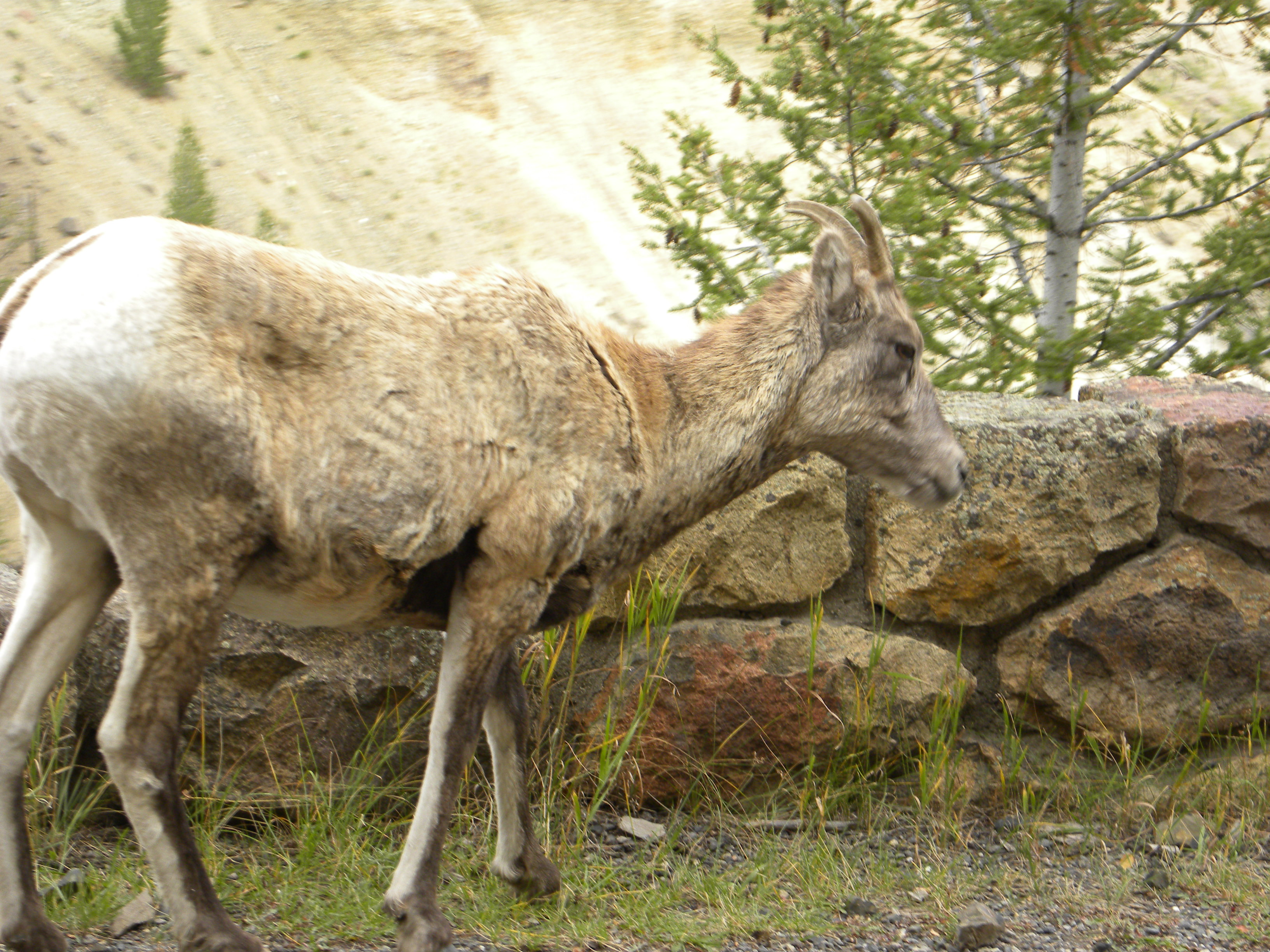
Although Dunraven was closed, we were able to get up from the Lamar side as far as the Specimen Ridge overlook.  Several ewes were grazing along the road.  It is incredible to realize that they get up and down the sides of these mountains with ease.  Way down below near the river there’s natural mineral licks they’ve used since ancient times.Ewe and view

Ewe

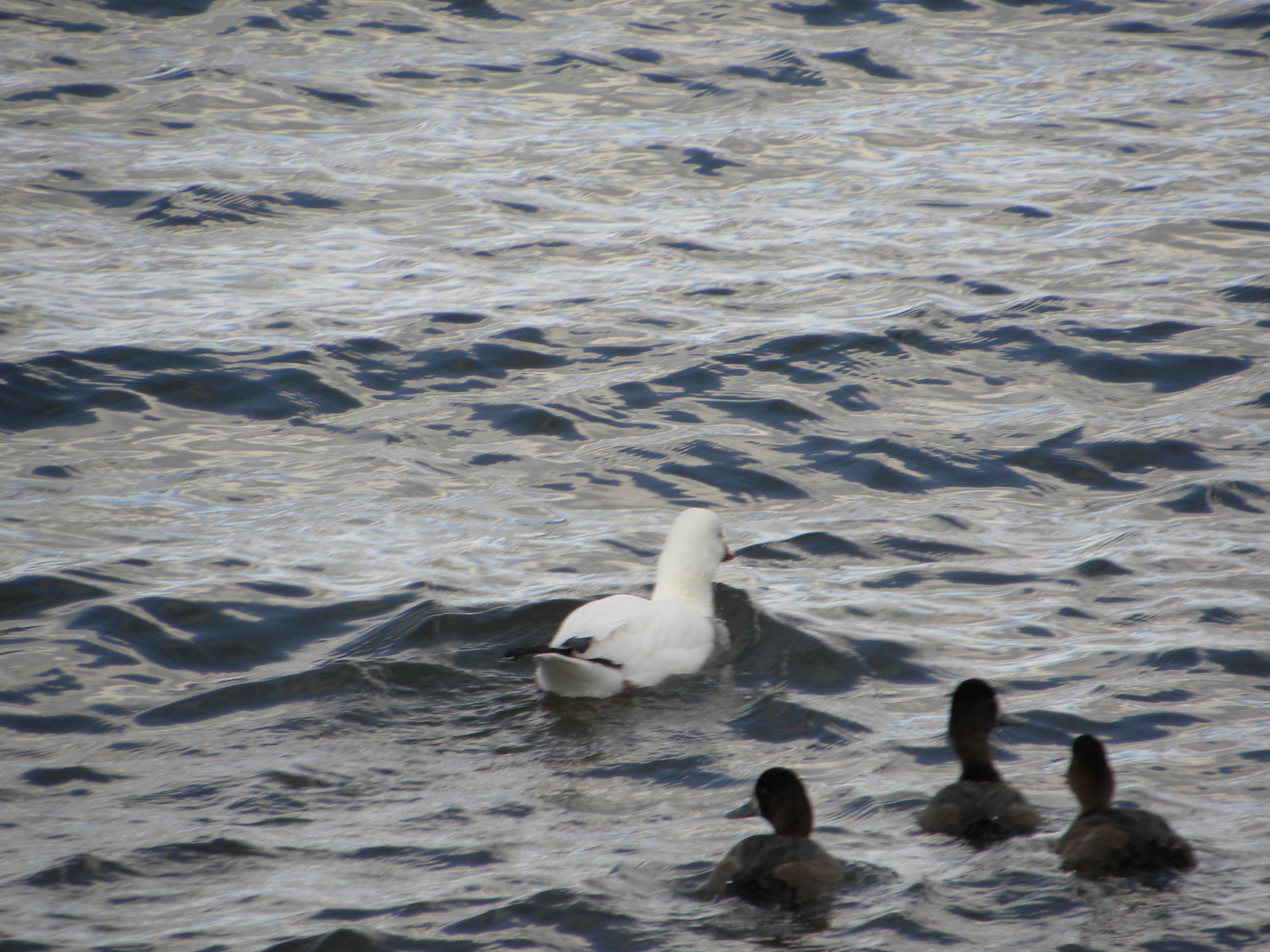
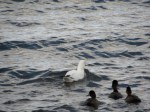
On the way out of the East Gate, we spotted a snow goose, rare in these parts.

Snow Goose

Snow Goose

All in all, we spotted six moose.  The last one was on the way out again, past the East Entrance, not too far from Pashaska Teepee on the National Forest.  Another nice thing is seeing Bison on Shoshone National Forest.  There are no grazing allotments on the forest outside the East Exit of the Park so the Bison wander there, especially in winter.  I sure wish Montana would ‘cowboy up’ and do the same at the North and West Exits.

All in all, for one day in the park that’s a lot of wildlife watching–6 moose, 10 coyotes, lots of bison and elk, one wolf, several bighorn sheep, trumpeter swans and various waterfowl.  A woman we met said she saw a cougar near Mammoth that morning.  One fall day in the Park can’t be beat!

Northfork moose

Northfork moose

More Scats and Tracks

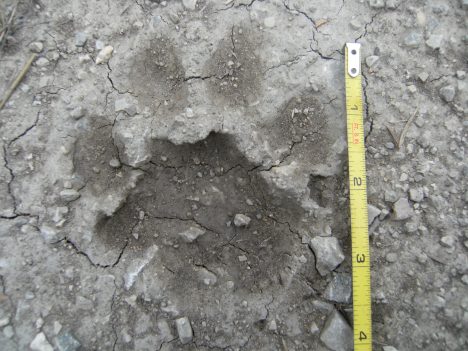
Yesterday I found a cougar track in the mud.  I know there’s a cougar on that side of the creek because a friend of mine saw one a few months ago driving from the Cody Pow Wow down Dead Indian highway.  It was around 9pm, he said, and the cougar was just standing along the side of the road.  He stopped the car and watched the impressive animal for about 10 minutes.  Only one other car, a neighbor as well, came along, stopped and watched.

The track was right along the trail, not too far from the trail head. This part of the trail is in eyeshot of the main road, which climbs steeply up the mountain.  The track, measured out about 3 3/4″ length by 4″ wide.

cougar track in mud

cougar track in mud

cougar track with penny for reference

cougar track with penny for reference

Being that the ‘Scat’ post is popular, here are a few more gems!

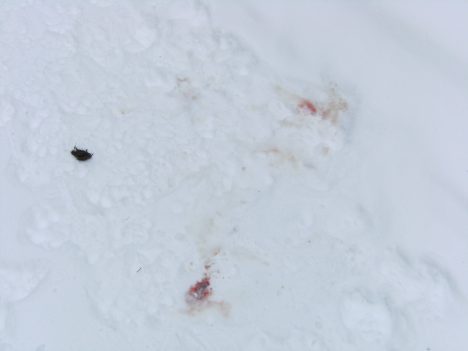
Wolf blood and urine from wolf in estrus

Wolf blood and urine from wolf in estrus

Wolf scat

Wolf scat

Comparison of elk and deer scat

Comparison of elk and deer scat

Moose scat

Moose scat

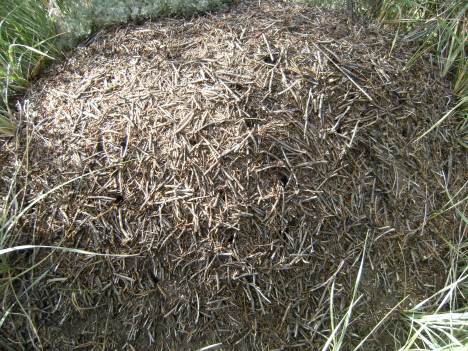
Ant hill

Ant hill

Ant hill destroyed by a grizzly looking for grubs

Ant hill destroyed by a grizzly looking for grubs

Turkey tracks

Turkey tracks

GYC annual meeting in Jackson

I just returned from Jackson for the annual Greater Yellowstone Coalition meeting.  The convention was at the plush Jackson Lake Lodge.  The lodge lobby sits in Grand Teton National Park overlooking a large wetland where elk are calving, moose are bedding, and grizzlies are eating.  There’s something wonderful and strange about viewing all the wildlife activity from the comforts of the heated lobby.  Of course, you can also go out on the balcony, but if its raining, as it frequently was, I almost felt guilty being so comfortable inside looking out.

View from Jackson Lake lodge

View from Jackson Lake lodge

The Greater Yellowstone Coalition is such a great conservation group.  It’s an organization working within the Greater Yellowstone Ecosystem to solve wildlife/human conflicts.  Its works on issues as diverse as legislation to preserve prime habitat areas to preventing oil and gas leases.  There is a level head to the organization as it attempts to throw out a wider community net and partner groups that might not have otherwise come together.

The annual meeting was fabulous.   This is my third one in four years, and I think it was the best.  Some highlights:  Alexandria Fuller, the keynote speaker, who was charasmatic, witty, and very funny.  She had the crowd laughing over stories from her hometown in Africa and then crying when she discussed her new book about a young man killed in the oil fields because of poor safety procedures.

The other two highlights for me were on Saturday morning.  Kevin Hurley of Wyoming Game and Fish led a round table discussion I joined on Open Grazing on public lands.  His focus was the plight of the bighorn sheep in Idaho.  Afterwards he gave a presentation on the Bighorn Sheep migration around where I live on the Beartooth front.  Just in the last few years, after doing some collaring, they’ve discovered the migration of the bighorns, which follows a peculiar and ancient arc pattern.

Geoffrey O’Gara of Wyoming Public Television followed with a fantastic preview of a new PBS documentary he’s working on about the pronghorn migration and the push to preserve land along their route.  The documentary will raise critical awareness of this pressing issue.

I highly recommend that anyone going to the Tetons take the time to stop and visit the newly opened Laurance Rockefeller Preserve. Donated in 2001, but just opened to the public last year, this was the private residence of the Rockefellers and one of the most pristine places easily accessible by car.  Take the time to walk to the lake.  Laurance used to have his guests park in the parking area and walk the mile and a half to get to the residence by the lake.  That way they’d leave their worries at the gate and begin to experience the wonders of this natural place.

Here is a photo I took of mama moose nursing her calf along the trail to Phelps Lake at the Rockefeller Preserve.

Mama moose nursing calf

Mama moose nursing calf

Mama moose nuzzles her calf

Mama moose nuzzles her calf

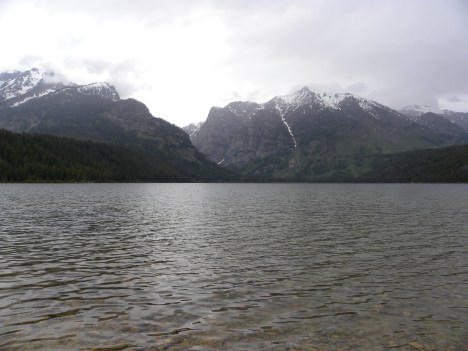
Phelps Lake at the Preserve.  Fabulous!

Phelps Lake at the Preserve. Fabulous!

The Moose

My neighbor just had his 85th birthday.  He’s lived in the Valley all his life.  His father homesteaded here back in the early 1900’s.  I love to hang out with him, help with his two horses, and pick his brain for stories.  He knows this country like I might know all the shortcuts in my old hometown neighborhood.  Except his neighborhood is vast, wild, without roads or trails.

I’ve learned over time that, although his memory for details and names is way better than mine, the time periods and placements of events need to be sorted out.  He might tell a tale like it was last week, until I question him more and find out the events took place in the 30’s.  It took me a while to figure out that most of his Yellowstone stories were from the 50’s (when he worked there) rather than just 10 or 20 years ago.

I’d been seeing quite a few moose lately.  One came into my yard the other day, a resident who likes to hang in the marshy willows nearby.  Moose numbers for Wyoming are really low, only 44% of objective, according to a just published Game and Fish report.  I told this to JB and that got him storytelling.

Moose walking down my road at dusk

Moose walking down my road at dusk

Moose in nearby meadow

Moose in nearby meadow

Young bull moose in front yard

Young bull moose in front yard

“It was a snowy winter and I was at the homestead.  I’d feed the cows at the bottom of the pasture near the trees to get them walking a bit.  That’s good for them you know, especially for the pregnant ones.  One day I was down in the timber when I saw a cow moose and three calves.  There were stuck there in a hole and couldn’t get out, the drifts were so bad.  They were real skinny and starving down there.  When the momma saw me, her hair stood on end.”

“So I brought a few bales of hay on my sleigh over.  Every day I’d come to check on them and the cow moose got used to me.  I’d bring them hay, but each day I’d place it a little bit further out of the timber towards the pasture.  Slowly, they came out.  They spent that entire winter in the pasture with my cows.”

Clarks fork drainage near Russell Creek.

Clarks fork drainage near Russell Creek.

“Another time I was way up Dead Indian, you know where the willows are up there?”

I nodded.  I’d seen moose tracks there.  Its about 3 miles or more up the trail.

“I was up there and saw a bull moose.  He’d been shot and was bleeding from the side.  Some hunter shot him but the moose had run off.  He was in real bad shape and the snows were getting deep.  I hauled 20 bales of hay up to him.  I didn’t put it all in one place.  I put it around in the timber where he was at.  Then I left him for the winter.  Come early spring, I went back to check on him.  You know what I found?  He had a friend.  Another bull had come in there and all that hay was gone.  That bull was all healed up and getting around fine now.  I don’t really know how he survived that wound, cause I think he was bleeding on both sides. There had been blood around.  But he made it.”

Dead Indian Creek

Dead Indian Creek

To begin to get a feeling for what’s going on with moose numbers in Wyoming, this is an excellent thesis by Scott Becker.

A busy spring rolls in

It seems to be busy around here.  There’s a nesting pair of bluebirds in a box right outside my front door.  I was sure they were going to leave last week because of all the noise around here.  I needed to work on my driveway because, surprise, this winter I couldn’t get in.  I was able to plough it initially, but everytime there was a melt, the ruts just got deeper and deeper.  Pretty soon I was parking down the road at my neighbors for the last few months. There’s been some pretty big equipment happening all week, taking giant scopes of limestone and rock from my personal ‘quarry’–my hill–and laying it all along the road.

But this morning a head popped out and there was madame Bluebird.  She must be sitting on her eggs now, because she hasn’t moved.  I’ll be leaving for a few weeks on Monday for California and then the Greater Yellowstone Coalition Annual Meeting in Jackson, so she’ll have some nice peace and quiet.

When I snagged the photo, I didn't see the butterfly till I printed it.

When I snagged the photo, I didn't see the butterfly till I printed it.

Several hawks came through while I was watering today.  A pair of red tails soared by.  I know there’s a nesting pair down the road by the bridge so they might be the ones.  An unidentified buteo–two toned black underneath which I think was a Merlin–visited.  And a kestrel snagged a ground squirrel (or something the equivalent in its mouth) while I watched from the front yard.

Ahh, motherhood

Ahh, motherhood

So cute!

So cute!

A moose popped in this afternoon.  I was working in the shed sanding a table when Koda started barking.  It was the kind of bark you just know its not a person.  I keep Koda on a shock collar usually.  That’s in case a wolf or bear comes along.  But around the house he’s usually off-shock.  Luckily, he responded nicely, came when called, laid down and stopped barking.  The moose seemed pretty unperturbed.  A barking dog is like an annoyance when she’s used to dealing with wolves.  She was alone and I know there’s a pregnant cow down the road in the swampy area.  But this lady was lean. She ambled up from the trees, paused to consider the barbed wire fence, jumped it awkwardly, then slowly made her way up the hillside through the meadow.

Moose eating in marsh nearby

Moose eating in marsh nearby

Yesterday I saw some incredible rams just up the road.  I was hiking up a steep ridge when two white ‘rocks’ appeared on the ridge below.  W__ spotted them.  They were the rumps of two rams with 3/4 curl horns.  I rarely expect to see sheep up here in the summer.  A lot of them head higher up, towards Yellowstone and the Absarokas.  Maybe these guys were just hanging around because of all the snow there still.

The flies are out, the ticks are here, the mosquitos are biting, and the wildflowers are changing everyday.  Spring is here and it is only for a moment. Soon summer will be in full bloom, the rivers will recede enough to be crossable, and the elk will all disappear for higher grounds.

I’ll be back in two weeks and everything will be different.  I’ll certainly be missing all the action.  But I’ll be posting when I can from California and I intend to fully report on the GYC meeting in Jackson.

Some spring shots:

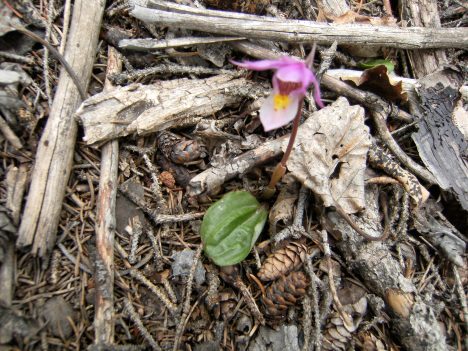
Calypso bulbosa

Calypso bulbosa

Swainson Hawk hunting in irrigated cattle field down the road

Swainson Hawk hunting in irrigated cattle field down the road

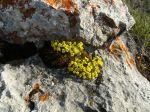
Draba oligosperma...Whitlowgrass

Draba oligosperma...Whitlowgrass

Alpine Forget-me-not, Eritrichum nanum

Alpine Forget-me-not, Eritrichum nanum

A Glorious spring day.  Koda and I hike up Elk Creek Meadows.

A Glorious spring day. Koda and I hike up Elk Creek Meadows.