• MY BOOKS ON WILDLIFE, GARDENING AND MORE

  • Coming Fall 2024. Pre-order and use code 6AF24 for a 40% discount

  • The Wild Excellence

  • Award winning ebook on DG Primer

Mountain Goats of the Clarks Fork

Mountain Goat from jasperjournal.com

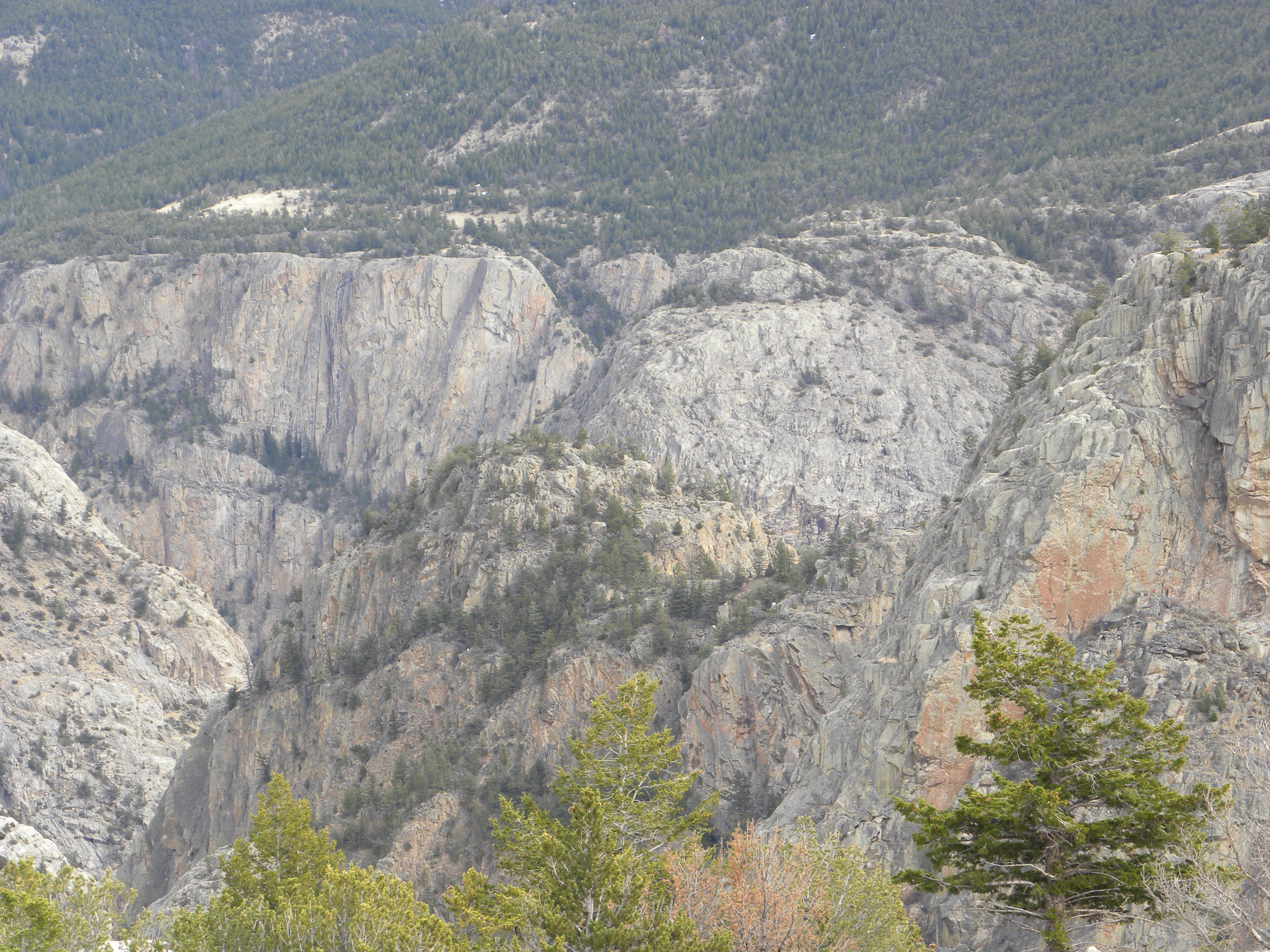
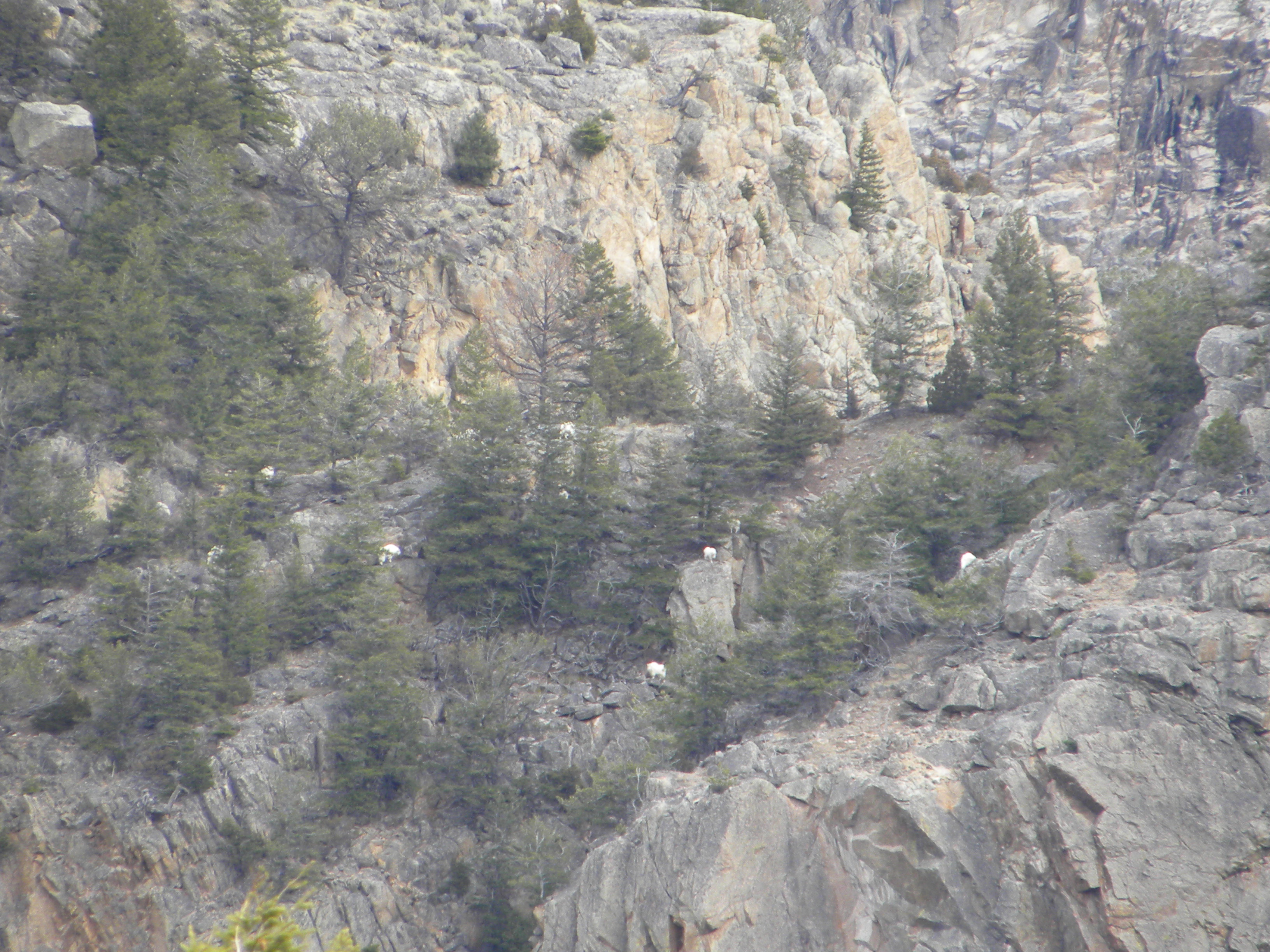
Yesterday I took a walk along the plateau above the Clarks Fork ravine.  The edge is a sheer 1000′ drop tot he river below.  I sat and glassed for the mountain goats that I’d heard ‘hung’ around the cliff edges.  Almost ready to give up, I suddenly saw a small white dot that looked like snow.  I watched it a while and it moved like a white ant.  Pretty soon there were a dozen of these small white dots coming in and out of the trees, hanging on cliff edges that you and I wouldn’t dream of going near.  All I could think of was …”I wanna be a mountain goat!”  Looked like lots of fun, especially to a person like me whose afraid of heights.

The mountain goat controversy remains strong.  Like the fallow and axis deer in Point Reyes that the National Seashore wants to shoot and get rid of, Yellowstone wants to get rid of them.  They are an ‘invasive’ around here, planted by sportsmen for the hunt.  But unlike the Fallow deer which are not from this continent (from India), Rocky Mountain mountain goats do inhabit the high elevations of Montana, Idaho, Colorado, and further north.  Very few prehistoric traces of mountain goats have been seen in these parts, and first hand accounts are few.

Personally, I like them and like seeing them around, especially considering that they are native to areas west of the Park.  It is not inconceivable that they once were around the Absarokas and Beartooths.  That is completely unlike the Fallow deer, which were bought from the San Francisco Zoo in the ’40’s and introduced.  Apparently Rocky Mountain mountain goats were introduced into the Cascades, far out of their native range, with very detrimental effects.

I’m all for eliminating invasive species that ravage the ecosystem and compete with the resources of the natives.  But as long as they are not competing too much with Bighorn forage, I wouldn’t mind keeping them around.  They were a thrill to see.  Gotta figure out a way to get a closer look.

The precipice they are on is in foreground

I counted at least 10 in the area

Look for little white dots!

Old first hand Stories of Yellowstone

My old neighbor JB told me this story today.   Its impossible to place it in time.  In JB’s mind it was like yesterday, but probably in reality sometime in the late ’50’s or early 60’s.

“My job was to plow the road from Mammoth to Cooke City.  There were two plows going and it was Christmas day.  It was 60 below zero, really really cold.  Those plows aren’t heated, you know.  You’ve gotta keep the window cracked too, otherwise the windshield freezes up with ice and you can’t see.  So it’s 60 below outside, no heat, and the window’s cracked.”

I asked him how he stayed warm.

“You just put on more clothes!  The snow was 4 or 5 feet deep and I got a call on the radio from the couple staying at the Buffalo Ranch.  His wife was going into labor and they were stuck.   I was going around a curve on my way to Tower, as fast as I could which wasn’t too fast in a plow, when I saw a patch of clear road ahead.  I knew that meant trouble.  The other plow was a few minutes ahead and a clear patch meant he’d gone off the road.  When I got there the plow was completely off the road, tipped over, and the driver was buried under the snow.  At 60 below he didn’t have much time and it was good I was just behind him.”

“I started digging him out and when I got to him he said ‘Lunch box’.  He kept repeating that.  I didn’t know he had a heart condition and his medication was in his lunchbox.  I never found that lunchbox.  They got him over to Billings.  He was pretty mangled up and didn’t work for over 2 years.”

“Then I started plowing my way to the Buffalo Ranch.  I finally got that couple unstuck.  She never got further than Mammoth where she had her baby.  That was Christmas Day.  I didn’t get home till 3 am.”

I had a client whose father, Merrill Daum, worked in Yellowstone from 1925 to 1930, first as the Chief Engineer then eventually as Assistant Superintendent to Horace Albright.  Daum spent the first several years working on oiling the roads.  Here are a few story excerpts from a memoir my client gave me.

We had an epidemic there one year.  They had quite a few cases of the tourists coming down sick after they’d been there at Old Faithful Inn during the afternoon and evening.  They came down with vomiting.  They really were sick.  It broke out at the Lake.  Then to Canyon.  The Lake was where they really had the epidemic.  One hundred or so sick people there.  We had to go around shooting them all with a needle.  I don’t know what we injected them with.  To relax them so they wouldn’t vomit themselves to death.  They put four of us at the table morning, noon, and night at the Lake Hotel and we were each to eat different things, not the same thing to see what food was causing our troubles.  None of us got sick.  THey just threw up on the floors, every place they got caught.

Bears came on our porch on that duplex we lived in at Mammoth.  I finally got tired of bears once and I took an apple, filled it with red pepper, pinned it together and put it on the porch.  That bear came up and swallowed that and all of a sudden he was blowing and wiping his nose in the snow, trying to get cool.  He really was hot.  He never bothered us again.

At Yellowstone we were building a highway out near Canyon and Lake areas and our construction crew was in tents.  The bears would keep coming in and get the food out of the kitchen.  I was there once in the daytime and here was a Grizzly.  They’re beautiful animals.  The sun would glisten on the beautiful points on their fur.  This darn grizzly was walking home with a sack of oats.  Just walking right off with it.  A sack of oats about 75 pounds.  Nothing we could do about it.  They did take a lot that first year.  You weren’t allowed to kill them.  You could sit right there next to the garbage and they wouldn’t bother you.  All they wanted was to dig in the garbage.  The worst place where I chased one bear was at West Thumb.  The bear came in there that fall, before the snows.  I happened to go around the store which had candies and things like that and the shopkeeper had the windows all closed.  The place was broken into and there was the bear inside, just gorging himself on candy.  I’ll never forget how surprised that bear was for somebody to come in and find him.

We had to get ready to remove the snow in the spring. We started at Cody, about 30 miles from Cody up to the entrance.  We got as far as the Park with snow 12-20 feet deep.  We’d blast it out with TNT which Uncle Sam gave us.  That would start it thawing and then we’d take a big power shovel and shovel the stuff so we had a two-way highway through there to the east entrance of the Park.  From there on in we’d use our own equipment.  The deep snow was right there at the entrance.  That was the high point.  We’d generally try to get open by June 1st.  By June 6th we were officially open, I believe.  But you couldn’t make some of the interior trips that early.  It would be long in July before you could get away from the snow.

Elk in the Valley

This is the week the collared elk get their ‘check-ups’–sonogram, blood, and other indicators.  In order to do that, these elk need to be located and darted from a helicopter.  Then the biologists are lowered down, do their thing within just a few minutes, and are whisked away again to their next elk, while the elk is waking up.  This is the last year of a five year study to find out why the elks’ pregnancy rates are so low in my valley.

Helicopter getting ready

I’ve been watching them on and off as they work the valley.  The copter pilots are amazing.  They’re Kiwis, the best mountain copter pilots around.  With no doors, they dress in super warm suits, land in odd and uneven terrain, and maneuver quite close to trees, cliffs and mountain tops.

Watching them work, I couldn’t help but remember when I went river rafting on the South Island of New Zealand.  The rafting adventure began at the head of a glacier and in order to get there we needed to ferry all our equipment, including ourselves, by helicopter up the canyon.  I boarded the copter, fully expecting to fly above the canyon and set down on the glacier.  But instead, the pilot took off inside the narrow canyon, running those curves like a race car with the raft waving around tied below us.  The copter seemed to swing freely side to side, hanging by the propeller above.  It was so scary that I decided to just accept whatever might come and enjoy the fantastic ride.

Copter in my valley

One of the students explained that the biologists on board are from Oregon and pioneered these elk allocation studies.  Most of these elk are not residents.  In other words, they don’t live here year round.  Instead, they come in around January from the Park, snow pushing them towards warmer terrain.  Sometime around late April or May, they begin to make their way back into Yellowstone to have their calves.  From what the student heading the study tells me, 6 out of every 10 calves succumb to predators, mostly grizzlies coming out of hibernation with an appetite and the calves are easy prey in their first 10 days. 

Error
This video doesn’t exist

But this study is looking at low pregnancy rates amongst this group.

I spent some time talking with one of the Game & Fish biologists about what’s being called sudden Aspen death in Colorado.  Reminds me of Sudden Oak Death (SOD) in California which I’ve spent quite a bit of time thinking about.   My own theory with SOD has to do with lack of fires.  Fires have been cleansing the soils in California (and the West) for thousands of years, clearing out fungus as well as competing undergrowth.

This biologist had worked in south WY and felt that the Aspens, bereft of fires, are in the process of a natural rejuvenative cycle so young clones can arise.  He told me a story about early settlers being angry at Native Americans in the Sierra Madres for setting fire to aged forests.  Those Indians gardened the landscape with fire as their tool, aiding the regenerative process in Aspens.  With a fire suppression policy blanketing the West for over 100 years, forest health has declined as well as quality of feed for our native ungulates.

Yellowstone in winter

Planning a trip to Yellowstone?  I recommend the winter!

There are so many reasons to choose winter over summer, but I’ll just give you a few.

First, the lack of crowds.  Yellowstone might get 100,000 visitors a week in the summer, whereas they get that total for the whole winter.

Next, the wildlife.  The wolves are roaming and highly visible in winter.  In the summer they’re attending to their young and following elk to higher grounds.  If you go in February, the wolves are in heat and you might catch courting and mating behavior.  Even better, spring for the cash to stay at the Yellowstone Institute at the Buffalo Ranch in the Lamar Valley and take a wolf class.  You’ll get educated and see wolves.

Elk, Bison, Bald Eagles, Coyotes, Foxes…so much wildlife and it’s mighty quiet with just one road open for cars (the North Road).  All the other roads are groomed for cross-country skiing or snowshoeing, and there are snow coaches to take you to groomed trails.  Although you can travel by snowmobile with a guide, I don’t really recommend it.  It might be fun, but you can do that outside the Park.  Snowmobiling is about tunnel vision, noise and speed–all things that don’t go along with wildlife watching; all things that Yellowstone has to offer.

Thermal features in the winter are amazing.  The deep greens or turquoises shimmer against the whiteness of the snow.  Bison like to hang around the warm grounds.

Several years ago I took a GYC wolf watching tour at the Buffalo Ranch.  We’d get up around 7am every morning, step outside our cabins, set up scopes and watch the Druid Pack of 17 wolves while we sipped our morning coffee.  In the afternoons we hiked or skied.  I stayed a few extra days to ski other parts of the park.  It was some of the best money I ever spent.

Yellowstone in the winter is one of the best kept secrets.

Yellowstone Autumn

I decided to spend a few days in Yellowstone.  I like to bask in Boiling River but I especially wanted to hear the elk bugling.  The bulls are in rut and if you’ve never heard an elk bugle, you’re missing out.  Its the eeriest sound, the most beautiful sound, a sound that seems other worldly.

The Park, usually nice and quiet this time of year with all the crowds gone, was jammed pack. They’re having the busiest fall in 10 years.   I couldn’t get a campground anywhere, so I had to drive outside of Mammoth 20 miles down the road to a National Forest campground.  That was a real surprise.  And even that campground was just about full.  I think I found the very last site!

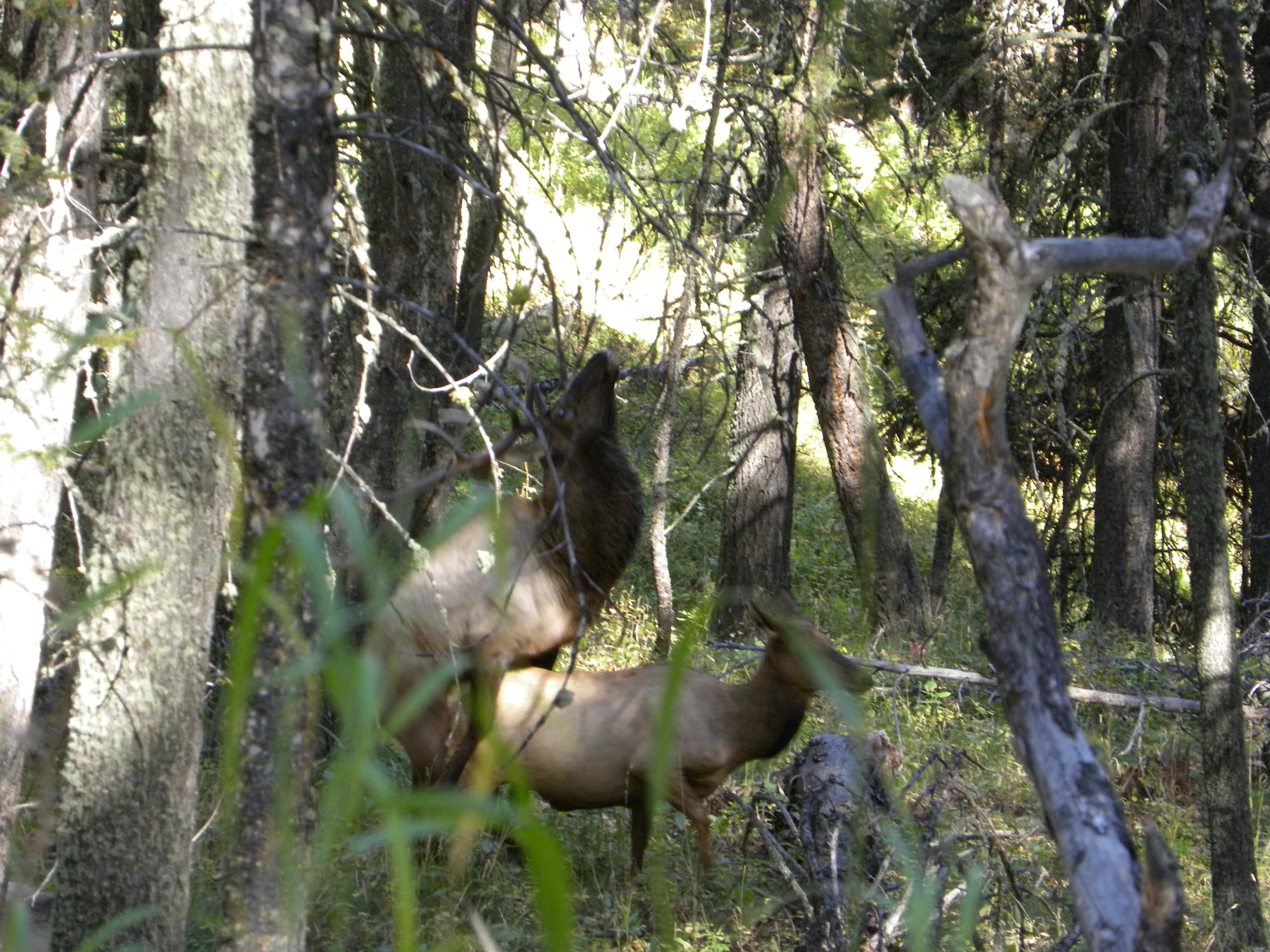
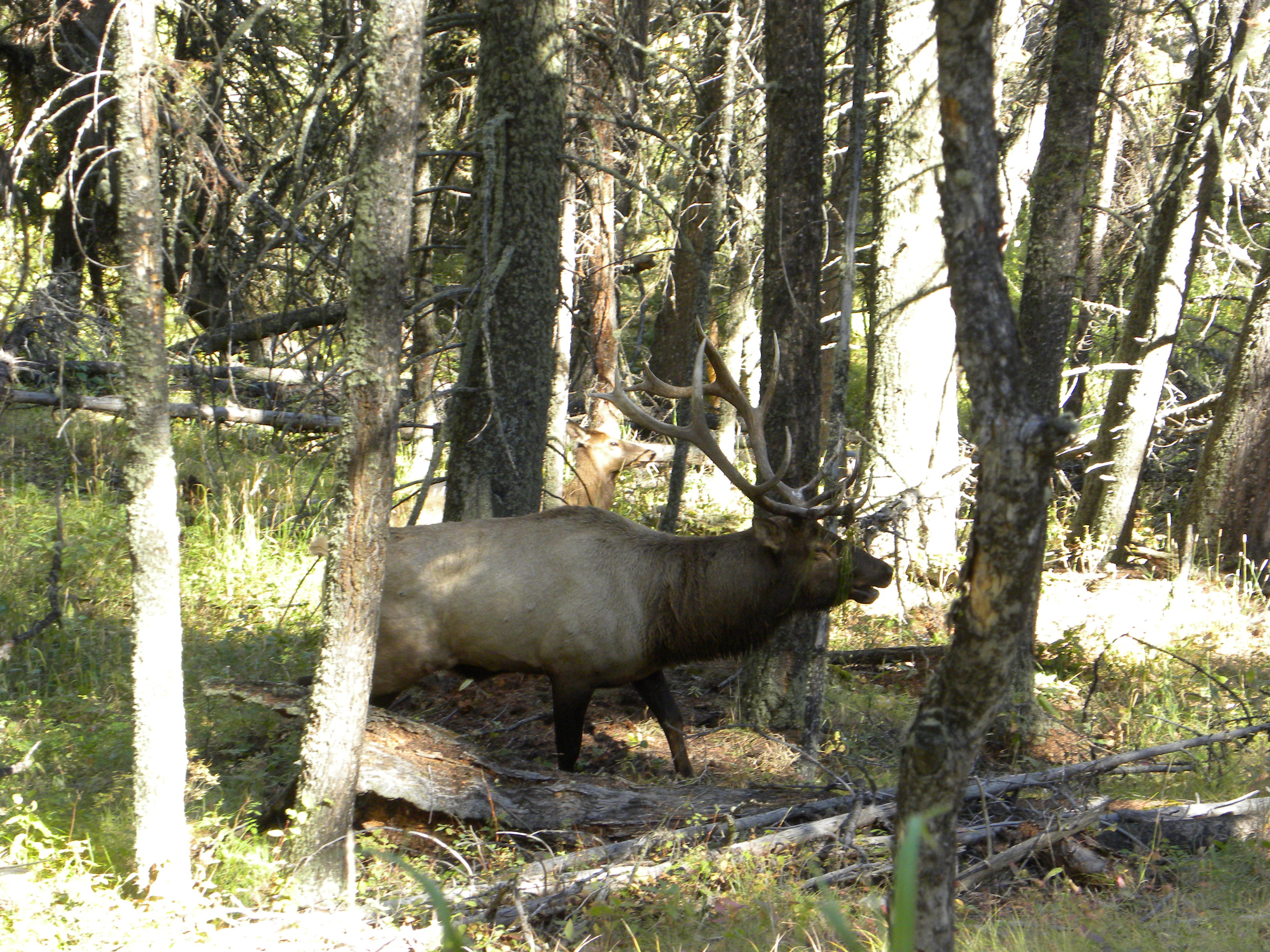
Waking up early, I soaked in the river, then headed up the trail to the Beaver ponds.  Its a fairly short loop of 5 miles.  Since I was early on the trail, I didn’t see anyone for the first hour.  The trail winds along the open hillside overlooking Gardiner, but soon dips into a conifer glade with seeps.  The day was already hot (as we’re having our summer now in fall), and as I moved into the cool shade I noticed about 20 elk, mostly cows and calves, lying around.  One bull was there.  This was his harem.  The cows were relaxed.  The calves were curious.  And the bull was keyed up.Elk mating

I lay down on the trail and watched for ten minutes.  As I continued on, I later heard that some hikers had come around the corner and gotten chased a bit by that bull.Bull Elk

Although there were no beavers to be seen when I arrived at the ponds, their evidence was.Beaver evidence

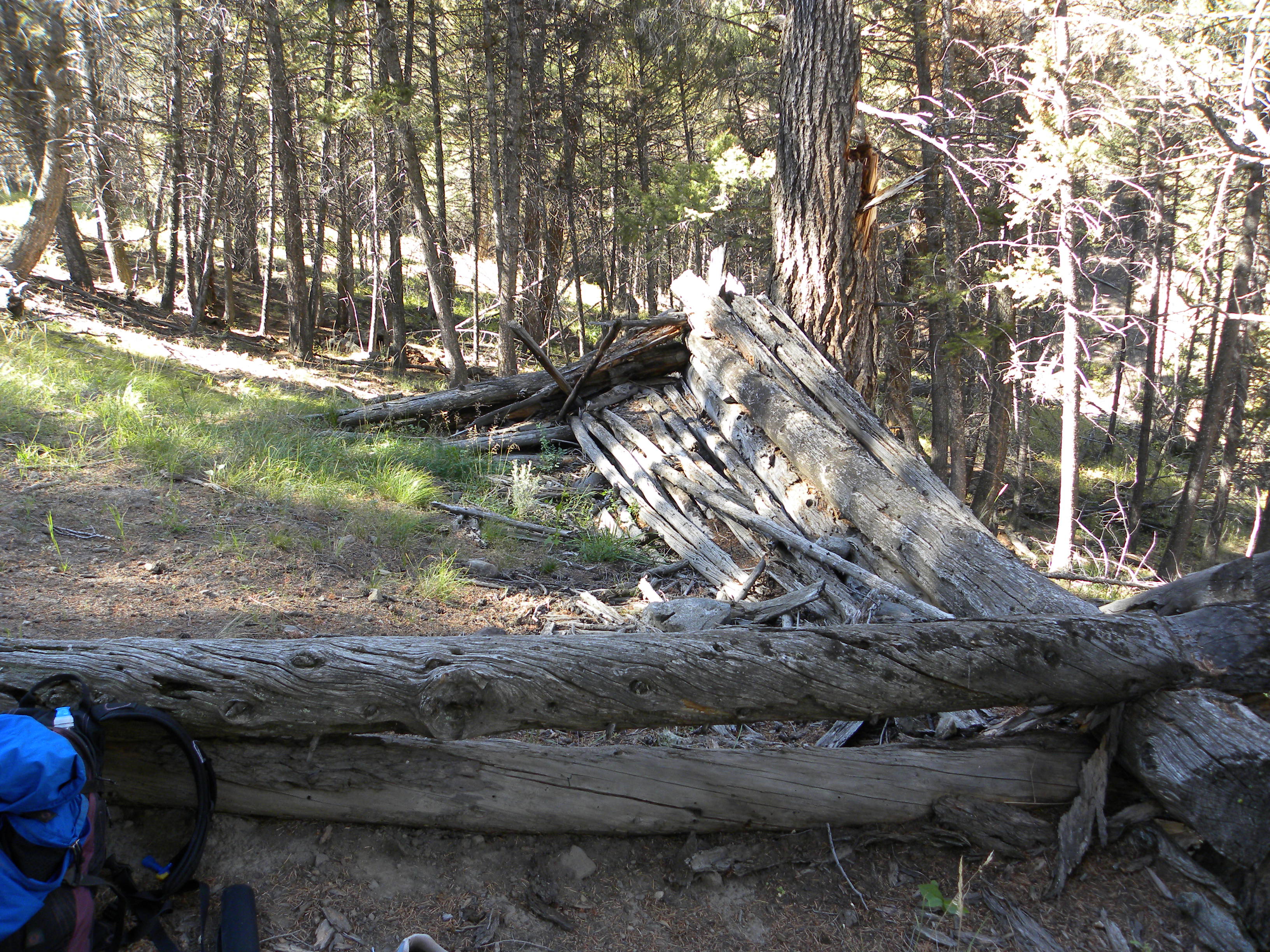
On the last leg of the trail, I noticed an old structure that looked like it had been a cabin.  I couldn’t find references to it in the guidebooks.  Wondering if anyone knows what it used to be?

Old Structure along Beaver Pond trail

Old Structure along Beaver Pond trail

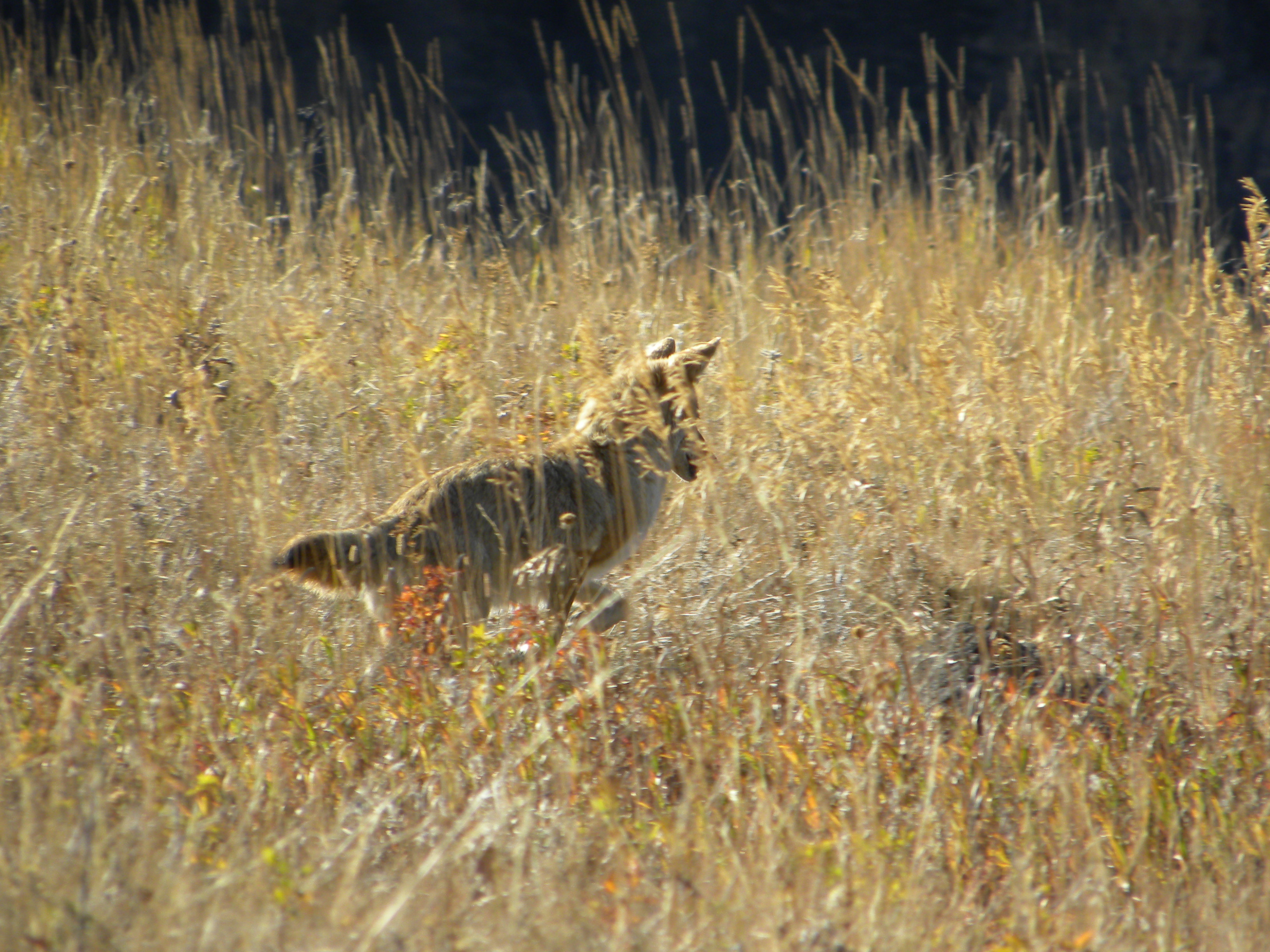
After a late lunch, I headed back towards the Lamar.  A coyote was catching grasshoppers.  He was terribly cute pouncing around.

Coyote catching grasshoppers

Coyote catching grasshoppers

And the light was perfect for this herd of Bison.

The light was perfect

The light was perfect

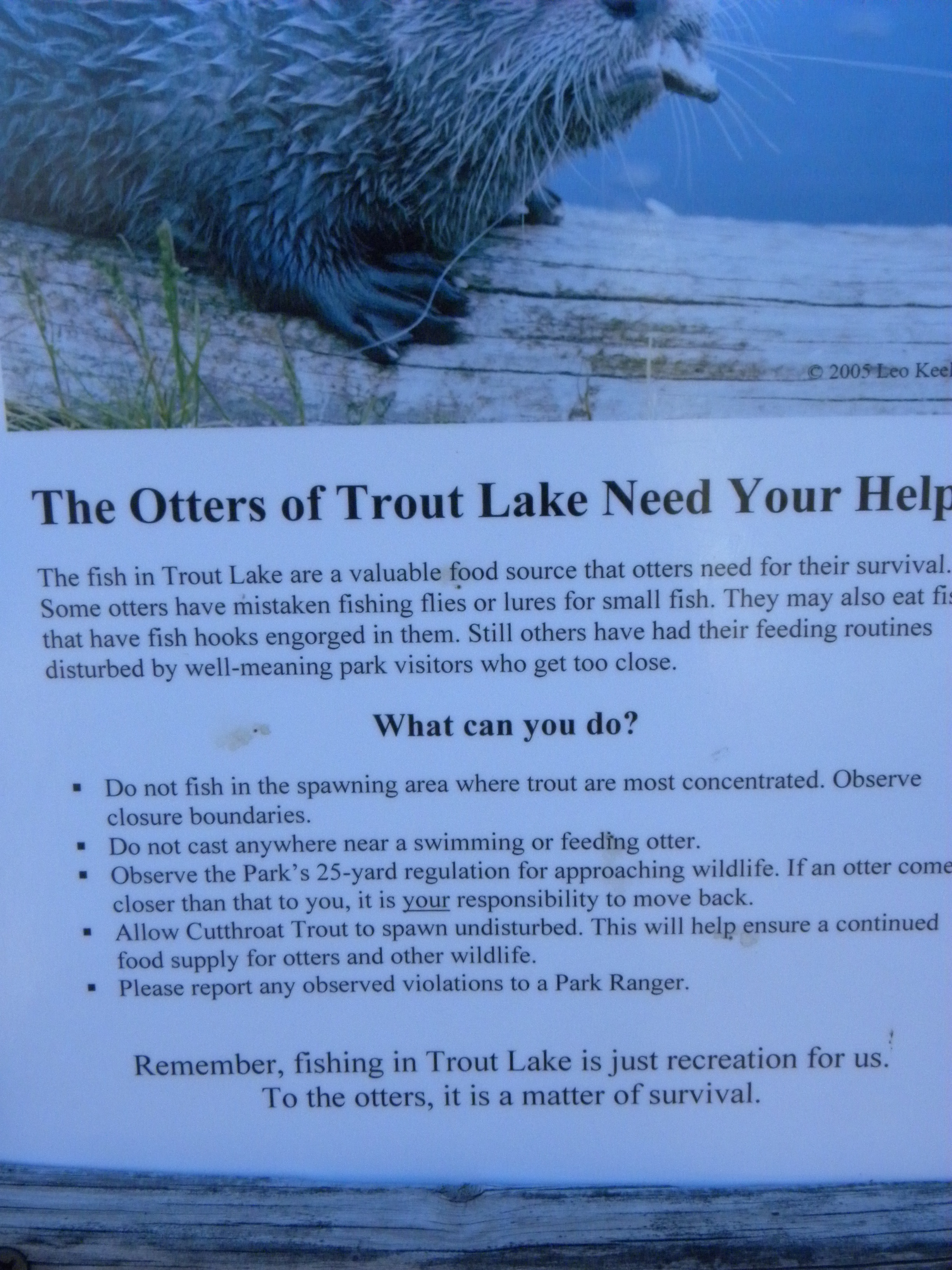
I stopped for a while and watched a second coyote, before heading up to Trout Lake.  I wondered if the otters were active.  Trout Lake is a very short hike/walk.  Otters are often seen playing there.  I didn’t see any otters today, but the lake was beautiful.  I spent time snapping some photos of the Lake, of a gigantic ladybug, and a dragonfly.

Trout Lake

Trout Lake

Ladybug

Dragonfly

Trout Lake signage

In order to get into the Park, you must rise in elevation.  That’s because of the bulge from the hot spot that Yellowstone sits upon.  I used to wonder why that special feeling seemed to almost begin and end at those entrances and exits, until it was explained to me.

I met a woman from California on the trail.  She comes to Yellowstone every fall for 3 weeks.  At the campground I met some people from Seattle who come every year at this time.  I met a man several years ago who comes every spring from Iowa.  Yellowstone is just like that.  It is a very powerful place.  A healing place.  Once it gets under your skin, you can’t help but dream the dream of returning again and again.

The woman who married a bear teaches me about pine nuts

After we visited the bear cave in Yellowstone, Jim Halfpenny sat us down on a nearby log and told a story.

“When we first migrated north from Africa, ancient peoples had no idea how to live with cold, what foods to eat, how to make shelters.  The Bear was their teacher.  Native Americans had several layers in one story.  The first and simplest they might tell to the children so they would stay close and be afraid of bears.  As the child grew older, the same story would be told in greater depth revealing more teaching and wisdom.”

“This story of the woman who married a bear was told in some form all over the world where there are bears.”

Jim went on to tell this ancient story in great detail about a Chief’s daughter who married a bear, lived with the bear clan, bore him two sons and then went back to her people.  When she returned with her sons, half-bear half-human, she was now a changed woman–a wise woman with much to teach her people.

This is the story of why humans throughout time have respected and honored bears, and how it was Bear who taught Humans how to live.

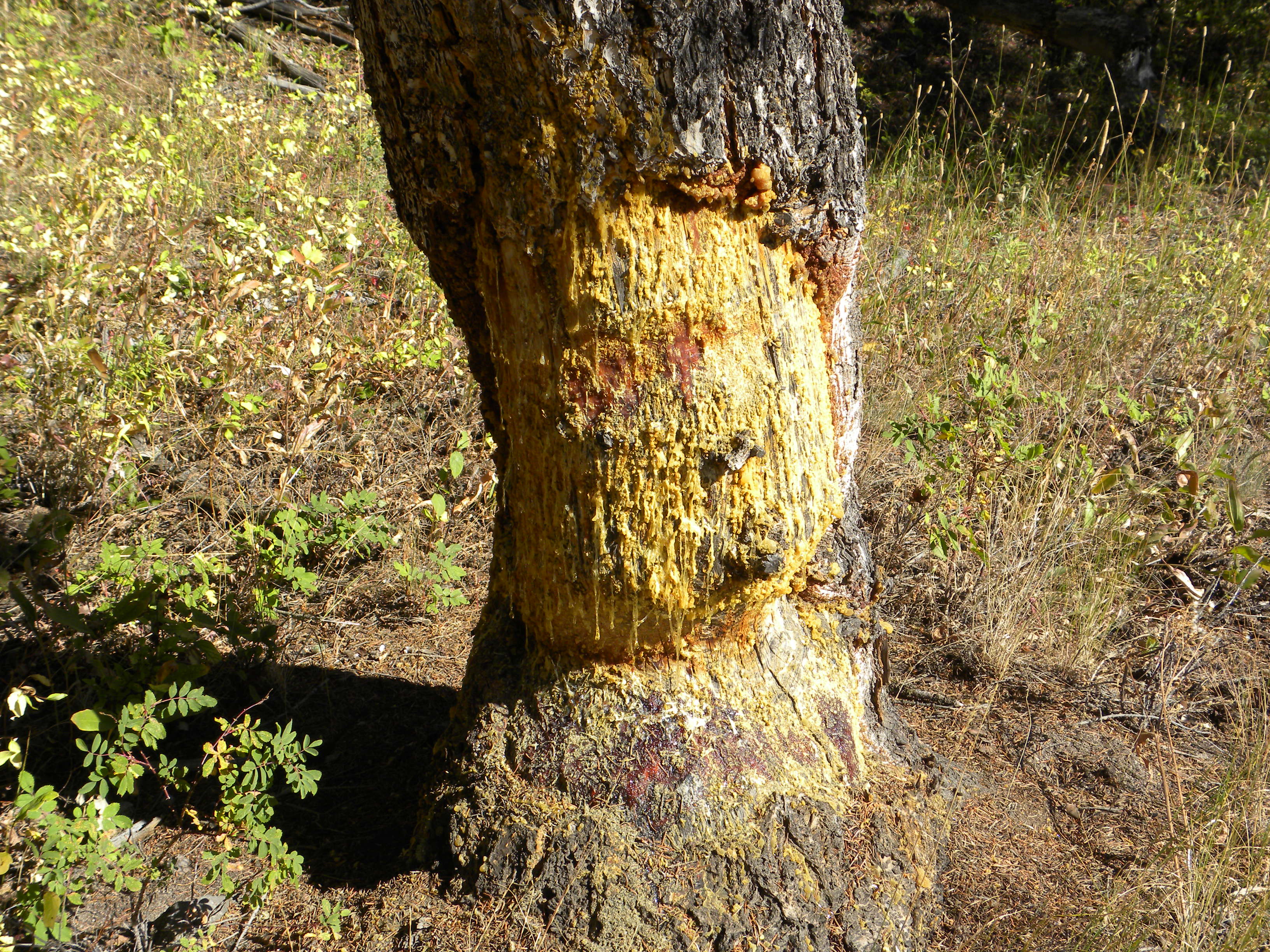
I was wandering in the upper meadows this morning, watching the Clark’s nutcrackers poke their beaks in the pine cones and extract the seeds, stashing them in the pouch in their throats.  Sometimes they’d try and clean the sap off by rubbing their long beaks against the bark. Since all the cones were way high,  I looked for dropped pine nuts on the ground, possibly ones the squirrels and birds had missed.  There were lots.  But every one I opened was no good, the nut had never matured.  I tried tree after tree with the same result and I marveled at how the animals knew to let these bad ones go.  I figured that if my life depended on these seeds, I’d definitely go hungry.

When I had a big garden, I used to fight the birds for the cherries on my tree.  I tried netting, decoys, shiny objects.  But crows and jays are smart and they’d wait till the cherries were just perfectly ripe, then beat me out there.  I’d have only the leftovers.  Pine nuts seemed the same.   I began to think about the Native Americans in the Basin & Range and California traveling far and wide for the Pinyon Pine nut.  Or the Native Californians and their acorn harvests.  There were ancient tricks to this that alluded me.

I knew that when I lived in California, I used to collect Redwood cones unopened, then let them ripen by a window and all the 100’s of tiny seeds would fall out.  Perhaps…

I wandered a bit farther up the denser parts of the hillside and noticed an old middens I was familiar with.  In one of the cavities beneath the trees there was stashed 3 douglas fir pine cones, fresh this year.  And that gave me an idea.  I went back and started hunting for a middens of Limber Pine cones.  Sure enough, I found a really large one with tons and tons of fresh cones, unopened and untouched.

Limber pine middens.  There's lots more than shown and much is buried

Limber pine middens. There's lots more than shown and much is buried

Some even had the pitch gone.  There were cones on top and cones underneath.  I tried a few nuts.  These were the good ones!  These were the ones for squirrel for the long winter ahead.

The cone collector's home

The cone collector's home looking down on us raiding his middens

Then I remembered the bear story.  Bears are smart.  They do sometimes climb the trees for their beloved nuts.  But its a whole lot easier to let squirrel do the work and just raid his larder, and that’s what they do.  Bear must have taught that to the People.  That was my lesson for today.

Look close, I took this bear scat apart & there's pine nut shells

Look close, I took this bear scat apart & there's pine nut shells inside

Tracking class

I just finished the most awesome week in a tracking class with world renown tracking expert, Jim Halfpenny.   Lucky for me the class took place at a dude ranch 5 minutes down the road and although many of the ranch’s clients participated, the final day, Friday, on gaits. was attended by only myself.  So, I had a private lesson.  And as it turns out, gaits have always been difficult for me to understand.  I’m that person when you say “Raise your left hand”, you have to tell me “No, the other left!”.  And that’s why four-legged animals, with double the rights and lefts, confuse me no end.  Jim is a fantastic teacher and was able to simplify the whole gait thing for me.

Monday was a general introduction day.  Tuesday we all headed for the Park, leaving here at 5:00 am sharp.  We spent about 3 hours in the Lamar looking for wolves.  We did finally find one lazing around in the grass.  While everyone was waiting for that wolf to wake up, I spent some time checking the ridgelines and found 30 Bighorn sheep.  Then it was off to Canyon for a look at their new visitors’ center which opened this year.  I hadn’t seen it and I must say it was very impressive.  The displays were all centered around the volcanic activity in the Park.

After watching some coyotes catch grasshoppers and a lunch byt the river, Jim took us to a bear cave.  We hiked in about 1/2 mile.  This cave has been used on and off by bears for many years.  It looked tiny from the opening, but once you crawled inside, all 14 of us fit quite easily and we could even stand up.  It wasn’t smelly at all.  Quite comfortable I must say.

In the bear cave.  We all fit.

In the bear cave. We all fit.

Thursday was devoted to time in the field finding tracks and casting them.  I was so excited because I’ve been wanting to learn to cast but wasn’t sure about proper technique.  We casted several different Grizzlies tracks, as well as raccoon, mink, and wolf.

Raccoon

Raccoon

Raccoon

Raccoon

Hard to see but these are mink prints!

Hard to see but these are mink prints!

A Grizzly track found by the river

A Grizzly track found by the river

Here I am on Friday with my ‘graduation’ exercise.

I'm happy because I passed my final test and the hardest for me: gait I.D.

I'm happy because I passed my final test and the hardest for me: gait I.D.

Jim found a series of large dog tracks and I had to interpret what the dog was doing as well as  each foot.  I PASSED!   We also found more grizzly, moose, tons of deer, horse, and cattle (ugh!).  Now all I have to do is practice, practice, practice.

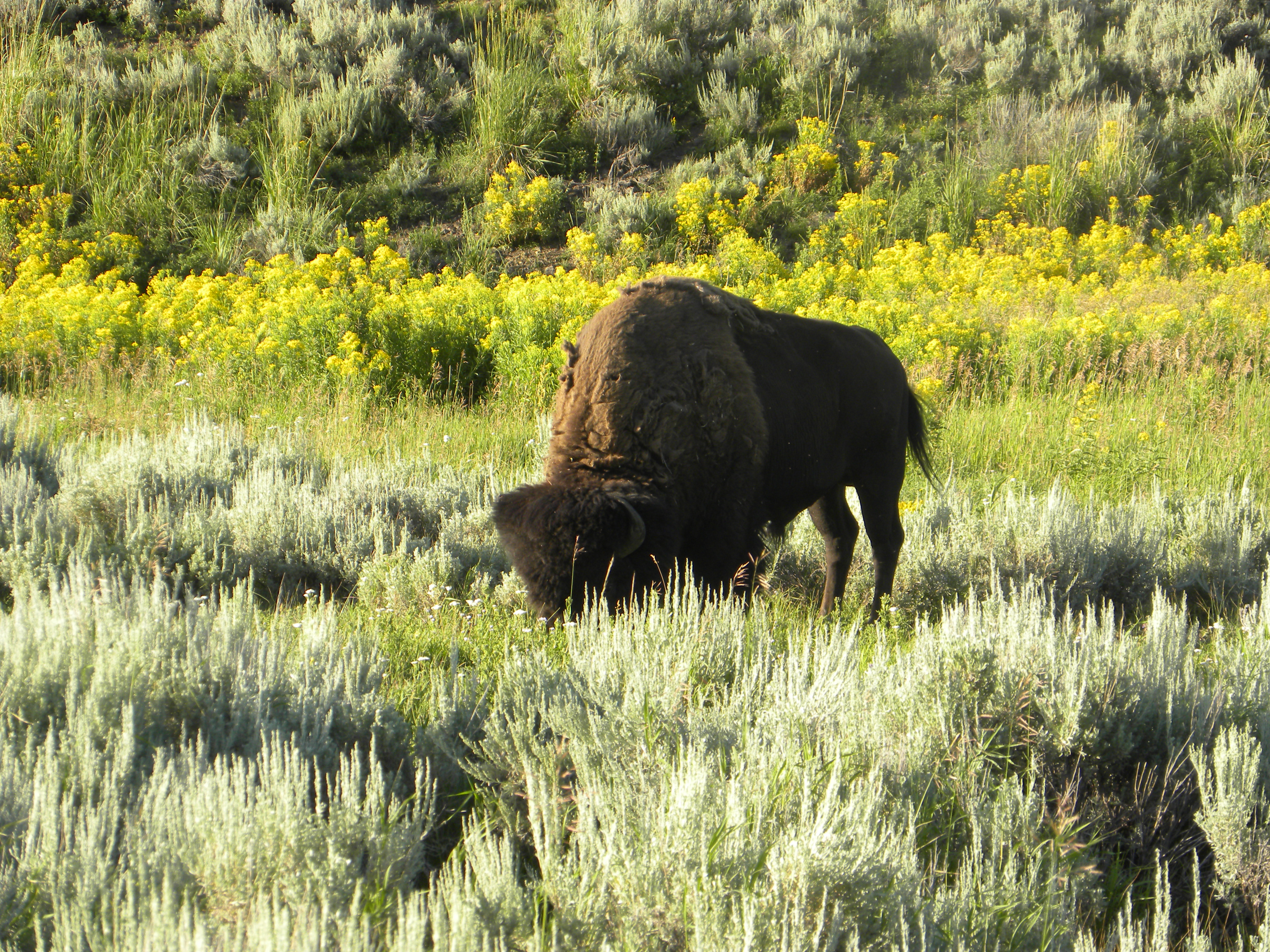
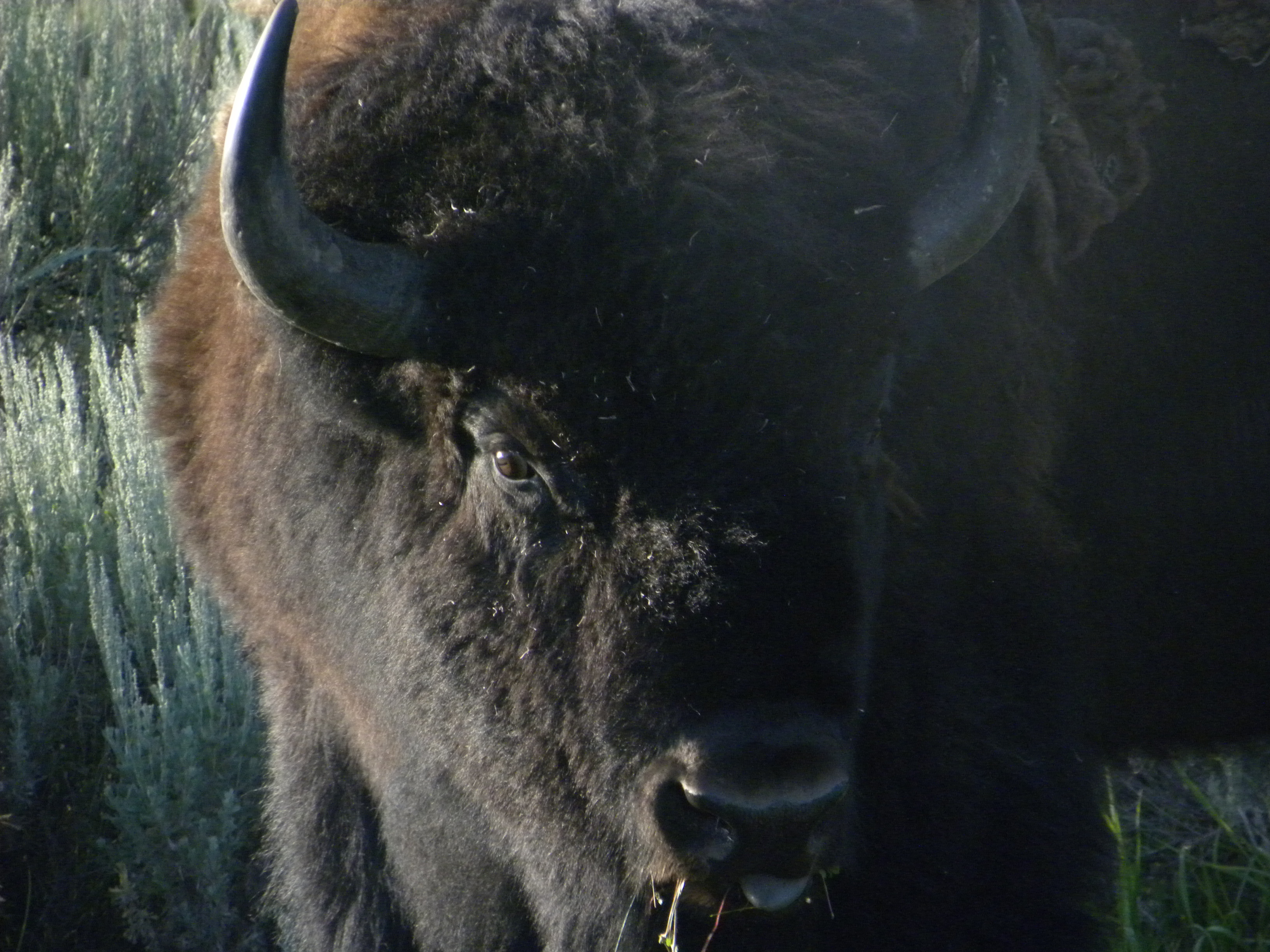
Poised to be a dreamer for bison

Bison are on my mind.

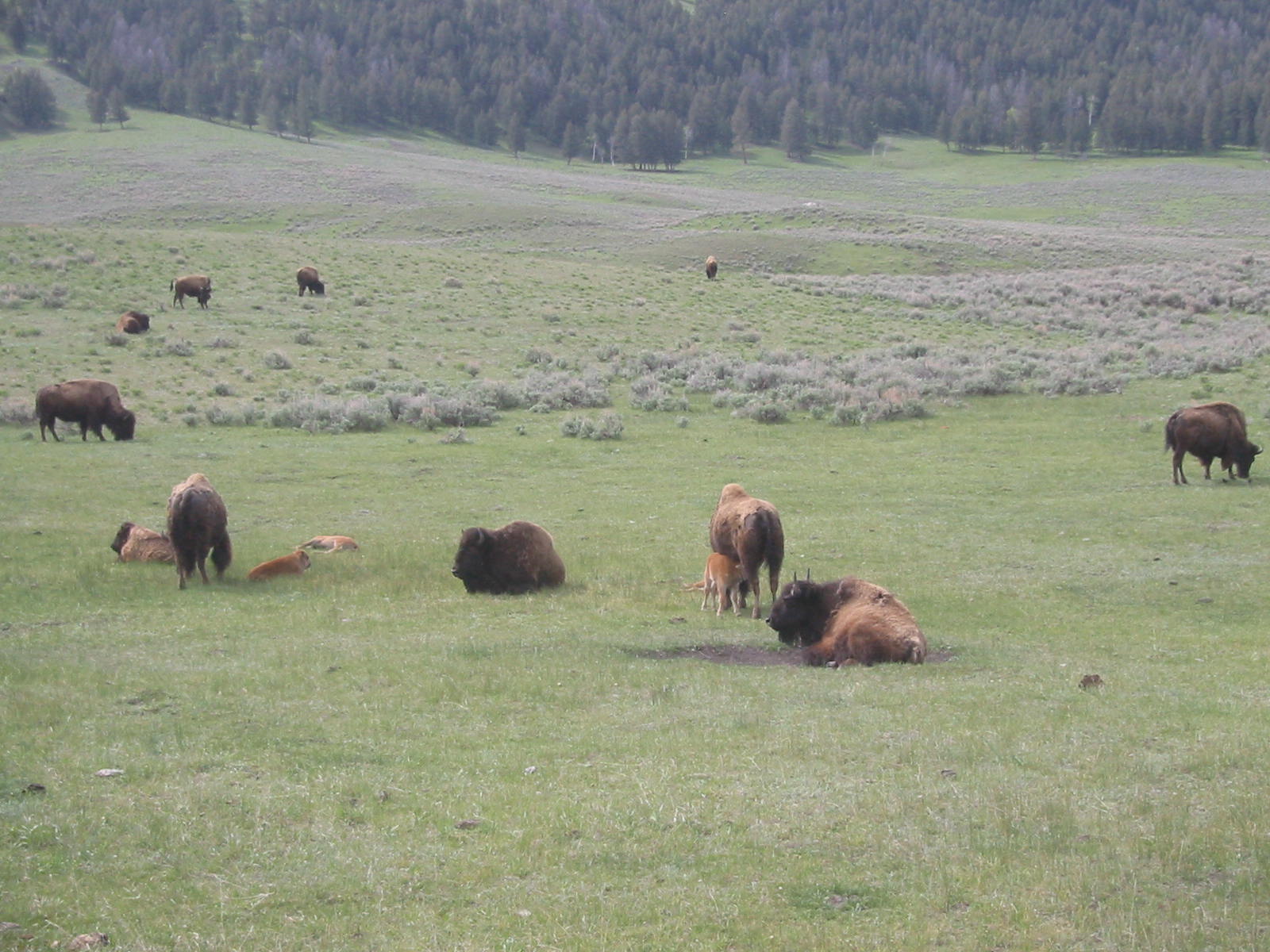
A tiny slice of what once was

A tiny slice of what once was

There is already a lot written about Yellowstone Bison being hazed, killed, confined and abused. Our last remaining wild herd, a mere 3000 out of 60,000,000! And it is hugely controversial.

Calves and moms

Calves and moms

In my own mind, Yellowstone is not the issue. This controversy is small  (and I don’t mean to minimize it at all) compared to the largeness of what should be being addressed. I suggest the real issue begins with restoration of wild bison to larger tracts of land, rather than the confinement to a zoo-like existence.

I hike the mountains to the East side of Yellowstone and encounter old Bison bones, teeth, and sometimes skulls. This was their habitat—the mountains, valleys, and plains. It’s easy to imagine chance encounters with these beasts in the woods, or roaming the valleys where the summer herds of cattle presently reside. I watch the cows. Their presence doesn’t move me. There is a dim hint of intelligence there and no magnificence.

I move cautiously through a herd of cattle grazing on Forest Service land. Today a huge mama stood her ground on the trail, swinging her head back and forth as if to warn me not to get too close to her baby. I chided her and she sheepishly moved away into the watershed below, a product of centuries of breeding the wild out of her. A bison on the trail would have been something formidable, nothing to mess with. It would have chided me and I’d have given him large berth. Meeting a bison, my wild yet cautious nature, instead of my hubris, would have stepped forth. That is the kind of contact that serves me well, serves my depth of being.

A modern day Bison walking the road

A modern day Bison walking the road

Lewis and Clark talked of seeing 10,000 bison in one glance, at times so unfamiliar with humans that they’d come right up to investigate. One entry noted how a calf was following them back to camp. Our land grew up with bison. The bison educated the bunch grasses. Their wallows were important sources of seed banks. Their tough hides and instincts served them well in the blizzards of the Plains. Their meat fed the peoples, their skins and hides warmed them and were their shelters.

They are adapted to survive the cold of the plains

They are adapted to survive the cold of the plains

When Europeans came here, they brought what they knew, their wheat and cattle. They renamed places to remind them of their homes—New England, New Hampshire, New York. They almost brought the bison to extinction in order to exterminate the Native American population.  One hundred and fifty years later, amazingly, we are still defending our cattle instead of restoring what belongs here, what has evolved here with the grasses, the weather, the wildlife, the watersheds. We spend time, effort and money restoring damaged ecosystems, but fail to include the keystone species of the Plains. After 150 years, I am amazed that we still defend our injustices and our cattle, instead of publicly apologizing and making a way for the bison.

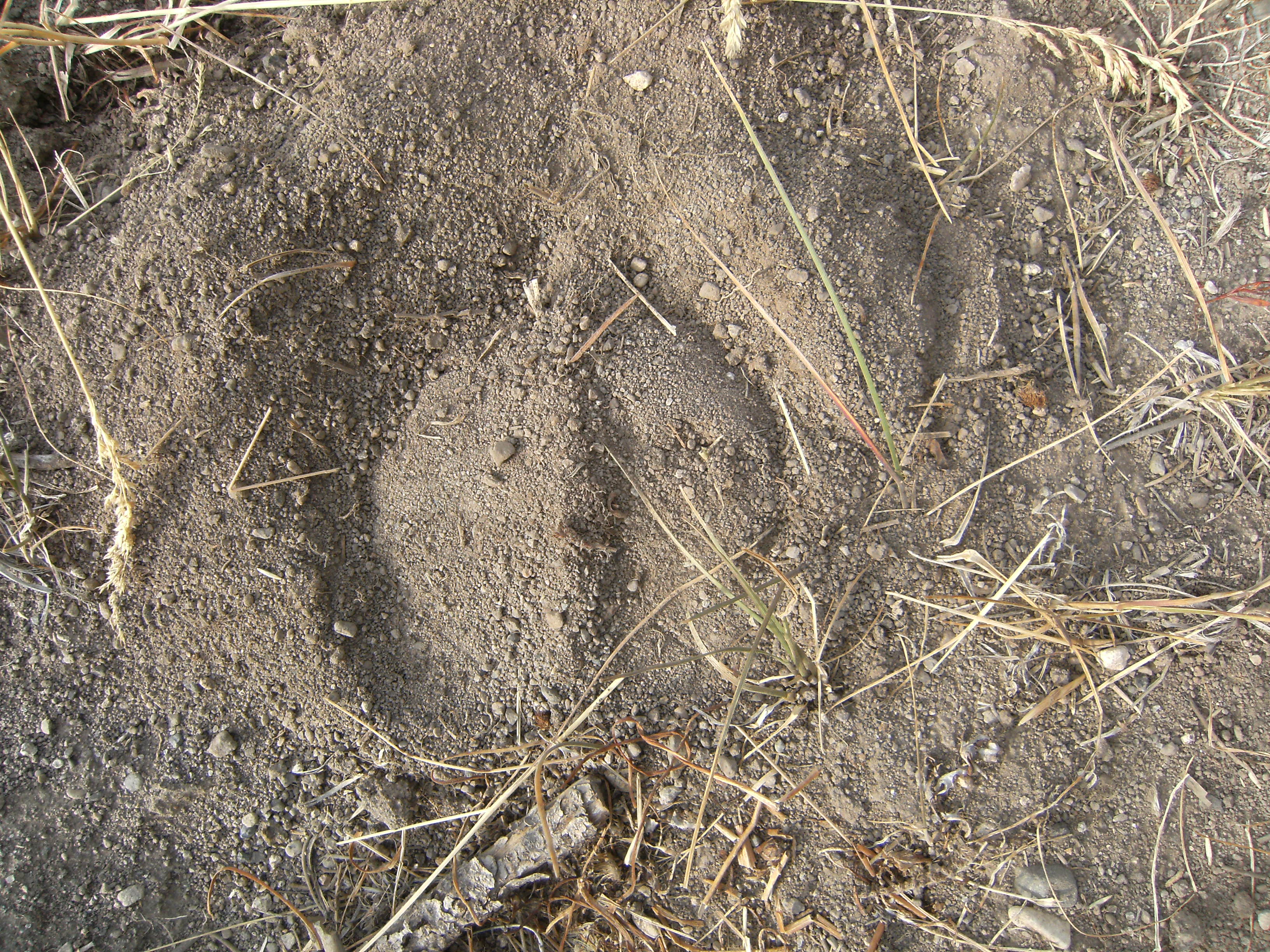
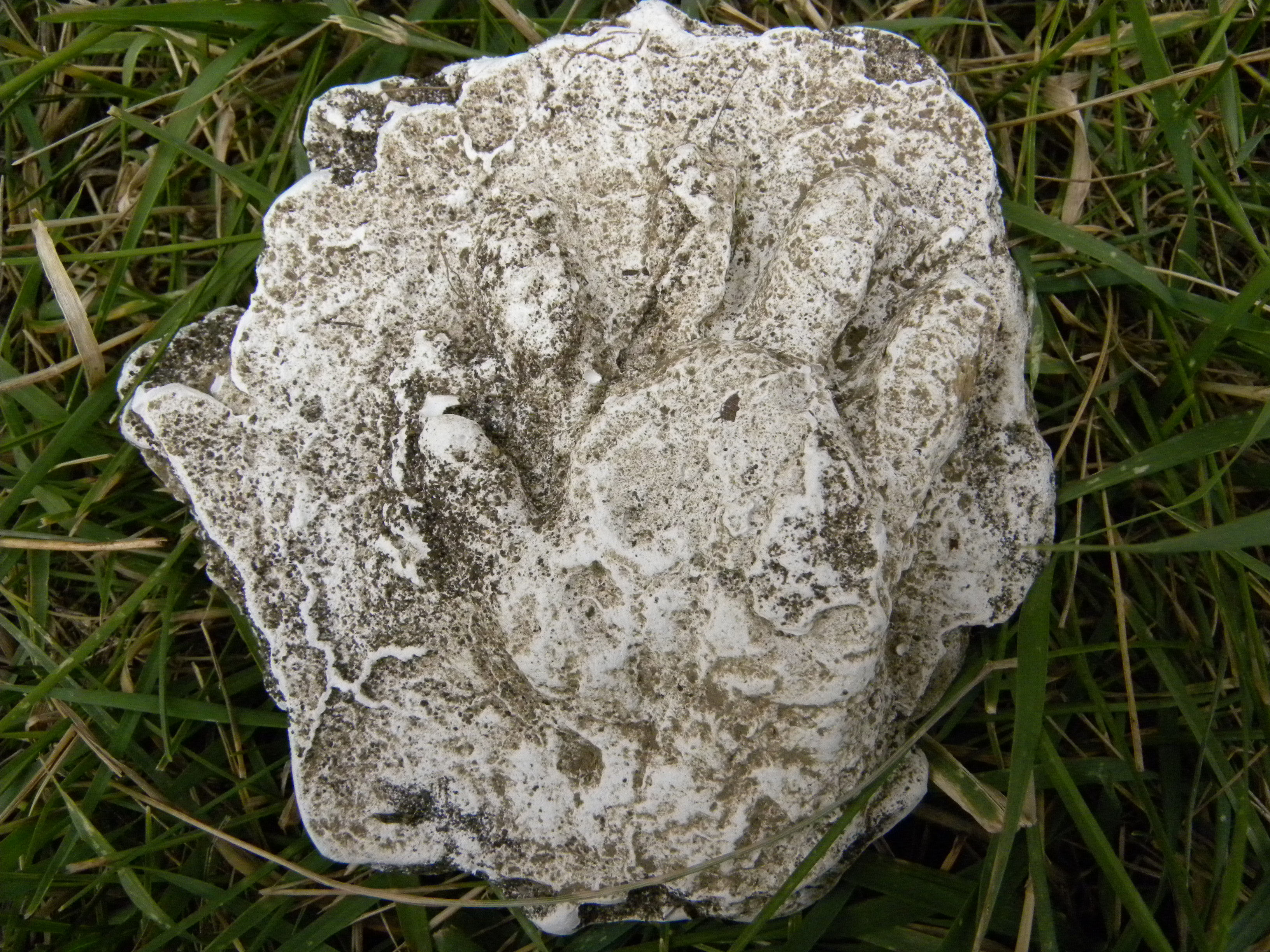
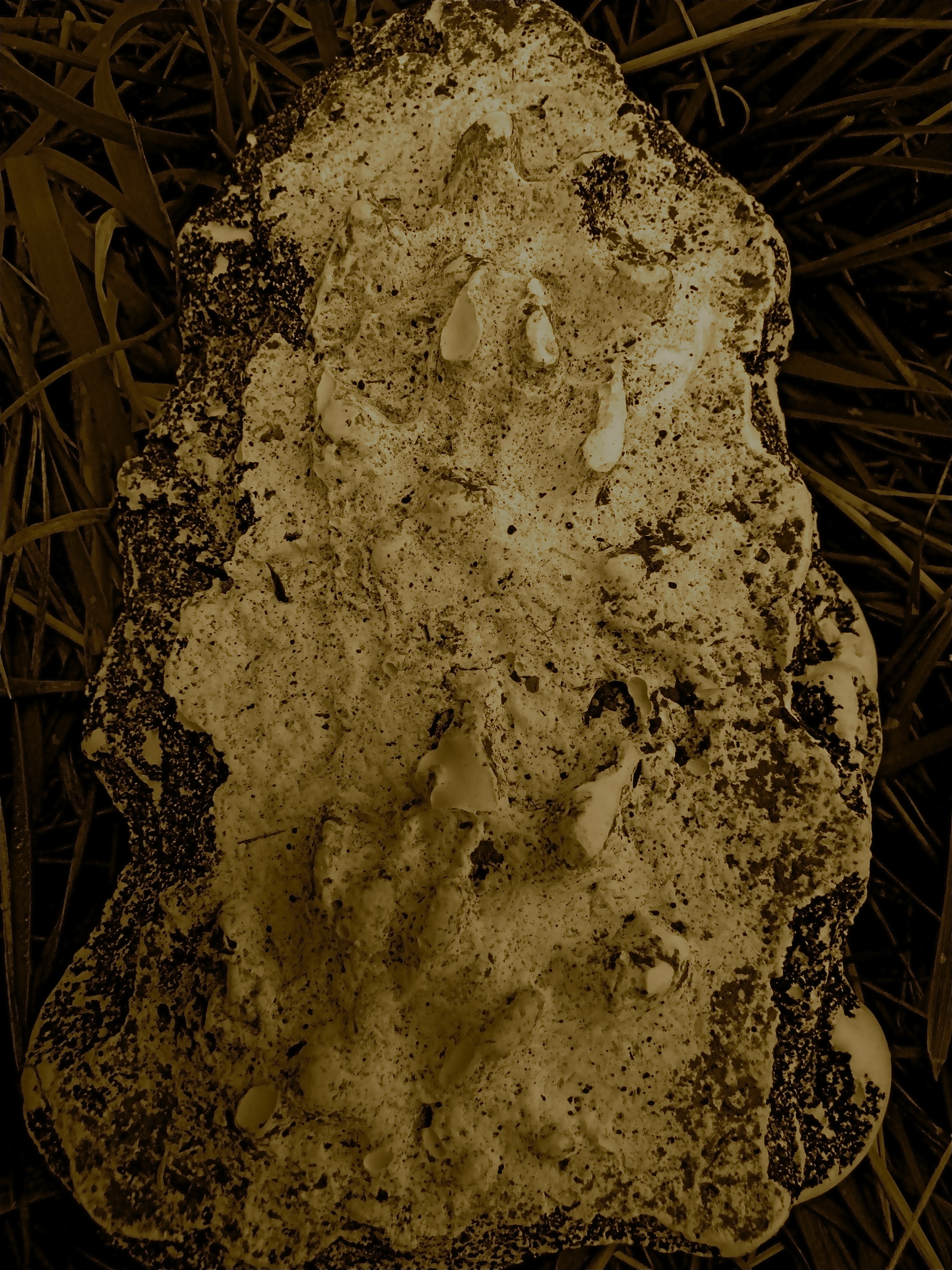
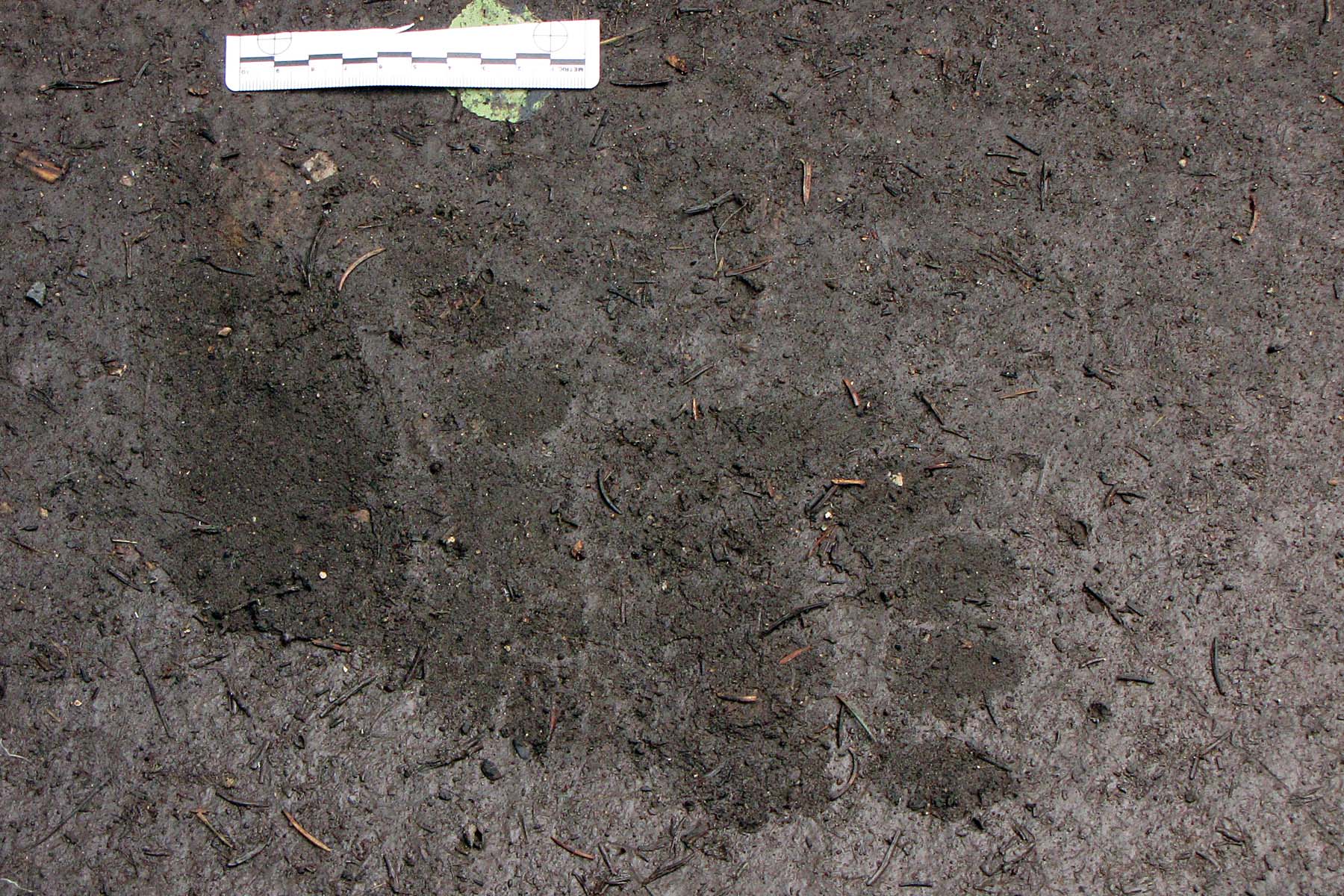
Footprints

Bison Footprint

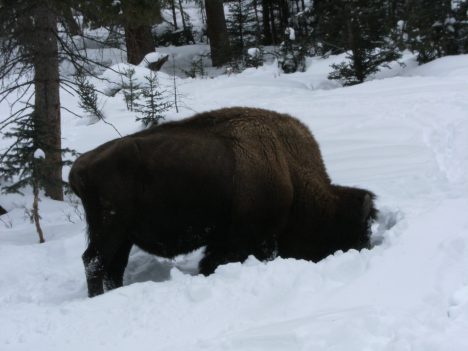
Once someone has visited the Lamar Valley in Yellowstone (or even seen a working ranch of bison) and watched the bison, they can’t tell me that they have the same pleasure sitting and watching cattle graze. There is something so primeval, so basic and ancient, in hearing the mysterious grunts and sounds of the herd, seeing a buffalo paw through snow for food, or a herd lined up following a leader making track through deep snow. This is a pleasure that needs to be reinvigorated, expanded. We can begin to make up for old transgressions and reinvigorate our connection to wild nature at the same time. We can begin a new conversation.

Heart Lake

I took a few days off and went into the park.  My plan was to hike into Heart Lake, possibly around the lake if the ford was passable.

Heart Lake view

Heart Lake view

I wouldn’t exactly call going backpacking in the park ‘wild’.  It’s wild in terms of the animals that you have to watch out for–grizzlies, moose, bison.  But the back country is very regulated.  That’s a good thing; and a bad thing.

The good part is that registering and being assigned designated campsites each night assures your safety and especially preserves the park.  There are bear poles at each site; there are only a certain number of sites in order to preserve the wilderness and your solitude; and a ranger who is stationed at Heart Lake checks on your paperwork and informs you of bear activity.

The bad thing is that its hardly a wilderness experience.  I actually had trouble getting a campsite for 2 nights because the Park Service now lets people reserve sites in advance for $20.  Or without a reservation its free.   This was the second time I’ve tried to get in and was lucky to find a space.

Enough of the gripping.   I can say that Heart Lake is well worth the 8 miles to get in.  Its a unique and beautiful spot with natural thermals right at the Lake.  Mt. Sheridan presides over the lake, while moose, elk, and grizzlies hang out there.  I would too if I were a grizzly.  Lots of wildflowers to see, plenty of bird activity.

Dusk

Dusk

Thermals

Thermals

The mosquitos were bad as we’ve been having lots of late rains.  With a little wind, they are quite tolerable.  I was having some foot problems so I didn’t do much hiking except the 16 there and back with an overnight.

Mt. Sheridan at dawn

Mt. Sheridan at dawn

Dawn

Dawn

Highly recommended and an easy fairly flat hike.

Camassia quamash-most prized food of the first Americans

Camassia quamash-most prized food of the first Americans

An Advertisement for Yellowstone!

Happy Mother’s day.

Since my son is in New York, I gave myself a present.  The last few days have been either too busy or too cold to go into the Park.  I heard the road opened earlier than the scheduled date, Friday, the 8th.   So on Thursday I headed up towards Cooke City.  I never made it because of a snow storm.  Not that the snow was so bad, but I figured the animals wouldn’t be out.

This morning I woke up early and was out the door by 7am.  I’m only 40 minutes from the Park’s entrance; an hour from the Yellowstone Institute in the Lamar Valley.  Because I had the dog, my plan was to visit for 1/2 day, and take a hike outside the Park the other half, with the dog.

In the span of those 3 hours in the Lamar (or on my way there), I saw: (disclaimer…sorry my photos up close are not great.  I just have a small digital camera that I use because its lightweight for hiking.  Maybe I need to get a better one as well.)

Elk in my Valley.  I thought elk on left looked quite pregnant.

Elk in my Valley. I thought elk on left looked quite pregnant.

First thing on the way to Chief Joseph were some early morning grazing elk.  They are getting ready to calf soon.  My neighbor, on whose pasture these elk are grazing, called me yesterday to tell me to watch my dog as a wolf walked past her daughter yesterday.

Moose on Chief Joseph Highway

Moose on Chief Joseph Highway

These two moose were up past the 212 turnoff to the Park, right alongside the road.  I didn’t see any moose in the Park, although usually some hang out in the river right past the NE entrance.

This one just sat and watched me.  She had frost on her fur.

This one just sat and watched me. She had frost on her fur.

Here’s the approach to the NE entrance.  There was no ranger at the gate today, so no entrance fees.  Happy Mother’s day.

Entrance to Park

Not too far into the Lamar Valley, I stopped by a crowd with scopes.  I watched 2 wolves for a long time, one a collared gray female and the other a black.  They seemed to be trying to figure out how to cross the creek and road to get back to their den on the other side.  There was a lot of howling and prowling.

This is through the scope.  He was way across the Lamar river.

This is through the scope. He was way across the Lamar river.

Pronghorn were all over the hillsides.  Bighorn sheep were grazing high up.  I continued down the road a bit, still wanting to see some Bison babies, when I was distracted by another black wolf of the Druid pack, very close to the road.  I stopped and watched with my naked eye.  He was walking back and forth along the stream bed.  He was so close to the road that I thought he wanted to go to the other side as well.   Suddenly, he had something in his mouth.  It was a fish!  He brought the fish over to a nearby snowbank (all this within 200 feet or so of the road), played with it,  rolled on top of it, then devoured it as a magpie watched.

Wolf eating a fish he just caught

Wolf eating a fish he just caught

Wolf eating a fish

Wolf eating a fish

Finally I moved on to see the Bison calves.  The one animal we don’t have in our valley next to Yellowstone is Bison.  They wouldn’t be allowed to migrate out of the park.  Granted, they do shoot a lot of wolves outside the park, but they return and soon reform local packs.  In addition, each state is required to have a certain amount of wolves in their delisting program.  But Bison no state will tolerate because of the perceived threat of brucellosis to cattle.

Here are the baby pictures:

Bison calf

Bison calf

Mom with two calves in the grass nearby

Mom with two calves in the grass nearby

If all this wasn’t enough (I’d barely driven a mile within the Lamar), I went a short distance down the road to view the Grizzly hanging out within 100 feet of the highway.  He’d been there all morning.  On my way, another black wolf walked through a herd of grizzlies.  He was joined by a grey and they both began howling.  They were answered by a wolf on the other side of the road, not visible to me, near their den site.  A coyote began yipping in tune to the wolves, and then he sauntered across the road.  Several Red Tail hawks circled overhead, while Sandhill Cranes walked along the water’s edge.

Here is the bear:

This grizzly spent hours upturning Bison paddies for insects underneath

This grizzly spent hours upturning Bison paddies for insects underneath

Grizzly rooting around

Grizzly rooting around

I’ve oftened pondered what makes for that special nurturing quality of Yellowstone.  I left the valley and could feel its warm embrace.  There is so much life there.  The animals seem at peace, not threatened.   They are simply doing what they do, going about their business.  There is always a palpable feeling in the air there, like a slice of heaven.  Is it the volcano living underneath?  All the hot springs?  I think its where the natural order of things are in place.  In Yellowstone, man is not the top predator.  This has been so for generations upon generations of wildlife and they ‘know’ it.

It is time to acknowledge Yellowstone for what it truly is–the serengeti of North America–and treat its surrounding environs as such.  Outside of the Park, they are supposedly ‘protected’, but special interests always come first.  Buffalo cannot migrate to lower ground in the winter or they are killed; wolves even when they weren’t delisted were killed regularly (they know what the sound of a helicopter means outside of the Park); right now is bear hunting season in my valley.

The income from open grazing or from hunting tags pales in comparison to tourists coming to see our ‘Serengeti of wildlife’.  Having the Cattle or Sheep lobbyists win every legislative battle is old school.  It is time we see what we have here that is truly of value, and so unique.  It is time to preserve this land of the Greater Yellowstone Ecosystem, not just Yellowstone Park, and manage it with wildlife as the number one priority.

There couldn’t have been a better advertisement for Yellowstone as this mornings two hours in the Lamar Valley.