• MY BOOKS ON WILDLIFE, GARDENING AND MORE

  • The Wild Excellence

  • True stories of wildlife encounters around the Greater Yellowstone
  • Award winning eBook on Decomposed Granite, tips, how to's, what to watch for
  • Children's book. True stories of a dog and wolves. In a dog's voice
  • Written for dry Mediterranean climates in California, north and south

The Snowshoe Hare

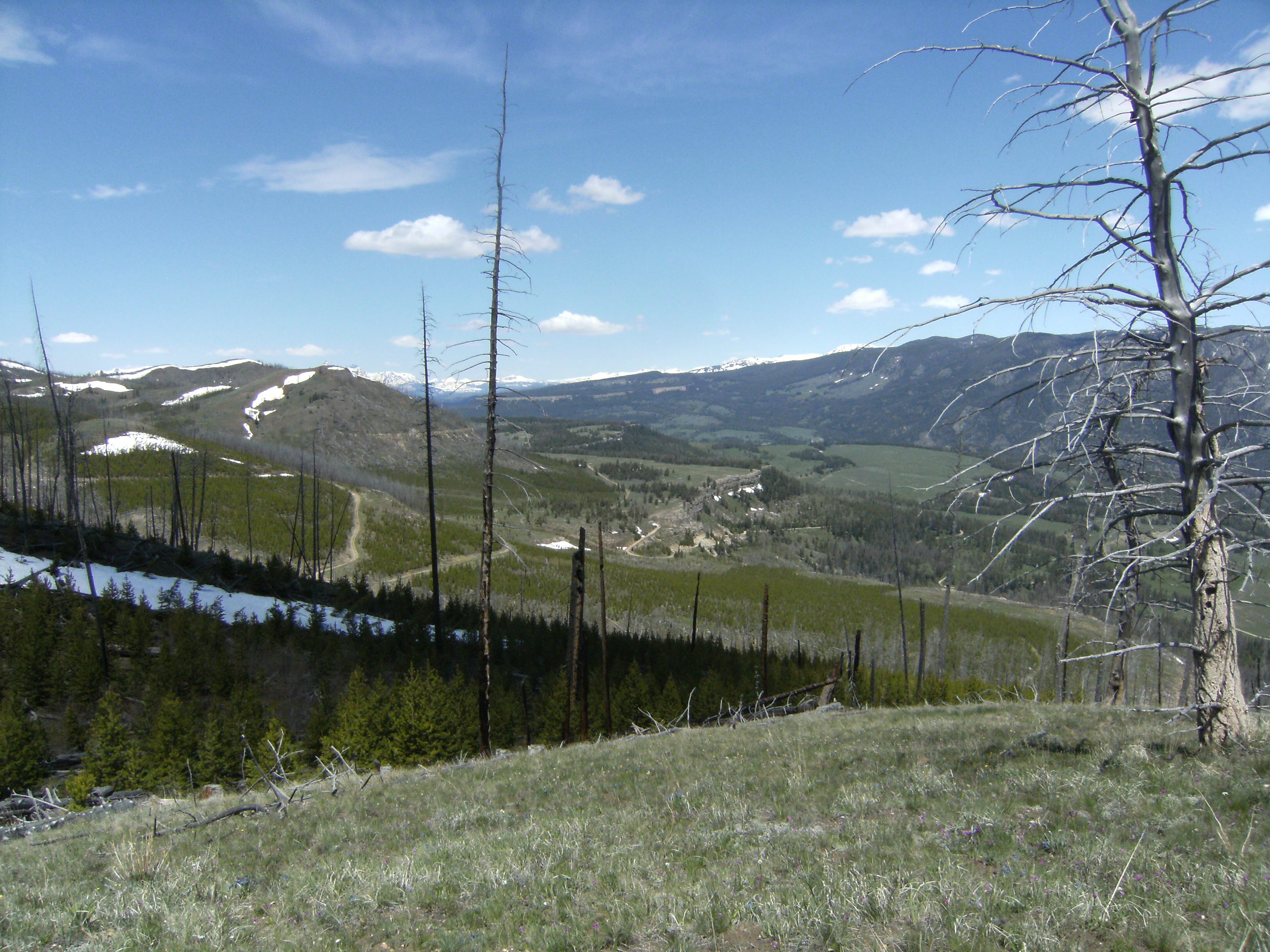
My latest interest is in the smaller animals around here.  Winter snow tracking can help find the critters and I’ve started keeping my eye out for Marten tracks, which I’ve yet to find.  Today was a beautiful clear day running around 17 degrees when I started out on a snowshoe trek.  I’d heard from a hunter friend in October that he’d seen a lot of snowshoe hare tracks up Camp Creek, an area closed off in winter except to foot traffic.  Since most winter visitors up here are interested in snowmobiling, this is a quiet and steep hillside with no traffic.  Being a north facing slope, the forest service road had accumulated over 3′ of snow.  A recent snow storm left the snow soft and snowshoeing was a work-out.

Looking over the habitat in a summer photo from a viewpoint--'88 burn, some clear cutting, older douglas fir forests

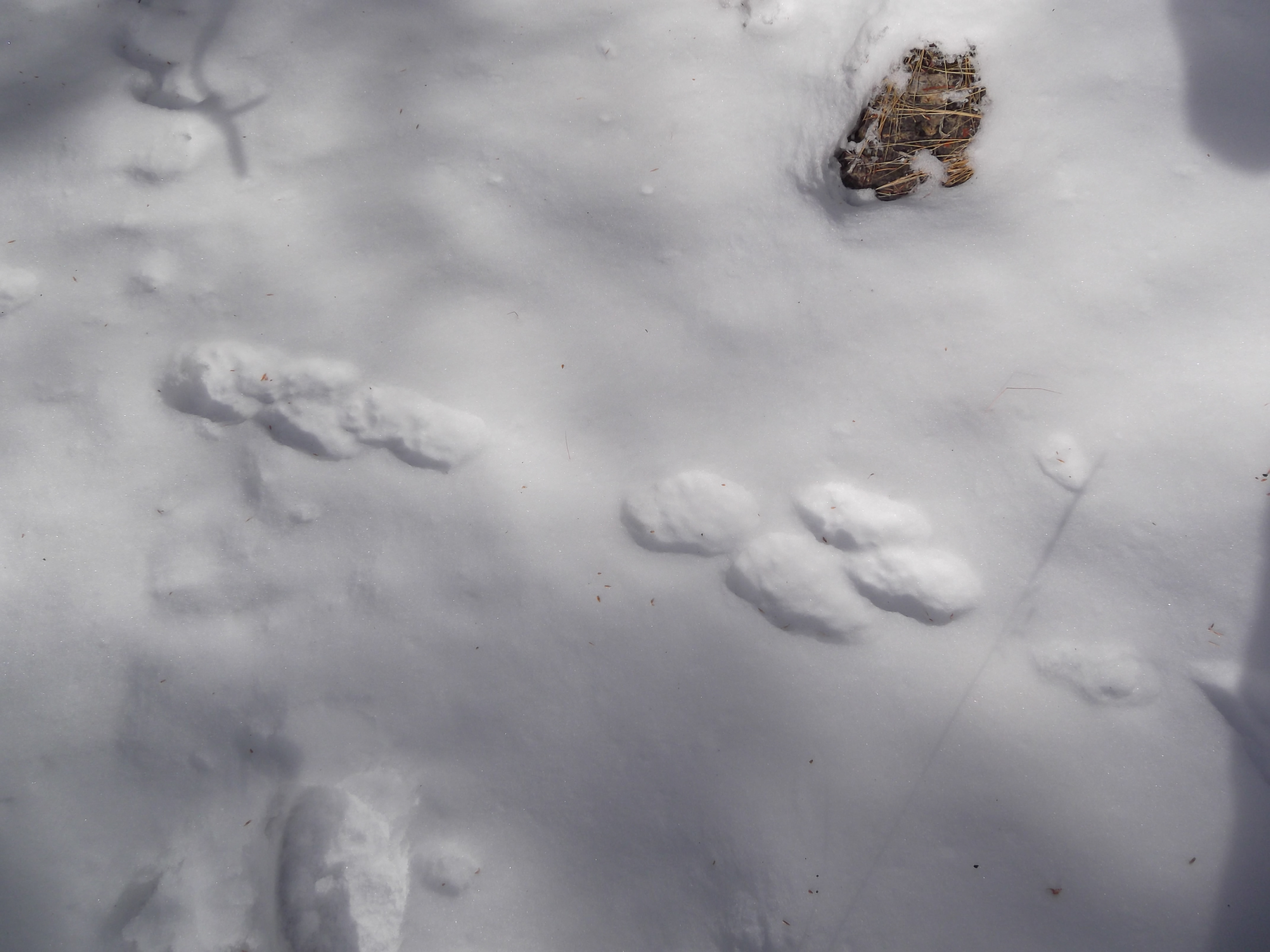
Just as my friend said, I quickly saw a lot of snowshoe hare tracks.  What I really am interested in is lynx activity.  I’m not familiar with lynx, but I can recognize a cat track.  The snow being so soft, the large loping tracks I saw were difficult to identify, but appeared to be a lone coyote.

There were hare runs all over the place.  It was interesting to see how long the runs were, and how far out into open areas the hares ventured.  With the deep snow, areas under roots and limbs made for good cover.  This is a typical snowshoe hare habitat–fir and spruce forest.

full set of all four feet slows to go under a fir root

Sit down track


Back foot length

Track group size

Two years ago the Forest Service hired a contractor to look at snowshoe hare habitat in my valley.  The company was doing a vegetation study for snowshoe hare to see if this was good lynx habitat.  I don’t know if the results are out yet, but just down the road a few miles I can say for certain that there is good hare habitat with lots of hare.  Now, to see if I can find a lynx!

A Toolbox for locating Power Places

There is an honest experience of spiritual space.  We all understand this somewhere deep in our psyches.  It comes out of a time when there were fewer of our species on this earth and we banded together for safety.  A time when we could walk for days without seeing a person; when our eye scanned a horizon without limit.  Space on our planet is becoming at a premium.  Without being told this, we can feel it.  Crowd or no crowd, we feel the limit pressing against us.  We are aware of this, regardless of how much solitude we enjoy at any moment.  And that awareness is troubling—the too many rats in the cage syndrome.  Our DNA is not fit for these kinds of crowds.  We are adapted for limitlessness, expansiveness, a clarity and freshness of consciousness.  All else becomes depressive, constrictive, crazy-making.  Depression is widespread and no amount of pills can fix the kind that hungers for open spaces.  This type of depression has deeper roots, like a tree caught in a can, its’ crown gnarled, unable to grow and expand.  This crush of human consciousness might not be obvious until you’ve actually been in an environment not only without crowds, but without much of today’s technologies.  Once you’ve tasted the difference, you can never fully go back.  You’ve drunk the punch.

Limitless expanse hides in our DNA

I fear there are less and less places on the earth where one can experience this feeling, so natural yet now so foreign to us.  Our world today is crowded even in places where its’ not.  Wires, cell towers, EM pollution, air pollution, water pollution, on and on.  I first fell in love with Wyoming, in the tiny town of Pinedale.  Long ago I ‘drunk the punch’ there.  Pinedale today, population 1,400, has air quality in the winter  worse than Los Angeles due to ozone from the gas fields.  Los Angeles!  Where there are almost 10 million people!

Pinedale anticline gas field in winter

Power in sacred spaces is diminished by man-made monstrosities like wires, roads, buildings, oil fields and other land scars.  Some places must just remain sacred.  With large amounts of people on this earth, we require even larger amounts of sacred spaces, not less, to hold the quiet so necessary for our spiritual peace of mind.

Living in the Bay Area for a few weeks, I became acutely aware of our lack of psychic space.  Yes, there are refuges here and there—parks, open space, even National Forests & Parks—but there is no ‘Wildness’ capable of absorbing our subjectivity, helping to ‘jumpstart’ us into this present moment.  With so many people using the limited amounts of open land, there must be many more rules. Trails are neatly constructed, lots of signage, no dogs, fees for parking, and on and on.  I don’t resent this.  In an overcrowded world with more and more people seeking refuge, that is the price we pay.

Private golf course abutts a Widerness area in Sedona

But are these controlled parks and lands the refuges we truly seek?  Or are they a compromise, a washed down version of something we once knew and now must settle for?  Can places of Power that were once brimming over, full of energy, yet now diluted by human interference, still transmit the same potency they contained hundreds, if not thousands of years ago?  Is it still possible to go out as a vision seeker, like Jesus, Gautama or Plenty Coups, and have the  Power of Place transform and enlighten us?  I see this as an important question to ponder.

Milarepa in his cave for 20 years

Every great spiritual leader in all traditions–and traditionally any person who had the inclination—went seeking their vision, their connection, a transmission of wisdom or insight through a communion experience in nature.  They went alone.  Where ever the power was present in their unique geography, there they went.  Some to mountains, other to deserts.  Some, like the Buddha, found a quiet and large tree to sit under.  Others, like the Tibetan Yogi Milarepa, sought a cave and sat there for twenty years.  I don’t recall a story where the Enlightenment, the Profundity, came forth at home with the kids or when haggling in the marketplace.  A retreat was necessary, in an isolated Place of Power. The transmission of Power in a sacred place seems to have the capacity to transform a person.

Devil's tower. Sacred to Indian tribes

This retreat is not the exclusive right of the rich, nor the so-called more spiritually advanced or inclined.  This is, and should be preserved as, the birthright of every human.  This transmission of wisdom and awakening takes place in Land free of transmission and electrical lines,  ORV’s, signed and groomed trails, night sky pollution, and other unnatural human effects which distort the Energy of Power Places.  To be so alive with Power, the place must also be alive with all the large and small critters that nature intended to be there.   How can a ‘spirit animal’ come to you and instruct you if their spirit is no longer there?   This is not a matter of belief.  It is imbued in the land itself.  A Silent Spring, as Rachel Carson warned us about, is a dead place spiritually.  It may be pretty to look at, but it lacks all the elements that give it Life.

The Effects of Off-Highway Vehicles on Archaeological Sites and Selected Natural Resources of Red Rock Canyon State Park

We all need places where we can, if we so desire, wander for days without seeing a soul, or a trail; a place where the natural forces of the Earth—drought, fire, wind, are allowed to shape the Land.  A Place where your eyes can come to rest in a limitless horizon of the natural world.  Places where the natural drama of Life is played out by the animals that live there.  That drama, of life and death, is part of the spiritual lesson we are seeking to understand and transcend when we go out alone.  We too are part of that cycle, and having those animals out there, as well as the force of nature to confront, keeps us awake to this present moment.

In our distant past as a people, when we wanted to go on a vision quest or spiritual journey, we knew through our feeling sensitivity the places where we should go and sit; we knew where Power gathered and so there we headed.  In today’s world, how would we know?  We have no culture to guide us, no designated spiritual places.

We must re-learn to trust our innate feeling sense as our guide.  To do this requires a different approach to the outdoors.  There are times when all we want to do is unwind and recreate in nature—to ski, or climb, or backpack, or use an ORV.  That is fine too.  But to be sensitive to Power Places, a different asana is required.  Right approach means curiosity and sensitivity mixed with a healthy respect.   This will guide our noses and give us the information we need to determine the different qualities a place contains.  A good tool is wandering.  Wandering without goal opens our senses.  The posture of ‘not knowing’ or abandoning the ‘need to know’ connects us with our child mind, a mind that is free of constructs and defenses.  Alertness and awareness are necessary when wandering in the wilderness—there are dangers in the form of topography, weather, accidents, or animals like bears, rattlesnakes, or even ticks.   With these few simple intentions in our toolbox of our ‘sacred quest’, nature will guide us easily into the present moment.  Once there, it’s easy to feel what kind of power is in a place.

A Thing for the Salmon; their Now-or Never Point

This will be my last post from California as I’m heading back shortly for my home in the Rockies.  Its’ been a great month with highly unusual weather–every day is cloudless, gorgeous and in the 60’s–a foreboding omen.  Northern California used to begin its’ serious rains around Thanksgiving.  Over the last 10 or 15 years, that timetable has moved up, with January and February being the rainy months.  Now, it seems even that is no longer predictable.

All that is important for many reasons, but particularly for this post.  This post is all about salmon restoration and the $11 million project going on here at Muir Beach.

Restored, widened lagoon leading to beach. This is the old picnic area

Years ago, I used to guide school children here.  We began at Muir Woods, then after several hours, we’d finish by driving the 10 minutes down to Muir Beach.  The point of that was to show them the creek, Redwood creek, one of the last free flowing creeks in California and one of the last unstocked winter river courses for coho silver salmon in the world.  Here, at the mouth of the creek, much of the year a sand bar separates the river from the sea.  During heavy storms in December and January, the sand bar breaks free, the river rushes, and the salmon, guided mostly by smell and other unknown mysteries, return after two years at sea to spawn and die upstream.  I’ve watched them in the creek in December in Muir Woods, with the young children by my side marveling at them.  At that time, around 10-15 years ago, only 200-300 were left running this seven mile course.  The creek, over many years, had gotten degraded through developed picnic areas, parking lots, and a choked out watershed.

In the three years since I was last here, a massive restoration project has been going on to re-alter the creek back to its natural, historical course.  Using old photos, this could be mapped out.  The nearby drainage was widened so more rainwater could flow into the stream, non native invasive kikuyu grass that was choking the stream beds was bulldozed out and natives were planted, the marshy inlet was widened (ducks are there all the time these days), and a 100 year flood bridge was built.  The project is taking a rest in 2012 and in 2013 the present parking lot will be restored to natural habitat and parking moved farther away from the stream.  The work is done during the summer months to minimize wildlife impact.

Creekbed restoration area to be planted


$1 million bridge

Since I’ve been here this month, several times a week Park Service employees come to monitor the water, and at least once a week a crew of volunteers arrive to plant natives.  Last year with all the rains 90% of the plantings survived.  This year they expect only 30% to live.

A Park service employee told me that only 8 salmon were counted last year.  Last year Northern California had some of its heaviest rains in decades…a good time for salmon to spawn.  The young woman I was talking to was shocked to find out that only 15 years ago 300 salmon were counted.  300 were low then.  Today, she would have been happy with that 300.

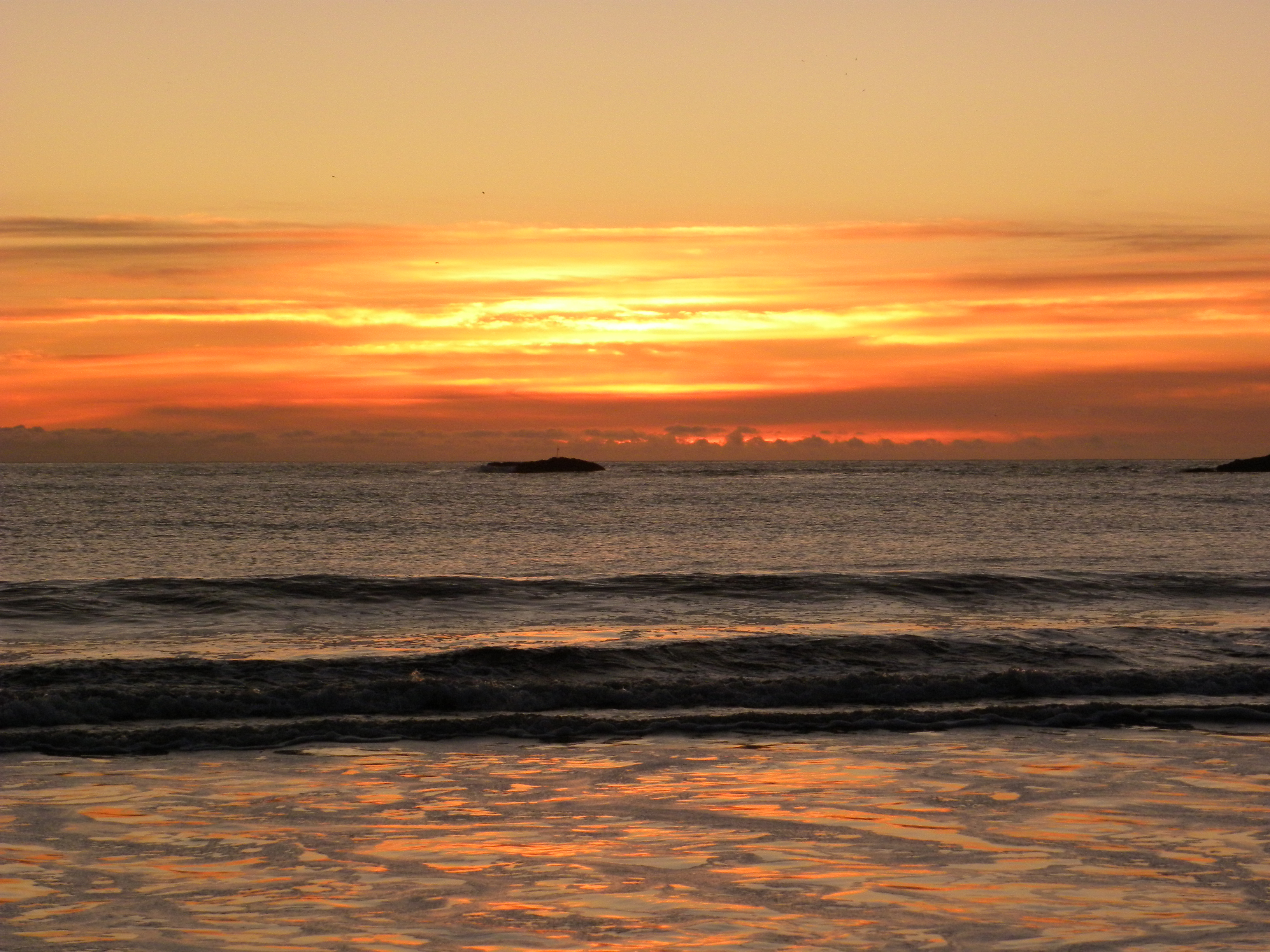
Sunset at Muir Beach

This is a good project.  Too bad it took so long for this to happen.  I’m not sure why it took this long.  Even when I was guiding, little changes were occurring.  Years ago they took out the picnic tables and let the native marsh return.  Over 12 years ago the Park Service corded off certain areas in order to restore the native dunes.  They were also doing studies way back then on nesting Peregrines at Muir Beach.  Maybe this was planned all along, and the massive amounts of money it took to do this project, plus the coordination, took a lot of time.  The salmon didn’t have that kind of time.

One hopes the rains will come and the salmon will begin returning in numbers.  But remember, as recently as the early 1900’s, when salmon entered the San Francisco Bay to journey up the Sacramento River and spawn, they clogged the neck of the Carquinez Strait leading into the river.  “there were so many salmon you could cross the strait on their backs” said an old timer.

Looking up the drainage from Muir Beach

Soon salmon might be just a fading memory, written in the history books.  But I’m glad the Park Service is trying, and they are doing a good job with this project.  Another stream in Marin, Lagunitas Creek, had a lot of effort put into it years ago to encourage salmon to run there again.  I understand some salmon have returned.  Unfortunately, their complete river course will always be blocked by Peters Dam which forms Kent Lake, a reservoir containing the drinking water for Marin County, built in 1954.  The provided link above says we are in an extinction vortex, the “now-or-never point”.

Salmon on Redwood Creek, a creek that no one uses for water; a creek without a dam, spurs little controversy nor objections for salmon restoration.  This is in direct contrast to the Sage Grouse plan by the BLM.  They watered down all the science and are trying to meld cattle into their plan even though livestock grazing accounts for the decline of sage grouse habitat in the first place.   The Feds won’t list Sage Grouse as endangered yet either.  Too many other priority endangered species are ahead of them, they say.  Until we value what little we have left, politics and short-sightedness will be thrown into the mix of habitat restoration, and it might be too little, too late, like its’ been with the California salmon.

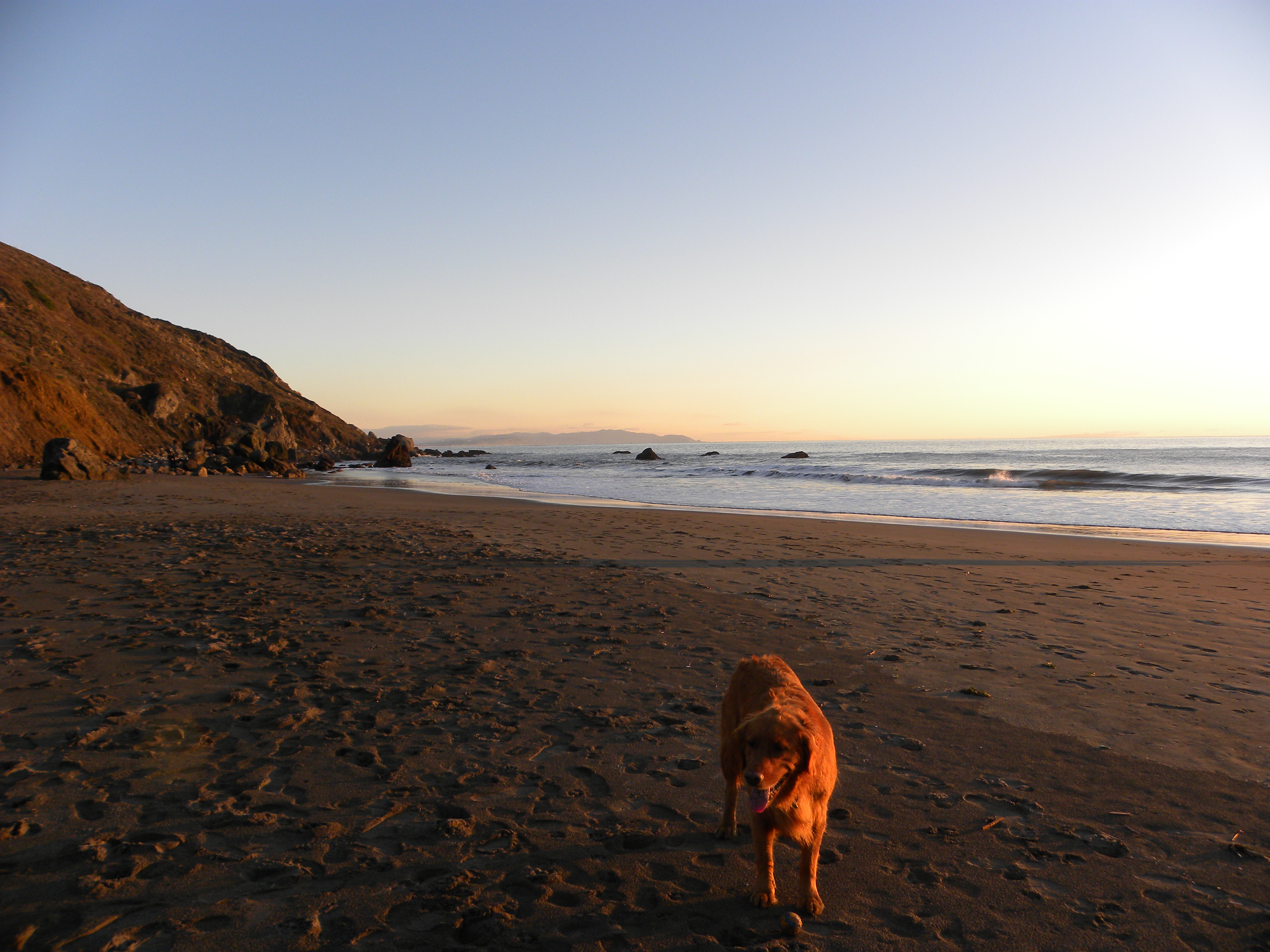
Muir beach allows off-leash dogs. My non-native friend at Muir Beach

Otters (video footage), connectivity, and Bison

Today I went back to Abbott’s Lagoon to do some tracking on my own.  I arrived late, around 11, and by then at least a dozen people, kids and adults, had tracked around the dunes.  Being vacation week, there were more people than usual during the weekday.  But I managed to find a lot of tracks regardless.

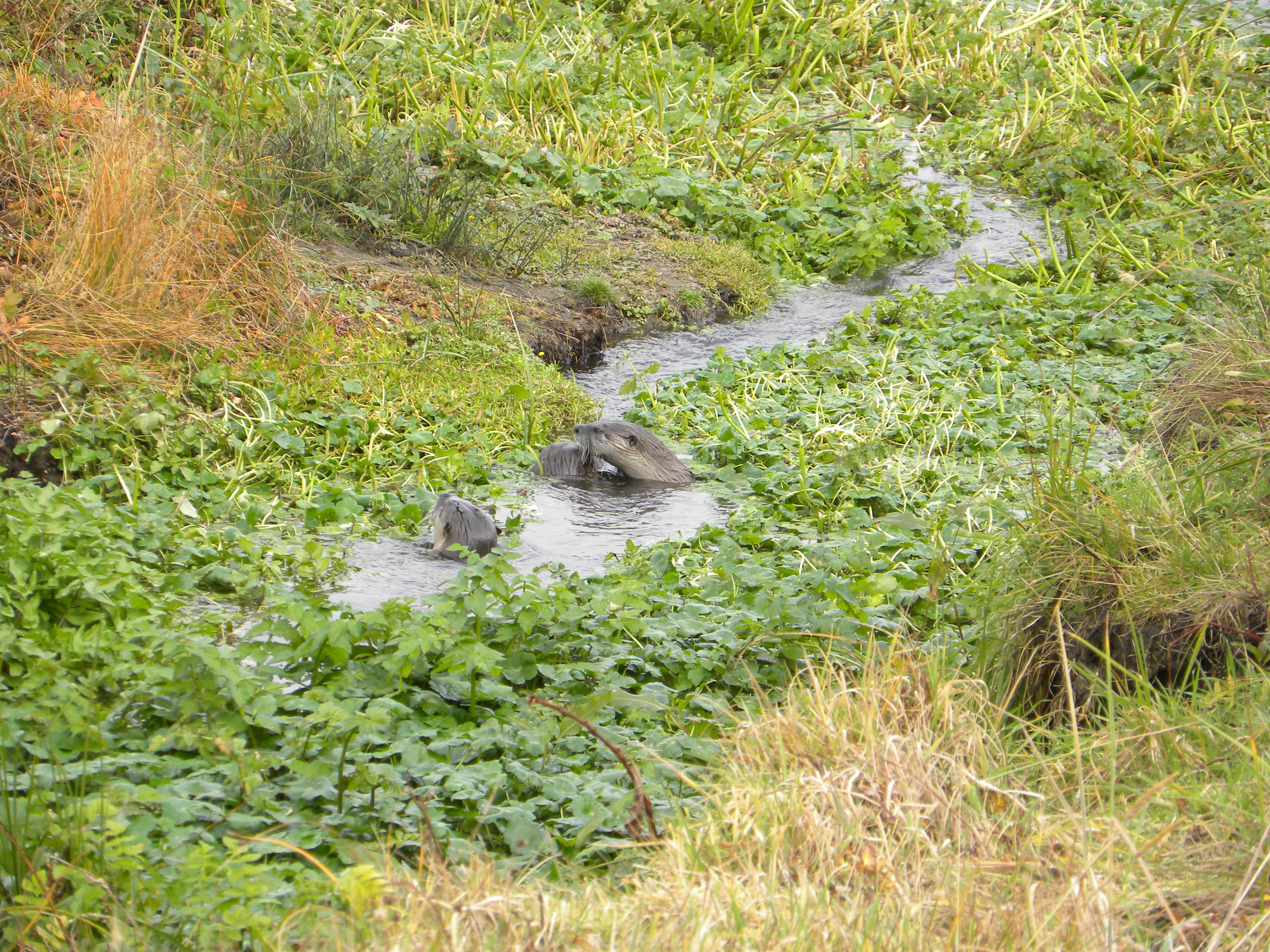
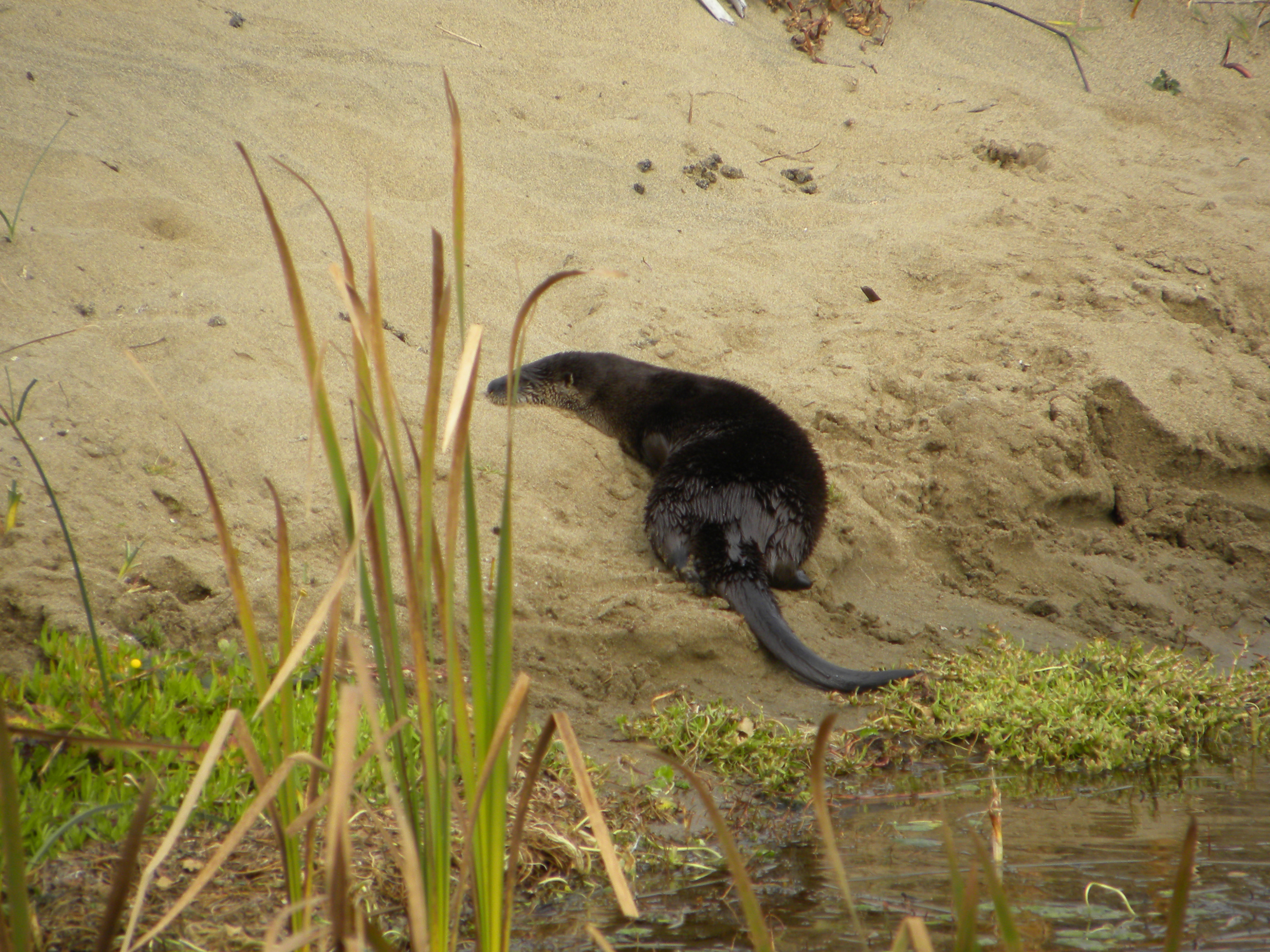
The first thing I came upon were four otters playing right under the bridge.  No other people were around so I took the opportunity to stay quiet and watch them with my camera.  They swam in and among the vegetation, then three of them got up on the sandy bank and rolled around.  Here’s a link to my YouTube video of them rolling.  From watching them, it appears they were cleaning and drying themselves with all that rolling, helping to maintain the insulative quality of their fur.

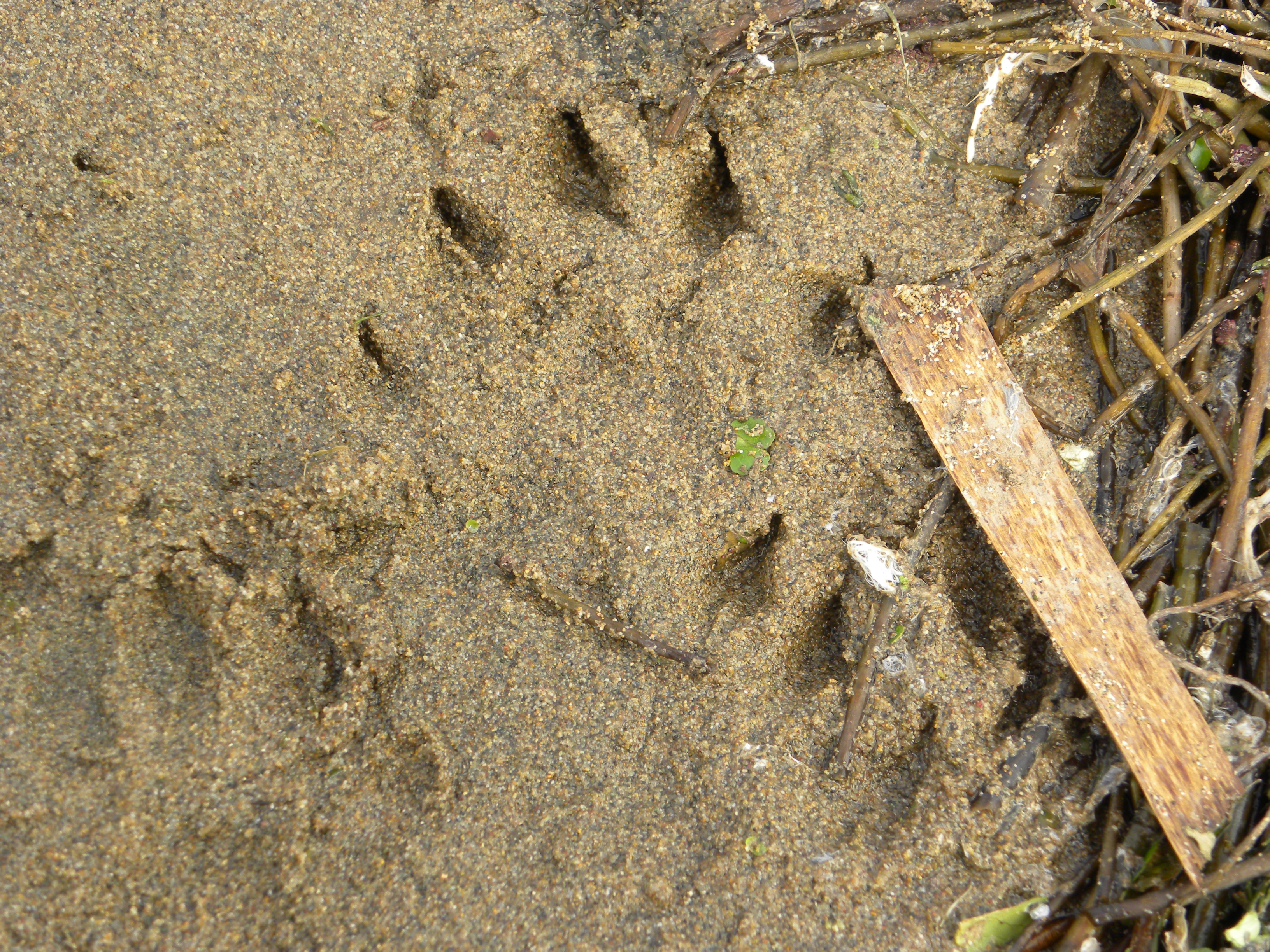
Otter print

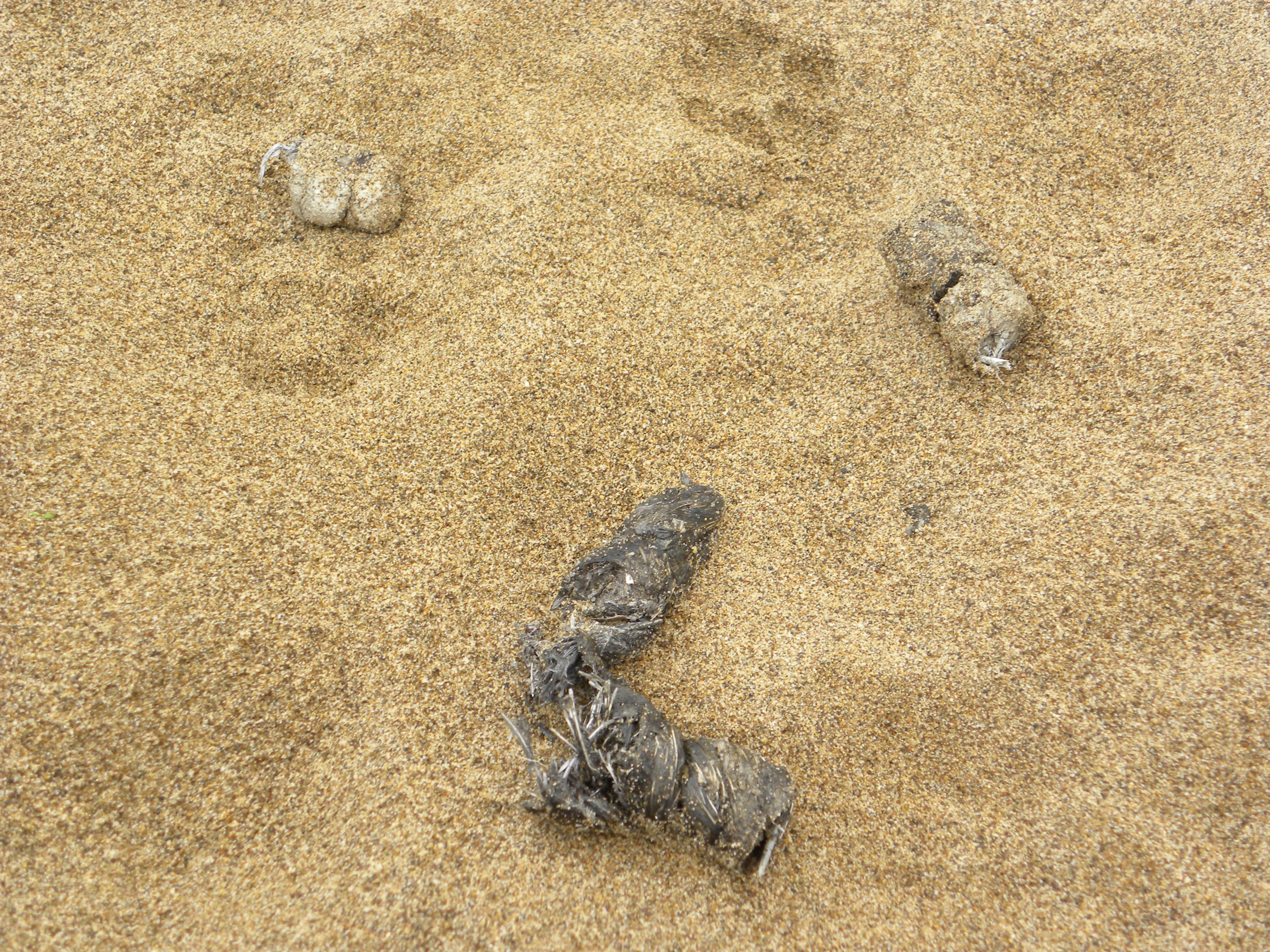
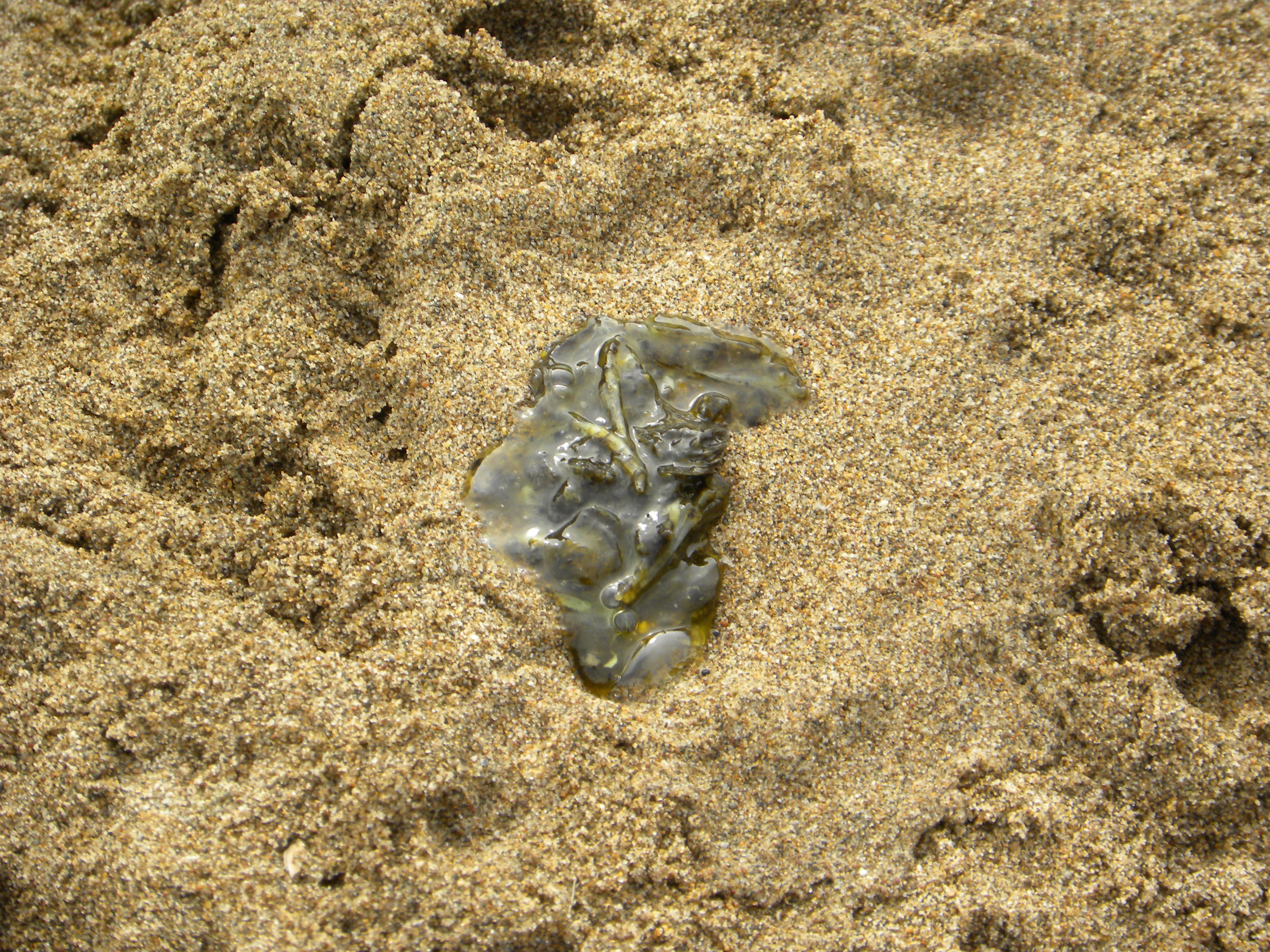
Otter fresh scat (you see the otter leaving it in the video link)

Despite all the human prints, there were lots of pristine areas on the dunes with only animal activity, and boy was there a lot of it.  Bobcat, coyote, rodent, raccoon, and skunk as well as birds and these otters were visible.  Black-tail deer hang in the fields on the hike in.   The dunes are alive at night when the people are gone.  Its amazing to think all these animals are living and thriving so close to humans.

Every morning I walk the five minutes to Muir Beach and run the dog.  This morning the weekend crowds were gone and I was the only person out there at 8am.  On the way back to the parking lot, I noticed some fresh scat, left while I was at the beach, by a bobcat.

Marin County, which is part of the North Bay, is a fairly unique area being so close to the city.  Just across the Golden Gate bridge, it has tremendous amounts of open space.  Besides the Golden Gate National Recreation area, Muir Woods National Monument, Mount Tamalpais State Park, Point Reyes National Seashore, and Samuel P. Taylor State Park, all in one county, Marin has protected its watersheds.  Unlike San Francisco which imports its water from Hetch Hetchy in the Sierras, Marin supplies its own water from rainfall, with some imports from the Russian River in Sonoma County.  Mount Tamalpais is the weather-keeper mountain in the county.  Fog and rain patterns are determined by the mountain and all of its surrounding lands are part of Marin Municipal Water District.  The drainages providing the water runoff feeds into several lakes and reservoirs on the mountain slopes.  These are all protected lands, never to be developed.  In addition, Marin topography is a series of valley and hills.  The hills, in general, are protected Open Space, while the valleys are populated.  There are few connecting roads between the valleys over these hills.  Throw into the mix Marin Agricultural Land Trust, a trust formed by the large ranches patchworked around Point Reyes, and you have a lot of open space.

What makes this unique is that animals have a chance to move; there is a corridor of connectivity of open, protected lands that allows movement of animals all the way to the next county north.  Marin provides a template of how we can protect land in urban highly populated areas that allows for wildlife as well.  Cougars even live here and there has never been any incidents with people or dogs.  Even an occasional black bear has been sited here and probably there will be more in the future.  These are not wild lands, but urban lands with connective open space for humans and wildlife to live side by side.

The other night I was having dinner with some friends.  They indulged me for 10 minutes and listened to my impassioned spiel on how important our last remaining wild lands are, for our soul, for our grand children, and for the great megafauna of North America.  I can get lost in these passions.  At the end of it, my friend asked me “If you could suggest one thing I could do, what would it be?”  What a great question.  At that moment I had no answer.  I told her that I’ve racked my brain thinking about that myself.  I didn’t think what she wanted to hear was ‘Donate to such-and-such an organization’.  What she wanted to hear was what the one thing she could do to make a difference, despite the fact that it’s not her main passion and she lives in a city.

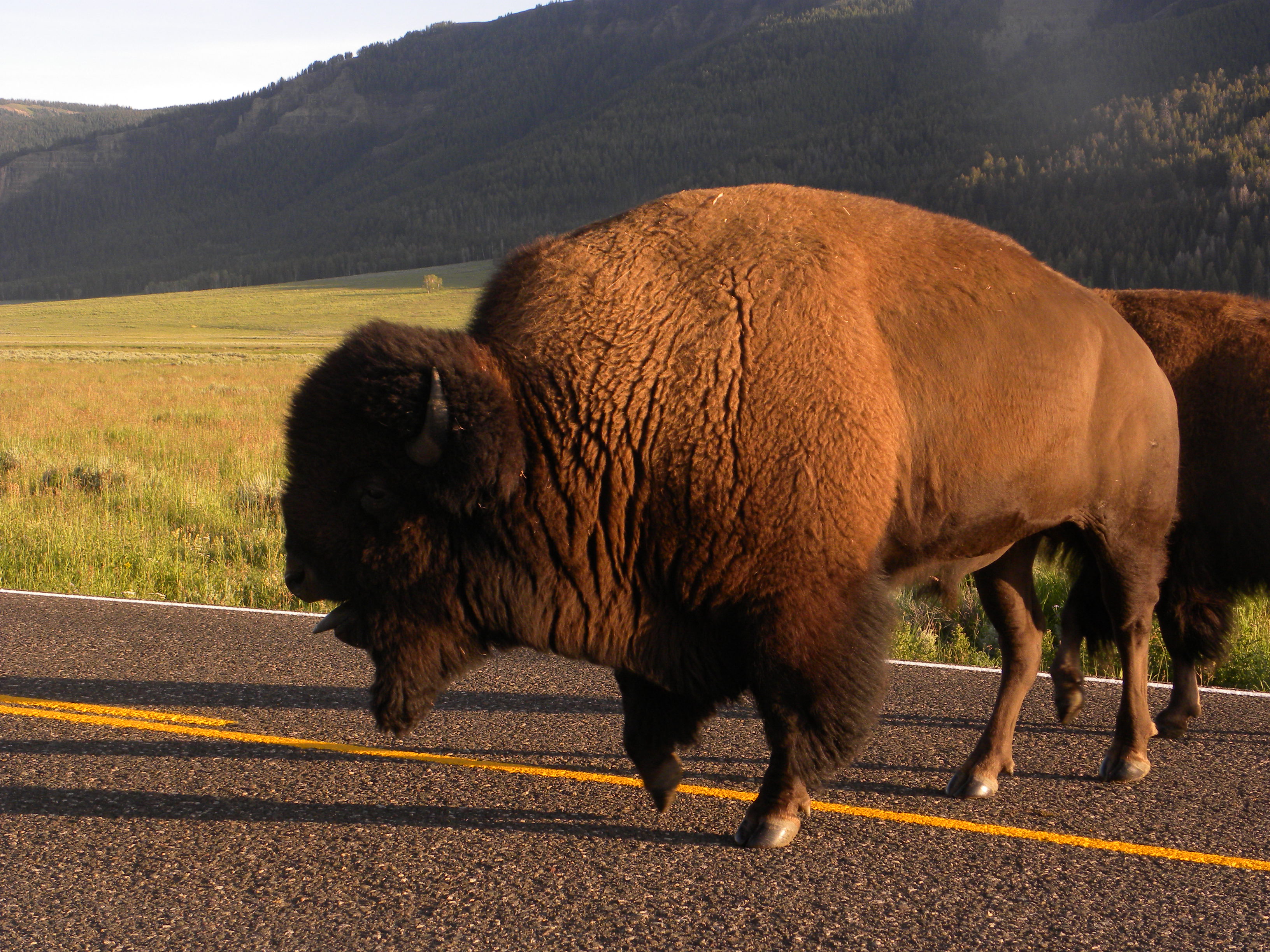
So today, at the beach, I thought about one main thing.  Its the one main thing I have for today.  Tomorrow I could change it.  I suggest the one main thing would be to visit Yellowstone and see the bison.  As you see the bison, read a one or two page article summarizing their complicated situation and plight.  Sure, everyone knows something about the wolves and their plight.  But the bison situation really tells the story about everything that is constipated and locked up right now with megafauna.  They are managed not as wildlife, but as livestock under the completely wrong federal agency.  They are not allowed room to roam.  And all the reasons why, the issues between the Cattlemen’s Association and bison advocacy groups, the culling that goes on by the Park, the difficulty acquiring winter habitat outside the park with connectivity, and the fact that bison are America’s iconic animal, one that was almost slaughtered to extinction…I think the plight of today’s bison should be the one thing every person in the United States should learn about.  The story of the bison might communicate to even a person living in New York why we must advocate for connectivity, wildlands, and room to roam.

The Iconic Bison

Zone 4- Low Tide zone in Northern California

An unusually low tide is occurring for these next days.  The trick is to find the perfect combination of a good minus tide with times that you can go out on the reef…in other words, not after sunset or before sunrise.  The low tide today was around, adjusting the time a little north of the bay, 4:14 pm, a wonderful -1.5.  Tomorrow’s low tide will be at 5:00 and a -1.6.  But given that sunset is around 5pm, I decided to go out with my family today.

The place to go in Marin County to tide pool is Duxbury Reef.  Its part of Point Reyes National Seashore and, at a mile long, its the largest shale intertidal reef in North America.  To get there, you have to know where Bolinas is.  That is a trick in itself, because Bolinas is the ‘town of no signs’.  Bolinas townspeople are famous for taking the road signs down that the county puts up.  Bolinas is a wonderful little blast-from-the-past village hanging on the tip of the spit at the lagoon. Agate Beach where the reef is, is on the road to Bolinas but not in the actual town.

The reason you want to get a real good minus tide, is that you want to be able to walk out to the lowest zone.  Marine biologists divide the intertidal area into four zones.  Zone 4 is the zone that is rarely exposed to the air and for only very short periods of time.  Special plants and animals inhabit this zone, which, of course, you rarely can observe unless you want to scuba dive in a wet suit in cold water.

I’ve taken a few marine biology classes and done quite a bit of tide pooling in my past.  One of the ways you know that you are at the farthest reaches of the low tide zone is the presence of sea urchins.

Sea urchin

I met a fellow at the beach entrance taking notes on the visitors today.  He was working with the California Academy of Sciences who regularly study this reef.  I haven’t been to the reef at a minus tide this low since the early 2000’s.  I asked about the reef’s health.  He told me that this reef is, in general, healthier than its been in the past except for the urchins.  I noticed there are visibly less urchins than 10 years ago and he confirmed this.  He said they are not sure why.  It is possible that, since this little guy is an Asian delicacy, people are illegally harvesting it.  Sea urchins are almost the sole food of sea otters, so much so that their bones are visibly purple when they die.  

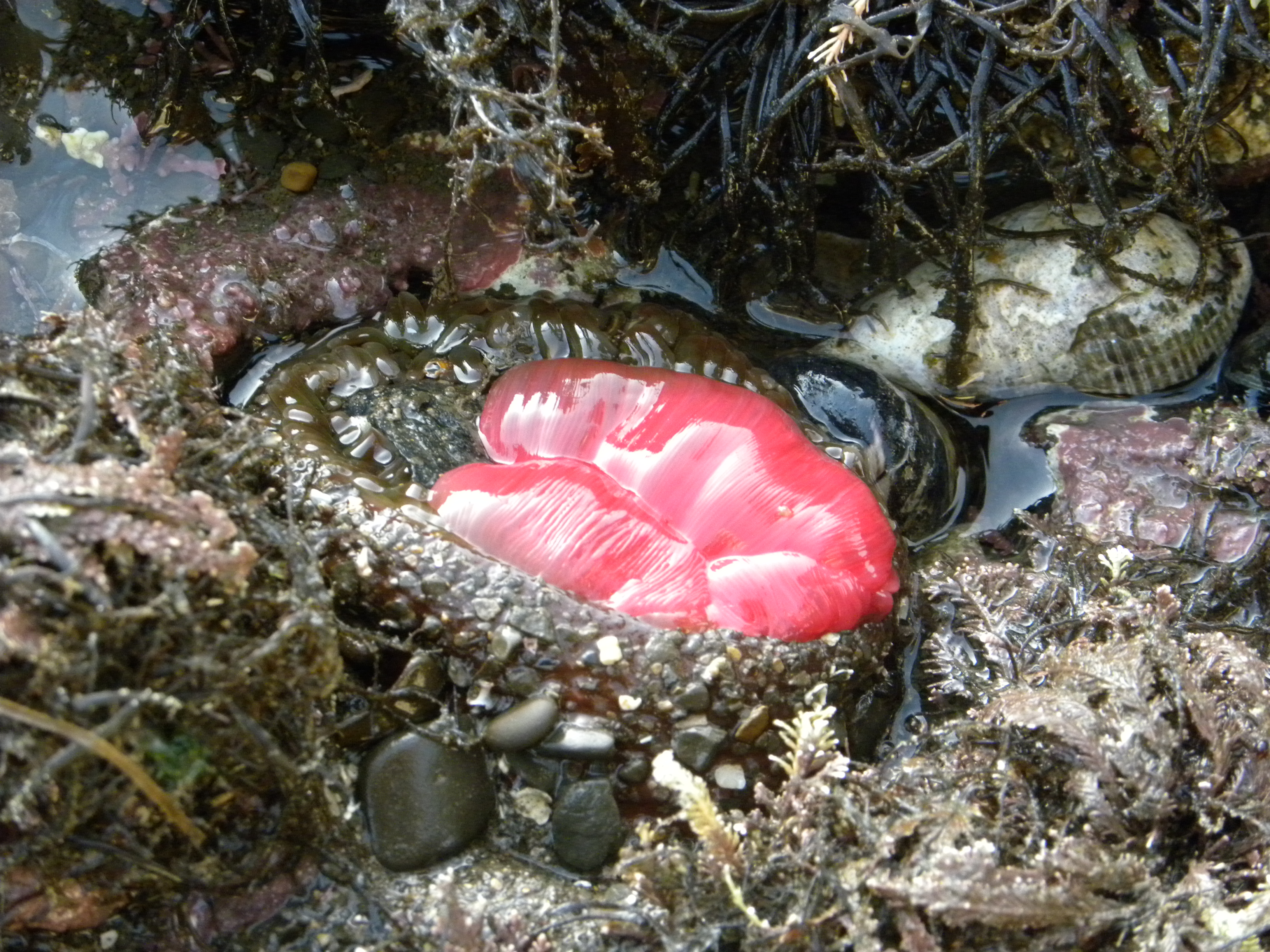
Another sign that you are in zone 4 is the presence of the Giant Green Anemone.  They have stinging tentacles to catch and kill their prey.  Its fun to touch them as their tentacles feel ‘sticky’.  When you touch them they close up.  My son said he’s got lots of memories of going around touching these guys.  If you keep your finger there, they’ll close up on your finger.  But don’t worry, you can always get your finger out.  They’re not stronger than us.  My bio teacher used to say that its ok to touch using your protective skin, but don’t lick them because your mucous membranes and smooth muscles aren’t protected. He said you’d have to go to the hospital then.  I decided not to lick them today.

Giant California Green anemone garden

I have no idea what this anemone ate

Sea grass was everywhere, one of the few flowering plants and its at the low tide zone.  Pisaster giganteus, the giant sea star (they are not starfish because they are not rightly fish) comes in purple and blue.  It predates on mussels and is found only at this low tide.  We found large rocks covered in every inch with mussels as well as barnacles.  The orange sea star is a mid-tide zone animal as it can stand the desiccation better.  We found this one with part of its stomach hanging out.  That’s because when a sea star eats, unlike us who keep our stomachs inside, they throw their stomachs outside their bodies and surround their meal, digesting it outside of their bodies.  Interesting.

Hard to see its extruded stomach in the middle that my son is taking a photo of.

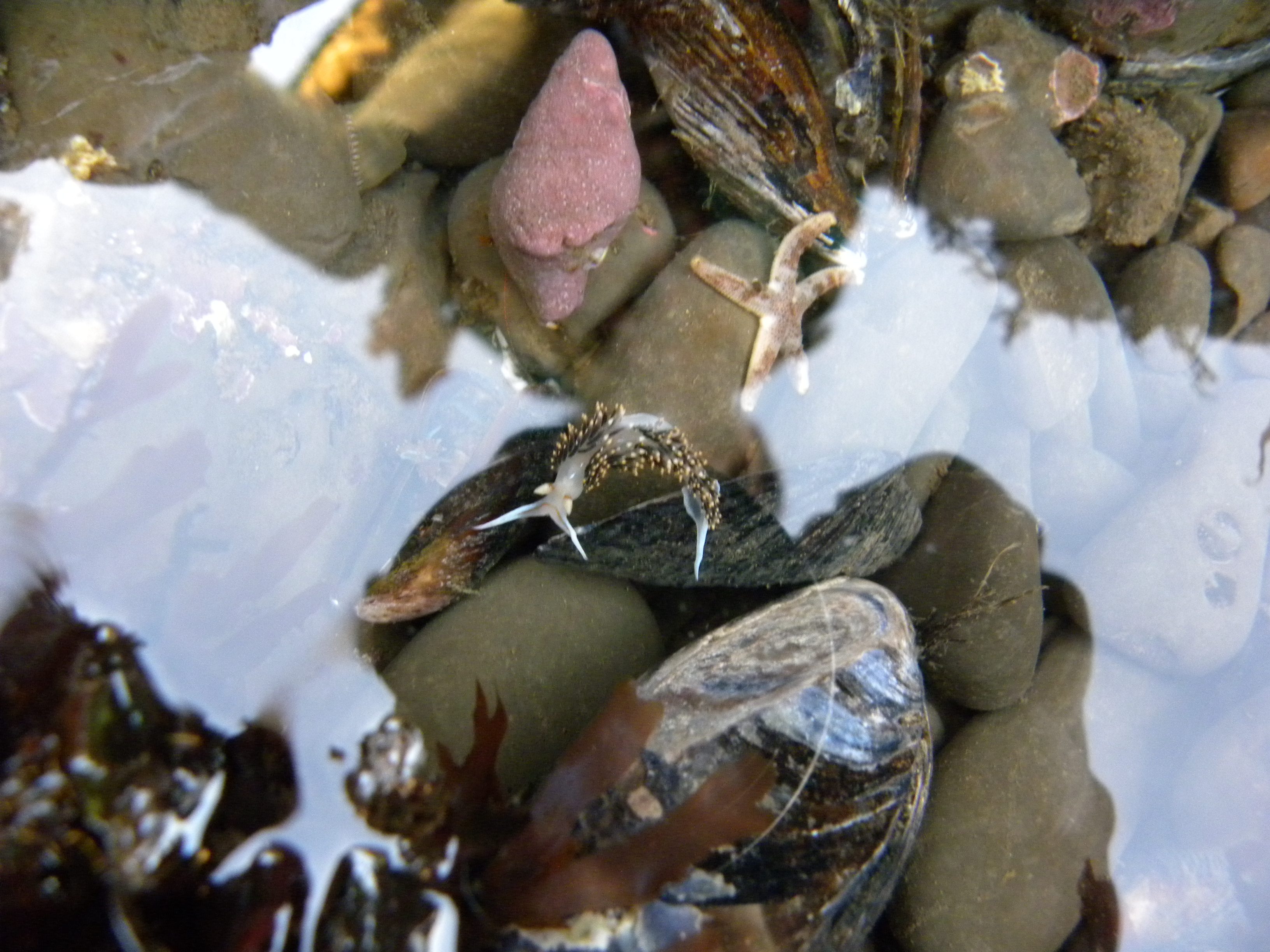
My most favorite animal to look for are nudibranchs.  Essentially they are slugs of the sea.  There are over 100 varieties in California, many of fabulous neon-type colors.   They have an interesting relationship with anemones.  They feed on them, storing their stinging cells, or nematocysts, in their bodies.  These ‘stolen’ nematocysts help protect the slugs from predators, firing when they try and take a bite.  We saw several varieties today, with a total of about 10 individuals, which is a lot of good spotting.

Nudibranch in middle of photo

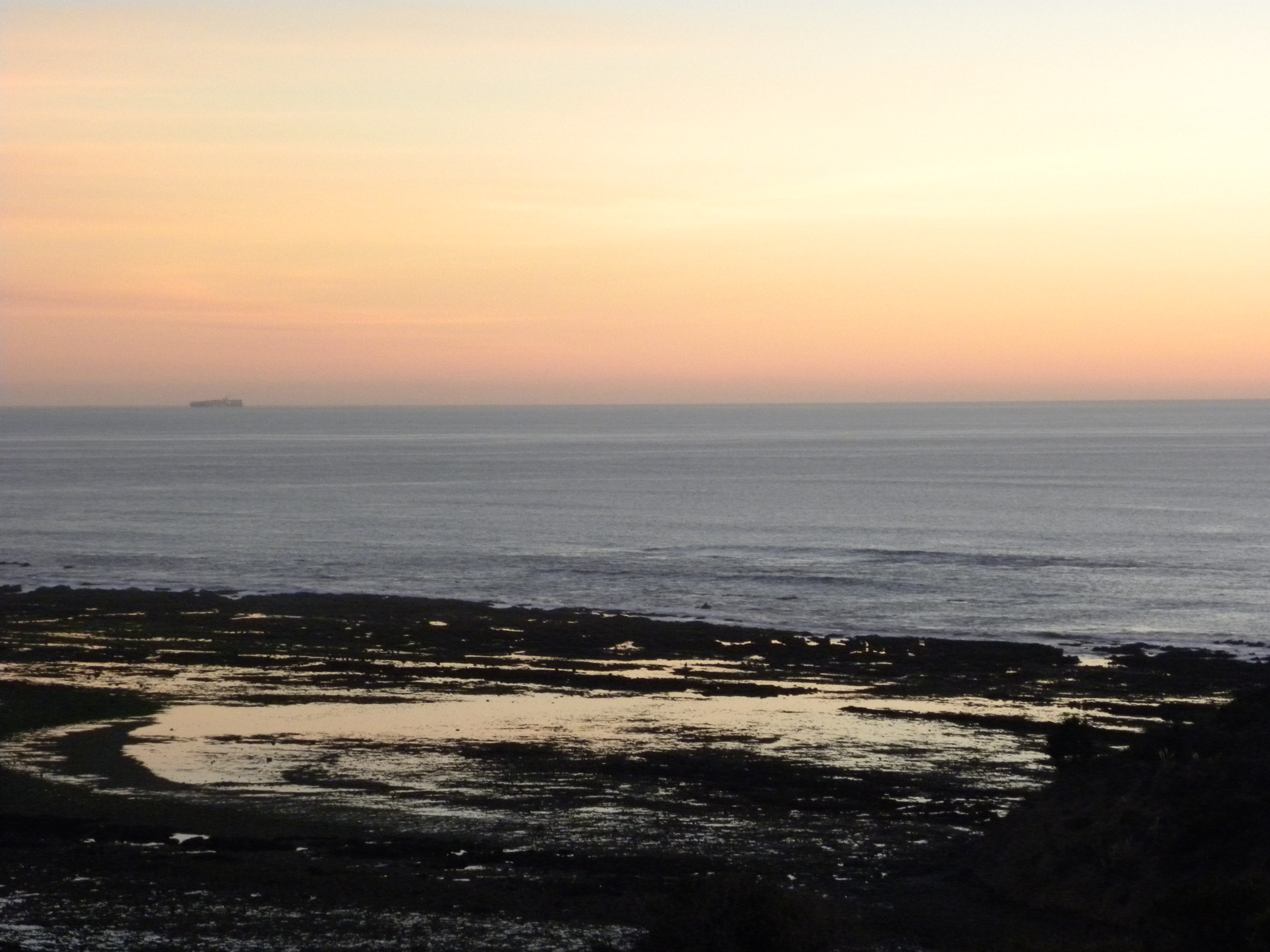
When the tide was at its lowest, we began heading back, mostly because the sun would be setting in 1/2 hour.  What a great time.  The California coast has a lot to offer, and a lot of reason for all of us to protect it for generations to come.

The Reef exposed at low tide

Duxbury Reef is here

Marin Tracking Club 2

I’m in California for the holidays and went to the Marin Tracking club this morning. I used to go regularly when I lived here.  Then it was small and just beginning.  Now the word is out and there were four times the amount of people.  The tracking club meets on the last Sunday of every month, except this month’s last Sunday is Christmas.  We always meet in Point Reyes at Abbott’s Lagoon.  Since no dogs are allowed, the beach, which begins about a mile from the parking area, is pristine with wildlife tracks.

Abbott's Lagoon


I’m staying at a house on at Muir Beach which is about an hour south of Point Reyes via the coast highway.  The drive is exquisite.  I left at around 7:30 and saw a coyote on the way there.  Driving along Highway 1, near Dogtown, you’ll pass a line of Eucalyptus trees. The 1903 Earthquake was centered right along here.  You can see the line of trees on one side, then the line of trees jumps several feet away; this is where the fault is.

Forest around Point Reyes driving Highway 1

Once you turn off towards the beaches, the landscape changes.  Marin Agricultural Land Trust (MALT) is a conglomerate of the ranches in West Marin that have joined in the trust.  Point Reyes National Seashore and MALT preserves this entire peninsula forever.  MALT is the reason why you pass lands that have cattle on them, as well as drive through National Seashore.

Pt. Reyes & MALT private lands with the Ocean beyond

I had an exquisite morning of tracking with the group.  Most of the group leaders have trained with Jon Young and are very dedicated trackers and students.  The sands are always shifting, the wildlife patterns regularly changing.  Today we saw a lot of bobcat activity.

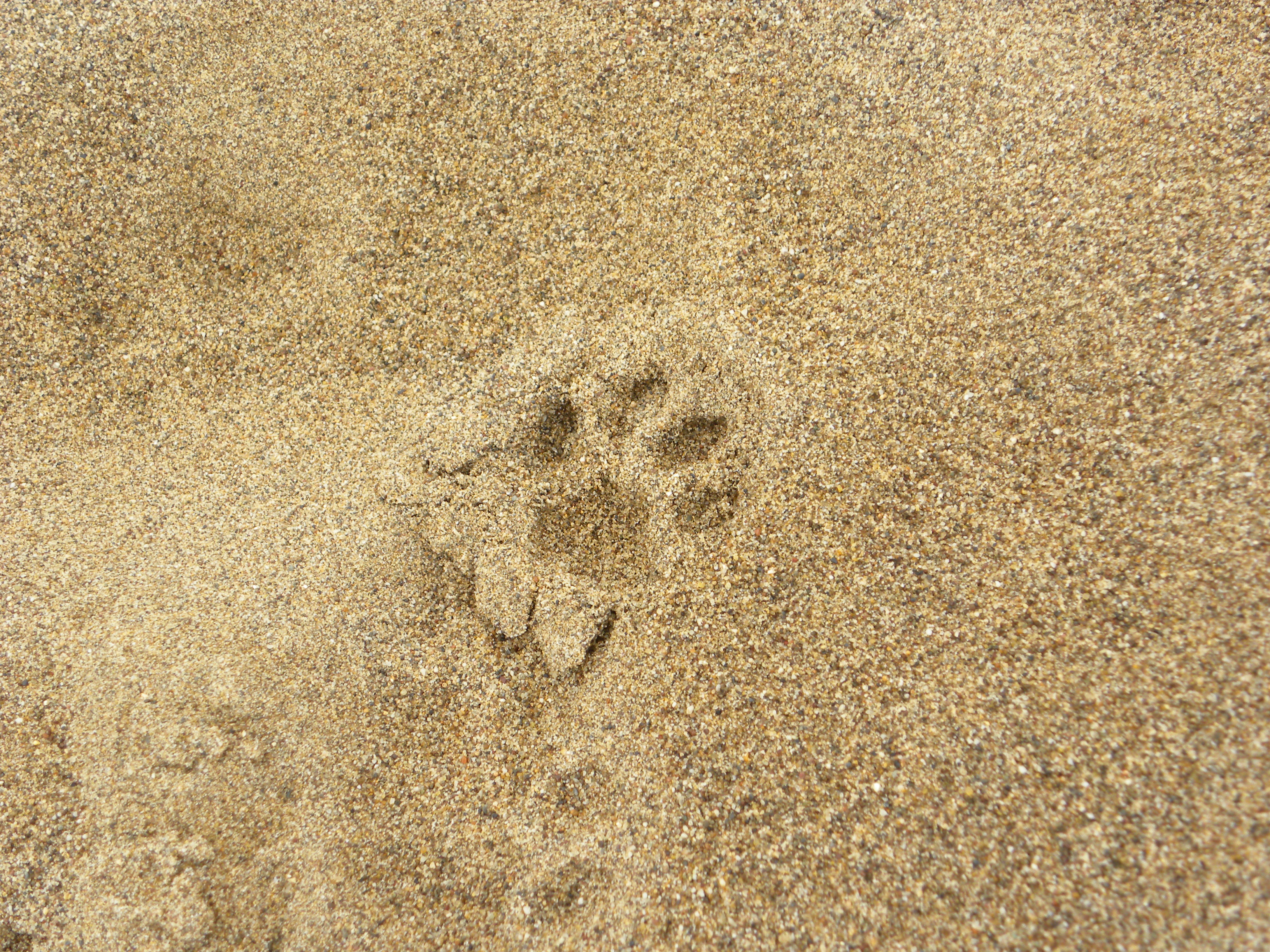
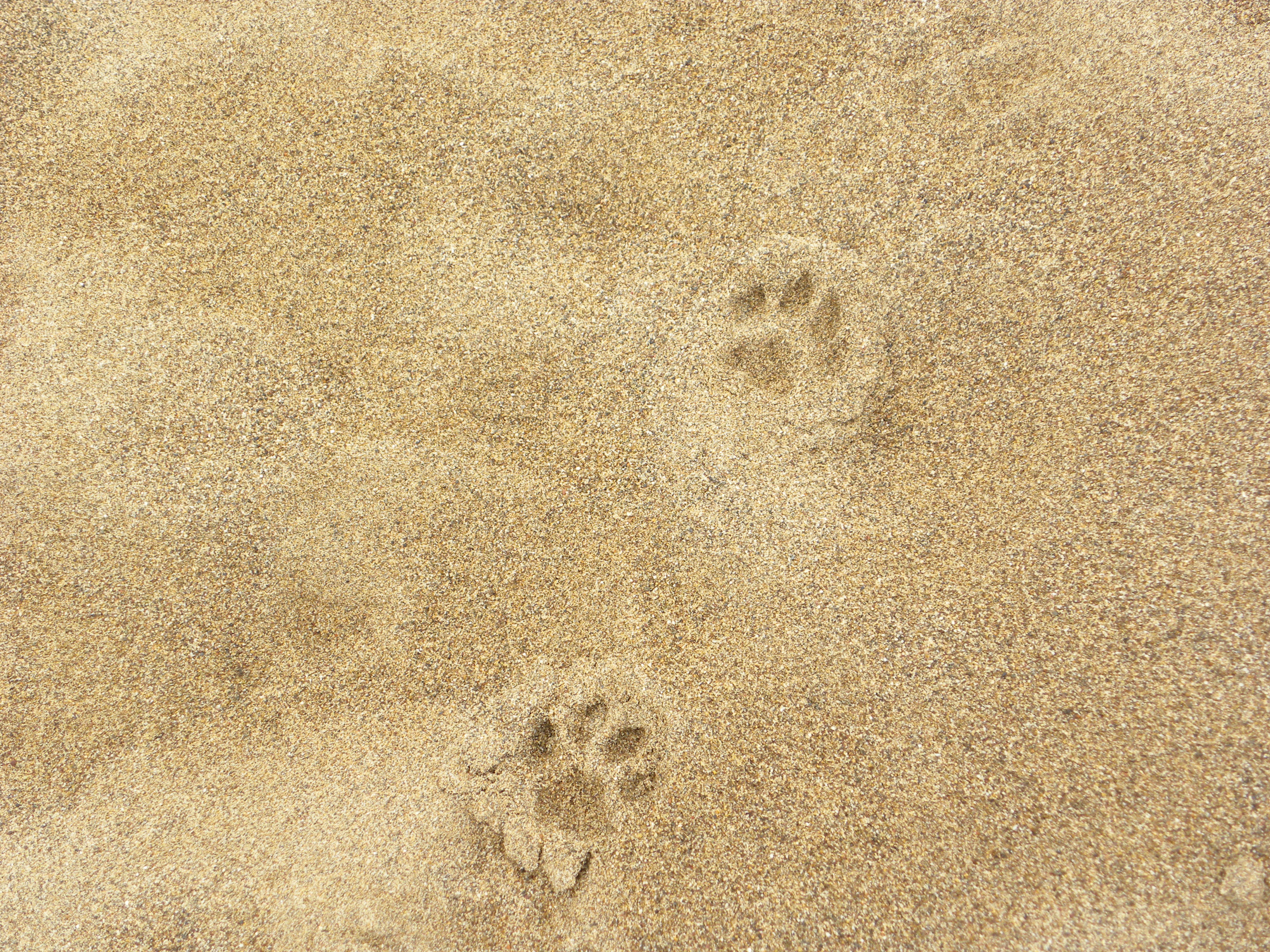
Bobcat track

Lots of bobcat tracks

Bobcat scat

A faded skunk track loped up the dunes as well.

skunk

We spent some time analyzing a nice 2×2 raccoon track.

Raccoon tracks 2x2

Notice in each pair there is a large foot and a smaller foot–a hind paired with a front.

2x2

My favorite track was the good ole’ coyote.  We observed the tracks of mating play, but what was most instructive for me was breaking down a coyote lope track, and analyzing a transverse patten as the coyote was speeding up.  While considering the track, four otters were playing in the lagoon.  Scott, our leader, told us about a time he was observing some otters when they submerged, then reappeared right under a coot.  The otter grabbed the coot, and on its second try, had it for a meal.  The lagoon was filled with coots lazily feeding, and not too far from these otters.

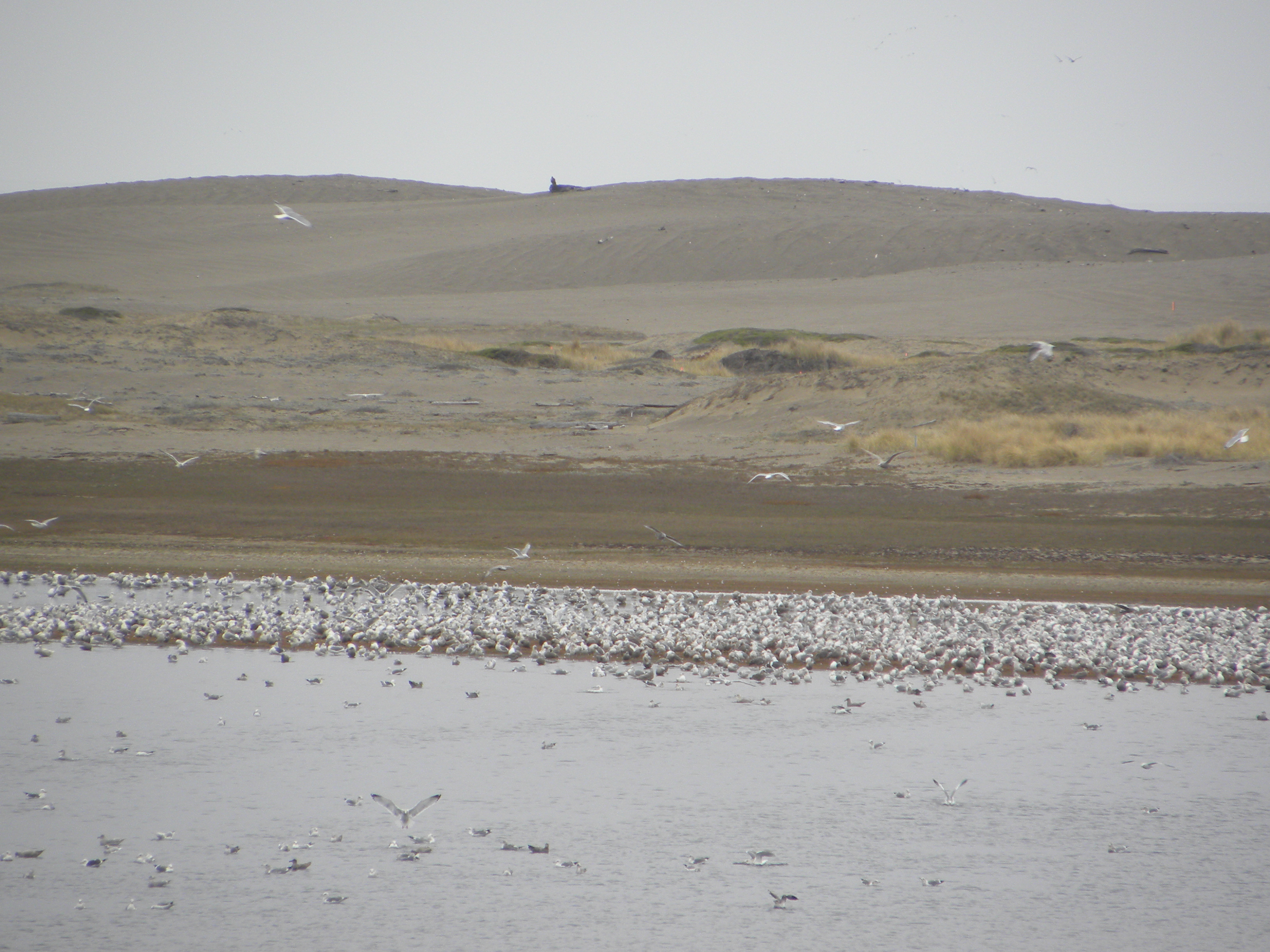
Gulls galore Abbott's Lagoon

Tracking Club Marin

Though the sign at the Parking lot entrance talks about ‘Vanishing Dunes’, the lagoon is alive with wildlife.

Frank Hammitt Memorial 1869-1903

I’m here to set the record straight.  And although a page on the Shoshone Forest Service website has it correct, I’ve heard a lot of tall tales since I’ve been here about what exactly happened to Frank Hammitt, one of the first forest rangers in Sunlight. If you see Antelope butte from Dead Indian pass, its an amazing formation.  Perfectly flat, its accessible only from its north side, which is now on private land.  I understand that buffalo were run off its edge by Indians. A friend of mine found a very old skull once in the woods below.

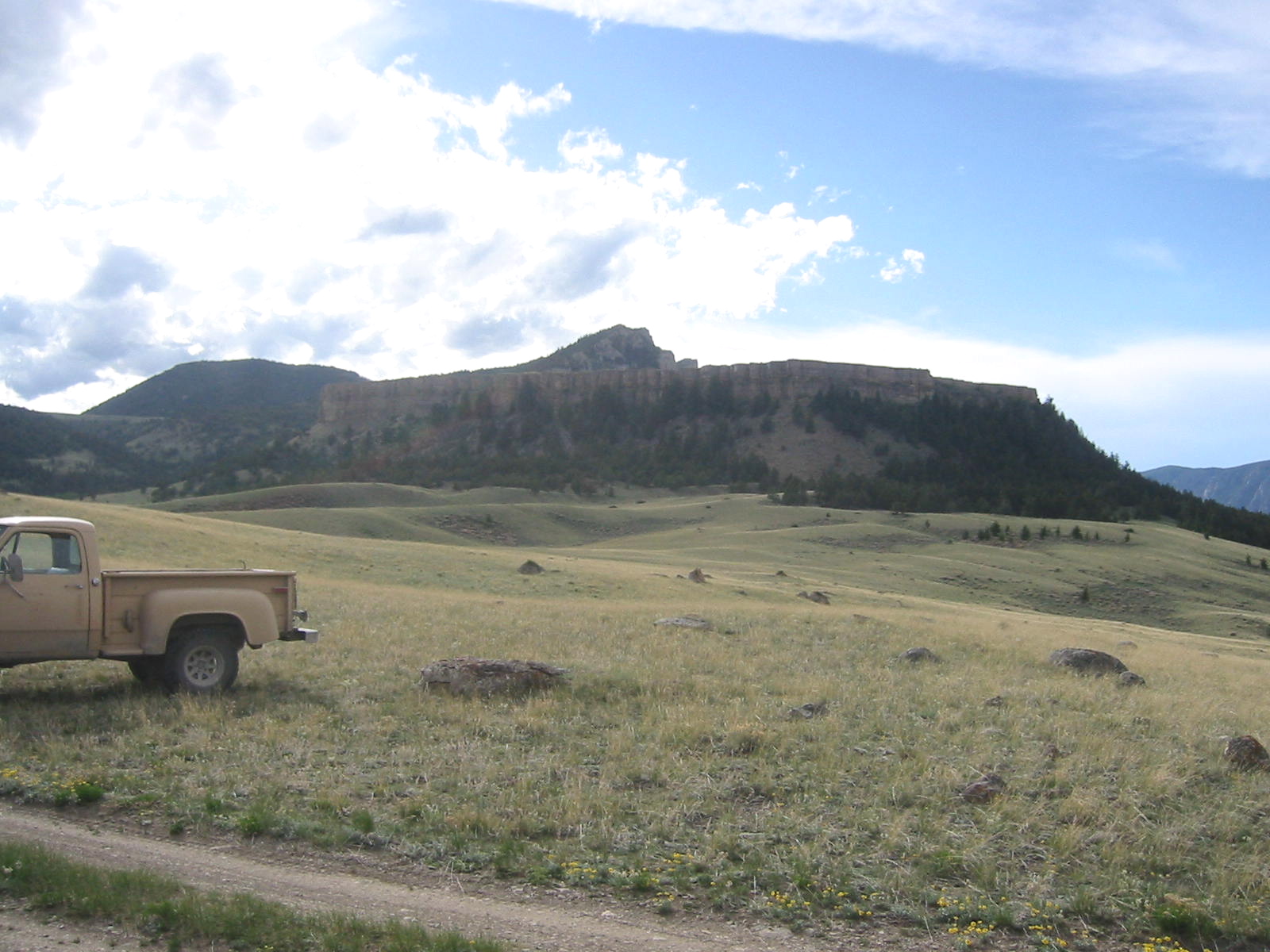
Antelope Butte

The ‘stories’ I heard when I first moved here about Frank were that he 1. committed suicide by jumping off the side of the butte or 2. it was a very foggy night.  Frank was riding his horse on the top of the butte, didn’t see the edge, and fell to his death, horse and all or 3.  he was drunk and fell of Antelope Butte on a foggy wintery night.

another view

My neighbor who was born in 1923 and grew up in the valley told me this story:

“My grandpa and dad knew Frank.  They found his horse wandering around.  Whenever you see someone’s horse, you know you better start looking for them.  They found Frank on a ledge over the cliff on the Russell Creek side near the canyons’ edge.  There was a pile of smoked cigarettes on a rock nearby.  Hard to say what happened.  No one knows.  He was pretty ripe.  Been there a while.  Pretty ripe.”

J___ shows me a photo.  There’s a large box, coffin like, without a lid.  The box is butted up against the side of a large boulder,  wedged between several other large rocks.  A pile of smaller rocks sits to the side. There’s no bottom to the box and some old bones sat inside that looked like an elk pelvis.

“That’s where Frank’s body was.  Its really a wagon box. They covered it and put rocks over the top.  Down by the cliffs on the Russell creek side.  You can still see the wood down there if you can find it.  I was young then and my dad used to say to us ‘You boys just stay away from that box.  Don’t git near there’. After some time, a fellow living on the other side of the road where the highway department is now, well, he decided that Frank needed a more proper burial.  So he took his wagon down there, collected Franks’ bones.  And you know, he didn’t get them all.  There’s still some bones in there.  But he collected them and brought them up in the wagon to the place where the memorial is now.  He buried the bones there, stuck two posts in the ground.”

“That was around 1938, and so the CCC (Civilian Conservation Corps) was around and they built that memorial that’s there now.  Folks will tell all sorts of stories, they like to talk about Frank dying by falling off the butte.  But that just not what really happened, and here’s the picture to prove it.”

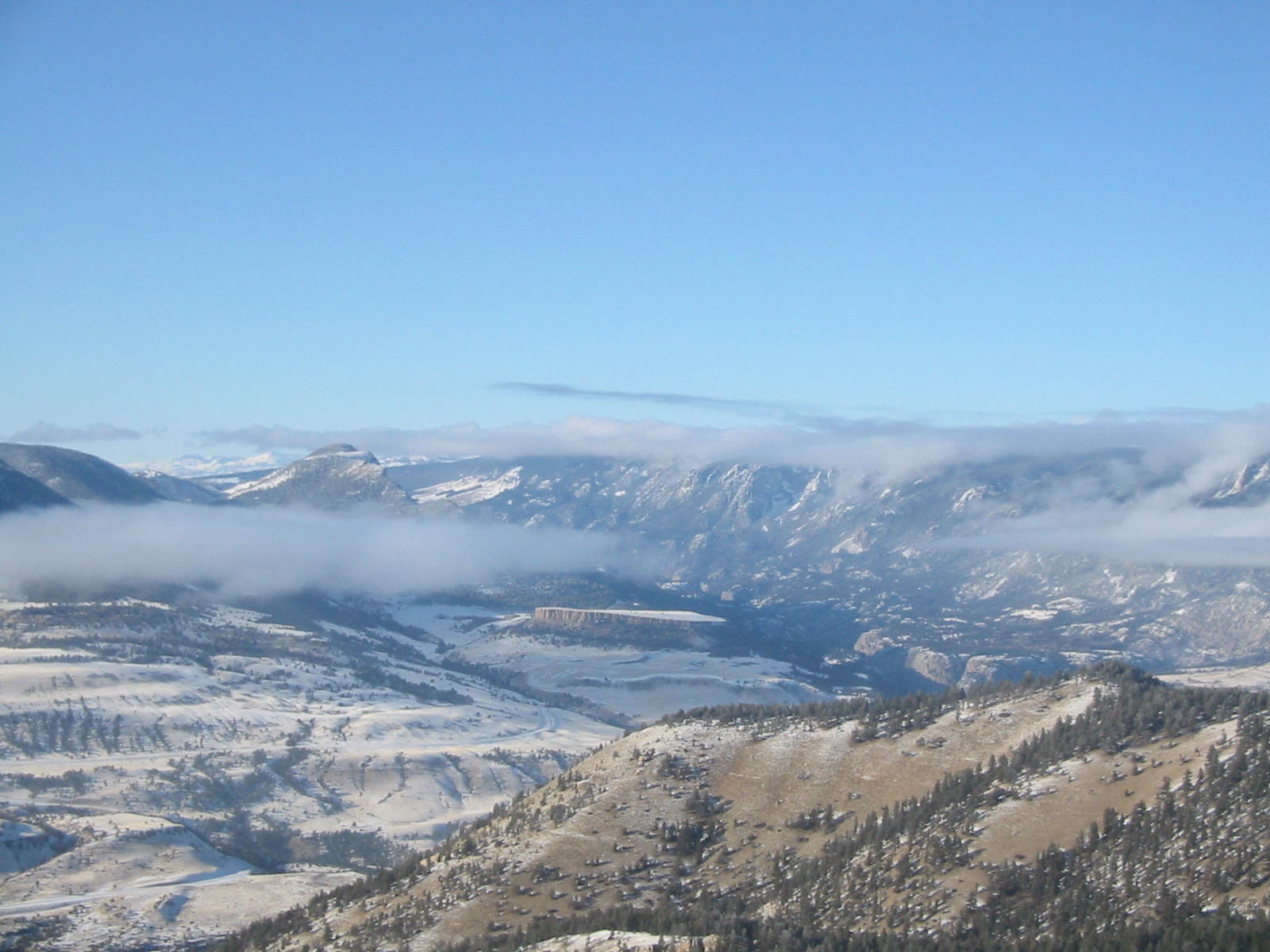
See the flat butte in the middle. From Dead Indian pass

I suppose next summer, or maybe this winter, I’ll just have to go looking around for that old box. The lumber is still around to prove it.  And when I find it, I’ll post the photo for you to see.

Last chance to have your voice heard on Wyomings’ wolf delisting plan

Comments to the U.S. Fish and Wildlife Service regarding Wyoming’s wolf delisting plan MUST be received within a 100 days on or before January 13, 2012.  This is our last chance to be heard regarding this plan.  I sent a letter to Wyoming Game and Fish before the comment closing date which was on a Thursday.  The following tuesday they announced their acceptance of the plan.  Had they read my comments?  I doubt they were reading over the weekend.

But these are the Feds and the ones who have initiated the deal and done the science.  The more comments, maybe we can actually hold them to the science instead of the back door political deal Secretary of the Interior Ken Salazar maneuvered with Wyoming Governor Matt Mead.

Folks,  wolves do not belong to Wyoming and Wyoming politics.  Wolf recovery and management shouldn’t be based on the demands of the Elk Foundation, the NRA, or the Safari Club International.

In the USF&W website maze, I found it hard to locate the information as to where to send comments so I will print it here.  I am also copying an attachment from a letter from the Sierra Club Resilient Habitat department regarding talking points you might include in your letter.  Please take a moment and have your voices heard.  Thank you.

A majestic predator that deserves to take its place in the ecosystem

Tell the U.S. Fish and Wildlife Service (USFWS) that its draft rule to delist wolves in Wyoming is flawed and should be withdrawn. Submit your comment today!


Written comments can be submitted by one of the following methods:

1) Federal eRulemaking Portal: http://www.regulations.gov. Enter “FWS-R6-ES-2011-0039” in the “Keyword” box and check “Proposed Rule” in the “Document Type” box.

2) U.S. mail or hand-delivery: Public Comments Processing, Attn: Docket No. [FWS–R6–ES–2011–0039]; Division of Policy and Directives Management; U.S. Fish and Wildlife Service; 4401 N. Fairfax Drive, MS 2042-PDM; Arlington, VA 22203.


Consider making the following points in your comments:

  • This plan is virtually identical to multiple plans that have been rejected previously by both USFWS and federal courts because of their unacceptable impacts to wolves and the lack of regulatory mechanisms to conserve wolves as required by the Endangered Species Act.
  • Wolves should be managed by the Wyoming Game and Fish Department across the entire state, not as “predator” in 88% of the state (where they can be killed by any means by anyone, without a license) and “trophy game” in an arbitrary zone around the national parks. No unregulated killing of wolves should be allowed.
  • The proposed “flex-zone” area south of Grand Teton National Park is not grounded in sound science. The USFWS has arbitrarily drawn this line where wolves will receive limited protection as ‘trophy game” for only 4 months of the year. The USFWS admits that this will only likely protect half of the seasonal dispersal of wolves and that only 35% of dispersing wolves will probably reproduce. This proposed zone will almost certainly not protect effective dispersal because wolves will be hunted during the period of protection and very likely be eradicated (through unlicensed killing) from the area for the remaining 8 months of the year.
  • The USFWS will allow Wyoming to define “unacceptable impacts” of wolves on elk and other ungulates (which will almost certainly result in wolves being killed), yet Wyoming’s plan has not defined any criteria for determining “unacceptable impacts” by wolves. Currently, all of Wyoming’s 35 elk management units are at or above the Wyoming Game and Fish Department’s numeric objectives for those herds.
  • The USFWS disingenuously concludes that the Wyoming dual classification (trophy game/predator) plan is biologically sound because the remainder of the state is unsuitable wolf habitat. However, the proposed predator zone has contributed 3 breeding pairs, and 6 of the state’s 30 packs have entire or partial territories within this zone.
  • Relying on the indiscriminate shooting of wolves as the primary management tool to reduce wolf conflicts is not a strategy for success. Wyoming should work with stakeholders to promote tolerance and prevent conflict by implementing nonlethal, proactive wolf deterrents and livestock husbandry practices. There are active and successful programs working with ranchers and wolf managers in other states and this could be expanded to Wyoming if state and federal agencies are willing to work collaboratively and support these management tools.
  • Wolves play a key role in maintaining a healthy ecosystem. Since wolves were reintroduced to Yellowstone, beavers, songbirds and many other species are making a comeback. These benefits must be recognized in any management plan.
  • Millions of people come to Wyoming every year for the chance to see a wolf in the wild. Wolves in Yellowstone alone generate an estimated $70 million annually in cumulative impacts from wildlife viewing.


What I’m doing this winter

My animal interest is not discriminating; I have a fascination with all species.  But I do notice the rhythm of my encounters goes in waves.  And as the encounters go, so does my fascination with that particular species.  I’ve had my wolf and bear periods, now I’m into my bobcat and marten epoch.

Last winter, walking to my mailbox at dusk, I caught a glimpse of something low in a nearby tree watching me.  The light was dim, I couldn’t see well, only a vague outline.  At first I thought it was an owl, a large one, maybe a Great Horned.  But then, something told me I was missing the mark.  I looked again.  It was a bobcat, watching Koda and I peacefully.  It’s repose came from its certainty of the dim light hiding its form, its’ knowingness that humans have bad night vision and that a canine can be fooled by staying still.   I’ve caught that guy on my camera, but the camera wasn’t working right, the photo was blurred, and this winter I’m determined to get some good photos and track him further.  Bobcats have become my new favorite animal.

My only bobcat photo which is terrible. That's a track plate apparatus a la Jim Halfpenny in the background

People trap bobcats up there.  Last year their pelts were going for over $500.  What a crime!  If I see a trap, although by law I could be fined, or jailed, for damaging it in any way, including putting a suffering animal out of its misery, there is no crime for peeing around the trap.  I pee around every trap I see.  That tells the animals “This is my territory so don’t go here.”  Save an animal by urinating.

This year my other fascination is martens.  There are plenty of martens around here.  I hadn’t learned their tracks last year, but now I know it.  I followed some trappers last year to understand how to find them. Although I don’t agree with trapping, I admit that trappers have to know their animals well.  So after asking them some questions of where to look, now I know.  I’ll set up a photography trap, one with bait that only takes pictures, not kills animals.  I’m looking to figure out those martens.

This is a marten

Another in the weasel family is the elusive mink.  We have mink in the river.  This summer I tracked them, as well as cast their tracks.  I got a ‘bead’ on where they’re hanging out and I want a good trail camera video of them.  They don’t hibernate, so I’m hoping to get some winter footage.

Hard to see but these are mink prints

Two other animals pose a great attraction for me this winter.  Snowshoe hares and lynx.  They are connected to each other too, one the food for the other.  The more snowshoe hares, the greater the chance of seeing lynx.  A recent study in Yellowstone found that before the introduction of wolves, the booming coyote population feasted on snowshoe hares.  As their population dropped so did the lynx.  Lynx decline had been thought to be related to climate change, but now that the hare is recovering (‘Amazing alert’:  wolves do what no humans can do–reduce coyote populations!), lynx are coming back there too.

I know there are a few lynx here, but I’ve never seen them.  A few summers ago the forest service even did a vegetation study in the valley to determine food sources for snowshoe hare.  Really it was a lynx study.  A friend of mine who hunts the hares in the Big Horns said he saw zillions of tracks in an area that will be closed in the winter to traffic.  Its high up on a series of reefs.  I can easily snowshoe the road in winter and check out the tracks.

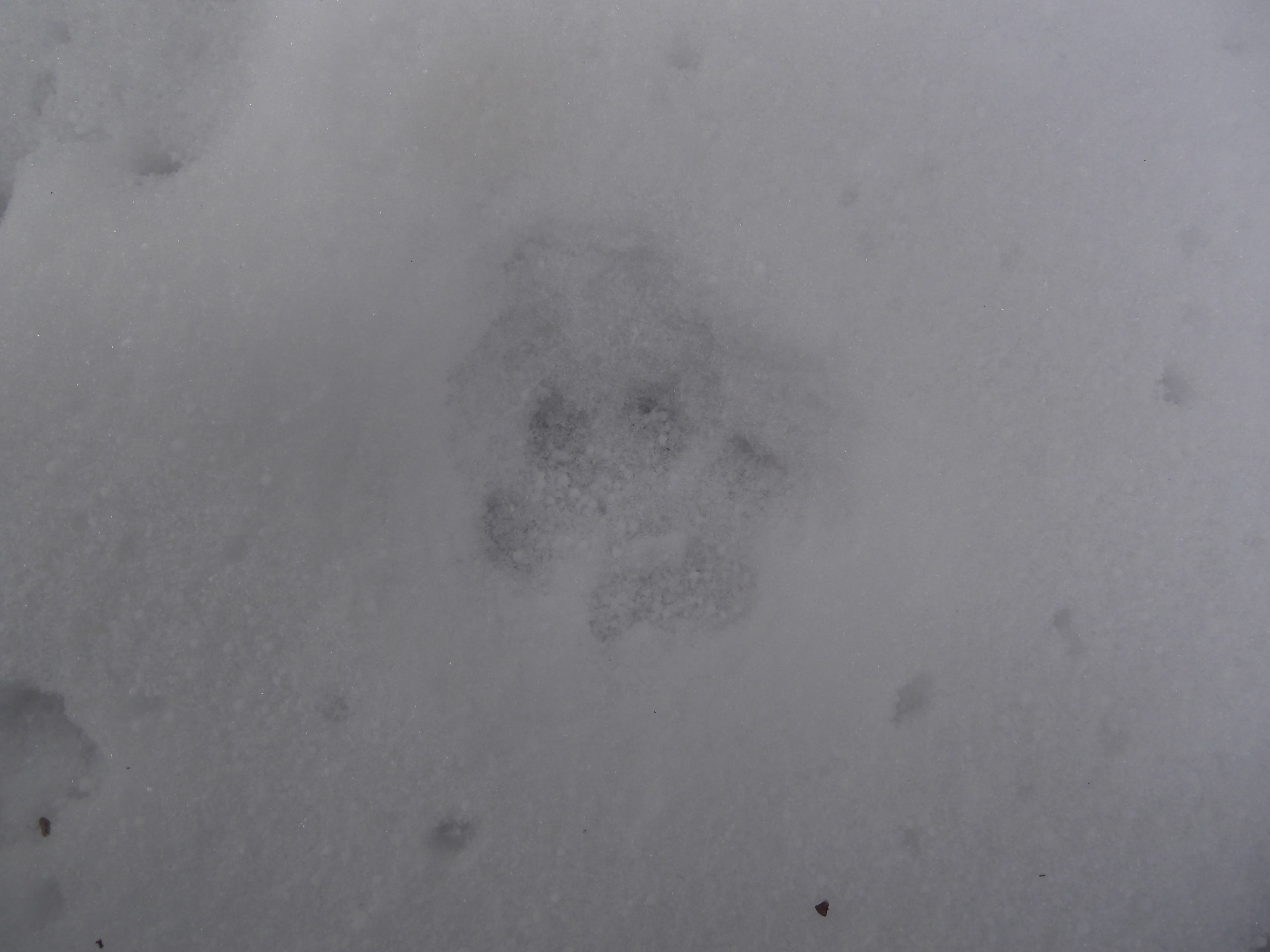
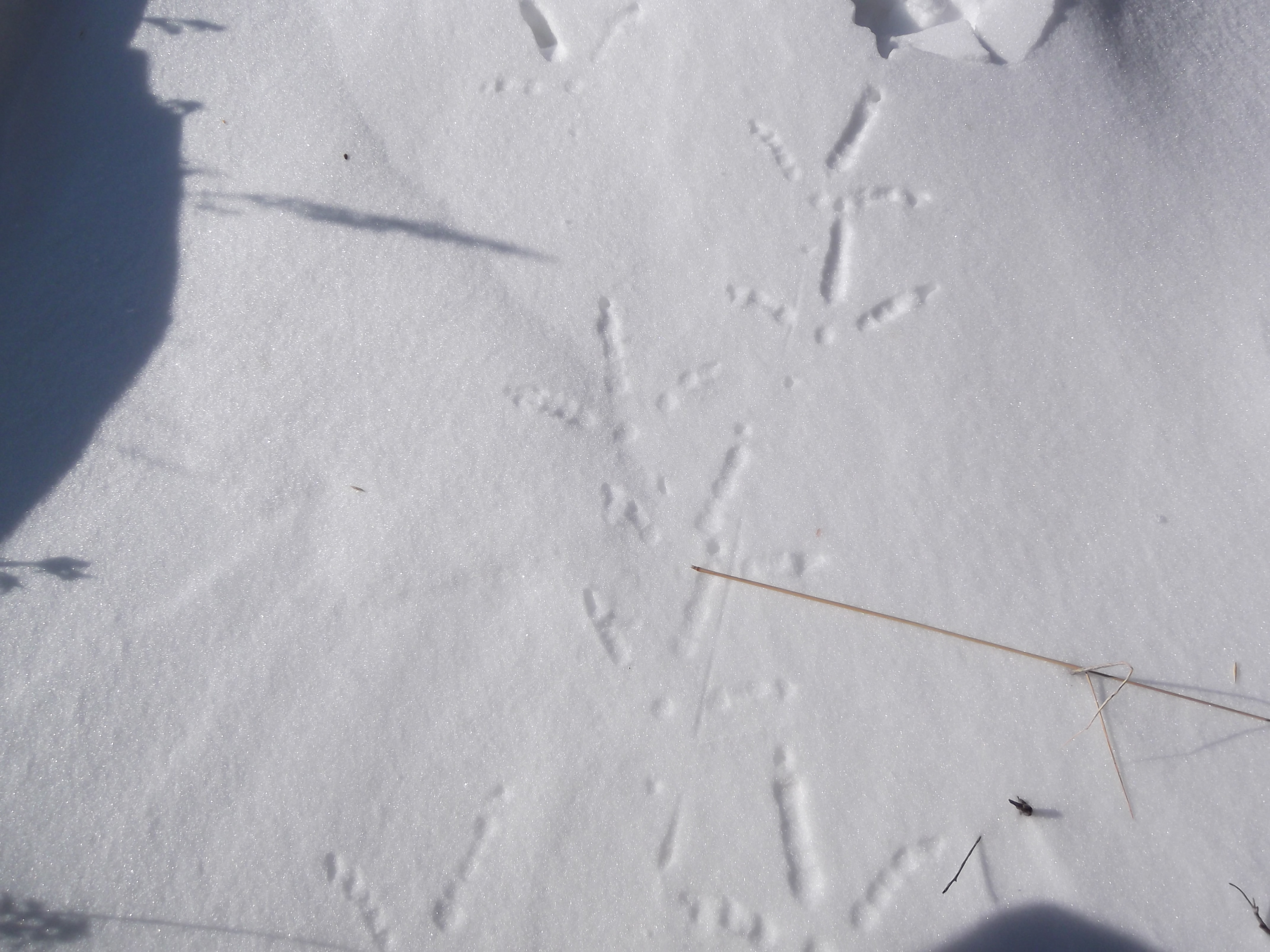
tracks of the snowshoe hare

 The last on the list would be another in the weasel family.  This is an animal I’ve longed to see my entire life, ever since I was seventeen, backpacking in the Tetons, when I heard that the only animal that will take on a grizzly is a wolverine.  Yes, I’d love to see a wolverine.  They are essentially endangered, though not yet listed.  Several years ago an intensive study was done in the GYE, including Sunlight valley and the Beartooths.  No wolverines were found here during that study.  They used a variety of methods, including winter traps that look like miniature log cabins and regular fly overs during the winter months, the best time to see tracks.  Wolverines have incredibly large territories.  Glacier National Park, one of the few places in the lower 48 to boast a population of wolverines, can only support 6 or 7 males territory-wise.

Although these mountains are prime wolverine territory, the study found wolverines only in the southern Absarokas, and none in these more northern parts of that range. They also found wolverines in the Wind River Mountains.   I still like to think there’s some wandering around out here though.  If you see their tracks this winter,  report them.  Doug Chadwick wants to know about it.  A movie that has fabulous footage of wolverines is called Running Free.  Essentially targeted for middle school age kids, the movie isn’t half bad but worth the watch just to see all the footage of wolverines.

What is the wolf experience?

Wolf hunts are going on right now.  I recently read that in Montana you can shoot a wolf, tag it, and walk away, leaving the carcass to rot on the ground.  In Idaho, the wolf hunt is practically year round with no legal limits.  Idaho’s first legal wolf trapping season is about to begin.  They want to reduce their population from about 1000 wolves down to 150. Wolf haters always like to talk about dogs being prey for wolves.  The amount of dogs killed by wolves is miniscule–mostly sheep dogs watching their flock in open country. Traps for wolves, on the other hand, will certainly kill or maim a lot of dogs.

Last winter my dog almost got caught in a leg trap intended for a bobcat.  Luckily, I say almost.  The trap was set close to a large tourist pull-out that houses one of the only toilets along a major road.  Although not illegal, I considered the trappers’ choice of placement highly unethical, and frankly lazy.  People stop there for a rest and let their dogs out for a break.  

When I was a kid growing up, my parents impressed upon me the two taboo subjects you should never talk about in a social setting–religion and politics. These were surely the firecrackers that would ignite a fight when you just wanted peace and a good time.  Why? Because religion and politics are the stuff of emotion, not logic.  Today, living in the West, I add one more subject to that list–wolves.

I’ve pondered why wolves are on this list.  Really, they are just an animal doing what they were born to do. There are lots of other predators that we don’t place in the same category.  Eagles, weasels, mountain lions to name a few.  Only wolves have that magnetic polarizing effect.

Why?  I’m going to venture a wild hypothesis:

On a warm June night, I’m returning from a meeting in Cody.  It’s dusk and I’m beginning my drive home.  The massive up-tilt of red rock, called the Chugwater Formation, forms the cornerstone of the grassy large ranch that sits at the base of the mountain road.

Chugwater sandstone

The land slopes gradually upward, then with increasing steepness the views widen of this deep impressive drainage.  I’ve always loved this part of the ascent.  I can sense the specialness of this place, where once buffalo grazed.   Indians used this area as a drive, the ancient cairns stand as sentinels where they hid as the bison rushed through.

As I climb up the road, the view of the valley is most exquisite.   A cattle guard on the highway marks the boundary between the private lands below and the Shoshone National Forest above.  As my car crosses the grate, like a shot, three wolves run like hell across the road.  I press hard on the brakes to let them pass,  Full of life and energy, in my imagination, I see their excitement as the anticipation of their upcoming evening hunt.

The vision of those wolves will stick in my mind forever.   It was as if the Force of Life itself flew past me in a vision.

A wonderful chapter in Henry Beston’s The Outermost House describes a trip he made by boat to a rock full of birds.

The tiny island was so crowded that chicks were falling over the cliffs, eggs were being stepped on by birds and breaking, the energy of Life, and Death, one entire cycle, overwhelmed him to a point where he was almost sickened.  Raw creation.

I read that book as a teenager.   In it I understood that Life itself, that teeming, raw, primal energy of our Existence, permeates everything.  In fact, that energy of Life is so powerful that even death can not nullify it.

“There has been endless time of numberless deaths, but neither consciousness nor life has ceased to arise. The felt quantity and cycle to death has not modified the fragility of flowers, even the flowers within our human body.” **

And in a flash I understood what I, and all those who are traveling with me in this modern world, are afraid of.  We are afraid of life, which is a strange thing to say considering how hard we try and hang on to it.  But really, we are constantly suppressing it, attempting to harness and control it, create little niches where we feel safe and comfortable.  That is why it is easier for us to destroy, tear things apart, sullen our environment, attempt to control the forces of nature, and create the illusion of predictability, than to embrace Life.   To be in life implies being overwhelmed, swept away, carried like a raft in a great ocean, humbled, acknowledging our smallness and our connectedness.

I once made a trip to the Charlotte Islands, a land that even Canadians call “what Canada used to look like”.

A maze of small inlets and calm channels, the cold waters are so clear you can see over 50′ down riding in your kayak.  You are tide pooling without waiting for the lowest tides.  The waters were alive with life in a way I had never seen tide-pooling in Northern California.  Instead of dozens of sea stars, you saw hundreds on a rock. Masses of jellyfish small and large swam by you.  Everything I saw in the Northern California shores were multiplied one hundred-fold here.  These were the remnants of waters we still hadn’t polluted, a glimpse into the original primordial oceans that birthed us.  Life at this level looms on a mind-boggling yet fearsome scale.  Somewhere in us we say that this amount of energy must be controlled.

And that is where I come back to these wolves.  The vision of my wolves, running ecstatically across the road, in total abandon to their Existence, is an affirmation of that immense, wondrous, yet terrifying Power that is the Universe itself.  Wolves, in their ceaseless energy, their joie de vivre, their deep intelligence, embody the purity of   Life.

Maybe that is why humans have spent so much time and effort trying to control, even eliminate them. They are the emblem of true, unabashed, Freedom.

**Da Free John