• MY BOOKS ON WILDLIFE, GARDENING AND MORE

  • The Wild Excellence

  • True stories of wildlife encounters around the Greater Yellowstone
  • Award winning eBook on Decomposed Granite, tips, how to's, what to watch for
  • Children's book. True stories of a dog and wolves. In a dog's voice
  • Written for dry Mediterranean climates in California, north and south

What is the wolf experience?

Wolf hunts are going on right now.  I recently read that in Montana you can shoot a wolf, tag it, and walk away, leaving the carcass to rot on the ground.  In Idaho, the wolf hunt is practically year round with no legal limits.  Idaho’s first legal wolf trapping season is about to begin.  They want to reduce their population from about 1000 wolves down to 150. Wolf haters always like to talk about dogs being prey for wolves.  The amount of dogs killed by wolves is miniscule–mostly sheep dogs watching their flock in open country. Traps for wolves, on the other hand, will certainly kill or maim a lot of dogs.

Last winter my dog almost got caught in a leg trap intended for a bobcat.  Luckily, I say almost.  The trap was set close to a large tourist pull-out that houses one of the only toilets along a major road.  Although not illegal, I considered the trappers’ choice of placement highly unethical, and frankly lazy.  People stop there for a rest and let their dogs out for a break.  

When I was a kid growing up, my parents impressed upon me the two taboo subjects you should never talk about in a social setting–religion and politics. These were surely the firecrackers that would ignite a fight when you just wanted peace and a good time.  Why? Because religion and politics are the stuff of emotion, not logic.  Today, living in the West, I add one more subject to that list–wolves.

I’ve pondered why wolves are on this list.  Really, they are just an animal doing what they were born to do. There are lots of other predators that we don’t place in the same category.  Eagles, weasels, mountain lions to name a few.  Only wolves have that magnetic polarizing effect.

Why?  I’m going to venture a wild hypothesis:

On a warm June night, I’m returning from a meeting in Cody.  It’s dusk and I’m beginning my drive home.  The massive up-tilt of red rock, called the Chugwater Formation, forms the cornerstone of the grassy large ranch that sits at the base of the mountain road.

Chugwater sandstone

The land slopes gradually upward, then with increasing steepness the views widen of this deep impressive drainage.  I’ve always loved this part of the ascent.  I can sense the specialness of this place, where once buffalo grazed.   Indians used this area as a drive, the ancient cairns stand as sentinels where they hid as the bison rushed through.

As I climb up the road, the view of the valley is most exquisite.   A cattle guard on the highway marks the boundary between the private lands below and the Shoshone National Forest above.  As my car crosses the grate, like a shot, three wolves run like hell across the road.  I press hard on the brakes to let them pass,  Full of life and energy, in my imagination, I see their excitement as the anticipation of their upcoming evening hunt.

The vision of those wolves will stick in my mind forever.   It was as if the Force of Life itself flew past me in a vision.

A wonderful chapter in Henry Beston’s The Outermost House describes a trip he made by boat to a rock full of birds.

The tiny island was so crowded that chicks were falling over the cliffs, eggs were being stepped on by birds and breaking, the energy of Life, and Death, one entire cycle, overwhelmed him to a point where he was almost sickened.  Raw creation.

I read that book as a teenager.   In it I understood that Life itself, that teeming, raw, primal energy of our Existence, permeates everything.  In fact, that energy of Life is so powerful that even death can not nullify it.

“There has been endless time of numberless deaths, but neither consciousness nor life has ceased to arise. The felt quantity and cycle to death has not modified the fragility of flowers, even the flowers within our human body.” **

And in a flash I understood what I, and all those who are traveling with me in this modern world, are afraid of.  We are afraid of life, which is a strange thing to say considering how hard we try and hang on to it.  But really, we are constantly suppressing it, attempting to harness and control it, create little niches where we feel safe and comfortable.  That is why it is easier for us to destroy, tear things apart, sullen our environment, attempt to control the forces of nature, and create the illusion of predictability, than to embrace Life.   To be in life implies being overwhelmed, swept away, carried like a raft in a great ocean, humbled, acknowledging our smallness and our connectedness.

I once made a trip to the Charlotte Islands, a land that even Canadians call “what Canada used to look like”.

A maze of small inlets and calm channels, the cold waters are so clear you can see over 50′ down riding in your kayak.  You are tide pooling without waiting for the lowest tides.  The waters were alive with life in a way I had never seen tide-pooling in Northern California.  Instead of dozens of sea stars, you saw hundreds on a rock. Masses of jellyfish small and large swam by you.  Everything I saw in the Northern California shores were multiplied one hundred-fold here.  These were the remnants of waters we still hadn’t polluted, a glimpse into the original primordial oceans that birthed us.  Life at this level looms on a mind-boggling yet fearsome scale.  Somewhere in us we say that this amount of energy must be controlled.

And that is where I come back to these wolves.  The vision of my wolves, running ecstatically across the road, in total abandon to their Existence, is an affirmation of that immense, wondrous, yet terrifying Power that is the Universe itself.  Wolves, in their ceaseless energy, their joie de vivre, their deep intelligence, embody the purity of   Life.

Maybe that is why humans have spent so much time and effort trying to control, even eliminate them. They are the emblem of true, unabashed, Freedom.

**Da Free John


Kye Oh Tay

The notion of the trickster and the culture hero, together, is fascinating to me.   Around the West, coyote was the hero of these tales.  In the Northeast it was Raven, and in the South and Eastern United States it was hare and rabbit.

But what is a trickster?  And what is a culture hero?  In reading about ‘culture hero’ definitions, it is a mythical animal or creature that brings important things into this world, such as the animals, or humans, or gives fire to humans and teaches them how to grow or find food.  Coyote fills this bill in many stories.

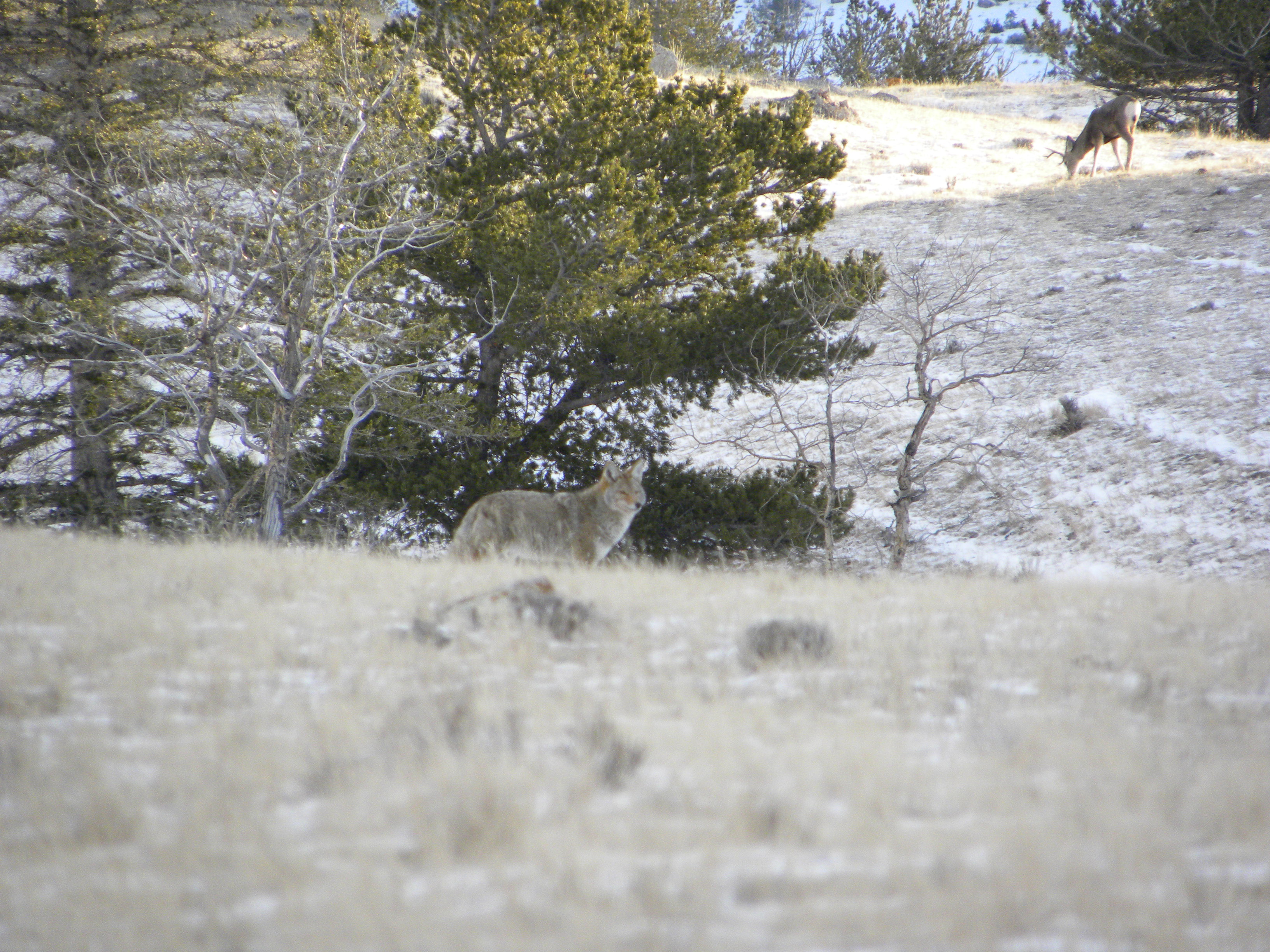
Coyote blends into the landscape with deer in background

And the trickster?  That is harder to define.  A trickster is the embodiment of opposites, of extremes.  He makes you laugh at the absurd, or at his foibles.  Jung described the trickster as the ‘shadow side of a culture’, all the things that you can’t admit to or hide now out in the open and that energy is expressed and released through story.

I am intrigued by the trickster, because no matter how much you read about it, the trickster is enigmatic and can’t be grasped.  Coyote stories remind me of a tradition I studied for some time–Tibetan Crazy Wisdom. These Enlightened Adepts taught through living paradox; their life and teachings (if they had a teaching at all) were expressions of their unconditional freedom.  They lived lives outside the conventional agreements of morality, religion and social contracts.  Their very existence in Time and Space exploded and confounded our idea of living as limited mortal beings.

Coyote, as creator and destroyer, rogue, knave, fool, giver of fire to humans but also of birth and death is the Crazy Adept of many American Indian cultures.

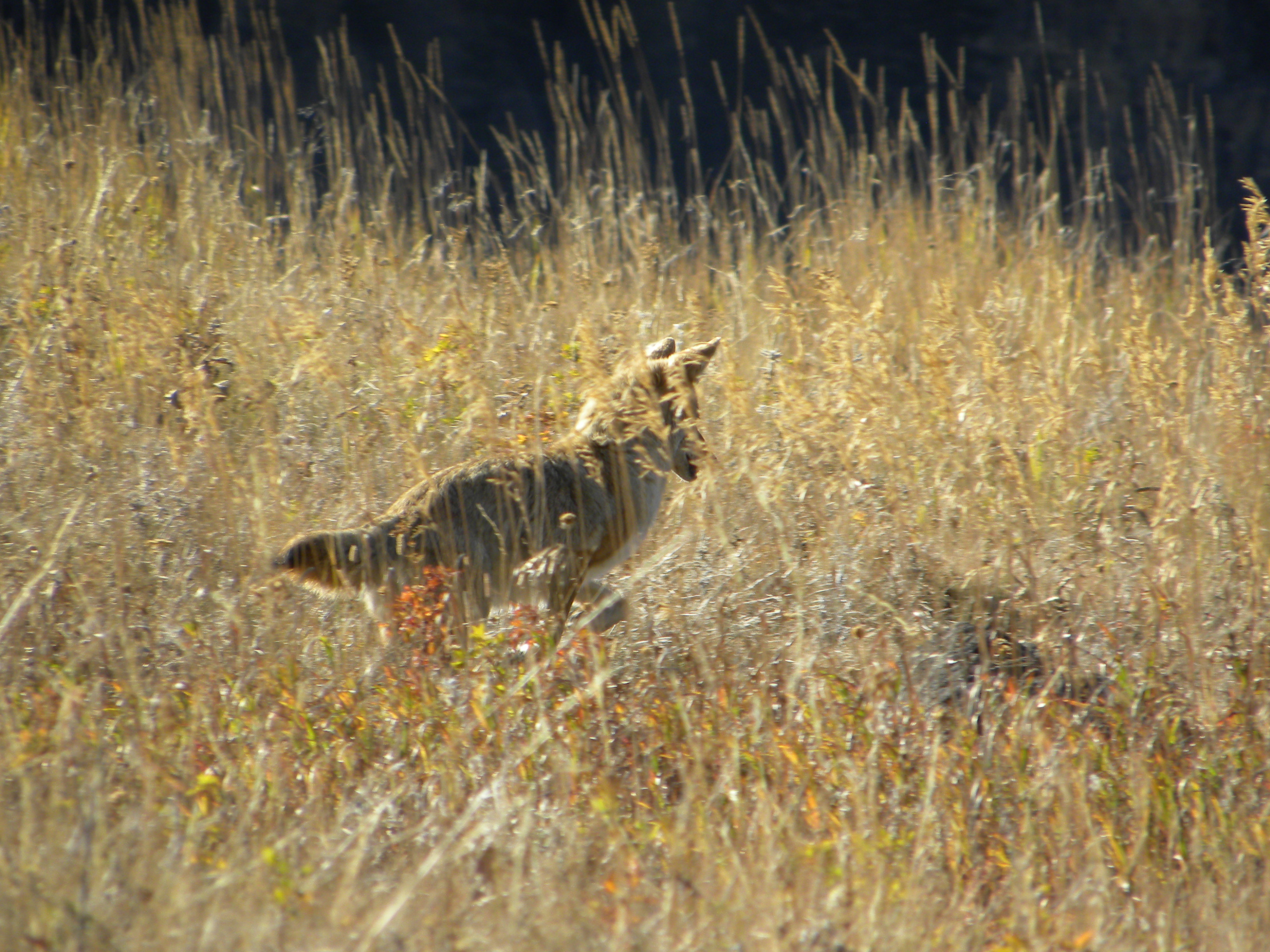
Coyote hunting ground squirrels

But what is interesting to me is simply how confounded I am when I read Coyote stories.  I think “I don’t get it” and that is exactly it.  It is funny and silly yet profound and sacred at the same time.  There is a depth that is untouchable and indescribable.  And still my question remains “why Coyote?”   We can tell the story about how coyote has defied extermination by the White Man, and lived to spread ten-fold instead.  Or how he might follow a trapper, dig up his traps, urinate them and run off to the hills.  Surely these tell of Coyote’s cunning.  But I suspect the native peoples understood many more attributes of coyotes that white men overlook because our culture has seen them only as pests and predators to be extirpated.

Coyote catching grasshoppers

In choosing Coyote as their culture hero and trickster, native peoples have bestowed a great honor as well as power to this creature.  Coyote is given the power to stop the mind just as the Zen Masters’ stick might give the blow of Enlightenment to his student.  Coyote frees us from stodgy mind, creating an opening for creativity, inspiration, and True Religion.  Coyote embodies our dualistic nature, Yin and Yang, Good and Evil, Form and Formless.  In the embrace of Paradox, we are Free.  Coyote is here to guide us through his Crazy Wisdom, his Tricksterness, beyond Time and Space.

That is a great power.  And so I am still puzzled, speechless, and confounded by The Trickster–and that is as it should be, I suppose.  I feel that I need to observe and understand coyote more deeply so that his hidden blessing will be revealed.

It was a cold night. Winter was beginning to set in.  My window was slightly cracked and, at 2am, I awakened to the songs of a ‘Medicine Dog’–a lone coyote howling just outside near the front lawn. Since Koda has lived here, the coyotes take a different route home at night, so this was a rare visitation.  In my sleepiness, it seemed like the right thing to howl back.  After some responsive singing between us, it became clear that this was a pup of the year, calling for his pack and I was only confusing him, so I stopped singing his songs back to him.  And sure enough there soon came faint replies far up the mountain from where the coyotes den in the spring. The teenager took off to meet his brothers and I fell soundly and happily back asleep.

An old bear experience

Its a good time of year to tell bear stories.  The bears are coming low, getting ready for winter.  I’ve heard a few stories in my valley from hunters.  Last week a ‘bad’ bear was dropped off just a bit north of the valley. Game and Fish spends a lot of their time moving bears around that get into trouble with livestock or grain, or just too close to towns.  My valley is one of the places where the bears are deposited.  Soon after this bears relocation, a hunting party killed a large buck and hung it outside their house to cool.  That night a grizzly came through and ate their kill.  A few nights later, a grizzly ate part of an elk that was hanging outside another home about 20 miles up the road.

This time of year I  imagine the bears hanging around outside the soda shop, talking, laughing, just waiting for a hunter’s gunshot to go off, then heading for their easy meal.

Yes, this is always the time of year we think about bears the most.  Which makes me remember my first, and closest, bear encounter.  Its great to see bears, especially from the car or through binoculars.  This is a great story and I would never want to get this close again.

My first bear experience took place in the backwoods of Glacier-Waterton National Park, on the Canadian side.  I was 17, fresh out of high school, and hitch-hiking across the West with two girlfriends.  It was the early 70’s when you could safely do those kinds of things.  We’d been dropped off in Vancouver by a friend who had received a new Volvo for graduation.  The four of us had talked about driving to the Canadian Rockies.  But as soon as we arrived across the Canadian border, Terri announced she was going to Alaska–alone.  So the three of us piled out of the car with our backpacks and that’s when our adventure really began.

After a few rides through southern British Columbia, we were picked up by a station wagon driven by an aging drunken vagabond and his side-kick.  Pretty soon we were doing the driving while the owners drank.  All three of us had spent our high school years backpacking the San Bernadino and Sierra Nevada mountains in a co-ed section of the Boy Scouts called the Explorers.  We felt ready for anything and certainly very experienced backpackers, or so we thought.

In fact. Karen and I had spent the previous summer studying at Banff  School of Fine Arts.  Every weekend we’d head for the Canadian mountains and explore some new uncharted territory.  We had our share of adventures there too, with blizzards, mosquitoes, and getting lost.  My constant amusement was to test myself to see if I could start a fire with just one match no matter what the conditions.  I’d gotten pretty good at it too.  So when our hosts dropped us off at the Waterton Lakes Park ranger station, we were all feeling completely prepared for trekking into the wilderness.

We headed into the main ranger station, asking about permits and hiking conditions.  I’ll never forget those Canadian rangers look of disbelief.

“You girls are going hiking, by yourselves? How much camping experience do you have?  You know there’s bears in the backcountry.”

We shrugged them off, got the appropriate permits, and began our 10 mile hike to our backcountry campsite.  Our first night took us to a site beside a large lake.  We arrived before evening, set up our sleeping areas, made a fire and dinner, cleaned up our meal and hung our food in a tree 100 feet away.  We were sitting around the fire when we noticed a large black bear come out of the woods and towards the tree where the food hung.

After exploring the hanging bag of food and realizing that he couldn’t get to it, the bear began walking towards us.  He must have smelled our dinner.  In the early days of backpacking, there wasn’t freeze-dried or dehydrated food available.  We brought parts of meals and cooked them; lots of rice, lentils, peas.  These meals required usually an hour of preparation and cooking, so the smells wafted with it.

We knew what to do next, we thought.  The protocol at that time was ‘make lots of noise’.  We banged on our pots and pans until they were full of dents, but the bear just kept coming.  Bears don’t see well, they’re very far-sighted, but their sense of smell is impeccable.

As the bear came nearer, we all contemplated what to do next—jump in the Lake?  Out of the question as it was glacier fed.  Climb a tree?  We looked around but at this latitude and elevation all the trees are spindly sticks their limbs starting at around 20’.  At a loss, we began building the fire up into a roar and huddled together on our rock seats.

The bear, in retrospect, was probably a young male, inexperienced and curious.  Black bears can be more deadly than grizzlies.  When a black bear charges, he’s out to kill.  When a grizzly charges, they’re usually out to frighten you out of their territory or protecting their young.  Most of the time they bluff charge.  But we didn’t know all this at the time.

Our packs were leaning against a nearby tree, and although there wasn’t any food in them, they had the smell of food on them.  The bear went directly over to the packs and explored them thoroughly.  Soon this curious bear was approaching us.  Having exhausted making lots of noise and waving our hands, we sat perfectly still, not knowing what to do next.  I was sitting sandwiched between my two friends.  Karen on my left had her down jacket on.  It must have smelled like the pea soup we’d just finished cooking and eating.  The bear nibbled at her jacket, grabbing her skin in the process.  She yelled and jerked back. The bear, startled, jumped back too.

I suppose he’d never seen fire before, and probably hadn’t encountered people before either.  The next thing he did was wild.  This bear thrust his nose between me and Karen and put it right into the fire!  Of course, he pulled it right back out, and with his face next to my chest, he brought up a paw and patted his stinging nose.  It was like having your dog nuzzle right next to you and your friend, his face was that close.

Now oddly enough, I felt no fear at all, and was amused at this bears’ antics.  After his fire encounter, the bear walked over toward Sarajo on my right and was about to test her jacket out when she made a loud noise.  The bear sauntered over to our tents to explore them.  It seemed like we were never going to get rid of this bear.  He’d been in our campground over 45 minutes now.  I was glad I hadn’t jumped into the Lake!  Suddenly I had an idea.  When I was a kid, I loved to watch cowboy black and white movies on TV.  A common ruse in the movies was for the cowboy trying to sneak around a guard to throw pebbles in another direction.  That way the sentinel checked out the noise while the cowboy snuck around him.  I started throwing pebbles way out into the forest hoping that would get this bear’s natural curiosity going.  It worked and the bear headed out into the woods not to be seen again.

The next morning we packed up and walked around the lake to a backcountry ranger station.  The resident ranger told us how grizzly bears go after menstruating women.  He told us a story which he said happened just the year before (actually it happened in 1967, several years before, but he embellished it for effect I suppose), where in one night two women were killed by either one or several grizzlies and both had their period.  That mama grizzlies are very territorial and think its another bear in their area.  This idea has since been studied and dispelled, but at that time it was believed to link the two incidents together.    And since one of my friends started her period just that day, we were particularly alarmed.  We spent the next 4 or 5 days hanging around that back country ranger station, taking day hikes, shouting and wearing bells, and watching all wildlife within hundreds of yards from us run away as fast as they could.   The routine was so tiresome, not what we envisioned as backcountry camping, that we high-tailed it out of Glacier to the Tetons where we spent several glorious weeks in the back country not worrying about Grizzlies.

The next morning at the ranger station, there was a nice bathroom. Karen took her shirt off and she had large bruises in the outline of a jaw, top and bottom, with teeth marks, along her back, although luckily the bear hadn’t broken the skin.

I always wondered about myself and why I wasn’t afraid.  I knew that if I’d been in the city and some strange man had invaded our space, I’d be afraid.  I wondered if my innate instincts had become so removed from the natural world that I’d become a kind of freak, unable to judge danger.  Years later I was reading a small book by Jim Corbett about his early life in India.  Corbett has a National Park named after him.  He hunted and killed man eating tigers.  He said in this book that fear is an instinctual emotion that is triggered when the situation is threatening.  He had many encounters with leopards and tigers where, because these animals were not threatening him, he felt no fear.  Fear is appropriate to the appropriate circumstances, and where there is no real threat, fear does not arise.  I finally understood that, even though that bear was right next to my face, the reason I never felt afraid was because he was not challenging us.  He was just curious.  Not being afraid, keeping my cool, probably also kept the bear in a non-threatened state.

Black bear print

The Wonderful Absaroka Front

This is an area I’d been to several times before.  A trail runs along the Absaroka front, and maintained trails around the Absarokas are unusual to find in general, let alone ones that are marked with cairns.  I was surprised at the height of the cairns, considering this is Bureau of Land Management (BLM) lands.  “Why”, I asked myself, “would the BLM go to such great lengths to construct these massive trail markers?”

What is a cairn?  Basically it’s a pile of rocks that one usually sees to mark trails that are not easily visible in the back country.  In other words, they are usually placed at points where one might lose one’s way and are usually put there by hikers.

Last week I hiked this area again, this time with a friend who had heard that there were many more cairns and the cairns were put there by Sheepeater Indians.

Koda has a drink of rainwater from a natural stone bowl in the high desert

So we hiked the trail, which after about 2 miles turns into nothingness, just peeters out and there’s a stock fence one has to cross if you want to continue.  Last time I did cross over the fence, but on the other side is a steep drainage, followed by a series of steep drainages.  Today we stopped near the fence, looked north up into a ‘V’ shaped drainage that was fairly steep.

We hiked up the 'V' shaped valley to a series of cairns

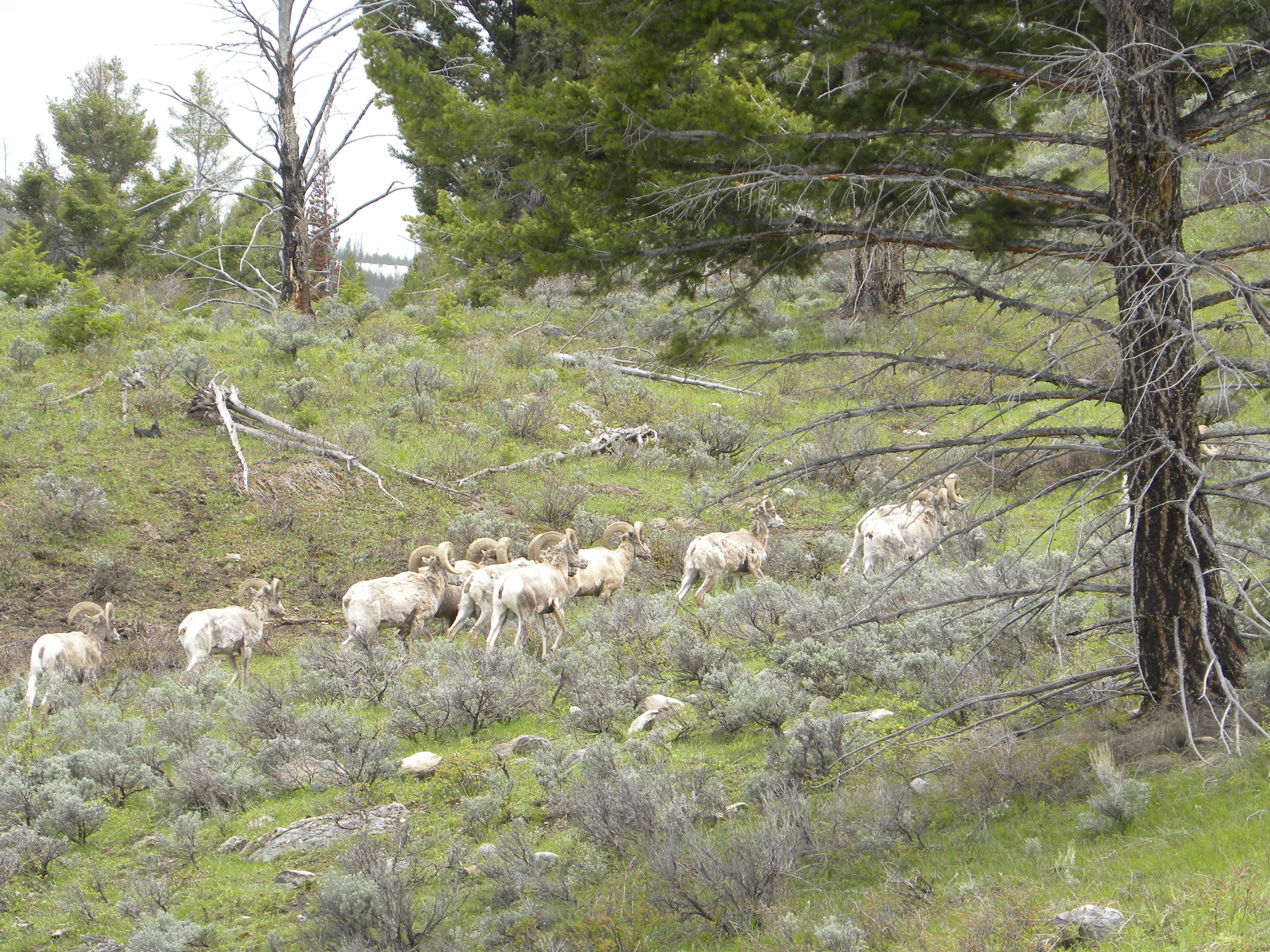
We began the climb up the drainage.  The Cairns appeared, large and numerous. At first it seemed like they were positioned on either side of the valley’s opening. The drainage narrowed as it rose higher, the cairns got closer together, at times steering around hummocks.  I was certain that this must be a Sheepeater’s animal drive, probably for Bighorns.

But then the pattern disappeared and it became very unclear what the purpose of the cairns’ were.  We found altar-like rock formations in two separate areas that were in the center of small clearings.  I insisted we hike as far as we could to see when the cairns stopped.  They stopped at a small flat clearing encircled by steep walls where the drainage splits into two.

We counted over 32 cairns with 2 altars.  Some of these had been already surveyed by the BLM, as they left steel markers beside them.  If you look at these cairns carefully, you begin to notice several things.

First, that they are very well-constructed.  Many of the rocks are quite large, probably weighing over 200 pounds.  Some of the rocks would take 3 people to move into place.  Also, each cairn is incredibly heavy and sturdy.

Second, that most of the rocks in the cairns are placed with their top side (the side that had been out of the dirt) facing the inside of the structure.  I have worked with rocks for many years.  I’ve spent hundreds of hours picking out rocks as well as supervising men to place them exactly how I want them to look.  If you are doing a design for a landscape, you want to pick out a rock with a lot of lichen.  Its also very obvious which side was in the dirt, because it doesn’t have any lichen growing on it and its dirtier.  Also, there is always an obvious line on a rock that marks where the rock was below and above the dirt.   You could still see the dirt line on these rocks, but because they’d been exposed for so long, the ‘dirt’ side wasn’t dirty, just a lighter color.  The darker side, the top of the rock, still had the lichen growing on it.  I had to wonder if this was intentional.  Because the lighter side was the most exposed, maybe you could see the rocks better in the moonlight, or in the snow, or at night with torches.   Light would reflect better off of a lighter surface.  Maybe it just stood out better in the landscape.

Thirdly, these were very large rocks, and the hillside was steep.  You would have to assume that these were rocks taken from directly nearby each cairn.  And if this were the case (it would be a much bigger building effort to carry rocks from a different location up this hillside), then you’d see depressions in the soil from which the rocks were taken.  But there was no evidence of this at all, which suggested to me that these cairns were very very old; old enough so soil had time to accumulate and vegetation to grow.  In this very dry and sparse country, land scars take a long time to heal over.

And lastly, many of these cairns were a work of art and beauty.  Having worked with rock and stone for so many years, I have a great appreciation for these things.  I can easily tell a stone wall constructed by a master mason, or when rocks are placed in a natural and considered manner.  Many of these cairns followed lines of an existing boulder perfectly.  Some were balanced intricately on the steep hillside. These cairns were done by master builders, and were still standing after many years.  They weren’t piles of rocks just to mark something.  They had intention in them.

One of the smaller but beautiful cairns. This one follows the lines of the existing boulder to form a triangle

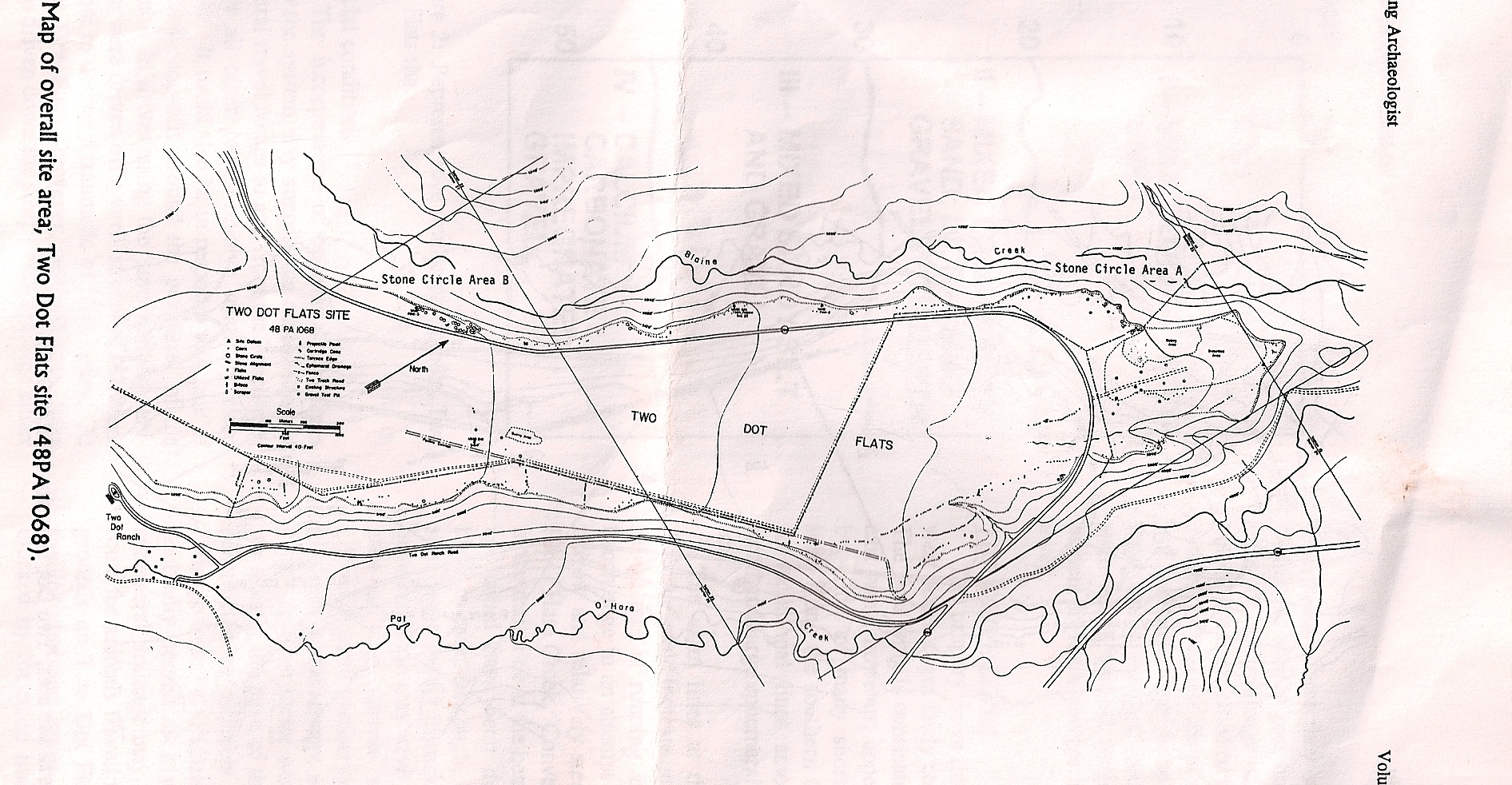
Tonight as I was driving home,  I remembered that not too far away from these cairns is some private land where the Wyoming Archaeological Society studied a series of cairns that served as a buffalo drive.  I wondered if there was any connection between these two sites, which are so close together.

WY Archaeological Society map of an ancient buffalo drive area in NE WY

All this made me think again about the BLM’s plan for the next 20 years, which is in progress at this moment, though comments are now closed.  There are some factions who would like all our public lands open for drilling, without concern for wildlife, aesthetic beauty or even sacred sites.  There is also a strong movement to keep the Absaroka front off-limits to any kind of development such as oil and gas. Not only is the Absaroka front a very important corridor for wildlife movement, and not only is it uniquely stunning in its natural beauty, but here is living proof that it was, and still is, sacred ground.  These cairns are arranged as a hidden code, with meaning we have not unlocked, but with an intention very clear to their builders.  I believe that this site may have been some kind of animal drive, but it seems to have been more than that, especially since we found clear altar-type rock formations.  This site had sacred and special meaning and is just more evidence of why we need to protect this places and special places like this for all time into the future.


What do Americans find Sacred? Bighorn Sheep, the Winds and Selenium

The Light in High Places. Wow, this is a great book by Joe Hutto.  I love the Wind River Mountains so I took this book from the library with that in mind.  But I was surprised how beautiful and poetic Huttos’ prose is.  Although a trained biologist, Hutto is a fantastic writer who expresses his feelings in a rhythm that is natural to Wyoming and close to the pace of the high country of the Winds.

Hutto teams up with John Mionczynski (who has been studying the Bighorn Sheep of Whiskey Mountain since the 70’s) to understand more fully why our native Sheep are in so much trouble.  Starting sometime in and around 2001, he spends his summers living high up on Middle Mountain, in a tent, above timberline at 12,000′, alone.  He sets up rainfall catches, watches ewes, lambs and rams all day, encounters bears, wolverines and a lone black wolf.  He comes to know, summer by summer, each sheep by sight, is accepted by them as almost another herbivore who can mingle among them, and fully describes what its like to live in this rarified environment day by day.

The middle of the book digresses and describes Hutto coming to Wyoming in the 70’s.  He lived on Red Canyon Ranch and worked cattle before the Nature Conservancy bought it; rode and hiked all over the area around Lander and the southern Winds; and tells some wonderful tales of iconic cowboys he knew.

Strangely enough, Hutto and Mionczynski’s findings about Bighorn Sheep were not what I supposed. Although the sheep are vulnerable to domestic sheep diseases, the difficult and puzzling downhill plight of the bighorn sheep is not so simple as exposure to domestics.  The Whiskey Mountain sheep herd do not come in contact with domestic sheep yet their numbers are shakey.  Why?  Many ungulates need Selenium to stay healthy.  Ewes that have experienced selenium deficiencies as lambs will tend toward early mortality, contributing fewer lambs to the herd.  Young lambs require relatively high doses of Se to avoid a form of nutritional muscular dystrophy.  The lamb’s body mines the bones in search of Se when there are deficiencies, causing the lamb to become weak, crippled, have a weakened immune system, and predisposing it to pneumonia and other diseases, as well as predators.

So, what is suddenly causing this lack of Se in these high pristine environments?  Hutto’s answer, from their research, is acid rain.  The rainfall is so acid all summer long, between 3.8 to 4.2 (normal should be on the side of slightly acidic side of neutral which is 7.0), that this in turn changes the soil chemistry which changes the uptake in minerals and nutrients in the surrounding vegetation.  In Hutto’s words:

“The term acid rain is a simplistic epithet that in reality involves not merely a good dosing of nitric or sulfuric acid, but also a veritable witch’s brew of accompanying chemistry including the entire spectrum of heavy metals resulting from fossil fuel and other industrial emissions.  Each time a drop of water falls, these mountains are being doused with a chemistry that includes not only acid in the form of nitrate and sulfur compounds, but could include mercury and other toxic elements that can continue migrating up the food chain.  It is the snow, rain, and glacial meltwater from these mountains that feed the Wind River in its entirety, and the Wind River in turn fills the Boysen Reservoir…”

Are they the 'canaries in the coal mine'?

Supporting their theory was the fact that when a long term drought came to the Winds in the mid-2000’s, the herd became healthier and produced more healthy lambs.  Less acid rainwater, more normal levels of selenium in the surrounding vegetation.  Yet drought also produces less available water in these high places.  A vicious cycle.

This book is science and beautiful prose, but mostly it’s Hutto’s expression of his love for Wyoming, its wildness, and the sheep.  You will not be overwhelmed by facts and figures, but his easy personal style will draw you in.

“Because of the oil and gas boom, formerly protected areas are being opened to new roads and drilling.  Most disturbing perhaps in our immediate vicinity is the opening of formerly inaccessible areas of the Red Desert by the Bureau of Land Management to new drilling operations in spite of the objections and desperate cries of the concerned residents of Wyoming.  The Red Desert is not only the highest desert in North America but a great fragile expanse characterized by a multitude of unique geological, ecological, paleontological, historical, and prehistorical features.  The greater Yellowstone ecosystem, the Wind River Mountains, and the Red Desert are the richest and most environmentally diverse expanse of wilderness left in the lower forty-eight states–the jewel in the crown of American environmental conservation.  Any large-scale industrial development in this remaining wonder of the natural world that contains meager petroleum reserves can only beg the question, What in fact do Americans find sacred.”

Hutto and Mionczynski’s preliminary findings are a warning to all Americans and especially to those of us who live, play and work here.  We live here because of this incredible Land that we love and its wildlife.  Just in my area, politicians are pushing the BLM to open the entire Big Horn Basin to oil and gas drilling.  Right now, we have a healthy Sheep herd in the Absaroka-Beartooth Front. Here’s another reason to rethink this kind of avaricious planning.

Jackson, the GYC annual meeting, and the room to roam

Soon the snows will be upon us but last week I was lucky enough to catch the fall colors in and around Jackson.  I attended the annual Greater Yellowstone Coalition meeting, always informative and fun.  I boarded the dog (no dogs allowed on Teton trails) and left a few days early.  The conference used to be a weekend affair, but the last few years has been reduced to just one full day and evening.

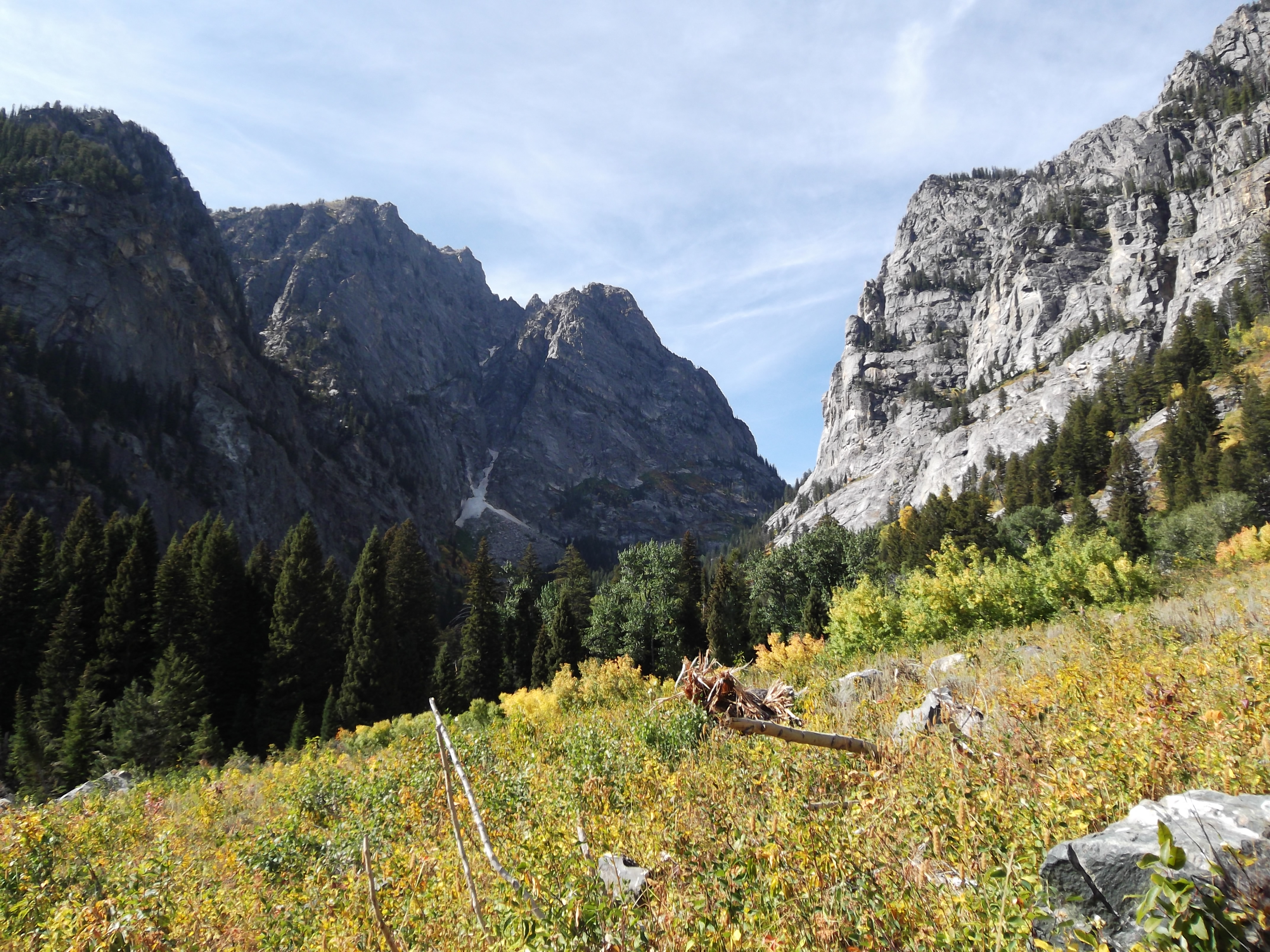
Ah, the Tetons end of sept.

Traveling through Yellowstone on Tuesday, the day was hot and all the wildlife, except a few bison, were well hidden and resting.  Gros Vente campground was one of the few still open, and even about 1/3 of that was closed.  Its puzzling that the two Parks choose to close so many campgrounds as early as September when the weather usually is fairly mild through even mid-October and the visitors are still packing the area.

My friend and I took a short evening walk around the campground and the nearby Gros Vente river. Especially at this time of year, moose abound and its easy to have a sighting let alone one or two running through the campground.  A large bull with a tremendous rack was stopping traffic just a mile down the road by the river.

Tucked among the rocks and willows was a curious scientific set-up:  a microphone with a recording box set up with a solar unit.  Not sure what study they were doing but it looked suspiciously like the ‘wolf howl’ machine I’ve seen in Sunlight.  But maybe they were studying coyotes around the campground, because that night, tucked in my tent around 11pm, I heard howling and response howling really close.  In fact so close, that pretty soon I heard sniffing around the outside of my tent. I figured a coyote was smelling Koda smells (who of course wasn’t there tonight but had been inside of that tent just a few weeks prior).  It was a strange and curious incident.

The next day I took a wonderful hike up to the mouth of Death Canyon from the parking lot of the newish Rockefeller compound.

Phelps Lake, Rockefeller Preserve

About ten years ago Rockefeller donated his home to the Park with the stipulation that only a small parking area be built which would limit the amount of hikers at any one time.  There is no overflow parking.  I’ve been up the one mile hike to where Phelps Lake and the former buildings were, but never past that.  The large and beautiful lake sits at the base of Death Canyon, a steep, massive drainage that is very inviting despite its name.

Looking into Death Canyon from Phelps Lake

We hiked around the lake, up to the canyon entrance, then headed north around the base of outcropping where a waterfall cascaded down.  Huckleberries overflowed and distracted us from the hike.  We ate our fill on the way in and out.  The aspens in this area hadn’t yet begun to change.

The next day I headed up to Taggart and Bradley Lakes.  Just a tiny bit north of Phelps Lake, all the plants including the aspens were aglow in their fall beauty.  I assume there are tiny micro-climates in these various canyons and that was why just a few miles north this area was ablaze in color while Phelps was not.  The hike is a nice 6 mile loop and I made it a bit longer by continuing up towards Amphitheater Lake. Several days later I approached Amphitheater Lake from Lupine Meadows trailhead, a trail more forested with conifers–Douglas and sub-alpine firs–than aspens.

Enjoying the Taggart Lake hike in 80 degree fall weather

The GYC meeting was full of information, focusing on climate change.  Without going into all the details and speakers, you can read the final report here on climate around our area and what’s happening after all the data is analyzed.  This data comes from actual weather stations set up around our area recording climate information for the last 100 years.  As is usual with climate change information, the future for the area looks troubling at best and makes the need for corridors north/south and east/west even more important.  In fact, the keynote speaker, Doug Chadwick, author of The Wolverine Way (which explores the research on Wolverines being done in Glacier National Park) called for just that kind of broader coalition between the Crown of the Continent and the Greater Yellowstone Area.  In order for these large predators to survive, they must have room to roam.  The future implores us to embrace new paradigms for the survival of so many species, from the Pika to Bighorn Sheep to Grizzly Bears and Wolverines.  We need to start thinking bigger, much bigger.  Room to roam is the very next step we need to embrace.  The Yellowstone to Yukon idea needs to mature from dream to reality in so short of time.

I Love the Winds!

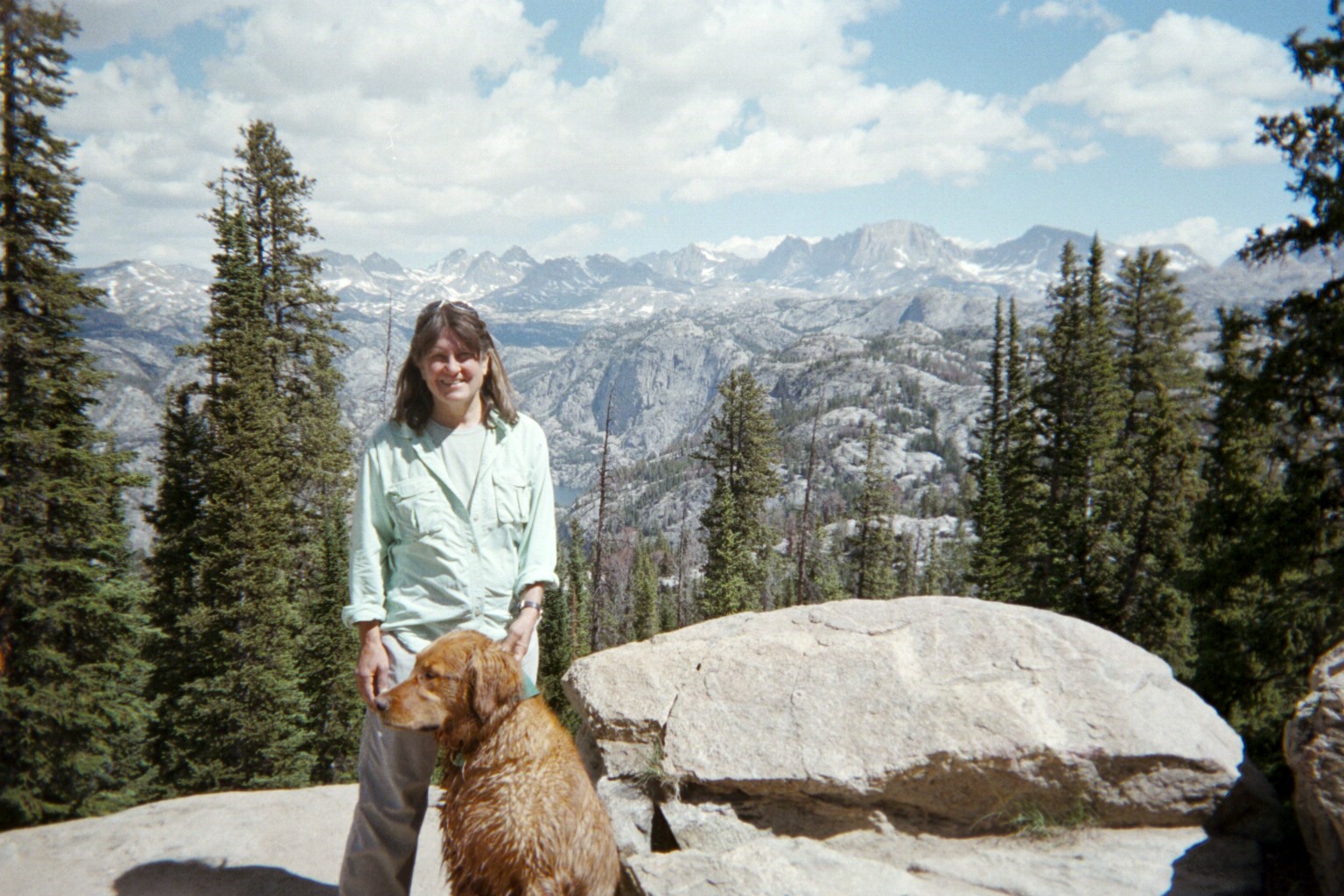
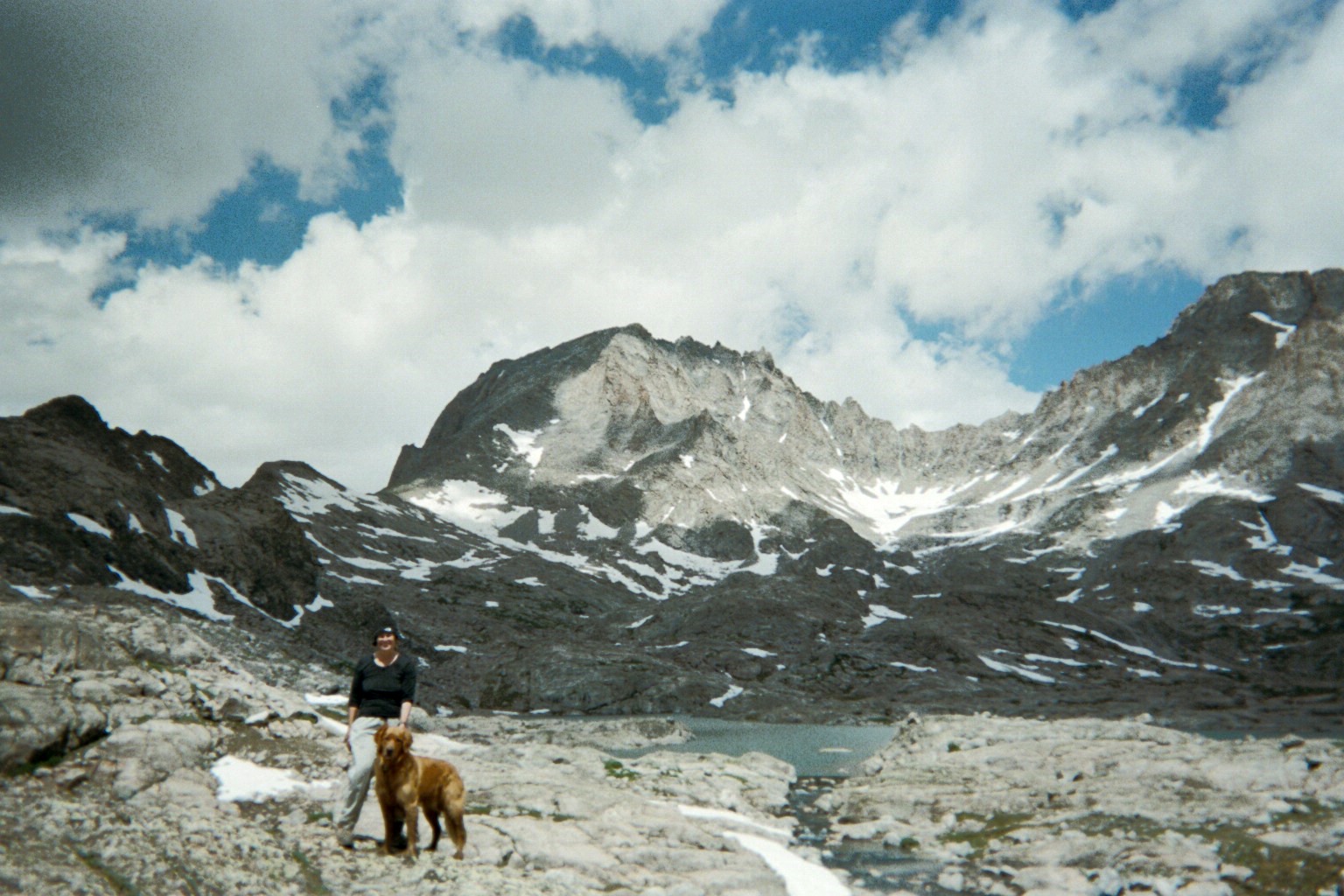
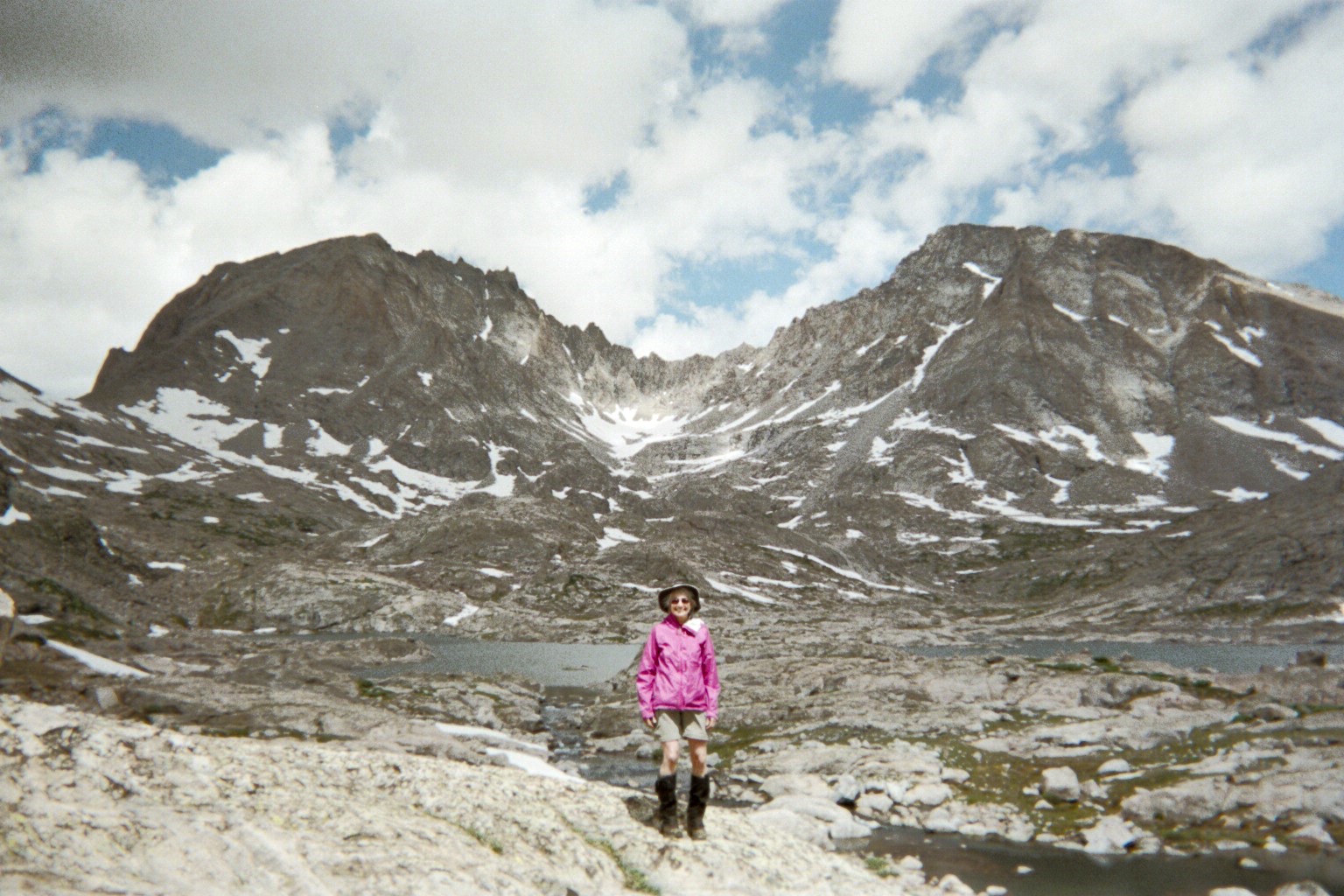
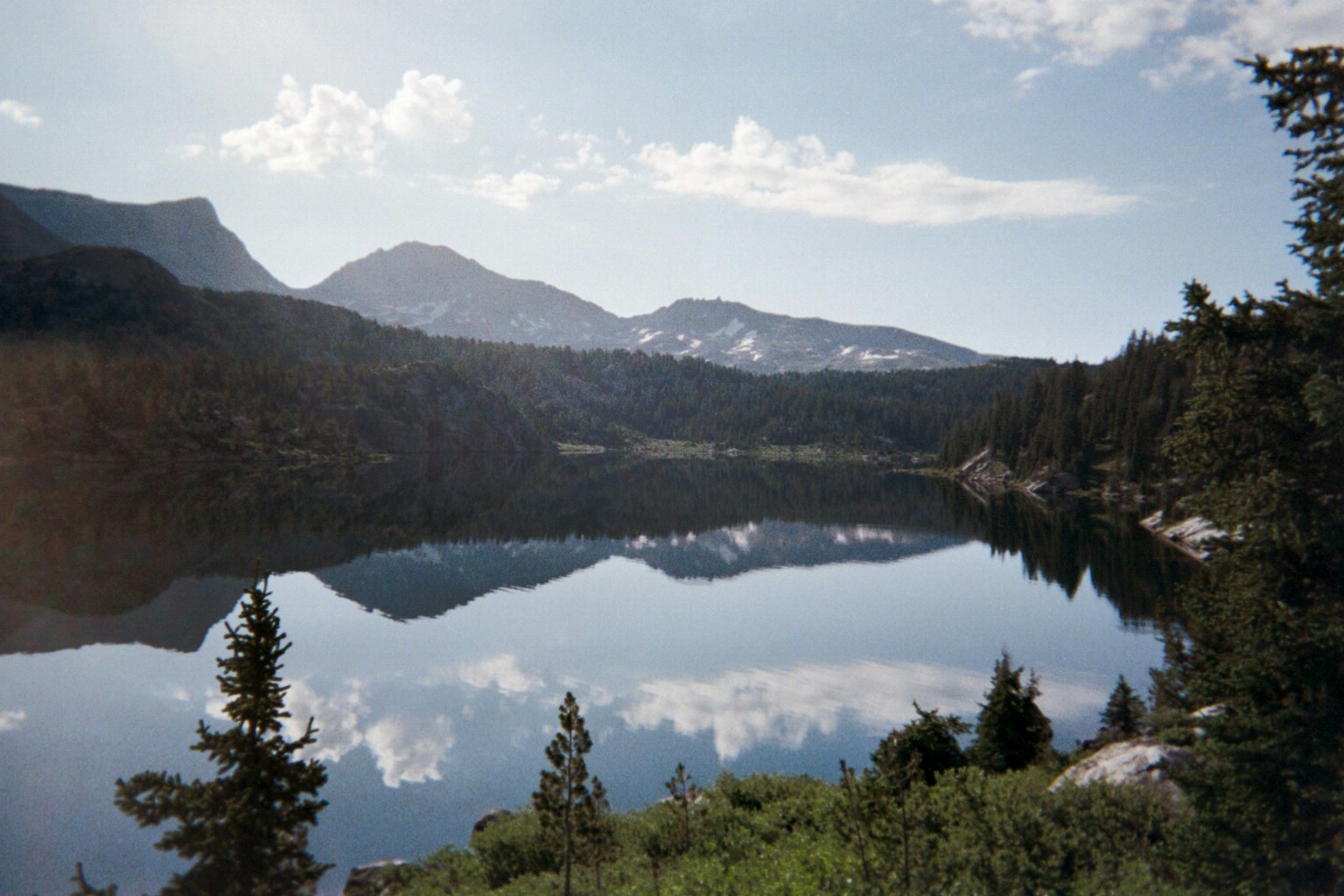
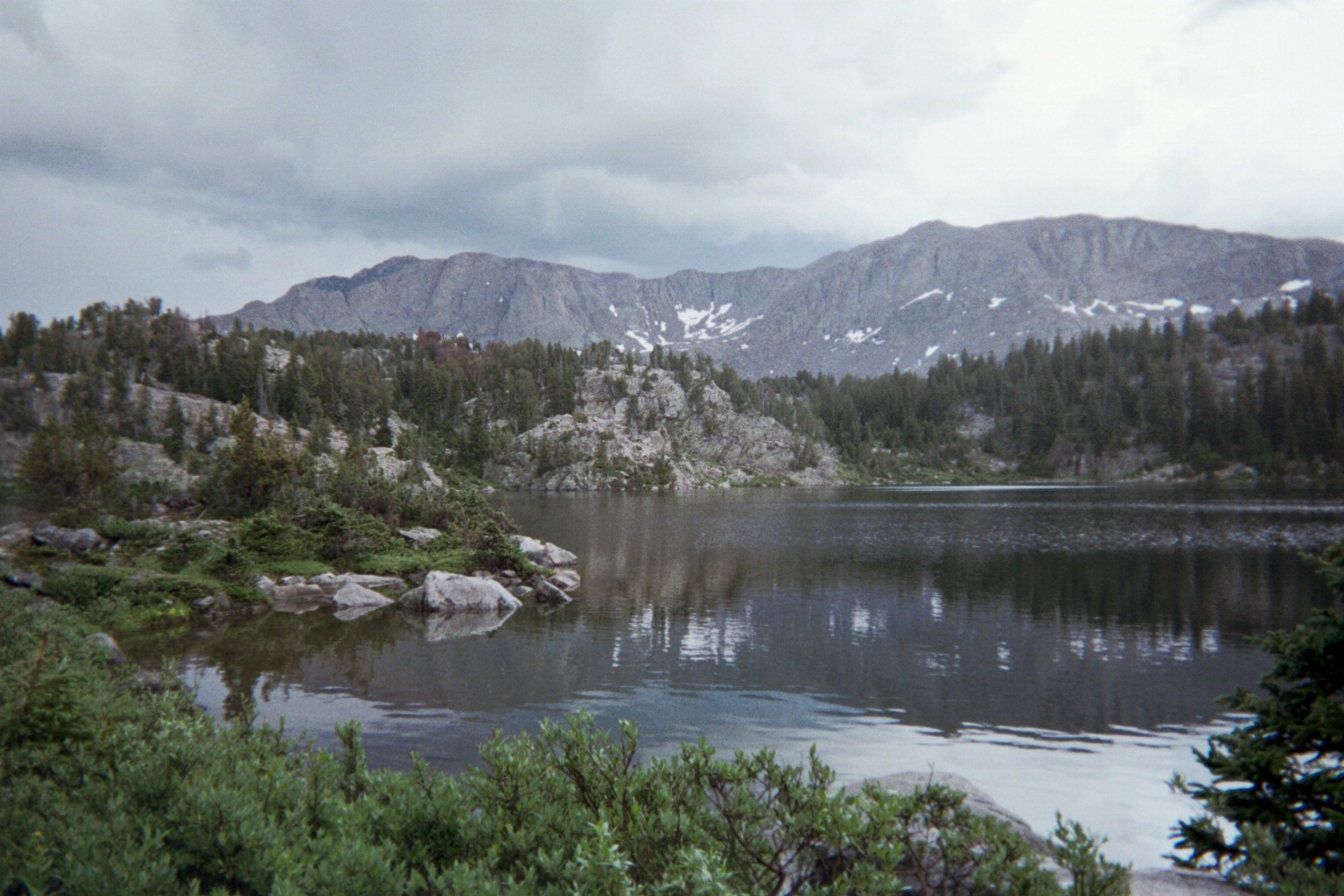
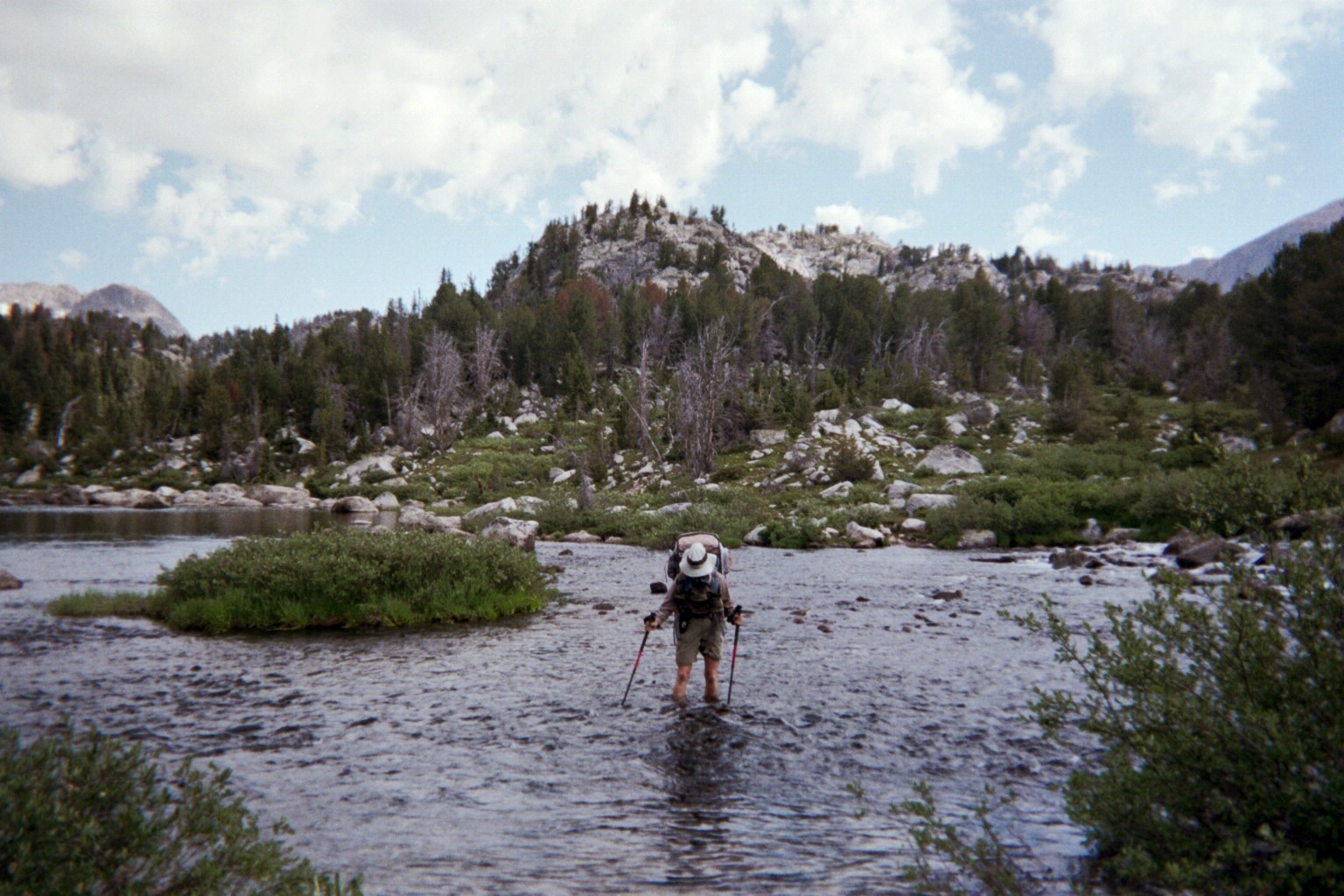
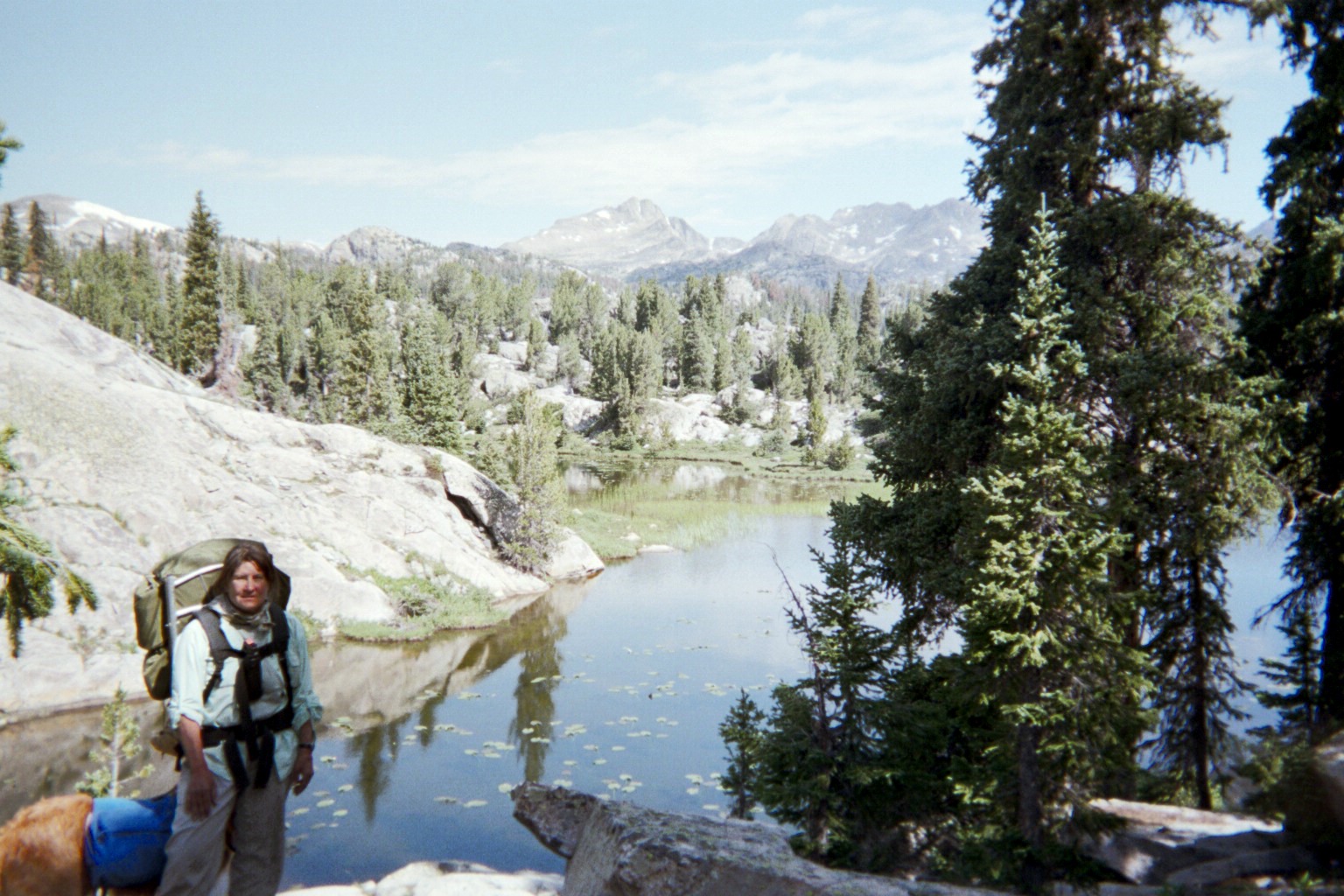
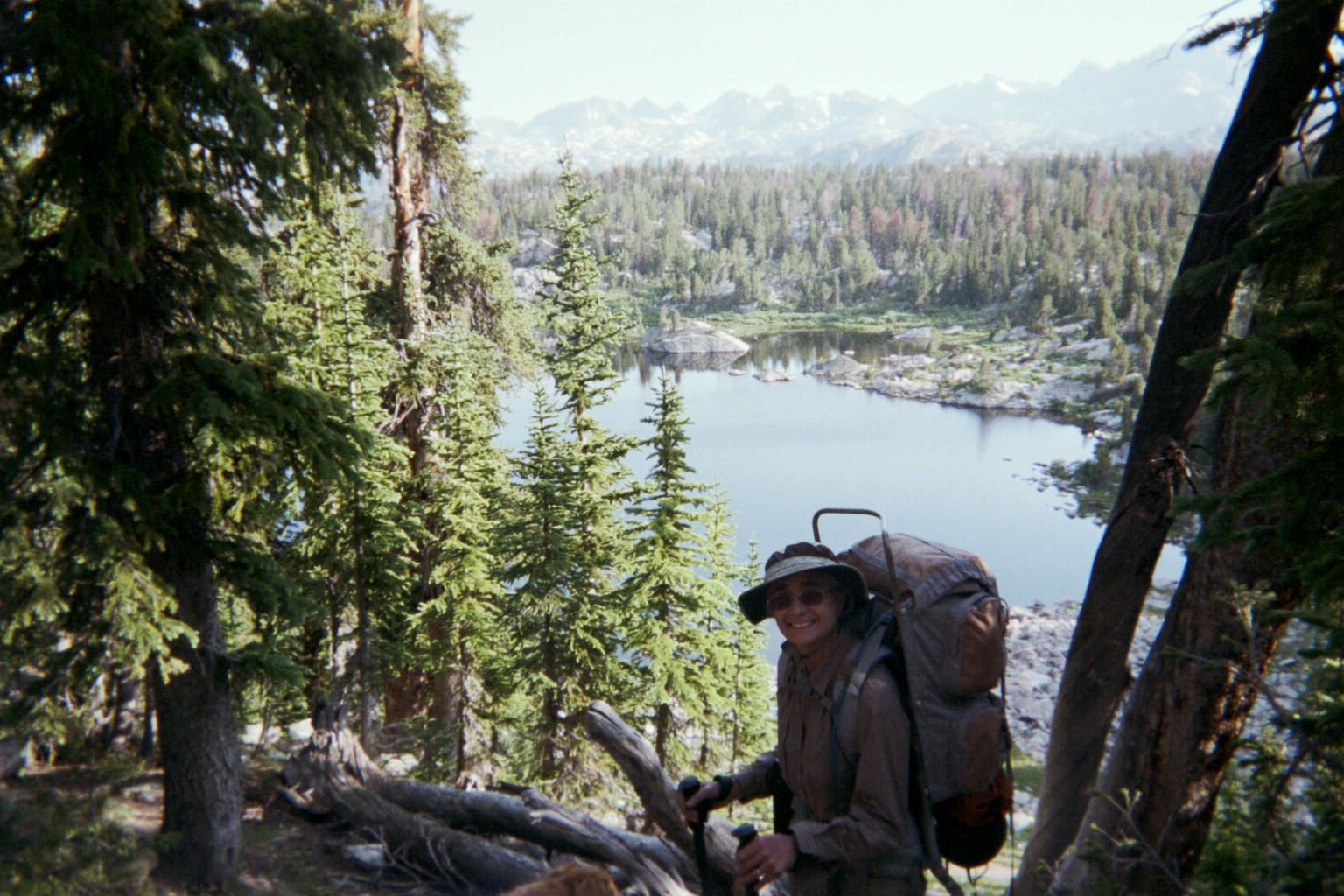
Here are some photos from my 8 day backpack this summer to the Wind Rivers, my most favorite place in the world.  I’ve been there at least ten times or maybe more.  This time I went back to a place I was 10 years ago because I wanted my friend to see it–Island lake near Titcomb Basin, one of the premier places in the Winds.  The weather was fantastic, even somewhat balmy.  Our packs were each about 25 pounds. Koda carried his own freeze-dried food and some of ours.  I call him my Sheepeater dog.  That’s because the original peoples in these mountains, the Shoshone Sheepeaters, never had horses, but packed up their dogs with saddle packs, just like the one Koda carried, with all their supplies.  Here he is below after a dip in a lake by the trail, getting a brief break from his load (me too).

Photography Point on the trail to Island Lake. Continental Divide in the background

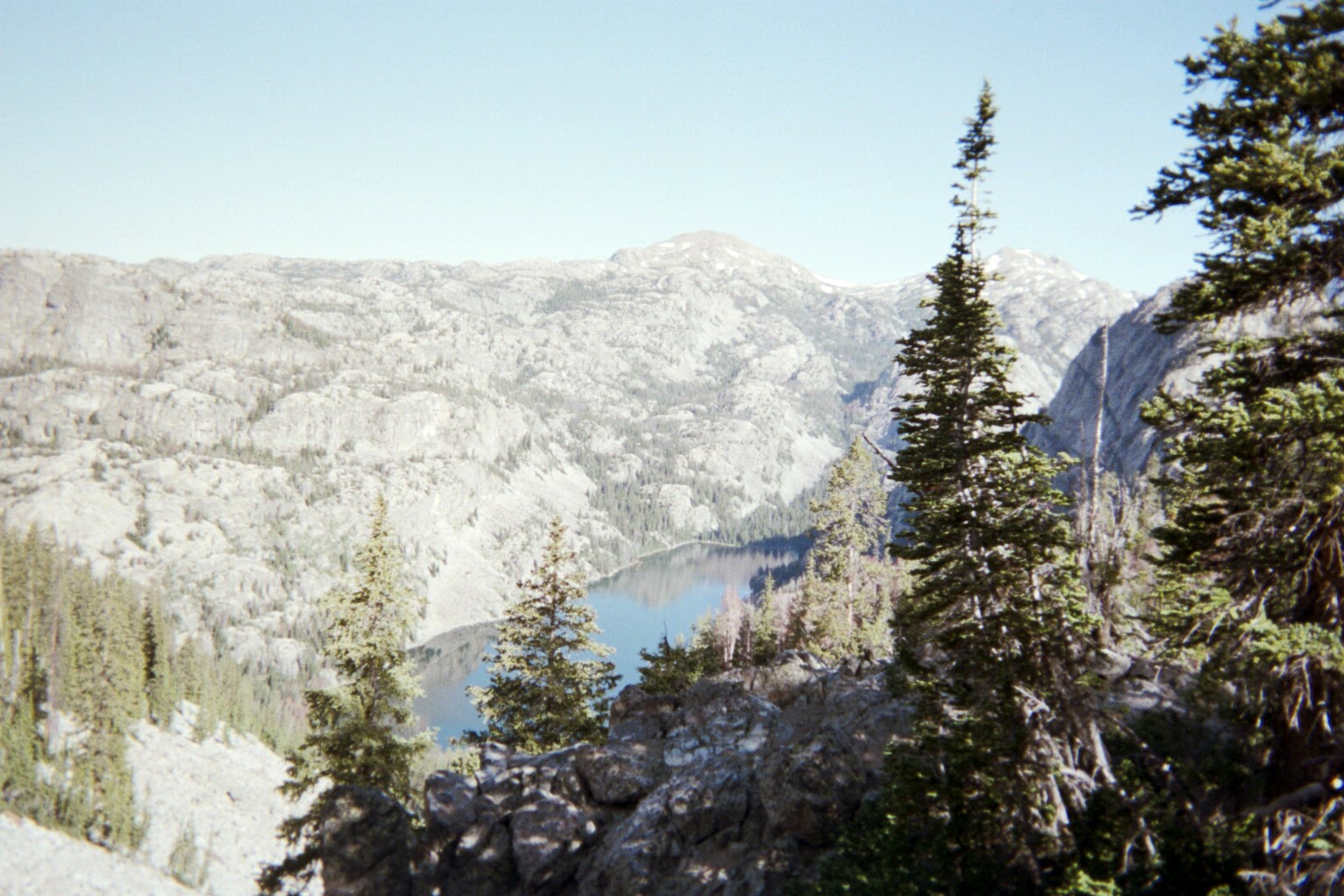
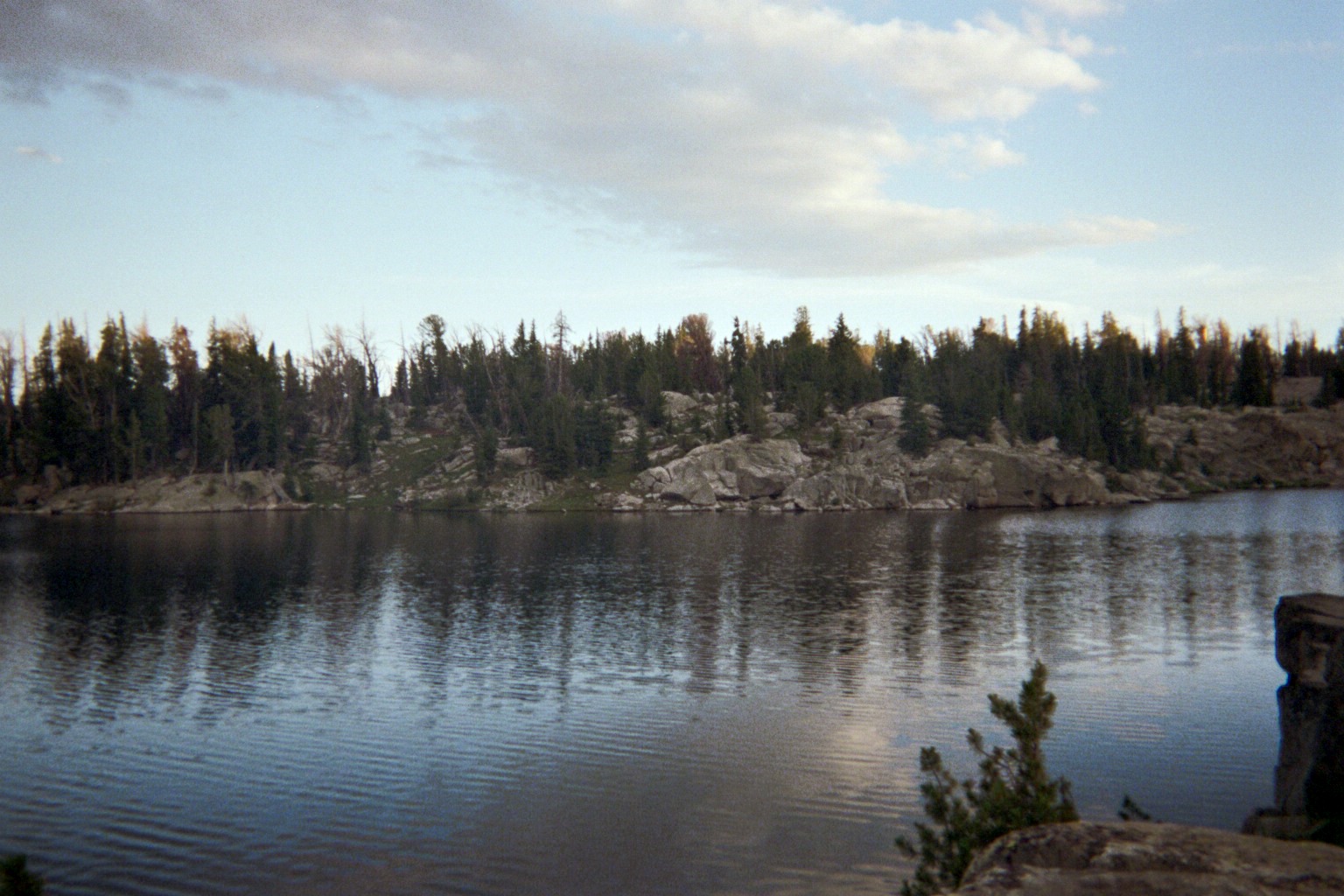
One of the hundreds of unnamed lakes. This one beautiful and inaccessible

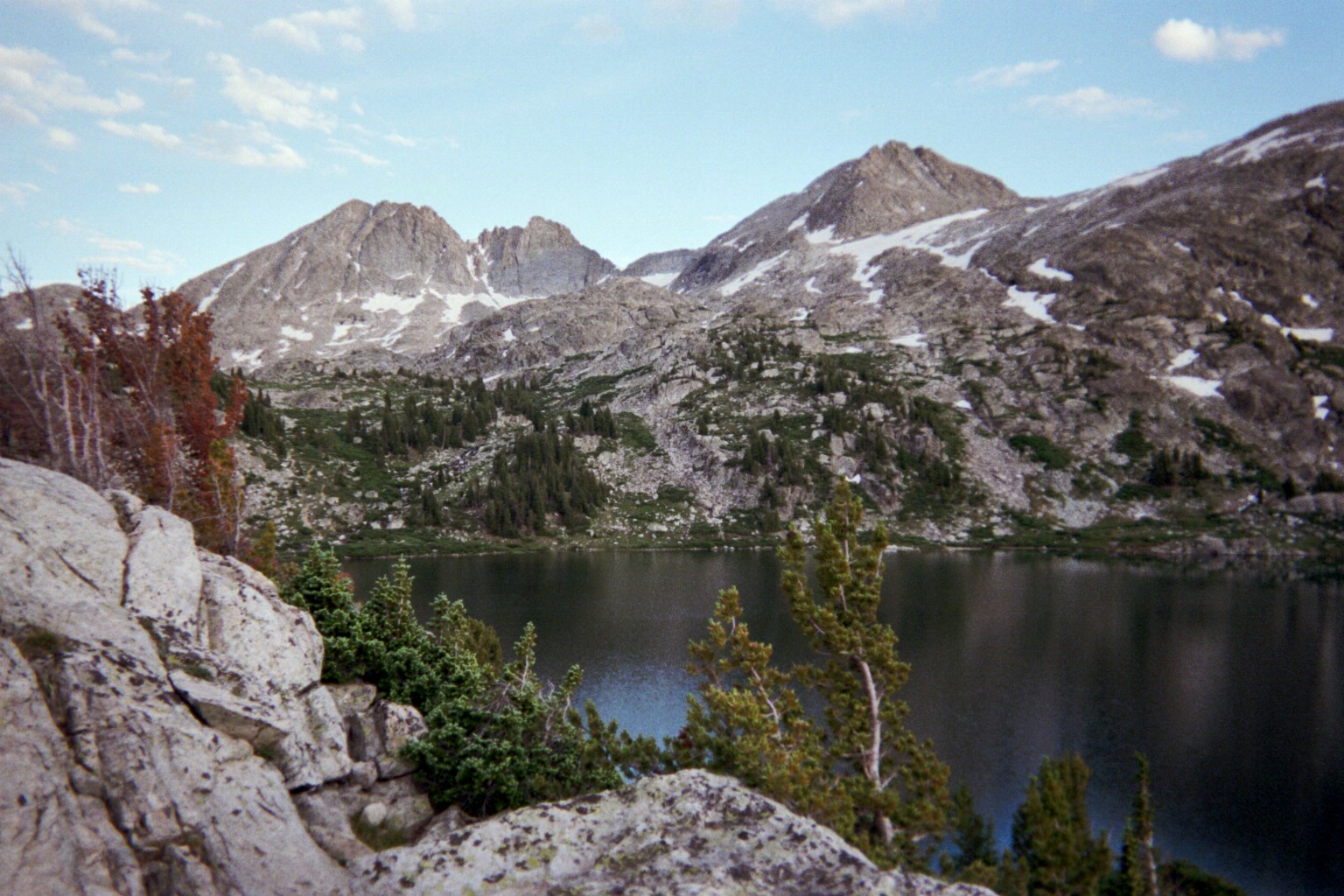
Island Lake sits at 10,300′ with the rugged peaks of the Continental Divide as the backdrop curtain.  The full moon rose over the lake as the sun set to the west.  The moonlight, reflecting off the granite faces, basked the mountains in an eerie and beautiful light.  It was so bright you could easily hike without any additional artificial light. It’s impossible to describe the strange beauty of that night landscape.  That was the night I understood the craving mountaineers get for high places.

The wonder of the place is that it is as it was 10 years before and only because no human can live so high all year long, so it is preserved as part of the Bridger-Teton wilderness.  The next day we hiked into Titcomb Basin, a gorgeous aquamarine-blue lake at the base of the access to the highest peak in Wyoming–Gannett Peak.  We had passed many people on the trail that attempted the ascent, but few had made it.

Island lake

We rested at Upper Titcomb Lake.  A weasel came out from the rocks a few yards away and gave us a good show.

Interestingly enough, at both Island and Cook Lakes we were visited every night by Calliope Hummingbirds.  Each night she’d fly close and inspect us and every bit of our camp.

Hike into Titcomb Basin

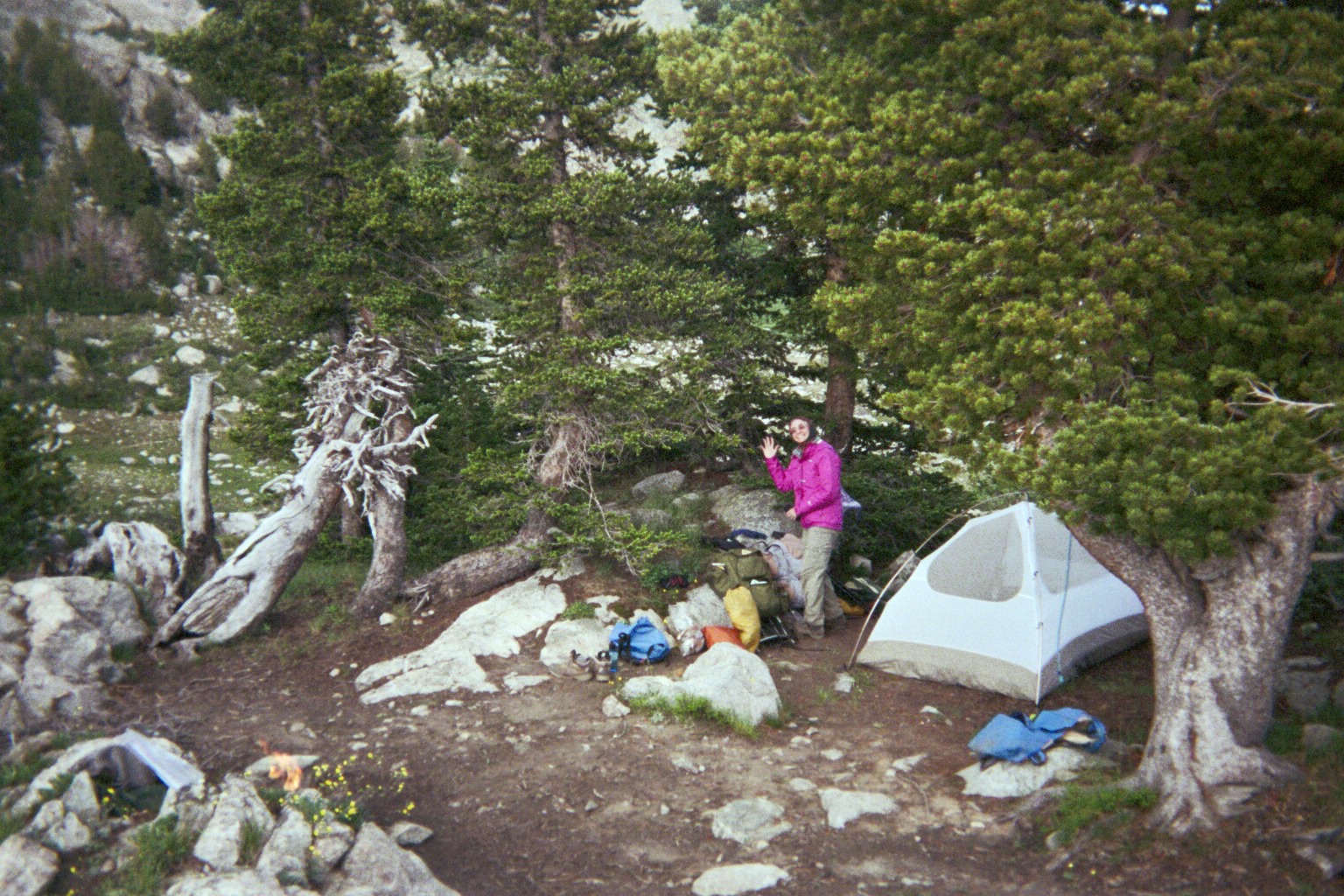
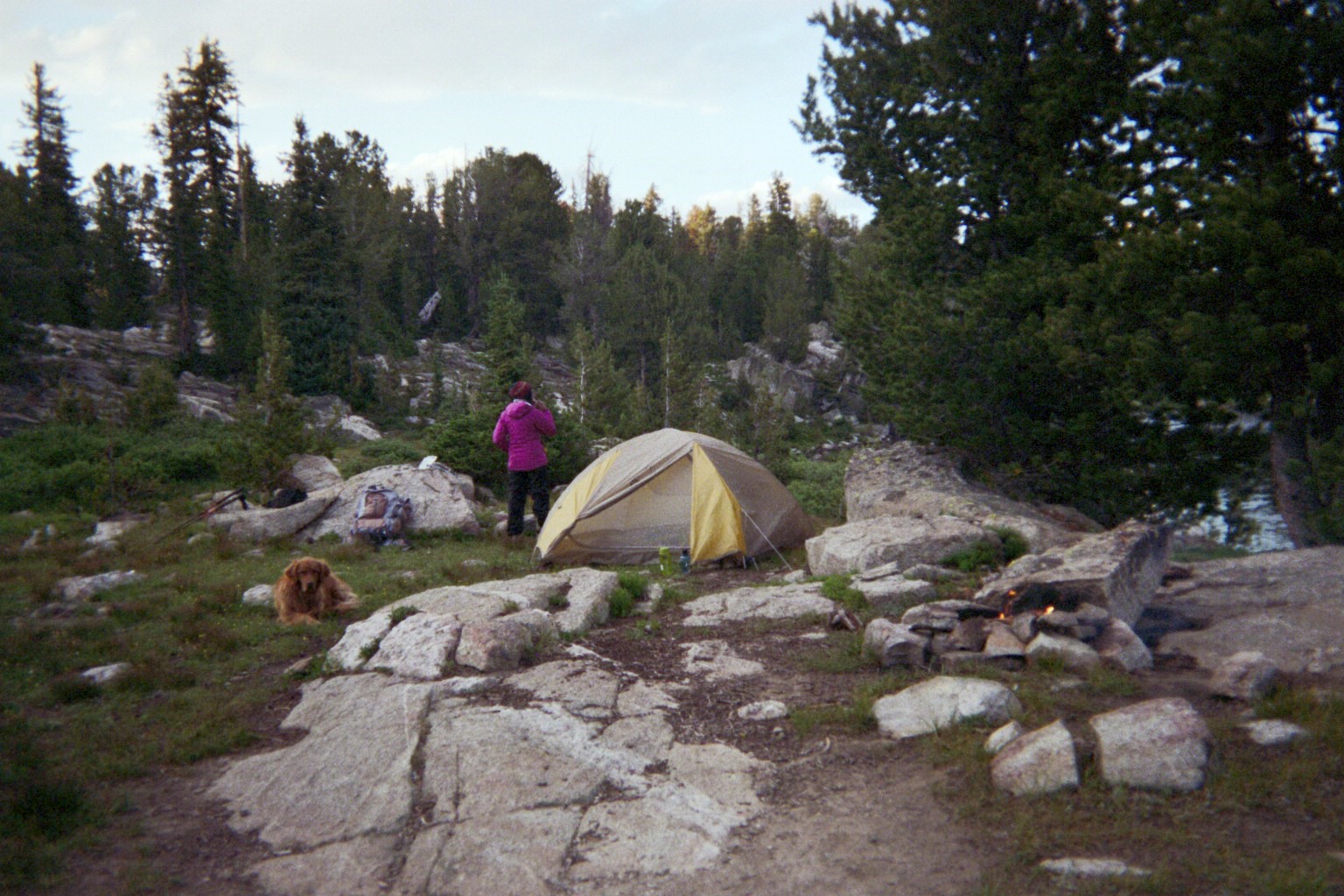
Usually by the first or second week in August the mosquitos have abated.  But this year we were three weeks behind and the bugs were bad.  We’ve had almost 600% of normal snowfall this winter with a slow melt.  The campsite we chose below was on a knoll with an open area that caught the breeze. If you were in the trees, watch out–the bugs were prolific.  But a smokey fire, good 100% deet and a mosquito net got rid of the worst of them.

Campsite

The next day we hiked up to Indian Basin. Although I’d been to Titcomb before, I’d never been to the Indian basin and the pass.  Actually, its no longer an easy route to find.  At first we followed some cairns that led us up the wrong route, coming to an impassable area of the river.  We backtracked and realized we needed to cross down below, where huge boulders made for a treacherous cross.  We probably lost a few hours there.  But it was worth the effort.  Indian Basin is the starting point for those who want to climb Fremont Peak, a non-technical climb up a lot of talus.  The Basin is pure granite, the top of the world at the Continental Divide.

Indian Basin

Wow, breathtaking Indian Basin

We had inquired at the ranger station about Lester Pass.  Since the snow melt was so late, I wondered what the highest pass in the Winds might be like.  The pass was clear but on the downslope–boy what a snowfield we had to cross and it was steep.  I took my pack off, held onto it and my breath, and slide down on my butt.  What a ride!

Our destination for the second half of the trip and the loop was Cook Lakes.  I’d never been to this part of the Highline trail.  Cook Lakes are a beautiful set of lakes set in a cirque of above timberline peaks.

Lower Cook Lake

Upper Cook Lake

A pika entertained us while we hiked into the Lake area.  Fishing was excellent and helped supplement our bland backpack food.

The sad part of our journey was the proliferation of dying Whitebarks.  At the uppermost elevations of timber, the White Bark Pines were in better shape, with maybe only 20% dying or dead.  But as you got lower in elevation, even around 10,000′, over half of the trees were dead, most of these being the large, multi-trunked ones, probably hundreds of years old.  These trees are dying not just from blister rust, but the double whammy of rust, beetles and climate change.  White Bark Pines are considered a keystone species.  They will be extinct in just a matter of a few years in the Greater Yellowstone Ecosystem and are now already considered functionally extinct.  These are trees that can live 1000 years and humans have been able to alter their environment to such a degree that this has happened very suddenly in only the last 20 years.

The forest service office let us know that we must secure our food because grizzly and black bears are frequent visitors to the Winds now.  One outfitter told us that a Grizzly sow and her cubs had holed up all summer in the New Forks drainage.  Not a surprise since there was a fire there several years ago.  Grizzlies like burned areas.  But on the entire trip I didn’t see any bear sign except about 5 miles from the trailhead I spotted off trail an old bear scat from the spring.  Much ado about  nothing still. Yes, there are a few bears that are reaching the Winds, mostly in the Green Rivers area.  Bears that get into the southern areas come into conflict with sheep and are quickly moved.

Even though much of Bridger-Teton is Wilderness, sheep grazing allotments were grandfathered in on the southern half of the range.  Where we were this year there are no sheep, but last year I was north of Big Sandy where hundreds of sheep had just gone down to the lower country.  I had a bum water purifier and got giardia from those sheep.  To me, wilderness and sheep no longer are compatible.  There just have to be some areas we leave to wildlife.  Transporting bears out of wilderness in the few areas where they can make a living, for the sake of protecting sheep makes no sense in this age of diminishing land.  The sheep have private lands they can graze on, grizzlies don’t.

The hike from Cook Lakes back to Elkhart Park is a maze of creeks through the Pole Creek marsh.  The Fremont Trail hooks into this area and I never saw the connection.  We ran into scores of hikers, including one boy scout troupe, that were simply lost and disoriented.

Crossing Pole Creek

Lake on the Pole Creek trail. Hate carrying that backpack. See Koda's pack...

One of the jewels of the Winds that we discovered on our hike out was Mary’s Lake. We loved that little lake surrounded by a rocky shore.

Campsite at Marys lake

Mary's Lake


My friend above Elkhart Lake

All fun things must come to an end.  Here we are on the trail home.

Bear Search in the Centennials

Several weeks ago I joined a NRDC funded project in the Centennials under the leadership of Greg Treinish of Adventurers and Scientists for Conservation looking for sign of Grizzly Bears there.  If we found sufficient evidence for the great bear, then more protections would be put in place.

This was the 2nd of 3 ‘adventures’ Greg is conducting; the next and last one is in October. Greg gave us an introduction and short class in Grizzly vs. Black bear hair, where and how to look for tree and fence post rubbings, and use of a GPS.  We bagged any hair we found and took a GPS reading.  Most of the two days were walking along old fence line, looking for hair caught in the barbed wires.

The Centennials border the Red Rock Lakes National Wildlife Refuge, rising more than 9,000 feet above the Centennial valley wetlands.  The wetlands provide habitat for dozens of species of birds including the Trumpeter Swan.  On the second day, I walked across the valley along a road, watching for hair samples along the fenceline.  Harriers accompanied us most of the day.

Here is a nice short video David Gaillard of Defenders of Wildlife put together of our weekend.  Scroll down to the 9/22 entry entitled ‘Short Movie of Centennial Bear Study in September’

Grizzly videos from my driveway

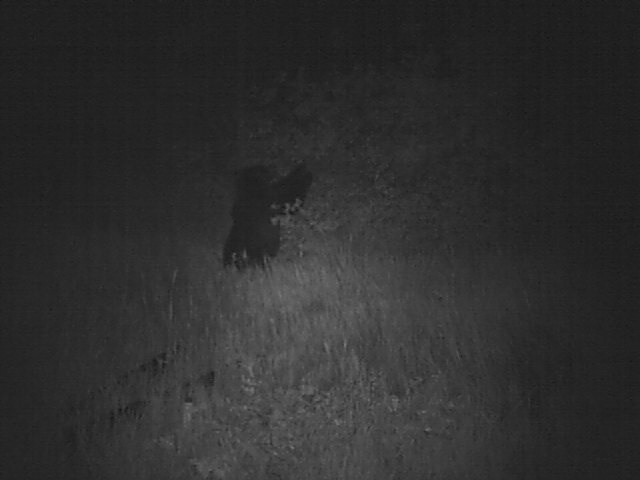
A large (pregnant maybe?) grizzly has been visiting my chokecherry bushes nightly. Since I can’t post video, but I’ve got lots of 30 second clips from my trail camera, start here  at my Youtube site for a great shot of her shaking her butt on the way to the berry bush.  Then see my other clips of her from 2 nights ago.

Bears are now in hyperphagia or that stage of eating where they are gorging, trying to fatten up for winter hibernation.  This is the time to really be careful.  Its hunting season, and a bear on a gut pile is a very protective bear not to mess with.

Griz on chokecherries at 1 a.m.


Wolves, Scouts and a new beginning–The Wyoming Wolf Management Plan

I’ve been filling my ears with Jon Young’s ‘Advanced Bird Language’ CD’s.  If you don’t know Jon Young, he’s an expert tracker and naturalist.   On tape 7, something caught my attention that’s so pertinent to what’s about to occur in Wyoming.

Native Americans considered wolves their brothers.  Many tribes called their scouts ‘wolves’.  The wolf was the premier hunter and the Indians learned from them.  On this tape, Young goes into some specifics about wolves as the ultimate teachers and models for their scouts.  Indian scouts were special members of the tribe that fanned far out into the landscape to warn the tribe of dangers, or tell them of food sources or new areas to occupy.  Scouts were the most highly trained in the art of ‘invisibility’, moving unseen through the landscape.  They needed to be able to cover great distances in a short amount of time, be fully aware of their surroundings, and bring back the needed information as well as do all this traveling very lightly.

Sunlight Pack black wolf

Here, paraphrasing Jon Young’s words, is his explanation for why wolves were the ultimate teachers for these individuals:

“Wolves move in a highly efficient manner.  They move with such stealth and perfection that their tracks are like poetry of perfection.  They place their feet in such a proper manner, even at high speeds.  They are masters of energy conservation even while moving.”

Two wolves side trot down the road

“Wolves are highly intelligence.  They can watch someone perform a task, like undo a latch, just once, and unlike a dog that must be trained, they can go over and undo that latch with their nose.  To observe, to see the pattern, to recognize it, and then to do it themselves–that’s intelligence.”

“Cougars and Bears master invisibility by moving very slow, by traveling in dark and shadowy places, but wolves don’t have that luxury.  Wolves might cover 25 miles in one night so they are practicing invisibility while also covering huge distances.  This is something that scouts really looked to as a role model.  So the scout had to be like the wolf also.  They had to run long distances in silence,  pull the information and bring it back.”

Wolf eating fish it caught in the Lamar

“Scouts, like wolves, needed to recognize things not just with tunnel vision but out of the corner of their eye, with their peripheral vision and be able to instantly respond.”

“Wolves are crepuscular, which means they travel at the edge of night–at dusk and at dawn.  Wolves are the masters of illusion and can stay just on the edges; so the scout modeled that ability to stay on the edge of sight.”

“Wolves have incredible hearing.  They are following sound even in their sleep. Wolves are the ultimate power in Awareness.  Their eyesight, their hearing, their sense of smell, all their senses combine to create enormous instinctive ability.”

I have known that Indian scouts were called ‘wolves’, but this is the best point-by-point explanation of ‘why’ that I’ve ever encountered.

Why is this so pertinent this week?  Because this Friday, Sept. 9 at 5 pm, all comments will be due, in writing only, on the Proposed Wolf Management Plan in Wyoming, in other words, the plan that will determine the future fate of wolves in this state regarding hunting, quotas, designated status (Predator and/or Trophy Game), etc.

Whether you are for or against hunting wolves, whether you live in Wyoming (Idaho, or Montana where the hunts are already taking place) or in a big city, consider these traditional notions and views I have laid out above about wolves.

Sunlight wolf

Once, in this great Country of ours, wolves were our teachers, friends, with attributes to aspire to.  This is Our Story, the story that goes with Our Ancestral Lands of North America. The stories from the Old World that we were told in our youths, ‘Little Red Riding Hood’ stories, the stories that created and fed on our present day fears, these were only partial tales, partial teaching stories. These were the stories told to young children so they wouldn’t venture into the woods alone.  All cultures had those stories.  But in every culture as the children grew to adolescence, they were told different stories, richer, fuller stories with more complexities for their more complex growing brains.  These were the stories that called young people to embrace role models.  The bear that was once scary for the young child, is now a great hunter.  And the wolf that might devour you, the little kid, walking in the forest (not having listened to your parents) is now a story told with more nuance, more richness, so you will aspire to model that wolf and become a great scout.

In this important moment, when wolves will finally be fully delisted in Wyoming, as well as Idaho and Montana, we need the full story, the story that enriches and dignifies this majestic predator that has always belonged back in our landscape.