• MY BOOKS ON WILDLIFE, GARDENING AND MORE

  • Coming Fall 2024. Pre-order and use code 6AF24 for a 40% discount

  • The Wild Excellence

  • Award winning ebook on DG Primer

Mothers: Bears and Elk

Last week an elk calf was killed right in the little meadow by my house.  Koda discovered the leg, lying in the disturbed grass near a solitary aspen.  The mother elk had been hanging around all morning, calling and calling for her baby.

Now, almost a week later, I heard her early this morning, still calling.

Cow elk sniffs where calf was killed

It breaks my heart to hear her.  I saw her last week quite a lot, coming closer and closer into the meadow, unperturbed by my presence or the dog, obviously confused as to where her baby might be.

Koda and I walked the trail through the little adjacent forest.  Fresh black bear tracks, a mother and her cubs, had wandered amongst the springs.  I set up my trail camera and found another leg from the calf.

The little elk had disappeared almost without a trace.  I’ve walked and walked around the area looking for more evidence.  One leg in the meadow; one in the woods; where’s the rest of her remains?  She barely lived, barely had a chance.

Yet, maybe these two little bear cubs will now have a chance.

Black Bear cubs

Its bear hunting season and although you can’t shoot a mother or her cubs, the young male whose been hanging around, digging for roots and insects, is fair game so to speak.

Its sad, but yet true.  One life feeds another.  I sing for the bear mother.  I cry for the elk mother.  One does not negate the other nor hold more value than the other.  Its’ the old and ancient dance.  Don’t be fooled.  Despite all the latest new fangled technologies, extended life, genetic transformations, new pills, greed on Wall Street, fat cat politicians and the usual rhetoric, we too are dancing.

Yellowstone for mine eyes only

A friend came up late morning to help me plant more trees.  A squall came in and with it a fierce cold wind.  After several minutes the weather settled down, the sun shone through brilliant cumulus clouds but it was still hovering above freezing.  This continued several times all morning until I’d had enough.  Hungry and cold I suggested we quit for the day and head to the house for lunch.

Since I’m needing some poles to repair a gate, we decided to see if we could make it up to Beartooth Lake to cut some lodgepole poles.  The road was clear and this typical May weather had brought new snow into the mountains.  Pilot and Index Peaks were covered white in snow, the deep of the blue sky setting them off.

We got a little past the maintenance yard and then got stuck in the snow.  I let the dogs out while my friend shoveled and I pushed the truck.  The dogs, like 2 kids, went wildly romping around the deep snow pack.

That adventure foiled, my friend suggested we see how far we could get towards Cooke City.  About 5 miles from Cooke, the road was full of snow, although a plow had gone over it.  The sign said ‘Road Closed’ but we kept on.  My friend said they run a plow now so that the heat of the sun will melt the rest off.  That way there’ll be less work to do come May 7th when the NE entrance officially opens.

Once into Cooke, the road was clear and dry and we decided to head for the Lamar.  By now it was about 6:30 pm and a perfect time to catch some wildlife watching.  But as we drove into the park, a deep fog appeared and it started to snow…sleet really.  My friend commented that he’d been coming here for 50 years and during that entire time the willows had never been able to grow.

“You’d have to have come here for that long to see the difference.  The willows are growing now.  They’ve never been this big.  The elk used to use the Lamar like cattle.  They’d be down in the river bottoms.  Now the wolves keep them on the move and the brush is coming back.”

As we continued towards the Buffalo Ranch, the sky cleared.  We kept commenting that we wished we’d brought our cameras.  I thought about it as I walked out the door, but figured I was just going to cut poles.  Instead, the air, the sky, the mountains, the weather was magnificent…a special day, a special light.

We watched a grizzly for a while nosing around for food.  Three sand hill cranes hunted nearby.  Elk grazed easily in the valley, while a Bison, beginning to shed, rubbed his back on a rock.  No one was in the valley.  It was left to the wildlife.

Coming a little north of Crandall on the way home, a grizzly bounded across the road in front of us.  It was about 7:30 and I suppose he was headed out for his evening rounds.  We stopped and watched him climb up the rocky cliffs on the other side of the highway, so close to the homes around there.

A spontaneous surprise, the day was full of typical May weather, my favorite time of the year.  Snow, sleet, sun….dry, wet, foggy, brilliant need-your-sunglasses light.  And lots of wildlife. Although we kept commenting how, of course, where’s your camera when you need it, I reminded my friend “This was a day just for our eyes only.”

Bear tracking

According to an article I read, the GYE has 1.1 Grizzly Bears per 100 square kilometers (38.6 sq. miles).  I’m not sure how many bears live in the Sunlight area of Cody, but I know its a drop-off place for problem bears.  I was told by a Forest Service contract employee last summer that they collared 25 bears here last spring.

That same article estimated grizzly density during the time of Lewis and Clark at  3.1 bears per 100 square kilometers.  Three times as many bears.  I’d be curious to know the density around here.

What I do know is that although its common to see lots of fresh bear sign every spring, its not so common to run into bears.  1 bear per 40 square miles is a lot of miles.  But I also know that bears like to use the same trails we do and precaution and care are important.  I carry bear spray, watch the dog and stay alert, especially around blind corners and try to stay out of heavily wooded areas in the spring.

Grizzly in spring

That being said, I took a nice hike up Elk Creek the other day and spent about 1/2 hour investigating some wonderful bear tracks.  After taking Jim Halfpenny’s tracking class last fall, I’ve become accustomed to looking at tracks from many different angles, including getting down on the ground and eyeballing them.  Jim also urges his students to use all their senses.  Feeling the imprints with your sensitive finger tips is just as important as the visuals.

By mapping out one track distance to the next, I was able to estimate where the next track might be even if I couldn’t detect it.  Then by putting my face right down next to the ground I could make out the faint imprint of the track.  After doing this for several non-discernible tracks, I was soon able to pick them out easily.  I started noticing how, even if there was no visible track, the grass was flattened or there might be the slightest disturbance in the soil.

I spent a lot of time trying to understand this bears’ gait.  Bears usually amble, where the back larger foot oversteps the front.  For some reason I don’t yet understand, this bears’ hind foot hardly imprinted and it was mostly his front foot that was registering deeply in the mud.

Grizzly typical walk or amble

I backtracked the bear, who was headed towards Elk Creek valley not too far from my cabin.  He’d come up a spur trail by the creek.  I wondered what the bear was looking for, what he was eating, where he found food.  I put my fingers in the track of his front foot and felt all the ridges.  With my palm pressed against the large pad, I realized here I was ‘touching’ this bear’s foot.  It held all the mystery and magic of bears themselves, all in a print.

A Grizzly story

Elk from the trail camera

I set up my trail camera for the last two weeks, hoping to catch some bears or wolves.  Mostly I got a lot of elk.  But I did capture 3 bighorn rams and a coyote.

The crazy part is that on the way up there I was following a grizzly’s perfect tracks in the snow.  The tracks were actually solid ice and super clear.  I was trying to figure out how they turned to ice.  I thought “Maybe he went up in the early morning or evening over thin snow that melted under his heat and then iced over.”  The ranch hand neighbor thought he just melted actual ice with his heat.  But everywhere around the tracks was snow, except for his tracks.  Any enlightening thoughts would be gladly accepted folks.

I chatted with J___ at the nearby ranch on my return.  He told me that that same grizz had walked right through the cows, looking for their mineral lick that they used to keep every year.  Its gone this year but probably its the same grizzly.

Then he told me a great grizzly story:

“You remember last year they were trapping and collaring.  They caught 3 grizzlies on our property all in one morning.  The traps are just 55 gallon barrels.  The bear goes in for the meat and the door closes behind him.  The doors on both ends are just metal grates.”

“Well Mark Bruscino was there (note: he’s the G&F Bear specialist in Wyoming) and asked if I wanted to come see as this was unusual.  They’d never trapped 3 bears all at once and it was 2 sows and one cub, so it was going to be interesting which bear belonged to the cub.  They trap the bears, then dart them with a light sedative.  Mark said ‘look inside that barrel at that grizzly’, so I looked.  And the bear, instead of looking out the grate, was looking sideways at the wall of the can.  I looked from one end, then I looked from the other end.  But each time I looked, the bear looked away, as if shy or something.

” ‘What’s going on?’ ” I asked Mark.

” ‘That bear is embarrassed.  She’s been caught before and she’s embarrassed that she got caught again.’ ”

“Well Mark sedated her and looked at her ear tag.  That bear, Mark said, was the first bear he’d ever caught and collared, 11 years back. She was 3 years old then.”

” ‘That bear has only been handled by people twice, both of them me.  She remembers me.  Bears are smart.  Most people would be shocked to learn how smart bears are,’  Mark said”

“You know the bear can hear you when they’re sedated.  And Mark was talking to that bear saying things like “Hi, you remember me.”  She’d be sure to remember something like being caught in a trap.

“Mark said that that bear had been in Dubois, caught and transferred for cattle killing.  She was put here and didn’t get into any trouble for all those years, until last year when she killed our pigs.  A year later she was tracked, by her collar, down in Dubois, but since then the collar’s fallen off.  When you think about it, how does a bear know, after being trapped in Dubois, then flown here by helicopter, not even driven here, but flown…how can they know how to get back to Dubois.  They don’t go the same route, she had to cross 3 highways, and its really rugged country between here and there.”

“Mark said we had about 1/2 hour before those bears woke up.  I helped them pull them out of the cans.  I was trying to be really gentle so as not to twist her paw or whatever.  Mark said there’s no handles on the bears, you just pull on their fur. ‘Don’t worry about hurting them.  These are massive creatures.  They’ve been over rock cliffs and in all kinds of situations.’

I told J___ that was a great story. Next time they’re trapping I hope to get a photo or maybe even ‘pet’ a sleeping bear.  J___ got too and so did all their dudes that day.

Old first hand Stories of Yellowstone

My old neighbor JB told me this story today.   Its impossible to place it in time.  In JB’s mind it was like yesterday, but probably in reality sometime in the late ’50’s or early 60’s.

“My job was to plow the road from Mammoth to Cooke City.  There were two plows going and it was Christmas day.  It was 60 below zero, really really cold.  Those plows aren’t heated, you know.  You’ve gotta keep the window cracked too, otherwise the windshield freezes up with ice and you can’t see.  So it’s 60 below outside, no heat, and the window’s cracked.”

I asked him how he stayed warm.

“You just put on more clothes!  The snow was 4 or 5 feet deep and I got a call on the radio from the couple staying at the Buffalo Ranch.  His wife was going into labor and they were stuck.   I was going around a curve on my way to Tower, as fast as I could which wasn’t too fast in a plow, when I saw a patch of clear road ahead.  I knew that meant trouble.  The other plow was a few minutes ahead and a clear patch meant he’d gone off the road.  When I got there the plow was completely off the road, tipped over, and the driver was buried under the snow.  At 60 below he didn’t have much time and it was good I was just behind him.”

“I started digging him out and when I got to him he said ‘Lunch box’.  He kept repeating that.  I didn’t know he had a heart condition and his medication was in his lunchbox.  I never found that lunchbox.  They got him over to Billings.  He was pretty mangled up and didn’t work for over 2 years.”

“Then I started plowing my way to the Buffalo Ranch.  I finally got that couple unstuck.  She never got further than Mammoth where she had her baby.  That was Christmas Day.  I didn’t get home till 3 am.”

I had a client whose father, Merrill Daum, worked in Yellowstone from 1925 to 1930, first as the Chief Engineer then eventually as Assistant Superintendent to Horace Albright.  Daum spent the first several years working on oiling the roads.  Here are a few story excerpts from a memoir my client gave me.

We had an epidemic there one year.  They had quite a few cases of the tourists coming down sick after they’d been there at Old Faithful Inn during the afternoon and evening.  They came down with vomiting.  They really were sick.  It broke out at the Lake.  Then to Canyon.  The Lake was where they really had the epidemic.  One hundred or so sick people there.  We had to go around shooting them all with a needle.  I don’t know what we injected them with.  To relax them so they wouldn’t vomit themselves to death.  They put four of us at the table morning, noon, and night at the Lake Hotel and we were each to eat different things, not the same thing to see what food was causing our troubles.  None of us got sick.  THey just threw up on the floors, every place they got caught.

Bears came on our porch on that duplex we lived in at Mammoth.  I finally got tired of bears once and I took an apple, filled it with red pepper, pinned it together and put it on the porch.  That bear came up and swallowed that and all of a sudden he was blowing and wiping his nose in the snow, trying to get cool.  He really was hot.  He never bothered us again.

At Yellowstone we were building a highway out near Canyon and Lake areas and our construction crew was in tents.  The bears would keep coming in and get the food out of the kitchen.  I was there once in the daytime and here was a Grizzly.  They’re beautiful animals.  The sun would glisten on the beautiful points on their fur.  This darn grizzly was walking home with a sack of oats.  Just walking right off with it.  A sack of oats about 75 pounds.  Nothing we could do about it.  They did take a lot that first year.  You weren’t allowed to kill them.  You could sit right there next to the garbage and they wouldn’t bother you.  All they wanted was to dig in the garbage.  The worst place where I chased one bear was at West Thumb.  The bear came in there that fall, before the snows.  I happened to go around the store which had candies and things like that and the shopkeeper had the windows all closed.  The place was broken into and there was the bear inside, just gorging himself on candy.  I’ll never forget how surprised that bear was for somebody to come in and find him.

We had to get ready to remove the snow in the spring. We started at Cody, about 30 miles from Cody up to the entrance.  We got as far as the Park with snow 12-20 feet deep.  We’d blast it out with TNT which Uncle Sam gave us.  That would start it thawing and then we’d take a big power shovel and shovel the stuff so we had a two-way highway through there to the east entrance of the Park.  From there on in we’d use our own equipment.  The deep snow was right there at the entrance.  That was the high point.  We’d generally try to get open by June 1st.  By June 6th we were officially open, I believe.  But you couldn’t make some of the interior trips that early.  It would be long in July before you could get away from the snow.

The Golden Bear of California

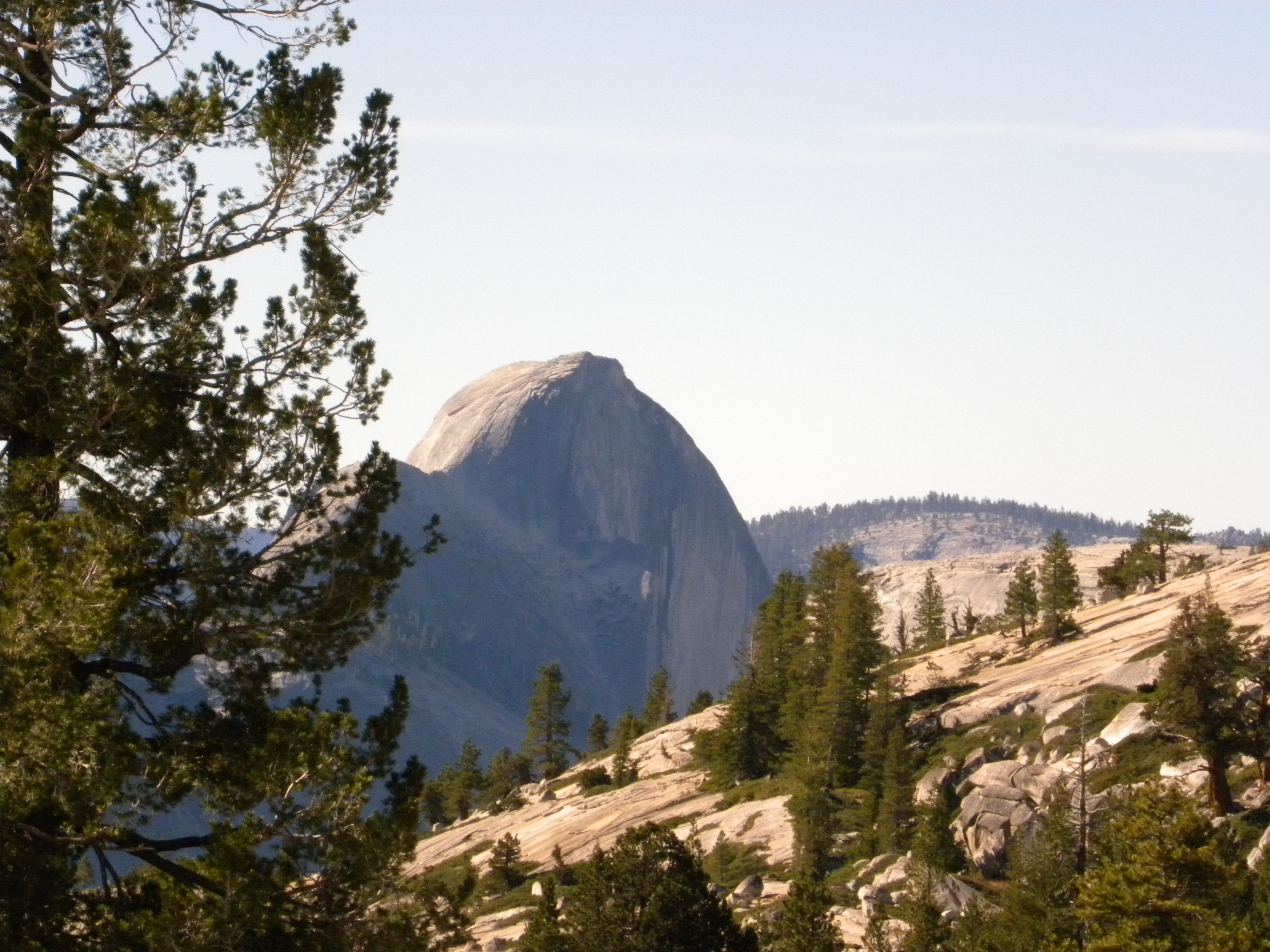
View from the pass of Half Dome

View from the pass of Half Dome

Driving through Tioga Pass, I couldn’t help but think of California’s state flag…the great Golden  Bear, a sub-species of our Grizzly, now extinct.

Black bears are ubiquitous in the Sierras.  I’ve heard from friends that back country hikers are now required to carry their food in bear containers when backpacking, adding lots of extra weight to their packs.  Last time I camped in Yosemite Valley, bears walked continually through our campground which was shared with dozens of other campsites.

So my question is…Why not introduce the great Grizzly back to California?  Hey, people are getting used to living with black bears.  It’s just a little jump from the Black to the Grizzly.  Besides, there won’t be so many black bears with a few grizzlies around as they don’t share territory easily.  A little bit of googling and it seems others are asking the same question.  Not many others though, but a few.

As opposed to the Greater Yellowstone Ecosystem which is higher, colder, and food scarcer, California is warm with abundant food.  Apparently, a hundred and fifty years ago, grizzlies were everywhere, gathering even in ‘herds’, unusual for the usually solitary beast.  Salmon, acorns, abundant wildlife, washed up whales…food was easy.  Seems like California harbored 20 percent of the 50,000 grizzlies that roamed the continent long ago.  Its a shame to waste all the protected spaces of Californias’ Federal and State Parks and Forests.

In addition, it might give pause to the growing population of California.  When I was growing up here, California had an already bulging population of about 12 million.  Now its pushing 37 million, too many people for the space.  Many of these newcomers are easterners and mid-westerners, looking for climate change, in denial of the natural dryness of the west.  I watched California grow in the 80’s and 90’s, developers building out-of-place Cape Cod style McMansions, tearing down ancient oaks to put in home vineyards with private labels for Christmas gifts, lawns and golf courses erected where there should be Manzanitas.  I suggest the only thing that might put a stop to all this madness is the great, top of the food chain predator–the California Golden Bear.

Now, in all seriousness, Californians have the room for a few bears.  Biologist Carlos Carroll maintains that the Siskiyou Mountains could maintain around 300 Grizzlies.  I’ve been to these remote mountains on the Oregon Border.  They would make nice habitat.  I’m thinking so would Yosemite, and Tahoe for that matter.  Wolves in California might be just too big a jump, but Grizzlies are actually easier to live with, tend to be solitary, populate slowly and are omnivorous.

I like having Grizzlies in my valley in Wyoming.  They make me aware.  They make me remember that life is wild and that I too am a child of the wild.  We humans tend to eliminate everything that threatens us.  But really, we can never fully eliminate all threats.  In trying to cheat death, we only cheat ourselves of our natural woolly wildness and loose touch with an important part of our soul.

Reefs, Bears, and the Beartooths

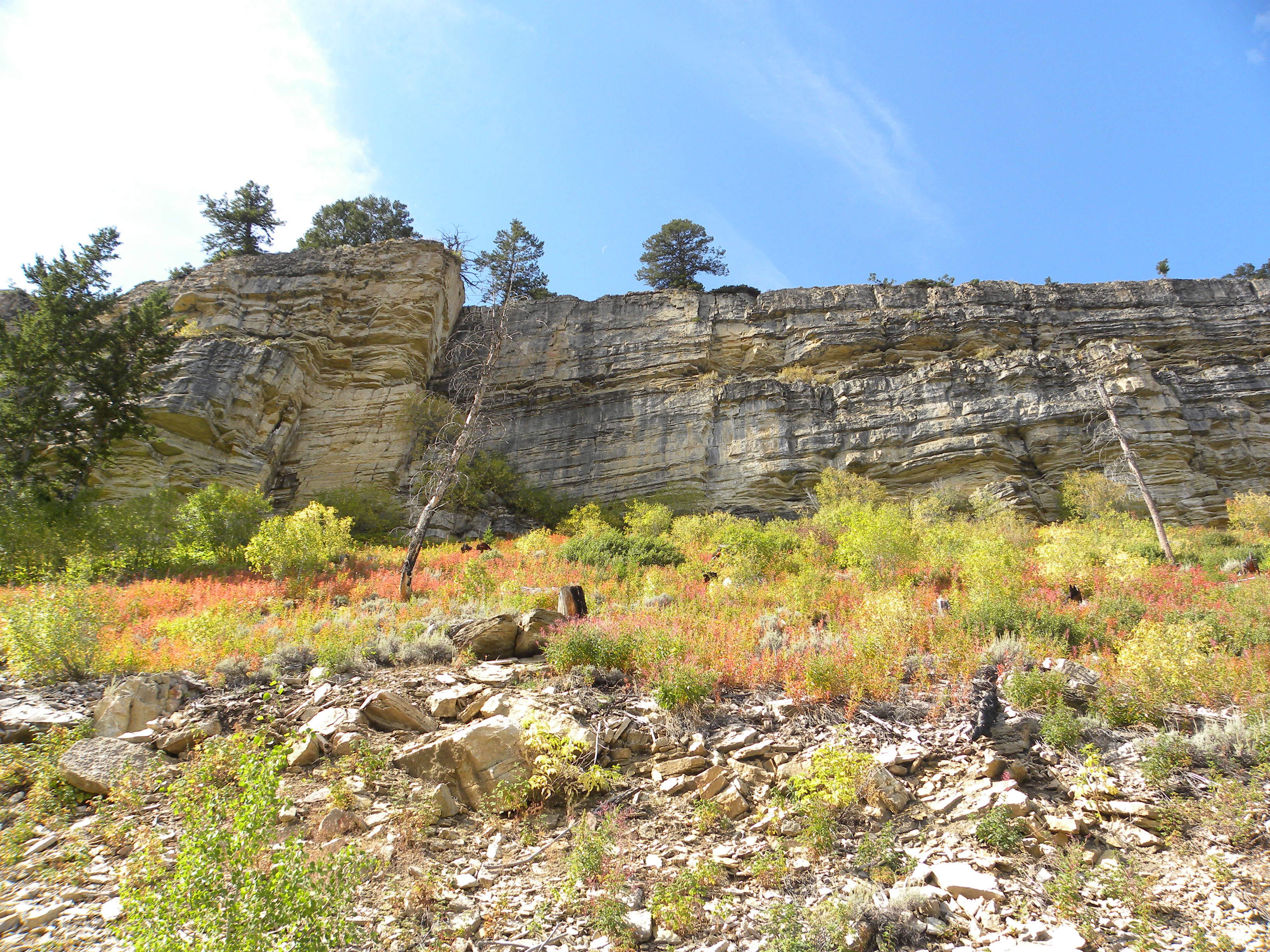
On of the unusual features of this area are the ‘reefs’, long cliffs exposed in the mountainsides.  There’s a beautiful area nearby that I’ve been exploring this summer called Reef Creek.

Reefs

Reefs

A forest service road winds precariously up to the top of the reef, where you discover you’re now driving on a totally flattened surface.  You can walk to the edge of the cliffs and its a sheer drop down.  Parts of the dirt road even look like they’ve been paved.  That’s because you’re on pure rock in areas.

I’ve walked the entire road in pieces including the uphill.  I finally discovered the road’s end (of course, many people have 4-wheeled to the end without walking…but to walk it is to know it) at a small creek, aptly named Reef Creek.  Beyond is a well maintained trail that loops over a pass and back into my valley.

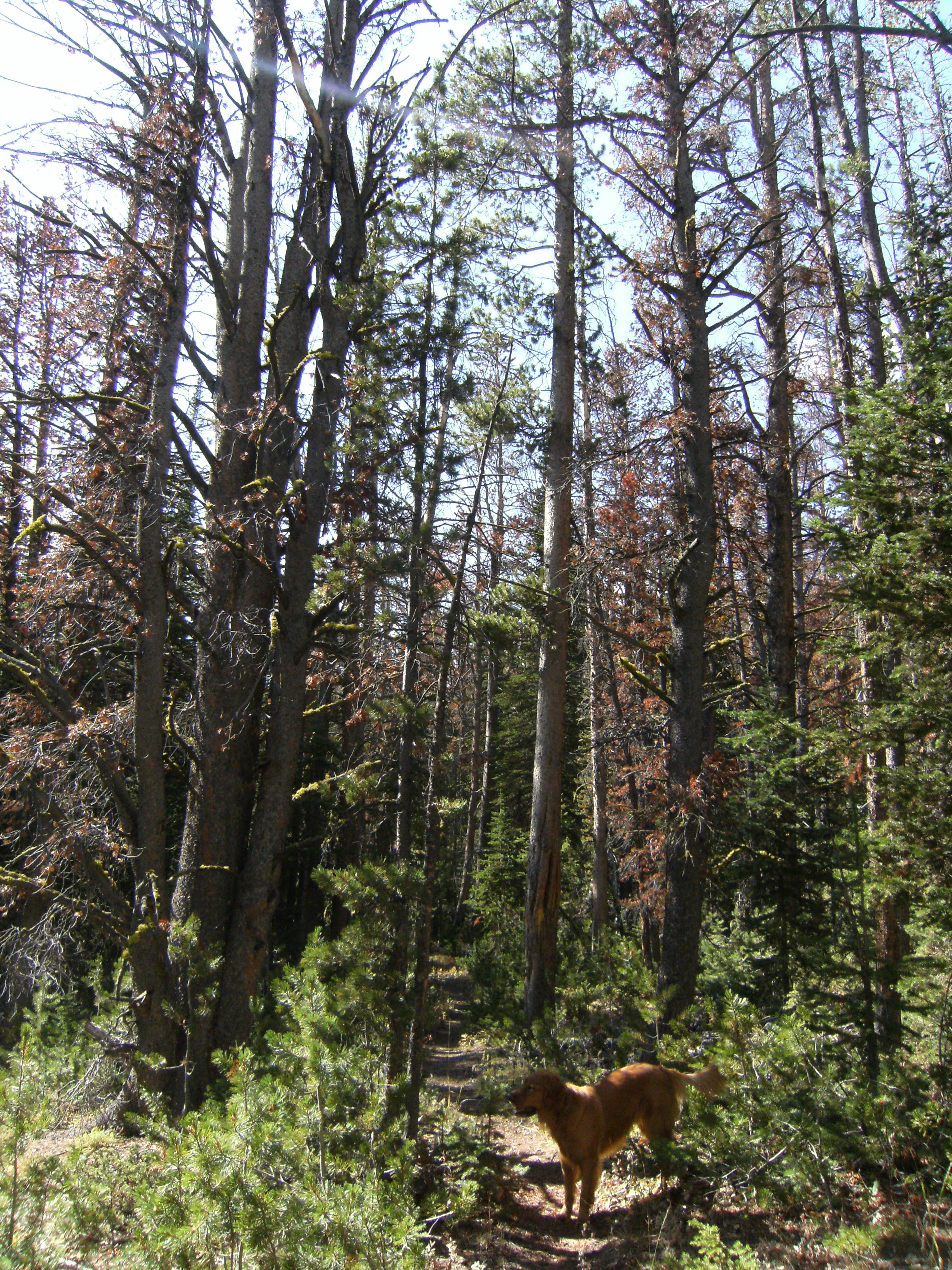
I hiked a few miles up the trail the other day.  The trail winds in high country, although fairly flat, and is home to abundant stands of White Bark Pines.  Alarmingly, most of the mature trees were dead from beetle kill.

White bark pines dead on Reef Creek

White bark pines dead on Reef Creek

I had seen old signs of grizzly scat with pine nuts in it.  I thought of the Great Bear and how difficult it must be to find viable cones.  Bears probably have their favorite haunts.  I imagined them returning here, only to find the cupboards bare.

I climbed higher and finally discovered a few niches of live mature stands.  There are young white barks alive among the dead, but they won’t be producing for 30 or 40 years.

I also encountered the newest addition to my tree list, Abies lasiocarpa or the Sub-Alpine fir.  Its beautiful smooth bark and christmas tree look make it easy to identify.  Abies, or true firs, always have their cones standing upright.  Picea, or spruce, have their cones pendulous (P in the Picea can stand for pendulous).  The botany lumpers and splitters seem to be warring again over exactly if there is a different species named A. bifolia that is almost a look-alike.  But for now, lasiocarpa is good enough for me.

Abies lasiocarpa

Abies lasiocarpa

In contrast to this scene of dying trees, I took a ride up to the Beartooths just two days ago.  I wanted to see this gorgeous area before the road closed.  I was not disappointed.  The mosquitos were gone.  And better than that, I spent the afternoon hiking at Island Lake and didn’t see one person.  The White Barks I encountered around the lakes there appeared healthy although I have never seen much bear sign in the higher elevations of the Beartooths. One of the WG&F bear specialists told me that there aren’t many moth sites they know of there so it’s not a frequented area by many Grizzlies.

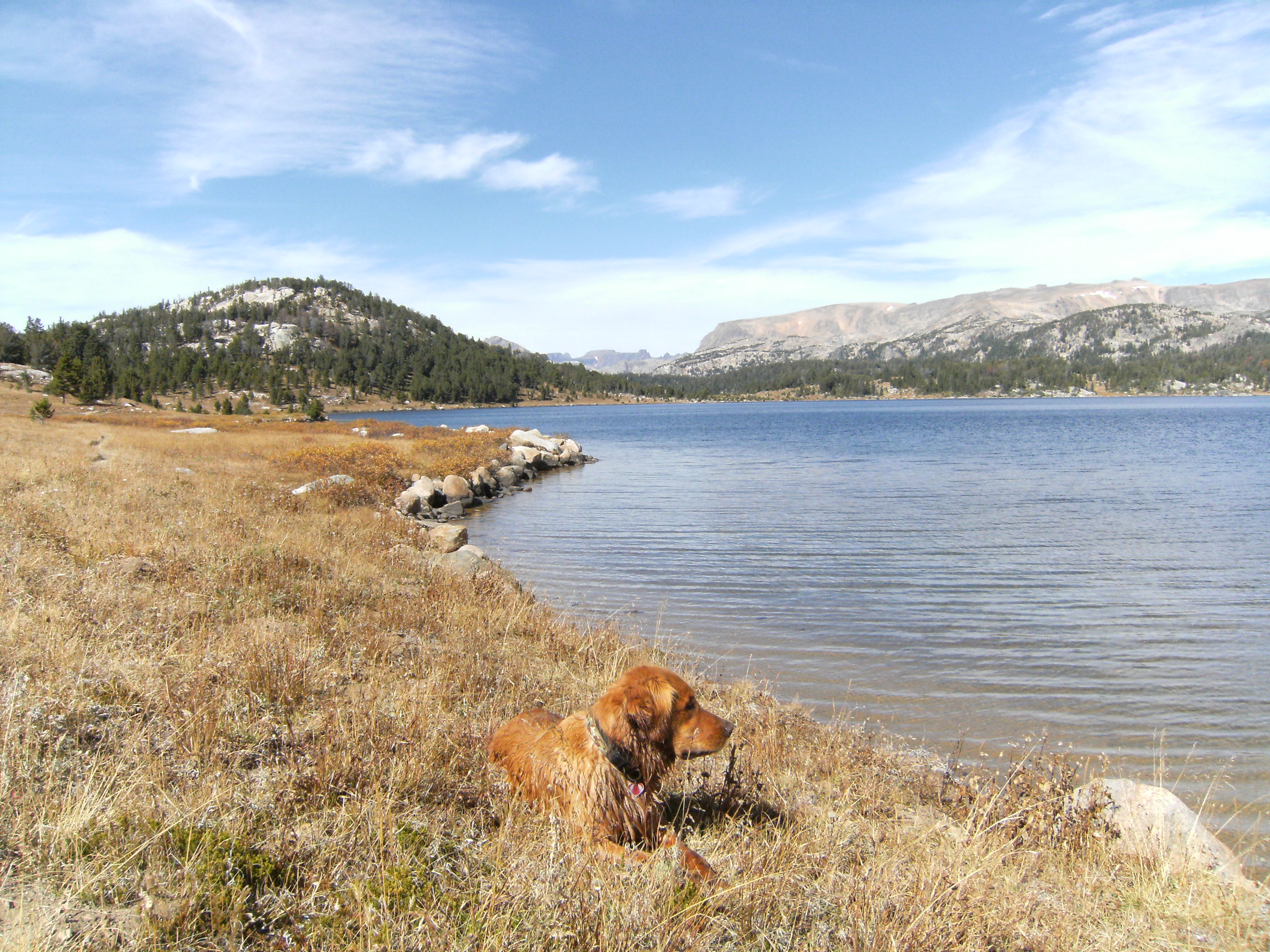
The afternoon was warm and I couldn’t have asked for a more perfect day.Beartooth in fall

Beartooths

Fish in the beartooths

Fish in the beartooths

Ahh, not a soul around

Ahh, not a soul around

The woman who married a bear teaches me about pine nuts

After we visited the bear cave in Yellowstone, Jim Halfpenny sat us down on a nearby log and told a story.

“When we first migrated north from Africa, ancient peoples had no idea how to live with cold, what foods to eat, how to make shelters.  The Bear was their teacher.  Native Americans had several layers in one story.  The first and simplest they might tell to the children so they would stay close and be afraid of bears.  As the child grew older, the same story would be told in greater depth revealing more teaching and wisdom.”

“This story of the woman who married a bear was told in some form all over the world where there are bears.”

Jim went on to tell this ancient story in great detail about a Chief’s daughter who married a bear, lived with the bear clan, bore him two sons and then went back to her people.  When she returned with her sons, half-bear half-human, she was now a changed woman–a wise woman with much to teach her people.

This is the story of why humans throughout time have respected and honored bears, and how it was Bear who taught Humans how to live.

I was wandering in the upper meadows this morning, watching the Clark’s nutcrackers poke their beaks in the pine cones and extract the seeds, stashing them in the pouch in their throats.  Sometimes they’d try and clean the sap off by rubbing their long beaks against the bark. Since all the cones were way high,  I looked for dropped pine nuts on the ground, possibly ones the squirrels and birds had missed.  There were lots.  But every one I opened was no good, the nut had never matured.  I tried tree after tree with the same result and I marveled at how the animals knew to let these bad ones go.  I figured that if my life depended on these seeds, I’d definitely go hungry.

When I had a big garden, I used to fight the birds for the cherries on my tree.  I tried netting, decoys, shiny objects.  But crows and jays are smart and they’d wait till the cherries were just perfectly ripe, then beat me out there.  I’d have only the leftovers.  Pine nuts seemed the same.   I began to think about the Native Americans in the Basin & Range and California traveling far and wide for the Pinyon Pine nut.  Or the Native Californians and their acorn harvests.  There were ancient tricks to this that alluded me.

I knew that when I lived in California, I used to collect Redwood cones unopened, then let them ripen by a window and all the 100’s of tiny seeds would fall out.  Perhaps…

I wandered a bit farther up the denser parts of the hillside and noticed an old middens I was familiar with.  In one of the cavities beneath the trees there was stashed 3 douglas fir pine cones, fresh this year.  And that gave me an idea.  I went back and started hunting for a middens of Limber Pine cones.  Sure enough, I found a really large one with tons and tons of fresh cones, unopened and untouched.

Limber pine middens.  There's lots more than shown and much is buried

Limber pine middens. There's lots more than shown and much is buried

Some even had the pitch gone.  There were cones on top and cones underneath.  I tried a few nuts.  These were the good ones!  These were the ones for squirrel for the long winter ahead.

The cone collector's home

The cone collector's home looking down on us raiding his middens

Then I remembered the bear story.  Bears are smart.  They do sometimes climb the trees for their beloved nuts.  But its a whole lot easier to let squirrel do the work and just raid his larder, and that’s what they do.  Bear must have taught that to the People.  That was my lesson for today.

Look close, I took this bear scat apart & there's pine nut shells

Look close, I took this bear scat apart & there's pine nut shells inside

Tracking class

I just finished the most awesome week in a tracking class with world renown tracking expert, Jim Halfpenny.   Lucky for me the class took place at a dude ranch 5 minutes down the road and although many of the ranch’s clients participated, the final day, Friday, on gaits. was attended by only myself.  So, I had a private lesson.  And as it turns out, gaits have always been difficult for me to understand.  I’m that person when you say “Raise your left hand”, you have to tell me “No, the other left!”.  And that’s why four-legged animals, with double the rights and lefts, confuse me no end.  Jim is a fantastic teacher and was able to simplify the whole gait thing for me.

Monday was a general introduction day.  Tuesday we all headed for the Park, leaving here at 5:00 am sharp.  We spent about 3 hours in the Lamar looking for wolves.  We did finally find one lazing around in the grass.  While everyone was waiting for that wolf to wake up, I spent some time checking the ridgelines and found 30 Bighorn sheep.  Then it was off to Canyon for a look at their new visitors’ center which opened this year.  I hadn’t seen it and I must say it was very impressive.  The displays were all centered around the volcanic activity in the Park.

After watching some coyotes catch grasshoppers and a lunch byt the river, Jim took us to a bear cave.  We hiked in about 1/2 mile.  This cave has been used on and off by bears for many years.  It looked tiny from the opening, but once you crawled inside, all 14 of us fit quite easily and we could even stand up.  It wasn’t smelly at all.  Quite comfortable I must say.

In the bear cave.  We all fit.

In the bear cave. We all fit.

Thursday was devoted to time in the field finding tracks and casting them.  I was so excited because I’ve been wanting to learn to cast but wasn’t sure about proper technique.  We casted several different Grizzlies tracks, as well as raccoon, mink, and wolf.

Raccoon

Raccoon

Raccoon

Raccoon

Hard to see but these are mink prints!

Hard to see but these are mink prints!

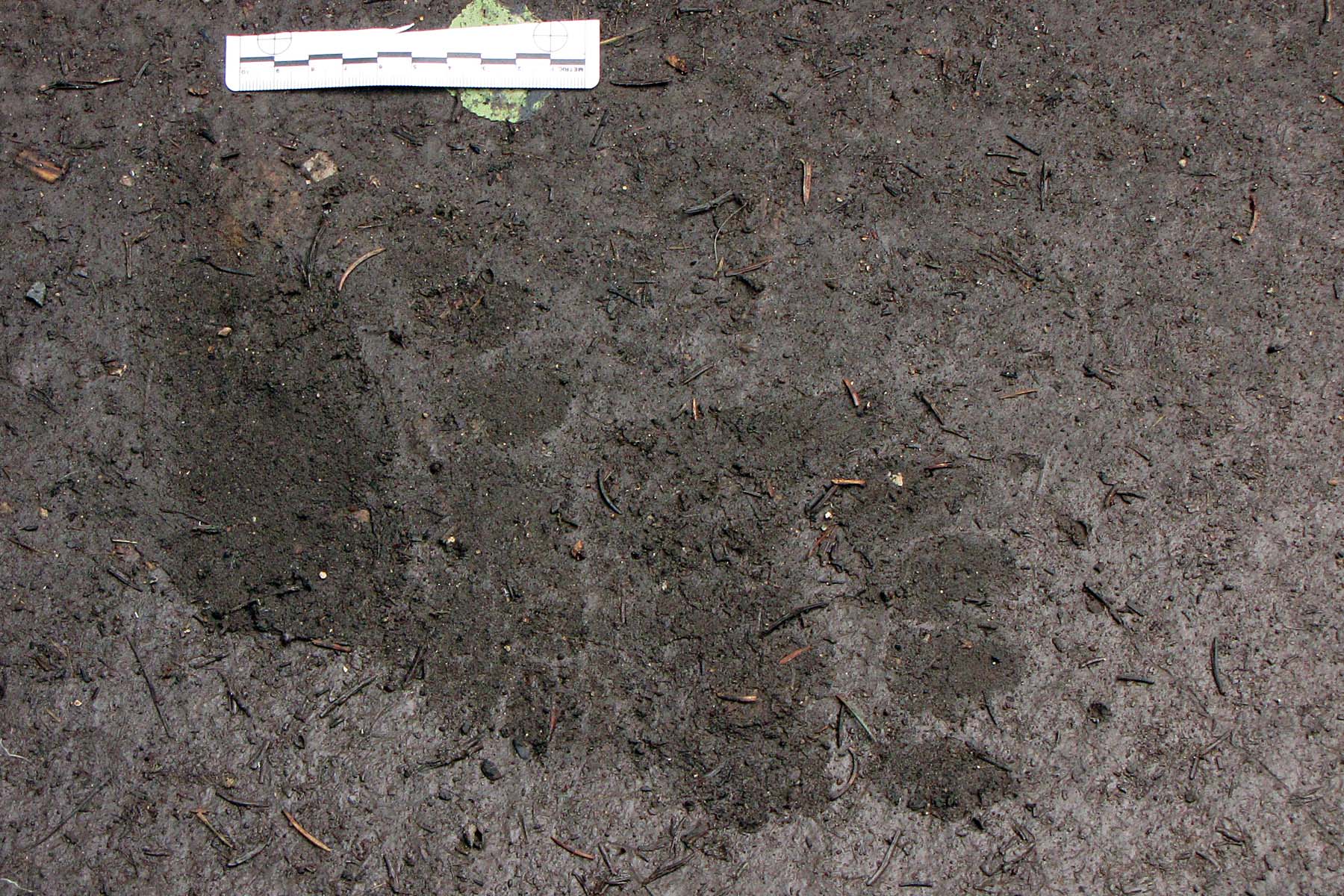
A Grizzly track found by the river

A Grizzly track found by the river

Here I am on Friday with my ‘graduation’ exercise.

I'm happy because I passed my final test and the hardest for me: gait I.D.

I'm happy because I passed my final test and the hardest for me: gait I.D.

Jim found a series of large dog tracks and I had to interpret what the dog was doing as well as  each foot.  I PASSED!   We also found more grizzly, moose, tons of deer, horse, and cattle (ugh!).  Now all I have to do is practice, practice, practice.

More Scats and Tracks

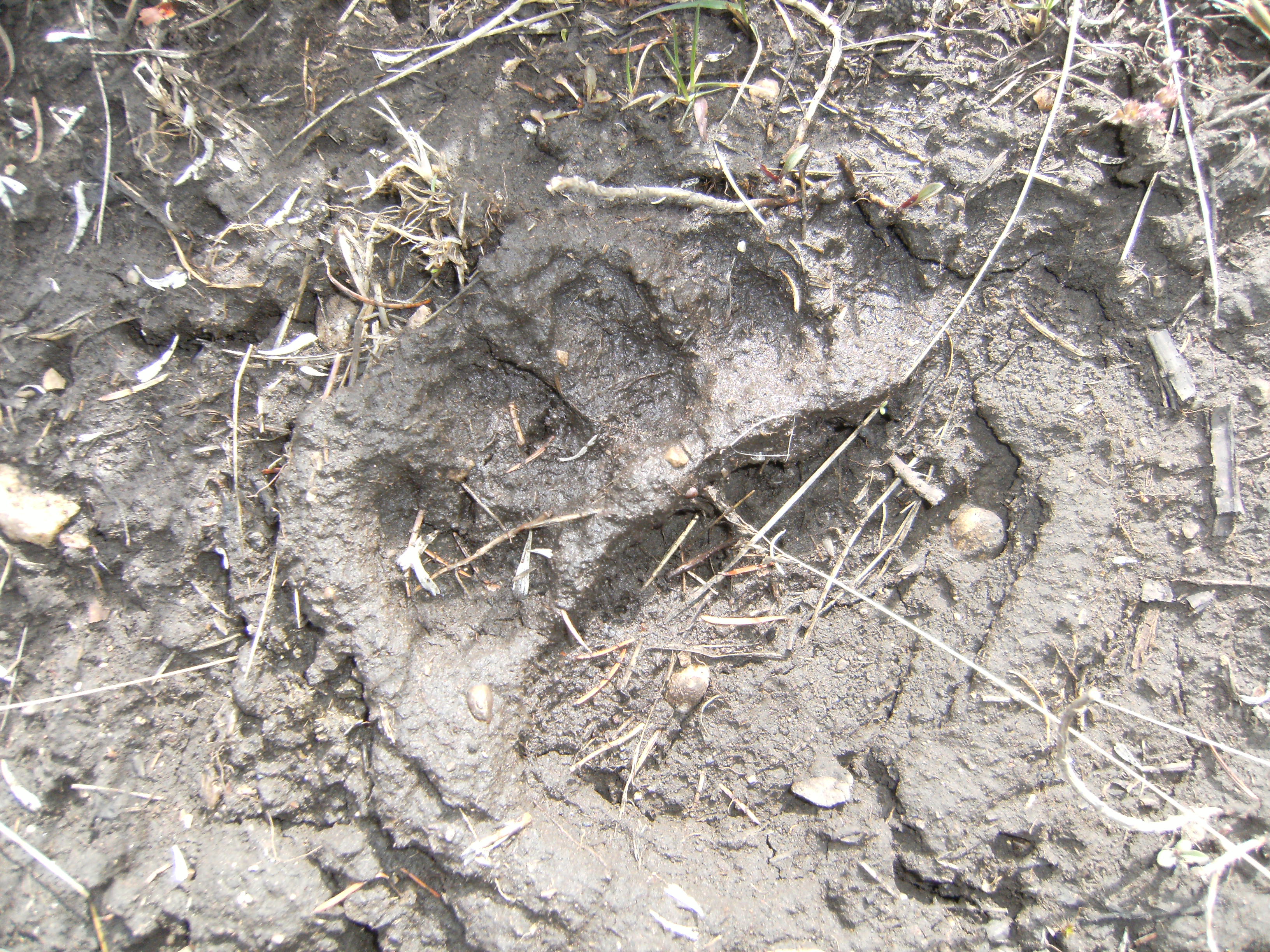
Yesterday I found a cougar track in the mud.  I know there’s a cougar on that side of the creek because a friend of mine saw one a few months ago driving from the Cody Pow Wow down Dead Indian highway.  It was around 9pm, he said, and the cougar was just standing along the side of the road.  He stopped the car and watched the impressive animal for about 10 minutes.  Only one other car, a neighbor as well, came along, stopped and watched.

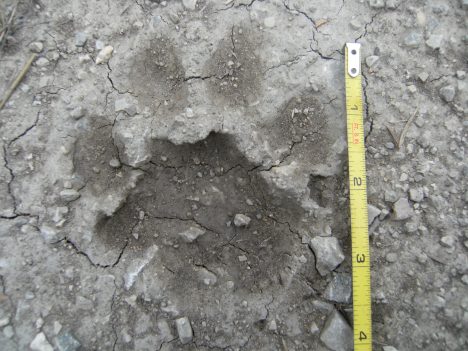
The track was right along the trail, not too far from the trail head. This part of the trail is in eyeshot of the main road, which climbs steeply up the mountain.  The track, measured out about 3 3/4″ length by 4″ wide.

cougar track in mud

cougar track in mud

cougar track with penny for reference

cougar track with penny for reference

Being that the ‘Scat’ post is popular, here are a few more gems!

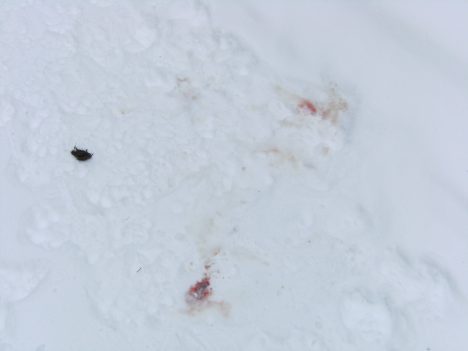
Wolf blood and urine from wolf in estrus

Wolf blood and urine from wolf in estrus

Wolf scat

Wolf scat

Comparison of elk and deer scat

Comparison of elk and deer scat

Moose scat

Moose scat

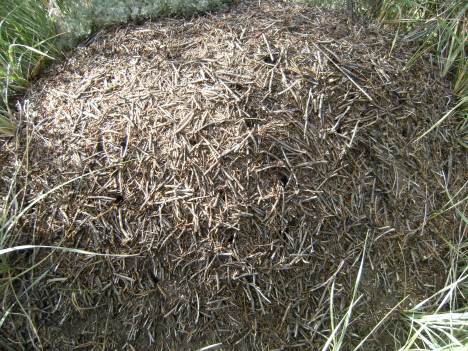
Ant hill

Ant hill

Ant hill destroyed by a grizzly looking for grubs

Ant hill destroyed by a grizzly looking for grubs

Turkey tracks

Turkey tracks