• MY BOOKS ON WILDLIFE, GARDENING AND MORE

  • The Wild Excellence

  • True stories of wildlife encounters around the Greater Yellowstone
  • Award winning eBook on Decomposed Granite, tips, how to's, what to watch for
  • Children's book. True stories of a dog and wolves. In a dog's voice
  • Written for dry Mediterranean climates in California, north and south

A surprise walk

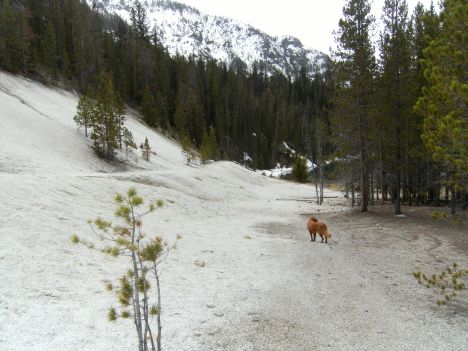
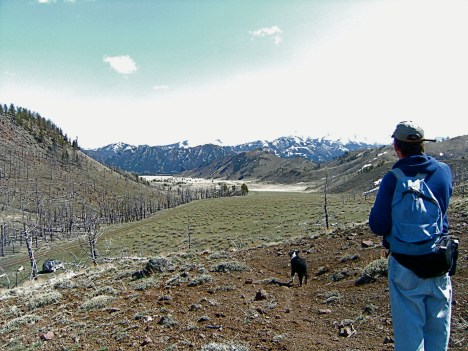
Its starting to feel like the Canadian Rockies here, raining every day, even if just a little bit.  Last fall I had driven up an old fire road that’s usually closed.  I wasn’t sure if they only opened it in the fall for hunters, so I took a drive over there, and sure enough, the road was closed and the gate locked.  I parked and walked up the dirt fire road that leads to high meadows.  This area was home to the ’88 fires and the lush undergrowth shows it.

There’s been so much rain that the forest is lush.Lush forest

More and new wildflowers appear every day.Paintbrushes

Calypso bulbosa - Fairy Slipper Orchid-endangered

Saxifraga odontoloma

A loud almost bell-like sound announced the presence of a marmot hanging in the rock pile below us.  Koda went crazy.  He knew he couldn’t get to the marmot, and that fat marmot just kept teasing him.Fat Marmot

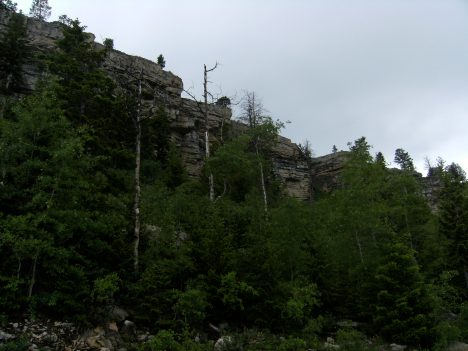
As we ascended higher, the reef cliffs came into view.  A Golden Eagle sat in a tree near the old road cut.  Our presence caused him to take to flight.Looking up at the limestone reef

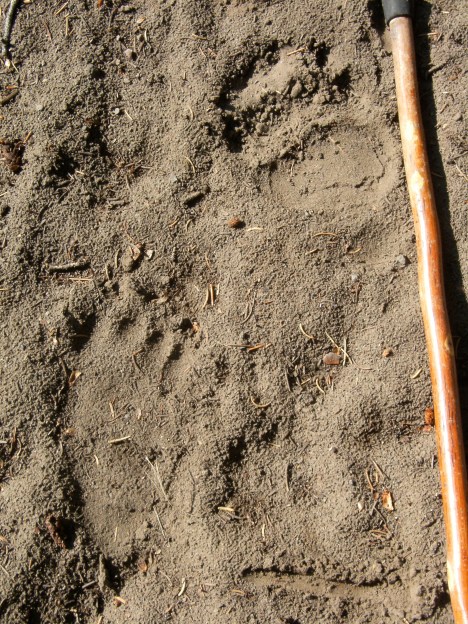
There was a lot of fairly fresh grizzly scat along the road, but the only recent prints were elk.  Occasionally there were faint bear tracks, and it seemed like there might be two bears, indicating a sow and cub.

Pretty fresh bear scat.  Can you see the penny at the right for size?

Pretty fresh bear scat. Can you see the penny at the right for size?

Along the road, there were lots of berry bushes–thimbleberries and raspberries.  A perfect place for bears in the fall as well.

Thimbleberry

Thimbleberry

Way up near the top of the ridge, I suddenly heard a loud high-pitched consistent chirp or call.  I thought it was coming from a large bird and looked towards where I heard the sound, down the hillside.  Meanwhile, the smart animal with me, Koda, was looking up the hillside into the wooded bank.  I turned around and there was an elk in the timber.  Confused about the sound, it seemed to have been coming from the elk, although not at all like the bugling I’ve heard in the fall.   It was a contact call I found out later, between that elk and her calf.

As we headed towards the top of the ridge, an old fire cut from the ’88 fires, now overgrown, was covered with Geraniums.  Apparently these plants like disturbed areas.

Geraniums in disturbed area-old road cut

Geraniums in disturbed area-old road cut

The ridgeline meadows were magnificent.  Plenty of water and waterfalls along the way.  So much water so high up.  The old fires had provided great forage areas.High meadow and old burn

Koda catches a whiff

Koda smells out the grizzlies

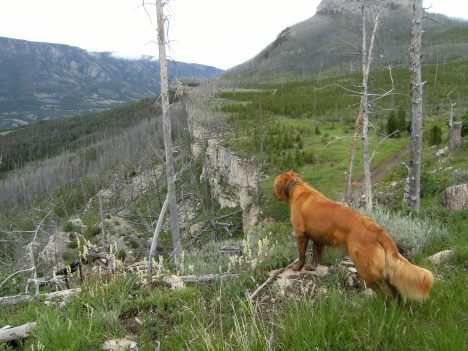
On the way down, Koda stopped at the cliff edge.  I thought he was looking at the view.  My old dog used to relish the views from high ridges.  But Koda is different.  He’s still young and not prone to being pensive nor reflective yet.

I stepped to the edge and noticed two grizzlies below in the tarns.  I don’t know if Koda saw them, but he certainly smelled them.  I bet they smelled us too.  At first I just saw a smallish black bear, and, from afar, tried to make out whether he was a grizzly or not.  It was hard to see the hump or his face clearly enough.  But then, following about 20′ behind, I saw a large brown grizzly.  I assumed the black bear was her two year old cub.  Unfortunately, I didn’t have my new camera with me so the shot is far away.  But, that’s about the distance I like to see bears from.

Look close there's the grizzly

Look close there's the mama grizzly. Black cub is in the upper left corner.

I glassed the bears for as long as the mosquitos would let me.  They moved down the mountain, through the scree and downed timber, foraging as they went.  What a privilege to see these magnificent animals.  As always, I carry bear spray, but what I use the most is my mosquito spray!

Clark’s Fork hike and the vilified wolf

The dump is just up the road about 20 minutes.  Its an auxiliary dump, meaning its for locals and basically a large canister with a locked fence around it.  The whole idea is to prevent bears from getting in, and to help locals with their trash and bear management.  Last year though I did see a horse that was dumped off there outside the bear management fence.  Although the bears couldn’t get into the trash, they sure did get into the horse, along with the wolves.

I really don’t know many people up in the Crandall area yet, nor do I know too many of the hikes.  I hiked with the wolf study gals last fall there a lot, but mostly that was through brush directly to GPS sites where their collared wolf had lingered for more than an hour.

So I stopped and introduced myself at the Hunter Peak Ranch.  Its an old dude ranch that now mostly houses guests and horsebackriding.  The owner, Shelley Cary, was very gracious and I talked for a while with her and her family.  They serve dinner to guests and outsiders with advance notice.  Something good to know for any guests I have.  They also had some great ancient photos on the walls of homesteaders from the Crandall area.  Several names I’d heard of.  One of them, Norman  and Mrs. Dodd, homesteaded in my area.  Apparently people always had to refer to Norman’s wife as Mrs. Dodd.  They lived ten hard miles from the meeting house, which was a one room schoolhouse, and came by a team of mules pulling a buckboard.  Another photo was of the old post office, a long wooden building in disrepair.

I took a short 5 mile hike along the Clark’s Fork trailhead. The Clark’s Fork trail is well marked and well used by horses.  Its in open sagebrush, so if a hiker does encounter a bear, there’d be plenty of room to move.
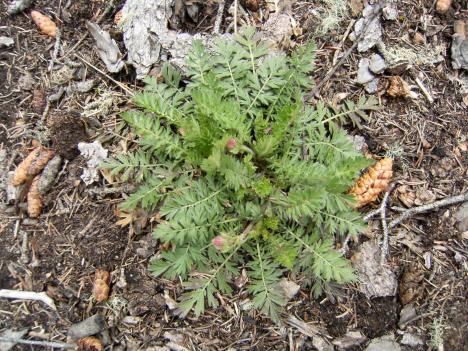
Geum triflorum.  Prairie Smoke
Geum triflorum. Prairie Smoke

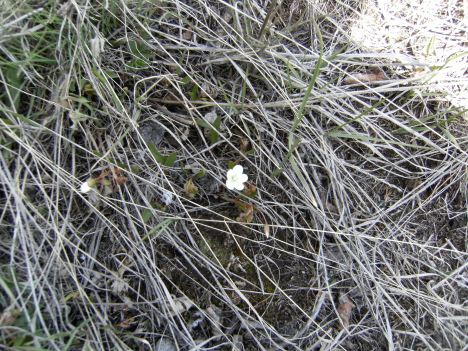
Claytonia lanceolata.  Spring beauties.  Edibles.  Purslane family

Claytonia lanceolata. Spring beauties. Edibles. Purslane family

I’ve been on this trail before and knew of a wonderful secret spot where the river drops into a gorge.
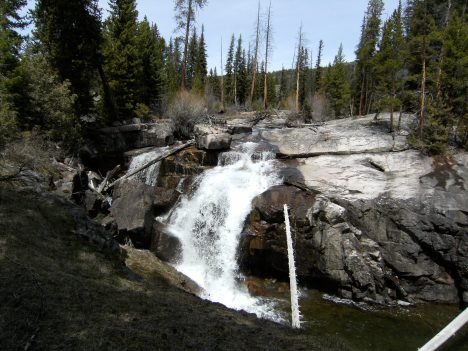
Lunch spot

Lunch spot

I wandered off-trail to the waterfall.

Allium.  Wild onion. Spicy addition to lunch.

Allium. Wild onion. Spicy addition to lunch.

There was plenty of moose sign in the willows around the river, as well as a pair of nesting ospreysKoda and I sat and hung with the fish hawks for a while.  The female was sitting on her nest, although she took some time out to try and scare me off.  The male sat nearby with a piece of fish in his talons.

Female sitting on her nest

Female sitting on her nest

Male osprey nearby nest, with fish in talons

Male osprey nearby nest, with fish in talons

There’s always a plethora of anti-wolf talk in our area.  Besides aggrieved hunters and ranchers, I once talked with a woman whose parents ran an outfitting company.  She was only 16 and hated wolves.  She told me a story about how they had taken their supplies in the fall up to a campsite in anticipation of bringing some hunters up there the next day.  They’d left three dogs with the supplies, alone, overnight, way up near the Yellowstone border.  This was something they were used to doing, for years.  But this year was different.  When they returned the following day, one of their dogs had been killed by wolves.

After lunch, on the way back to the trail, I ran into a fellow resting his horse.  I introduced myself and found out he was a local.

“Find any horns?” he asked.

Horns refers to antlers.  People around here spend lots of time looking for antler sheds in the spring.  They can be worth big money.

“Nope, wasn’t looking for any.” I replied.  “But I did find a pair of nesting ospreys and moose sign.”

“I saw four wolves up on table mountain.  They’ll eat your dog, you know.  Just like that.”

“Yep, that’s why I keep him on that electronic collar.  We have an agreement he and I.  I protect him from wolves and he watches for bears.”

“Those frickin’ wolves, they’ve ruined everything.  There used to be so many bull elk here.  I wish they’d never put them here.”

“I like them.”

“They’re everywhere.  They ran after an elk right through the trailer park the other day.”

I didn’t think he heard me so I said it again.  “I like them here.”

“There’s no more moose anymore.  They’re history.  They’ve frickin’ ruined it all.  Things used to be good.”

“I seem to be seeing a lot of moose this year.  Maybe their numbers are coming back.”

“Oh, where you live maybe, but not here.  Wolves have ruined it all.  Last year we found three bull elk kills up Crandall creek.  They just hone in and kill them.  There’s no more left around here.”

I didn’t bother to tell him that I knew the elk study coordinator had hiked up there this winter and taken samples of the bull kills he’d seen.  He said their marrow was like jelly, an indicator of poor health.  I mentioned all the grizzlies in the area.

“Oh, those grizzlies don’t do much.  Its those damn wolves.”

That’s a typical conversation I’ve had many times.  There is a lot of animosity and anger about the wolf introduction.  These are people who live on the land and know the land, at least in a certain way.  They know where the wolves are denning even though the Game & Fish keep it secret.  They see grizzlies when they’re out. They feel comfortable in the outdoors, but they have been used to not having wolves around for a very long time.  And they resent having to take them into account now.

Its a most controversial matter, wolves.  I tend to be on the side of the wolves, but I also am sympathetic towards the ranchers.  I feel that its’ important to work with ranchers and begin to develop practices that protect their livelihood.   I also know that these large ranches are one of the last ways we can protect the land here.  If the ranches and ranchers are not taken into account, if they loose their land, then those large tracts will be sold and chopped up for development.  That in itself is even more of a death blow to wildlife, especially grizzlies and wolves.  New ranching management practices are critical for wildlife protection as well.  As one of the wolf researchers said to me last year “Something’s got to change. There’s just too much killing going on” in reference to all the wolves killed by Wildlife Services in retaliation for calf predation. (For a video of wolves in my valley, click here)

Wolf on carcass

Wolves on carcass

In contrast, I was reading in the Wind River Reservation Wolf Management Plan about how some of the elders of the tribe view wolves.  There is controversy on the reservation as well, the report says, because many Native Americans have livestock.  But there is magic, wisdom, and most importantly, respect, communicated in their ancient views.   Here is an excerpt from that report.

Traditional views recognize wolves as kin, as strong, as deserving of respect and placed here by the Creator for a purpose. The Shoshone word for wolf means “big coyote.” Wolves lived a long time, were very smart and observant, and listened well. When wolves appeared in a vision, one was to follow what the wolf showed you. The wolf was secretive and special and used to talk with people through telepathy. Wolves were helpers. Wolves were sacred and to be left alone, however sometimes people had to kill them. People were to be careful around them. Wolves could teach virtuous things to people. They were an example of how to care for family members because they took good care of the young as well as the old. The packing behavior of wolves showed people that they should not go out hunting alone. Wolves also showed people to use the entire game animal (the meat, bones, hooves, marrow, skin, etc.) – not to waste any of it. Wolves wandered to wherever the food was, like earlier people did. They did not know boundaries. Now wolves are being confined to certain areas like Native Americans have been confined to Reservations.Gray wolf

More Grizzly news around town

The Wyoming Game and Fish is finally starting their bear trapping and collaring in my valley.  They were supposed to start weeks ago, but the weather was too incremental, with several wet snowstorms, making it impossible to get far enough in to place the traps.  I know this only because one of the students who worked on the elk project this winter was supposed to help with the trapping.  Instead, because the work was delayed, he’s already off to Canada to work with bears there.

Our main dirt road travels directly west, ending about 7 miles from the Yellowstone boundary.  But those seven miles are straight up, through the shale and scree of the Absaroka Mountains.  If you can make it over the pass, you’ll end up in the Hoodoos, one of the most remote areas of Yellowstone.

Past the bear gate, the Absarokas are the eastern border of Yellowstone's wilds

Past the bear gate, the Absarokas are the eastern border of Yellowstone's wilds

The dirt road is maintained for about 25 miles from the Chief Joseph Highway.  After that its strictly four-wheel condition, and mostly only ATV’s can cross some of the creeks at the upper ends.

Past the bear gate its rugged and wild country.

Past the bear gate its rugged and wild country.

About 20 miles from the main highway, the road is closed till July 15.  That’s the ‘Bear Gate’.  People ask “Is that so the bears don’t get into the populated part of the valley?”  But the gate is so cars don’t go up there and disturb the bears.  The idea is that the Grizzlies can have their own space, undisturbed by cars, atv’s, people, when they emerge from their dens.  Its a great idea, but of course the grizzlies do what they want and roam free, which means they are up the valley this direction if they please.  But it does help to discourage weekenders and reduce human-bear conflicts.

Where do they go after July 15th?

Just 10 or 15 years ago, no one knew where Grizzlies went when they suddenly disappeared from the Park in early July.  One day a private plane was flying over the Absarokas and saw bears, lots of them, congregating on slopes of scree above timberline.  They were turning over rocks and boulders.  Usually solitary, this was a strange site to see groups of bears together.  It turned out they were looking for cut-worm moths and eating them at the rate of up to 40,000 a day.  I once saw these moths in the Wind River Mountains.  Thousands of them hanging under a rock crevice.  It was a sight I won’t forget.

The moths provide the bears with much needed fat for the winter.  At the end of my valley there is a glacier.  Its not uncommon to find the bears in the talus slopes in August.

Moths at high altitudes attract bears in my valley in late summer

Moths at high altitudes attract bears in my valley in late summer

Today I drove up the valley for a short hike across the river to a Sulphur Lakebed.

Sulphur deposits around the lake.  Lots of grizzly sign here

Sulphur deposits around the lake. Lots of grizzly sign here

On the way, I stopped and chatted with some new young forest rangers.  I asked about the collaring and if it had begun.

“They’re trapping at the bear gate.  Just a bit beyond it.” They informed me.

I said I wished they’d let us residents know so we don’t hike there.  They put carcasses out as bait and I don’t want to be nearby. “I wish they’d tell us”, the young rangers replied.

I suppose its good science to have them counted and collared.  But I can’t help but feel “let the bears be bears.”

My hike today on the south side of the creek, quite a ways down from the bear gate, was full of fresh bear tracks and scat.

Front and back grizzly tracks.

Front and back grizzly tracks. Notice the penny for size. See the straight line of the grass under the toes

On the way back home, I met a neighbor who told me there were fresh tracks behind his ranch and he’d led the G&F fellows up to where they could place their traps.  There was a huge pile of scat on the road as well. Last week I ran into fresh tracks in two drainages on the north side of the road.

Bear scat with trash collected on my hike today.

Bear scat with trash collected on my hike today.

My valley is where ‘problem bears’ are dropped off.  They take them to the bear gate, or beyond, and let them go, with the hopes they’ll go into Yellowstone.  A problem bear was dropped off just last week.  I think we average about 4 or 5 problem bears a summer.

Several years ago, I had the privilege of riding around with Mark Bruscino for an afternoon of bear education up the North Fork.  We didn’t see any bears, but I learned a lot talking with Mark.  Mark is the bear specialist for Wyoming Game and Fish.  He’s been working to restore the Grizzly population for over fifteen years.  I asked about the problem bears.

“Tell people that the bears they really don’t have to worry about are the problem ones we drop off.  Within days they ‘home’ back to where they came from.”

I think the relocation is an exercise in public relations, with a hope and a prayer that the bear learns something once he gets ‘home’.

The cool thing about hiking in grizzly country is the need to stay alert and aware.  In California, I could hike, think, talk, and space out all at the same time.  But hiking here, in the Greater Yellowstone area, I have to stay aware of my environment all the time.  I listen, I slow down, I look around; and so I notice so much more.  That doesn’t mean being tense. It means being conscious.  I think that’s how we’re all meant to be living all the time.  Taking the predators away, well, we’ve just forgotten.

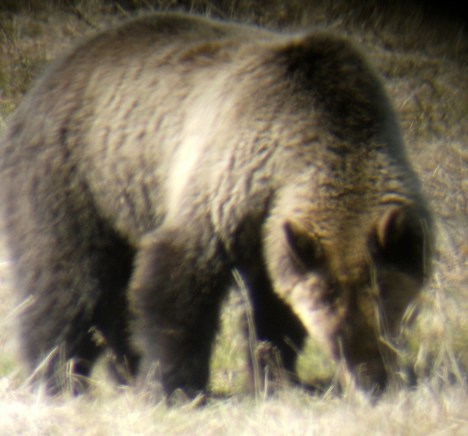
Grizzly photo taken in Lamar Valley last sunday, mother's day

Grizzly photo taken in Lamar Valley last sunday, mother's day

An Advertisement for Yellowstone!

Happy Mother’s day.

Since my son is in New York, I gave myself a present.  The last few days have been either too busy or too cold to go into the Park.  I heard the road opened earlier than the scheduled date, Friday, the 8th.   So on Thursday I headed up towards Cooke City.  I never made it because of a snow storm.  Not that the snow was so bad, but I figured the animals wouldn’t be out.

This morning I woke up early and was out the door by 7am.  I’m only 40 minutes from the Park’s entrance; an hour from the Yellowstone Institute in the Lamar Valley.  Because I had the dog, my plan was to visit for 1/2 day, and take a hike outside the Park the other half, with the dog.

In the span of those 3 hours in the Lamar (or on my way there), I saw: (disclaimer…sorry my photos up close are not great.  I just have a small digital camera that I use because its lightweight for hiking.  Maybe I need to get a better one as well.)

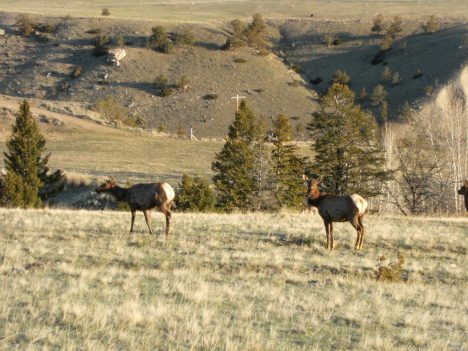
Elk in my Valley.  I thought elk on left looked quite pregnant.

Elk in my Valley. I thought elk on left looked quite pregnant.

First thing on the way to Chief Joseph were some early morning grazing elk.  They are getting ready to calf soon.  My neighbor, on whose pasture these elk are grazing, called me yesterday to tell me to watch my dog as a wolf walked past her daughter yesterday.

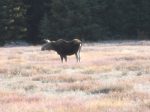
Moose on Chief Joseph Highway

Moose on Chief Joseph Highway

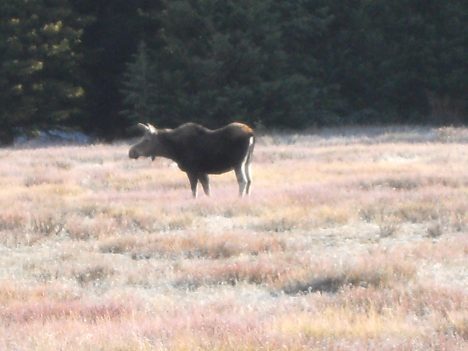
These two moose were up past the 212 turnoff to the Park, right alongside the road.  I didn’t see any moose in the Park, although usually some hang out in the river right past the NE entrance.

This one just sat and watched me.  She had frost on her fur.

This one just sat and watched me. She had frost on her fur.

Here’s the approach to the NE entrance.  There was no ranger at the gate today, so no entrance fees.  Happy Mother’s day.

Entrance to Park

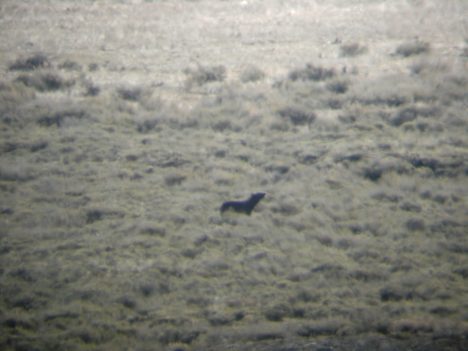
Not too far into the Lamar Valley, I stopped by a crowd with scopes.  I watched 2 wolves for a long time, one a collared gray female and the other a black.  They seemed to be trying to figure out how to cross the creek and road to get back to their den on the other side.  There was a lot of howling and prowling.

This is through the scope.  He was way across the Lamar river.

This is through the scope. He was way across the Lamar river.

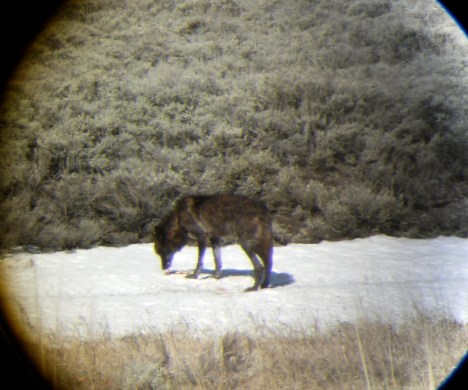
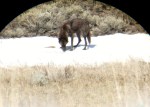
Pronghorn were all over the hillsides.  Bighorn sheep were grazing high up.  I continued down the road a bit, still wanting to see some Bison babies, when I was distracted by another black wolf of the Druid pack, very close to the road.  I stopped and watched with my naked eye.  He was walking back and forth along the stream bed.  He was so close to the road that I thought he wanted to go to the other side as well.   Suddenly, he had something in his mouth.  It was a fish!  He brought the fish over to a nearby snowbank (all this within 200 feet or so of the road), played with it,  rolled on top of it, then devoured it as a magpie watched.

Wolf eating a fish he just caught

Wolf eating a fish he just caught

Wolf eating a fish

Wolf eating a fish

Finally I moved on to see the Bison calves.  The one animal we don’t have in our valley next to Yellowstone is Bison.  They wouldn’t be allowed to migrate out of the park.  Granted, they do shoot a lot of wolves outside the park, but they return and soon reform local packs.  In addition, each state is required to have a certain amount of wolves in their delisting program.  But Bison no state will tolerate because of the perceived threat of brucellosis to cattle.

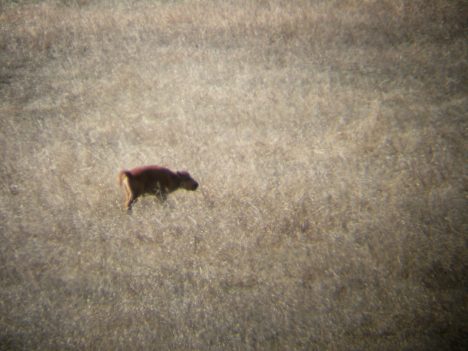
Here are the baby pictures:

Bison calf

Bison calf

Mom with two calves in the grass nearby

Mom with two calves in the grass nearby

If all this wasn’t enough (I’d barely driven a mile within the Lamar), I went a short distance down the road to view the Grizzly hanging out within 100 feet of the highway.  He’d been there all morning.  On my way, another black wolf walked through a herd of grizzlies.  He was joined by a grey and they both began howling.  They were answered by a wolf on the other side of the road, not visible to me, near their den site.  A coyote began yipping in tune to the wolves, and then he sauntered across the road.  Several Red Tail hawks circled overhead, while Sandhill Cranes walked along the water’s edge.

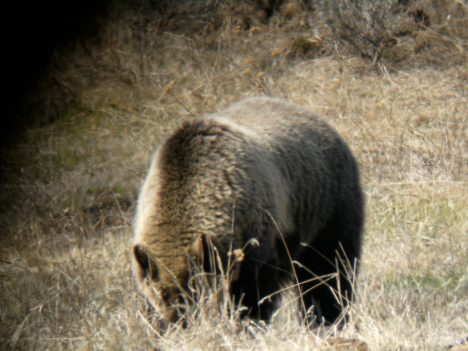
Here is the bear:

This grizzly spent hours upturning Bison paddies for insects underneath

This grizzly spent hours upturning Bison paddies for insects underneath

Grizzly rooting around

Grizzly rooting around

I’ve oftened pondered what makes for that special nurturing quality of Yellowstone.  I left the valley and could feel its warm embrace.  There is so much life there.  The animals seem at peace, not threatened.   They are simply doing what they do, going about their business.  There is always a palpable feeling in the air there, like a slice of heaven.  Is it the volcano living underneath?  All the hot springs?  I think its where the natural order of things are in place.  In Yellowstone, man is not the top predator.  This has been so for generations upon generations of wildlife and they ‘know’ it.

It is time to acknowledge Yellowstone for what it truly is–the serengeti of North America–and treat its surrounding environs as such.  Outside of the Park, they are supposedly ‘protected’, but special interests always come first.  Buffalo cannot migrate to lower ground in the winter or they are killed; wolves even when they weren’t delisted were killed regularly (they know what the sound of a helicopter means outside of the Park); right now is bear hunting season in my valley.

The income from open grazing or from hunting tags pales in comparison to tourists coming to see our ‘Serengeti of wildlife’.  Having the Cattle or Sheep lobbyists win every legislative battle is old school.  It is time we see what we have here that is truly of value, and so unique.  It is time to preserve this land of the Greater Yellowstone Ecosystem, not just Yellowstone Park, and manage it with wildlife as the number one priority.

There couldn’t have been a better advertisement for Yellowstone as this mornings two hours in the Lamar Valley.

Some Scat

I thought I’d post a scat entry with photos.  Some I’m sure of, many I’m not.  Not all have size references.  Sorry about that.  I’m now starting to carry around a penny which I’ll put with future photos.  A penny is exactly 3/4″ in diameter.

Breaking up scat helps in identification and is a window into what the animal was eating.  Smelling scat (do not smell raccoon scat as they can carry a parasite that is fatal to humans) also holds clues.

Animals communicate vast amounts of information through markings and scat.  Many times I’ve watched Koda intently smell an area, then urinate on it.

Koda with his nose in a squirrel hole

Koda with his nose in a squirrel hole

One time he was smelling a log that had no obvious scat on it.  Because he is still a pup, he started licking the log to ‘uptake’ the smell better.  I got down and smelled the log and was overpowered by a extremely pungent smell.  Other times he spends a lot of time smelling an area and when I put my nose to the ground, I can’t discern anything.

One time in California I was at the tracking club meeting.  We were circling a large field and found mountain lion scat.  The group leader advised everyone to get down and sniff it.  One whiff of that scat and you’ll never forget it.  It made the hairs inside my nose stand on end for a long time.  Imagine your kitty litter box, then multiply that smell 10-fold.

Last year in the spring I had both my dogs with me in Wyoming.  My old dog started making a beeline for the woods.  I followed her to a fairly fresh turkey kill, probably from a coyote.  The kill was in the nearby vicinity of the cabin and the magpies were already on it.  The 2 dogs spent lots of time chewing and further demolishing it. Early the next morning, on the walkway in front of my house, a coyote left his fresh scat.  My old dog smelled it, but before I could hardly look at it, the 6 month old dog gobbled it up.  Koda was still learning about smells and scats, and eating it is another way to really remember it.  (I, personally, will not go that far!)  I had the distinct impression this particular scat was left for my dogs as a calling card, as if to say, ‘this is my territory and that was my turkey you fooled with.’

I’m a crazy beginner at this.  I find it’s a fun way to explore what’s happening around me. Learning scat takes practice and lots of direct experience.  I take photos, then go home and look at Mammal Tracks & Signs by Mark Elbroch.  Elbroch’s book contains tons of color photos throughout.  He includes photos of tracks, scat, as well as sign.  The book is thick at over 750 pages. Too bad he doesn’t include ‘scratch and sniff’.

Unknown scat

This one's unknown, found in the woods nearby

Marmot in hole with scat above

See Marmot scat at top of photo. Marmot's in his hole.

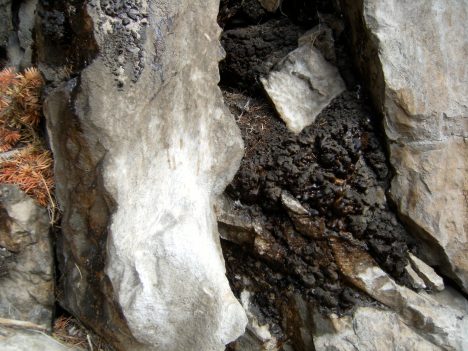
pack rat scat

Years of pack rat scat.

Canid scat

Could be coyote or wolf. 25% of wolf scat is coyote size.

Bobcat I think.  Smells like it.

Smelled like a cat. Bobcat I think. Cat's digest 90% of the bones.

Owl droppings

Owl on tree. Notice the white droppings.

Bear sweet smelling scat in the spring

Big pile of bear scat. All forbs/grasses. They clean themselves in the spring with grass.

Mustelid I think.  Smelly and strong.

Some kind of mustelid I think. It was skunky smelling.

Another mustelid, I think.  On the same trail as the other scat.

Another mustelid, I think. On the same trail as the other scat.

Grizzlies and the Edge of Eden

The last two days I hiked into several drainages where the hottest spots of the Yellowstone 1988 fires burned.  After 20 years those soils are still so sterile that no new trees are growing.  Hottest area of the '88 fires.  Sterile ground, good forageThis is an area of excellent forage though, with young sweet grass and sagebrush.   Pulsatilla flowers just emerging nowThe snows are just beginning to melt and seasonal streams are running.  With a forest of dead timber, standing and downed, the run off will be fast and furious.  But its early still and the streams are gentle.  A huge log jam up river, crazy every which way, testifies to last years’ fury.

In summer, without the advantage of shade,  this place is too hot to hike in.  In the fall, it is full of hunters hoping to kill bull elk migrating from the Park. There is a strangeness here, the dead trees stand as sentinels against the hoodoo-like rock carvings from ancient lava flows.Dead trees and lava hoo doos

This is grizzly country.  They inhabit these draws, drainages that rise abruptly into high meadows; forests thick with Lodgepoles and Limber  Pines.  Spring is the best season here.  The dead timber provides homes for insects that attract an abundance of birds.  A woodpecker fights a flicker for territory, running him around and up a dead tree.  Finally the flicker retreats.  I find it curious this jockeying for dominance in an area of abundant food.There is a strangeness here

We saw grizzly tracks both days.  On the second day we followed a grizzly trail, although we were backtracking him. Grizzly track The trail, not on the map, was a highly used game trail that went up the wide mouth of the drainage. At times the downed trees were so thick the trail disappeared.  When the trail faded, we watched where the grizzly had chosen to go, figuring he’d have taken the path of least resistance.  It led up the creek bed, the stream disappearing and reappearing in odd places.   At one point, we crossed under a large downed tree trunk,.  The tracks passed directly underneath so we looked for fur stuck to the nubby remains of the branches.   There were a few hairs there.  Claw marks on trees noted where a grizzly stopped to mark his territory.  They were so high I couldn’t reach them.  That’s a big bear.Grizzly scratches on pine tree
Another tree with grizzly marks
A coyote,  running in our direction on the far side of the draw, suddenly smelled or heard us, and decided to turn back.   A bloody leg dangled from his mouth.  Koda noted the spot near the trail where the kill might be, but I called him back, fearing we’d find that grizzly there.  On the way back down, we walked over to the site Koda found.  A kill a few days old, the only remains was a small rib cage of a young elk or deer.

Its grizzly time right now.  They won’t be going high to find their moth sites until sometime in July.  Tonight  I watched a powerful video about  Charlie Russell called The Edge of Eden: Living with Grizzlies.   Charlie grew up in Canada  on an outfitter’s ranch.  He was a cattle rancher for years and had to deal with grizzlies.  He found that if he left out some winter kill cattle for the hungry grizzlies in the spring, they’d leave his cattle alone the rest of the year.  He wanted to understand grizzlies better and went to Kamchatka, Russia where the local zoos kill orphan cubs.  He began bringing these cubs back to the wilds, acting as their mother and protecting them for a year, sometimes two, then allowing them to roam free.  It’s a marvelous video  (that won several  film festivals) and story about a man trying to help restore respect for the grizzly as well as pioneer new strategies for those living in grizzly country.  To order the video, contact skyfilms@xplornet.com.

Grizzly and mud

Well, the first bear was spotted the other day.  I talked with the fellow who saw it.  He was driving down to the old bridge, no longer in use, to go fishing.  From the road above he saw the grizzly walking across the bridge.  It’s now a forest service campsite, rarely used except by a few fisherman.  I asked if he went fishing.  “Nope, just turned right around.”

The odd thing is that I was down there twice that week and didn’t notice any bear sign, and there was plenty of snow and mud for tracks.  Grizzly track

And even though we’re still getting snow, the nights aren’t too cold and some of days are actually warm.  The bears will be coming out and be hungry, so I’m keeping watch and starting to carry bear spray.  Grizzly tracks near fishing bridge

Today!

The good news is that its still so snowy and muddy that tracks will be obvious.  The bad news is that it’s so muddy.  Hiking in snow isn’t bad, but the mud here is unlike any I’ve ever seen.  In Northern California where I gardened, I spent lots of time working with tight clay.  I dug in it, I hiked in it, and I tracked lots of it indoors.  But that clay soil doesn’t hold a candle to the Bentonite clay soil around here.  Its because of all the volcanic ash that was once here.  That’s how it forms.

Just a few steps and your boots weigh twice as much.  If you’re walking on a hill, you’re likely to be sliding towards the creek or cliff.  Your horses will slip in it.  If you’re in your car on a muddy dirt road,  soon you’ll be spinning out.  That sticky mud won’t come off your soles easily and it dries into a cake.

Another interesting annoyance I’ve learned about this mud is that after its caked on my car from driving along the dirt roads here, and then freezes at night, my back doors won’t open.  The mud kicks up onto the wheel well forming a large muddy frozen mass that cements my doors tightly shut.  I’ve driven into Cody where it warms up during the day, parked my car, only to come back and find mud oozing off the wells into large pools on the parking lot.

Humans looked at this mud and said “we’ve gotta figure out a way to make money with it” and they did.  Big Horn Basin is a major producer of bentonite, used as drilling mud for the oil and gas industry, but also, and maybe more important, as a main ingredient in kitty litter.

Knowing that it’s helping indoor cats certainly doesn’t make it more appealing to me.  But I’ve decided that it can be personally useful.  My Jeep is so muddy there’s no reason to clean it yet.  Until things dry out around here, the car will just get dirty again in less than a day.  But I don’t want to wash it anyways right now. With that cakey mud you can’t read my license plates.  Now there’s a way it could actually come in handy.Muddy unreadable plates!

Pheromones, Pine Beetles, and more about fires.

I talked with the Wyoming Dept. of Forestry today.  Apparently, the state deals with private landowners, not the forest service.  I’m definitely going to go for ordering pheromones for my trees. Paul in the department told me that, yes!, the grizzlies do use the Limber Pine nuts as well as the Pinus albicaulus.  He also told me that because of lack of fires, the Limber Pines have become an invasive on rangeland.  Of course, I don’t have rangeland.  I butt up to a National forest full of Limber Pines from 7000′ all the way up to 8200′ or more.

He said they’ve been doing a lot of management with the North Fork and South Fork, but up till a few years ago, my area was doing okay enough.  “Not anymore” we both acknowledged.  The south facing slopes across from me are full of beetle kill on the ridge tops.  The end of my valley that butts up against the Park is now about 50-70% dead trees. Compare that to the east entrance to the Park (up the North Fork) which is about 90% dead standing timber.

The fires of ’88 came through parts of my valley and through Crandall, which is north of me.  In fact, the tiny town of Crandall was almost entirely engulfed and thanks to a major effort, was saved.  When you drive by Crandall, you can see where the fires came down almost to the town.  Apparently, it was some of the hottest fires.  Now the hillsides are regenerating with Aspens.  Cathedral Cliffs along Chief Joseph Highway

The point is, those fires near me in ’88 helped form a buffer from the pine beetle which spared my area up till now.  But like the economy, those fires of ’88 just ‘kicked the can down the road’, and now my valley’s time is up; due for a big fire.

This winter there’s been logging trucks on my dirt road daily.  The biggest private landowner is logging beetle kill around his property for fire protection.  The Game & Fish clear-cut a big swath of spruce and fir to make way for aspen growth, and the neighbor to my east is cutting and burning beetle kill weekly.  Everyone is aware: its only a matter of time till the fires come this way.

The thing about the blister rust on my trees is that they’ve weakened the pines, along with the many years of drought.  Paul said that usually the rust doesn’t kill the trees, especially in the Rockies due to the dryness.  And I can see that’s true.  These are older pines and surviving despite the brown needles.  But then the pine beetle finishes them off.

This is not a spruce or pine beetle but a wood-eating beetle that eats dead wood. They are scary looking though and BIG!

So I have a choice.  Spray with Sevin or use the Pheromone packets.  The spray lasts for 2 to 3 years.  The Pheromones only one.  But its a no-brainer for me.  I’m just not going to use a non-targeted toxic chemical.  Non-targeted in the sense that it kills beetles, and also other insects that could be beneficial; plus the other types of toxicity.

The pheromones simply are a chemical mimic that tell the beetles “This tree is occupied with beetles already.  Go find another tree.”  If you already have beetles in a tree, neither the chemical nor the pheromones will work.

Paul will come over and look at my property.  Its fairly expensive at $7/packet; but its for a good cause.  What we discussed is instead of just tagging important trees, I’ll do a grid of packets over my 6 acres.  When he comes over, we’ll look at the density and see if I need less than the 30 pkts/acre, which I think I will.  May is the target month to put the packets on the trees.  The beetles fly in July and August.

Wolves, turkeys and free attention

A cacophony of sounds coincided this evening in one unexplainable happening.

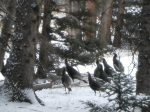
I was outside at dusk when the turkeys in the forest started making a huge ruckus.  The last time such a noise came from them, a large hawk flew out of the forest.  But tonight was crazier.  Not only were the turkeys in a frenzy, clucking and screeching, but one of them was screaming uncontrollably.  In my imagination, a turkey was being murdered while the other turkeys scolded the perpetrator.Wild turkeys, not native

In fact, I did once witness this same phenomenon with some small birds.  I walked outside to find a cat that had a wren in its mouth, while dozens of other wrens screamed from the nearby rooftop.

While the turkeys were going wild, Koda, who’d been listening to the birds, began staring westward towards Herman Mountain.  He had picked up the faint sounds of a howling wolf .  As I strained to hear the wolf, several other wolves across the valley began to answer.  The wolves began howling back and forth to each other.  This lasted several minutes–the wolves howling,  the turkeys complaining.  As the turkeys began to settle, the wolves called for a bit longer–then all was still.

Its a mystery to me if there is any connection between these two auditory events.  Its around turkey mating season, so maybe that’s what all the fuss was about.

Yesterday I took a short jaunt around Herman Mountain.  Mt. Herman from my cabinThat mountain is actually named after the man who built my cabin in the 50’s.   Herman Elsbury owned a sawmill near here.  All the logs from my two cabins were from the valley, which he milled.

It took some exploring to discover the high trail a few years ago.  I had used all the deer trails, which climbed from one steep forested area to another with several plateaud meadows between.  The high trail is reached from the backside which is gradual and climbs to the highest plateau.  Its a beautiful hike, and last summer JB showed me how to access the peak.Mt. HermanI haven’t been carrying bear spray yet, although there has been sightings in the Park and on the lower Clarks Fork.  I haven’t seen any tracks around here.  Hiking in the GYE is unlike anywhere else in the U.S.  Its not a jaunt in the woods.  Its a primeval experience.  You have to have all your senses in gear, alert, open, present.  It is a wonderous experience that takes you back to your native, most basic existence.
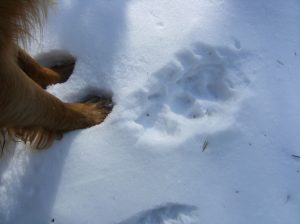
And since I wasn’t thinking about bears, well, I really wasn’t present.  I was on a little mental holiday.  Until I was jolted out of my reverie.  In the deep snow, about a mile up, suddenly huge tracks appeared.  Not of a bear, but of two, maybe three, massive wolves.  They had run easily up the steep side, my side of the mountain, and were heading I assumed towards the meadow where I’d seen 150 head of elk the other day.

I’m not worried about wolves for myself.  They’d be afraid of me.  But I need to be vigilant when I hike for my dog.  Although I’ve heard that if your dog stays close its unlikely anything will happen.  I’ve also heard otherwise.  And by the size of those tracks, those wolves were a lot bigger than Koda.  Wolf tracks with Koda

The wolf howling nearby tonight may have been the same wolves I saw tracks of yesterday on Mt. Herman.  There are supposedly five in the valley; one has a limp.  My friend saw four of them, all black, crossing the road the other evening.  They seemed to have regrouped since last summer, when the pack was mostly killed off for predation, leaving a mother and her yearling pup.

My walk, and this evening of turkeys, was just another reminder:  this place is a wild place; and it is always, in every moment, deserving of my free and total attention.

Dancing Bear

I just had to post this.  Too funny.  I always love the warnings at the end.

Several years ago they were collaring wolves in the valley and I ran into a signage on the trail that read “”Caution.  Live Traps. Gray wolves are being trapped in this area for radio collars.  The traps are leg traps.  If you see a wolf in a trap do not attempt to release it.”

Duh!  Would I really go up to a live wolf in a trap and try to set it free?

Anyways, enjoy the video and kids “Don’t attempt to be a dance partner with a bear if you see one in the wild.”