• MY BOOKS ON WILDLIFE, GARDENING AND MORE

  • The Wild Excellence

  • True stories of wildlife encounters around the Greater Yellowstone
  • Award winning eBook on Decomposed Granite, tips, how to's, what to watch for
  • Children's book. True stories of a dog and wolves. In a dog's voice
  • Written for dry Mediterranean climates in California, north and south

Fences, predators and prey

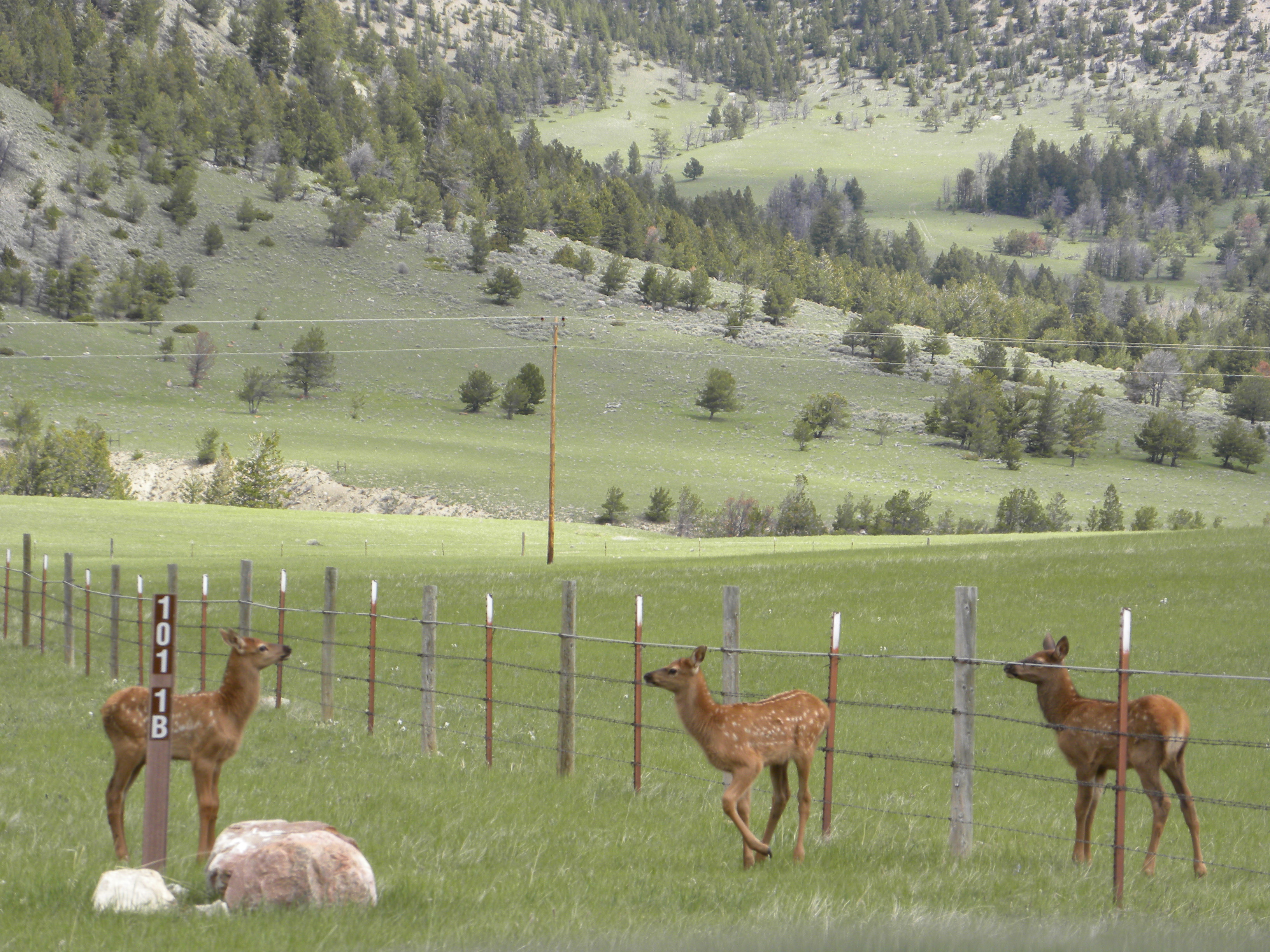
I recently helped out the Absaroka Fence Initiative retool an old fence so it was wildlife friendly. It was a fence that defined private/public property where the ranch owner ran cattle in the summer. The fenceline looked over the vast expanse of the Clark’s Fork Canyon where masses of elk overwinter. The Absaroka Fence Initiative has been replacing fences for several years to make them more wildlife friendly, mostly concentrating in the desert areas around Cody. All volunteer and there were plenty of people who turned out for the morning—probably over 30. There’s a formula for height of wires and how many. Pronghorn don’t like to go over fences so a higher bottom wire that is smooth helps them out. Height matters so elk and deer who jump fences don’t get their hooves caught. It’s a wonderful NGO that is doing great work for wildlife and ranchers as well throughout our area.

But it also got me thinking about fences in general. A few weeks ago I came across a very large old bull elk that was killed by a mountain lion. The bull was caught between a wooden fence and a dirt road (that edged a steep hill on the other side ). Even though this was an easy low visible fence for an elk or deer to jump, moose are not so adept at jumping fences, nor are they very agile. The cat obviously used his advantage of the fence, killed the moose where he would have been easily visible from the road, then dragged the carcass a few feet next to the fence hidden by bushes.
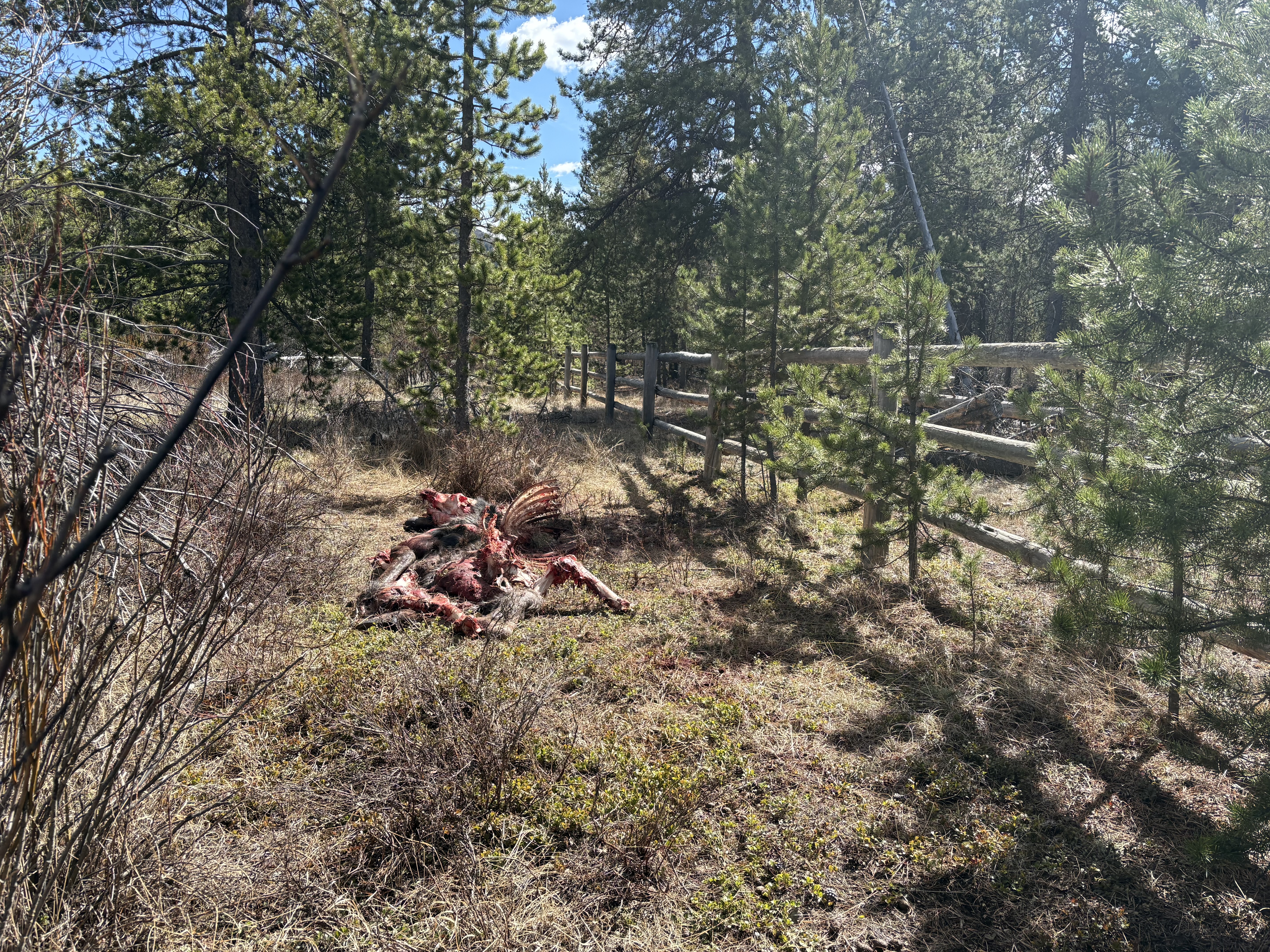
Moose carcass by fence. The road is 25′ to the left up a slight rise

On a recent March morning I was hiking through a hillside of sparse tree cover bordered by a large meadow. Deer like to travel on animal trails through the tree cover, feed in the meadow, and move and rest in the trees. I came to what’s known as a “drift fence”, a fence that solely serves the purpose on public lands to keep cattle on one side or the other. I was following a deer trail, went under the fence and found a myriad of deer bones on the other side. I estimated about 4 deer over the years had been killed right at that fence line. No way of knowing what kind of predator that was, but certainly they were using the fence like a wall.

Last year I visited with Quinton Martins, a mountain lion biologist who has been doing a study in the Bay Area Sonoma County, CA since 2017. He took me to several of his sites where he had picked up the GPS signal from a few different females he was tracking. While we rode together he told me about his study area:

“The males we have collared—P5 has 17,000 private properties in his territory. P31 has 11,000 private properties. How do you contact that many people and access all those properties to inspect fences or signs of prey? This dilemma is confounded by an increase in weekend private property owners. When you overlap a land parcel map it is as if you are looking at 50,000 or 100,000 mini ecosystems, so you can’t just throw a vegetation layer over it and say ‘OK, this is what the cats are doing.’ As their primary prey is deer, it might look like great deer habitat on a map, but in many cases these properties are fenced to keep deer out. So there might be no deer in areas where you expect deer, but cannot tell because you can’t access the properties very easily. And walking each individual land parcel, one finds different plant and animal resources, a variety of fence types that block or allow animals to move through, and each parcel managed differently to some degree.”

Martins told me the lions are using fences of any type to strategically block or corner and kill deer. In fact, as we approached the previous property, Martins pointed out a cougar-killed deer carcass hanging against the fence that enclosed the vineyard.
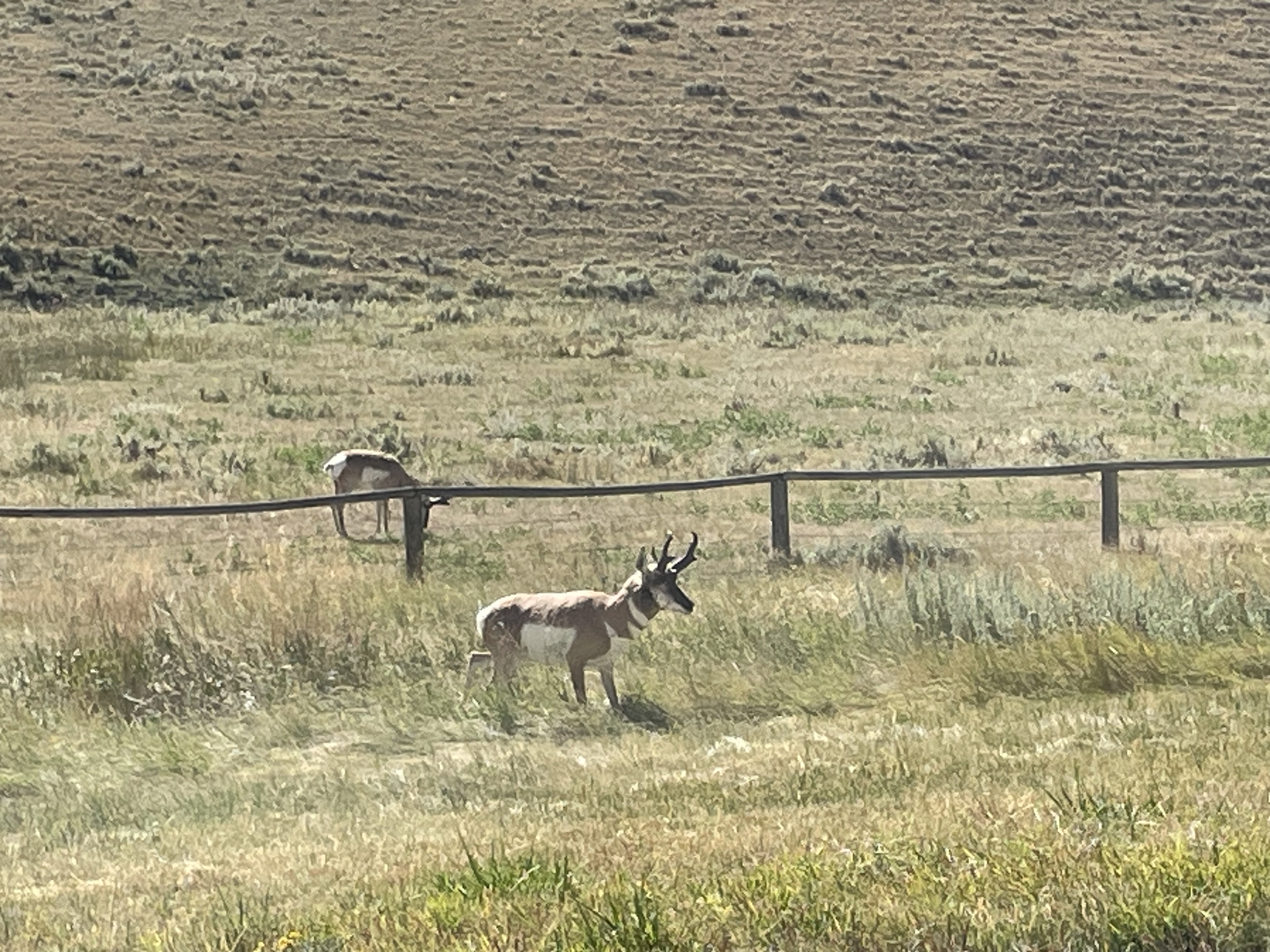
Although this appears like an easy fence for the pronghorn to jump, he’s roaming back and forth trying to find an opening because the bottom wire, which he prefers to go under, is too low.

This is not just an issue on lands in the West that border vast parcels but clearly applies to rural areas as well near cities. Having worked as a landscape designer in Marin and Sonoma Counties in the Bay Area, I know the push to keep deer out of people’s private property so they can grow a garden of their choosing. But as Martins explains, these fences are not only keeping resources from deer, but aiding predators.

But fences on public or private lands that are untended, in other words, have loose barbed wires, are even greater hazards because fleeing ungulates can easily get their hooves caught when the wires aren’t tight and clearly visible. AFI also rolls up these dangerous and useless fences.
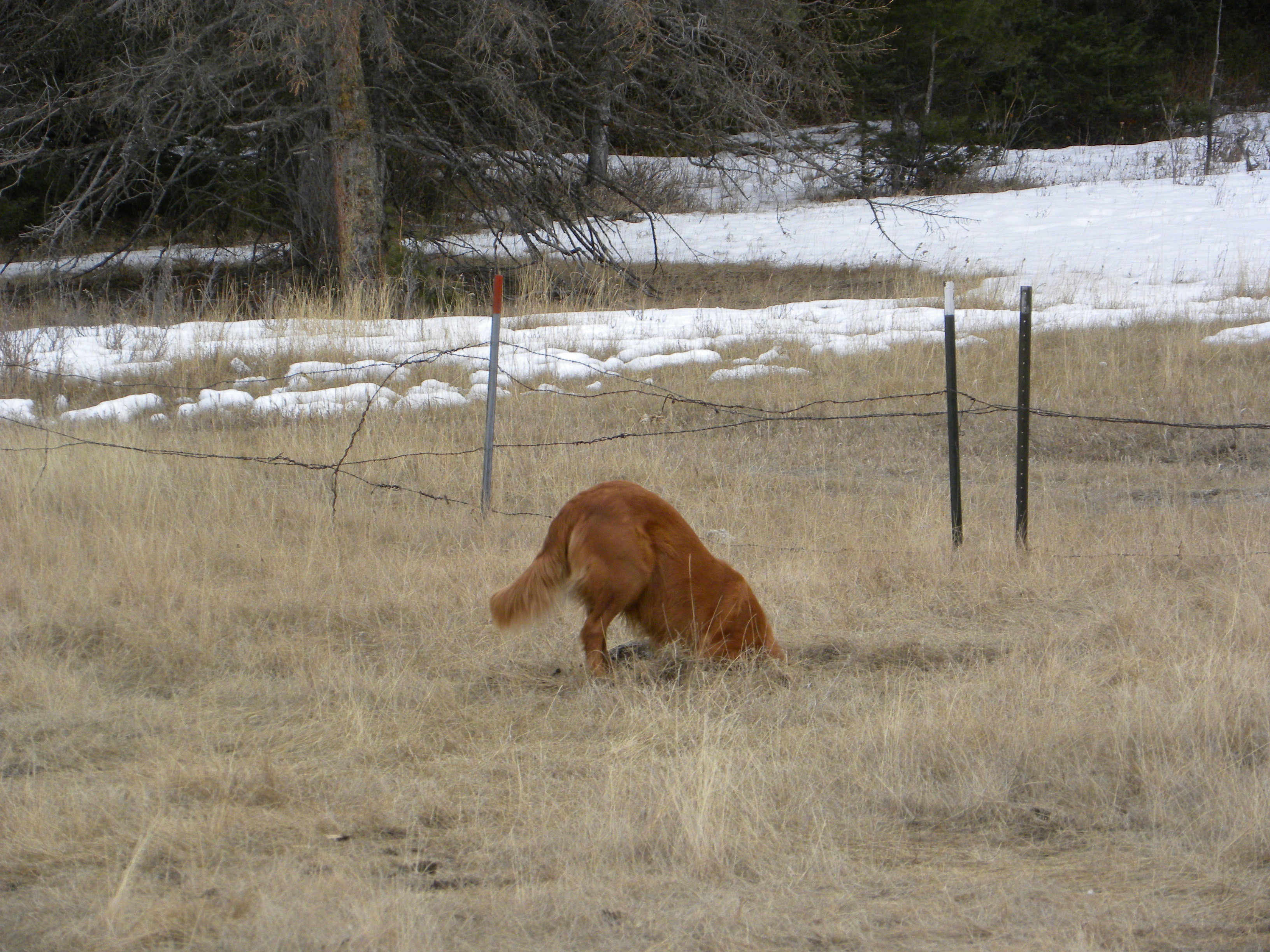
This is an extremely dangerous fence for wildlife. So easy to misjudge a jump and get tangled in the wires
This calf somehow got inside the private property but couldn’t figure out how to get out. The owner and game warden helped free the calf.

The saying goes that barbed wire settled the West. That’s because it was so cheap and easy to install vs. wooden fences. It was then, in the 1880s, that our wide open ranges disappeared.

The ‘Common’ Deer

I recently watched a Nature show on Whitetail Deer.  Deer are probably the most studied wildlife in the United States.  This show revealed some new ‘secrets’.

We all know deer.  Whether Mule or White-tail, they frequent our yards and many places are considered ‘pests’ because they eat our vegetation.  But, do we really know deer?Mule deer bucks

Since I no longer care if the local deer eat my flowers, I enjoy watching them and learning from them.  They start to come down now from the high country and stay through the winter.  First the does appear, then around November [the day after hunting season ends!] the bucks appear and come into the rut. You see them following does everywhere.  As winter comes upon us harsher and harsher, they look for food wherever they can find it.

The Nature show says scientists were shocked to learn that does do a lot of in-house fighting.  Yet watching deer in my front yard in winters, I’ve frequently observed does displace not just other does for food, but their own offspring.  A pecking order is obvious.  If a deer block is set out in the snow, the hierarchy is readily observed.  Subordinate does and fawns will sneak up to the block when the dominant doe is distracted, many times only to be kicked by the leader.http://youtu.be/QRPSV998Ma0

The film noted how intelligent deer are. They can evaluate with time which dogs in a neighborhood, for instance, don’t pose a threat.  And they even will run off some dogs.  My own dog, Koda, has been taught not to run after deer or elk.  He sits on the front porch while the deer feed beside him.  One time a truck drove up and observed the deer and dog together; but as soon as the men got out of their truck, the deer scattered.  They said they’d never seen anything like that before. My neighbor, who feeds their horses hay in the winter and sometimes has over 50 deer come to feed at the same time, says the deer almost run her dogs off.  Interestingly, even though the deer know me as well, if the dog goes outside alone, they stick around.  But when I come outside, they scatter.  Humans are just too unpredictable I guess.

Koda observes elk feeding

Koda observes elk feeding

The Nature film spoke a lot about deer social structures and communication. I’ve watched bucks groom one another extensively in the winter, obviously as a form of bonding and communication.

A buck mule deer spends time grooming his friend

A buck mule deer spends time grooming his friend

Although the film was about white-tailed [whom I am not familiar with], mule deer, although they don’t have the tail-waving alerts of white-tail, have their own alert systems.  And those seem too subtle for me to understand.  Deer have incredible hearing and smell.  They rustle up and leave the woods before you even knew they were there.

Since moving to my cabin and simply observing deer, instead of trying to manage them off my landscape plants, I’ve had some very interesting encounters.  Below is a short excerpt from my new book The Wild Excellence:

I was living full time in Wyoming, but continued for several years to do winter design work, November through January, in California to make ends meet. Upon my return one winter, I was beginning to open up the cabin. It’s always a big process. I have to turn on the water, electricity, pump, and get the house heated up when it’s below freezing outside. My friend Gary had come to help with the process. I’d met Gary when he built a fence for my neighbor. He lived in town but watched over their property. I needed help with cutting and hauling firewood, and Gary, a retired forest ranger, was the man for the job. Over time, he had helped me burn slash piles, installed new bathroom cabinets, and built an outhouse for the upper cabin.   Working together, we’d become good friends and today he brought along his dog, so we had two dogs.

We were inside, tending to the business of the cabin, when the dogs outside started barking. It was the kind of bark that means there’s wildlife around. Koda knows not to run after deer, but when he’s in a pack (and two dogs constitute a pack mentality), I have to watch him. Gary and I walked outside. The dogs were barking towards the woods. At first we saw nothing and couldn’t understand what was causing the dogs’ agitation. Then, after we’d quieted the dogs, a large buck came out of the trees and started making his way across the meadow. The snow was soft and deep. We assumed the buck was heading east, away from the cabin. The four of us—two humans and two dogs—watched in silence as the buck walked slowly, deliberately, and regally through the deep snow. The depth of the snow almost made him look wounded as he walked. We stared in amazement as this large buck walked across the meadow, through my gate and into my front yard. He stopped about ten feet directly in front of us. The dogs were quiet. I think, like us, they were mesmerized. Here was the Deer King. He stood before us with his full beautiful rack. His large eyes stared directly into ours for a long time, at least a full two minutes. I wasn’t sure if I should bow or run. Then just as he had come, he turned and slowly walked away. He was done with us.

The Buddha buck, King of the Forest Deer

The Buddha buck, King of the Forest Deer

If you watch wildlife long enough, you see they are separate ‘nations’ unto themselves.  The ‘Deer Nation’ has a lot to teach us humans.

Sometimes the Buddha is a deer

In the Jataka stories, sometimes the Buddha appears in other forms.  In one story the Buddha appears as the king of the deer who offers his life to save a doe.

I’ve had a few unusual deer experiences since living here, but the most phantasmagorical occurred the day I returned from CA.

I was opening up the cabin after draining it for my 6 week absence.  A friend, G__. and his dog were helping me.  We’d been at it for a few hours, starting around noon, heating the cabin, turning the water and propane on, getting the water heater filled.  The two dogs were outside. It was a nice day, clear and cold, with a recent soft snow pack of around a foot or more.

The dogs began barking at something.  Usually if its just my dog, he barks but sticks around, but with the two dogs they tend to run after things.  My friend and I went outside.  We certainly didn’t want the dogs running after wolves or coyotes.  Sadie, G__’s dog, was really worked up and running into the nearby meadow, barking towards the forest.  We both saw nothing, but, as my friend noted “We’re not dogs.”

He came out of the forest and deliberately walked up to the front door as we watched

We called the dogs under control, and watched the forest for a few moments.  Nothing moved nor stirred.

“Couldn’t be deer because Sadie doesn’t bark at deer.”

I wasn’t so sure of that.

After a few minutes, out of the forest came a 2 1/2 year old buck.  The forest is a few 100 yards from the house and the buck strode slowly, every so slowly and deliberately out of the woods and into the little meadow between my house and the forest.  We were all mesmerized, as if in a trance, watching that buck, who with measured steps and struggling a bit in the deep snow, strode directly towards us.  The dogs were going wild and it took everything to control them.  But as the deer approached closer and closer, the dogs too calmed down, transfixed as the buck walked through my open gate, into the front yard, stopping 10 feet away from us.   We all stood in the front of the house, 2 dogs and 2 humans, looking eye to eye with the buck.  He just stood and stared at us.

Beautiful eye guards

G__ put the dogs in the house while I continued to stare at the buck.  He never took his eyes off me.  I couldn’t figure if he was just curious, saying hello, or displaying a bit of hubris (I suspected the later).  G__ came back out with his cell phone.

“Turn around and get over a bit.  I want to take a photo.”

Something about that broke the magic, because as soon as the photo was taken, that buck walked away as slowly and deliberately as he had come.

G__, who is a great hunter and has lived around here all his life said he’d never seen anything like that before.  “He was welcoming you back from California and wanted to see what you brought him,” he joked.

In India there is a word that describes the sighting of the Master or Teacher–Darshan.  I like to think of this beautiful buck, so fearless and calm, so regal and deliberate, as coming to give me his Darshan, the Buddha of the forest deer.

The Buddha buck, Young Prince of the Forest Deer