• MY BOOKS ON WILDLIFE, GARDENING AND MORE

  • The Wild Excellence

  • True stories of wildlife encounters around the Greater Yellowstone
  • Award winning eBook on Decomposed Granite, tips, how to's, what to watch for
  • Children's book. True stories of a dog and wolves. In a dog's voice
  • Written for dry Mediterranean climates in California, north and south

Fences, predators and prey

I recently helped out the Absaroka Fence Initiative retool an old fence so it was wildlife friendly. It was a fence that defined private/public property where the ranch owner ran cattle in the summer. The fenceline looked over the vast expanse of the Clark’s Fork Canyon where masses of elk overwinter. The Absaroka Fence Initiative has been replacing fences for several years to make them more wildlife friendly, mostly concentrating in the desert areas around Cody. All volunteer and there were plenty of people who turned out for the morning—probably over 30. There’s a formula for height of wires and how many. Pronghorn don’t like to go over fences so a higher bottom wire that is smooth helps them out. Height matters so elk and deer who jump fences don’t get their hooves caught. It’s a wonderful NGO that is doing great work for wildlife and ranchers as well throughout our area.

But it also got me thinking about fences in general. A few weeks ago I came across a very large old bull elk that was killed by a mountain lion. The bull was caught between a wooden fence and a dirt road (that edged a steep hill on the other side ). Even though this was an easy low visible fence for an elk or deer to jump, moose are not so adept at jumping fences, nor are they very agile. The cat obviously used his advantage of the fence, killed the moose where he would have been easily visible from the road, then dragged the carcass a few feet next to the fence hidden by bushes.
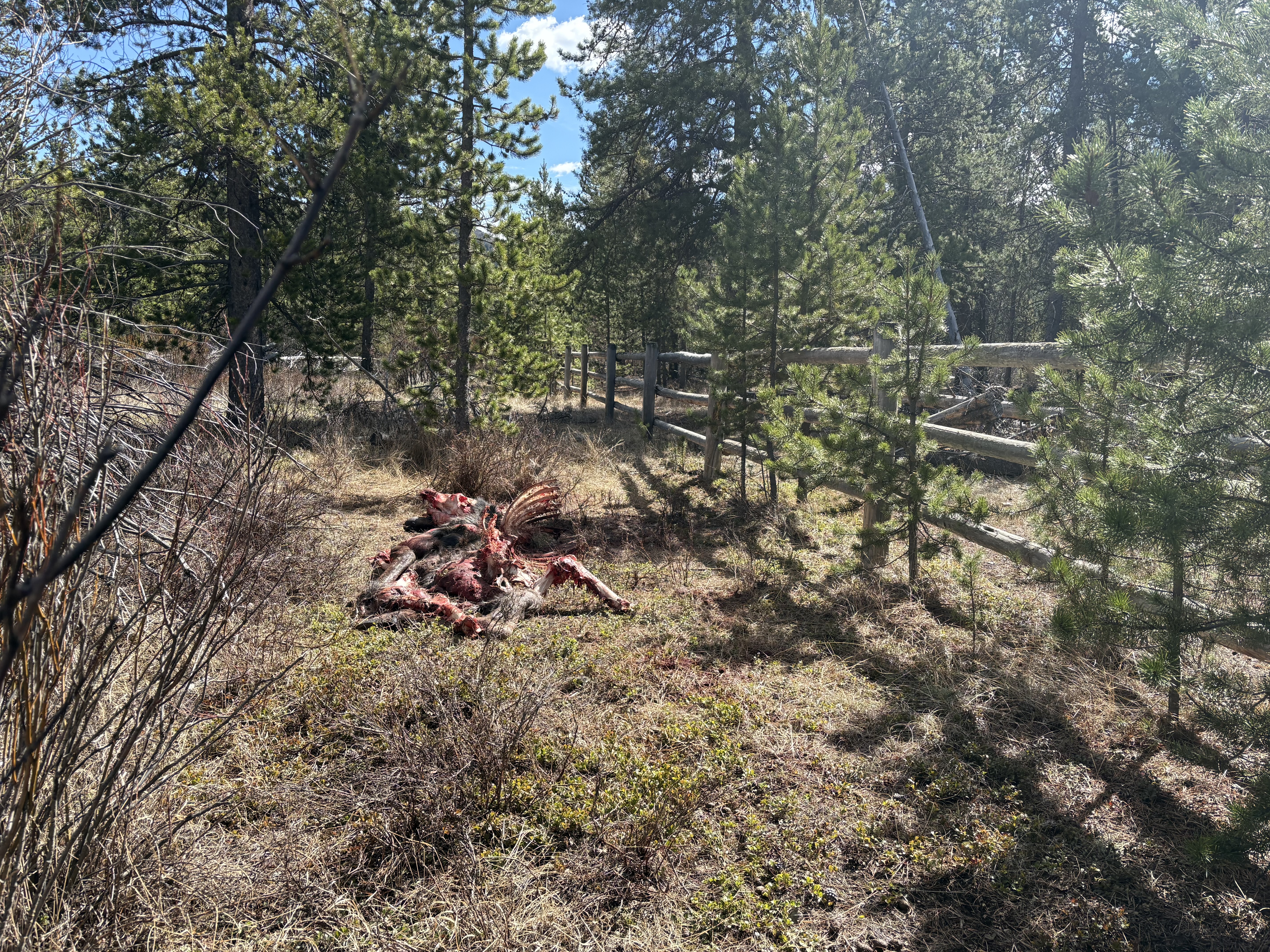
Moose carcass by fence. The road is 25′ to the left up a slight rise

On a recent March morning I was hiking through a hillside of sparse tree cover bordered by a large meadow. Deer like to travel on animal trails through the tree cover, feed in the meadow, and move and rest in the trees. I came to what’s known as a “drift fence”, a fence that solely serves the purpose on public lands to keep cattle on one side or the other. I was following a deer trail, went under the fence and found a myriad of deer bones on the other side. I estimated about 4 deer over the years had been killed right at that fence line. No way of knowing what kind of predator that was, but certainly they were using the fence like a wall.

Last year I visited with Quinton Martins, a mountain lion biologist who has been doing a study in the Bay Area Sonoma County, CA since 2017. He took me to several of his sites where he had picked up the GPS signal from a few different females he was tracking. While we rode together he told me about his study area:

“The males we have collared—P5 has 17,000 private properties in his territory. P31 has 11,000 private properties. How do you contact that many people and access all those properties to inspect fences or signs of prey? This dilemma is confounded by an increase in weekend private property owners. When you overlap a land parcel map it is as if you are looking at 50,000 or 100,000 mini ecosystems, so you can’t just throw a vegetation layer over it and say ‘OK, this is what the cats are doing.’ As their primary prey is deer, it might look like great deer habitat on a map, but in many cases these properties are fenced to keep deer out. So there might be no deer in areas where you expect deer, but cannot tell because you can’t access the properties very easily. And walking each individual land parcel, one finds different plant and animal resources, a variety of fence types that block or allow animals to move through, and each parcel managed differently to some degree.”

Martins told me the lions are using fences of any type to strategically block or corner and kill deer. In fact, as we approached the previous property, Martins pointed out a cougar-killed deer carcass hanging against the fence that enclosed the vineyard.
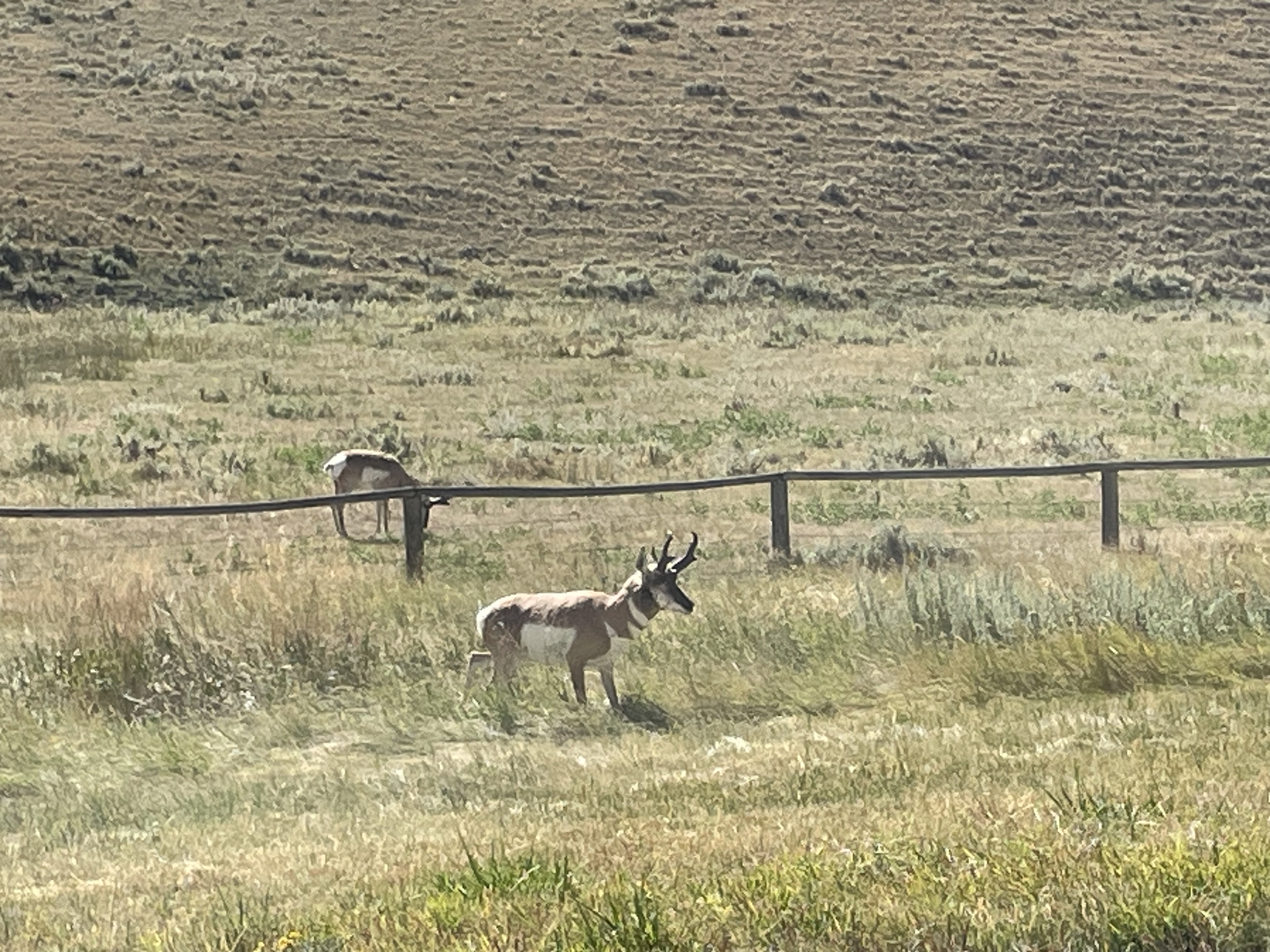
Although this appears like an easy fence for the pronghorn to jump, he’s roaming back and forth trying to find an opening because the bottom wire, which he prefers to go under, is too low.

This is not just an issue on lands in the West that border vast parcels but clearly applies to rural areas as well near cities. Having worked as a landscape designer in Marin and Sonoma Counties in the Bay Area, I know the push to keep deer out of people’s private property so they can grow a garden of their choosing. But as Martins explains, these fences are not only keeping resources from deer, but aiding predators.

But fences on public or private lands that are untended, in other words, have loose barbed wires, are even greater hazards because fleeing ungulates can easily get their hooves caught when the wires aren’t tight and clearly visible. AFI also rolls up these dangerous and useless fences.
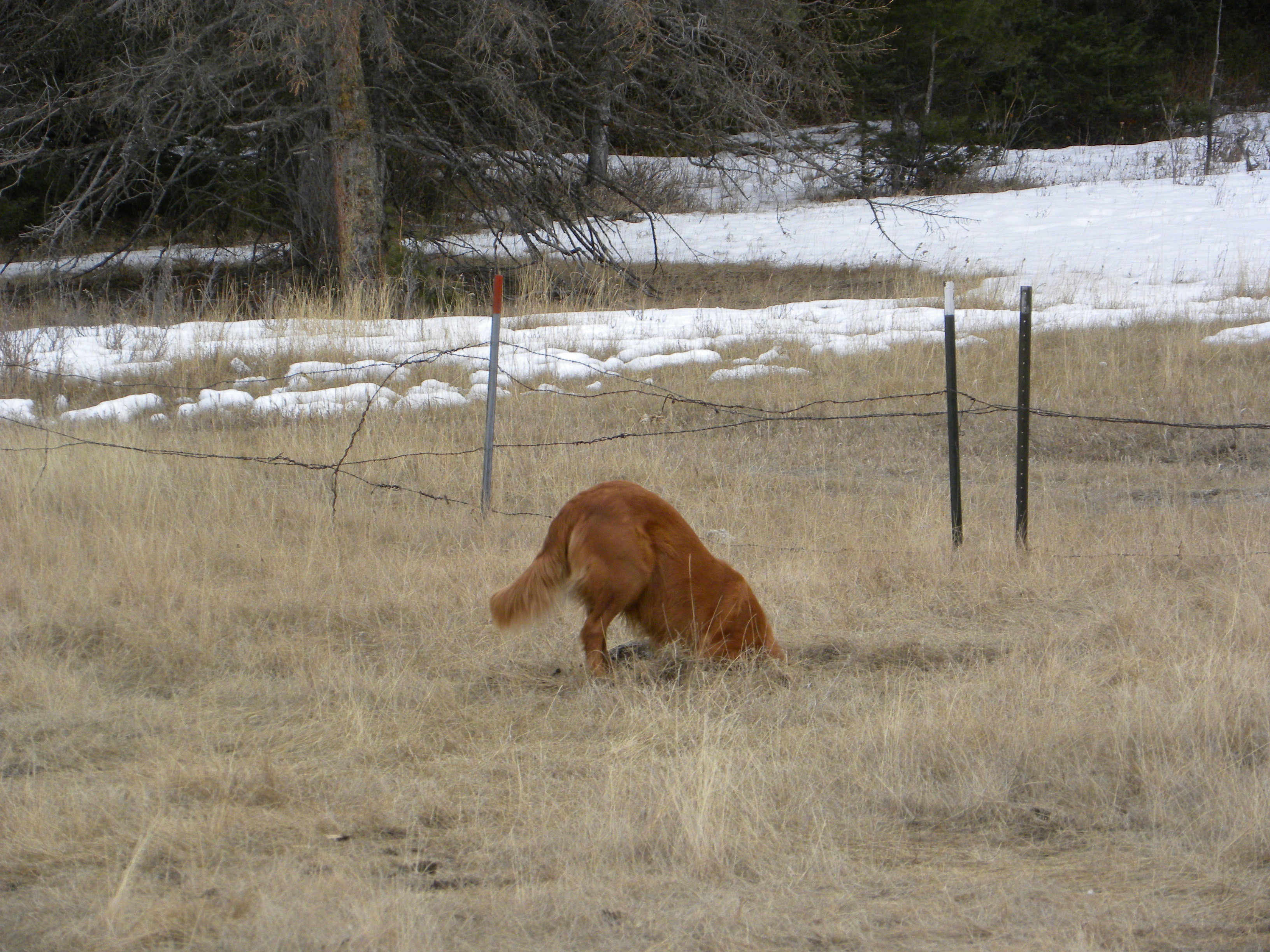
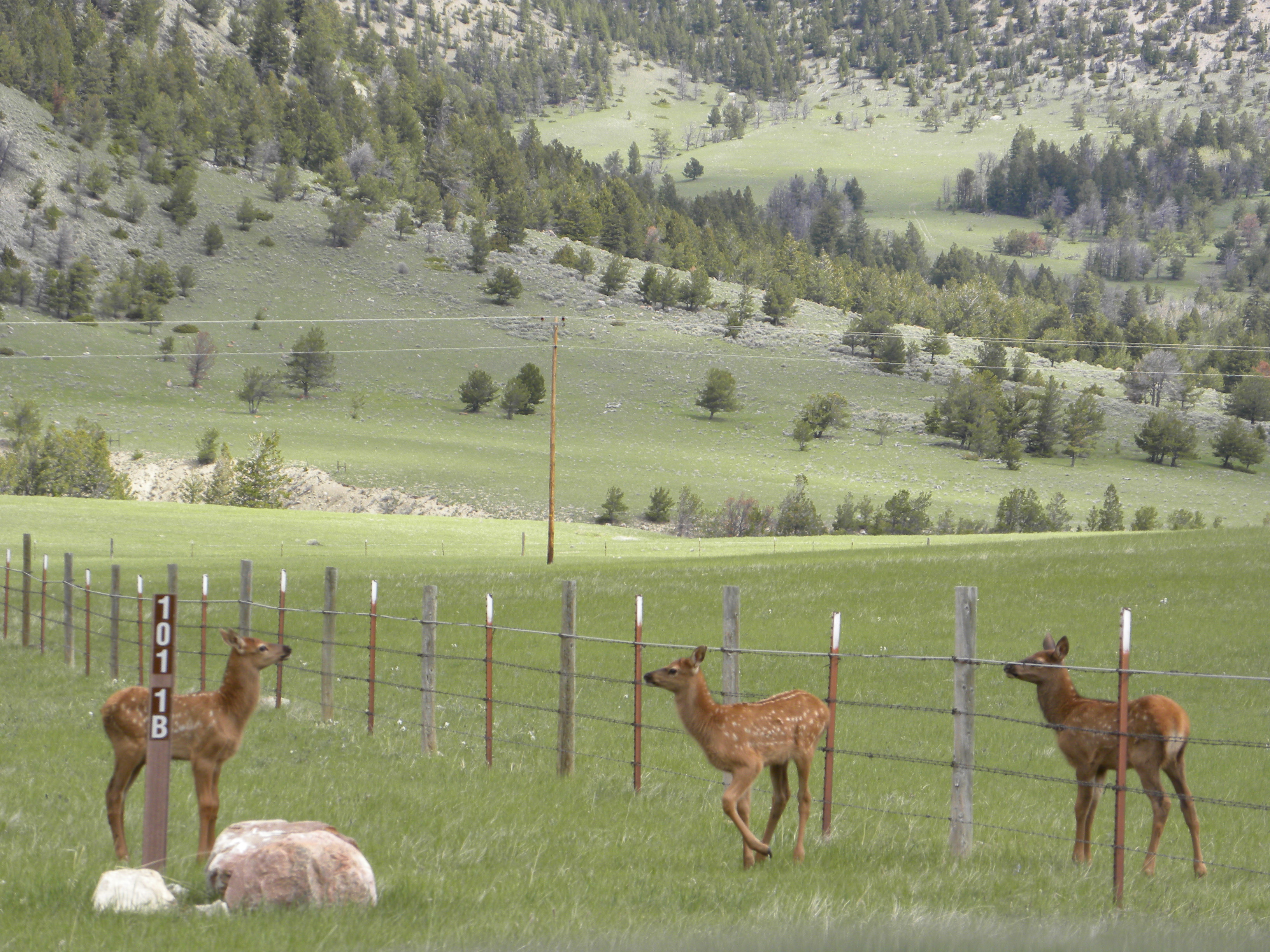
This is an extremely dangerous fence for wildlife. So easy to misjudge a jump and get tangled in the wires
This calf somehow got inside the private property but couldn’t figure out how to get out. The owner and game warden helped free the calf.

The saying goes that barbed wire settled the West. That’s because it was so cheap and easy to install vs. wooden fences. It was then, in the 1880s, that our wide open ranges disappeared.

Fixing fence and wildlife

Its been snowing wet spring snows every day.  But this morning there was a nice break and blue sky interspersed with strange light and dark clouds over an immensely beautiful white landscape.

Gorgeous till it started snowing again around 2pm

I’ve been learning a lot about what it is to go ‘ster crazy’, ‘cabin fever’.  Its been a new experience for me being a native Californian.  So I took this opportunity to get outside, and not wanting to try my hand anymore this winter at hiking in the snow, especially wet snow, I decided to fix my fence instead.

I need a fence because I border National Forest where permittees seasonally run cattle.  In Wyoming, the law requires you to fence out.  In fact, you have to have a fence built to Wyoming state specs if you are to have any rights or say about cattle being in your yard.  If a cow is hurt while on your property, if it wasn’t fenced correctly, then you, the homeowner, are liable for that cow.

My fence in 2005. I have a smooth bottom wire now but the top 2 strands are even funkier

Frankly, I hate barbed wire.  We all know that it was the invention of barbed wire that was the final death knell of the West; what partitioned off the free range.  Besides, it tears up my pants and my hands.

Last year I removed the lowest string of wire and replaced it with a smooth wire.  Its easier on the wildlife, although the deer and elk prefer to jump the fence anyways.  I don’t have pronghorn where I live.  Pronghorn never jump fences but prefer to go under and so often die not knowing where or how to get under a tight fence.

But I have seen elk get caught up jumping a fence.  When they can’t see the top wire and they’re stressed, they might not make the leap.  This winter I watched an older elk, frightened by a car, run back and forth trying to decide where to jump a fenceline, then judge it incorrectly and break her leg.  A few days later she was a meal for the coyotes.  Last year an elk died with its leg in the top wire of a fence line.

My own fence I inherited.  The previous owners sometimes brought their mules, but they didn’t maintain the fence.  Although I’ve replaced the bottom with a smooth wire, to keep cattle out and stay legal, I need to have the middle and top wire be barbed (ugh!).  But my top wire was saggy and I’ve been wanting to stretch.  Probably one of the most dangerous things for wildlife are saggy wires.  They are easy to get caught in.  My ultimate desire would be for a post and rail fence, but, sorry, I just can’t afford that.

The super wildlife friendly fence. Costly though and I have such rocky ground

Montana Fish, Wildlife and Parks publishes on their webpage a great booklet entitled How to Build Fence with Wildlife in Mind. Its got tons of handy tips and describes lots of different styles and types of fences.  In there, for a 3 strand fence for Low or Seasonal Livestock Use, they recommend posts placed at 16.5′ apart, Top wire 40″ preferred (42″ maximum), mid wire 28-30″ from the ground, and the bottom wire at 18″.

Instructions for a 3 strand smooth wire in light stock areas

But I’m substituting from the above barbed top and middle to be Wyoming compliant, but here is one that has a smooth wire on the bottom for wildlife, but is legal and good for heavy stock use.

For heavy stock use and wildlife friendly

I’m finally starting to get pretty good at fence work.  Its taken me several years and lots of mistakes since I’ve had no fence guru to instruct me.  I unleashed the top wire for about 1/3 of the fence line and began, in shorter sections, using a stretcher.  After about 2 hours, I’d re-stretched about 1/2 the fence line to the south.  I regrouped at the cabin for lunch and supplies, then headed back to start the next section.  The weather was beginning to shift, getting cloudier and colder.

I began undoing the top wire, moving along the fence westward.  All morning I’d noticed crows cawing around the mountains.  When I returned from lunch, a golden eagle soared above.  I wondered about something dead higher up.  But the surprise was on me.  There, on the inside of my fence, right next to the fence in fact, was a fresh dead deer.   Had it misjudged or not seen the fence?  Its eyes were already poked out, eaten by the crows.

This is the second dead deer in two weeks I’ve run into.  The last one I showed a photo on my post.  This one rigor mortis hadn’t even set in.  It had been eaten on just a little from its back hind quarters.  Either it just died there and had been scavenged or possibly a coyote might have brought it down.  I was certain that bear would be back soon for another meal.

It is the toughest time of year right now for deer and elk.  They’ve had a long winter, are bony and weak.  The new grass is showing its greenery, but not much yet and certainly not much higher than a 1/2″ tall. These deer hang around here all winter long.  I’m sure I’ve seen this one many times in my yard.

I suppose I won’t be finishing fixing fence for a week or so.