• MY BOOKS ON WILDLIFE, GARDENING AND MORE

  • The Wild Excellence

  • True stories of wildlife encounters around the Greater Yellowstone
  • Award winning eBook on Decomposed Granite, tips, how to's, what to watch for
  • Children's book. True stories of a dog and wolves. In a dog's voice
  • Written for dry Mediterranean climates in California, north and south

What Kind of Dogs are Wolves by Koda

Hi folks.  I’m going to try something different on my blog.  From time to time, I’ll post reminiscences from Koda, the dog who grew up in the Wyoming wilds.  Here’s the first one.  The stories below took place when Koda was about 7 months old.  We were still living in California and traveling by car back and forth to Wyoming.  After Soona died when Koda was about 1 1/2 years old, we moved to our cabin in Wyoming full time.

This is me.  And this is my first blog post

This is me. And this is my first blog post

After a long drive, Leslie (she’s my person), Soona (she’s my grandma) and I were at our new home, a place not at all like the city we came from. This place was vast—just mountains, trees, and more smells than I ever could have imagined.

A Glorious spring day.  Koda and I hike up Elk Creek Meadows.

A Glorious spring day.  Here I am on the trail in the mountains

One morning we were all up in the flats above the house. Leslie was piling little rocks. Soona and I were sniffing and watching. Without warning, Soona made a beeline for the woods. I was still little, only 9 months old, and didn’t know one smell from another, but I knew she smelled something that I didn’t, so I followed her. Leslie was worried for the old lady. The woods, she said, could be dangerous, especially for old dogs. So she followed us. And what do you know, Soona had a great find: a turkey partially eaten by a coyote! We munched on the bird for a while. I know turkeys because they live in California. But I didn’t know they were here in Wyoming too. From that time on I’ve watched them and got to know them. Leslie taught me to let them be. In the winter they come to our yard where I sit outside on the porch while they peck and pick for seeds and corn we sometimes lay out for them. Mostly they amuse me and, as long as don’t run after them, they pay me no mind.

Wild turkeys, not native

The flock of turkeys I’ve come to know. And they know me.

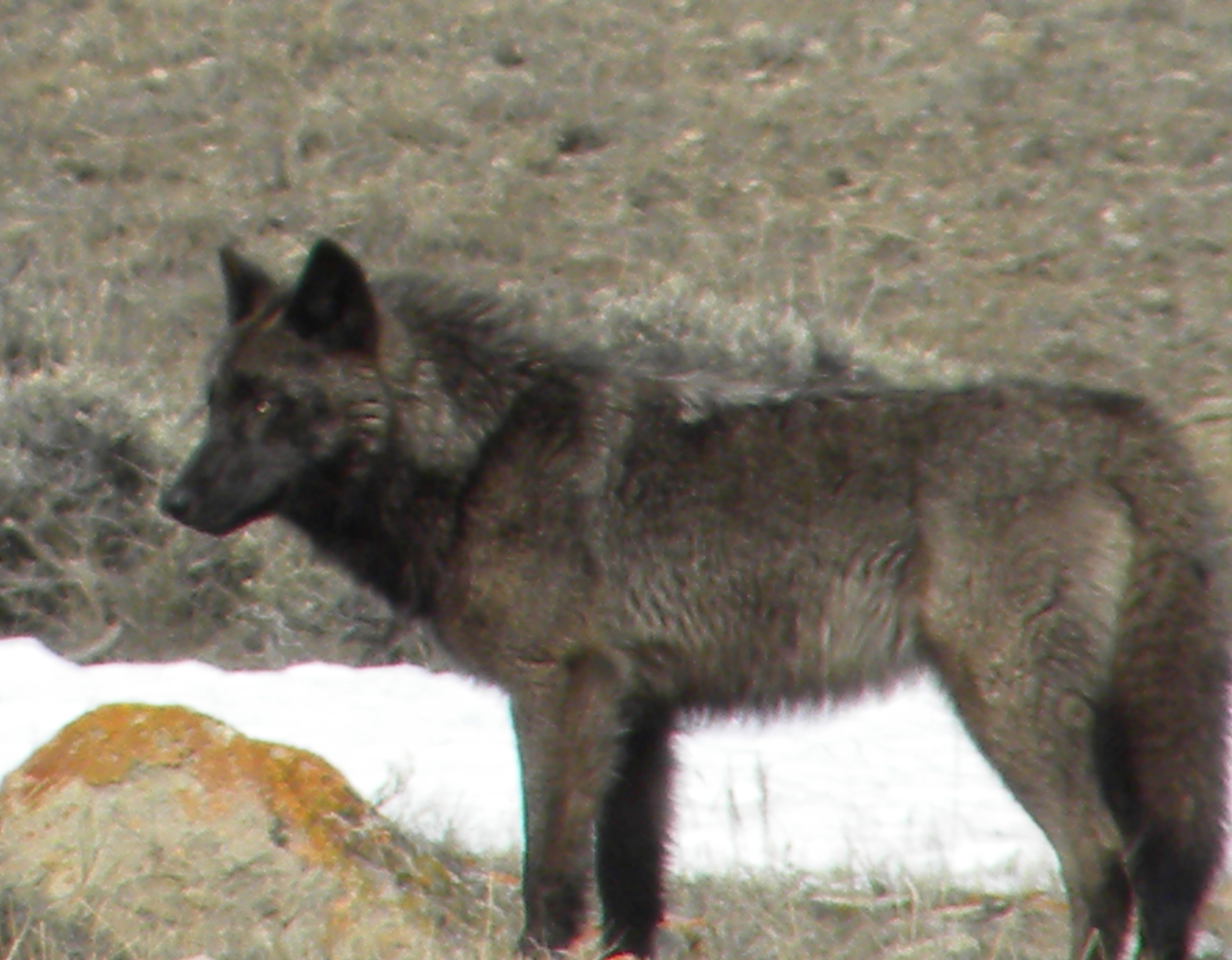
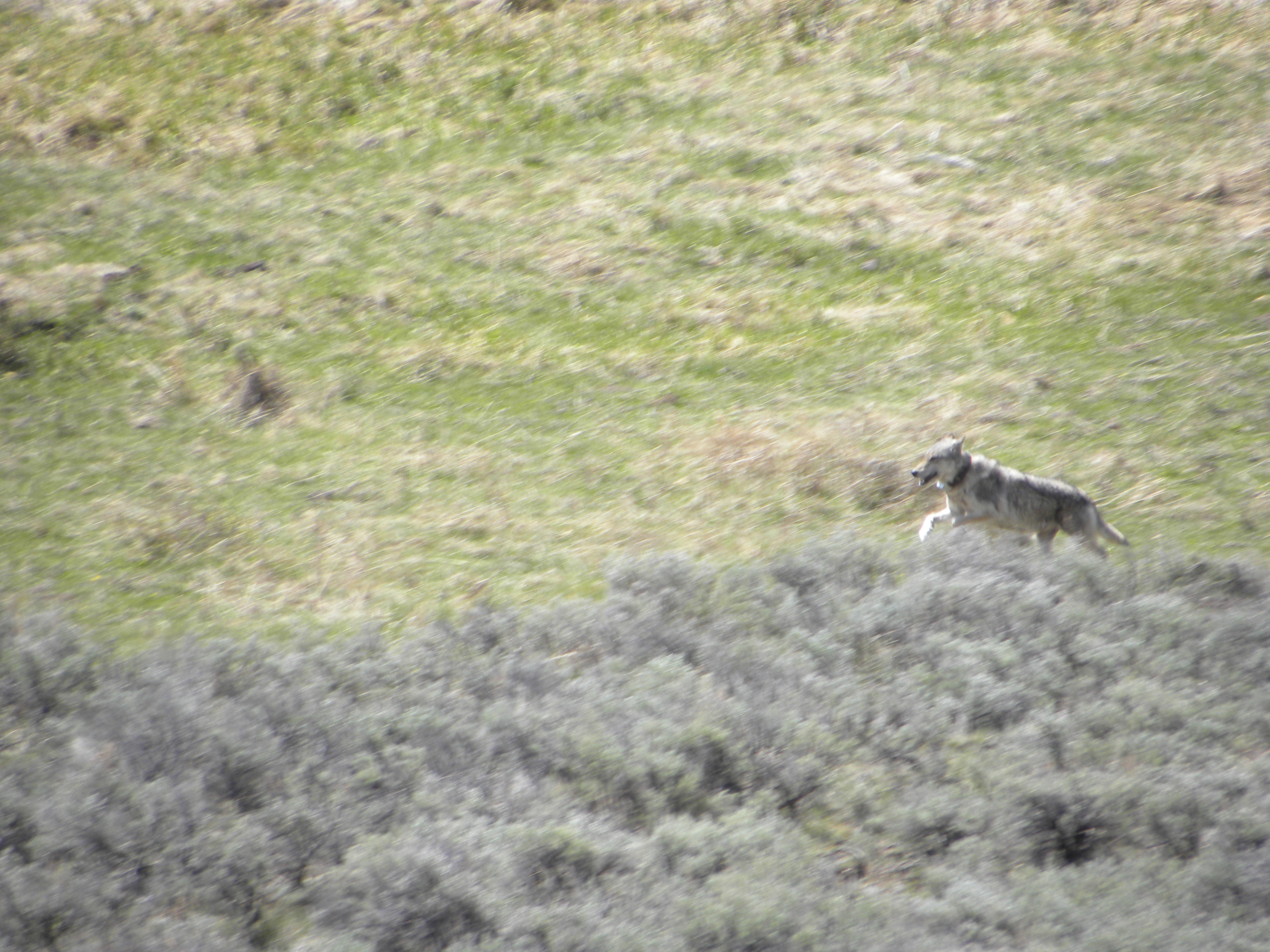
One day just Leslie and I went for a hike up a stream, leaving Soona at home. We returned a different way, a route through sparse meadows peppered with small trees and gullies. I stayed just a bit ahead, yet kept close to Leslie. We were on the side of a small arroyo when I smelled something watching us from behind a tree. I turned to look, and saw the most beautiful girl I’d ever laid my eyes on. She appeared to be a dog, yet she had a different aura about her. My heart jumped and an irresistible urge took over my entire body. It was if this black dog were a magnet drawing me towards her. I’d already met and played with many dogs in my life at that point. I was only 7 months old, but I already knew to ‘ask’ before I could go play. But this dog…she was like no other, and I just had to know what, and who, she was. She seemed to be the essence of what a dog is; a wildness that was wilder than I ever could be. Really, I just lost my head. And so I ran after her, silently.

What a beauty she was

What a beauty she was

I heard Leslie screaming for me, calling my name. But Leslie’s voice was like a dream in the background. That black dog was so fast that I finally gave up trying to catch her. But, I’ve got to tell you, that was the most exciting moment in my life!

I ran back to the little arroyo where I’d left Leslie. She hugged me and seemed so relieved to see me. She told me that I’d seen a wolf and I was lucky that there weren’t other wolves waiting for me there. That wolves weren’t like dogs and they didn’t want other wolves, or dogs, in their territory. But all I know was that was one truly wild and free ‘dog’.

This is a wikiup

This is a wikiup

We rested in a nearby wikiup in the meadows. Leslie petted me, then scolded me for running away. After a time, we headed back in the direction where I’d run after that wolf, till we came to a trail. And what do you think I found at the trail? That wolf got so excited she’d thrown up her lunch! I guess I made an impression on her too.

We could have many more places like Yellowstone.

Living in the Greater Yellowstone Ecosystem, adjacent to Yellowstone National Park, I enjoy the full suite of wildlife (minus bison, another story…) at my doorstep.  It’s not that I’m seeing large megafauna daily, yet if I hike around my valley or the nearby Beartooth Mountains, I see their evidence.

People who visit Yellowstone expect and hope to catch a glimpse of wolves, bears or other wildlife.  But Yellowstone is a protected habitat, free of human habitation.So what is it like to live with these animals in your neighborhood?

Today was a hot day in the valley.  When it’s hot, I like to take a half hour drive up to the Beartooth Mountains towards the summit via highway 120.  Although mosquitos are out, the air is cool and pleasant.  I took a hike along what’s known as the Morrison Jeep trail–an ATV road closed until July 15 that runs from the Beartooth Plateau all the way to the Clark’s Fork Canyon in the desert. Wildflowers are starting to abound.

Marsh Marigold

Marsh Marigold


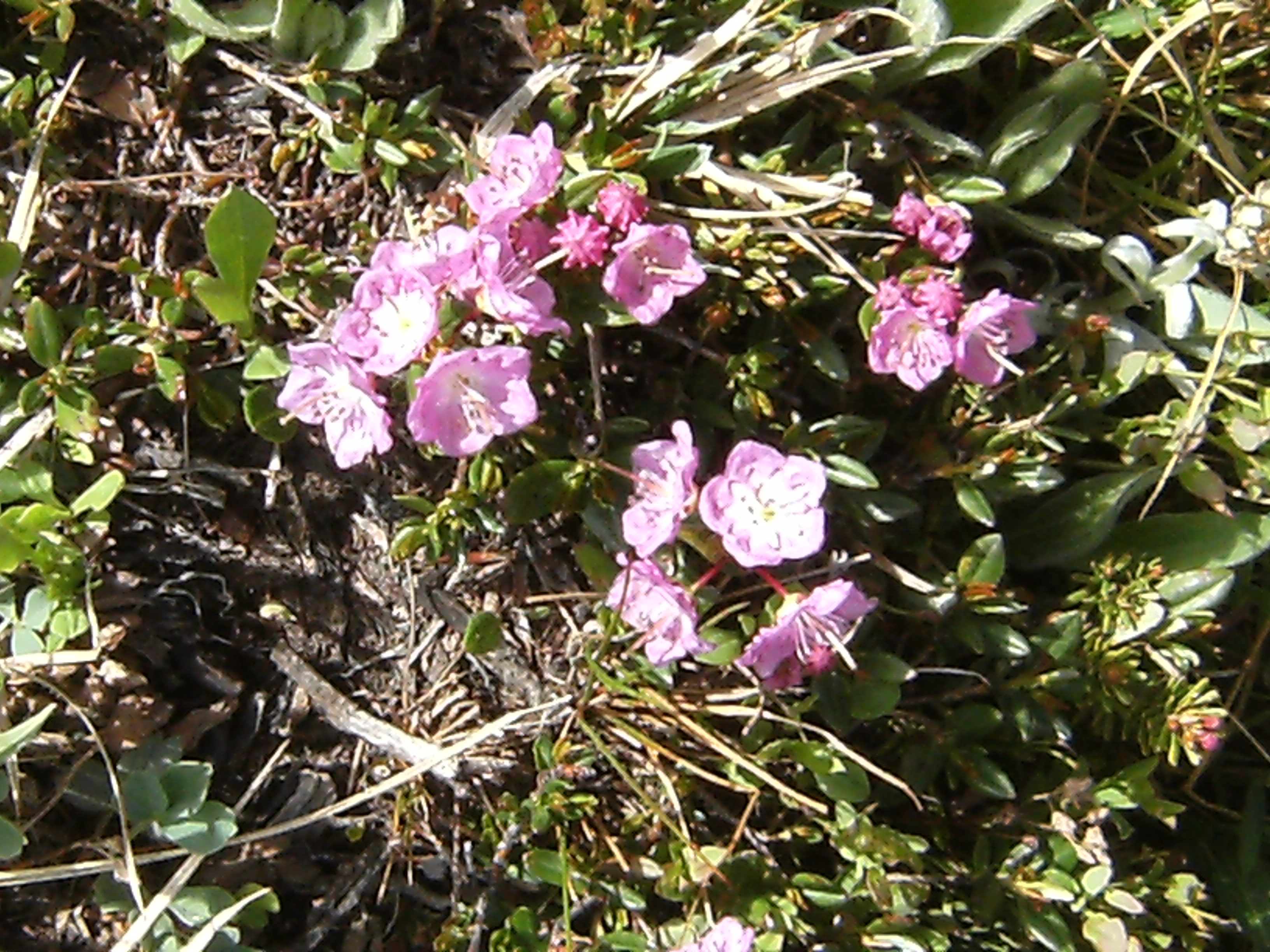
Kalmia, used by some tribes to commit suicide as it is deadly poisonous

Kalmia, used by some tribes to commit suicide as it is deadly poisonous

And Koda had a great time in all the lakes.

In the Beartooths

Yet what makes this place so unique is this:

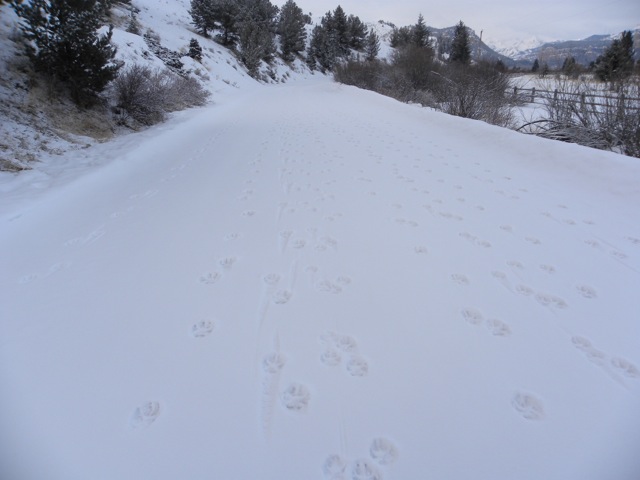
Wolf tracks

Wolf tracks

And the signs to watch out for grizzly bears.

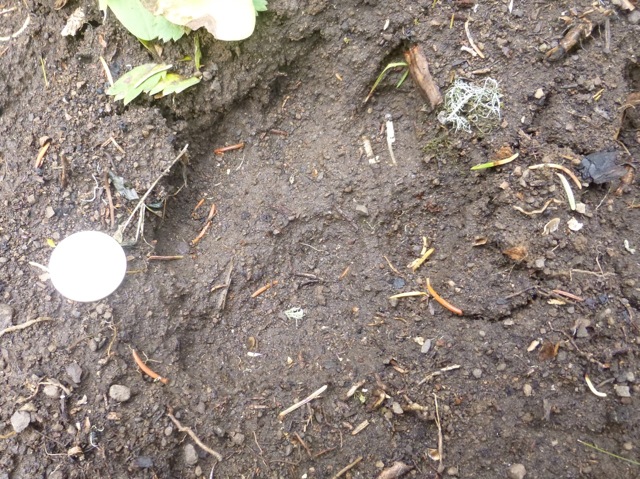
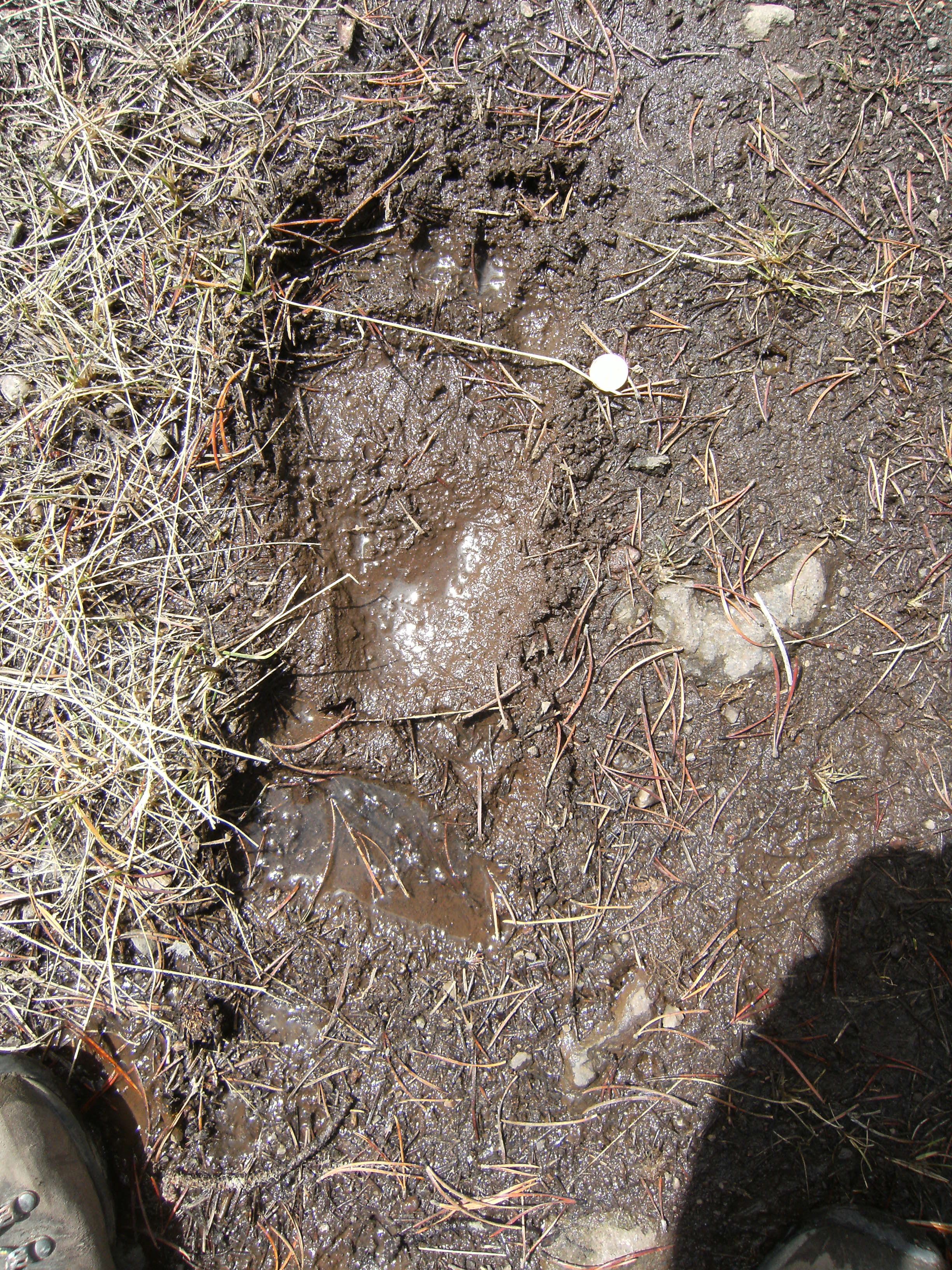
Front and back grizzly tracks.

Front and back grizzly tracks.

Because this is a ‘road’–suitable only for ATVs–and it is closed now, few people were out.  I saw one group of returning backpackers.  They told me they saw two wolves this morning, one black and one grey, in the meadow.  Part of the Beartooth wolf pack I told them.

I recently visited northeast Wyoming and Devils Tower in The Black Hills.  It’s a gorgeous area and a striking sacred spot.  At the Devils Tower visitor’s center, I read a story of an Indian man that was interviewed in the 1930s.  He recalled coming to Devils Tower (known as Bear’s Lodge to the tribes) as a young boy in the 1850s.  At that time, he said, there were wolves there.  Yet no longer.

Devils Tower, WY

Devils Tower, WY

The United States has many beautiful parks and national forests, yet only the Yellowstone Ecosystem is complete with a full suite of native wildlife that once was abundant everywhere.  After living here, everywhere else feels bereft.

Grizzlies too are killed for cattle predation on public lands

I am not advocating that more people move here.  On the contrary.  I am advocating that we work to have these kinds of complete ecosystems in many other parts of the country where it makes sense.  Grizzlies, for instance, occupy less than 2% of their original habitat.

Like many animals that are losing their habitat, we too are losing ours.  How preposterous is it that a person must fly or drive thousands of miles just to view these animals as well as experience an un-fragmented ecosystem; even though there is plenty of suitable habitat for wolves, grizzlies, and other carnivores in forests and Parks in places like Utah, Colorado, and other lands in the West.

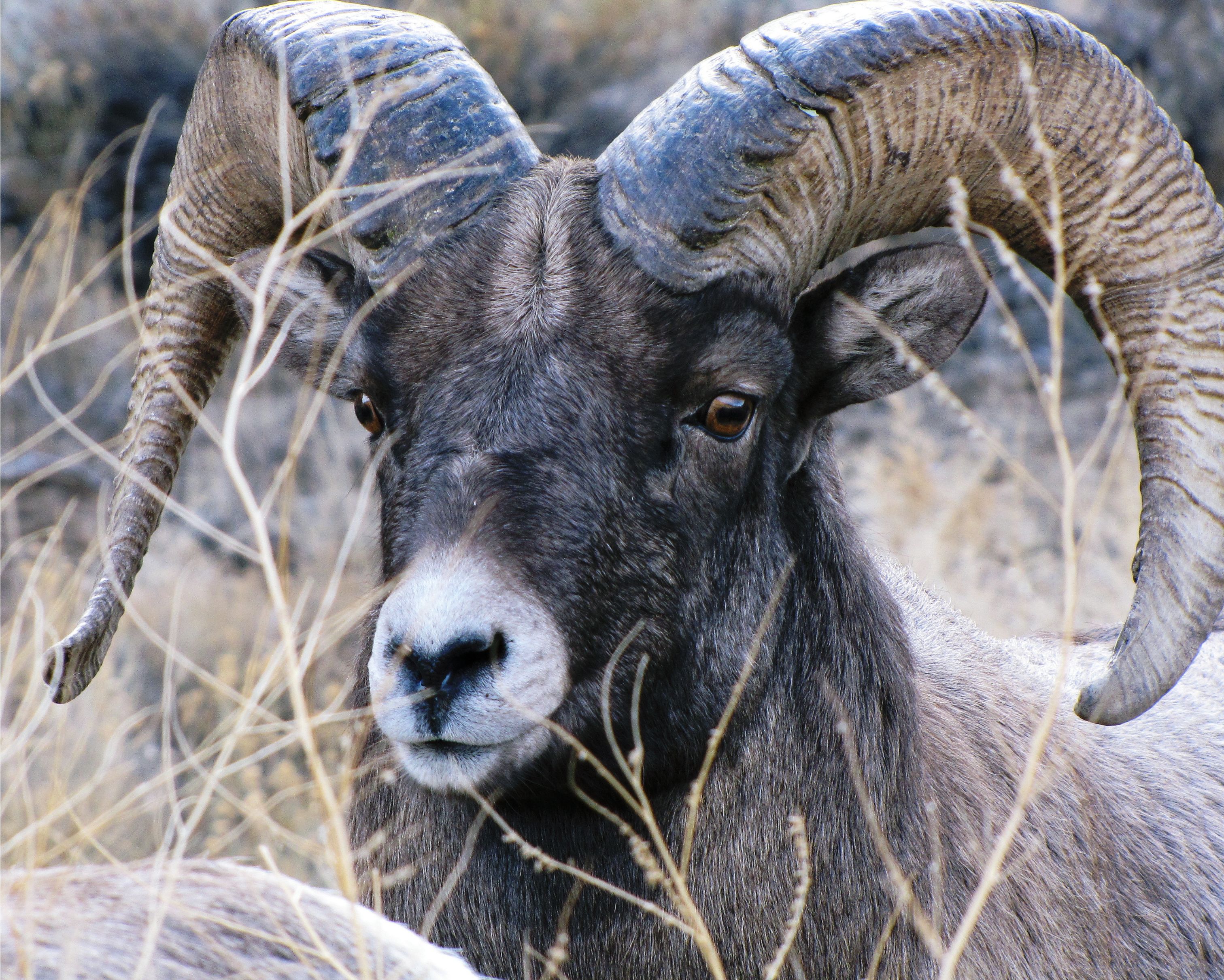
After living here for eight years, I’ve come to understand that scenery isn’t ‘everything’ and in fact, it’s nothing without the wildlife that was meant to inhabit it.  Without them, those beautiful lands feel empty.Rocky Mountain Bighorn sheep

Practically, what does that mean?  First, a change in attitudes. In larger landscapes, we can live with these large predators.  Yes, we’ll have to adapt with our garbage, bird seed, chickens, and other small livestock, but it can be done. Changing our attitude includes changing our hunting and trapping laws to be inclusive of these predators, instead of the outdated model of ‘more ungulates, less predators’.

Second, the livestock industry must change and use predator friendly methods of control where possible, including the realization that livestock losses on public lands are ‘at your own risk’.  Public lands are all wildlife have to make their living on. Bears, wolves, coyotes and other wildlife should not be shot on public lands if depredation occurs.  It should be the responsibility of the cattle rancher to ride the range with their cattle, stock them appropriately with perhaps a bull and mixed age groups.  Sheep need dogs watching them as well as a human shepherd.

People who live with bears and wolves and cougars daily know that these animals are not ‘behind every tree‘, waiting ‘to get you‘.  If they were, then they could easily kill a person.  Instead, they avoid people; make their living mostly at night; and seem to only get into trouble when people are leaving food out or not taking care of their livestock.

Having spent a lot of time in the Southwest, I would love to see wolves restored in that area.  But the year-round coyote trapping and bounty needs to stop first.  The northeast corner of Wyoming is the corridor in which cougars can expand eastward, but the hunting quota is either too high, or unlimited! That is just two examples of attitudinal and practical changes that need to be considered.

Once you’ve lived in a place like the Yellowstone Ecosystem, not only is there hardly anyplace like it on Earth, but you will want to restore your home, where ever that is, to its natural balance.


The Health of the Land

With the warm temperatures, the December snows are melted off in most places around here. Because of that, some friends and myself ventured into some high areas that are usually inaccessible this time of year.

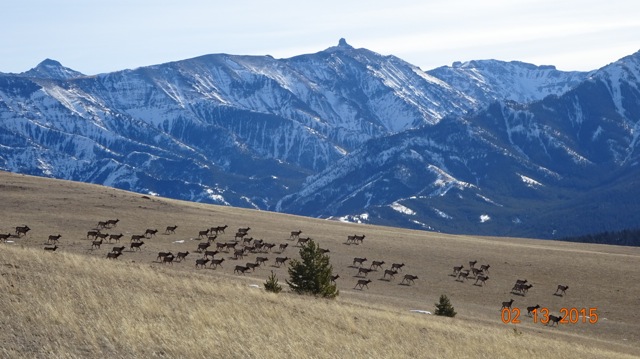
The Absarokas and elk

The Absarokas and elk

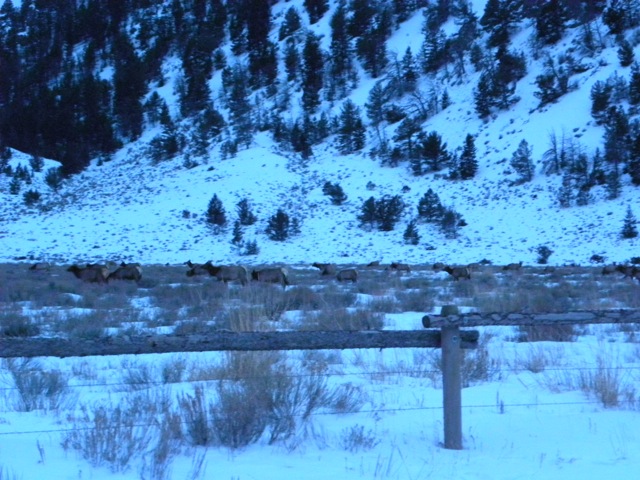
A glorious day in the high 50’s (how strange for ‘winter), we began the hike without snowshoes.  Sometimes we had to venture through large drifts briefly.  Lots of elk sign but no elk visible.  This is an area where I know a large herd of elk overwinter so I expected to see them at any moment.  As we approached the high meadows, about 250 elk moved down into the valley below and up to the meadows on the opposite side.

Elk

As we watched, two wolves called back and forth from the cliffs above the elk.  Interestingly, the elk continued grazing uphill in their direction as they called to each other.  Clearly, these elk were not disturbed by the wolves presence.  I have always maintained that wildlife are more in tune with each other than humans are with them.  After a while of howling, the wolves went on their way, making distance between themselves and the herd.  Those weren’t the calls of hungry wolves and somehow the elk knew that.

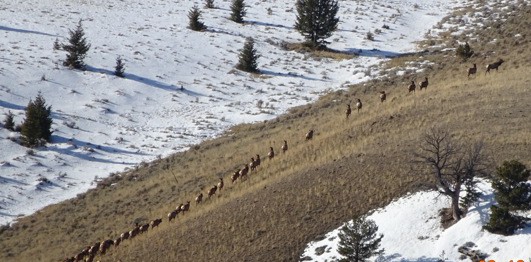
elk moving up the hillside

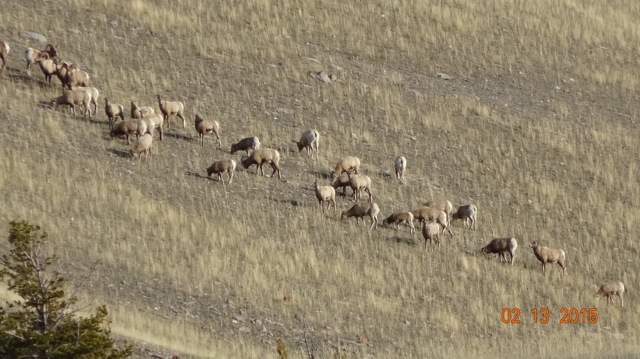
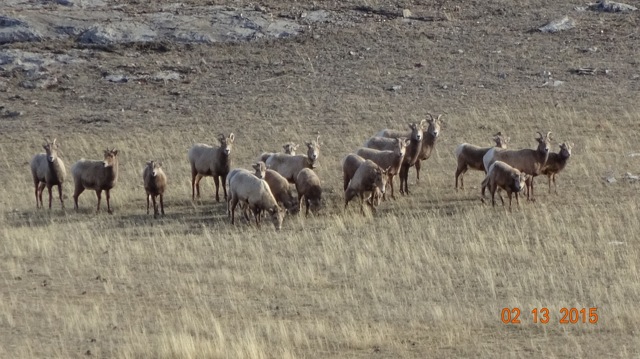
We moved on and came to a large herd of over 30 ewes, lambs and young rams grazing.  A band of about eight rams grazed on a meadow beyond.  A second herd of over 250 elk was working their way up the hillside.

Bighorn sheep


Bighorn sheep


Ram group

Ram group

On the way back through the willows, four moose were relaxing and munching.

What a brilliant day and great sightings.  I was especially happy to see all the bighorn sheep we have this year in our area.

Moose mom and male calf

Moose mom and male calf

Tracking notes

The other morning, after a nice light new snow, I drove the dirt road.  The elk were out, as always in the early morning, feeding, in a large group of over 700.  As I continued my drive, I came to a fresh track of two wolves that had run down the road.  They weren’t wandering, but directed towards somewhere.  In short order, another wolf came trotting in from the nearby meadows. Then another, and another.  Soon the tracks clearly showed 6 wolves running alongside each other.

Over time six wolves came trotting down the road

Over time six wolves came trotting down the road

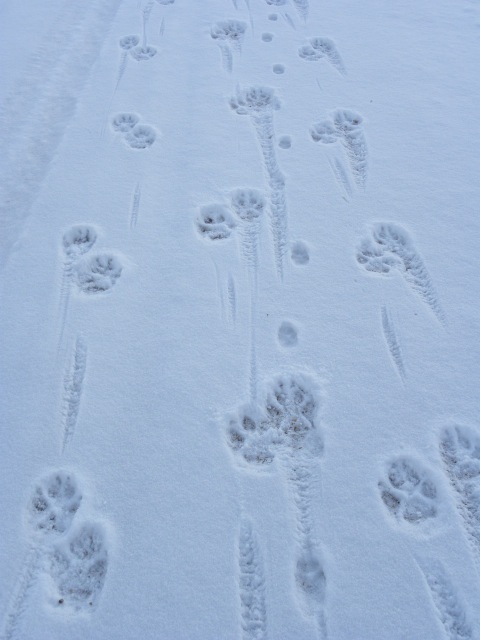
Every so often I’d stop the car, get out, and examine the track.  These were the Hoodoos, a pack of stout, large wolves with the alpha tracks measuring around 5″ long x 4″ wide.

Wolf print

They didn’t appear in a hurry or threatened, for they were all side trotting with a stride about 30″. Their tracks sometimes overlapped or meandered.  Occasionally a few of them run off the road, then return at a different location.  These might have been the pups, exploring and meandering more than adults would.

Then a strange thing happened.  It appeared that more and more wolves were ‘returning’ to the road, all traveling in the same direction.  At one point I struggled to tease apart all the tracks and I counted eleven or twelve wolves!  I knew there was no way we had this big a pack in our area this year.  There are two packs around, but they don’t travel together.  I couldn’t figure it out.

I counted around 11 or 12 wolves

I counted around 11 or 12 wolves with all the tracks in the same direction and the same freshness

Then tracks ended by running off the roadside into a field of brush and willows, a haven for a young bull moose newly kicked out on his own this year.  I saw magpies hanging on the fence by the willow’s edge. So this was what all the ruckus of tracks was about!  I realized that these wolves had made a kill in the willows, fed for a while there, then headed off, only to circle back via the road and feed once more.

A few mornings later I walked out into the willows.  I was curious if that young moose had been their victim.  Moose are scarce here, having a hard time making a comeback between diseases, the ’88 fires destroying habitat, the warm summer and winter temperatures, as well as added predators.  Moose suffer heat stress in winter when temperatures are above 23 degrees.  Since early January most of our daytime temps have been above freezing, and many days in the 40’s and 50’s.  Thinking that it’s rare to find elk hanging in dense willow cover these days, I was afraid it was this moose that had been killed.

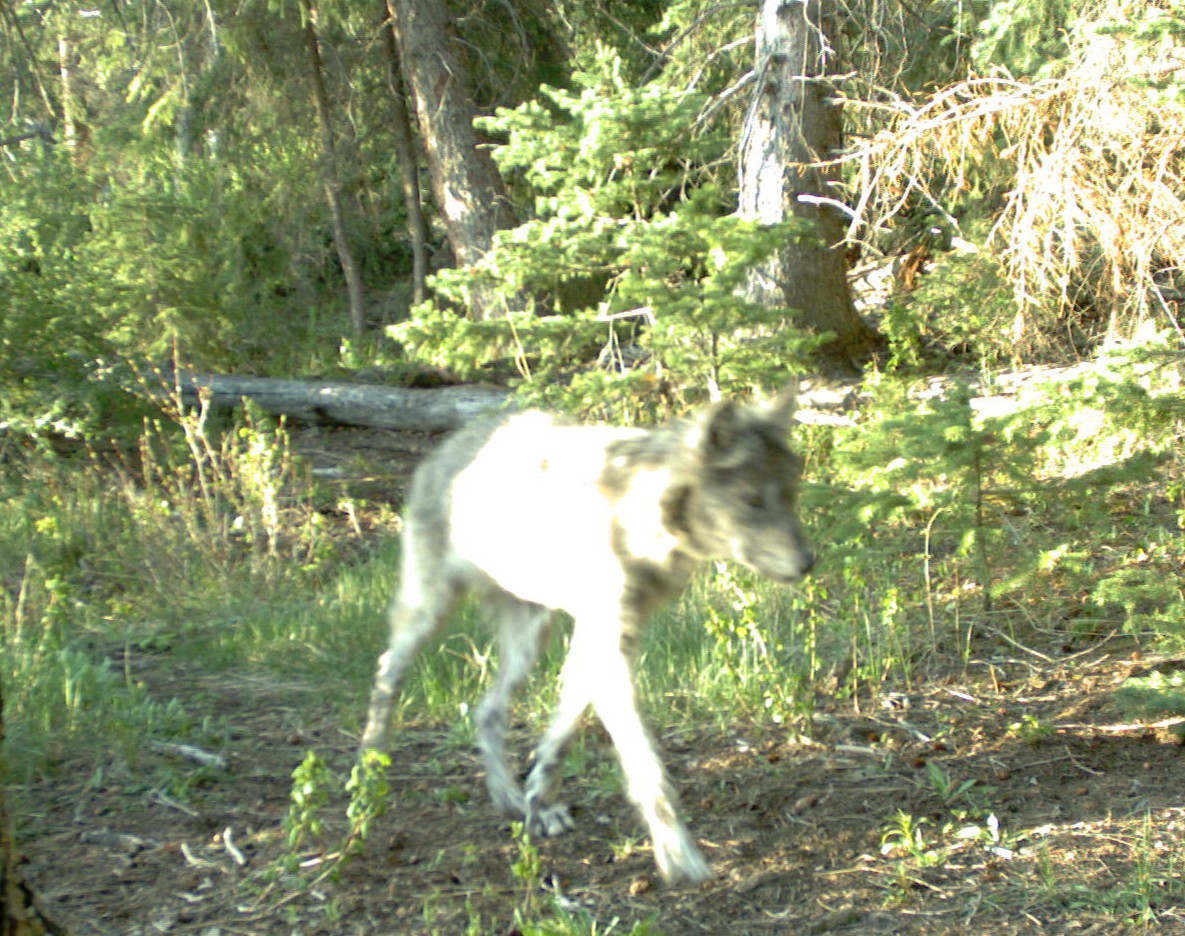
Hoodoo wolf prowling around

Hoodoo wolf prowling around

Yet the elk had been acting strangely early in the year–I’d seen them alone, in small groups, in tight areas, feeding mid-day, and not in the larger herds I’m used to.  But in the last several weeks, their ‘normal’ patterns have returned–normal for winters here means elk moving in large bunches from 100-700 elk and feeding early morning and late afternoons.  Although elk patterns are mysterious, I’m suspecting that when the elk came down from the Park in late December this year, the wolves were late in following them and were still higher up.  But as soon as the Hoodoos got to work, the elk became the herd animals nature intended.  Unlike many wolf packs in years past that resorted to killing deer, the Hoodoos are experienced hunters and know how to kill elk.

Here's my moose

Here’s my moose

With the help of a Koda sniff, we found the leg of the animal.  Not our moose but an elk, and it looked like a two or three year old from the look of the skin.  On the way back home, I saw that moose that had been hanging out in those willows for weeks on end.  He had moved up the road to a different area.

Sometimes it pays not to jump to conclusions, but instead be patient, and attempt to tease apart the puzzle of wildlife.

What is base line?

Driving the road early morning, looking for wildlife, gives me time to ponder questions like–why is it I see grizzly bears during the daytime in Yellowstone National Park vs. where I live just 20 miles east of the Park where they are basically nocturnal?  Bears have not been hunted outside the Park since 1975, and there are plenty of them in my valley.  Yet bears in my wild valley, like all wildlife, avoid the most unpredictable top predator–Man.

Until the hunt began two years ago in Wyoming, I used to see wolves.  In the winter, I’d see them on kills they made near the dirt road.  In the summer hiking in my valley, I had many close encounters with wolves, none of them eliciting fear.  It was obvious they were simply curious.  But since the hunt, they are no longer curious and they are no longer visible.  A good thing if they want to stay alive.

Yearling pup

Yearling pup

Today’s wildlife, and especially predators, are basically nocturnal or crepuscular, feeding, moving, hunting when Man is asleep.  I have to ask:  Has it always been like this?

Reading the journals of Lewis & Clark, they describe seeing herds of bison, wolves, grizzly bears and coyotes in the middle of the day going about their business.

“…we scarcely see a gang of buffaloe without observing a parsel of those faithfull shepherds [wolves] on their skirts in readiness to take care of the mamed & wounded”

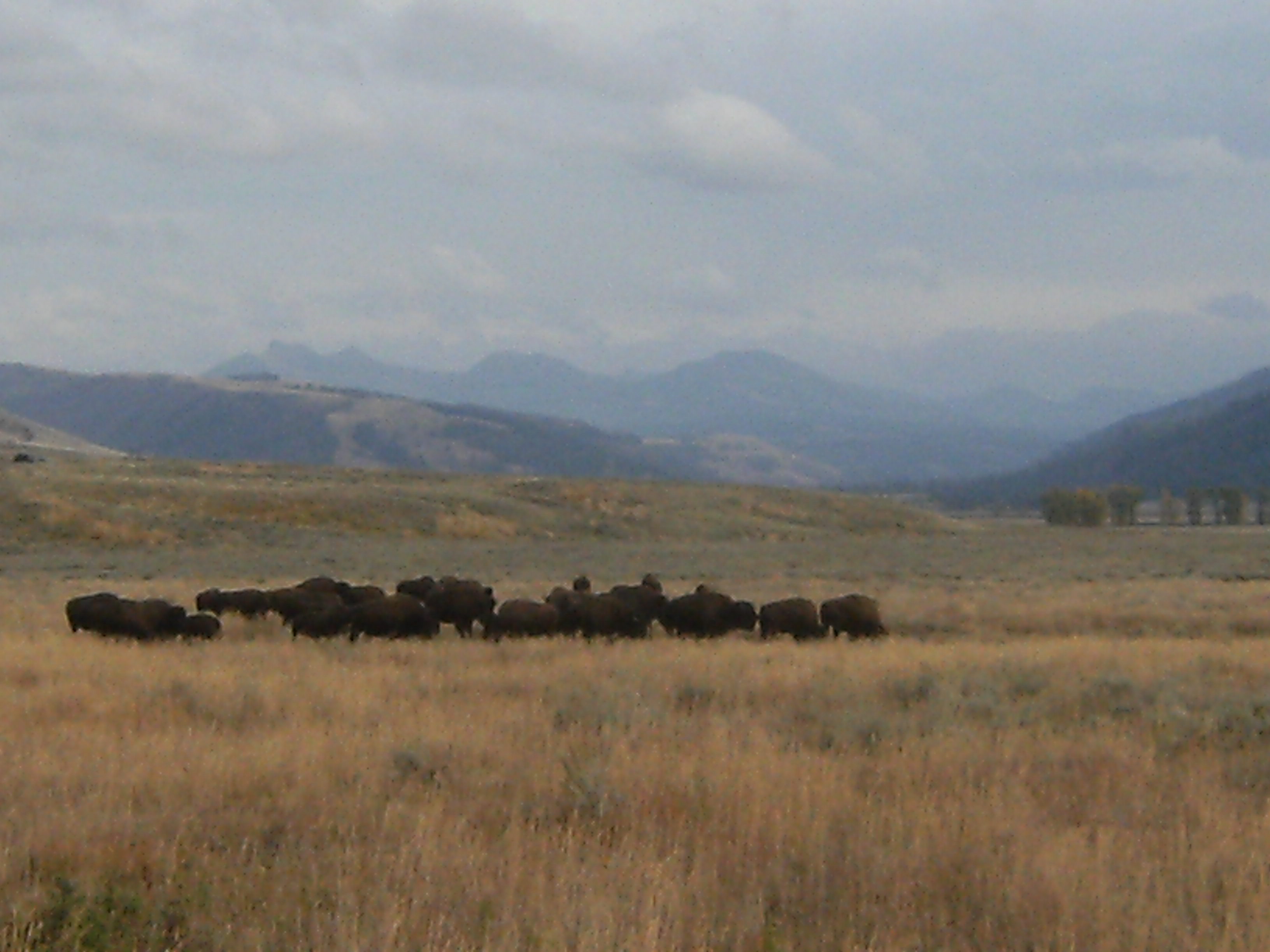
Buffalo in Lamar Valley

Beaver, considered today to be nocturnal, were easily seen during the daytime in the early 1800’s.  A buffalo calf, unfamiliar with humans, followed Lewis around.  Game was “very abundant and gentle”.

“Immence quantities of game in every direction around us as we passed up the river, consisting of herds of Buffaloe, Elk, and Antelopes with some deer and woolves.”

According to Lewis’ account, when the presence of Man is minimized, prey and predator dance together, during the daytime.

WInter elk herd at dusk

When we study the nature, movements, and habits, of today’s wildlife, how can we know what is baseline?  What are their natural rhythms?

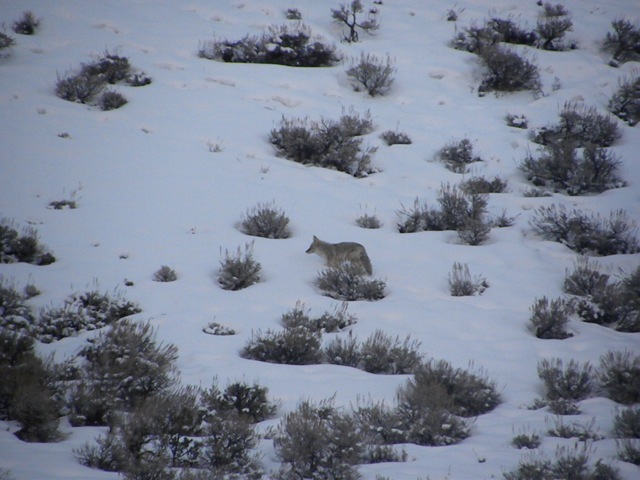
Coyote

Coyote during the daytime in Yellowstone National Park

Wildlife in the Park are confined to a virtual zoo, yet they have not been hunted for over 100 years [on the other hand, they are still being controlled.  For example, bison are under an agreement to be kept to around 3000 animals.  When they leave the Park in winter, they are killed to reduce their numbers.] Wildlife outside the Park are hunted and so, particularly the vilified predators, are rarely seen, moving among the shadows of the night.

Wildlife that live around cities, such as raccoons, coyotes, foxes–what we might call mesopredators–also avoid humans by wandering the streets when the humans are asleep.

Before 1492, New World numbers were estimated to be around 54 million peoples.  The pre-European native impact on the landscape reflected the cumulative effects of a growing population over the previous 15,000 years or more.  European entry into the New World abruptly reversed this trend. The decline of native American populations was rapid and severe, the biggest genocide ever. Old World diseases were the primary killer.  In the basin of Mexico, for instance, the population dropped from 1.6 million in 1519 to 180,000 in 1607 (89 percent); and in North America from 3.8 million in 1492 to 1 million in 1800 (74 percent).

So when Lewis & Clark came West in 1805, were they seeing wildlife baseline? Or just the result of a diminished native population? North American native peoples had their own rise and fall of civilizations–Cahokia, Ancestral Pueblo Culture, Poverty Point, and many others that were as equally sophisticated as the Aztecs or Mayans.  What were wildlife interactions during those times when many ancient peoples in the Americas lived in cities? Was wildlife again moving nocturnally?  Were they being hunted out?

Poverty Point artists rendition

What is baseline?  What is the natural rhythm for elk, or wolves, or grizzly bears? Today’s wildlife biologists use observation methods unknown in the past–GPS collars, trail cameras, plane flyovers, computer mapping–all very sophisticated.  But the interactions amongst predator-prey species are probably dictated more by human pressures than by each other.

When we postulate new wildlife theories, such as “The Landscape of Fear“,  what exactly are we observing?  Certainly not what Lewis observed in 1803 when wolves, coyotes, elk, deer and bison all traveled together–wolves following on the outside of these large herds.  New theories enlarge The Landscape of Fear to include not only top-down but bottom-up where the bottom has to do with beavers providing the habitat for willows and aspen rather than just elk avoiding drainages.  And scientists acknowledge that baseline is a moving target.

And so the answers to these questions will always be uncertain.  One thing I can easily observe–wildlife is more afraid of Man than they are of any other predator.  That, I believe, is an unfortunate thing.  Writer Mary Beck says in her book Seven Half-Miles from Home:

This one species has contrived to make himself feared and hated by most other creatures.  Since this fact is rubbed into my consciousness day after day by many creatures with whom I would be friends, I grow sensitive and ashamed of being one of such feared and hated beings.


Did ‘Limpy’ the Coyote survive?

Many mornings I venture out early and explore who’s been out during the night.

Sunrise

Sunrise

If nothing else, I’m guaranteed to see the elk, deer and moose.  Last night there seemed to be quite a party.  Plenty of coyotes and the wolves were moving around. Yesterday I saw a bald eagle fly into the valley.  There must be a kill around, but I could not find it.

I wish I could figure out the coyote territories in the valley.  I have a guess, based on howling and tracks, but its only a guess.  I suspect there are at least three different packs within the front valley itself.  It appears the pack sizes go up and down and I wonder how much the wolves have an impact on that. Some years there are many more wolves here, other years their numbers are down and the coyote numbers seem to jump up.  When the coyotes increase, I see less fox sign.  The coyotes have definitely gotten bolder over the years relative to their older brother, the wolf. Look at this example:

This coyote ran right over three wolf tracks

This coyote ran right over three wolf tracks

Last winter I spotted a lone coyote several times that had a badly injured left rear foot.

Here's the fellow.  Who knows what happened to his leg.

The lame coyote from last winter

The first time I saw him, he was hobbling through a field.  Then one early morning he was stealing some left-overs from a wolf kill.  No other canines were around.  He ‘ran’ with his prize through the field while I watched.  Leery of my presence, he made his way up the hillside into the trees to eat in peace.  I took some photos of his interesting and sad track.

The arrow points the direction he was headed

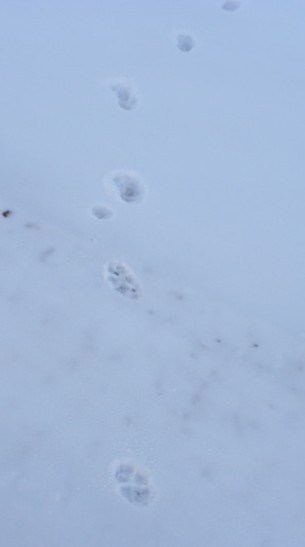
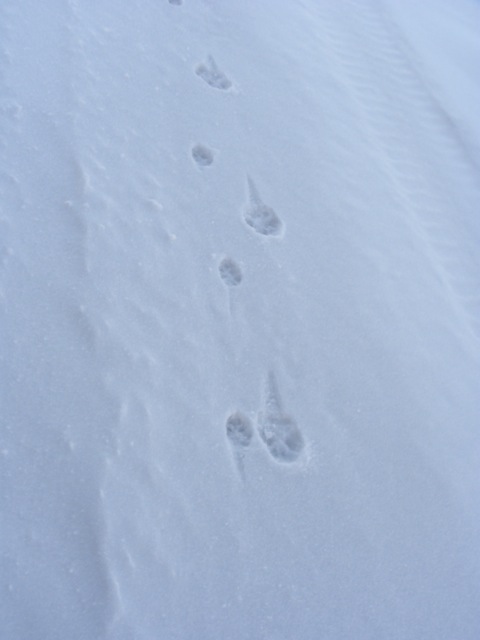
Last Year: The arrow points the direction he was headed.  The ‘dot’ is his injured leg’s imprint. One can see the trouble he is having by his difficult gait.


You can see the small imprint of his left hind leg.  The back legs are in front because he is running

Last Year:  You can see the small imprint of his left hind leg. The back legs are in front because he is running

This morning there were several groups of coyotes in different areas.  And one large grouping was around the area where I spotted ‘Limpy’ last year head for the hills with his stolen bone.  About 5 coyotes were running together, and one of them had a bad left rear leg!

Spot the limpy coyote.

This winter:  Can you Spot the limpy coyote?

Coyote running.  rear feet are in front of front feet.  Notice the 2nd print from top.  That is the left rear and its noticeably smaller

This winter:  Coyote running. rear feet are in front of front feet. Notice the 2nd print from top. That is the left rear and its noticeably smaller.  But compare this photo with the one from last winter. A more normal gait!

The foot is turned inward and the print is smaller meaning he can’t put so much weight on it.  Yet given the difference in last year and this year, he is able to put much more weight on it.  Last year that coyote was barely putting his foot on the ground.  Now he is using it!

Of course, I cannot be sure it’s the same coyote. But given that it’s the same rear left leg, and the coyote was spotted in the same general area, its a good possibility.  And if it is ‘Limpy’, now he, or she, is running with a pack instead of alone.  Now maybe he has had a happy ending after all!

The Mysterious Elk

When hunting season is over and the rush for Christmas trees or winter wood dies down, the elk return.  The elk that migrate to this valley are ‘Park’ elk–elk that summer in the high Absarokas of the Lamar drainages.  1500 to 2000 elk travel here when the snows push them to seek easier feed.  It’s in their DNA to make this trek.

Personally, I look forward to them arriving.  And although they are leery of my presence, I enjoy their company.  For many winters now I arise early, before dawn, several times a week and drive the valley’s dirt road.  It’s that early morning time when you have the potential to see wildlife–wolves, coyotes, elk and moose.  The elk and deer feed usually at dawn or dusk.  The predators have learned to travel at night.  Keeps the humans away!

Sunrise at my house

Sunrise at my house

And although these elk have been thoroughly studied, they still contain many mysteries.  For instance, for the past seven years that I’ve lived here, the elk have a ‘usual’ pattern of movement.  In January/February, they spend time in larger herds of up to 700.  They feed dawn and dusk on the flats behind my house and another large herd feeds across the river in various areas.  During the day they retreat to the cover of the trees to digest and rest. They move, but their movements are fairly predictable.  As the weather warms, they break up into smaller herds (are these ‘family’ groups?), feeding in areas that have been opened up from the snows. Usually by late April, they’ve gone to the high country to calve; if the snows linger then I’ve see them calve in the valley.

Coveted elk habitat on property that could be a subdivision

Coveted elk habitat on private property that could be a sold into a subdivision

Last winter the snows were constant and really deep, starting early February.  A large herd of elk stayed by my front yard, feeding in the willows and resting under cover at night.  Although over 70% of an elk’s diet is grasses, when snows are deep, elk will eat shrubbery such as aspens, willows, and even conifer bark.  Last winter was also constantly windy. I noticed the elk preferred a place in the meadows where the topography dipped slightly–a wind buffer.  So intelligent they are!

So far this year is a totally different, and mysterious, story.  Several years ago the large ranch in the valley replaced their 12′ high barrier fence with a low attractive wooden fence.

Elk stuck inside fence and can't get to safety

Elk stuck inside fence and can’t get to safety

The elk used to get trapped inside with only two gates open, ‘sitting ducks’ for wolves.  The ranch irrigated their fields and trucked their cattle in from May through October. Their fields were seriously overgrazed. When the high fences came down, elk moved through but not as much as I thought they would.  I supposed there was little feed left after the cows departed.   This year the ranch hands convinced the owner that the fields needed to rest, maybe as much as five years.  So they stopped irrigating, reduced the cattle to just a few head, and began the resting process.  And guess what?  The elk are herded up there, about 200 every day.

The new fence with lots of elk there this year.  They are resting these grasses so have reduced cattle grazing

The new fence with lots of elk there this year. They are resting these grasses so have reduced cattle grazing and stopped irrigating

Yet this is not what surprises me about this year’s elk movements.  For the first time ever, I’ve watched them graze heavily in an area of high sagebrush cover.  Also their groups are already smaller (not the usual large January herds)–between twenty to two hundred–and they are in all sorts of habitat. Plus the elk appear much more relaxed.   They are feeding beyond dusk or dawn–in fact, at all hours of the day.  The only thing I can figure is that we had such a great winter that the grass is nutritious and rich everywhere.  I just wish I understood what drives them to feed in these sagebrush areas as well–what kind of native grasses are there that they are enjoying compared to the stock grasses they also like on the cattle pastures.

G&F habitat that usually is never grazed by the elk.  This year they are loving it!

G&F habitat that usually is never grazed by the elk. This year they are loving it!

When I told one person about how relaxed the elk appeared, he replied that maybe the wolves are gone.  Not so.  I saw two wolves the other morning.  And these elk are adapted to our wolves who follow them.  Middleton’s own study on these elk showed that only when wolves are around 1 kilometer (1/2 mile) away do elk begin to react.

On the other hand, although I did see 2 wolves, I have seen very few wolf tracks.  If all the elk are here, where are the wolves?

Coyote travels one way while a wolf travels in the opposite direction

Coyote travels one way while a wolf travels in the opposite direction. Taken two days ago

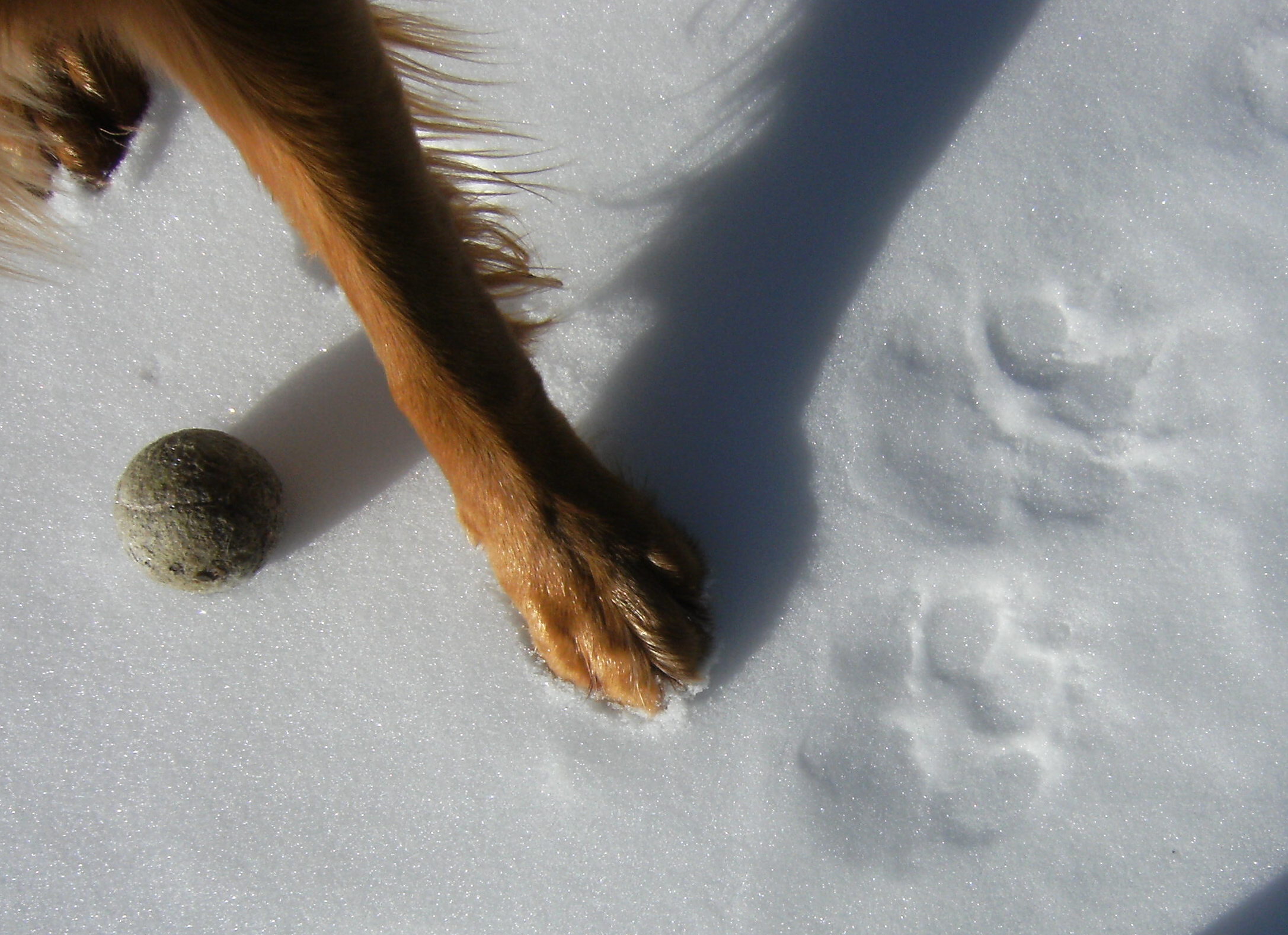
Another mystery:  There is an elk carcass along the road–a young elk maybe 3 years old.  Although the elk was completely eviscerated, she has a lot of meat on her and is still completely intact as far as her skeleton and hide.  I’ve been watching it for five days, and haven’t seen any birds on it, nor any other predators.  A few coyote tracks, a few wolf tracks, and a lot of Koda, my dog, tracks!  Although there is no wolf hunt this year, the wolves never linger to be watched like they used to.  They have quickly learned that humans are their mortal enemies.  It just might be this carcass is too close to the dirt road for their comfort, even at night!

Koda, Koda’s ball, and wolf tracks


Wolves, Management, Cattle and Wyoming

Buffalo Bill Center of the West today’s lunchtime speaker was Mike Jimenez of the U.S. Fish and Wildlife Wolf Recovery program.  Mike was scheduled months ago to speak about the success of the federal wolf reintroduction.  But as timing would have it, just days ago wolves were relisted in Wyoming.

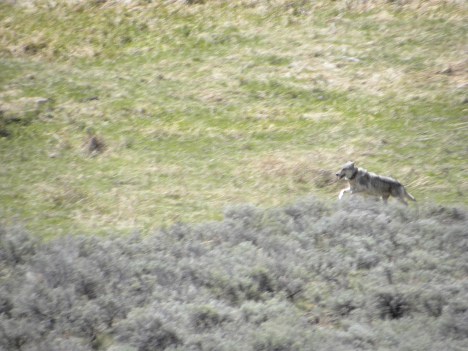
Mike has been a wolf biologist for over thirty years.  He headed up the Rocky Mountain Region (RMR) wolf recovery for USF&W and still works for them.  The re-listing put him in an awkward position, as the Feds along with Wyoming are the defendants in the lawsuit.  His talk stuck to the history of wolves in the U.S., when they were listed under the ESA and why, and how the program was conducted and how it progressed.  He’s a biologist, not a lawyer or a politician, and he tried to be non-biased and fair in his assessment of this extremely controversial issue–wolves!Lamar pack wolf
Personally, I think the Wyoming Game and Fish has struggled to maintain wolves above the minimum level and done a good job. Although I disagree with how their hunt zones have been managed [I’d like to see either a science zone label for areas around the Park with no hunting; or at a minimum have the areas around the Park have a one month season in October when wolves are not following elk as they move outside the Park].  But WG&F has their hands tied politically, just as the Feds do. And that is why things have ended up back in the courts.

Jimenez’s assessment of the ‘two’ sides of the wolf issue was, I thought, overly-simplistic–characterized as the pro- or anti-wolf—cuddly/cute, or killing machines.  People who think about wolves know it is more nuanced than that and I’m sure Jimenez knows that too.

Not today's wolf but here is an example of collaring.

Collaring a wolf by Wyoming Game and Fish

I’d like to address my feelings on some of these issues.

First why was Wyoming targeted for a relisting lawsuit?

Wyoming is the ONLY state that has a predator listing for wolves in the RMR. Although one could argue that most of the state is unsuitable habitat for wolves (true), Montana has the same issue.  Montana is a bigger area state, with its entire eastern side unsuitable habitat.  But Montana does not have a predator zone.  Predator status means that an animal can be shot, run over, trapped at any time of the year.  There are other animals, such as foxes and coyotes or badgers that receive that status in Wyoming.  In general, ‘predator’ status in most U.S. states was abandoned back in the 1920’s and replaced with hunting/trapping seasons.  Wyoming is still in the caveman era on this.

As wolves are delisted in other states, such as Washington and Oregon, a ‘predator’ zone will not fly.  Wyoming is a lone wolf here so to speak here.  The Predator Zone must go before wolves should be de-listed here.
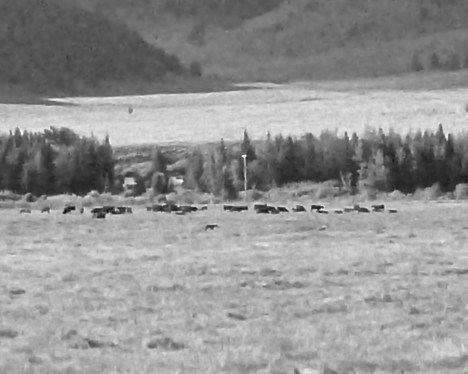
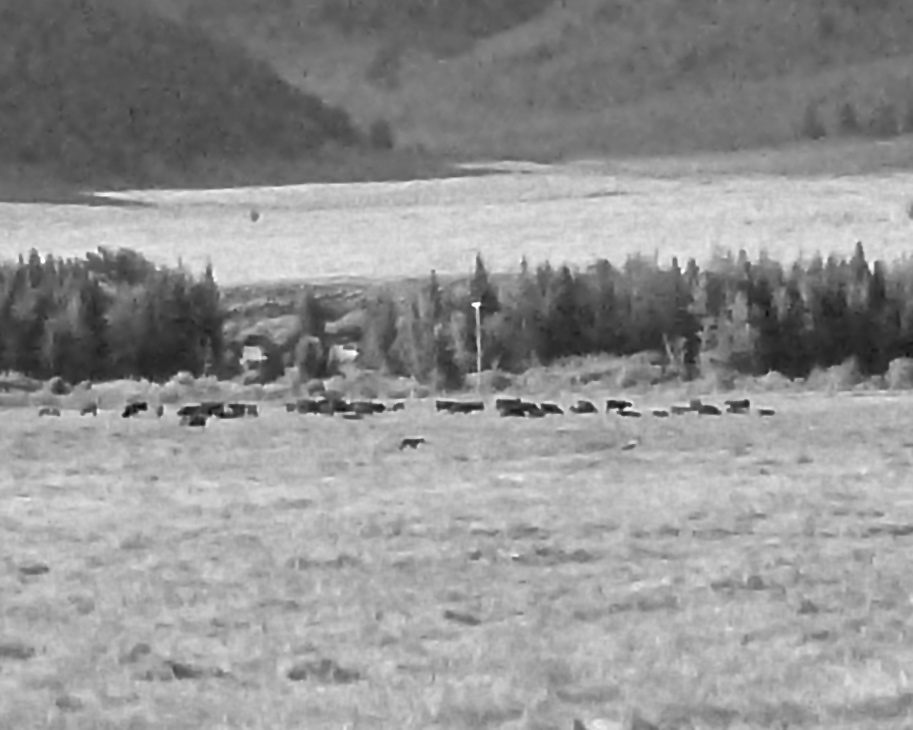
Hard to see, but the small dot in the foreground is the wolf mousing amongst the cattle

Hard to see, but the small dot in the foreground is a wolf mousing amongst cattle

In addition, Wyoming, in a back door deal with Governor Mead and, at that time, Secretary of the Interior Salazar, came up with a ‘flex-zone’, ostensibly to insure habitat connectivity for genetic diversity.  In other words, a portion of the state near the Idaho border is a trophy zone during the hunt season, then a short few months rest, then reverts to predator status.  This too is ridiculous and no other state has this, nor will they.  This was a pure political ploy, and not based on science.

But apart from how Wyoming got itself into this relisting mess, I want to address the issue of predation and wolves.  As far as objections to wolves because they eat elk and ‘hurt’ hunters, this is not even an issue to address, but just whining on the part of hunters.  Hunter elk success in Wyoming has been at an all time high for the past two years.  And although elk numbers in some areas are down, there are many reasons, including wolves, for this.  In fact, some of the reasons, like in the Northern Range in Montana, have to do with over-hunting by humans! Wolves as competition for hunters is a non-issue.
IMG_0453

But wolves predation on livestock is an issue that needs addressing.  Jimenez rightfully pointed out that wolves will and do take down cattle and sheep, especially when their preferred prey–elk and deer–is unavailable.

When wolves were brought into the RMR under the ESA, Jimenez pointed out that the agreement with ranchers was that they wouldn’t have to change any of their practices. Under the 10J rule, the USF&W would surgically kill wolves that had predated on livestock, and Defenders of Wildlife would pay compensation.  As a general rule, that seemed to work out well.  Cattle predation since 2006 went down, wolf population in the states went up.  This kind of agreement was necessary to keep ranchers happy.  But it is not a long-term solution, and I will tell you why.

Mike pointed out the Service tried several non-lethal means like fladry and loudspeaker noise to deter wolves, but because wolves are smart, they all failed as solutions for large ranches.

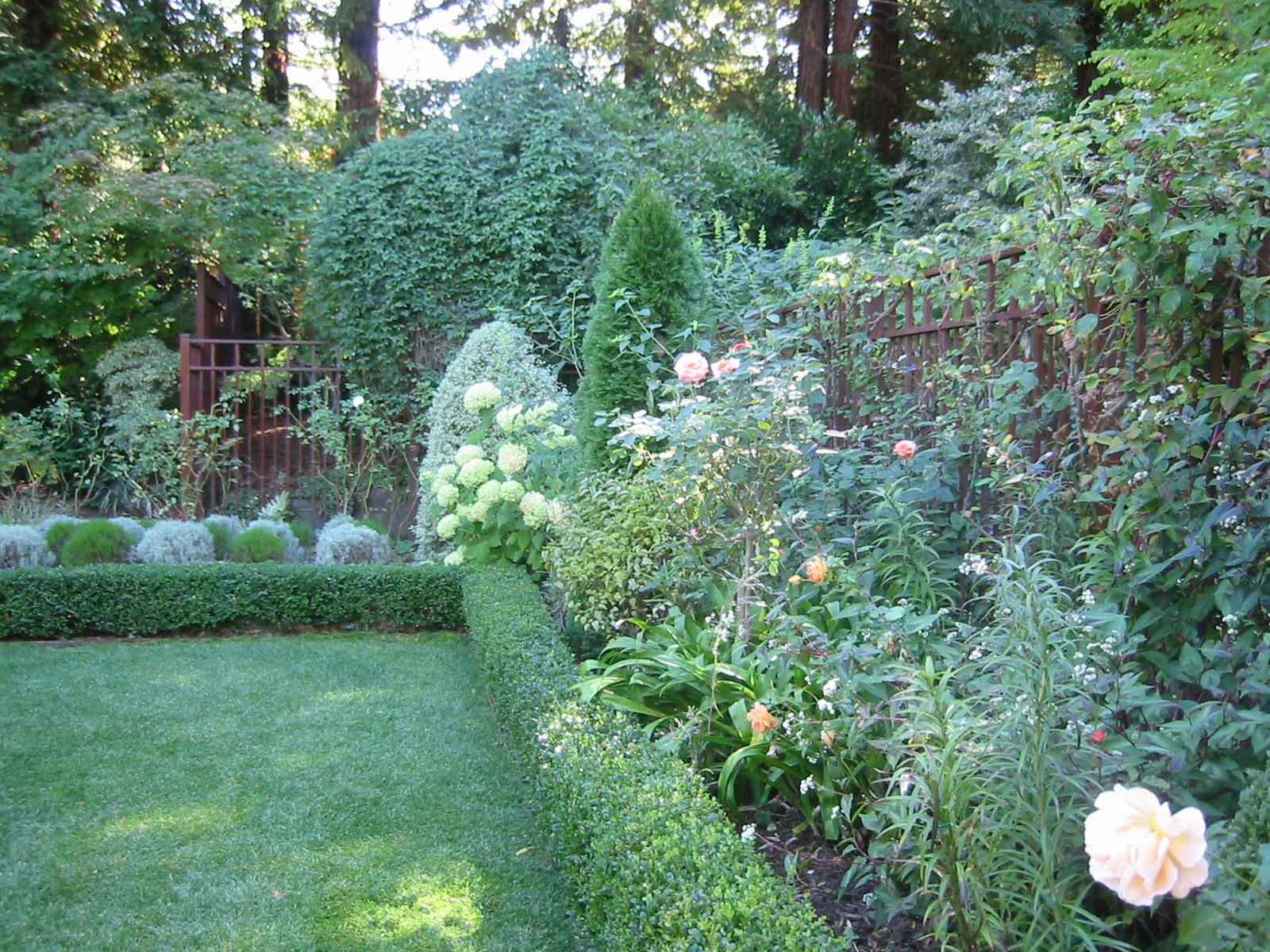
In my work as a landscape designer and horticulturist, although I didn’t work with livestock, I did work with wildlife issues relative to plants.  In Marin county where there is essentially no hunting, deer are abundant and people have made their homes in deer habitat.  Deer are a big problem in terms of a nice garden.  Especially in August/September, plants that deer normally might not touch, deer will eat in order to find water.  Deer, like wolves actually, are very smart and adapt to your methods of ‘control’.  And like wolves and bears teach their young what to eat, deer will do the same.  Even in a small county like the North Bay of San Francisco, deer in different areas will eat different plant material.  And non-lethal control methods have to be constantly changed.

In addition, a much bigger issue than deer are gophers and moles.  Gophers are abundant in Marin’s Open Space.  Once you till soil, they move in even if they weren’t there before.  They can destroy even a 5 year old Redwood Tree, making it disappear into hole overnight.  Moles don’t eat plants, but dig tunnels next to roots.  The roots of the plants than dry up and the plant dies.

Skunks and Raccoons are abundant too.  They eat grubs and love to dig in gardens, especially new lawns or new plants, seeking insects.

These are all big problems for homeowners who spend big bucks on their landscape installation; or for small farmers who supply specialty crops to restaurants.  I’ve worked with all these critter problems.
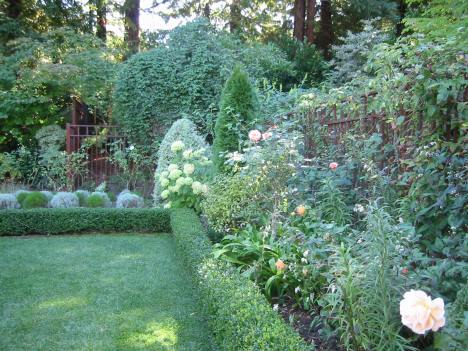
Expensive landscape losses are no different for a rich homeowner than the loss of cattle for a rich cattleman

Expensive landscape losses are no different for a rich homeowner than the loss of cattle for a wealthy cattleman

These folks, and especially the farmers [which is a direct equivalent to ranchers because this is their livelihood] experience the same sorts of frustrations that ranchers do with wolves or coyotes.  I know, because I’ve been on the other end.  It becomes easy to ‘hate’ something that continues to damage your crops or your cattle.  It is then not much of a step to turn to lethal, and easy, means to deal with the problem.  Poison the rodents, kill the deer, shoot the coyote or wolf, etc.

Yet our wildlife is valuable.  They are making a living themselves; plus they have value on the landscape. Wolves control the coyote population.  Coyotes control the rodent and raccoon population. etc.

Over the course of twenty years of working with wildlife ‘problems’ in the landscape, my solutions evolved to be non-lethal yet creative.  If the wildlife are outsmarting you and your only solution is to kill them–how smart are you?  Wildlife can be outsmarted non-lethally, but it’s a matter of working with the land, with your livestock or your plants. Really, its part of your job as a grower or a rancher.Deer and fawn nursing

I’ve created entire wedding flower gardens in deer areas and the neighbors were amazed.  How did you do that?  They’d ask.  I used plants that deer like but also didn’t like, interspersing them in certain ways so as to deter, and fool, deer.  Instead of endlessly poisoning gophers, we used a bitter tablet that plant roots uptake and makes the plant taste bitter to them.  Edible gardens must be fenced and so on.

I have worked creatively with the land to minimize wildlife damage in non-lethal ways. That is the pact one takes on when working with plants and animals.  Aldo Leopold called it ‘The Land Ethic’ and it still holds today.

So although the initial ‘promise‘ to ranchers when reintroduction began was that ‘things won’t change’, now that wolves are to stay, things with the ranching industry must change.  Ranchers need help and education in how to manage creatively.  And it’s time they make that commitment.  These predators, such as wolves and grizzlies, have so few areas they can live, the RMR needs to be one of the places where wildlife comes first.  Federal lands should not have ‘kill’ orders’  Federal lands are where wolves, and bears, survive.  Ranch at your own risk on public lands would be the first important change.  If that means cowboying more frequently, or not putting calves out on the allotments, then the ranchers need to make those changes if they want less predation.

Grizzlies too are killed for cattle predation on public lands

Grizzlies too are killed for cattle predation on public lands

It also would mean that a rancher is not reimbursed on federal lands.  Every year I see cattle killed on the highway by me.  They are on the road because the rancher, whose cattle are on public land allotments, doesn’t want to bother to turn the electric fence on or cowboy them off the road.  I’ve been told ranchers just factor these losses into their bottom line.  Its easier and more economical than sending a cowboy out.  So if car losses don’t matter on public lands, why should the miniscule amount of wolf predation?

On private lands, ranchers will probably have to be issued a shoot-to-kill permit.  But this should come with help and education, implementing methods to reduce predation.  Livestock reimbursement, and Wildlife Services, should be phased out slowly.  Reimbursement should only come with evidence of livestock non-lethal predation management.  Money should be spent helping the rancher, not giving him a handout which only encourages complacency.  I’ve run many businesses, and the federal or state government never reimbursed me for business losses.

Lastly, there are now many ranches in our state that are not making a living ranching, but using the generous subsidies that come with livestock to reduce taxes for extremely wealthy one-percenters.  These billionaires are still receiving not only reimbursement for predation losses, but receive Wildlife Services assistance on our public lands to kill wolves and other predators. This is plain abuse of even our existing broken system which was implemented to assist subsistence ranchers.

Especially in our Western States, we need a new model.


The Wild Excellence. What it means and why I wrote it

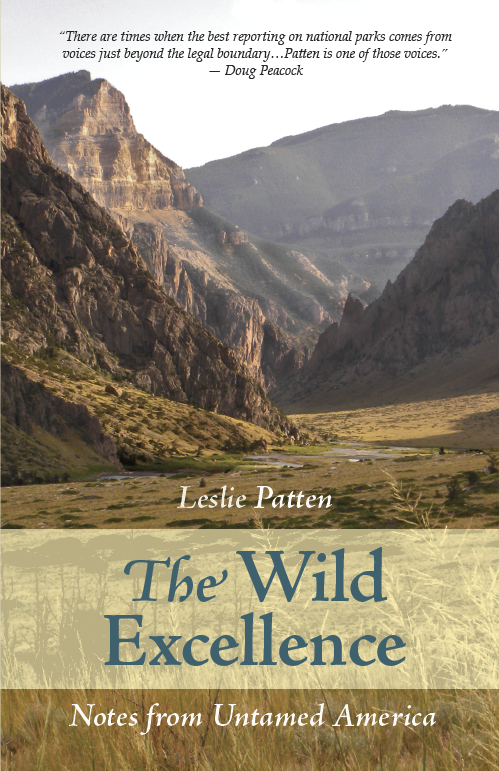
I thought now was a good time to do a post on my new book The Wild Excellence: Notes from Untamed America. The book has just been released in stores and online.  Kindle version is now available on AmazonThe Wild Excellence front cover lrg

The Wild Excellence title comes from a line in a Pablo Neruda poem, one of the last he wrote as an old man.

Without doubt I praise the wild excellence

That line, in a nutshell, describes my relationship to the fullness of the natural world.

When I moved from the Bay Area to the Absaroka mountains east of Yellowstone National Park, I found myself in the wildest country in the lower 48 and one of the last, whole intact ecosystems in the entire temperate world.

Doug Smith, Wolf Biologist for Yellowstone National Park says “country without wolves isn’t really good country. It’s incomplete. It doesn’t have its full spirit.” Over time that wild spirit of lands with grizzlies, wolf packs, large elk herds, wolverines, and cougars instilled in me a new perspective of our natural world and my place in it.

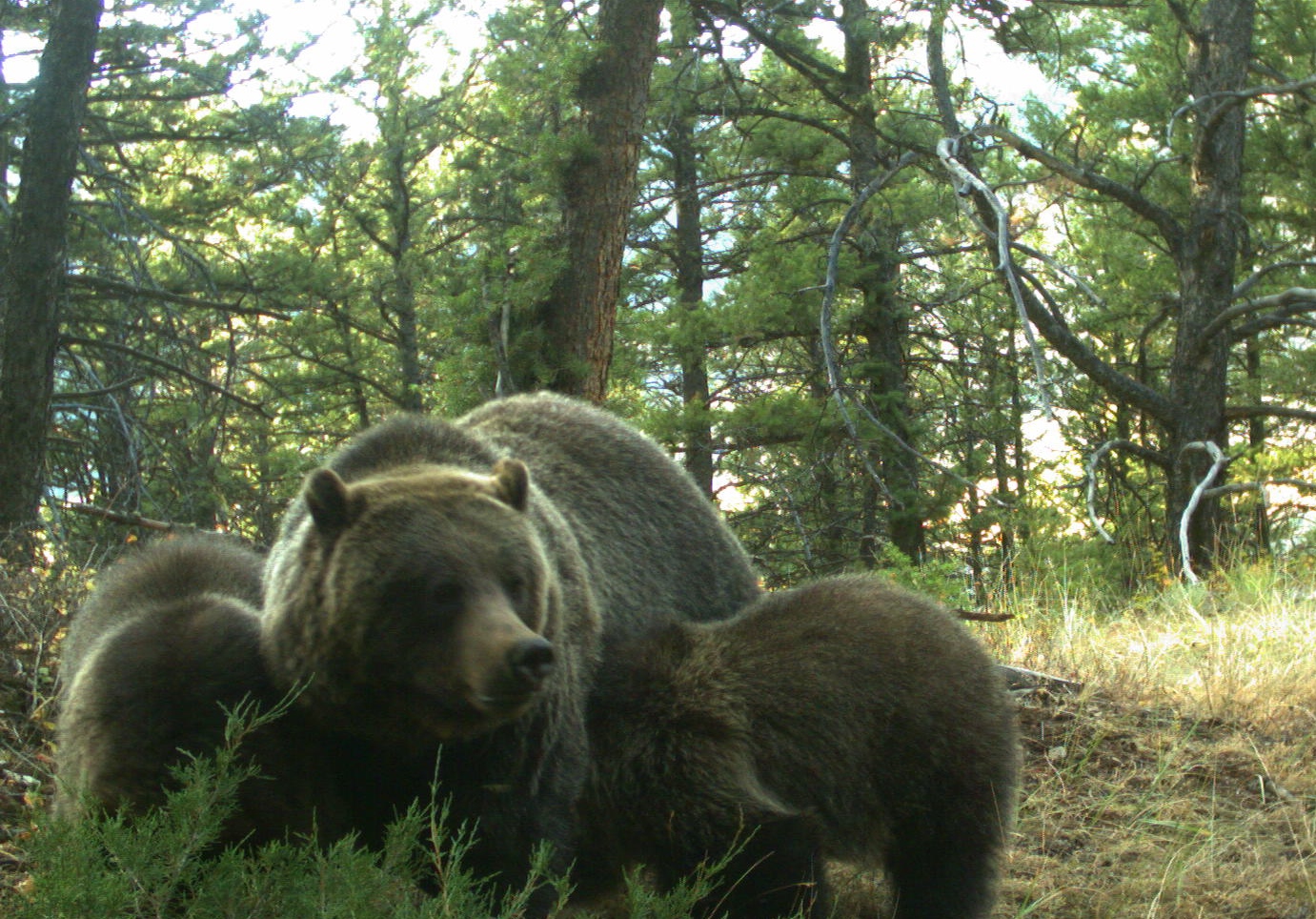
Grizzly mom with two cubs of the year near my house

Grizzly mom with two cubs of the year near my house

I’ve always been interested in Land so I began hiking to ancient Shoshone Sheep Eater sites, settler remains, learning fencing work and water development, but foremost learning how to be in tune with the wildlife here. Because of my proximity to the Park, wolf and elk studies were being conducted in the valley where I live and I had the opportunity to assist as a citizen scientist. ‘Bad’ grizzlies were dropped off at the end of my dirt road with the hopes they’d go into the Park.  Sometimes they ‘homed’ back to where they came from, yet other times they came to the nearby woods to dig for grubs or eat chokecherries.

Two adult cougars travel together

Two adult cougars travel together

With time, I became aware that a parallel internal process was taking place.  This wild landscape, with its full suite of wildlife, was having a healing effect on me.  And that healing seemed dependent on its expansive, untouched space and the play of predators and prey so abundant here.  That healing illuminated for me the sacredness of wildlands and their necessity for the human spirit.

Middle Fork Lake...the Divide

Middle Fork Lake…the Divide

My book, The Wild Excellence, is a description of many journeys–the science and the sacred, and what moves the Heart to want to protect all that is fragile and wonderful.  It is my sincere hope that this communication will inspire others to experience the mystery and wonder of wild places, and work with their vote and their voice to protect them. They are the last and fragile remnants of what Lewis and Clark saw over 200 years ago.
For updated information on The Wild Excellence  visit my facebook page

Narrating from the borderlands of Yellowstone National Park, Leslie Patten brings us vivid accounts of wolves, grizzlies, the seasonality of ecosystems and tales of prehistoric Indians–all written with a naturalist’s eye and woven in a personal network of modern day homesteading, dogs and community. There are times when the best reporting on national parks comes from voices just beyond the legal boundary, close enough for a passionate attachment to the beauty of the land but sufficiently distant for critical appraisal of governmental management. Leslie Patten is one of those voices.

— Doug Peacock, Author of Grizzly Years, In the Shadow of the Sabertooth and other books.

CONTENTS

Introduction

Chapter 1 A Dog and a Lesson 

Chapter 2 First Days 

Chapter 3 The Peoples Before 

Chapter 4 Close Encounters of the Wolf Kind 

Chapter 5 A Most Magnificent Animal 

Chapter 6 Woods, Water, and Wildlife 

Chapter 7 Bear Dreamer 

Chapter 8 Sagebrush Stories 

Chapter 9 Medicine Dog 

Chapter 10 Sacred Land Ethic 

Epilogue 

wolf

Speak for Wolves

I just returned from 2 nights and 2 days of a Speak for Wolves event in Gardiner, MT, the first one of its kind.  The event was a great success, with some very prominent speakers and filmmakers in the field of conservation.

The event at Arch Park.  YNP historic arch in background

The event at Arch Park. YNP historic arch in background

Friday night I saw Bob Landis’ new film ‘She-Wolf’ which is now on sale in the Park.  She-Wolf is the interesting and unique story of wolf 832f , better known as the Lamar Valley’s famous ’06 who was shot and killed in the very first Wyoming wolf hunt.  Bob answered questions at the end of the film.

This story is extremely personal to me as not only had I watched ’06 many times up close and personal in the Lamar Valley, but after her death in late December 2012, the entire Lamar pack (minus the remaining alpha male) spent the winter in my valley.  During that winter of 2013 I had the opportunity to watch the pack behind my house many times as well as track them.  With the death of their alpha female, they seemed at a loss of how to kill elk, even though there were thousands all around them, and they mainly killed deer.  In the spring they all dispersed–which is a typical disruption when pack members are killed.

'06 swims the Lamar river, emerges onto the road right in front of tourists.

’06 swims the Lamar river, emerges onto the road right in front of tourists.

On Saturday there were speakers such as Nathan Varley who runs a wolf watching business in Gardiner with his wife.  He spoke of how these last several years of wolf hunting around the Park boundaries has made his business even harder.  His yearly gross revenue of over 1/2 million dollars brings a lot of business to the Park and surrounding communities. People come from all over the world to see wolves as the best place for viewing them in the wild is Yellowstone.  But some of the viewable packs are gone.  Lamar Valley used to be the premier place for wolf watching, but now has only two wolves that are rare to see.

Louisa Wilcox of Center for Biological Diversity spoke of some of the knotty politics.  Appropriately enough, thunder and lightning cut her talk short.  Public lands ranching and trapping demonstrations–one of the main ways wolves are killed in Montana and Idaho–completed the day’s activities.

Coyote pups

Coyote pups

Saturday night was film night.  Two short films on Wildlife Services (Exposed: USDA’s Secret War on Wildlife) and how they indiscriminately are killing wildlife were shown.  Then Camilla Fox, Director of Project Coyote, presented a film on how Marin County (my old alma mater) ranchers have done away with Wildlife Services and implemented a program of natural protections.  These include guard dogs, better fencing and llamas.  The county has saved over $60 million dollars plus most ranchers have seen either no predation or very little predation by coyotes.  All this and the biggest plus is they are no longer poisoning wildlife.  Instead, the coyotes are doing their job of controlling the rodents around the ranches.

Dr. Robert Crabtree, who has done all the major research in the Park on coyotes, was present for the panel discussion afterwards, as well as George Wuerthner, Western Watersheds Project Oregon Director and author.

Sunday’s event included a wonderful talk and ceremony by Jimmy St. Goddard of the Blackfeet Tribe.  Here’s a short clip of Jimmy giving a prayer in Blackfeet.

Doug Peacock gave a great talk about the plight of the grizzly bear, who the USF&W and the states are just itching to delist in 2015, and how that might impact the numbers of the Great Bear.

All in all it was a great event with talks from dedicated individuals who are working hard to make a difference in our treatment and perception of wildlife and wildlands.

Since I traveled through the Park to and from Gardiner, here are a few of the wildlife shots I took on my journey.

Moose on highway 212 outside the Park

Moose on highway 212 outside the Park

Little Black bear in Yellowstone

Little Black bear in Yellowstone

Bald Eagle

Bald Eagle

Elk lounge on the high school field in Gardiner

Elk lounge on the high school field in Gardiner

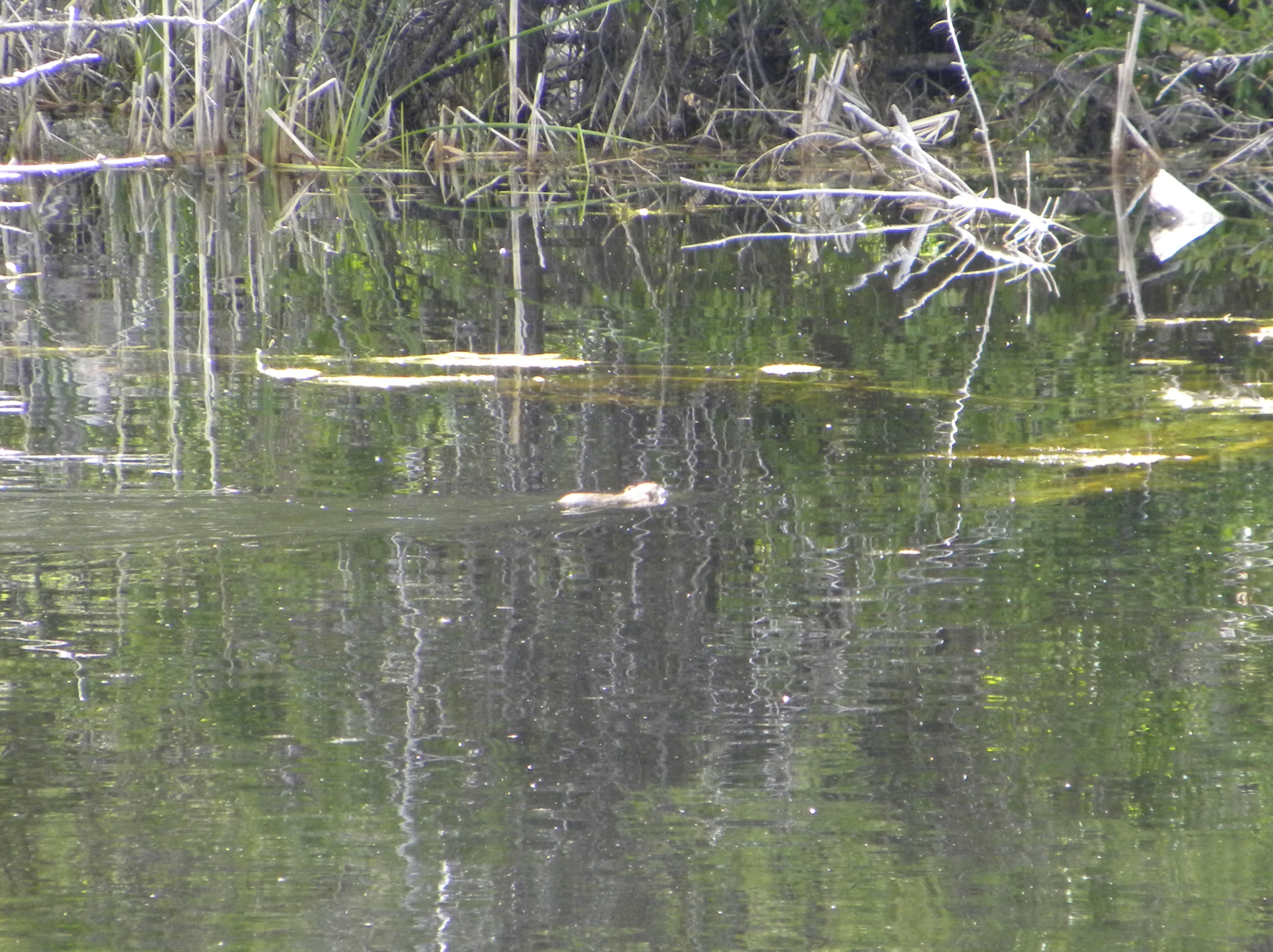
Muskrat photo finally!

Muskrat photo finally!

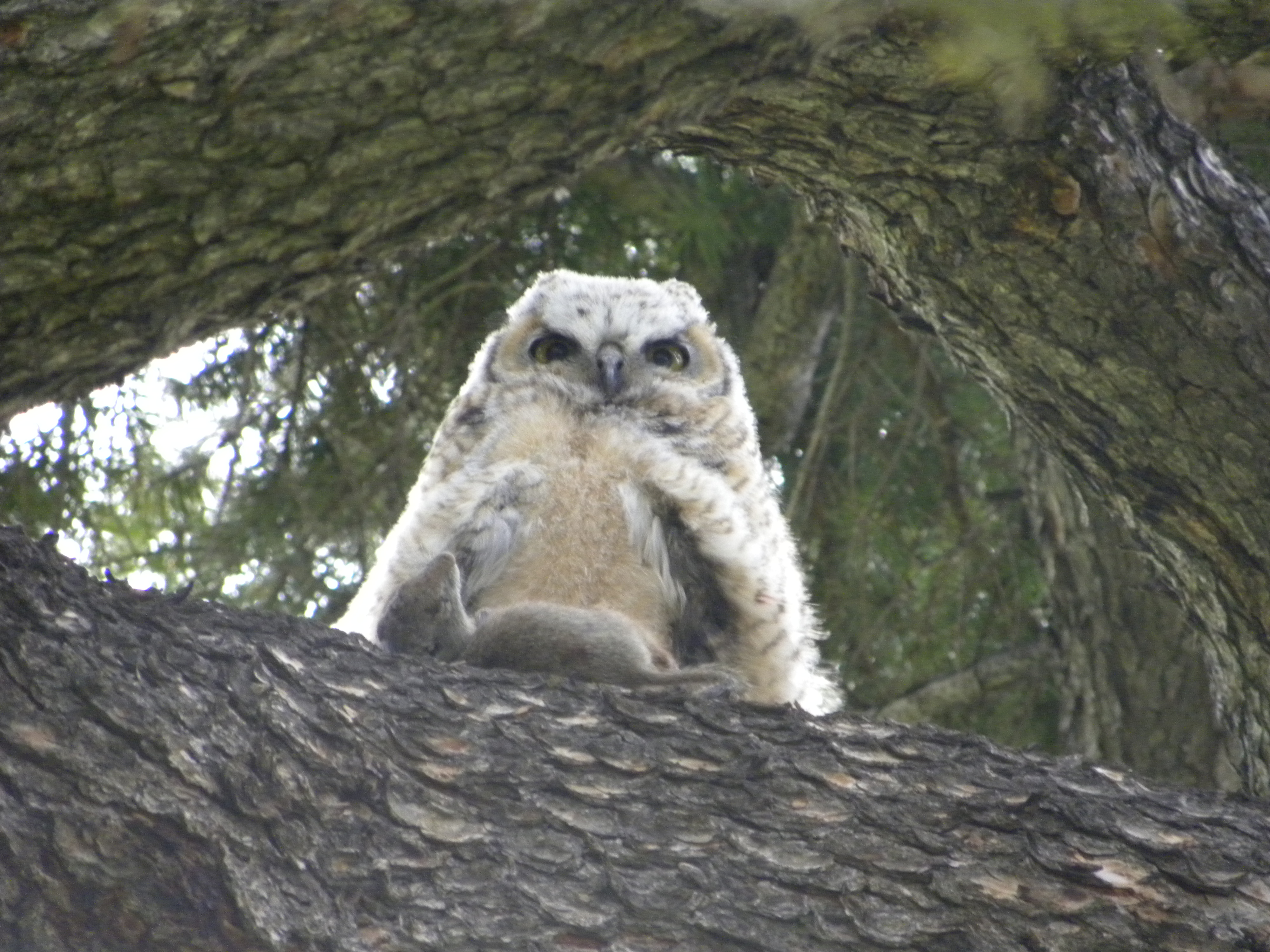
Great Horned baby with mouse

Great Horned baby with mouse

Bison and baby