• MY BOOKS ON WILDLIFE, GARDENING AND MORE

  • The Wild Excellence

  • True stories of wildlife encounters around the Greater Yellowstone
  • Award winning eBook on Decomposed Granite, tips, how to's, what to watch for
  • Children's book. True stories of a dog and wolves. In a dog's voice
  • Written for dry Mediterranean climates in California, north and south

The Wild Excellence. What it means and why I wrote it

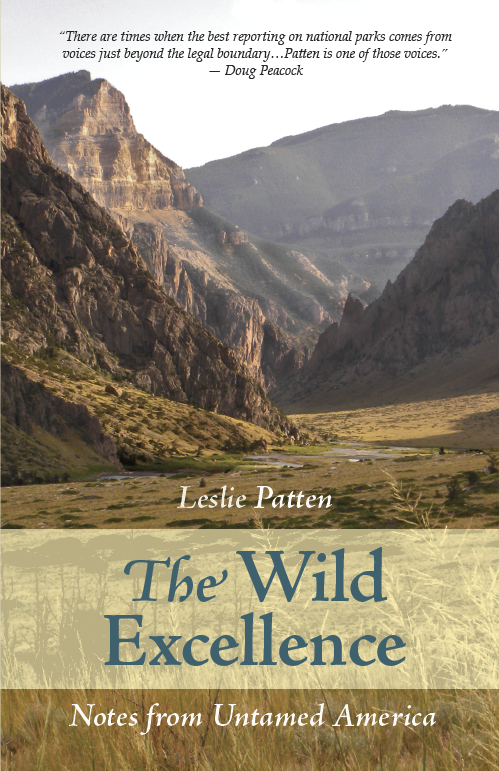
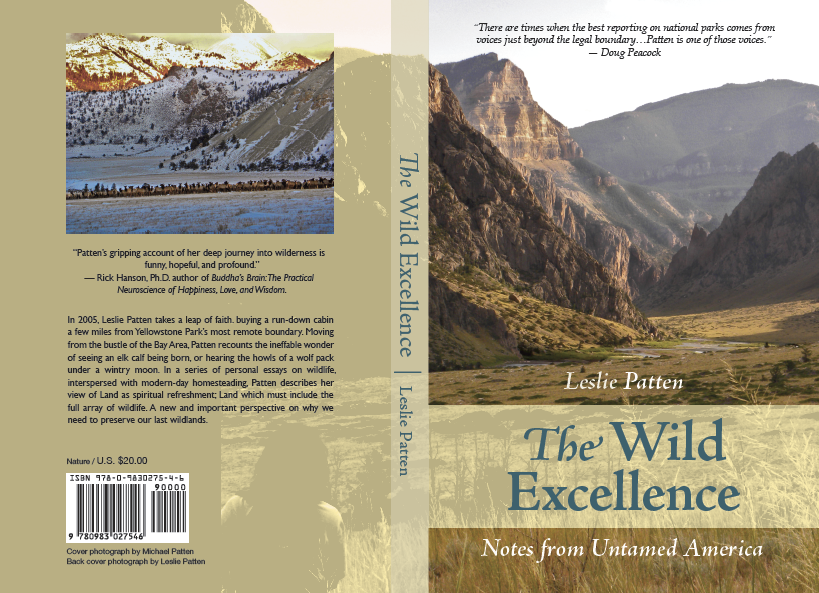
I thought now was a good time to do a post on my new book The Wild Excellence: Notes from Untamed America. The book has just been released in stores and online.  Kindle version is now available on AmazonThe Wild Excellence front cover lrg

The Wild Excellence title comes from a line in a Pablo Neruda poem, one of the last he wrote as an old man.

Without doubt I praise the wild excellence

That line, in a nutshell, describes my relationship to the fullness of the natural world.

When I moved from the Bay Area to the Absaroka mountains east of Yellowstone National Park, I found myself in the wildest country in the lower 48 and one of the last, whole intact ecosystems in the entire temperate world.

Doug Smith, Wolf Biologist for Yellowstone National Park says “country without wolves isn’t really good country. It’s incomplete. It doesn’t have its full spirit.” Over time that wild spirit of lands with grizzlies, wolf packs, large elk herds, wolverines, and cougars instilled in me a new perspective of our natural world and my place in it.

Grizzly mom with two cubs of the year near my house

Grizzly mom with two cubs of the year near my house

I’ve always been interested in Land so I began hiking to ancient Shoshone Sheep Eater sites, settler remains, learning fencing work and water development, but foremost learning how to be in tune with the wildlife here. Because of my proximity to the Park, wolf and elk studies were being conducted in the valley where I live and I had the opportunity to assist as a citizen scientist. ‘Bad’ grizzlies were dropped off at the end of my dirt road with the hopes they’d go into the Park.  Sometimes they ‘homed’ back to where they came from, yet other times they came to the nearby woods to dig for grubs or eat chokecherries.

Two adult cougars travel together

Two adult cougars travel together

With time, I became aware that a parallel internal process was taking place.  This wild landscape, with its full suite of wildlife, was having a healing effect on me.  And that healing seemed dependent on its expansive, untouched space and the play of predators and prey so abundant here.  That healing illuminated for me the sacredness of wildlands and their necessity for the human spirit.

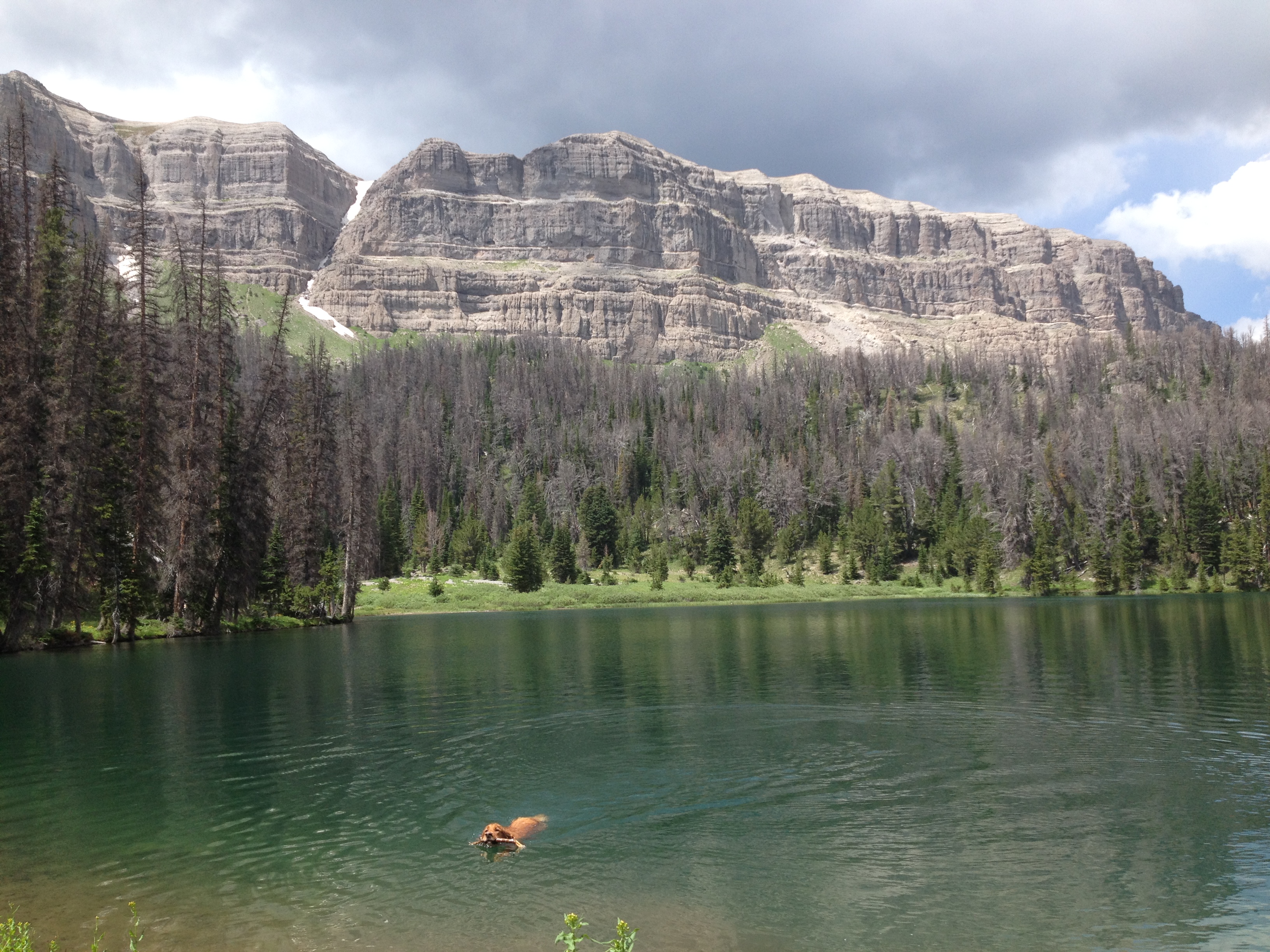
Middle Fork Lake...the Divide

Middle Fork Lake…the Divide

My book, The Wild Excellence, is a description of many journeys–the science and the sacred, and what moves the Heart to want to protect all that is fragile and wonderful.  It is my sincere hope that this communication will inspire others to experience the mystery and wonder of wild places, and work with their vote and their voice to protect them. They are the last and fragile remnants of what Lewis and Clark saw over 200 years ago.
For updated information on The Wild Excellence  visit my facebook page

Narrating from the borderlands of Yellowstone National Park, Leslie Patten brings us vivid accounts of wolves, grizzlies, the seasonality of ecosystems and tales of prehistoric Indians–all written with a naturalist’s eye and woven in a personal network of modern day homesteading, dogs and community. There are times when the best reporting on national parks comes from voices just beyond the legal boundary, close enough for a passionate attachment to the beauty of the land but sufficiently distant for critical appraisal of governmental management. Leslie Patten is one of those voices.

— Doug Peacock, Author of Grizzly Years, In the Shadow of the Sabertooth and other books.

CONTENTS

Introduction

Chapter 1 A Dog and a Lesson 

Chapter 2 First Days 

Chapter 3 The Peoples Before 

Chapter 4 Close Encounters of the Wolf Kind 

Chapter 5 A Most Magnificent Animal 

Chapter 6 Woods, Water, and Wildlife 

Chapter 7 Bear Dreamer 

Chapter 8 Sagebrush Stories 

Chapter 9 Medicine Dog 

Chapter 10 Sacred Land Ethic 

Epilogue 

wolf

Smart Urban Planning and Wildlands–an interconnection

As a horticulturist and wildlands advocate, I heard a story on yesterdays Science Friday that got me pondering.

The essential jest of the story is that trees, like all plants, emit different chemicals, many of them considered toxic.  Plants do this for a variety of reasons.  Some might attract pollinators, others to ward off predators.  Of course we’ve all known this for years.  That is why some plants have medicinal uses, while other plants might give you a terrible reaction.  But we have never considered that trees might be doing the same thing and those chemicals could be reacting in negative ways with pollutants in our cities air.Japanese Maple

In this short segment Biologist Todd Rosenstiel explains some of the studies being done at Portland State University–that we only know a few of the emitted chemicals–like turpenes–and there are many more we are still investigating.  He explains how these chemicals can react with ozone in polluted atmospheres to create more pollutants.  Some trees make more of these toxic chemicals than others; and also chemicals might begin as toxins yet then combine with ozone in such a way as to actually scrub pollutants out of the atmosphere.

As a horticulturist, I’ve planted thousands of trees in suburbs and cities.  I’ve thought of problems like soil, sun, wind, climate, insect resistant, etc.  But this is an entirely new area of study.  For instance, Rosenstiel points out that Oaks are big emitters of these toxins, while Maple not so much.  But we can’t just plant Maples; we also need a diversity of trees in cities.

That got me thinking again about livable cities and how proper city/suburb planning is an important tool for saving our wildlands and wildlife.  Proper planning so cities become more self-contained–growing their own foods [using rooftop year round gardens], solar power that is concentrated within the immediate area [rather than generated from massive wind/solar farms in fragile desert habitat or energy trucked from far away], green spaces for recreation, smart transportation, clustered housing, and other techniques will make the need to ‘escape’ less, and preserve lands for wildlife.

Rooftop garden

Cities/suburbs in general should be planned with wildlife in mind.  Although cities won’t be having elk or wolves running around, there are ways to plan for wildlife corridors.  Los Angeles as well as Santa Cruz’s Highway 17 are good examples of needed cougar corridors.  While there is good habitat around the edges, freeways block corridors cougars use.  And living with wildlife that has learned to exploit urban centers, such as mesopredators and their prey, –coyotes, foxes, raccoons, deer, possums, fishers–will enhance city living.

Urban coyote rests mid-day in local cemetary

Urban coyote rests mid-day in local cemetary

Smart city planning for liveable cities, which seems to now include taking into the account the chemical biology of trees–is a necessity if we want to inhibit the sprawl that now threatens some of last remaining wildest lands in the United States.

Jade Lake near Bonneville pass in the Dunoir

Jade Lake near Bonneville pass in the Dunoir

More about Grizzly Bears! Grizzlies, the PCA, and the Wind River White Bark Pines

What is the PCA?  If you care about grizzlies, then this knowledge is important.

The PCA stands for Primary Conservation Area and is a designated area within the Greater Yellowstone Ecosystem with special rules to protect and insure that the grizzly bear population will thrive into the future.  This area has special rules regarding activities that would disturb bears, such as excessive roads, ATV’s, numbers of elk hunters, etc.  The aim is to ensure genetic diversity and keep a minimum of 500 bears.  This area was first outlined during the bear’s period of recovery.  The PCA rules will still apply even after grizzly bears are delisted, which will probably come in 2015.

Primary Conservation Area in Blue. Suitable habitat for bears in Red.


Now look at the above image.  The actual designated PCA is in blue.  The suitable habitat is in red.  Notice there is an ‘Italy-shaped’ leg in the lower right that is not in the PCA but is suitable habitat.  The majority of this is the Wind River range.  See there is a main highway between Riverton and Jackson that cuts right through a small section of the PCA.  In order for bears to inhabit the Winds, they have to cross this highway, and the main corridor into the Wind River range from the north side (Gros Ventre/Upper Hoback area) of the highway to the south is through the Upper Green River Valley.  Per Wyoming Game & Fish own conservation guidelines:

Based on current road densities, presence of domestic sheep and current levels of conflict with livestock, the upper Green River area on Forest could also be considered unsuitable for grizzly bear occupancy. However, important biological issues make the Upper Green River area very important in ensuring CS (Conservation Strategies) population and distribution objectives will be met long-term.The Upper Green River area is presently occupied by grizzly bears and is important contiguous habitat that links the bear population between the Gros Ventre/Upper Hoback area, Upper Wind River Range, and core bear habitat north of this area.

So why am I talking about this?  Because it is rare, and I mean rare, for a bear to get through the Green River corridor without getting into trouble with livestock.  That valley is saturated with sheep and cattle allotments (these are on public forest service lands with some 7500 sheep and 22,500 cattle in a 323 square mile area).  Bears are moved, or removed lethally.  Recently the ‘take’ quota for grizzly bears was just raised in that area and even more important, the limit for female grizzlies kills was eliminated there.  Therefore, it is difficult for a bear to get pass through this bottleneck corridor into the Wind River habitat. Yet the Winds provide excellent, essentially uninhabited habitat.

Another red flag for the Winds and bears is that the southern portion of the range is excluded from conservation strategies because of several factors.  First because there are still very active sheep allotments there (these are sheep allotments on Wilderness).  Also because of heavy backpacker summer use. But I am here to tell you that the best and healthiest white bark pines are in the southern portion of the Wind Rivers.

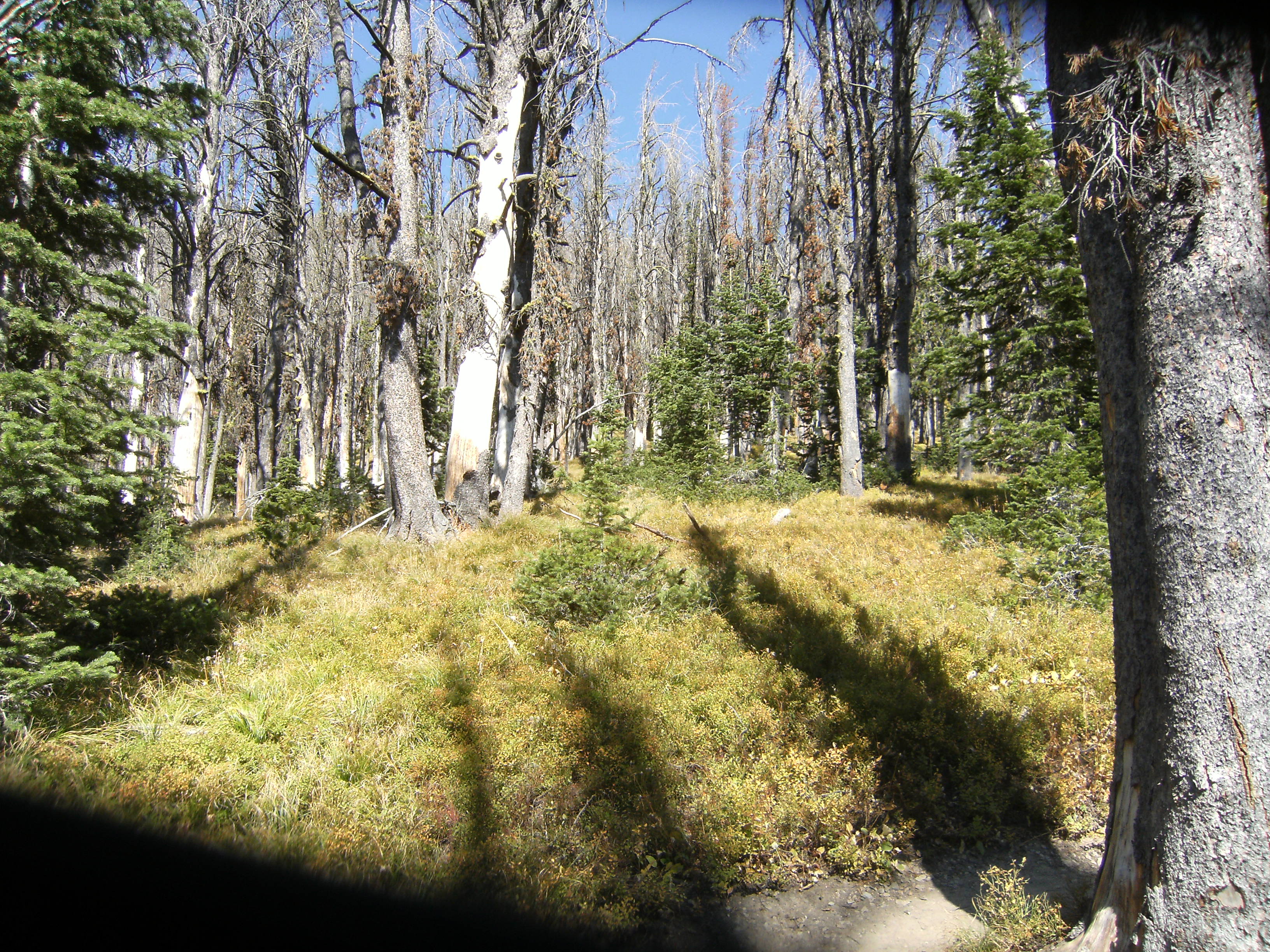
I’ve been backpacking the Winds every year for over 15 years.  I’ve seen many of the northern and central Wind River White Bark Pines face a heavy toll from the beetles.  Not as heavy as the rest of the Greater Yellowstone Ecosystem, where White Bark Pines could be considered to be functionally dead.  Reading my previous post, you’ll note that even the Interagency Grizzly Bear Study Team admits their own transects are 75% dead.  But it appears that even in the worst portions of the Winds, its more like 40-50%; while my recent trip to the Shadow Lake area of the Southern Winds, I’d estimate the mortality at around 20-30%.

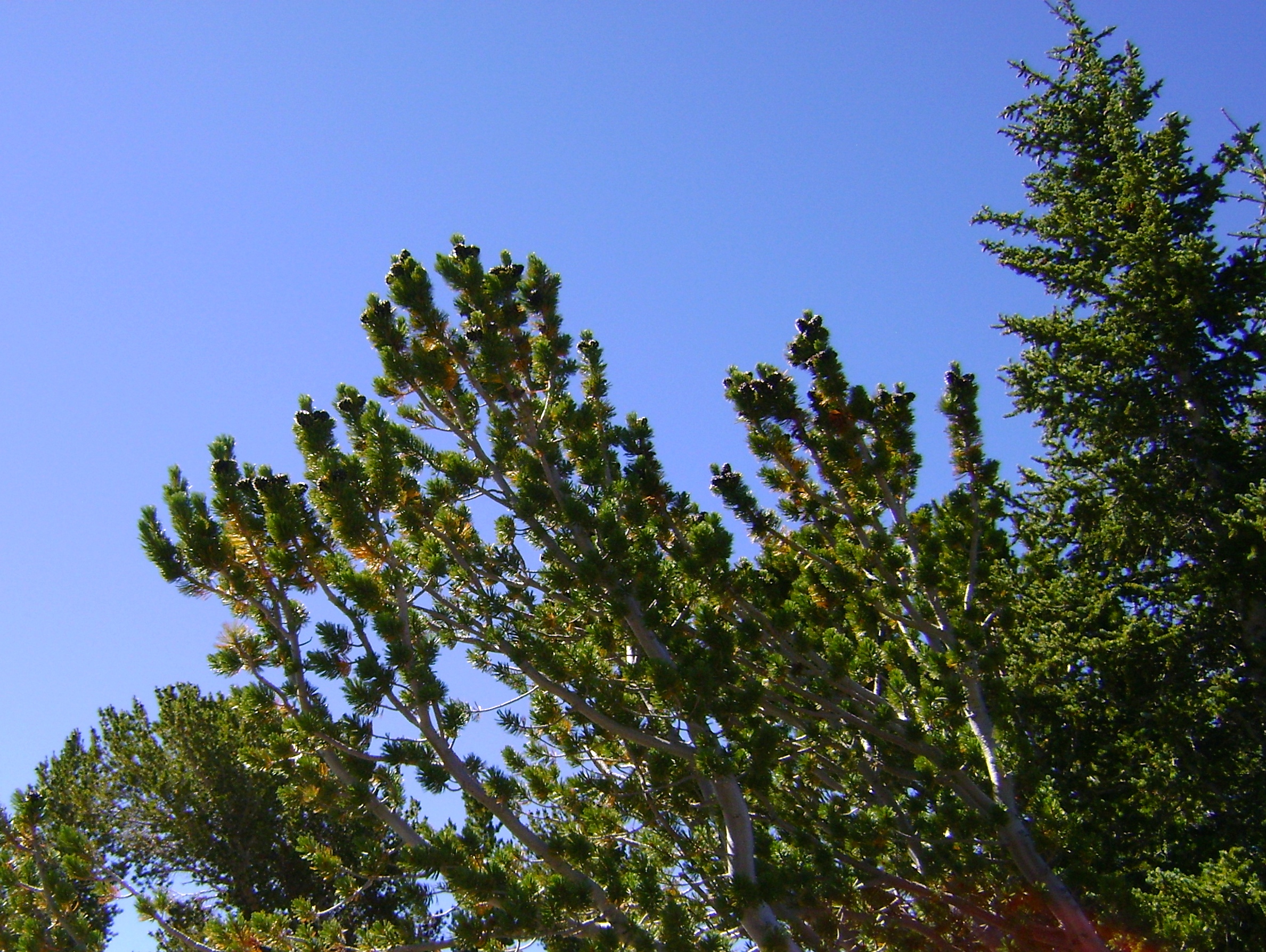
Notice the tops of the tree.  Cones are produced on the new growth.

Notice the tops of the tree. Cones are produced on the new growth.  Tree is full of cones!  See how healthy these pines look.  This is the pass near Washakie creek.  Notice the dead trees in the background.  This is a good visual estimate for your reference of dead vs. live percentage.

And while the Interagency Grizzly Bear Study Team noted that this years cone production was ‘good’ at 20 cones per tree, my estimate in the Washakie Creek environs was more like 70-100+ cones per tree!  Yet, not one grizzly bear will be able to reach this area!

Another pine full of cones

Another pine full of cones

Although the Interagency Grizzly Bear Study Team completed their legally required study on the grizzly bear diet last year, they  stated that while white bark pines will not last in the Greater Yellowstone, bears will find other foods.  I feel this statement makes assumptions that cannot be known.  Rocky Mountain grizzlies are not like Alaskan bears that eat salmon with high protein and fat. Our bears depend on limited sources of fall fattening foods–essentially moths and pine nuts.  If we want to ensure the bear’s survival, we should be opening up all the ‘suitable habitat’ in the GYE.
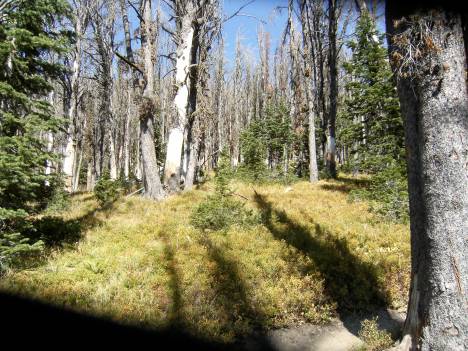
Avalanche Peak, Yellowstone.  Dead whitebark pines

Avalanche Peak, Yellowstone. Dead white bark pines make up this dead forest

Corridors like the Upper Green, full of livestock on public lands, need tighter livestock rules, not dead bears. These are not private land ranchers, but ranchers using public lands at very low rates.   Rules like running cowboys with cattle, removing sheep or at least penning them at night with guard dogs, need to be set down by the Forest Service.  And public lands ranch-at-your-own-risk should be another.   And even cattlemen do this in other circumstances.  Cattle are run over on highways regularly.  Cattlemen who run herds on open range factor these losses into their bottom line.  They just figure they’ll lose a certain amount to cars every year and so don’t bother moving their herds.  In my area, they don’t even turn on the electric fences that the forest service provides them.  So why don’t they factor in predation by bears on these same lands?

One other thing that irked me in their conservation strategies comments was that because of high use of summer backpackers in the southern Winds, the area is unsuitable for bears.  Just like the rest of the PCA, backpackers and hikers need to learn to hike and live with bears.  The southern winds are particularly heavy use because of the Cirque of the Towers, an awesome array of granite peaks that attracts climbers from all over the world.  People have to adapt and begin to carry bear spray and learn to share the area.  Bears are quite good at avoiding people, using corridors at night, bedding in hidden places during the day.  Grizzlies in the winds will heighten hikers awareness–a good thing.

Yellowstone grizzly

Yellowstone grizzly

Hiking in this fabulous bear country, seeing all those wonderful nuts, yet observing no bear sign, contained a certain sadness for me.  In my own area next to Yellowstone Park, 90% of the white bark pines are dead and bears are roaming around looking for food. Here I was surrounded by their prime fall food going to waste due to inept human management.

I like to remember what Native Americans called Grizzlies–‘humans without fire‘.  Let’s treat them with that kind of respect.


The Wild Excellence: Notes From Untamed America

My new book is finally available from Amazon.  The Wild Excellence:  Notes from Untamed America takes its title from a Pablo Neruda poem.

Without doubt, I praise the wild excellence

The Wild Excellence

Over 60 years ago, Aldo Leopold proposed a new way of looking at land. He called it ‘The Land Ethic’. This view is the model all conservation groups use today. In my book, The Wild Excellence, I propose to broaden that template to include another element: our ancient relationship to Land as source of vision, spiritual awareness and awakening–The Sacred Land Ethic.  This idea of mine did not come out of a vacuum, but naturally evolved from living in this wild ecosystem of the Greater Yellowstone.

In my book I tell the story of how I was transformed through direct connection with wildlands and wildlife:  I work on a wolf project; my valley is the center of an elk study that reveals very interesting data; I track bears, find coyote dens and search for evidence of first peoples–all in this unique ecosystem, living just a few short miles from Yellowstone National Park’s eastern border.

Observing wildlife and wild nature changes my views on the Land and how we must treat it.   From the Epilogue:

I walk out into the night air and the brilliance of the evening sky intrudes upon my feelings.  The celestial dome above me is packed with star light.  The local wolf pack is howling.  They’ve made a kill nearby and with their bellies full, they announce their pleasure into the blackness.  A rustling of hooves beats back and forth in the large meadow in front of the house.  I go in and grab a high beam flashlight.  As I shine it towards the pasture, a thousand eyes stare back at me. The elk herd has come.  Disturbed by my dog and the nearby wolves, they move restlessly as my beam tracks only their eyes, focused on me with curiosity and fear.  Something familiar rustles through my bones.  My flashlight becomes a torch, my house the village, and I sit with friends around a fire, ten thousand years ago, with this same sea of eyes staring from the darkness.  There is an eeriness to it, and a vulnerability.  And a rightness.  I feel my humanness and my place in the Universe.  I am grateful, once again, to be living here, in one of the last places on earth where all things are intact.  It is my home and without any doubt, I praise the wild excellence.

Some praise for The Wild Excellence:

Narrating from the borderlands of Yellowstone National Park, Leslie Patten brings us vivid accounts of wolves, grizzlies, the seasonality of ecosystems and tales of prehistoric Indians–all written with a naturalist’s eye and woven in a personal network of modern day homesteading, dogs and community. There are times when the best reporting on national parks comes from voices just beyond the legal boundary, close enough fora passionate attachment to the beauty of the land but sufficiently distant for critical appraisal of governmental management. Leslie Patten is one of those voices.

— Doug Peacock, Author of Grizzly Years, In the Shadow of the Sabertooth

 “The Wild Excellence” belongs in every library and personal book shelf. Leslie lets us enter her world of wilderness and all its beauty and wonder. Then encourages us to preserve all that is wild for future generations. Her words, “The grizzly bear’s gift to man is the Power of the PresentMoment” sums up the essence of this book.

— Dan and Cindy Hartman, Photographers Yellowstone Ecosystem Wildlife Along The Rockies


I hope you will buy my book, enjoy it, and be moved to love our remaining wildlands and wildlife.  If you do, please leave your comments on the Amazon page.  That will help more people find the book and read it.  My sincere hope is that all the million plus people who visit this Ecosystem every year will come to support this unique area with their voices and their vote to protect it for future generations.

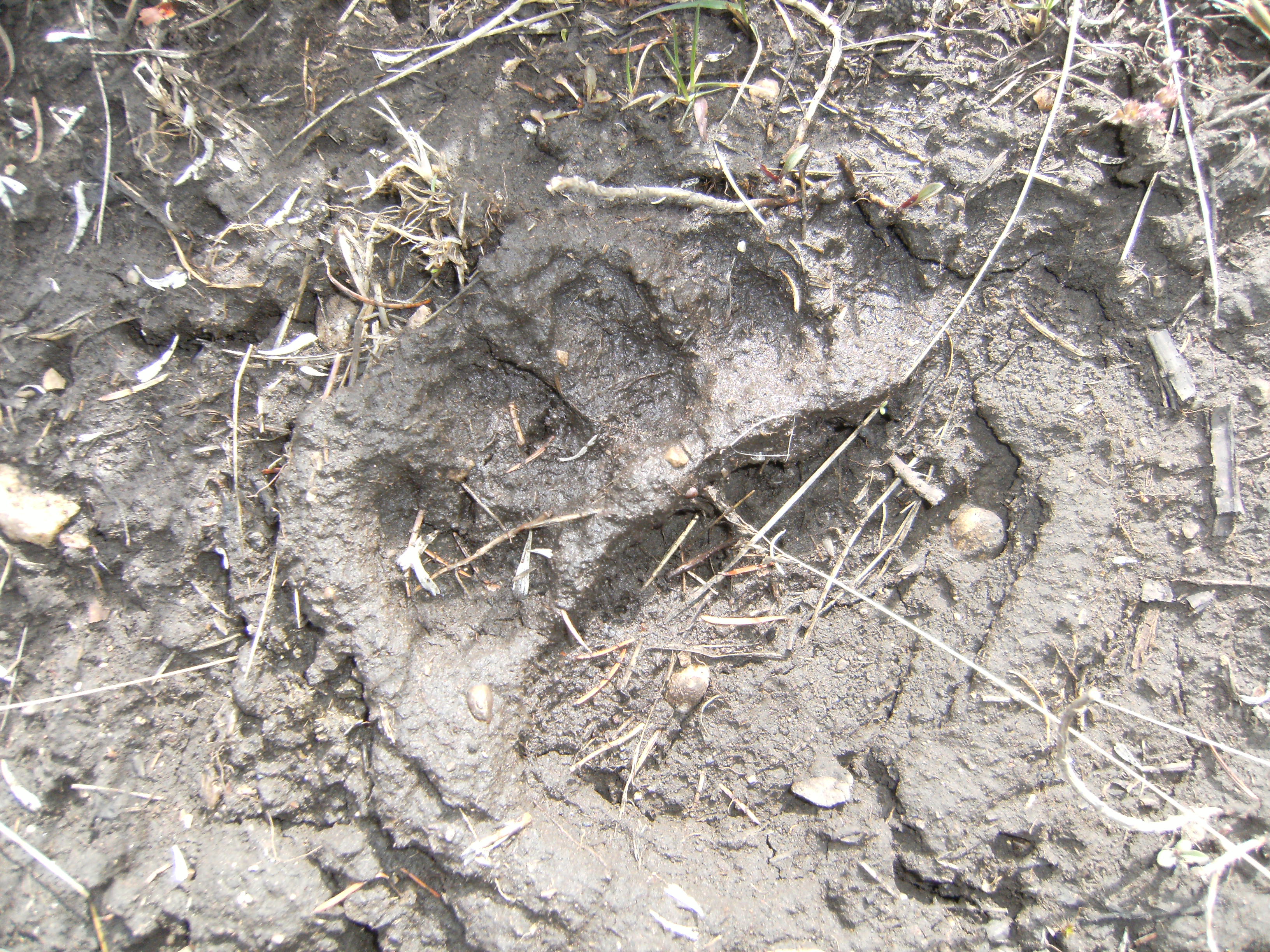
Grizzly front foot