• MY BOOKS ON WILDLIFE, GARDENING AND MORE

  • The Wild Excellence

  • True stories of wildlife encounters around the Greater Yellowstone
  • Award winning eBook on Decomposed Granite, tips, how to's, what to watch for
  • Children's book. True stories of a dog and wolves. In a dog's voice
  • Written for dry Mediterranean climates in California, north and south

Upcoming Talks in the Greater Yellowstone Region

I have a few upcoming talks in the Greater Yellowstone Area this spring.

Spring into Yellowstone is an annual event in the Cody Area. This year it takes place May 11-May 15. Events include a variety of wildlife and geology tours and hikes. I’ll be speaking on Sunday, May 15 with a new video presentation of cougars, grizzlies, and wolves that I’ve taken in the valley where I live next to Yellowstone Park. Below is a screen shot description of this talk.

stories copy

I also will be speaking in Billings, Mt. at Barjon’s Books. This will be in conjunction with several Montana conservation groups. The date for this presentation is yet to be determined.

If you would enjoy a video/slide presentation to a private or public organization around the Greater Yellowstone Ecosystem, please email the author at ecoscapes@wildblue.net or contact my publisher, Wordsworth Publishing.

Press Release Bookstores

The Wild Excellence book and video presentaion

A Heartfelt Response to Grizzly Delisting

This past Monday night I attended a Wyoming Game and Fish (WG&F) informational meeting on my state’s proposed management plan once grizzly bears are delisted from the Endangered Species Act. I’ve also read a few of the comments on the USF&W site (you can comment here on the Feds proposed rule).

Although hunting was not discussed by the WG&F (that’s for the Wyoming Game Commission to decide), hunting will definitely be allowed once bears are delisted and, according to the Feds rule, over 100 bears can be killed right away! Some of the comments in favor of delisting at the meeting went like this:

  1. Hunt them so they will become afraid of people. I’m afraid to walk in the woods now.
  2. Hunt them so we can have a trophy hunt. These funds from hunting tags ($600 instate; $6000 out of state) support wildlife.
  3. Bears have become a nuisance on my ranch. There are too many bears.
2011_bervik_brown_bear20on20ground

The Proposed Rule would allow a hunt on Greater Yellowstone Grizzly Bears

The meeting was presented as a science-based plan. The comments were based on emotion. What was missing was the Spirit of the Bear, the living sentient being.

Grizzly Bears were once revered by the tribes. Some tribes hunted them, others never did. But they all respected the bear, told stories about them, dressed up like bears, and even had secret bear societies. To dream about bears was sacred and special. Bears represented renewal, death and rebirth and transformation. Bears were numinous beings, powerful, respected, honored, imitated. This is what I did not hear in the meeting. I heard fear, and I heard annoyance, but our modern-day stories have no room for the sacredness of these animals.

Grizzly Bear

In the lower forty-eight, 99% of the U.S. has no grizzly bears. If you like to recreate without ‘fear’, there are plenty of beautiful places to do so. Yet here in the Greater Yellowstone, one has an opportunity to experience the pressures a top predator calls you to: ‘Be awake’, ‘use all your senses’. Hiking and recreating in Grizzly Bear country is a privilege, even a type of spiritual retreat. All your senses are heightened–not in fear– but awake and conscious. As I’ve said in my book The Wild Excellence:

To walk with the Great Bear one must be alert, fully awake and aware. With the Great Bear around, you cannot walk lost in thought, or conversation. You must be Present. This alone is a gift that only another top predator can bring to man. The grizzly bear’s gift to man is the Power of the Present Moment. The Present is his present to us. He presses it upon us by circumstance. Men do not give themselves that gift by choice. That is the gift of the grizzly.

One thing I’ve learned about bears hiking in these mountains, and living with bears, is that Grizzlies are minders of their own business. In general they are solitary animals (except for moms and cubs. That is why a dead bear will not teach other bears to fear people), mostly vegetarian, and want nothing to do with humans. They are highly intelligent and never forget.

Slide1

Grizzlies will not be tolerated outside the DMA (the dark black line)

One fall I came upon an illegal outfitter’s hunting camp. The camp had a lot of burnt food trash in the fire pit. I cleaned it all up and packed it out. The next fall I hiked there again. I wanted to see if they had re-set up their camp. Although the camp was clean and no one had used it since I’d been there, I found piles of steaming fresh grizzly scat. The bears had found it the year before too and never forgot.

trashed campsite

Trashy fire pit

I moved to my cabin, smack in the middle of grizzly country, where problem bears were relocated to, ten years ago. At that time I knew nothing about grizzlies. I too thought a hunt season (bears were delisted for a short time in 2007) would make the forest safer for myself. But I’ve changed my mind after living around bears. These are magnificent animals. So intelligent that a hunt on them would be like killing my brother. I honor and respect the Bear and although delisting may be warranted at this time, hunting should never be allowed.

We need new stories about Grizzlies, stories that tell of their intelligence, magnificence, and personality. Maybe instead of a PowerPoint show, the WG&F biologists should have dressed up like the Bear, did some dancing, and shared food. I think we all might have learned a lot more about bears.

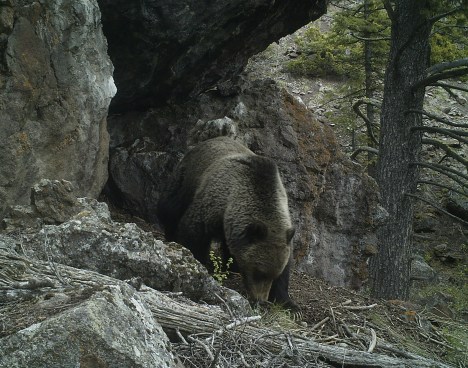
grizzly in east painter

Grizzly Bear minding his own business

Cougar ah-ha moment

An ah-ha moment. I might have read about it, studied it, even thought I totally digested the information. But then, out of the blue, everything comes together and sinks in bodily. I ‘grok’ it, or understand something so thoroughly that the I become a part of the observed.

And this is exactly what occurred last week while hunting around for new lion scrapes.

DSC00405

Cougar scrape. The depression was made with the cougar’s back legs pushing back

I wandered into a small meadow above Dead Indian canyon, the river 200 feet below. This field narrowed into a jumble of massive boulders that funneled to a cliff overhang. Noticing an animal route that looked easy, I descended a rib of rocks into a small U-shaped gulch near the river. I know this canyon. It’s a wonderful hidden gully that the river carved out ages ago, but is now overgrown with Limber Pines and Douglas firs. Bears use this corridor, as do cougars. There’s an old Indian lean-to and a trapper’s whiskey-still was once hidden here.

DSCF1085.JPG

Ancient native lean to by river

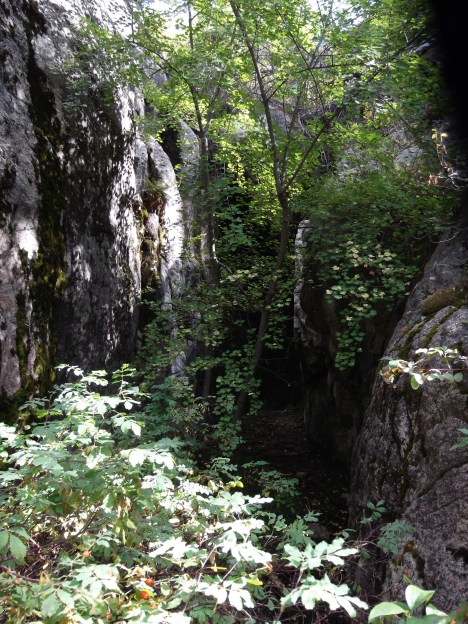
Today I had approached from the north side of the river, yet the approach to this canyon from the south is extraordinary. Two massive shelves of rock form a tunnel less than six feet wide. Water collects in this tight space, and the passage is overgrown with dogwoods and rose bushes.

DSCF1074.JPG

Entrance to the hidden passage

It’s too wet to enter except in the fall. I noticed this anomaly and decided to explore it several years ago in late September. At the entrance, a muddy print of a grizzly greeted me. Obviously, this hidden tunnel was known to the wildlife. I pushed through brush for about fifty feet, the fissure of rock opening just a few feet above an unusually easy crossing of Dead Indian creek.  That’s where I saw the Crow shelter. I crossed the creek, and it was then I discovered the U-shaped gorge.

DSCF1076.JPG

Dead Indian creek at the crossing

Today I was looking for other animal routes, specifically where cougars might pass from low to high above. Walking along the cliff escarpment I noticed an opening that might be easy to navigate. I followed the narrow passage uphill and 3/4 of the way up, under a large tree, was an old puma scat and scrape. Once at the cliff edge, back into the light, I noticed another scrape. This was obviously a cougar common route.

DSCF1098.JPG

Route from below to above for animals

So, what about that ah-ha moment? I traversed back to the large fields leading to the car, then decided to take a last side trip to look for mountain goats. They winter in these canyons and I usually spot them clinging to narrow shelfs and rock ledges.

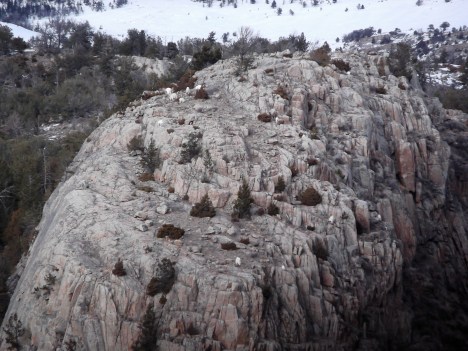
Mountain goats

Mountain Goats on the cliff face

Walking the cliff edges, I came to a steep gully that dropped 1000′ down to Sunlight Creek. It would not be a trip I’d want to take, but animals could do it. And there, at the opening to the narrow defile, under a large Douglas Fir, was a scrape. And then it hit me. Scrapes are placed at corridor routes!

Of course, I’d read this. In Cougar Ecology & Conservation Kenneth Logan and Linda Sweanor write:

Male cougars seem to scrape throughout their territories. The scrapes are usually located along cougar travel routes, such as ridgelines, canyon rims, drainage bottoms, under large trees and ledges, and at kill caches.

And my notes from Toni Ruth’s cougar class in Yellowstone last year noted the same. But now I had the information viscerally, and will never forget it.

Female cougar

Female cougar checks out a scrape


Delisting just around the Corner

I’ve been writing a lot of blog posts on grizzly bears for a good reason–to raise awareness that these magnificent animals are headed for delisting, and hunting, in the Greater Yellowstone Ecosystem. Grizzlies in the Northern Continental Divide will be next on the chopping block, but that’s for another round with the U.S. Fish and Wildlife.Grizzly Bear

Despite pleas from environmentalists and Native American Tribes across the West, who maintain the Great Bear is sacred in their histories, the Feds are moving forward fast at the behest of the state politicians.

Arguments on the delisting side say bears are at full capacity in the ecosystem and that is why you see them more frequently in areas near human populations. But according to David Mattson, a leading authority on bear food sources, our bears are just responding to diminishing food sources and moving out beyond the PCA boundaries.

Avalanche Peak, Yellowstone.  Dead whitebark pines

Avalanche Peak, Yellowstone. Dead whitebark pines

Feds are putting a relisting trigger at 600 or less bears. Their goal is to maintain around 674 bears. At the Spring Interagency Grizzly Bear Management Team, the report was 757 for 2014 as bears are counted when they emerge from their dens. Recently, the official count for 2015 was 714 bears, down 6% from last year. Yet so far in 2015, 59 bears have been killed by mostly human-caused mortalities–either directly or indirectly where the management team has euthanized a bear for food rewards. You can see each bear mortality here and the reasons.  That would bring our 2015 count down to 655 for 2015, already below their goal.

One might say rightly that this 2015 spring count minus this year’s mortalities does not account for new births. Yet grizzlies are notoriously slow to expand their population, as I’ve stated in other posts. Since we are most interested in females in the population, grizzlies are not ready to conceive until at least 5 years of age. Their young stay with them for 2.5 years, with a typical litter of 2-3 cubs. And with the high cub mortality, a female grizzly will, at best, only replace herself in 10 years. Grizzly front foot

If one does the math, it’s easy to see that between hunting (which will be legal but is not now; yet even now with hunter mistakes, several grizzlies are killed every year) and bears killed due to food rewards (either livestock or garbage), it will be very difficult to maintain the Feds goals that would include an official hunt.

In addition, add to this math the food pressures facing grizzlies–loss of Whitebark pines, cutthroat trout, poor berry years–plus the unknowns of climate change and one has a disaster in the making for the Great Bear.

What irks me the most is this statement:

Bears living outside the 19,300-square-mile Yellowstone “monitoring area” would not be counted toward the population goal. Similarly, bears killed outside the monitoring area would not count toward annual bear mortality caps.

This statement delivers the certainty of death for any genetic diversity in the GYE–signaling a slow decline over decades of the bears that are isolated in this ecosystem.

I’ve been interested in what happened to the California Grizzly Bear that made them go extinct so quickly. Interestingly enough, when the Spaniards arrived, they brought their cattle with them. Slowly these herds expanded into the thousands. Because the human population in California was low, few of these cows were used for meat. Mostly they were killed for their hides for leather goods. Monthly, or even weekly, they herded the cattle into killing yards, where they slaughtered and skinned them, leaving the meat to rot. Grizzlies soon learned of these cattle heaps and flocked to them. Grizzly numbers soared during the time when the Spaniards owned California because of easy increased food for bears. But of course the Spaniards had their own forms of cruelty. They roped bears for sport, pitting them against bulls after starving them for days while chained up.Grizzly mom and cubs

When the United States won the Mexican American war and gold was discovered in California, miners rushed by the thousands into the state. These men were ruthless. They killed anything that got in their way, which included Indians and Grizzlies. Within a short time, twenty years, both of these native populations had almost disappeared completely. Grizzlies became hard to find, until the last lone bear was killed in Southern California in 1908, lured into a beehive trap. It’s a terribly sad story, yet shows how fast this population can decline, from probably over 100,000 bears to almost 0 in twenty to thirty years.

Grizzly bear population in the GYE before delisting had declined to around 125 bears. After over forty years, millions of dollars, herculean efforts by many wildlife biologists and agencies, there are a little over 650-715 bears. Why is the USF&W bowing to political pressures from conservative states and rushing towards a hunt?

white bark pine bear conflicts chart

Correlation between bear/livestock conflicts and Whitebark Pine loss in the ecosystem

Koda’s Blog

This is to let you know that Koda will now be posting to his own blog site.  I’ve encouraged him to post his stories, which have been so popular on my own site.  He says he will, but first he just had to advertise the book he is writing for other dogs.  So his first post is just that–a preview of his book by a dog for dogs. Here is the link to Koda’s blog.

Koda

Techno danger for Yellowstone Wildlife

I’ve become aware of a new concern for Yellowstone Ecosystem wildlife.  A few weeks ago a friend visited and told me this story.  He’s been coming to YNP for over 40 years and is a responsible person who knows how to handle himself properly around wildlife in the park.

In January we were driving through Lamar Valley when we encountered some bison crossing the road.  We stopped the car and turned off the engine to let them pass.  I usually never film with my phone, but for some reason I began filming these bison.  Suddenly one large male turned on us and attacked the car, causing $2000 worth of damage.  All recorded on my phone.  I sent the movie to some friends, then posted it on Youtube.  Overnight it went viral. A few months later I received a call from a company in England that wanted to buy the video and pay me royalties. Never in my wildest dreams would I have thought this would happen.  Apparently these companies purchase videos and sell them as ‘stock’ clips.

My friend wasn’t looking for fame or money, and his behavior around these bison was completely appropriate.  Yet his story clued me into why we might be seeing so many crazy, careless, and inappropriate behavior around YNP wildlife.

Bison close to car

Take this video of a young grizzly bear ‘attacking’ a car on the Beartooth highway.


It just so happens that I saw this same bear a few weeks ago and wrote about it here.


Young bear

Young bear

This same bear was frequenting the Beartooth Butte campground.  He and his young sister were captured and moved.  The WG&F Bear biologist told me that he’d never seen bear behavior like this before and that obviously these bears had been fed.  Just this week I noticed a note from a Forest Service ranger left on a parked truck at Beartooth Butte trailhead. It said they’d had to confiscate food left in the bed of the truck which might attract bears.

But my point is not that people are feeding bears.  When I saw this video I asked myself  “Why didn’t these people honk their horn, or just drive away?”

My answer came yesterday when I saw a piece of the same video again, but this time on ABC news online.  So did these people keep filming that bear, instead of doing the intelligent thing of honking their horn and scaring it off, just to have a ‘viral‘ video, and maybe make some money selling it?

This year there have been 5 bison attacks on people who came too close.  One women was taking a selfie of herself and her daughter with a bison in the background.  She was mauled by the bison, yet lucky for her not injured badly. Of course, this was simply a stupid act, but several days later I saw her interviewed on ABC.  Did she receive money for this?  From the attached link, you can see her selfie is owned by ABC.  Even if she didn’t receive money and just had her moment of TV fame, doesn’t this media attention only encourage more stupid acts that harm wildlife?

Here’s a story of a man attempting to touch a bison’s nose in Yellowstone Park last week.  

He had someone photograph him doing it.  Will he now sell his photo?

Whether these acts are for money, or just to say “we did it”, they are endangering wildlife.  Feeding bears or encouraging them to keep looking for food inside a car is a death sentence for that bear.  Those people should have used bear spray on that young bear. Then they would have taught that bear a lesson he’ll never forget.

Taking selfies with bison or other stupid acts with bison compromises years of hard work on a new Park bison plan which would allow these animals to migrate outside the Park boundary in winter months.

Our techno media-centric society needs to be educated in how these acts are a great disservice not to the public, but to our wildlife.

Keep our wilderness wild!

Keep our wilderness wild!


Decomposed Granite Paths and Patios

With summer here, lots of do-it-yourselfers will be hunting for info on Decomposed Granite.  I have many posts on ‘how-to’ and ‘how-not-to’, including my eBooklets with complete installation information.

I’ve found a few more photos from previous installations of mine in addition to those already on my website.

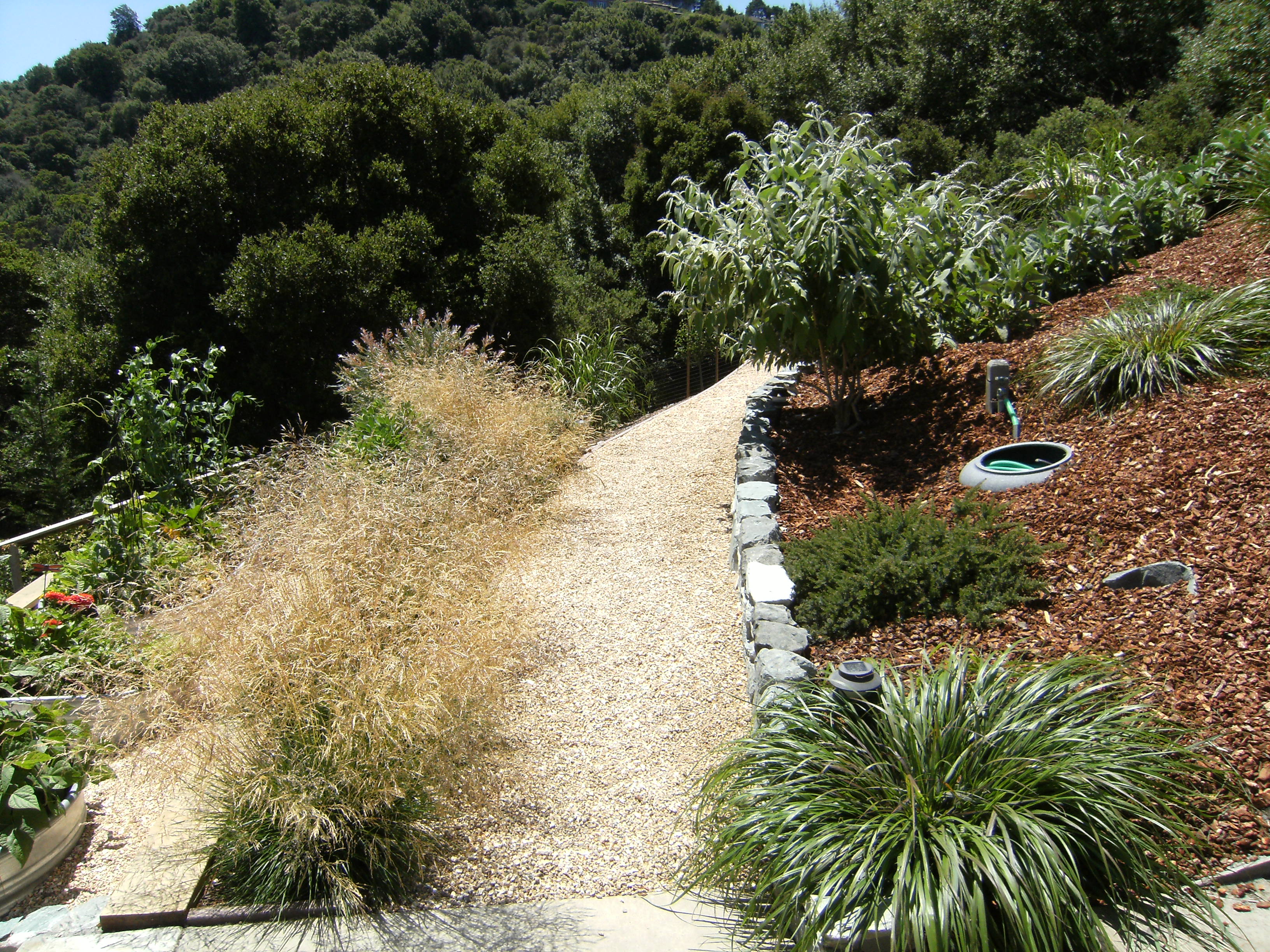
First some Decomposed Granite paths

A Decomposed Granite path in a shady location.  Notice the concrete transition just at the outside door so DG is not tracked into house

A Decomposed Granite path in a shady location. Notice the concrete transition just at the outside door so DG is not tracked into house

Decomposed Granite path

Decomposed Granite path.  Notice the edging here

Decomposed granite flagstone patio

Decomposed granite flagstone patio with DG in between stones. Pathway is all Decomposed Granite.

Decomposed Granite path no hardener

How to Install a Decomposed Granite Pathway. No hardener was used in this job

Stone and DG

Decomposed Granite path with stone blocks inserted

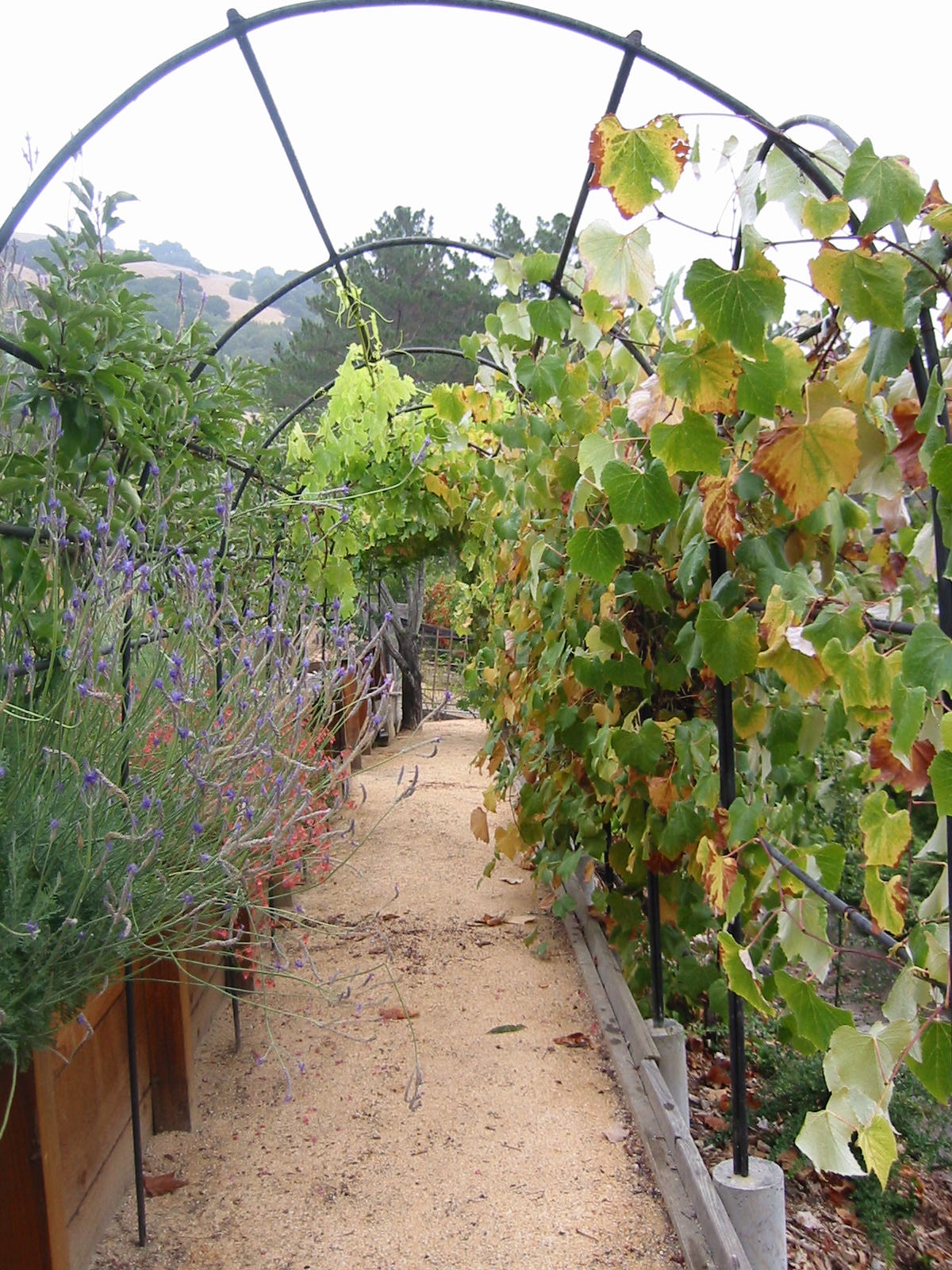
Decomposed granite path

Lovely Decomposed Granite path under arbor.  This path was done with a TerraPave seal

Decomposed granite pathway

Another arbor

Wood and DG steps

Pressure treated wood contains these Decomposed Granite stairs

I would be amiss if I did not show a photo of how you can mix different fines to achieve different Decomposed Granite colors. Areas of the country have different standard decomposed granite colors.

Here in the San Francisco area, most DG is gold fines, and occasionally like some of the photos above you can find grey.  In the photo below we mixed in some black fines to obtain a darker color.

Elsewhere on my website, I have photos of a rock I used that was more pink.  Rock can be used but it must have fines in it.

Now for some patios using decomposed granite:

Decomposed Granite pathway

Decomposed Granite walk and patio

Decomposed granite shade

Another view of the Decomposed granite patio next to a shade bed

Decomposed Granite leads to a deck

Decomposed Granite leads to a deck

Decomposed Granite with a small flagstone shower

Decomposed Granite with a small flagstone shower

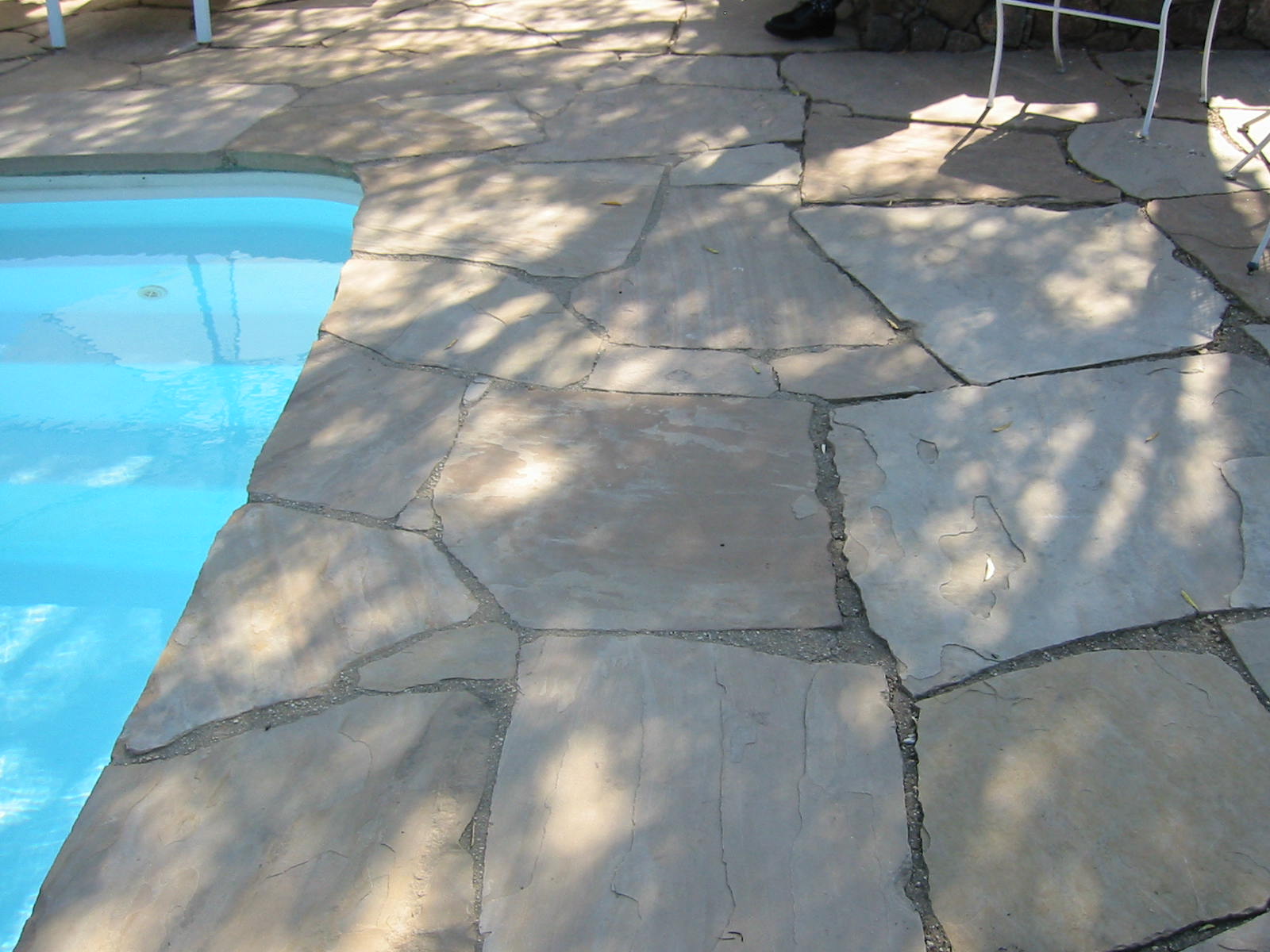
Decomposed Granite inbetween properly placed flagstones by pool

Decomposed Granite in between properly placed flagstones by pool

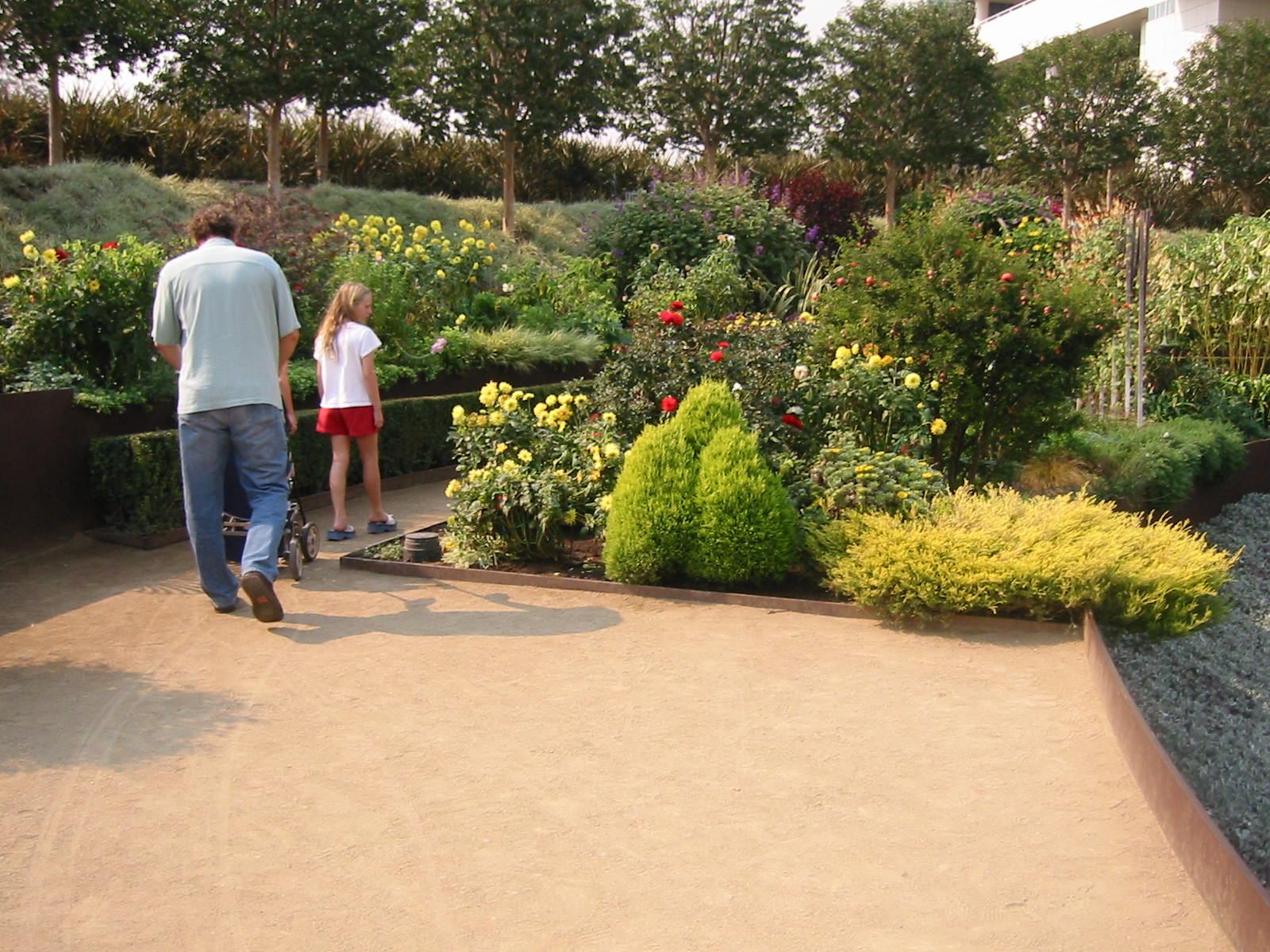
Decomposed Granite path at the Getty Museum L.A.

Decomposed Granite patio at the Getty Museum L.A.

The bench sits on a decomposed granite patio which transitioned from the concrete patio in front

The bench sits on a decomposed granite patio which transitioned from the concrete patio in front

For a complete guide to Decomposed Granite paths, pathways, and using other materials such as pavers and concrete, please see my eBook.

The Heart of Wildness

….When Mabel McKay, a deceased Pomo basket weaver and doctor, heard somebody say that he had used native medicinal herbs but that they hadn’t worked for him, she responded, “You don’t know the songs. You have to know the right songs.” With no one to teach us, we don’t know the songs either.  The native practice of dreaming songs about the nonhuman world seems as valuable and elusive as a piece of pure bunchgrass prairie or the truth about the land. “Gardening with a Wild Heart”

Some say wilderness disappeared with Lewis and Clark.  We may still have wild lands, but true wilderness is gone.  Maybe once we finished mapping every inch, that was the final nail in the coffin.

Dad's Lake.  The Continental Divide looms in the background

Dad’s Lake. The Continental Divide looms in the background

Indigenous cultures once had their very identify, culture, and religion tied to the Land. The plants and animals were as familiar and knowable to them as our ATM’s and supermarkets are to us today.  They were Earth-based cultures. And although I consider our European cultures ‘Sky-based’–we identify with ideas i.e. ‘liberty and freedom’ or ‘God in Heaven’–there are still those of us who find sustenance and spiritual refreshment in Land.  And I would argue since all human beings are fitted to this earth, therefore the natural world and its wildness must resonate for everyone.  In essence, we are still Land-based peoples. Only our culturally-inherited earth knowledge has been diminished.


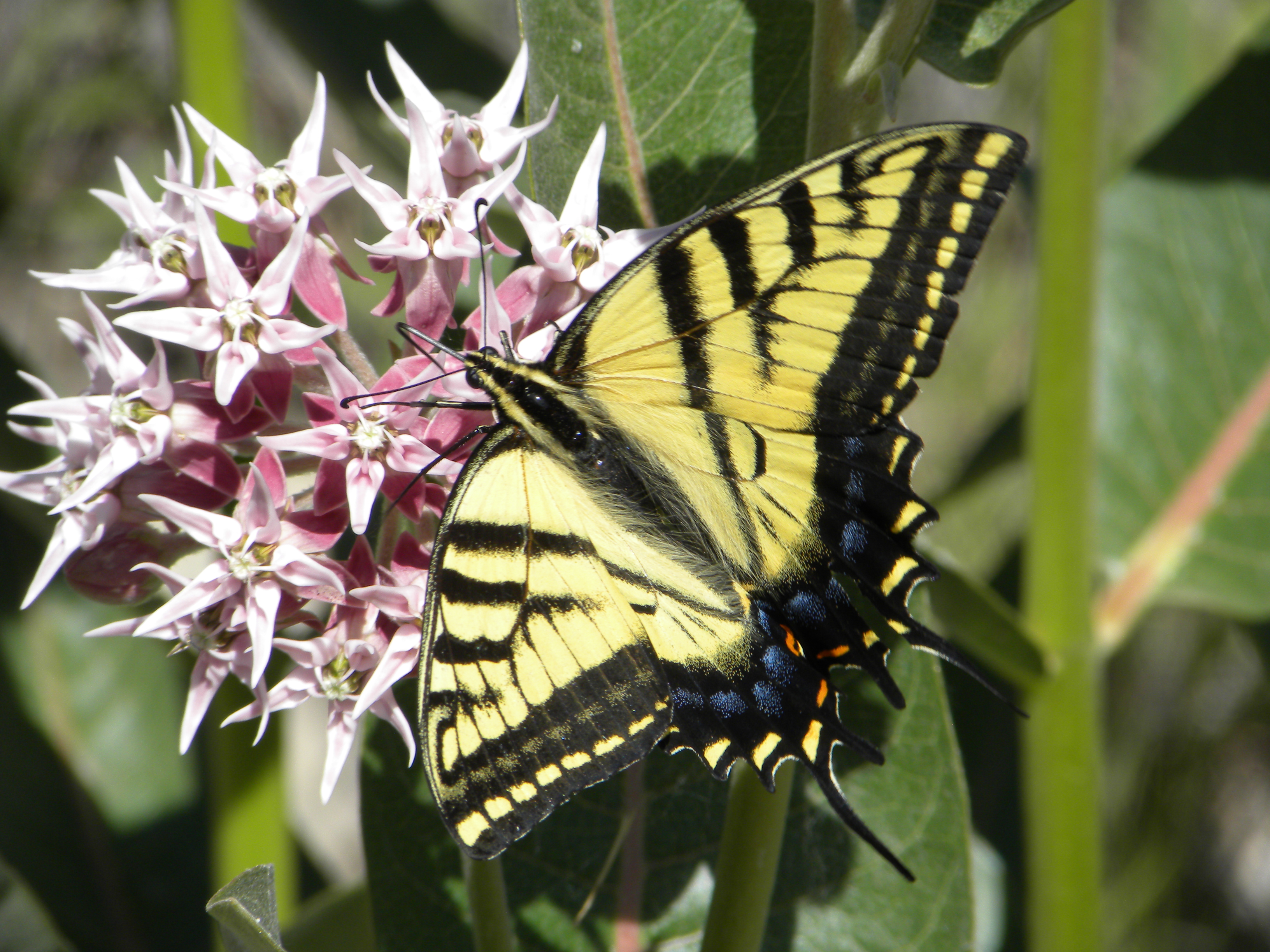
Swallowtail


In todays world, it is expedient and pragmatic for conservation groups to cloth their case in economic terms, whether it be for wildlife or land preservation.   Protecting wolves or bears becomes important because people like to view them, which brings in tourist dollars.  Setting aside elk habitat is good for hunters as they pay for the game agencies. The argument to preserve every ‘cog and wheel’ for its own sake has no power.


Coyote pups

Yet conservation groups are amiss to ignore this argument, for truly that is what is at the heart of the issue–we need these lands for our spirit; preserving the entire biotic community is important for its inherent value, not its monetary one.  The mysteries of this Earth spark our sense of wonder.  If all becomes mapped and pedestrian, where shall we look for awe, for beauty, for the surprise of diversity and difference.  Without these basic human needs met, we lose our compass in this world.

It is time to add this other dimension to our call for protection.  In my book The Wild Excellence I call this added element ‘The Sacred Land Ethic’.  Aldo Leopold’s land ethic states

A thing is right when it tends to preserve the integrity, stability, and beauty of the biotic community.  It is wrong when it tends otherwise.  The land ethic simple enlarges the boundaries of the community to include soils, waters, plants, and animals, or collectively: the land.  A land ethic changes the role of Homo sapiens from conqueror of the land-community to plain member and citizen of it.  It implies respect for his fellow-members, and also respect for the community as such.

To this eloquent and beautiful description of the way we should live, I’ve just added the word ‘sacred’ to include Land as a source of vision, spiritual awareness and sustenance.  Sacred includes all the plant songs we have yet to remember, and all the dances the animals have yet to re-teach us.  Sacred includes that moment when you stand in awe at the edge of the Grand Canyon, or the moment alone in the woods when you encounter a new-born fawn.

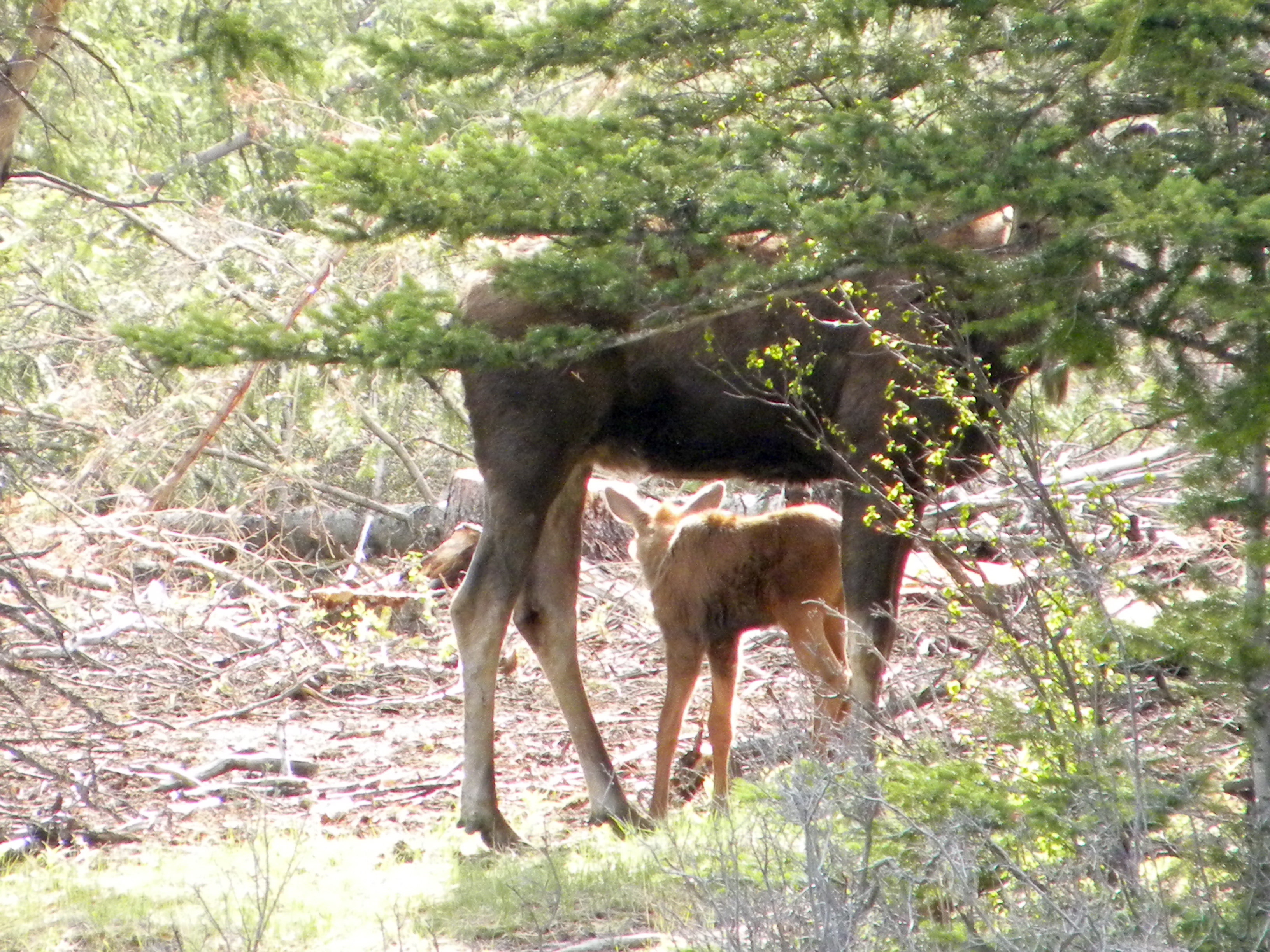
Moose and calf

All of us have resorted on many occasions to the natural world for restoration. So let us not hide behind the arguments of ‘monetary value’ of wildlife.  Let us speak the truth of why it is we are fighting to preserve what’s left of the wilds.

Some Lessons from the Greatest Hunter/Tracker turned Conservationist of the 20th Century

I first read Jungle Lore  by Jim Corbett when I was studying tracking years ago. Jungle Lore is considered to be Corbett’s autobiography.  Most people know Jim Corbett as the killer of man-eating tigers and leopards.

Jim Corbett

Between 1907 and 1938, Corbett tracked and killed 33 man-eaters that were preying on people in the villages of the northern Indian region of Uttar Pradesh and Uttarakhand. They were said to have killed over 1200 individuals.  Corbett tells these stories in his book Man-Eaters of Kumaon.  Corbett found that the majority of these tigers and leopards had severe wounds that prevented them from hunting their customary prey–gunshot wounds or embedded porcupine quills.  A few of these animals simply got a taste for humans after human plagues and diseases caused massive regional deaths where bodies were piled up outside villages.

Tigress in Jim Corbett National Park, India

Corbett grew up in the Kumaon region, learning from an early age about the ways of the jungle.  He loved India, was a champion of the poor, would not kill a tiger or leopard without first confirming it was a man-eater, and worked tirelessly to protect tigers.  The first national park in India bears his name.

Because Corbett was able to do what no other human or even army could, many in India consider him a sadhu or holy man.  His books are worth reading.

Corbett explaining to villagers about man-eating tigers

What I want to concentrate on in this blog entry are a few gems in his book Jungle Lore.  Corbett as a youth, learned to identity every sound in the jungle–every bird and animal.  He was a consummate tracker.

A dog barks, and all who hear it know it is barking to welcome its master; or barking with excitement at being taken for a run; or barking with frustration at a treed cat; or barking with anger at a stranger; or just barking because it is chained up.  In all these cases it is the intonation of the bark that enables the hearer to determine why the dog is barking.

When I had absorbed sufficient knowledge to enable me to identify all the jungle folk by their calls, ascribe a reason for the call, and imitate many of them sufficiently well to get some birds and a few animals to come to me or to follow me, the jungle took on an added interest, for not only was I able to take an interest in the surroundings within sight but also in the surroundings to the limit of my hearing….

Having acquired the ability of being able to pinpoint sound, that is, to assess the exact direction and distance of all sounds heard, I was able to follow the movement of unseen leopards and tigers.

Most of us don’t think of ‘listening’ as well as looking during our walk in the woods. Many of us can identify birds by their song, but being able to identify the nuances of animal calls is a highly trained tracking ability that probably few people have thought to try to acquire.

In the book Corbett talks about his love of nature, how the jungle cannot be learned from textbooks, but must be absorbed little by little–a process that builds upon itself over time; an open book of great interest that has no ending.

…for the time I spent in the jungle held unalloyed happiness for me.  My happiness, I believe, resulted from the fact that all wild life is happy in its natural surroundings.

The reason I reread Jungle Lore revolves around a personal story for me.  In the summer of 1972 I was backpacking in Waterton-Glacier National Park with two friends. We made camp by a beautiful lake, hung our food, and built a fire. As dusk settled in, we noticed a large bear coming through the woods towards our hanging food sacks. Seeing these sacks were out of reach, the bear continued towards our camp. In those days, bear advice consisted of banging on pots and pans, climbing trees or jumping into lakes. With the surrounding trees limbless stilts, and the lake glacier-fed, we banged on pots till they were mangled. Unfazed by our noise, the bear rummaged through our nearby backpacks.

We built our fire to a roaring blaze, watching speechless and dumbfounded. This bear’s behavior appeared odd. Nothing perturbed or frightened him. Instead, he approached us, smelled our down jackets, stretched his head between us to investigate the fire–only to burn his nose–and tried tasting my friend’s leg. When she yelped, he leaped back in surprise, leaving her only bruised. He proceeded to explore our tents. Using an old trick, I threw rocks into the woods and the bear left to inspect them.

The next morning we hiked to a backcountry ranger cabin.  The ranger told us the story of  ‘The Night of the Grizzlies’, an incident where in one night 2 women were pulled out of their sleeping bags by two different grizzlies and eaten.  At that time the Park officials felt the connection had been both of these women were menstruating, but that has since been proven false.  Both of these bears, as well as the large black bear that entered our camp, were human-fed bears, habituated to people because of open dumpsters and dirty campgrounds. The Craighead brothers had just finished their 10-year study in Yellowstone and were advising closing of the dumps.  Park policies were beginning to change, but the bears didn’t know that yet.

Our bear was simply curious and meant us no harm.  He was looking for a food hand-out, probably something he’d been rewarded with before and for sure something his mother had taught him.  Bears, both black and grizzly, had been dumpster- fed for many decades in both Yellowstone and Glacier.

For many years after that I wondered about my emotional response.  Even though that bear had nosed his way, literally, right between me and my friends, I had remained calm and unafraid.  I was more curious than afraid.  I wondered if my cool response was because I was unadapted to the dangers in that environment. Sure, I thought to myself, if this had been a bad neighborhood in a city, and that bear had been a strange man approaching us, I would have registered fear.  So why wasn’t I afraid?

Years later I read a passage from Jungle Lore which explained everything.  In this passage, Corbett, as a youth, was walking down a back road with his dog Magog. Corbett heard voices of men shouting, and then suddenly a leopard ran from the brush and stopped on the road only 10 yards uphill.

This was the first leopard that Magog and I had ever see, and as the wind was blowing up the hill I believe our reactions to it were much the same–intense excitement, but no feeling of fear.  This absence of fear I can now, after a lifetime’s experience, attribute to the fact that the leopard had no evil intentions towards us. Driven off the road by the men, he was quite possibly making for the mass of rocks over which Magog and I had recently come, and on clearing the bushes and finding a boy and a dog directly in his line of retreat he had frozen, to take stock of the situation.  A glance at us was sufficient to satisfy him that we had no hostile intentions towards him.  And now, satisfied from our whole attitude that he had nothing to fear from us, he leapt from his crouching position and in a few graceful bounds disappeared into the jungle behind us.

With that one simple statement, Corbett unveiled my instinctual response.  And that I believe is the key to how to approach living with large predators in our midst.  We must stay alert, awake, and aware, yet most of all trust our own instincts, for they will guide us.

Grizzly bear

Grizzly bear


Grey Owl–trapper turned conservationist

In the 1930’s, a white man by the name of Grey Owl, living in the Canadian wilderness, made his living trapping. He married an Iroquois woman named Anahareo.  He had no remorse about his profession until one day he killed a mother beaver leaving two young kits. As he was about to raise his gun to shoot them, Anahareo intervened. “Let us save them,” she cried.  “it is up to us, after what we’ve done.”  And so began Grey Owl’s transformation.

Grey Owl and beaver kit

Beavers are among the 2% of land mammals that live in social groups.  His beaver kits quickly became part of his family.  He described how they were like children–playful, intelligent, mischievous, and hungry for affection.  They liked to sleep against their pillows, cuddle with him and Anahareo, and were extremely sensitive to the moods of their human caretakers.

Grey Owl began to understand those animals which he previously sought to only kill for their pelts.  He vowed to give up trapping altogether, though he didn’t take this lightly as it was his sole means of livelihood being a mountain man.

A number of incidents had contributed to this line of thought.  About the first of these was the sight of a mother beaver nursing one of her kittens whilst fast by one foot in a trap.  She was moaning with pain, yet when I liberated her, minus a foot, she waited nearby for the tardy and inquisitive kitten, seeming by her actions to realize that she had nothing to fear from me….The spectacle of a crippled beaver with only one hind leg and three stumps, doing his best to carry on, had moved me to put him out of his misery…I was getting sick of the constant butchery…but this had not, however, prevented me from going on to the next lodge, and setting my traps as carefully as ever; and like many another good business man I had justified myself…they had seemed to me to be just foolish dupes who took my lures, beasts that were put on earth for my convenience, dumb brutes who didn’t know the difference.

And now had come these small and willing captives, with their almost child-like intimacies and murmurings of affection…they seemed to be almost like little folk from some other planet, whose language we could not yet quite understand.  To kill such creatures seemed monstrous.

Grey Owl was not an educated man.  His winter with Anahareo and the two beaver kits was long and desolate, deep in the wooded backcountry of Canada in a one room cabin which they’d quickly built during a November snowstorm. Swearing off trapping, Grey Owl no longer had any means to pay off his debts accrued in buying supplies for winter.  He had the idea to write an article on the beaver kits and his experiences as a woodsman.  He walked 40 miles to town in January, dropped the article in the mail off to a prestigious English magazine, and so began his writing and speaking career to save the beavers of Canada.

Trappers had outtrapped Canada; loggers had cut down large swaths of forest. Things didn’t look good for the beavers of Canada in the 1930s.  Yet Grey Owl continued to write and speak and gained enough notoriety that the Government of Canada approached him about making a short silent, film with his beavers.  

Soon the Canadian Government had found a new home for Grey Owl and his beavers where trapping and logging was illegal.  At Prince Albert National Park, a new cabin for Grey Owl became his permanent home.  The cabin can be visited today.  Grey Owl had turned from avid trapper to a prominent and vocal conservationist for wildlife and wildlands.  You can see a very interesting 9 minute documentary here and another a narrated one here in the Canadian archives.

In 1999 David Attenborough directed a film called Grey Owl, starring Pierce Brosnan. Attenborough as a boy had seen Grey Owl speak, and was greatly affected, perhaps even to the point of influencing his future profession.

Grey Owl’s book Pilgrims of the Wild chronicles the journey I’ve described above. A wonderful read.

We need to re-examine our views on beavers.  We can work with beavers, using them as a tool to:

  1.  store water and off-set some of the problems we face with a warming climate and declining water sources
  2. restore salmon and trout populations
  3. create good habitat for our declining moose populations due to a warming climate
  4. create wetland habitats for songbirds and other wildlife, especially as the climate warms.
  5. repair stream incision

Here are some good, easy-to-read references on line.  As well as some short talks by experts.

  1. Will Harling, director of the Mid Klamath Watershed Council, “we need to encourage beavers to build dams and to increase fish habitat where it’s feasible.”
  2. Working together to restore beavers to fight climate change
  3. This is a very interesting article how to channel beavers to work for us in designs that we want.