• MY BOOKS ON WILDLIFE, GARDENING AND MORE

  • The Wild Excellence

  • True stories of wildlife encounters around the Greater Yellowstone
  • Award winning eBook on Decomposed Granite, tips, how to's, what to watch for
  • Children's book. True stories of a dog and wolves. In a dog's voice
  • Written for dry Mediterranean climates in California, north and south

Recycling in Cody, WY

It took me a while to figure out where I could recycle in Cody.  First I was told “go to Wal-Mart, they have a drop off in the parking lot.”  But when I went I saw they only recycle plastic bags.  Finally I found the actual recycling center, a steel warehouse structure in back of the Senior Center near the main drag.

I suppose I was spoiled coming from California where I had curbside pick-up.  In Marin, we recycled plastics #1 & #2, plus all paper, cardboard, aluminum and glass.  If we got it wrong, it was sorted by people at the recycling center.  The local garbage company did the pick-up every week and they were making good money at it.  So good, that after a while, instead of the public putting out 5 gallon buckets every week with the recyclables, they gave us a nice special garbage can, one side for glass and the other side for everything else.

But I was grateful to at least find a recycling center in Cody.  I began taking my recyclables there weekly and sorting them myself, like you’re supposed to.  The first week the man who worked there came up and told me “We don’t take that kind of plastic.”

“But it’s number 1”  I insisted.

“Doesn’t matter.”

The next week he caught me again, this time with cereal boxes I’d crushed and put in the paper area.

“We don’t take that kind of paper.  That’s pressboard, not cardboard.”  He was training me.

The following week I threw some bean cans in the metal bin.  “No, no.”  he ran over.  “That’s tin, we don’t take that.”

This went on, every week, for months.  I just couldn’t figure out what they recycled and what they didn’t.  A few months later I read in the local paper that the recycling center would now be taking all plastics–1 through 7.  Even though that made no sense to me as far as what’s recyclable and what’s not, I secretly relished it.  Now, finally, I wouldn’t get into trouble, at least over the plastics.  I took my load, mostly #1’s, and started pumping them into the large bins.

“Wait, wait wait.  Not so fast.”  Here came my nemesis. Uh oh, I’m about to be reprimanded again, I thought.  “No plastic bags.”

“But Walmart takes plastic bags,” I protested.

“We don’t.”

One day I brought in batteries that I’d been saving up for a year.  Of course, batteries have lots of toxins in them, lead being one of them.  I was told no one takes those in Cody and I should just throw them in the trash.

Truthfully, this was getting pretty humorous.  The capstone of all scoldings came this summer.  I finally cleaned out my California storage unit and shipped the rest of my belongings here.  The packing company had used those awful plastic peanuts to protect many of my valuables.  I carefully put them all into garbage bags, about 10 bags worth, and took them optimistically down to the recycling center.

“Do you take these?” The familiar ‘lion at the gate’ was busy, so I asked a nice woman who works there.

“Yes, just put them in the back.  There is a man who comes and picks them up and sells them.  You too can sell them at UPS.”

Well I didn’t want to bother, and didn’t need the change, so I began unloading them and putting them in a corner of the warehouse, when along came the Bearer of Bad Recycling News.

“We don’t take that.”  he told me.  I told him the lady said he did.

“Well, we don’t, but a man does come weekly who takes them.  But he’s retiring soon.”

I asked when he was going to retire, hoping it wasn’t this week.

“He’ll probably retire when I do.”  I couldn’t resist so I asked “When’s that?”

“I don’t know.  Maybe in a few years.”

This summer a friend from California came and accompanied me to town.  “Have to stop at the recycling center.” I told her.

“I’ll help you sort” she said.  I felt amused.  So she started with the plastics.  “uh oh, no lids and no plastic bags.”  She moved on to the cans.  “Nope, those are tin, not aluminum.  Can’t recycle.”

“What!” My friend was confused.  Finally she was unloading the paper.  “Hold on, that’s pressboard.  They don’t take those.”

“But that’s paper.  They’re boxes. You’re just wrong there.”

“Let’s ask the lady and I’ll show you I’m right.”  Was I gloating?

A few months ago, the Cody Enterprise carried an editorial by a local woman encouraging Cody residents to recycle more, do their part.  Well, those people better be dedicated and persistent, I thought.  I’m pretty dogged about recycling, but most people aren’t.  If it ain’t easy, they’ll be quitting after one or two times.  The land fill, on the other hand, is easy and usually free.


I came to do a thing for a dog

Walking the Winds.  It’s what I dream of constantly.  It’s what brought me to Wyoming in the first place.

I’ve walked the Winds over 8 times and never can get enough.  In the last five years I haven’t been able to get there for one reason or another–health, foot problems, moving, work.  Last time I was there it poured every day for a week.

When my old dog died, I swore I’d take her ashes up to the Wind Rivers. She’d been my constant hiking companion there.  I’ve held onto them for the last two years, lamenting that I might not be able to fulfill that promise to her, dreaming of the day I’d go back.

This year I tested myself first in the Beartooths on a four day backpack.  The old injury in my foot seemed to have healed enough to brave the trek to the Winds.

So last week I packed up and chose a route I’d done partway before, up the Fremont trail from the Big Sandy entrance.  I’d planned to do a 7 day over to Dream Lake with Koda.  The weather looked incremental and unstable on Monday, but after that the report said ‘Sunny’.  I hiked to Dad’s lake, five miles in, on Sunday and made camp.


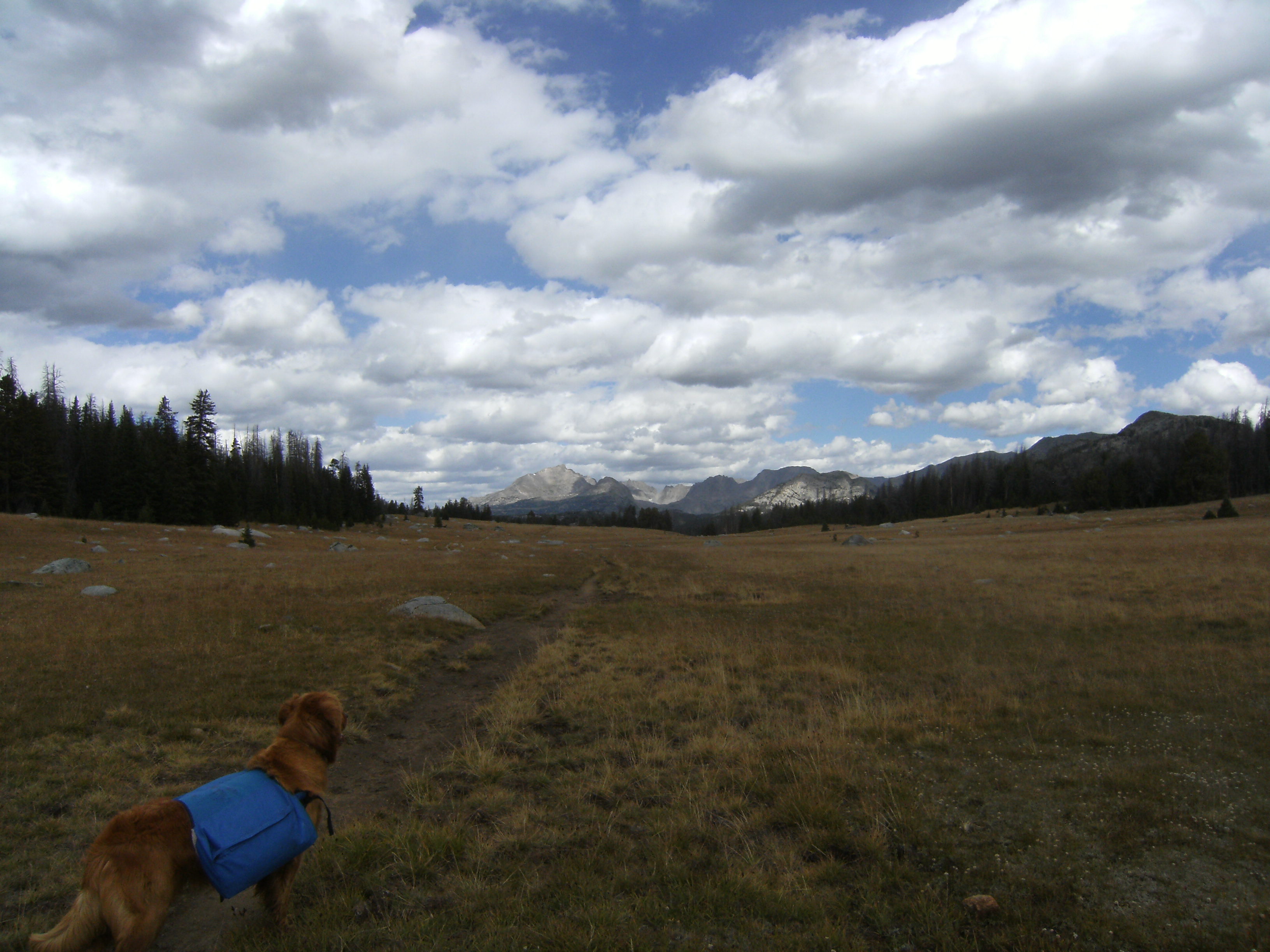
The hike into Dad's from the Fremont trail


The first mishap occurred that night.  My newest Thermarest, the latest greatest lightest model, had a pin hole in it.  The mattress was dead the next morning, essentially laying me bare on the cold ground.  The temperatures were hovering around freezing or less at night so this wasn’t good.  Since I’d only used the mattress 2 times before, I hadn’t brought a proper patch kit.  I tried duct tape, lots of other tapes, to no avail.  OK, I can live with sleeping direct on the ground.  I’d done it before.

By Monday the weather was certainly very unsettled, so I decided to stay at Dad’s Lake and day hike to Shadow Lake with Soona’s ashes.  The 10 mile round trip into a glacial valley was phenomenal.  Shadow Lake sits on the back side of the Cirque of the Towers, the primo climbing grounds for world class climbers.  The front side is crowded with hikers and climbers, but the back side is not.  I had the whole valley to myself.

The trail winds up to the Continental Divide, a cluster of above timber line granite peaks, then cuts off into a wide sub-alpine valley for 2 miles that dead ends below the Cirque.  Three lakes sit at its base.  As I walked up the valley, it became only more and more stunning.  A wide river flows easily through its floor.  Glacial carved towering mountains surround you on both sides.  The view from Shadow lake of the Cirque is phenomenal.

As I turned up the side trail to the valley, the threatening weather turned intense.  It started to snow, hard.  But the valley kept egging me on and I knew this was the perfect place for Soona.  Finally, the lake appeared through the trees.  The cloud cover was heavy but the snow had stopped for now.  I had a quick lunch, knowing that I better return to camp soon; scattered the dog’s ashes, and sat down for some prayers and chants.  Suddenly the sun appeared through a small parting of the clouds.  The entire sky was black except for right above me where the heat of the sun changed the mood.  It was a brief 10 minutes of sun, as if the heavens had opened to receive my prayers and Soona had acknowledged her final resting place as ‘Good’.  When I started back to camp, the clouds covered the sky again and snow came down.  It snowed the whole 5 miles back to camp.

At Dad’s lake, the weather seemed to turn, the sun came out, broken clouds scattered the sky, a beautiful sunset was beginning.  Koda jumped in the lake and then it began snowing again.  Despite toweling him off (with my backpacking towel!) and a good fire, he went to bed shivering.  That night was the first time I ever opened up an emergency blanket and used it–on a dog!


Dad's Lake. The Continental Divide looms in the background


That evening was going to be very cold.  I knew it.  It’d been snowing all day and clearing some in the evening.  Surely it would be around 20 degrees tonight.  I wanted a good fire.  The only dry wood was what I could find still hanging on the trees.  I picked around for dead branches and carried a load back to my camp.  As I sorted through the dry branches I found a giant, and I mean giant, dragonfly, the biggest I’d ever seen, clinging to one.  He had gotten cold and was still.  I moved the dragonfly to a nearby tree, pondering it for a time.  The mystery of his’ life strategy stuck me…how he survived by becoming still and asleep.   When it was cold, boom, he was in another state, helpless, at the mercy of his unique physiology.

By the next day, when the weather was supposed to clear, a cold north wind had come blazing in.  I hiked up to Washakie creek, but was loathe to do the 3 miles of a 10,500 foot pass to Dream Lake in the threatening weather and strong winds.  Washakie creek combines side by side with East Fork River in a wide and beautiful sub-alpine valley, a place where most of August would be uncampable due to mosquitos.  But the cold had killed off all the bugs and it was an incredible camping spot.  Tons of wood and good fishing.  Although my fishing pole had broken in half the day before, it still worked just fine.  I caught 3 fish in the span of 15 minutes, nice big brookies.

By the next morning, instead of the weather improving as predicted (I swear that being a weatherman is the only job where you can be wrong half the time and STILL keep your job), it was overcast and threatening to snow, with daytime temperatures hovering in the high 30’s.  Besides the bad weather, my Steripen water purifier (also fairly new) broke.  No clean water (except if I boiled it) was a real set-back.  So along with my sleeping pad, broken fishing pole, and bad weather, I decided this trip was just for Soona.  I made the hike out that day, getting nice and dehydrated without any water to drink.

The good news is that the foot I’d been nursing for a year survived nicely, and I met some incredible, inspirational people.  A couple who was celebrating the woman’s 60th birthday by doing the entire Highline trail (over 100 miles) in 14 days.  Another couple in their early seventies who’d been backpacking in the Winds for over 25 years.  And I camped next to a 60 year old man who, because his doctor had told him not to backpack alone any more, was making a last memorable trip to the Winds by staying there for a month.  He was taking pictures and keeping a good journal, “for my grandchildren”.   He had dehydrated his own food, would come in from one trailhead for a 10 day stretch, then hike out to replenish and come in from another trailhead.

“I’ve watched the mountains all August, go from wildflowers to fall snows.”  I bow down to all these inspirational souls who keep backpacking way into their later years.  Next year I’m going for 3 weeks, and do it like the Texan rancher.  But this year I’d come to do a thing for a dog.

last backpack in the Beartooths at 10

Heaven in Canada

Happy even in old age

Yellowstone spring

I’m doing some work here, adding a utility room.  With all the noise and construction, it was a great opportunity to escape to the park and let the workers watch the dog.

Since it only takes me 40 minutes to the NE entrance, I escaped around eleven and was back by 5.  The day was overcast and on the cold side.  I’d planned to do a day hike, but chucked the idea with a cold wind blowing through the Lamar.  There was enough activity to view right from the road.

I’ts early June, the kids are still in school, and usually May and June the Park is still quiet during the week.  Yet last summer was the busiest the Park has ever seen and its predicted to be the same again this year.  The Lamar Valley had plenty of people today, but they all seemed serious wildlife watchers and so the atmosphere was calm and peaceful.

I do have to say, with all the hubbub around the ecosystem about wolves–rallies in Jackson and Cody recently, sponsored by outfitters and the Elk Foundation, complaining about wolves taking their business away [i.e. “biggest slaughter since the bison” meaning the wolves are eating all the elk, like when we killed all the bison] and wanting Wyoming wolves hunted as predators–it seems to be completely forgotten that wolves have created an incredible tourist attraction that benefits Wyoming.  I only talked with a few tourists in the valley, but they were all looking for wolves.  I ran into a carload of tourists from Oklahoma who had gotten out of their car to use the restroom when they heard a wolf howl.  They walked out to an overlook of the Lamar river and saw a black wolf–a thrilling experience for them.

Another man stopped and asked what I was looking at through my scope.  When I told him ‘a black bear’, he said “We already saw that.  We’re looking for wolves.”

It seems to be one of the main draws to the Park these days.  Wolves have fueled the attendance to record numbers!

With the Druid Pack all but gone, I didn’t expect to hear or see wolves in the Lamar, but there was a black wolf running around there, plus a tourist told me she’d seen one on a kill earlier.

Mostly though, since I see wolves in my own valley, I love to see the Bison and especially their babies at this time of year.  They are the only wildlife that cannot leave the Park so I have none in my valley.

Error
This video doesn’t exist

There were a lot of Bison in the Lamar this day.  I always try and imagine the great herds that once roamed everywhere just a few hundred years ago.

Loads of Bison

Besides Bison, wolves, and black bears, on the way out I saw 2 beautiful old bull moose hanging by the side of the road (until a crazy tourist tried to get a close up picture.  Fortunately for the tourist, the Bulls decided to head up the hillside instead of into the tourist).

Yellowstone for mine eyes only

A friend came up late morning to help me plant more trees.  A squall came in and with it a fierce cold wind.  After several minutes the weather settled down, the sun shone through brilliant cumulus clouds but it was still hovering above freezing.  This continued several times all morning until I’d had enough.  Hungry and cold I suggested we quit for the day and head to the house for lunch.

Since I’m needing some poles to repair a gate, we decided to see if we could make it up to Beartooth Lake to cut some lodgepole poles.  The road was clear and this typical May weather had brought new snow into the mountains.  Pilot and Index Peaks were covered white in snow, the deep of the blue sky setting them off.

We got a little past the maintenance yard and then got stuck in the snow.  I let the dogs out while my friend shoveled and I pushed the truck.  The dogs, like 2 kids, went wildly romping around the deep snow pack.

That adventure foiled, my friend suggested we see how far we could get towards Cooke City.  About 5 miles from Cooke, the road was full of snow, although a plow had gone over it.  The sign said ‘Road Closed’ but we kept on.  My friend said they run a plow now so that the heat of the sun will melt the rest off.  That way there’ll be less work to do come May 7th when the NE entrance officially opens.

Once into Cooke, the road was clear and dry and we decided to head for the Lamar.  By now it was about 6:30 pm and a perfect time to catch some wildlife watching.  But as we drove into the park, a deep fog appeared and it started to snow…sleet really.  My friend commented that he’d been coming here for 50 years and during that entire time the willows had never been able to grow.

“You’d have to have come here for that long to see the difference.  The willows are growing now.  They’ve never been this big.  The elk used to use the Lamar like cattle.  They’d be down in the river bottoms.  Now the wolves keep them on the move and the brush is coming back.”

As we continued towards the Buffalo Ranch, the sky cleared.  We kept commenting that we wished we’d brought our cameras.  I thought about it as I walked out the door, but figured I was just going to cut poles.  Instead, the air, the sky, the mountains, the weather was magnificent…a special day, a special light.

We watched a grizzly for a while nosing around for food.  Three sand hill cranes hunted nearby.  Elk grazed easily in the valley, while a Bison, beginning to shed, rubbed his back on a rock.  No one was in the valley.  It was left to the wildlife.

Coming a little north of Crandall on the way home, a grizzly bounded across the road in front of us.  It was about 7:30 and I suppose he was headed out for his evening rounds.  We stopped and watched him climb up the rocky cliffs on the other side of the highway, so close to the homes around there.

A spontaneous surprise, the day was full of typical May weather, my favorite time of the year.  Snow, sleet, sun….dry, wet, foggy, brilliant need-your-sunglasses light.  And lots of wildlife. Although we kept commenting how, of course, where’s your camera when you need it, I reminded my friend “This was a day just for our eyes only.”

Mystery of the Sacred

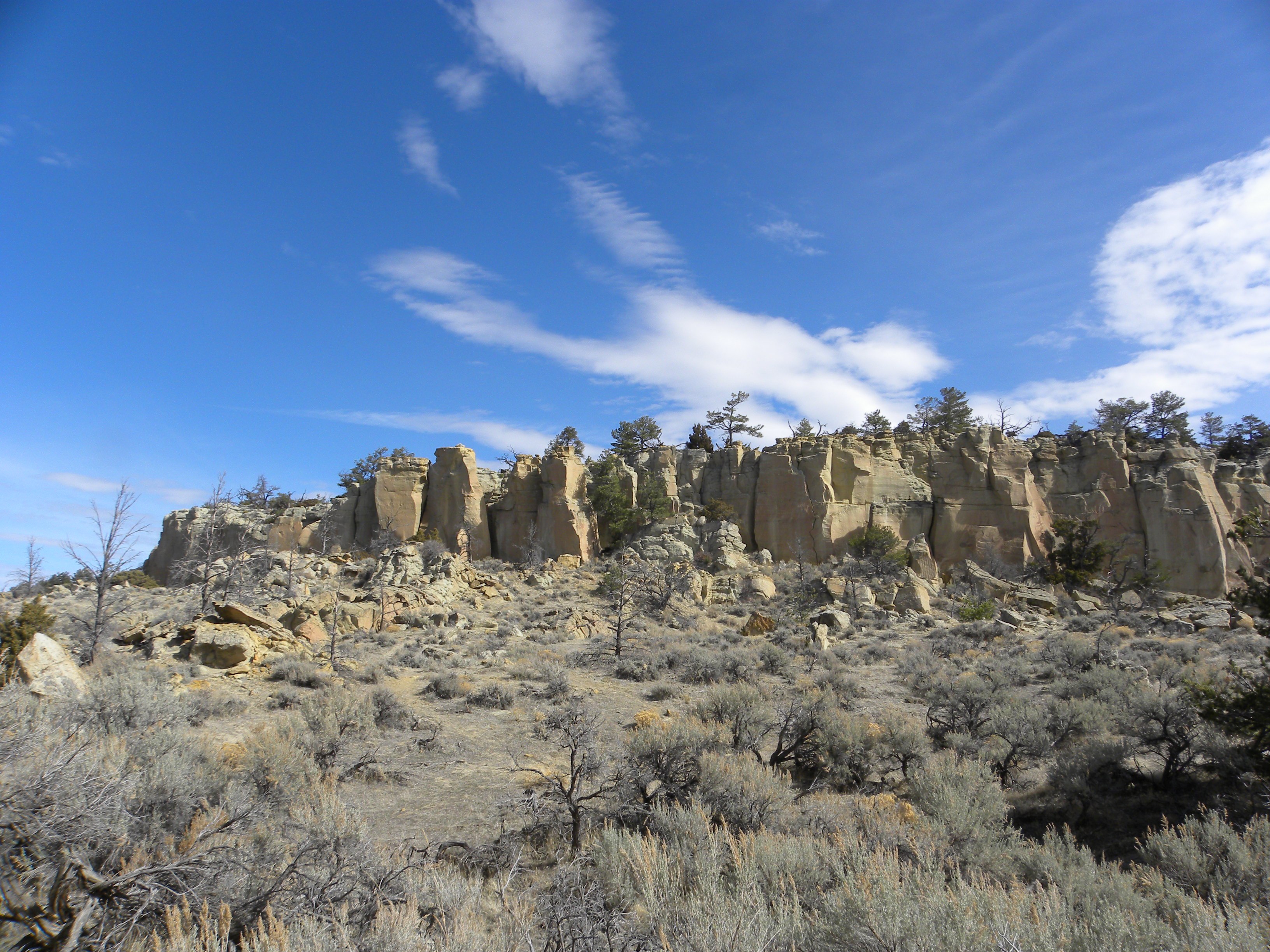
I’d been wanting to see a series of pictographs in the desert nearby.  So the other day my friend took me out to see them.  The hike is about 6 miles round trip.  The trip out there is through flat sagebrush country.  For a long ways it doesn’t seem like there’s anything of interest.  Then suddenly the landscape shifts into deep ravines and rocky cliffs.  Near the top of a series of cliffs, a narrow valley appears.  Walking through this rift in the rocky scape, there is a palpable sense of the Sacred.  The cliffs loom high and they all have excellent writing surfaces on them.  But most are empty.  Curiously, there are natural perfect circles of a different kind of rock decorating the sandstone faces.  These natural shield shapes fool you into thinking they’re manmade.

A few official signs along the way tell you these pictographs you’re approaching are special and not to be touched or defaced.  My friend says 7 years ago there was no trail nor signs.  Since then people seemed to have discovered this place because the trail is worn and shows fresh signs of footprints and horseprints.

View from the valley

The sandstone cliffs

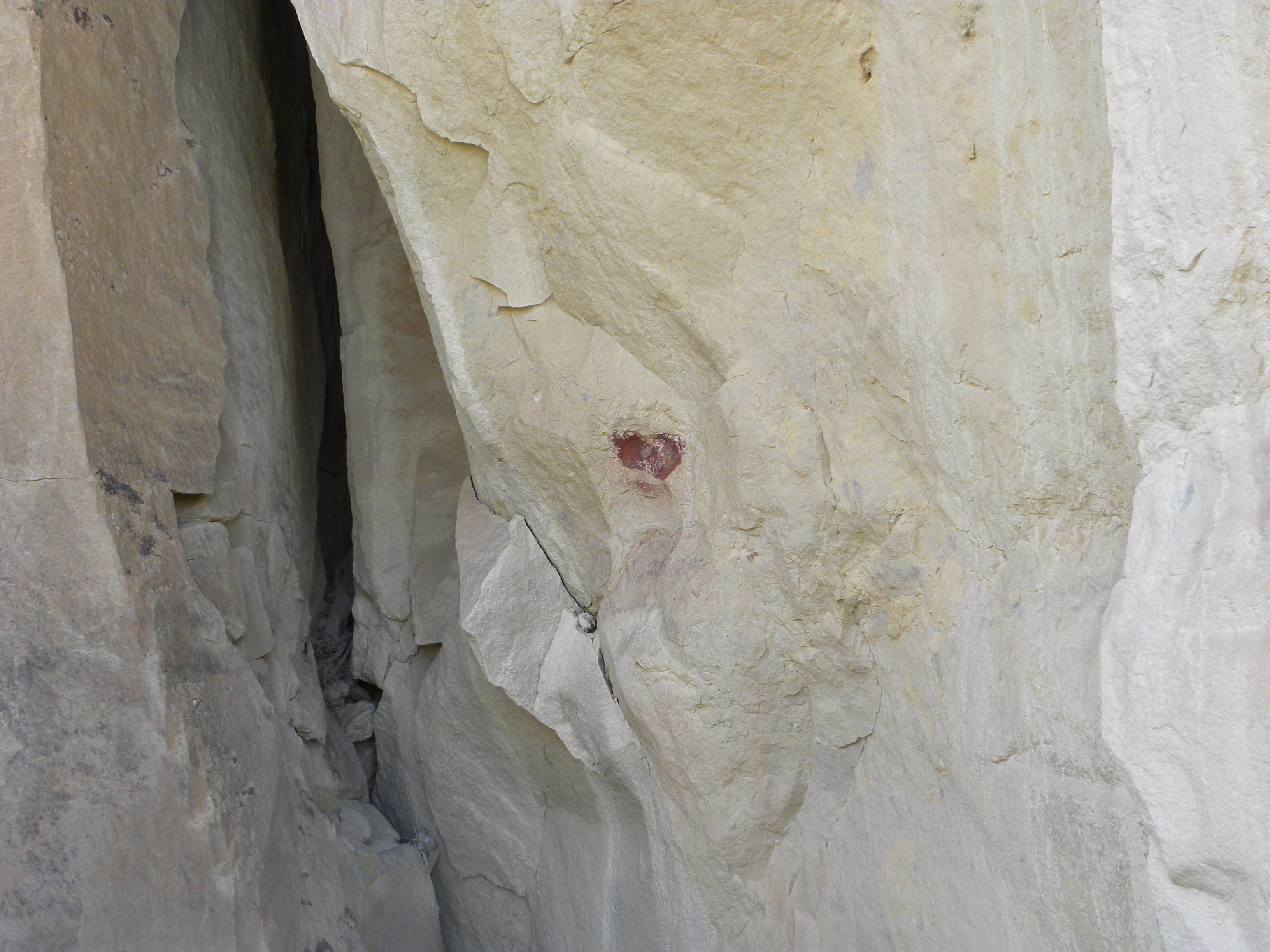
The valley is so quiet.  There is a somber aura here that evokes the sacred.  The high cliffs have a cathedral-like feel.  Finally we arrive at the rock with the pictographs.  My friend tells me they are fairly recent, within the last 500 years.  The rock faces east and is in the shade, which is a relief on this unusual 70 degree March day.  The paintings are very faint but you can make them out.

Look closely to see the figures

An area in the rock is chipped where the people who made these got the red coloring.

Where the red color comes from. Maybe why they chose this rock to paint

Down below, in another rocky outcropping, are a few more well preserved shields that lack the figures associated with the ones higher up.

Another painted rock much less eroded

These pictographs are sacred to the Crows.

Why are they here?  Curiously, there is no water nearby and the paintings are in a place that is isolated and hard to get to.  Although we can never get into the minds of the tribesmen who painted these, its fun to imagine what might have been going on there.  Were there several artists or just one?  Was this part of a vision quest or someone passing time in the shaded side of the valley waiting for game, or fellow travelers?  Was this a signpost or message on a well traveled trail?  I suppose it will forever remain a mystery.

Old first hand Stories of Yellowstone

My old neighbor JB told me this story today.   Its impossible to place it in time.  In JB’s mind it was like yesterday, but probably in reality sometime in the late ’50’s or early 60’s.

“My job was to plow the road from Mammoth to Cooke City.  There were two plows going and it was Christmas day.  It was 60 below zero, really really cold.  Those plows aren’t heated, you know.  You’ve gotta keep the window cracked too, otherwise the windshield freezes up with ice and you can’t see.  So it’s 60 below outside, no heat, and the window’s cracked.”

I asked him how he stayed warm.

“You just put on more clothes!  The snow was 4 or 5 feet deep and I got a call on the radio from the couple staying at the Buffalo Ranch.  His wife was going into labor and they were stuck.   I was going around a curve on my way to Tower, as fast as I could which wasn’t too fast in a plow, when I saw a patch of clear road ahead.  I knew that meant trouble.  The other plow was a few minutes ahead and a clear patch meant he’d gone off the road.  When I got there the plow was completely off the road, tipped over, and the driver was buried under the snow.  At 60 below he didn’t have much time and it was good I was just behind him.”

“I started digging him out and when I got to him he said ‘Lunch box’.  He kept repeating that.  I didn’t know he had a heart condition and his medication was in his lunchbox.  I never found that lunchbox.  They got him over to Billings.  He was pretty mangled up and didn’t work for over 2 years.”

“Then I started plowing my way to the Buffalo Ranch.  I finally got that couple unstuck.  She never got further than Mammoth where she had her baby.  That was Christmas Day.  I didn’t get home till 3 am.”

I had a client whose father, Merrill Daum, worked in Yellowstone from 1925 to 1930, first as the Chief Engineer then eventually as Assistant Superintendent to Horace Albright.  Daum spent the first several years working on oiling the roads.  Here are a few story excerpts from a memoir my client gave me.

We had an epidemic there one year.  They had quite a few cases of the tourists coming down sick after they’d been there at Old Faithful Inn during the afternoon and evening.  They came down with vomiting.  They really were sick.  It broke out at the Lake.  Then to Canyon.  The Lake was where they really had the epidemic.  One hundred or so sick people there.  We had to go around shooting them all with a needle.  I don’t know what we injected them with.  To relax them so they wouldn’t vomit themselves to death.  They put four of us at the table morning, noon, and night at the Lake Hotel and we were each to eat different things, not the same thing to see what food was causing our troubles.  None of us got sick.  THey just threw up on the floors, every place they got caught.

Bears came on our porch on that duplex we lived in at Mammoth.  I finally got tired of bears once and I took an apple, filled it with red pepper, pinned it together and put it on the porch.  That bear came up and swallowed that and all of a sudden he was blowing and wiping his nose in the snow, trying to get cool.  He really was hot.  He never bothered us again.

At Yellowstone we were building a highway out near Canyon and Lake areas and our construction crew was in tents.  The bears would keep coming in and get the food out of the kitchen.  I was there once in the daytime and here was a Grizzly.  They’re beautiful animals.  The sun would glisten on the beautiful points on their fur.  This darn grizzly was walking home with a sack of oats.  Just walking right off with it.  A sack of oats about 75 pounds.  Nothing we could do about it.  They did take a lot that first year.  You weren’t allowed to kill them.  You could sit right there next to the garbage and they wouldn’t bother you.  All they wanted was to dig in the garbage.  The worst place where I chased one bear was at West Thumb.  The bear came in there that fall, before the snows.  I happened to go around the store which had candies and things like that and the shopkeeper had the windows all closed.  The place was broken into and there was the bear inside, just gorging himself on candy.  I’ll never forget how surprised that bear was for somebody to come in and find him.

We had to get ready to remove the snow in the spring. We started at Cody, about 30 miles from Cody up to the entrance.  We got as far as the Park with snow 12-20 feet deep.  We’d blast it out with TNT which Uncle Sam gave us.  That would start it thawing and then we’d take a big power shovel and shovel the stuff so we had a two-way highway through there to the east entrance of the Park.  From there on in we’d use our own equipment.  The deep snow was right there at the entrance.  That was the high point.  We’d generally try to get open by June 1st.  By June 6th we were officially open, I believe.  But you couldn’t make some of the interior trips that early.  It would be long in July before you could get away from the snow.

Tipi Rings

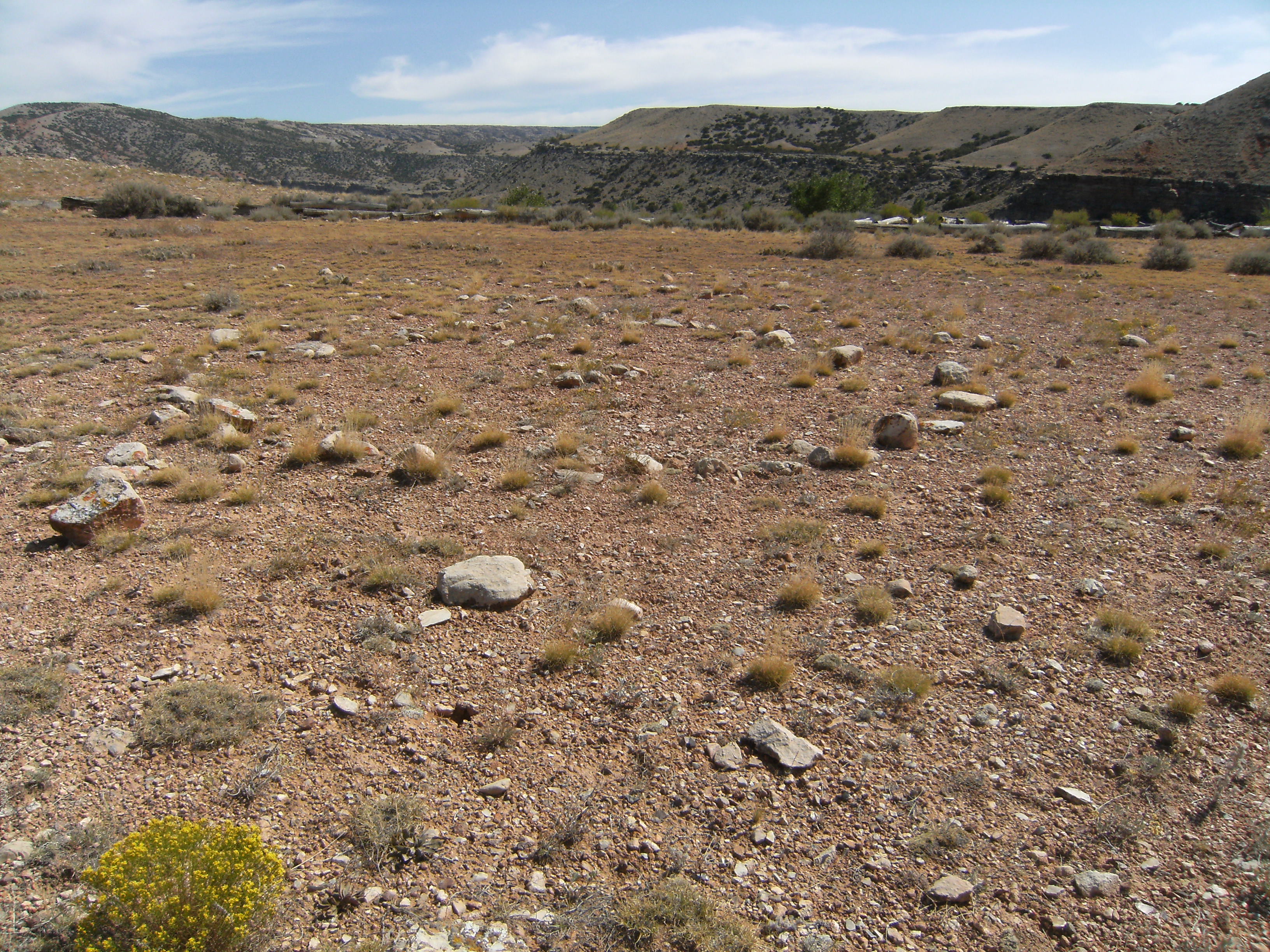
I thought I’d do a short post on a few teepee rings I’ve seen.  The other day I was in Cody with some time to kill.  I’d heard there were tipi rings on the north side of the Shoshone river by Trail Creek.  A friend told me the historical wisdom-lore was that many tribes gathered there during the winter months to camp by the hot springs.  Most of those springs are now either extinct, buried under the damn, or on private lands.  In fact, the bulk of the rings, apparently 100’s of them, are on private lands going up the traditional passage of Trail Creek.

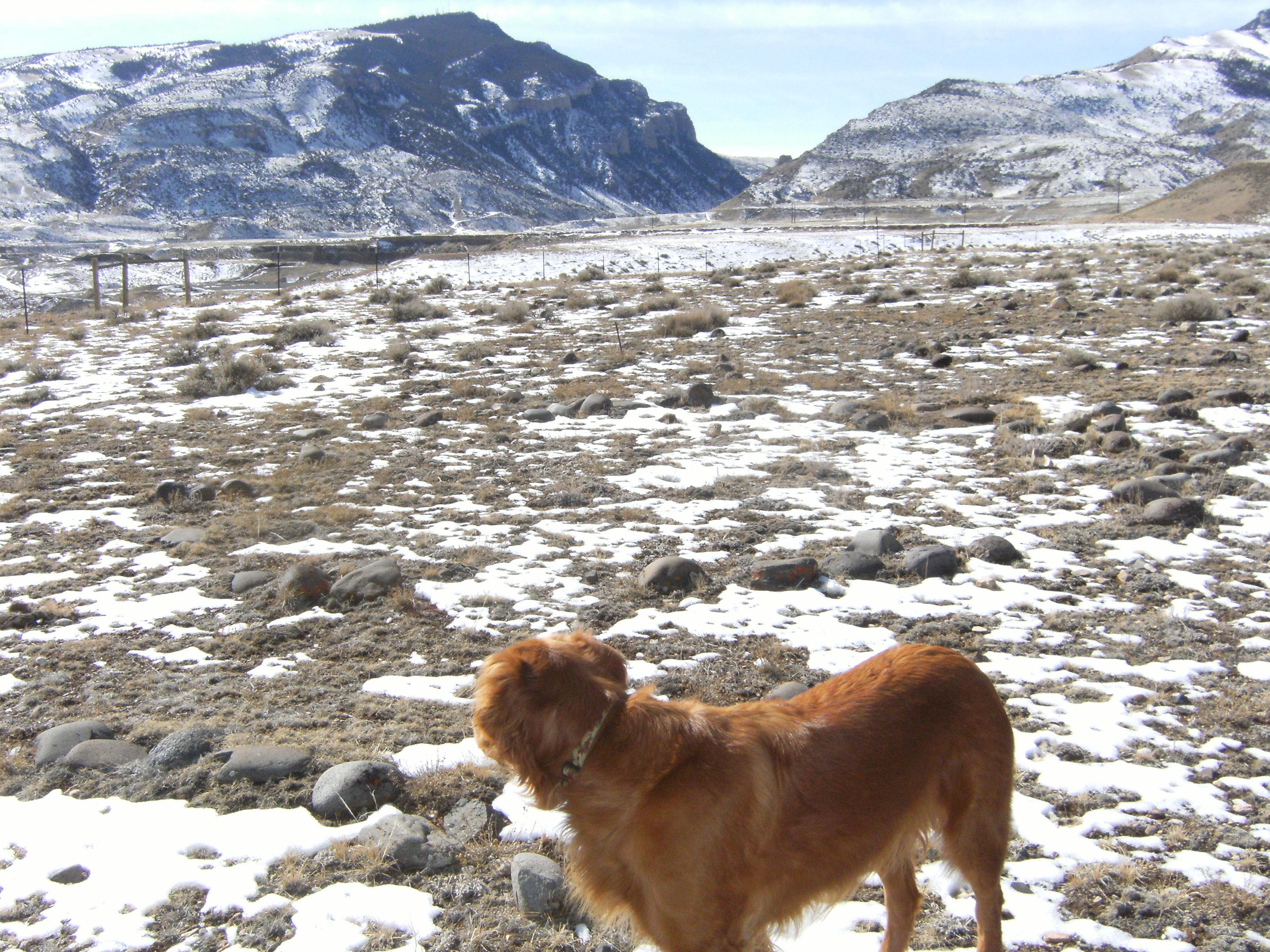
Walking along the shores of the Shoshone River (called the Stinking Water River before it was changed due to popular [and probably economic] demand)  you can still occasionally smell sulfur .  The rings are obvious, easy to pick out.  They’re incredibly close together; some even still have fire rings in the center.  Compared to the rings in other places, these looked fairly recent, maybe 150 years old.  Why?  Because the rocks are not very buried.

Cody tipi ring with fire ring in middle

Another view of several rings outside Cody

This is an excerpt from Plain Feather about the death of Crow Chief Sits in the Middle of the Land while Plain Feather was camped outside of Cody:

“About a year after the big battle on the Little Bighorn (1876), a small band of Crows went hunting from the Yellowstone to the Stinking River…The band reached the Stinking River a short distance below where the city of Cody now is located.  Here Chief Sits in the Middle announced that he was going south to a valley where there were still some buffalo left.  The other group decided to follow up the Stinking River to the big mountains where there were plenty of deer and bighorn sheep.

My family was with this latter group.  That evening we made camp at the forks of the river just above the narrow canyon where a dam is now located.  Towards evening we sighted two horseback riders galloping in our direction.  They were messengers from the other group.  They announced that the great chief and his wife suddenly became ill and soon died. They said we were to hasten over there.  It is believed that they died of pneumonia.

Immediately teepees came down and we were soon on our way.  We arrived early the next morning, just in time for the burial.  The bodies, strapped in robes, were taken to the rimrocks of the valley and put into a ledge and then covered up with slabs of rocks.  The burial mourning followed, with men and women wailing.  They recounted the many great things that the chief did for his people for many years.  At that time he was the Chief of All Chiefs, reigning over the two main bands of the Crow Nation.”**

(**Note:  In the late 1960’s, the Chiefs’ remains were relocated from nearby Meeteetsie to the Crow Agency in Montana.)

Now compare those rocks with the rocks in the rings below.  These rings were along the Bighorn River in Bighorn Canyon.  The rings are right beside the main road, which follows the ancient travel route of the Crows.

Another view along Bighorn canyon

Big Horn Canyon rings

Here are some much older rings near the town of Clark.

Clarks fork tipi rings, much older

I spent a few hours walking along the plateau near the mouth of the Clark’s Fork Canyon, an area where tribes traveled for the fall Buffalo hunt.  There are rocks galore there, and although I could pick out some rings, they couldn’t be photographed as they were very obscure and some of it might have even been my vivid imagination.  Most of the rings seemed much smaller, probably no more than 6′ in diameter compared to these larger rings.  But the setting was right–on the table above the river with a wide view of the surroundings.

I love finding these rings.  They spur my imagination and kindle a sleeping spirit.  The very soil emits stories I’m awaiting to hear.

Right as Rain

Its Valentines’ Day and I’m finally home.

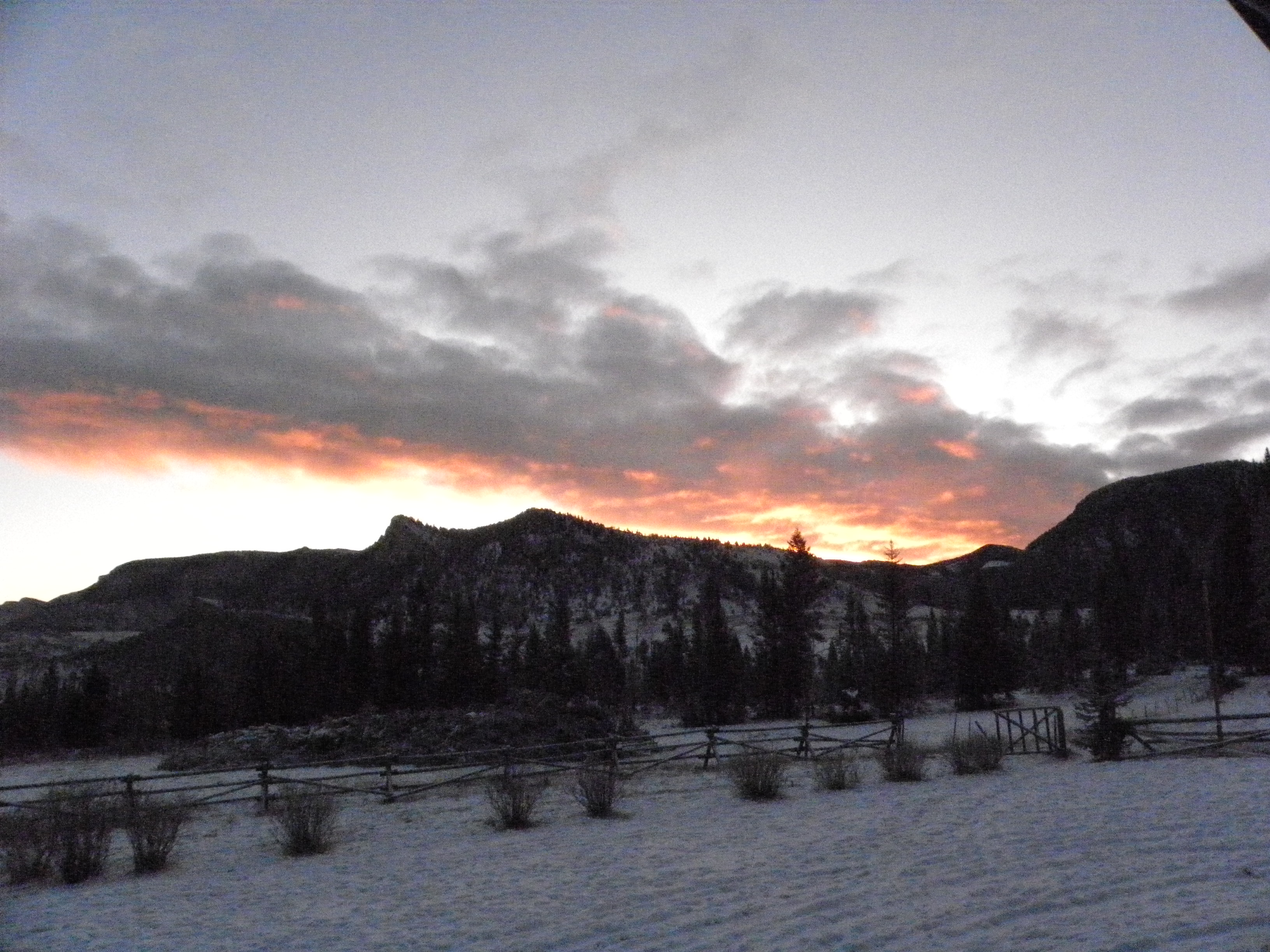
The day was clear and beautiful.  I awoke to a small bit of fresh snow and a beautiful fiery sunrise.

Sunrise over Dead Indian

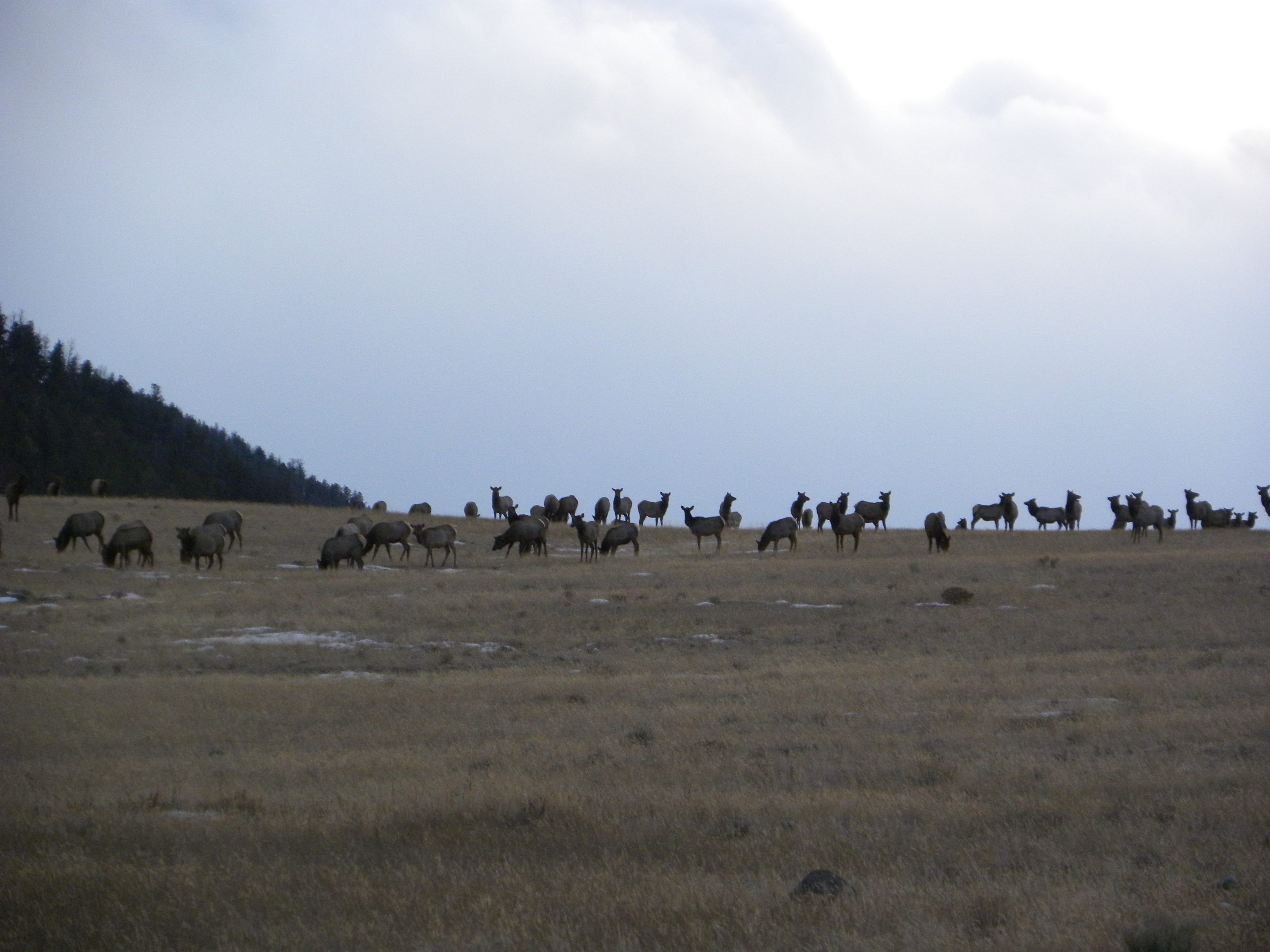
Last night I watched the elk that overwinter in my valley.  I heard the recent G&F count was 1460.  They come down from the Park when the weather pushes them out.  This year, as last year, they were a bit on the ‘late’ side.  At dusk and dawn they come out of the tree cover to feed.  Here’s a herd of about 700.

Just a small part of the large elk herd behind my house
More elk
Beautiful elk in their winter clothing

The herd is almost exclusively cows and their calves with a few young males, called ‘spikes’ because their antlers are barely branched, if at all.

The whole day the wolves were howling in the valley.  Its mating season and I suppose its also Valentines Day for them too.

We felled some beetle infested trees on my property and did a burn that lasted till after dusk.  The wolves  howled.  The air was still and clear.  The ash fell like snowflakes.  Elk grazed on the flats up above and a lone Great Horned Owl called in the low light of the sky.  I’m back and everything is right as rain.

Brush fire

Yellowstone in winter

Planning a trip to Yellowstone?  I recommend the winter!

There are so many reasons to choose winter over summer, but I’ll just give you a few.

First, the lack of crowds.  Yellowstone might get 100,000 visitors a week in the summer, whereas they get that total for the whole winter.

Next, the wildlife.  The wolves are roaming and highly visible in winter.  In the summer they’re attending to their young and following elk to higher grounds.  If you go in February, the wolves are in heat and you might catch courting and mating behavior.  Even better, spring for the cash to stay at the Yellowstone Institute at the Buffalo Ranch in the Lamar Valley and take a wolf class.  You’ll get educated and see wolves.

Elk, Bison, Bald Eagles, Coyotes, Foxes…so much wildlife and it’s mighty quiet with just one road open for cars (the North Road).  All the other roads are groomed for cross-country skiing or snowshoeing, and there are snow coaches to take you to groomed trails.  Although you can travel by snowmobile with a guide, I don’t really recommend it.  It might be fun, but you can do that outside the Park.  Snowmobiling is about tunnel vision, noise and speed–all things that don’t go along with wildlife watching; all things that Yellowstone has to offer.

Thermal features in the winter are amazing.  The deep greens or turquoises shimmer against the whiteness of the snow.  Bison like to hang around the warm grounds.

Several years ago I took a GYC wolf watching tour at the Buffalo Ranch.  We’d get up around 7am every morning, step outside our cabins, set up scopes and watch the Druid Pack of 17 wolves while we sipped our morning coffee.  In the afternoons we hiked or skied.  I stayed a few extra days to ski other parts of the park.  It was some of the best money I ever spent.

Yellowstone in the winter is one of the best kept secrets.

Yellowstone after Arnica

This will be my last trip to Yellowstone this fall. The Park is winding down and, because of the fires and snow, a lot of the roads were closed.  I went with some friends from BBHC through the East entrance.  Dunraven Pass and the road to Lake were closed.  Old Faithful access from the south (Madison to Norris access has been closed for repairs for the season a long time ago) was closed as well, but open from 12-1 only, I suppose so people could get out of the hotels. So, we had no choice but to head towards Canyon and Mammoth via Norris.

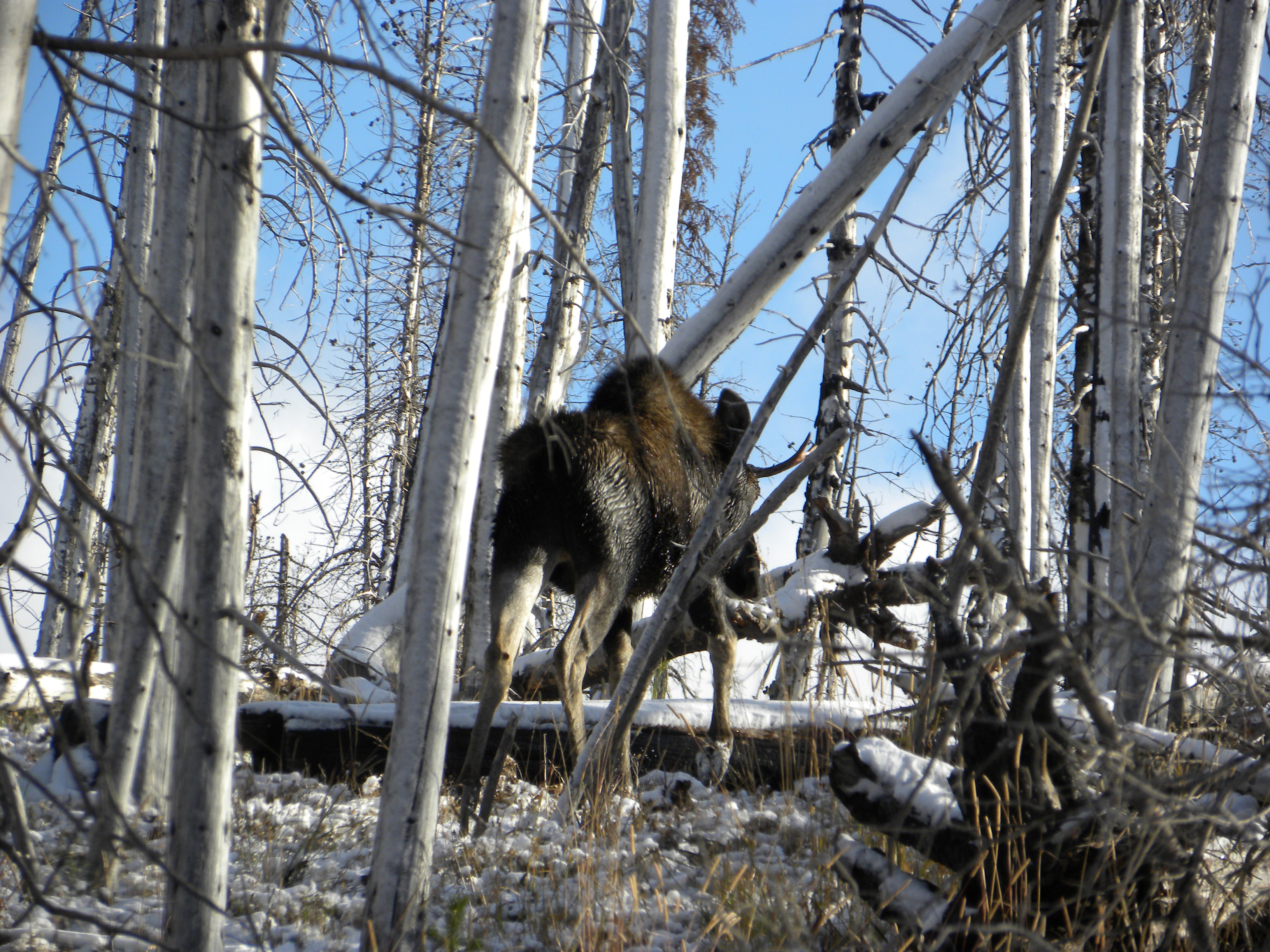
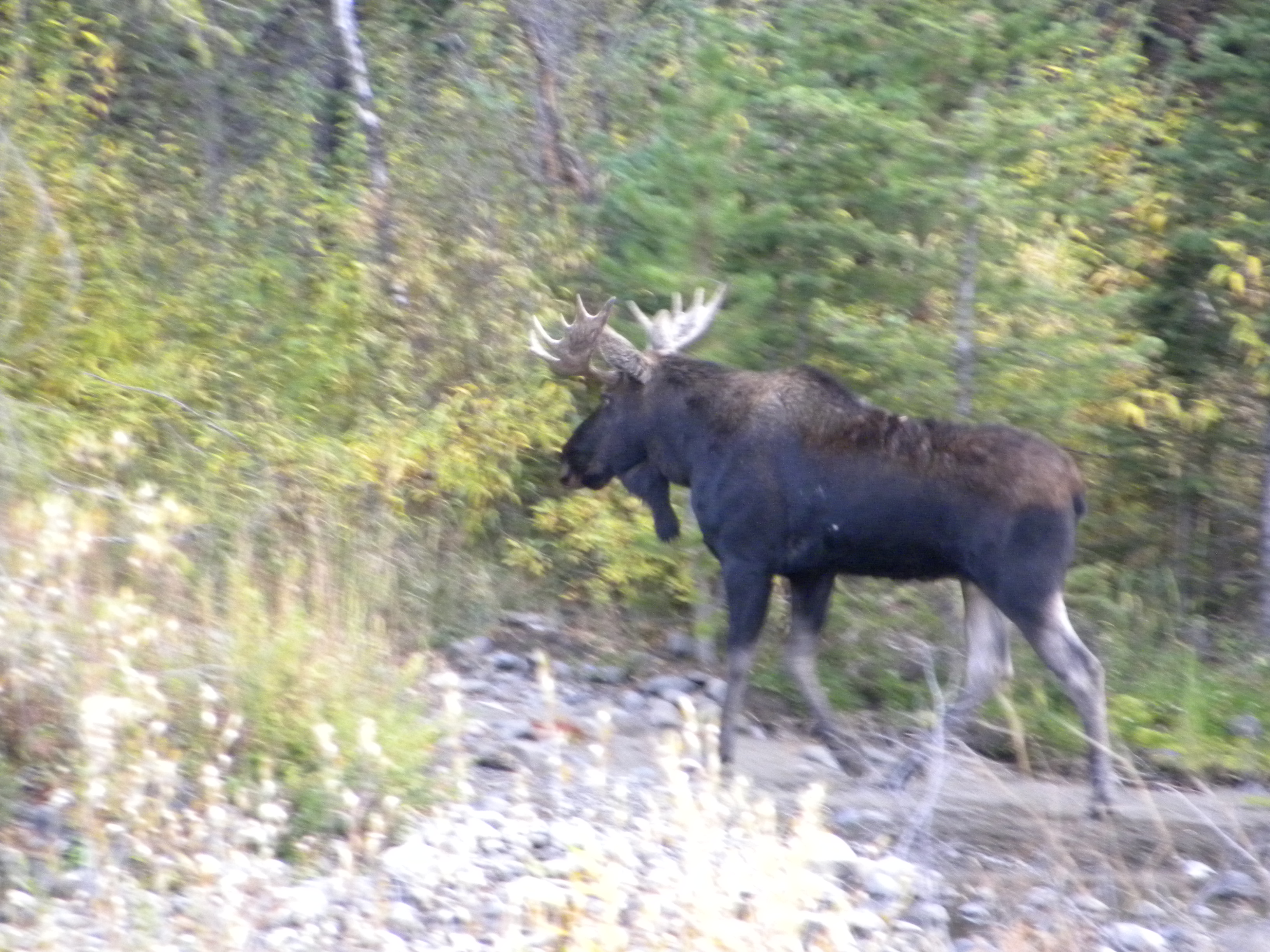
The day started late, around 8 am, but with a bang.  Way before the Park gate, on the Northfork, we spotted two moose–a young bull and a cow.  On the way up Sylvan pass there was another young cow moose.

Near Sylvan Pass

Near Sylvan Pass

There was lots of snow up and over the pass, and Sylvan Lake had a partial ice cover.  We headed for Norris Geyser Basin with a stop at the Mud Volcano.  Mud Volcano

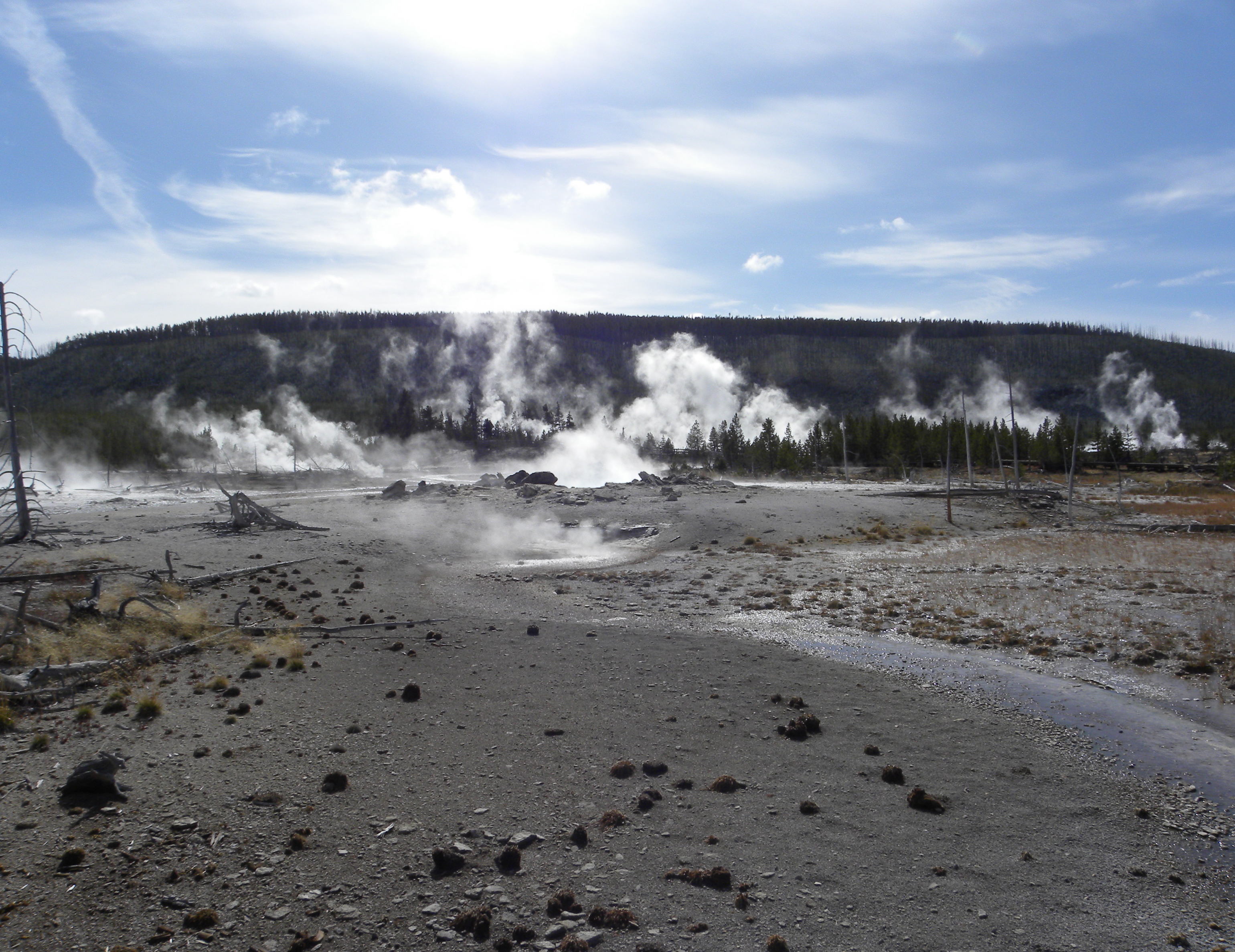
Norris Geyser Basin

mud pot

mud pot

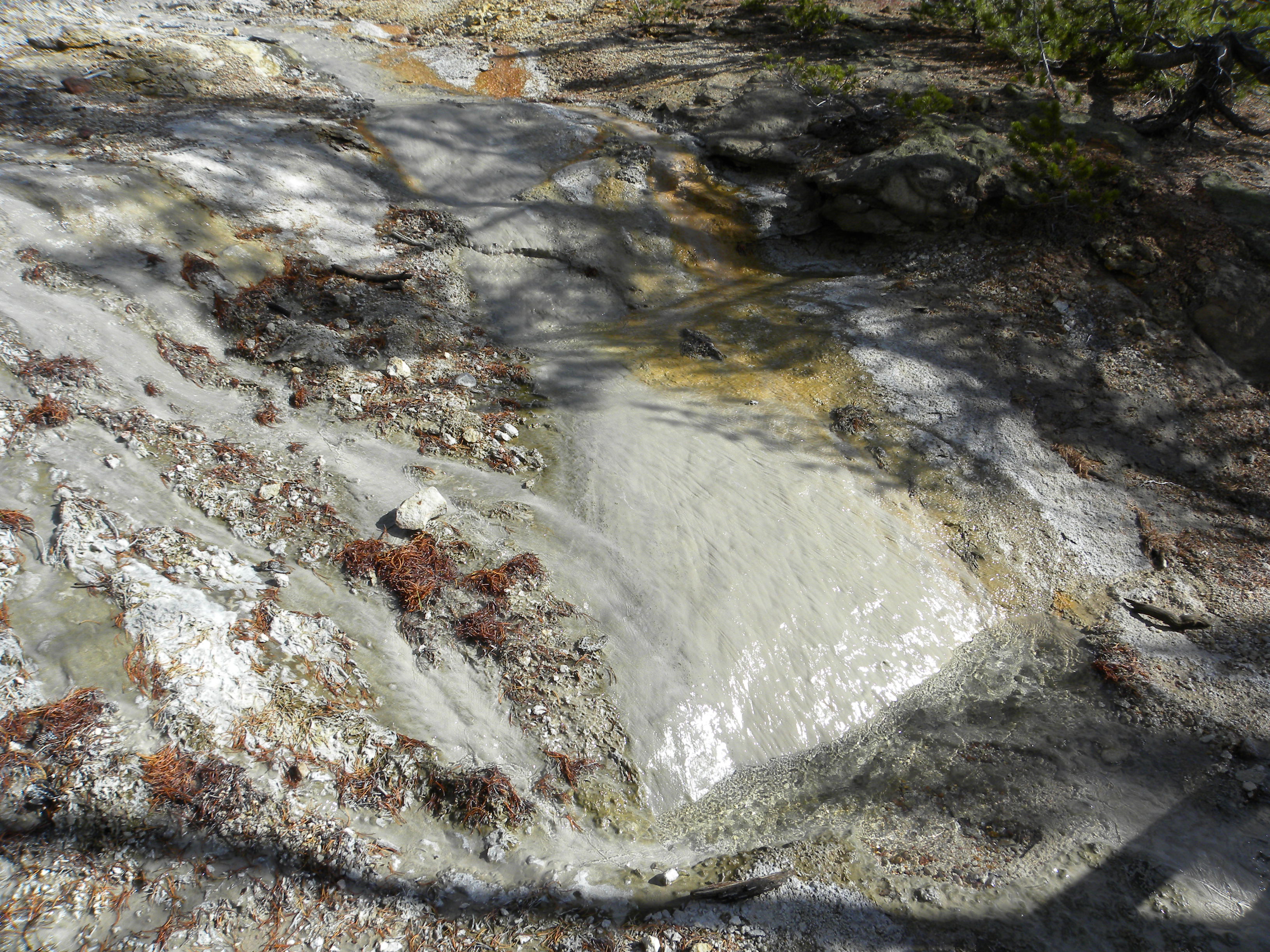
Colors in hot springs

Colors in hot springs

I realized that I’d overlooked this wonderful area.  Norris Geyser Basin has got to be one of the best geothermal spectacles in the Park, and yet its tucked way back in near the Junction so I think people whiz bye without thinking to stop.

Norris Geyser Basin

Norris Geyser Basin

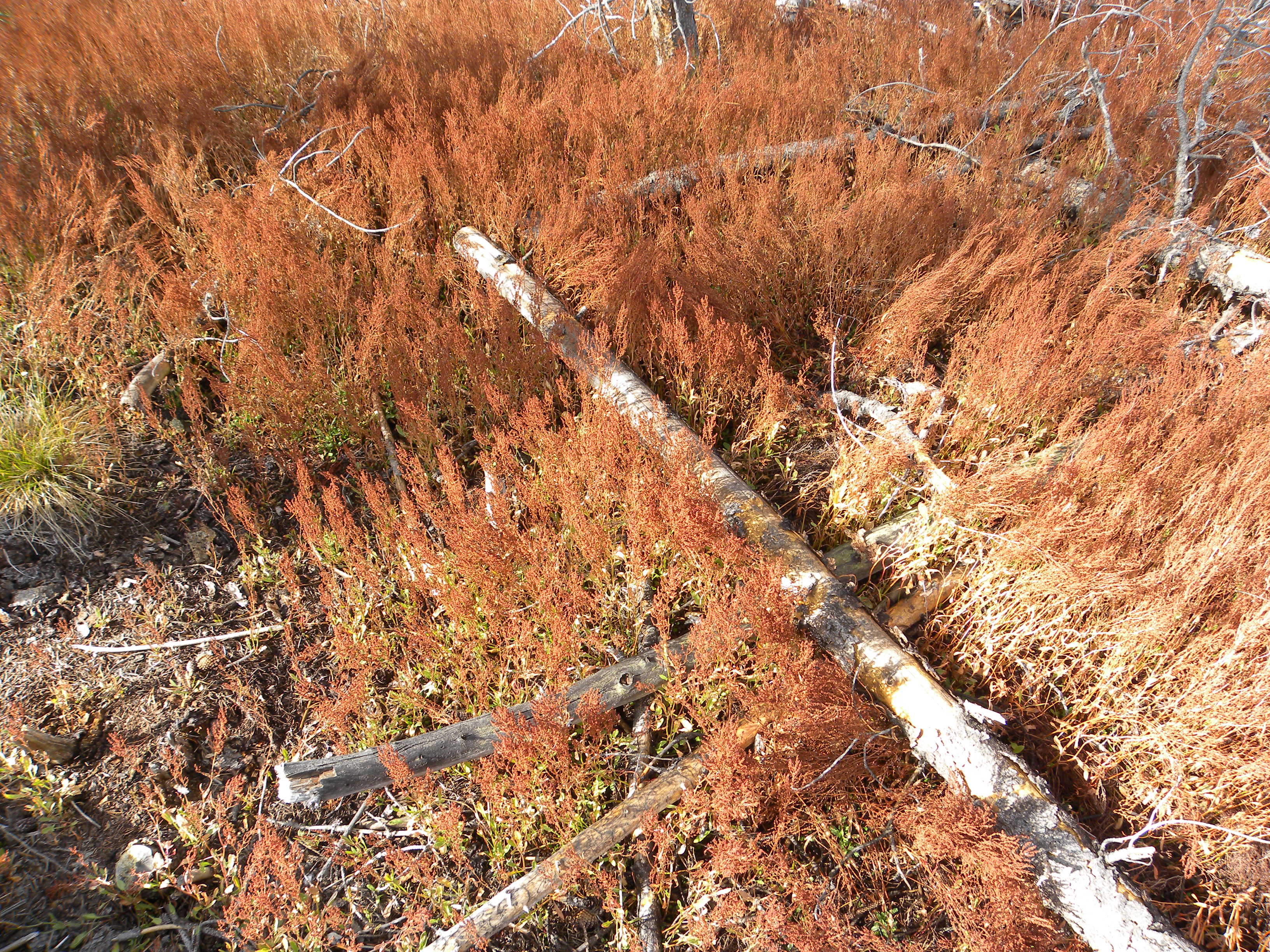
Hot springs plants in fall color

Hot springs plants in fall color

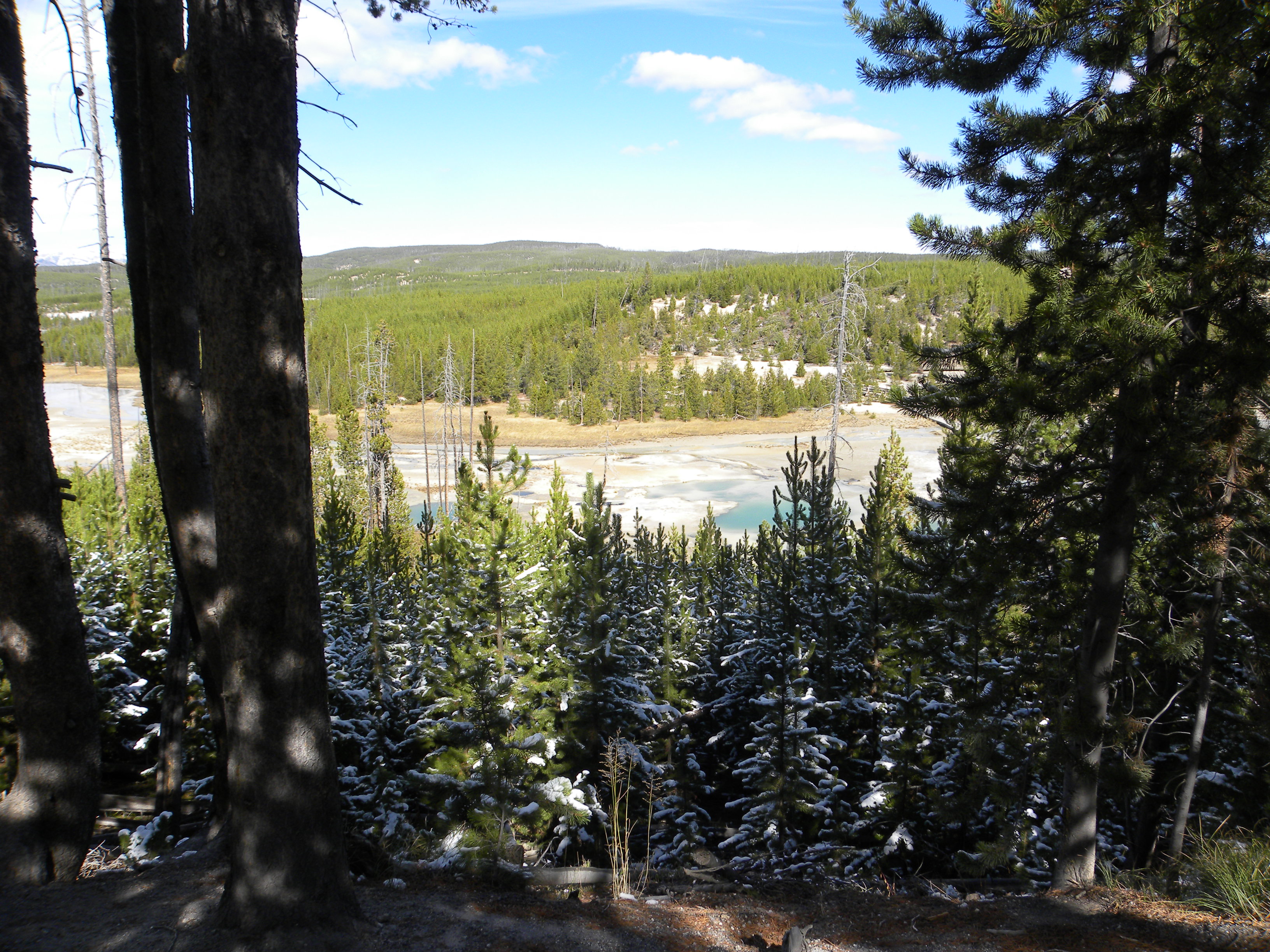
Norris

View of part of the lower basin at Norris

View of part of the lower basin at Norris

Once in the car and on the road we spotted some tourists standing literally at the edge of a hot pool in the meadow, taking photos!  Yikes I could just imagine that thin crust breaking and cooking them.  Really folks, that’s a stupid idea as those pools are hot.

After lunch at Mammoth, we headed down towards the Lamar.  We hadn’t gone too far when we spotted a wolf.   Besides spotting wildlife yourself, the trick is to watch the tourists.  Check for the ones with the spotting scopes set up.  These are the real serious wildlife watchers, usually looking for wolves or bears.

We parked and watched a collared wolf hunting voles in the grass along the river bank.  Every so often he’d pounce way up in the air for his prey.  One of the bystanders said “That’s a coyote.  I’m leaving.”  Well yes, the coloring was similar, but the size and shape of the head was the giveaway.  Besides, he had a collar.

Collared wolf.  Compare his size and colors to coyote

Collared wolf. Compare his size and colors to coyote

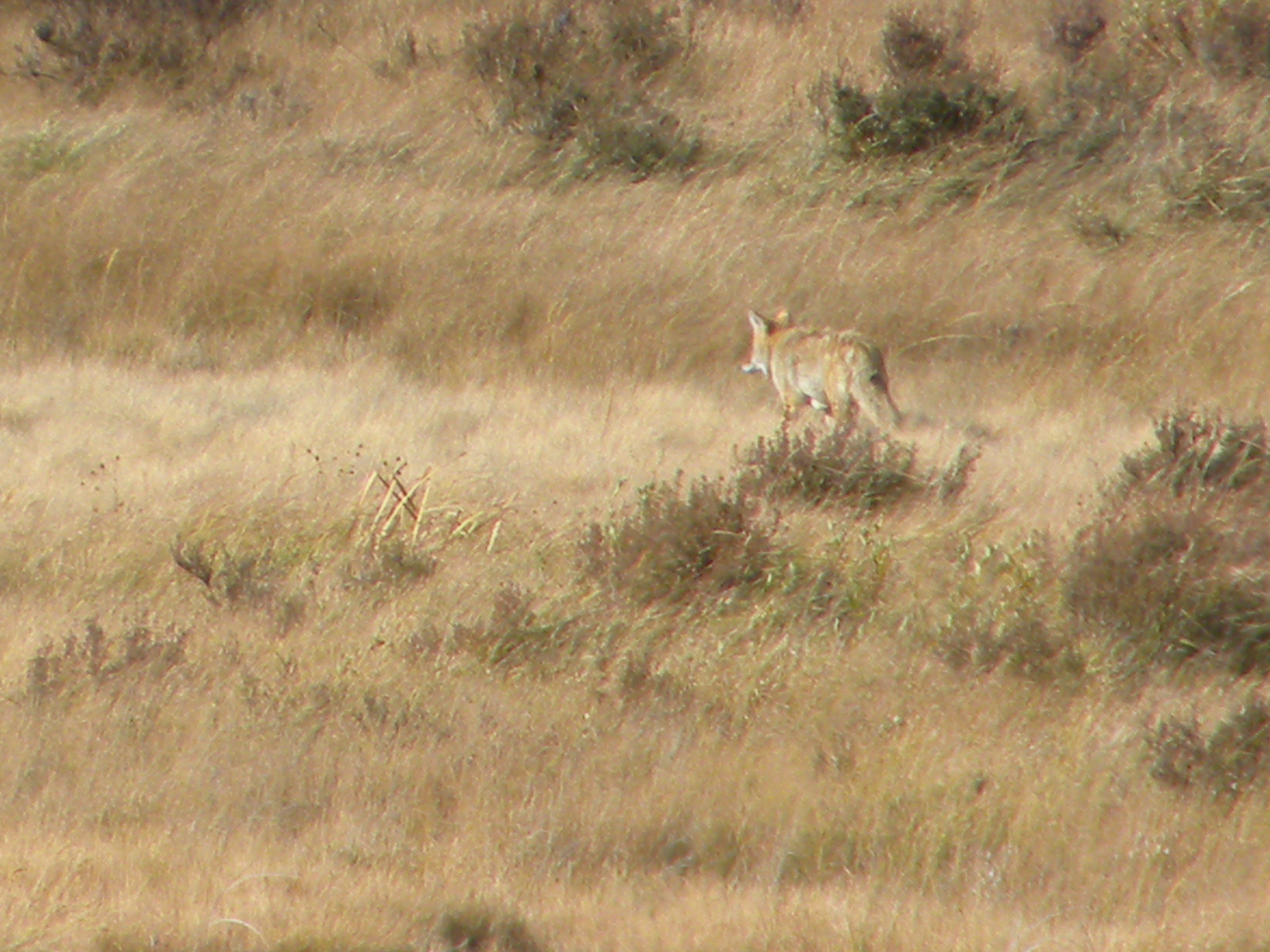
He (or she) looked pretty healthy.  No mange and that was good to see.  On down the road we saw about our 10th coyote for the day.  So many tricksters in one day, and all were busy hunting voles.  I’d swear the purpose of rodents on this earth is for eating.

Coyote hunting voles

Coyote hunting voles

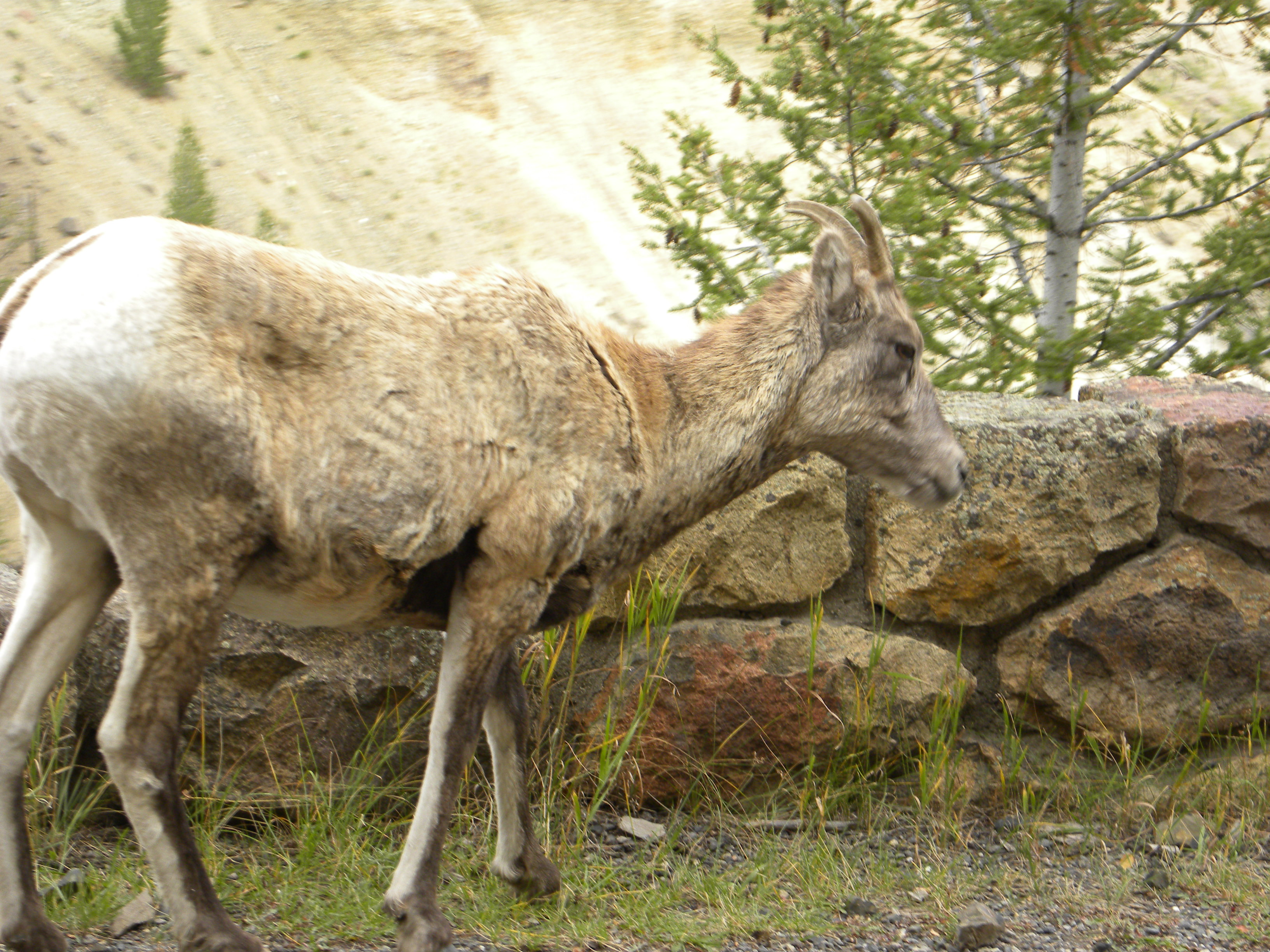
Although Dunraven was closed, we were able to get up from the Lamar side as far as the Specimen Ridge overlook.  Several ewes were grazing along the road.  It is incredible to realize that they get up and down the sides of these mountains with ease.  Way down below near the river there’s natural mineral licks they’ve used since ancient times.Ewe and view

Ewe

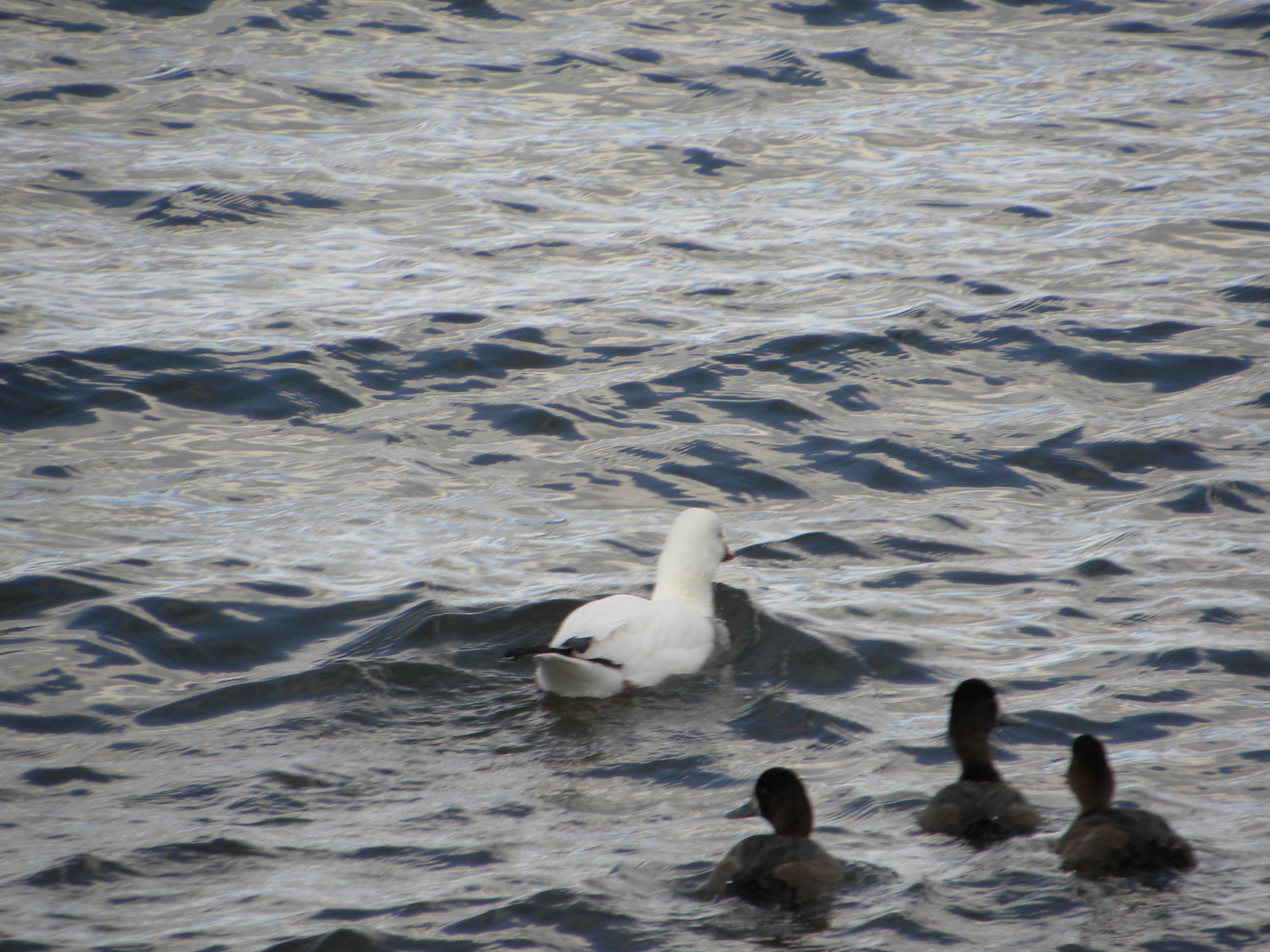
On the way out of the East Gate, we spotted a snow goose, rare in these parts.

Snow Goose

Snow Goose

All in all, we spotted six moose.  The last one was on the way out again, past the East Entrance, not too far from Pashaska Teepee on the National Forest.  Another nice thing is seeing Bison on Shoshone National Forest.  There are no grazing allotments on the forest outside the East Exit of the Park so the Bison wander there, especially in winter.  I sure wish Montana would ‘cowboy up’ and do the same at the North and West Exits.

All in all, for one day in the park that’s a lot of wildlife watching–6 moose, 10 coyotes, lots of bison and elk, one wolf, several bighorn sheep, trumpeter swans and various waterfowl.  A woman we met said she saw a cougar near Mammoth that morning.  One fall day in the Park can’t be beat!

Northfork moose

Northfork moose