• MY BOOKS ON WILDLIFE, GARDENING AND MORE

  • The Wild Excellence

  • True stories of wildlife encounters around the Greater Yellowstone
  • Award winning eBook on Decomposed Granite, tips, how to's, what to watch for
  • Children's book. True stories of a dog and wolves. In a dog's voice
  • Written for dry Mediterranean climates in California, north and south

Grizzly Bears in the News

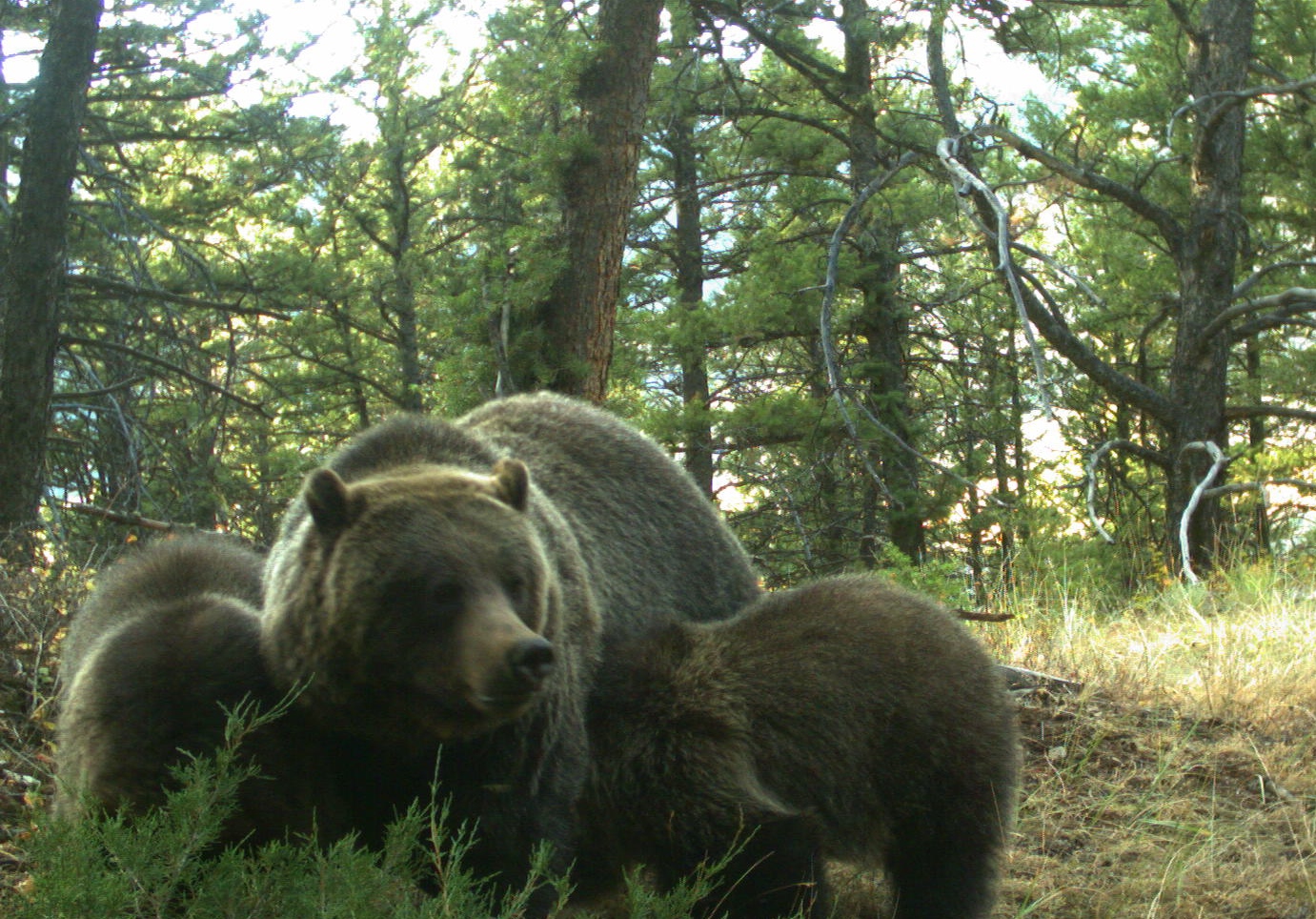
Grizzly bears have been in the news a lot.  On August 13 a seasonal employee, Lance Crosby, was hiking a short loop trail by Lake in Yellowstone National Park when he was attacked, killed, and partially consumed by a female grizzly with two cubs.  Although Crosby was 1. off-trail and 2. not carrying bear spray, there is absolutely no need to blame the hiker.  Possibly even with bear spray Crosby might not have survived or prevented an attack, especially if he came upon the bear at extremely close range.

A grizzly bear was recently rummaging around trash for food just five miles north of Cody. Since the bear had been moved for breaking into trash before, this bear was euthanized. People were talking about how close to town the bear was.

Heart Mountain, a prominent feature outside the Cody area, has been seeing more bears than ever this year–something like 5 grizzlies have been spotted on the mountain. Heart Mountain was part of grizzly bears native original habitat and where one of the last bears was killed in the early 1900s.

A recent headline in the Billings Gazette states that more livestock was killed by bears in Montana than in 2014.

Grizzly Bear

All this news comes on the heels of the USF&W preparing to announce whether they are going to delist the bear this year.  These kinds of headlines puts bears in the crosshairs.  But let’s take a breath and consider the whole picture.

The states have been putting a lot of pressure on the feds for quite a while to delist. There will be a lot of money in tags for grizzly bear hunts and the states, already experiencing declining revenue with decreased hunters, are itching for those dollars.  One writer writes in the Enterprise “Grizzly Bear attacks will continue as long as species remain protected”.  But what does that mean?  Dead bears are taught a lesson?  Grizzly bears are normally solitary animals except for moms with cubs.  Unlike wolves who might see pack members killed by hunters, bears will just be dead without bear company to learn from.  Black bears are hunted and I still see them.  In fact, in Wyoming, black bear baiting is legal in most areas.  Does baiting bears mean live bears will no longer seek human garbage?  Of course not.

If grizzlies are delisted, we’ll see images such as this one

This article in the Cody Enterprise sums up the arguments for and against delisting pretty well.  Pro delisting: bears are above the delisting quota of 550 (officially the present count is 756 but it seems that the numbers being thrown around liberally are 1000 bears.  Bears are hard to count because they are solitary) and it’s time. Although Whitebark pines are 90% dead in the ecosystem, bears are creative and can find other food sources.  Con delisting: Those numbers are not accurate because bears are moving farther out looking for other food sources as their primary fall fattening-up food, pine nuts, is diminished.  Climate change is unpredictable as to what will be happening with the ecosystem’s food sources, and so bears need to be able to have connective corridors to roam north–for food and for genetic connectivity. The delisting plan does not account for connectivity but confines grizzlies to a virtual zoo in the GYE PCA.

Grizzly bear

Grizzly bear

I have several thoughts here:

Just looking at this year’s fall foods for bears, we’ve had strange weather.  Lots of spring rains instead of snows made for good grass for ungulates, but a poor berry crop. My chokecherries are having the worst crop since I’ve been living here for 10 years and I’ve noticed the huckleberry, buffalo berries and raspberry crops are very poor.  In addition, there are almost no cones on my limber pines, an alternative crop when Whitebark crops are poor. The transects done this year on the Whitebark pine crop indicates a poor year according to Dustin Lasseter, who spoke with me at a Landowner’s meeting in early August.  He’d accompanied the IGBT checking a transect.  The 2015 report will be available here when published.

According to Doug Peacock, around the Greater Yellowstone Ecosystem, the most important fat-containing foods for bears in the fall are moths and whitebark pine nuts.  Boar bears will eat more meat than females, as they are able to displace females and younger bears.  Fat is essential for hibernation.  Without whitebark, or the limber pine nut to substitute (Limber pine nuts are smaller, but nutritious and high in fat.  They are stolen from squirrel middens just as the whitebark nuts are), where are these bears going to get enough fall fat?

Grizzly mom and cubsChris Servheen, the biologist who helped bring the bear back from the brink says ““Bears will tend to move around more, looking for alternative foods, and movement usually increases conflicts”.  But Servheen goes on to say:

Even with a poor berry crop, however, Servheen said grizzly diets can include hundreds of different foods, so the bears still have plenty of options available. While huckleberries can provide an easy source of calories as the bears begin to fatten up for their winter sleep, they will also find roots, tubers, moths, ants, hornet nests and a variety of other berries such as those from hawthorn and mountain ash.

According to Peacock, none of these can substitute for fat-rich pine nuts in the GYE.

But whitebark pine in the Yellowstone park area is nearly gone: No amount of science or management will bring the trees back in our lifetime. With whitebark pine nuts eliminated from grizzly bear diets — and this seems to be the case — grizzlies in this island ecosystem will be severely stressed. The bears could be on their way out.

Grizzly bear

Second, as Peacock says in the linked article above, bears will need room to roam to connect with alternative food sources as well as linkage to other bears.  This one issue addressed may save, in the long run, the grizzly bear population in the Greater Yellowstone ecosystem.

Third, people and bears can co-exist and it is up to us humans to make that effort.  In short, that means protecting food sources such as chickens, grain, and human garbage.  The bear that had to be killed near Cody was trash adapted.  Maybe those residences never expected a bear that close, but it’s time we all did. Take for instance the black bears of the California Sierras. They have completely changed their habits because backpackers are now required to use a bear canister.  If you don’t, then a ticket is issued.  Bear canisters can even be rented for next to nothing from the Park or Forest Service in the Sierras.

Cattle and sheep that are on Forest Service allotments in sensitive bear corridors of the GYE, such as the Green River basin, should be reduced in herd size or eliminated, and a range rider needs to be with them.  Those animals lost to bears are already being compensated at 3 times market value.

Lastly, we need new stories about bears, not just horror stories.  We need to re-imagine what it’s like living with this awesome creature and realize we are blessed to live in the last remaining place in the lower 48 where these bears still exist–less than 2% of their former range.  We can give them at least that little bit.  We’ve spent the last forty years restoring their population–from 125 bears to around 750 bears.  Delisting the bear at this critical juncture is too premature, as we are just starting to feel and understand the forces of climate change.  Once delisted, hunting will take place. Hunting an animal as smart as the Great Apes just for trophy is close to a crime. The world was up in arms over trophy hunting a lion named Cecil in Africa.  Why would this magnificent animal be so different?
Young grizzly bear

Young grizzly bear

Techno danger for Yellowstone Wildlife

I’ve become aware of a new concern for Yellowstone Ecosystem wildlife.  A few weeks ago a friend visited and told me this story.  He’s been coming to YNP for over 40 years and is a responsible person who knows how to handle himself properly around wildlife in the park.

In January we were driving through Lamar Valley when we encountered some bison crossing the road.  We stopped the car and turned off the engine to let them pass.  I usually never film with my phone, but for some reason I began filming these bison.  Suddenly one large male turned on us and attacked the car, causing $2000 worth of damage.  All recorded on my phone.  I sent the movie to some friends, then posted it on Youtube.  Overnight it went viral. A few months later I received a call from a company in England that wanted to buy the video and pay me royalties. Never in my wildest dreams would I have thought this would happen.  Apparently these companies purchase videos and sell them as ‘stock’ clips.

My friend wasn’t looking for fame or money, and his behavior around these bison was completely appropriate.  Yet his story clued me into why we might be seeing so many crazy, careless, and inappropriate behavior around YNP wildlife.

Bison close to car

Take this video of a young grizzly bear ‘attacking’ a car on the Beartooth highway.


It just so happens that I saw this same bear a few weeks ago and wrote about it here.


Young bear

Young bear

This same bear was frequenting the Beartooth Butte campground.  He and his young sister were captured and moved.  The WG&F Bear biologist told me that he’d never seen bear behavior like this before and that obviously these bears had been fed.  Just this week I noticed a note from a Forest Service ranger left on a parked truck at Beartooth Butte trailhead. It said they’d had to confiscate food left in the bed of the truck which might attract bears.

But my point is not that people are feeding bears.  When I saw this video I asked myself  “Why didn’t these people honk their horn, or just drive away?”

My answer came yesterday when I saw a piece of the same video again, but this time on ABC news online.  So did these people keep filming that bear, instead of doing the intelligent thing of honking their horn and scaring it off, just to have a ‘viral‘ video, and maybe make some money selling it?

This year there have been 5 bison attacks on people who came too close.  One women was taking a selfie of herself and her daughter with a bison in the background.  She was mauled by the bison, yet lucky for her not injured badly. Of course, this was simply a stupid act, but several days later I saw her interviewed on ABC.  Did she receive money for this?  From the attached link, you can see her selfie is owned by ABC.  Even if she didn’t receive money and just had her moment of TV fame, doesn’t this media attention only encourage more stupid acts that harm wildlife?

Here’s a story of a man attempting to touch a bison’s nose in Yellowstone Park last week.  

He had someone photograph him doing it.  Will he now sell his photo?

Whether these acts are for money, or just to say “we did it”, they are endangering wildlife.  Feeding bears or encouraging them to keep looking for food inside a car is a death sentence for that bear.  Those people should have used bear spray on that young bear. Then they would have taught that bear a lesson he’ll never forget.

Taking selfies with bison or other stupid acts with bison compromises years of hard work on a new Park bison plan which would allow these animals to migrate outside the Park boundary in winter months.

Our techno media-centric society needs to be educated in how these acts are a great disservice not to the public, but to our wildlife.

Keep our wilderness wild!

Keep our wilderness wild!


Visits to a Cave

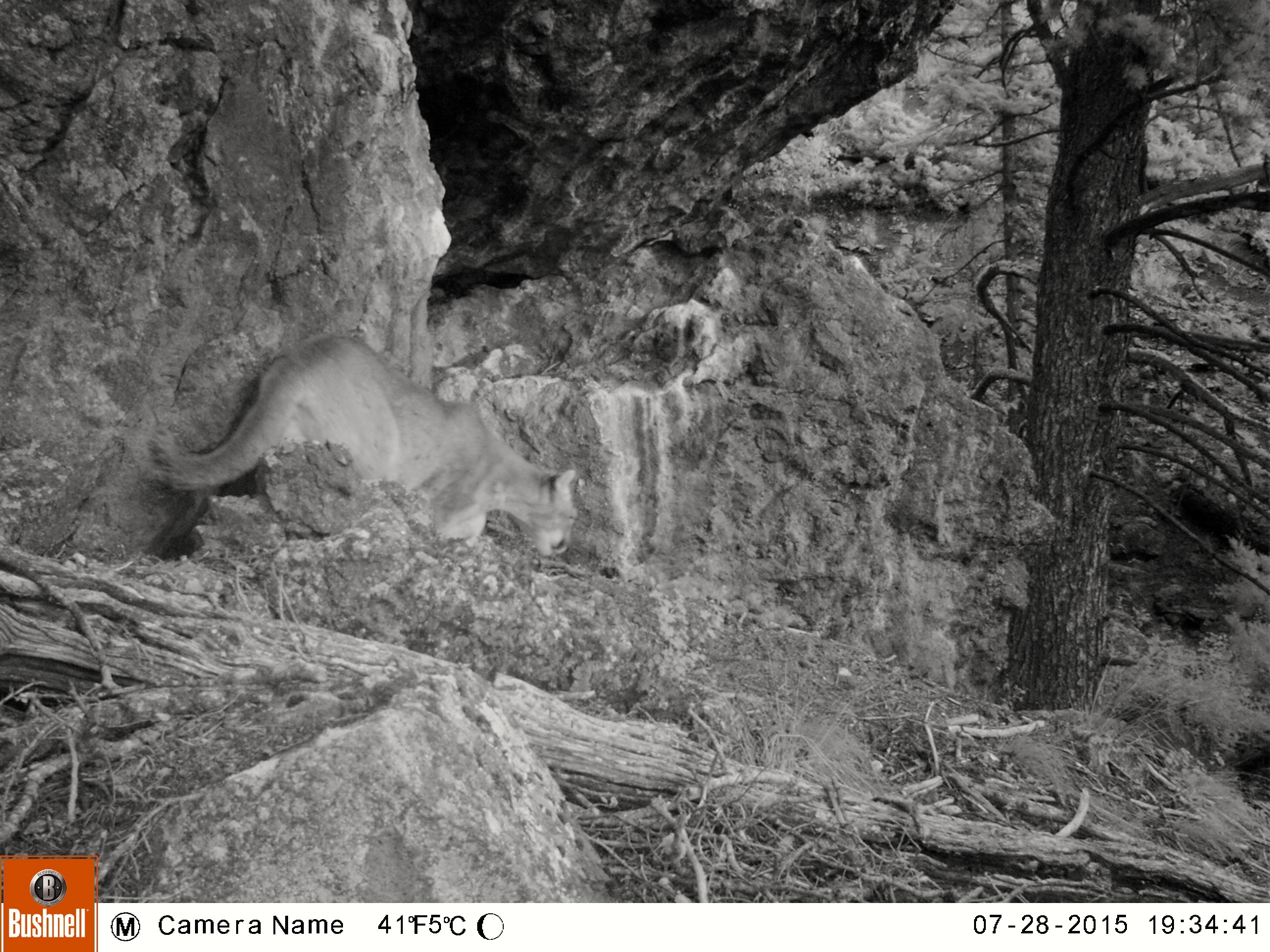
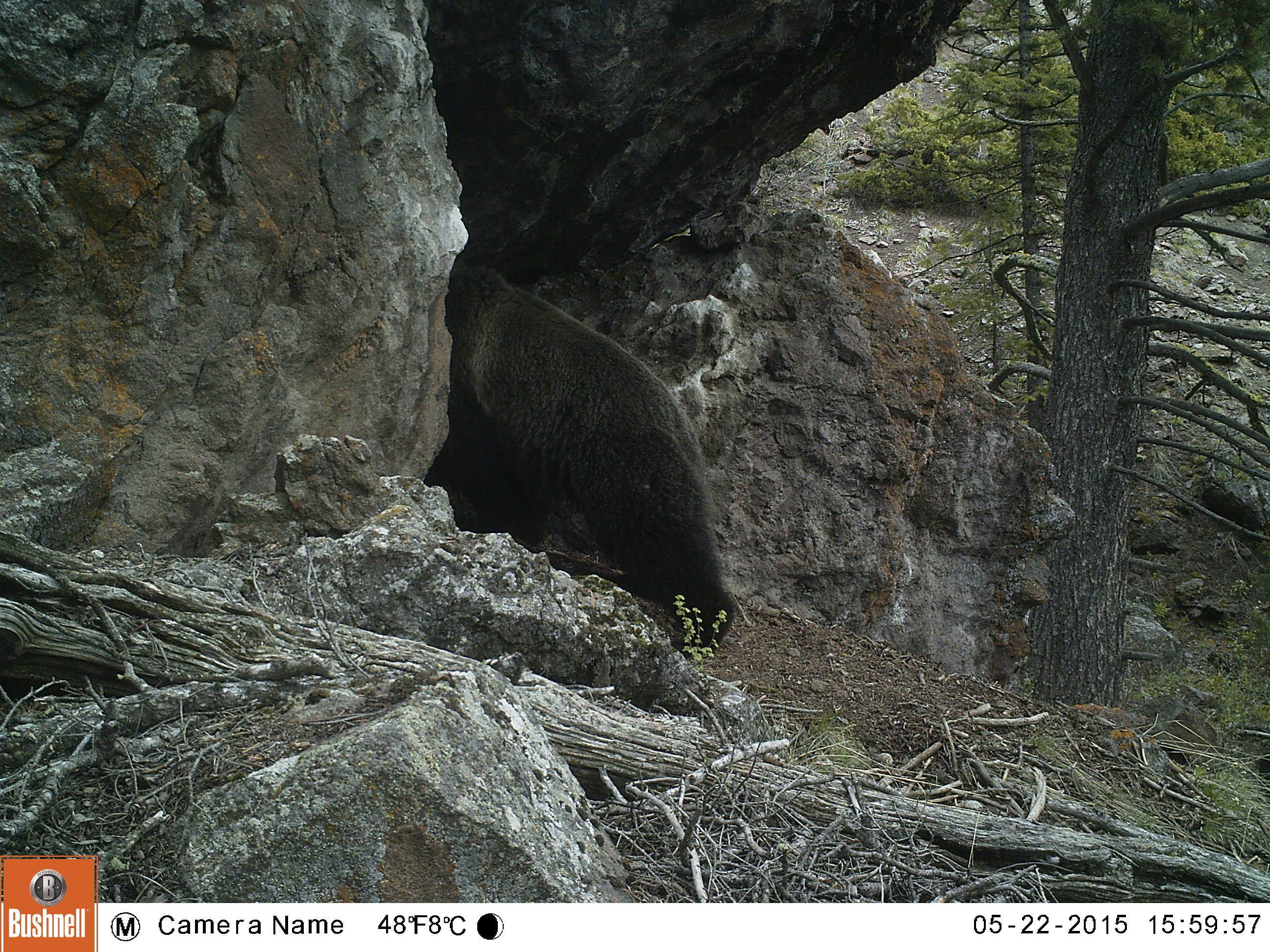
Several years ago I found a natural rock cave.  There was a lot of evidence this cave was used by cougars for many years, probably as a day bed.  The shelter is high up within a steep ravine.  Vertical cliffs complete the backdrop. I’ve always been curious who visits this cave.  So this May I put a trail camera on it.  I plan to leave the camera up through the fall but today I went to check what’s been happening.  Despite having to sift through hundreds of squirrel and packrat photos, the cave smells attracted lots of other visitors.Black Bear

Marmot

Elk

Another cougar

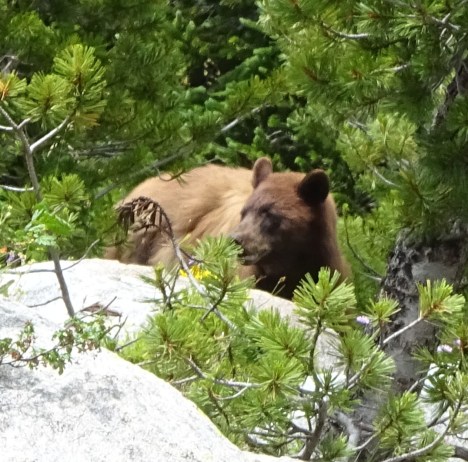
Cinnamon Bear

Cinnamon bear

Cinnamon Bear coming out of cave

Cinnamon Bear coming out of cave

Can you find this visitor

Can you find this visitor

Cougar

Cougar

Grizzly Bear

Grizzly Bear

How to Make a Plaster Track Cast

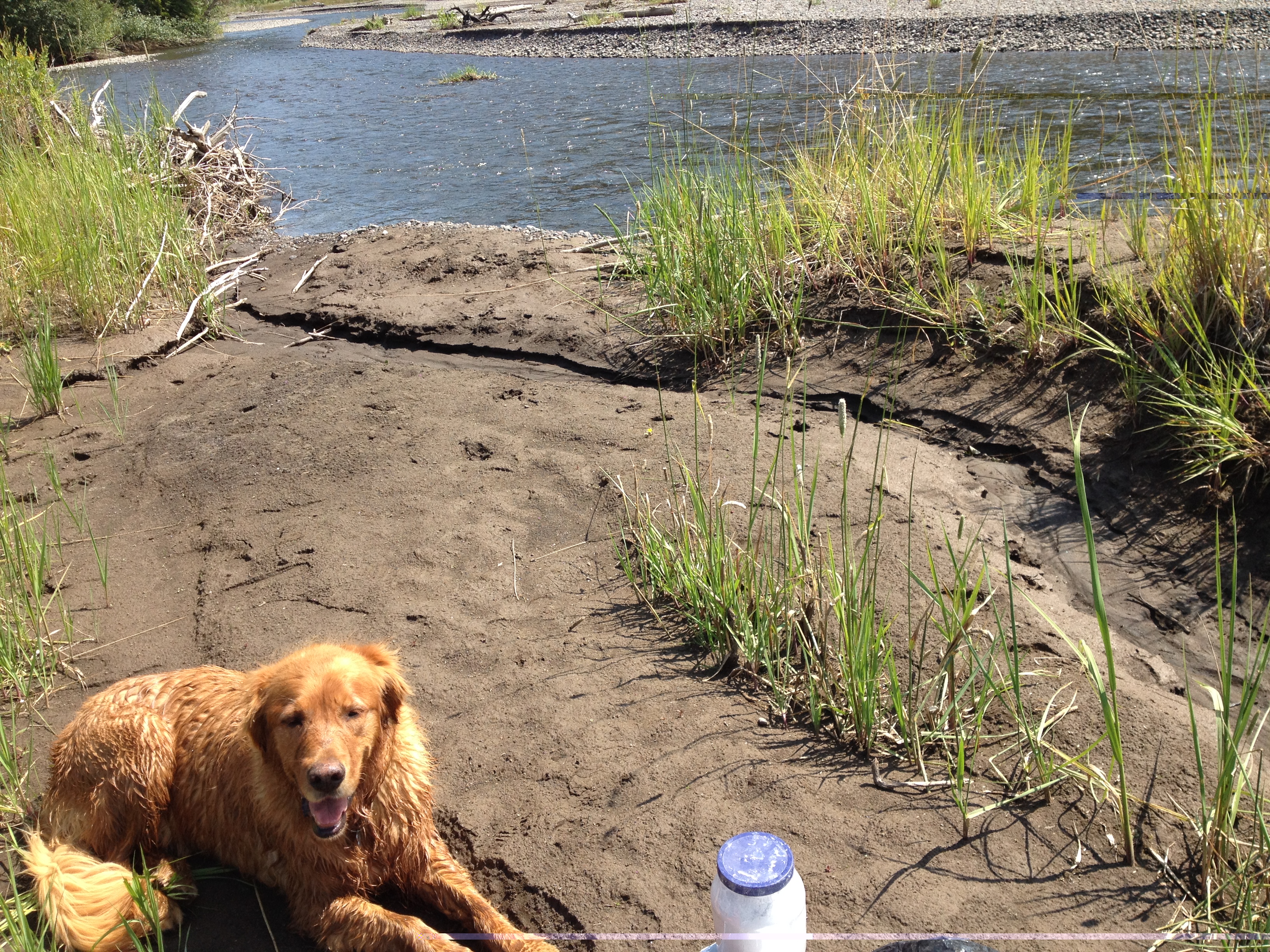
As the creeks and streams subside, now is a good time to walk the river to look for tracks. Plus when it’s hot, Koda loves it too.  I put on my water sandals and shorts, stash my backpack with all the items I need to cast prints, and head for Sunlight Creek.

Where I found the tracks.

Where I found the tracks.

This time of year one might find resident animal tracks, like badger or mink.  Moose and deer are always around the creek.  In the fall grizzlies come down to investigate hay fields, berries, and gut piles from  hunter kills.  They’ll walk the river as a corridor.

Some of the best areas for small animals are the creek sides.  Larger wildlife course the entire stream. I cross the river over and over, checking in the wet sand and mud for tracks and finally find a set I want to cast.

I found some tracks that are interesting enough to cast

I found some tracks that are interesting enough to cast

The first order of business is to set up my casting materials.  You need to bring Plaster of Paris, a larger cup for mixing (I suggest 2), something to hold water to pour into your mixing cup, and a sturdy spatula.  I bring a garbage bag as a table to prevent the plaster from getting everywhere.  Keeping the stream area clean and free of plaster is important.

Simple tools you need for your cast

Simple tools you need for your cast

On the left you see my large tub of plaster.  I bring a lot in case I want to make several casts.  On the right is my 16oz. plastic cup with the plaster.

Around the tracks you want to cast, make a circular dam with the surrounding sand.  This will be the edges of your cast and prevents the plaster from just flowing everywhere.

Now fill your cup with plaster and add water a little at a time.  You want the consistency to be like cake batter.  Mix well with the spatula.  If it’s too runny then it won’t set correctly or will just take way to long to set. Too hard and you won’t be able to pour it.  Make sure all the lumps and dry plaster are gone and mixed well.

The plaster is setting.  Takes about 15-20 minutes depending upon weather and sun exposure

The plaster is setting. Takes about 15-20 minutes depending upon weather and sun exposure

Today I was having a hard time because it was so hot the plaster was setting up quickly in the cup before I had a chance to pour it.

Pour gently into your tracks and the mold area.  You want to be certain that the plaster gets into the tracks and there are no bubbles.  Once the mixture fills the casting area, you can lightly tap and smooth with your spatula to get rid of any air pockets.  Don’t make the cast too thin or it will be fragile when dry.

The best thing to do while waiting is to look for more tracks.  Work one direction as you cast prints, then backtrack to retrieve your casts.  It takes, depending upon the weather and wetness of your site, about 15 to 20 minutes to set fully.

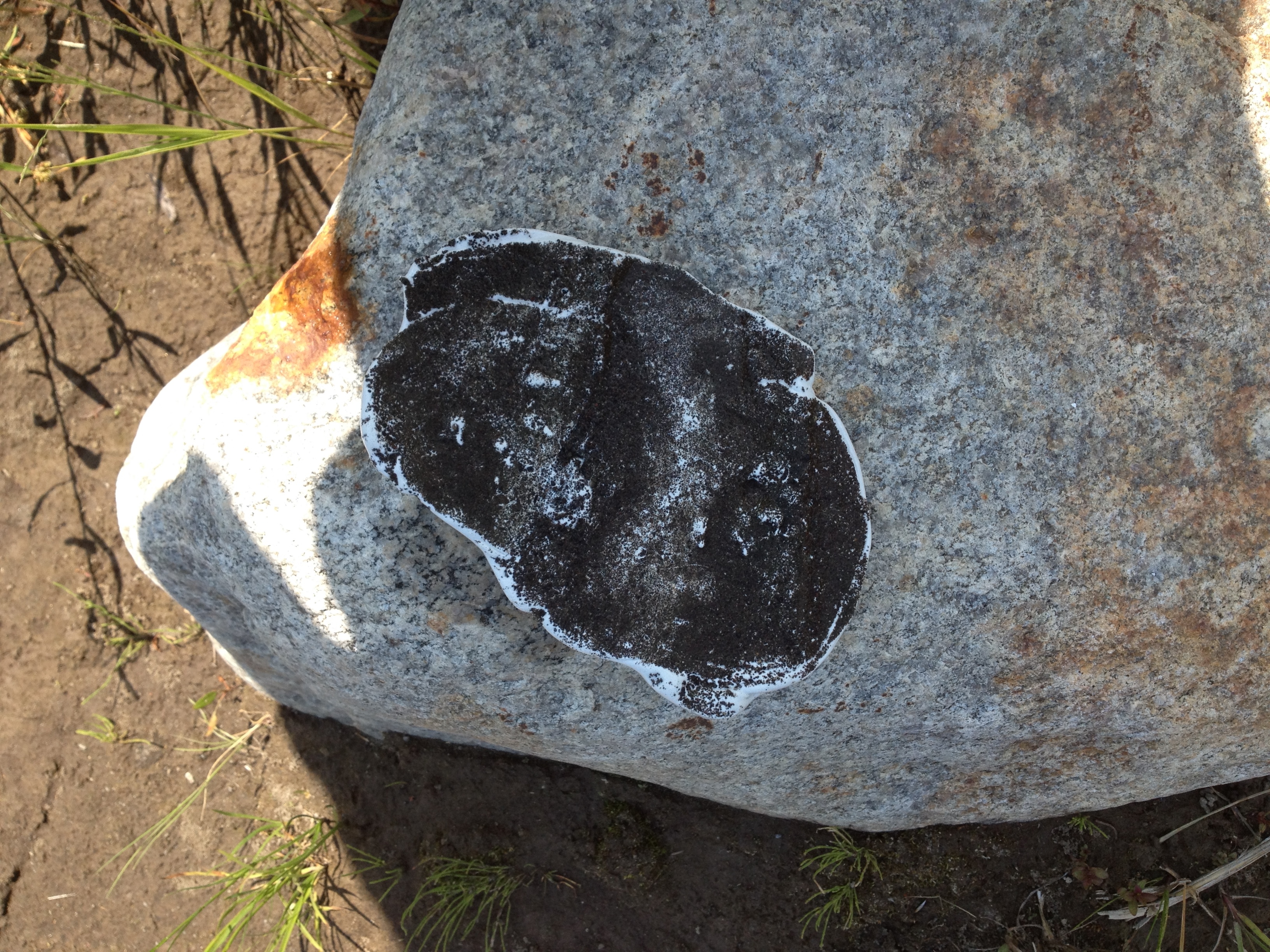
Once hard, pull up gently.  You can wash the sand and dirt off in the river, but don’t scrub it at this point.  The plaster will not set up full until thoroughly dry, probably the next day.  Be gentle with these new casts as they can break easily.

Cast removed from track.  Still fragile

Cast removed from track. Still fragile.  You are seeing dirt and sand

Once dry, you can wash the cast outside and rub more dirt off.  Don’t rub it too clean as the dirt provides contrast enough so you can see the track more clearly.

Cast on right is dry and finished. Left is today's cast.  It's dry enough to wash but not to completely clean.

Cast on right is dry and finished. Left is today’s cast. It’s dry enough to wash but not to completely clean. Same animal, different days.

Use a permanent marker on the back of the cast to date it and put the location where you found the track.

Now all that’s left is to identify your track.  Anyone have ideas what this animal was?

Koda confronts Death

Hi Folks,  Koda has been writing up a storm as he is now 8 years old and in middle age.  I think he must be going through his mid-life crisis.  Here is another piece of his memoirs.  I think this one is quite interesting and gives us a window into a dog’s psyche.

What I know about death

The first time I knew death was when Soona died. I wasn’t really there, but I knew afterwards. Soona was old, and sick. I knew that. And for two weeks Leslie gave her all the attention, and I let her. I was only a year old then, but I knew I had to be quiet now and let Soona and Leslie have their moments together. One day Dennis brought my leash and took me for a walk. That night Soona wasn’t at home and things felt strange.

Koda and Soona just before she died

Koda and Soona just before she died

The next morning, I stood by the sliding glass door. I felt compelled to go outside. Something was shimmering on the patio. Leslie let me out and I went to that spot where the shimmering was and sniffed and sniffed. I smelled Soona there. Leslie said that was where Soona had died yesterday. They had taken her body away before I came home, yet I could still see her there as if she was saying goodbye to me. It might seem like I annoyed her when she was alive, but she really loved me and here she was telling me in spirit.

After Soona died, we moved to Wyoming where we live all the time now.

Koda compares his foot to a wolf track

Koda compares his foot to a wolf track

Winters are the best and I really like the snow and the cold. During my first winter, when I was just at little more than one year old, we spent a lot of time walking in the meadows where all the elk like to graze in the evenings. One afternoon I found a dead coyote. A young man, like me, he’d gotten too bold and had mingled among the elk herd, looking for a meal perhaps. He was kicked in the ribs right there and died. I still didn’t know much about death, but this coyote looked like me and was a lot like me. I sniffed and sniffed him, but really I didn’t want anything to do with that coyote. I like deer and elk when they are dead and I like to chew on their bones, but this dead coyote I didn’t like.

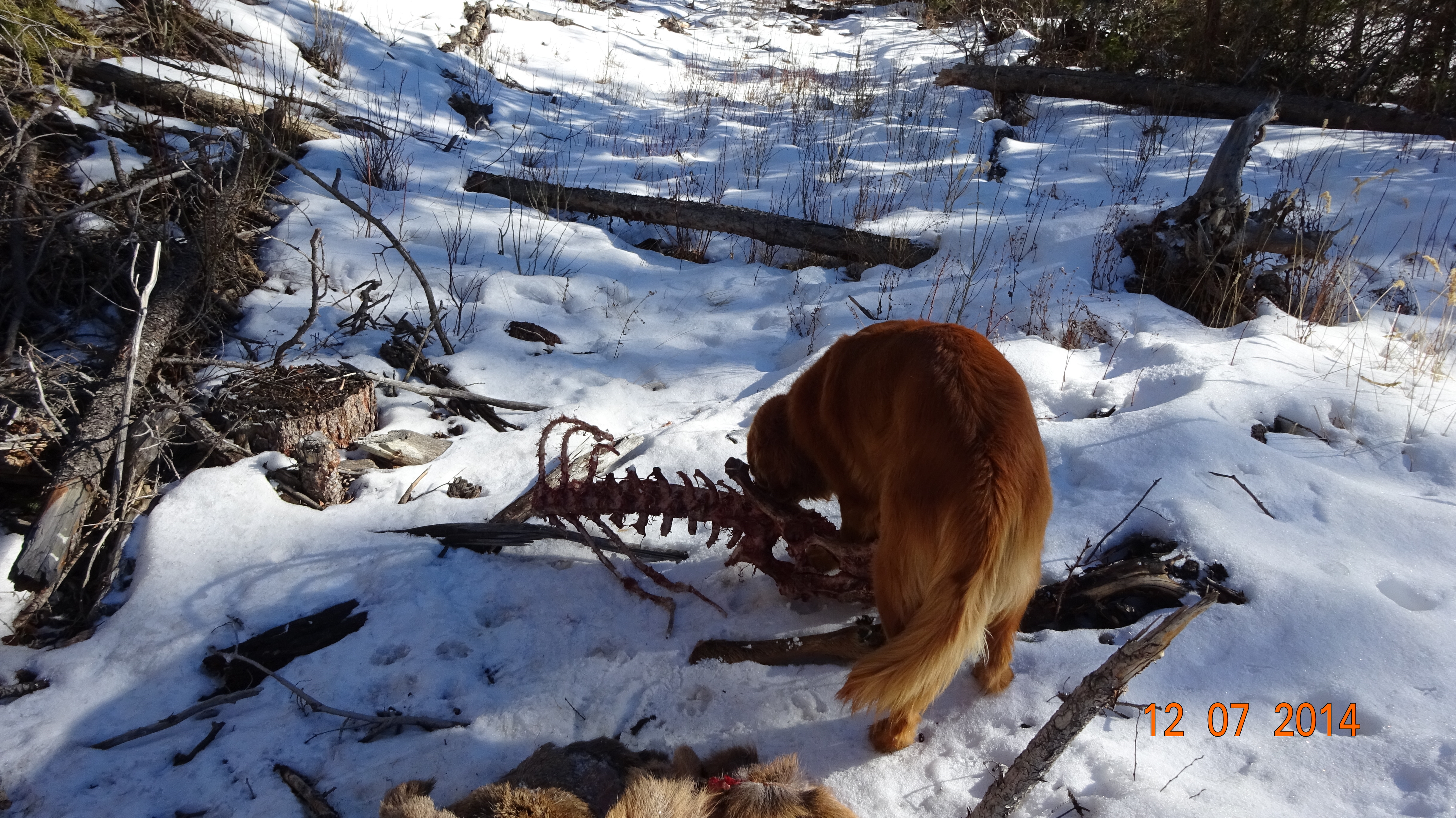
Koda enjoys an elk carcass killed by wolves

Koda enjoys an elk carcass killed by wolves

Many times I’ve run after coyotes. I’m a lot bigger than any coyote. They are wild like wolves, so running after them makes me feel wild and free. Yet this dead coyote reminded me of something I didn’t want to be reminded of. So every time that winter when Leslie came close to his body in the dry grass and snow, I stayed far away.

Living in Wyoming, I’ve seen lots of death, everything from deer, elk, marmots and squirrels (like!), to cougars, wolves, and coyotes (don’t like!), but when I was 5 years old, I had an experience of death that was mighty different. Leslie took me to the desert where we stayed with some friends. I liked Steve and Vicky and they also had a big dog named Maggie. Every day Leslie and I hiked around this desert called Sedona which was sandy and red like me.

Koda in Sedona

Koda in Sedona

One morning, I followed Leslie into a little room Steve used as an office.   I was bored while Leslie and Steve talked. Then I noticed that shimmering again and the special smell–a smell that reminded me of Soona’s death. It was coming from a small table where a man’s wallet sat. The wallet needed something from me. I went over and put my nose on top of the wallet so I could smell what it needed. My mind went still and through my noise I was traveling. The shimmering scent led me to an old man by a bridge on a road of stars. This man told me he didn’t want to cross the bridge. “I’m scared and alone” he told me. He was so nice and I didn’t want to see him afraid. After all, I am a protector. So I went to him, stood by his side, and walked him to the other side of the bridge. It was an easy thing to do, and especially since the bridge appeared like a rainbow in the stars. I liked this place and wanted to explore more, but I knew I couldn’t. The old man turned around, patted me on the head and smiled, then disappeared, just like that. Suddenly I was back in that little room with Steve and Leslie staring at me. They too sensed something had happened. But you know, humans can’t smell like I can, so they had no idea what happened. Apparently I’d been still for many minutes with my nose on that wallet. Then Steve told Leslie ‘That’s my father’s wallet. He died 6 months ago in this house, and had a difficult death.” I guess I helped him cross that bridge and that felt good.

Koda enjoys a view

Koda enjoys a view


What Kind of Dogs are Wolves by Koda

Hi folks.  I’m going to try something different on my blog.  From time to time, I’ll post reminiscences from Koda, the dog who grew up in the Wyoming wilds.  Here’s the first one.  The stories below took place when Koda was about 7 months old.  We were still living in California and traveling by car back and forth to Wyoming.  After Soona died when Koda was about 1 1/2 years old, we moved to our cabin in Wyoming full time.

This is me.  And this is my first blog post

This is me. And this is my first blog post

After a long drive, Leslie (she’s my person), Soona (she’s my grandma) and I were at our new home, a place not at all like the city we came from. This place was vast—just mountains, trees, and more smells than I ever could have imagined.

A Glorious spring day.  Koda and I hike up Elk Creek Meadows.

A Glorious spring day.  Here I am on the trail in the mountains

One morning we were all up in the flats above the house. Leslie was piling little rocks. Soona and I were sniffing and watching. Without warning, Soona made a beeline for the woods. I was still little, only 9 months old, and didn’t know one smell from another, but I knew she smelled something that I didn’t, so I followed her. Leslie was worried for the old lady. The woods, she said, could be dangerous, especially for old dogs. So she followed us. And what do you know, Soona had a great find: a turkey partially eaten by a coyote! We munched on the bird for a while. I know turkeys because they live in California. But I didn’t know they were here in Wyoming too. From that time on I’ve watched them and got to know them. Leslie taught me to let them be. In the winter they come to our yard where I sit outside on the porch while they peck and pick for seeds and corn we sometimes lay out for them. Mostly they amuse me and, as long as don’t run after them, they pay me no mind.

Wild turkeys, not native

The flock of turkeys I’ve come to know. And they know me.

One day just Leslie and I went for a hike up a stream, leaving Soona at home. We returned a different way, a route through sparse meadows peppered with small trees and gullies. I stayed just a bit ahead, yet kept close to Leslie. We were on the side of a small arroyo when I smelled something watching us from behind a tree. I turned to look, and saw the most beautiful girl I’d ever laid my eyes on. She appeared to be a dog, yet she had a different aura about her. My heart jumped and an irresistible urge took over my entire body. It was if this black dog were a magnet drawing me towards her. I’d already met and played with many dogs in my life at that point. I was only 7 months old, but I already knew to ‘ask’ before I could go play. But this dog…she was like no other, and I just had to know what, and who, she was. She seemed to be the essence of what a dog is; a wildness that was wilder than I ever could be. Really, I just lost my head. And so I ran after her, silently.

What a beauty she was

What a beauty she was

I heard Leslie screaming for me, calling my name. But Leslie’s voice was like a dream in the background. That black dog was so fast that I finally gave up trying to catch her. But, I’ve got to tell you, that was the most exciting moment in my life!

I ran back to the little arroyo where I’d left Leslie. She hugged me and seemed so relieved to see me. She told me that I’d seen a wolf and I was lucky that there weren’t other wolves waiting for me there. That wolves weren’t like dogs and they didn’t want other wolves, or dogs, in their territory. But all I know was that was one truly wild and free ‘dog’.

This is a wikiup

This is a wikiup

We rested in a nearby wikiup in the meadows. Leslie petted me, then scolded me for running away. After a time, we headed back in the direction where I’d run after that wolf, till we came to a trail. And what do you think I found at the trail? That wolf got so excited she’d thrown up her lunch! I guess I made an impression on her too.

ReWilding the Beartooths

It’s happening.  Grizzlies are re-inhabiting the Beartooth Mountains.

grizzly warning sign in the greater yellowstone area

Grizzly warning sign in the lower elevations. Now bears are returning to the high elevation Beartooths

In the last few years, Grizzly activity has increased along the flanks of the Beartooth Front, the southeastern base that nestles the community of Red Lodge and the long north and eastern drainages where berries and other fall foods are abundant. Red Lodge is now getting its share of grizzly bears. But still there were few reports of bear activity in the high alpine forests.

Certainly bears have used the lower drainages on the west side of the Beartooths like Crazy Creek,  Soda Butte, or Lily Lake.  These are low elevations that provided a corridor through Cooke City into and out of the Park.

Years ago I heard of a sow who lost her young cub in the spring to an automobile.  She bawled for a week around the Clay Butte/Beartooth Lake area, looking for her cub.  Yet although I’ve backpacked frequently, and spend a lot of time in the summers day-hiking the western Wyoming side every year, I’ve never seen any bear sign–tracks or scat.

The Beartooths still offer bears great habitat.  The excessive moisture brings a lot of plant food opportunities in the way of grasses, forbs and roots.  And they still have healthy stands of White Bark pines.  White Bark pines in the GYE are 90% dead.

Avalanche Peak, Yellowstone.  Dead whitebark pines

Avalanche Peak, Yellowstone. Dead whitebark pines

The exception to that rule are the Wind River Mountains and the Beartooths.

White Bark pines in the Winds.  Healthy stands

White Bark pines in the Winds. Healthy stands

And those Marmots have traditionally been a favorite protein for bears.

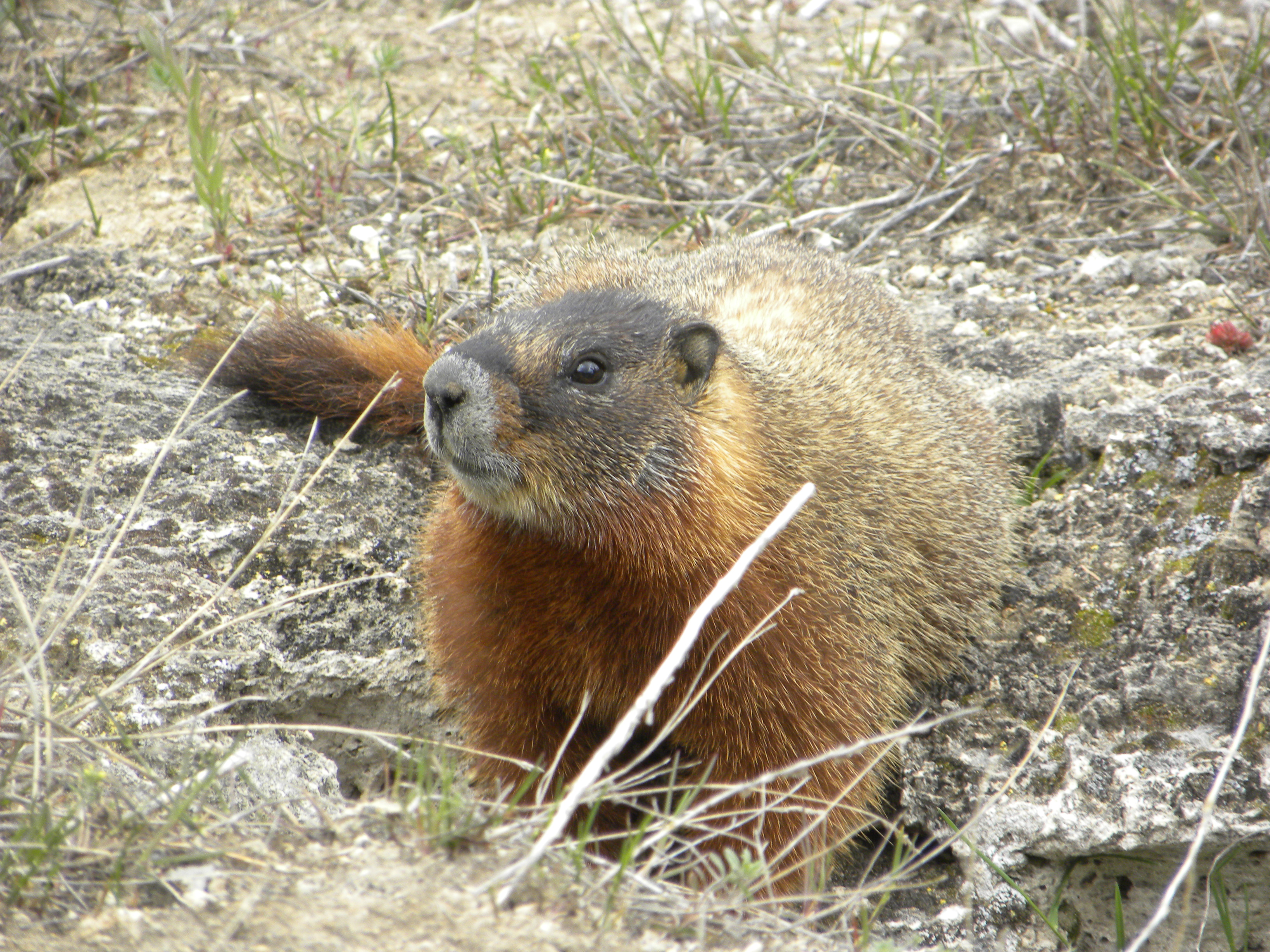
Marmot

Marmot

So when I began my hike today from Hauser Lake down to Stockade Lake, I figured that there were no bears around these parts–especially so high.

Losekamp Lake (around 9600′) sits at the base of Tibbs Butte (10,676′).  Grizzly bear watchers will tell you that these bears mysteriously disappear around the 4th of July.  For years no one knew where they went, until a pilot flying over high talus slopes in the mid-80s saw bears congregating there.  These bears were taking advantage of Army Cutworm moths who feed on alpine plants and summer here.  My understanding is that the Beartooths, although high and abundant in these talus slopes, do not have moth sites, although the Wind Rivers does.

Losekamp and Stockade lakes are rarely visited, being on the less popular southern side of the highway.  I was alone on my walk.  Koda and I made our way down to Stockade Lake, where I tooled around for a bit looking for an elusive Sheep Eater trap I was told was once there.

Stockade at stockade lake

Stockade at stockade lake

Stockade Lake

Stockade Lake, Beartooths, WY

With little wind and mosquitos too thick for a lunch break, we headed back towards Losekamp lake.  Koda a bit ahead, went off the trail about 10′ to smell something behind a boulder.  All of a sudden he growled–a sure sign of an animal he got scared of–and I looked up to see a sleepy bear rise from the boulder.  I quickly called Koda back, and grabbed my bear spray.  We stopped for a moment to access.  The bear, surprised and probably a bit scared himself, immediately began eating, displacing his fear to food.  He seemed sleepy and not about to run away, nor be aggressive.  He pondered us.

Young bear

Young bear

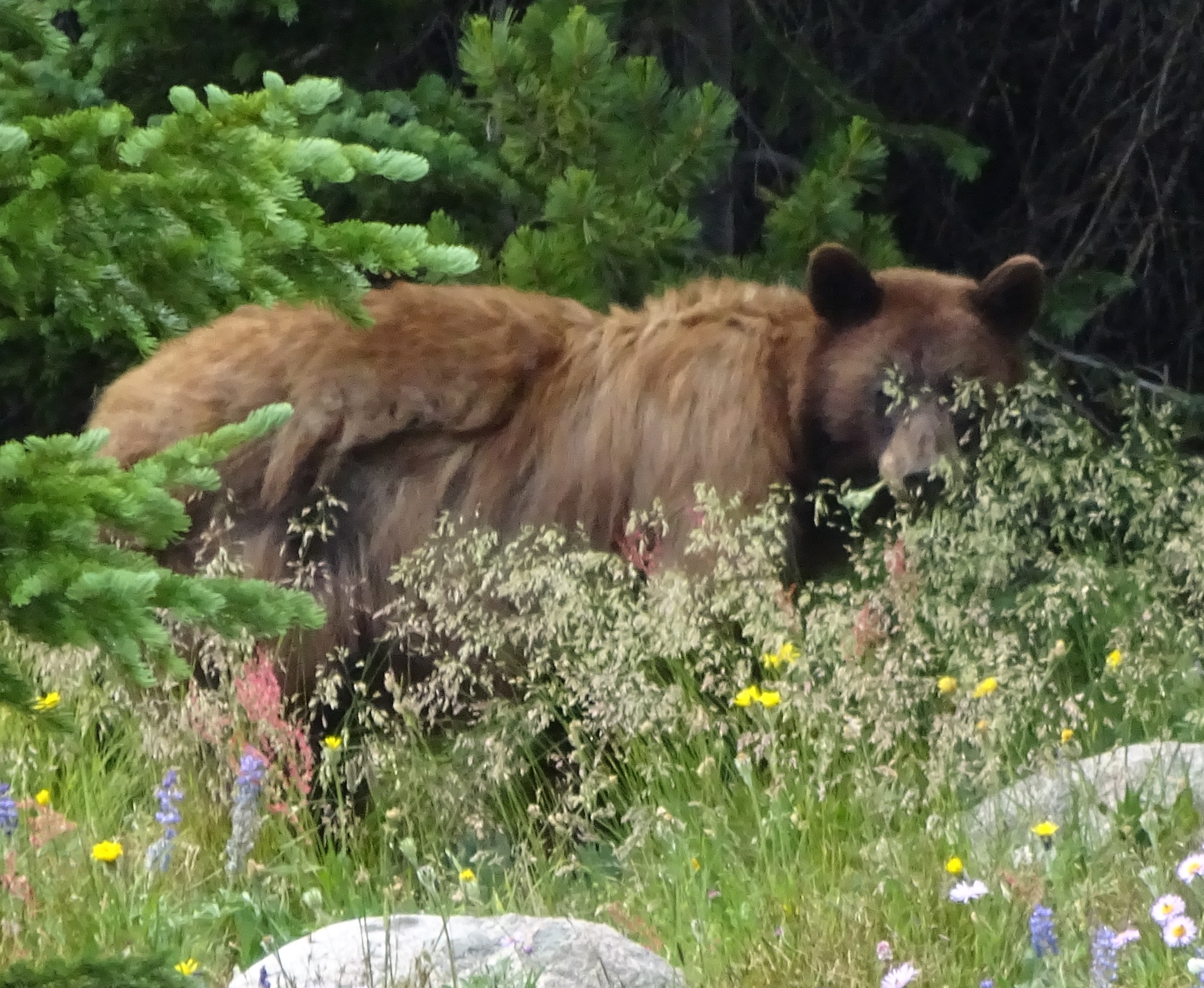
Grizzly bear

A young grizzly, probably just kicked out this year, I did wonder if his mama was around.  Lucky for us she was no where to be seen.  I gave the bear a big berth, going off and around the trail, while talking to him gently, apologizing for waking him up.

Most grizzly encounters end this way, with the bear usually running off. A few weeks ago around my area, Koda alerted me to a grizzly that was also sleeping by the trail, awakened by our presence.  Koda kept by my side, and the griz, about 200′ away, pondered us for a moment, then ran off.  Dogs will alert you and keep you safe if they are well-mannered and under good voice control.  A dog that runs all over the hills and is not very responsive poses a grave danger for a person, as the dog might bring the bear back to you in his fear, with the grizzly following.   The best book to read for safety with grizzlies is Hiking with Grizzlies by Tim Rubbert, or watch online The Edge of Eden: Living with Grizzlies with Charlie Russell and observe Charlie’s body posture when dealing with bears and using bear spray.  Stay away from those books about Grizzly attacks.  It’s like reading a book about fatal car accidents instead of actually learning how to drive safely.

Robin egg, hatched

Robin egg, hatched

Upon returning to the car at the trailhead, I stopped at the Top of the World Store to deliver some of my Wild Excellence books.  I told Kristi Milam, the owner, about my bear experience and she told me there’s been a lot more sightings this year than ever before.

One other note on the Beartooths:  it’s becoming an excellent place to possibly see, or hear, wolves.  I’ve been seeing tracks of the Beartooth pack around this same area for weeks, as well as Clay Butte and lower elevations like Crazy Creek drainage.  Wolves were spotted up at Top Lake just weeks ago in the meadows. Elephant's head

With Grizzly Bears and wolves returning to the Beartooths, they are finally re-wilding.  Carry bear spray and be safe.

What are these Sounds? UPDATED!!

If you read Jim Corbett’s books, you will know that he started his tracking apprenticeship at a very early age. Corbett describes that when he was around eleven years old, he decided it was imperative if he wanted to be a tracker to identity every sound in the forest.  Corbett grew up in the jungles of India. Identifying sounds not only was a way of ‘knowing’ the forest, but also vital to his safety.  Birds especially can alert one to danger in a landscape with tigers and leopards.

I think what made me decide to begin this audio task in the landscape of my home in the Absarokas was the night I was sleeping in the backcountry and I heard a loud scream in the middle of the night.  My companion was sound asleep.  My dog was by my side.  The screech was not a person, but it was blood curdling. That was the beginning.  I began recording this last winter.

Winter nights bring many new sounds.  I put out a microphone and recorder while I slept.   Some sounds were easy to identify like these wolves singing https://w.soundcloud.com/player/?url=https%3A//api.soundcloud.com/tracks/212590774&auto_play=false&hide_related=false&show_comments=true&show_user=true&show_reposts=false&visual=true“>

Wolf

Other sounds much harder and I needed help like this Screech Owl.

https://w.soundcloud.com/player/?url=https%3A//api.soundcloud.com/tracks/212587105&auto_play=false&hide_related=false&show_comments=true&show_user=true&show_reposts=false&visual=true“>

One night I got very lucky and got this cougar.

https://w.soundcloud.com/player/?url=https%3A//api.soundcloud.com/tracks/212587376&auto_play=false&hide_related=false&show_comments=true&show_user=true&show_reposts=false&visual=true“>

Cougar

Spring arrived and so did many local birds–Robins, Mountain Bluebirds, Townsend’s Solitaires, hawks, and one of our resident owls–the Boreal Owl.  For several years I’d tried to identify their primary sound when they are beginning to nest, a series of low toots.  They will call for several weeks, or months, starting at dusk, and they are difficult to locate.  I’d never seen one, but now easily can identity their call.

The last several nights I’d heard strange noises outside my window that sounded like very loud mice, or strange squirrel sounds. It’s hot, and I sleep with the windows open. The squirrels are all asleep at midnight, and mice are very quiet.  Also, these noises appeared to shift from one location to another much farther away, then back near my window. I looked outside but could see nothing because it was dark.  Then this morning, around 4:30 a.m., just before first light, I heard the sounds again, right above my window.  I got out of bed, walked to the picture window and looked on the roof of the porch overhang. There sat two owls, medium sized, no tufts. They were making these strange ‘Skiew’ noises.  Boreals? What were they doing around my house these last nights?  What was this communication all about?

UPDATE!!!   I sent this tape to several experts.  One identified them as fledglings and probably Boreals. Dan and Cindy Hartmann of Silver Gate, MT.,who specializes in photographing Boreals and Great Gray owls, identified them as Great Gray chicks.  Dan thought he heard a ‘whoo’ in the background of the tape.  Although I was looking up at the two birds sitting on my roof in essentially a dark situation, I judged them to be about 10-12″ tall. Based on that, Dan said Boreals would be smaller as chicks.

https://w.soundcloud.com/player/?url=https%3A//api.soundcloud.com/tracks/213809073&auto_play=false&hide_related=false&show_comments=true&show_user=true&show_reposts=false&visual=true“>

Boreal Owl. They are very secretive owls

Knowing your Place is not just about knowing terrain, or identifying tracks, trees or flowers, or even understanding ‘bird language’ as Jon Young teaches.  It is a constant exercise in using all our senses and an immersion in our natural state of Wonder.

We could have many more places like Yellowstone.

Living in the Greater Yellowstone Ecosystem, adjacent to Yellowstone National Park, I enjoy the full suite of wildlife (minus bison, another story…) at my doorstep.  It’s not that I’m seeing large megafauna daily, yet if I hike around my valley or the nearby Beartooth Mountains, I see their evidence.

People who visit Yellowstone expect and hope to catch a glimpse of wolves, bears or other wildlife.  But Yellowstone is a protected habitat, free of human habitation.So what is it like to live with these animals in your neighborhood?

Today was a hot day in the valley.  When it’s hot, I like to take a half hour drive up to the Beartooth Mountains towards the summit via highway 120.  Although mosquitos are out, the air is cool and pleasant.  I took a hike along what’s known as the Morrison Jeep trail–an ATV road closed until July 15 that runs from the Beartooth Plateau all the way to the Clark’s Fork Canyon in the desert. Wildflowers are starting to abound.

Marsh Marigold

Marsh Marigold


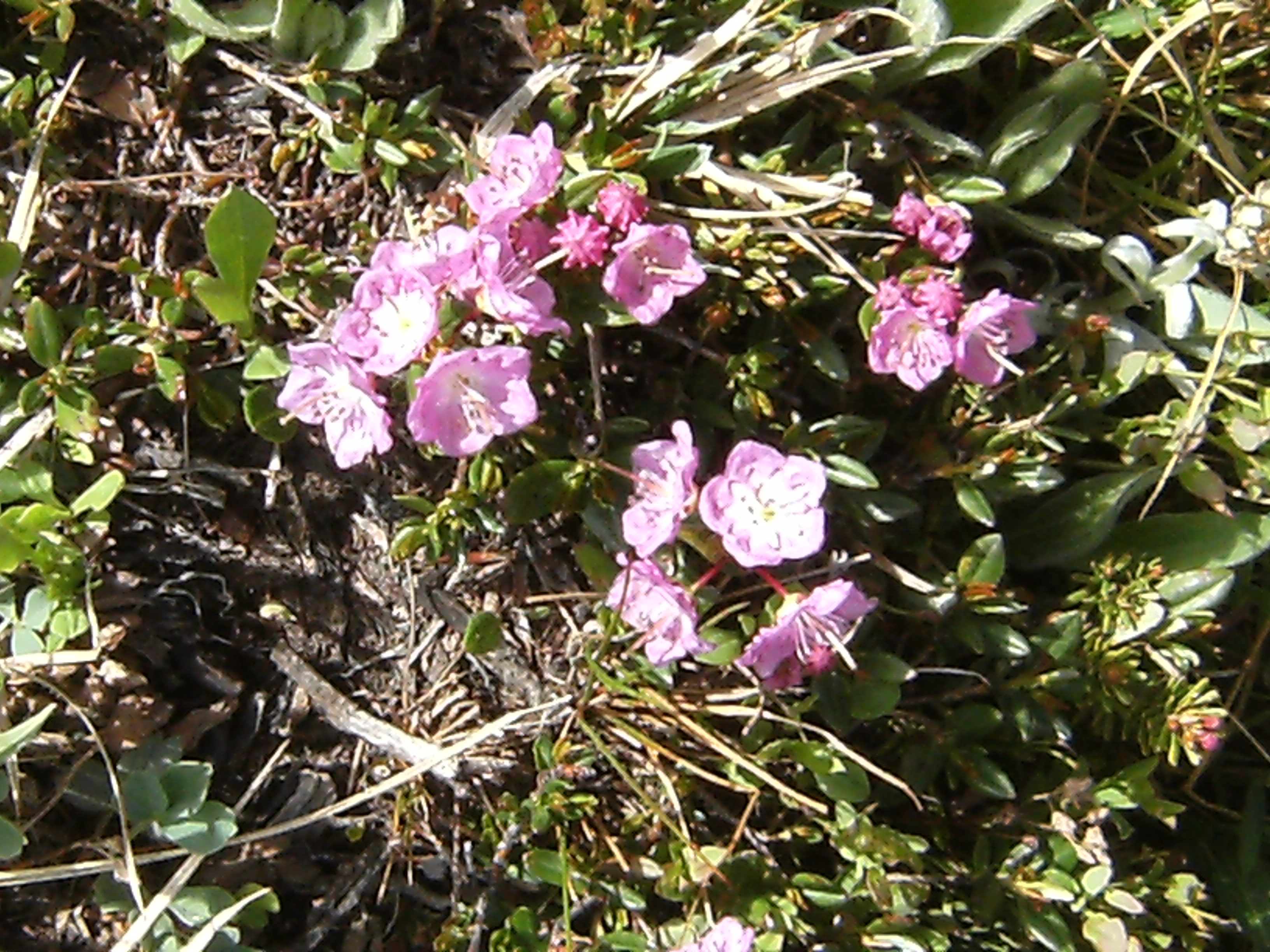
Kalmia, used by some tribes to commit suicide as it is deadly poisonous

Kalmia, used by some tribes to commit suicide as it is deadly poisonous

And Koda had a great time in all the lakes.

In the Beartooths

Yet what makes this place so unique is this:

Wolf tracks

Wolf tracks

And the signs to watch out for grizzly bears.

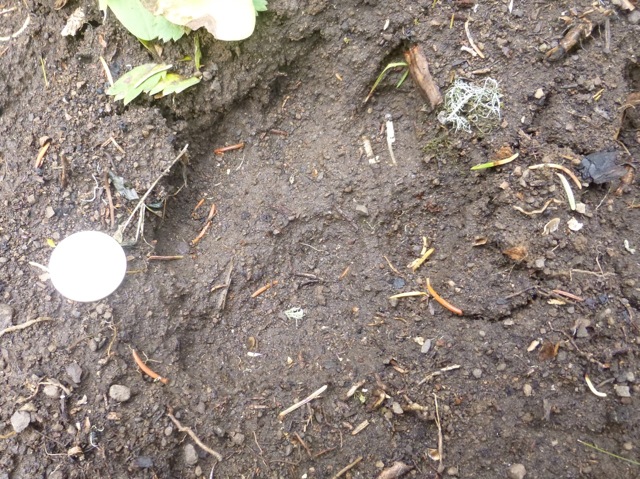
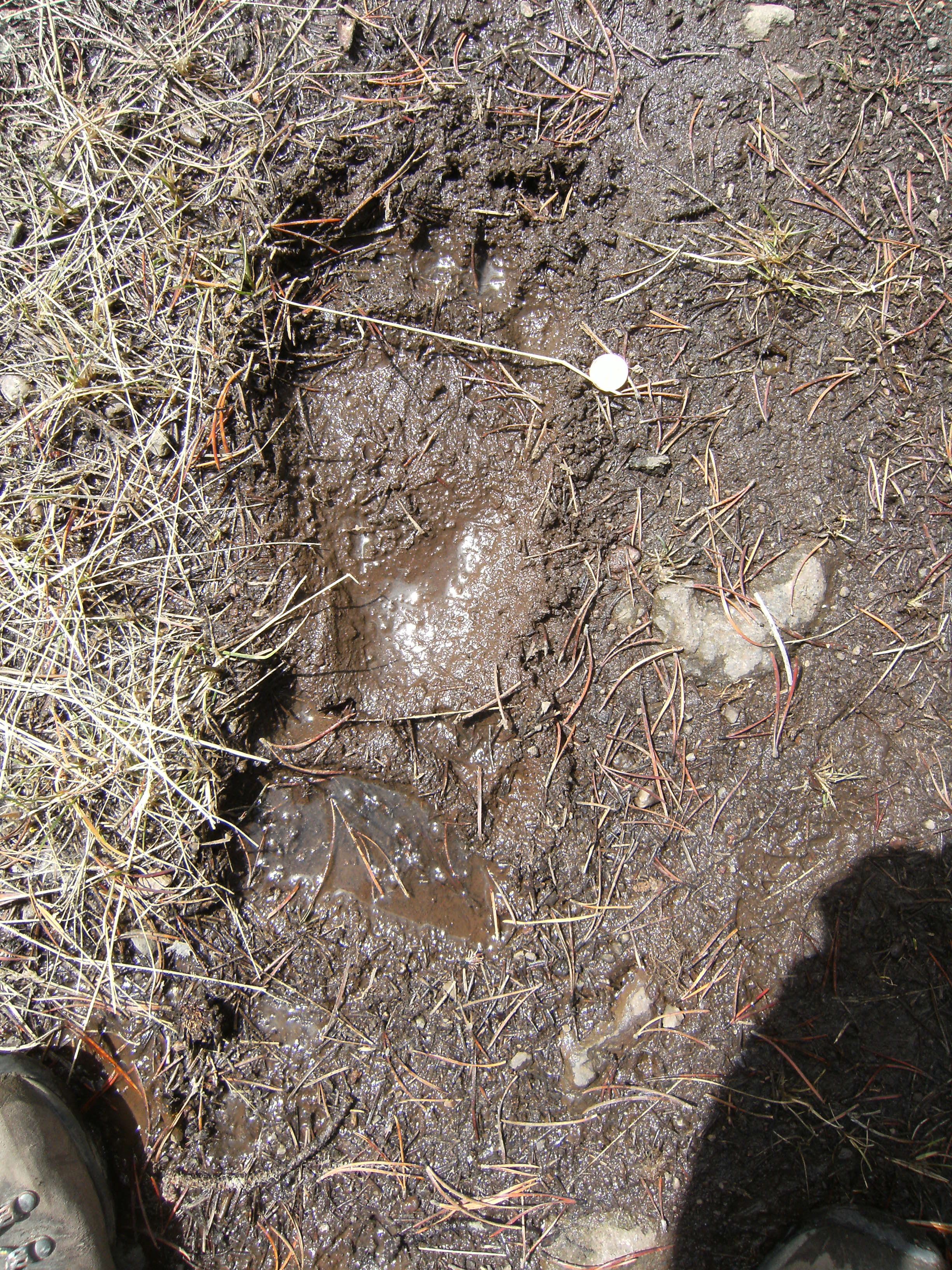
Front and back grizzly tracks.

Front and back grizzly tracks.

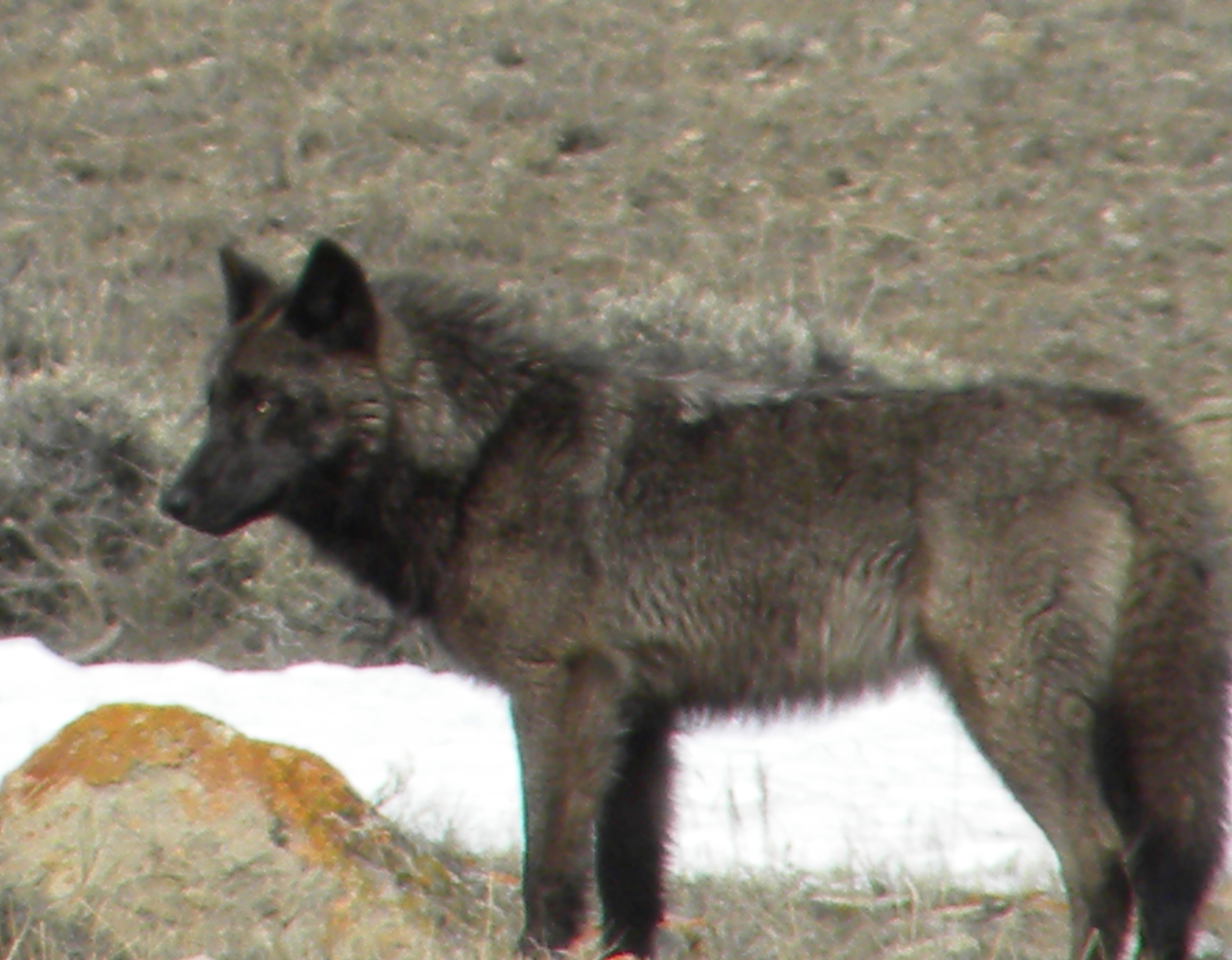
Because this is a ‘road’–suitable only for ATVs–and it is closed now, few people were out.  I saw one group of returning backpackers.  They told me they saw two wolves this morning, one black and one grey, in the meadow.  Part of the Beartooth wolf pack I told them.

I recently visited northeast Wyoming and Devils Tower in The Black Hills.  It’s a gorgeous area and a striking sacred spot.  At the Devils Tower visitor’s center, I read a story of an Indian man that was interviewed in the 1930s.  He recalled coming to Devils Tower (known as Bear’s Lodge to the tribes) as a young boy in the 1850s.  At that time, he said, there were wolves there.  Yet no longer.

Devils Tower, WY

Devils Tower, WY

The United States has many beautiful parks and national forests, yet only the Yellowstone Ecosystem is complete with a full suite of native wildlife that once was abundant everywhere.  After living here, everywhere else feels bereft.

Grizzlies too are killed for cattle predation on public lands

I am not advocating that more people move here.  On the contrary.  I am advocating that we work to have these kinds of complete ecosystems in many other parts of the country where it makes sense.  Grizzlies, for instance, occupy less than 2% of their original habitat.

Like many animals that are losing their habitat, we too are losing ours.  How preposterous is it that a person must fly or drive thousands of miles just to view these animals as well as experience an un-fragmented ecosystem; even though there is plenty of suitable habitat for wolves, grizzlies, and other carnivores in forests and Parks in places like Utah, Colorado, and other lands in the West.

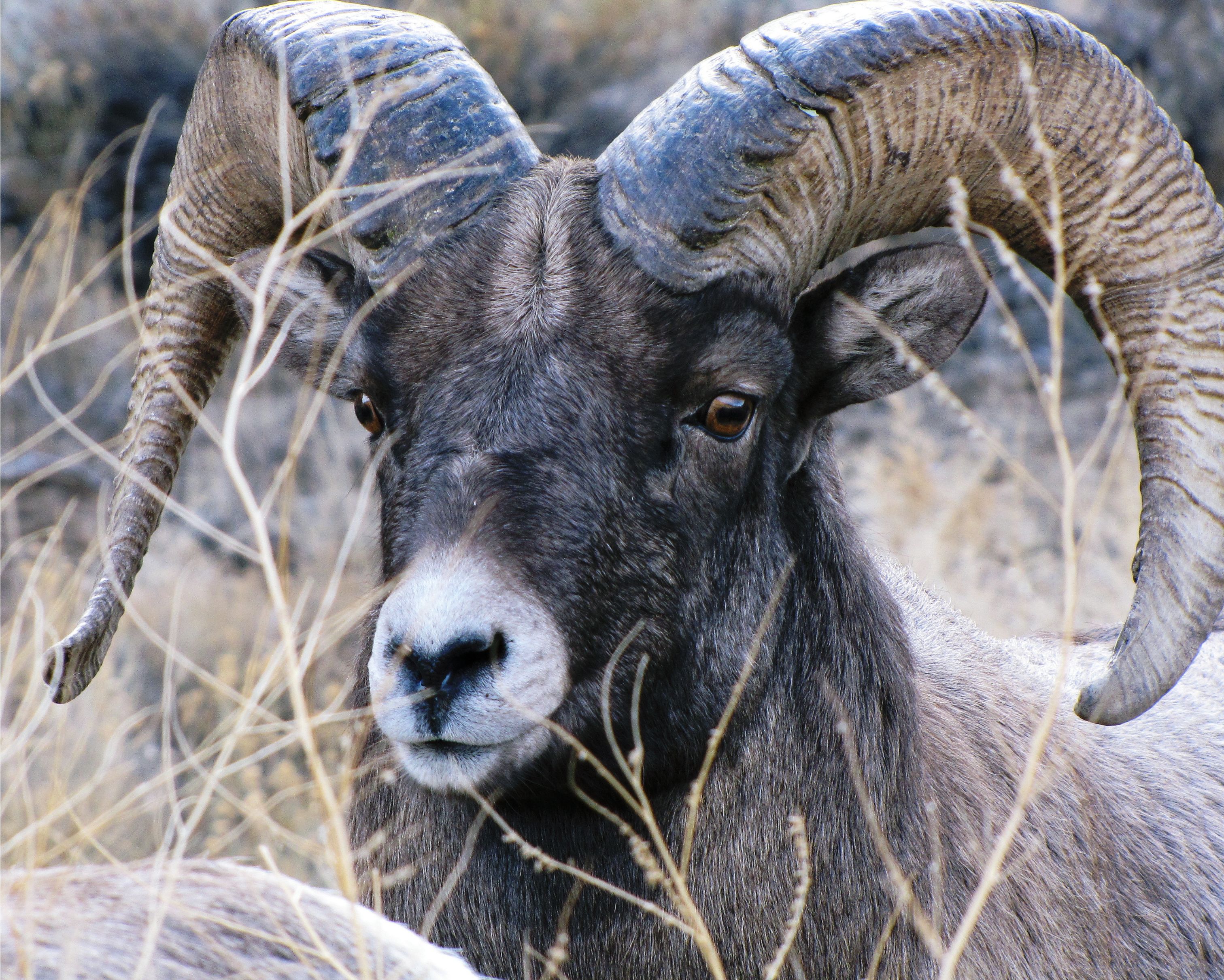
After living here for eight years, I’ve come to understand that scenery isn’t ‘everything’ and in fact, it’s nothing without the wildlife that was meant to inhabit it.  Without them, those beautiful lands feel empty.Rocky Mountain Bighorn sheep

Practically, what does that mean?  First, a change in attitudes. In larger landscapes, we can live with these large predators.  Yes, we’ll have to adapt with our garbage, bird seed, chickens, and other small livestock, but it can be done. Changing our attitude includes changing our hunting and trapping laws to be inclusive of these predators, instead of the outdated model of ‘more ungulates, less predators’.

Second, the livestock industry must change and use predator friendly methods of control where possible, including the realization that livestock losses on public lands are ‘at your own risk’.  Public lands are all wildlife have to make their living on. Bears, wolves, coyotes and other wildlife should not be shot on public lands if depredation occurs.  It should be the responsibility of the cattle rancher to ride the range with their cattle, stock them appropriately with perhaps a bull and mixed age groups.  Sheep need dogs watching them as well as a human shepherd.

People who live with bears and wolves and cougars daily know that these animals are not ‘behind every tree‘, waiting ‘to get you‘.  If they were, then they could easily kill a person.  Instead, they avoid people; make their living mostly at night; and seem to only get into trouble when people are leaving food out or not taking care of their livestock.

Having spent a lot of time in the Southwest, I would love to see wolves restored in that area.  But the year-round coyote trapping and bounty needs to stop first.  The northeast corner of Wyoming is the corridor in which cougars can expand eastward, but the hunting quota is either too high, or unlimited! That is just two examples of attitudinal and practical changes that need to be considered.

Once you’ve lived in a place like the Yellowstone Ecosystem, not only is there hardly anyplace like it on Earth, but you will want to restore your home, where ever that is, to its natural balance.


Decomposed Granite Paths and Patios

With summer here, lots of do-it-yourselfers will be hunting for info on Decomposed Granite.  I have many posts on ‘how-to’ and ‘how-not-to’, including my eBooklets with complete installation information.

I’ve found a few more photos from previous installations of mine in addition to those already on my website.

First some Decomposed Granite paths

A Decomposed Granite path in a shady location.  Notice the concrete transition just at the outside door so DG is not tracked into house

A Decomposed Granite path in a shady location. Notice the concrete transition just at the outside door so DG is not tracked into house

Decomposed Granite path

Decomposed Granite path.  Notice the edging here

Decomposed granite flagstone patio

Decomposed granite flagstone patio with DG in between stones. Pathway is all Decomposed Granite.

Decomposed Granite path no hardener

How to Install a Decomposed Granite Pathway. No hardener was used in this job

Stone and DG

Decomposed Granite path with stone blocks inserted

Decomposed granite path

Lovely Decomposed Granite path under arbor.  This path was done with a TerraPave seal

Decomposed granite pathway

Another arbor

Wood and DG steps

Pressure treated wood contains these Decomposed Granite stairs

I would be amiss if I did not show a photo of how you can mix different fines to achieve different Decomposed Granite colors. Areas of the country have different standard decomposed granite colors.

Here in the San Francisco area, most DG is gold fines, and occasionally like some of the photos above you can find grey.  In the photo below we mixed in some black fines to obtain a darker color.

Elsewhere on my website, I have photos of a rock I used that was more pink.  Rock can be used but it must have fines in it.

Now for some patios using decomposed granite:

Decomposed Granite pathway

Decomposed Granite walk and patio

Decomposed granite shade

Another view of the Decomposed granite patio next to a shade bed

Decomposed Granite leads to a deck

Decomposed Granite leads to a deck

Decomposed Granite with a small flagstone shower

Decomposed Granite with a small flagstone shower

Decomposed Granite inbetween properly placed flagstones by pool

Decomposed Granite in between properly placed flagstones by pool

Decomposed Granite path at the Getty Museum L.A.

Decomposed Granite patio at the Getty Museum L.A.

The bench sits on a decomposed granite patio which transitioned from the concrete patio in front

The bench sits on a decomposed granite patio which transitioned from the concrete patio in front

For a complete guide to Decomposed Granite paths, pathways, and using other materials such as pavers and concrete, please see my eBook.