• MY BOOKS ON WILDLIFE, GARDENING AND MORE

  • The Wild Excellence

  • True stories of wildlife encounters around the Greater Yellowstone
  • Award winning eBook on Decomposed Granite, tips, how to's, what to watch for
  • Children's book. True stories of a dog and wolves. In a dog's voice
  • Written for dry Mediterranean climates in California, north and south

The Heart of Wildness

….When Mabel McKay, a deceased Pomo basket weaver and doctor, heard somebody say that he had used native medicinal herbs but that they hadn’t worked for him, she responded, “You don’t know the songs. You have to know the right songs.” With no one to teach us, we don’t know the songs either.  The native practice of dreaming songs about the nonhuman world seems as valuable and elusive as a piece of pure bunchgrass prairie or the truth about the land. “Gardening with a Wild Heart”

Some say wilderness disappeared with Lewis and Clark.  We may still have wild lands, but true wilderness is gone.  Maybe once we finished mapping every inch, that was the final nail in the coffin.

Dad's Lake.  The Continental Divide looms in the background

Dad’s Lake. The Continental Divide looms in the background

Indigenous cultures once had their very identify, culture, and religion tied to the Land. The plants and animals were as familiar and knowable to them as our ATM’s and supermarkets are to us today.  They were Earth-based cultures. And although I consider our European cultures ‘Sky-based’–we identify with ideas i.e. ‘liberty and freedom’ or ‘God in Heaven’–there are still those of us who find sustenance and spiritual refreshment in Land.  And I would argue since all human beings are fitted to this earth, therefore the natural world and its wildness must resonate for everyone.  In essence, we are still Land-based peoples. Only our culturally-inherited earth knowledge has been diminished.
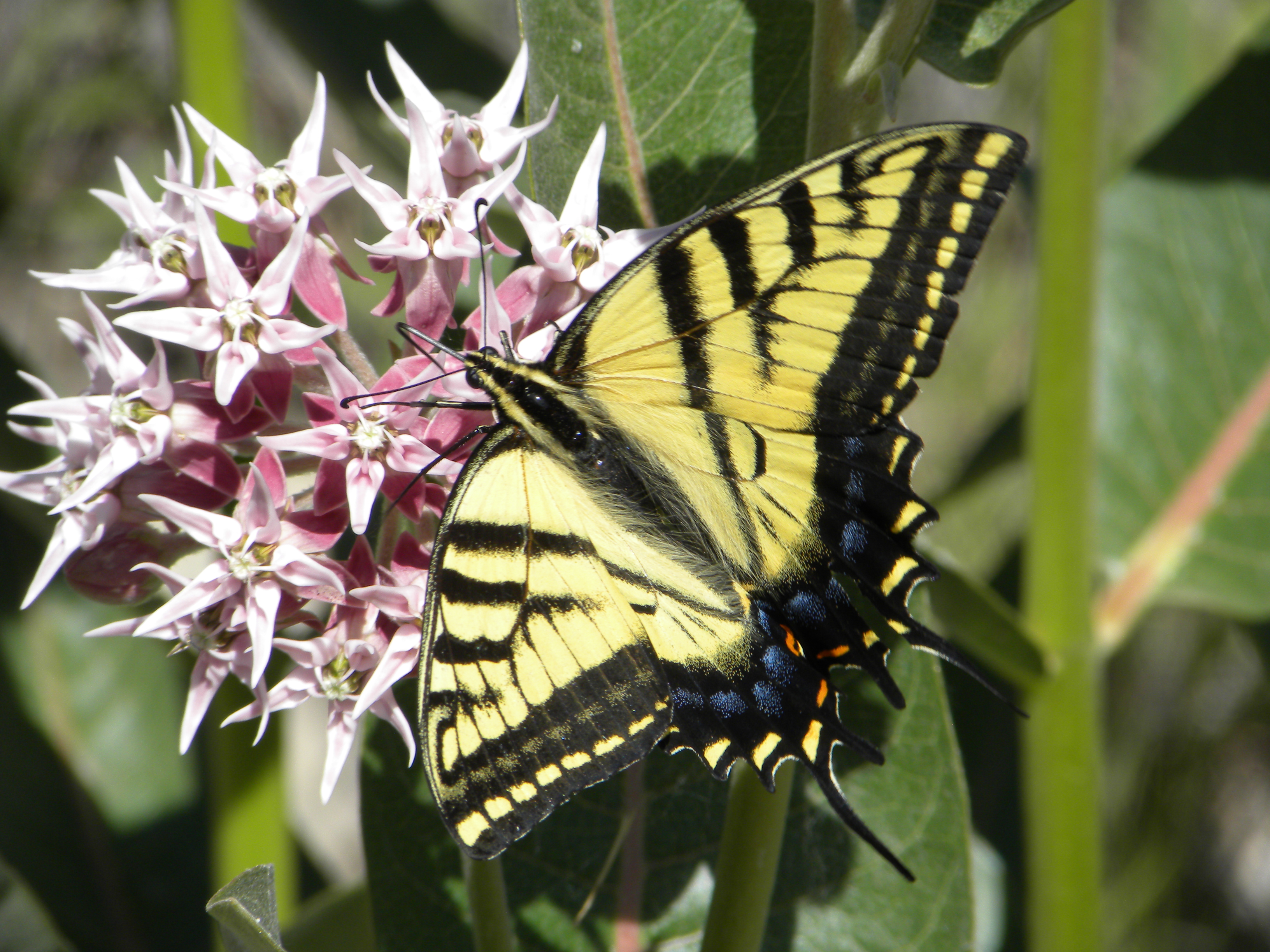
 

Swallowtail


In todays world, it is expedient and pragmatic for conservation groups to cloth their case in economic terms, whether it be for wildlife or land preservation.   Protecting wolves or bears becomes important because people like to view them, which brings in tourist dollars.  Setting aside elk habitat is good for hunters as they pay for the game agencies. The argument to preserve every ‘cog and wheel’ for its own sake has no power.


Coyote pups

Yet conservation groups are amiss to ignore this argument, for truly that is what is at the heart of the issue–we need these lands for our spirit; preserving the entire biotic community is important for its inherent value, not its monetary one.  The mysteries of this Earth spark our sense of wonder.  If all becomes mapped and pedestrian, where shall we look for awe, for beauty, for the surprise of diversity and difference.  Without these basic human needs met, we lose our compass in this world.

It is time to add this other dimension to our call for protection.  In my book The Wild Excellence I call this added element ‘The Sacred Land Ethic’.  Aldo Leopold’s land ethic states

A thing is right when it tends to preserve the integrity, stability, and beauty of the biotic community.  It is wrong when it tends otherwise.  The land ethic simple enlarges the boundaries of the community to include soils, waters, plants, and animals, or collectively: the land.  A land ethic changes the role of Homo sapiens from conqueror of the land-community to plain member and citizen of it.  It implies respect for his fellow-members, and also respect for the community as such.

To this eloquent and beautiful description of the way we should live, I’ve just added the word ‘sacred’ to include Land as a source of vision, spiritual awareness and sustenance.  Sacred includes all the plant songs we have yet to remember, and all the dances the animals have yet to re-teach us.  Sacred includes that moment when you stand in awe at the edge of the Grand Canyon, or the moment alone in the woods when you encounter a new-born fawn.
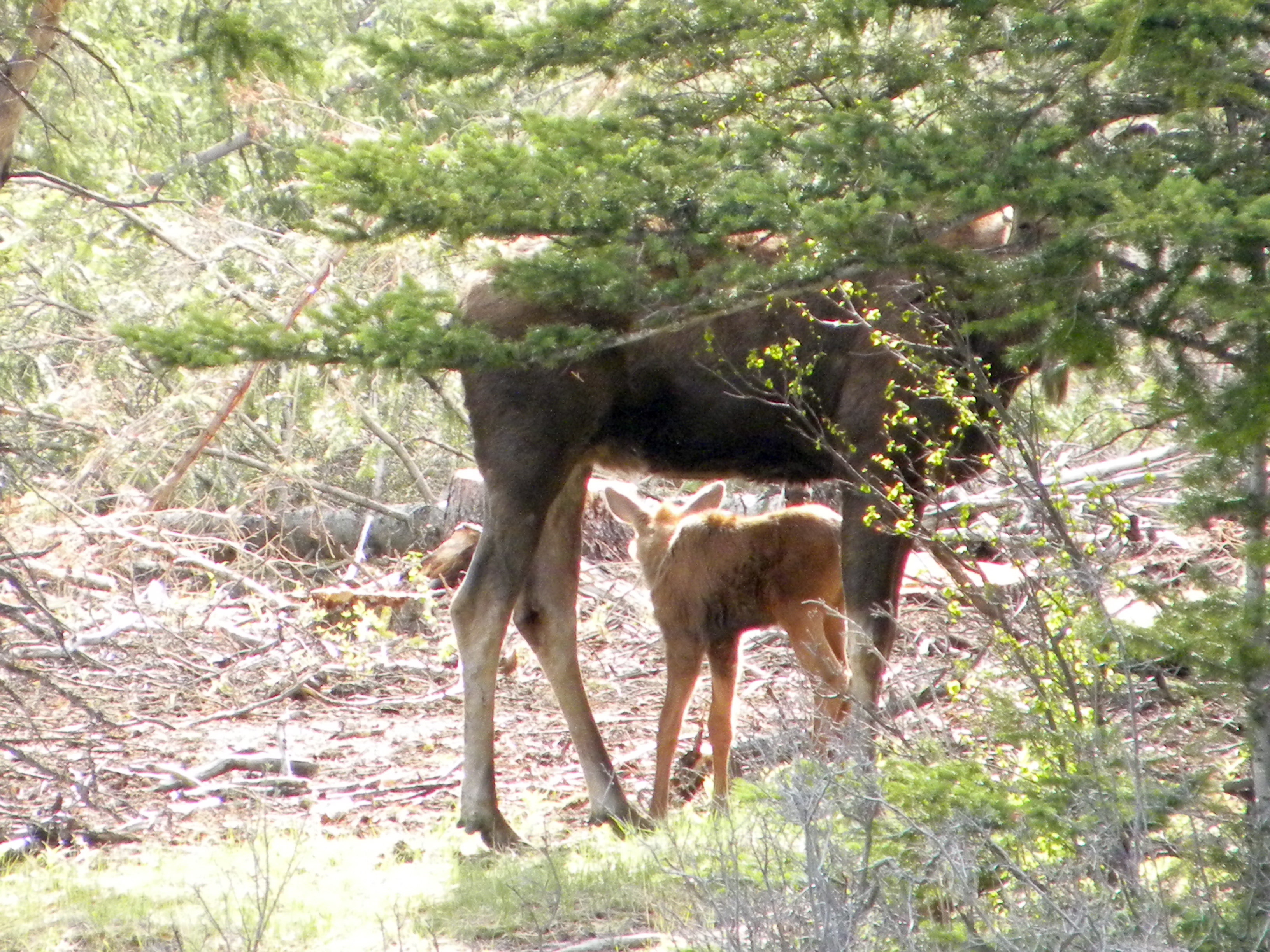
Moose and calf

All of us have resorted on many occasions to the natural world for restoration. So let us not hide behind the arguments of ‘monetary value’ of wildlife.  Let us speak the truth of why it is we are fighting to preserve what’s left of the wilds.

Spirit of the Mountain

I’m not, in general, a ‘cat person’.  First, I’m allergic to cats.  And more than that, I’ve never understood cats, their aloofness, nor their behavior.  But it seems the tables have turned for me, because I’ve become fascinated with the wild cats around here–bobcats, cougars, and the illusive lynx.  Bobcat sign has become quite rare these days with the heavy trapping.  Bobcat pelts sell for up to $1000. And good luck seeing a lynx or their tracks.  One old timer tells me she saw one several years ago by my mailbox, but I haven’t heard of any reported sightings around here. But cougars seem to be abundant.

I put my trail cam on a ‘scrape’.  Males will mark their territory with scrapes, usually under a big old conifer.  Its also a scent post to attract females.  If you can find a scrape, that seems to be your best bet of seeing cougars, as well as other animals.  The study that’s going on in Yellowstone Park had footage of a grizzly bear lounging on a cougar scrape for a full day!

Actually, I placed two cameras on this scrape but the movie one malfunctioned, so I put together a ‘video’ from the stills of my Reconyx. You can see exactly how this big male makes a scrape by twisting his hind back and forth.

This male, it turns out, was accompanied by a female.

male and female cougar

male and female cougar

First the male marks, then the female came and scented it using her vomeronasal organ located on the roof of her mouth.  Those of you who have cats, have seen your pet smell something then raise their head to take the smell into that organ.

Cougar taking a scent up into its vomeronasal organ on the roof of its moutn

Cougar taking a scent up into its vomeronasal organ on the roof of its moutn


Female cougar checks out a scrape

Female cougar checks out a scrape

Without trying much, I seem to be running into cougar sign.  Maybe the class I took with Toni Ruth in January helped key me into how a cougar thinks, what it does, and where it goes.

I’ve seen many old cougar deer kills that have been neatly covered, but nothing is left except the legs which they don’t eat.  Cats are always very neat and tidy.  They drag their kills to cover, like under a tree or hidden behind rocks is typically where I’ve found them.  And they pile brush up in a circle to cover their kills.  This keeps them fresh and reduces scent.  Also, the hair of the deer is plucked.  Bears will cover their kills but they are messy and use a lot of dirt and sticks.

Old cougar kill.  There is nothing left here but the cat piled it up neatly

Old cougar kill. There is nothing left here but the cat piled it up neatly

On a short hike in a distance valley miles from where my trail cam sits,  I found a fresh deer kill with snow tracks leading to it.  I’d never found a fresh kill and I knew that this lion was somewhere in the neighborhood, probably watching me. But I wasn’t worried about the lion.  I was worried about bears, so instead of investigating I scouted the entire area first, then backtracked.  Bears will defend a found carcass while I knew that a cougar would not.  All that had been eaten was the heart, and the kill looked hastily covered.  Possibly Koda and I had disturbed the cat, although maybe not because it was the middle of the day. You can see the puncture wound at the neck in this photo.  I hoped to catch a glimpse of the cat, but no luck.  I asked Toni Ruth in her five years of studying cougars at Yellowstone National Park, how many times she saw one, apart from when she used dogs to track and collar them.  With thousands of hours of tracking in the field, she’d only seen them three times in five years!  I myself have never seen a cougar, only their sign.

Cougar killed deer.  You can see the puncture wound at the back of the neck

Cougar killed deer. You can see the puncture wound at the back of the neck

Although cougars have large territories, my trail camera sits in a valley far from houses.  A nice plus today in retrieving my trail cam.  As Koda and I were almost to the car, I heard a Great Gray Owl.

Fresh prints in the snow lead up to the kill

Fresh prints in the snow lead up to the kill

Some Lessons from the Greatest Hunter/Tracker turned Conservationist of the 20th Century

I first read Jungle Lore  by Jim Corbett when I was studying tracking years ago. Jungle Lore is considered to be Corbett’s autobiography.  Most people know Jim Corbett as the killer of man-eating tigers and leopards.

Jim Corbett

Between 1907 and 1938, Corbett tracked and killed 33 man-eaters that were preying on people in the villages of the northern Indian region of Uttar Pradesh and Uttarakhand. They were said to have killed over 1200 individuals.  Corbett tells these stories in his book Man-Eaters of Kumaon.  Corbett found that the majority of these tigers and leopards had severe wounds that prevented them from hunting their customary prey–gunshot wounds or embedded porcupine quills.  A few of these animals simply got a taste for humans after human plagues and diseases caused massive regional deaths where bodies were piled up outside villages.

Tigress in Jim Corbett National Park, India

Corbett grew up in the Kumaon region, learning from an early age about the ways of the jungle.  He loved India, was a champion of the poor, would not kill a tiger or leopard without first confirming it was a man-eater, and worked tirelessly to protect tigers.  The first national park in India bears his name.

Because Corbett was able to do what no other human or even army could, many in India consider him a sadhu or holy man.  His books are worth reading.

Corbett explaining to villagers about man-eating tigers

What I want to concentrate on in this blog entry are a few gems in his book Jungle Lore.  Corbett as a youth, learned to identity every sound in the jungle–every bird and animal.  He was a consummate tracker.

A dog barks, and all who hear it know it is barking to welcome its master; or barking with excitement at being taken for a run; or barking with frustration at a treed cat; or barking with anger at a stranger; or just barking because it is chained up.  In all these cases it is the intonation of the bark that enables the hearer to determine why the dog is barking.

When I had absorbed sufficient knowledge to enable me to identify all the jungle folk by their calls, ascribe a reason for the call, and imitate many of them sufficiently well to get some birds and a few animals to come to me or to follow me, the jungle took on an added interest, for not only was I able to take an interest in the surroundings within sight but also in the surroundings to the limit of my hearing….

Having acquired the ability of being able to pinpoint sound, that is, to assess the exact direction and distance of all sounds heard, I was able to follow the movement of unseen leopards and tigers.

Most of us don’t think of ‘listening’ as well as looking during our walk in the woods. Many of us can identify birds by their song, but being able to identify the nuances of animal calls is a highly trained tracking ability that probably few people have thought to try to acquire.

In the book Corbett talks about his love of nature, how the jungle cannot be learned from textbooks, but must be absorbed little by little–a process that builds upon itself over time; an open book of great interest that has no ending.

…for the time I spent in the jungle held unalloyed happiness for me.  My happiness, I believe, resulted from the fact that all wild life is happy in its natural surroundings.

The reason I reread Jungle Lore revolves around a personal story for me.  In the summer of 1972 I was backpacking in Waterton-Glacier National Park with two friends. We made camp by a beautiful lake, hung our food, and built a fire. As dusk settled in, we noticed a large bear coming through the woods towards our hanging food sacks. Seeing these sacks were out of reach, the bear continued towards our camp. In those days, bear advice consisted of banging on pots and pans, climbing trees or jumping into lakes. With the surrounding trees limbless stilts, and the lake glacier-fed, we banged on pots till they were mangled. Unfazed by our noise, the bear rummaged through our nearby backpacks.

We built our fire to a roaring blaze, watching speechless and dumbfounded. This bear’s behavior appeared odd. Nothing perturbed or frightened him. Instead, he approached us, smelled our down jackets, stretched his head between us to investigate the fire–only to burn his nose–and tried tasting my friend’s leg. When she yelped, he leaped back in surprise, leaving her only bruised. He proceeded to explore our tents. Using an old trick, I threw rocks into the woods and the bear left to inspect them.

The next morning we hiked to a backcountry ranger cabin.  The ranger told us the story of  ‘The Night of the Grizzlies’, an incident where in one night 2 women were pulled out of their sleeping bags by two different grizzlies and eaten.  At that time the Park officials felt the connection had been both of these women were menstruating, but that has since been proven false.  Both of these bears, as well as the large black bear that entered our camp, were human-fed bears, habituated to people because of open dumpsters and dirty campgrounds. The Craighead brothers had just finished their 10-year study in Yellowstone and were advising closing of the dumps.  Park policies were beginning to change, but the bears didn’t know that yet.

Our bear was simply curious and meant us no harm.  He was looking for a food hand-out, probably something he’d been rewarded with before and for sure something his mother had taught him.  Bears, both black and grizzly, had been dumpster- fed for many decades in both Yellowstone and Glacier.

For many years after that I wondered about my emotional response.  Even though that bear had nosed his way, literally, right between me and my friends, I had remained calm and unafraid.  I was more curious than afraid.  I wondered if my cool response was because I was unadapted to the dangers in that environment. Sure, I thought to myself, if this had been a bad neighborhood in a city, and that bear had been a strange man approaching us, I would have registered fear.  So why wasn’t I afraid?

Years later I read a passage from Jungle Lore which explained everything.  In this passage, Corbett, as a youth, was walking down a back road with his dog Magog. Corbett heard voices of men shouting, and then suddenly a leopard ran from the brush and stopped on the road only 10 yards uphill.

This was the first leopard that Magog and I had ever see, and as the wind was blowing up the hill I believe our reactions to it were much the same–intense excitement, but no feeling of fear.  This absence of fear I can now, after a lifetime’s experience, attribute to the fact that the leopard had no evil intentions towards us. Driven off the road by the men, he was quite possibly making for the mass of rocks over which Magog and I had recently come, and on clearing the bushes and finding a boy and a dog directly in his line of retreat he had frozen, to take stock of the situation.  A glance at us was sufficient to satisfy him that we had no hostile intentions towards him.  And now, satisfied from our whole attitude that he had nothing to fear from us, he leapt from his crouching position and in a few graceful bounds disappeared into the jungle behind us.

With that one simple statement, Corbett unveiled my instinctual response.  And that I believe is the key to how to approach living with large predators in our midst.  We must stay alert, awake, and aware, yet most of all trust our own instincts, for they will guide us.

Grizzly bear

Grizzly bear


Lawns for a Drying California

I was speaking with a friend the other day in the Bay Area.  She told me all the landscapers are busy pulling out lawns.  No doubt!  But then she said they are recommending artificial turf AKA fake grass.  Google ‘artificial turf and cancer‘ and you’ll come up with a lot of buzz on the internet.  Fake grass is made from tire products and many of those chemicals are considered carcinogenic.  I’d be especially worried about installing fake turf in my home if my kids played on it or my pets laid on it.  Sure it’s easy to maintain because you don’t have to do anything–it’s fake!  But I personally wouldn’t take the risk.

So, if you want a lawn and live in a parched California, where water is the new oil, what can you do?

My answer was written up in a post back in 2009.  Carex pansa lawns.  Because of the extreme drought situation, I wanted to repost and speak again about this fabulous native grass.

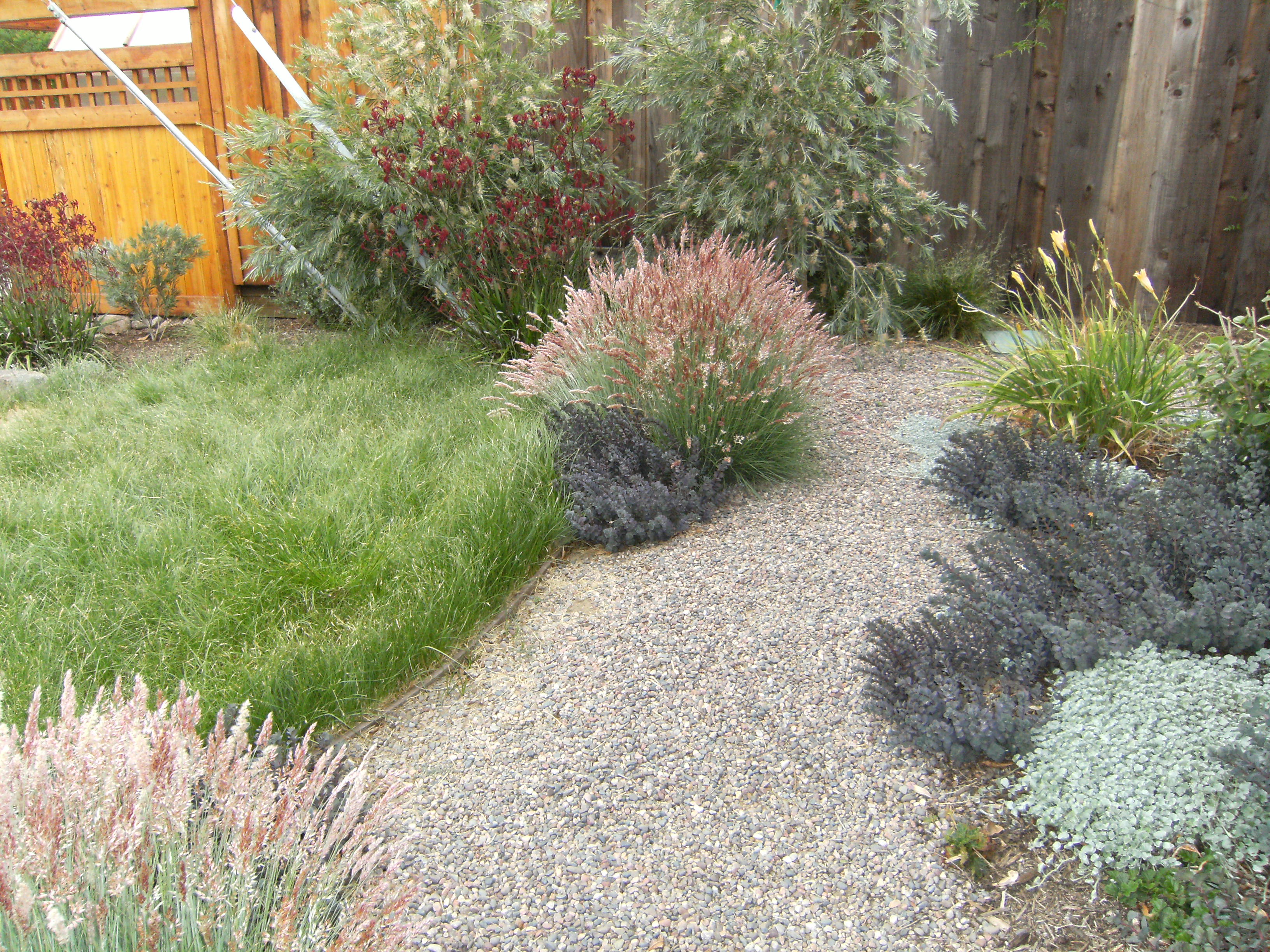
Dry Gardening lawn

Carex pansa front yard lawn

Here is some of what was written in that previous post years ago:

Once established, it requires watering only about every 3 weeks or more, depending on your site, and mowing no more than 4 times a year!  I do have clients that keep it very ‘lawn-like’ and mow it every two weeks, but since it only grows 6″ high, that isn’t necessary.

Carex pansa can tolerate traffic.  I have clients with kids who play ball on the lawn.  But it isn’t for intensive traffic.

The planting/preparation method is simple.  Prepare your bed as if you were going to plant a conventional lawn, in other words, good soil, lots of compost, rake out the clods, bed should be to finished height.  I always install a conventional irrigation system–better safe than sorry and its so much easier for the homeowner.  In the beginning you will need to water the plugs till established and the first summer while filling in, water a few times a week.  So a watering system on a timer is essential.  This means the irrigation system should be installed prior to planting.  The sprinkler heads can be installed and then adjusted to correct height once the Carex is in.

Carex pansa needs a good edging as it will spread beyond your beds without one.  Its not a weed nor really invasive, but, like grass, it will grow outside its borders if given water and good soil.  Depending on your design, you might even want to pour a concrete edging.

Dry gardening lawn

Carex pansa in a large backyard situation

I’ve put in a few dozen of these lawns and never had any problems.  For Californians, now is the best time to prepare your area and plant your plugs. Carex pansa grows during the warm weather, so your lawn will fill in quickly.  Plant 3″-5″ apart for a fast fill, although if you need to save money you can plant 6″-9″ and wait longer and weed more. For information as to where to obtain the plugs (this ‘grass’ must be planted from plugs), as well as further information including how to plant a natural meadow, please see my eBook Gardening for a Dry California Future.

Dry California lawns

Carex pansa lawn with kids and dogs in househole

Grey Owl–trapper turned conservationist

In the 1930’s, a white man by the name of Grey Owl, living in the Canadian wilderness, made his living trapping. He married an Iroquois woman named Anahareo.  He had no remorse about his profession until one day he killed a mother beaver leaving two young kits. As he was about to raise his gun to shoot them, Anahareo intervened. “Let us save them,” she cried.  “it is up to us, after what we’ve done.”  And so began Grey Owl’s transformation.

Grey Owl and beaver kit

Beavers are among the 2% of land mammals that live in social groups.  His beaver kits quickly became part of his family.  He described how they were like children–playful, intelligent, mischievous, and hungry for affection.  They liked to sleep against their pillows, cuddle with him and Anahareo, and were extremely sensitive to the moods of their human caretakers.

Grey Owl began to understand those animals which he previously sought to only kill for their pelts.  He vowed to give up trapping altogether, though he didn’t take this lightly as it was his sole means of livelihood being a mountain man.

A number of incidents had contributed to this line of thought.  About the first of these was the sight of a mother beaver nursing one of her kittens whilst fast by one foot in a trap.  She was moaning with pain, yet when I liberated her, minus a foot, she waited nearby for the tardy and inquisitive kitten, seeming by her actions to realize that she had nothing to fear from me….The spectacle of a crippled beaver with only one hind leg and three stumps, doing his best to carry on, had moved me to put him out of his misery…I was getting sick of the constant butchery…but this had not, however, prevented me from going on to the next lodge, and setting my traps as carefully as ever; and like many another good business man I had justified myself…they had seemed to me to be just foolish dupes who took my lures, beasts that were put on earth for my convenience, dumb brutes who didn’t know the difference.

And now had come these small and willing captives, with their almost child-like intimacies and murmurings of affection…they seemed to be almost like little folk from some other planet, whose language we could not yet quite understand.  To kill such creatures seemed monstrous.

Grey Owl was not an educated man.  His winter with Anahareo and the two beaver kits was long and desolate, deep in the wooded backcountry of Canada in a one room cabin which they’d quickly built during a November snowstorm. Swearing off trapping, Grey Owl no longer had any means to pay off his debts accrued in buying supplies for winter.  He had the idea to write an article on the beaver kits and his experiences as a woodsman.  He walked 40 miles to town in January, dropped the article in the mail off to a prestigious English magazine, and so began his writing and speaking career to save the beavers of Canada.

Trappers had outtrapped Canada; loggers had cut down large swaths of forest. Things didn’t look good for the beavers of Canada in the 1930s.  Yet Grey Owl continued to write and speak and gained enough notoriety that the Government of Canada approached him about making a short silent, film with his beavers.  

Soon the Canadian Government had found a new home for Grey Owl and his beavers where trapping and logging was illegal.  At Prince Albert National Park, a new cabin for Grey Owl became his permanent home.  The cabin can be visited today.  Grey Owl had turned from avid trapper to a prominent and vocal conservationist for wildlife and wildlands.  You can see a very interesting 9 minute documentary here and another a narrated one here in the Canadian archives.

In 1999 David Attenborough directed a film called Grey Owl, starring Pierce Brosnan. Attenborough as a boy had seen Grey Owl speak, and was greatly affected, perhaps even to the point of influencing his future profession.

Grey Owl’s book Pilgrims of the Wild chronicles the journey I’ve described above. A wonderful read.

We need to re-examine our views on beavers.  We can work with beavers, using them as a tool to:

  1.  store water and off-set some of the problems we face with a warming climate and declining water sources
  2. restore salmon and trout populations
  3. create good habitat for our declining moose populations due to a warming climate
  4. create wetland habitats for songbirds and other wildlife, especially as the climate warms.
  5. repair stream incision

Here are some good, easy-to-read references on line.  As well as some short talks by experts.

  1. Will Harling, director of the Mid Klamath Watershed Council, “we need to encourage beavers to build dams and to increase fish habitat where it’s feasible.”
  2. Working together to restore beavers to fight climate change
  3. This is a very interesting article how to channel beavers to work for us in designs that we want.


Doug Smith, Yellowstone Beavers and Salmon

Although most people hear the name Doug Smith and associate him with the Yellowstone Wolf Biologist, he also wears another hat.  Smith did beaver projects beginning as far back as 1984 at Voyageur’s National Park, then went on to study beavers in five national parks.  He completed several aerial surveys looking for beavers in Yellowstone National Park, the first in 1996 and the last one documented in Yellowstone Science was in 2007.

I won’t go into the whole report here, but essentially beaver colonies have increased over the last 20 years in the Park due to several things:

  1. Willow regeneration, probably due to reduced browsing, and most importantly…
  2. A rapid re-occupation of beavers along the northern range, especially along Slough Creek, because Dan Tyers of Gallatin National Forest released 129 beavers in drainages north of the Park between 1986 to 1999.

Tyers did a survey of the Absaroka-Beartooth Wilderness in 1985 and found no evidence of active beaver populations.  He talked with old-timers, sheep herders, outfitters, and MTFWP employees about the area’s history.  What they told him was that beavers were abundant until around the 1940’s and 1950’s. There was general agreement that the decline was due to persistent over-trapping, some disease, and a decline of willow stand (beavers in the GYE mostly use willow) due to over-browsing by moose and elk.

In 1996 there were 49 known beaver colonies in the Park.  In 2007 the number had stabilized to around 127.  These sites overlap fairly consistently with willow stands and slower water–mostly in the southeast, the southwest, and the northwest of the Park. The re-introduced beavers just north of the Park jump-started this healthy increase.

In the Sunlight Basin area, there used to be beavers, but they have been consistently trapped and removed.  Even recently as noted in my previous post, a beaver colony began making some headway down at Russell Creek on mostly forest land, but once on private land, the homeowners trapped and killed them.  A lot has been said about the reduced moose population in the basin over the last thirty years.  If we had beavers here, moose habitat would greatly expand.

So why all this animosity towards these large rodents?  Beavers, as we all know, gnaw down large trees.  They also can plug up culverts and irrigation ditches and flood fields. Yet if you want to have a healthy ecosystem, you need beavers. They are considered a keystone species, building habitat for birds and mammals literally from the ground up. They reduce stream incision, slowing water and creating a soil base for plant life that wildlife feeds on.  And if you’re willing to work with beavers, there are many ways to prevent culvert damage.

In a new twist, beaver dams once thought to be a deterrent to salmon swimming upstream and so were removed, are now thought to be the only thing that can save the West Coast salmon population.  Not only can the salmon easily cross beaver dams, but since beavers slow water, they also raise the water table.  Stream restoration in California that included beaver dams more than doubled salmon production.

“Beavers are the single most important factor in determining whether Coho salmon persist in California,” MKWC executive director Will Harling says.

What’s more, Pollock’s work shows that by slowing a river’s flow and allowing water to soak into the ground, beaver dams can raise the water table under the land. “So they don’t just help fishermen,” he says, “but can help ranchers and farmers save on water pumping and irrigation costs.”

Garreth Plank, a cattle rancher on the Scott River, has always welcomed the animals to his land. As a result, he has found that the beavers save the ranch significant amounts of money each year. “One of our largest expenses is electricity for pumping water,” Plank says. “With beavers on the land, the water tables are higher, and we’ve had a 10 percent to 15 percent reduction in pumping costs.”

“Due to their benefits, we started planting more trees, and instead of calling it riparian and shade plantings, we call it ‘beaver food.’ “

We need new ways of thinking about this little engineer.  Smith says that in the Greater Yellowstone Ecosystem, drought may be advantageous to the rodent.  Drought slows down spring melts and allows more areas where the beavers will build.  And in a warming climate, the Greater Yellowstone may need beavers to increase water conservation, and habitat for wildlife.

Are Beavers the real drivers of trophic cascades in Yellowstone?

First, full disclosure.  I’ve only actually observed beavers twice–once in Escalante National Monument before it was an official Monument.  The other time a few years ago at Colter Bay Campground in Grand Teton National Park in a small backwater inlet.

But lately I’ve been thinking a lot about beavers.  It all started upon reading a new book about Yellowstone wildlife, (Yellowstone’s Wildlife in Transition). With over thirty scientific contributors, the book covers a lot of ground, and much of it demands a tedious and close read.

The general public has latched onto the story of Yellowstone’s wolves causing a trophic cascade, regenerating willow and aspen growth in the Park which in turn creates habitat for songbirds, beavers, and fish.  The short video How Wolves Change Rivers went viral, with over 15 million hits.  It’s a nice story but…

In Yellowstone’s Wildlife in Transition this notion is examined by the science community. The jury is still out and scientists are still researching and debating exactly what is happening with the landscape changes since the wolf reintroduction.  Along these lines, one chapter in particular caught my attention. It was the story of how wolves might be the ‘top down’ influence, but beavers are the ‘bottom up’ influence, and that it just might be the beaver doing most of the willow-aspen changes in the Park, not the wolf.

The ‘top down’ idea is that wolves keep elk on the move and out of the bottomlands and riverbeds where they munch new growth aspen.  With yearly munching, the aspens are stunted, never growing beyond elk munching height. Yet now, with elk moving around to avoid wolves, aspen and willows are returning.  Christine Eisenberg’s The Wolf’s Tooth expounds this viewpoint.

By the 1990’s beavers had become scarce in the Park.  Theories abound as to why–climate change and lower stream flows; overpopulation of elk outcompeted them for food–but without the beavers, riparian corridors were reverting to grasslands. Beavers need willows, and willows need beavers. Dam building by beavers raises local water tables, trapping fine sediments, and producing conditions perfect for willow establishment.  Beavers use willows to reinforce their dams and lodges.  Even after a beaver pond drains, willows establish themselves in the bare sediment. But without a high water table, these areas will eventually turn to grasslands.

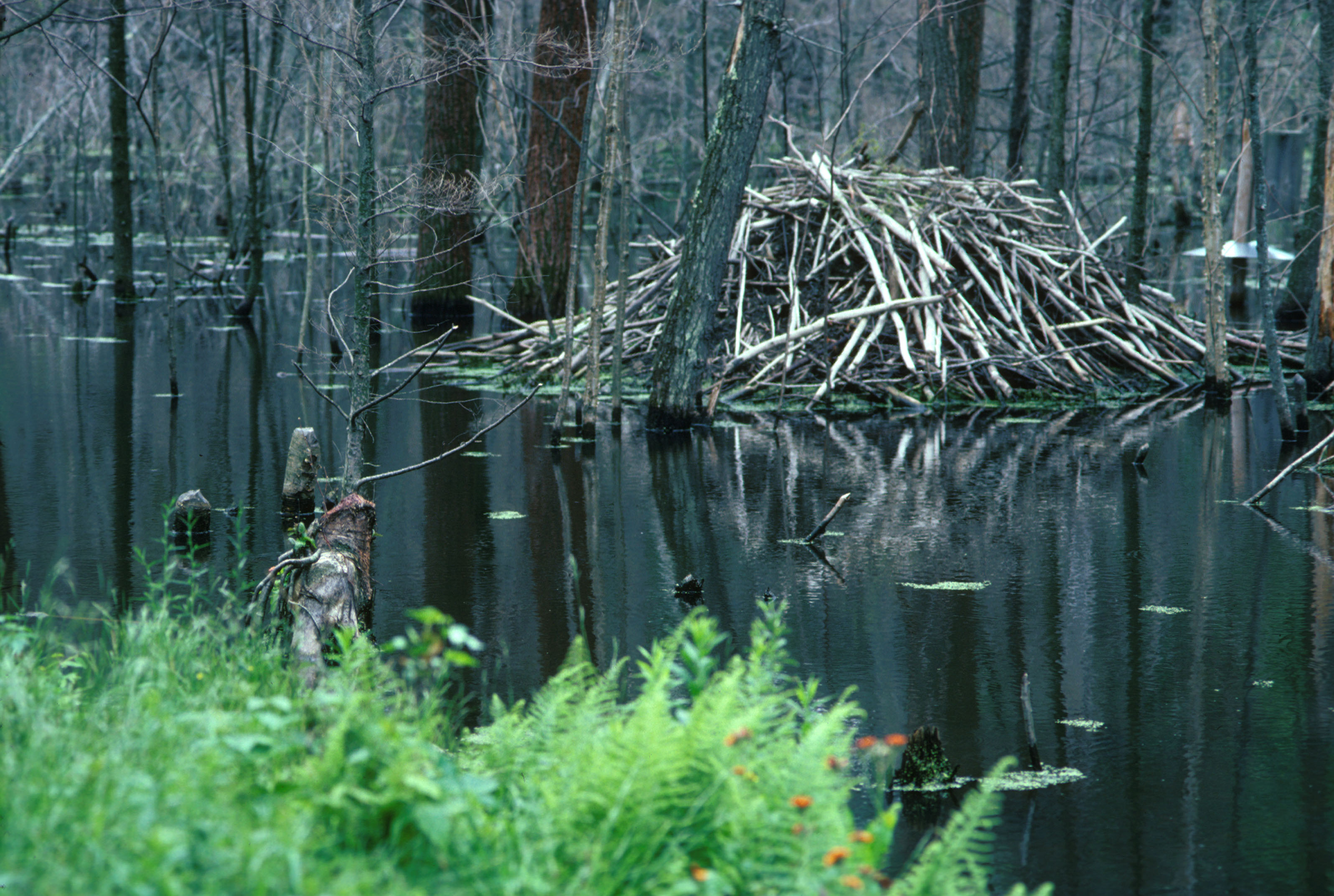
Beaver dam

Studying Yellowstone’s aging plants and soil structures, scientists found that locations where willows previously were abundant on the margins of beaver ponds had fine particle soils extending up to 40 meters from the center of these streams. Today these same areas had shifted to gravelly soils immediately adjacent to the stream. This pattern indicated that the width of riparian habitat establishment along stream corridors was 20-40 times greater in 1930 than in 1990! 

Experiments were conducted caging willows and aspens to protect them from browsing in areas with wolves and elk.  What became clear was that

“if willows have insufficient water to grow, then moderating browsing by elk will not promote growth. Although willows responded to removal of browsing, their response was slow unless they had access to elevated water tables. Moreover, it was clear from the experiment that willows with adequate water could tolerate high levels of browsing. This experiment implied that the loss of beavers may dramatically slow the recovery of willows. [emphasis added]. It follows that if willows are required by beavers, and beavers require willow, then the reintroduction of wolves will not rapidly restore willows to the conditions that prevailed before wolves were extirpated.”

In the late 1990’s Montana Fish, Wildlife and Parks did a succession of beaver releases near the Park boundaries with the hopes these beavers would travel into the Park.   Several years ago I was speaking with Dan Hartmann in Silver Gate who told me that residents had spotted beaver dams around Fox Creek Campground.  On our northeast side of the Park, beavers have been extirpated since the late 1950’s.  I hunted around there for a day but couldn’t find anything.  A lot of clear cutting had gone on as well as a recent small fire started by the clear-cutting! But just a few weeks ago, I found evidence of beaver activity on Russell Creek, near where I live.  Mostly on Forest, these beavers had begun making a few dams by cutting down large aspens and some alders. But since I found no evidence of a lodge, I figured the nearby landowners had trapped and killed the beavers.  (I’ll save the phenomenon of ‘rodent hate’ for another blog post). How did these beavers get there?  They probably were from the Soda Butte creek reintroduction lineage by MFW&P years ago, traveling overland and through small drainages and washes.  Although I mourned their death, their recent presence was a good sign.

Beaver evidence on Russell Creek

Beaver evidence on Russell Creek

I will be posting more about beavers over the next months.   A fascinating story about how beavers can restore habitat and wildlife is the Martinez Beavers in the Bay Area.  Beavers in the San Francisco Bay Area!  I’ll be speaking about this and other beaver issues.  My recent ‘obsession’ is that we need these ‘bottom-up’ ecosystem restorers.  They will create moose and other ungulate habitat, bird habitat, and help stabilize creeks.


More on Mountain Lions

A few weeks ago I attended Toni Ruth‘s Cougar Class in Yellowstone National Park through the Yellowstone Association.  That class gave me some extra hints about tracking cougars.  I had a sense where to find tracks in my area, but identifying scraps, and finding lays and dens was another thing.  Applying what I learned, I headed out and found a kill site.  I’ve found them before, but Toni suggested that cougars usually bed down close to their kill (if its a large kill they might want to eat some more later), and also usually have a toilet within 300 feet or so.

Once I found this young deer kill in a rock crevice, I began investigating for a bedding site and a toilet.

Cougar deer kill dragged to rock crevice

Cougar deer kill dragged to rock crevice

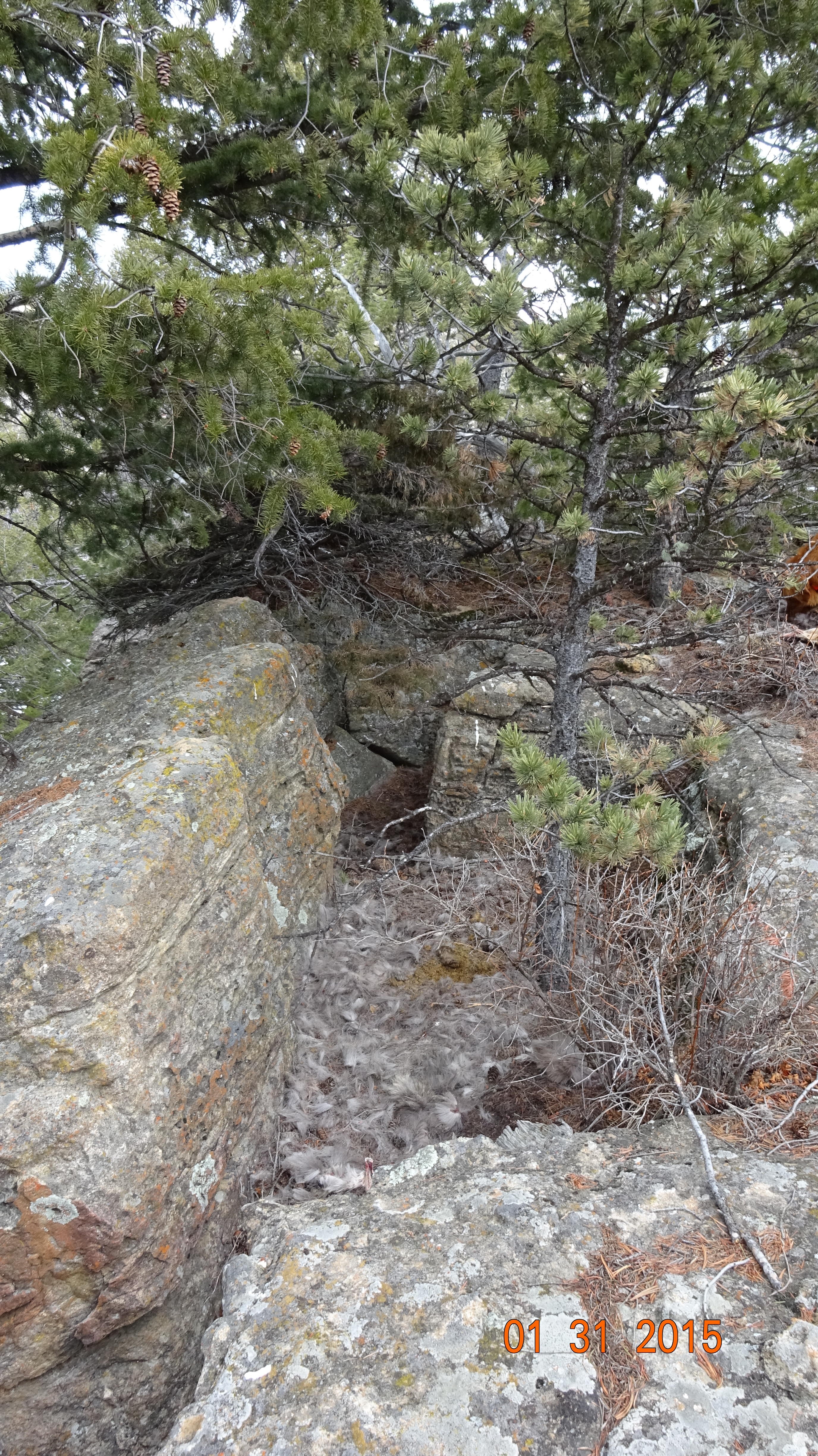
Within 50 feet of the kill, I found the toilet.  Cats are extremely clean and meticulous.  They tend to use the same area to defecate and then make sure to cover it each time.  This toilet had obviously been used for years.  I knew the area and there’s a ravine about 300 yards to the east.  I’d found lots of cat kill evidence there before so this was a good place for this cat.

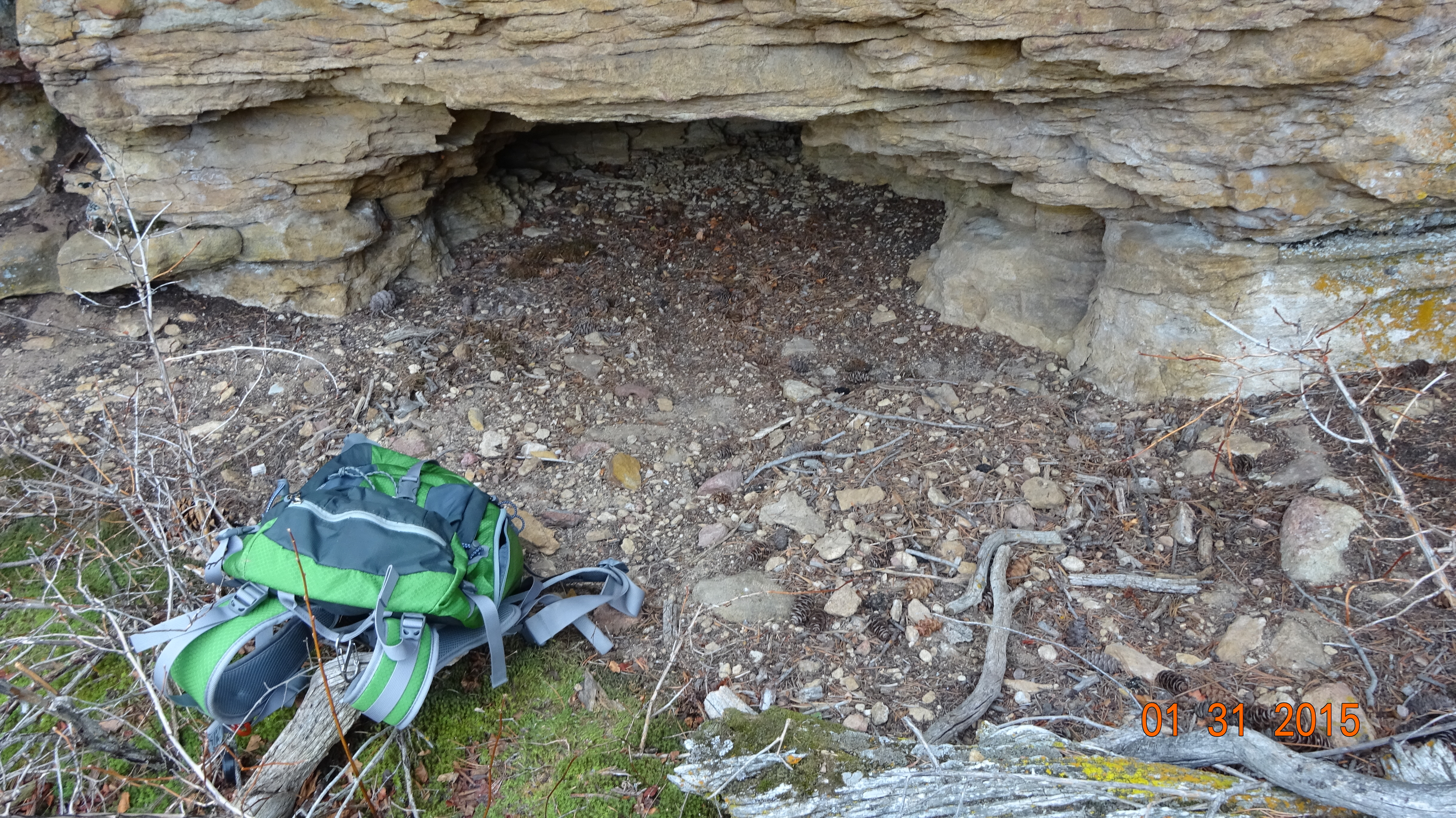
Then I began looking around for a bed site.  The toilet was on the flats, but the kill had been dragged below to a small cliff area.  I began investigating the rock edges.  Toni had pointed out how the cats she collared in Yellowstone were traveling at the base of very high cathedral-type cliffs.  I figured this cat might be doing the same.  And lo and behold I found a very nice small cave–big enough for a cat to bed down in.  Toni had told me that when I find these, to crawl inside and look for ‘guard hairs’, the white hairs on the belly of the cat.  They apparently shed easily.  Following her instructions, I found several white hairs.

Cougar bed site

Cougar bed site

Judging from the location, knowing that deer had been killed for many years in the nearby ravine, I hypothesized that this was a bed site that cat (or other cats) frequented. Toni said that cats use bed sites over and over, and that multiple cats will use them.

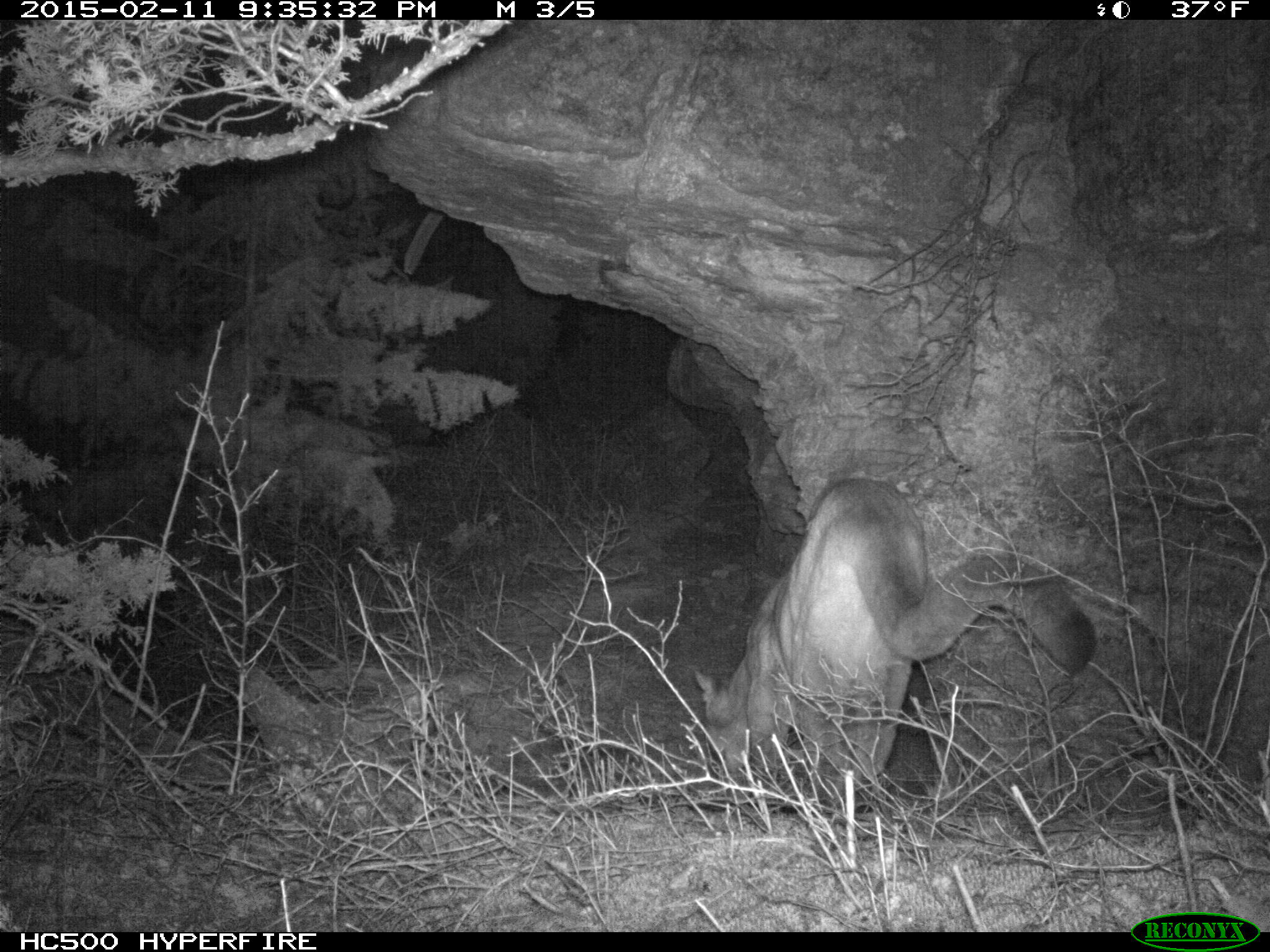
I returned a few days later with a trail camera and set it on the small cave.  I anticipated that if I got anything, it might be months of waiting.

Another thing I learned from the class was that a better place to site a trail camera for lions is a scrape.  This is because male lions use scrapes (a scent mark) to communicate a lot of information, especially to find females.  And a lot of other animals will visit these scrapes.  Dan Stahler who visited the class for a morning had a video of a grizzly bear taking a full days nap on a cougar scrape!

So today I went to put my camera on that scrape I found.  I stopped to check the bed site cam and look what I found.Cougar

Cougar exhibits a flehmen response

Cougar exhibits a flehmen response

Cats, including your common housecat, have what’s called a Jacobson’s organ on the roof of their mouth.  This puma was smelling what had taken place in his bed site (myself as well as my dog had been there when we placed the trail cam), then drew that scent up into the roof of its mouth for a better smell. The Flehmen response is similar to smelling but the vomeronasal organ is interfacing separately with the brain. It is usually employed for detecting sexual pheromones from the urine but may also be used for supplemental analysis of any interesting smell.

I asked Toni in her seven years of cougar studies in YNP, how many times she saw mountain lions (not counting the collaring done with dogs).  Her reply–3 times!   I still have yet to see a cougar despite all this tracking.

Tracking cougars

On Sunday we had a nice snow, so today was the day to go to one of my favorite spots for cougar tracking.  The area is a peninsula of rock, funneling into wooded cliffs that provide a corridor down to the Bighorn Basin–a perfect landscape for the perfect predator.

I started my hike with the intent of exploring an area of cliffs that I’d only approached previously from the western edges.  I wanted to see if I could climb this high viewpoint from a different angle.  Yet I soon was sidetracked by two sets of cougar tracks–a large male and another set, possibly a female.  I decided to backtrack them and see if I could discover more information.  Then, another surprise.  As the tracks led downslope into the trees by the canyon walls, I came upon a set of human footprints–a person with at least one dog.

Cougar sidetracks along a cliff edge where I decided to go around

Cougar sidetracks along a cliff edge. I decided to go around rather than risk falling down the cliff!

There’s been cougar hunters in the area since the start of the hunting season, last September.  Cougar hunting in Wyoming goes from September through March 31st.  Cougar hunting takes place with trained dogs, fitted with GPS collars.  Once a track is located (easiest done in snow), the dogs are let loose and follow their noses.  The dogs tree the cougar; the hunter uses the GPS signal to find the treed cat and then shoots it.  The trophy hunt is done.

So instead of tracking my cougar, I began tracking these human tracks to see if this cougar had been killed.  At times there were cougar tracks alone, other times hunter and cougar together. It was obvious this person was following cat tracks, but these  human tracks looked a day or two old.  Then finally I found what I was hoping for: a cougar track on top of the humans, and the cougar’s track was fresher.  With all the human and dog tracks, I lost my cougar.

Cougar print over a human boot who was tracking him

Cougar print over a human boot who was tracking him

On my return home, there he was. With only his tracks, I was able to follow him through many twists and turns–encountering several scraps.  This male was making his mark and putting out his calling card for a female.

Scrap, around 8" with a pile in the back.  Cougar pushes with his back feet his scent

Scrap, around 8″ with a pile in the back. Cougar pushes with his back feet his scent

Another view

Another view

After a lot of ups and downs, this male disappeared down a deep canyon that crosses the river. Interestingly, a friend told me he chatted with some fellows who’d been driving the nearby highway and spotted a cougar dragging his deer kill.  By crossing the canyon and river, my cougar could make his way up the mountain side.  Maybe it was the male I was following who they saw.  Male mountain lions have an average territory of 462 square miles!

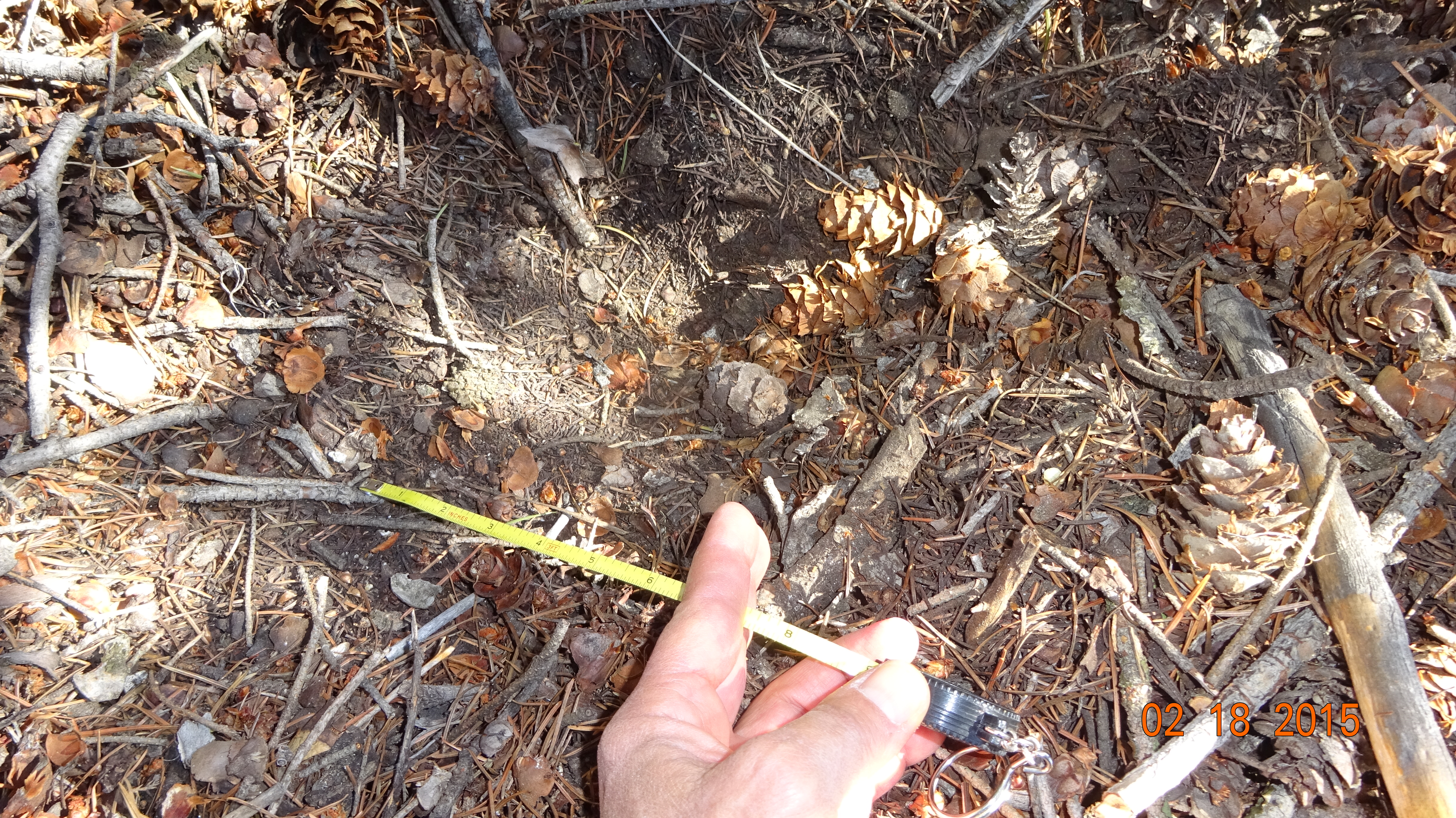
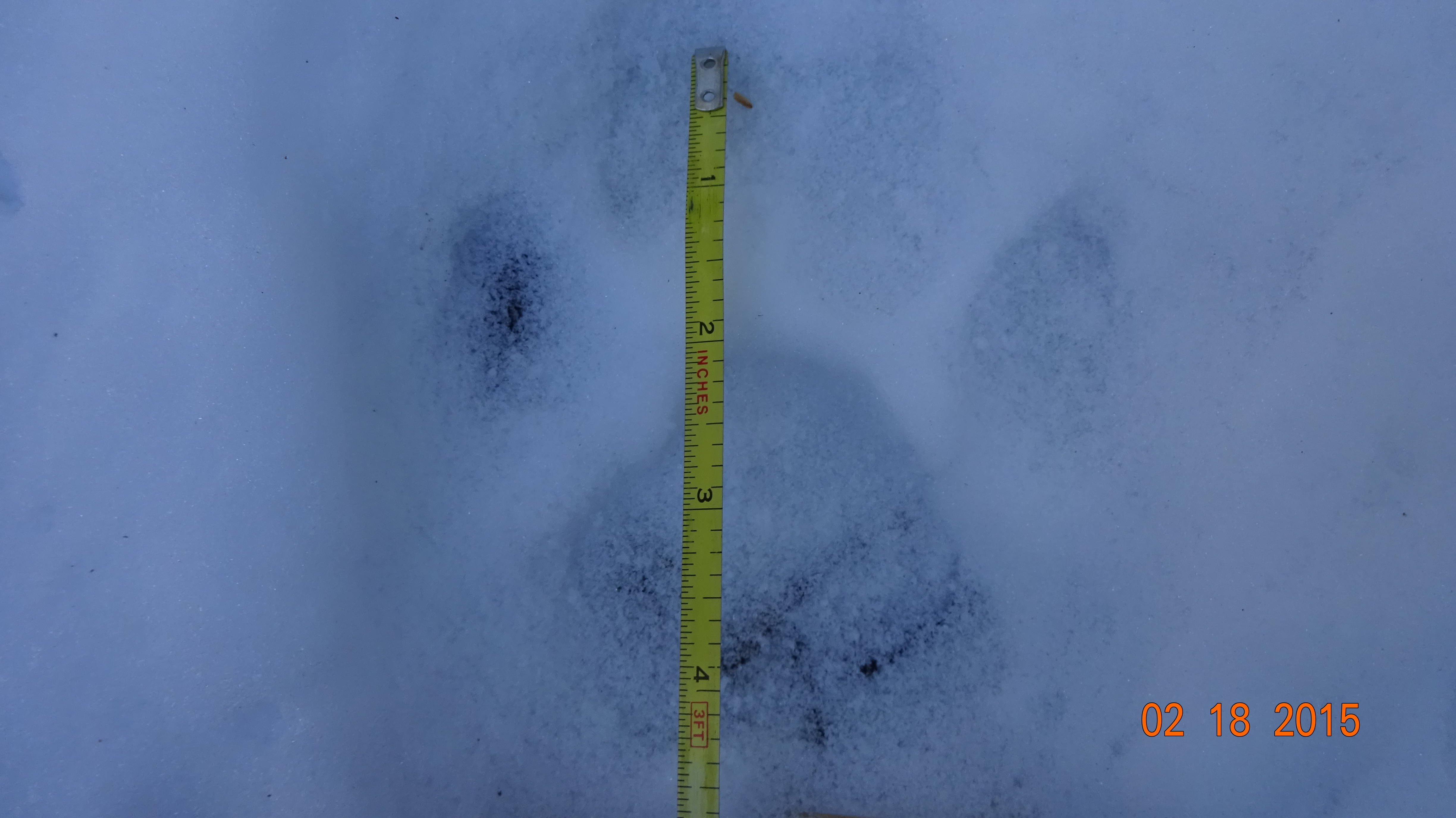
Measuring this print, its shape.  I decide its a male and then confirmed by the scrap it left

Measuring this print, its shape. I decide its a male and then confirmed by the scrap it left

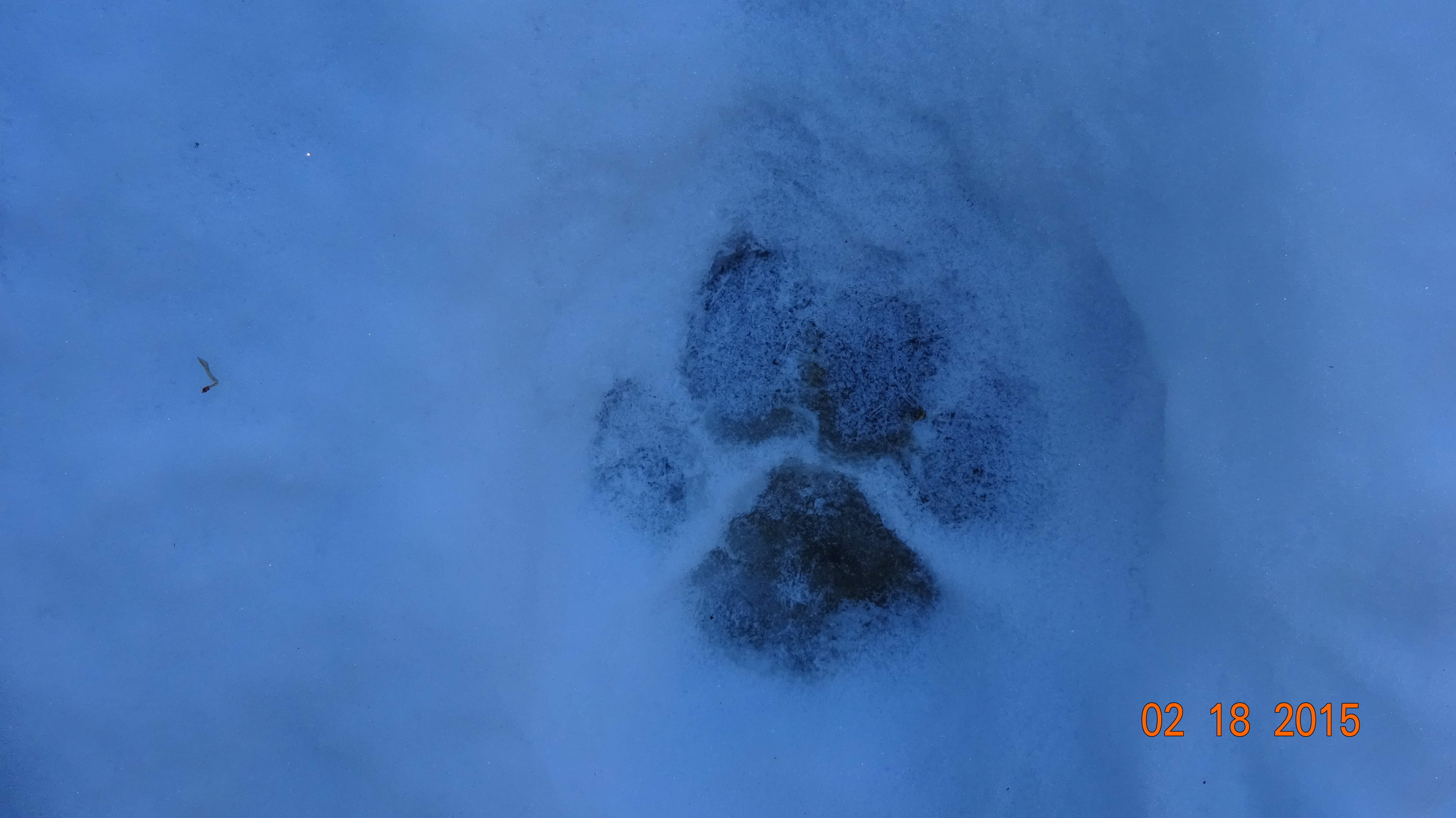
Big cat print

Big cat print

I am still trying to wrap my head around trophy hunters.  Mountain lions are beautiful animals–much more beautiful alive than dead. They move with perfect grace, are the most elusive predator, and left alone (see the results of a no hunting policy in California) will self-manage and have minimal encounters with humans.  We can easily live side-by-side with these predators as long as we do not fragment their habitat and/or protect our livestock wisely.  So why hunt them?

One cat hunter said it was exciting hunting a predator that backtracks and ‘hunts you’.  But that is just imaginary thinking. Toni Ruth describes mountain lions as the “Clark Kent of the animal world”; in other words, very mild mannered.  A cat that backtracks you is simply a curious cat.  And using dogs to find and tree your prey, and then simply taking your shot at a sitting animal is not hunting, but killing.  Very few people eat mountain lion.

When I first moved here, wolves were listed as protected.  A cat hunter’s dog was killed by wolves and the cat hunters stopped coming around.  But this year they are back and don’t seem to care any more about wolves taking their dogs.  The country I live in has no reported incidents of livestock being killed by cougars.  And over-hunting big males leaves a lot of adolescent males running around getting into trouble.  In short, hunting disrupts a tight cat social structure that self-regulates and keeps the cats out of human trouble.

All in all, it was another fine day of cat track hunting.nice cougar track


The Health of the Land

With the warm temperatures, the December snows are melted off in most places around here. Because of that, some friends and myself ventured into some high areas that are usually inaccessible this time of year.

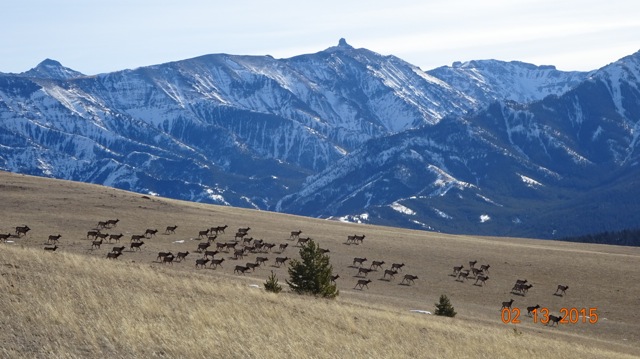
The Absarokas and elk

The Absarokas and elk

A glorious day in the high 50’s (how strange for ‘winter), we began the hike without snowshoes.  Sometimes we had to venture through large drifts briefly.  Lots of elk sign but no elk visible.  This is an area where I know a large herd of elk overwinter so I expected to see them at any moment.  As we approached the high meadows, about 250 elk moved down into the valley below and up to the meadows on the opposite side.

Elk

As we watched, two wolves called back and forth from the cliffs above the elk.  Interestingly, the elk continued grazing uphill in their direction as they called to each other.  Clearly, these elk were not disturbed by the wolves presence.  I have always maintained that wildlife are more in tune with each other than humans are with them.  After a while of howling, the wolves went on their way, making distance between themselves and the herd.  Those weren’t the calls of hungry wolves and somehow the elk knew that.

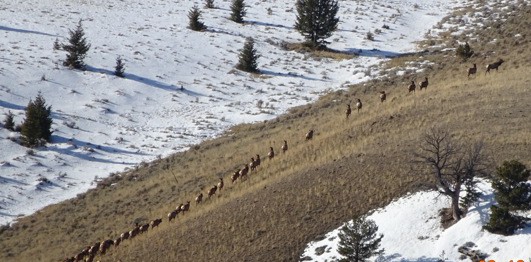
elk moving up the hillside

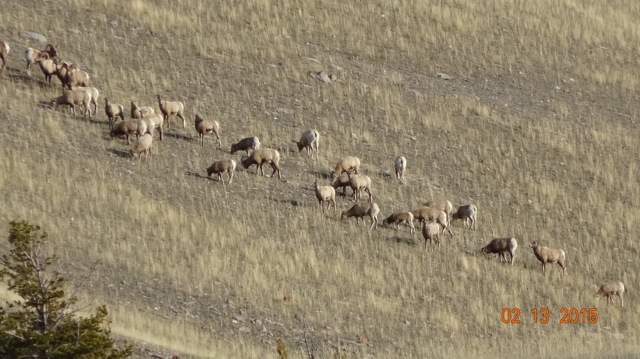
We moved on and came to a large herd of over 30 ewes, lambs and young rams grazing.  A band of about eight rams grazed on a meadow beyond.  A second herd of over 250 elk was working their way up the hillside.

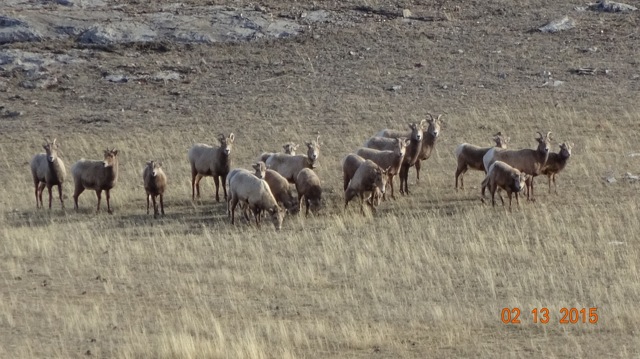
Bighorn sheep


Bighorn sheep


Ram group

Ram group

On the way back through the willows, four moose were relaxing and munching.

What a brilliant day and great sightings.  I was especially happy to see all the bighorn sheep we have this year in our area.

Moose mom and male calf

Moose mom and male calf