• MY BOOKS ON WILDLIFE, GARDENING AND MORE

  • The Wild Excellence

  • True stories of wildlife encounters around the Greater Yellowstone
  • Award winning eBook on Decomposed Granite, tips, how to's, what to watch for
  • Children's book. True stories of a dog and wolves. In a dog's voice
  • Written for dry Mediterranean climates in California, north and south

Speak for Wolves

I just returned from 2 nights and 2 days of a Speak for Wolves event in Gardiner, MT, the first one of its kind.  The event was a great success, with some very prominent speakers and filmmakers in the field of conservation.

The event at Arch Park.  YNP historic arch in background

The event at Arch Park. YNP historic arch in background

Friday night I saw Bob Landis’ new film ‘She-Wolf’ which is now on sale in the Park.  She-Wolf is the interesting and unique story of wolf 832f , better known as the Lamar Valley’s famous ’06 who was shot and killed in the very first Wyoming wolf hunt.  Bob answered questions at the end of the film.

This story is extremely personal to me as not only had I watched ’06 many times up close and personal in the Lamar Valley, but after her death in late December 2012, the entire Lamar pack (minus the remaining alpha male) spent the winter in my valley.  During that winter of 2013 I had the opportunity to watch the pack behind my house many times as well as track them.  With the death of their alpha female, they seemed at a loss of how to kill elk, even though there were thousands all around them, and they mainly killed deer.  In the spring they all dispersed–which is a typical disruption when pack members are killed.

'06 swims the Lamar river, emerges onto the road right in front of tourists.

’06 swims the Lamar river, emerges onto the road right in front of tourists.

On Saturday there were speakers such as Nathan Varley who runs a wolf watching business in Gardiner with his wife.  He spoke of how these last several years of wolf hunting around the Park boundaries has made his business even harder.  His yearly gross revenue of over 1/2 million dollars brings a lot of business to the Park and surrounding communities. People come from all over the world to see wolves as the best place for viewing them in the wild is Yellowstone.  But some of the viewable packs are gone.  Lamar Valley used to be the premier place for wolf watching, but now has only two wolves that are rare to see.

Louisa Wilcox of Center for Biological Diversity spoke of some of the knotty politics.  Appropriately enough, thunder and lightning cut her talk short.  Public lands ranching and trapping demonstrations–one of the main ways wolves are killed in Montana and Idaho–completed the day’s activities.

Coyote pups

Coyote pups

Saturday night was film night.  Two short films on Wildlife Services (Exposed: USDA’s Secret War on Wildlife) and how they indiscriminately are killing wildlife were shown.  Then Camilla Fox, Director of Project Coyote, presented a film on how Marin County (my old alma mater) ranchers have done away with Wildlife Services and implemented a program of natural protections.  These include guard dogs, better fencing and llamas.  The county has saved over $60 million dollars plus most ranchers have seen either no predation or very little predation by coyotes.  All this and the biggest plus is they are no longer poisoning wildlife.  Instead, the coyotes are doing their job of controlling the rodents around the ranches.

Dr. Robert Crabtree, who has done all the major research in the Park on coyotes, was present for the panel discussion afterwards, as well as George Wuerthner, Western Watersheds Project Oregon Director and author.

Sunday’s event included a wonderful talk and ceremony by Jimmy St. Goddard of the Blackfeet Tribe.  Here’s a short clip of Jimmy giving a prayer in Blackfeet.

Doug Peacock gave a great talk about the plight of the grizzly bear, who the USF&W and the states are just itching to delist in 2015, and how that might impact the numbers of the Great Bear.

All in all it was a great event with talks from dedicated individuals who are working hard to make a difference in our treatment and perception of wildlife and wildlands.

Since I traveled through the Park to and from Gardiner, here are a few of the wildlife shots I took on my journey.

Moose on highway 212 outside the Park

Moose on highway 212 outside the Park

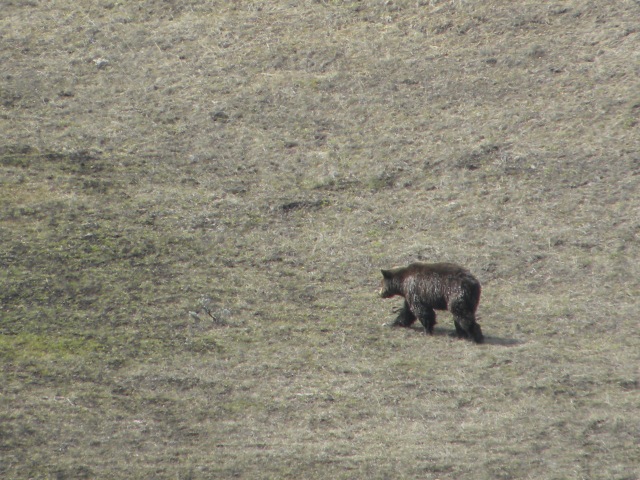
Little Black bear in Yellowstone

Little Black bear in Yellowstone

Bald Eagle

Bald Eagle

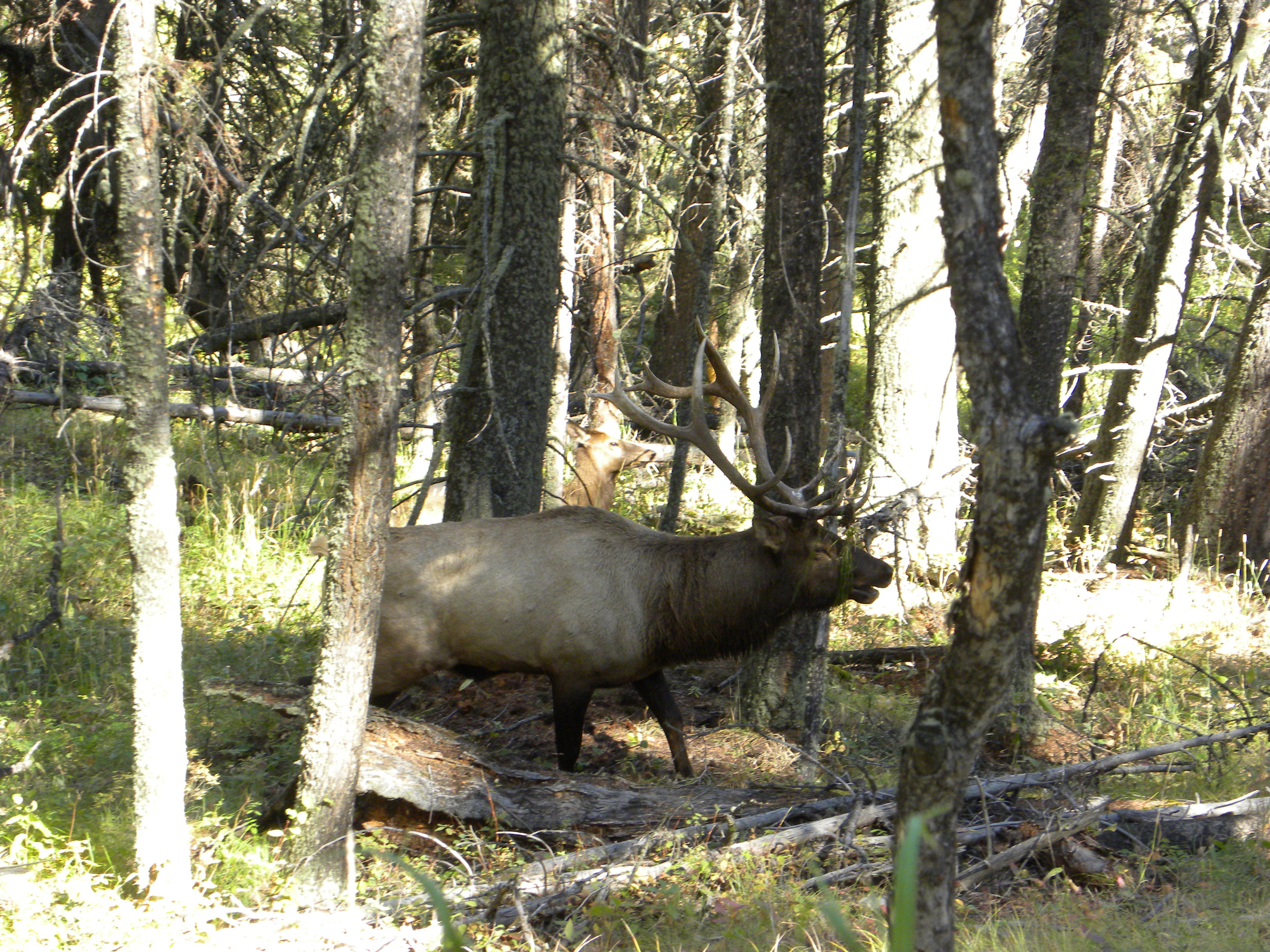
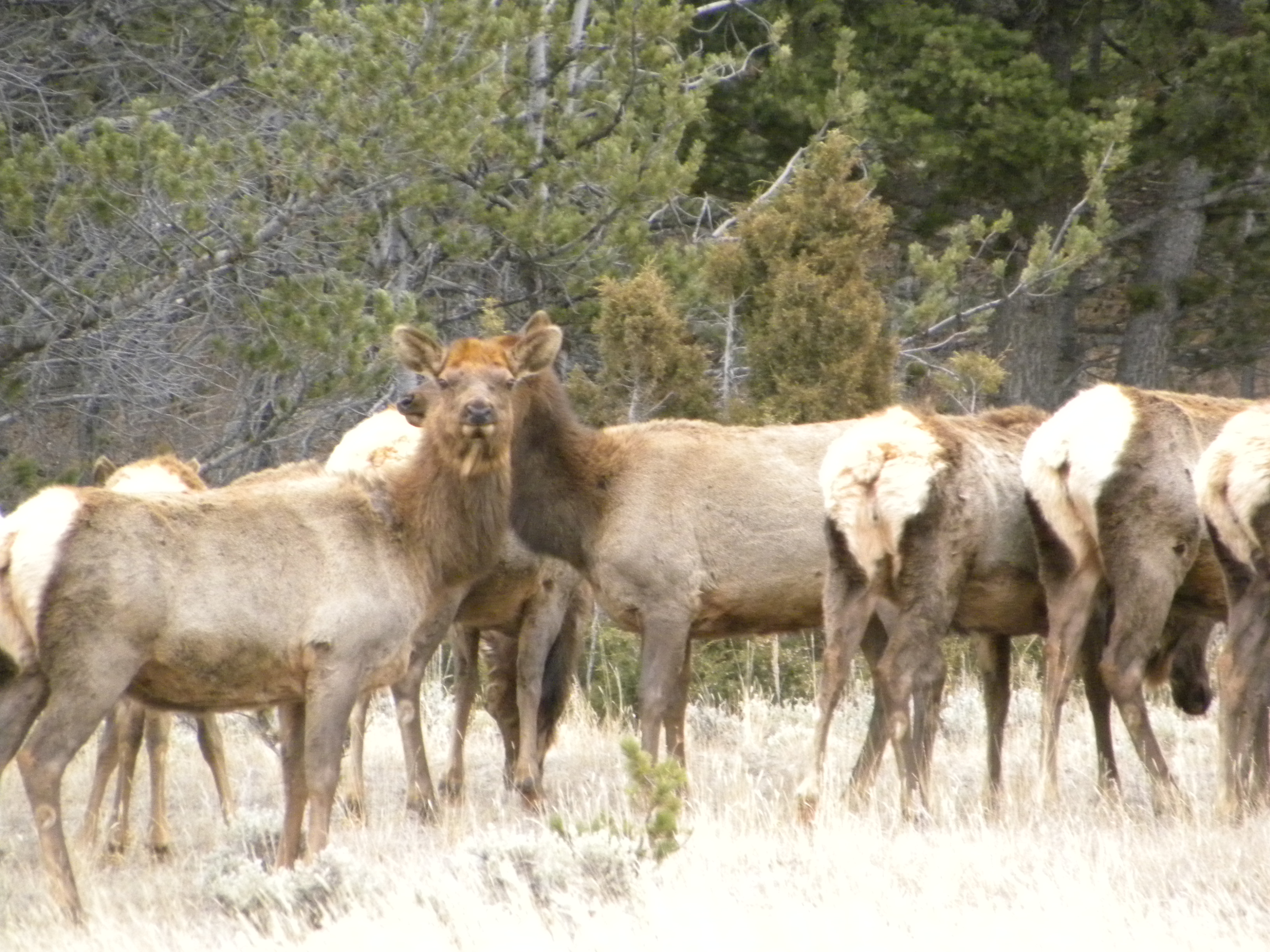
Elk lounge on the high school field in Gardiner

Elk lounge on the high school field in Gardiner

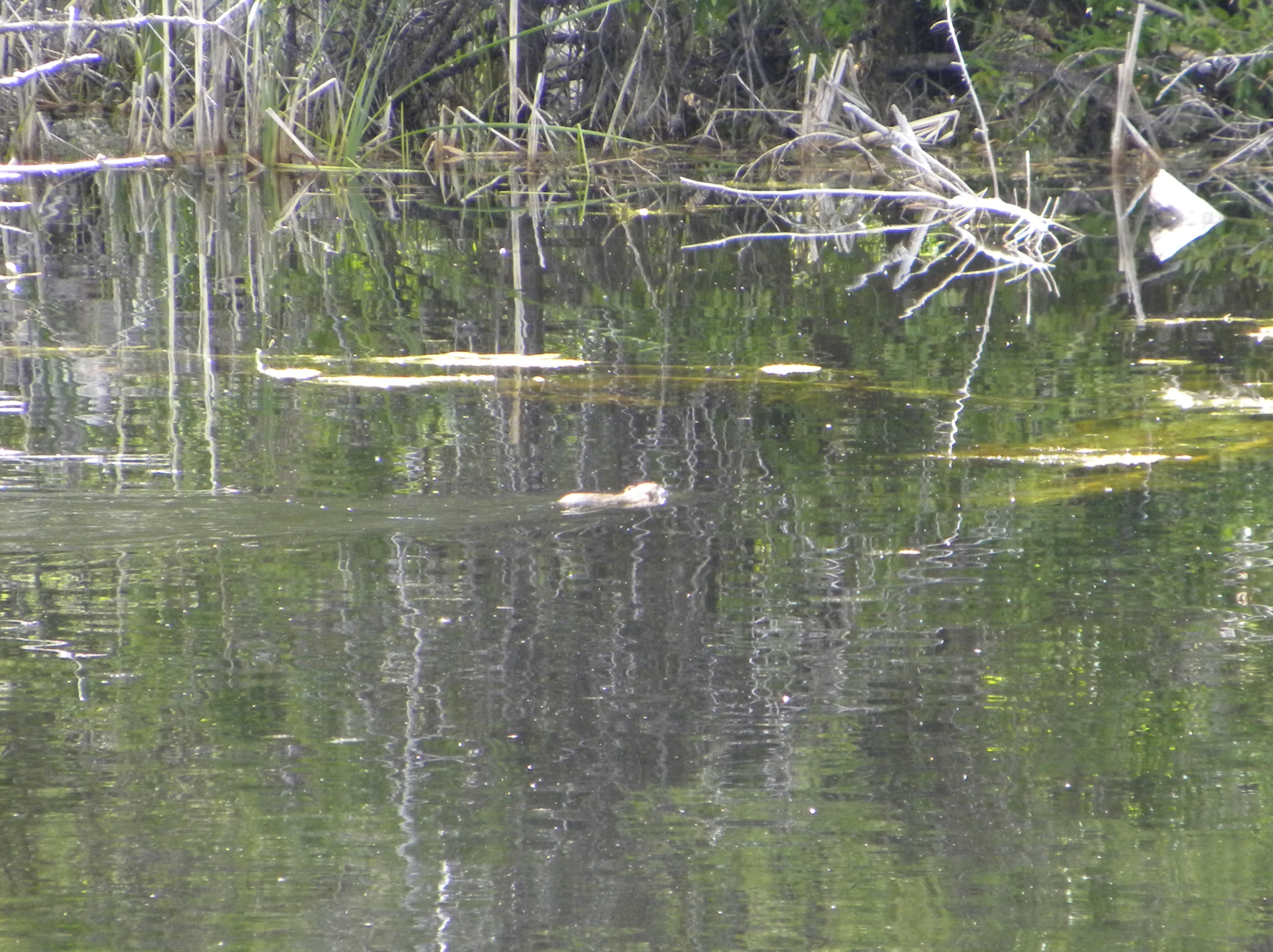
Muskrat photo finally!

Muskrat photo finally!

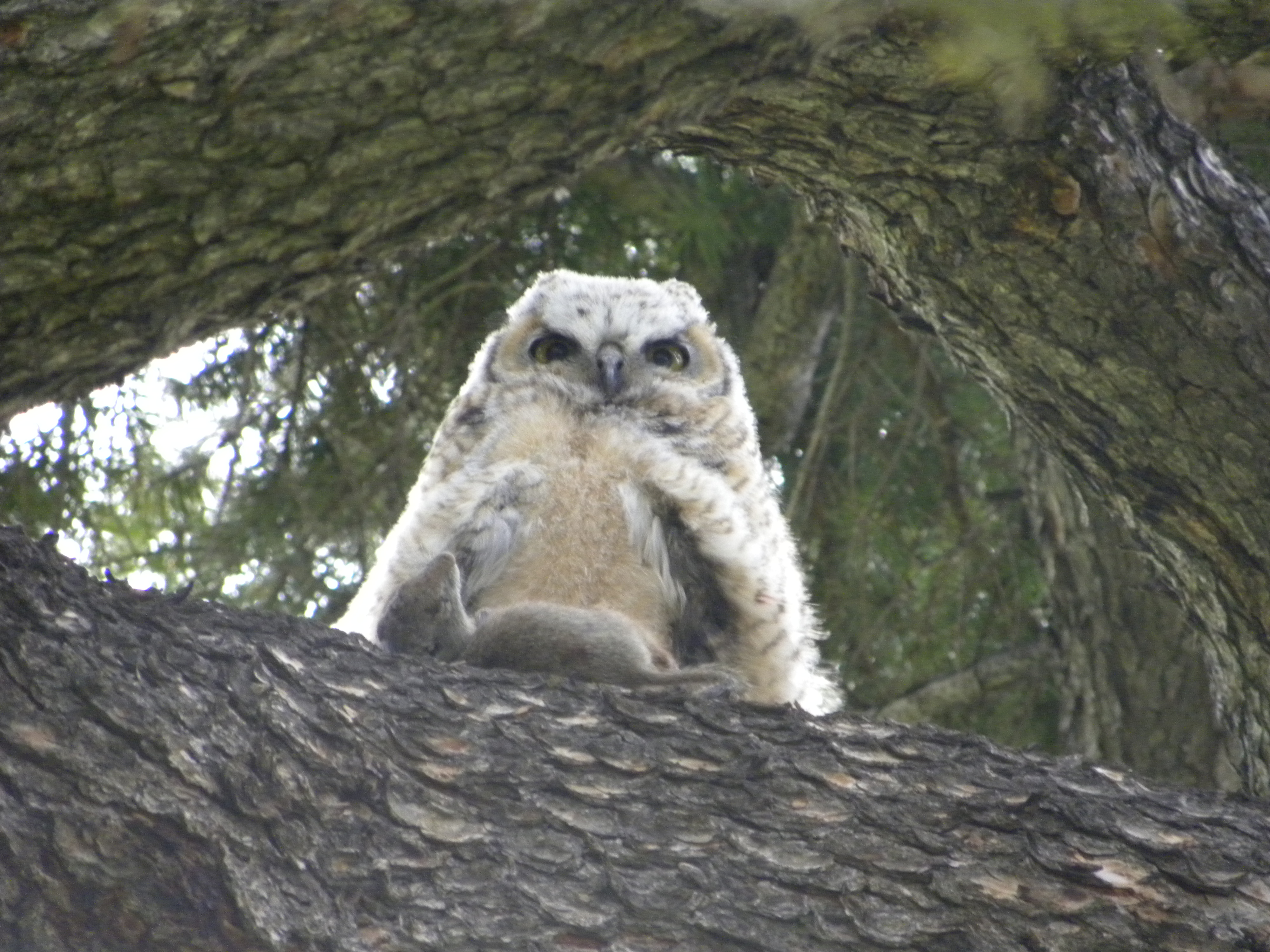
Great Horned baby with mouse

Great Horned baby with mouse

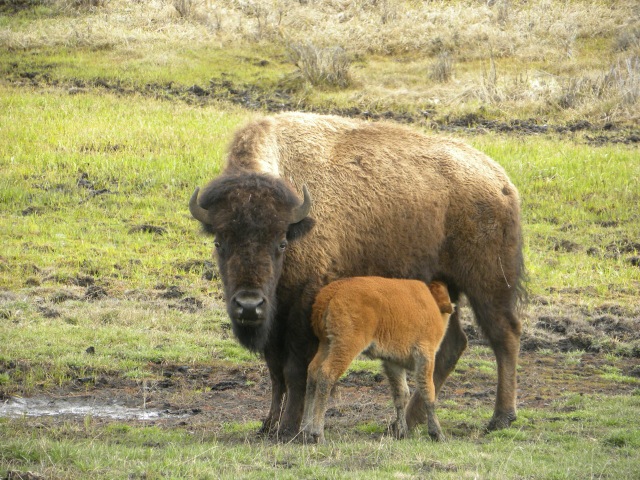
Bison and baby

Western Painted Turtles

A few weeks ago I went to one of the local pet stores for some dog treats, and saw three turtles in a large bin outside.  Two of the turtles were non-natives, but one was a Western Painted, native to all parts of the west as far north as Canada.  Western Painteds hibernate in winter by burying into the mud.  I couldn’t resist, paid the $30 and brought what I think is a female turtle home.

The pet store owner told me this turtle is about 10 months old and from Denver.  I had just finished a water project, and it seemed auspicious to put my new turtle in our restored marshy riparian area.  It’s a good habitat with continuous water, sun, as well as willows.

Bringing the turtle home to the redeveloped spring

Bringing the turtle home to the redeveloped spring


I looked for the turtle every day, but soon, after about a week, the turtle had disappeared.  I worried.  Had a predator gotten it?  I know little about Western Painted Turtles so I started reading up.  Yes, Hawks predate on them, but that seemed unlikely given the plethora of ground squirrels and other rodents around.  Besides, my turtle was well camouflaged. There are no dogs around and very few raccoons.  I wondered what was going on.  But five days later I had my answer.

Nearby my home is a forest that harbors seven springs.  It is a swampy place that was logged about seven years ago because most of the old spruce were dead from beetle kill. Between my home where the turtle resided and this forest is a large meadow.  My neighbor who lives about 1/4 mile away in this forest called to say the turtle was in her yard in the stream by her home.  I figured out that the turtle had followed the watercourse till it ended, then took a hard right across the meadow and through the woods.

I retrieved the turtle and brought him back to my marsh, amazed how far she had traveled in so short a time.  But only five days later the kids at the horse camp across the street knocked on my door carrying the turtle to say she had once again wandered far away–this time in the opposite direction, crossing the road and exploring their large horse pasture.

Western Painted turtle release

Western Painted turtle release

This wanderer needed a decent home and some confinement.  I wondered if turtles, like cats, need to spend their first few weeks confined to adjust to a new home.  I read that they sometimes try to return to where they were born.  Could this turtle be going east towards Denver?

So today I took the turtle into the swamp former forest and found it a nice stream that had lots of mud and vegetation as well as sun (Western turtles spend a lot of time sunning themselves).  I created a ‘fence’ of chicken wire and I plan to purchase two more turtles as company.

Creating a habitat area with a chicken wire fence

Creating a habitat area with a chicken wire fence where the stream comes through

These turtles are native.  And these turtles will overwinter.  I have a lot to learn about them.  The next two I get will be a male and a female but they won’t be sexually mature for many years.  One thing I have learned though–my turtle is not only an explorer, but a survivor.  She has been doing fine on her own for the last month despite all her wanderings.

Western Painted Turtles are beautiful and native to the West

What the Lamar Valley has to offer in May

A cloudy, snowy, cold Mother’s Day.  I like to head into the park on Mother’s Day and try to see babies.  I’m so close to the Lamar Valley, just one hour to the Buffalo Ranch, that I usually don’t get much further, and don’t need too.  All photos below are from today.

A few Mother’s Days ago there was so much activity in the valley–wolves on wolves competing with bears, coyotes and bison babies, you-name-it.  Today was a different Mother’s Day.  The Lamar activity has calmed down in general.  With few wolves, there is just less activity.  But spring is always an excellent time to see bears and today was no exception.

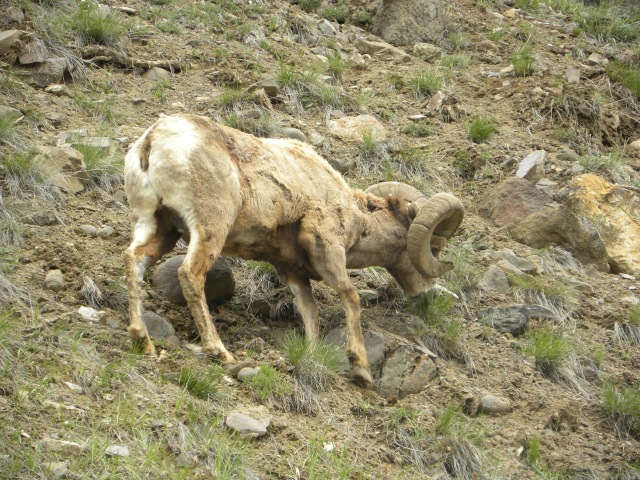
I saw a total of 5 grizzlies in the Lamar–a mom with 2 yearlings, and two boars. Grizzly The boars had a brief face off for a few tense moments, but the bigger one just went his way.  Bighorn sheep rams stood by the roadside; a coyote was on a bison calf carcass, and the bison babies and moms were all along the road.  I watched a wonderful scene of a young frisky bison calf jump around, then come back and nuzzle his mom.  The mom and him butted and rubbed their heads, then he was off romping again.Bison and nursing calf

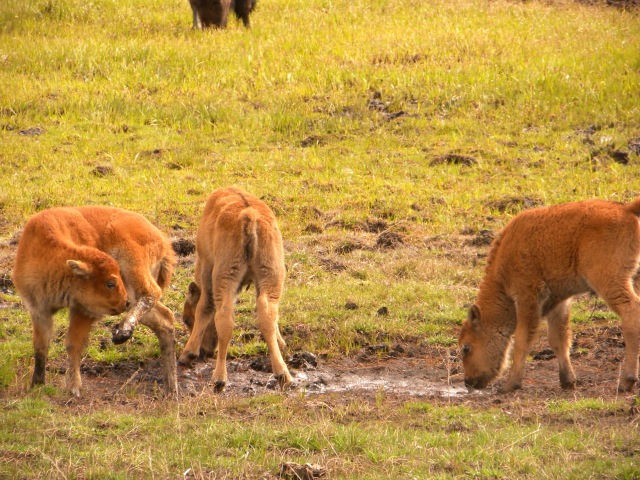
What strikes a person traveling through the Park is how many people LOVE to visit this area, and some many times a year.  I spoke with a fellow who travels here at least 4 times a year from Rhode Island.  He comes in winter to Jackson to photograph elk on the refuge.  Then he returns for the antler auction, trying to match up his photos with a matched set of antlers (75% goes to the Refuge, 25% to the local boy scout troop who do the collecting of the antlers).  He comes other times just for wildlife watching.  Many of the people I spoke with come out every May, staying outside the Park at the gateway communities.  Some people come from as far away as England.  Some have even bought second homes here.  And what are people looking for when they come–they all want to watch predators!  “I want to see a bear” one person told me.  They’d like to see wolves, bears, foxes.  It’s easy to see elk, bison, and antelope.  But predators are exciting for people to watch.Bison babies

And the predator that is now obviously ‘missing’ in the Lamar viewing experience is the wolf.  Although there is a pair there who have pups, two grown wolves are hard to spot, as compared to over a dozen in the pack just a few years ago.

From where I sit in my valley, the wolf hunt has hit the Lamar hard as these wolves travel back and forth in the winter time following the migratory Lamar elk herd outside the Park.  The Wyoming Game and Fish has proposed an increase in the 2014 wolf hunt numbers.  Most areas would have an increased quota–my area 2 would be increased from 4 last year to 5 this fall.  In 2013 5 wolves were killed, one above the quota.  There is a confirmed pack of 6 wolves here.  Why is the quota most of the adult pack?

Please take a look at this sane proposal below from Brushback Guide Services.  They propose Tourist and Science zones next to the Park with either 1. no harvests, depredation only or 2. extremely low quotas with a buffer of 10-15 miles around the Park, thereby tightening the areas or 3. very limited shortened seasons in these special zones.

This proposal would protect the tourist economy as well as balance with those who want to hunt wolves.  A continued increase in the wolf hunt will only have continuous impacts on the Park and the wolf population and pack structures in the Greater Yellowstone area.

Wolves, and all predators, should be appreciated for their necessary impacts on ecosystems.  They are needed in the ‘web’.  They manage the meso-predators, they foster healthy landscapes, they provide food for other large predators such as bears, and for thousands of years ungulates have been evolutionarily healthier because of their presence.  Ram

Yet the reality today is economics and dollars drive the argument and the management policies.  So here is what Brushback Guide Services proposes that I think works.  Proposal #1 is what I prefer:

Proposal 1- Science & Tourism Units

Units that are important to wildlife viewing would be considered “Science & Tourism Units” to allow scientists a chance to keep ongoing wolf studies without having so many wolves taken mid-life before their full potential data is reached. The other purpose for these units is tourism. Tour companies can show people wolves in areas where they are not hunted better than areas where they are hunted. These units have good road systems for tourism and border national parks for ongoing studies. Scientifically, these units allow us to know how to manage wolves in areas where they do get hunted because we know how it should be when they are not hunted or very limited hunting is allowed.

Proposal: Science & Tourism Units- Unit 2, 6, 8, & 9
Depredation only OR extremely low quotas of 1 or 2 wolves
Depredation only is preferred in “Science & Tourism Units”.

Proposal 2- Cut Units In Half Along Park Borders

Give units bordering the national parks an approximate 15-20 mile “wolf hunt free zone”. Delegate these by nearest large landmark such as creeks. For example: Creek No Name is 15 miles from east side of Grand Teton National Park border, hunters can hunt the east side, but not the west side of No Name Creek. Another option would be to START the hunt unit 15-20 miles away from the park designated by large, easy to use and not mistake landmarks/roads.

Proposal: Start wolf hunt units 15-20 miles from park border
Keep original quotas as Game & Fish has designated
Park wolves will be less affected helping science and tourism.
Depredation still in place.

Proposal 3- Keep The Current Plan/Units, Lower Quotas & Shorter Season

I’m going to focus again on national park border units. This approach gives “Science & Tourism” people a chance to have a better experience by showing and recording wolves. This will also allow hunters a chance to hunt units away from the national park keeping hunters happy. Quotas that would have less impact to us would look like this:

Unit 1- 3 Wolves October 1- December 31st

Unit 2- 2 Wolves November 1st – November 30th (Science & Tourism Unit)

Unit 3- 7 Wolves October 1st- December 31st

Unit 4- 4 Wolves October 1st- December 31st

Unit 5- 6 Wolves October 1st- December 31st

Unit 6- 2 Wolves November 1st – November 30th (Science & Tourism Unit)

Unit 7- 1 Wolf October 1st- December 31st

Unit 8- Depredation Only (Science & Tourism Unit)

Unit 9- Depredation Only (Science & Tourism Unit)

Unit 10- 3 wolves October 1st- December 31st

Unit 11- 2 Wolves October 1st- December 31st

Unit 12- 1 Wolf October 15th- December 31st


Please get your comments into Wyoming Game and Fish regarding the proposed hunt by May 30th.  

The Park NE Entrance Opens

Although the official opening date for highway 212 from Pilot to Cooke City is next saturday May 10th, the plow crews have been hard at work and as of today the NE entrance to Yellowstone is open!

Following the Plow to Yellowstone

Following the plow to Yellowstone


I took the chance, drove the road, and saw the plows were completing their finishing touches on the remaining slush by Fox Creek bridge.  It’s still mostly winter up there, with Pilot and Index covered in snow and the Clark’s Fork River barely muddy.

While Cooke City has plenty of snow, the Lamar is lower and so open, yet the green up has barely begun there. Tourists drive in from the Mammoth side, then turn around, yet a few passed me leaving the Park’s NE entrance towards Cody.


Cooke City today, looking towards the NE entrance

Cooke City today, looking towards the NE entrance

I’d left late since I didn’t know if the road was passable, so I just spent some time in the Lamar.  Here are a few sightings.

Grizzly

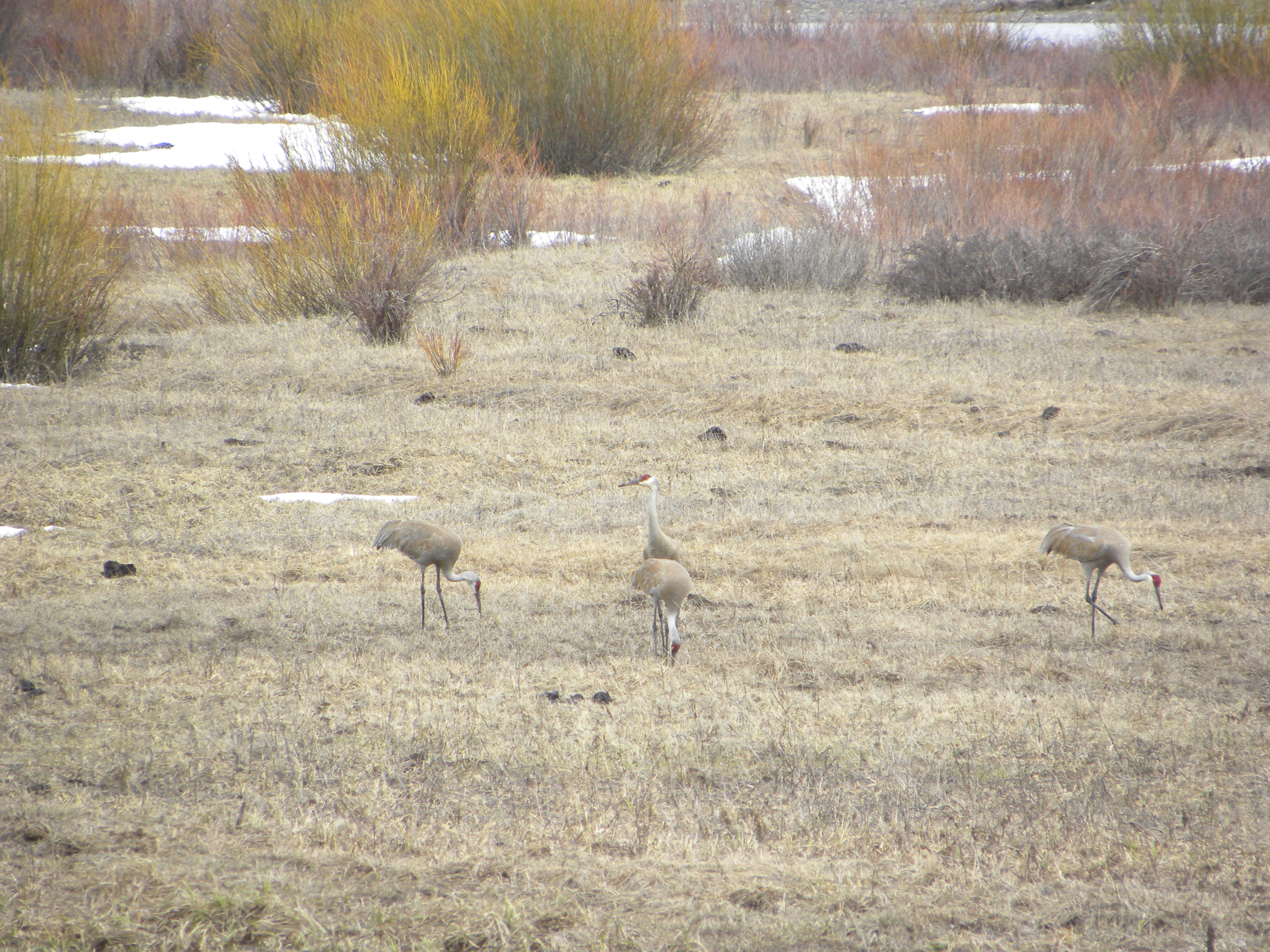
Sandhill cranes

Pronghorn


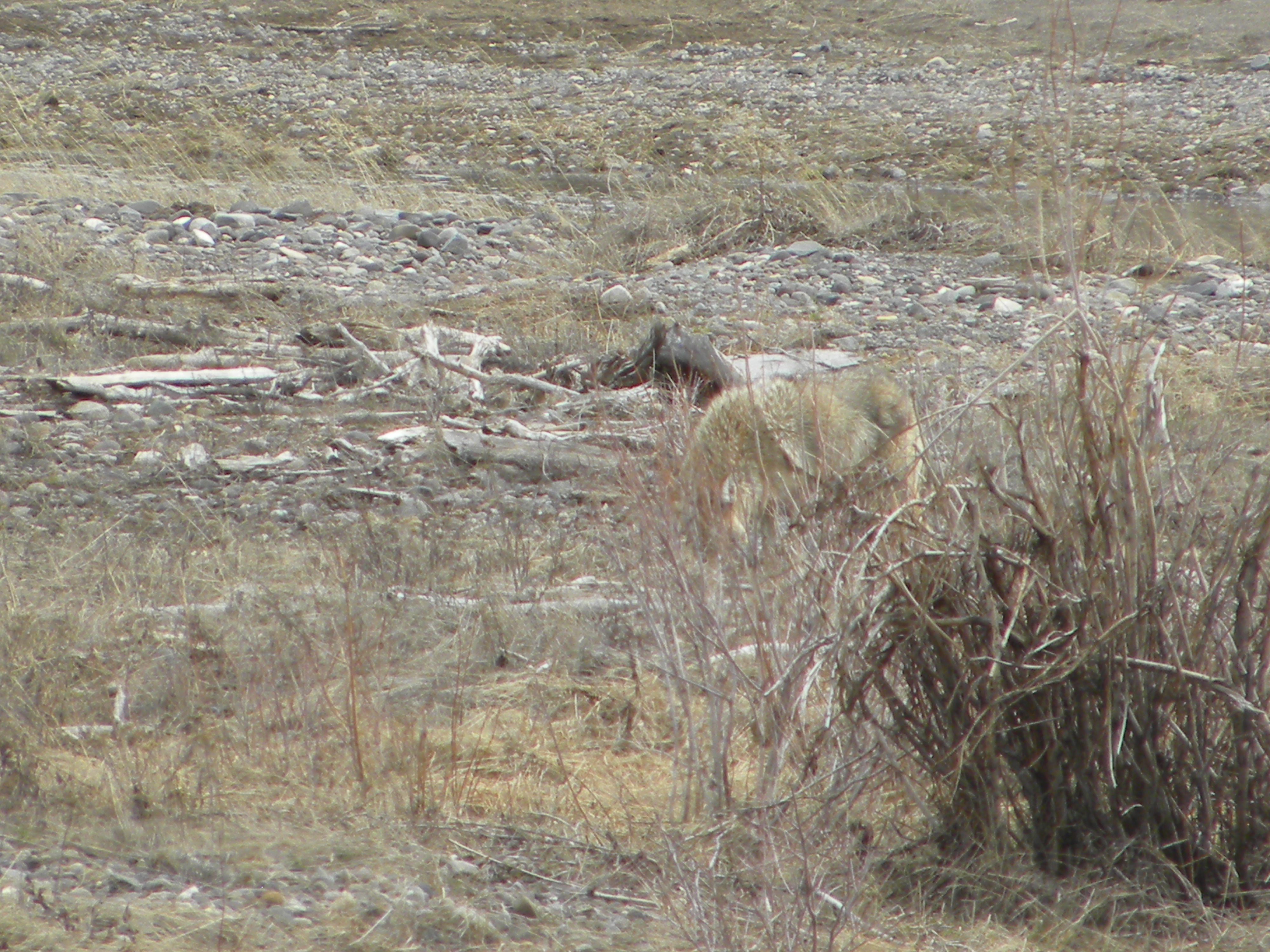
Coyote

Coyote

As of December 2013, the wolf count in the Park was 95.  Yet there were only 2 Lamar Canyons.  So seeing a wolf in the Lamar is pretty slim right now.  Who knows how many pups might show up this spring.  With an increased hunting quota being suggest by Wyoming Game and Fish for fall 2014, it’s likely that the Lamar pack will continue to stay small.  This pack tends to follow the fall elk migration eastward outside the Park.  Park wolves that are used to people are easy targets for hunters, whereas the wolves that have been through two hunts so far are rightfully scared of humans.  To me it makes good sense to create a buffer zone around the Park, or at least drastically reduce the quota in areas outside the Park where wolves tend to migrate or overlap in their territory.  Here is the link to comment on the proposed hunt increases for this fall.  Deadline for comments is May 30th.

Shed hunting

It’s that time of the year again–‘horn hunting’ season.  People do it for fun and for profit.  These ‘hunters’ are seeking deer, elk, and even moose sheds, which are not really ‘horns’ at all.  Horns are found in the bovine family, are a two-part structure, and are worn for the life of the animal.  The exception being the Pronghorn, which does shed them every year.  Horns are a two-part structure, with an interior of bone and a sheath of a type of hair follicle material, akin to your fingernails. So animals like sheep, bison, or cattle have horns for life.

Bison have horns

Bison have horns

Antlers, on the other hand, are also true bone but are shed each year and then regrown.  As the male adult animal ages, the antler gets bigger and wider.

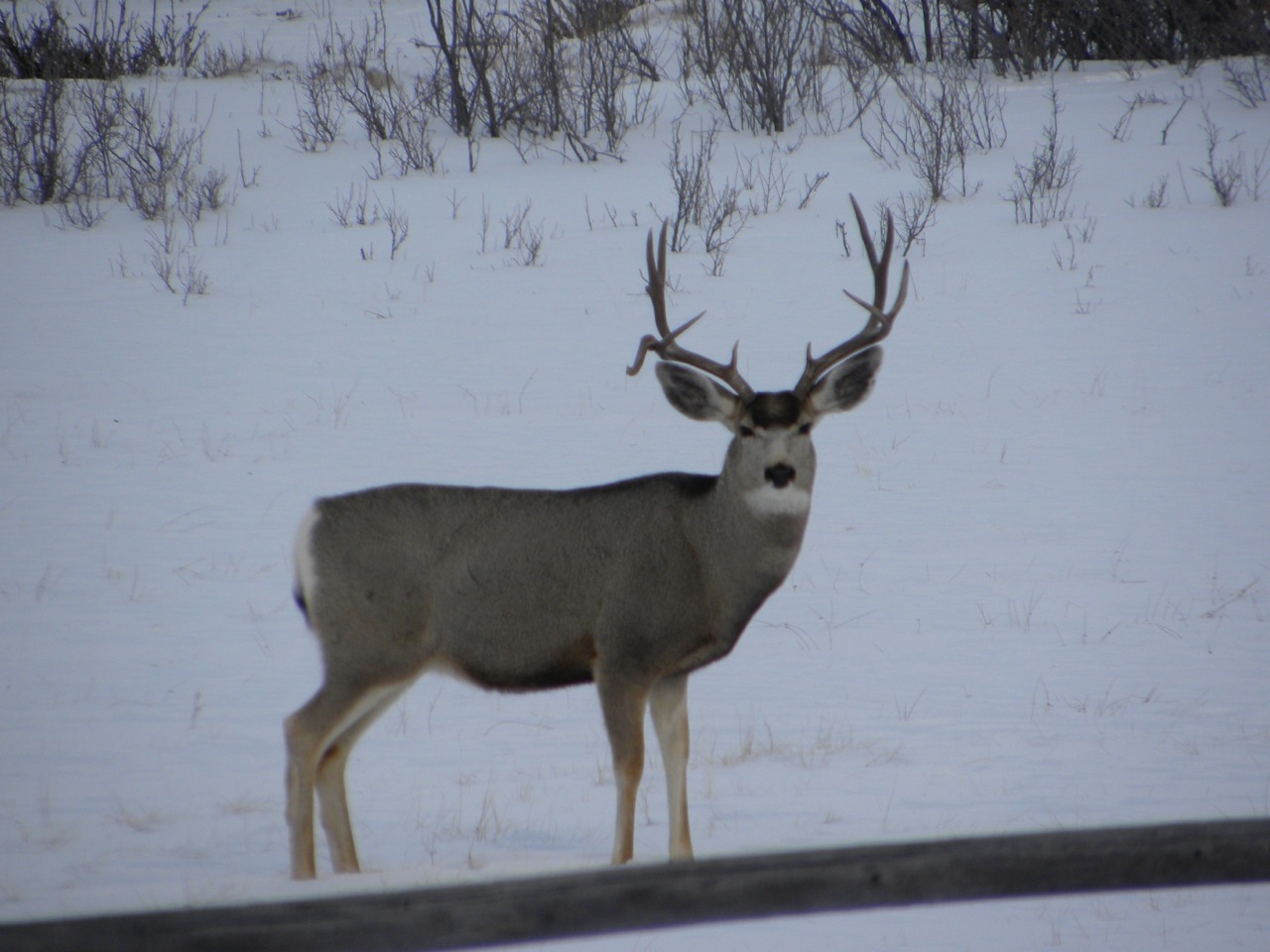
Deer with emerging antlers--in velvet

Deer with emerging antlers–in velvet

When I first arrived in Wyoming, I knew the difference between antlers and horns and couldn’t figure out why everyone called this amusement ‘horn hunting’.  It was just wrong.  People who know the difference, like scientists, will usually refer to it as ‘shed hunting’.  But I’ve come to accept it and I suppose the h-h sound was adopted because it just slides off your tongue better.

Antlers are becoming big business and that’s why people go after them.  I personally saw a small 6 point elk antler in a California window with a $250 price tag.  Antlers are cut up and sold for dog chews, buttons, door handles,key chains, made into furniture, used as table centerpieces, or whatever art pieces you can think of.  But what’s really driving the market is the Asian desire for aphrodisiacs.  Although I think Viagra is cheaper and actually effective, the myth in the Far East is that antlers, ground up into a powder, will make a man virile.  I suppose people will believe anything as well as pay for it.


DSCN3686_2

This deer has a dropped tine, probably a genetic anomaly

DSCN1036

Last year I took all the old, broken, antlers that had been lying around my property when I purchased it.  I’d thrown them into a pile in the yard.  They were white and almost powdery from age, but a small loaded pick-up truck fetched over $250! New, browner, bigger antlers can get up to $10 pound.

So far this season, I’ve found about 10 deer antlers.  I don’t ‘hunt’ them.  I prefer to be gifted–‘shed gifting’.  I’m hiking around and there is a ‘present ‘ on the ground of a nice antler.  It’s a nice surprise.  And sometimes I leave them.  I enjoy making things out of antlers, but most of the people I’ve talked to say they just throw them in their garage, and now have a garage full of them.

Antlers provide calcium for small critters like mice, porcupines, and even coyotes will chew on them.  People ‘hunting’ them in early spring can ‘push’ the elk and deer at a critical time when they are still stressed from the winter and don’t yet have the benefits of a full green-up.  Sometimes I wonder if all this antler collecting isn’t robbing some of the smaller animals of valuable nutrients, as well as what shed antlers put back into the soil.

Just a last note.  If you are out shed hunting, carry your bear spray as grizzlies are out now.  Here is a great article touting the efficacy of bear spray vs. guns.   Bear spray had a 92% efficacy with the other 7% being minor, non-hospitalized injuries and all bears lived.  Guns on the other hand had only a 67% efficacy with a 100% fatality for the bear.

And one last note:  it is highly illegal to pick up and take home sheds from Yellowstone National Park.  You will be fined and probably barred for life from the Park if you attempt to take antlers home.

Some tipi rings

The Bighorn Basin holds plenty of old secrets.  Prospectors, miners, strike-it-rich schemes. But what stirs my imagination most are Indian signs.

The history of the white man here is short and meager, a mere 150 years or so.  Wyoming only became a state in 1890.  The Bannock war of 1878 was the last Indian war around here.  Truly that wasn’t so long ago.

And although Lewis and Clark came through here 200 years ago, Native peoples have been living here for over 10,000 years, with the population rising and falling with the climate.  I went to an interesting talk last summer given by an archaeologist who had a unique way of assessing population correlated with temperature.  The time period known as the Altithermal, around 5,000 to 8,500 years ago, saw the fewest people living around the basin.  The Altithermal was a dry hot period and many of the native peoples moved higher, into the mountains, to survive.  Interestingly, the Altithermal termperatures in the Big Horn Basin are approximately the temperatures we have today, as our own temperatures are rising.

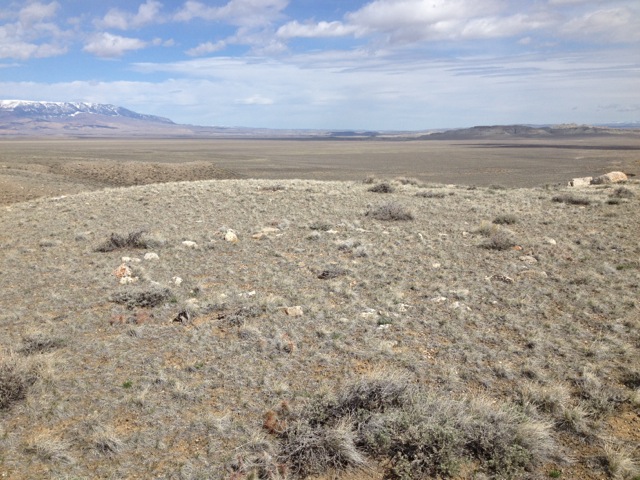
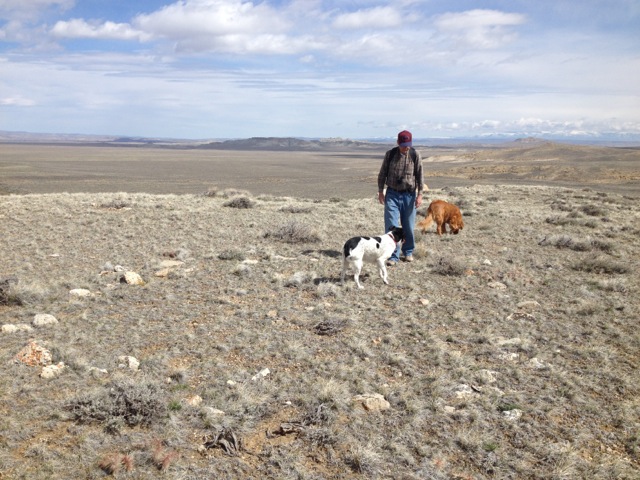
So when I was hiking around the desert last week and ran into some tipi rings, I couldn’t help  imagining what these peoples might have been doing and how they were living.

You can see the ring of rocks embedded in the dirt

You can see the ring of rocks embedded in the dirt

Another view

Tipi Ring

The rocks were used to hold down the tipi skirt.  Used over and over again, this location contained four visible rings, high on a hill.  Water was far below, although we did find a dry spring along the other side of the hill and closer to the rings.  My friend thought this was a hunting camp, since it was small and near in a prominent landmark.  And he might be right because the location was perfect for watching game, especially antelope and deer that might pass through.

Just outside of Cody there are a large amount of tipi rings above the Shoshone River.  You can tell they are more recent, say 150 years, as the rocks are not very embedded in the dirt.  The Crow used to winter down along the river and use the hot springs.  The hot springs is now on private land.

Another view of several rings outside Cody

Several rings outside Cody


It’s such a nice gift to run into these ancient signs.  They should be left untouched as they are part of our story and the story of the Land.

Rock circle big enough to sit in

A vision quest site I found

n

The Mysterious Cougar

I find cougars fascinating.  The perfect predator, they are so large yet rarely seen.  In fact, if you do see one in your lifetime, consider yourself lucky.  I’ve tracked cougars around here many times, but never seen one. I’ve seen their kills, and other sign, but never a real live cougar.

A long term major study is taking place around Jackson, WY, called The Teton Cougar Project, sponsored by Panthera and Craighead Beringia South.

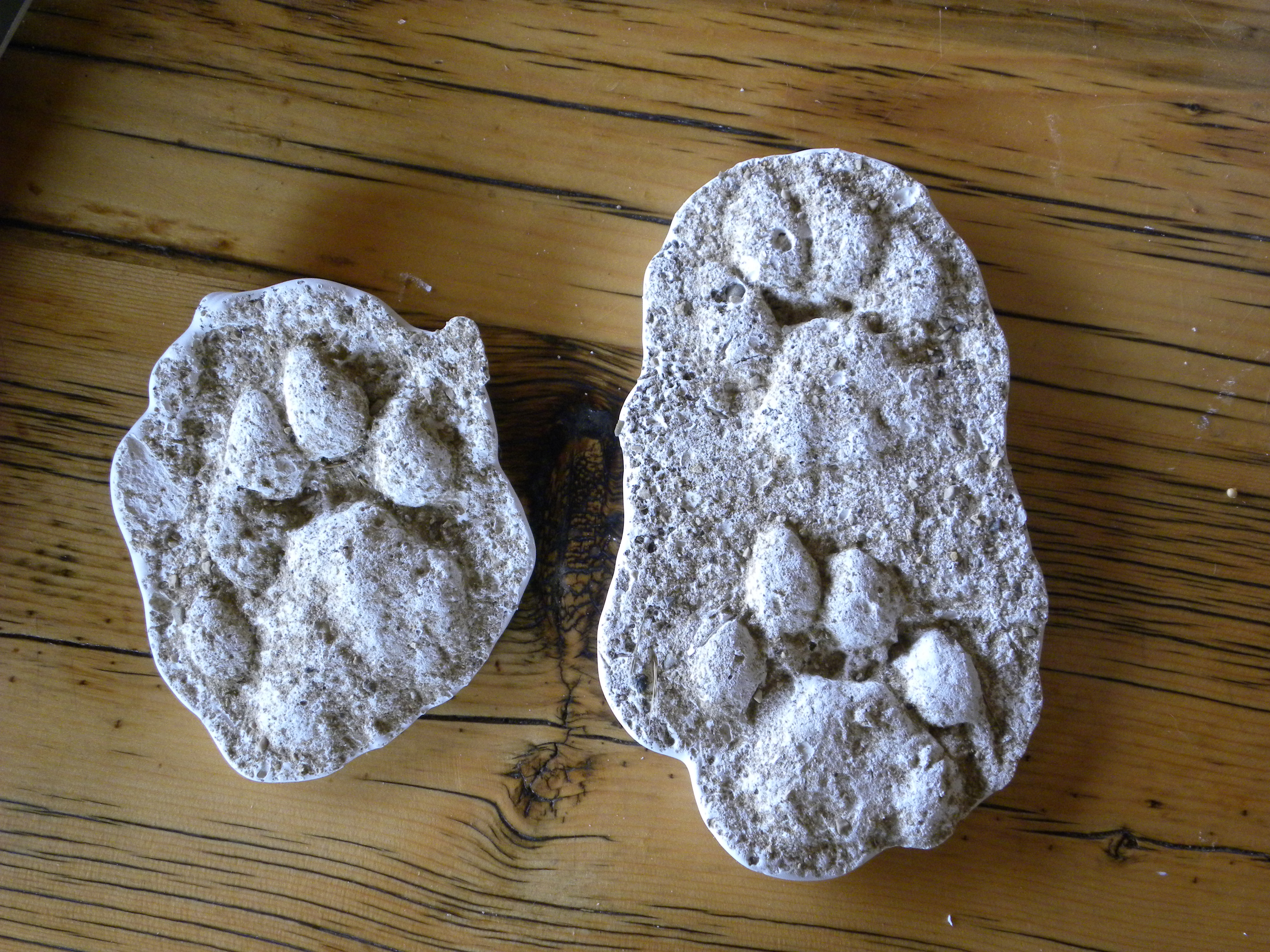
Cast of cougar prints--right side is rear on top, front on bottom.  Cougar was going at a fast trot.  Left print is a direct register

Cast of cougar prints–right side is rear on top, front on bottom. 

In a 900 square mile area, the project estimates there are around 15-20 resident adult cougars and these numbers have declined in the last 7-8 years.  Complete project data should be out soon when the study finalizes.  But some interesting tidbits they’ve found has been the social nature of cougars.  Previously thought to be solitary animals, with males and females coming together for only a short time to breed, the Cougar Project has documented, through VHS and GPS collars, females with young kittens helping feed orphaned yearling kittens as well as adult females spending time together.  They’ve seen males who not only know where the females are at all times, but pay visits when not mating.  Truly, the fabric of cougar society is complex, with a lot more communication and interaction than previously thought.

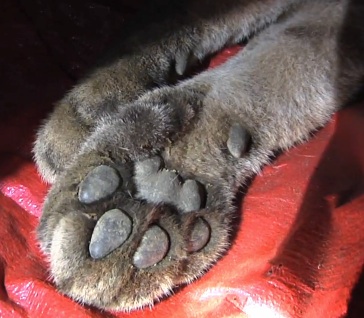
One of the major reasons for the Jackson study was to find out how three top predators are defining territory and their interactions–grizzly bears, wolves, and cougars.  It seems the cougars have been suffering losses of kittens to wolves.  And having to share their kills.  A recent National Geographic show called Cougar vs. Wolf featured cougar tracker Boone Smith looking for cougar/wolf interactions in the Bitterroots of Montana.  According to the documentary, Smith found cougars would win out defending their kills when the number of wolves in any pack (or interaction) was low.  A single wolf, or a small wolf pack, tended to leave cougar kills once the cougar showed up.  Not only that, but dead wolves killed by cougars have been found in the Jackson Hole study as well as the Bitterroots.  Smith shows a wolf killed by a lion in the NG show.  If you haven’t caught these two shows,  I highly recommend them.Cougar paw

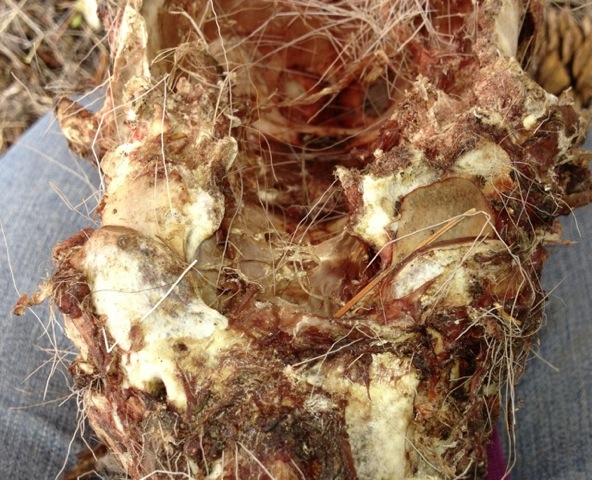
Cougar hunting goes on during the entire snow season here in Wyoming, from September 1 through March 31, until the area quota is filled.  Some areas have unlimited quotas.  I called WG&F and asked how they set their mortality limits.  The answer proved that it’s vague.  When a hunter kills a lion, he or she is required to present the pelt and skull to the department.  At that time they determine the sex and take a premolar tooth to determine the animals age.  From this data, somehow they are extrapolating population sizes in each zone.  cougar teeth copy

Given the secretiveness of lions and the necessity of collaring in order to obtain the data of the Jackson thirteen year study, I highly doubt that a premolar check is going to give the required full data for setting kill quotas.  I tried doing a rough square area count.  For my zone, I came up with approximately 3000 square miles and the quota is 20 lions.  The area north of Jackson, zone 2, is roughly 2000 or 2200 square miles with a quota of 5, and now at the end of the season, is still one short at 4 killed.  Wyoming Game and Fish is helping fund the Jackson study.  From this study they now have a good idea of the number of lions in that area, and the quota is 1/4 the amount of my area.  A lot of my area, zone 19, borders the east side of the park, but more than half is in the desert which is in the wolf predator (or shoot on sight) zone.  Cougars might be more abundant. Still, doing the math used by Panthera of 15-20 resident cougars in 900 sq.miles, that means 1/3 of the adult cougar population is being hunted and killed every year!

Was this a cougar scratch that was next to a stashed kill?

Was this a cougar scratch that was next to a stashed kill?

I’d like to learn more about cougars.  I know where to reliably find tracks in the winter in my area.  I’ve tried to study how to identify the signs of a cougar kill.  I’ve heard people say ‘”Found a dead deer killed by a cougar near such and such a place”; but just finding a dead deer (cougars main prey is deer in the summer; and deer and elk in the winter) does not qualify it for a cougar kill.

When I go out to the area where I know I’ll find tracks, I spend time looking in obvious places for a kill.  Cougars like to drag their kills into brushy or more hidden areas.

Cougar dragged this kill to the forest edge where Koda now is enjoying it

Cougar dragged this kill to the forest edge where Koda now is enjoying it

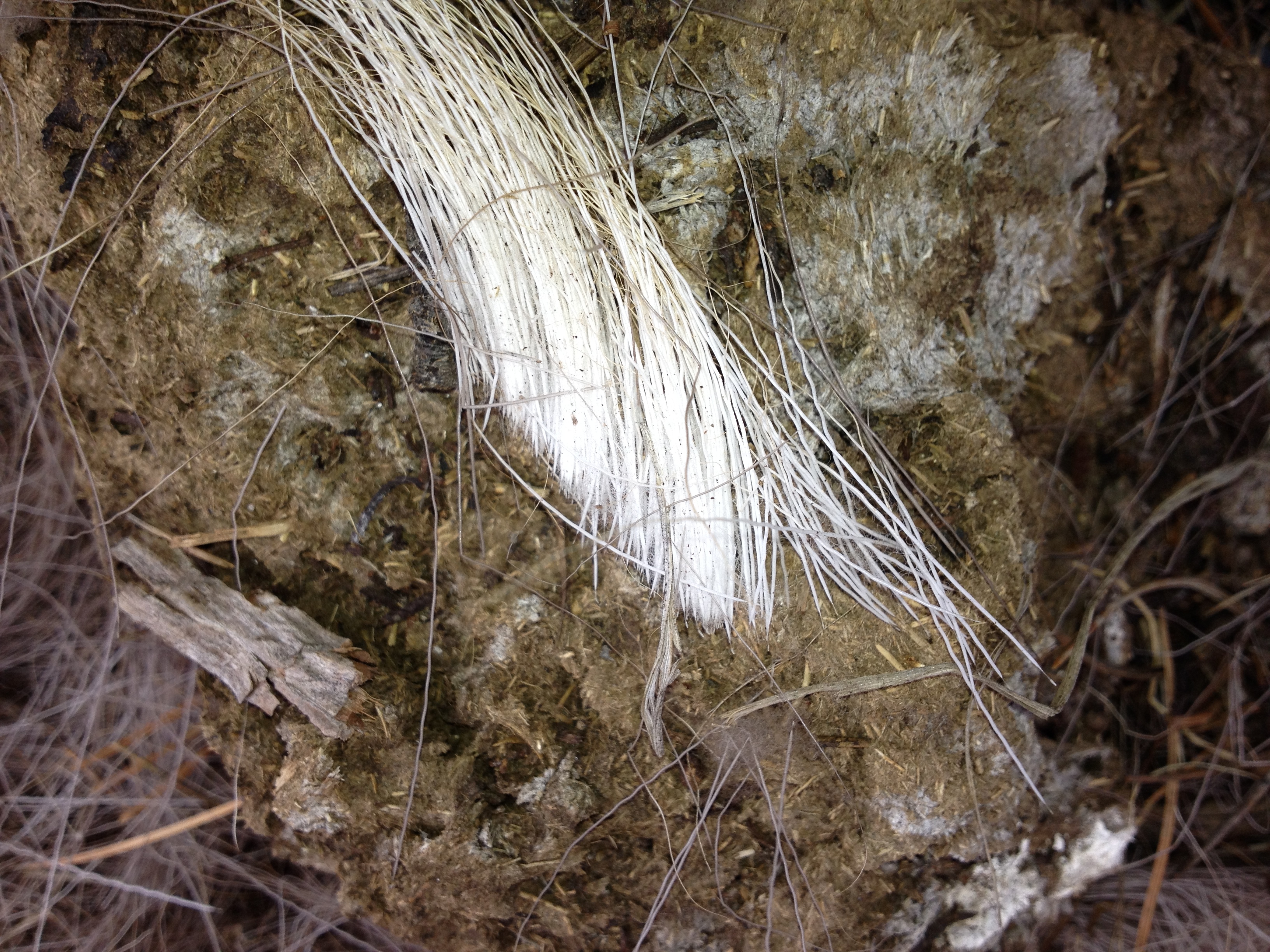
They tend to cover their kill and continue to return till its gone.  Sometimes they just eat the internal organs.  A few tell-tale signs are the way the hair on the prey is taken off.  A canine will just rip the hair, tearing it away with skin attached.  A cougar shears the hair, making it look like the animal received a scissor-like haircut.

Haircut look.  Hair is sheared off.

Haircut look. Hair is sheared off.

A few days ago I found a dead elk. It had been killed in the open and dragged under some nearby trees.  I checked the skull and found two puncture wounds. All the evidence pointed to a lion kill.

Look closely on the left lower side of the photo and you will see 1 large and 1 small puncture hole

Look closely on the left lower side of the photo and you will see 1 large and 1 small puncture hole

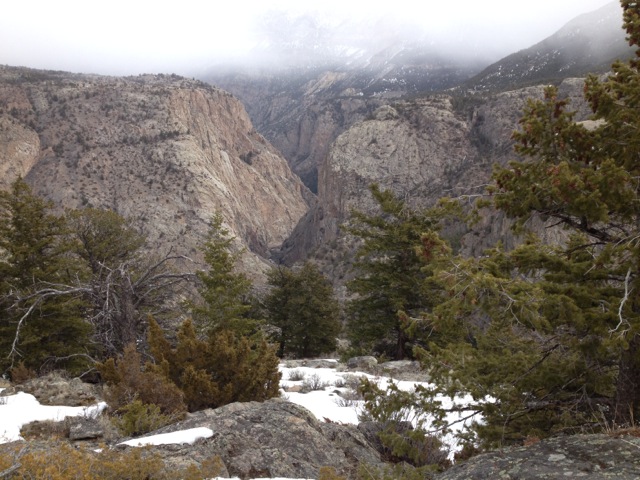
I returned to a drainage where in the past I’d seen lion tracks.  I followed it until I came to a 1400′ drop down into the canyon.

What was the cat doing down here

What was the cat doing down here

I had wondered if the lion, whose tracks frequented this drainage, had a den here, but I saw no sign.  What was he doing down here?  There were no deer or elk in this area.  If I walked along the canyon edge, a precipice jutted out where I’d seen mountain goats a lot (but not today).  Could the lion be hunting them? When more snow melts and I can follow a steep trail to the precipice safely, I’ll go back and see if I can solve the mystery of the cougar.

Elk–the poster child for an elegant chaos

Yesterday down by the river Koda found a large cow elk carcass.  I usually follow the dog when he’s intent on something as he invariably leads me to interesting stuff.  And he kept his promise, for this was no ordinary carcass. This elk had a collar, a VHF tracking collar.  I assumed, rightly so, that this was a collar left over from Arthur Middleton’s 3 year elk field study in my valley.  Just last month I caught an elk on my trail camera by my house wearing a collar.  I contacted Arthur because I was surprised there were still some elk with them.  Apparently some of the collars employed for the study were designed to fall off; but others were going to stay with the elk for life.

I decided the best thing was not to touch the collar, but to contact the game warden.  I knew they’d want the collar back, even if it no longer carried data or was active.  The collars can be refurbished and save the WG&F around $600. But I wasn’t sure if they wanted to check the elk’s health out, with the collar on, before I removed it for them.  Since the carcass was in a fairly easy access location, I did worry that someone would come bye and snatch the collar for themselves as a souvenir.  When I spoke with the warden, he requested that I go back, obtain the collar, and save it for him.

Predated elk with collar.  How the elk died, we don't know.  But she provided a good meal for a lot of predators.

Predated elk with collar. How the elk died, we don’t know. But she provided a good meal for a lot of predators.

I noticed that she only had one ivory.  When she was collared back in around 2008, they took one of her ivories (her eye tooth) to determine her age.  Judging by her teeth, she was an older cow, but once the warden retrieves the collar, they can match it up and determine her exact age at death.  At long last, she’ll get that collar off.  I did feel badly that she had to move around with that collar around her neck all these years.

Arthur Middleton’s study in my valley was commissioned to find out why this migratory elk herd has such a low cow/calf ratio.  He spent three years of fieldwork, and several more writing his thesis.  Since that time, Arthur was awarded a prize/grant to study the other 5 migratory elk herds in the Greater Yellowstone Ecosystem.  You can read the controversial results of that study here on my blog, and here on the web.

One of the many interesting findings was the rate of vigilance displayed by elk relative to wolves.  Before the study, everyone was postulating that wolves were responsible for the low calf ratios.  The theory out there was that wolves were pushing the elk hard and therefore stressing them out.  This additional stress led to less foraging, more vigilance, and just less calving success.

About 2000 elk are in the valley in winter.

About 2000 elk are in the valley in winter.  These are the YNP Lamar elk herd.

The results debunked this theory.  First off, there was no more vigilance with the migratory herd than the non-migratory herd that was used for comparison in the study(where wolves are present although not as many; and they had normal cow/calf ratios).  But more interesting was that elk did not show any signs of stress or movement until wolves were within 1 km, and these wolf/elk encounters occurred, on average, once every 9 days.  These factors are important to what Arthur is now stirring up a storm of controversy with.

The Rocky Mountain Elk Foundation helped fund Middleton’s study. But they seem to ignore the results of the study and still blame wolves for all the decline.  Included in the above 80% is the overpopulation of elk on the Northern range present before wolves.  YNP was killing elk for years to help reduce the herd.  One reason why wolves were introduced in 1996.

Just recently, Middleton had an op-ed in the New York Times.  In it, he contends that his results, as well as other studies, challenge the straight forward idea of wolves and trophic cascades.  In other words, that wolves herd the elk sufficiently to allow less browsing on aspens and willows, allowing them to regenerate.  The idea of trophic cascades is no doubt true (apex predators affect whole ecosystems), but Arthur is saying ecosystems have a lot more complexity to them then the simple fix of restoring top predators.

One of the ideas rattling around these days in biology is the Landscape of Fear.  I’m not a biologist, but the whole notion never sat right with me.  Simply put, the theory maintains predators will change the behavior of their prey, through fear, in ways that affects the their movement throughout the landscape, changing their feeding patterns and thus the plant material.  True, but maybe not the whole of it I think.  Ecosystems are varied and complex.  Arthur posted a photo of a wolf den with a herd of elk grazing nearby.  We humans have certain notions of fear-consciousness, yet this might not at all be what’s driving all the movements of wildlife.  As I said in that previous post, I still think nature has more to do with adaptation and awareness, than with so-called ‘fear’.

Recently I took a class with James Halfpenny in the Park.  He was asked about the wolf-coyote relationship.  It has been documented that wolves killed about 50% with the wolf reintroduction, but now their population seems to have recovered.  Coyotes are using the ‘inbetweens’ of the wolf territories to move around.  It didn’t take them long to work out, and remember instinctively, their age-old relationship with their big brothers and how to live with them (and take advantage of their kills).

And if wolves are herding elk from intensive aspen/willow foraging, I have to ask why the pack of six wolves in my valley was slacking on the job.  When the snows got really deep, the elk settled in my front yard and forest, topping every single aspen and willow they could reach.

Wolf wary of infared light

Wolf wary of infared light


Ode to a Wyoming Spring

Yesterday I took a short hike on the Clark’s Fork plateau.  And I was again reminded that there is nowhere like the Greater Yellowstone Ecosystem and the Northern Spine of the Rockies where one can experience what I did in just a few hours in the lower U.S.  Frankly, it was a magical excursion.

I began my hike on a well-known trail that falls just 45′ down to the vast plateau above the rocky cliffs of the Clark’s Fork.  Within moments I came across cougar tracks in the melting snowfield.  After a following the tracks a few steps, the elusive cougar  disappeared.

Left Hind cougar

From the parking area above I’d spied a few elk, so I knew some were around.  But as I rounded a bend in the treeline, there was a small herd of about 75 elk in the meadows near the cliff edges.  Elk disband into smaller and smaller herd sizes as spring nears, until soon they disappear to calve and head into the high country.  The elk spied me and Koda, and were a bit skittish but quite curious.  As they ran one direction, then another to follow our movements (I was headed away from them and already at quite a distance), their hooves pounded on the frozen earth an ancient, but familiar hollow sound.

elk

I watched the elk briefly as they watched me, but I was headed for the river.  Within moments I spied fresh wolf tracks, 2 sets, as well as a lone coyote, on a sprint down to the river too.  I began following them as they lead me down the narrow gully that meets the river’s edge.

Two wolves side trot down the road

Two wolves side trotting towards the river

The wolves sidetracked up to a small meadow for a view and I did too.  From there, I glassed around, probably doing what the wolves did with their own eyes and good sense of smell.  Just a ravine away, there was a large gathering of birds on a melting ice field.  I detoured that way and watched them for a while.  Thousands of birds were gathering in trees, taking time for a drink.  Their chirping sounded like crickets, which I knew weren’t out yet because it was about 37 degrees.

After following the canine tracks down to the river, and seeing they’d crossed over, I made my way slowly to the cliff edge.  I wanted to spy for mountain goats that frequent the Clark’s Fork cliffs in the winter.  There is a special look-out area, where the meadows give way to trees, that soon fall precipitously over the 1000′ edge.  As I neared the trees and cliffs, I heard that strange ‘cricket’ sound again.  The flock had flown here and they were flying everywhere, from tree to tree, around the cliffs, thousands of birds.  These were Bohemian Waxwings and maybe there were beginning their migration north.  Beautiful birds, a bit smaller than robins, they caught my eye and senses.

Bohemian Waxwing

Whatever they were up to, the sheer force of their presence and numbers was magical.  The sun beat down through the trees.  I stood and allowed the new spring sun to warm my body, closed my eyes, and listened to them.  As I became quiet, they grew less concerned about my presence and became more active, flying all around me.  I felt like I was receiving a tiny bit of what America might have looked like hundreds of years ago–when wildlife was so abundant that this ‘small’ flock of a thousand birds or so was common.

What a wonderful two hour hike.  Only in a place like the Greater Yellowstone.  I was reminded of how precious, fragile, and necessary this place is.

The Fox and the Hound

O.K.  I exaggerate.  The hound would be Koda who found the carcasses but he never saw the fox, nor was he interested in a hunt.

Several days ago Koda found a dead yearling deer partially snowed over under a dead tree root.  I recognized the yearling as one of the babies that had been frequenting my yard this winter with his sister and mother. How he died I wasn’t sure.  His ribs exposed and his rumen still inside but all the organs eaten out, and the head missing.  He could have just died from the harsh winter, or possibly a cougar kill that had been buried in the snow, and exposed when the snow melted.

Cougars will frequently just eat just the internal organs as they lack the ability to manufacture Vitamin A.  It had snowed the evening before and there were no cougar tracks to be found, just a lot of canine tracks.  I’m not very familiar with fox tracks vs. coyote tracks, so I just wasn’t sure which one it was.  I put my trail camera on movie, and left it there for two days.  I wanted to make sure I didn’t run into any bears.  I heard they are starting to emerge, and they’d be looking for winter kills.  The boar grizzlies emerge first.  In the 6 winters I’ve been here, my limited experience is that while Yellowstone and the North Fork report bears in early March a lot of times, our area is slightly later by about a month.  We may just have more forest without homes, while the North Fork is a narrow corridor with a lot of cabins.

I returned in two days to find this video on my camera.

Now armed with the knowledge that these tracks clearly belonged to a fox, I checked all around and noticed a distinct path the fox had followed to, and from, the carcass up the hill.  This fox had followed his own trail to the carcass then back to his den or lay.  Clearly the trail was deliberate, not like a wandering excursion.  So I got my GPS out and followed his trail.

Wolf track lower left; fox track lower right.  Then they cross.

Wolf track lower left; fox track lower right. Then they cross.

Fox track and ruler

Fox track and ruler; foxes have lots of fur on their feet which makes for indistinct tracks

Following the fox’s track reminded me of when I followed a bobcat track up this same mountain last year.  Up and up he went.  Unlike coyotes or wolves who like to follow path (like deer paths), or course across a hill or mountain, this guy was going straight up and ignoring worn paths.

Fox track close-up

Fox track close-up

As I got higher, the snow softened and I kept ‘post-holing’; each footstep was sinking deep into the drifts and I had a hard time climbing.  The fox on the other hand was gliding across the snow.  Koda was sinking too.  Of course, Koda weighs 90 pounds and that fox might weigh 20 pounds.

Fox continues but I don't

Fox continues but I don’t

Finally, I could just go no more.  I was high up the mountain, on steep sides with deep snow.  I took a GPS reading, hung a bit of shiny stuff on a limb, and decided to return when the snows melted some and explore.

Where I had to stop because of deep snow

Where I had to stop because of deep snow

This is exactly what happened when I followed a bobcat last year.  I lost his tracks when the mountain turned into a jumble of boulders high up near its summit. Probably he had his den there as bobcats like rock shelters.

Foxes according to Rezendes, might be a link between canines and felines. He writes:

In fack, there was originally some dispute as to whether foxes should be classed taxonomically as dogs or cats.  Cats are direct-registering animals, and foxes are direct-registering animals.  Foxes have eyes similar to those of cats; their pupils dilate elliptically, up and down, rather than in a round fashion, as dogs’ eyes do.

And gray foxes can climb trees, the only canine that can do so.  Plus they have semi-retractable claws.  A lot of times their claws do not show in tracks.

Red fox pelts come in the full variety of colors, from red to black, grey to white. But always they have the white tip.  Red foxes are native to North America.

Just a few of the possible fox coat colors

Just a few of the possible fox coat colors

 It is believed they crossed into North America sometime during the last ice age about 35,000 to 11,500 years ago.  Foxes of this wave are closely related to the European, and Canadian red fox. But in the Beartooth mountains by my home, there is another red fox that is being studied.  These foxes are believed to have arrived during the Illinoian glacier period, 310,000 to 128,000 years ago, and could be the ancestors to a genetically isolated populations of red fox living in the Western U.S.  They live high up (7000-10,000 ft.).   I suppose since I’m at 6800′ I could be seeing some very ancient ancestral foxes.

Fox on Beartooth Highway

A Beartooth fox at 10,000 feet