• MY BOOKS ON WILDLIFE, GARDENING AND MORE

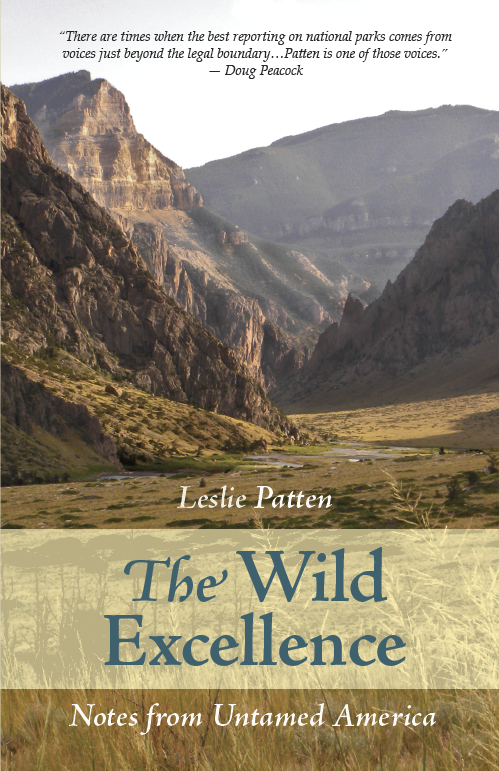
  • The Wild Excellence

  • True stories of wildlife encounters around the Greater Yellowstone
  • Award winning eBook on Decomposed Granite, tips, how to's, what to watch for
  • Children's book. True stories of a dog and wolves. In a dog's voice
  • Written for dry Mediterranean climates in California, north and south

Thomas Jaggar visits the Absarokas in 1893

Arnold Hague began the first detailed survey of Yellowstone National Park and surrounding areas in 1883 .  Thomas Jaggar worked as an assistant geologist under Arnold Hague.  In 1893 and 1897 the lands just east of the Park were the territory to be surveyed, most of which was within the Yellowstone Park Forest Reservation [the forerunner of the National Forests].

Jaggar in Yellowstone Park's death gulch where he discovered 8 dead bears killed by the noxious gases.

Jaggar in Yellowstone Park’s death gulch where he discovered 8 dead bears killed by the noxious gases that accumulate in the drainage.  These bears might have been attracted by the smell of elk that had succumbed.

I’ve been reading Jaggar’s diary of the Sunlight/Crandall area where I live, as well as looking at his photos.  His survey notes include geology notes and other tidbits.  He developed his photos right in the field.  Interestingly, Jagger reports seeing antelope in my basin.  There are no antelope here today, yet there is a local geological feature called Antelope Butte.  What happened to them all, and why they haven’t reestablished themselves is a mystery, for there are plenty of antelope in the basin around Cody, as well as the Lamar Valley nearby.

By 1893, bison had been exterminated and there were already a few cattle ranchers here.  Jaggar reports riding over an ancient local Indian connector trail, entering the valley and seeing “sagebrush, elk, buffalo, sheep & horse skulls and horns.”  Instead of bison, grouse and cattle were in the Trail Creek canyon.  Today cattle don’t run there and I’ve never seen grouse in the sagebrush area.

I hiked to a point where Jaggar took a panorama of the valley in 1893.  In the early 20th century, fire suppression became the doctrine of forest management.  But Jagger’s photo was taken when nature was still allowed to take its course.  In Jagger’s photo below, it appears the trees in the foreground were conifers killed in a fire.  In my photo below Jaggars, I could barely find a angle that I could take the photo without trees obstructing the view.  But my photo is taken from basically the exact same location.

1893 Photo

1893 Photo

2014 same location

2014 same location

Aspens are the first trees to regenerate after a fire.  A few years ago I accompanied Larry Todd, a local archaeologist, to survey some old wikiups [Sheep Eater Shoshone houses] in one of the small drainages off the valley.  Although these wikiups were standing in the 1970s, cattle feeding on the Forest Service grazing allotments liked to rub against them, and so knocked them over.  By examining the logs, Larry was able to determine the age of the wikiups was 300-400 years old, and surprisingly, these logs were all aspen.  As you can see from the photo below [wikiup logs are in the pile], the forest is all conifers now.  Aspens live for only 80-100 years.  The next in the succession in this dry area would be Douglas Firs, which can live for many hundreds of years, suppressing any new aspen growth.  Without natural fires, the forest will be dominated by conifers.  So this forest used to be all aspens, and probably was a much wetter environment.  Larry pointed out that the climate 300 years ago was different here.  This wikiup sits are the confluence of two seasonal creeks but at that time these creeks might have run year-round.

300 year old wikiup standing till 25 years ago when destroyed by cattle

300 year old wikiup.  Pile of logs are the remains of an aspen wikiup.


Wandering after a waxing moon

Snowshoe hare tracks and White-tailed Jackrabbit tracks can be easily confused, as I am finding out.  Size of their tracks, front and back overlap.  Their stride and group length overlap.  And even their habitat.

I’ve been doing a lot of research trying to discern the differences and what we have in my area.  And its important because Snowshoes are the primary food for Lynx, a threatened and rare cat around here.

Its always good to take a hike around my mountain after a snowstorm.  We’ve had a few inches of snow and some cold temps, making the snow almost perfect.  The waxing gibbous moon insures more predators are out hunting, and with the snow crusted over, the smaller animals are out and about.

For weeks all I’ve seen are the usual suspects–deer and squirrels.  But today was different.  My first encounter was with weasel tracks.  I’ve asked Jim Halfpenny if one can tell the difference between an ermine and a long-tailed weasel by the trail width. We have both here and Halfpenny notes that its very difficult.  Tracks over 2″ trail width can often indicate a long-tailed weasel, but not for sure.  The ‘dumbbell pattern’ of two dots [the feet], a dash [drag mark], and two dots can be typical for ermines, yet not always.

Weasel tracks next to my footprint

Weasel tracks next to my footprint.  Notice the 2×2 gait

up close

up close

I have a bird feeder near the house and this weasel was taking advantage of the rodents that visit the dropped seeds.

I have been spending quite a bit of time trying to discern vole from mouse tracks. Most mouse tracks are quite obvious as they use a bound, with the back feet in front of the front.  Voles tend to trot but I think they bound more in snow and have a much narrower trail width than a mouse.  I’m still trying to discern the difference.  I think these narrow tracks are typical vole tracks.

Vole

Vole heading into small hole

Typical vole gait on snow

Typical vole gait on snow

Higher up I ran into a Marten.  And later on another Marten.  Martens, like ermines, don’t use animal trails.  They are explorers of every hole, seeking out rodents.

Marten tracks

Marten tracks

Typical marten gait 2x2

Typical marten gait 2×2

And here’s where we come back to the two hares. I came across these tracks, which look like typical Snowshoe hare tracks.  Yet the country puzzled me.  This hare, which I followed up the hillside for some ways, stayed in the small meadows between the forested areas, moving through the trees out of cover, rather than staying in cover like a Snowshoe would.  And although this is Douglas Fir/Limber Pine territory, which Snowshoes like, most of the trees are older so the low browse is sparse.  Yet according to this study conducted in Yellowstone National Park, White-tailed Jackrabbits are much rarer at my elevation and annual snow accumulations–though certainly not impossible.  White-tailed jackrabbits are fairly rare in Yellowstone; even once erroneously thought extinct.  Most of the Park has too much snow and too much tree cover.  In fact, in the study, 3/4 of the few sightings were in the 5000-6000′ range in open sagebrush country [mostly all in the northwest corner of the park around Mammoth], while only 1/4 were in the 6-7000′ range in montane country–country akin to where I live.

I went over my measurements, yet all of them came up that it could be either a Snowshoe or a Jackrabbit.  I remembered that at one point, Halfpenny had said to me “are you sure its not a Jackrabbit” when I described to him some prints I’d found in a deeply wooded area north of here.

I followed these tracks amongst the small forest meadows and down through an open area into the brush.  I came to the uneasy conclusion that this must be a Jackrabbit.

Jackrabbit

DSC00212

DSC00211


And then I looked at a photo from last year, taken at around 6800′ deeper down my valley.  I had my trail cam along an old ditch.  On the upside of the ditch was dense woods, while the downside soon became treeless and led to a very large expanse of meadows.  According to the Yellowstone study above, this was the upper end of White-tailed jackrabbits in the Yellowstone area [although White-tailed Jackrabbits have been reported in places like Colorado as high as 14,000 feet].  Here was my definitive answer that, yes, we have plenty of White-tailed Jackrabbits here.

White tailed Jackrabbit

The ‘Common’ Deer

I recently watched a Nature show on Whitetail Deer.  Deer are probably the most studied wildlife in the United States.  This show revealed some new ‘secrets’.

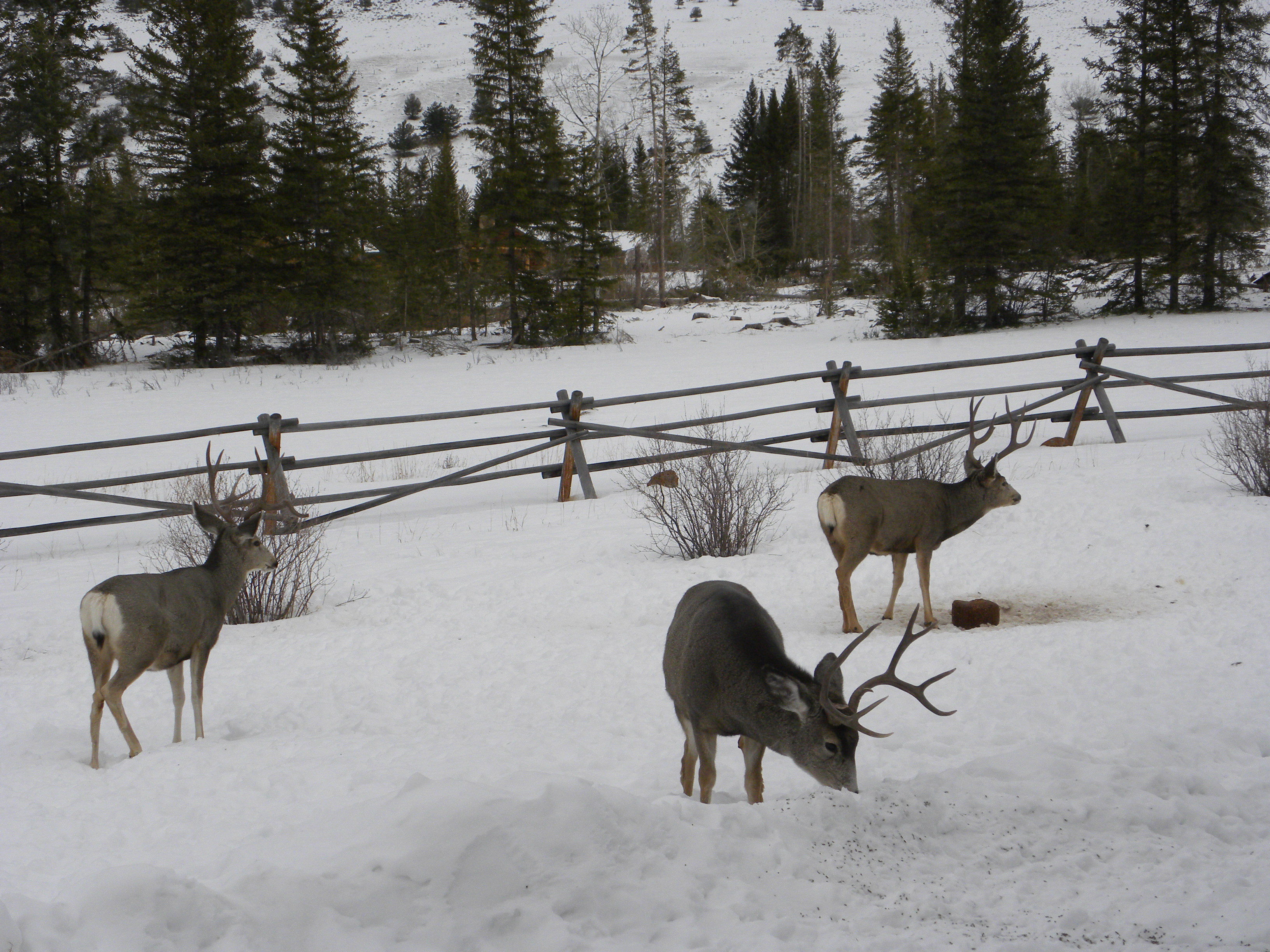
We all know deer.  Whether Mule or White-tail, they frequent our yards and many places are considered ‘pests’ because they eat our vegetation.  But, do we really know deer?Mule deer bucks

Since I no longer care if the local deer eat my flowers, I enjoy watching them and learning from them.  They start to come down now from the high country and stay through the winter.  First the does appear, then around November [the day after hunting season ends!] the bucks appear and come into the rut. You see them following does everywhere.  As winter comes upon us harsher and harsher, they look for food wherever they can find it.

The Nature show says scientists were shocked to learn that does do a lot of in-house fighting.  Yet watching deer in my front yard in winters, I’ve frequently observed does displace not just other does for food, but their own offspring.  A pecking order is obvious.  If a deer block is set out in the snow, the hierarchy is readily observed.  Subordinate does and fawns will sneak up to the block when the dominant doe is distracted, many times only to be kicked by the leader.http://youtu.be/QRPSV998Ma0

The film noted how intelligent deer are. They can evaluate with time which dogs in a neighborhood, for instance, don’t pose a threat.  And they even will run off some dogs.  My own dog, Koda, has been taught not to run after deer or elk.  He sits on the front porch while the deer feed beside him.  One time a truck drove up and observed the deer and dog together; but as soon as the men got out of their truck, the deer scattered.  They said they’d never seen anything like that before. My neighbor, who feeds their horses hay in the winter and sometimes has over 50 deer come to feed at the same time, says the deer almost run her dogs off.  Interestingly, even though the deer know me as well, if the dog goes outside alone, they stick around.  But when I come outside, they scatter.  Humans are just too unpredictable I guess.

Koda observes elk feeding

Koda observes elk feeding

The Nature film spoke a lot about deer social structures and communication. I’ve watched bucks groom one another extensively in the winter, obviously as a form of bonding and communication.

A buck mule deer spends time grooming his friend

A buck mule deer spends time grooming his friend

Although the film was about white-tailed [whom I am not familiar with], mule deer, although they don’t have the tail-waving alerts of white-tail, have their own alert systems.  And those seem too subtle for me to understand.  Deer have incredible hearing and smell.  They rustle up and leave the woods before you even knew they were there.

Since moving to my cabin and simply observing deer, instead of trying to manage them off my landscape plants, I’ve had some very interesting encounters.  Below is a short excerpt from my new book The Wild Excellence:

I was living full time in Wyoming, but continued for several years to do winter design work, November through January, in California to make ends meet. Upon my return one winter, I was beginning to open up the cabin. It’s always a big process. I have to turn on the water, electricity, pump, and get the house heated up when it’s below freezing outside. My friend Gary had come to help with the process. I’d met Gary when he built a fence for my neighbor. He lived in town but watched over their property. I needed help with cutting and hauling firewood, and Gary, a retired forest ranger, was the man for the job. Over time, he had helped me burn slash piles, installed new bathroom cabinets, and built an outhouse for the upper cabin.   Working together, we’d become good friends and today he brought along his dog, so we had two dogs.

We were inside, tending to the business of the cabin, when the dogs outside started barking. It was the kind of bark that means there’s wildlife around. Koda knows not to run after deer, but when he’s in a pack (and two dogs constitute a pack mentality), I have to watch him. Gary and I walked outside. The dogs were barking towards the woods. At first we saw nothing and couldn’t understand what was causing the dogs’ agitation. Then, after we’d quieted the dogs, a large buck came out of the trees and started making his way across the meadow. The snow was soft and deep. We assumed the buck was heading east, away from the cabin. The four of us—two humans and two dogs—watched in silence as the buck walked slowly, deliberately, and regally through the deep snow. The depth of the snow almost made him look wounded as he walked. We stared in amazement as this large buck walked across the meadow, through my gate and into my front yard. He stopped about ten feet directly in front of us. The dogs were quiet. I think, like us, they were mesmerized. Here was the Deer King. He stood before us with his full beautiful rack. His large eyes stared directly into ours for a long time, at least a full two minutes. I wasn’t sure if I should bow or run. Then just as he had come, he turned and slowly walked away. He was done with us.

The Buddha buck, King of the Forest Deer

The Buddha buck, King of the Forest Deer

If you watch wildlife long enough, you see they are separate ‘nations’ unto themselves.  The ‘Deer Nation’ has a lot to teach us humans.

Shoshone National Forest Hosts a Heated Day-long Discussion on their Proposed 20-Year Plan

I want to write a very short blog entry on a special ‘objector’s’ meeting held October 8 of this year.  The Shoshone National Forest held an unprecedented meeting to discuss just a few very contentious issues in their proposed twenty year management plan.  I will provide a link to the transcript of that day-long meeting which I found incredibly interesting and informative to read.

The meeting was restricted to four issues, and only people who had made written comments previously could comment verbally, either on the phone or in person.  But the meeting was open to the general public.  The issues were:

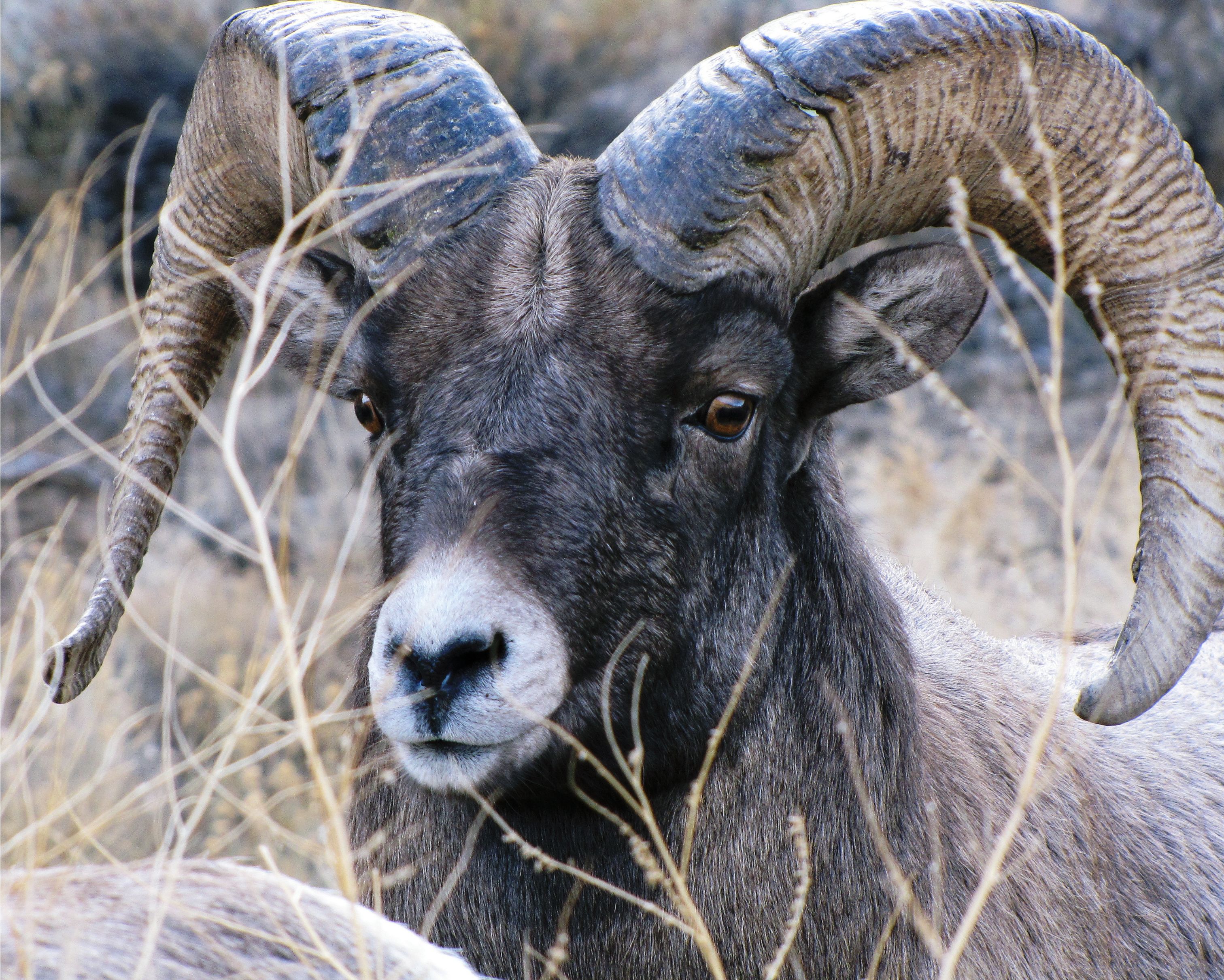
1. The Forest proposes to eliminate goat-packing due to the potential for bighorn sheep to contract diseases.  The northwest quadrant of Wyoming has biggest and best bighorn sheep herd.  There’s over 4000 bighorn sheep on and around the Shoshone National Forest, more than any forest in the national forest system.  Bighorn sheep advocates and goat packing advocates made their case.Rocky Mountain Bighorn sheep

2. Lynx habitat and forest management.   Biologists and conservationists defended the proposed thinning restrictions in certain areas where lynx were known to exist or there is excellent snowshoe hare habitat.  County commissioners and their hired company, Ecosystem Research Group, argued for more thinning in those recommended designated lynx areas.

3. After lunch the two most contentious issues were addressed with lots of people arguing for wilderness preservation.  The Dunior Special Management Area has long had illegal mountain biking and the Forest Service plan is calling for mountain bike specific trails. This was a fascinating discussion with knowledgeable conservationists going back to early 70’s when the Dunior was suggested for SMA and eventual Wilderness designation.  No one from the biking community showed up, but the discussion was passionate, with many locals and wilderness advocates feeling betrayed by years and years of promises from the Forest Service as to Wilderness recommendation for these areas that never appeared, but now it seems to be ‘dewilding’ this area.

Jade Lake near Bonneville pass in the Dunoir

Jade Lake near Bonneville pass in the Dunoir

4. Lastly a heated discussion of increased ATV use in the forest, and in particular Franc’s Peak and how more motorized vehicles will disturb wildlife, destroy soil integrity, and be a hazard to horses and hunting use.

We have a chance to preserve and enhance this special area…the heart of the Greater Yellowstone Ecosystem–one of the few remaining intact ecosystems in the temperate world–and preserve these places for future generations with roadless areas and habitat for elk, grizzlies, wolves, wolverines, and all the iconic species that it contains.

I think you will find this a fascinating and informative discussion.  Click this link, then at the Shoshone Forest page click the link at the top that says ‘Transcripts from October 8 2014 Meeting with Objectors’


Decomposed Granite Stabilizer!

Decomposed Granite Stabilizer Crushed Stone are the most widely used natural alternatives to asphalt and concrete pathways. An expensive but new product is out on the market that creates a hard surface for Decomposed Granite pathways and patios.

This product, called TerraKoat, is sprayed on with the instructions below.

Decomposed Granite Stabilizer

One note:  There are other liquid stabilizers out there that DO NOT work. This is because the solids content of these other products (like G3) is lower than the TerraKoat.

What that really means is the company that makes the G3 waters it down. Another difference is that the TerraKoat contains a proprietary admixture that increases the longevity of the surface. Wheeler Zamaroni has compared both products in real life applications and they found that with TerraKoat you end up with a stronger more durable surface.

Therefore, if you are NOT using TerreKoat, then use a powdered stabilizer.  TerreKoat costs about $15 gallon.  A gallon will do about 20 sq. ft.

Here are the instructions from their application sheet.  You will notice that they recommend preparing the surface just as I do in detail in my eBook Decomposed Granite and Other Materials for Walkways

TerraKoat EX Industrial Strength Stabilizer

1. AGGREGATE SELECTION FOR FINAL SURFACE: Select an aggregate that contains a variety of sizes. For instance, crushed stone mixes such as 3/8 minus, 1/4 minus or 3/16 minus work well with TERRAKOAT STABILIZER, where as single size aggregates like 3/8 rock or pea gravel are not suitable.

Screenings with extremely high fine content are not suitable either. To ensure compatibility of selected aggregate with TERRAKOAT STABILIZER, prepare a test area.

2. STRUCTURAL STONE BASE PREPARATION: Before starting the actual project, factors such as climate, native soil type, amount of use, should be taken into consideration. As a rule of thumb, “The better the base preparation, the better the results.”

For optimum performance, install 4 to 6 in. of 3/4 minus crushed stone, then compact using a vibratory plate compactor.In restricted areas where a compactor will not fit, use a hand tamper.

3. SURFACE AGGREGATE: Spread surface aggregate over the compacted structural stone base. Rake or screed to the desired level, and slope to allow water run off. Do not compact until after TERRAKOAT STABILIZER has been applied.

4. APPLY THE TERRAKOAT STABILIZER: Using a watering can or pump sprayer, apply the TERRAKOAT STABILIZER to the surface at the rate of 20 ft2 per gallon for residential pedestrian use, or 15 ft2 per gallon for commercial pedestrian use. Allow TERRAKOAT STABILIZER to fully penetrate through the material

5. COMPACTION: While surface is still damp but not saturated, compact the surface with a vibratory plate compactor; 2 or 3 passes are recommended. In restricted areas where a compactor will not fit, use a hand tamper. The better the compaction, the better the results.

6. Seal Coat: After compaction spray TERRAKOAT STABILIZER over the area at the rate of 60 sqft per gallon.

Additional instructions include repairing cracks or using this product on an existing surface that was ill-prepared. For the complete instructions and additional information on TerraKoat, see my updated eBook on Decomposed Granite.

I have many readers who tell me their installer did not apply the DG correctly.  Depending upon the circumstance, this stabilizer might be very useful.

Decomposed Granite sunken patio edged with stone and Ryerson's header.

Decomposed Granite sunken patio edged with stone and Ryerson’s header.

Instructions for rebuilding AN EXISTING SURFACE

1. Scarify or rototill 1 inch of the surface, break up any clumps, making any necessary repairs, and add new surface aggregate as needed.

2. Apply TERRAKOAT STABILIZER at the rate of 15 ft2 per gallon; allow liquid to penetrate.

3. Compact using a vibratory plate compactor. In restricted areas where a compactor will not fit, use a hand tamper.

Instructions for maintaining AN EXISTING SURFACE:

1. Apply TERRAKOAT STABILIZER at the rate of 20 to 45 ft2 per gallon. Some judgement will be needed, as consideration for absorption and desired results should be taken into account.

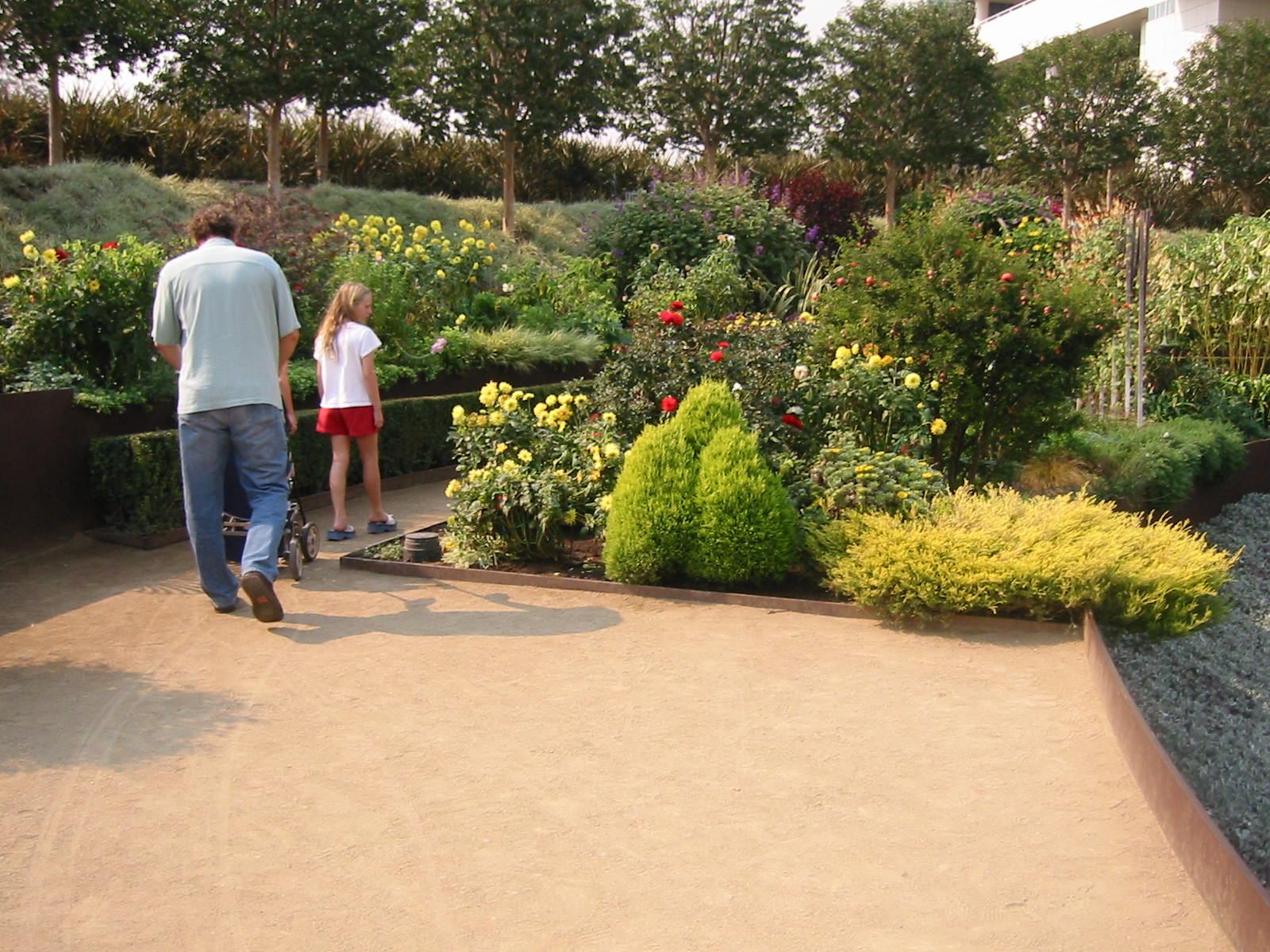
Decomposed Granite path at the Getty Museum L.A.

Decomposed Granite path at the Getty Museum L.A.

2. Compact any loose areas.

As in my eBookTERRAKOAT recommends 3-6″ compacted Base Rock with a vibration compactor and a 2″ surface of DG.  If you are using the Strybing Arboretum method because of poor drainage etc., then only 3/4″ of DG is needed.

For complete instructions on how to install a Decomposed Granite patio or walkway, see my eBook

Wolves, Management, Cattle and Wyoming

Buffalo Bill Center of the West today’s lunchtime speaker was Mike Jimenez of the U.S. Fish and Wildlife Wolf Recovery program.  Mike was scheduled months ago to speak about the success of the federal wolf reintroduction.  But as timing would have it, just days ago wolves were relisted in Wyoming.

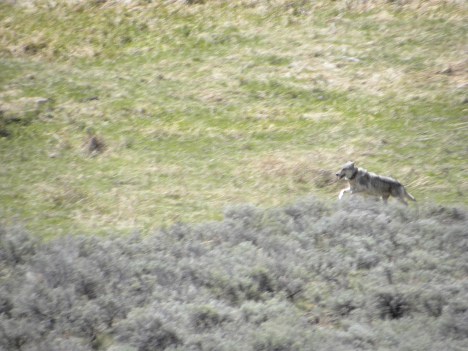
Mike has been a wolf biologist for over thirty years.  He headed up the Rocky Mountain Region (RMR) wolf recovery for USF&W and still works for them.  The re-listing put him in an awkward position, as the Feds along with Wyoming are the defendants in the lawsuit.  His talk stuck to the history of wolves in the U.S., when they were listed under the ESA and why, and how the program was conducted and how it progressed.  He’s a biologist, not a lawyer or a politician, and he tried to be non-biased and fair in his assessment of this extremely controversial issue–wolves!Lamar pack wolf
Personally, I think the Wyoming Game and Fish has struggled to maintain wolves above the minimum level and done a good job. Although I disagree with how their hunt zones have been managed [I’d like to see either a science zone label for areas around the Park with no hunting; or at a minimum have the areas around the Park have a one month season in October when wolves are not following elk as they move outside the Park].  But WG&F has their hands tied politically, just as the Feds do. And that is why things have ended up back in the courts.

Jimenez’s assessment of the ‘two’ sides of the wolf issue was, I thought, overly-simplistic–characterized as the pro- or anti-wolf—cuddly/cute, or killing machines.  People who think about wolves know it is more nuanced than that and I’m sure Jimenez knows that too.

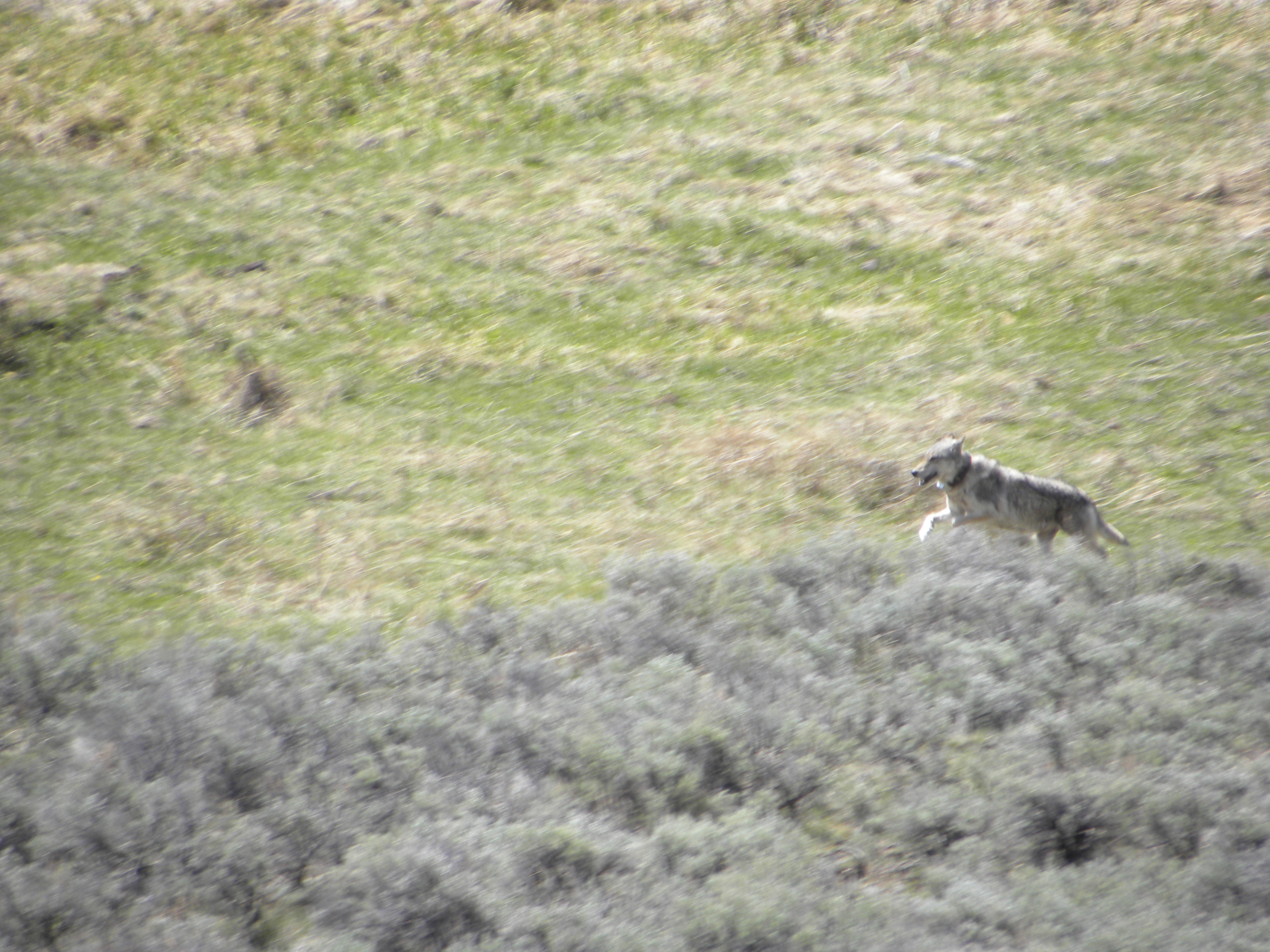
Not today's wolf but here is an example of collaring.

Collaring a wolf by Wyoming Game and Fish

I’d like to address my feelings on some of these issues.

First why was Wyoming targeted for a relisting lawsuit?

Wyoming is the ONLY state that has a predator listing for wolves in the RMR. Although one could argue that most of the state is unsuitable habitat for wolves (true), Montana has the same issue.  Montana is a bigger area state, with its entire eastern side unsuitable habitat.  But Montana does not have a predator zone.  Predator status means that an animal can be shot, run over, trapped at any time of the year.  There are other animals, such as foxes and coyotes or badgers that receive that status in Wyoming.  In general, ‘predator’ status in most U.S. states was abandoned back in the 1920’s and replaced with hunting/trapping seasons.  Wyoming is still in the caveman era on this.

As wolves are delisted in other states, such as Washington and Oregon, a ‘predator’ zone will not fly.  Wyoming is a lone wolf here so to speak here.  The Predator Zone must go before wolves should be de-listed here.
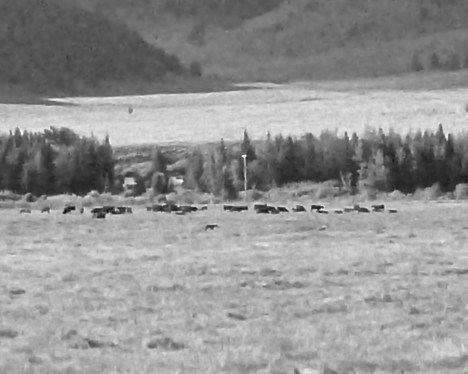
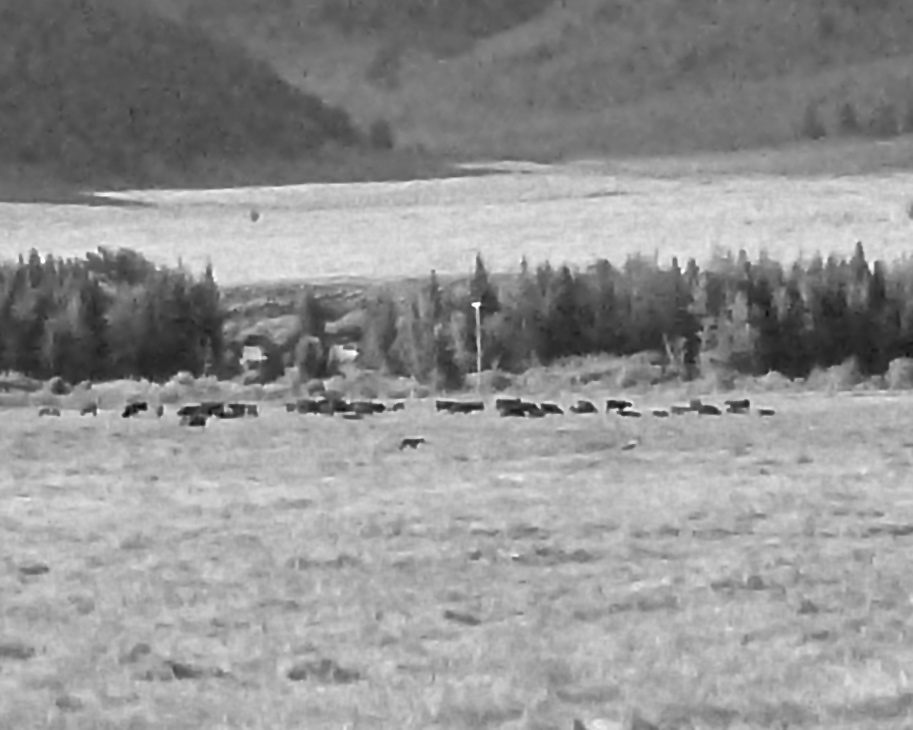
Hard to see, but the small dot in the foreground is the wolf mousing amongst the cattle

Hard to see, but the small dot in the foreground is a wolf mousing amongst cattle

In addition, Wyoming, in a back door deal with Governor Mead and, at that time, Secretary of the Interior Salazar, came up with a ‘flex-zone’, ostensibly to insure habitat connectivity for genetic diversity.  In other words, a portion of the state near the Idaho border is a trophy zone during the hunt season, then a short few months rest, then reverts to predator status.  This too is ridiculous and no other state has this, nor will they.  This was a pure political ploy, and not based on science.

But apart from how Wyoming got itself into this relisting mess, I want to address the issue of predation and wolves.  As far as objections to wolves because they eat elk and ‘hurt’ hunters, this is not even an issue to address, but just whining on the part of hunters.  Hunter elk success in Wyoming has been at an all time high for the past two years.  And although elk numbers in some areas are down, there are many reasons, including wolves, for this.  In fact, some of the reasons, like in the Northern Range in Montana, have to do with over-hunting by humans! Wolves as competition for hunters is a non-issue.
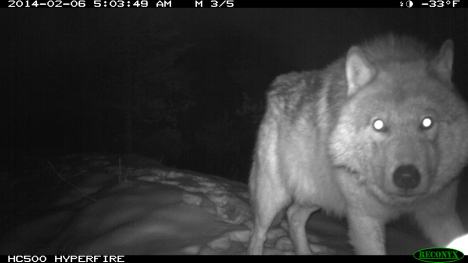
IMG_0453

But wolves predation on livestock is an issue that needs addressing.  Jimenez rightfully pointed out that wolves will and do take down cattle and sheep, especially when their preferred prey–elk and deer–is unavailable.

When wolves were brought into the RMR under the ESA, Jimenez pointed out that the agreement with ranchers was that they wouldn’t have to change any of their practices. Under the 10J rule, the USF&W would surgically kill wolves that had predated on livestock, and Defenders of Wildlife would pay compensation.  As a general rule, that seemed to work out well.  Cattle predation since 2006 went down, wolf population in the states went up.  This kind of agreement was necessary to keep ranchers happy.  But it is not a long-term solution, and I will tell you why.

Mike pointed out the Service tried several non-lethal means like fladry and loudspeaker noise to deter wolves, but because wolves are smart, they all failed as solutions for large ranches.

In my work as a landscape designer and horticulturist, although I didn’t work with livestock, I did work with wildlife issues relative to plants.  In Marin county where there is essentially no hunting, deer are abundant and people have made their homes in deer habitat.  Deer are a big problem in terms of a nice garden.  Especially in August/September, plants that deer normally might not touch, deer will eat in order to find water.  Deer, like wolves actually, are very smart and adapt to your methods of ‘control’.  And like wolves and bears teach their young what to eat, deer will do the same.  Even in a small county like the North Bay of San Francisco, deer in different areas will eat different plant material.  And non-lethal control methods have to be constantly changed.

In addition, a much bigger issue than deer are gophers and moles.  Gophers are abundant in Marin’s Open Space.  Once you till soil, they move in even if they weren’t there before.  They can destroy even a 5 year old Redwood Tree, making it disappear into hole overnight.  Moles don’t eat plants, but dig tunnels next to roots.  The roots of the plants than dry up and the plant dies.

Skunks and Raccoons are abundant too.  They eat grubs and love to dig in gardens, especially new lawns or new plants, seeking insects.

These are all big problems for homeowners who spend big bucks on their landscape installation; or for small farmers who supply specialty crops to restaurants.  I’ve worked with all these critter problems.
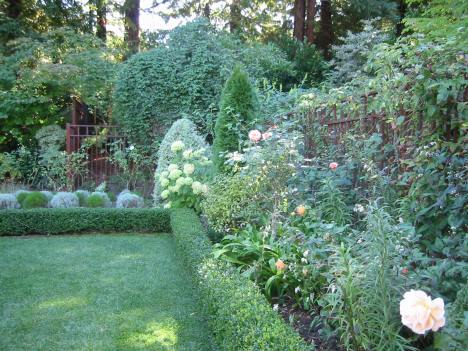
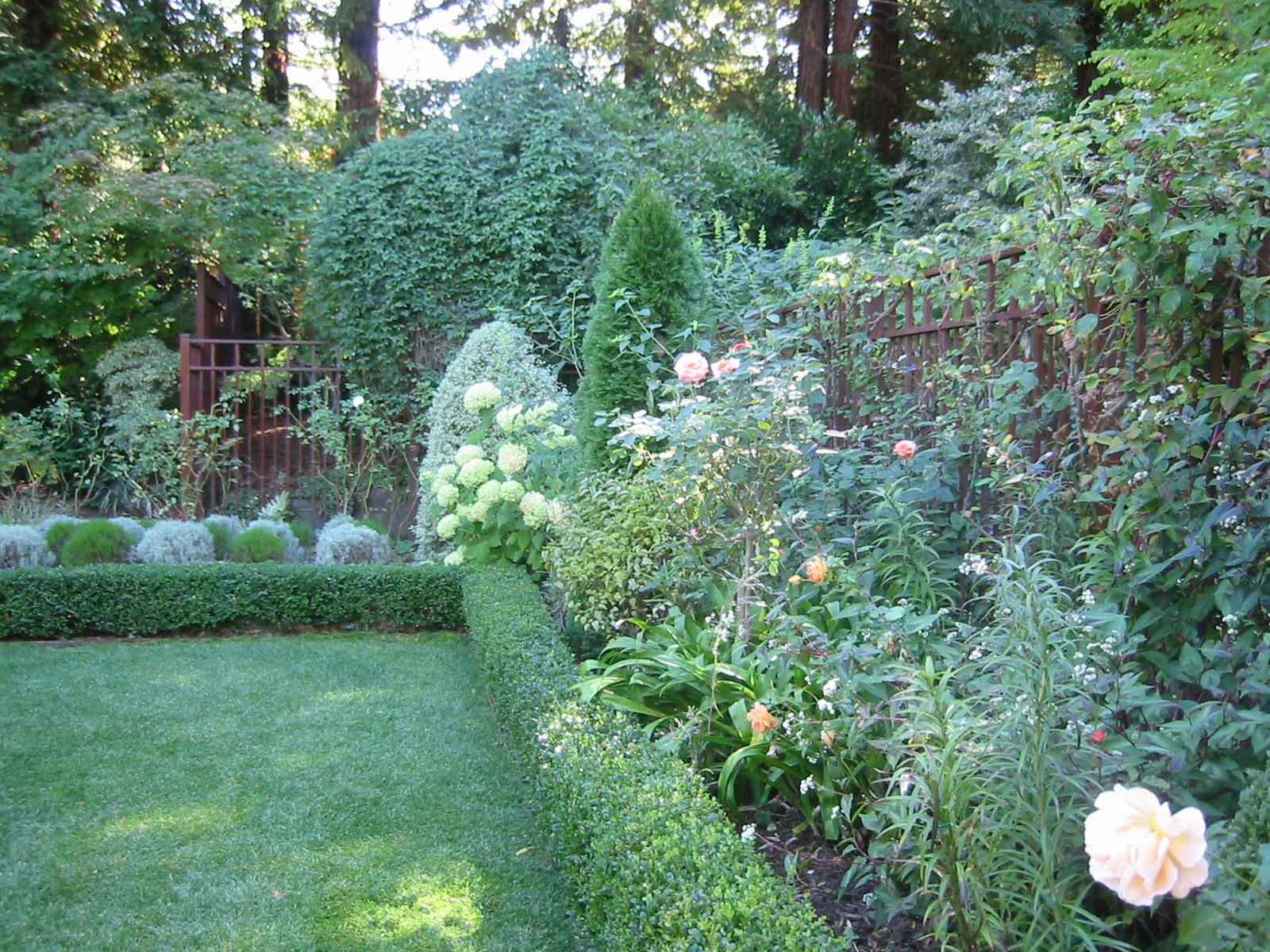
Expensive landscape losses are no different for a rich homeowner than the loss of cattle for a rich cattleman

Expensive landscape losses are no different for a rich homeowner than the loss of cattle for a wealthy cattleman

These folks, and especially the farmers [which is a direct equivalent to ranchers because this is their livelihood] experience the same sorts of frustrations that ranchers do with wolves or coyotes.  I know, because I’ve been on the other end.  It becomes easy to ‘hate’ something that continues to damage your crops or your cattle.  It is then not much of a step to turn to lethal, and easy, means to deal with the problem.  Poison the rodents, kill the deer, shoot the coyote or wolf, etc.

Yet our wildlife is valuable.  They are making a living themselves; plus they have value on the landscape. Wolves control the coyote population.  Coyotes control the rodent and raccoon population. etc.

Over the course of twenty years of working with wildlife ‘problems’ in the landscape, my solutions evolved to be non-lethal yet creative.  If the wildlife are outsmarting you and your only solution is to kill them–how smart are you?  Wildlife can be outsmarted non-lethally, but it’s a matter of working with the land, with your livestock or your plants. Really, its part of your job as a grower or a rancher.Deer and fawn nursing

I’ve created entire wedding flower gardens in deer areas and the neighbors were amazed.  How did you do that?  They’d ask.  I used plants that deer like but also didn’t like, interspersing them in certain ways so as to deter, and fool, deer.  Instead of endlessly poisoning gophers, we used a bitter tablet that plant roots uptake and makes the plant taste bitter to them.  Edible gardens must be fenced and so on.

I have worked creatively with the land to minimize wildlife damage in non-lethal ways. That is the pact one takes on when working with plants and animals.  Aldo Leopold called it ‘The Land Ethic’ and it still holds today.

So although the initial ‘promise‘ to ranchers when reintroduction began was that ‘things won’t change’, now that wolves are to stay, things with the ranching industry must change.  Ranchers need help and education in how to manage creatively.  And it’s time they make that commitment.  These predators, such as wolves and grizzlies, have so few areas they can live, the RMR needs to be one of the places where wildlife comes first.  Federal lands should not have ‘kill’ orders’  Federal lands are where wolves, and bears, survive.  Ranch at your own risk on public lands would be the first important change.  If that means cowboying more frequently, or not putting calves out on the allotments, then the ranchers need to make those changes if they want less predation.

Grizzlies too are killed for cattle predation on public lands

Grizzlies too are killed for cattle predation on public lands

It also would mean that a rancher is not reimbursed on federal lands.  Every year I see cattle killed on the highway by me.  They are on the road because the rancher, whose cattle are on public land allotments, doesn’t want to bother to turn the electric fence on or cowboy them off the road.  I’ve been told ranchers just factor these losses into their bottom line.  Its easier and more economical than sending a cowboy out.  So if car losses don’t matter on public lands, why should the miniscule amount of wolf predation?

On private lands, ranchers will probably have to be issued a shoot-to-kill permit.  But this should come with help and education, implementing methods to reduce predation.  Livestock reimbursement, and Wildlife Services, should be phased out slowly.  Reimbursement should only come with evidence of livestock non-lethal predation management.  Money should be spent helping the rancher, not giving him a handout which only encourages complacency.  I’ve run many businesses, and the federal or state government never reimbursed me for business losses.

Lastly, there are now many ranches in our state that are not making a living ranching, but using the generous subsidies that come with livestock to reduce taxes for extremely wealthy one-percenters.  These billionaires are still receiving not only reimbursement for predation losses, but receive Wildlife Services assistance on our public lands to kill wolves and other predators. This is plain abuse of even our existing broken system which was implemented to assist subsistence ranchers.

Especially in our Western States, we need a new model.


The Wild Excellence. What it means and why I wrote it

I thought now was a good time to do a post on my new book The Wild Excellence: Notes from Untamed America. The book has just been released in stores and online.  Kindle version is now available on AmazonThe Wild Excellence front cover lrg

The Wild Excellence title comes from a line in a Pablo Neruda poem, one of the last he wrote as an old man.

Without doubt I praise the wild excellence

That line, in a nutshell, describes my relationship to the fullness of the natural world.

When I moved from the Bay Area to the Absaroka mountains east of Yellowstone National Park, I found myself in the wildest country in the lower 48 and one of the last, whole intact ecosystems in the entire temperate world.

Doug Smith, Wolf Biologist for Yellowstone National Park says “country without wolves isn’t really good country. It’s incomplete. It doesn’t have its full spirit.” Over time that wild spirit of lands with grizzlies, wolf packs, large elk herds, wolverines, and cougars instilled in me a new perspective of our natural world and my place in it.

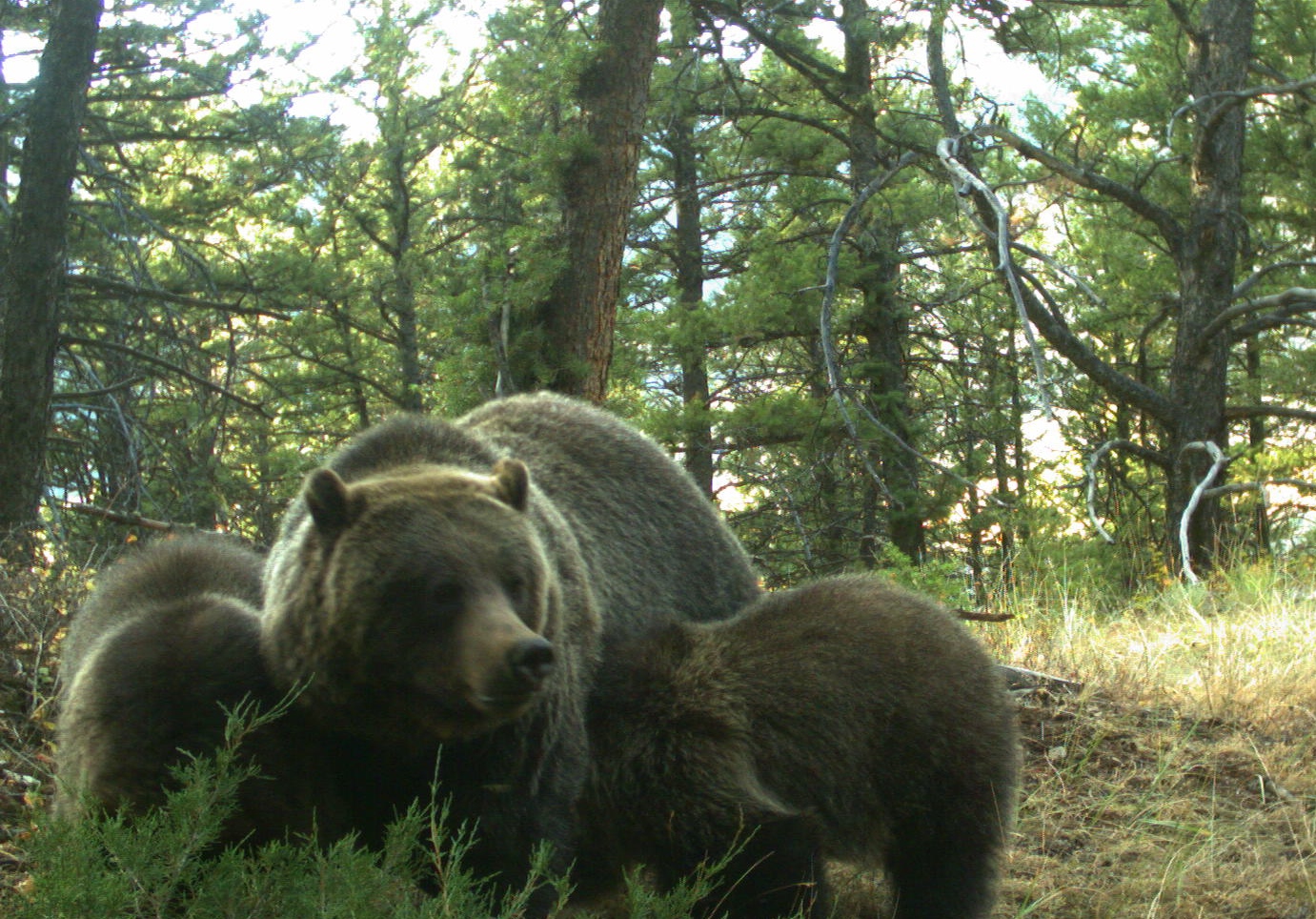
Grizzly mom with two cubs of the year near my house

Grizzly mom with two cubs of the year near my house

I’ve always been interested in Land so I began hiking to ancient Shoshone Sheep Eater sites, settler remains, learning fencing work and water development, but foremost learning how to be in tune with the wildlife here. Because of my proximity to the Park, wolf and elk studies were being conducted in the valley where I live and I had the opportunity to assist as a citizen scientist. ‘Bad’ grizzlies were dropped off at the end of my dirt road with the hopes they’d go into the Park.  Sometimes they ‘homed’ back to where they came from, yet other times they came to the nearby woods to dig for grubs or eat chokecherries.

Two adult cougars travel together

Two adult cougars travel together

With time, I became aware that a parallel internal process was taking place.  This wild landscape, with its full suite of wildlife, was having a healing effect on me.  And that healing seemed dependent on its expansive, untouched space and the play of predators and prey so abundant here.  That healing illuminated for me the sacredness of wildlands and their necessity for the human spirit.

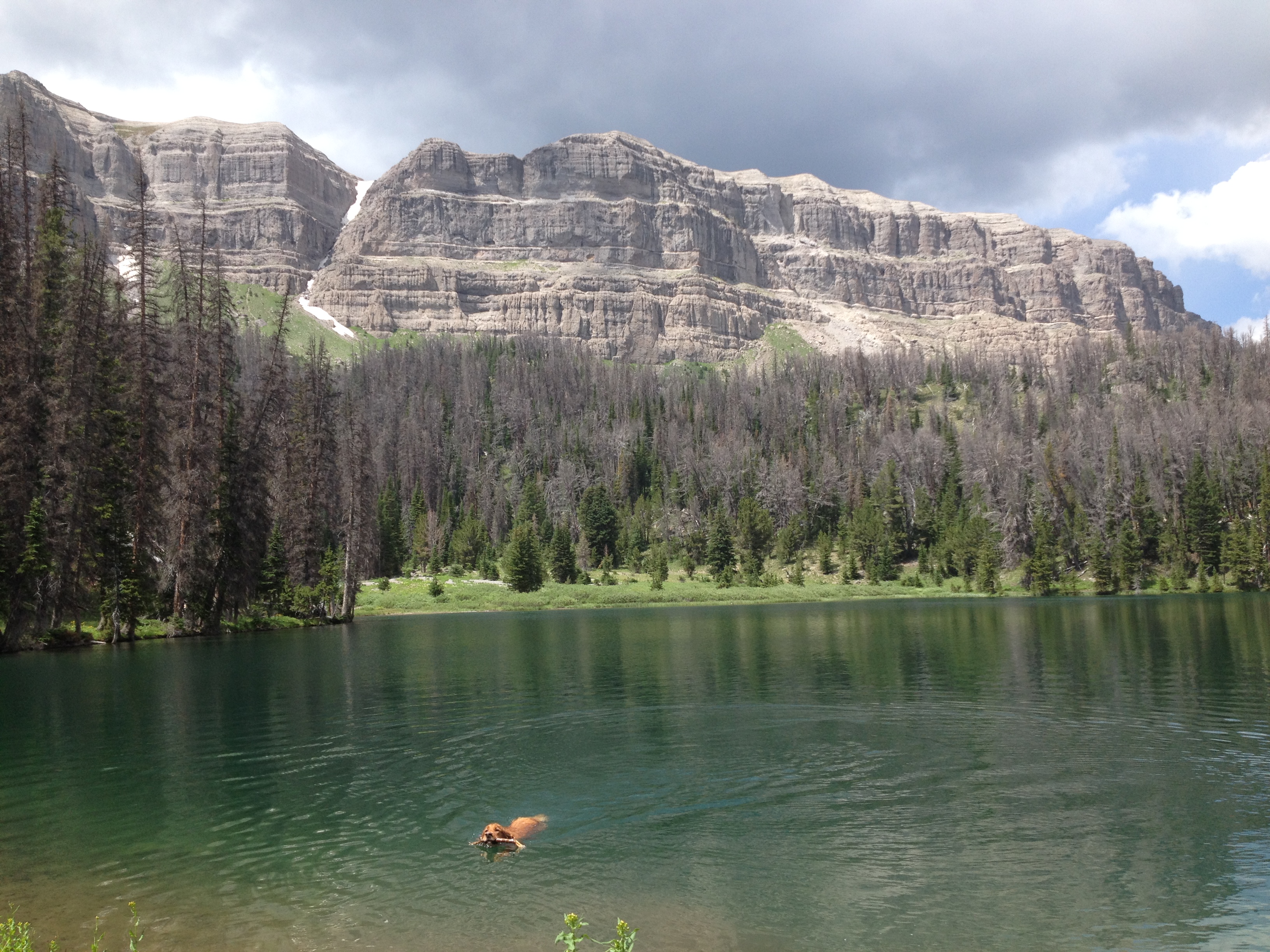
Middle Fork Lake...the Divide

Middle Fork Lake…the Divide

My book, The Wild Excellence, is a description of many journeys–the science and the sacred, and what moves the Heart to want to protect all that is fragile and wonderful.  It is my sincere hope that this communication will inspire others to experience the mystery and wonder of wild places, and work with their vote and their voice to protect them. They are the last and fragile remnants of what Lewis and Clark saw over 200 years ago.
For updated information on The Wild Excellence  visit my facebook page

Narrating from the borderlands of Yellowstone National Park, Leslie Patten brings us vivid accounts of wolves, grizzlies, the seasonality of ecosystems and tales of prehistoric Indians–all written with a naturalist’s eye and woven in a personal network of modern day homesteading, dogs and community. There are times when the best reporting on national parks comes from voices just beyond the legal boundary, close enough for a passionate attachment to the beauty of the land but sufficiently distant for critical appraisal of governmental management. Leslie Patten is one of those voices.

— Doug Peacock, Author of Grizzly Years, In the Shadow of the Sabertooth and other books.

CONTENTS

Introduction

Chapter 1 A Dog and a Lesson 

Chapter 2 First Days 

Chapter 3 The Peoples Before 

Chapter 4 Close Encounters of the Wolf Kind 

Chapter 5 A Most Magnificent Animal 

Chapter 6 Woods, Water, and Wildlife 

Chapter 7 Bear Dreamer 

Chapter 8 Sagebrush Stories 

Chapter 9 Medicine Dog 

Chapter 10 Sacred Land Ethic 

Epilogue 

wolf

Smart Urban Planning and Wildlands–an interconnection

As a horticulturist and wildlands advocate, I heard a story on yesterdays Science Friday that got me pondering.

The essential jest of the story is that trees, like all plants, emit different chemicals, many of them considered toxic.  Plants do this for a variety of reasons.  Some might attract pollinators, others to ward off predators.  Of course we’ve all known this for years.  That is why some plants have medicinal uses, while other plants might give you a terrible reaction.  But we have never considered that trees might be doing the same thing and those chemicals could be reacting in negative ways with pollutants in our cities air.Japanese Maple

In this short segment Biologist Todd Rosenstiel explains some of the studies being done at Portland State University–that we only know a few of the emitted chemicals–like turpenes–and there are many more we are still investigating.  He explains how these chemicals can react with ozone in polluted atmospheres to create more pollutants.  Some trees make more of these toxic chemicals than others; and also chemicals might begin as toxins yet then combine with ozone in such a way as to actually scrub pollutants out of the atmosphere.

As a horticulturist, I’ve planted thousands of trees in suburbs and cities.  I’ve thought of problems like soil, sun, wind, climate, insect resistant, etc.  But this is an entirely new area of study.  For instance, Rosenstiel points out that Oaks are big emitters of these toxins, while Maple not so much.  But we can’t just plant Maples; we also need a diversity of trees in cities.

That got me thinking again about livable cities and how proper city/suburb planning is an important tool for saving our wildlands and wildlife.  Proper planning so cities become more self-contained–growing their own foods [using rooftop year round gardens], solar power that is concentrated within the immediate area [rather than generated from massive wind/solar farms in fragile desert habitat or energy trucked from far away], green spaces for recreation, smart transportation, clustered housing, and other techniques will make the need to ‘escape’ less, and preserve lands for wildlife.

Rooftop garden

Cities/suburbs in general should be planned with wildlife in mind.  Although cities won’t be having elk or wolves running around, there are ways to plan for wildlife corridors.  Los Angeles as well as Santa Cruz’s Highway 17 are good examples of needed cougar corridors.  While there is good habitat around the edges, freeways block corridors cougars use.  And living with wildlife that has learned to exploit urban centers, such as mesopredators and their prey, –coyotes, foxes, raccoons, deer, possums, fishers–will enhance city living.

Urban coyote rests mid-day in local cemetary

Urban coyote rests mid-day in local cemetary

Smart city planning for liveable cities, which seems to now include taking into the account the chemical biology of trees–is a necessity if we want to inhibit the sprawl that now threatens some of last remaining wildest lands in the United States.

Jade Lake near Bonneville pass in the Dunoir

Jade Lake near Bonneville pass in the Dunoir

More about Grizzly Bears! Grizzlies, the PCA, and the Wind River White Bark Pines

What is the PCA?  If you care about grizzlies, then this knowledge is important.

The PCA stands for Primary Conservation Area and is a designated area within the Greater Yellowstone Ecosystem with special rules to protect and insure that the grizzly bear population will thrive into the future.  This area has special rules regarding activities that would disturb bears, such as excessive roads, ATV’s, numbers of elk hunters, etc.  The aim is to ensure genetic diversity and keep a minimum of 500 bears.  This area was first outlined during the bear’s period of recovery.  The PCA rules will still apply even after grizzly bears are delisted, which will probably come in 2015.

Primary Conservation Area in Blue. Suitable habitat for bears in Red.


Now look at the above image.  The actual designated PCA is in blue.  The suitable habitat is in red.  Notice there is an ‘Italy-shaped’ leg in the lower right that is not in the PCA but is suitable habitat.  The majority of this is the Wind River range.  See there is a main highway between Riverton and Jackson that cuts right through a small section of the PCA.  In order for bears to inhabit the Winds, they have to cross this highway, and the main corridor into the Wind River range from the north side (Gros Ventre/Upper Hoback area) of the highway to the south is through the Upper Green River Valley.  Per Wyoming Game & Fish own conservation guidelines:

Based on current road densities, presence of domestic sheep and current levels of conflict with livestock, the upper Green River area on Forest could also be considered unsuitable for grizzly bear occupancy. However, important biological issues make the Upper Green River area very important in ensuring CS (Conservation Strategies) population and distribution objectives will be met long-term.The Upper Green River area is presently occupied by grizzly bears and is important contiguous habitat that links the bear population between the Gros Ventre/Upper Hoback area, Upper Wind River Range, and core bear habitat north of this area.

So why am I talking about this?  Because it is rare, and I mean rare, for a bear to get through the Green River corridor without getting into trouble with livestock.  That valley is saturated with sheep and cattle allotments (these are on public forest service lands with some 7500 sheep and 22,500 cattle in a 323 square mile area).  Bears are moved, or removed lethally.  Recently the ‘take’ quota for grizzly bears was just raised in that area and even more important, the limit for female grizzlies kills was eliminated there.  Therefore, it is difficult for a bear to get pass through this bottleneck corridor into the Wind River habitat. Yet the Winds provide excellent, essentially uninhabited habitat.

Another red flag for the Winds and bears is that the southern portion of the range is excluded from conservation strategies because of several factors.  First because there are still very active sheep allotments there (these are sheep allotments on Wilderness).  Also because of heavy backpacker summer use. But I am here to tell you that the best and healthiest white bark pines are in the southern portion of the Wind Rivers.

I’ve been backpacking the Winds every year for over 15 years.  I’ve seen many of the northern and central Wind River White Bark Pines face a heavy toll from the beetles.  Not as heavy as the rest of the Greater Yellowstone Ecosystem, where White Bark Pines could be considered to be functionally dead.  Reading my previous post, you’ll note that even the Interagency Grizzly Bear Study Team admits their own transects are 75% dead.  But it appears that even in the worst portions of the Winds, its more like 40-50%; while my recent trip to the Shadow Lake area of the Southern Winds, I’d estimate the mortality at around 20-30%.

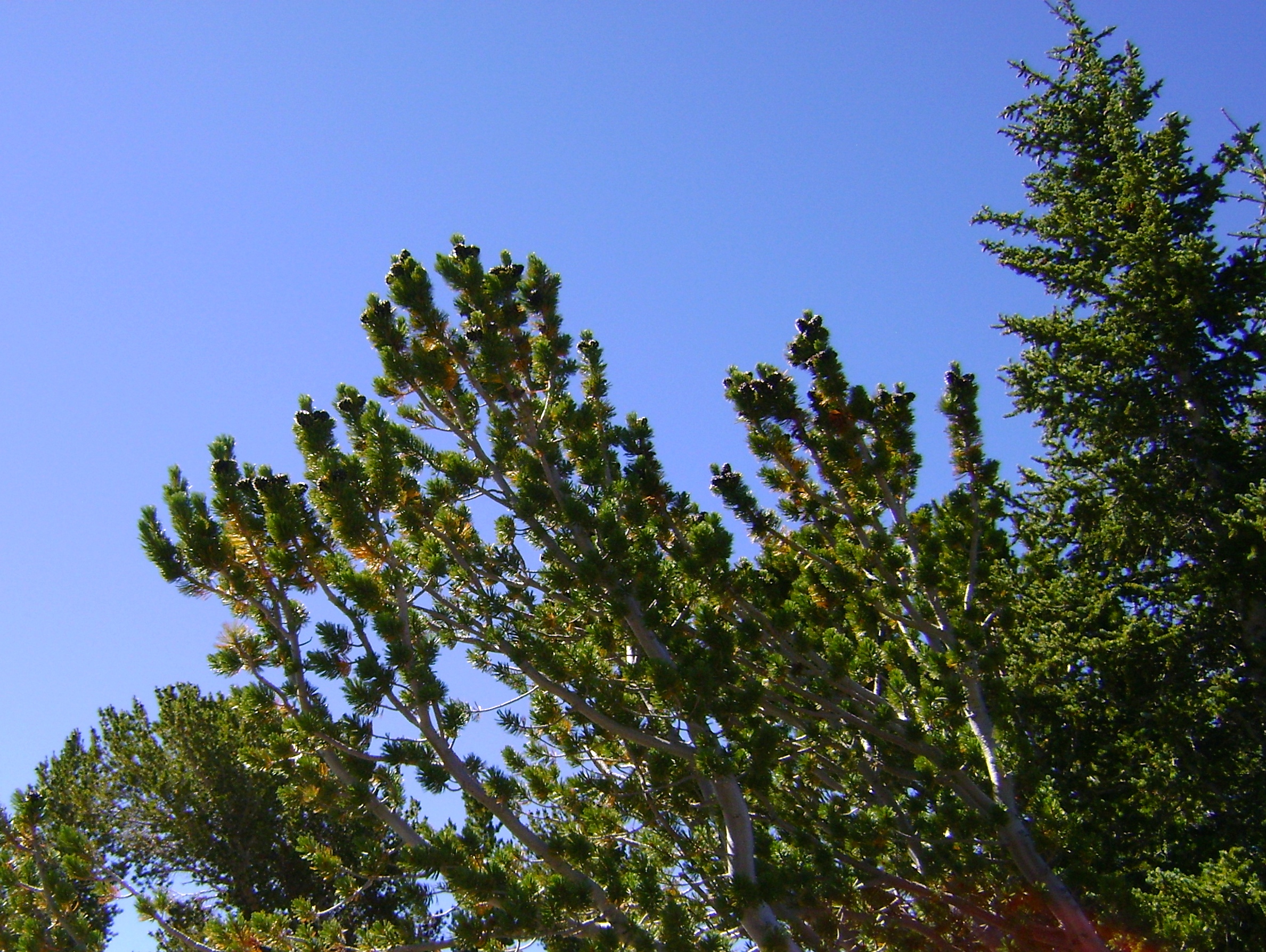
Notice the tops of the tree.  Cones are produced on the new growth.

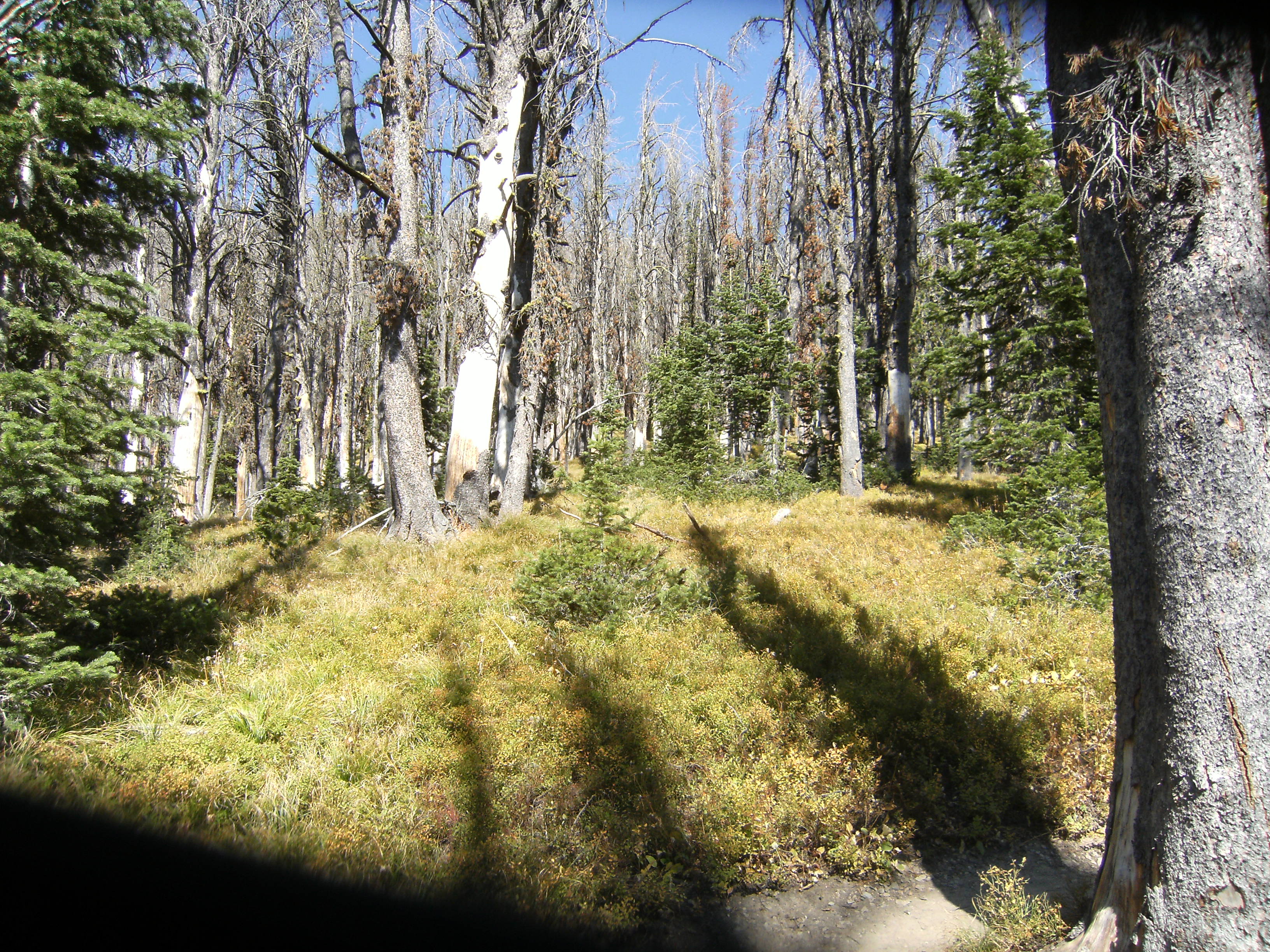
Notice the tops of the tree. Cones are produced on the new growth.  Tree is full of cones!  See how healthy these pines look.  This is the pass near Washakie creek.  Notice the dead trees in the background.  This is a good visual estimate for your reference of dead vs. live percentage.

And while the Interagency Grizzly Bear Study Team noted that this years cone production was ‘good’ at 20 cones per tree, my estimate in the Washakie Creek environs was more like 70-100+ cones per tree!  Yet, not one grizzly bear will be able to reach this area!

Another pine full of cones

Another pine full of cones

Although the Interagency Grizzly Bear Study Team completed their legally required study on the grizzly bear diet last year, they  stated that while white bark pines will not last in the Greater Yellowstone, bears will find other foods.  I feel this statement makes assumptions that cannot be known.  Rocky Mountain grizzlies are not like Alaskan bears that eat salmon with high protein and fat. Our bears depend on limited sources of fall fattening foods–essentially moths and pine nuts.  If we want to ensure the bear’s survival, we should be opening up all the ‘suitable habitat’ in the GYE.

Avalanche Peak, Yellowstone.  Dead whitebark pines

Avalanche Peak, Yellowstone. Dead white bark pines make up this dead forest

Corridors like the Upper Green, full of livestock on public lands, need tighter livestock rules, not dead bears. These are not private land ranchers, but ranchers using public lands at very low rates.   Rules like running cowboys with cattle, removing sheep or at least penning them at night with guard dogs, need to be set down by the Forest Service.  And public lands ranch-at-your-own-risk should be another.   And even cattlemen do this in other circumstances.  Cattle are run over on highways regularly.  Cattlemen who run herds on open range factor these losses into their bottom line.  They just figure they’ll lose a certain amount to cars every year and so don’t bother moving their herds.  In my area, they don’t even turn on the electric fences that the forest service provides them.  So why don’t they factor in predation by bears on these same lands?

One other thing that irked me in their conservation strategies comments was that because of high use of summer backpackers in the southern Winds, the area is unsuitable for bears.  Just like the rest of the PCA, backpackers and hikers need to learn to hike and live with bears.  The southern winds are particularly heavy use because of the Cirque of the Towers, an awesome array of granite peaks that attracts climbers from all over the world.  People have to adapt and begin to carry bear spray and learn to share the area.  Bears are quite good at avoiding people, using corridors at night, bedding in hidden places during the day.  Grizzlies in the winds will heighten hikers awareness–a good thing.

Yellowstone grizzly

Yellowstone grizzly

Hiking in this fabulous bear country, seeing all those wonderful nuts, yet observing no bear sign, contained a certain sadness for me.  In my own area next to Yellowstone Park, 90% of the white bark pines are dead and bears are roaming around looking for food. Here I was surrounded by their prime fall food going to waste due to inept human management.

I like to remember what Native Americans called Grizzlies–‘humans without fire‘.  Let’s treat them with that kind of respect.


The Wild Excellence: Notes From Untamed America

My new book is finally available from Amazon.  The Wild Excellence:  Notes from Untamed America takes its title from a Pablo Neruda poem.

Without doubt, I praise the wild excellence

The Wild Excellence

Over 60 years ago, Aldo Leopold proposed a new way of looking at land. He called it ‘The Land Ethic’. This view is the model all conservation groups use today. In my book, The Wild Excellence, I propose to broaden that template to include another element: our ancient relationship to Land as source of vision, spiritual awareness and awakening–The Sacred Land Ethic.  This idea of mine did not come out of a vacuum, but naturally evolved from living in this wild ecosystem of the Greater Yellowstone.

In my book I tell the story of how I was transformed through direct connection with wildlands and wildlife:  I work on a wolf project; my valley is the center of an elk study that reveals very interesting data; I track bears, find coyote dens and search for evidence of first peoples–all in this unique ecosystem, living just a few short miles from Yellowstone National Park’s eastern border.

Observing wildlife and wild nature changes my views on the Land and how we must treat it.   From the Epilogue:

I walk out into the night air and the brilliance of the evening sky intrudes upon my feelings.  The celestial dome above me is packed with star light.  The local wolf pack is howling.  They’ve made a kill nearby and with their bellies full, they announce their pleasure into the blackness.  A rustling of hooves beats back and forth in the large meadow in front of the house.  I go in and grab a high beam flashlight.  As I shine it towards the pasture, a thousand eyes stare back at me. The elk herd has come.  Disturbed by my dog and the nearby wolves, they move restlessly as my beam tracks only their eyes, focused on me with curiosity and fear.  Something familiar rustles through my bones.  My flashlight becomes a torch, my house the village, and I sit with friends around a fire, ten thousand years ago, with this same sea of eyes staring from the darkness.  There is an eeriness to it, and a vulnerability.  And a rightness.  I feel my humanness and my place in the Universe.  I am grateful, once again, to be living here, in one of the last places on earth where all things are intact.  It is my home and without any doubt, I praise the wild excellence.

Some praise for The Wild Excellence:

Narrating from the borderlands of Yellowstone National Park, Leslie Patten brings us vivid accounts of wolves, grizzlies, the seasonality of ecosystems and tales of prehistoric Indians–all written with a naturalist’s eye and woven in a personal network of modern day homesteading, dogs and community. There are times when the best reporting on national parks comes from voices just beyond the legal boundary, close enough fora passionate attachment to the beauty of the land but sufficiently distant for critical appraisal of governmental management. Leslie Patten is one of those voices.

— Doug Peacock, Author of Grizzly Years, In the Shadow of the Sabertooth

 “The Wild Excellence” belongs in every library and personal book shelf. Leslie lets us enter her world of wilderness and all its beauty and wonder. Then encourages us to preserve all that is wild for future generations. Her words, “The grizzly bear’s gift to man is the Power of the PresentMoment” sums up the essence of this book.

— Dan and Cindy Hartman, Photographers Yellowstone Ecosystem Wildlife Along The Rockies


I hope you will buy my book, enjoy it, and be moved to love our remaining wildlands and wildlife.  If you do, please leave your comments on the Amazon page.  That will help more people find the book and read it.  My sincere hope is that all the million plus people who visit this Ecosystem every year will come to support this unique area with their voices and their vote to protect it for future generations.

Grizzly front foot