• MY BOOKS ON WILDLIFE, GARDENING AND MORE

  • The Wild Excellence

  • True stories of wildlife encounters around the Greater Yellowstone
  • Award winning eBook on Decomposed Granite, tips, how to's, what to watch for
  • Children's book. True stories of a dog and wolves. In a dog's voice
  • Written for dry Mediterranean climates in California, north and south

Bird Language

It must be early spring, although the weather is continuing to feel like its June–in the 60’s and 70’s.  I’m no birder, although I am trying.  Plant people just can’t understand studying things that flit around, throw their voices, and are almost invisible to the naked eye.  I hear a song or see movement, bring my binoculars up to my eyes, search the trees and see nothing.

I know a very knowledgeable horticulturist.  She is the principle grower of native seeds in Northern California.  She decided to begin to study birds, and the first time she went into the field with a birding group, she didn’t even think to bring binoculars.  I suppose, like myself, she figured these animals would just show themselves and sit still for her like our wonderful plants do.

That being said, here’s my observations on what’s arriving so far.  All winter long in these mountains above 7000′ you can see Red-breasted nuthatches and Chickadees.

Red-breasted nuthatch

Grouse, Turkeys and Dippers are occasionally spotted too.  But the heralds of new spring are the beautiful bluebirds.  The pair that nests here every year has returned, checking out all my homemade boxes.

Male bluebird

I’ve been seeing large groups of sparrows (don’t ask me what species, please).  Their melodious songs are filling the woods.  The other day I saw a ‘Slate-colored’ Junco.  I had to look him up because I wasn’t sure what I was seeing.  Usually I see the black-capped Juncos around here, and they are back as well.  No warblers yet, but the Robins have been here for over a month.  They migrate elevationally, with many wintering in Cody at 5000′.  I don’t know if this is the way that its always been.  That’s hard to imagine with the stories about classic Wyoming winters.  No flickers yet, but I’ve seen Downy Woodpeckers for over a month also.

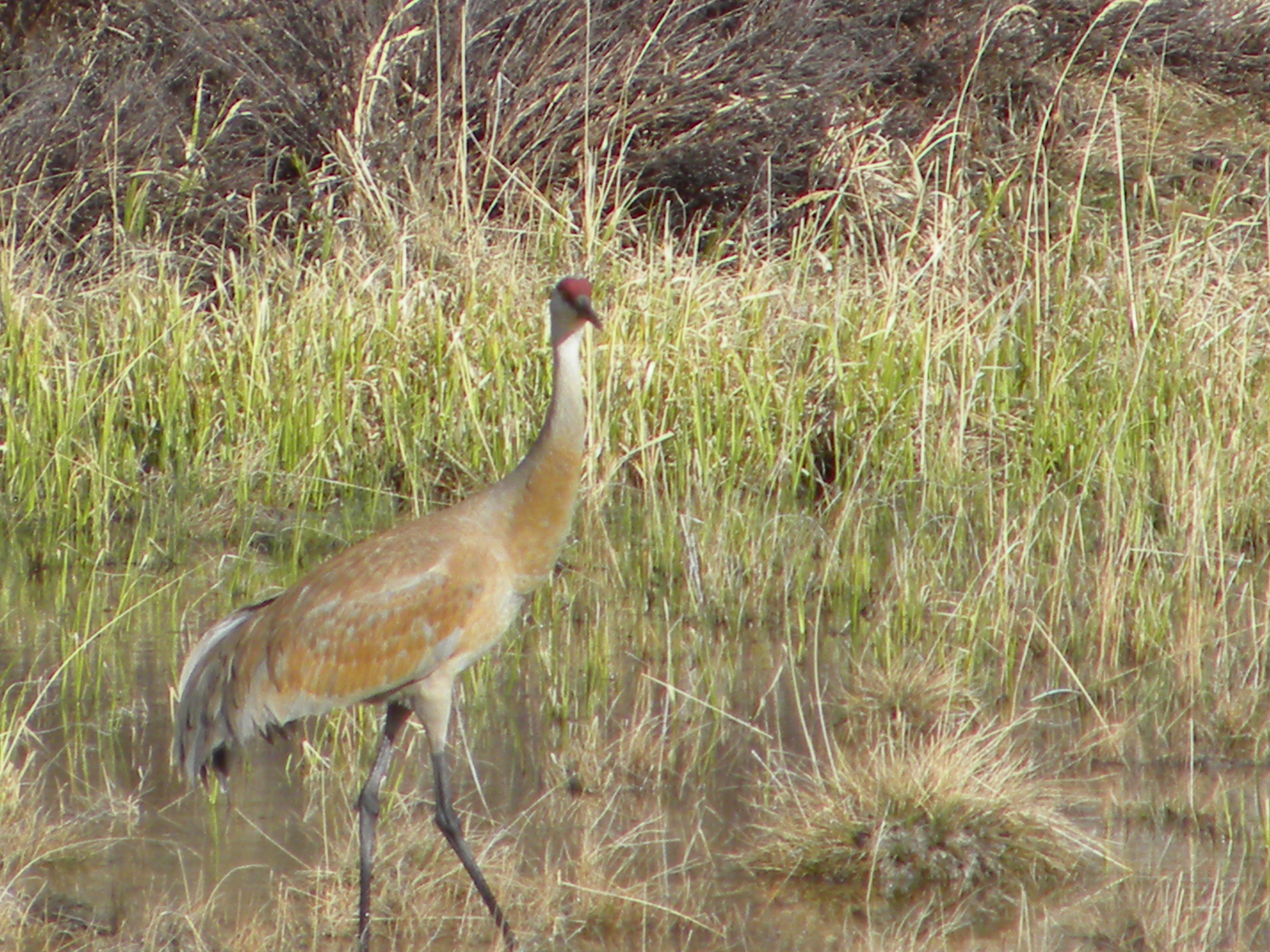
Sandhill Cranes, another sign of spring, aren’t up this way yet, but I know they are down in the desert so I should hear their classic call soon.

Sandhill crane in my valley last year

As far as eagles and hawks, Bald and Golden Eagles are year all winter, but the other day I saw my first Red-tailed of the season, and yesterday was a real treat.  In a small wooded area where I know I might catch a glimpse of a breeding pair in season, I saw a single Northern Goshawk.

goshawk

It’s time to begin again my new practice I started last year.  Its a Jon Young ‘Understanding Bird Language’ special.  The idea is simple: everyday go and sit for 1 hour in the same spot–your secret spot–and simply listen to the birds.  Over time, with only the aid of identifying only 4 or 5 ground birds, you will start to understand when the birds are happy and in baseline, and when they are sounding alarms.  This basic awareness can help you know when and what type of predators are lurking.  Alarms vary depending upon whether its a ground predator such as a weasel or a large bird of prey overhead.  It takes practice and persistence.  But its a fun, relaxing meditation.  I highly recommend Young’s instructive tape set available through his website on Bird Language.

Frank revisited

I’m going to revisit an old post about Frank Hammitt.  In my previous post I told the story of how old Frank really died.  Frank Hammitt worked for the Forest Service even before there were rangers around here.  There’s a nice stone memorial with a plaque by Antelope butte.  Stories abound.  He was in a snowstorm with his horse and couldn’t see.  They fell over the side.  He committed suicide.  On and on.  It’s great, classic folklore around here.

But the real story is that they found old Frank’s body not over Antelope butte, but much further down, on the side of the Clark’s Fork.  “He was pretty ripe” my neighbor said.  No one really knows how it happened.  They just found his horse wandering around and went looking for Frank.

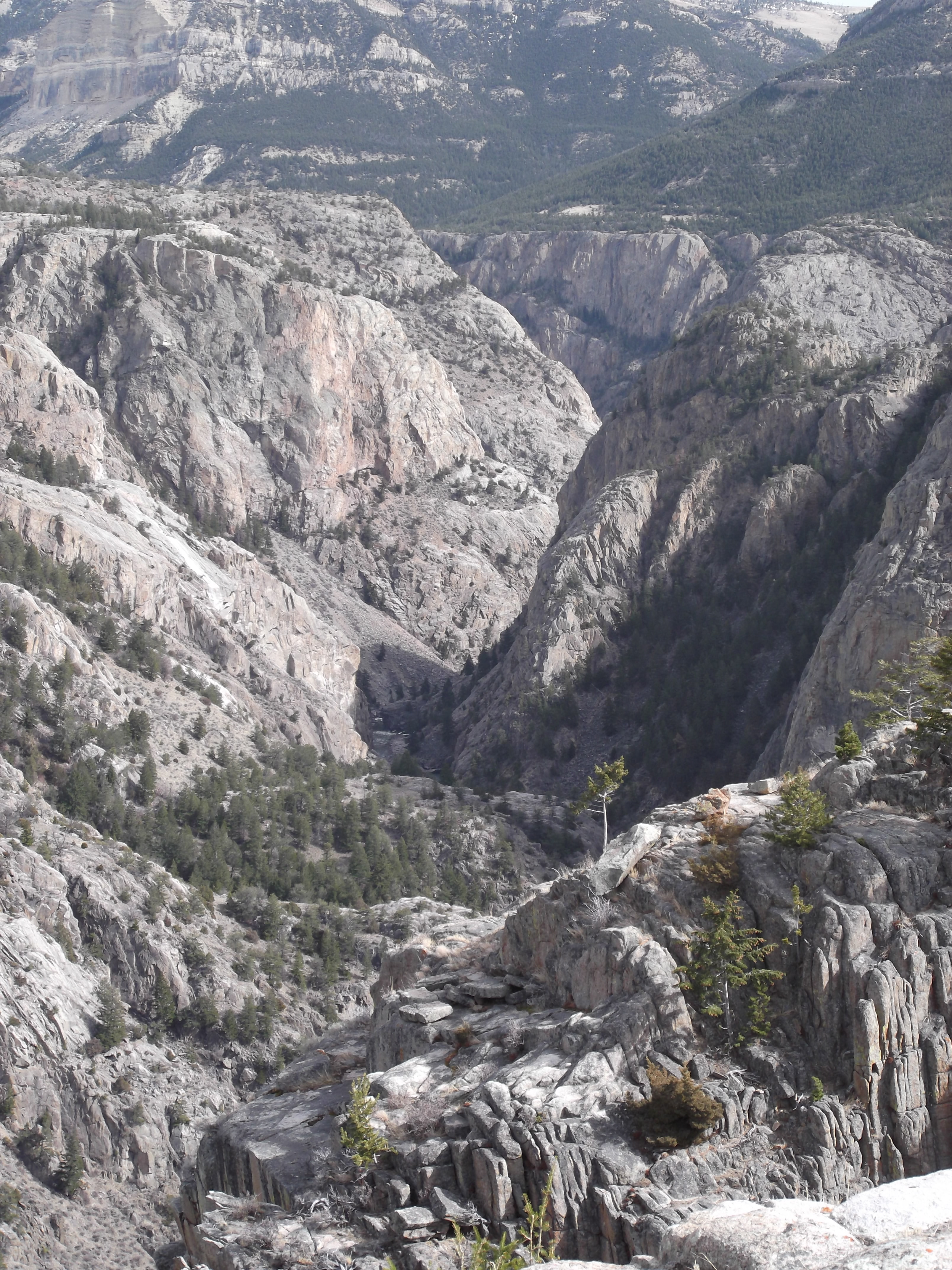
Is this where he fell from? Ledge near the burial site

Well my old neighbor who grew up in the valley told me there was a box, Frank’s coffin, near the cliff.  The box was an old wagon box and they brought Frank up and buried him near the top of the cliff where they found him.  Some years later, some of his friends thought that wasn’t a proper burial so they brought a wagon down to the coffin, collected his bones, and brought him up to where the present memorial is.  The CCC then built the plaque.

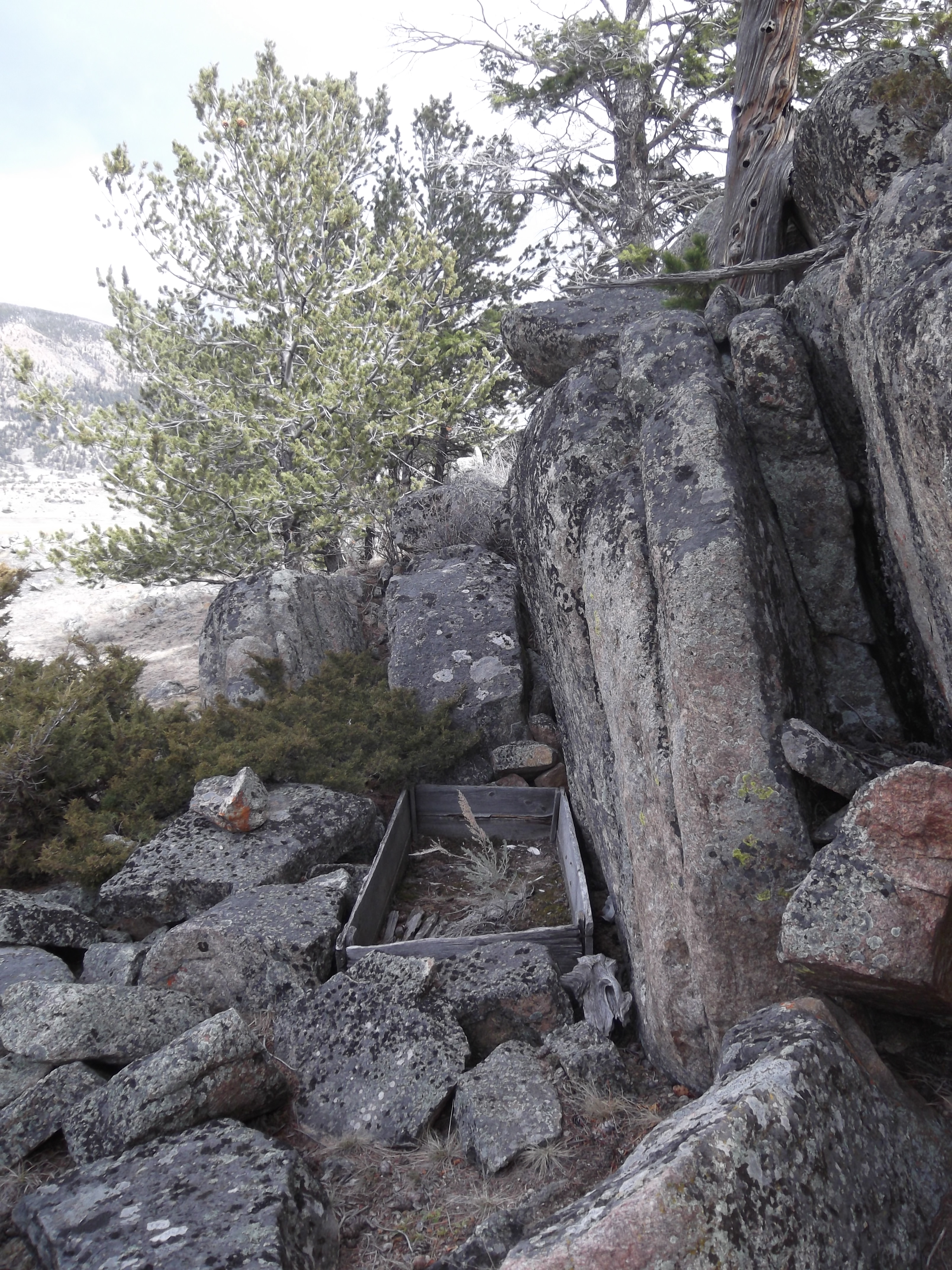
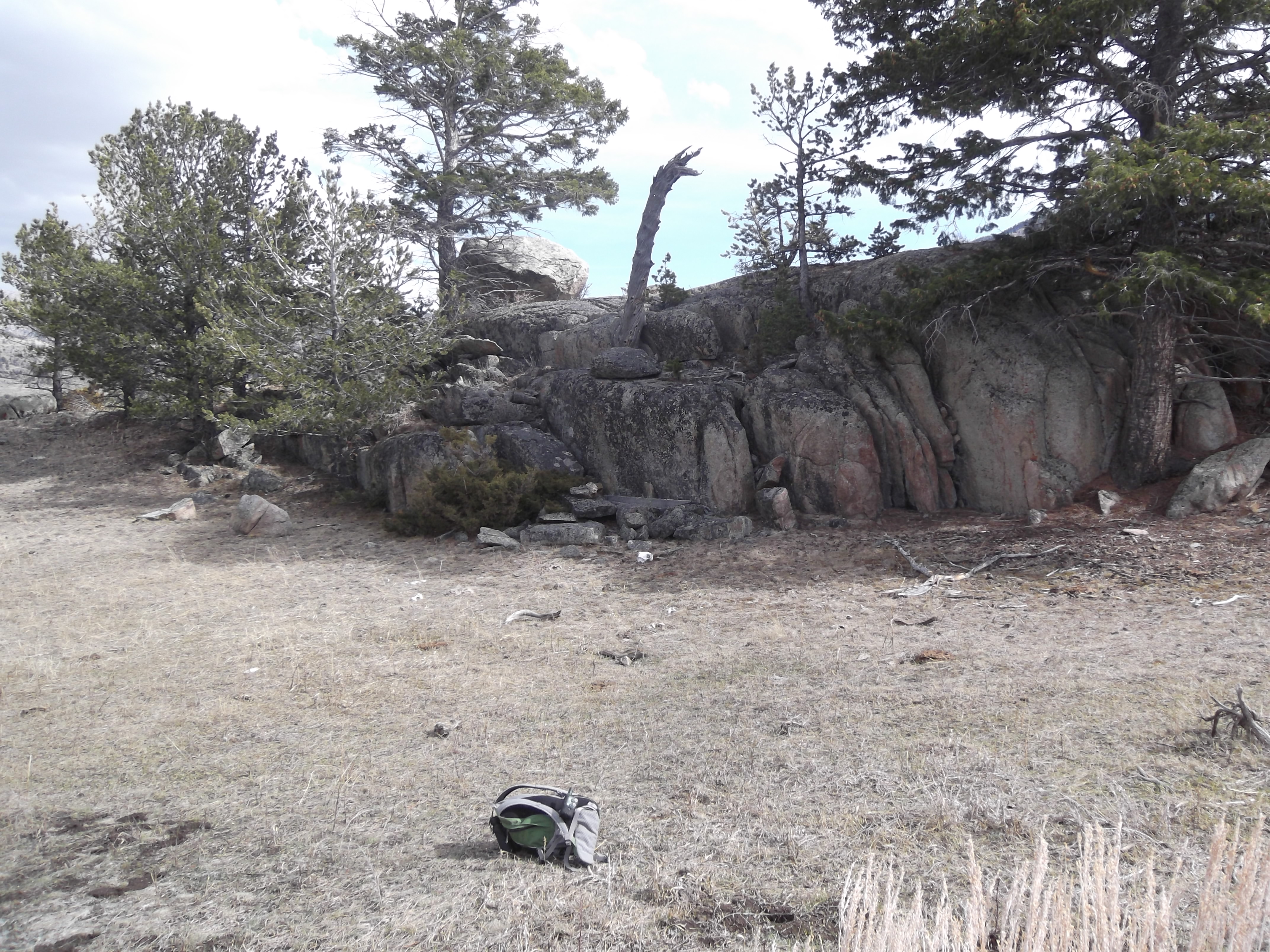
Last fall I heard this story and guess what?  A few days ago I found that box, just as my friend Jack said.  I was lucky to run into it.  Although its not hidden, its obscure and I just happened to wander over to a nearby elk skull to inspect when I noticed the box.  The box is about 6’6″.  I thought it was an awfully nice place to be laid to rest; actually much nicer than right by the highway, even though you get signage, a special turnaround, and a plaque of your own.  Frankly, I’d prefer the rock and the ephemeral pond.

Hammitt's coffin next to the boulder

Another view of the wagon box coffin

View of the area. Ephemeral pond in this meadow

Plus, as a bonus, the mountain goats hang around you.  Up by the highway, its too exposed for the wildlife to browse near your gravesite.

Goats near coffin

Goat track

Yes, I’ll take that rock any day.

False spring or Climate Change?

Wow, its’ in the 50’s and 60’s for days now…in early March.  ‘Spring’ is the time we should begin getting our wet snows that deliver our moisture for the year.   Early and/or rapid spring run-off from the high country spells flooding and erosion.  All the grizzly bear signs warn ‘Grizzly bear season April-October.  Take precautions’ , but grizzly bears are being sighted already.

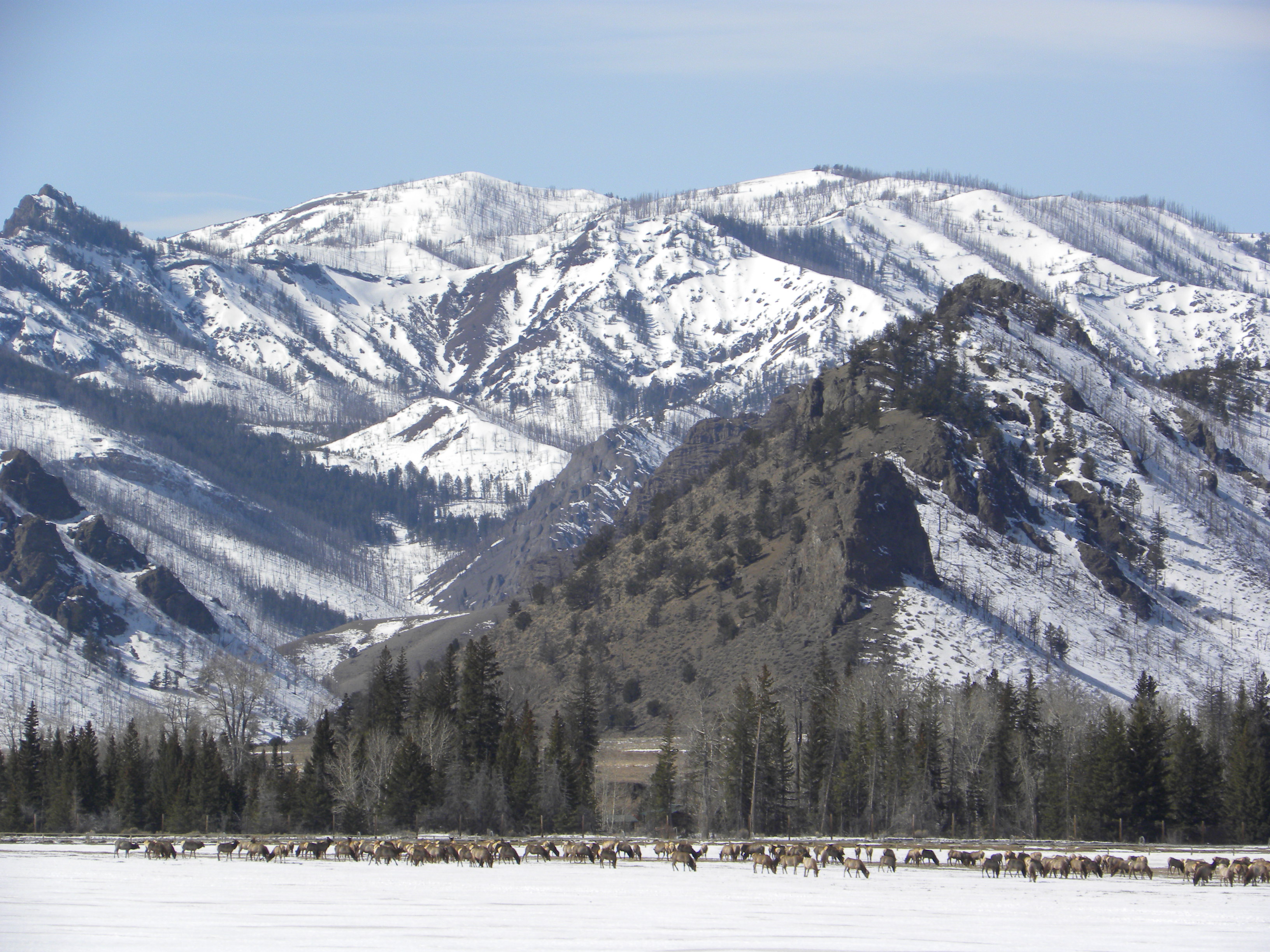
If you look at thirty years of data on the ‘green-up’ period in the high country, it is getting more compressed and earlier.  Warm temperatures like these suggest the trend is only going to continue.  If the grasses in the high country green up earlier and brown sooner, the elk in my valley that travel back to the Lamar to calf will once again have limited nutrition, all at a time when they need it the most to nurse their young.  This has been one of the major factors in their low calf-cow ratios

Elk herd in valley on a warm day


This fall I had an opportunity to go on a grizzly tracking adventure with Gregg Treinish of Adventurers and Scientists for Conservation.  On that wonderful trip I met Louisa Wilcox of the Montana NRDC.  I asked her about a premier Whitebark pine study that NRDC sponsored.  What she told me was eye opening.  The research botanist said as global warming progresses, we will see Gambel Oak (Quercus gambelii) in the mountains here.  Gambel Oak is the predominant oak of the Southwest United States.  I saw it growing in the canyons around Mesa Verde.

But for today, this week has been a nice break from winter.  We got a foot of snow just a week before these temps.  Here’s some of what we’re now missing, taken last week.

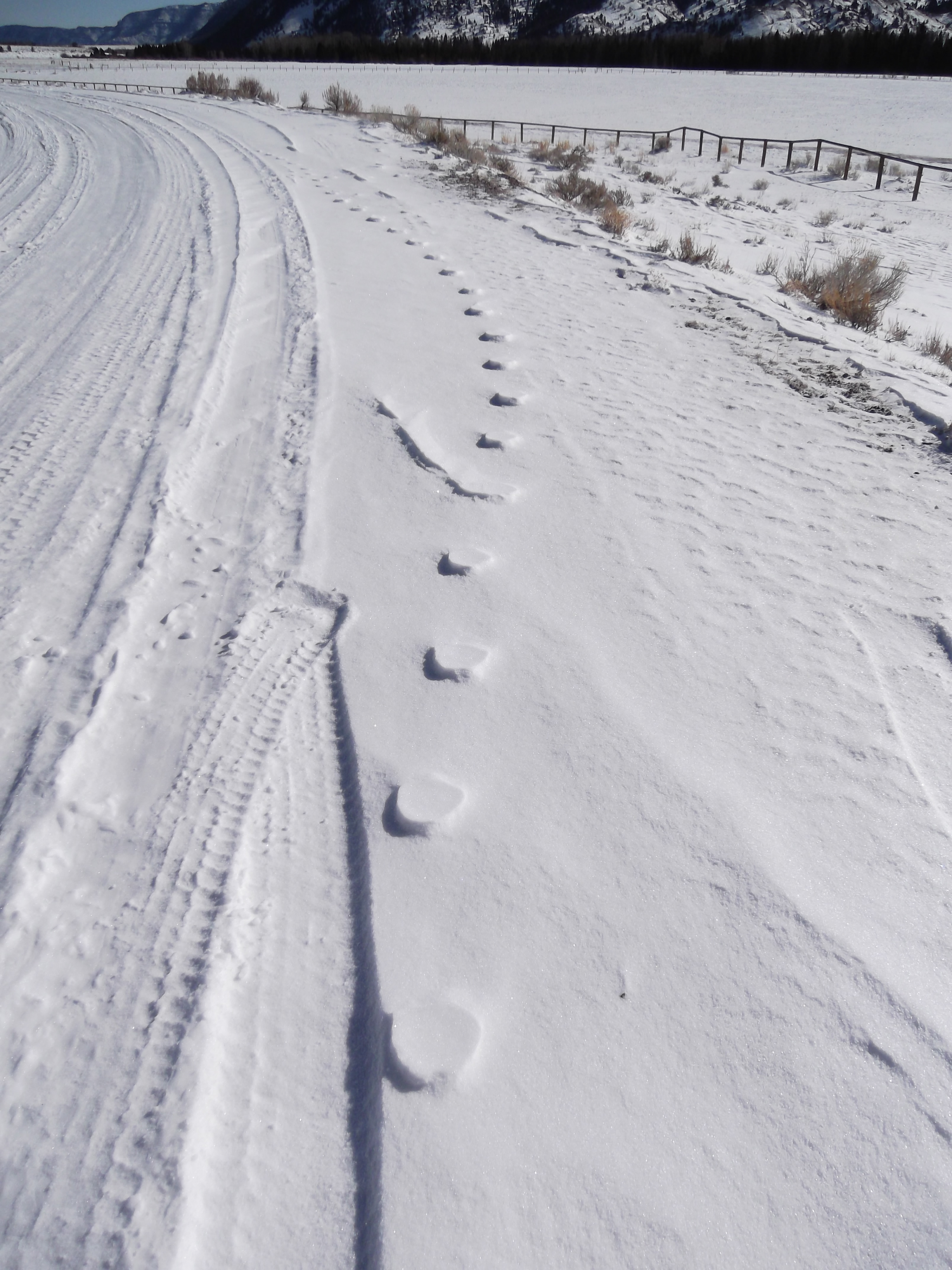
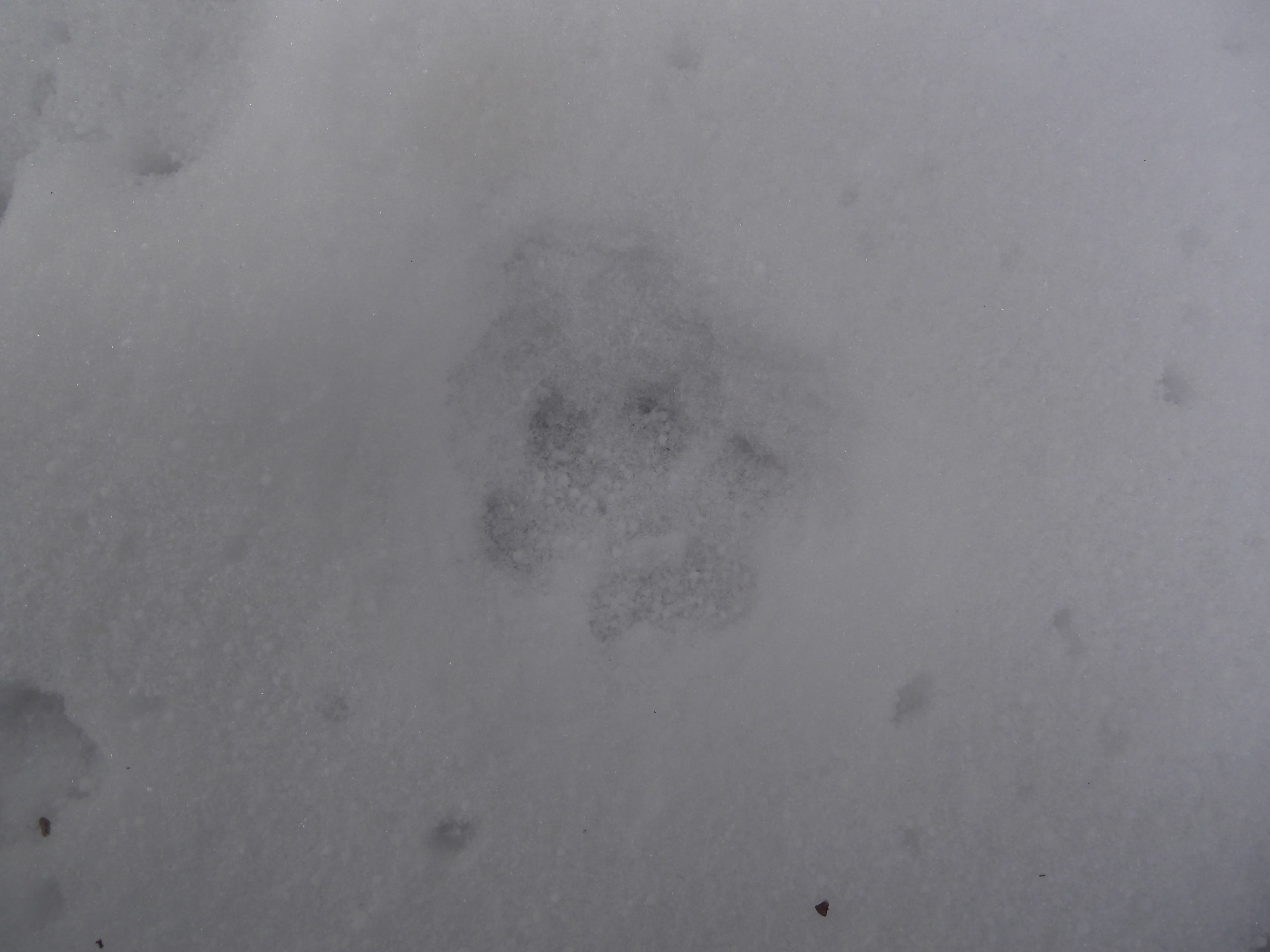
Wolf tracks with snow blown in

Bull Moose

Shows that he recently lost his antlers

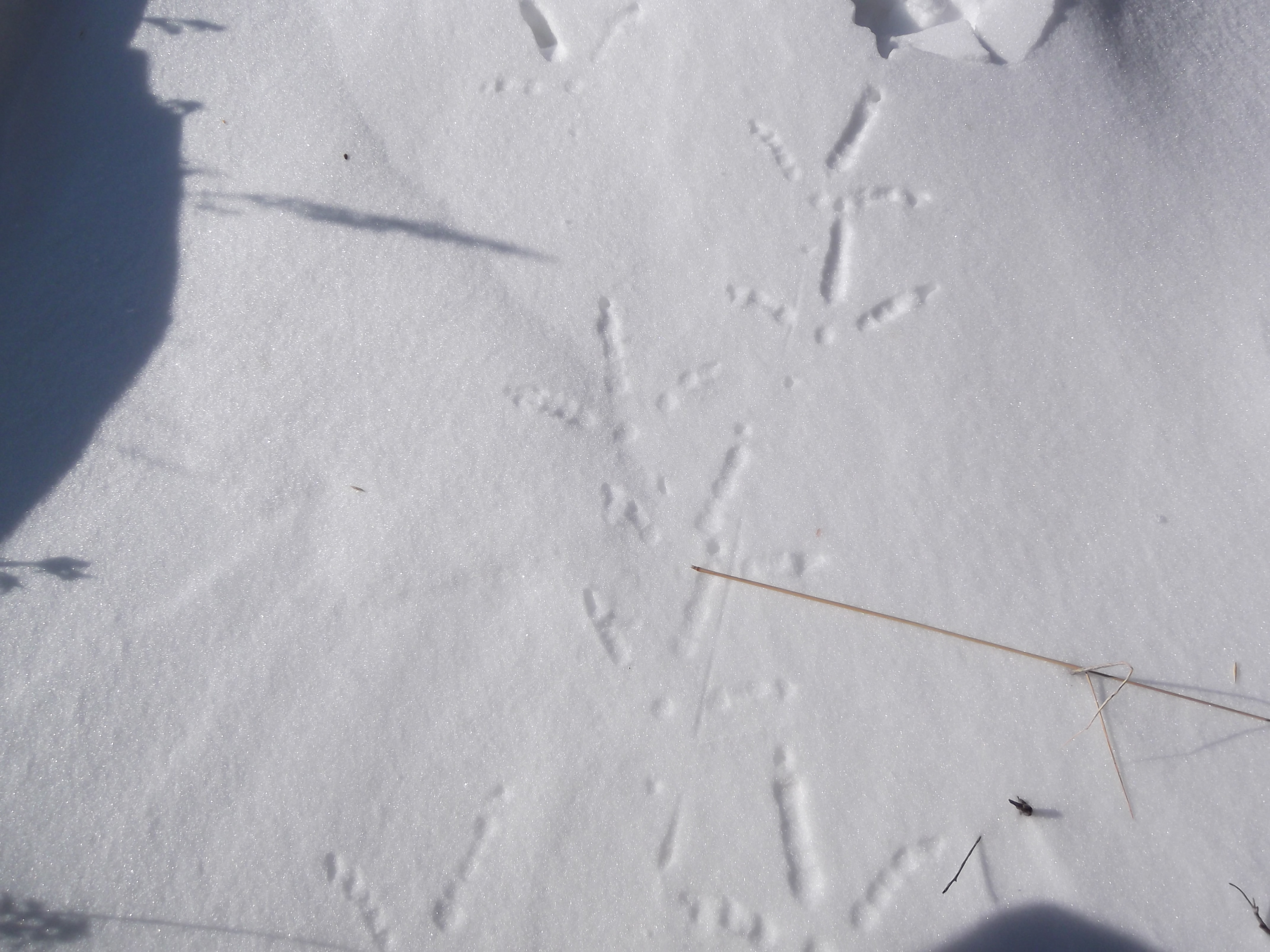
Grouse tracks

Moose mom and male calf

How to choose boulders for any garden

Choosing and placing boulders for your landscape job is an art.  The Japanese have several years of study on just rock placement.  But you can do a great job with just some sensitivity and a good eye.  Here are the basic tips.

I usually suggest choosing local or fairly local boulders.  This keeps your costs down and usually blends in better with your yard.  For instance, Sonoma Fieldstone in California costs approximately $125/ton vs. beautiful 3 Rivers rock, an Idaho import to California, at over $450/ton.

But sometimes you just fall in love with a type of rock and must have it.  In that case accept you’ll be paying for it.  Or maybe your area has junky looking local boulders.  I suggest then to pass on them and spend the money for the nicer boulders.

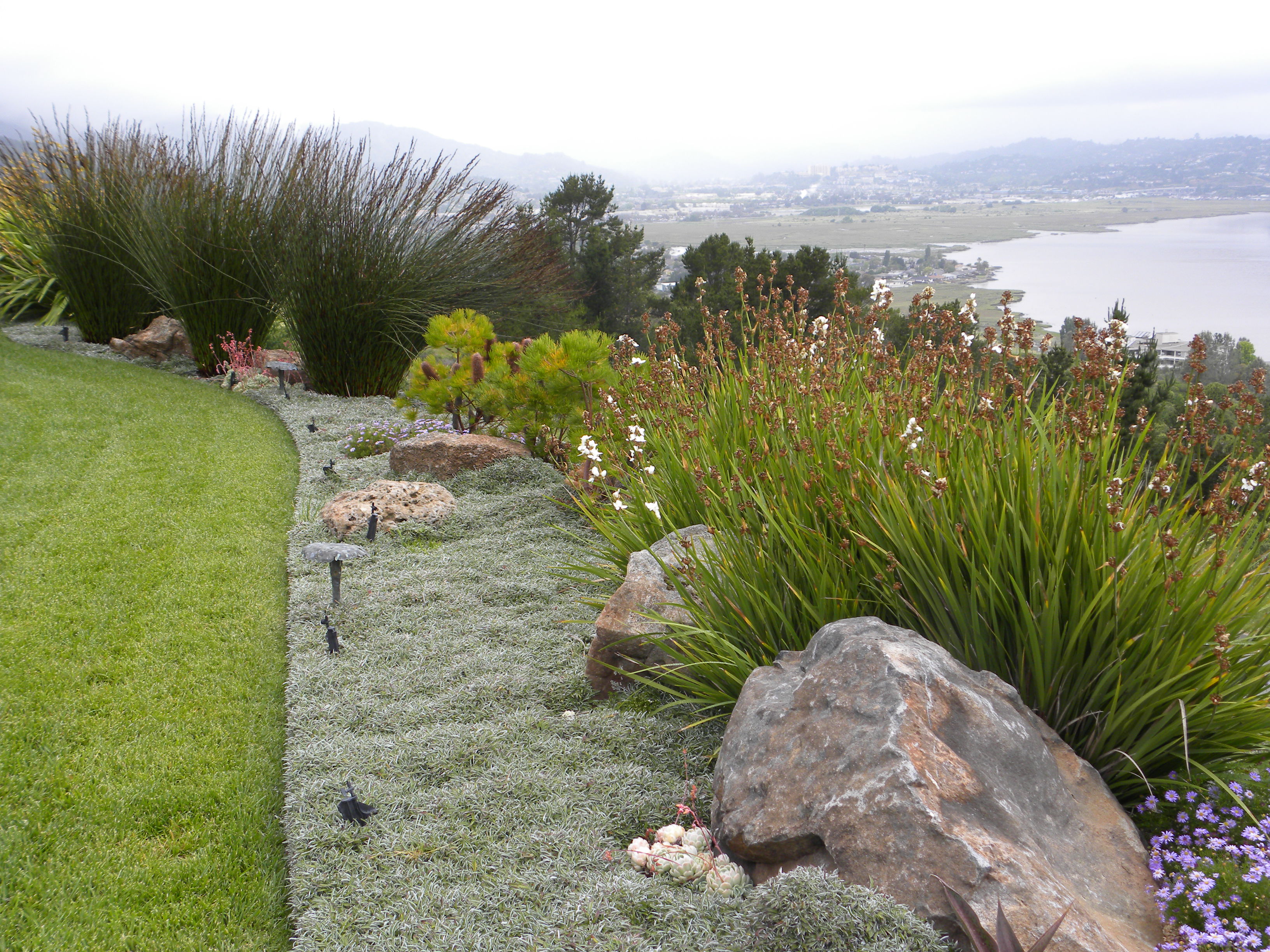
In order not to hide the view, plants and rocks aren’t too tall

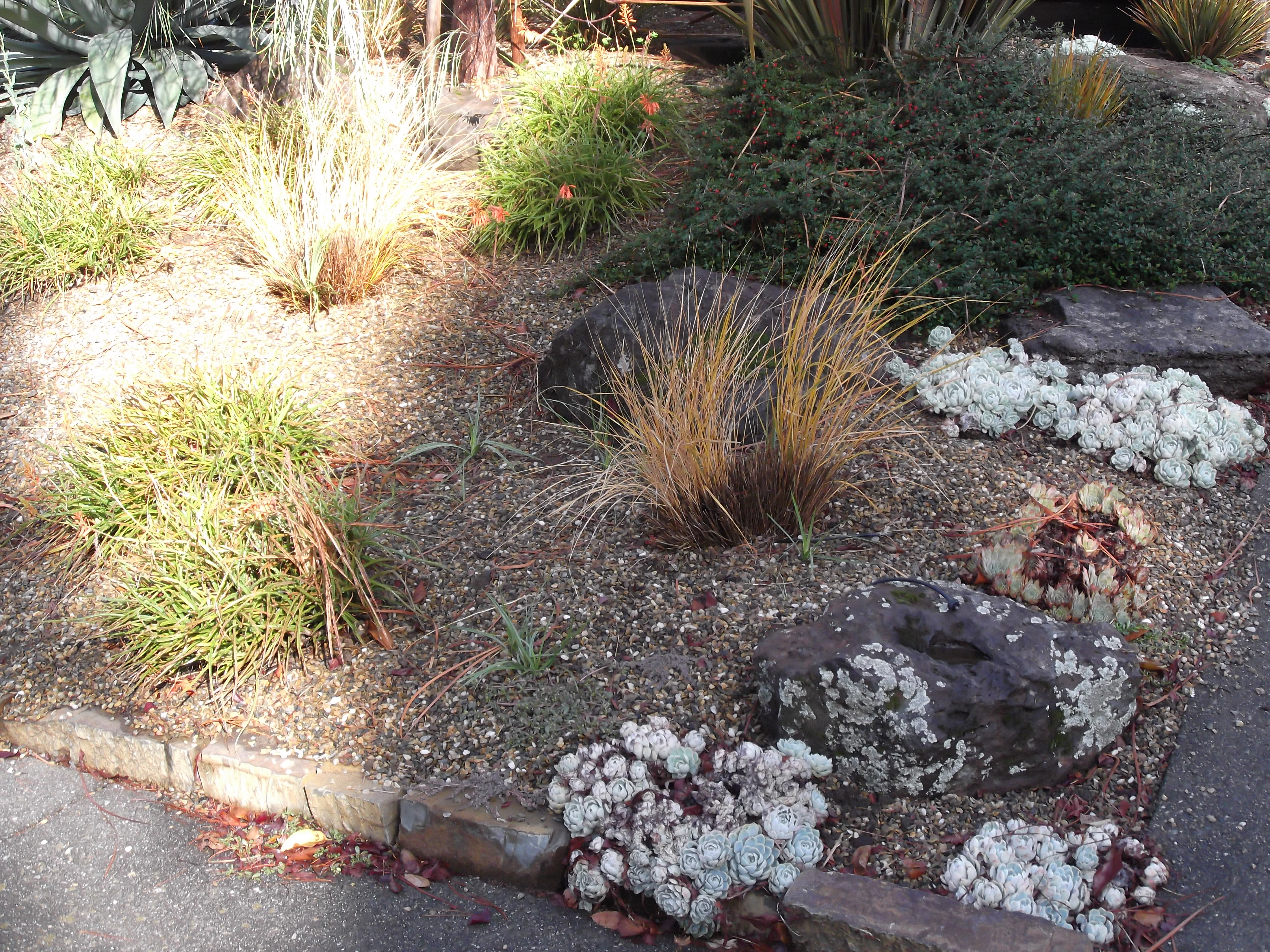
So how do you choose and what is a nice boulder? First, no potato boulders!  Second, look for lichen.  Lichen grows extremely slow, something like 1″ every 10 years.  Lots of lichen is good.  Moss is easy to establish with a little water and buttermilk, so don’t necessarily choose boulders for the moss.

Every boulder came out of the ground and has a bottom and a top, a front and a back.  The bottom won’t have any moss or lichen on it. Check as many sides as you can.  Have the yard manager turn them over for you so you can see what each boulder looks like.

.That’s their job.  Choose boulders that have a lot of interests such as pockets, unusual shapes (watch out for boulders that were broken during transport.

That is not an unusual shape), and usually I try to find a few boulders that have a natural water bowl that I can use for birds.  I’ll put a hidden irrigation emitter behind the bowl so it stays full with each watering. Fourth, go for medium to large boulders.

The mistake everyone makes is putting in dinky rocks that disappear once the plants grow in.  Remember, in order to look natural, you’ll be burying part of the boulder.  Bigger is better, but unless you want to use a crane, make sure you have boulders that a crew of 4 or 5 guys can move.

That would be about 250-350 pounds/boulder in general.  If your landscape is vast, you might need much larger boulders.  If so, usually the yard rents a forklift with a driver for about $75-$100/hour which is worth it.

Large plants behind low boulders

I usually choose a landscape yard that will deliver these boulders with a forklift no extra charge.  Most of them do and for the price included in the delivery they will lift each boulder off their delivery truck, one by one, and place them near where you want them.  That saves a lot of time for your crew.

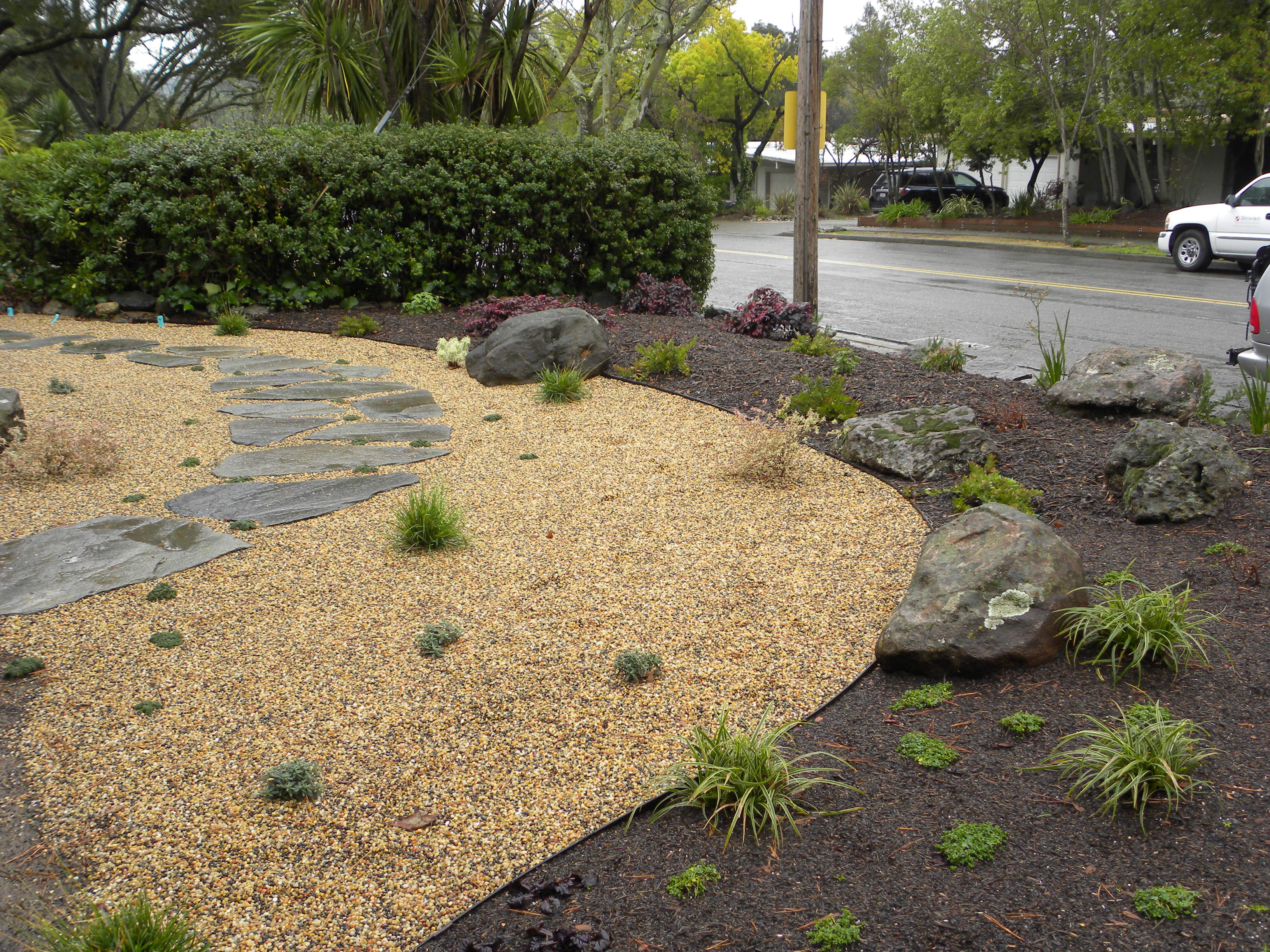
Placing the boulders:  First, consider your entire design and where you need to cluster boulders.  Boulders should be placed in 3’s, 5’s, 7’s, etc.  NEVER place boulders so they are in a row.  This can happen inadvertently when you have a cluster in one location and one in another, then you’ll notice that three have been placed in a row.  Move them in that case to offset the row.

As said before, boulders have a front and back.  Consider where you’ll be seeing the boulder from.  I usually like to place boulders of varying sizes together and I tend to triangulate the 3some’s and continue that style with larger groups.  You NEVER want a LONELY boulder!

Boulders looking bare before the plants have matured

Your client, or if you are a homeowner, will look at all these boulders on bare ground and think they look huge or stand out too much.  They don’t and they won’t once the plant material is in.

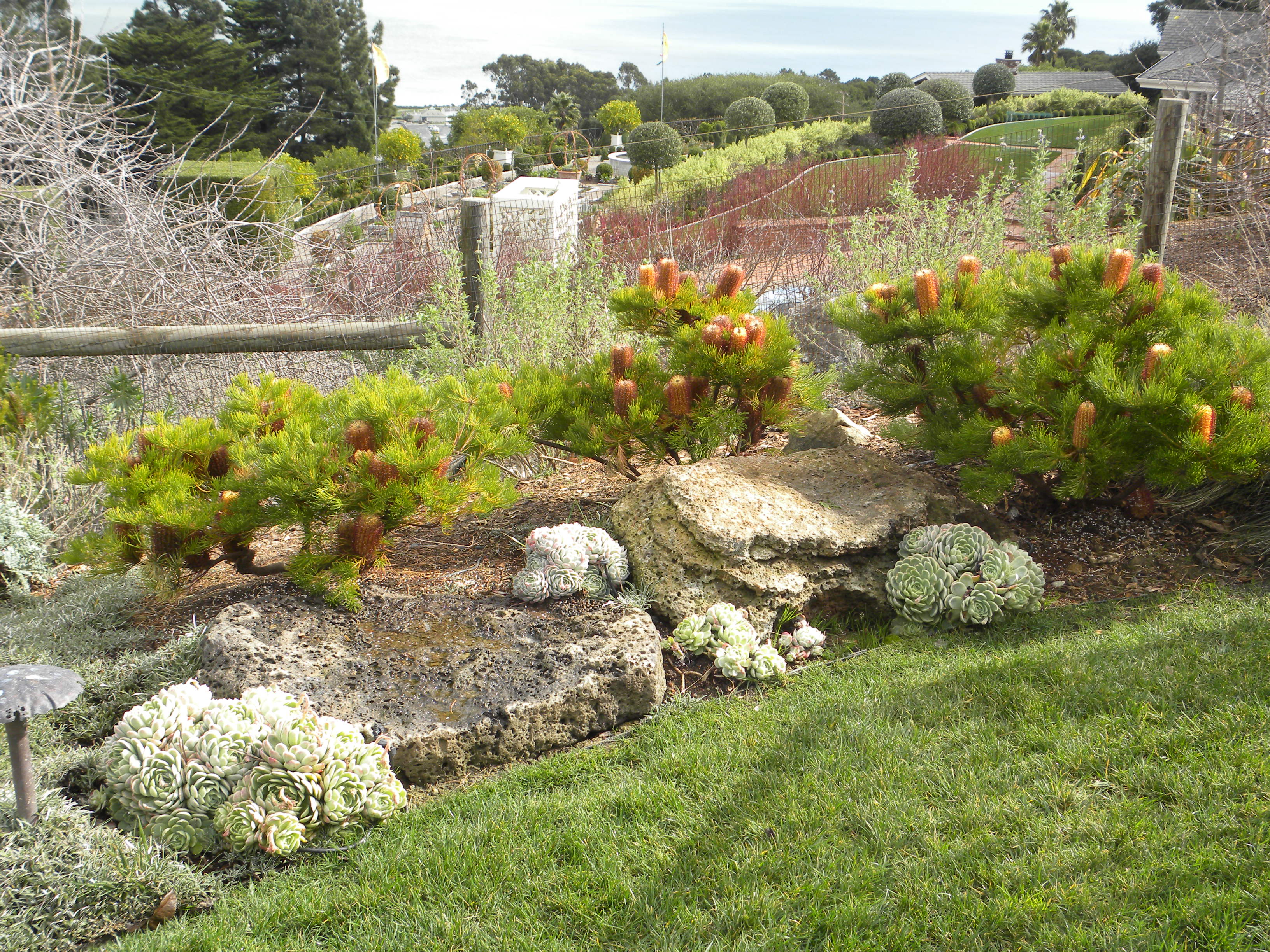
Succulents with boulders; look for lichen, not moss, on rocks as this one has

Placing the plants around the boulders:  Of course, here you will consider your size of plants.  I love for plants to peek out behind boulders, or have ground cover crawling over and in front of boulders.  Usually your larger plants will be behind your boulders or alongside them.

Stone edging along sidewalk. small boulders with succulents

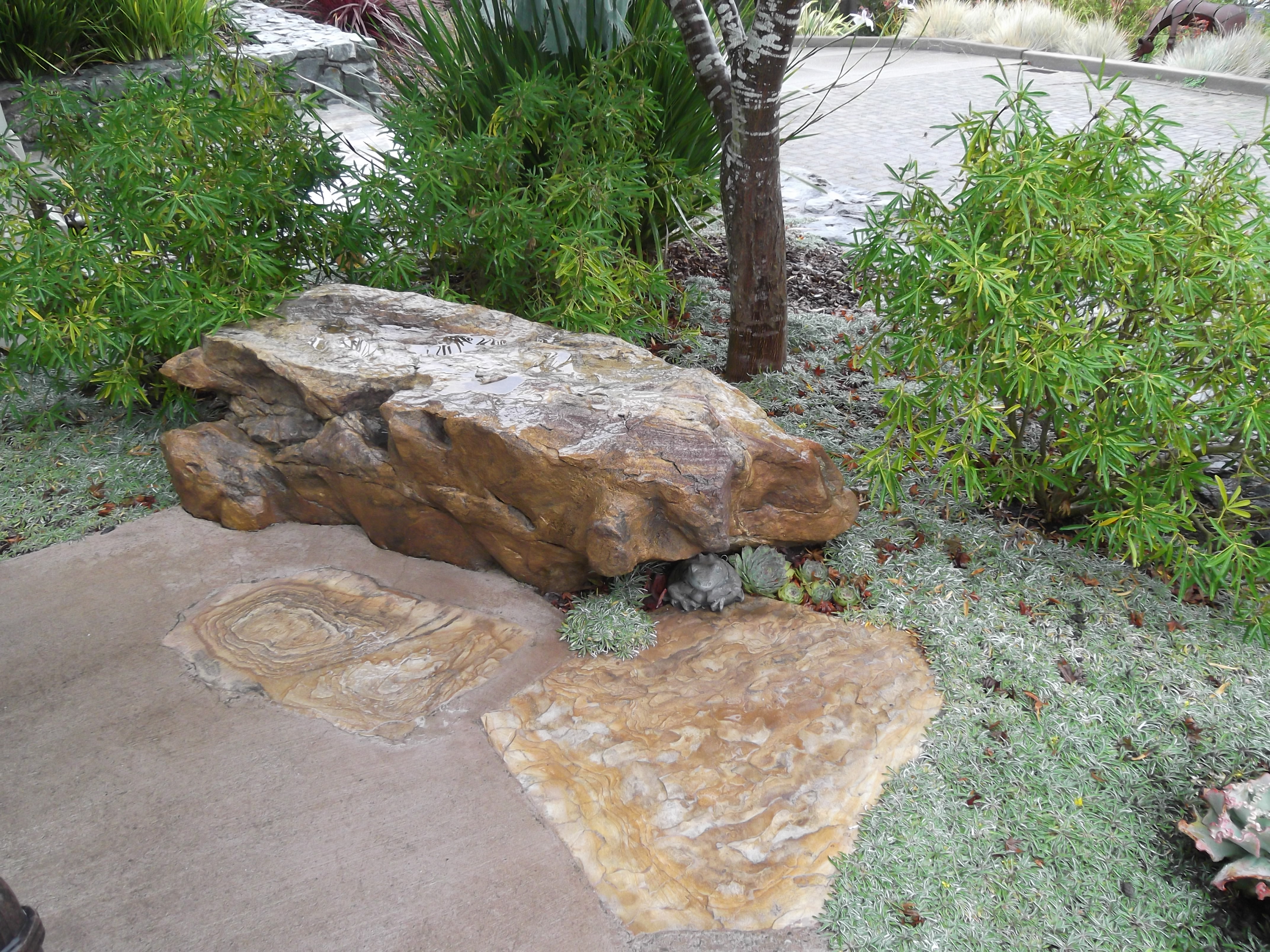
Rock seat

Rock Seats: Finally, a few things to know about boulders for seating.  First, boulders used as seating around a patio or in the garden are a wonderful addition to the garden.  The natural height for a seat is somewhere between 16″-20″ tall.

Your desk chair usually runs 16″.  The top must be flat with a good base that will be buried some in the ground.  To place boulders in concrete around a pour, the boulder seat area must run 22″-25″, depending upon your final desired height.  This is because at least 4-6″ will be embedded in the concrete.

Boulder seat

Occasionally you’ll run across a boulder so fantastic, so unique, that you just have to have it and show it off.  In that case, why not light it up.  this jasper was just too delicious to pass up.  It is imbedded in the concrete pour and you can see a light at its base that displays it.

The Jasper is on the far left of photo with a light imbedded at its base

Cat Tracking and a wildlife bonanza

The Plateau

I’ve been hiking the plateau for several days now and, wow, what a lot of wildlife activity is going on there.  A few days ago on my first jaunt I ran into a fairly fresh elk carcass.  She was a very large and old elk.  I’d been seeing lots of wolf tracks on the plateau and of course there were fresh tracks leading to the carcass

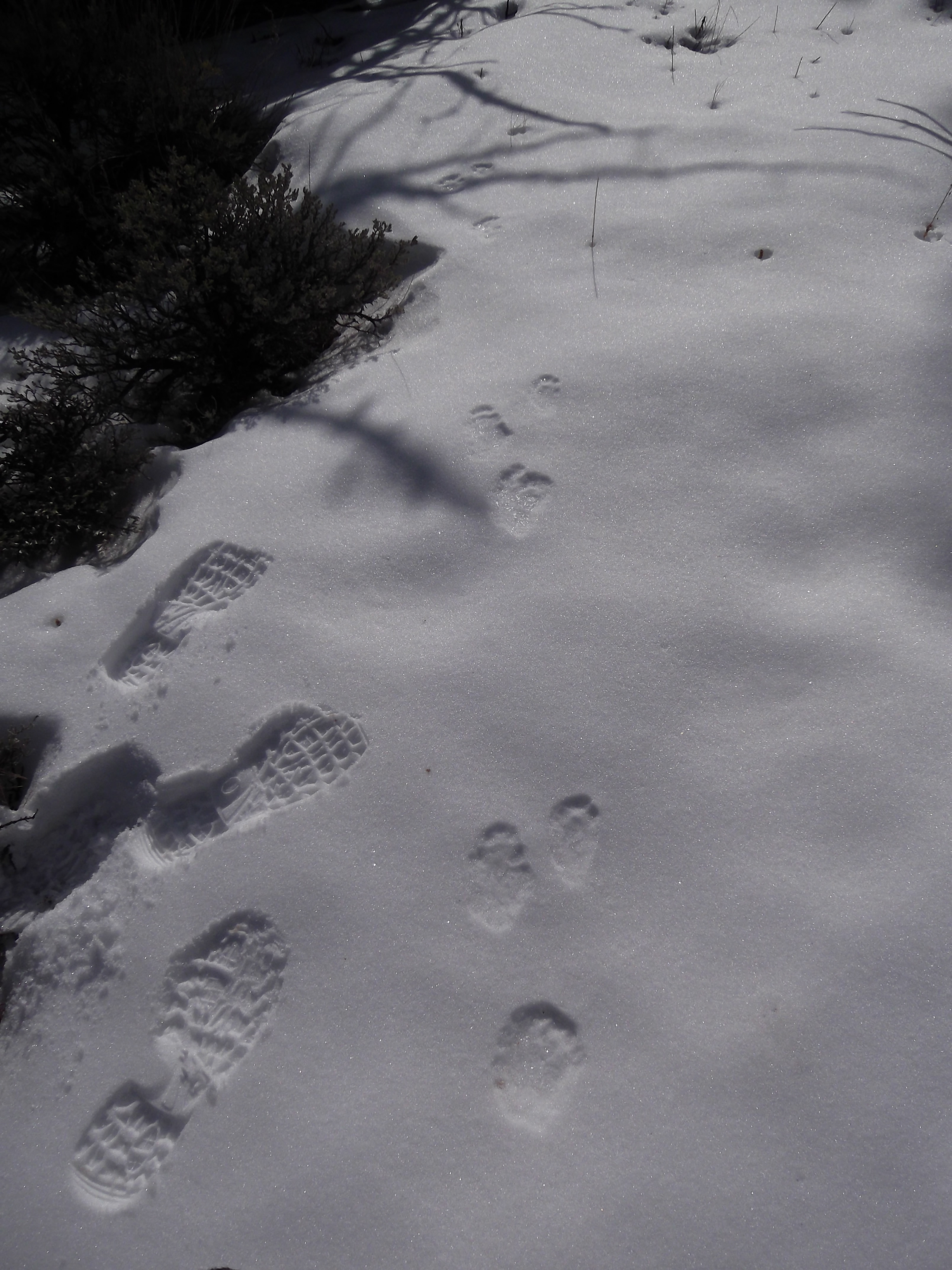
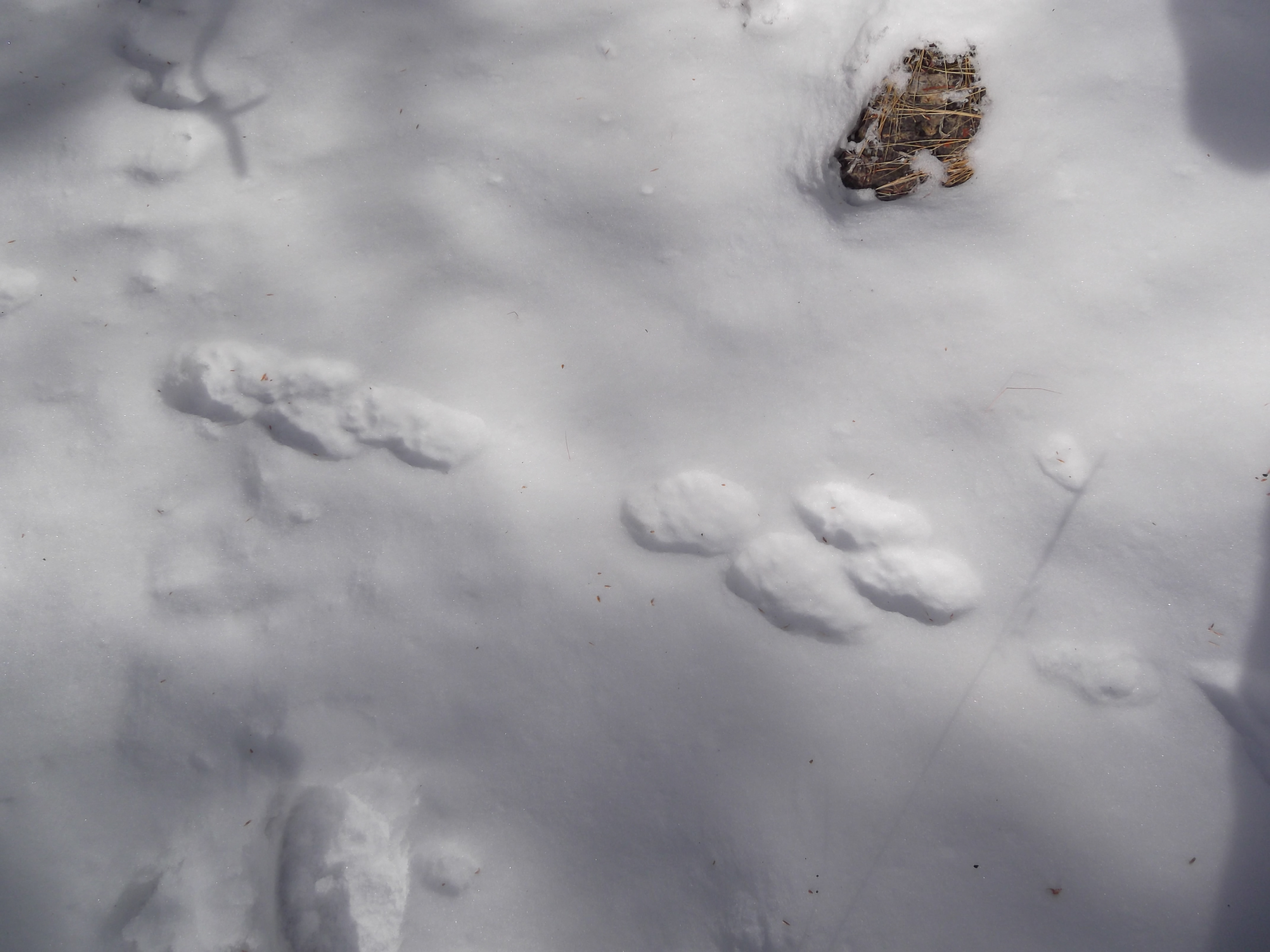
Rabbit prints with my own footprints too

That same day I realized where all the cottontails are–on Dead Indian plateau!  The cottontails here seemed active and numerous and here I found and tracked a bobcat hunting them.

Several days later I explored a cliff edge on the plateau that looks out over Sunlight creek gorge.  There, on a prominence, were over a dozen Mountain Goats, safely grazing on the edges where no sane predator including humans would go.

But today was a bonanza.  There are plenty of deer on the plateau, and although there are elk tracks and other evidence of elk, I haven’t seen any with my own eyes.  But I do run into deer occasionally.  And with all the granite cliffs and rocks, that makes for perfect cat country.  After scrambling up a huge granite boulder, I saw from afar some interesting large tracks that at first glance could be mistaken for wolf.  But as soon as I got close enough to make them out, there was no question what they were–cougar tracks.  I followed them for a while into a heavy deer area when they disappeared under the blown snow from yesterday.  Some of the tracks were perfect ice.  Seeing those tracks takes one’s breath away.

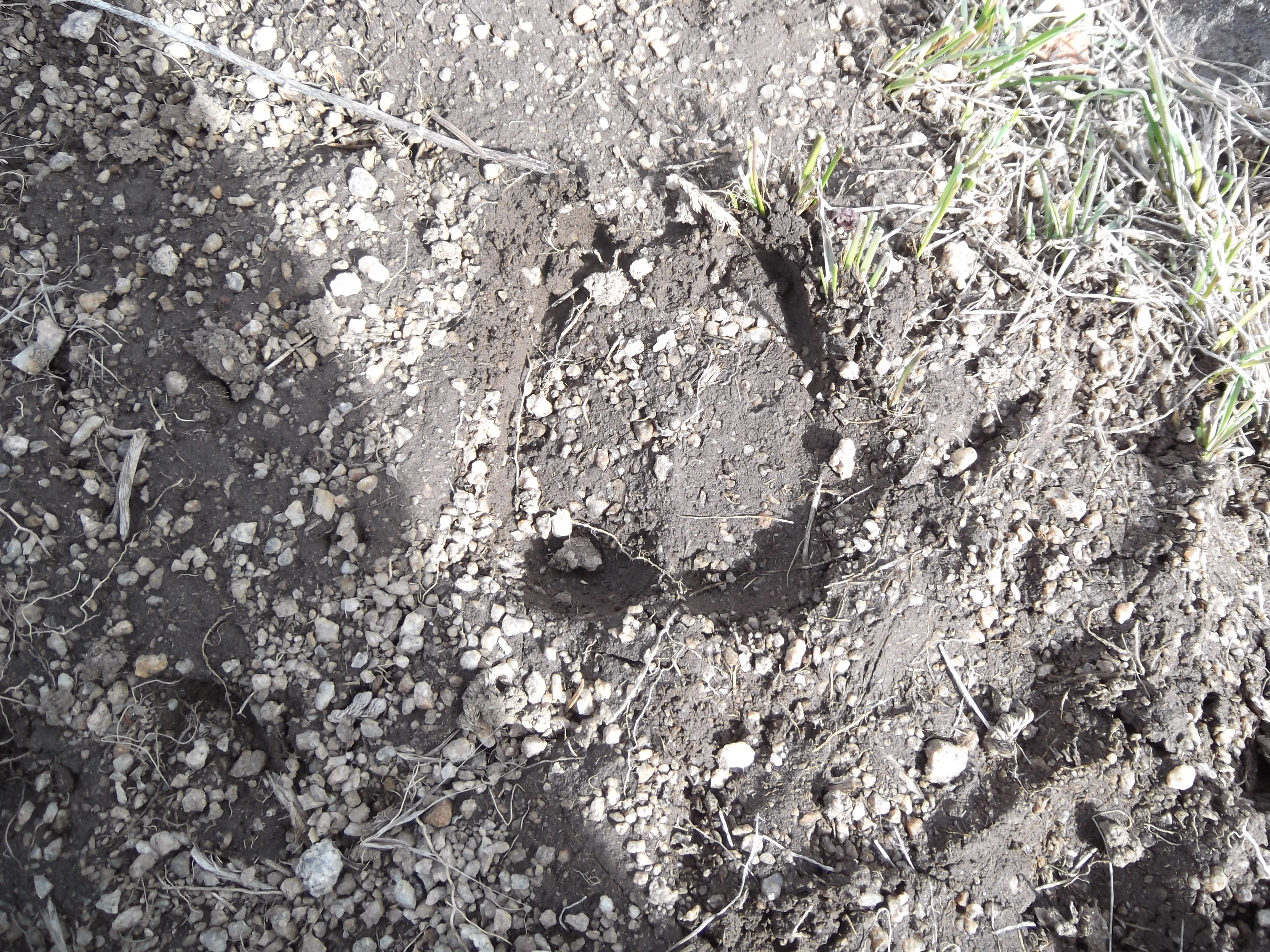
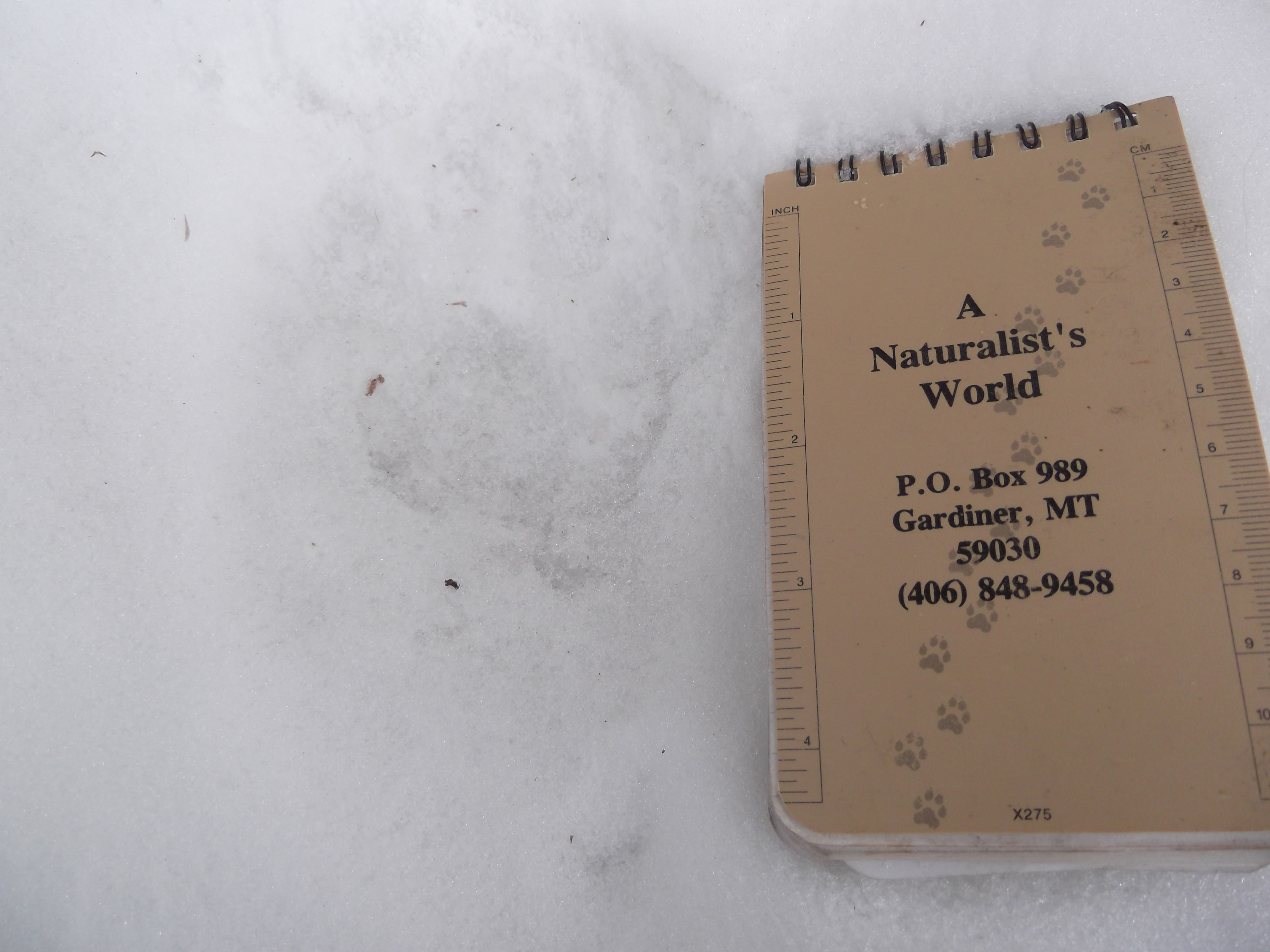
This track measures 3"x3" approx.

It seemed like this cougar was following me, figuratively not literally.  As I lost the cougar farther back, I began concentrating on my bobcat that I found in virtually the same location as the other day.  He or she was weaving around, obviously hunting again.  Here is a photo of where the cat stopped to scratch in the snow.  

Here is a photo of the bobcat in a sit-down in front of a large sage brush.  Obviously something caught his attention there.

Bobcat sitdown

And there again was my cougar, making the rounds in this area too.  Here are two prints comparing a cougar print with a bobcat, for size.

Cougar hind track measuring 2.75 x 3.25

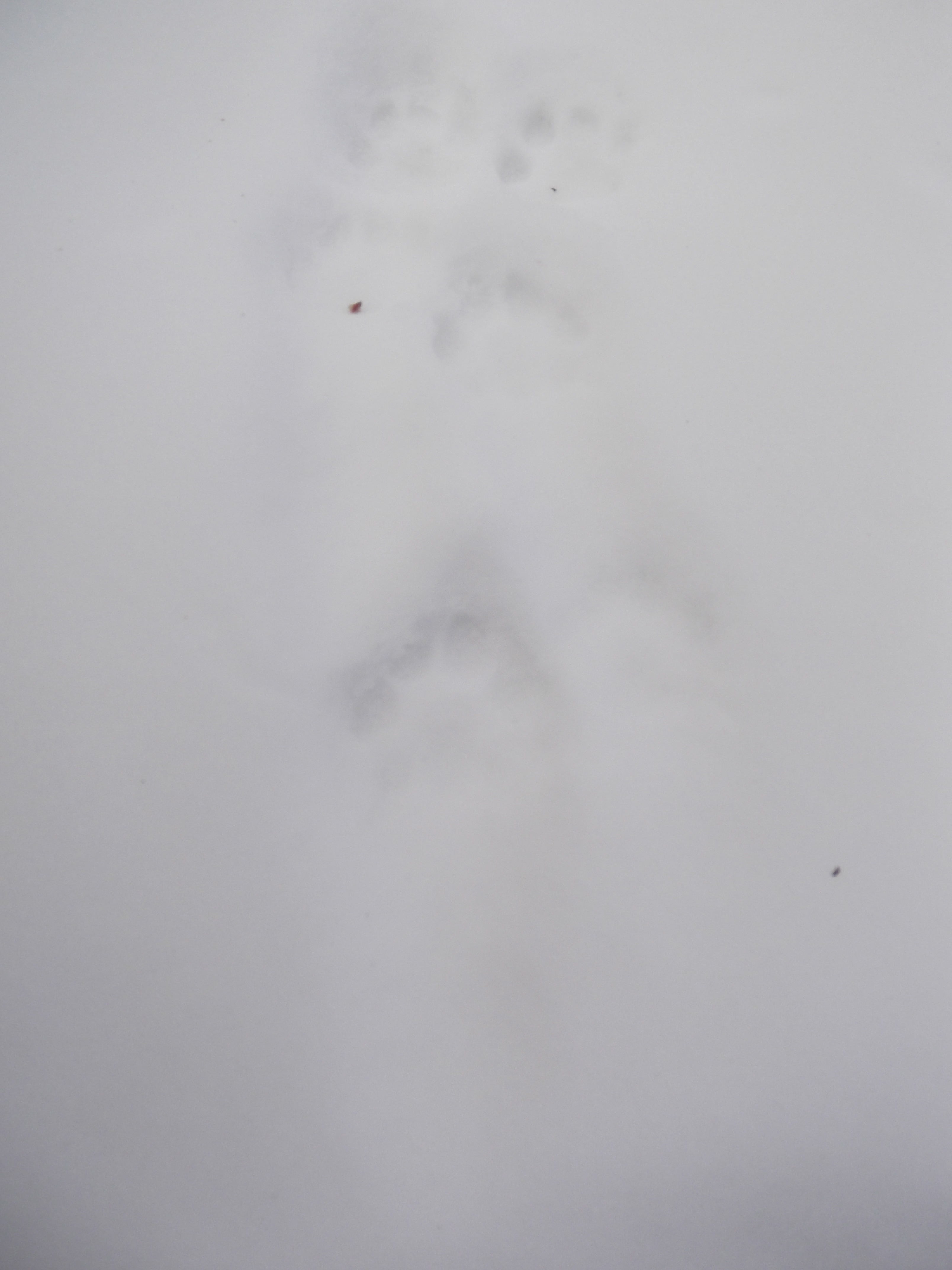
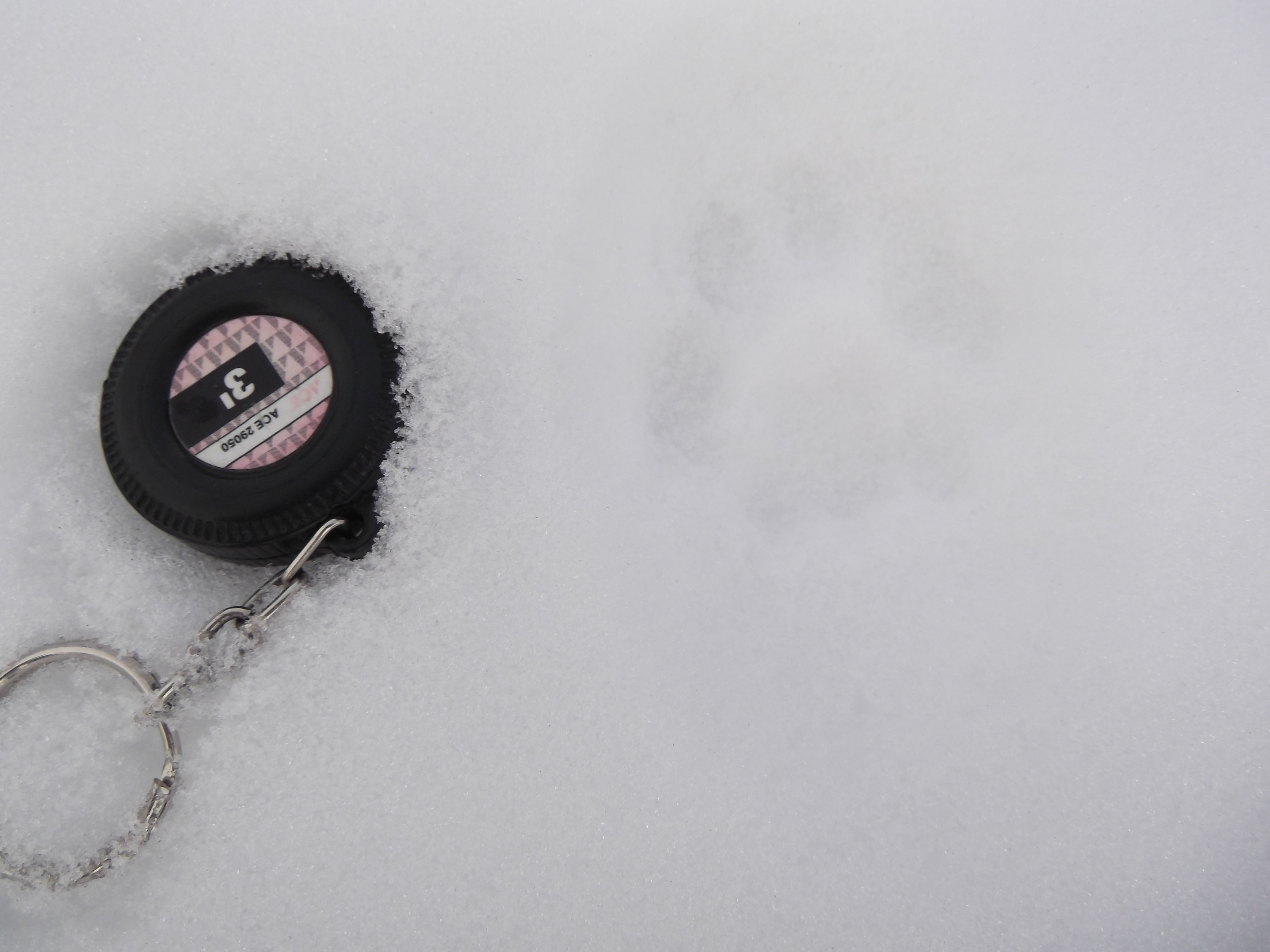
bobcat track measuring 1.75 x 2"

This rocky area is incredibly active–so much going on.  Partly because it is usually always windswept of snow, it is good ungulate habitat in the winter, which means food for predators.  In the fall bears frequent the area to look for limber pine middens.

It was great fun tracking big and small cats today; and knowing that you’re in the presence of a cougar your heart skips a beat.  Luckily, I have my personal wolf to protect me.

My great protector concentrating on his ball while a buck glides in the background

Cracking the Egg

This is an blog entry from a new guest writer, Richard Vacha, head of Marin County Tracking Club.  I am happy to have Richard as an occasional contributor.

To the early Apaches, Tracking and Awareness were the same word. This has taken me quite a while to really understand. Though certainly there are times in the life of a hunter-gather when tracks will be followed, the term “tracking” is also about noticing the details around us and putting the pieces together in an ongoing, dynamic realization. This is where modern nature appreciation meets up with ancient survival hunting, where immersion begins.

We have called this kind of tracking various things, from “holistic awareness” to “bringing the world back to life” or, simply, Awareness Tracking. It is a way of walking through the world, seeing the earth coming to life as we go forth, the whole panoply falling into patterns that make sense and reveal their interconnectedness.

Awareness tracking is concerned with weather history, seasonal cycles, landscape and topography, plant and insect communities, feeding sign, bird movements, and more. With a working knowledge of local animal populations, very small details quickly yield broad insights. A tracker develops a living sense of how animals are shifting in response to the progression of the seasons, where individuals live, what their territories are, and when they are active. When we approach nature this way, it is like cracking open a magical egg and watching an endless parade of surprises issue forth.

The smallest observations begin the process. On a walk near Limantour, I find a feather on the ground. A closer look reveals a cluster of feathers under a lupine bush: a bird kill. The pattern of the cluster and the location are not typical of a raptor, so I suspect that the predator was a mammal.  With a basic knowledge of feathers, I can see that this bird was a quail, and with that in mind, I begin to notice quail tracks covering the dusty gopher mounds surrounding this spot. Hmm. Lots of active gophers here implies both a healthy and growing grass base and the probability of other small mammals, such as voles and brush rabbits—and sure enough, the half-tunnel vole runs threading the grasses look recently used. Now that I’m looking, I notice little 4” circular holes in the grasses around the bases of the shrubs, like little doorways, with cleanly mown front porches, the way the cottontails love to keep house.

Rabbit tracks

In fact, I’m beginning to realize that this particular area is much richer and greener than much of the surrounding countryside. With its southern aspect and its slope and shape, the plant community has not gone into such a deep winter pause. It is actually a warm wrinkle. Insects are more active in the air, and so are the birds.

White-crowned Sparrows are busy in the surrounding brush and I realize that the scattered pattern on the ground, overlaid by the quail tracks, is the result of their foraging here earlier than the quail, and imply that a lot of seed has dropped to the ground to mix with the newly sprouted grasses after recent rains.

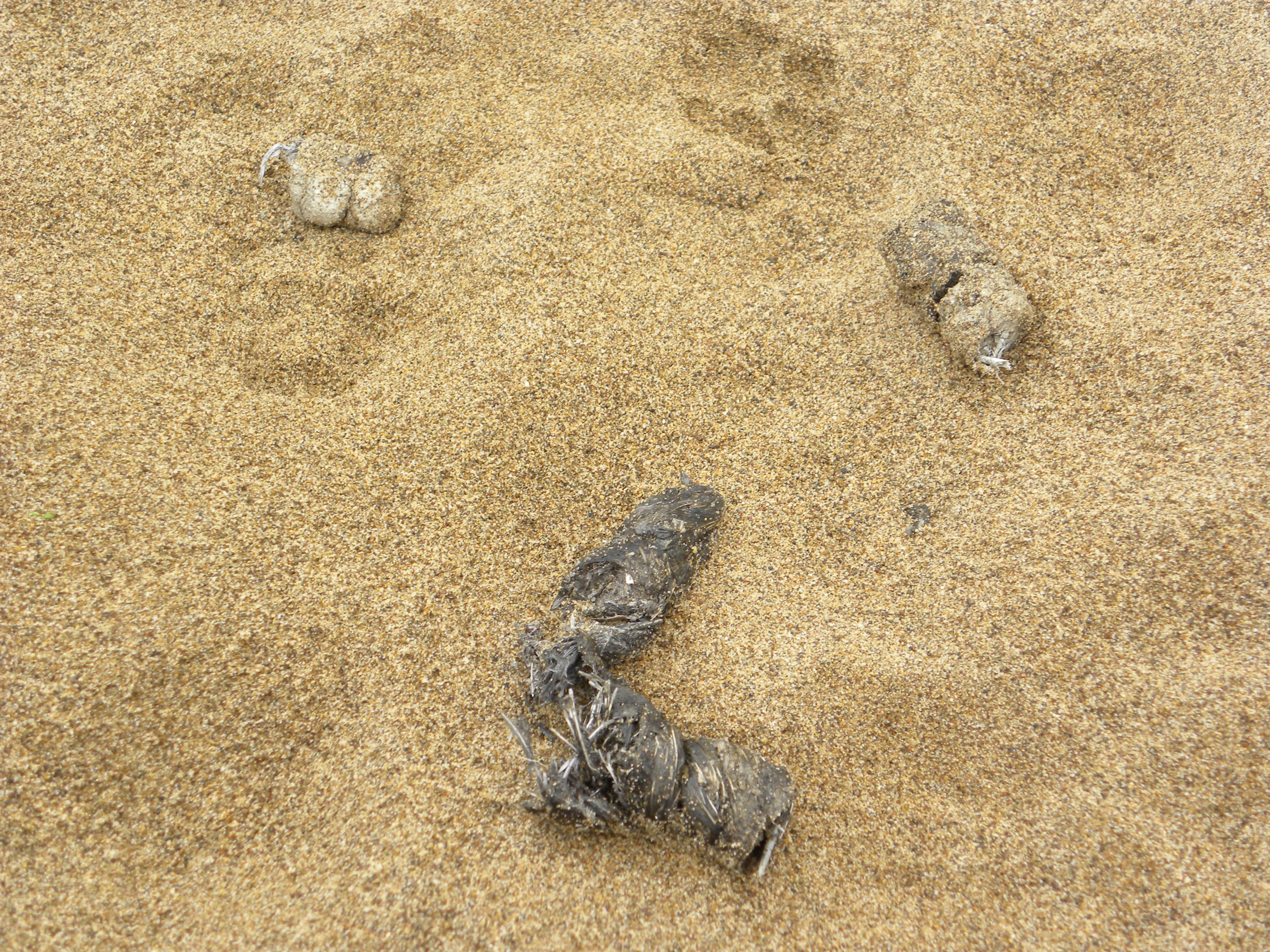
Now, looking carefully at the wing remains of the bird carcass, I can see that the primary feathers have been chewed off rather roughly, not as cleanly as a coyote would. A wider search soon turns up a moderately fresh bobcat scat, surface sheen beginning to dull, full of brown feather content…things are adding up. The scat also contains brown-tipped gopher fur, and, sure enough, jawbone fragments confirm this. This is clearly a productive hunting area right now.

Bobcat scat with feather content

As I scan the rough ground, my eyes see with this new intelligence and pick up otherwise nearly invisible details. One shaded edge of a Lupine is damp and Bingo!, there is a track, a couple of small circular impressions that prove to be the toes and part of the heel pad of a bobcat. It has weathered slightly, puffed up a little, and there are a few loose soil grains in the floor giving it a time scale, but given the still, cool days and nights lately, it would have aged slowly, so the track is probably a day or two old, which matches with the apparent age of the quail wing-recent but not from today. The placement of the bobcat scat, near a hiking trail, shows that this cat uses the trail and turns in here, hinting at its hunting routines. The cat is probably working a larger territory and only comes through here every few nights.

Meanwhile, I’ve noticed that the Sparrows have gone silent and I turn to see a “Marsh Hawk” cruising close to the ground in more open habitat nearby, with that wonderful tilting, slow speed flight style, giving me another indication of the fecundity of this particular hunting area. An inspection at the base of an old coyote bush snag, with signs that it is regularly used as a perch, reveals raptor cough pellets full of little caches of tiny bones and teeth in their fur-cushioned casings, the tooth patterns characteristic of the vole.

All of this has taken but a few minutes. The egg is cracking. The further I go, the richer the story gets and the more deeply enmeshed in this land I become, familiar, like walking with an old friend.

Richard Vacha leads the Marin County Tracking Club .  His Point Reyes Tracking School (PRTS) offers courses in Tracking; Professional wildlife surveys; and a variety of seminars, tracking walks and workshops.  His collected works of Tracking Notes is available through his website.

Wildlife update

Of course this wildlife update could never be completely accurate; its just my own observations and the result of a few conversations.

As I noted in an earlier post, up around Camp Creek where there is a nice mosaic of young and old spruce/doug fir forest plus open meadows, I saw sign of an abundance of Snowshoe hares with a coyote or two hunting them.  But down here in the valley, cottontails are rarely to be found.  Today I saw my first sign of a cottontail in the willows by my house.  But on a walk near the upper bridge where I usually see a lot of sign, there were no bunnies to be seen.  The same is true with the Jackrabbit population in the valley.  Rabbits are subject to boom and bust cycles.  I had thought it had a lot to do with the predator/prey cycle, but my boss at the museum told me its more complicated than that.  In fact, so complicated that scientists don’t really know the cause.  But, one prominent theory is that it actually has to do with plants.  The theory goes that the plants the rabbits eat begin to build up toxins as a defense to over-consumption.  The toxins get so high they eventually cause the massive mortality in the rabbits.  The rabbits that remain of course, are the survivors and have the tolerance they pass on to their little bunnies.  Eventually, the population builds up again.

With the lack of bunnies, you’d think the bobcat population might be down, but there’s been the usual one hunting in my neck of the woods.

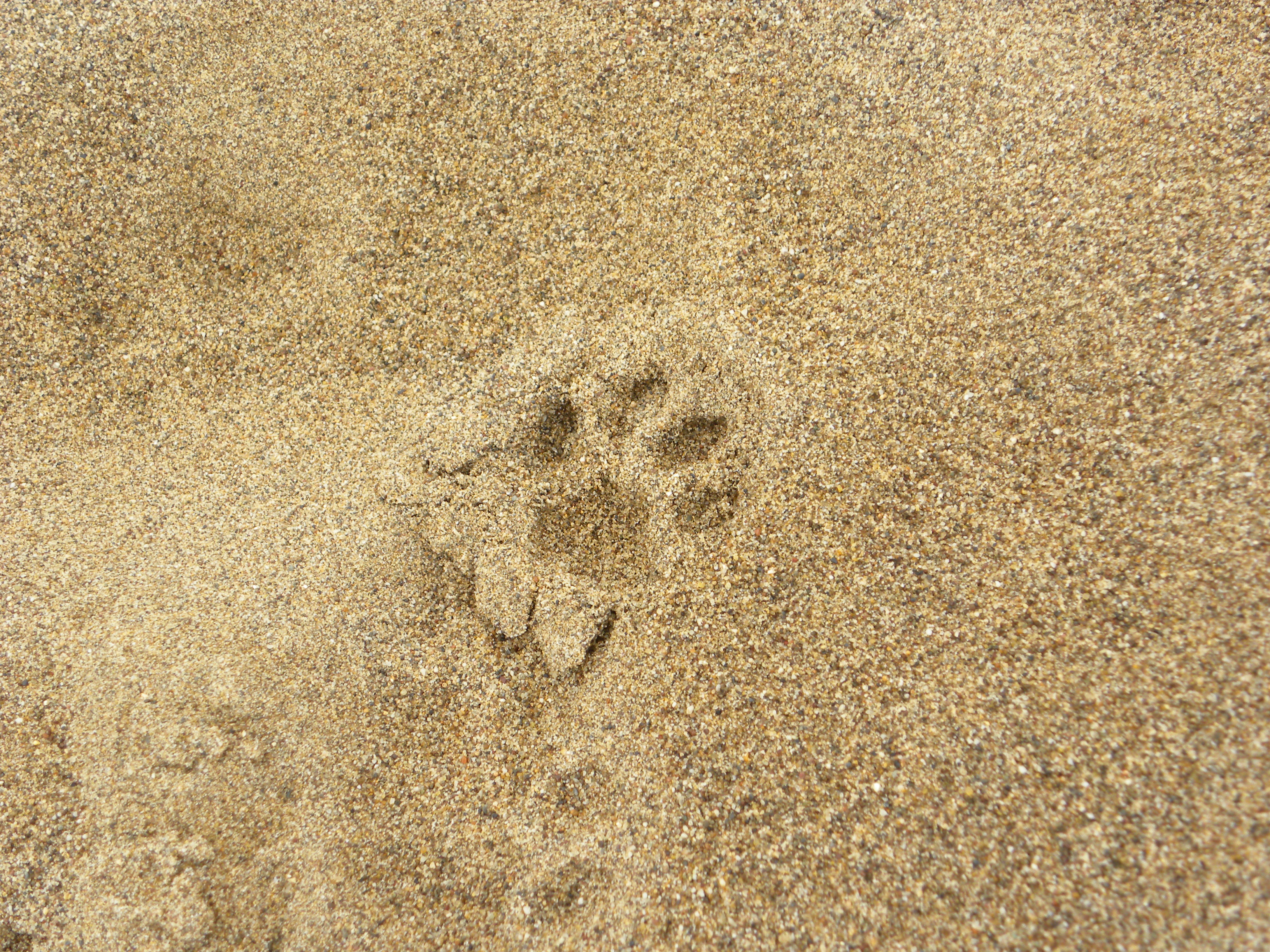
Bobcat track

I’ve seen sign of him tracking turkeys.  The turkey population on the other hand, seems to be holding its own.  Regularly there are 10-15 wandering threw the woods, making a nice racket.

Turkey in snow

turkey tracks

Wolves this year are down in the valley.  From 4 packs in the range last year, down to just two struggling packs of about 4 wolves each.  The Sunlight pack has just disappeared, and the once ten strong Hoodoo pack that roamed from the northeast Park boundary of the Absarokas into Sunlight was reduced this summer by at least half due to cattle predation.  What’s left of that Hoodoo pack has been the main wolf pack in the valley and apparently are not great hunters, as they have been struggling to kill the wise cow elks and are mostly predating on deer.

A wolf lopes through the snow away from a kill site

That being said, coyotes seem to be on the rise and in control of the valley.  Their tracks are everywhere and their calls are heard nightly.  When I arrived back here in January, I found an adult elk that they had killed.  Today I found a dead pup, death unknown.  But where I usually had seen wolf tracks regularly, for instance running down the roads, now I am seeing mostly coyote tracks.

Coyote caught on trail camera

I found a dead fox, dead from an injury to its leg.  Its leg was mangled, maybe due to a trap or a fight with a coyote.  The fox population seems to be getting healthier here, probably because of several years of wolves keeping coyotes in check.

A fearful fox lopes in snow before dying

Fox caught on trail camera

I would assume that the deer and elk are having a better year than last as there is much less snow with higher temperatures.  There’s been fewer times when I’ve seen large herds of elk on Riddle Flats, maybe because there is plenty of clear ground in many places in the valley.

500 head of elk on Riddle Flat

I’ve seen a few Golden Eagles, but no Bald Eagles this winter.  I saw some grouse today by the river happily foraging.  And despite the fact that a completely insane hunter poached a cow moose and her baby this fall in the valley, the moose seem to be doing o.k.  One resident told me she saw two bull moose and there are a few cow/calves hanging around. I have one cow and her calf by me.  Moose normally have twins, but I’ve noticed the cow that hangs around my area hasn’t had twins for several years now.

I haven’t heard of any sightings of bear tracks, which surprises me because we’ve had such warm weather.  I am still waiting to catch some marten tracks or an actual marten on my camera.  I recently bought a new stealth camera, a Reconex which is made in the USA and is the top rated trail camera on the market.  I need to get a sim card and batteries for it, then I’ll be setting it up first with the intention of catching that bobcat.

The Snowshoe Hare

My latest interest is in the smaller animals around here.  Winter snow tracking can help find the critters and I’ve started keeping my eye out for Marten tracks, which I’ve yet to find.  Today was a beautiful clear day running around 17 degrees when I started out on a snowshoe trek.  I’d heard from a hunter friend in October that he’d seen a lot of snowshoe hare tracks up Camp Creek, an area closed off in winter except to foot traffic.  Since most winter visitors up here are interested in snowmobiling, this is a quiet and steep hillside with no traffic.  Being a north facing slope, the forest service road had accumulated over 3′ of snow.  A recent snow storm left the snow soft and snowshoeing was a work-out.

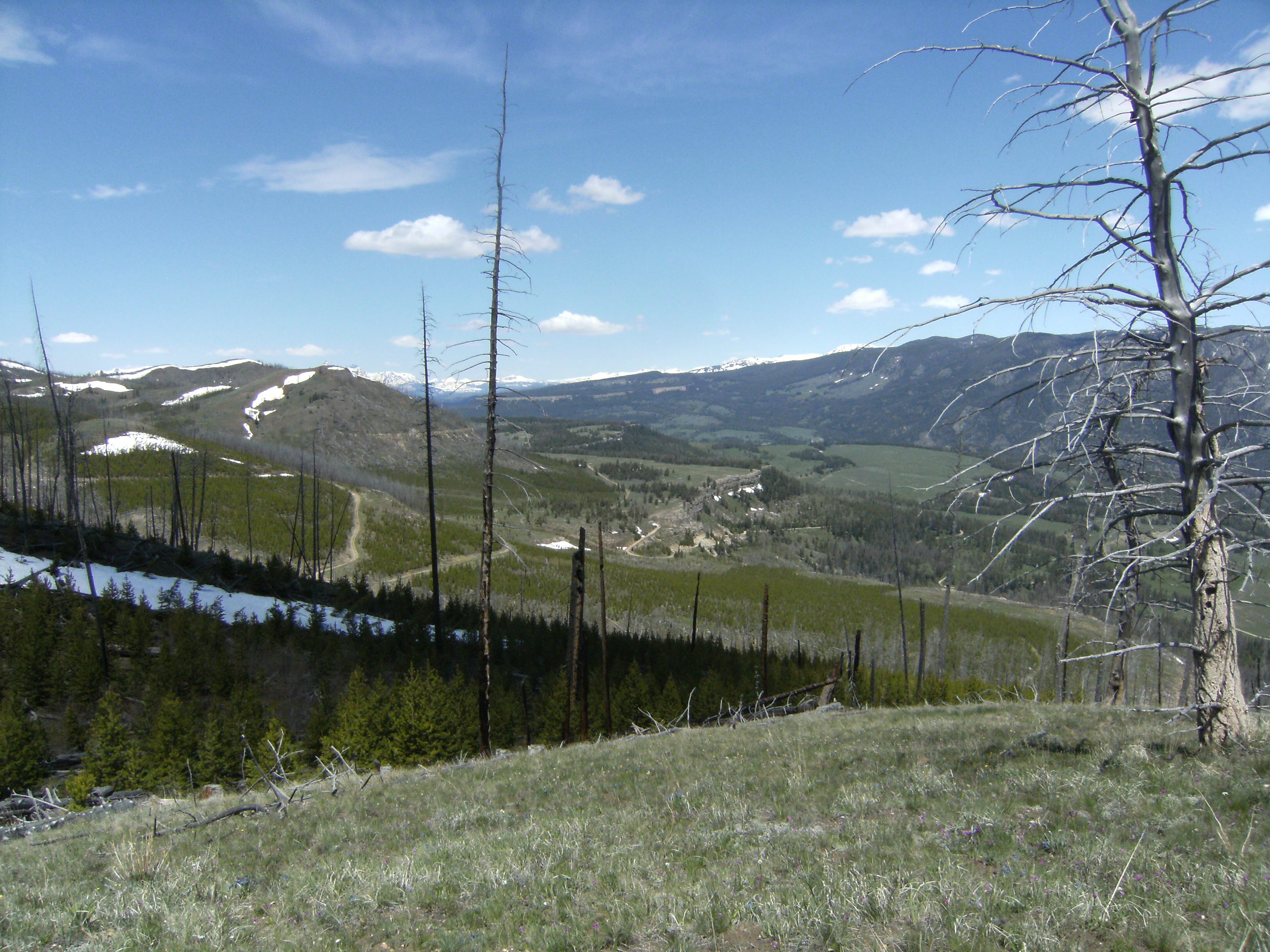
Looking over the habitat in a summer photo from a viewpoint--'88 burn, some clear cutting, older douglas fir forests

Just as my friend said, I quickly saw a lot of snowshoe hare tracks.  What I really am interested in is lynx activity.  I’m not familiar with lynx, but I can recognize a cat track.  The snow being so soft, the large loping tracks I saw were difficult to identify, but appeared to be a lone coyote.

There were hare runs all over the place.  It was interesting to see how long the runs were, and how far out into open areas the hares ventured.  With the deep snow, areas under roots and limbs made for good cover.  This is a typical snowshoe hare habitat–fir and spruce forest.

full set of all four feet slows to go under a fir root

Sit down track


Back foot length

Track group size

Two years ago the Forest Service hired a contractor to look at snowshoe hare habitat in my valley.  The company was doing a vegetation study for snowshoe hare to see if this was good lynx habitat.  I don’t know if the results are out yet, but just down the road a few miles I can say for certain that there is good hare habitat with lots of hare.  Now, to see if I can find a lynx!

A Toolbox for locating Power Places

There is an honest experience of spiritual space.  We all understand this somewhere deep in our psyches.  It comes out of a time when there were fewer of our species on this earth and we banded together for safety.  A time when we could walk for days without seeing a person; when our eye scanned a horizon without limit.  Space on our planet is becoming at a premium.  Without being told this, we can feel it.  Crowd or no crowd, we feel the limit pressing against us.  We are aware of this, regardless of how much solitude we enjoy at any moment.  And that awareness is troubling—the too many rats in the cage syndrome.  Our DNA is not fit for these kinds of crowds.  We are adapted for limitlessness, expansiveness, a clarity and freshness of consciousness.  All else becomes depressive, constrictive, crazy-making.  Depression is widespread and no amount of pills can fix the kind that hungers for open spaces.  This type of depression has deeper roots, like a tree caught in a can, its’ crown gnarled, unable to grow and expand.  This crush of human consciousness might not be obvious until you’ve actually been in an environment not only without crowds, but without much of today’s technologies.  Once you’ve tasted the difference, you can never fully go back.  You’ve drunk the punch.

Limitless expanse hides in our DNA

I fear there are less and less places on the earth where one can experience this feeling, so natural yet now so foreign to us.  Our world today is crowded even in places where its’ not.  Wires, cell towers, EM pollution, air pollution, water pollution, on and on.  I first fell in love with Wyoming, in the tiny town of Pinedale.  Long ago I ‘drunk the punch’ there.  Pinedale today, population 1,400, has air quality in the winter  worse than Los Angeles due to ozone from the gas fields.  Los Angeles!  Where there are almost 10 million people!

Pinedale anticline gas field in winter

Power in sacred spaces is diminished by man-made monstrosities like wires, roads, buildings, oil fields and other land scars.  Some places must just remain sacred.  With large amounts of people on this earth, we require even larger amounts of sacred spaces, not less, to hold the quiet so necessary for our spiritual peace of mind.

Living in the Bay Area for a few weeks, I became acutely aware of our lack of psychic space.  Yes, there are refuges here and there—parks, open space, even National Forests & Parks—but there is no ‘Wildness’ capable of absorbing our subjectivity, helping to ‘jumpstart’ us into this present moment.  With so many people using the limited amounts of open land, there must be many more rules. Trails are neatly constructed, lots of signage, no dogs, fees for parking, and on and on.  I don’t resent this.  In an overcrowded world with more and more people seeking refuge, that is the price we pay.

Private golf course abutts a Widerness area in Sedona

But are these controlled parks and lands the refuges we truly seek?  Or are they a compromise, a washed down version of something we once knew and now must settle for?  Can places of Power that were once brimming over, full of energy, yet now diluted by human interference, still transmit the same potency they contained hundreds, if not thousands of years ago?  Is it still possible to go out as a vision seeker, like Jesus, Gautama or Plenty Coups, and have the  Power of Place transform and enlighten us?  I see this as an important question to ponder.

Milarepa in his cave for 20 years

Every great spiritual leader in all traditions–and traditionally any person who had the inclination—went seeking their vision, their connection, a transmission of wisdom or insight through a communion experience in nature.  They went alone.  Where ever the power was present in their unique geography, there they went.  Some to mountains, other to deserts.  Some, like the Buddha, found a quiet and large tree to sit under.  Others, like the Tibetan Yogi Milarepa, sought a cave and sat there for twenty years.  I don’t recall a story where the Enlightenment, the Profundity, came forth at home with the kids or when haggling in the marketplace.  A retreat was necessary, in an isolated Place of Power. The transmission of Power in a sacred place seems to have the capacity to transform a person.

Devil's tower. Sacred to Indian tribes

This retreat is not the exclusive right of the rich, nor the so-called more spiritually advanced or inclined.  This is, and should be preserved as, the birthright of every human.  This transmission of wisdom and awakening takes place in Land free of transmission and electrical lines,  ORV’s, signed and groomed trails, night sky pollution, and other unnatural human effects which distort the Energy of Power Places.  To be so alive with Power, the place must also be alive with all the large and small critters that nature intended to be there.   How can a ‘spirit animal’ come to you and instruct you if their spirit is no longer there?   This is not a matter of belief.  It is imbued in the land itself.  A Silent Spring, as Rachel Carson warned us about, is a dead place spiritually.  It may be pretty to look at, but it lacks all the elements that give it Life.

The Effects of Off-Highway Vehicles on Archaeological Sites and Selected Natural Resources of Red Rock Canyon State Park

We all need places where we can, if we so desire, wander for days without seeing a soul, or a trail; a place where the natural forces of the Earth—drought, fire, wind, are allowed to shape the Land.  A Place where your eyes can come to rest in a limitless horizon of the natural world.  Places where the natural drama of Life is played out by the animals that live there.  That drama, of life and death, is part of the spiritual lesson we are seeking to understand and transcend when we go out alone.  We too are part of that cycle, and having those animals out there, as well as the force of nature to confront, keeps us awake to this present moment.

In our distant past as a people, when we wanted to go on a vision quest or spiritual journey, we knew through our feeling sensitivity the places where we should go and sit; we knew where Power gathered and so there we headed.  In today’s world, how would we know?  We have no culture to guide us, no designated spiritual places.

We must re-learn to trust our innate feeling sense as our guide.  To do this requires a different approach to the outdoors.  There are times when all we want to do is unwind and recreate in nature—to ski, or climb, or backpack, or use an ORV.  That is fine too.  But to be sensitive to Power Places, a different asana is required.  Right approach means curiosity and sensitivity mixed with a healthy respect.   This will guide our noses and give us the information we need to determine the different qualities a place contains.  A good tool is wandering.  Wandering without goal opens our senses.  The posture of ‘not knowing’ or abandoning the ‘need to know’ connects us with our child mind, a mind that is free of constructs and defenses.  Alertness and awareness are necessary when wandering in the wilderness—there are dangers in the form of topography, weather, accidents, or animals like bears, rattlesnakes, or even ticks.   With these few simple intentions in our toolbox of our ‘sacred quest’, nature will guide us easily into the present moment.  Once there, it’s easy to feel what kind of power is in a place.

A Thing for the Salmon; their Now-or Never Point

This will be my last post from California as I’m heading back shortly for my home in the Rockies.  Its’ been a great month with highly unusual weather–every day is cloudless, gorgeous and in the 60’s–a foreboding omen.  Northern California used to begin its’ serious rains around Thanksgiving.  Over the last 10 or 15 years, that timetable has moved up, with January and February being the rainy months.  Now, it seems even that is no longer predictable.

All that is important for many reasons, but particularly for this post.  This post is all about salmon restoration and the $11 million project going on here at Muir Beach.

Restored, widened lagoon leading to beach. This is the old picnic area

Years ago, I used to guide school children here.  We began at Muir Woods, then after several hours, we’d finish by driving the 10 minutes down to Muir Beach.  The point of that was to show them the creek, Redwood creek, one of the last free flowing creeks in California and one of the last unstocked winter river courses for coho silver salmon in the world.  Here, at the mouth of the creek, much of the year a sand bar separates the river from the sea.  During heavy storms in December and January, the sand bar breaks free, the river rushes, and the salmon, guided mostly by smell and other unknown mysteries, return after two years at sea to spawn and die upstream.  I’ve watched them in the creek in December in Muir Woods, with the young children by my side marveling at them.  At that time, around 10-15 years ago, only 200-300 were left running this seven mile course.  The creek, over many years, had gotten degraded through developed picnic areas, parking lots, and a choked out watershed.

In the three years since I was last here, a massive restoration project has been going on to re-alter the creek back to its natural, historical course.  Using old photos, this could be mapped out.  The nearby drainage was widened so more rainwater could flow into the stream, non native invasive kikuyu grass that was choking the stream beds was bulldozed out and natives were planted, the marshy inlet was widened (ducks are there all the time these days), and a 100 year flood bridge was built.  The project is taking a rest in 2012 and in 2013 the present parking lot will be restored to natural habitat and parking moved farther away from the stream.  The work is done during the summer months to minimize wildlife impact.

Creekbed restoration area to be planted


$1 million bridge

Since I’ve been here this month, several times a week Park Service employees come to monitor the water, and at least once a week a crew of volunteers arrive to plant natives.  Last year with all the rains 90% of the plantings survived.  This year they expect only 30% to live.

A Park service employee told me that only 8 salmon were counted last year.  Last year Northern California had some of its heaviest rains in decades…a good time for salmon to spawn.  The young woman I was talking to was shocked to find out that only 15 years ago 300 salmon were counted.  300 were low then.  Today, she would have been happy with that 300.

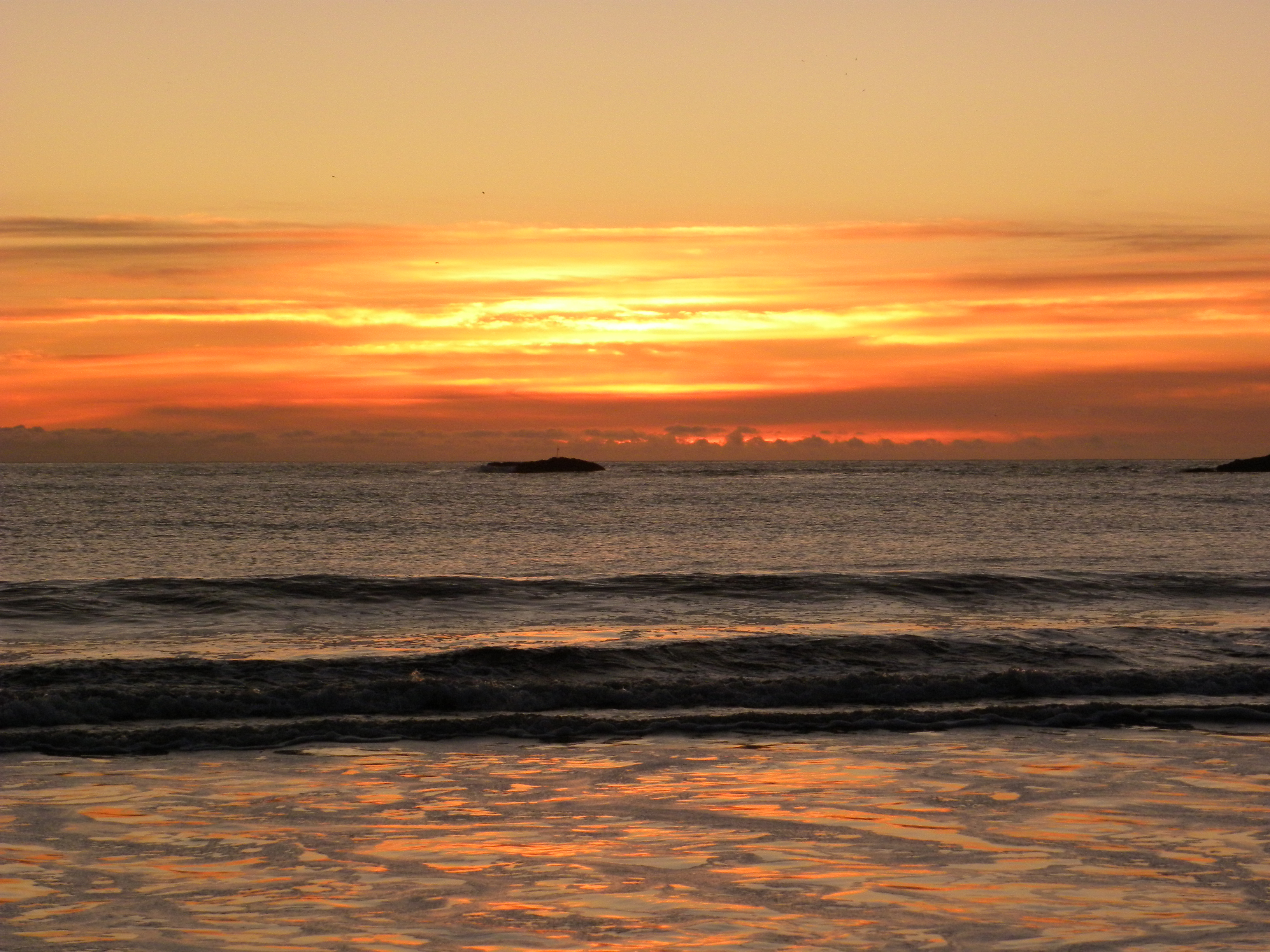
Sunset at Muir Beach

This is a good project.  Too bad it took so long for this to happen.  I’m not sure why it took this long.  Even when I was guiding, little changes were occurring.  Years ago they took out the picnic tables and let the native marsh return.  Over 12 years ago the Park Service corded off certain areas in order to restore the native dunes.  They were also doing studies way back then on nesting Peregrines at Muir Beach.  Maybe this was planned all along, and the massive amounts of money it took to do this project, plus the coordination, took a lot of time.  The salmon didn’t have that kind of time.

One hopes the rains will come and the salmon will begin returning in numbers.  But remember, as recently as the early 1900’s, when salmon entered the San Francisco Bay to journey up the Sacramento River and spawn, they clogged the neck of the Carquinez Strait leading into the river.  “there were so many salmon you could cross the strait on their backs” said an old timer.

Looking up the drainage from Muir Beach

Soon salmon might be just a fading memory, written in the history books.  But I’m glad the Park Service is trying, and they are doing a good job with this project.  Another stream in Marin, Lagunitas Creek, had a lot of effort put into it years ago to encourage salmon to run there again.  I understand some salmon have returned.  Unfortunately, their complete river course will always be blocked by Peters Dam which forms Kent Lake, a reservoir containing the drinking water for Marin County, built in 1954.  The provided link above says we are in an extinction vortex, the “now-or-never point”.

Salmon on Redwood Creek, a creek that no one uses for water; a creek without a dam, spurs little controversy nor objections for salmon restoration.  This is in direct contrast to the Sage Grouse plan by the BLM.  They watered down all the science and are trying to meld cattle into their plan even though livestock grazing accounts for the decline of sage grouse habitat in the first place.   The Feds won’t list Sage Grouse as endangered yet either.  Too many other priority endangered species are ahead of them, they say.  Until we value what little we have left, politics and short-sightedness will be thrown into the mix of habitat restoration, and it might be too little, too late, like its’ been with the California salmon.

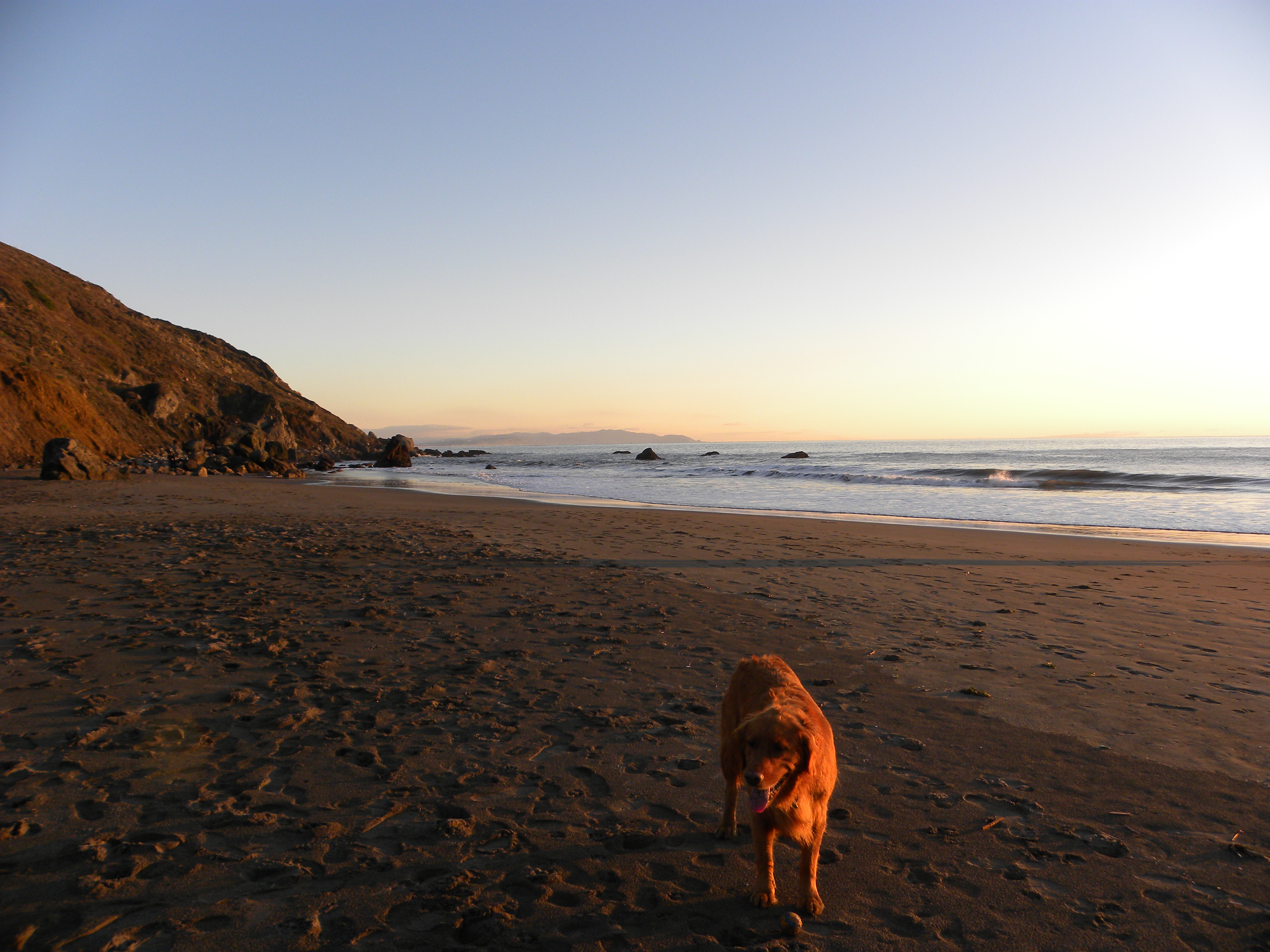
Muir beach allows off-leash dogs. My non-native friend at Muir Beach