• MY BOOKS ON WILDLIFE, GARDENING AND MORE

  • The Wild Excellence

  • True stories of wildlife encounters around the Greater Yellowstone
  • Award winning eBook on Decomposed Granite, tips, how to's, what to watch for
  • Children's book. True stories of a dog and wolves. In a dog's voice
  • Written for dry Mediterranean climates in California, north and south

Wolf etiquette in the backcountry

The local wolf pack has been starting to get into bits of trouble.  I saw the ranch hand from the dude ranch down the way.  His cows have been calving.  They only keep about 30 cows around in the winter, but this morning, early, one of them calved and they got to it just about 10 seconds before two wolves did.  They fired a shot and scared them away. 

Error
This video doesn’t exist

Just a few days ago, the wolves killed an elk right at the pasture line where the cows hang.  And the students told me they saw the small black female hanging near the cow pasture on the bridge yesterday.

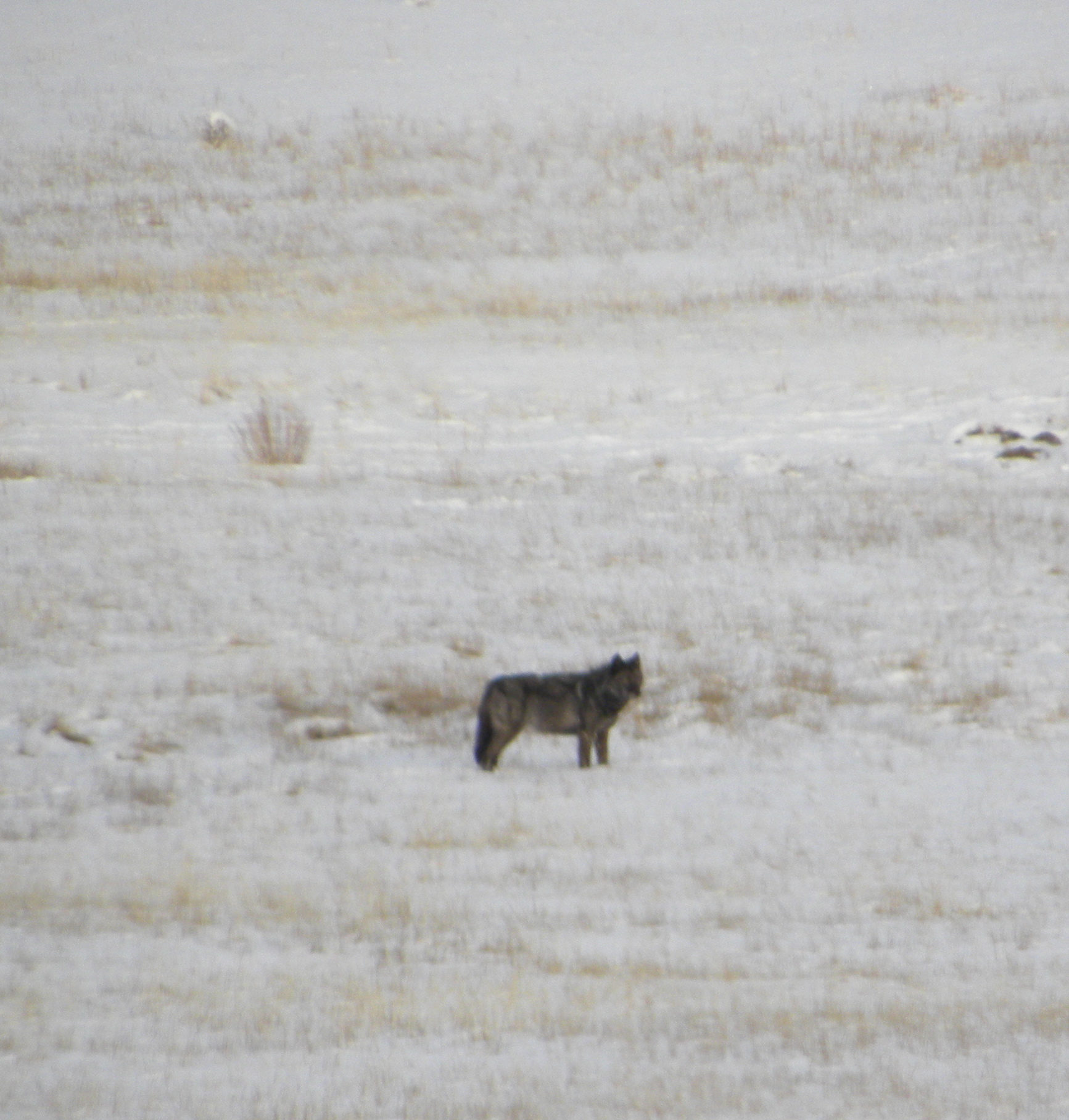
Where all good dogs come from. Black female wolf

The Sunlight Pack has gotten into trouble almost every summer.  In a few weeks, the rancher that owns most of the valley floor will be bringing his cattle up here, maybe over 500 head or more.  They overwinter down near Powell and calf down there.  Last year it was almost all yearlings up here.  Yearlings aren’t too seasoned and are too curious.  Not a good combo for wolf country.

I’m worried for the pack.  This is good wolf country and cattle really shouldn’t be up here anymore.  The open range leases should be retired; ranches for tax write off purposes should be retired as well.  My eternal fantasy is to win the lottery and buy the big ranch.  Then put Bison back on it and don’t worry if the wolves and bears get a few.   Bison belong here.  They used to be here.

Eventually, you can count on the wolves picking off a few cattle.  Wildlife Services, Dept. of Agriculture, can decimate the ‘bad’  packs each year, trying to get them not to have a taste for cows.  But its not that they love cows.  Its sometimes they are handy or easy.  Really, the wolves prefer elk.   You can’t really blame those wolves for hanging around when the cows are calving.  Calves are helpless when they’re first born, and an easy meal.  It’s really a smart strategy.  Just as smart as the little chipmunk who ate a hole in my bucket full of grain for the turkeys.  Easy meal; low expenditure of energy; biology 101 really.

The Valley that Sits in the Middle of the Land

The ranch hand told me his friend went ‘horn hunting’ by horseback last weekend near the ranch in the back country with his two dogs.  The dogs ran off and haven’t been seen since. I showed him the electronic collar I keep Koda on.

“They’re bird dogs, not people dogs like yours.”  We’re both thinking the wolves probably already got them.

Last spring a young experienced hiker and his dog went backpacking up the North Fork near the Park entrance.  There’s a wolf pack up there, and although he kept his dog close, when he went to set up camp in a meadow in the rain, his dog was sniffing around and got attacked a few hundred yards away in the trees by 8 wolves.  There had been a recent human encampment there, probably with some leftovers.  The hiker ran to his dog, the wolves ran off, but the poor dog died.

That hiker didn’t really do anything wrong.  He kept his dog close at least most of the time.  When I told this to a local who hikes with her dog, her reply was telling:  “That’s a risk you take hiking around here.”

I keep Koda close.  I watch him at all times and keep him on a shock collar I got through Cabelas.  He’s a dog’s dog, not really a people dog.  He has come to like people, and he’s loyal to me especially.  When he sees a dog, I can easily control his desire to run up and play.  But his response to a coyote or a wolf is different.  Some ancient wildness overtakes him.  He recognizes the dog part, but he senses the freedom part too.  In a moment he’s off and that could be the difference between life and death for him.  That’s when the shock collar comes in super handy.  But its no guarantee.

Koda with his toy.

Yet I do have to say, those fellows who took their 2 dogs out here, in wolf country, and didn’t watch them, let them run around where ever their noses took them–that is just irresponsible with your dog and certainly you can’t blame the wolves.

However you cut it, with the wolves and grizzlies here, I still prefer that wildness.  One of the students and I were talking about New Zealand.  He did an internship last fall in Antarctica and spent time on the south Island of New Zealand for vacation.

“Compared to Antarctica, it was great to be in a place with plants and trees, lush and fertile, where we could hike.  But to tell you the truth, as a biologist, it lacked.  They have no native animals there, except for a few birds.  The scenery was beautiful, but I missed the wildlife, especially the big animals, those ones that make you aware when you’re hiking around.”

Even if Chief Seattle didn’t really say it, its worth quoting:  “What is man without the beasts?  If all the beasts were gone, men would die from a great loneliness of spirit.”

Amen to that.

We love our dogs. Let's keep them safe.

Pollinators in trouble. What a city dweller can do.

I was disturbed to see yet more articles in the NY Times about bees and colony collapse.  I was a home beekeeper in CA since the mid-90’s.  When I moved to Wyoming, I gave that up in favor of not having lots of grizzlies in my yard. Being a horticulturist and amateur botanist, I was also interested in the general decline of pollinators and wrote an article in 1998 entitled Pollinators under Siege that I posted on my web page.

one of my hives

Honeybees are non-natives.  They are relied upon to pollinate our crops. Native bees and insects, in general, just can’t do as good a job on monocrops.  But honeybees also push out non-native bees.  They are up earlier and go out in mass.  When my honeybees were not doing  well due to mites, I’d always see more native bees move in to take up the space.

And although we need the honeybees, we also desperately need our native pollinators.  What many people don’t realize is that there are a myriad variety of insects that pollinate natives.  When I asked my botany teacher who specialized in California natives about their pollinators, he said that they don’t know what pollinates many California natives.  It’s very difficult to observe.

Death Valley flowering plant

One thing I learned in my profession is that the majority of people don’t even understand the basics of what pollination is.  Insects and flowering plants evolved together. Even some mammals and birds are important pollinators.  Entire ecosystems are built around these relationships.  Pollinators declining world wide means trouble for our planet’s health in ways just as impossible to calculate as climate change.

Frankly, it’s another overwhelming and make-one-feel-powerless problem, once you begin to dig into the complexity of the issue (see my article link or read The Forgotten Pollinators).  I’ve been passionate about this issue for a long time.   Here are my thoughts on what can be done individually and collectively.

1.  Rail against development!  Lack of community planning, lack of empty lots, and cookie cutter housing developments consumes habitat for native plant species and therefore specific pollinators.  Development should be:

a.  clustered

b.  planned so there are ‘hedgerows’ or a continuity of native species weaving in and around the development.  Lack of fencing allows for wildlife to wander about.  Lawns should be eliminated or kept to a minimum or replaced with native bunch grasses and native meadows.

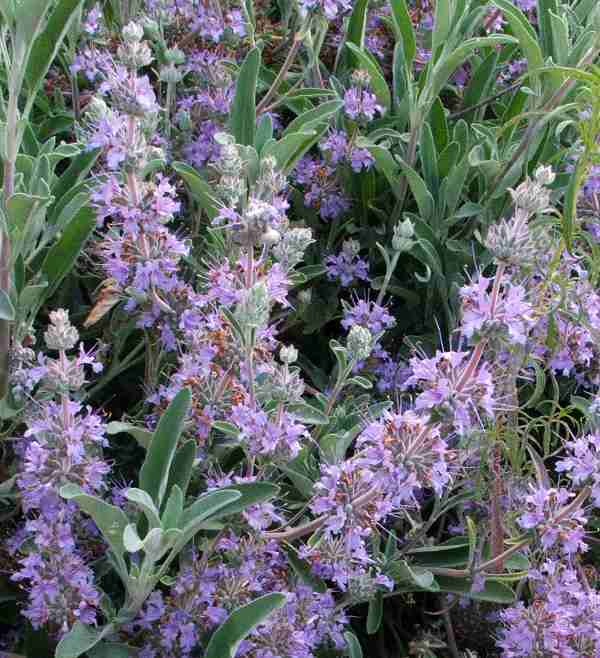
Native Salvia

2.  Ban home vineyards!  I’m sorry, but this is so unnecessary.  Does everyone really need to have their own little home label.  People are cutting down native Oaks, clearing native trees and shrubs to put a monoculture in their backyard.

3.  Encourage large swaths of native trees and shrubs.  You can plant non-native gardens, but include natives.

4.  DO NOT use pesticides.  There is absolutely no need to use pesticides in the home garden.  This includes hiring a pest control service.  When you spray for spiders, you will be eliminating butterflies as well.  If you have a rat problem, encourage your neighborhood to use natural controls such as owl boxes and the old fashioned methods of traps.  Using a pesticide free method for controlling rodents helps the bobcat and mountain lion population as well.

5.  Put a bell on your cat or keep them indoors.  Too many birds are killed by cats yearly.  Hummingbirds are important pollinators.  Songbirds are dispersers of seeds.

6.  Realize that native pollinators cannot work in isolated ‘islands’ of plant communities.  How far can an insect travel to find another plant of the same species?  If plant communities are too spread out because of the concrete jungle, or suburbs full of pristine lawns and non-native species, these plants can’t be sufficiently pollinated to reproduce enough to continue the species.  We must have large enough habitat and/or corridors of habitat for plants and animals to travel through and sustain the ecosystem.  Work to protect large tracts of open space in your community for your own health and sanity, your children and their future enjoyment, and our ecosystems.  This open space should be undeveloped, not browsed by cattle nor full of lawns or athletic fields.

California poppies in bloom

What do the above recommendations have in common?  Working together as a community.  Its a good first step.

Elk, Eagles, and an equinox moon

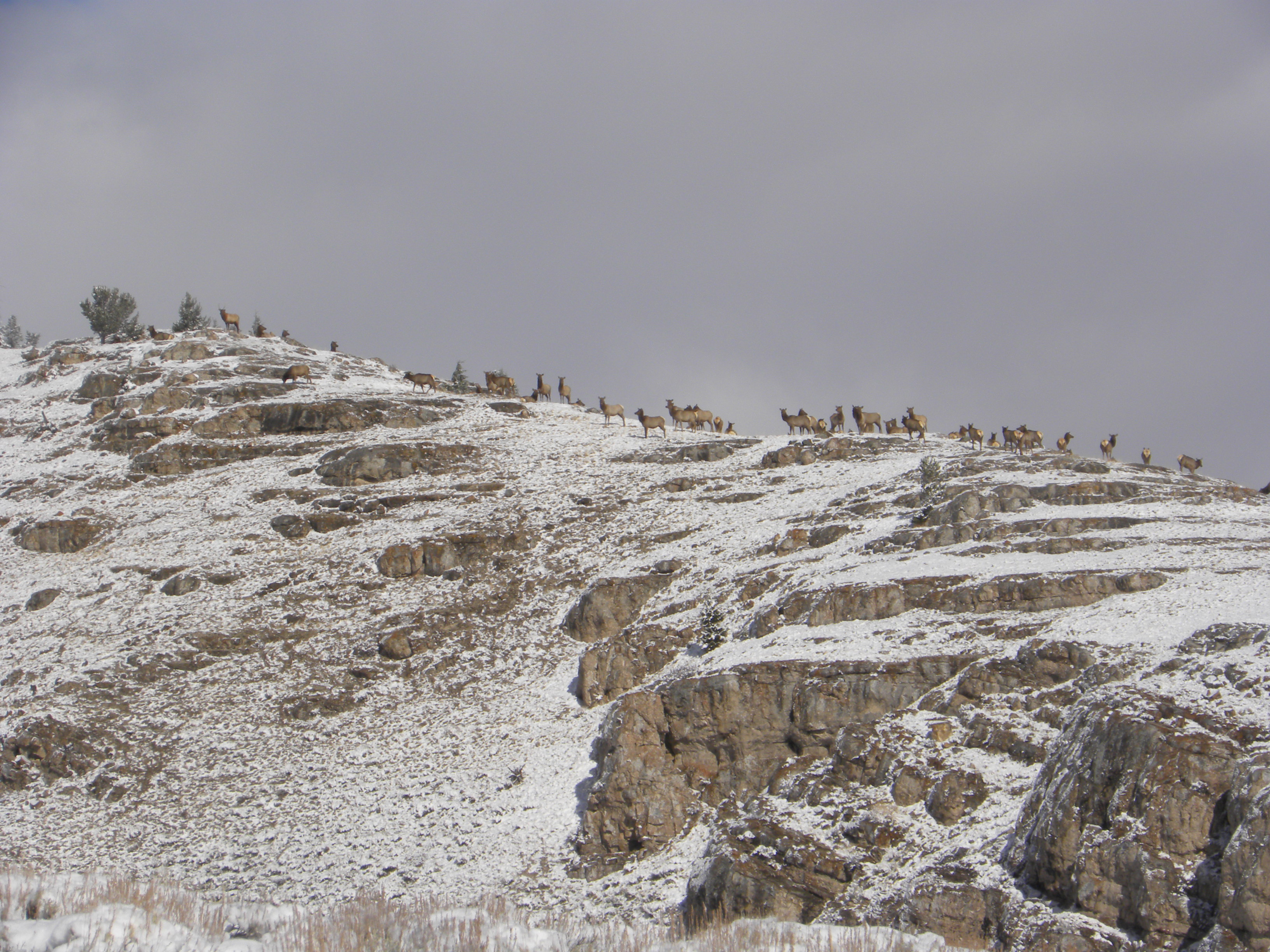
I took a hike up Little Bald Ridge to see the Bighorn Sheep.  They’re usually there in the winter.  On the way I spied a herd of about 700 elk grazing on the hillside.  It was a gorgeous day after a light snow.  The trek up there can be hard if the snow is deep.  Usually in March it is.  But we’ve had so little snow this year, interspersed with warm days where the snow has melted off, that only a few inches were on the ground.

Elk herd resting mid day

Large elk herd

(Here’s is a video I took from inside of my cabin the other day when the herd came through at dusk)

Error
This video doesn’t exist

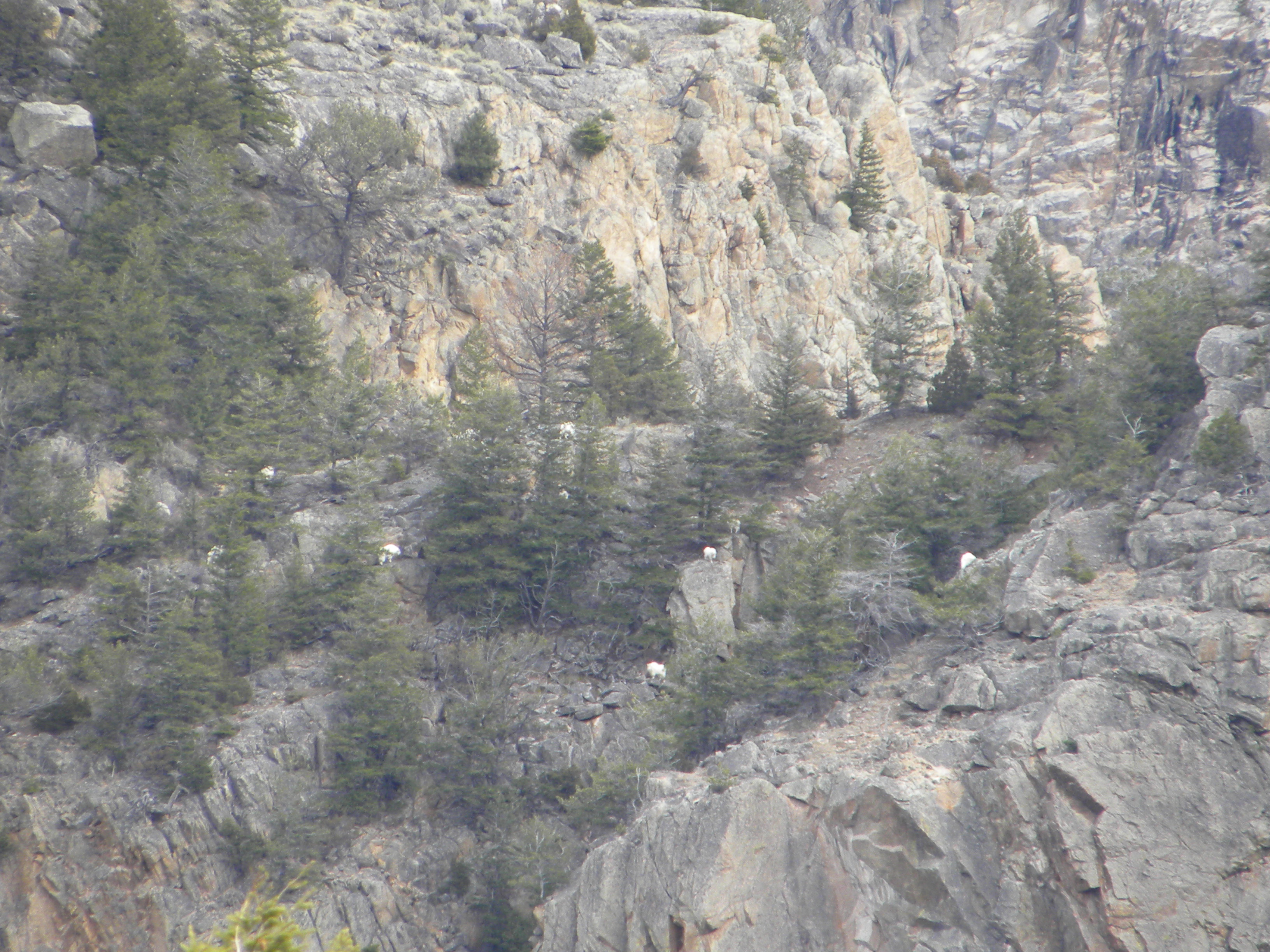
By the time I got to the top of the ridgeline, there were no sheep to be found.  I walked and glassed all along the top without any luck.  They must have gone elsewhere.

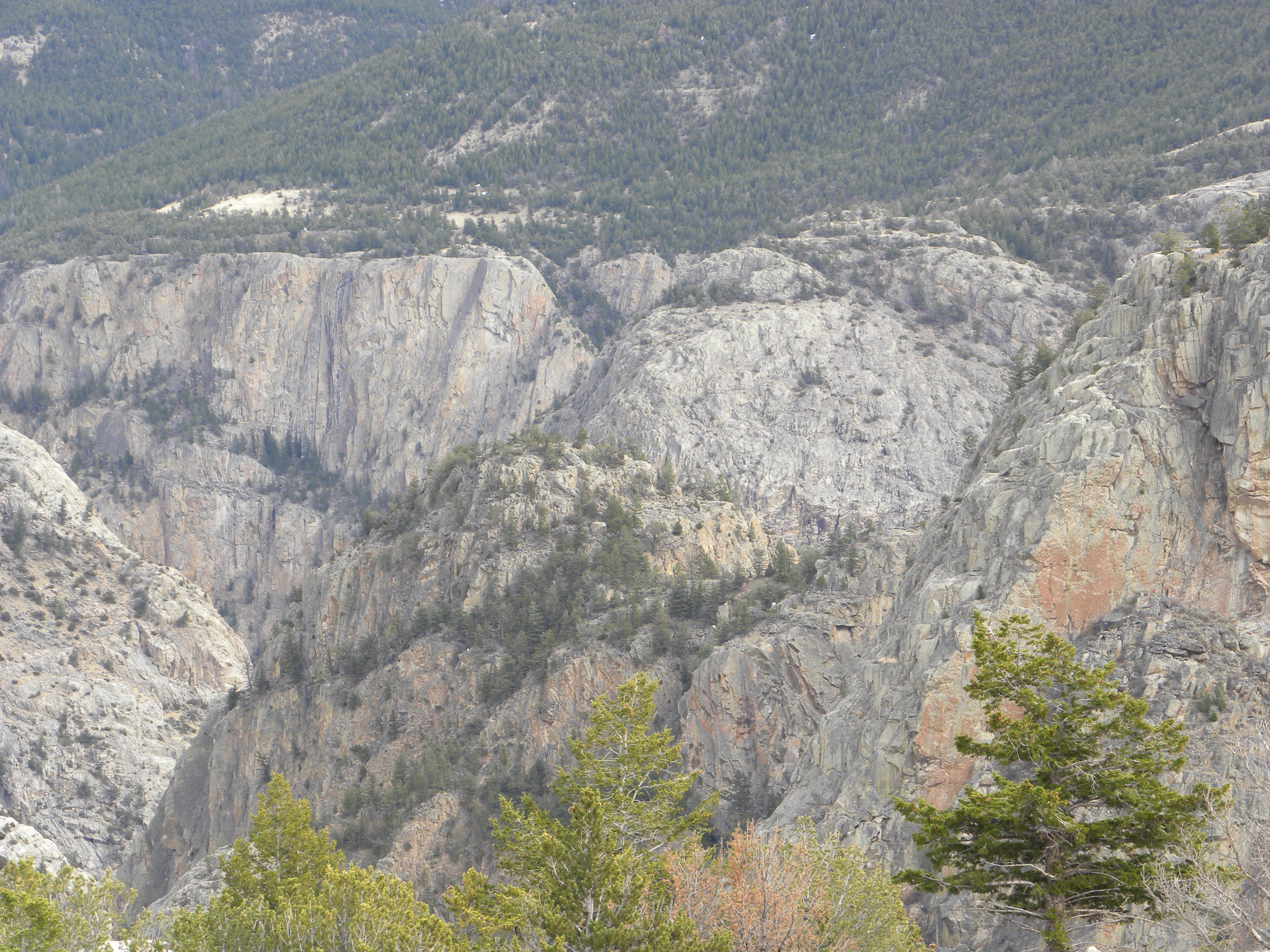
An immature Golden Eagle played on the currents.  I’d seen a nesting pair last year up here.  The Eagles like these cliffs to nest in.  I supposed this was one of their offspring.  Hope he finds a mate this year.

Valley after a light snow

Although I found no sheep, I did find an elk kill in the valley. The kill was made right at the fence line of the local ranch.  At first I wasn’t sure if the elk had gotten caught trying to jump the fence.  This happened last year.  But the ranch manager assured me it was a kill, although we don’t know from what.   He hadn’t seen any wolves on it, and the last kill I’d seen the wolves had been there all week, nibbling.

I parked at dusk close bye and watched, wondering if any wolves might come around.  The crows and magpies were going to town on it.  Suddenly, the immature eagle swooped in and all the smaller birds flew away.  I watched the eagle pick at the remains.

Eagle on kill

Then an odd thing happened.  A group of 5 yearling cows came trotting over.  The eagle, feeling threatened, fled.  The young cows edged slowly over to the carcass and one by one, sniffed at it.  A big mama cow walked over.  Standing right by the carcass, she mooed at the yearlings, over and over, as if to shoo them away.  I liked to imagine her as the wise cow elder, telling these yearlings “If you don’t watch your p’s and q’s, you might end up like that.”

J__, the ranch hand, and I chatted on the road as the crescent moon rose in the equinox evening.

“I saw those cows going over towards the kill and thought I should check on what’s going on with them.  I used to take care of a herd of Bison and I’ve seen them do the same thing—go sniff out a carcass.  Strange.”

Immature Golden eagle

It was a perfect equinox day and night, or is that redundant?

Mystery of the Sacred

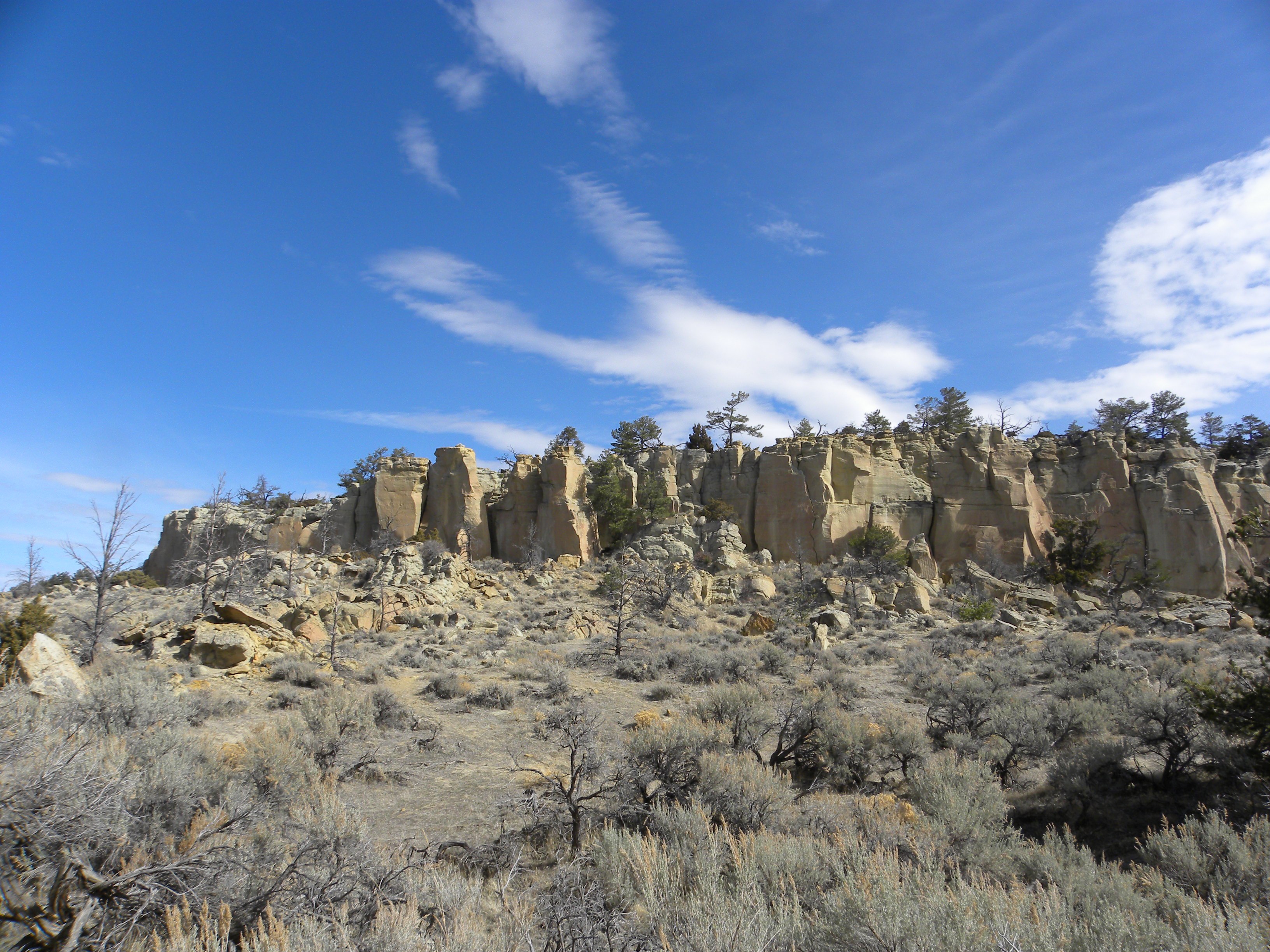
I’d been wanting to see a series of pictographs in the desert nearby.  So the other day my friend took me out to see them.  The hike is about 6 miles round trip.  The trip out there is through flat sagebrush country.  For a long ways it doesn’t seem like there’s anything of interest.  Then suddenly the landscape shifts into deep ravines and rocky cliffs.  Near the top of a series of cliffs, a narrow valley appears.  Walking through this rift in the rocky scape, there is a palpable sense of the Sacred.  The cliffs loom high and they all have excellent writing surfaces on them.  But most are empty.  Curiously, there are natural perfect circles of a different kind of rock decorating the sandstone faces.  These natural shield shapes fool you into thinking they’re manmade.

A few official signs along the way tell you these pictographs you’re approaching are special and not to be touched or defaced.  My friend says 7 years ago there was no trail nor signs.  Since then people seemed to have discovered this place because the trail is worn and shows fresh signs of footprints and horseprints.

View from the valley

The sandstone cliffs

The valley is so quiet.  There is a somber aura here that evokes the sacred.  The high cliffs have a cathedral-like feel.  Finally we arrive at the rock with the pictographs.  My friend tells me they are fairly recent, within the last 500 years.  The rock faces east and is in the shade, which is a relief on this unusual 70 degree March day.  The paintings are very faint but you can make them out.

Look closely to see the figures

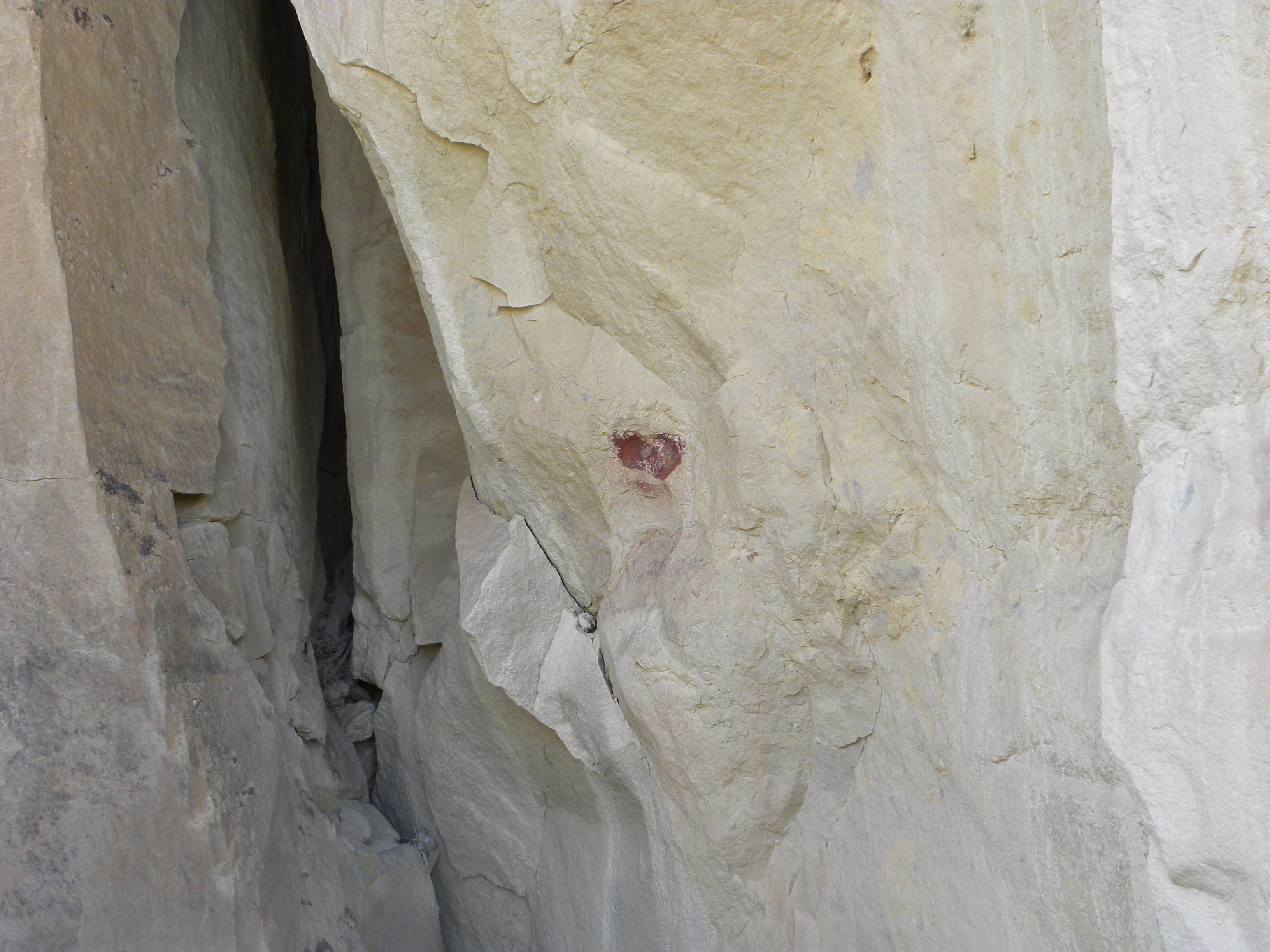
An area in the rock is chipped where the people who made these got the red coloring.

Where the red color comes from. Maybe why they chose this rock to paint

Down below, in another rocky outcropping, are a few more well preserved shields that lack the figures associated with the ones higher up.

Another painted rock much less eroded

These pictographs are sacred to the Crows.

Why are they here?  Curiously, there is no water nearby and the paintings are in a place that is isolated and hard to get to.  Although we can never get into the minds of the tribesmen who painted these, its fun to imagine what might have been going on there.  Were there several artists or just one?  Was this part of a vision quest or someone passing time in the shaded side of the valley waiting for game, or fellow travelers?  Was this a signpost or message on a well traveled trail?  I suppose it will forever remain a mystery.

Playing with Fire

Fire have always fascinated and followed me.  As a kid I played with matches, but who didn’t.  I grew up in Hollywood, not too far from the ‘Hollywood’ sign and next to lots of open space hills.  I had my fire escape route planned out by the time I was 4.  I’d lay awake at night thinking about the 2 or 3 things I’d grab when the big one came.  At 6 years old, the Big One did come.  My mother was out of town; my father and big sister were at the movies, and I was with the babysitter.  A large out of control fire was roaring up the hillside near the Observatory, just blocks from my house, at night.  The babysitter awakened me to tell me we had to evacuate. I watched that night fire so close to my house.  It was a beautiful sight.  Huge sparks fell on my house roof.  I didn’t want to leave.

During the summers it was routine to watch the brush fires being fought by the fire department from my house.  I even remember watching and eating cookies.  One summer when I was nine, at a camp on Catalina Island an hour from Avalon, a large fire broke out. Only myself and another girl were around.  We pulled the fire alarm, alerted the rest of the campers, and let the horses loose.

As I grew up and moved to Northern California, many times I was the first one at a house fire or wildfire and called the Fire Department.  I’ve never fought a fire, but fire seemed to always be part of my experience.  Given another lifetime, I think I’d go to the Fire Science School at U of Nevada.

So when my retired fire fighter friend woke up yesterday morning and said “Let’s burn the big brush pile”, I thought “YES”.   Its the brush pile I’ve written about before, the leftovers from the logging they did this winter.

Brush pile before we burned. Dog for reference of size.

There’s several of them scattered over many different properties.  I don’t have land on the forest, so I don’t have any of my own.  But my absentee neighbor had a huge one and it was blocking my perfect view.  I certainly didn’t want to look at that thing all summer, and I’ve been trying to help him figure out how he could get help, since he lives so far away, to burn it.

The weather’s been warm and the snow is gone.  But several nights ago we had a light dusting and it was a cold, high humidity day.  With the ground still frozen and the wind low, here was our chance.

I’ve been learning a lot from my friend G. about fire and burning.  We’ve burned a lot of brush piles together from my upper cabin area, piles of beetle killed and infested pines.  But this pile was humongous, at least 75′ x 30′ x 12′ high!  There were lots of big logs as well as brush in there.  It was dry and it was going to alight easily.

We started as the sun was going down.  With the cooler temperature and higher humidity, and less chance of wind, the evening is the best time for a burn like this.  G.  began by lighting the pile from 4 or 5 different sides and directions.  Pretty soon both ends came together and, here’s the video…

I put the dog at the end for reference.  By the way, I was filming from that far back because it was hot.  ‘Hotter than hell’ as they say.

Soon night came.  We were out there for hours.  I laid down and watched the sparks rise high against the night sky.  Fire whorls burst out in small areas, like white hot tornadoes, reminding me of a witches’ brew.

The fire as night fell quickly. The stars came out. See person on right side for scale.

I could see the fire from my bedroom window.  It’s not too far from my house.  Periodically during the night I’d awaken and look out the window.  Always it was burning, burning. That night I had the funniest dream:    While in the mountains, someone said “haven’t you read the news”.  I hadn’t.  “There’s been an economic meltdown and fires are burning all over the city.”  Meltdown, fire, economy…funny connections.

By morning it had burned down and we chunked the pile together with a loader.  It had been a fantastic night.

Fun's over.

Old first hand Stories of Yellowstone

My old neighbor JB told me this story today.   Its impossible to place it in time.  In JB’s mind it was like yesterday, but probably in reality sometime in the late ’50’s or early 60’s.

“My job was to plow the road from Mammoth to Cooke City.  There were two plows going and it was Christmas day.  It was 60 below zero, really really cold.  Those plows aren’t heated, you know.  You’ve gotta keep the window cracked too, otherwise the windshield freezes up with ice and you can’t see.  So it’s 60 below outside, no heat, and the window’s cracked.”

I asked him how he stayed warm.

“You just put on more clothes!  The snow was 4 or 5 feet deep and I got a call on the radio from the couple staying at the Buffalo Ranch.  His wife was going into labor and they were stuck.   I was going around a curve on my way to Tower, as fast as I could which wasn’t too fast in a plow, when I saw a patch of clear road ahead.  I knew that meant trouble.  The other plow was a few minutes ahead and a clear patch meant he’d gone off the road.  When I got there the plow was completely off the road, tipped over, and the driver was buried under the snow.  At 60 below he didn’t have much time and it was good I was just behind him.”

“I started digging him out and when I got to him he said ‘Lunch box’.  He kept repeating that.  I didn’t know he had a heart condition and his medication was in his lunchbox.  I never found that lunchbox.  They got him over to Billings.  He was pretty mangled up and didn’t work for over 2 years.”

“Then I started plowing my way to the Buffalo Ranch.  I finally got that couple unstuck.  She never got further than Mammoth where she had her baby.  That was Christmas Day.  I didn’t get home till 3 am.”

I had a client whose father, Merrill Daum, worked in Yellowstone from 1925 to 1930, first as the Chief Engineer then eventually as Assistant Superintendent to Horace Albright.  Daum spent the first several years working on oiling the roads.  Here are a few story excerpts from a memoir my client gave me.

We had an epidemic there one year.  They had quite a few cases of the tourists coming down sick after they’d been there at Old Faithful Inn during the afternoon and evening.  They came down with vomiting.  They really were sick.  It broke out at the Lake.  Then to Canyon.  The Lake was where they really had the epidemic.  One hundred or so sick people there.  We had to go around shooting them all with a needle.  I don’t know what we injected them with.  To relax them so they wouldn’t vomit themselves to death.  They put four of us at the table morning, noon, and night at the Lake Hotel and we were each to eat different things, not the same thing to see what food was causing our troubles.  None of us got sick.  THey just threw up on the floors, every place they got caught.

Bears came on our porch on that duplex we lived in at Mammoth.  I finally got tired of bears once and I took an apple, filled it with red pepper, pinned it together and put it on the porch.  That bear came up and swallowed that and all of a sudden he was blowing and wiping his nose in the snow, trying to get cool.  He really was hot.  He never bothered us again.

At Yellowstone we were building a highway out near Canyon and Lake areas and our construction crew was in tents.  The bears would keep coming in and get the food out of the kitchen.  I was there once in the daytime and here was a Grizzly.  They’re beautiful animals.  The sun would glisten on the beautiful points on their fur.  This darn grizzly was walking home with a sack of oats.  Just walking right off with it.  A sack of oats about 75 pounds.  Nothing we could do about it.  They did take a lot that first year.  You weren’t allowed to kill them.  You could sit right there next to the garbage and they wouldn’t bother you.  All they wanted was to dig in the garbage.  The worst place where I chased one bear was at West Thumb.  The bear came in there that fall, before the snows.  I happened to go around the store which had candies and things like that and the shopkeeper had the windows all closed.  The place was broken into and there was the bear inside, just gorging himself on candy.  I’ll never forget how surprised that bear was for somebody to come in and find him.

We had to get ready to remove the snow in the spring. We started at Cody, about 30 miles from Cody up to the entrance.  We got as far as the Park with snow 12-20 feet deep.  We’d blast it out with TNT which Uncle Sam gave us.  That would start it thawing and then we’d take a big power shovel and shovel the stuff so we had a two-way highway through there to the east entrance of the Park.  From there on in we’d use our own equipment.  The deep snow was right there at the entrance.  That was the high point.  We’d generally try to get open by June 1st.  By June 6th we were officially open, I believe.  But you couldn’t make some of the interior trips that early.  It would be long in July before you could get away from the snow.

Tipi Rings

I thought I’d do a short post on a few teepee rings I’ve seen.  The other day I was in Cody with some time to kill.  I’d heard there were tipi rings on the north side of the Shoshone river by Trail Creek.  A friend told me the historical wisdom-lore was that many tribes gathered there during the winter months to camp by the hot springs.  Most of those springs are now either extinct, buried under the damn, or on private lands.  In fact, the bulk of the rings, apparently 100’s of them, are on private lands going up the traditional passage of Trail Creek.

Walking along the shores of the Shoshone River (called the Stinking Water River before it was changed due to popular [and probably economic] demand)  you can still occasionally smell sulfur .  The rings are obvious, easy to pick out.  They’re incredibly close together; some even still have fire rings in the center.  Compared to the rings in other places, these looked fairly recent, maybe 150 years old.  Why?  Because the rocks are not very buried.

Cody tipi ring with fire ring in middle

Another view of several rings outside Cody

This is an excerpt from Plain Feather about the death of Crow Chief Sits in the Middle of the Land while Plain Feather was camped outside of Cody:

“About a year after the big battle on the Little Bighorn (1876), a small band of Crows went hunting from the Yellowstone to the Stinking River…The band reached the Stinking River a short distance below where the city of Cody now is located.  Here Chief Sits in the Middle announced that he was going south to a valley where there were still some buffalo left.  The other group decided to follow up the Stinking River to the big mountains where there were plenty of deer and bighorn sheep.

My family was with this latter group.  That evening we made camp at the forks of the river just above the narrow canyon where a dam is now located.  Towards evening we sighted two horseback riders galloping in our direction.  They were messengers from the other group.  They announced that the great chief and his wife suddenly became ill and soon died. They said we were to hasten over there.  It is believed that they died of pneumonia.

Immediately teepees came down and we were soon on our way.  We arrived early the next morning, just in time for the burial.  The bodies, strapped in robes, were taken to the rimrocks of the valley and put into a ledge and then covered up with slabs of rocks.  The burial mourning followed, with men and women wailing.  They recounted the many great things that the chief did for his people for many years.  At that time he was the Chief of All Chiefs, reigning over the two main bands of the Crow Nation.”**

(**Note:  In the late 1960’s, the Chiefs’ remains were relocated from nearby Meeteetsie to the Crow Agency in Montana.)

Now compare those rocks with the rocks in the rings below.  These rings were along the Bighorn River in Bighorn Canyon.  The rings are right beside the main road, which follows the ancient travel route of the Crows.

Another view along Bighorn canyon

Big Horn Canyon rings

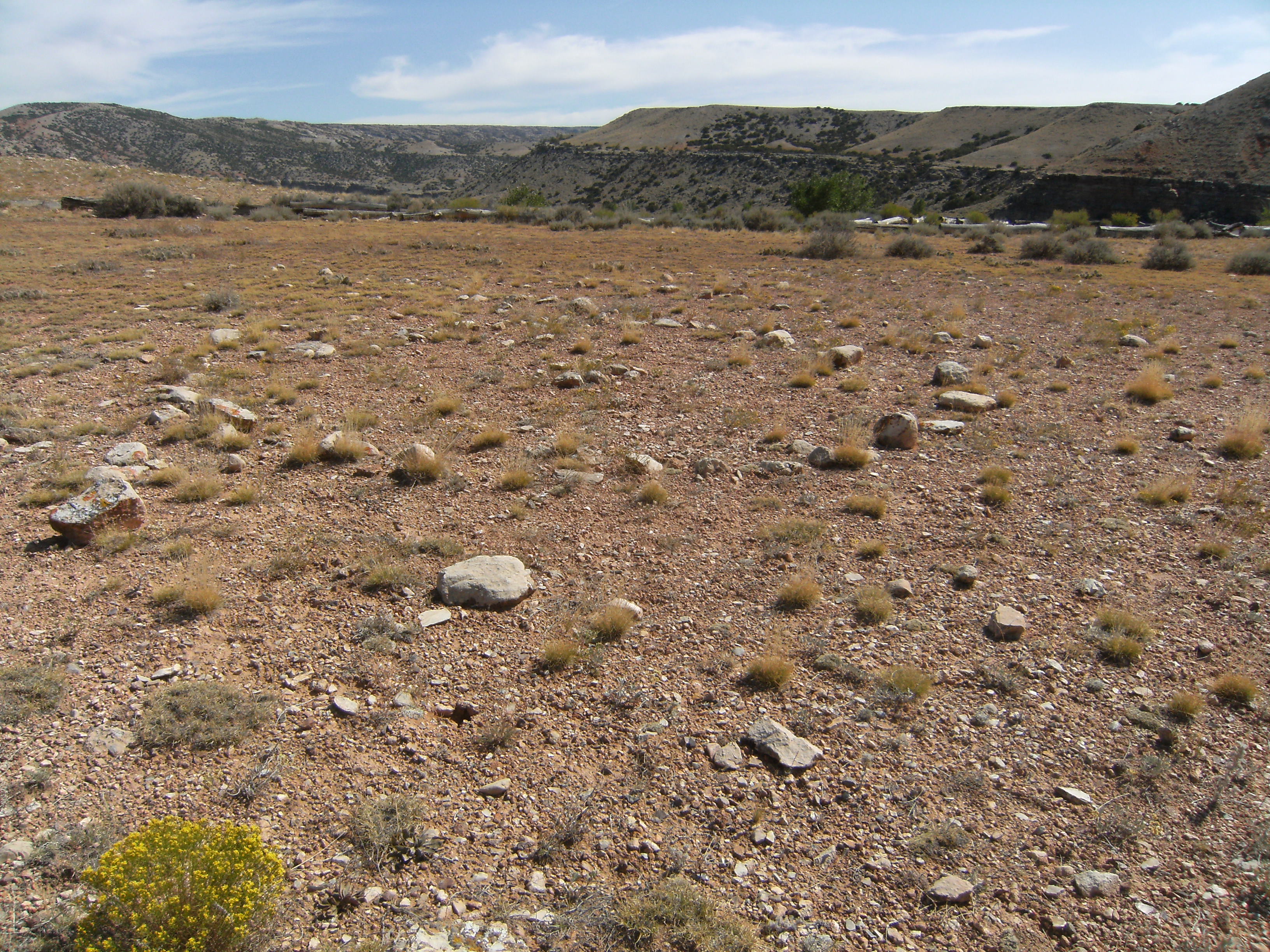
Here are some much older rings near the town of Clark.

Clarks fork tipi rings, much older

I spent a few hours walking along the plateau near the mouth of the Clark’s Fork Canyon, an area where tribes traveled for the fall Buffalo hunt.  There are rocks galore there, and although I could pick out some rings, they couldn’t be photographed as they were very obscure and some of it might have even been my vivid imagination.  Most of the rings seemed much smaller, probably no more than 6′ in diameter compared to these larger rings.  But the setting was right–on the table above the river with a wide view of the surroundings.

I love finding these rings.  They spur my imagination and kindle a sleeping spirit.  The very soil emits stories I’m awaiting to hear.

Elk in the Valley

This is the week the collared elk get their ‘check-ups’–sonogram, blood, and other indicators.  In order to do that, these elk need to be located and darted from a helicopter.  Then the biologists are lowered down, do their thing within just a few minutes, and are whisked away again to their next elk, while the elk is waking up.  This is the last year of a five year study to find out why the elks’ pregnancy rates are so low in my valley.

Helicopter getting ready

I’ve been watching them on and off as they work the valley.  The copter pilots are amazing.  They’re Kiwis, the best mountain copter pilots around.  With no doors, they dress in super warm suits, land in odd and uneven terrain, and maneuver quite close to trees, cliffs and mountain tops.

Watching them work, I couldn’t help but remember when I went river rafting on the South Island of New Zealand.  The rafting adventure began at the head of a glacier and in order to get there we needed to ferry all our equipment, including ourselves, by helicopter up the canyon.  I boarded the copter, fully expecting to fly above the canyon and set down on the glacier.  But instead, the pilot took off inside the narrow canyon, running those curves like a race car with the raft waving around tied below us.  The copter seemed to swing freely side to side, hanging by the propeller above.  It was so scary that I decided to just accept whatever might come and enjoy the fantastic ride.

Copter in my valley

One of the students explained that the biologists on board are from Oregon and pioneered these elk allocation studies.  Most of these elk are not residents.  In other words, they don’t live here year round.  Instead, they come in around January from the Park, snow pushing them towards warmer terrain.  Sometime around late April or May, they begin to make their way back into Yellowstone to have their calves.  From what the student heading the study tells me, 6 out of every 10 calves succumb to predators, mostly grizzlies coming out of hibernation with an appetite and the calves are easy prey in their first 10 days. 

Error
This video doesn’t exist

But this study is looking at low pregnancy rates amongst this group.

I spent some time talking with one of the Game & Fish biologists about what’s being called sudden Aspen death in Colorado.  Reminds me of Sudden Oak Death (SOD) in California which I’ve spent quite a bit of time thinking about.   My own theory with SOD has to do with lack of fires.  Fires have been cleansing the soils in California (and the West) for thousands of years, clearing out fungus as well as competing undergrowth.

This biologist had worked in south WY and felt that the Aspens, bereft of fires, are in the process of a natural rejuvenative cycle so young clones can arise.  He told me a story about early settlers being angry at Native Americans in the Sierra Madres for setting fire to aged forests.  Those Indians gardened the landscape with fire as their tool, aiding the regenerative process in Aspens.  With a fire suppression policy blanketing the West for over 100 years, forest health has declined as well as quality of feed for our native ungulates.

The Eternal and the changeable

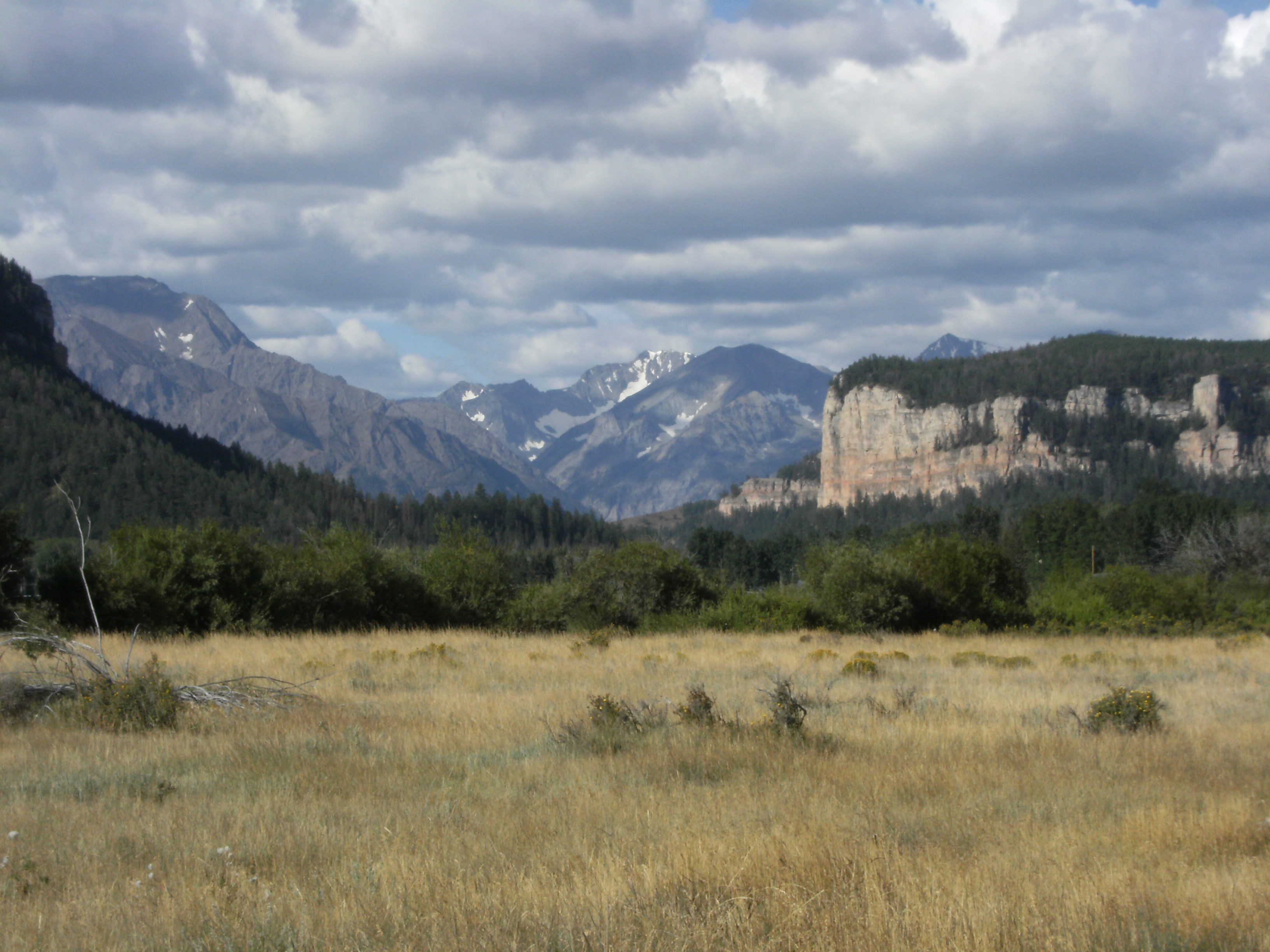
I haven’t lived here much time, but it’s confirmed by my neighbors and friends that in the past year there’s been lots of enormous changes in the valley.  When so few people live around you, the impact of just one becomes magnified.  And although we all live different lives, seemingly unconnected, we are connected through the fabric of this Place.

Just in the last year several long time residents (or part-timers) have died.  Others have moved or are intending to sell.  Friends I made amongst the ranch hands have left.  The students I’ve come to enjoy doing the animal studies are closing up shop.  And a few of the older permanent residents have gone to town where there are more health services.

The small forest on private lands next door to me was logged this winter for beetle killed trees.  The left over devastation of debris, tractor compaction, blow down trees, channel-less streams, and icy mayhem seems a good visual metaphor for the human disruption in the valley.  The beetles were moving silently in a natural tempo.  The humans’ business is helter-skelter.

Change is inevitable, but so much is hidden when you live in a city or burbs.  In the bustle of its’ cultural homogeneity, flow and movement is a fast tick-tock.  Life just keeps going without pause and mostly without notice.

Yet in this Place where geological ‘eternity’ records time, every life is noticed, even the deaths of small things.

Weird clouds over Pat O'Hara

Black Bear

Like the lapping of the tides, the movement of mountains exudes a slow rhythm.  The mountains, valleys, and rivers are sentinels, the guardians of this Place.  Any perturbation in that cadence stands out like shouts or a piercing of the fabric.  Every moment matters and its memories are vivid colors.

This tree went through some stuff

I now understand how my 86 year old neighbor, who grew up here,  has such a great memory for details; details like the names of people he knew long ago, or the exact date when he took some dudes out to the Thoroughfare; or the snowstorm on Bald Ridge where he couldn’t see in front of him and had to follow the fence lines.

Incoming summer storm

My memories are more muted, faded.  So much was compressed and the colors were all human dramas against a setting of more human dramas.  There was no eternal, unchanging, larger than life backdrop to hold the dramas within.

While I struggle to find my place again, make new friends, fill or mourn those empty spaces and regain a kind of footing, the mountains remind me of that which is unchangeable.  And even though it’s all illusion–mountains and rivers, valleys and glaciers, do move and change in time–their mere presence connects us with our slowness.

I caught a story on radio last week about the Okinawans.  Their island contains some of the longest living people on earth and have been studied up and down for ‘why’.  The conclusion is not what you’d think.  It’s not diet, or exercise, nor special herbs, or even genes.  It’s their slowness.  No hurry, no worries.  Like the mountains, or the lapping of the tides, or the Bristle Cone pines, they live a long and slow life.

Full moon rising over Steamboats' saddle

The wolves have a good day

What a day!  Let’s begin with 4″ of fresh snow.  Then add 5 wolves running past my property, 4 greys and 1 black.    Throw in back tracking and tracking the wolves to explore what route they are using to come down into the valley.  And for the day’s finale, watching the wolves on two kills they’d made by the road this morning.

Lots of elk tracks too on this beautiful day

Around 1 pm, we heard the dogs barking and looked out the front window to see 4 beautiful wolves running along the nearby pastures through a herd of horses.  Those horses are used to dogs so they didn’t seem perturbed one bit.  And those wolves were ‘booking’.  They had someplace to go or a meeting to attend.  Within just a few minutes they were up on the opposite hillside and over the divide, a hike that takes me at least 45 minutes!  Then along came a limpy grey following way behind.  They all looked amazingly healthy, no mange.

Limpy wolf but seems to be doing fine

These are the new Sunlight Pack, pushed slightly south into Elk Creek because of a much larger pack of 10 wolves occupying their northern range.  Last winter I didn’t get a chance to see the Sunlight Pack as they were hanging deeper west in the valley, moving with ease back and forth (north and south) across the valley floor.  This has been their home range for several years.

There’s an elk study going on, in its fifth season, in the valley and they’ve been able to do some good collaring this year of wolves.  And so they’ve learned that the Sunlight Pack has been bullied a bit by this larger pack to the north.  In fact, all that howling I heard on Valentines’ day was the Hoodoo Pack making a kill on the northern side of the river, a side that used to belong to the Sunlight pack.

Tracks of four wolves 'booking it'

At around dusk I went up the road to get a closer look at the kills and see if there were any wolves still  on them.  The UofW crew said they processed the kills and they were two older cow elks, about 10 and 12 years old.  “How old is old for an elk?”  I asked.  “About 15.  Some can live till 20, but that’s really old. These were in pretty good shape,” they informed me.  

Error
This video doesn’t exist

With some quick and dirty math, I figure that’s about 50 or 60 years in human terms.