• MY BOOKS ON WILDLIFE, GARDENING AND MORE

  • The Wild Excellence

  • True stories of wildlife encounters around the Greater Yellowstone
  • Award winning eBook on Decomposed Granite, tips, how to's, what to watch for
  • Children's book. True stories of a dog and wolves. In a dog's voice
  • Written for dry Mediterranean climates in California, north and south

Blackfeet, Wolves and emblems of the Spirit

I just finished reading a wonderful little book by James Schultz.  Schultz lived with the Blackfeet Indians starting around 1880 and took an Indian wife.  He learned their language and soon, as a very young man who came out from the east coast, became accepted into the tribe as one of their own.  He, along with his friend George Grinnell, helped advocate for Glacier to become a National Park, and wrote many books about his life among the Indians and the wilds of Northern Montana. He’s providing me with a vivid sketch of life in Montana at the close of the 19th century, the final days of the free lives of the Blackfeet , as well as the last days of the Buffalo. With the recent delisting of the wolves of Montana and Idaho, and the hunts that are now taking place there, here’s a little gem of a quote from Blackfeet and Buffalo: Memories of Life among the Indians: “The big, bad wolf?  No indeed!  I once had a pet wolf, as good a friend of mine as any dog I ever owned.  But before I tell of him, I must say that, so far as I can learn, the wolves of North America never attacked human beings.  There was good reason for it:  game animals and birds, were everywhere so plentiful that they had no need to attack their great enemy, man.  The Indians have no tales about big, bad wolves.  They frighten their children into good behavior by threatening them with the bear.  Until the late 1870’s wolves fairly swarmed upon the Montana plains; their long-drawn, melancholy howls were ever  in our ears.  But lone hunters, both Indian and white, when caught out at night and far from home, lay down to sleep without the slightest fear of them.” On of the most intriguing observations about the Blackfeet is contained in the following quote: “The Blackfeet  Indians, and perhaps many others, have a peculiar habit of going up on high hills and bluffs conveniently close to camp and sitting there motionless and rigid as statues for hours.  Near the close of the day seems to be the particular time for indulging in this practice.  Why they do so is a mystery.  I have often asked them the reason, and have invariably received the reply, Kis-tohts, meaning “for nothing.”  Sometimes I have hidden myself in the coarse rye grass which grows so tall and luxuriantly in the river bottoms, and with the aid of a powerful field glass have closely scrutinized their countenances, but  to no purpose.  The expression of their faces never changed.  Their eyes had a far-off dreamy look which could not be interpreted.” Schultz speculated that maybe they were thinking about the passing away of the life they once knew.  But I have a different notion.Weather Living so close to the earth, these people keenly observed not only the animals and their movements, but the whole non-human processes–the weather, the sky, the stars. All was observed in a contemplative disposition of openness.  In their deep observations of animals, they not only learned about them for their hunt, but noticed their simplicity and ease of contemplation.   Animals were direct representations of spiritual communications and powers and so they were highly venerated and used ritually and contemplatively for various purposes.  They were emblems, doorways to Spirit.  In fact, they were a unique display of what was beyond the human, rather than lesser than human as we rate the animal world today.Deer in velvet Going and sitting on a hilltop, motionless at dusk, was a form of communion, as natural as the elk lying in the grass still and silent, or the spider who patiently sits in its web.  It was setting aside time, after the safety and the needs of the body were taken care of, to drop into contemplation.  Living with the Land as they did, there is a natural rhythm and pulse that overwhelms the body and mind when it’s still.   I believe they were just responding to that natural pulsation of contemplation that was everywhere around them, including in the animals. This is the kind of sensitivity we need today in our conversations about our ecosystems, the wolves and bears, the elk and deer and the whole animal world, including ourselves.  We are upside down.  We are not the ‘managers’.  Animals and plants are not just ‘resources’ to be exploited and managed. At one time, 100 years ago, the idea of game management was a necessity when we almost slaughtered much of our animals to extinction.  We saved our game by setting land aside, establishing hunting regulations, careful management, and educating generations of biologists. But it is a new day and a new paradigm is needed.  I don’t know the answers, but I do know where we need to begin from.   Our conversation needs to start from the assumption that all life is conscious.  That’s not an airy fairy granola eating notion.  That’s the logical application of Einsteinian physics.  And looking at animals as emblems of the sacred is a good place to start.Bison

Yellowstone after Arnica

This will be my last trip to Yellowstone this fall. The Park is winding down and, because of the fires and snow, a lot of the roads were closed.  I went with some friends from BBHC through the East entrance.  Dunraven Pass and the road to Lake were closed.  Old Faithful access from the south (Madison to Norris access has been closed for repairs for the season a long time ago) was closed as well, but open from 12-1 only, I suppose so people could get out of the hotels. So, we had no choice but to head towards Canyon and Mammoth via Norris.

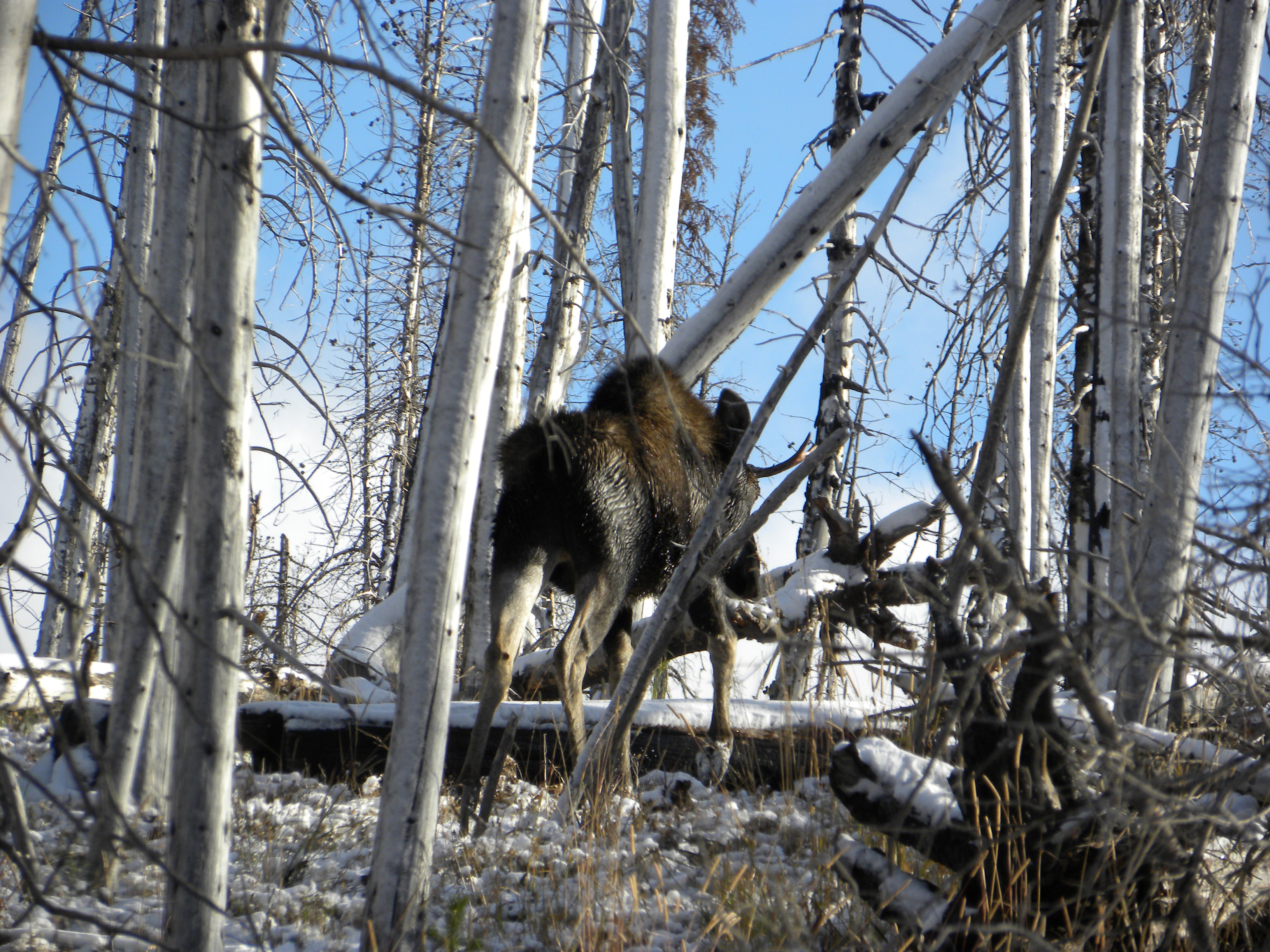
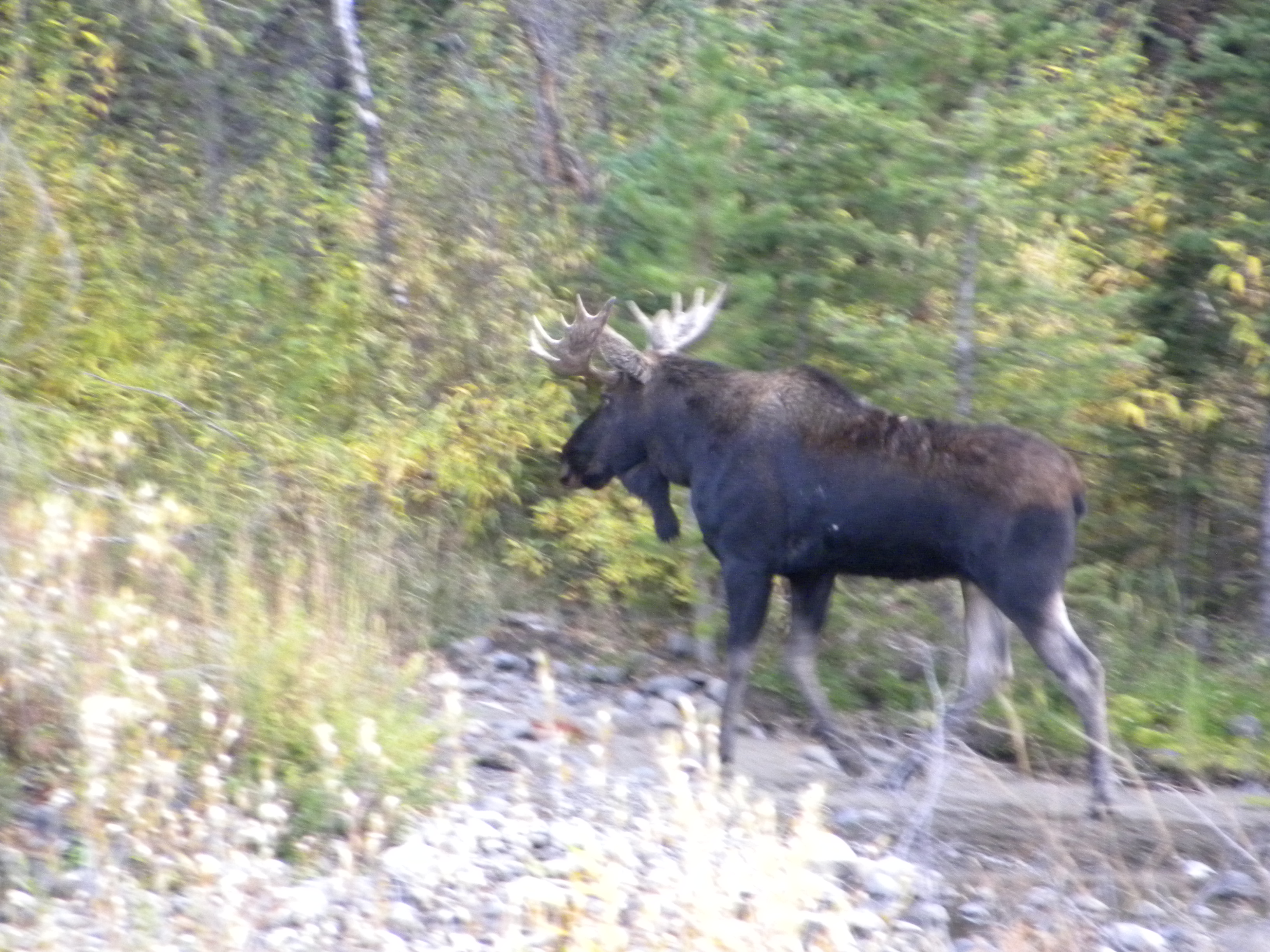
The day started late, around 8 am, but with a bang.  Way before the Park gate, on the Northfork, we spotted two moose–a young bull and a cow.  On the way up Sylvan pass there was another young cow moose.

Near Sylvan Pass

Near Sylvan Pass

There was lots of snow up and over the pass, and Sylvan Lake had a partial ice cover.  We headed for Norris Geyser Basin with a stop at the Mud Volcano.  Mud Volcano

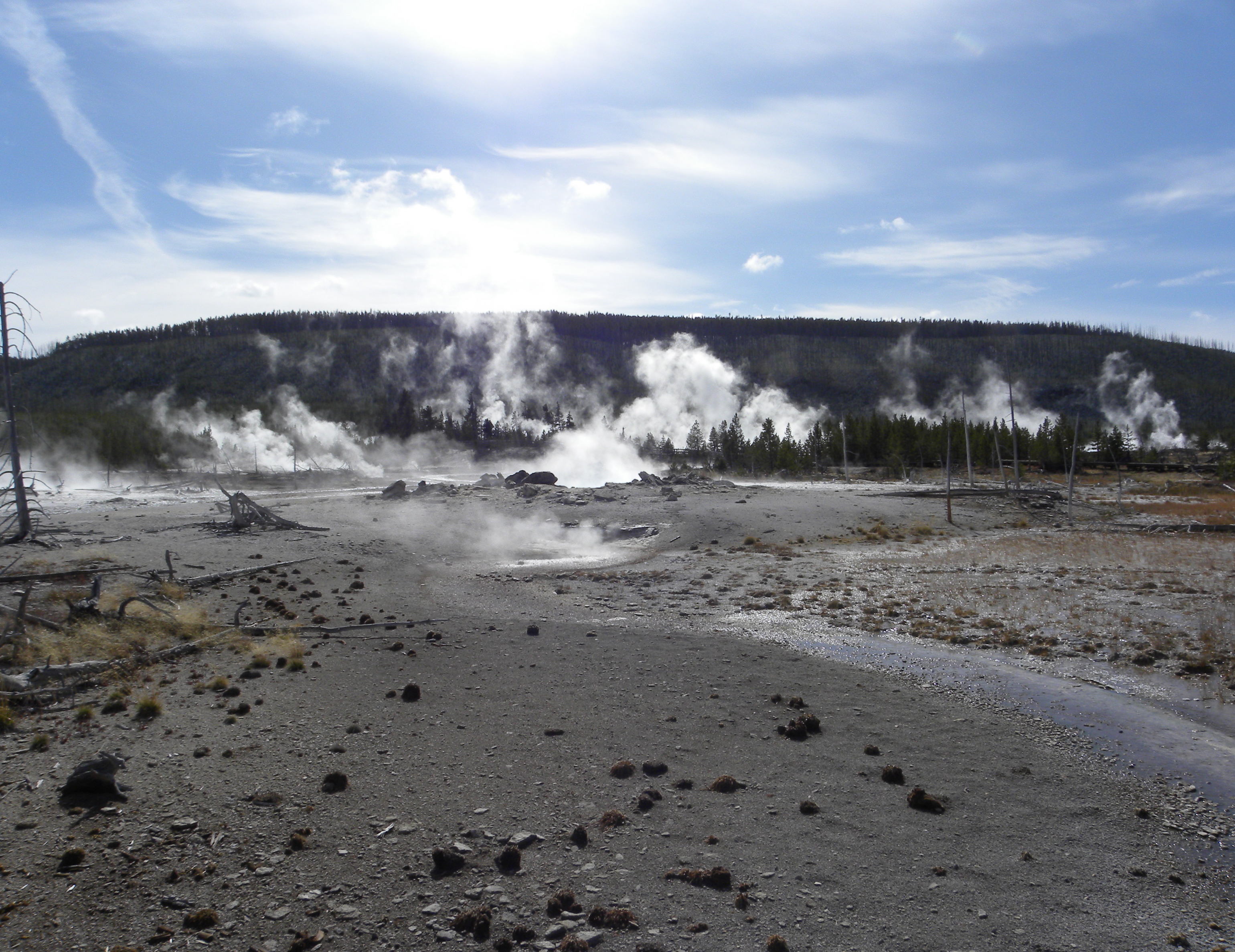
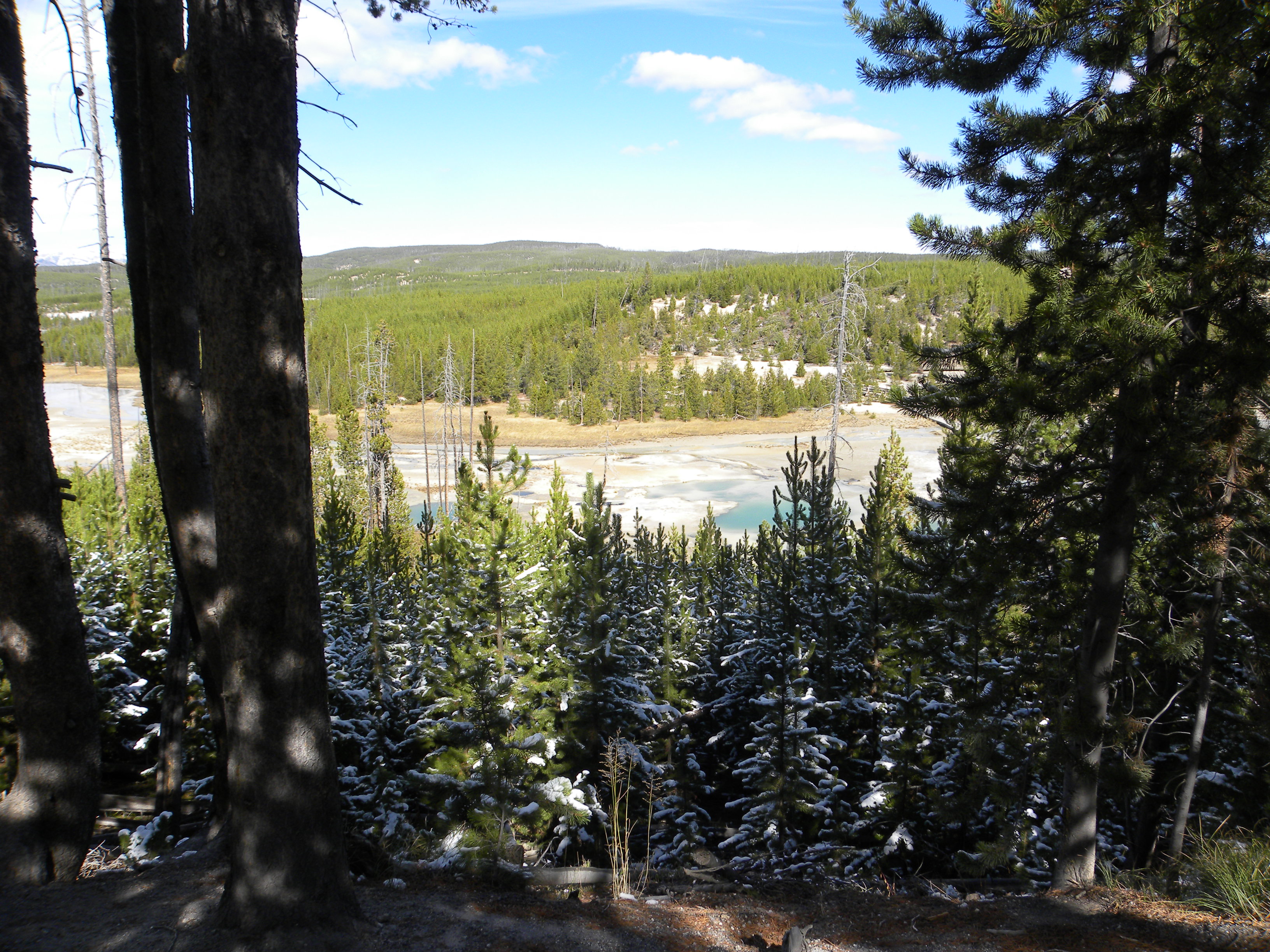
Norris Geyser Basin

mud pot

mud pot

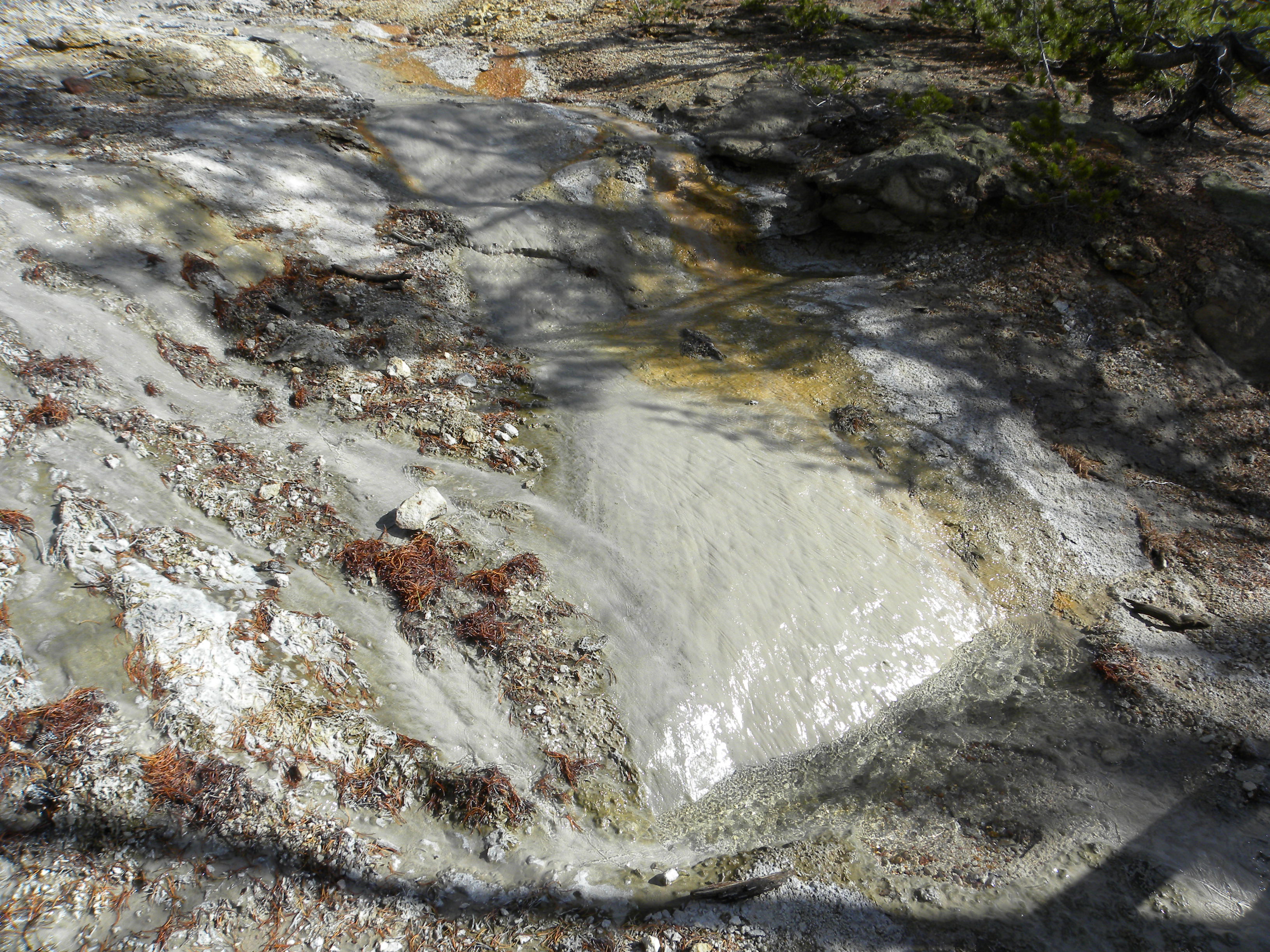
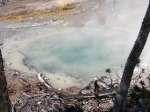
Colors in hot springs

Colors in hot springs

I realized that I’d overlooked this wonderful area.  Norris Geyser Basin has got to be one of the best geothermal spectacles in the Park, and yet its tucked way back in near the Junction so I think people whiz bye without thinking to stop.

Norris Geyser Basin

Norris Geyser Basin

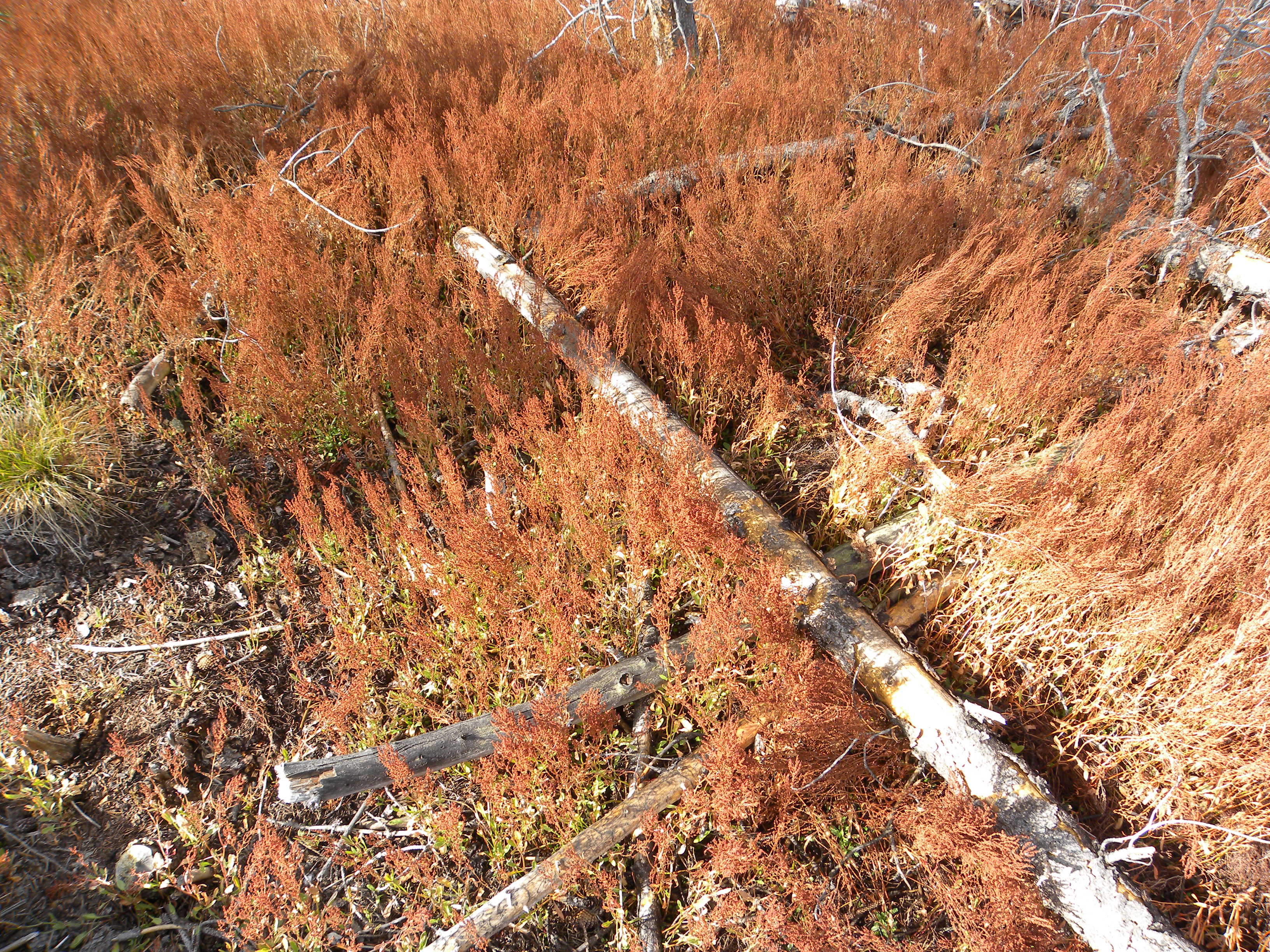
Hot springs plants in fall color

Hot springs plants in fall color

Norris

View of part of the lower basin at Norris

View of part of the lower basin at Norris

Once in the car and on the road we spotted some tourists standing literally at the edge of a hot pool in the meadow, taking photos!  Yikes I could just imagine that thin crust breaking and cooking them.  Really folks, that’s a stupid idea as those pools are hot.

After lunch at Mammoth, we headed down towards the Lamar.  We hadn’t gone too far when we spotted a wolf.   Besides spotting wildlife yourself, the trick is to watch the tourists.  Check for the ones with the spotting scopes set up.  These are the real serious wildlife watchers, usually looking for wolves or bears.

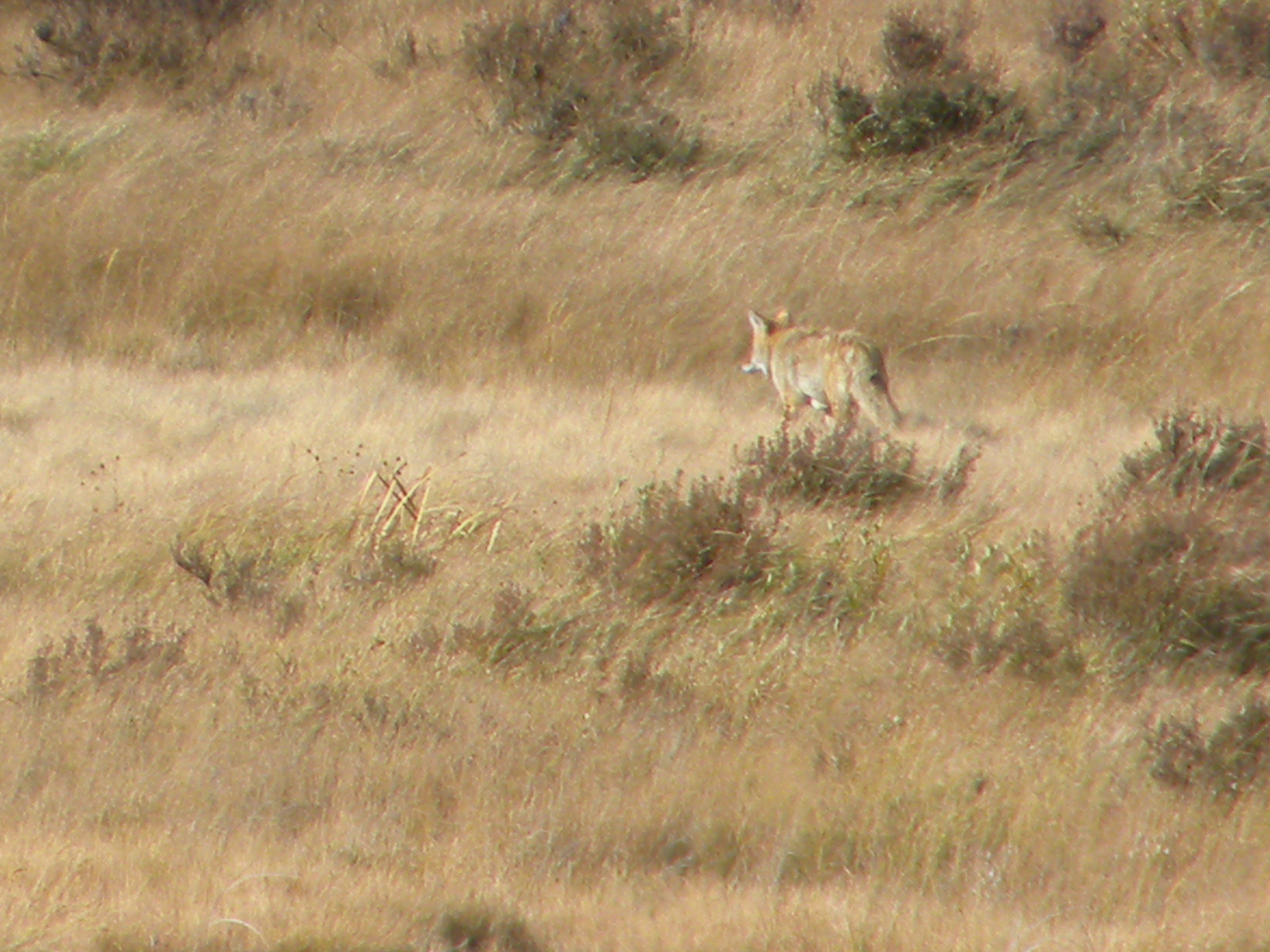
We parked and watched a collared wolf hunting voles in the grass along the river bank.  Every so often he’d pounce way up in the air for his prey.  One of the bystanders said “That’s a coyote.  I’m leaving.”  Well yes, the coloring was similar, but the size and shape of the head was the giveaway.  Besides, he had a collar.

Collared wolf.  Compare his size and colors to coyote

Collared wolf. Compare his size and colors to coyote

He (or she) looked pretty healthy.  No mange and that was good to see.  On down the road we saw about our 10th coyote for the day.  So many tricksters in one day, and all were busy hunting voles.  I’d swear the purpose of rodents on this earth is for eating.

Coyote hunting voles

Coyote hunting voles

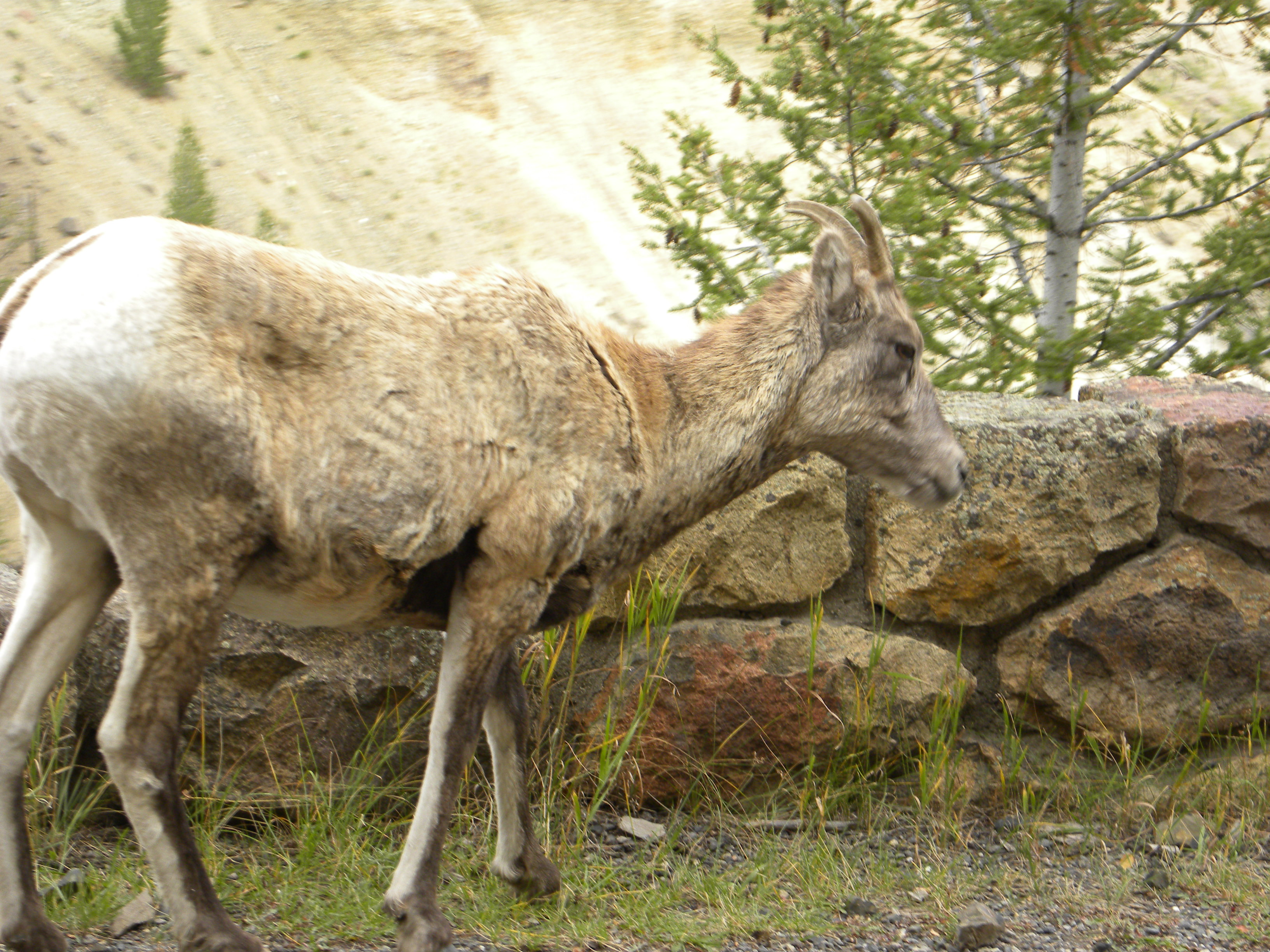
Although Dunraven was closed, we were able to get up from the Lamar side as far as the Specimen Ridge overlook.  Several ewes were grazing along the road.  It is incredible to realize that they get up and down the sides of these mountains with ease.  Way down below near the river there’s natural mineral licks they’ve used since ancient times.Ewe and view

Ewe

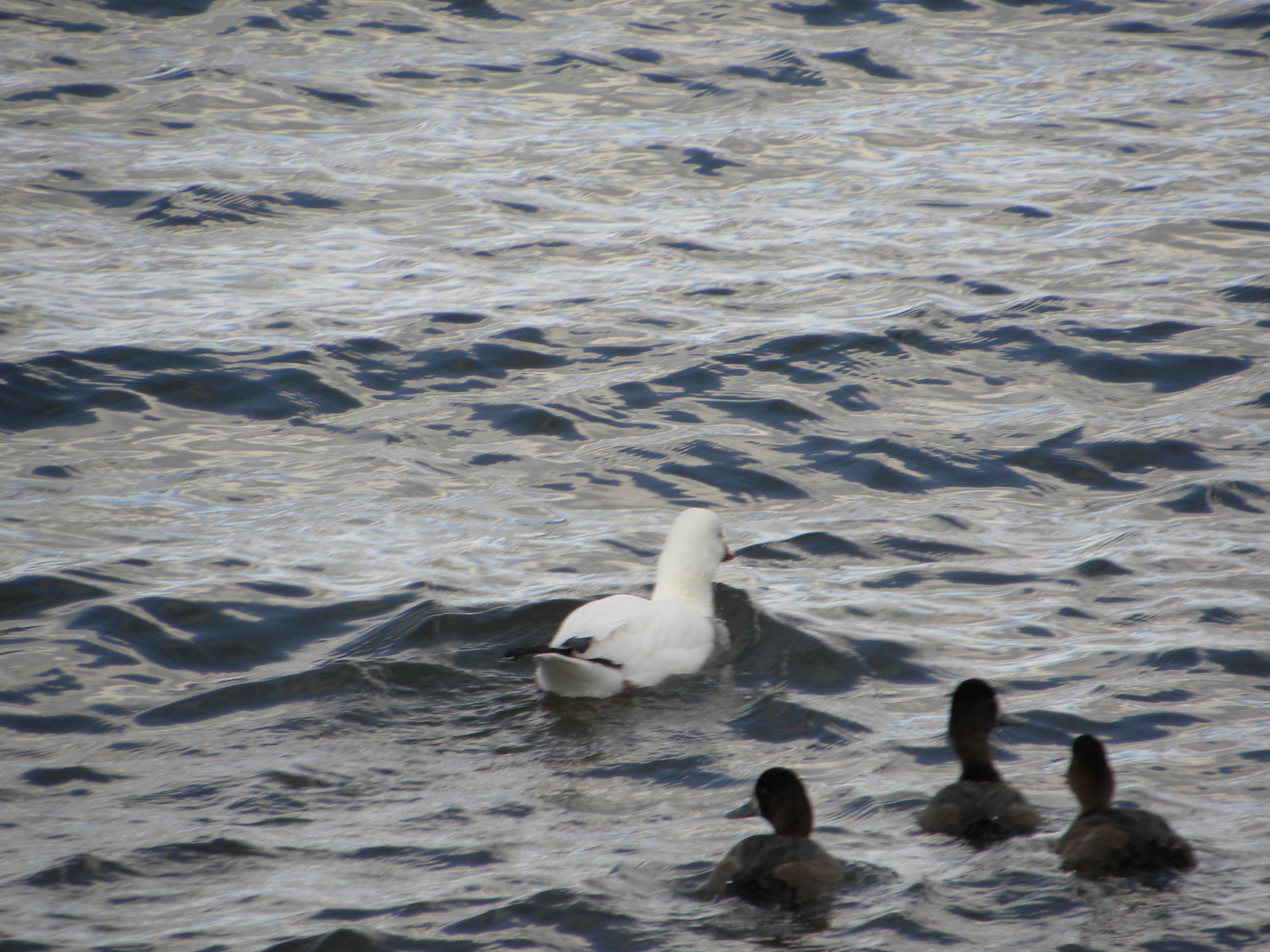
On the way out of the East Gate, we spotted a snow goose, rare in these parts.

Snow Goose

Snow Goose

All in all, we spotted six moose.  The last one was on the way out again, past the East Entrance, not too far from Pashaska Teepee on the National Forest.  Another nice thing is seeing Bison on Shoshone National Forest.  There are no grazing allotments on the forest outside the East Exit of the Park so the Bison wander there, especially in winter.  I sure wish Montana would ‘cowboy up’ and do the same at the North and West Exits.

All in all, for one day in the park that’s a lot of wildlife watching–6 moose, 10 coyotes, lots of bison and elk, one wolf, several bighorn sheep, trumpeter swans and various waterfowl.  A woman we met said she saw a cougar near Mammoth that morning.  One fall day in the Park can’t be beat!

Northfork moose

Northfork moose

Reefs, Bears, and the Beartooths

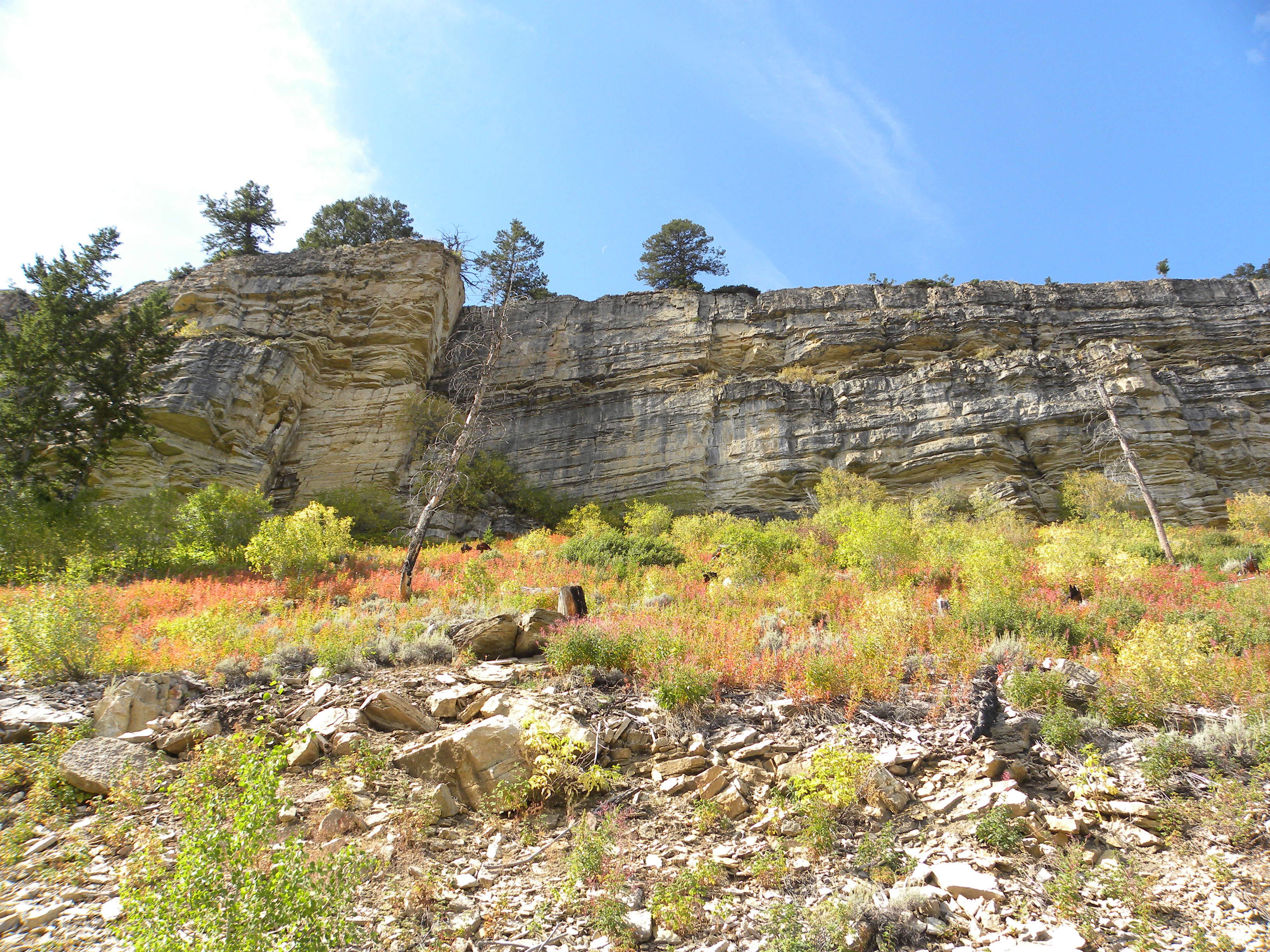
On of the unusual features of this area are the ‘reefs’, long cliffs exposed in the mountainsides.  There’s a beautiful area nearby that I’ve been exploring this summer called Reef Creek.

Reefs

Reefs

A forest service road winds precariously up to the top of the reef, where you discover you’re now driving on a totally flattened surface.  You can walk to the edge of the cliffs and its a sheer drop down.  Parts of the dirt road even look like they’ve been paved.  That’s because you’re on pure rock in areas.

I’ve walked the entire road in pieces including the uphill.  I finally discovered the road’s end (of course, many people have 4-wheeled to the end without walking…but to walk it is to know it) at a small creek, aptly named Reef Creek.  Beyond is a well maintained trail that loops over a pass and back into my valley.

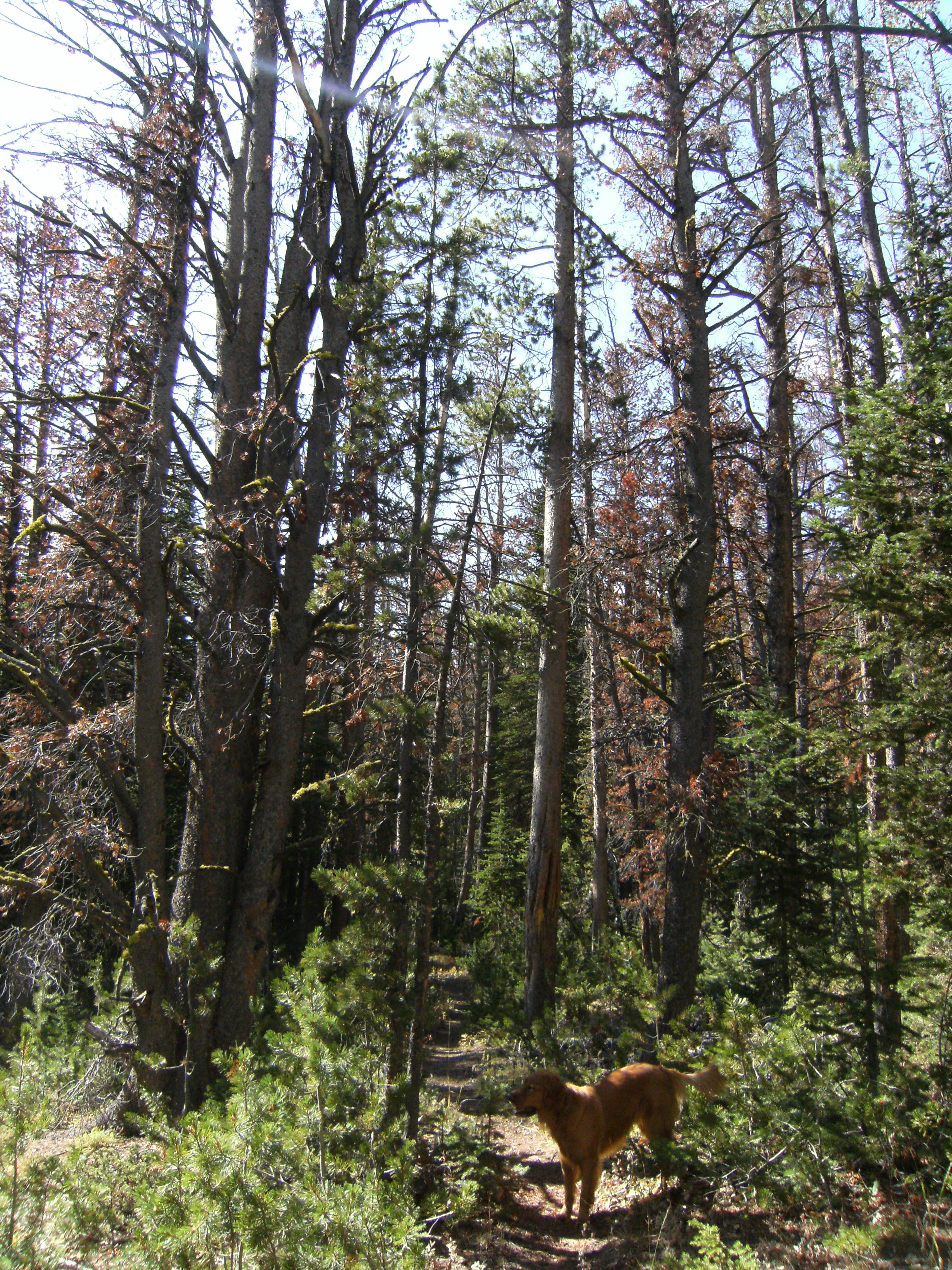
I hiked a few miles up the trail the other day.  The trail winds in high country, although fairly flat, and is home to abundant stands of White Bark Pines.  Alarmingly, most of the mature trees were dead from beetle kill.

White bark pines dead on Reef Creek

White bark pines dead on Reef Creek

I had seen old signs of grizzly scat with pine nuts in it.  I thought of the Great Bear and how difficult it must be to find viable cones.  Bears probably have their favorite haunts.  I imagined them returning here, only to find the cupboards bare.

I climbed higher and finally discovered a few niches of live mature stands.  There are young white barks alive among the dead, but they won’t be producing for 30 or 40 years.

I also encountered the newest addition to my tree list, Abies lasiocarpa or the Sub-Alpine fir.  Its beautiful smooth bark and christmas tree look make it easy to identify.  Abies, or true firs, always have their cones standing upright.  Picea, or spruce, have their cones pendulous (P in the Picea can stand for pendulous).  The botany lumpers and splitters seem to be warring again over exactly if there is a different species named A. bifolia that is almost a look-alike.  But for now, lasiocarpa is good enough for me.

Abies lasiocarpa

Abies lasiocarpa

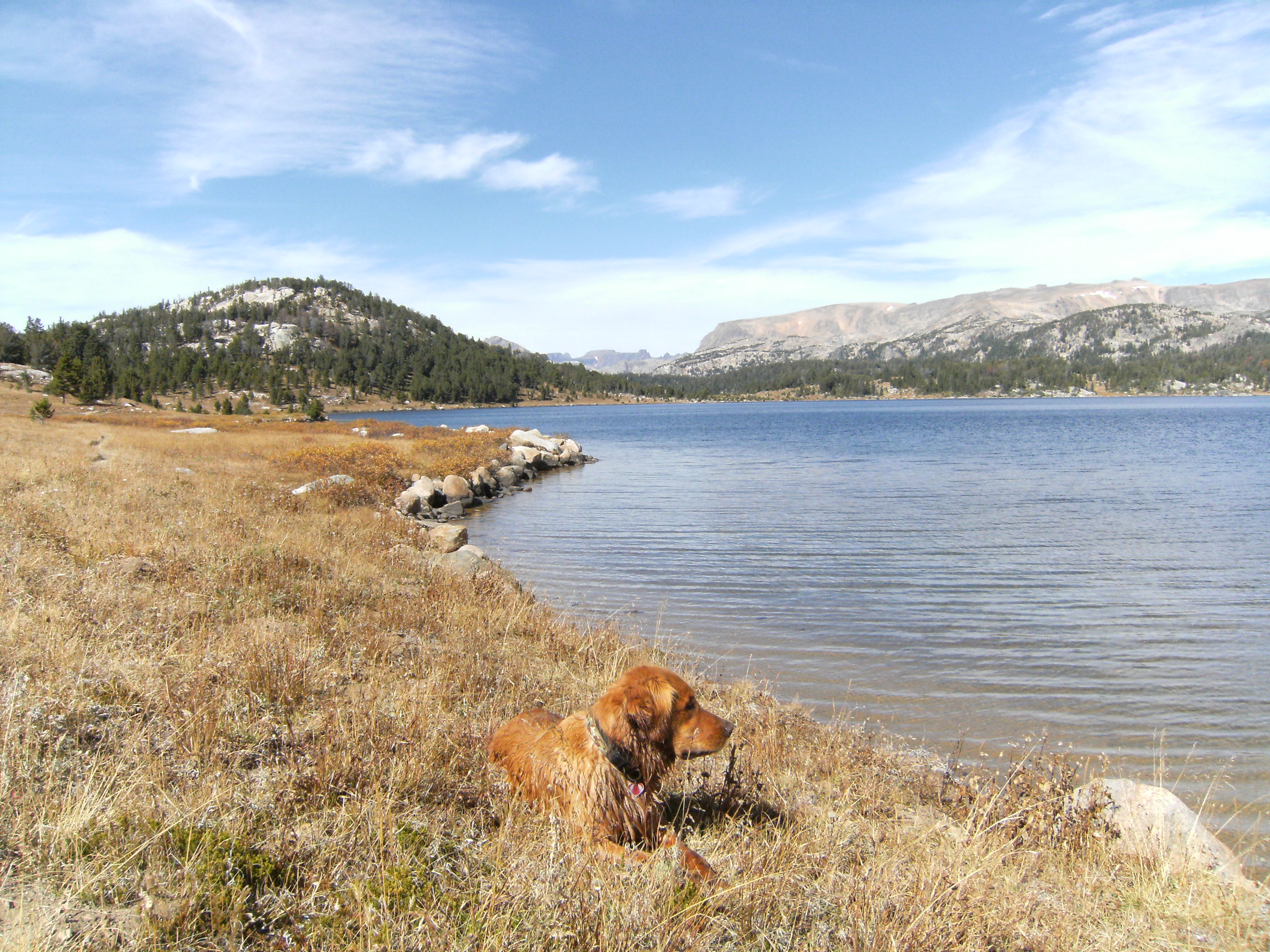
In contrast to this scene of dying trees, I took a ride up to the Beartooths just two days ago.  I wanted to see this gorgeous area before the road closed.  I was not disappointed.  The mosquitos were gone.  And better than that, I spent the afternoon hiking at Island Lake and didn’t see one person.  The White Barks I encountered around the lakes there appeared healthy although I have never seen much bear sign in the higher elevations of the Beartooths. One of the WG&F bear specialists told me that there aren’t many moth sites they know of there so it’s not a frequented area by many Grizzlies.

The afternoon was warm and I couldn’t have asked for a more perfect day.Beartooth in fall

Beartooths

Fish in the beartooths

Fish in the beartooths

Ahh, not a soul around

Ahh, not a soul around

Yellowstone Autumn

I decided to spend a few days in Yellowstone.  I like to bask in Boiling River but I especially wanted to hear the elk bugling.  The bulls are in rut and if you’ve never heard an elk bugle, you’re missing out.  Its the eeriest sound, the most beautiful sound, a sound that seems other worldly.

The Park, usually nice and quiet this time of year with all the crowds gone, was jammed pack. They’re having the busiest fall in 10 years.   I couldn’t get a campground anywhere, so I had to drive outside of Mammoth 20 miles down the road to a National Forest campground.  That was a real surprise.  And even that campground was just about full.  I think I found the very last site!

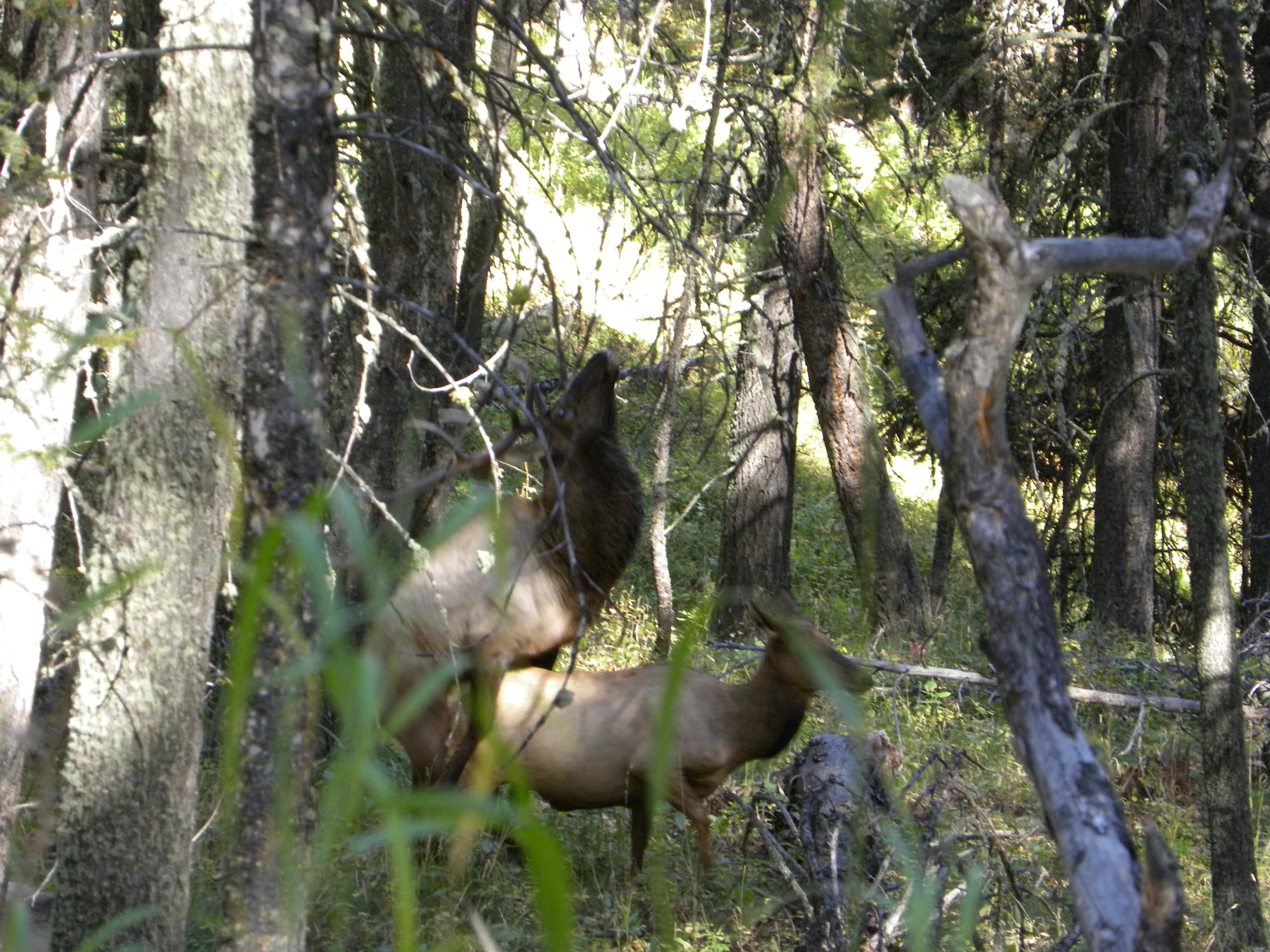
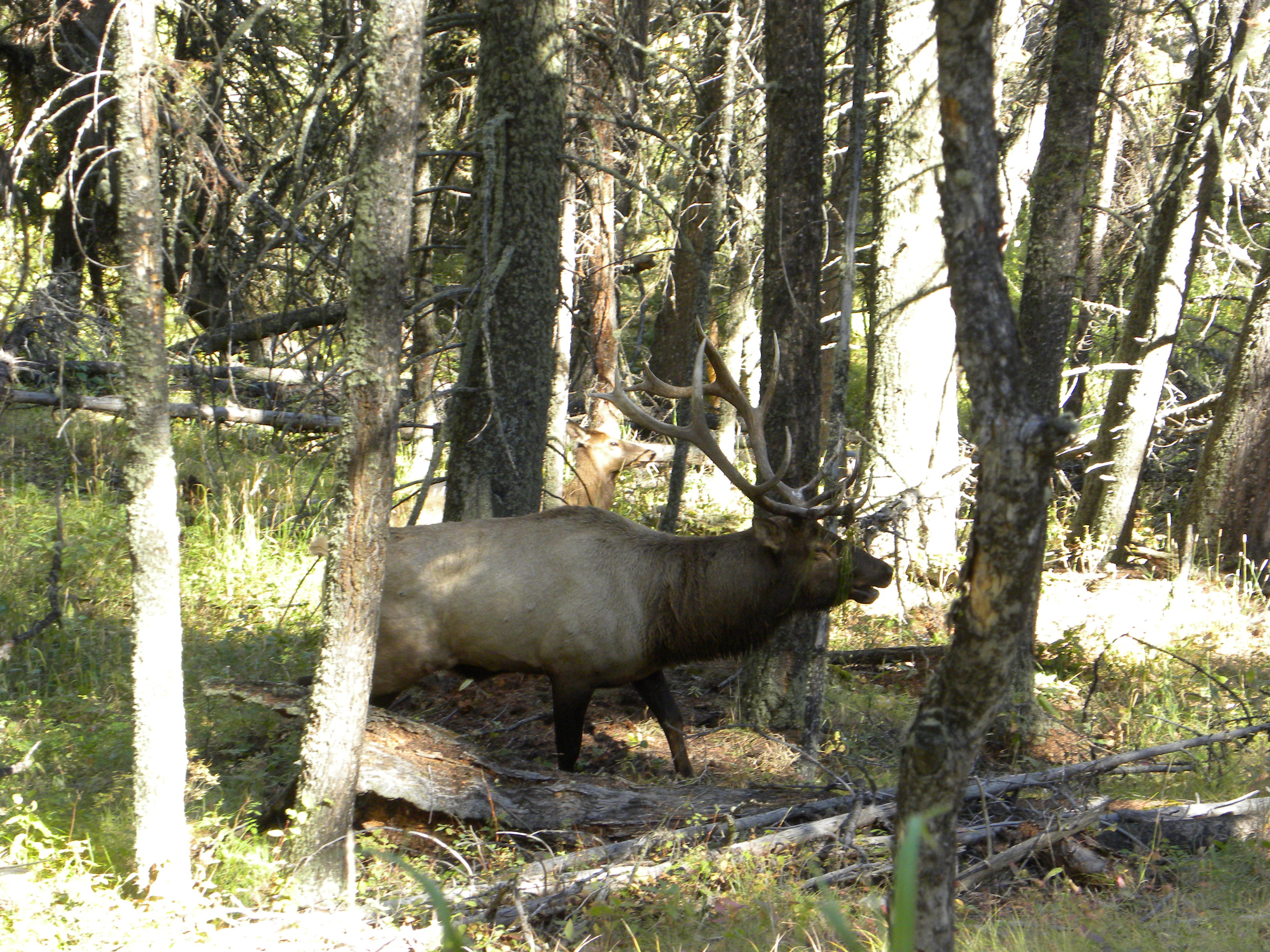
Waking up early, I soaked in the river, then headed up the trail to the Beaver ponds.  Its a fairly short loop of 5 miles.  Since I was early on the trail, I didn’t see anyone for the first hour.  The trail winds along the open hillside overlooking Gardiner, but soon dips into a conifer glade with seeps.  The day was already hot (as we’re having our summer now in fall), and as I moved into the cool shade I noticed about 20 elk, mostly cows and calves, lying around.  One bull was there.  This was his harem.  The cows were relaxed.  The calves were curious.  And the bull was keyed up.Elk mating

I lay down on the trail and watched for ten minutes.  As I continued on, I later heard that some hikers had come around the corner and gotten chased a bit by that bull.Bull Elk

Although there were no beavers to be seen when I arrived at the ponds, their evidence was.Beaver evidence

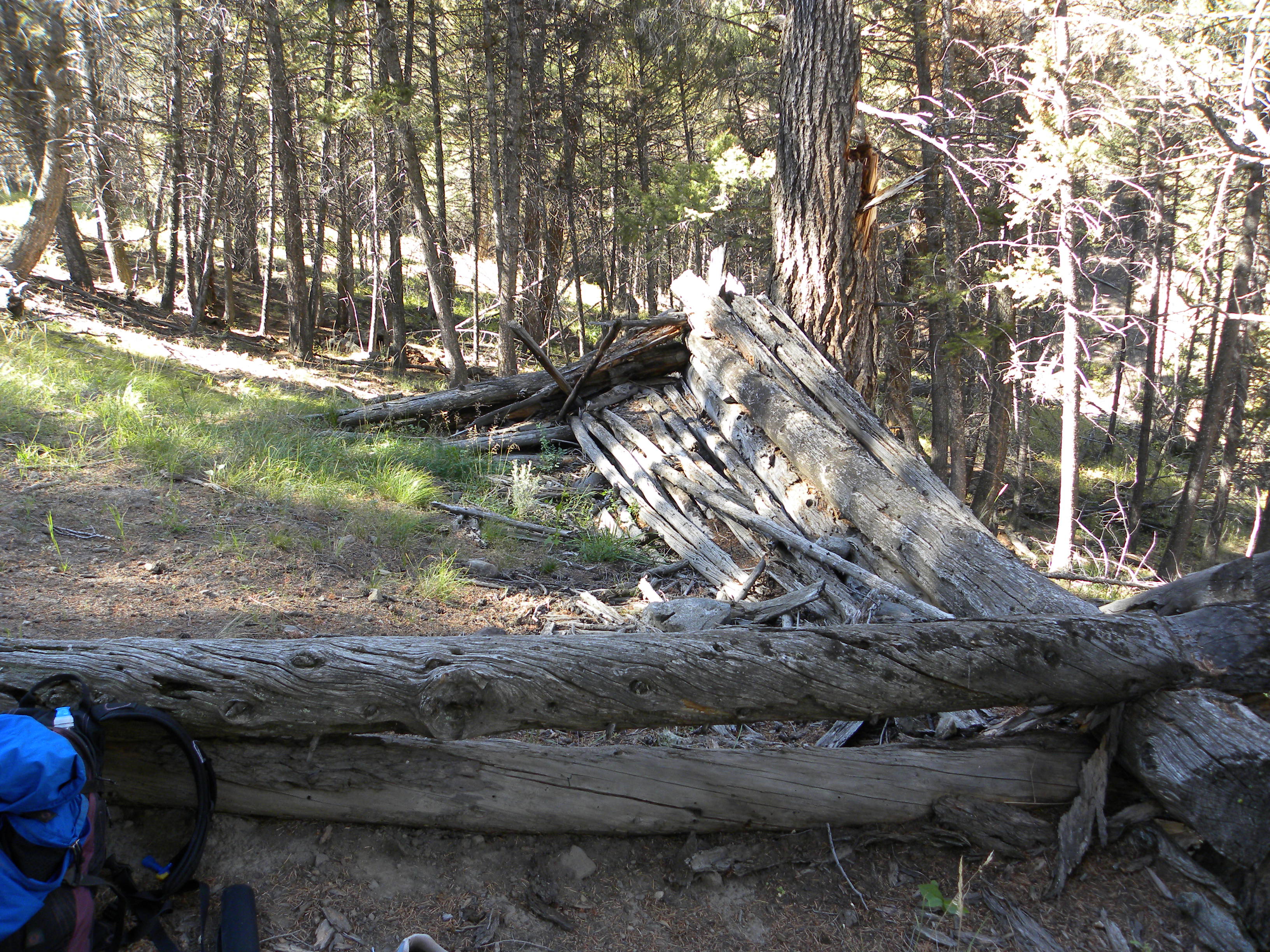
On the last leg of the trail, I noticed an old structure that looked like it had been a cabin.  I couldn’t find references to it in the guidebooks.  Wondering if anyone knows what it used to be?

Old Structure along Beaver Pond trail

Old Structure along Beaver Pond trail

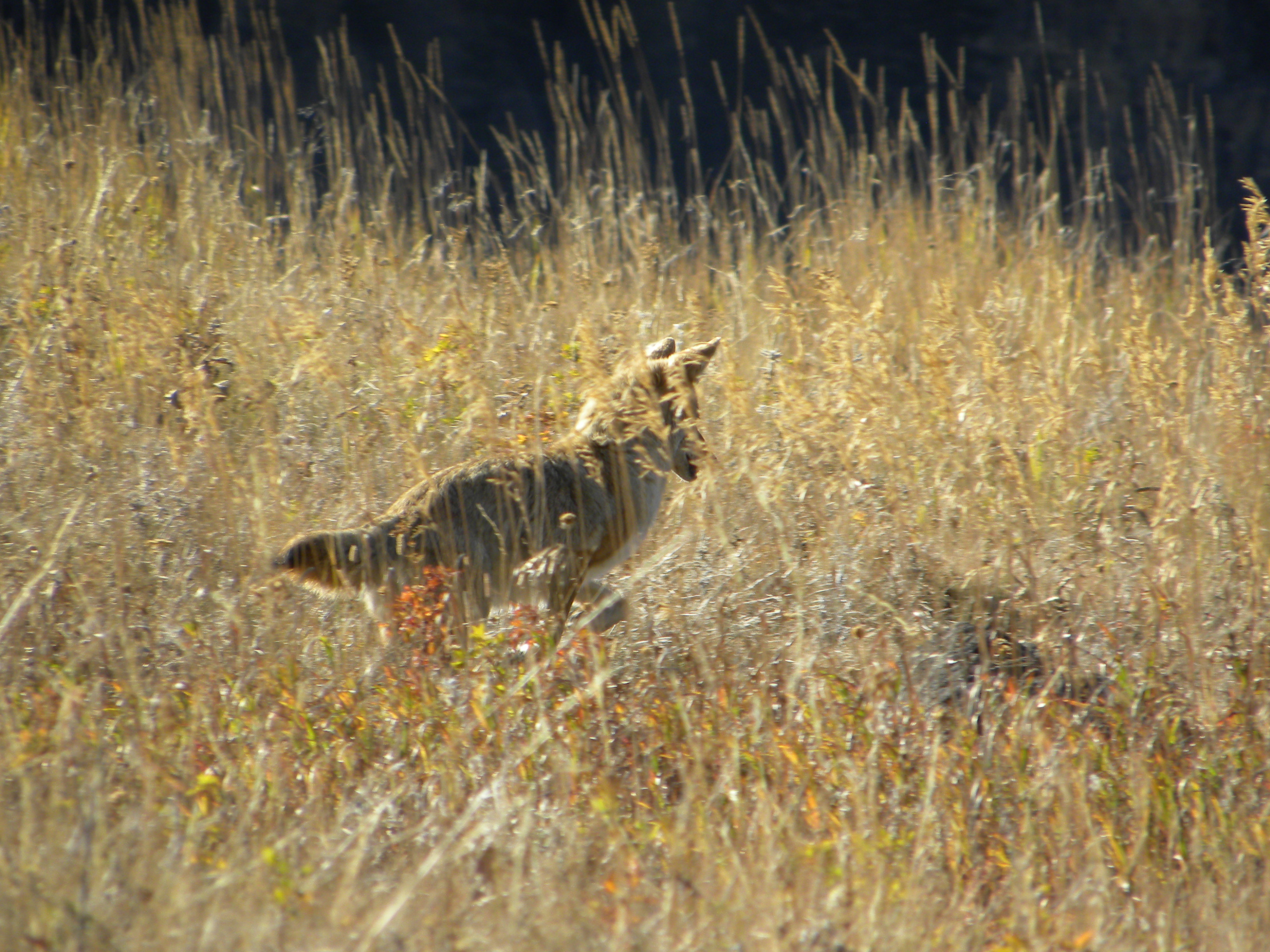
After a late lunch, I headed back towards the Lamar.  A coyote was catching grasshoppers.  He was terribly cute pouncing around.

Coyote catching grasshoppers

Coyote catching grasshoppers

And the light was perfect for this herd of Bison.

The light was perfect

The light was perfect

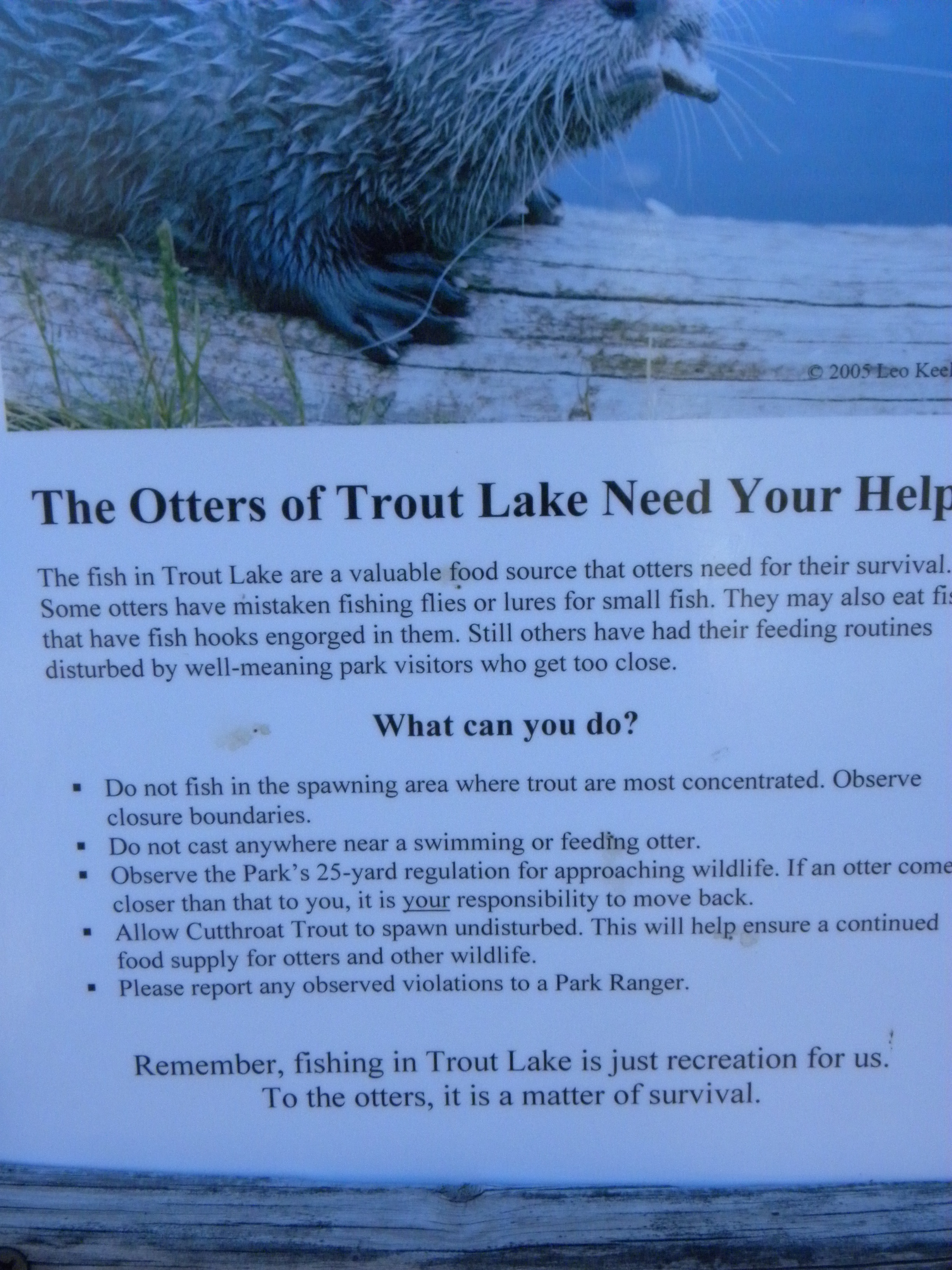
I stopped for a while and watched a second coyote, before heading up to Trout Lake.  I wondered if the otters were active.  Trout Lake is a very short hike/walk.  Otters are often seen playing there.  I didn’t see any otters today, but the lake was beautiful.  I spent time snapping some photos of the Lake, of a gigantic ladybug, and a dragonfly.

Trout Lake

Trout Lake

Ladybug

Dragonfly

Trout Lake signage

In order to get into the Park, you must rise in elevation.  That’s because of the bulge from the hot spot that Yellowstone sits upon.  I used to wonder why that special feeling seemed to almost begin and end at those entrances and exits, until it was explained to me.

I met a woman from California on the trail.  She comes to Yellowstone every fall for 3 weeks.  At the campground I met some people from Seattle who come every year at this time.  I met a man several years ago who comes every spring from Iowa.  Yellowstone is just like that.  It is a very powerful place.  A healing place.  Once it gets under your skin, you can’t help but dream the dream of returning again and again.

What is this insect?

Does anyone know what this insect is?  They have just appeared in the last month, everywhere.  They don’t move too fast.  I’d appreciate knowing.  Thanks.

My Toolbox

What do you need to live in the world of nature?  I ask myself this question in many forms all the time.  Today these are my answers to myself:Water

  1. Awareness.  To be aware is to be alive.  Yesterday I was hiking with a friend.  I looked ahead, up the hill, for a moment, instead of looking at the trail.  My friend cried out.  I had stepped over a bull snake on the trail.  Luckily it was a bull snake and not a rattlesnake.   But other times I need to stop watching the trail so much and notice around me.  Sight is only one form.  Smells, sounds, bird warnings, scat, tracks–all these are things to be aware of.
  2. Curiosity.  I called a friend the other day and on her answering machine was a quote:  “The cure for boredom is curiosity.  There is no cure for curiosity.”  Curiosity is a choice, an approach to the world.  It is the posture of a child.  I can be curious instead of afraid, or bored.
  3. Wandering without purpose.  This is actually a form of spiritual practice.  Take time to wander.  Being on a trail is good when you want to go from here to there.  But trails reinforce the illusion of life as a straight line.  Wandering with no purpose, observing small details, allows the mind and body to be simply present, without agenda.  Wandering is a form of walking meditation.  I like to call it ‘tooling around’ vs. ‘hiking’.  My friend says Thoreau called it ‘woods loafing’.
  4. The wonder of the occasional ‘ah ha’ moment.  Not exactly IN the toolbox, but in slowing down and wandering, this does occur.  This has happened to me several times.  I could have read the same instructions in a book or on a map a thousand times, but the revelatory nature of the ‘ah ha’ comes from inside, not outside.  It has the power and force of Mother Nature herself as our teacher.  I was looking for a sheep trap made out of large boulders.  I had a crude map and was walking the cliffline.  In fact, I walked right into the ancient site, but since it was natural and not man-made, I did not connect it with my map.  As I walked further down the cliff edge, I noticed the game trail passed directly by the boulder entrapment.  ‘Ah ha’, and the connection was made, even though I had the map the entire time.  The few times this happens to me, its so special.
  5. Nature gives gifts.  Be open to receiving them and realize they are gifts, not a right or a claim.  I was reading a Field and Stream article about finding sheds, or most people call it ‘horn hunting’, that is, looking for antlers of deer and elk.  They gave good tips as to where and when to look to receive optimal results.  Yet they ended with a wise and profound statement:  Remember, finding a shed is a gift, not an entitlement. I have found interesting things at just the right moment.  Why is she called ‘Mother Nature’?  Because the earth not only feeds and clothes us, but also can be a nurturing and soothing force.
  6. Listen to the dreamworld. Dreams take many forms, and we all know the ones that seem to come from deep recesses full of wisdom.  They are telling us something—whether they be prescient or helping us access inner power—we need to listen to them.  When you feel the power of a dream, or an intuition, or your imagination, sometimes its better to let it simmer inside, let it reveal itself fully to you, instead of releasing its power by telling everyone about it.  Oh, how I need to remember to do that–be a bit more quiet!
  7. Finally, I remind myself on occasion (when I remember to), the nature of true living is Felt experience without resistance.Felt experience without resistance

Hunting wolves. Warning: My opinion.

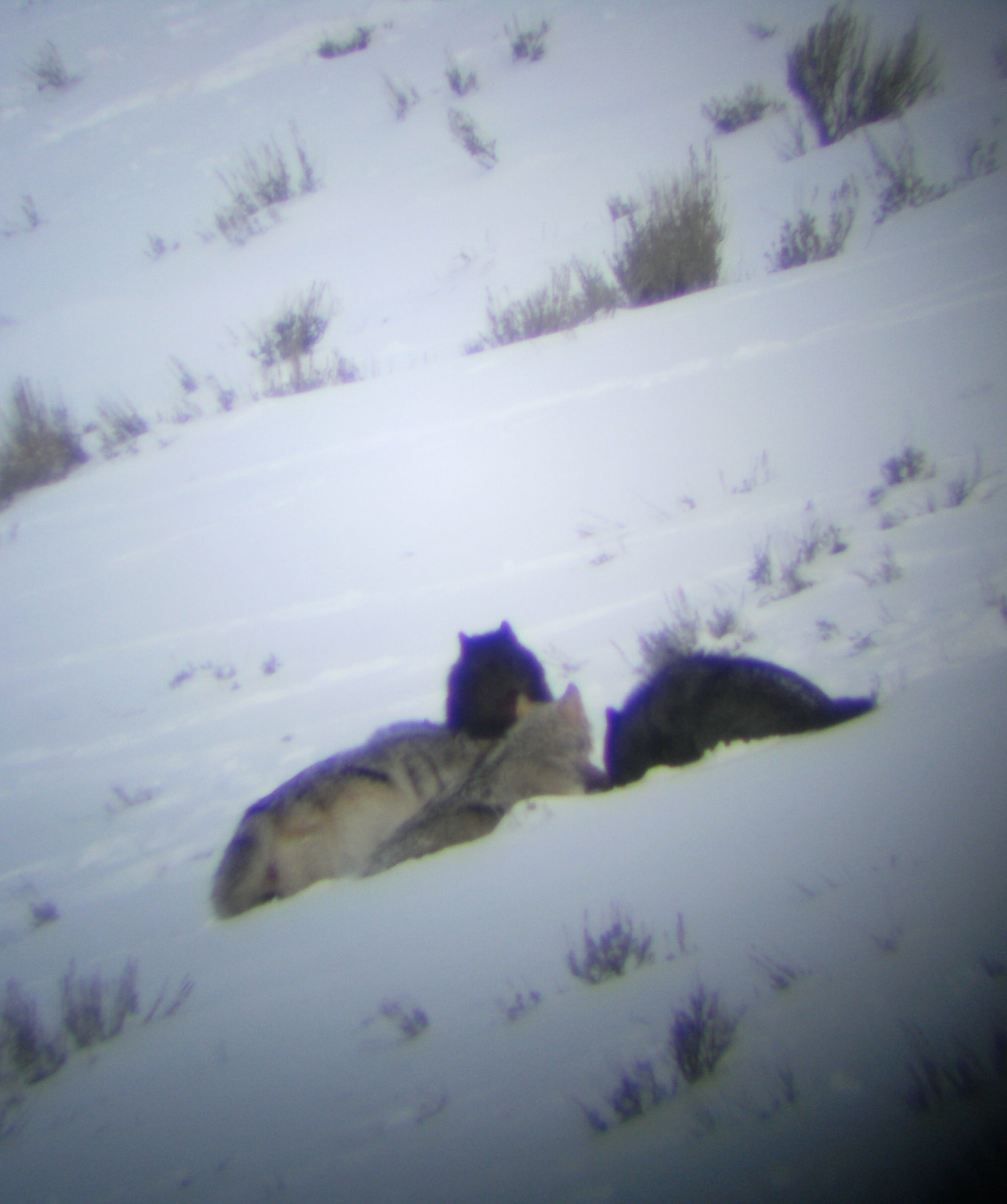
Wolves on a carcass in the Lamar

Wolves on a carcass in the Lamar

Three wolves on a carcass

Four wolves on a carcass

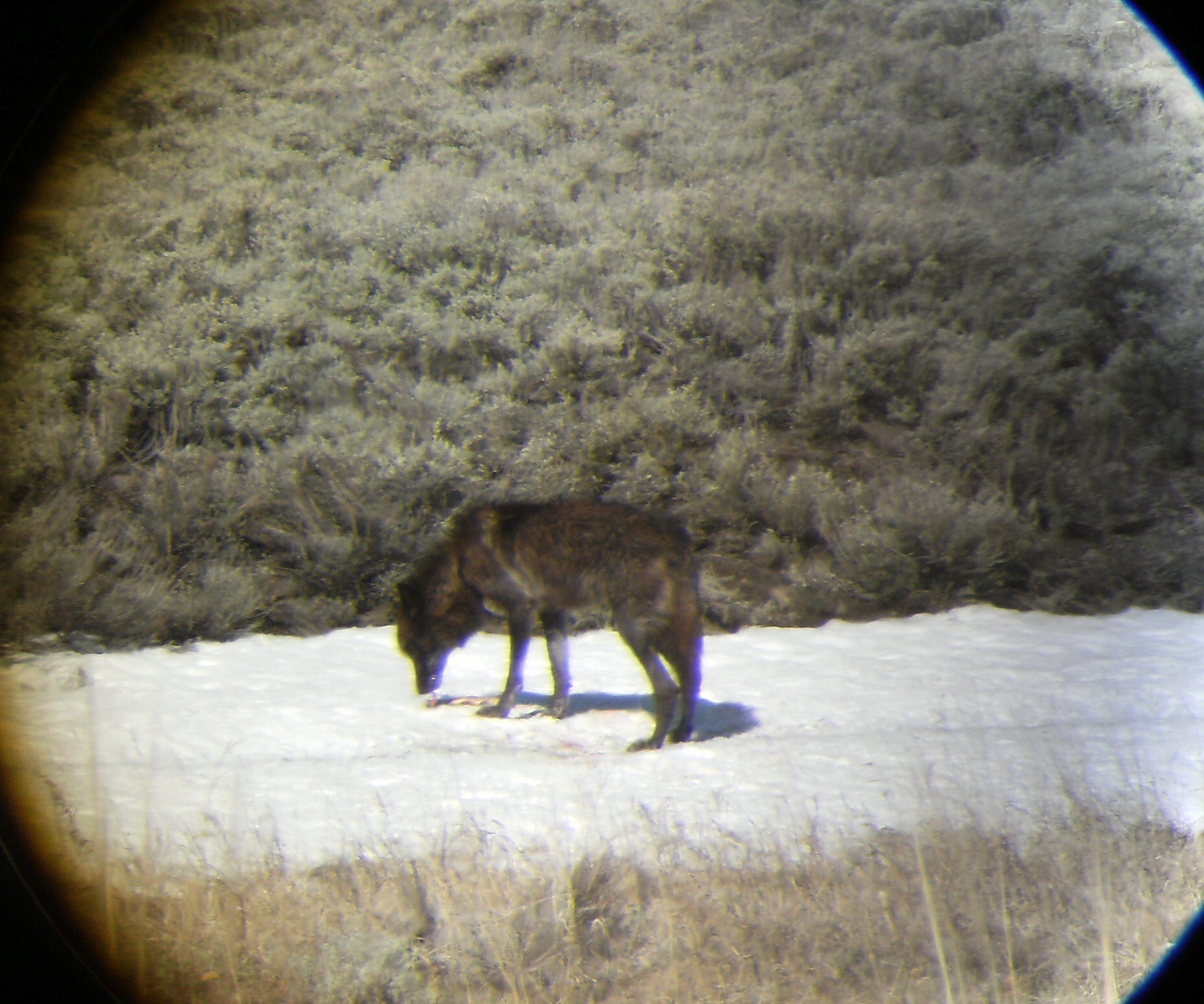
Wolf eating fish it caught in the Lamar

Wolf eating fish it caught in the Lamar

I live in Wyoming and as of 2009, wolves are still on the endangered species list here and are not being hunted.  At least by people who paid for the ‘privilege’.  Yes, they are still being hunted by the Feds here under Wildlife Services.

Today I took a hike in an area where the Beartooth Pack is sometimes spotted.  There is hunting allowed right around Cooke City, Montana.  I suppose wolves from that pack might be wandering in those parts as well right now and get shot, legally.  But for now I was glad that wolf hunting is not allowed where I live.

I’ve already written about some of my feelings regarding hunting.  I have no problem with hunting game for meat, as long as the fight is fair.  But hunting a predator just for the sport of it, or rather the ‘spite’ of it, makes me cringe.  It has the same ring as the extermination of the Bison resounding in its hollows.

Killing a wolf that’s killing one’s lifestock has a purpose.  Killing randomly to ‘manage’ wolves smells of bowing to the sector that vehemently hates wolves.  Wolves are social animals.  We don’t eat them.  Do we eat dogs?

Wolves, you might say, are wild, not domesticated, and therefore we must limit them. But random killing of wolves does not necessarily have any relation to which wolf or wolves will go after livestock.  Its just random killing without our knowledge of pack hierarchy or age.

Basically, dogs are really only a few generations away from being wild and running in packs.  They are the wolves we allow ourselves to love.  They are our companions because, like the wolves they came from, they respond to a family unit, are loyal, and have feelings for each other and for us.  They actually have human-like qualities.

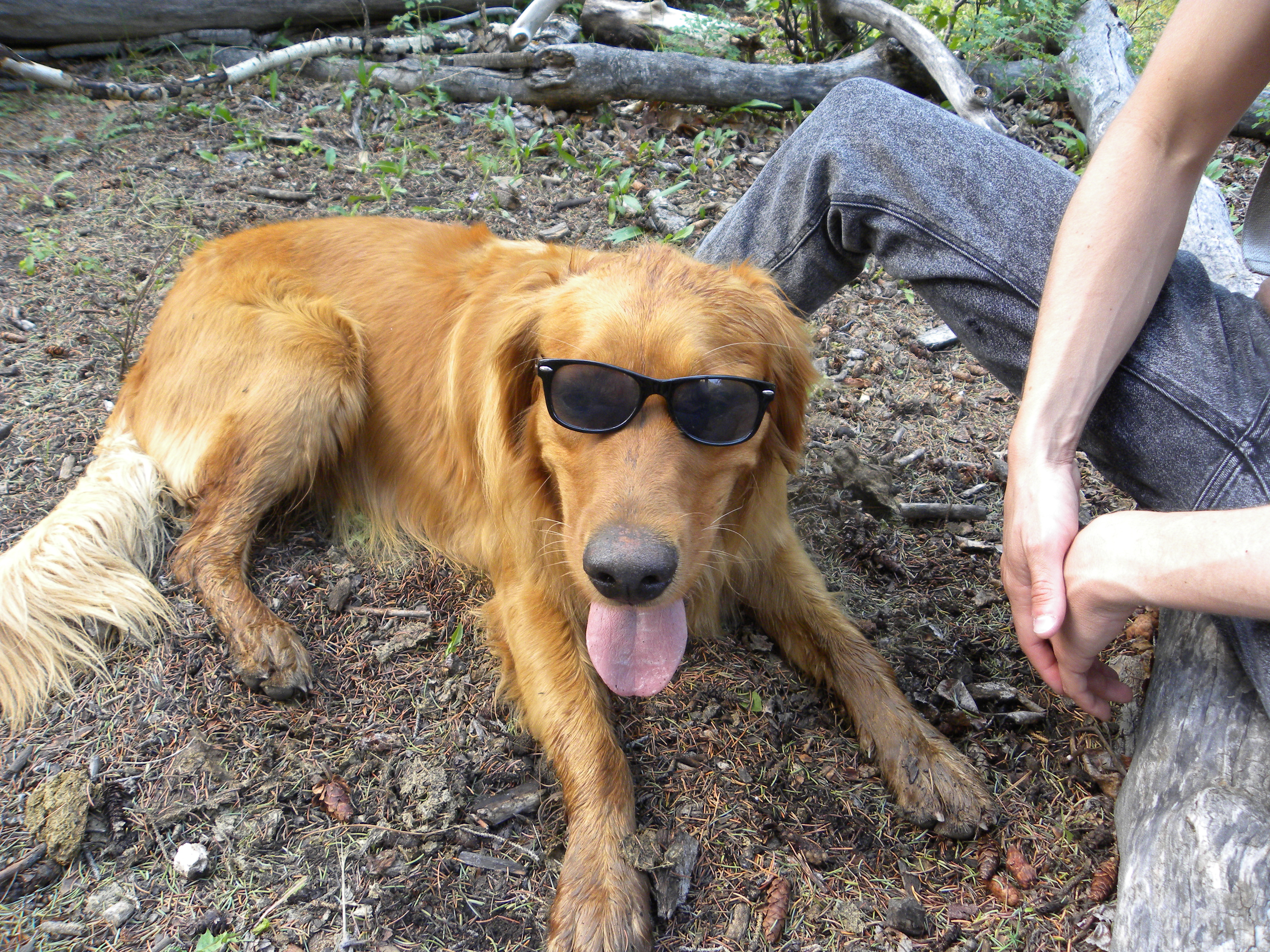
My dog is so human-like!

My dog is so human-like! He's the coolest.

My own dog will happily and readily chew on elk and deer bones he finds.  But he shies away from dead coyotes.  He knows the difference.

Killing wolves violates my basic objection to hunting today:  we do not hunt in a sacred manner.  We do not acknowledge the life we are taking to feed our lives.  The prey is only object and its’ very aliveness that we are taking away, is never felt nor honored.

Many people put their animals down humanely.  Most people can acknowledge the suffering and feelings of their cat, dog, or horse.  Somehow this doesn’t translate to the hunt. To actually acknowledge the sentience of living creatures would change a hunter at the core of his or her being.  He would be saying a prayer for that animal while they died.  Hunting would be a sacred ritual, right up there with going to church.

Hunting wolves is purely sport at best, and at its worst it reeks of revenge and hatred.  I cannot emotionally support that kind of a hunt.  It brings out the worst in our humanity.  We can do better.

The woman who married a bear teaches me about pine nuts

After we visited the bear cave in Yellowstone, Jim Halfpenny sat us down on a nearby log and told a story.

“When we first migrated north from Africa, ancient peoples had no idea how to live with cold, what foods to eat, how to make shelters.  The Bear was their teacher.  Native Americans had several layers in one story.  The first and simplest they might tell to the children so they would stay close and be afraid of bears.  As the child grew older, the same story would be told in greater depth revealing more teaching and wisdom.”

“This story of the woman who married a bear was told in some form all over the world where there are bears.”

Jim went on to tell this ancient story in great detail about a Chief’s daughter who married a bear, lived with the bear clan, bore him two sons and then went back to her people.  When she returned with her sons, half-bear half-human, she was now a changed woman–a wise woman with much to teach her people.

This is the story of why humans throughout time have respected and honored bears, and how it was Bear who taught Humans how to live.

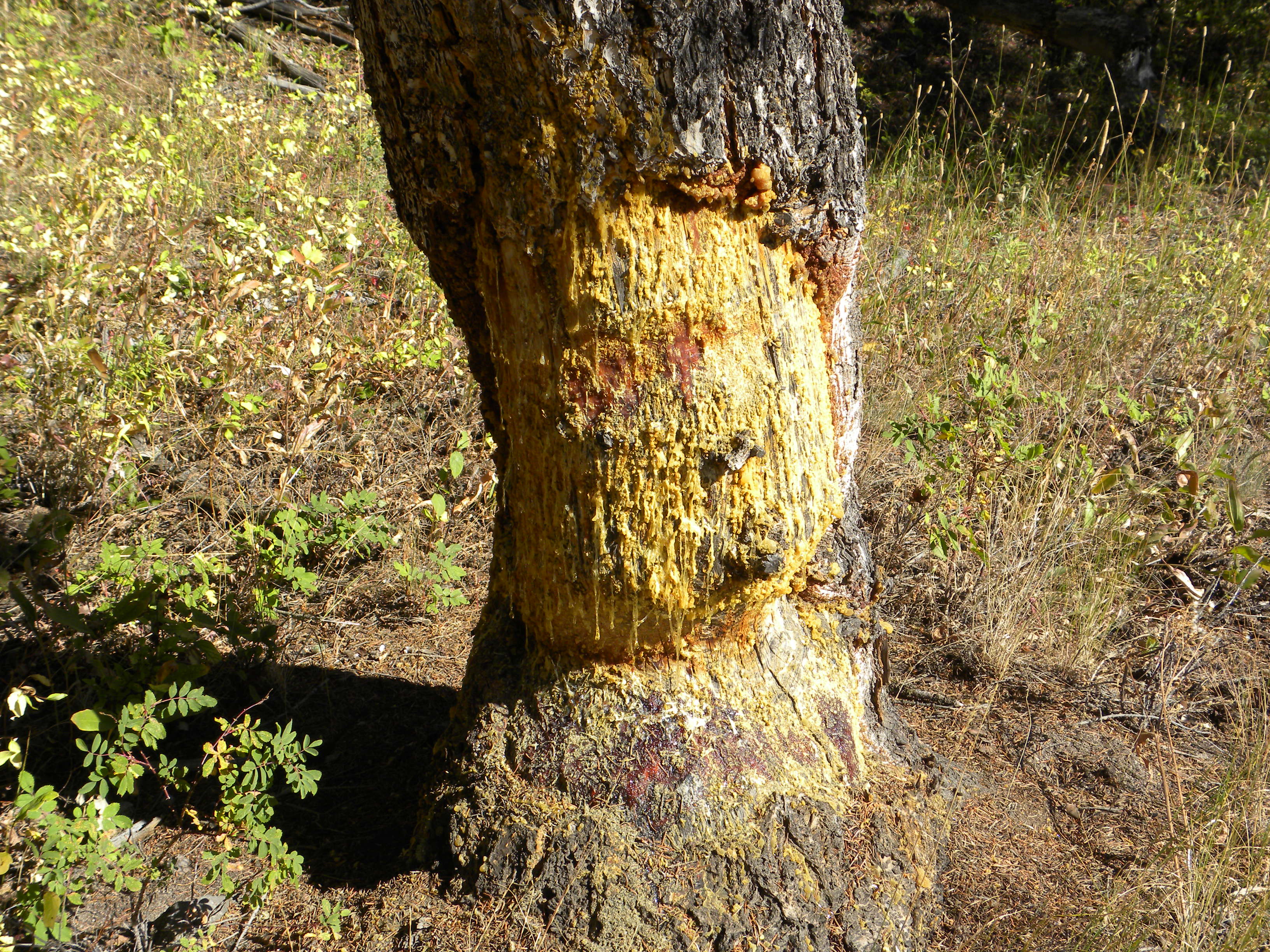
I was wandering in the upper meadows this morning, watching the Clark’s nutcrackers poke their beaks in the pine cones and extract the seeds, stashing them in the pouch in their throats.  Sometimes they’d try and clean the sap off by rubbing their long beaks against the bark. Since all the cones were way high,  I looked for dropped pine nuts on the ground, possibly ones the squirrels and birds had missed.  There were lots.  But every one I opened was no good, the nut had never matured.  I tried tree after tree with the same result and I marveled at how the animals knew to let these bad ones go.  I figured that if my life depended on these seeds, I’d definitely go hungry.

When I had a big garden, I used to fight the birds for the cherries on my tree.  I tried netting, decoys, shiny objects.  But crows and jays are smart and they’d wait till the cherries were just perfectly ripe, then beat me out there.  I’d have only the leftovers.  Pine nuts seemed the same.   I began to think about the Native Americans in the Basin & Range and California traveling far and wide for the Pinyon Pine nut.  Or the Native Californians and their acorn harvests.  There were ancient tricks to this that alluded me.

I knew that when I lived in California, I used to collect Redwood cones unopened, then let them ripen by a window and all the 100’s of tiny seeds would fall out.  Perhaps…

I wandered a bit farther up the denser parts of the hillside and noticed an old middens I was familiar with.  In one of the cavities beneath the trees there was stashed 3 douglas fir pine cones, fresh this year.  And that gave me an idea.  I went back and started hunting for a middens of Limber Pine cones.  Sure enough, I found a really large one with tons and tons of fresh cones, unopened and untouched.

Limber pine middens.  There's lots more than shown and much is buried

Limber pine middens. There's lots more than shown and much is buried

Some even had the pitch gone.  There were cones on top and cones underneath.  I tried a few nuts.  These were the good ones!  These were the ones for squirrel for the long winter ahead.

The cone collector's home

The cone collector's home looking down on us raiding his middens

Then I remembered the bear story.  Bears are smart.  They do sometimes climb the trees for their beloved nuts.  But its a whole lot easier to let squirrel do the work and just raid his larder, and that’s what they do.  Bear must have taught that to the People.  That was my lesson for today.

Look close, I took this bear scat apart & there's pine nut shells

Look close, I took this bear scat apart & there's pine nut shells inside

More Snow Fence talk

When you have a pacemaker, you’re not supposed to use a fence post pounder.  At least that’s what JB, my 85 year old neighbor tells me.

“The poundin’ could break one of the wires.  But I can drive it with my sledge hammer.”

Fence post pounder with sledge nearby.

I spent the day finishing my snow fence with JB.  He’s done just about everything in this country.  Fencing large tracts of ranchland is just one of his specialties.  Its not a long run–we just had 30′ left of fencing to do, but it took several hours.  JB would start the posts with his sledge, and if I didn’t stop him he’d drive them all the way in.  Otherwise, I’d finish up with the pounder.

The hill where it drifts onto my driveway

The hill where it drifts onto my driveway

“I can use one hand.”  he’d tell me as he pounded along with me with his right hand.  I could feel he’s way stronger than I am, even at 85.

After a few posts he’d say “Let’s stop and catch our breaths”.  So we’d sit down and he’d tell me stories or jokes.

“You ever seen a sidehill animal?”

“What’s that?”

“Its’ an animal that has legs shorter on one side than the other and goes up the mountains always in the same direction.”

I thought for a moment.  I’m pretty gullible but not that gullible!

“I was working on a dude ranch and told that to one of the guest kids.  He went and told his dad he’d seen one of those animals.  His dad didn’t say nothin’.”

JB showed me a way to stretch wire without a stretcher.  Of course, they’ve been making barbed wire fences before wire stretchers were invented.  He showed me with a crowbar, and with a hammer–two ways.

Double row.  Trial and error.  We'll see how it works this winter

Double row. Trial and error. We'll see how it works this winter

We took another rest.  “What I know could go in a little book.  What I don’t know could go in a big one!”  We talked about wild horses.  I told him that I thought the wild horses on the Pryors were ‘more wild’ than the ones at McCullough Peaks as they had Spanish blood in them.

“Nah.  When I was a kid, everyone here had horses–horsepower.  That was all we had.  You’d use them in the summer and turn them out in the winter.  They’d just run wild and come spring you’d round them up.  There was a lady who had lots of horses out there in the Pryors.  She paid me $10 for every one of her horses that I rounded up.  We’d bring them all in, then she’d look at them and figure which ones were hers.  The ones she didn’t keep we’d sell.”

“There was a fellow who was a horse rustler.  He’d come over the North Fork down Gravelbar.  That’s hard country and he’d drive those horses he stole over those mountains and bring them up north.  I think he finally got caught.  Horses just got left loose and turned wild.”

“Let’s go stretch another wire on that fence below as long as we’re here.  I want this to hold for you.  There’s a lot of weight in that snow.  And 100 mile an hour winds here are nothin’.”

We put a third wire on the fence we did the other day.  JB wrapped another wire around the stabilizer posts as well.  When we finished, we sat in the grass, the sun warming us with fall playing in the air.  JB’s new Walmart gloves, two for the price of one, made in China, were just no good.  After one day they were torn.  He told me he’d been to Peking after the war.

“After Iwo Jima and after they dropped the bomb, they sent me there. Only for a short time.”  He told me how he’d come back to Cody and there was another kid he’d known.  He saw him at a  local bar.  His leg had been blown off at the Battle of the Bulge.  They had a drink together.

“He died just a few years ago.  He was a good guy.  I helped him do a lot of fencing.”  Somehow he spoke about it like it was just yesterday.

Building a snow fence is fun, but its everything in between that really counts.

Another view.  The first fence is at least 50' from the driveway.

Another view. The first fence is at least 50' from the driveway.

Don’t recycle, Reuse!

I’ve been busy working on some winter preparations.  First I built a wood shed addition and I’m proud of it.  I had a little guidance but did all the work myself.  I spent a little time thinking about how not to dig post holes and came up with using a railroad timber.I started digging out the area to level it.  That was probably the most work of all.  When I got to the part where I had to put the railroad tie down, I decided why not just dig only as far as needed.The shed

All the materials came from stuff left at my cabin when I bought it except for the two pressure treated 4×4 posts.

I figure I can get an extra cord and a half packed in there.More shed

Next I worked on a snow fence.  There was some old fencing here when I bought the property.  At first I thought it was a visual barrier, hiding some junk behind it.  But then I was told it was snow fencing.  Last winter I had terrible drift near the road, so I brought it to the beginning of my driveway and placed it way high up.

Not knowing about snow fence placement, I had some help from my neighbor.

“Trial and error.”  he says.

My son and his friends had put in the posts (also used) and I ran the fence.  But when my neighbor came by, he said “You need some stringers in there and bracing at the ends.”  Before I knew it, he was over with his buddy and I had two 85-year-old men fixing fence for me.  I was learning from the experts, but you should have seen them work.  First they decided that the posts weren’t in a straight enough line.  So they got their handyman jack from the truck and within minutes had 3 posts pulled, realigned and then repounded in.

The awesome tool

The awesome tool- Handyman jack

Next they drove a post at a 45 degree angle, one at both ends, while I hustled up some old barbed wire that another neighbor was about to dump.  JB got out his hammer and twisted it around and around till it pulled real tight.  Then they set two stringers of barbed wire behind the snow fence, used my fence stretcher (I sure hope the guy who invented that tool is rich!), and tied the snow fence to the stringers with some of the rusty old wire.  I was amazed, and I got a real kick out of being helped out by these two old guys.

In fact, just a few weeks ago, I was trying to change a tire and couldn’t for the life of me get a few of the lug nuts off.  These wonderful old men came to my rescue and showed up the 20 year olds hanging around.  They’re stronger than most guys you’ll meet, good natured, and probably faster.

JB told me that same morning he’d taken an old  50 gallon drum he’d sawed in half, laid down an old hose around the sharp edge securing it with liquid nails, and placed it in his upper pasture for his horses.  Then he and his friend helped me with my snow fence, and afterwards they went fishing!

I keep thinking that JB ought to teach a class called ‘Don’t Recycle, Reuse.”  If he sees me throwing something away, he wants it.  My neighbor had some old twisted metal fence posts I was bringing to the dump.  “Don’t toss them” JB said. “I’ll straighten them out and use them.”

Luckily I had saved those rolls of my neighbors barbed wire cause we used some of it on the snow fence.  “Use the rest and put two wires as a top wire on your fence.  That way the elk can see it better.  They were throwing away some cable when the Power Company did work around here.  I took it and used it along with the top wire on my fence.  I had to stretch it with my ‘come along’.  The elk see it and know where to jump.  That way my fence never needs fixing.”

I do have to say he’s got the best fence in the valley.

When I was working on fixing my driveway JB told me that several years ago (like 18 now) they were paving the main road and had base rock left over.  He took that and paved his driveway.  “Just wait until they’re working on the Beartooths and get some of their leftovers.”

When I go over to his house, by the kitchen sink they have a bowl of all those little leftover pieces of soap.  You know, the parts when the soap gets too yucky and small and you throw it away.  Instead, they put them all in a bowl and use them.

My favorite of all his ‘reuseables’ is one of his hats.  “I’ve had this since 1940.” Its not a fancy thing.  Its synthetic, but where its all worn through, JB has put duct tape.  Now that’s creative reuse.