• MY BOOKS ON WILDLIFE, GARDENING AND MORE

  • The Wild Excellence

  • True stories of wildlife encounters around the Greater Yellowstone
  • Award winning eBook on Decomposed Granite, tips, how to's, what to watch for
  • Children's book. True stories of a dog and wolves. In a dog's voice
  • Written for dry Mediterranean climates in California, north and south

Yellowstone in winter

Planning a trip to Yellowstone?  I recommend the winter!

There are so many reasons to choose winter over summer, but I’ll just give you a few.

First, the lack of crowds.  Yellowstone might get 100,000 visitors a week in the summer, whereas they get that total for the whole winter.

Next, the wildlife.  The wolves are roaming and highly visible in winter.  In the summer they’re attending to their young and following elk to higher grounds.  If you go in February, the wolves are in heat and you might catch courting and mating behavior.  Even better, spring for the cash to stay at the Yellowstone Institute at the Buffalo Ranch in the Lamar Valley and take a wolf class.  You’ll get educated and see wolves.

Elk, Bison, Bald Eagles, Coyotes, Foxes…so much wildlife and it’s mighty quiet with just one road open for cars (the North Road).  All the other roads are groomed for cross-country skiing or snowshoeing, and there are snow coaches to take you to groomed trails.  Although you can travel by snowmobile with a guide, I don’t really recommend it.  It might be fun, but you can do that outside the Park.  Snowmobiling is about tunnel vision, noise and speed–all things that don’t go along with wildlife watching; all things that Yellowstone has to offer.

Thermal features in the winter are amazing.  The deep greens or turquoises shimmer against the whiteness of the snow.  Bison like to hang around the warm grounds.

Several years ago I took a GYC wolf watching tour at the Buffalo Ranch.  We’d get up around 7am every morning, step outside our cabins, set up scopes and watch the Druid Pack of 17 wolves while we sipped our morning coffee.  In the afternoons we hiked or skied.  I stayed a few extra days to ski other parts of the park.  It was some of the best money I ever spent.

Yellowstone in the winter is one of the best kept secrets.

Yellowstone Autumn

I decided to spend a few days in Yellowstone.  I like to bask in Boiling River but I especially wanted to hear the elk bugling.  The bulls are in rut and if you’ve never heard an elk bugle, you’re missing out.  Its the eeriest sound, the most beautiful sound, a sound that seems other worldly.

The Park, usually nice and quiet this time of year with all the crowds gone, was jammed pack. They’re having the busiest fall in 10 years.   I couldn’t get a campground anywhere, so I had to drive outside of Mammoth 20 miles down the road to a National Forest campground.  That was a real surprise.  And even that campground was just about full.  I think I found the very last site!

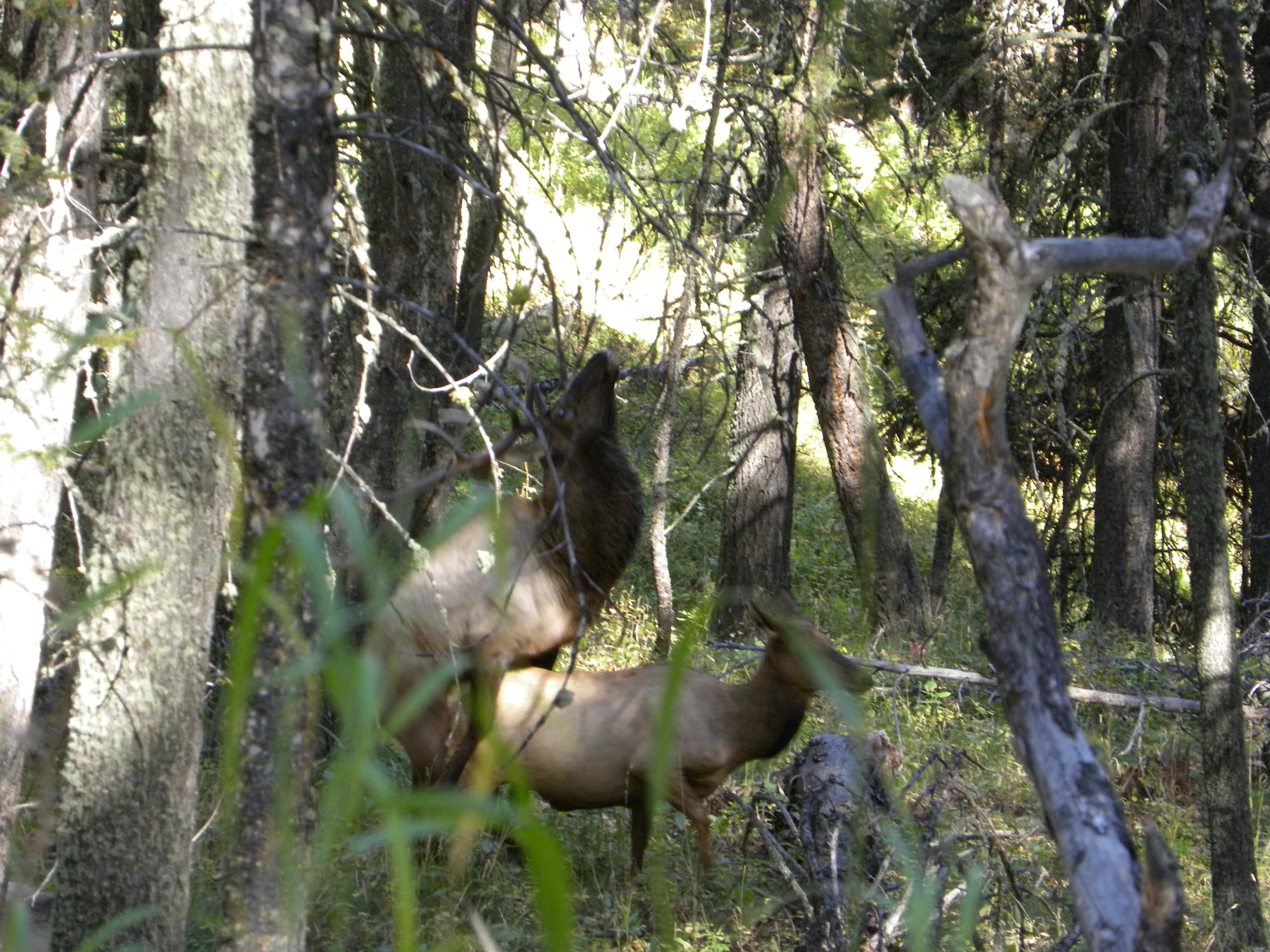
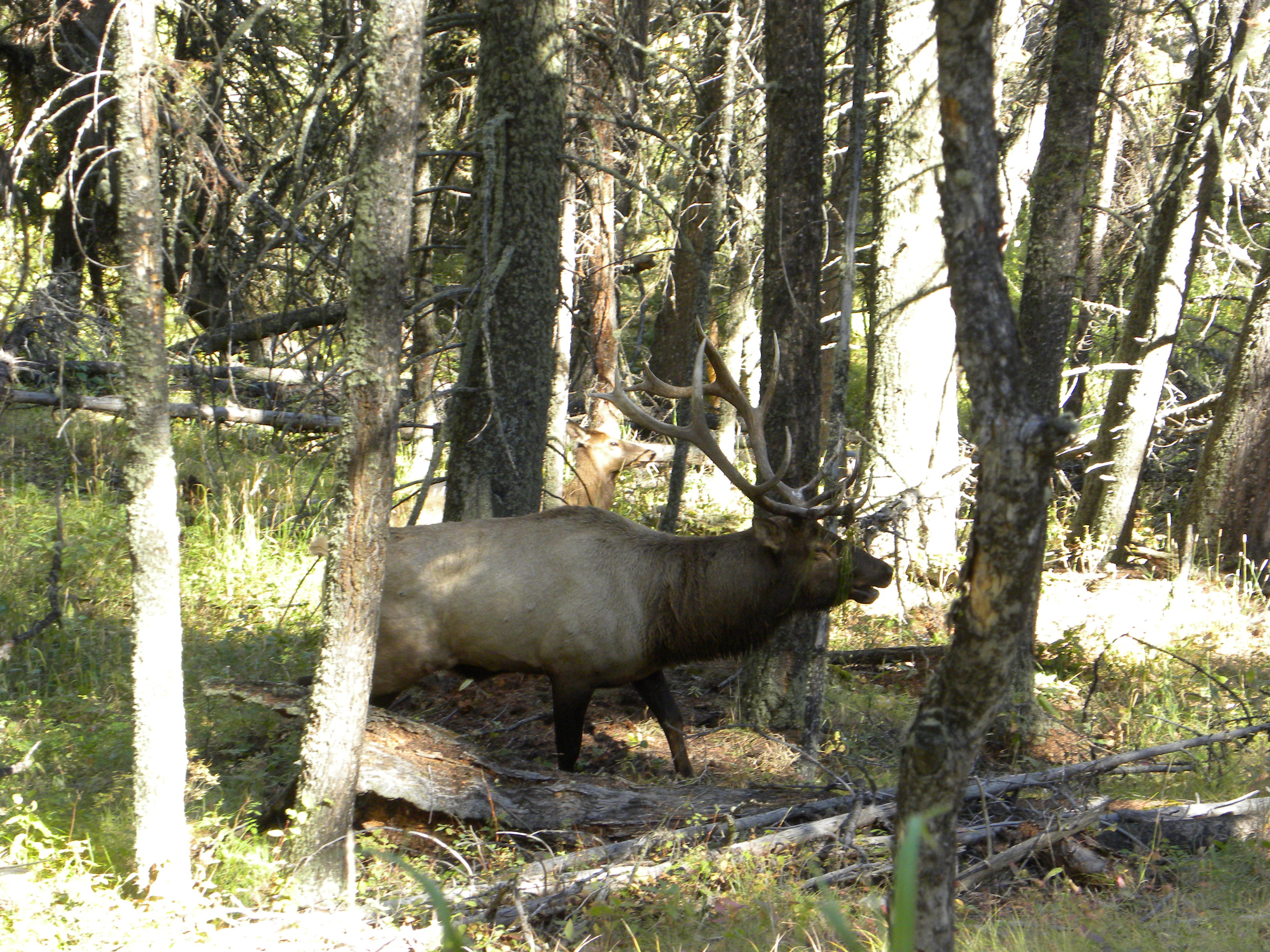
Waking up early, I soaked in the river, then headed up the trail to the Beaver ponds.  Its a fairly short loop of 5 miles.  Since I was early on the trail, I didn’t see anyone for the first hour.  The trail winds along the open hillside overlooking Gardiner, but soon dips into a conifer glade with seeps.  The day was already hot (as we’re having our summer now in fall), and as I moved into the cool shade I noticed about 20 elk, mostly cows and calves, lying around.  One bull was there.  This was his harem.  The cows were relaxed.  The calves were curious.  And the bull was keyed up.Elk mating

I lay down on the trail and watched for ten minutes.  As I continued on, I later heard that some hikers had come around the corner and gotten chased a bit by that bull.Bull Elk

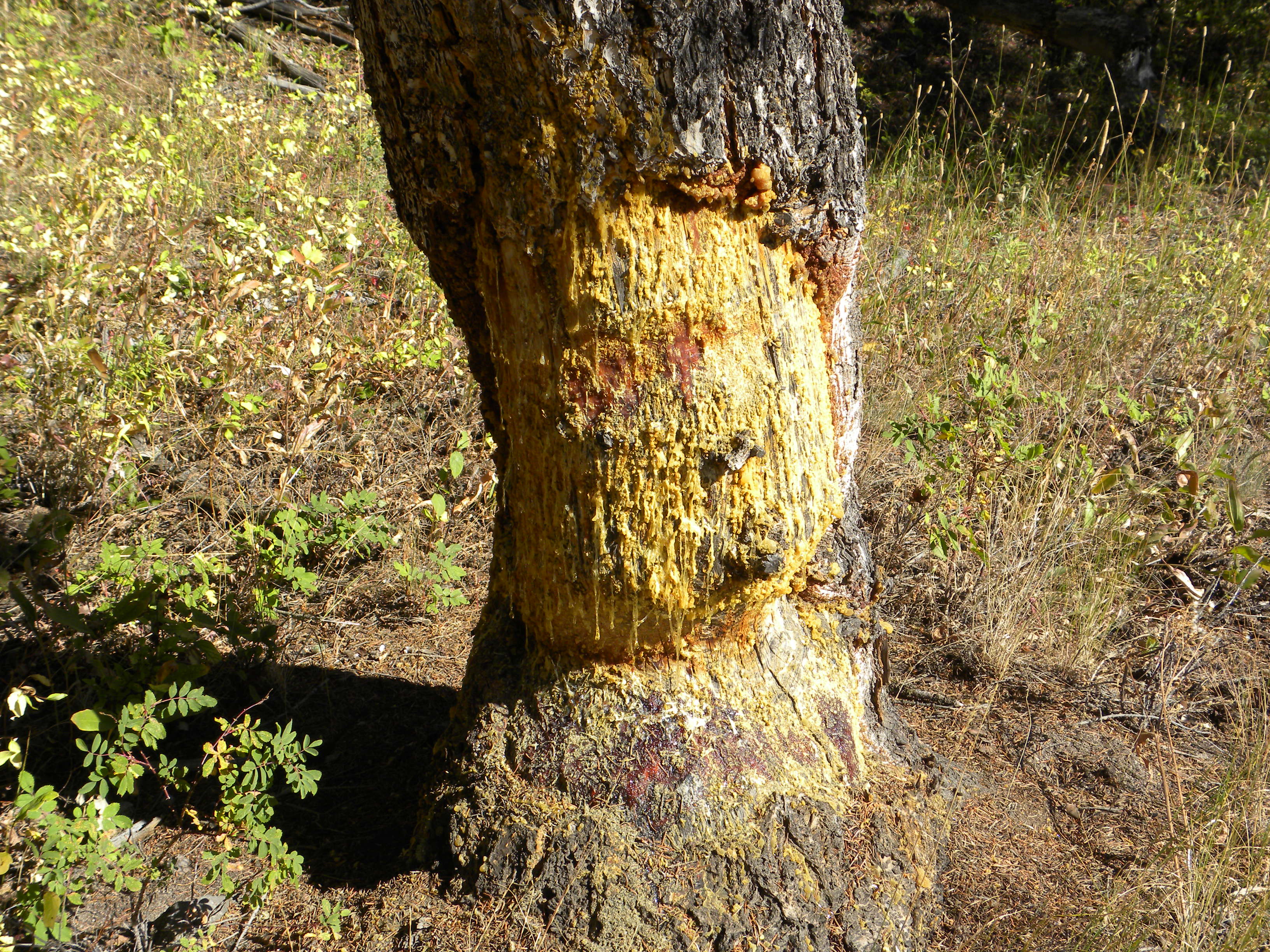
Although there were no beavers to be seen when I arrived at the ponds, their evidence was.Beaver evidence

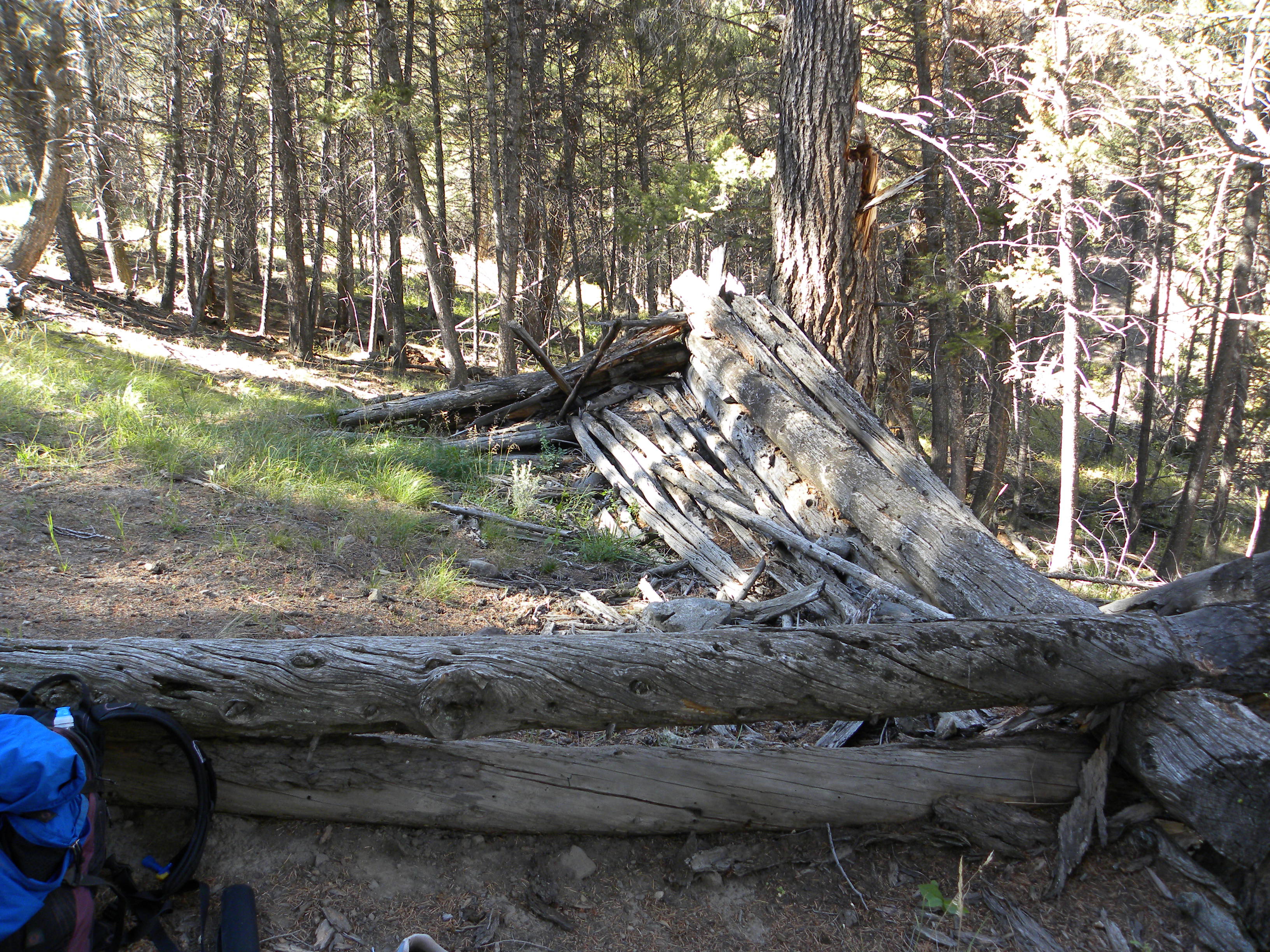
On the last leg of the trail, I noticed an old structure that looked like it had been a cabin.  I couldn’t find references to it in the guidebooks.  Wondering if anyone knows what it used to be?

Old Structure along Beaver Pond trail

Old Structure along Beaver Pond trail

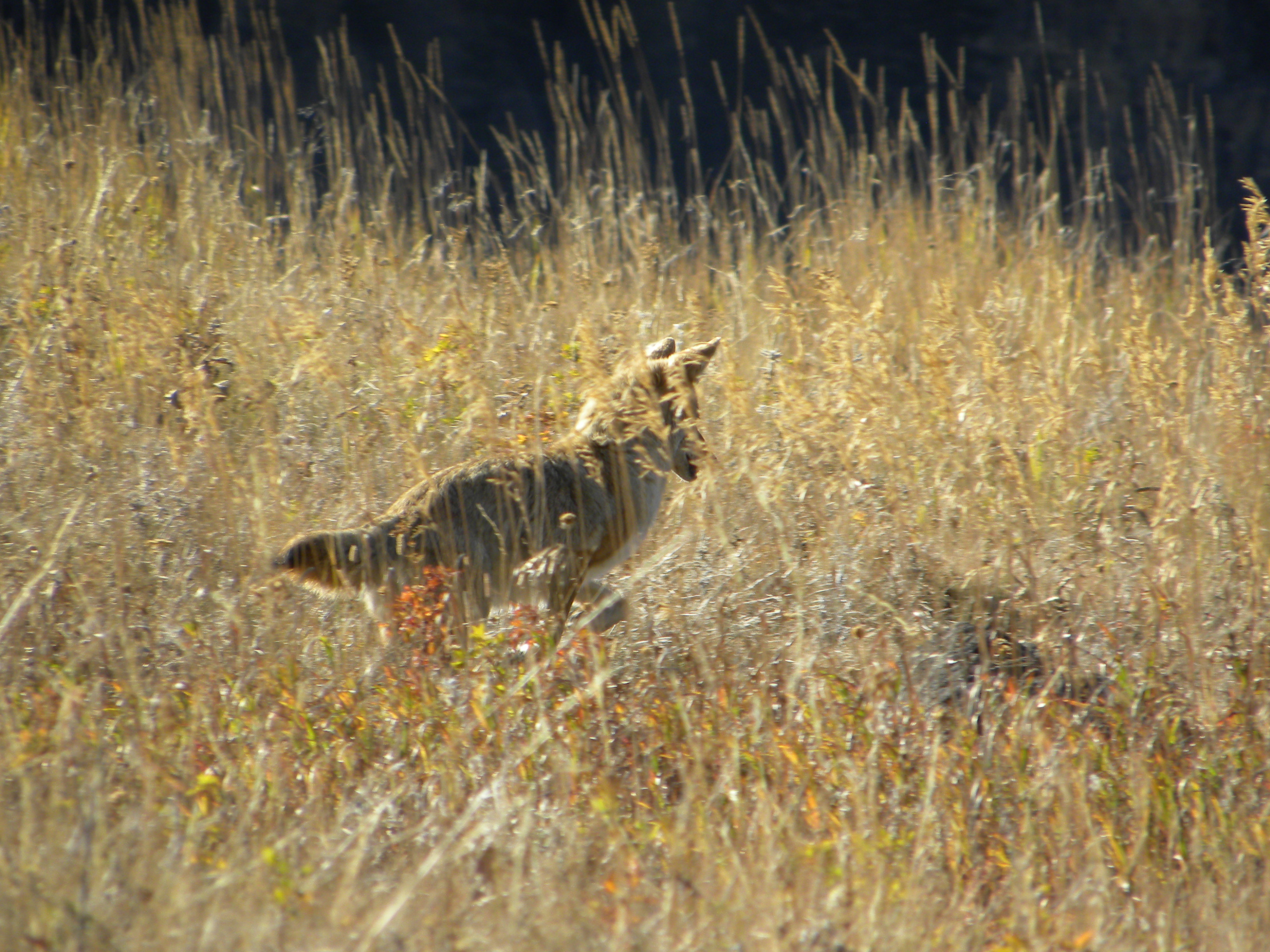
After a late lunch, I headed back towards the Lamar.  A coyote was catching grasshoppers.  He was terribly cute pouncing around.

Coyote catching grasshoppers

Coyote catching grasshoppers

And the light was perfect for this herd of Bison.

The light was perfect

The light was perfect

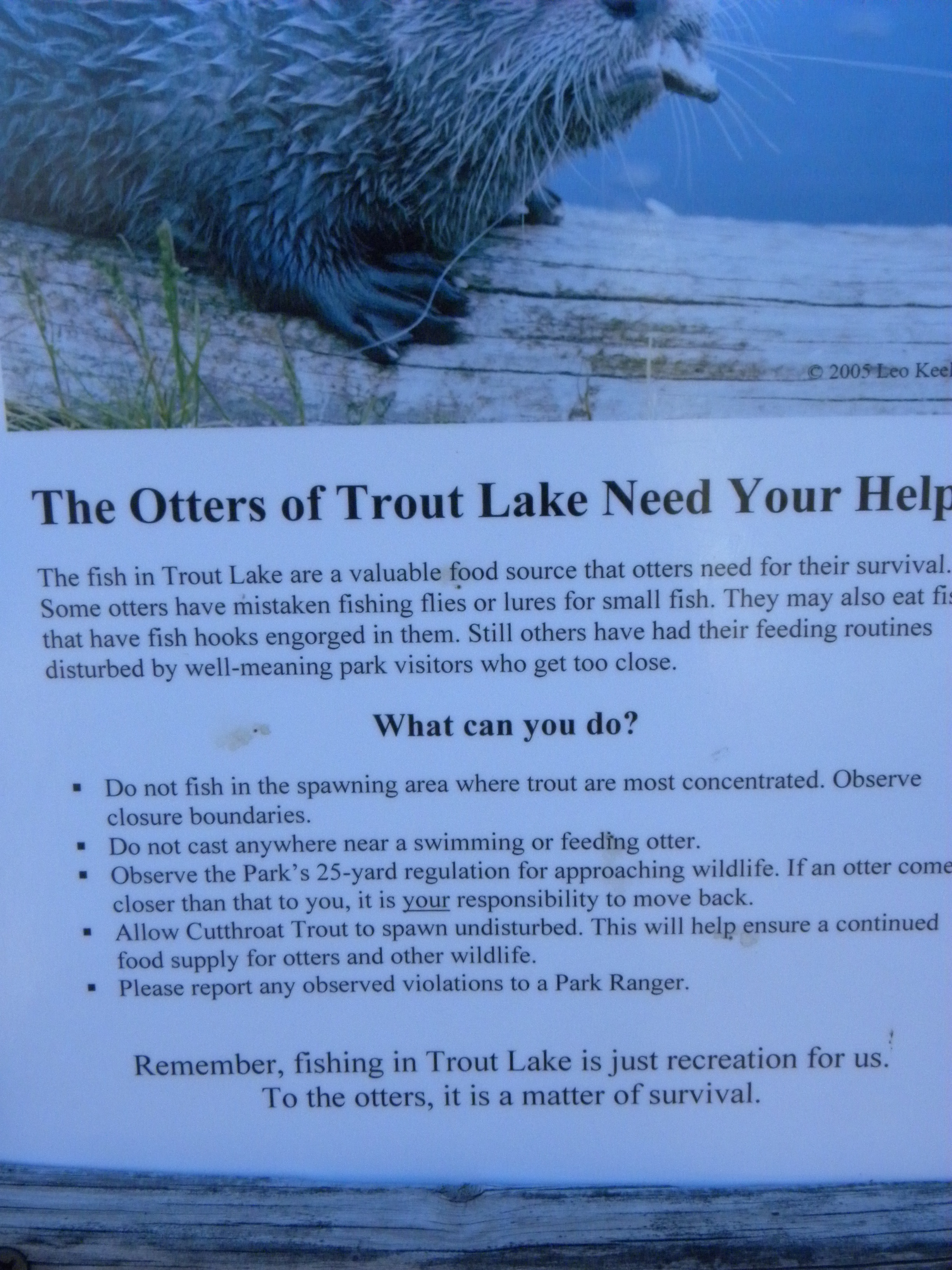
I stopped for a while and watched a second coyote, before heading up to Trout Lake.  I wondered if the otters were active.  Trout Lake is a very short hike/walk.  Otters are often seen playing there.  I didn’t see any otters today, but the lake was beautiful.  I spent time snapping some photos of the Lake, of a gigantic ladybug, and a dragonfly.

Trout Lake

Trout Lake

Ladybug

Dragonfly

Trout Lake signage

In order to get into the Park, you must rise in elevation.  That’s because of the bulge from the hot spot that Yellowstone sits upon.  I used to wonder why that special feeling seemed to almost begin and end at those entrances and exits, until it was explained to me.

I met a woman from California on the trail.  She comes to Yellowstone every fall for 3 weeks.  At the campground I met some people from Seattle who come every year at this time.  I met a man several years ago who comes every spring from Iowa.  Yellowstone is just like that.  It is a very powerful place.  A healing place.  Once it gets under your skin, you can’t help but dream the dream of returning again and again.

Tracking class

I just finished the most awesome week in a tracking class with world renown tracking expert, Jim Halfpenny.   Lucky for me the class took place at a dude ranch 5 minutes down the road and although many of the ranch’s clients participated, the final day, Friday, on gaits. was attended by only myself.  So, I had a private lesson.  And as it turns out, gaits have always been difficult for me to understand.  I’m that person when you say “Raise your left hand”, you have to tell me “No, the other left!”.  And that’s why four-legged animals, with double the rights and lefts, confuse me no end.  Jim is a fantastic teacher and was able to simplify the whole gait thing for me.

Monday was a general introduction day.  Tuesday we all headed for the Park, leaving here at 5:00 am sharp.  We spent about 3 hours in the Lamar looking for wolves.  We did finally find one lazing around in the grass.  While everyone was waiting for that wolf to wake up, I spent some time checking the ridgelines and found 30 Bighorn sheep.  Then it was off to Canyon for a look at their new visitors’ center which opened this year.  I hadn’t seen it and I must say it was very impressive.  The displays were all centered around the volcanic activity in the Park.

After watching some coyotes catch grasshoppers and a lunch byt the river, Jim took us to a bear cave.  We hiked in about 1/2 mile.  This cave has been used on and off by bears for many years.  It looked tiny from the opening, but once you crawled inside, all 14 of us fit quite easily and we could even stand up.  It wasn’t smelly at all.  Quite comfortable I must say.

In the bear cave.  We all fit.

In the bear cave. We all fit.

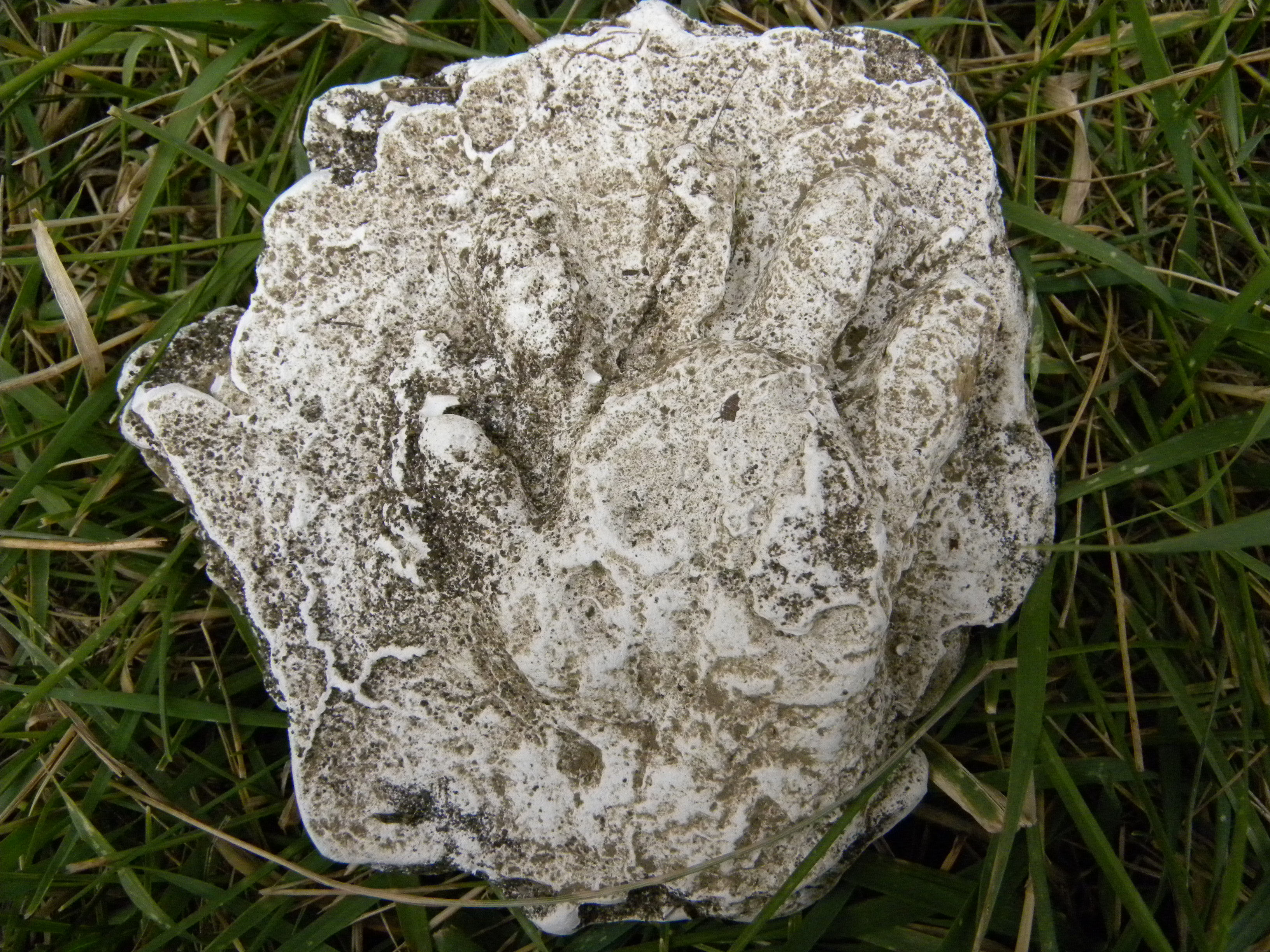
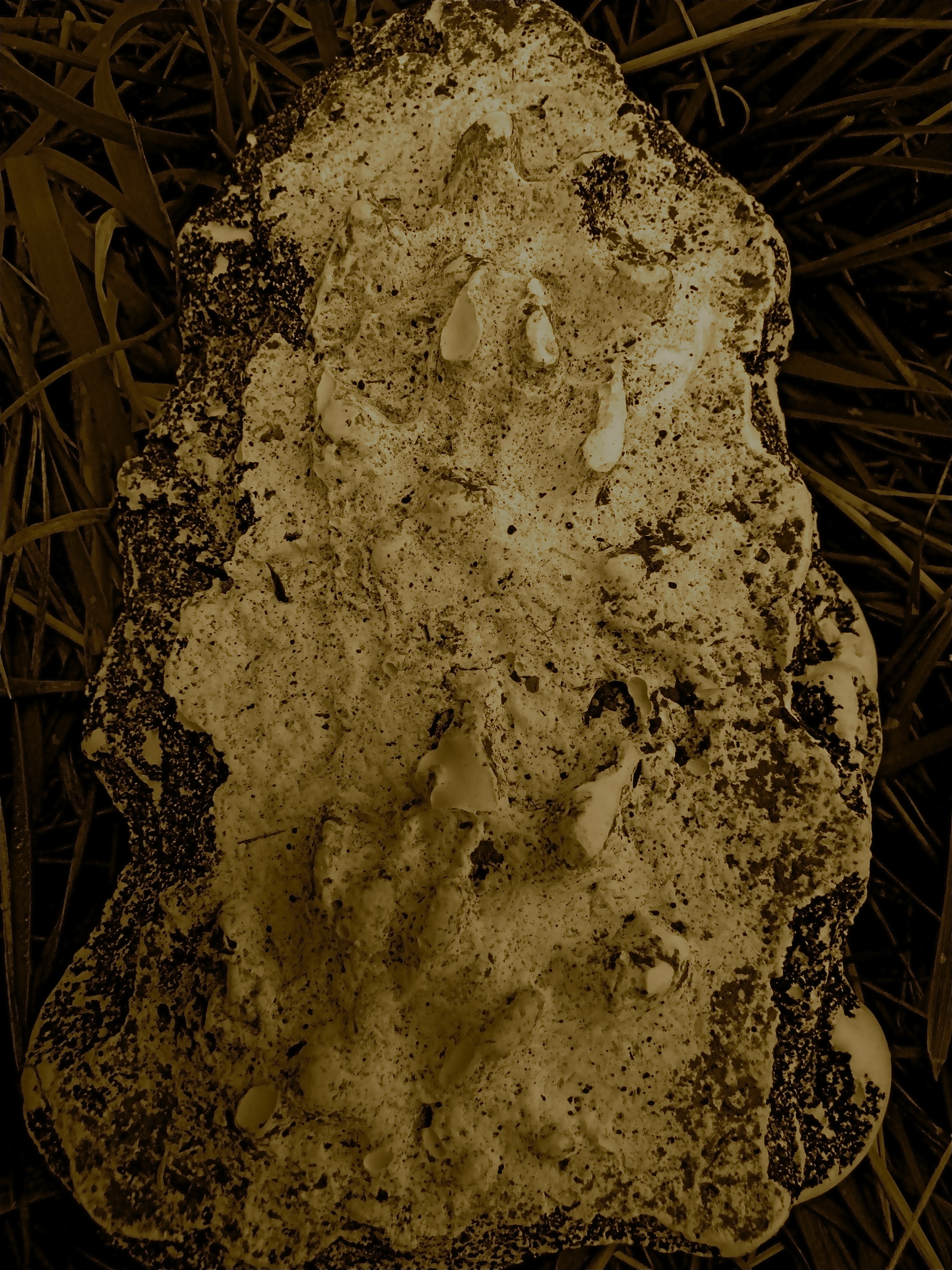
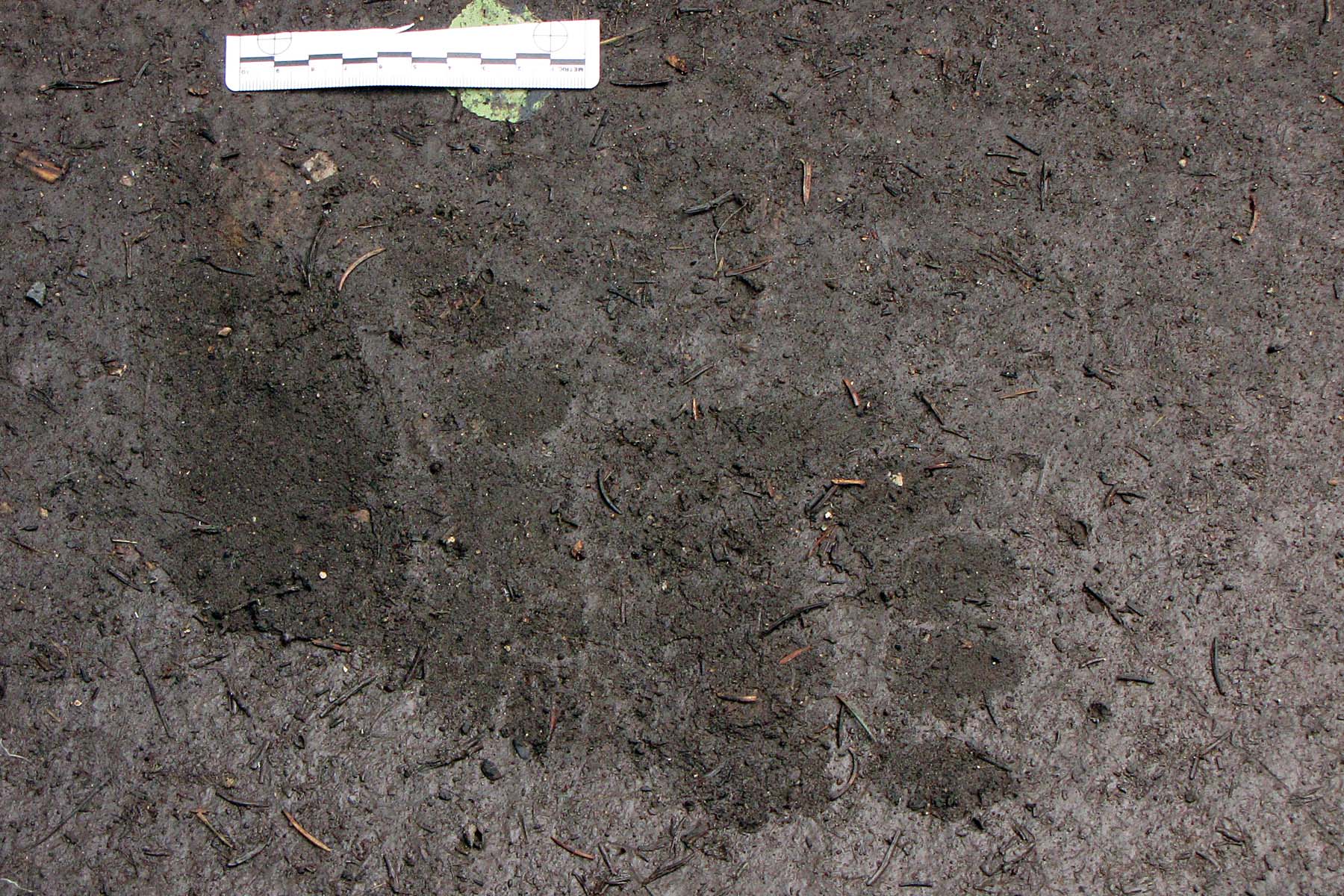
Thursday was devoted to time in the field finding tracks and casting them.  I was so excited because I’ve been wanting to learn to cast but wasn’t sure about proper technique.  We casted several different Grizzlies tracks, as well as raccoon, mink, and wolf.

Raccoon

Raccoon

Raccoon

Raccoon

Hard to see but these are mink prints!

Hard to see but these are mink prints!

A Grizzly track found by the river

A Grizzly track found by the river

Here I am on Friday with my ‘graduation’ exercise.

I'm happy because I passed my final test and the hardest for me: gait I.D.

I'm happy because I passed my final test and the hardest for me: gait I.D.

Jim found a series of large dog tracks and I had to interpret what the dog was doing as well as  each foot.  I PASSED!   We also found more grizzly, moose, tons of deer, horse, and cattle (ugh!).  Now all I have to do is practice, practice, practice.

Coyote the trickster and the real world

Coyote, the trickster.

I am staying in the Bay Area this week, seeing friends, contacting clients. Last January I was here for a month working on a job, staying at Muir Beach, when I had the most unusual coyote experience.

Our house was directly above the beach, with a private walkway down to the Muir Beach parking area. On evening around 5pm, as dusk was settling in, Koda and I walked down the access steps to the beach. On one side of us was a house, on the other side of the walkway was brush and an open lot. Suddenly Koda perked up and started to bolt. I called him and saw a huge German Shephard-looking coyote, probably a coydog.  He’d been watching us.  Being curious why he was so close to these homes, I followed him through the brush.  Right next to the compost bin was a fresh deer kill.  The deer was completely intact except for its hind quarters, which were exposed and Coyote had eaten the entrails out.

The next morning, around 8am, I passed the area on the way to the beach and looked through the brush.  Within those 14 hours, that deer was not only entirely consumed, but the vultures had picked it clean to just bones.  Nothing remained!

That was my last trip.  Yesterday I met a friend for lunch in a busy North Bay town called San Rafael.  After lunch we decided to take a walk, so we drove to a quiet spot I know.  At the end of a road there’s an old cemetery.  We strolled around the manicured grounds when I noticed a coyote luxuriating in the wet, green grass.  Coyote lounged, scratched, bit his fleas, rolled around, and paid us little mind.   We circled around him, passing closer on the way back.  He stood up in a leisurely fashion, eyed us (like ‘oh you humans are disturbing my sleep’), scratched, and walked slowly around a Chinese Elm.  There must have been a nest in that tree, because birds kept dive-bombing him.  Coyote jumped in surprise as if these birds were biting flies.  It was the funniest thing.

Coyote lounging in cemetery

Coyote lounging in cemetery

Coyote the Trickster

Coyote the Trickster

My friend and I parted.  I went to get a haircut.  At the hairdresser’s the woman next to me was talking about teaching a third grade class when suddenly all the children ran to the window to see a coyote walking by.  “I’ve never seen a coyote.  Ever.” she said.

Each time, coyote was at the edge of our busy hustle and bustle.

Hustle and bustle at a farmer's market in Marin County, CA

Hustle and bustle at a farmer's market in Marin County, CA

Like a thin veil separating these two worlds, one dreamlike, the other hard edged and fast paced, coyote stood at the threshold, luring us, enticing us.  The contrast of the calm of the cemetery, isolated on the outskirts of town; the interface between open space and homes, reminded me of where I had just come from in Wyoming.  I too had come from the dreamtime of Sunlight Basin and Yellowstone, where the real world has been marginalized to a protected park.  Here in the city, people say to me:  ‘Welcome back to the real world”.  What is the real ‘real’ anyways?

Some Scat

I thought I’d post a scat entry with photos.  Some I’m sure of, many I’m not.  Not all have size references.  Sorry about that.  I’m now starting to carry around a penny which I’ll put with future photos.  A penny is exactly 3/4″ in diameter.

Breaking up scat helps in identification and is a window into what the animal was eating.  Smelling scat (do not smell raccoon scat as they can carry a parasite that is fatal to humans) also holds clues.

Animals communicate vast amounts of information through markings and scat.  Many times I’ve watched Koda intently smell an area, then urinate on it.

Koda with his nose in a squirrel hole

Koda with his nose in a squirrel hole

One time he was smelling a log that had no obvious scat on it.  Because he is still a pup, he started licking the log to ‘uptake’ the smell better.  I got down and smelled the log and was overpowered by a extremely pungent smell.  Other times he spends a lot of time smelling an area and when I put my nose to the ground, I can’t discern anything.

One time in California I was at the tracking club meeting.  We were circling a large field and found mountain lion scat.  The group leader advised everyone to get down and sniff it.  One whiff of that scat and you’ll never forget it.  It made the hairs inside my nose stand on end for a long time.  Imagine your kitty litter box, then multiply that smell 10-fold.

Last year in the spring I had both my dogs with me in Wyoming.  My old dog started making a beeline for the woods.  I followed her to a fairly fresh turkey kill, probably from a coyote.  The kill was in the nearby vicinity of the cabin and the magpies were already on it.  The 2 dogs spent lots of time chewing and further demolishing it. Early the next morning, on the walkway in front of my house, a coyote left his fresh scat.  My old dog smelled it, but before I could hardly look at it, the 6 month old dog gobbled it up.  Koda was still learning about smells and scats, and eating it is another way to really remember it.  (I, personally, will not go that far!)  I had the distinct impression this particular scat was left for my dogs as a calling card, as if to say, ‘this is my territory and that was my turkey you fooled with.’

I’m a crazy beginner at this.  I find it’s a fun way to explore what’s happening around me. Learning scat takes practice and lots of direct experience.  I take photos, then go home and look at Mammal Tracks & Signs by Mark Elbroch.  Elbroch’s book contains tons of color photos throughout.  He includes photos of tracks, scat, as well as sign.  The book is thick at over 750 pages. Too bad he doesn’t include ‘scratch and sniff’.

Unknown scat

This one's unknown, found in the woods nearby

Marmot in hole with scat above

See Marmot scat at top of photo. Marmot's in his hole.

pack rat scat

Years of pack rat scat.

Canid scat

Could be coyote or wolf. 25% of wolf scat is coyote size.

Bobcat I think.  Smells like it.

Smelled like a cat. Bobcat I think. Cat's digest 90% of the bones.

Owl droppings

Owl on tree. Notice the white droppings.

Bear sweet smelling scat in the spring

Big pile of bear scat. All forbs/grasses. They clean themselves in the spring with grass.

Mustelid I think.  Smelly and strong.

Some kind of mustelid I think. It was skunky smelling.

Another mustelid, I think.  On the same trail as the other scat.

Another mustelid, I think. On the same trail as the other scat.

Coyotes and Communists

Oregon Basin is sagebrush desert surrounded by sandstone formations outside of Cody.  It’s desert hiking with so many things to explore.  I’ve only been there a few times.  Its a maze of BLM dirt roads, mostly used for oil and gas explorations.  One of the oldest oil fields in Wyoming, coal was also mined here from the late 1890’s to the 1940’s.   Old mines and buildings can still be found. But long before all of this, Native Americans camped and hunted in the basin.

On one of my few explorations here last year, a friend took me to a petroglyph site.  We drove through barbed wire gates, mile upon mile of windy dirt roads, past working derricks, until we parked alongside an abandoned coal mine.  We walked around a sandstone ridge to a small box canyon.  Protected from wind, it was the perfect campsite.  That’s where the petroglyphs were, along with a giant rattlesnake.  Sadly, many of the glyphs were defaced and beer bottles and trash was strewn around.Oregon Basin, Cody
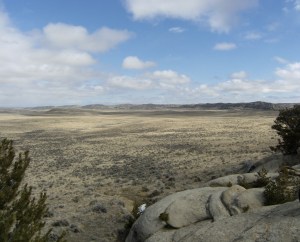
I really like exploring the desert and its formations.  W__  spent 20 years hiking the basin and surrounding badlands.  Today we turned off onto a dirt road from the Meeteetse Hwy.  Someone had been killing coyotes and dumping them there.  Two fresh kills  attracted several Golden Eagles that flew off as we drove bye.  More old coyote carcasses were strewn along the way.  Coyotes rank as predator status.  That’s the status that Wyoming wants for wolves, which means it’s legal anytime to shoot the animal on sight.

I asked W__ why someone would be shooting coyotes around the basin.  There’s no sheep here anymore, just cattle at certain times of the year.

“Because its something to do”, he answered.  “Someone is baiting around here, so watch your dog.  There’s traps.  Do you know what a coyote trap looks like.”

I told him I didn’t.  W__said that by law a trapper is supposed to hang a sign, like a rabbit’s foot, by the trap.  We hiked over the hill and alongside a sandstone ledge.  Almost immediately he said “Here, I’ll show you what to look for” and took me over to a small overhanging rock with a 2×4 piece of wood half buried.  Attached to the wood were two wires.  “This is what they wire their traps to.  I stepped in one once.  They didn’t sign it, and it was half buried in snow.  Luckily, it didn’t get much of my foot and I could wiggle out.”  I tore the wires away from the wood and tossed them.

We talked for a while about random coyote killing with no reason.  W__is my philosopher and preacher friend.  “Always gotta have something to blame your troubles on.  Used to be the ‘communists’.  When I first came to Wyoming, everything you didn’t like got blamed on the communists.  When that went away, it became the coyotes.  With the sheep industry mostly gone, now its the wolves.”

I told him a story about my old neighbor, JB.  Only a few days ago we were talking about something contentious, maybe the economy, when suddenly he said “Its the communists.  They’re the ones doing all this.”  I was certainly puzzled.  Then he looked me dead in the eye and asked “You’re not a communist, are you?”  I had to laugh.  I’ve been accused of a lot of things, but that was so ’50’s!

We walked around ledges, exploring all the niches.  Koda kept busy looking for jackrabbits.  Rabbit scat seemed to cover every inch of the desert.

“I’ve found a few arrowheads in the Basin.  Once I found a scraper.  Never found that much though.”  We came across a ‘boneyard’, an area with a large scattering of small bones from jackrabbits, gophers, and mice.  W___ pointed out a ledge that contained a small cave that looked like a coyote had set up camp there in the past.  I found a perfect gopher skull inside.Sandstone formations

With the desert sun warming and the ground was free of snow, we choose a windless large smooth boulder for a lunch spot.  I passed some time picking sticky bentonite clay from my boot soles.   In the distance, a herd of pronghorn lazed and ate.   I’d just watched an episode last week of Wyoming’s Congresswoman, Cynthia Lummis, tell Stephen Colbert that the Pronghorn is the world’s fastest animal.  Colbert made a big deal out of correcting her, saying that the Cheetah is the fastest.  But in a sense they were both right.  Those Pronghorn can sprint as fast as 60 mph and sustain a speed of 30 mph for miles.  Cheetahs sprint faster but flag out after a few hundred yards.

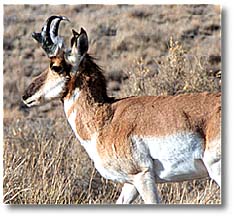
When I first got here, people told me Pronghorn were related to goats.  They’re not.  In fact, they’re not antelope either. They’re completely their own thing.  Antilocapra americana are the sole surviving member of a family dating back 20 million years, which means they’re an ancient animal.  They don’t quite fit into any category.  They have horns that are somewhere between antlers and horns,  that shed and are branched; they lack dew claws, and  can pick up movement 4 miles away. They are super fast and love a good race.  There are many stories of them racing cars at 60 mph and beating them.    At one time they were probably as numerous as the bison, and were slaughtered at the same time.  Today most Pronghorn live in Wyoming and Montana, and probably total around one million.  Male Pronghorn
We  headed back towards the car and I picked up a small old pronghorn horn.  I dropped W__off and did some shopping in Cody.  In the health food store, I noticed at the counter there was notice urging me to call my congressperson about a bill to make organic farming illegal.  The sheet said that Monsanto, the GMO giant, was behind the bill.  I talked with the store owner about it.

“Its’ outrageous.”  he said.  I agreed.  Monsanto are corporate crooks, I added.

“You know who it is, don’t you.”  He looked at me perfectly seriously and said, ” It’s the communists.”

And even I started to think, “Maybe its the communists who were killing those coyotes.”

The bighorn sheep of Little Bald Ridge

The ranch manager told me yesterday that the three wolves who were shot last summer for cattle predation were terribly mangy.  Mange is the latest big problem with wolves in the GYC.  Mange is a mite that burrows into the skin of an animal, causing it to scratch.  It doesn’t kill the wolf, but in a harsh winter they can die with the thin coat.  I heard that mange was brought into this country early last century to kill coyotes but I haven’t been able to verify that.  One of the interns told me he thought that if a wolf can make it through one winter with the mite, he’ll do o.k. after that.  Maybe some kind of resistant or tolerance occurs.

Last summer I did have a fairly close encounter with a wolf.  That black wolf was beautiful and fluffy; no mange there.  I was walking through a lightly wooded area off-trail when my dog stopped about 8 feet in front of me and stared at something in a shallow gully off to my left.  The whole scene took place so fast I barely had time to register what was happening.  I looked to my left and saw a smallish black animal, about the size of my dog but fluffier, about 12 feet away.  I thought it was a small black bear.  By the time I realized it was a wolf (about a millisecond later!),  my dog was gone.  Usually I carry an electric zapper on my dog for just these occasions, but the zapper was still in California from my move.

I think my incessant screaming, and the fact that that wolf was a lone yearling, scared that wolf so much that she ran off, but not before she had thrown up the contents of her stomach which I found later after my dog returned and I had calmed down.  After what seemed like an eternity, Koda came prancing back, with a shit-eating grin on his face.  In the span of those few seconds, I had both surrendered to the idea that my dog might never come back, and if he did come back, decided he was going back to the trainer’s for some additional dog-to-dog training.

Wolves kill other canines in their territory.  Doesn’t matter if its a coyote, another wolf, or a dog.  They don’t eat it, just really tear it to pieces.  Being a dog owner in wolf country means you have to be responsible and watchful.  The ranch hands at a large ranch across the river told me that the winter is really the time they need to be careful.  Although they have wolf activity there year round from the Beartooth Pack, their property is full of elk in the winter and the wolves come down more and the nights are long.  Many of the wealthy ranches here have heated kennels for their dogs.  She told me a story that last winter the dogs were out of the kennel on a cold winter day.  Luckily she was working nearby because she looked over and there was a small pack surrounding their three dogs.  She ran over, made a big ruckus, and scared the wolves away.

Another local told me he was hiking with his five year old Black Lab.  The Lab ran over and behind a large bush where he was attacked by two wolves.  Luckily, the dog lived.  But the next year they were hiking off-trail and the lab started whining and came close to this man’s leg.  In the woods about 50 feet away, several wolves ran through.  Guess that dog learned a lesson.

Yesterday I planned to hike up Little Bald Ridge where there’s always sheep.  As I drove down the dirt road, I could see tracks of two large wolves that had run down the road early morning. Climbing up Little Bald Ridge They always like to use the thoroughfare of that spot in the valley to go between two ridges.  As I drove bye, I noticed one of the cows just had a new calf.
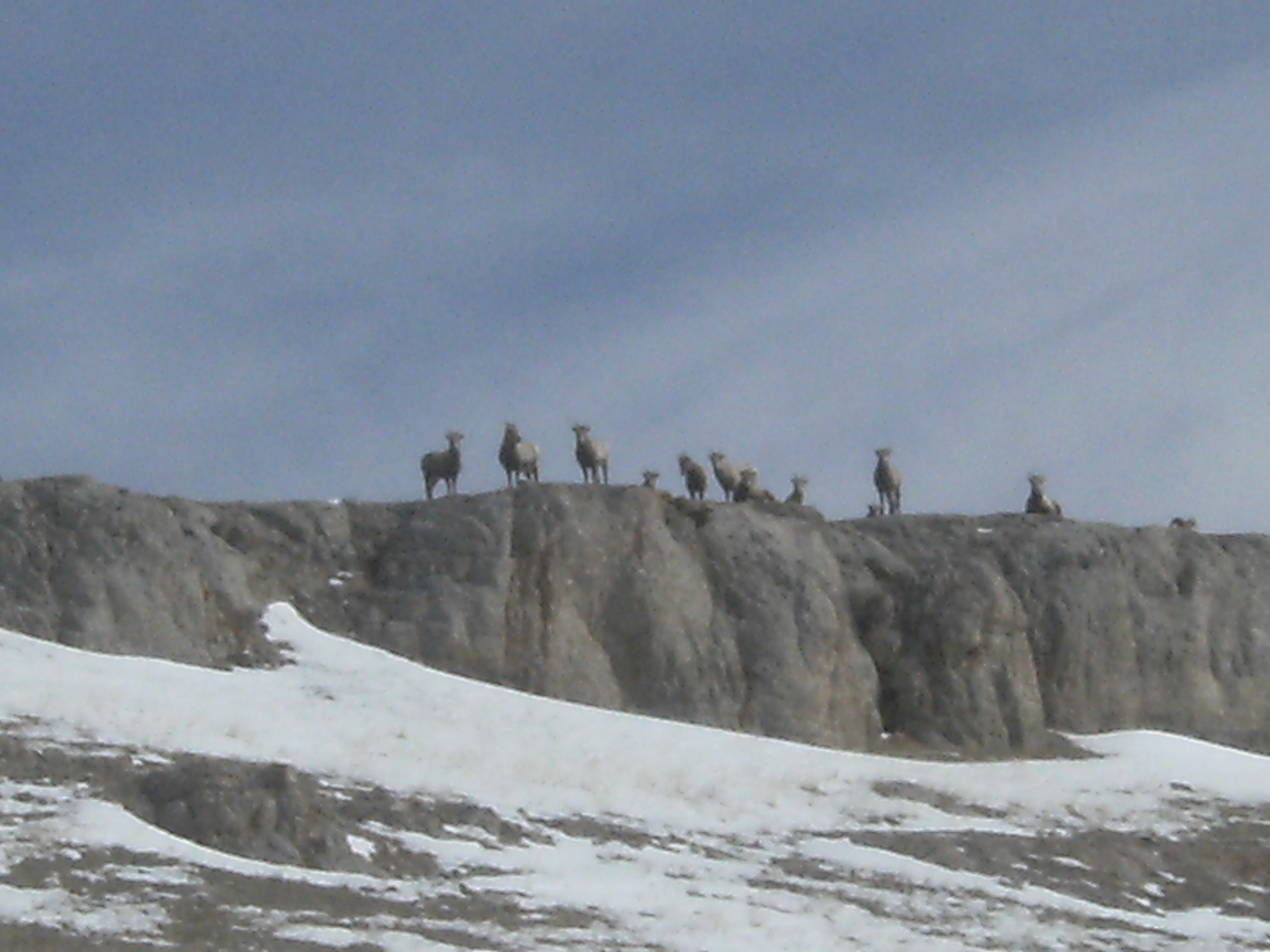
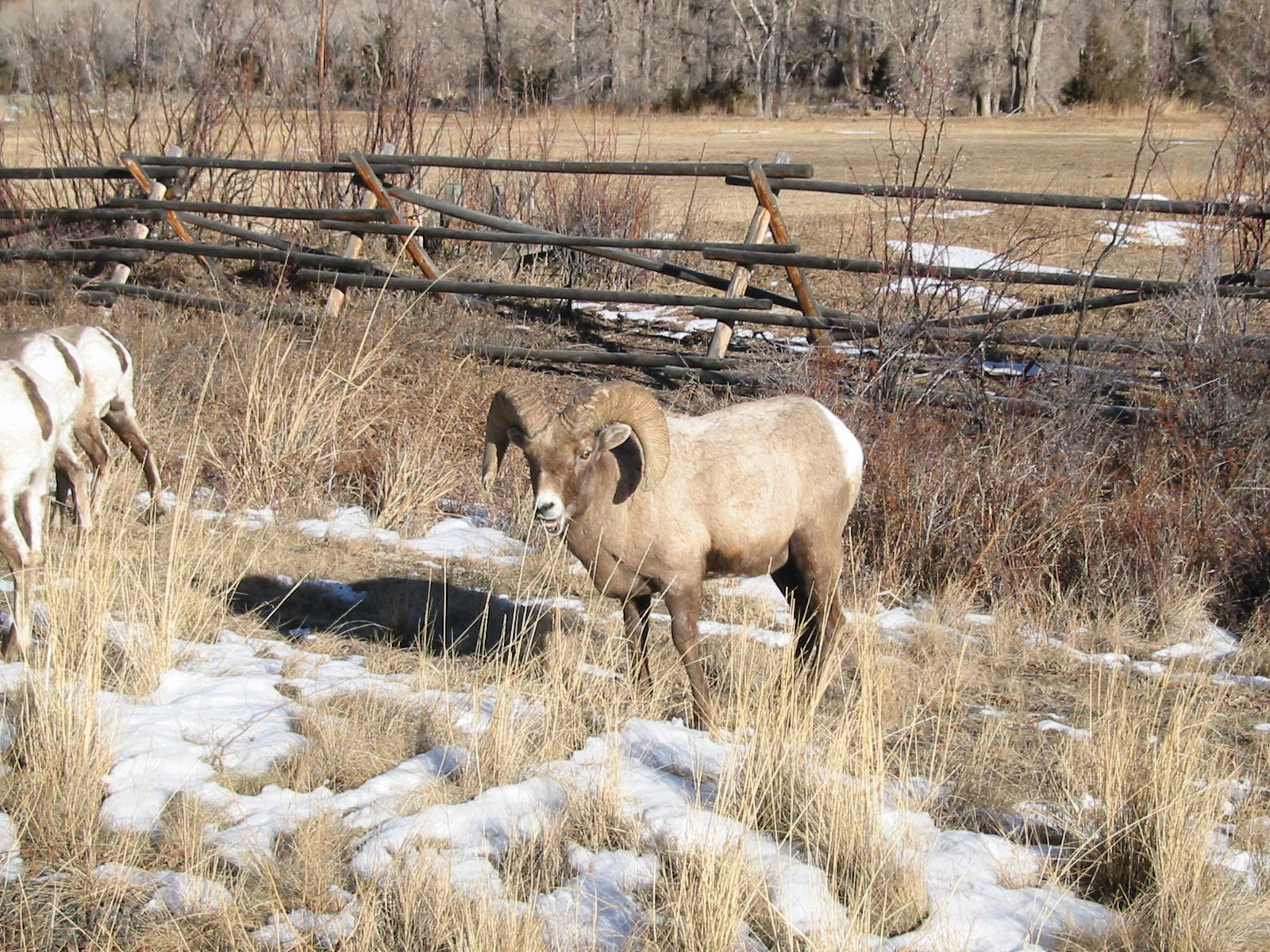
Bighorn Sheep are always up on that ridge.  I tried hiking up there earlier, but the wind and snow got to me.  Today was warm and windless though and some of the drifts would have melted.  As I hiked up to the buttes, I stopped 2/3 up in a small high meadow that looks out over the entire valley below.  No wind, the silence was incredible.  A herd of elk came through the trees farther up and stopped to watch me.  They’re always skittish.  They decided I was something to be afraid of and ran up the mountain and out of sight.

The hike isn’t Annapurna, but its a wind stopper for sure.  Its up, up and up and I hoped that when I got to the top the sheep would be in sight.  As I rounded the bend, there they were.  I kept counting, and then kept counting some more.  There were about 2 dozen sheep.  Mostly young and ewes, but I saw one nice ram.  The ewes kept watch while the ram lazed away–typical!  Bighorn are really ‘cute’.  Every time I go up there, they’re so curious.  Unlike the elk who always just run, the sheep stare and stare the closer you get.  If I didn’t have the dog, I suppose I could almost have walked up to them.

Bighorns depend on their elders to find their wintering grounds.  This small herd is right near the stone sheeptrap that I wrote about the other day.  Of course, to be called Sheepeaters, there had to be so many more sheep around here.  My understanding was that this country was thick with sheep, not just 2 dozen.  The interesting thing is that if you look around, there are plenty of exactly similar buttes right nearby where those sheep could have been.  But every year during the winter, this is the butte they go to.  You can count 100% on finding them there.  To me, this means they have an ancient honing device in them.  They must automatically go to the same forage that their ancestors went to.

I had been wondering for some time what happened to all those sheep.   After some research, I found Bighorns had no immunity to the diseases domesticated sheep carry.  Domesticated sheep grazing on open pastures and private lands were and still are, wiping out the Bighorn population.  And to the Bighorns, domesticated sheep just look like sheep; and being so friendly, Bighorns like to mix it up, unlike wolves.

The Bighorns on Little Bald had several yearlings, but I only saw one baby, at least so far.  After a while they got used to me and Koda, and went back to their business of eating.  The ram finally got curious enough to stand up for me to view him.  The baby ran with his mother.  The yearlings stayed in a small group with some ‘nurse ewes’ who watched over them, nuzzling occassionally.  I would have stayed for hours and watched them, but it was getting pretty cold and windy up there on the ridge.

Where the Buffalo Once Roamed

I took the research students over to the dead coyote today.  The guys have quite a bit of experience, between their schooling, hunting and trapping, I thought they might know what had killed it.  They had no qualms about touching it (which I had as I am always wondering about diseases I might catch).  Since they touched it, turned it over, felt its coat–I did the same.  They also thought it looked really healthy, and said its coat was perfect.  The guys discussed the coyotes leg for a while and if that could have been made by a trap.  The upper part of the leg was exposed to the bone.  After much debate, the guys felt that neither a trap nor a snare could make that wound.  It was too high for a trap and too low for a snare.

T___ felt the coyotes’ ribcage and noticed several broken ribs on one side.  Since the coyote was lying next to a field where the elk come nightly in large numbers, he guessed the coyote, a male, might have been feeling especially hubristic, trotted through the crowd of elk, and got a good kick where he then bled internally.  The gnawing might have come after he was dead.

I took a walk with Koda in the afternoon up on Riddle flat.  The elk have been swarming around there–laying everywhere, eating everything.  Koda found several stray legs scattered around.  The other day on the flat, I bent down and picked up a buffalo horn, a smallish one, probably a calf’s.  Buffalo haven’t been in my valley in over 150 years.   The horn was so old it looked like layers of bark, peeling, with lichen on it.  But it has a point at the end and, being a landscaper, I know wood when I see it, and this ain’t wood! I thought that was just fine; an unexpected and wonderful rare find.  That was just 2 days ago.

Yet today I backtracked home across the other end of Riddle flat, bent down again and picked up another Bison horn, much more massive than the other one.  J___ was coming over for dinner.  His family homesteaded in this valley since 1915.  He was born on the mountain, his mother trying to get to Cody and never making it.  He’s even shown me the branch of the tree he was born under–he’s got it hanging in his home.  (Note:  Was I ever jealous of that.  I want a tree that I was born under!)  I got home just as J___was walking up to my door.  “I’ve got something to show you” I have to yell really loud when I speak to J__ because he’s 84 and hard of hearing.  I pulled the Bison horn out.  “That’s a Buffalo” he confirmed.  “I’ve found them all over.  They haven’t been here for a really long time.  I’ve even found whole skulls. I found one that had a bullet in it and one that was Indian killed.”  I asked how he knew the Buffalo skull he’d found had been killed by Indians.  “It was hit over the head.  They always took the brains out to eat.”

Bison Horns with matchbook for size

Finding that Bison horn, peeling, almost petrified, was like finding a little bit of left over magic–magic that might be called our North American Dreamtime.

Coyotes and Wolves

W___ says we’re having a ‘false spring’.  It was in the high 50’s today. “Don’t get too used to it” he told me.  For a Mediterranean girl like me, the 50’s are the new 70’s!  The solar and dryness made it downright hot.  Still, the snow cover makes for great tracking.  I’ve been learning about tracking for several years, and even was in a tracking club in California where, of course, they don’t have wolves and bears.

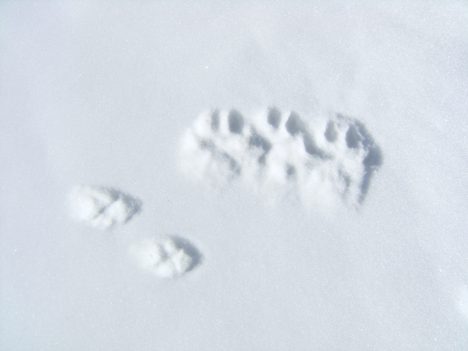
I decided to go hiking up Elk Creek.  My neighbor put down a horse last week and right away I saw tracks of two wolves.  (Note:  Tracks below are wolf and the smaller ones coyote for size.  My 85 lb. dog, Koda, would have tracks more in keeping with the coyote!  See that photo below) Wolf and coyote tracks I followed them for a while until they went down a steep wooded slope.  But later picked them up and, along with coyote tracks, they were headed straight for the dead horse.  Seemed like they weren’t too interested in much of the horse though, as just its organs were gone and the rest of the carcass remained intact.  Even the birds weren’t on it.
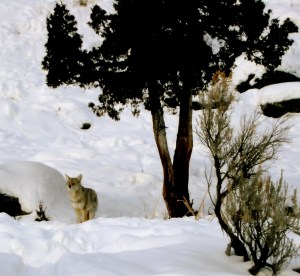
Yesterday I found a dead coyote.  It was in an area where lots of elk graze every evening.  I couldn’t find any sign of a kill, even though wolves had passed through the area not too long before.  Its front leg was exposed down to the bone.  I wondered if it had bleed to death from a trap although I couldn’t find any sign of a trap either.  I took some photos and plan to show it to the ‘elk boys’, the students who are doing the elk studies out here.  They’re very knowledgeable plus they are both hunters and trappers.  The other day when I lead them to two elk kills I found near Game and Fish, they were explaining how to age a kill, what to look for to determine what killed the animal, and what animal parts the lab needs for various stats such as age, health, and diet.

Seeing that coyote reminded me of a fellow I ran into last spring at the small campground down the valley.   This man had raised a coyote.  He knew a fellow that had killed a coyote with pups, so he took one of them.

coyote“They say you can’t raise a coyote, but I did” he told me. “The coyote used to disappear for days or a week at a time.  Sometimes other coyotes would come around and howl, trying to entice the baby out to join them, and sometimes she would.  But she’d always come back.  It was four years before I could pet her.  She’d  sleep against my leg, but wouldn’t let me touch her.  Finally, after four years, she’d let me love her. Smarter than any dog I ever had.”

“I was working with Fish and Game building a road.   My boss on the project would come up and we’d talk across in our trucks.  I didn’t like this man.  He was always down on the work I was doing, which was good work.  And the coyote didn’t like him either.  We’d be talking and when we’d finish and drive away, you know how you have your arm laying on the window.  Well, the coyote would nip at his hand when we’d pass, every time.  And she didn’t do that to no one else.  So that warden started keeping his arms inside.  One day I was working way up on the mountain and here comes the warden.  I don’t know how that coyote recognized him, but she did and she started chasing him down the mountain.  The warden ran down and into his truck and got away as fast as he could.  There was something wrong with that man and the coyote sensed it.”

I went back to look at that coyote again today.  Nothing was eating it.  I felt bad for it.  I’ve seen that coyote many times.  I feel like I’ve lost a neighbor.