• MY BOOKS ON WILDLIFE, GARDENING AND MORE

  • The Wild Excellence

  • True stories of wildlife encounters around the Greater Yellowstone
  • Award winning eBook on Decomposed Granite, tips, how to's, what to watch for
  • Children's book. True stories of a dog and wolves. In a dog's voice
  • Written for dry Mediterranean climates in California, north and south

A Grizzly story

Elk from the trail camera

I set up my trail camera for the last two weeks, hoping to catch some bears or wolves.  Mostly I got a lot of elk.  But I did capture 3 bighorn rams and a coyote.

The crazy part is that on the way up there I was following a grizzly’s perfect tracks in the snow.  The tracks were actually solid ice and super clear.  I was trying to figure out how they turned to ice.  I thought “Maybe he went up in the early morning or evening over thin snow that melted under his heat and then iced over.”  The ranch hand neighbor thought he just melted actual ice with his heat.  But everywhere around the tracks was snow, except for his tracks.  Any enlightening thoughts would be gladly accepted folks.

I chatted with J___ at the nearby ranch on my return.  He told me that that same grizz had walked right through the cows, looking for their mineral lick that they used to keep every year.  Its gone this year but probably its the same grizzly.

Then he told me a great grizzly story:

“You remember last year they were trapping and collaring.  They caught 3 grizzlies on our property all in one morning.  The traps are just 55 gallon barrels.  The bear goes in for the meat and the door closes behind him.  The doors on both ends are just metal grates.”

“Well Mark Bruscino was there (note: he’s the G&F Bear specialist in Wyoming) and asked if I wanted to come see as this was unusual.  They’d never trapped 3 bears all at once and it was 2 sows and one cub, so it was going to be interesting which bear belonged to the cub.  They trap the bears, then dart them with a light sedative.  Mark said ‘look inside that barrel at that grizzly’, so I looked.  And the bear, instead of looking out the grate, was looking sideways at the wall of the can.  I looked from one end, then I looked from the other end.  But each time I looked, the bear looked away, as if shy or something.

” ‘What’s going on?’ ” I asked Mark.

” ‘That bear is embarrassed.  She’s been caught before and she’s embarrassed that she got caught again.’ ”

“Well Mark sedated her and looked at her ear tag.  That bear, Mark said, was the first bear he’d ever caught and collared, 11 years back. She was 3 years old then.”

” ‘That bear has only been handled by people twice, both of them me.  She remembers me.  Bears are smart.  Most people would be shocked to learn how smart bears are,’  Mark said”

“You know the bear can hear you when they’re sedated.  And Mark was talking to that bear saying things like “Hi, you remember me.”  She’d be sure to remember something like being caught in a trap.

“Mark said that that bear had been in Dubois, caught and transferred for cattle killing.  She was put here and didn’t get into any trouble for all those years, until last year when she killed our pigs.  A year later she was tracked, by her collar, down in Dubois, but since then the collar’s fallen off.  When you think about it, how does a bear know, after being trapped in Dubois, then flown here by helicopter, not even driven here, but flown…how can they know how to get back to Dubois.  They don’t go the same route, she had to cross 3 highways, and its really rugged country between here and there.”

“Mark said we had about 1/2 hour before those bears woke up.  I helped them pull them out of the cans.  I was trying to be really gentle so as not to twist her paw or whatever.  Mark said there’s no handles on the bears, you just pull on their fur. ‘Don’t worry about hurting them.  These are massive creatures.  They’ve been over rock cliffs and in all kinds of situations.’

I told J___ that was a great story. Next time they’re trapping I hope to get a photo or maybe even ‘pet’ a sleeping bear.  J___ got too and so did all their dudes that day.

Elk, Eagles, and an equinox moon

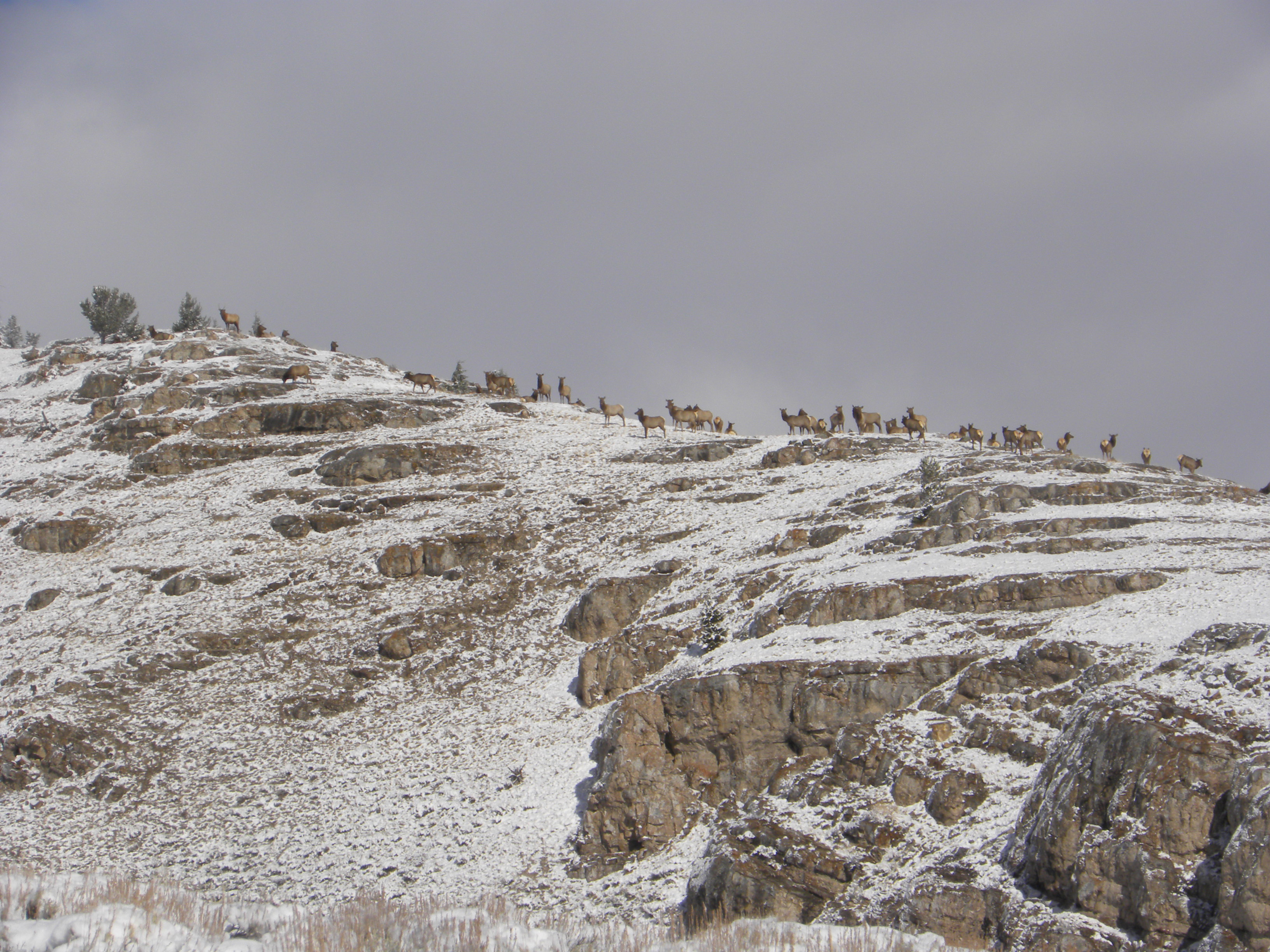
I took a hike up Little Bald Ridge to see the Bighorn Sheep.  They’re usually there in the winter.  On the way I spied a herd of about 700 elk grazing on the hillside.  It was a gorgeous day after a light snow.  The trek up there can be hard if the snow is deep.  Usually in March it is.  But we’ve had so little snow this year, interspersed with warm days where the snow has melted off, that only a few inches were on the ground.

Elk herd resting mid day

Large elk herd

(Here’s is a video I took from inside of my cabin the other day when the herd came through at dusk)

Error
This video doesn’t exist

By the time I got to the top of the ridgeline, there were no sheep to be found.  I walked and glassed all along the top without any luck.  They must have gone elsewhere.

An immature Golden Eagle played on the currents.  I’d seen a nesting pair last year up here.  The Eagles like these cliffs to nest in.  I supposed this was one of their offspring.  Hope he finds a mate this year.

Valley after a light snow

Although I found no sheep, I did find an elk kill in the valley. The kill was made right at the fence line of the local ranch.  At first I wasn’t sure if the elk had gotten caught trying to jump the fence.  This happened last year.  But the ranch manager assured me it was a kill, although we don’t know from what.   He hadn’t seen any wolves on it, and the last kill I’d seen the wolves had been there all week, nibbling.

I parked at dusk close bye and watched, wondering if any wolves might come around.  The crows and magpies were going to town on it.  Suddenly, the immature eagle swooped in and all the smaller birds flew away.  I watched the eagle pick at the remains.

Eagle on kill

Then an odd thing happened.  A group of 5 yearling cows came trotting over.  The eagle, feeling threatened, fled.  The young cows edged slowly over to the carcass and one by one, sniffed at it.  A big mama cow walked over.  Standing right by the carcass, she mooed at the yearlings, over and over, as if to shoo them away.  I liked to imagine her as the wise cow elder, telling these yearlings “If you don’t watch your p’s and q’s, you might end up like that.”

J__, the ranch hand, and I chatted on the road as the crescent moon rose in the equinox evening.

“I saw those cows going over towards the kill and thought I should check on what’s going on with them.  I used to take care of a herd of Bison and I’ve seen them do the same thing—go sniff out a carcass.  Strange.”

Immature Golden eagle

It was a perfect equinox day and night, or is that redundant?

Elk in the Valley

This is the week the collared elk get their ‘check-ups’–sonogram, blood, and other indicators.  In order to do that, these elk need to be located and darted from a helicopter.  Then the biologists are lowered down, do their thing within just a few minutes, and are whisked away again to their next elk, while the elk is waking up.  This is the last year of a five year study to find out why the elks’ pregnancy rates are so low in my valley.

Helicopter getting ready

I’ve been watching them on and off as they work the valley.  The copter pilots are amazing.  They’re Kiwis, the best mountain copter pilots around.  With no doors, they dress in super warm suits, land in odd and uneven terrain, and maneuver quite close to trees, cliffs and mountain tops.

Watching them work, I couldn’t help but remember when I went river rafting on the South Island of New Zealand.  The rafting adventure began at the head of a glacier and in order to get there we needed to ferry all our equipment, including ourselves, by helicopter up the canyon.  I boarded the copter, fully expecting to fly above the canyon and set down on the glacier.  But instead, the pilot took off inside the narrow canyon, running those curves like a race car with the raft waving around tied below us.  The copter seemed to swing freely side to side, hanging by the propeller above.  It was so scary that I decided to just accept whatever might come and enjoy the fantastic ride.

Copter in my valley

One of the students explained that the biologists on board are from Oregon and pioneered these elk allocation studies.  Most of these elk are not residents.  In other words, they don’t live here year round.  Instead, they come in around January from the Park, snow pushing them towards warmer terrain.  Sometime around late April or May, they begin to make their way back into Yellowstone to have their calves.  From what the student heading the study tells me, 6 out of every 10 calves succumb to predators, mostly grizzlies coming out of hibernation with an appetite and the calves are easy prey in their first 10 days. 

Error
This video doesn’t exist

But this study is looking at low pregnancy rates amongst this group.

I spent some time talking with one of the Game & Fish biologists about what’s being called sudden Aspen death in Colorado.  Reminds me of Sudden Oak Death (SOD) in California which I’ve spent quite a bit of time thinking about.   My own theory with SOD has to do with lack of fires.  Fires have been cleansing the soils in California (and the West) for thousands of years, clearing out fungus as well as competing undergrowth.

This biologist had worked in south WY and felt that the Aspens, bereft of fires, are in the process of a natural rejuvenative cycle so young clones can arise.  He told me a story about early settlers being angry at Native Americans in the Sierra Madres for setting fire to aged forests.  Those Indians gardened the landscape with fire as their tool, aiding the regenerative process in Aspens.  With a fire suppression policy blanketing the West for over 100 years, forest health has declined as well as quality of feed for our native ungulates.

The wolves have a good day

What a day!  Let’s begin with 4″ of fresh snow.  Then add 5 wolves running past my property, 4 greys and 1 black.    Throw in back tracking and tracking the wolves to explore what route they are using to come down into the valley.  And for the day’s finale, watching the wolves on two kills they’d made by the road this morning.

Lots of elk tracks too on this beautiful day

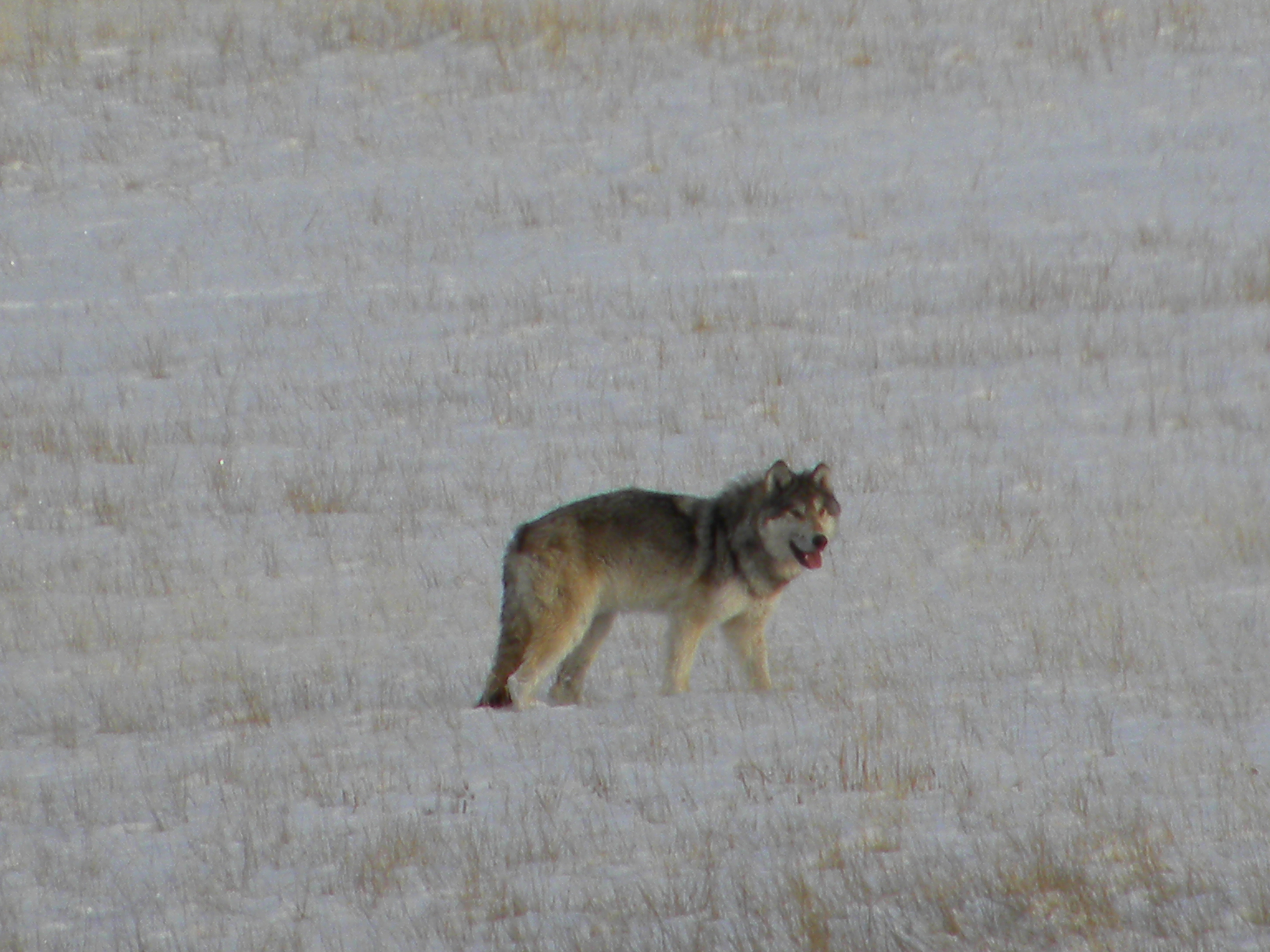
Around 1 pm, we heard the dogs barking and looked out the front window to see 4 beautiful wolves running along the nearby pastures through a herd of horses.  Those horses are used to dogs so they didn’t seem perturbed one bit.  And those wolves were ‘booking’.  They had someplace to go or a meeting to attend.  Within just a few minutes they were up on the opposite hillside and over the divide, a hike that takes me at least 45 minutes!  Then along came a limpy grey following way behind.  They all looked amazingly healthy, no mange.

Limpy wolf but seems to be doing fine

These are the new Sunlight Pack, pushed slightly south into Elk Creek because of a much larger pack of 10 wolves occupying their northern range.  Last winter I didn’t get a chance to see the Sunlight Pack as they were hanging deeper west in the valley, moving with ease back and forth (north and south) across the valley floor.  This has been their home range for several years.

There’s an elk study going on, in its fifth season, in the valley and they’ve been able to do some good collaring this year of wolves.  And so they’ve learned that the Sunlight Pack has been bullied a bit by this larger pack to the north.  In fact, all that howling I heard on Valentines’ day was the Hoodoo Pack making a kill on the northern side of the river, a side that used to belong to the Sunlight pack.

Tracks of four wolves 'booking it'

At around dusk I went up the road to get a closer look at the kills and see if there were any wolves still  on them.  The UofW crew said they processed the kills and they were two older cow elks, about 10 and 12 years old.  “How old is old for an elk?”  I asked.  “About 15.  Some can live till 20, but that’s really old. These were in pretty good shape,” they informed me.  

Error
This video doesn’t exist

With some quick and dirty math, I figure that’s about 50 or 60 years in human terms.

Right as Rain

Its Valentines’ Day and I’m finally home.

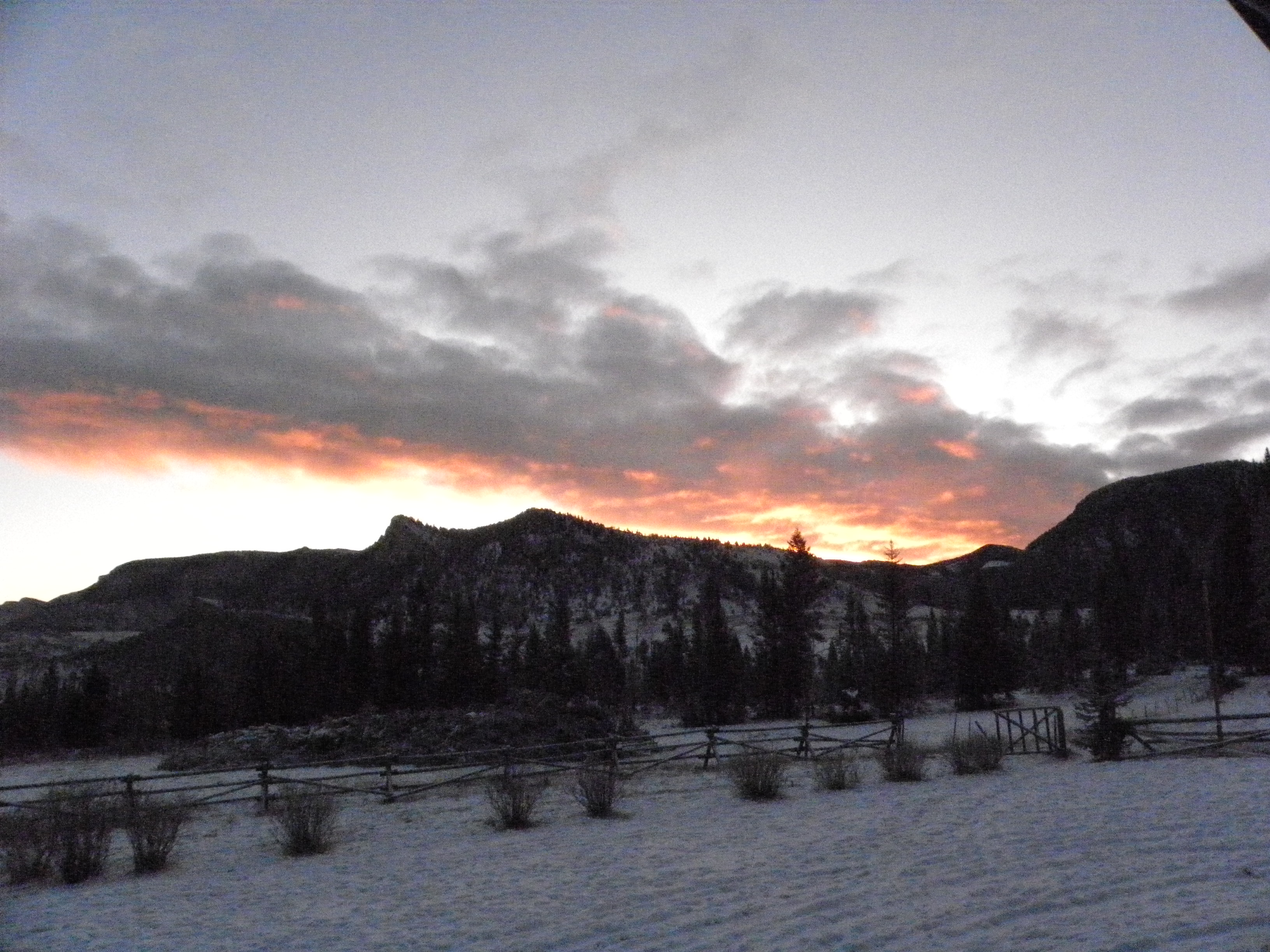
The day was clear and beautiful.  I awoke to a small bit of fresh snow and a beautiful fiery sunrise.

Sunrise over Dead Indian

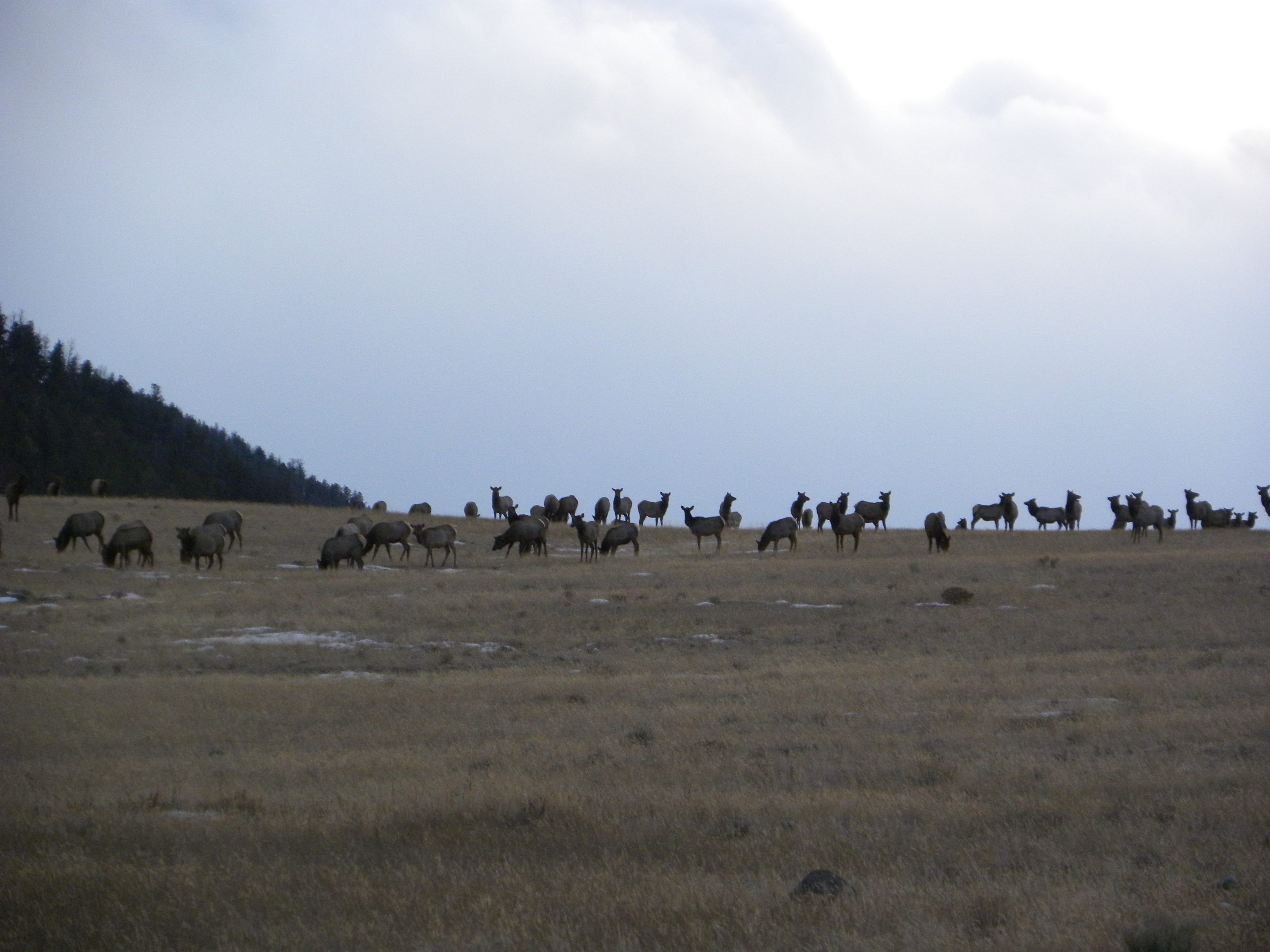
Last night I watched the elk that overwinter in my valley.  I heard the recent G&F count was 1460.  They come down from the Park when the weather pushes them out.  This year, as last year, they were a bit on the ‘late’ side.  At dusk and dawn they come out of the tree cover to feed.  Here’s a herd of about 700.

Just a small part of the large elk herd behind my house
More elk
Beautiful elk in their winter clothing

The herd is almost exclusively cows and their calves with a few young males, called ‘spikes’ because their antlers are barely branched, if at all.

The whole day the wolves were howling in the valley.  Its mating season and I suppose its also Valentines Day for them too.

We felled some beetle infested trees on my property and did a burn that lasted till after dusk.  The wolves  howled.  The air was still and clear.  The ash fell like snowflakes.  Elk grazed on the flats up above and a lone Great Horned Owl called in the low light of the sky.  I’m back and everything is right as rain.

Brush fire

Yellowstone Autumn

I decided to spend a few days in Yellowstone.  I like to bask in Boiling River but I especially wanted to hear the elk bugling.  The bulls are in rut and if you’ve never heard an elk bugle, you’re missing out.  Its the eeriest sound, the most beautiful sound, a sound that seems other worldly.

The Park, usually nice and quiet this time of year with all the crowds gone, was jammed pack. They’re having the busiest fall in 10 years.   I couldn’t get a campground anywhere, so I had to drive outside of Mammoth 20 miles down the road to a National Forest campground.  That was a real surprise.  And even that campground was just about full.  I think I found the very last site!

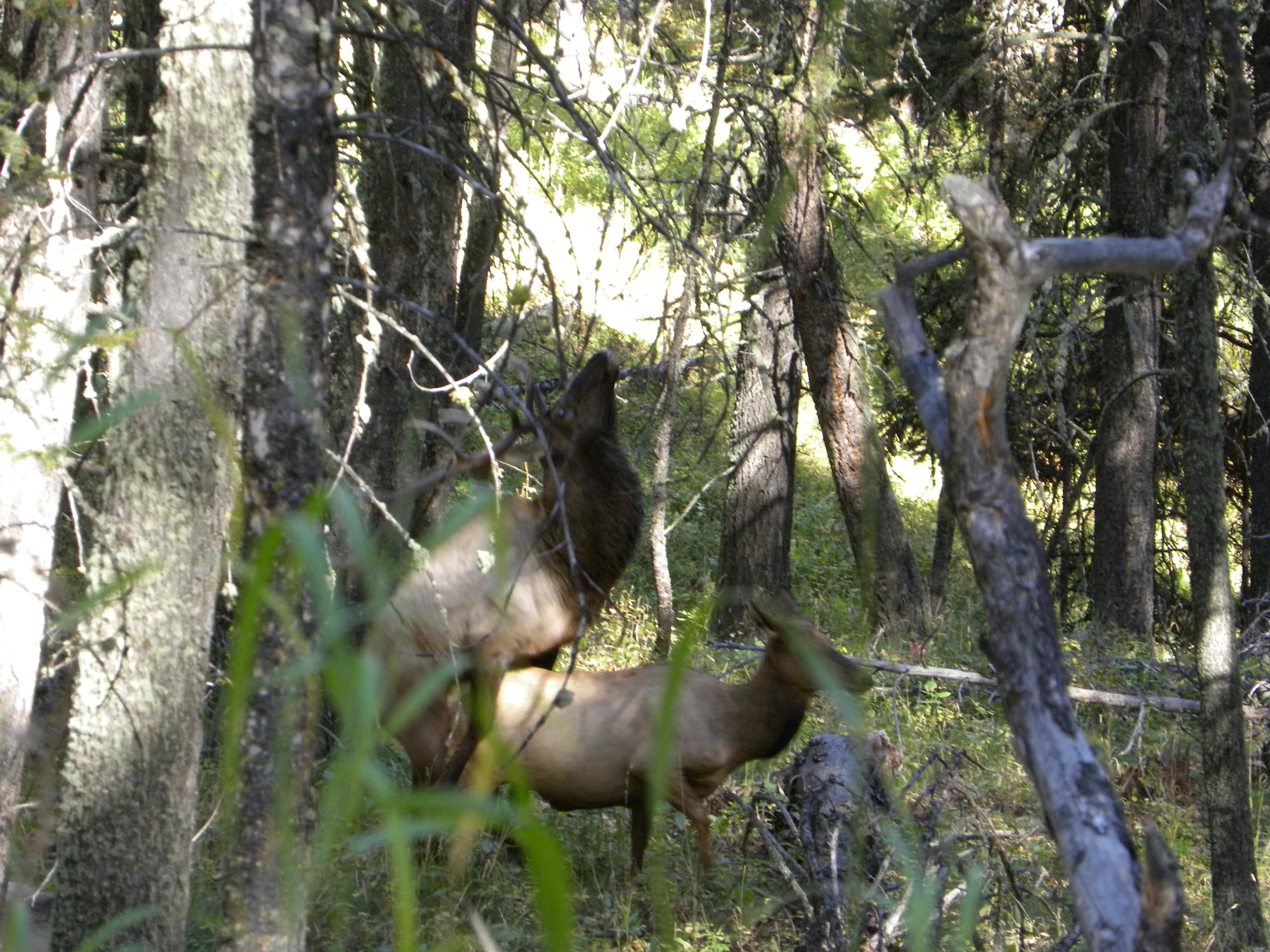
Waking up early, I soaked in the river, then headed up the trail to the Beaver ponds.  Its a fairly short loop of 5 miles.  Since I was early on the trail, I didn’t see anyone for the first hour.  The trail winds along the open hillside overlooking Gardiner, but soon dips into a conifer glade with seeps.  The day was already hot (as we’re having our summer now in fall), and as I moved into the cool shade I noticed about 20 elk, mostly cows and calves, lying around.  One bull was there.  This was his harem.  The cows were relaxed.  The calves were curious.  And the bull was keyed up.Elk mating

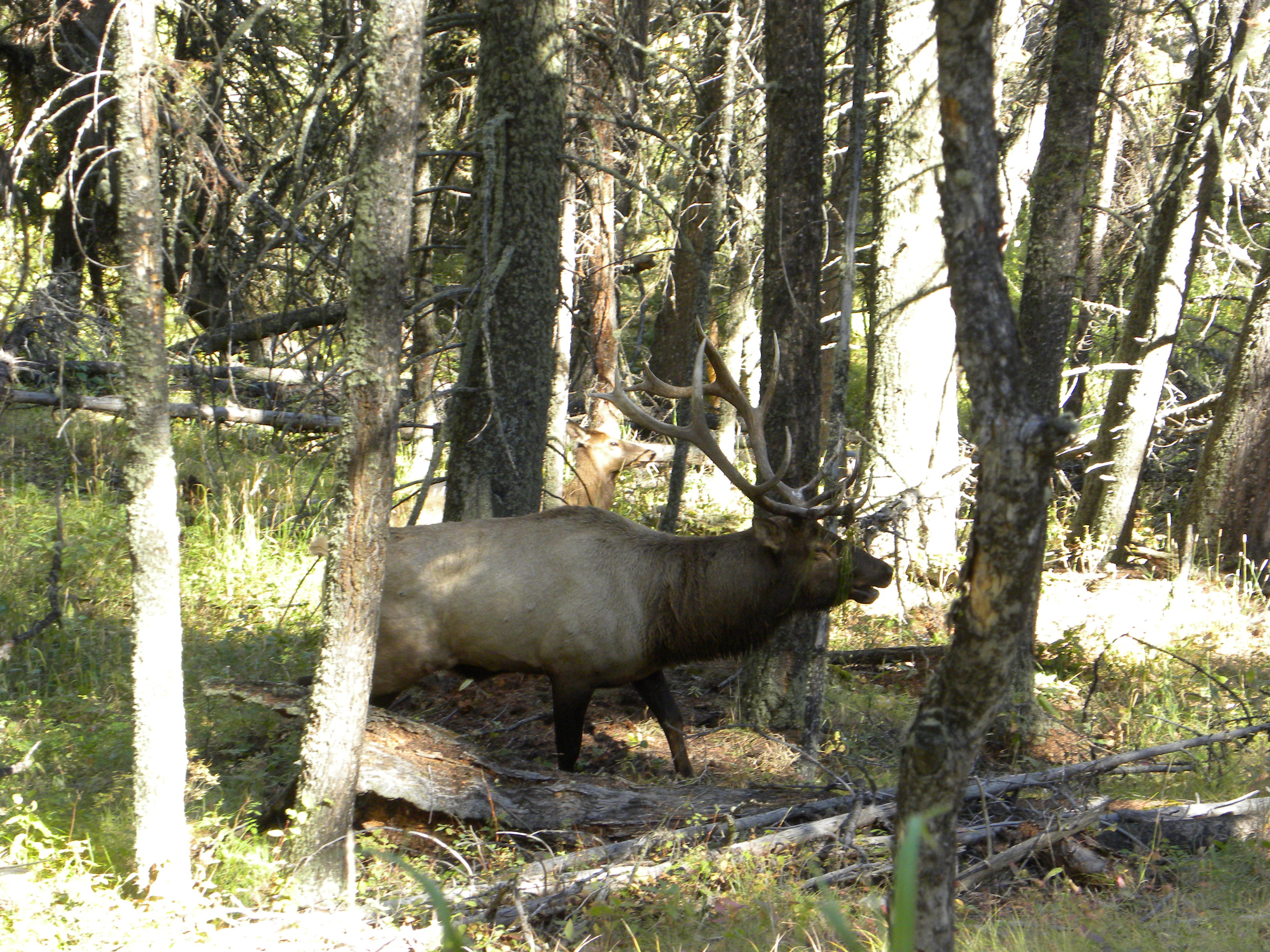
I lay down on the trail and watched for ten minutes.  As I continued on, I later heard that some hikers had come around the corner and gotten chased a bit by that bull.Bull Elk

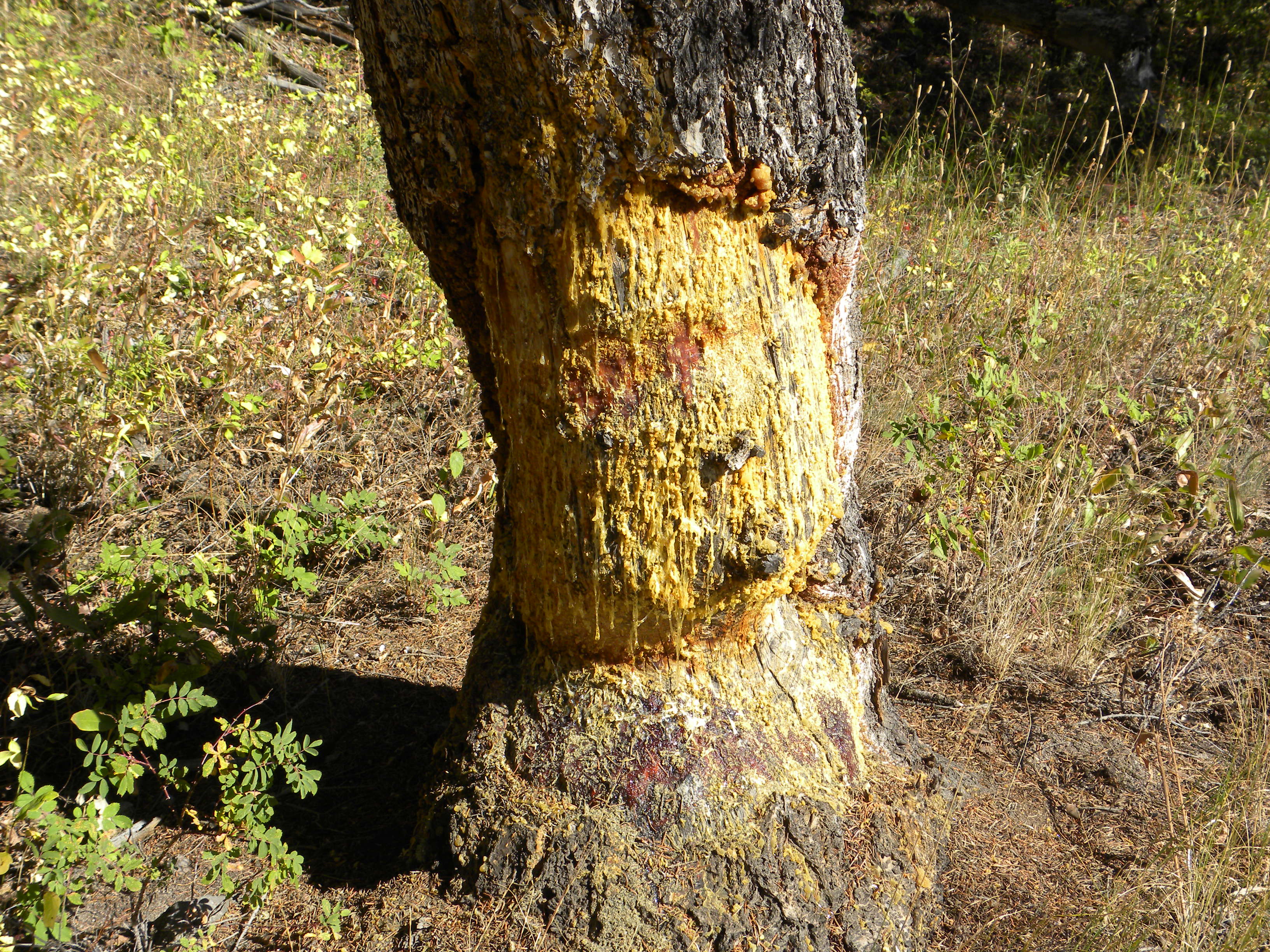
Although there were no beavers to be seen when I arrived at the ponds, their evidence was.Beaver evidence

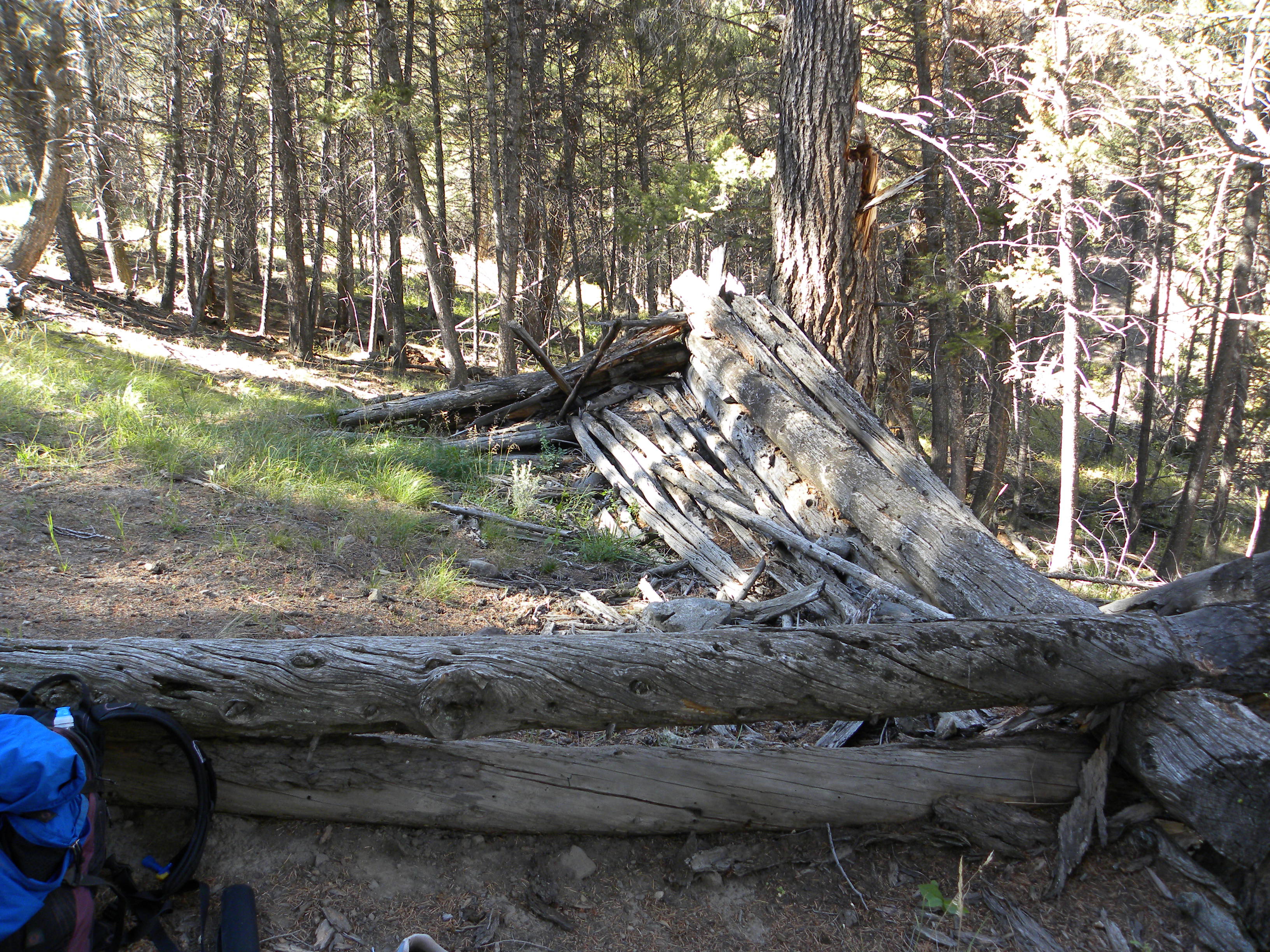
On the last leg of the trail, I noticed an old structure that looked like it had been a cabin.  I couldn’t find references to it in the guidebooks.  Wondering if anyone knows what it used to be?

Old Structure along Beaver Pond trail

Old Structure along Beaver Pond trail

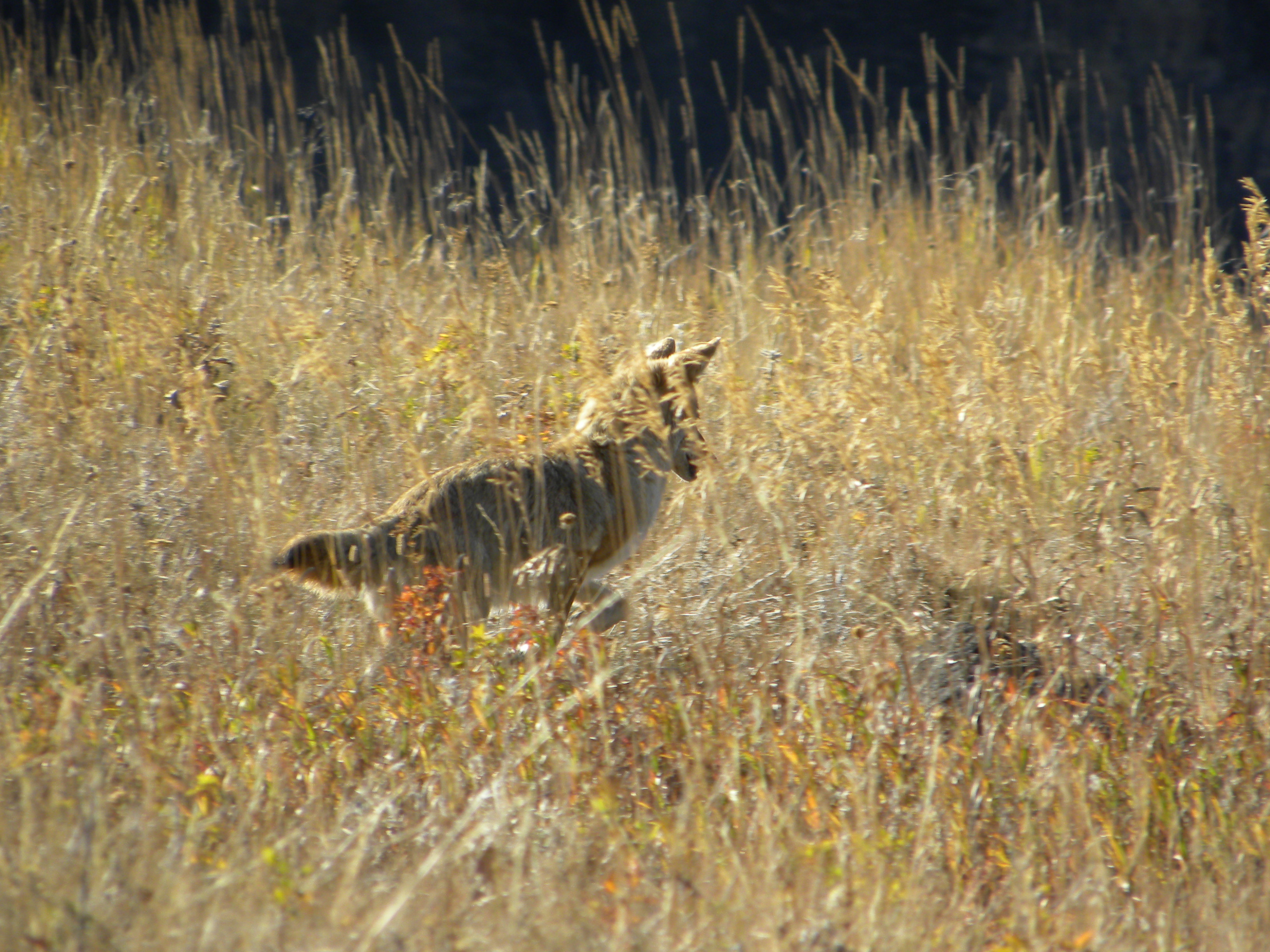
After a late lunch, I headed back towards the Lamar.  A coyote was catching grasshoppers.  He was terribly cute pouncing around.

Coyote catching grasshoppers

Coyote catching grasshoppers

And the light was perfect for this herd of Bison.

The light was perfect

The light was perfect

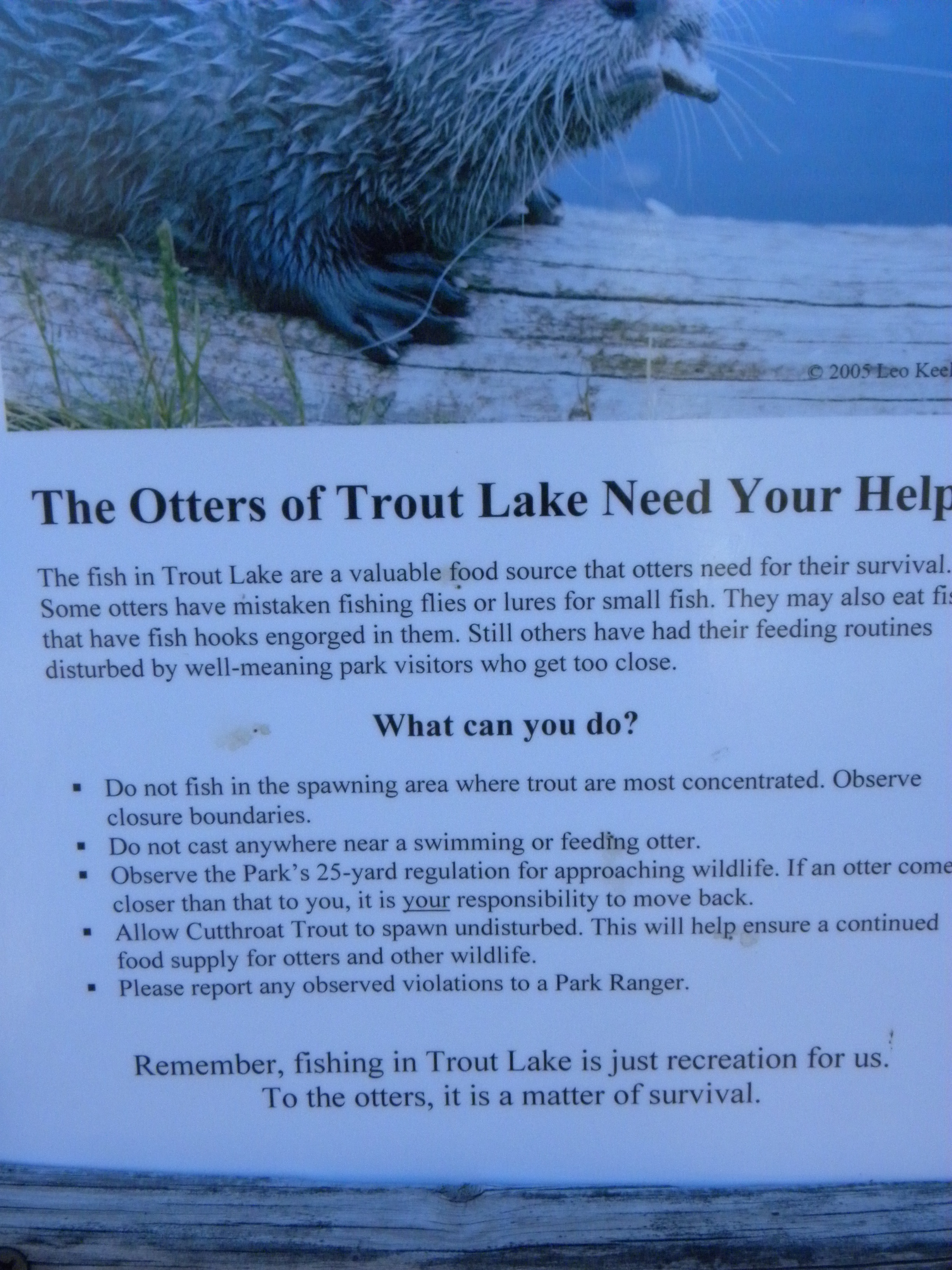
I stopped for a while and watched a second coyote, before heading up to Trout Lake.  I wondered if the otters were active.  Trout Lake is a very short hike/walk.  Otters are often seen playing there.  I didn’t see any otters today, but the lake was beautiful.  I spent time snapping some photos of the Lake, of a gigantic ladybug, and a dragonfly.

Trout Lake

Trout Lake

Ladybug

Dragonfly

Trout Lake signage

In order to get into the Park, you must rise in elevation.  That’s because of the bulge from the hot spot that Yellowstone sits upon.  I used to wonder why that special feeling seemed to almost begin and end at those entrances and exits, until it was explained to me.

I met a woman from California on the trail.  She comes to Yellowstone every fall for 3 weeks.  At the campground I met some people from Seattle who come every year at this time.  I met a man several years ago who comes every spring from Iowa.  Yellowstone is just like that.  It is a very powerful place.  A healing place.  Once it gets under your skin, you can’t help but dream the dream of returning again and again.

More Scats and Tracks

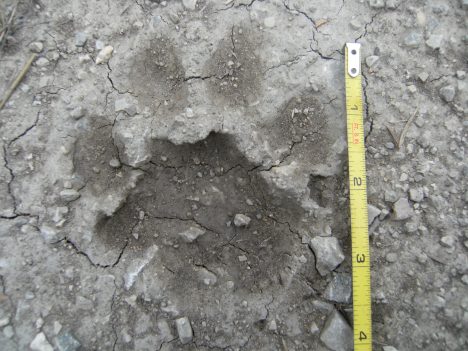
Yesterday I found a cougar track in the mud.  I know there’s a cougar on that side of the creek because a friend of mine saw one a few months ago driving from the Cody Pow Wow down Dead Indian highway.  It was around 9pm, he said, and the cougar was just standing along the side of the road.  He stopped the car and watched the impressive animal for about 10 minutes.  Only one other car, a neighbor as well, came along, stopped and watched.

The track was right along the trail, not too far from the trail head. This part of the trail is in eyeshot of the main road, which climbs steeply up the mountain.  The track, measured out about 3 3/4″ length by 4″ wide.

cougar track in mud

cougar track in mud

cougar track with penny for reference

cougar track with penny for reference

Being that the ‘Scat’ post is popular, here are a few more gems!

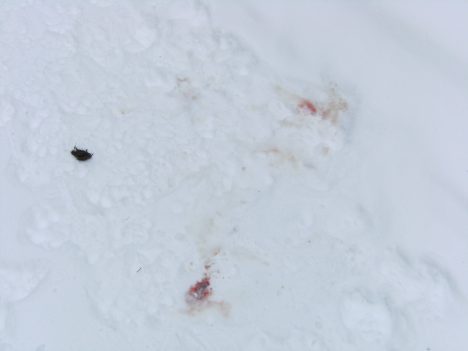
Wolf blood and urine from wolf in estrus

Wolf blood and urine from wolf in estrus

Wolf scat

Wolf scat

Comparison of elk and deer scat

Comparison of elk and deer scat

Moose scat

Moose scat

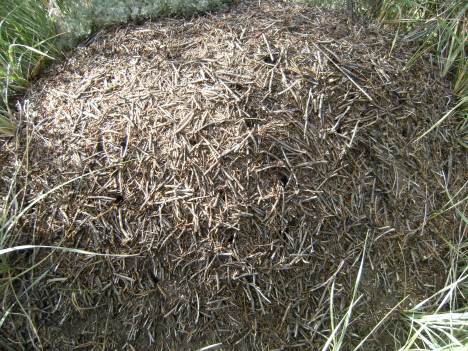
Ant hill

Ant hill

Ant hill destroyed by a grizzly looking for grubs

Ant hill destroyed by a grizzly looking for grubs

Turkey tracks

Turkey tracks

A surprise walk

Its starting to feel like the Canadian Rockies here, raining every day, even if just a little bit.  Last fall I had driven up an old fire road that’s usually closed.  I wasn’t sure if they only opened it in the fall for hunters, so I took a drive over there, and sure enough, the road was closed and the gate locked.  I parked and walked up the dirt fire road that leads to high meadows.  This area was home to the ’88 fires and the lush undergrowth shows it.

There’s been so much rain that the forest is lush.Lush forest

More and new wildflowers appear every day.Paintbrushes

Calypso bulbosa - Fairy Slipper Orchid-endangered

Saxifraga odontoloma

A loud almost bell-like sound announced the presence of a marmot hanging in the rock pile below us.  Koda went crazy.  He knew he couldn’t get to the marmot, and that fat marmot just kept teasing him.Fat Marmot

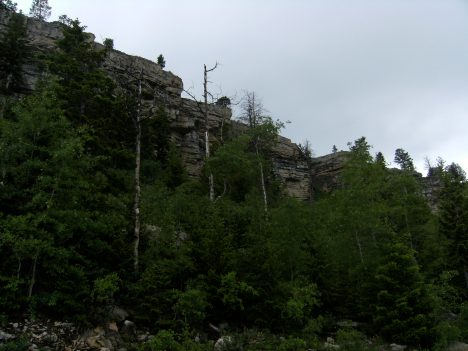
As we ascended higher, the reef cliffs came into view.  A Golden Eagle sat in a tree near the old road cut.  Our presence caused him to take to flight.Looking up at the limestone reef

There was a lot of fairly fresh grizzly scat along the road, but the only recent prints were elk.  Occasionally there were faint bear tracks, and it seemed like there might be two bears, indicating a sow and cub.

Pretty fresh bear scat.  Can you see the penny at the right for size?

Pretty fresh bear scat. Can you see the penny at the right for size?

Along the road, there were lots of berry bushes–thimbleberries and raspberries.  A perfect place for bears in the fall as well.

Thimbleberry

Thimbleberry

Way up near the top of the ridge, I suddenly heard a loud high-pitched consistent chirp or call.  I thought it was coming from a large bird and looked towards where I heard the sound, down the hillside.  Meanwhile, the smart animal with me, Koda, was looking up the hillside into the wooded bank.  I turned around and there was an elk in the timber.  Confused about the sound, it seemed to have been coming from the elk, although not at all like the bugling I’ve heard in the fall.   It was a contact call I found out later, between that elk and her calf.

As we headed towards the top of the ridge, an old fire cut from the ’88 fires, now overgrown, was covered with Geraniums.  Apparently these plants like disturbed areas.

Geraniums in disturbed area-old road cut

Geraniums in disturbed area-old road cut

The ridgeline meadows were magnificent.  Plenty of water and waterfalls along the way.  So much water so high up.  The old fires had provided great forage areas.High meadow and old burn

Koda catches a whiff

Koda smells out the grizzlies

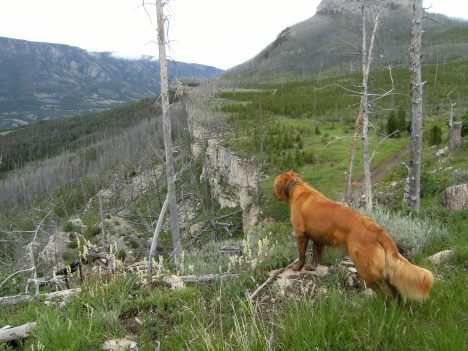
On the way down, Koda stopped at the cliff edge.  I thought he was looking at the view.  My old dog used to relish the views from high ridges.  But Koda is different.  He’s still young and not prone to being pensive nor reflective yet.

I stepped to the edge and noticed two grizzlies below in the tarns.  I don’t know if Koda saw them, but he certainly smelled them.  I bet they smelled us too.  At first I just saw a smallish black bear, and, from afar, tried to make out whether he was a grizzly or not.  It was hard to see the hump or his face clearly enough.  But then, following about 20′ behind, I saw a large brown grizzly.  I assumed the black bear was her two year old cub.  Unfortunately, I didn’t have my new camera with me so the shot is far away.  But, that’s about the distance I like to see bears from.

Look close there's the grizzly

Look close there's the mama grizzly. Black cub is in the upper left corner.

I glassed the bears for as long as the mosquitos would let me.  They moved down the mountain, through the scree and downed timber, foraging as they went.  What a privilege to see these magnificent animals.  As always, I carry bear spray, but what I use the most is my mosquito spray!

Call of the Wilds

I live in a wild place.  In winter there are only a handful of residents.  The wolves howl.  The elk find their way through the snows.  The grizzlies sleep.  In spring the mountains wake and thaw.  On weekends this valley is a favorite spot for locals from Billings and Cody.  ATV’s and RV’s roll in and find their favorite campsites.  Yet the mountains here are vast, the wilderness seems endless.  Its rare to see another person on any given trail.

This country is big enough for all who love it and steward it.

This country is big enough for all who love it and steward it.

This has been my first winter here.  I’d been here almost every month of the year, but only for weeks or a few months at a time.  Living here, knowing that these mountains are what I now call home, I find my rhythms slowly changing.  Life seems to be moving fast when I return to an area I’d just been last week and the snows have melted.  Or how did I miss the day when the rivers suddenly turned muddy and swollen?  Just two weeks ago I drove up that draw, but now its flooded.  Changes seems to be happening at breakneck speed.  What looks static to a visitor is a constantly changing kaleidoscope, an ebb and flow of interactions too great and wonderful to take in all at once.

Swamp Lake as the snows are melting

Swamp Lake as the snows are melting

Aspens starting to bud out.

Aspens starting to bud out.

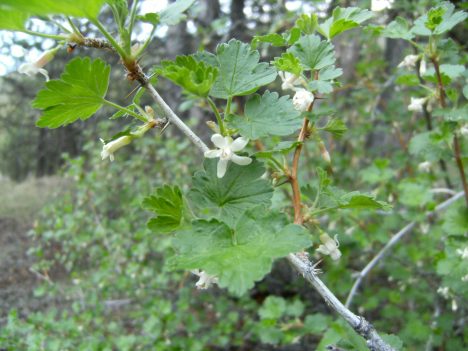
Ribes blooming just the other day

Ribes blooming just the other day

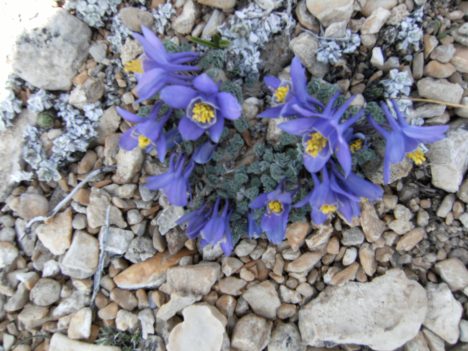
Alpine columbine just blooming today

Alpine columbine just blooming today

I walk the woods and look for wildlife runs and markings, new smells or droppings, nests or homes, what was eaten today and what was killed.  At first I walked or hiked and noticed a few things here or there.  But now I find it difficult to be aware on all the levels I want to be.  There is the forest floor and its sign–scat, droppings, scratchings.  The treetops are where birds and small mammals also live so don’t forget to check up there as well.  The relics and evidence of the past such as buffalo bones or Native American sign.  If you only look for animal sign such as tracks or scat, you miss the wildlife presently around you.

Sandhill Cranes

Sandhill Cranes

Better watch for bears, and be careful with your dog as there are wolves around.  The forest and the meadows are alive.

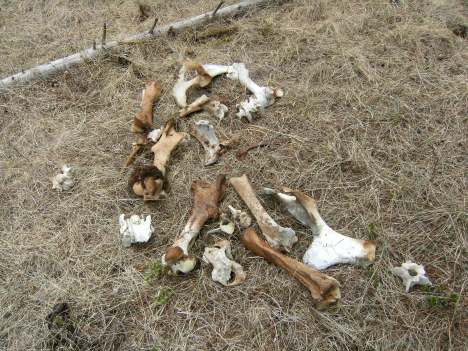
Could these be bison (or cow) found in buried in a depression like a wallow.

Could these be bison (or cow) found in buried in a depression like a wallow.

Simple beauty

Simple beauty

A new awareness has also begun to creep in.  It is an understanding of the nature of life and death, of a circle of existence.  This is not an intellectual notion.  Everyday I find bones and skulls, or fresh kills large and small.  Everybody has to eat and you either eat plants or meat or both.  Death is not wrapped up in a nice package in the frozen section, or shoved off to the edges of society.  It is here and everywhere.

My neighbor H__ who has a horse farm, told me a story about the first horse he had to put down.  He was afraid to do it himself and asked our 85-year-old neighbor, a native to the valley, if he would do the deed for him.  JB replied “Its your horse.  You have to do it.”

“He was right”, H__ told me.  This winter he put two horses down in the upper pasture.  The wolves and coyotes were on it within days.

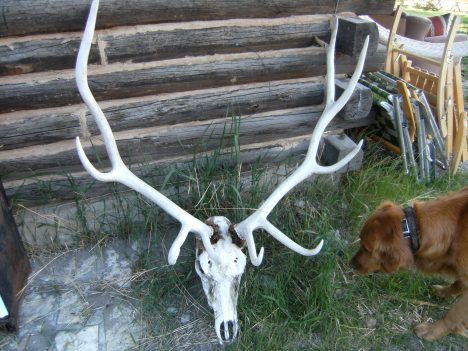
Just as in life, there is beauty and ugliness in death.  I’ve watched the coyote I found this winter in his process of decay.  First the animals ate their fill, but a lot remained and the ground was still frozen and cold.  Now the beetles are finishing him off.  He is food for others, and there is a certain rightness and sadness in that.  There is also a fascination and a repulsion in watching the process.  Yet I find a skull of a winter kill bull elk with both its antlers, the skull already cleaned off and perfectly white, and it looks beautiful to me.

Found winter wolf kill.  Beautiful in death

Found winter wolf kill. Beautiful in death

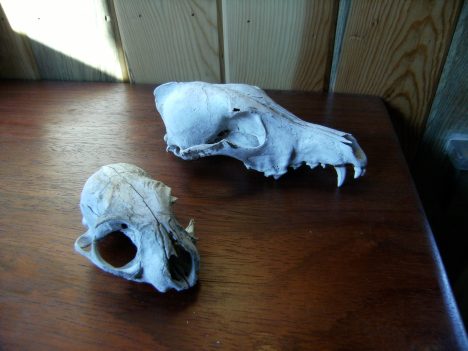
Coyote skull and bobcat skull

Coyote skull and bobcat skull

Old trees that have died are regal in their appearance, and house insects and the birds that feed upon them.  The ground squirrels in the yard are amusing to watch, yet I admire the Swainson’s hawk that deftly swoops and catches them.

Burnt trees.  Beautiful in death

Burnt trees. Beautiful in death

A deeper ‘knowing’ that I too am part of this whole process seeps into my core.  It may seem ugly or cruel to some, but it is only economical and the way things must be.  More than stark, there is a dreamlike quality to it all.  The animals are not bothered.  They have been born into this acceptance.

I walk with Koda.  He is always alert, on the ready, yet happy and relaxed.  His tension comes from awareness, instinct to check for danger, or to check for the fun of a chase with a squirrel.  I am learning here, in this complete ecosystem, with top predators just like me here, that I must walk and be aware, relaxed, and alert.  That life and death walk side-by-side always, only here they are in evidence.  That there are more levels to this dreamtime than I am yet aware, and that the natural world supplies a plethora of synchronicity and sign, if only one can take the time to deepen, relax, and learn to notice.

An Advertisement for Yellowstone!

Happy Mother’s day.

Since my son is in New York, I gave myself a present.  The last few days have been either too busy or too cold to go into the Park.  I heard the road opened earlier than the scheduled date, Friday, the 8th.   So on Thursday I headed up towards Cooke City.  I never made it because of a snow storm.  Not that the snow was so bad, but I figured the animals wouldn’t be out.

This morning I woke up early and was out the door by 7am.  I’m only 40 minutes from the Park’s entrance; an hour from the Yellowstone Institute in the Lamar Valley.  Because I had the dog, my plan was to visit for 1/2 day, and take a hike outside the Park the other half, with the dog.

In the span of those 3 hours in the Lamar (or on my way there), I saw: (disclaimer…sorry my photos up close are not great.  I just have a small digital camera that I use because its lightweight for hiking.  Maybe I need to get a better one as well.)

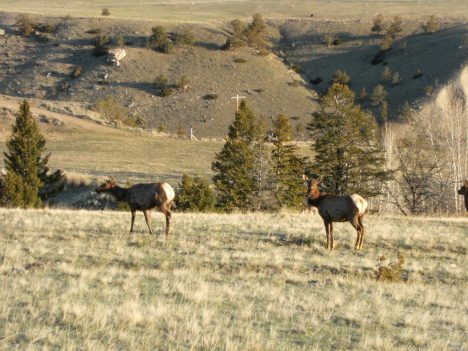
Elk in my Valley.  I thought elk on left looked quite pregnant.

Elk in my Valley. I thought elk on left looked quite pregnant.

First thing on the way to Chief Joseph were some early morning grazing elk.  They are getting ready to calf soon.  My neighbor, on whose pasture these elk are grazing, called me yesterday to tell me to watch my dog as a wolf walked past her daughter yesterday.

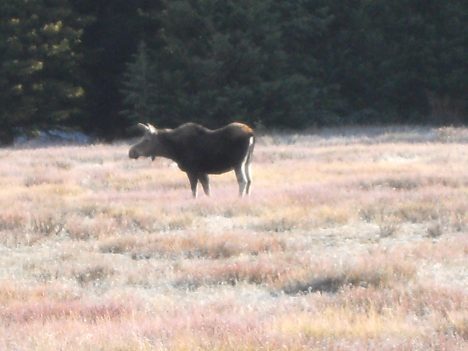
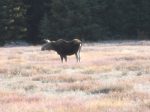
Moose on Chief Joseph Highway

Moose on Chief Joseph Highway

These two moose were up past the 212 turnoff to the Park, right alongside the road.  I didn’t see any moose in the Park, although usually some hang out in the river right past the NE entrance.

This one just sat and watched me.  She had frost on her fur.

This one just sat and watched me. She had frost on her fur.

Here’s the approach to the NE entrance.  There was no ranger at the gate today, so no entrance fees.  Happy Mother’s day.

Entrance to Park

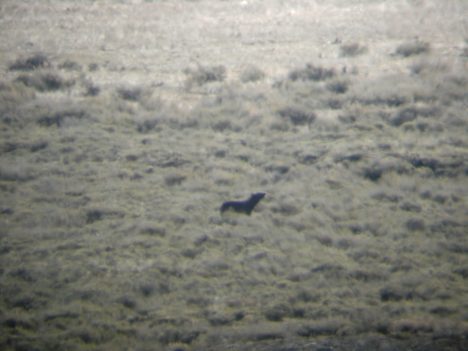
Not too far into the Lamar Valley, I stopped by a crowd with scopes.  I watched 2 wolves for a long time, one a collared gray female and the other a black.  They seemed to be trying to figure out how to cross the creek and road to get back to their den on the other side.  There was a lot of howling and prowling.

This is through the scope.  He was way across the Lamar river.

This is through the scope. He was way across the Lamar river.

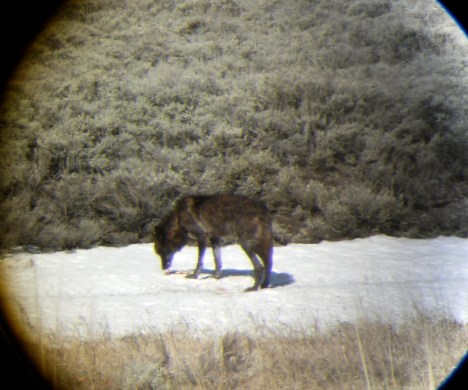
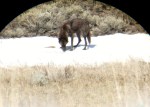
Pronghorn were all over the hillsides.  Bighorn sheep were grazing high up.  I continued down the road a bit, still wanting to see some Bison babies, when I was distracted by another black wolf of the Druid pack, very close to the road.  I stopped and watched with my naked eye.  He was walking back and forth along the stream bed.  He was so close to the road that I thought he wanted to go to the other side as well.   Suddenly, he had something in his mouth.  It was a fish!  He brought the fish over to a nearby snowbank (all this within 200 feet or so of the road), played with it,  rolled on top of it, then devoured it as a magpie watched.

Wolf eating a fish he just caught

Wolf eating a fish he just caught

Wolf eating a fish

Wolf eating a fish

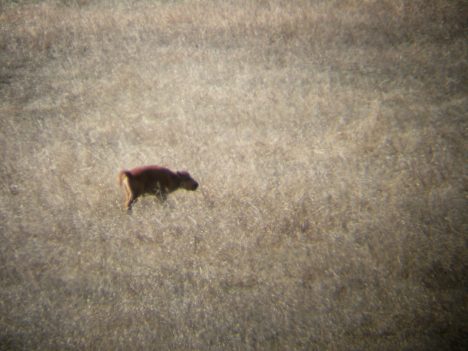
Finally I moved on to see the Bison calves.  The one animal we don’t have in our valley next to Yellowstone is Bison.  They wouldn’t be allowed to migrate out of the park.  Granted, they do shoot a lot of wolves outside the park, but they return and soon reform local packs.  In addition, each state is required to have a certain amount of wolves in their delisting program.  But Bison no state will tolerate because of the perceived threat of brucellosis to cattle.

Here are the baby pictures:

Bison calf

Bison calf

Mom with two calves in the grass nearby

Mom with two calves in the grass nearby

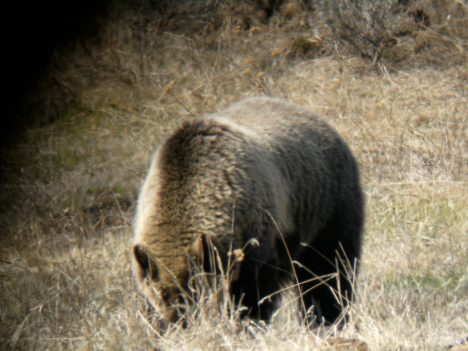
If all this wasn’t enough (I’d barely driven a mile within the Lamar), I went a short distance down the road to view the Grizzly hanging out within 100 feet of the highway.  He’d been there all morning.  On my way, another black wolf walked through a herd of grizzlies.  He was joined by a grey and they both began howling.  They were answered by a wolf on the other side of the road, not visible to me, near their den site.  A coyote began yipping in tune to the wolves, and then he sauntered across the road.  Several Red Tail hawks circled overhead, while Sandhill Cranes walked along the water’s edge.

Here is the bear:

This grizzly spent hours upturning Bison paddies for insects underneath

This grizzly spent hours upturning Bison paddies for insects underneath

Grizzly rooting around

Grizzly rooting around

I’ve oftened pondered what makes for that special nurturing quality of Yellowstone.  I left the valley and could feel its warm embrace.  There is so much life there.  The animals seem at peace, not threatened.   They are simply doing what they do, going about their business.  There is always a palpable feeling in the air there, like a slice of heaven.  Is it the volcano living underneath?  All the hot springs?  I think its where the natural order of things are in place.  In Yellowstone, man is not the top predator.  This has been so for generations upon generations of wildlife and they ‘know’ it.

It is time to acknowledge Yellowstone for what it truly is–the serengeti of North America–and treat its surrounding environs as such.  Outside of the Park, they are supposedly ‘protected’, but special interests always come first.  Buffalo cannot migrate to lower ground in the winter or they are killed; wolves even when they weren’t delisted were killed regularly (they know what the sound of a helicopter means outside of the Park); right now is bear hunting season in my valley.

The income from open grazing or from hunting tags pales in comparison to tourists coming to see our ‘Serengeti of wildlife’.  Having the Cattle or Sheep lobbyists win every legislative battle is old school.  It is time we see what we have here that is truly of value, and so unique.  It is time to preserve this land of the Greater Yellowstone Ecosystem, not just Yellowstone Park, and manage it with wildlife as the number one priority.

There couldn’t have been a better advertisement for Yellowstone as this mornings two hours in the Lamar Valley.