


Greater Yellowstone Ecosystem has two premier archaeological sites, both on the eastern side. One is Mummy Cave located between Cody and Yellowstone; the other is Dead Indian Campground, located along Chief Joseph Scenic Highway north of Cody. Mummy Cave is a well-preserved site showing evidence up to 9000 years old. It is well-known and much talked about.
On the other hand, Dead Indian site is difficult to find much information about. The site butts up against the road, near the Dead Indian Campground. It was discovered when someone noticed bones and artifacts slumping into the creek and a dig was lead by George Frison of The University of Wyoming beginning in 1969 and continuing through 1971. According to Frison’s Survival by Hunting, the Dead Indian site is around 4000 years old and probably a large winter campsite.
Another premier site nearby is the Bugas-Holding site. The area is meadow, aspens, and next to the creek. This site also was a large winter campsite where both Bighorn Sheep and Buffalo were taken. 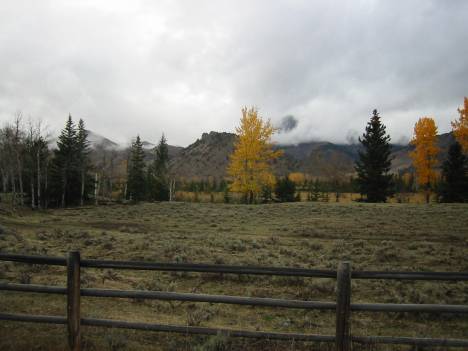
In order to find out more about the Dead Indian site, I went to the Cody library and was lucky enough that they had a copy of the Wyoming Archaeologist from the 70’s when the site was excavated. The local chapter had done the dig with help from Frison. The frayed paperbound copy was the technical report of the findings.
Walking around the site now, my untrained eye would never know there had been a dig. The teepee rings are no longer visible. The only evidence I saw was a single small 1/8″ size obsidian chip. The area though, is a perfect campsite. It has a fairly large and flat meadow right near the creek. It is east enough of the Absarokas that the snow accumulation is less than farther up Dead Indian drainage. It is protected from wind and has areas for lookouts. And it is along a major route through the Park and into the desert below.
In the dig they found antlers of mule deer laid out in ceremonial fashion. A skeleton of a small child was uncovered. Over 500 projectile points and hundreds of stone tools were unearthed. It seems that mostly what these people killed and ate were mule deer and mountain sheep. Even though they lived here during the winter, few elk were uncovered which suggests the populations of large mammals was very different then. George Frison thinks hunting was done singly or in a group, rather than using large scale trapping.
Just around the corner over at Bugas-Holding, mostly Buffalo and sheep were found. The sheep were probably taken in traps right near the site. The site is on private property but a short jaunt over the hills and there are numerous sheep traps, close enough to bring back kill to the campground. An easy walk above the site and you can view the entire valley, east to west; a perfect place for a lookout.  Large obsidian flaking sites are around these hillsides. It seems that this site was later than the Dead Indian and they did use large scale trapping.
George Frison wonders, and so do I, why these peoples would overwinter in and around 7,000′, when they could have easily gone down to the Big Horn Basin at around 5000′ where there is less snow cover. He suggests the abundance of winter hunting. You also have to wonder if the climate was different then as well. As I find out more about what went on in this area east of Yellowstone, I’ll let you know. To imagine this was a major route through the Park, and a large scale occupation area–well, its very quiet here now. Few people live here year round; most choose to live in the lower elevations nearby. People hunt here now, but the people who hunted here in the past also did ceremony to their prey. When I happen to find a small piece of evidence, like a sheep trap or a piece of obsidian, there is a bit of wonder and mystery about it–and sadness. Some principal piece that went on here for thousands of years is gone forever.
Filed under: Native Americans | Tagged: Elk, Native American Culture, Sheepeaters | 2 Comments »

 Apparently Big sagebrush (Artemisia tridentata) is an important food in the winter. The guys think they eat the Sage when the snow cover is high because the Artemisias are taller. As the new grasses emerge, they migrate elevationally, eating the new growth. The sage, though, provides protein that the grasses don’t.
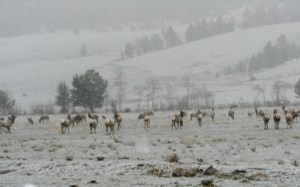
 In biology there’s a fancy term called ‘resource partitioning’, which basically means that the deer and elk just couldn’t be competing for the same foods in the same area or there wouldn’t be enough food. Yet I watch the deer nibble the sage and eat new grasses as well. But according to studies, grasses comprise 75% of an elks’ diet, whereas only about 25% of a mule deers. The guys were telling me that the elk get first choice from their observations.

 They always like to use the thoroughfare of that spot in the valley to go between two ridges. As I drove bye, I noticed one of the cows just had a new calf.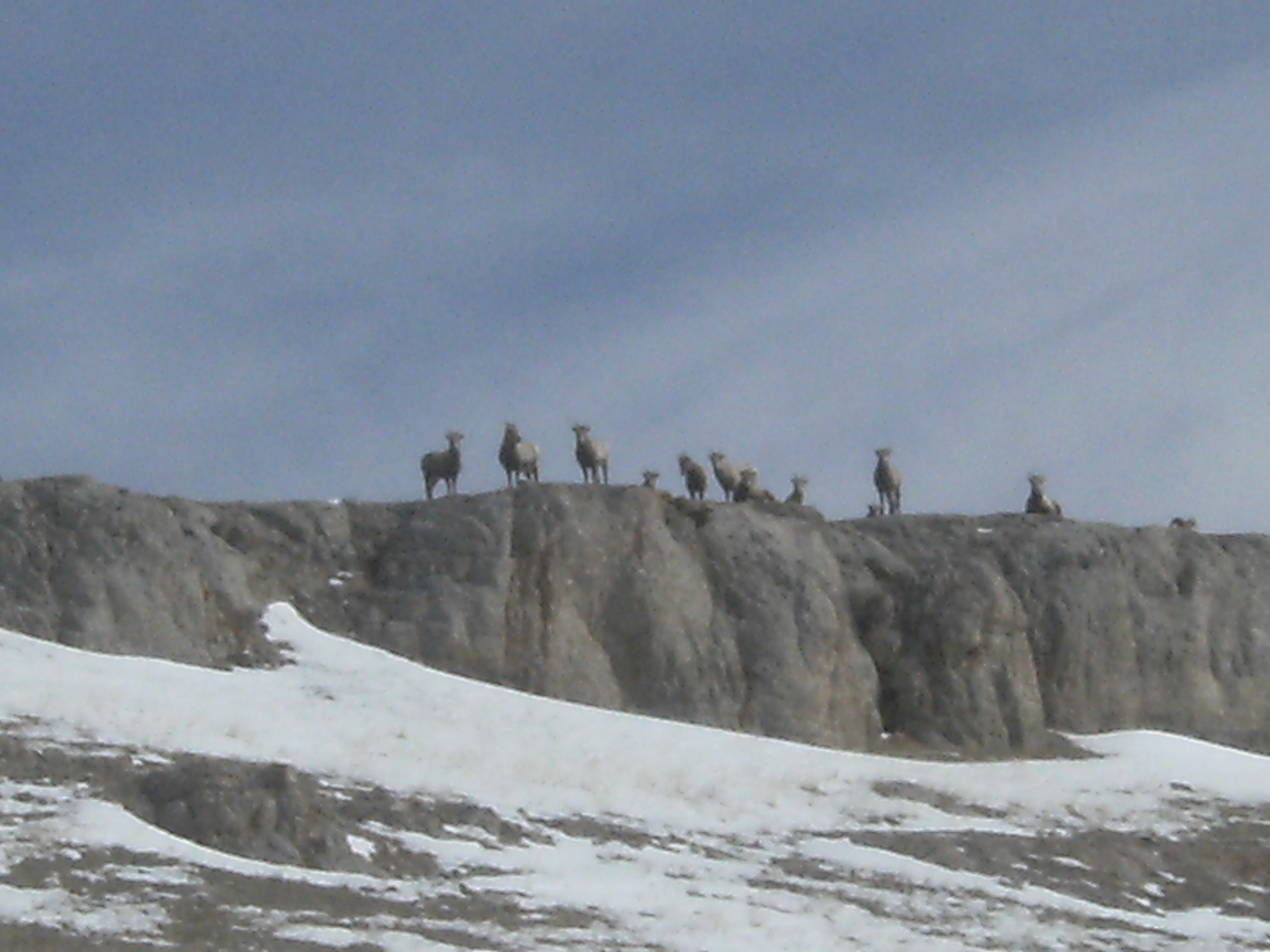

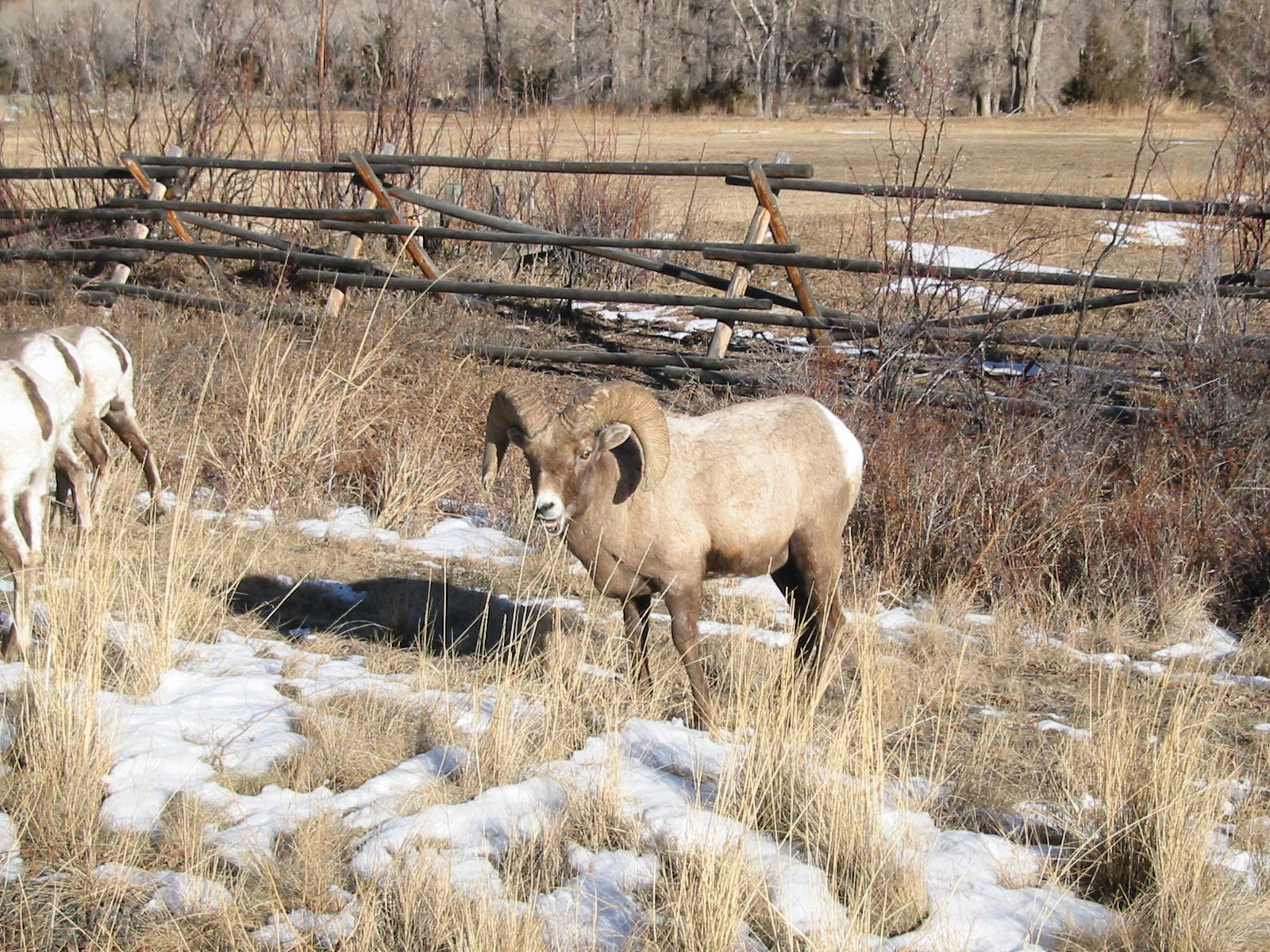


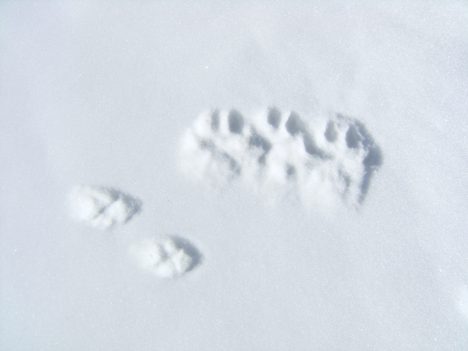 I followed them for a while until they went down a steep wooded slope. But later picked them up and, along with coyote tracks, they were headed straight for the dead horse. Seemed like they weren’t too interested in much of the horse though, as just its organs were gone and the rest of the carcass remained intact. Even the birds weren’t on it.
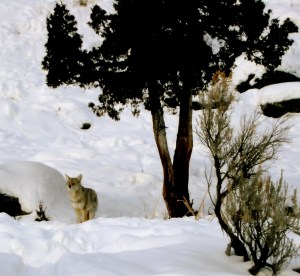 “They say you can’t raise a coyote, but I did” he told me. “The coyote used to disappear for days or a week at a time. Sometimes other coyotes would come around and howl, trying to entice the baby out to join them, and sometimes she would. But she’d always come back. It was four years before I could pet her. She’d sleep against my leg, but wouldn’t let me touch her. Finally, after four years, she’d let me love her. Smarter than any dog I ever had.”


 Leslie Patten Books: Wild Places, Sacred Spaces