• MY BOOKS ON WILDLIFE, GARDENING AND MORE

  • Coming Fall 2024. Pre-order and use code 6AF24 for a 40% discount

  • The Wild Excellence

  • Award winning ebook on DG Primer

Grizzly Bears in the Crosshairs

I’ve written a lot about the upcoming delisting proposal and now it has been officially filed and released by USF&W (put docket #fws–r6–es–2016–0042 in the search box to read and comment).

Grizzly Bear

You can re-read many of my posts and the reasons why I oppose delisting, but here is a bullet summary.

  • Diminished important food sources – cutthroat trout and especially Whitebark Pine nuts
  • No genetic connectivity linkage at this time between Yellowstone bears (GYE) and those north (Northern Continental Divide).
  • Questionable science whether the “ecosystem is full” or if bears are moving out to find new food sources as their primary sources diminish.
  • Climate change makes all unknowable
  • Grizzly bears are the slowest reproducing mammals in North America. A female bears will, at best, duplicate herself in a 10 year period.
  • We just spent 40 years and millions of dollars to increase the bear population from 125 to 725 (see how slow reproduction is!). With the climate changing so fast(this is the warmest winter on record) ,and food sources changing for bears, why are we rushing into delisting. Why not wait another 5-10 years for the science to reveal more data?

OK, now for the delisting proposal by USF&W. To understand it, first you have to understand some terms. Primary Conservation Area (PCA) was the initial conservation recovery zone proposed when the bear was listed in 1975. Habitat rules apply in this area, such as no additional roads, or food storage.

Fairly recently, the Management Team mapped out a larger area they called the Demographic Recovery Area (DMA). Habitat rules do not apply in these areas, but the area is considered suitable habitat for bears. There is much more suitable habitat as far as a grizzly would be concerned, but in the eyes of the USF&W those other areas have either too many people, or too much livestock. The lower western side of the Wind Rivers would be an example which has plenty of living Whitebark Pines but a lot of hikers and climbers.

To easily illustrate this, here is a map:

Slide1

Map from the USF&W 

Grizzly bears that move outside the DMA (heavy black line on map) will not be counted towards the total population to be managed. Some more glaring problems with the delisting proposal:

  • Population could be reduced to 600 bears (500 bears in Wyoming) before “discretionary” (hunting, management “removals” etc.) mortality would be curtailed
  • Population will no longer be allowed to grow – population is now being managed for stability, not growth
  • Leaves hunting of grizzly bears in the John D. Rockefeller Memorial Parkway between GTNP and YNP up to state of Wyoming’s discretion
  • Mortality threshold for independent females and dependent young would be higher than what it is currently set at (2015 Chao2 estimate = 717; current threshold is 7.6%; under proposed rule would be 9%) i.e. population would be immediately reduced upon delisting
  • Population will not be allowed to expand southward in Wyoming (at least under the state’s current management plan) i.e. Wyoming Range, southern Winds, Salt River Range
  • Bears ranging north outside the DMA will not be counted and those are the bears that would enlarge the GYE gene pool.

Grizzly mom and cubs


For the record, I strongly oppose delisting, but it appears delisting and hunting is right around the corner. So what can we realistically demand from USF&W:

  • Look at the map again. The Primary Conservation Area could be regarded as a population sink for preserving the bear population and be a NO hunt zone. In that case, the PCA area would need to be expanded to include Grand Teton NP and surrounding area.
  • The DMA must be enlarged to include what they are calling the GYA distinct population segment. This would then include areas such as the southern Wind Rivers, Wyoming Range, and the Bighorns–all suitable habitat. Problem bears could then be relocated to some of these habitat rich areas rather than just moved around the existing PCA.
  • Livestock owners in the present plan are not required to do anything to protect their animals. One of the biggest problem areas in the DMA is the Upper Green–a linkage between the southern Absarokas and the Wind Rivers. Thousands of cattle and sheep graze in the summer on Forest Service lands and bears encounter them when they move south. These are our public lands bears are on and there should be additional rules in these areas that livestock owners must follow before lethal removal of grizzly bears takes place.

Ideally, the USF&W would have established grizzly bears in the linkage zones between Yellowstone and Glacier National Park, as well as bears north (Yellowstone to Yukon vision). Since this has not happened, the proposal is to fly bears in if genetic diversity falters. Bad and stupid idea!

The Yellowstone and Northern Continental Divide are unique. They harbor some of the last large wildlife in the U.S. With top predators and large herds of prey, we have a complete ecosystem, one of the only in the entire temperate world. Surely we can manage these areas differently, allowing room for wildlife instead of managing for people and livestock. We can decide to set aside lands where these top predators, such as wolves and grizzly bears, can live and not be hunted. Let us create a new paradigm of wildlife management that doesn’t have to include a trophy hunt and ensures the Great Bear’s future.

Note: Please comment on the USF&W comment site listed above. USF&W will give more weight to science cited comments.

Also View the Wyoming Game & Fish Proposed mgmt. draft link

Grizzly cub


Delisting just around the Corner

I’ve been writing a lot of blog posts on grizzly bears for a good reason–to raise awareness that these magnificent animals are headed for delisting, and hunting, in the Greater Yellowstone Ecosystem. Grizzlies in the Northern Continental Divide will be next on the chopping block, but that’s for another round with the U.S. Fish and Wildlife.Grizzly Bear

Despite pleas from environmentalists and Native American Tribes across the West, who maintain the Great Bear is sacred in their histories, the Feds are moving forward fast at the behest of the state politicians.

Arguments on the delisting side say bears are at full capacity in the ecosystem and that is why you see them more frequently in areas near human populations. But according to David Mattson, a leading authority on bear food sources, our bears are just responding to diminishing food sources and moving out beyond the PCA boundaries.

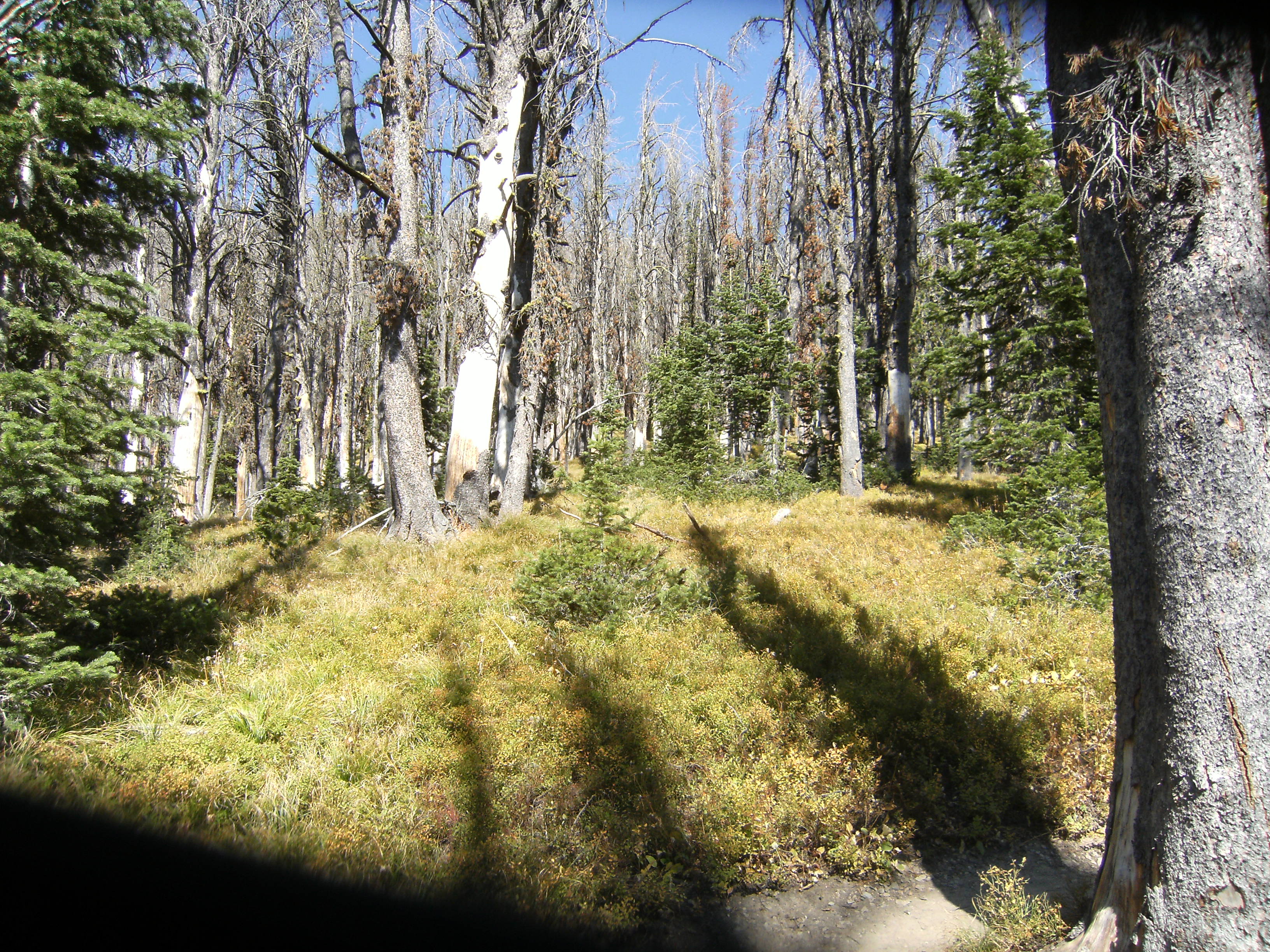
Avalanche Peak, Yellowstone.  Dead whitebark pines

Avalanche Peak, Yellowstone. Dead whitebark pines

Feds are putting a relisting trigger at 600 or less bears. Their goal is to maintain around 674 bears. At the Spring Interagency Grizzly Bear Management Team, the report was 757 for 2014 as bears are counted when they emerge from their dens. Recently, the official count for 2015 was 714 bears, down 6% from last year. Yet so far in 2015, 59 bears have been killed by mostly human-caused mortalities–either directly or indirectly where the management team has euthanized a bear for food rewards. You can see each bear mortality here and the reasons.  That would bring our 2015 count down to 655 for 2015, already below their goal.

One might say rightly that this 2015 spring count minus this year’s mortalities does not account for new births. Yet grizzlies are notoriously slow to expand their population, as I’ve stated in other posts. Since we are most interested in females in the population, grizzlies are not ready to conceive until at least 5 years of age. Their young stay with them for 2.5 years, with a typical litter of 2-3 cubs. And with the high cub mortality, a female grizzly will, at best, only replace herself in 10 years. Grizzly front foot

If one does the math, it’s easy to see that between hunting (which will be legal but is not now; yet even now with hunter mistakes, several grizzlies are killed every year) and bears killed due to food rewards (either livestock or garbage), it will be very difficult to maintain the Feds goals that would include an official hunt.

In addition, add to this math the food pressures facing grizzlies–loss of Whitebark pines, cutthroat trout, poor berry years–plus the unknowns of climate change and one has a disaster in the making for the Great Bear.

What irks me the most is this statement:

Bears living outside the 19,300-square-mile Yellowstone “monitoring area” would not be counted toward the population goal. Similarly, bears killed outside the monitoring area would not count toward annual bear mortality caps.

This statement delivers the certainty of death for any genetic diversity in the GYE–signaling a slow decline over decades of the bears that are isolated in this ecosystem.

I’ve been interested in what happened to the California Grizzly Bear that made them go extinct so quickly. Interestingly enough, when the Spaniards arrived, they brought their cattle with them. Slowly these herds expanded into the thousands. Because the human population in California was low, few of these cows were used for meat. Mostly they were killed for their hides for leather goods. Monthly, or even weekly, they herded the cattle into killing yards, where they slaughtered and skinned them, leaving the meat to rot. Grizzlies soon learned of these cattle heaps and flocked to them. Grizzly numbers soared during the time when the Spaniards owned California because of easy increased food for bears. But of course the Spaniards had their own forms of cruelty. They roped bears for sport, pitting them against bulls after starving them for days while chained up.Grizzly mom and cubs

When the United States won the Mexican American war and gold was discovered in California, miners rushed by the thousands into the state. These men were ruthless. They killed anything that got in their way, which included Indians and Grizzlies. Within a short time, twenty years, both of these native populations had almost disappeared completely. Grizzlies became hard to find, until the last lone bear was killed in Southern California in 1908, lured into a beehive trap. It’s a terribly sad story, yet shows how fast this population can decline, from probably over 100,000 bears to almost 0 in twenty to thirty years.

Grizzly bear population in the GYE before delisting had declined to around 125 bears. After over forty years, millions of dollars, herculean efforts by many wildlife biologists and agencies, there are a little over 650-715 bears. Why is the USF&W bowing to political pressures from conservative states and rushing towards a hunt?

white bark pine bear conflicts chart

Correlation between bear/livestock conflicts and Whitebark Pine loss in the ecosystem

Grizzly Bears Facing an Uncertain Future with Delisting Around the Corner

I’d like to provide several links for people to educate themselves more on the topic of Grizzly Bears and delisting. Dr. David Mattson is considered one of the leading authorities on Grizzly bear foods, studying bears for over 35 years, over fifteen of which were Yellowstone bears. A recent talk given in Jackson, WY outlines Mattson’s reasons why we are having more conflicts with bears in recent years.

The Interagency Grizzly Bear Team, in their annual report outline states that bear populations have stayed flat since around 2002, yet because they are using new methods of calculating population size, the number they are reporting for GYE bears has risen.  In other words, saying there are 750 (or even 1000) bears in the ecosystem in 2015 doesn’t mean we have increasing amounts of bears, but we are using different methods to figure out that population, which has remained flat since 2002. The Team’s reasoning for this is that the ecosystem is full. Mattson on the other hand shows in this presentation with a few interesting charts that the White Bark Pine losses to beetle kill (over 90% dead in the ecosystem) coincides with a rise in livestock conflicts hence grizzlies bears turning to meat for foods in fall. Notice that the loss of Whitebark coincides with that time period of 2002.

white bark pine bear conflicts chart

Mattson has a similar chart that shows a marked increase in hunter bear conflicts overlapping with diminished food sources, particularly white bark pine. Of course it is known that a good white bark pine season keeps bears up high, and pine cones fluctuate from year to year. But the marked increase coincides with loss of trees in the ecosystem.

Moreover, females who are the progenitor of the species, tend to avoid meat sources because of conflict with boar bears who might kill their cubs. The science indicates that sows with cubs who ate more white bark pine nuts tended to have 3 cubs while meat eating bears tended to have 2 and lose one or even one and lose that cub.

Put it all together, and Mattson’s argument is that first, our bears have flat-lined in population size since 2002, which the Agency Team agrees with. But his reason for the flat-lining isn’t that the ecosystem is full, but the bears are losing their primary food sources and extending out to the fringes of the ecosystem, looking for food sources that get them into human conflicts. 

Mattson’s conclusion is the only way to insure the survival of the Yellowstone grizzly bear is by connecting habitat to bears northward. This would allow for genetic diversity and greater food sources, as well as account for climate change that will certainly change bear food sources further.

He also argues that it takes years to see changes in the population so why not wait 10 more years to consider the delisting argument? After 40 years of protections necessary to increase the population of grizzlies from 125 bears to 700 bears, why rush to delist now? Bears are facing an uncertain future.  This year alone 43 bears were killed in conflicts, most of which were food related deaths. This number will increase for 2015 as hunters begin to go out into the field this fall.

To get a full understanding of what Grizzly bears in our ecosystem are facing, I highly recommend watching this talk.

More information on why it is premature to delist grizzlies can be obtained at this website here.

Grizzlies and their Nasty Image: The Journals of Lewis and Clark

It’s fall, and all I can think about are grizzly bears, so here’s another post.  I’ve written in previous posts about all the bears I’ve seen this season and about delisting issues.  Well, bear sightings continue here in the Upper Clark’s Fork. A few days ago I drove up the dirt road to a drainage called Beem Gulch.  In the spring, I saw tracks of a sow with two cubs of the year, though I never saw the bear. I had a feeling she might be around there now, as bears descend into the lower elevations spring and fall looking for food sources. There were about 4 trailers set up in the drainage, though unoccupied. They were wood cutter’s trailers, working on Forest Service slash pile sales.

I walked up a pretty drainage at road’s end, yet saw no bear sign. I was careful of course. Upon driving back down the pot-holed road, I saw her. The car had spooked them, and she was running with her two young cubs across the sagebrush field. Smart mom, she took them into a gully, mid-way, so they were hidden; then used the arroyo as a corridor.

Grizzly track

Grizzly track

That sighting, I figured, was the 7th grizzly sighting this season, and if you count the number of bears, then that makes 13 grizzly bears I’ve seen.  Normally my tally is zero when hiking or driving around outside of the Park.  All these bears were sighted outside of Yellowstone

Grizzly

On the drive home after seeing these bears, I chatted with the game warden.  He told me there were three boar grizzlies on a dead horse (horse died naturally) up the road, with one bear lying on top of the horse. The warden’s take on grizzlies mirrors the official stance of Wyoming Game and Fish, as well as the Interagency Grizzly Bear Team–that is, the ecosystem is full, there’s no where for these bears to go, so we need to manage (read hunt) them.

I’ve stated my views in other posts regarding the official view, so I don’t need to restate it here.  But I’ve been reading a wonderful book by Paul Schullery called Lewis and Clark Among the GrizzliesSchullery is a careful historian.  He dissects each and every mention and encounter that the Corps had with bears, trying to discern which were black bears and which were grizzlies. He notes that for over 150 years, Lewis & Clark’s journals, along with subsequent articles that sensationalized these encounters, shaped our views of grizzly bears as killers, monsters, Ursus arctos horribilis (note the horribilis that was added). Schullery pauses frequently to ponder how this might have occurred. Wisely, he notes that

  • The expedition was charged with a lot of tasks, though their main one was to find the route to the Pacific. Observing grizzly bears and their habits was not high on their list.
  • Every bear the expedition saw, they shot or tried to shoot. This kind of scenario does not make for observing the natural disposition of grizzly bears.
  • Neither Lewis nor Clark observed the customs Indians had relative to grizzlies, nor did they record any myths. Their only observations were of tribes wearing necklaces of grizzly claws.
  • Depending on how you break it down, the Corps saw between 37 and 62 grizzly bears on their entire journey.  Schullery used the larger number, being very generous in his interpretation. Remember that the Corps were unclear how to note the difference between black and grizzly bears, sometimes referring to grizzlies as ‘white’, ‘brown’, or even ‘variegated’.
  • Schullery notes that these bears were seen in a very narrow corridor that was traveled, and that the Corps killed only two females.  Therefore, most of the bears they saw and killed were males, representing only a tiny portion of the population.  Females with cubs were therefore very cautious.

Great Falls 1880

The most damning excerpt from the L&C journals that has helped create the myth of the ferocious blood-thirsty grizzly, was the Corps encounters during their portage at Great Falls. During that long portage of 18 miles whick took weeks, the Corps killed 6 bears and shot at several others. Lewis himself had an encounter that is the most famous, and widely quoted, of all their grizzly stories. Schullery dissects the Great Falls Bear Crisis.  There were dead bison in the stream below the falls; it was bear mating season; people had been using the Falls area for thousands of years. Perhaps the bears associated humans with carrion, piles of butchered bison at the bison jump described by Lewis on May 29

Great Falls today. When I visited last June, there was virtually no water in the run-off portion as all was diverted into the new generating station to the right.

Just recently the Cody Enterprise published an opinion piece stating grizzly bears will be a problem and threat to humans until they are hunted and can learn from dying. In order to understand this still-persistent view on grizzly bears, I highly recommend this book. This twisted attitude reflects stories citizens were told through re-interpretations of the journals.  Remember, people in the U.S. had never seen nor heard about grizzlies (only black bears lived in the east) till the journals became public. And even today we see how sensationalism, not science, sells!

Scullery ends the book with a beautiful reflection:

Today’s grizzly bears live in a tiny, pathetically restricted fragment of the habitat they occupied when Lewis and Clark met them. When we travel the Lewis and Clark trail we visit a former grizzly bear kingdom now lost under cities, ranches, and the very civilized landscapes that the captains and their president could only dream of…We stand along the Missouri River and where there are now dams and roads and cities we feel a vague longing to see what Lewis and Clark saw. Sometimes we can still see much of what they saw, and we strain to imagine the rest.

Grizzly bears are gone from almost every mlle of the routes traveled by Lewis and Clark. The bears survive only in isolated enclaves—a few mountain sanctuaries–places that at best the captains may have viewed from a hazy distance. The bears were gone long before we were born, but in some achingly vague, intergenerational way, we seem to recall them, and even miss them. In their absence these bears have become even more powerful symbols of the landscape than they were when they still roamed it so confidently. They are symbols not only of something lost, but of something we might decide to have again. Perhaps some day, we wonder, it might be possible to travel at least a few stretches of this immense, generous river and again have the chance Lewis and Clark had–to encounter this terrible, beautiful, unforgettable animal. What a discovery that would be.

COY

Grizzly sow with cubs. Yellowstone

An Incredible Bear Story–Addendum to Previous Post

The Greater Yellowstone Coalition (GYC) of Cody sponsored a hike today in the Francs Peak area.  The Shoshone National Forest Bear Biologist, Andy Pils, led the hike.

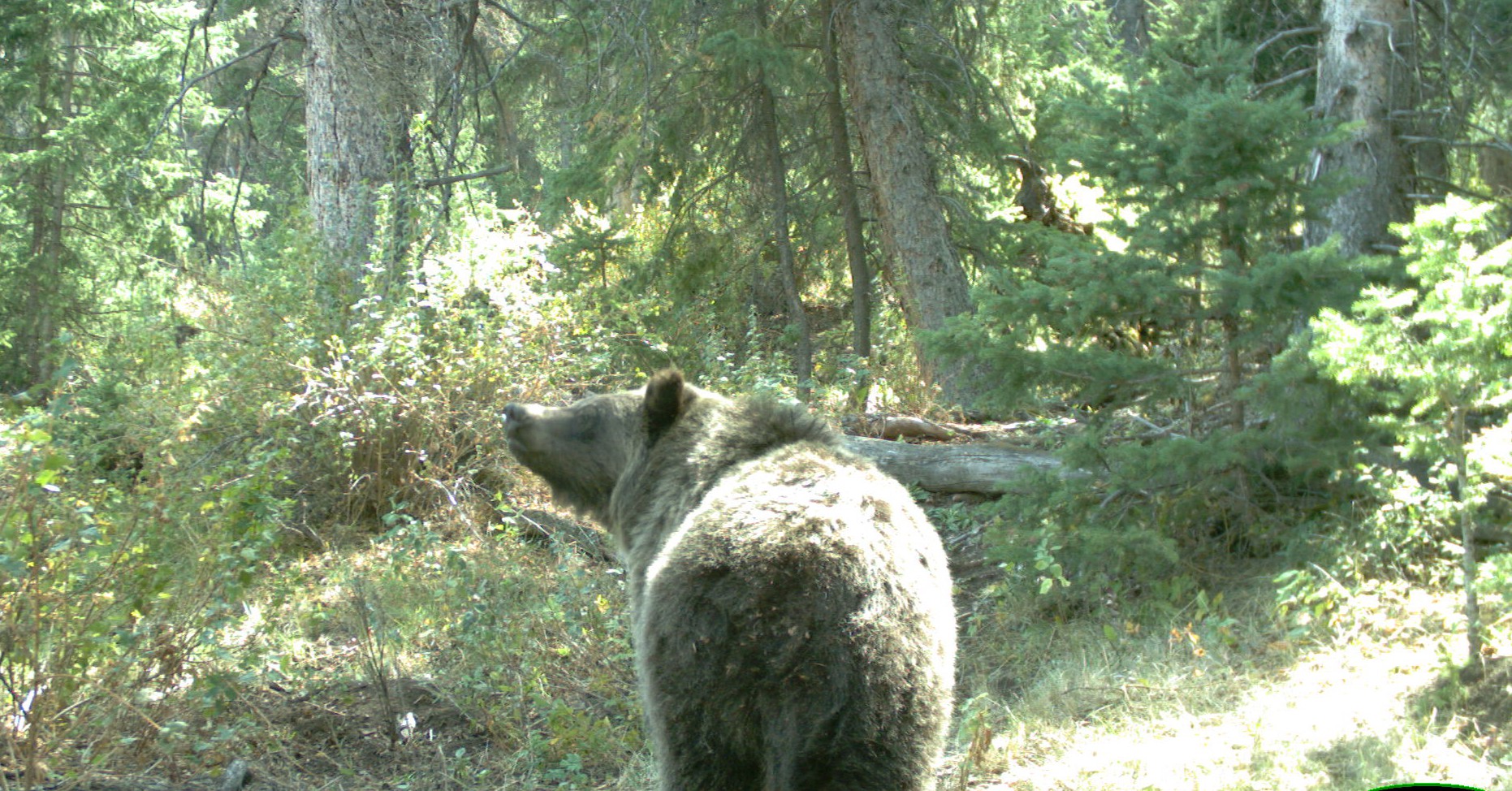
I had an opportunity to speak extensively with Andy about various bear subjects; but the most incredulous thing happened when I told Andy about my sighting last Sunday of a Grizzly mom and her three cubs of the year at Sawtooth lake.  Andy told me that those bears got a huge food reward, unfortunately, and this is what happened.

Grizzly mom and cubs

If you read that post, you’ll find that I walked the rocky road to Sawtooth Lake, approximately three miles.  At 1/4 mile from the lake, the road descends sharply and becomes even more treacherous to drive.  Parked on that rise was a Toyota 4-runner with Montana plates.  I wondered why they drove their vehicle on such a boulder-stricken road.

At the lake, I heard gunshots.  The Montana fellows were target shooting from a beach at the lake’s input, about 200 yards east around the lake front. I was traveling west to little Sparhawk Lake so I ignored them. Around 12:30 I began the hike back to my car.  I passed their 4-runner and entered a small meadow. That’s where I heard, then saw, the grizzly sow and her three cubs. The sow was running, heading directly to the lake.  I considered the fellows down there, thought maybe I might head back and let them know a grizzly was around, but then felt not only would the bear get there before me, but also they were way out on the east end at a beach, not near where the bear would enter.

Grizzly cub

This is where the story gets quite strange. Andy Pils tells me that just about the time the bear was approaching the lake, these guys were walking around the lake back to the road.  They’d just approached the road’s end at the lakefront when they saw the bear and her cubs, although they reported seeing only two cubs. When they saw the sow, they completely freaked out, dropped their packs, fishing tackle and rods, plus left their cooler full of food and ran back to their car.  Once at the car, they raced back to their home in Billings, MT.

By the next day I suppose they started to think about their encounter, and they had the “brilliant” thought that people finding their stuff strewn around might believe the bear ate them.  So they called the Forest Service to report they were still alive and told Andy what happened.

When Andy Pils heard they left their cooler there, he told them that was a huge mistake.  Their response “But it was a 1000 pound grizzly!” They of course had no bear spray.  Andy went to the lake to clean things up.  He found that the bears had demolished the cooler and ate all the food, throwing all the trash around. But the fishing tackle and backpacks were intact.  The Montana fellows told Andy they wanted their stuff back (“There’s about $1000 worth of stuff there”.  “No way” says Andy, just a cooler and some backpacks), but they said getting to Cody would take some time because they broke their car axle leaving Sawtooth Lake.

There are so many parts to this story that are incredulous, and downright full of stupidity.  Let me break it down:

  1. Not one of these guys had bear spray
  2. Greater Yellowstone Bears do not weigh 1000 pounds.  Being a sow she probably weighed about 300-400 pounds.
  3. They did everything wrong when they saw this bear, and who knows how far away she was when they even spotted her.  They should have talked to the bear and slowly walked to their car.  More than likely she would have taken her cubs away from the area.
  4. They ran.  Number one NO NO rule.
  5. They gave her an incredible food reward.  Now those cubs will never forget and will associate humans with food.  Maybe not this year or next, but at three years old when they are out on their own, they might become nuisance bears.  Fed bears are dead bears, period.
  6. That bear and her cubs were bothering no one.  I do not know for certain why she was running along the trees when I saw her.  I postulate that she smelled me and was taking her cubs away.  Therefore, she would have done the same with these guys if given a chance.

This story made me so angry.  The only thing they did right was not shoot those bears.  (As an aside, I was pretty shaken up when I got to the lake and heard gunshots.  I only hoped they had enough sense not to shoot across the lake. Having hiked into a beautiful pristine area, the last thing I wanted to hear was gunshots going off when it was not hunting season.)

If people are going to recreate in bear country, they need to know at least the most basic simple rules and take precautions.  I asked Andy about those young twin grizzlies that were moved which I wrote about here.  He said lots of cars stopped on the Beartooth Highway to watch them and he was certain a motorist had given them a food reward. Once that happened, they became nuisance bears and were moved to a remote section of the south Shoshone.

Bears are having a difficult season, with a poor berry crop, few nuts and a bad moth year, bears are being seen more than ever in the low country because they are very hungry. I worry how hunting season will go this year.

On a lighter note, here are some photos of our hike today:

Wood River Peaks

Wood River

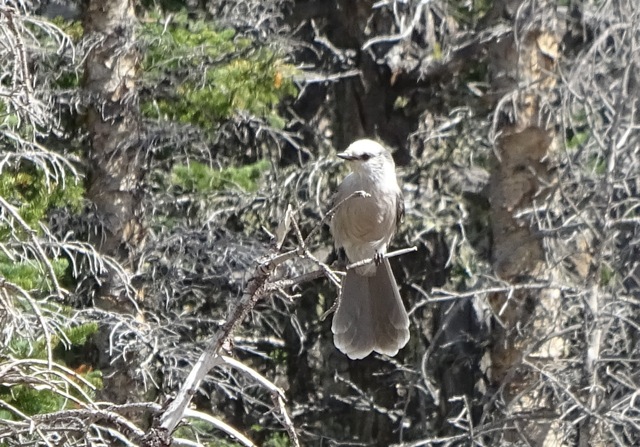
Gray Jay

Gray Jay


Lunch at the summit

Lunch at the summit

Sparhawk Lake, Beartooths; ATV’s and Grizzly Bears

An old-timer told me about a forest service cabin down at Sparhawk Lake which J.K. Rollinson had stayed in.  “His cowboy boots are still sitting there.”

That I doubted.

J.K. Rollinson is well-known in our little valley.  He was one of the first rangers in Sunlight and wrote a book that included his time here in the early 1900s.  His book, Pony Trails of Wyoming, describes trips to this Beartooth cabin, peppered with stories about dangerous lightening storms in the high country and leading scientists to collect grasshoppers in Grasshopper Glacier.

I wanted to see if the cabin still existed so I drove to the dirt pullout to Sawtooth Lake across from the Island Lake turnout.  The road is excellent for the first 1.5 miles, then turns to a rocky mess.  I parked and walked the final 2.5 miles to Sawtooth Lake.

Sawtooth Lake, Beartooths

Sawtooth Lake, Beartooths

It just so happened that the Northwest Wyoming ORV club had arranged an outing with the Shoshone Forest Service last Thursday to look at a possible loop trail extension from Sawtooth over to the Morrison Jeep Trail.  The Forest Service, in their 20 year plan, has promised three new ATV loop trails. I couldn’t go on that trip and I wanted to see the road conditions for myself, so I included it in my walk-through. The Forest Service and ORVer’s had driven the road (of course).  I feel you can see much more if you are on foot.

The day was lovely and there was no one on the road–not one ATV or hiker. As I approached Sawtooth, I saw a parked car above the lake.  At the lake I heard gunshots. People were target practicing on a beach at the lake.  I hoped they weren’t shooting in my direction.  I headed opposite from them, in the direction of the adjacent Sparhawk Lake.

The road ends at Sawtooth in a large turnout, but I found an illegal ATV use trail that was headed around the lake perimeter towards my destination.  I followed it until the thick trees around Sparhawk prevented the ATVer from going further.

This is an illegal ATV road that follows the northwest boundary of the lake

This is an illegal ATV road that follows the northwest boundary of the lake

Heading through the trees, I quickly came to the cabin, at least what remained of it. And the Forest Service had placed a nice plaque there. No cowboy boots though.

Sparhawk Forest Service Cabin built in 1908

Sparhawk Forest Service Cabin built in 1908

Another view of the cabin

Another view of the cabin

Plaque on rock

Plaque on rock

Close up of plaque

Close up of plaque

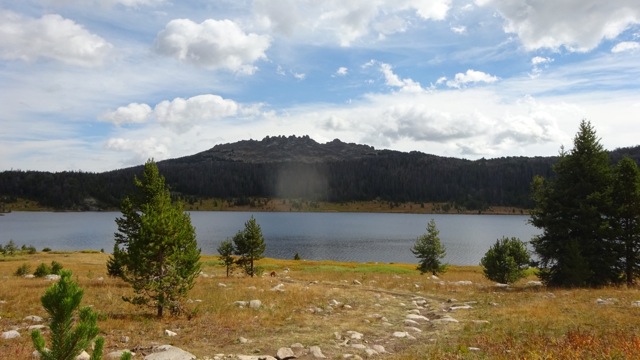
I wondered why they didn’t build the cabin at the adjacent, and very large, Sawtooth Lake.  Here’s a photo of pretty little Sparhawk Lake.

Sparhawk Lake

Sparhawk Lake

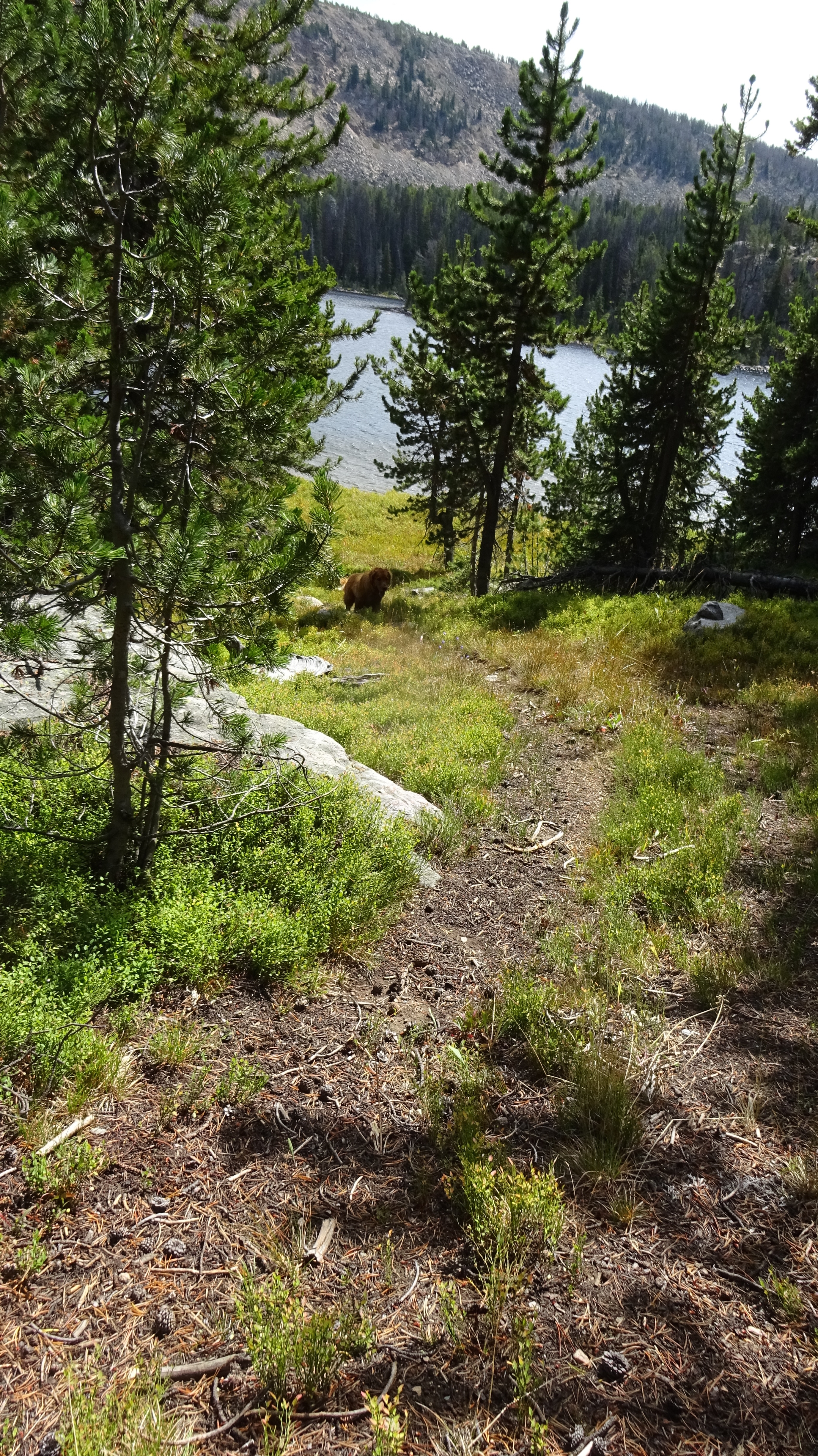
I made my way back to Sawtooth and began the return walk.  Less than 1/4 mile from the lake, by a small meadow surrounded by trees, I heard a very strange sound.  A deep and sonorous honking was repeatedly coming from the forest. I stopped, hoping to glimpse what was making these strange noises.  Suddenly a big grizzly was running along the forest edge followed by a cub of the year. Seconds later another cub, and after a minute another cub!  Something had spooked them to run down towards the lake.  I was far enough away, with the wind in my face, that I wasn’t worried. Here’s a link to a black bear cub making a similar noise. Hearing this, I assumed the sound I heard was from the last little cub who became separated from mom.

This area where the ORV club wants a loop trail is in the PCA (Protected Conservation Area for grizzly bears) and with my sighting, it’s obviously a critical area for these bears. What’s proven is that traffic, especially these loud machines, is very disruptive for bears. A loop trail will bring more traffic here. As of now, people are camping right next to the lake creating fire rings. There are no bear boxes to store food in, and car/ATV campers invariably bring more trash in and tend to not pack it all out (or throw it in their campfire rings).

Young grizzly in the meadows by my house

Young grizzly in the meadows by my house

This year we’ve already had several bears destroyed because they were food adapted. There have been stories of restaurants next to, or even in the Park, dumping their grease outside. Bears that find any food rewards graduate to problem bears which become dead bears.

I’m not necessarily against this area looping with the Morrison Jeep road.  By Sawtooth Lake, it’s only less than 1/4 mile to loop the two roads.  But as ATV’s become more prevalent, their riders need to take responsibility for self-policing illegal off-shoots and keeping a clean camp.  The intense noise factor needs to be considered.  In addition, taking your vehicle into the back country and shooting off guns should be made illegal unless it’s hunting season.

Grizzly Bears in the News

Grizzly bears have been in the news a lot.  On August 13 a seasonal employee, Lance Crosby, was hiking a short loop trail by Lake in Yellowstone National Park when he was attacked, killed, and partially consumed by a female grizzly with two cubs.  Although Crosby was 1. off-trail and 2. not carrying bear spray, there is absolutely no need to blame the hiker.  Possibly even with bear spray Crosby might not have survived or prevented an attack, especially if he came upon the bear at extremely close range.

A grizzly bear was recently rummaging around trash for food just five miles north of Cody. Since the bear had been moved for breaking into trash before, this bear was euthanized. People were talking about how close to town the bear was.

Heart Mountain, a prominent feature outside the Cody area, has been seeing more bears than ever this year–something like 5 grizzlies have been spotted on the mountain. Heart Mountain was part of grizzly bears native original habitat and where one of the last bears was killed in the early 1900s.

A recent headline in the Billings Gazette states that more livestock was killed by bears in Montana than in 2014.

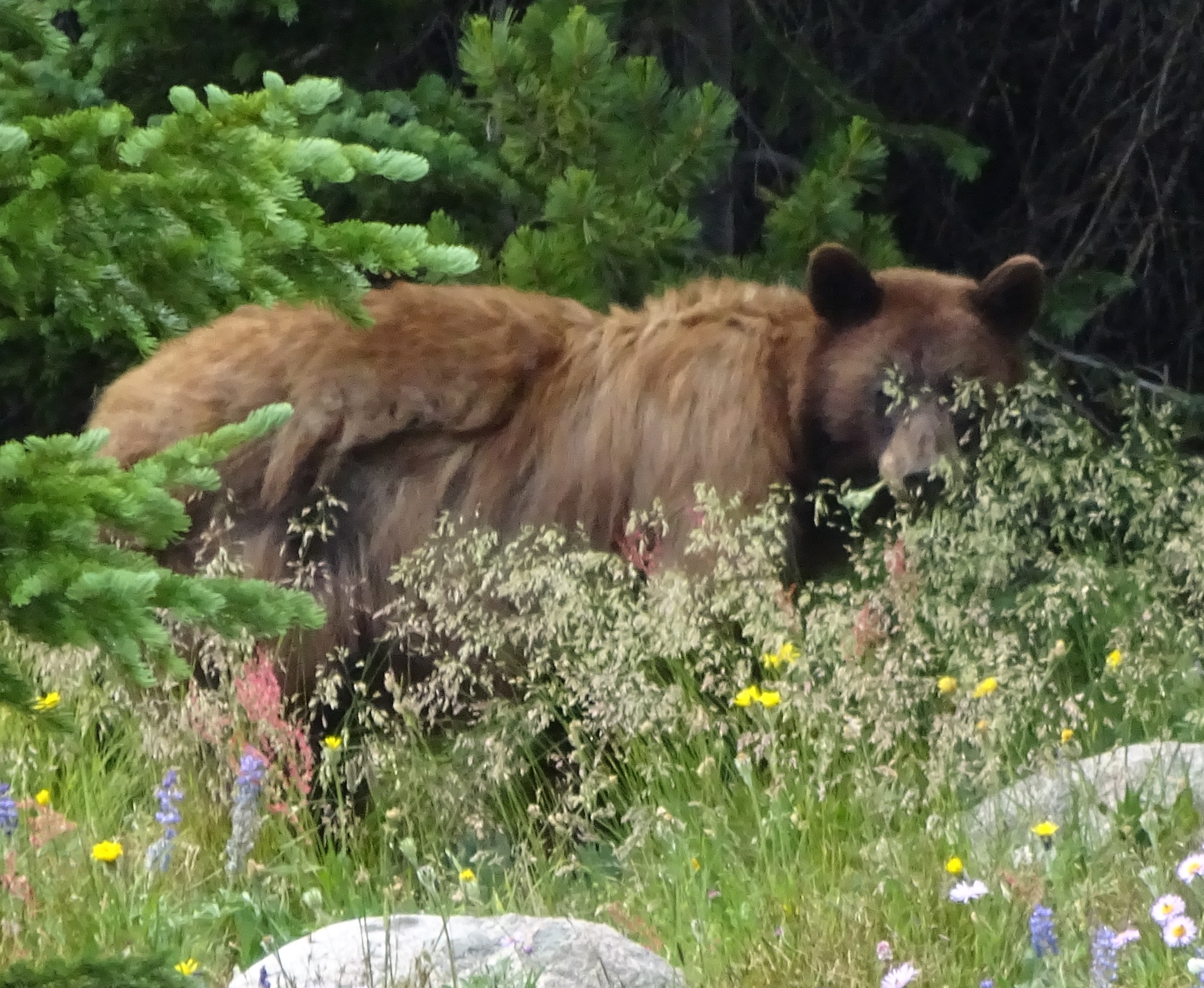
Grizzly Bear

All this news comes on the heels of the USF&W preparing to announce whether they are going to delist the bear this year.  These kinds of headlines puts bears in the crosshairs.  But let’s take a breath and consider the whole picture.

The states have been putting a lot of pressure on the feds for quite a while to delist. There will be a lot of money in tags for grizzly bear hunts and the states, already experiencing declining revenue with decreased hunters, are itching for those dollars.  One writer writes in the Enterprise “Grizzly Bear attacks will continue as long as species remain protected”.  But what does that mean?  Dead bears are taught a lesson?  Grizzly bears are normally solitary animals except for moms with cubs.  Unlike wolves who might see pack members killed by hunters, bears will just be dead without bear company to learn from.  Black bears are hunted and I still see them.  In fact, in Wyoming, black bear baiting is legal in most areas.  Does baiting bears mean live bears will no longer seek human garbage?  Of course not.

If grizzlies are delisted, we’ll see images such as this one

This article in the Cody Enterprise sums up the arguments for and against delisting pretty well.  Pro delisting: bears are above the delisting quota of 550 (officially the present count is 756 but it seems that the numbers being thrown around liberally are 1000 bears.  Bears are hard to count because they are solitary) and it’s time. Although Whitebark pines are 90% dead in the ecosystem, bears are creative and can find other food sources.  Con delisting: Those numbers are not accurate because bears are moving farther out looking for other food sources as their primary fall fattening-up food, pine nuts, is diminished.  Climate change is unpredictable as to what will be happening with the ecosystem’s food sources, and so bears need to be able to have connective corridors to roam north–for food and for genetic connectivity. The delisting plan does not account for connectivity but confines grizzlies to a virtual zoo in the GYE PCA.

Grizzly bear

Grizzly bear

I have several thoughts here:

Just looking at this year’s fall foods for bears, we’ve had strange weather.  Lots of spring rains instead of snows made for good grass for ungulates, but a poor berry crop. My chokecherries are having the worst crop since I’ve been living here for 10 years and I’ve noticed the huckleberry, buffalo berries and raspberry crops are very poor.  In addition, there are almost no cones on my limber pines, an alternative crop when Whitebark crops are poor. The transects done this year on the Whitebark pine crop indicates a poor year according to Dustin Lasseter, who spoke with me at a Landowner’s meeting in early August.  He’d accompanied the IGBT checking a transect.  The 2015 report will be available here when published.

According to Doug Peacock, around the Greater Yellowstone Ecosystem, the most important fat-containing foods for bears in the fall are moths and whitebark pine nuts.  Boar bears will eat more meat than females, as they are able to displace females and younger bears.  Fat is essential for hibernation.  Without whitebark, or the limber pine nut to substitute (Limber pine nuts are smaller, but nutritious and high in fat.  They are stolen from squirrel middens just as the whitebark nuts are), where are these bears going to get enough fall fat?

Grizzly mom and cubsChris Servheen, the biologist who helped bring the bear back from the brink says ““Bears will tend to move around more, looking for alternative foods, and movement usually increases conflicts”.  But Servheen goes on to say:

Even with a poor berry crop, however, Servheen said grizzly diets can include hundreds of different foods, so the bears still have plenty of options available. While huckleberries can provide an easy source of calories as the bears begin to fatten up for their winter sleep, they will also find roots, tubers, moths, ants, hornet nests and a variety of other berries such as those from hawthorn and mountain ash.

According to Peacock, none of these can substitute for fat-rich pine nuts in the GYE.

But whitebark pine in the Yellowstone park area is nearly gone: No amount of science or management will bring the trees back in our lifetime. With whitebark pine nuts eliminated from grizzly bear diets — and this seems to be the case — grizzlies in this island ecosystem will be severely stressed. The bears could be on their way out.

Grizzly bear

Second, as Peacock says in the linked article above, bears will need room to roam to connect with alternative food sources as well as linkage to other bears.  This one issue addressed may save, in the long run, the grizzly bear population in the Greater Yellowstone ecosystem.

Third, people and bears can co-exist and it is up to us humans to make that effort.  In short, that means protecting food sources such as chickens, grain, and human garbage.  The bear that had to be killed near Cody was trash adapted.  Maybe those residences never expected a bear that close, but it’s time we all did. Take for instance the black bears of the California Sierras. They have completely changed their habits because backpackers are now required to use a bear canister.  If you don’t, then a ticket is issued.  Bear canisters can even be rented for next to nothing from the Park or Forest Service in the Sierras.

Cattle and sheep that are on Forest Service allotments in sensitive bear corridors of the GYE, such as the Green River basin, should be reduced in herd size or eliminated, and a range rider needs to be with them.  Those animals lost to bears are already being compensated at 3 times market value.

Lastly, we need new stories about bears, not just horror stories.  We need to re-imagine what it’s like living with this awesome creature and realize we are blessed to live in the last remaining place in the lower 48 where these bears still exist–less than 2% of their former range.  We can give them at least that little bit.  We’ve spent the last forty years restoring their population–from 125 bears to around 750 bears.  Delisting the bear at this critical juncture is too premature, as we are just starting to feel and understand the forces of climate change.  Once delisted, hunting will take place. Hunting an animal as smart as the Great Apes just for trophy is close to a crime. The world was up in arms over trophy hunting a lion named Cecil in Africa.  Why would this magnificent animal be so different?

Young grizzly bear

Young grizzly bear

ReWilding the Beartooths

It’s happening.  Grizzlies are re-inhabiting the Beartooth Mountains.

grizzly warning sign in the greater yellowstone area

Grizzly warning sign in the lower elevations. Now bears are returning to the high elevation Beartooths

In the last few years, Grizzly activity has increased along the flanks of the Beartooth Front, the southeastern base that nestles the community of Red Lodge and the long north and eastern drainages where berries and other fall foods are abundant. Red Lodge is now getting its share of grizzly bears. But still there were few reports of bear activity in the high alpine forests.

Certainly bears have used the lower drainages on the west side of the Beartooths like Crazy Creek,  Soda Butte, or Lily Lake.  These are low elevations that provided a corridor through Cooke City into and out of the Park.

Years ago I heard of a sow who lost her young cub in the spring to an automobile.  She bawled for a week around the Clay Butte/Beartooth Lake area, looking for her cub.  Yet although I’ve backpacked frequently, and spend a lot of time in the summers day-hiking the western Wyoming side every year, I’ve never seen any bear sign–tracks or scat.

The Beartooths still offer bears great habitat.  The excessive moisture brings a lot of plant food opportunities in the way of grasses, forbs and roots.  And they still have healthy stands of White Bark pines.  White Bark pines in the GYE are 90% dead.

Avalanche Peak, Yellowstone.  Dead whitebark pines

Avalanche Peak, Yellowstone. Dead whitebark pines

The exception to that rule are the Wind River Mountains and the Beartooths.

White Bark pines in the Winds.  Healthy stands

White Bark pines in the Winds. Healthy stands

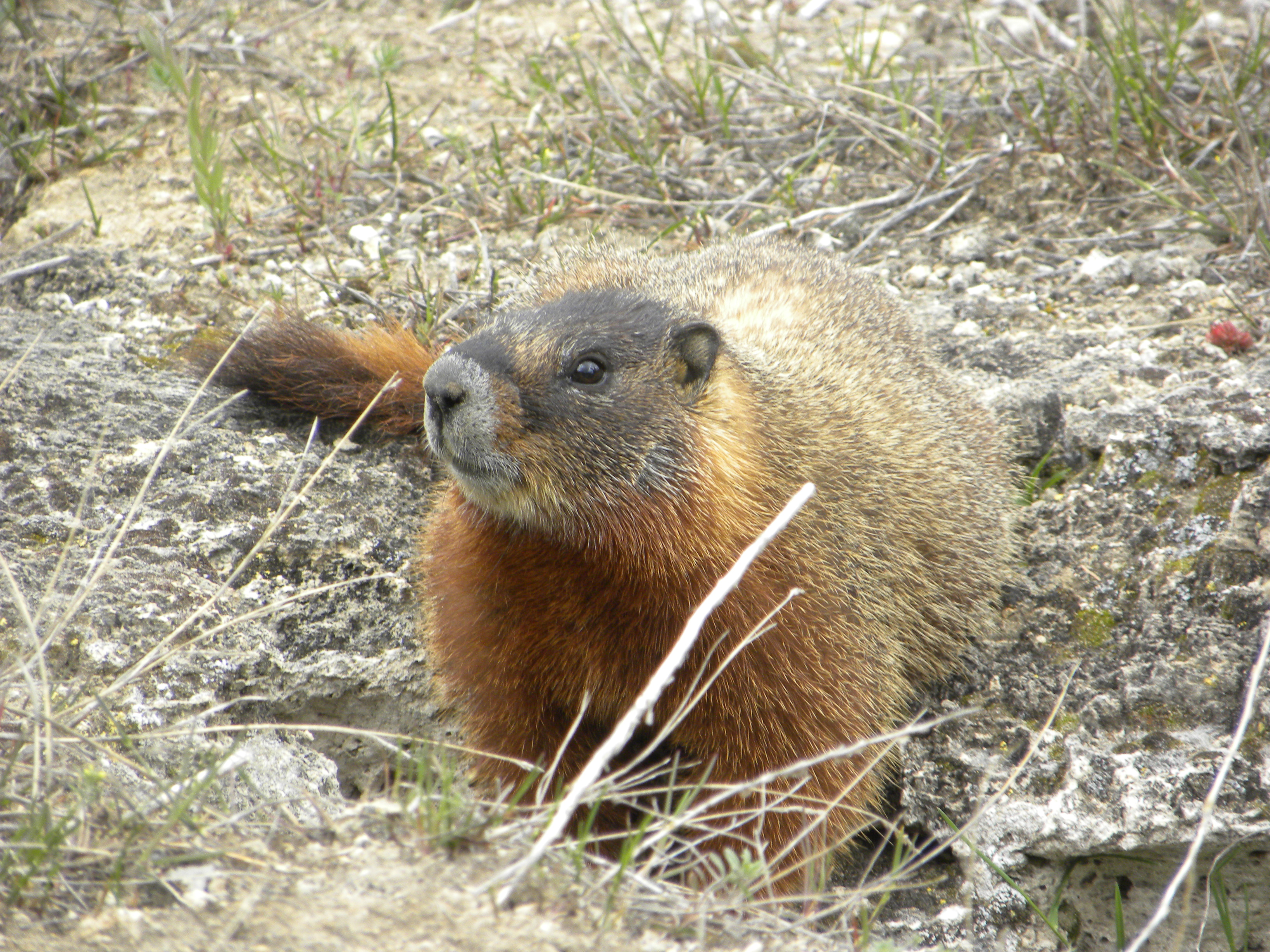
And those Marmots have traditionally been a favorite protein for bears.

Marmot

Marmot

So when I began my hike today from Hauser Lake down to Stockade Lake, I figured that there were no bears around these parts–especially so high.

Losekamp Lake (around 9600′) sits at the base of Tibbs Butte (10,676′).  Grizzly bear watchers will tell you that these bears mysteriously disappear around the 4th of July.  For years no one knew where they went, until a pilot flying over high talus slopes in the mid-80s saw bears congregating there.  These bears were taking advantage of Army Cutworm moths who feed on alpine plants and summer here.  My understanding is that the Beartooths, although high and abundant in these talus slopes, do not have moth sites, although the Wind Rivers does.

Losekamp and Stockade lakes are rarely visited, being on the less popular southern side of the highway.  I was alone on my walk.  Koda and I made our way down to Stockade Lake, where I tooled around for a bit looking for an elusive Sheep Eater trap I was told was once there.

Stockade at stockade lake

Stockade at stockade lake

Stockade Lake

Stockade Lake, Beartooths, WY

With little wind and mosquitos too thick for a lunch break, we headed back towards Losekamp lake.  Koda a bit ahead, went off the trail about 10′ to smell something behind a boulder.  All of a sudden he growled–a sure sign of an animal he got scared of–and I looked up to see a sleepy bear rise from the boulder.  I quickly called Koda back, and grabbed my bear spray.  We stopped for a moment to access.  The bear, surprised and probably a bit scared himself, immediately began eating, displacing his fear to food.  He seemed sleepy and not about to run away, nor be aggressive.  He pondered us.

Young bear

Young bear

Grizzly bear

A young grizzly, probably just kicked out this year, I did wonder if his mama was around.  Lucky for us she was no where to be seen.  I gave the bear a big berth, going off and around the trail, while talking to him gently, apologizing for waking him up.

Most grizzly encounters end this way, with the bear usually running off. A few weeks ago around my area, Koda alerted me to a grizzly that was also sleeping by the trail, awakened by our presence.  Koda kept by my side, and the griz, about 200′ away, pondered us for a moment, then ran off.  Dogs will alert you and keep you safe if they are well-mannered and under good voice control.  A dog that runs all over the hills and is not very responsive poses a grave danger for a person, as the dog might bring the bear back to you in his fear, with the grizzly following.   The best book to read for safety with grizzlies is Hiking with Grizzlies by Tim Rubbert, or watch online The Edge of Eden: Living with Grizzlies with Charlie Russell and observe Charlie’s body posture when dealing with bears and using bear spray.  Stay away from those books about Grizzly attacks.  It’s like reading a book about fatal car accidents instead of actually learning how to drive safely.

Robin egg, hatched

Robin egg, hatched

Upon returning to the car at the trailhead, I stopped at the Top of the World Store to deliver some of my Wild Excellence books.  I told Kristi Milam, the owner, about my bear experience and she told me there’s been a lot more sightings this year than ever before.

One other note on the Beartooths:  it’s becoming an excellent place to possibly see, or hear, wolves.  I’ve been seeing tracks of the Beartooth pack around this same area for weeks, as well as Clay Butte and lower elevations like Crazy Creek drainage.  Wolves were spotted up at Top Lake just weeks ago in the meadows. Elephant's head

With Grizzly Bears and wolves returning to the Beartooths, they are finally re-wilding.  Carry bear spray and be safe.

Spring, Grizzly tracking, and What’s up with Delisting

It’s spring and that means the bears are out.  But so is everyone else. Pups are born and need to be feed; elk are calving; birds are nesting. It’s a busy time and a great time to go into the Park.  There you can also see the bison babies.

But here in my valley right next to Yellowstone, all the same activity is taking place, just a tad more hidden.

Coyote relaxing before she goes mousing again

Coyote relaxing before she goes mousing again

Young bull moose

Young bull moose

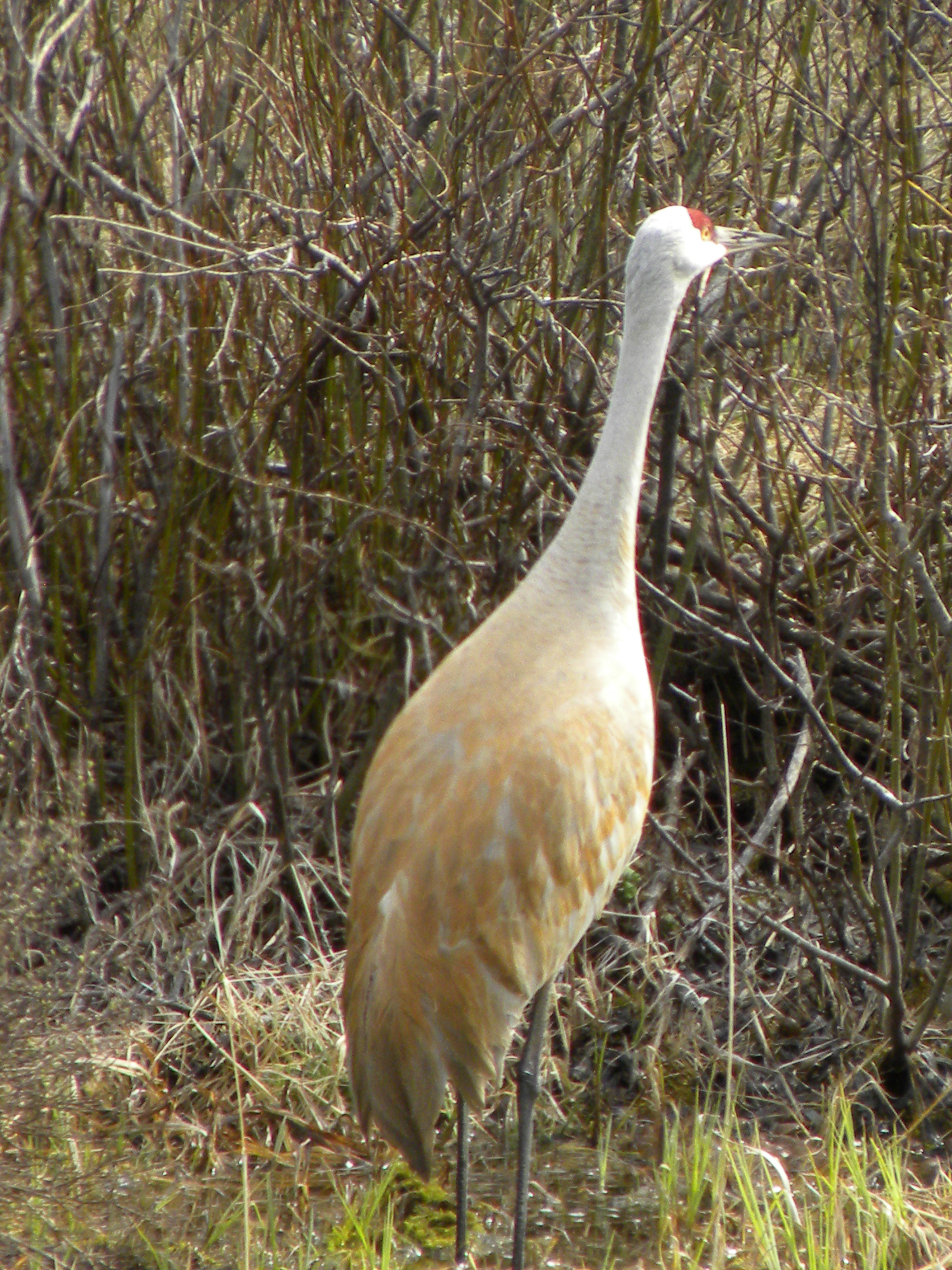
Sandhill Crane

Sandhill Crane

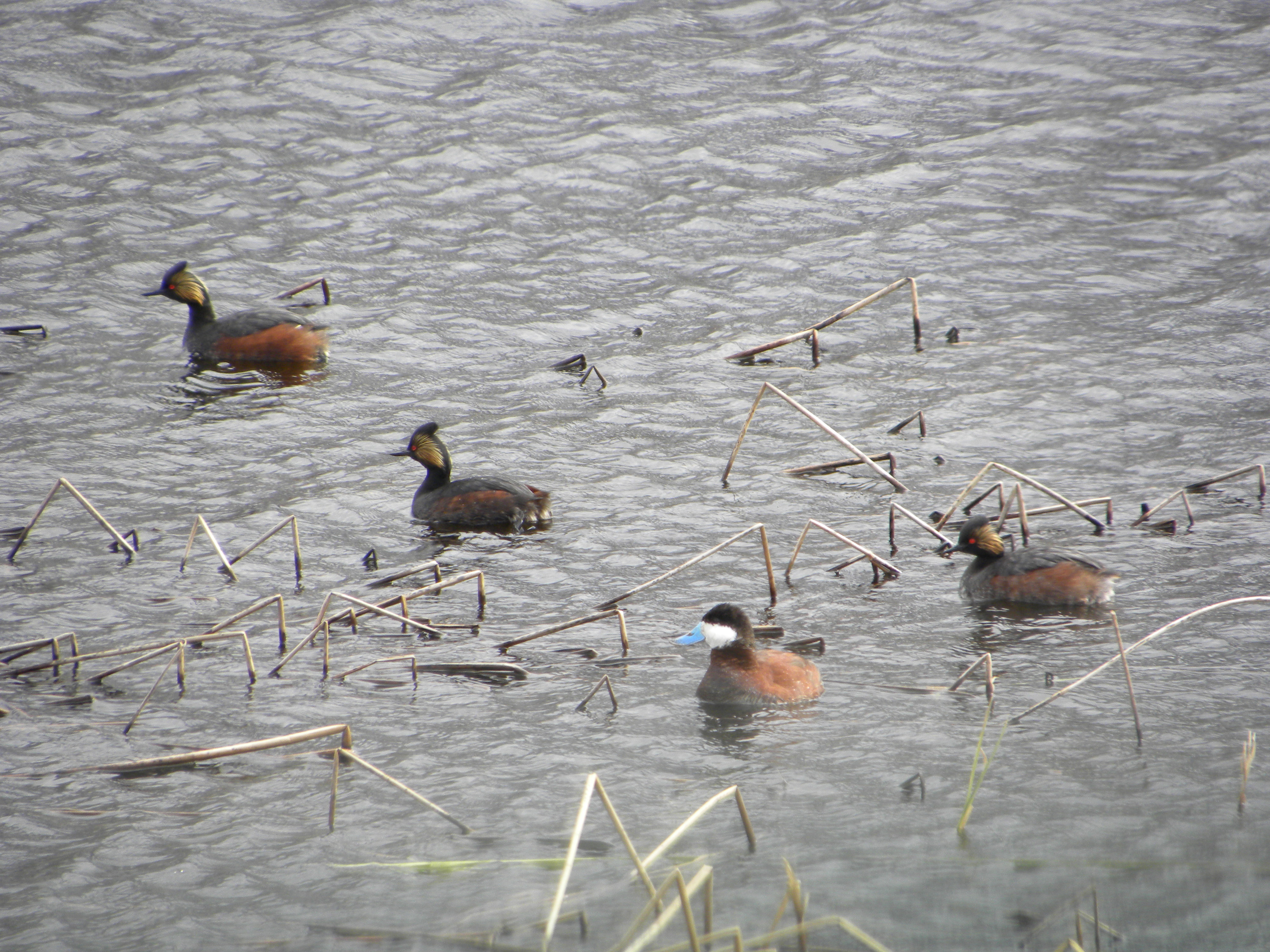
Ruddy Duck with Horned Grebes

Ruddy Duck with Horned Grebes

I live in a ‘drop off’ place for bears that get into trouble.  Bear trouble around here always means trouble that people make for bears like not putting up their food stuff correctly, or not watching their stock so calves or lambs are killed.  The Interagency Bear Management Team drops bears off here hoping they will go into the Park.  Usually they ‘home’ back to where they came from; but because the Agency has been moving them around for so long, all the drainages around here are already occupied by other bears.

The spring is when bears hang around down low as they follow the seasonal warm-up. They spend time eating grass, or, if they can find it, winter kills, and dig for roots. Hiking at this time of year here in the valley it’s inevitable that you will see grizzly tracks and it’s worth knowing what they look like and how to identify them.  For instance, the other day I hiked a drainage and saw what appeared to be a single boar grizzly roaming that area.  Another drainage nearby revealed a sow and a two year old–a combination I definitely needed to be watchful of.  It seems like every hike either you are ‘following’ a bear or maybe the bear is ‘following’ you.  Yet keep in mind that grizzly and black bears are mindful of their own business and are not looking for an encounter with a human.  The best advice is to be alert, awake, aware.  Carry bear spray and know how to use it quickly. Take your time in the woods–no power walking or headphones.  Stop every so often and look around like a deer might.

Bear tracks are easy to identify–they look a lot like human footprints, but bears have their big toe opposite than humans and walk pigeon-toed.  Telling the difference between a grizzly and a black bear takes more practice and is not always a certain thing.  The Palmisciano method is the recommended technique, working only on front tracks.

Jim Halfpenny says if you have a good, clean track, it is very accurate. But he also notes that ‘anyone who says it is always easy has not done much tracking’.

Since I.D.ing that the print is a bear is easy, what takes practice and is much more pertinent is being able to pick out a track when it’s very faint.  With practice, I find that bear prints are so distinguishable that they are probably the easiest to pick out even when hard to see.  Here are a few examples.

Print looks even larger because its in mud, but you can see his claws

Print looks even larger because its in mud, but you can see his claws

This one is easy of course.  The next one isn’t so hard but you could miss it in the puddle.

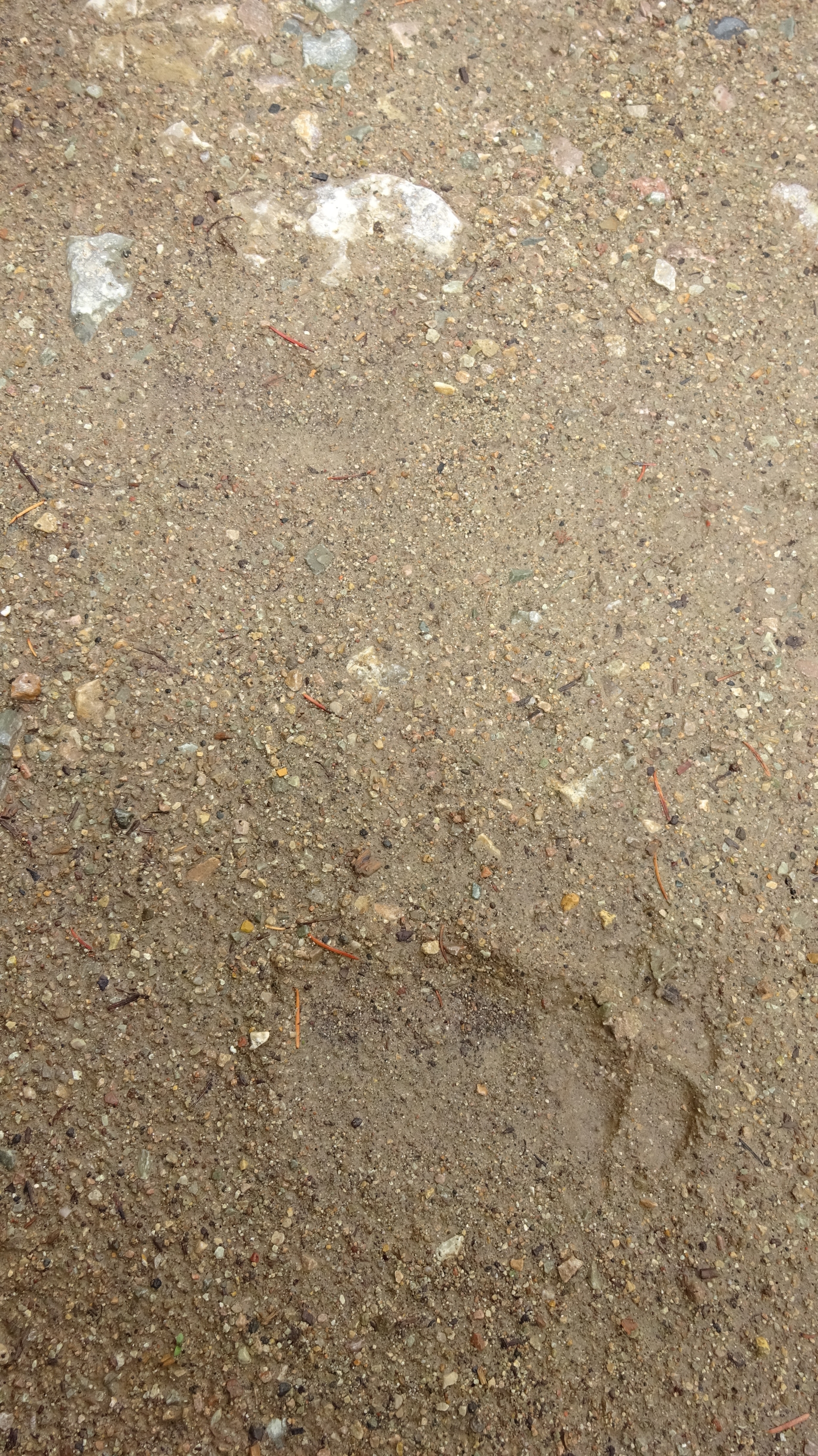
Bear print in a puddle

Bear print in a puddle

The puddle print is a perfect example of how difficult the Palmisciano method can be, especially with just one print.  The above print appears to be a black bear, but since I was following this bear for about a mile on a dirt track, I had other prints that were much more distinct.  I also know the area is frequented by grizzlies and not blacks.  So the above print, although it appears like a black bear print, is actually the front print of a grizzly.

Below prints are pretty easy too.  Note the back foot is in front of the smaller front foot. That’s a typical gait for a bear called an amble.

Can you see these two bear prints, front and back?

Can you see these two bear prints, front and back?

Now look at this one.  Koda has stepped on part of it and mostly the metatarsal pad is what is strong.  If you look to the top of the photo you can barely make out his left front foot.

Faint grizzly print

One saying trackers have is that it’s not the track you can see, but the next track that you cannot see that teaches you how to track.  Keeping that in mind, follow a bear’s footprints and measure or use a stick to see the distance between right and left tracks. Soon you will come upon a track that is not visible, but with the stick as a measure you will know where it is.  Study that ‘print’ and soon it jump out at you.  After a while of doing this, you’ll find yourself walking along and then ‘see’ a print that seems invisible to others.  Seeing that print might just keep you safe as it will heighten your awareness and let you know there’s a grizzly in town.

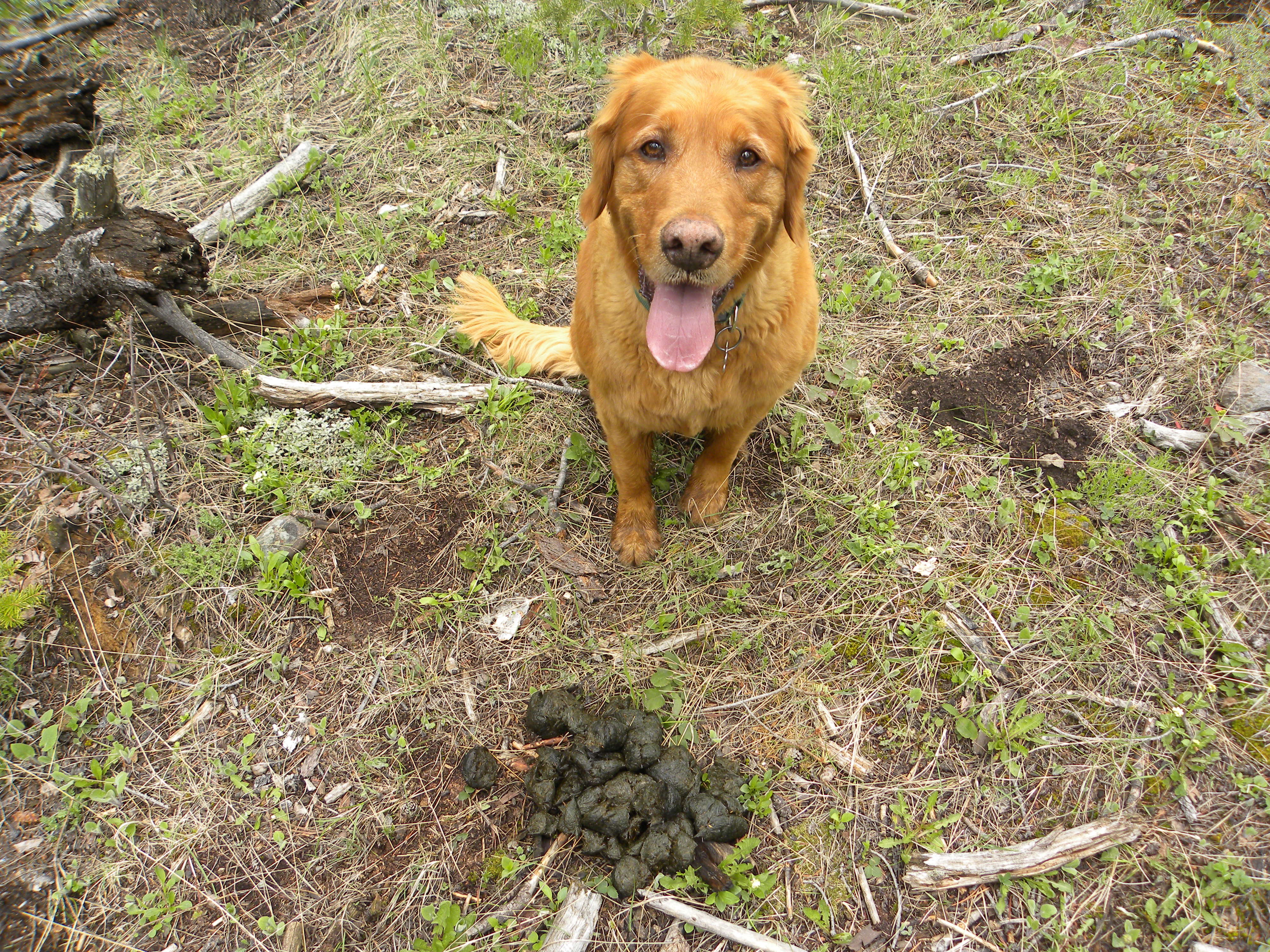
Koda shows the size of this bear scat

Koda shows the size of this bear scat

Grizzlies are ‘on the chopping block’ to be delisted.  The IGBT and Sally Jewell are itching to return their management to the states. Once that happens, they will be hunted.

I disagree with delisting for a wide variety of reasons.  In the Northern Continental Divide Ecosystem (NCDE) which is basically the area around Glacier National Park, there are approximately 750 grizzly bears.  In the Greater Yellowstone Area (GYE) there are about the same.  But the connecting corridors in-between have few to no bears.

NCDE bears can connect for genetic diversity up into Canada.  But how can our bears here, in the GYE, connect?  Studies have shown that without any infusion of new genes, these GYE bears will eventually die out.

When grizzlies were listed back in 1975, there were about 120 bears in the GYE.  It has taken over 40 years to get to this point where we have over 700 bears.  If hunting begins, the ‘easy’ bears, at the edges of the Ecosystem, will be killed.  Those are the bears that would connect north with their cousins.

And more importantly, living with bears and seeing how intelligent they are, I cannot see how we can hunt them.  Like the tribes who are united against delisting, I have come to feel a powerful spirit connection with grizzlies.

Please read my op-ed below that appeared in the Powell Tribune a few weeks ago.  I tell the story of ‘The Woman Who Married a Bear’ and how we are like that woman today.

Patten Guest Column_5.5.15

More about Grizzly Bears! Grizzlies, the PCA, and the Wind River White Bark Pines

What is the PCA?  If you care about grizzlies, then this knowledge is important.

The PCA stands for Primary Conservation Area and is a designated area within the Greater Yellowstone Ecosystem with special rules to protect and insure that the grizzly bear population will thrive into the future.  This area has special rules regarding activities that would disturb bears, such as excessive roads, ATV’s, numbers of elk hunters, etc.  The aim is to ensure genetic diversity and keep a minimum of 500 bears.  This area was first outlined during the bear’s period of recovery.  The PCA rules will still apply even after grizzly bears are delisted, which will probably come in 2015.

Primary Conservation Area in Blue. Suitable habitat for bears in Red.


Now look at the above image.  The actual designated PCA is in blue.  The suitable habitat is in red.  Notice there is an ‘Italy-shaped’ leg in the lower right that is not in the PCA but is suitable habitat.  The majority of this is the Wind River range.  See there is a main highway between Riverton and Jackson that cuts right through a small section of the PCA.  In order for bears to inhabit the Winds, they have to cross this highway, and the main corridor into the Wind River range from the north side (Gros Ventre/Upper Hoback area) of the highway to the south is through the Upper Green River Valley.  Per Wyoming Game & Fish own conservation guidelines:

Based on current road densities, presence of domestic sheep and current levels of conflict with livestock, the upper Green River area on Forest could also be considered unsuitable for grizzly bear occupancy. However, important biological issues make the Upper Green River area very important in ensuring CS (Conservation Strategies) population and distribution objectives will be met long-term.The Upper Green River area is presently occupied by grizzly bears and is important contiguous habitat that links the bear population between the Gros Ventre/Upper Hoback area, Upper Wind River Range, and core bear habitat north of this area.

So why am I talking about this?  Because it is rare, and I mean rare, for a bear to get through the Green River corridor without getting into trouble with livestock.  That valley is saturated with sheep and cattle allotments (these are on public forest service lands with some 7500 sheep and 22,500 cattle in a 323 square mile area).  Bears are moved, or removed lethally.  Recently the ‘take’ quota for grizzly bears was just raised in that area and even more important, the limit for female grizzlies kills was eliminated there.  Therefore, it is difficult for a bear to get pass through this bottleneck corridor into the Wind River habitat. Yet the Winds provide excellent, essentially uninhabited habitat.

Another red flag for the Winds and bears is that the southern portion of the range is excluded from conservation strategies because of several factors.  First because there are still very active sheep allotments there (these are sheep allotments on Wilderness).  Also because of heavy backpacker summer use. But I am here to tell you that the best and healthiest white bark pines are in the southern portion of the Wind Rivers.

I’ve been backpacking the Winds every year for over 15 years.  I’ve seen many of the northern and central Wind River White Bark Pines face a heavy toll from the beetles.  Not as heavy as the rest of the Greater Yellowstone Ecosystem, where White Bark Pines could be considered to be functionally dead.  Reading my previous post, you’ll note that even the Interagency Grizzly Bear Study Team admits their own transects are 75% dead.  But it appears that even in the worst portions of the Winds, its more like 40-50%; while my recent trip to the Shadow Lake area of the Southern Winds, I’d estimate the mortality at around 20-30%.

Notice the tops of the tree.  Cones are produced on the new growth.

Notice the tops of the tree. Cones are produced on the new growth.  Tree is full of cones!  See how healthy these pines look.  This is the pass near Washakie creek.  Notice the dead trees in the background.  This is a good visual estimate for your reference of dead vs. live percentage.

And while the Interagency Grizzly Bear Study Team noted that this years cone production was ‘good’ at 20 cones per tree, my estimate in the Washakie Creek environs was more like 70-100+ cones per tree!  Yet, not one grizzly bear will be able to reach this area!

Another pine full of cones

Another pine full of cones

Although the Interagency Grizzly Bear Study Team completed their legally required study on the grizzly bear diet last year, they  stated that while white bark pines will not last in the Greater Yellowstone, bears will find other foods.  I feel this statement makes assumptions that cannot be known.  Rocky Mountain grizzlies are not like Alaskan bears that eat salmon with high protein and fat. Our bears depend on limited sources of fall fattening foods–essentially moths and pine nuts.  If we want to ensure the bear’s survival, we should be opening up all the ‘suitable habitat’ in the GYE.

Avalanche Peak, Yellowstone.  Dead whitebark pines

Avalanche Peak, Yellowstone. Dead white bark pines make up this dead forest

Corridors like the Upper Green, full of livestock on public lands, need tighter livestock rules, not dead bears. These are not private land ranchers, but ranchers using public lands at very low rates.   Rules like running cowboys with cattle, removing sheep or at least penning them at night with guard dogs, need to be set down by the Forest Service.  And public lands ranch-at-your-own-risk should be another.   And even cattlemen do this in other circumstances.  Cattle are run over on highways regularly.  Cattlemen who run herds on open range factor these losses into their bottom line.  They just figure they’ll lose a certain amount to cars every year and so don’t bother moving their herds.  In my area, they don’t even turn on the electric fences that the forest service provides them.  So why don’t they factor in predation by bears on these same lands?

One other thing that irked me in their conservation strategies comments was that because of high use of summer backpackers in the southern Winds, the area is unsuitable for bears.  Just like the rest of the PCA, backpackers and hikers need to learn to hike and live with bears.  The southern winds are particularly heavy use because of the Cirque of the Towers, an awesome array of granite peaks that attracts climbers from all over the world.  People have to adapt and begin to carry bear spray and learn to share the area.  Bears are quite good at avoiding people, using corridors at night, bedding in hidden places during the day.  Grizzlies in the winds will heighten hikers awareness–a good thing.

Yellowstone grizzly

Yellowstone grizzly

Hiking in this fabulous bear country, seeing all those wonderful nuts, yet observing no bear sign, contained a certain sadness for me.  In my own area next to Yellowstone Park, 90% of the white bark pines are dead and bears are roaming around looking for food. Here I was surrounded by their prime fall food going to waste due to inept human management.

I like to remember what Native Americans called Grizzlies–‘humans without fire‘.  Let’s treat them with that kind of respect.