• MY BOOKS ON WILDLIFE, GARDENING AND MORE

  • The Wild Excellence

  • True stories of wildlife encounters around the Greater Yellowstone
  • Award winning eBook on Decomposed Granite, tips, how to's, what to watch for
  • Children's book. True stories of a dog and wolves. In a dog's voice
  • Written for dry Mediterranean climates in California, north and south

Tracking notes

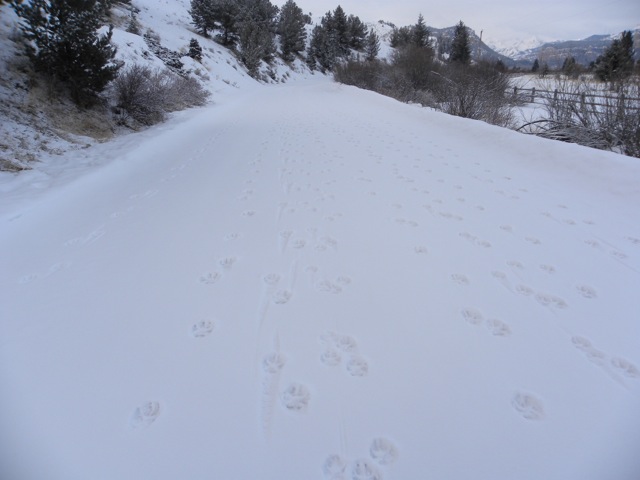
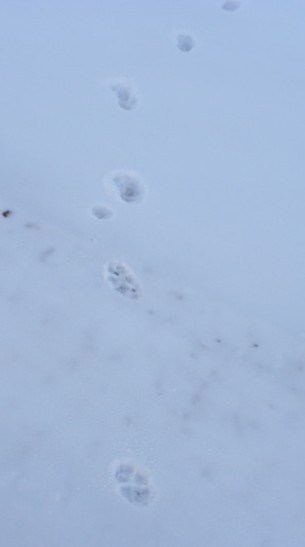
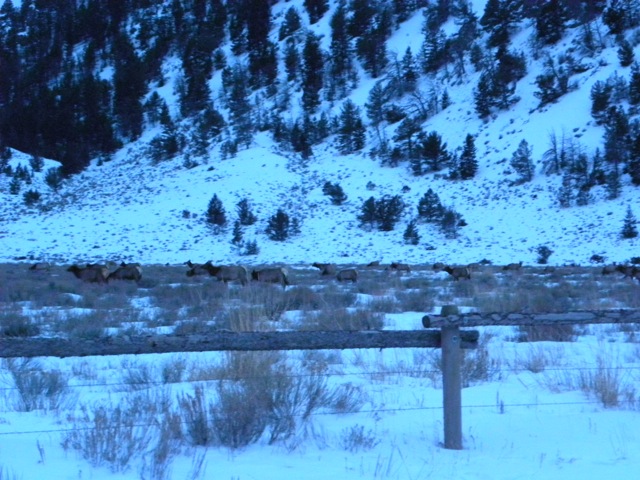
The other morning, after a nice light new snow, I drove the dirt road.  The elk were out, as always in the early morning, feeding, in a large group of over 700.  As I continued my drive, I came to a fresh track of two wolves that had run down the road.  They weren’t wandering, but directed towards somewhere.  In short order, another wolf came trotting in from the nearby meadows. Then another, and another.  Soon the tracks clearly showed 6 wolves running alongside each other.

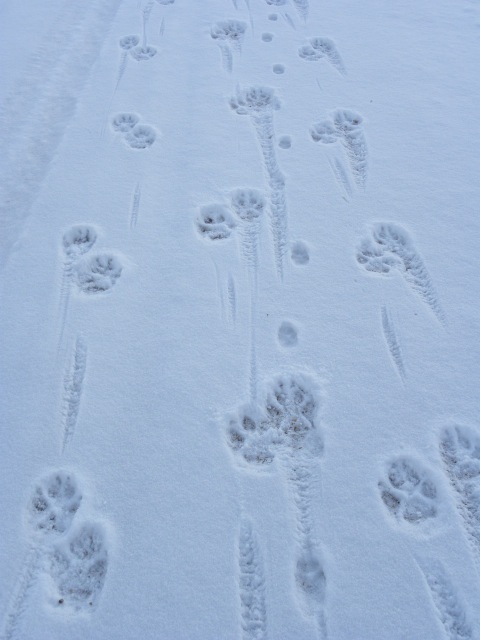
Over time six wolves came trotting down the road

Over time six wolves came trotting down the road

Every so often I’d stop the car, get out, and examine the track.  These were the Hoodoos, a pack of stout, large wolves with the alpha tracks measuring around 5″ long x 4″ wide.

Wolf print

They didn’t appear in a hurry or threatened, for they were all side trotting with a stride about 30″. Their tracks sometimes overlapped or meandered.  Occasionally a few of them run off the road, then return at a different location.  These might have been the pups, exploring and meandering more than adults would.

Then a strange thing happened.  It appeared that more and more wolves were ‘returning’ to the road, all traveling in the same direction.  At one point I struggled to tease apart all the tracks and I counted eleven or twelve wolves!  I knew there was no way we had this big a pack in our area this year.  There are two packs around, but they don’t travel together.  I couldn’t figure it out.

I counted around 11 or 12 wolves

I counted around 11 or 12 wolves with all the tracks in the same direction and the same freshness

Then tracks ended by running off the roadside into a field of brush and willows, a haven for a young bull moose newly kicked out on his own this year.  I saw magpies hanging on the fence by the willow’s edge. So this was what all the ruckus of tracks was about!  I realized that these wolves had made a kill in the willows, fed for a while there, then headed off, only to circle back via the road and feed once more.

A few mornings later I walked out into the willows.  I was curious if that young moose had been their victim.  Moose are scarce here, having a hard time making a comeback between diseases, the ’88 fires destroying habitat, the warm summer and winter temperatures, as well as added predators.  Moose suffer heat stress in winter when temperatures are above 23 degrees.  Since early January most of our daytime temps have been above freezing, and many days in the 40’s and 50’s.  Thinking that it’s rare to find elk hanging in dense willow cover these days, I was afraid it was this moose that had been killed.

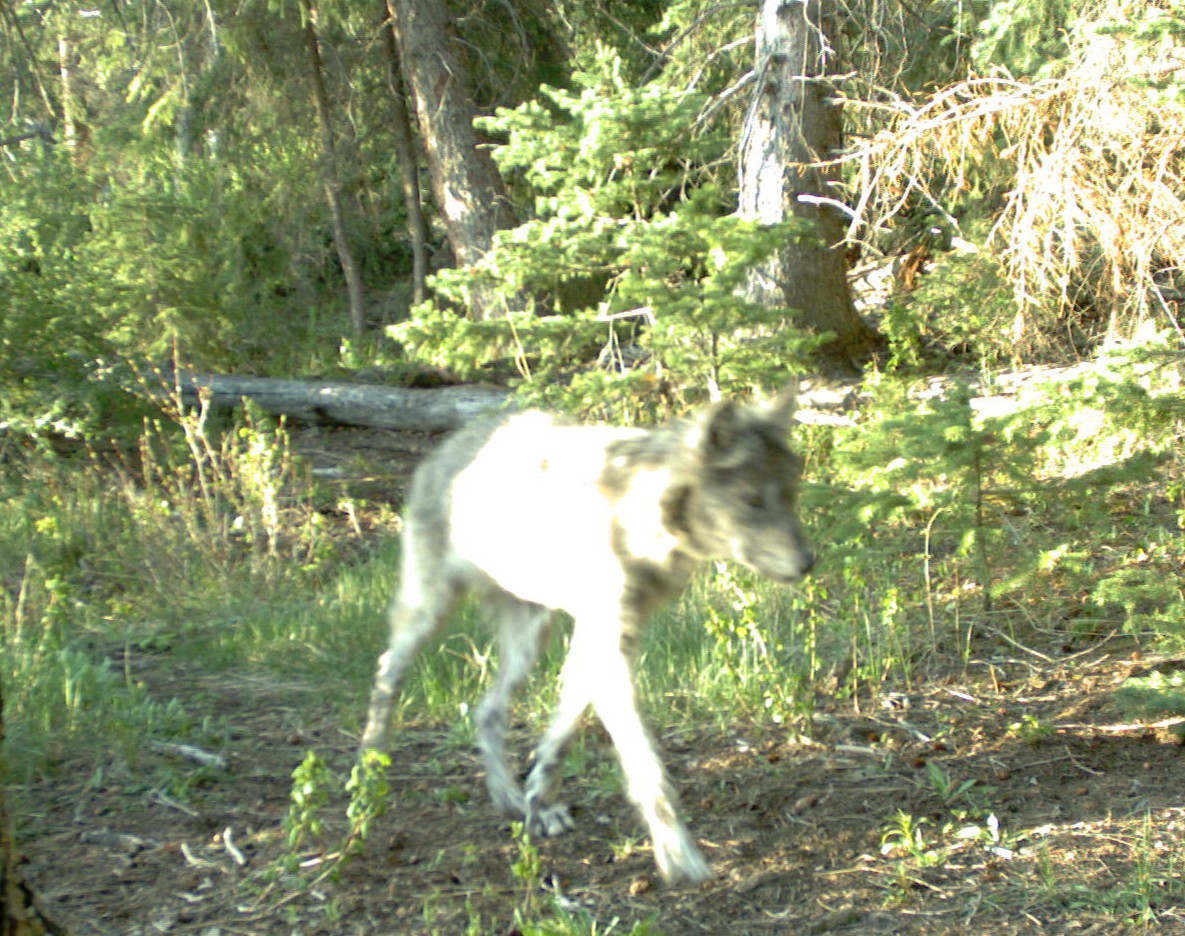
Hoodoo wolf prowling around

Hoodoo wolf prowling around

Yet the elk had been acting strangely early in the year–I’d seen them alone, in small groups, in tight areas, feeding mid-day, and not in the larger herds I’m used to.  But in the last several weeks, their ‘normal’ patterns have returned–normal for winters here means elk moving in large bunches from 100-700 elk and feeding early morning and late afternoons.  Although elk patterns are mysterious, I’m suspecting that when the elk came down from the Park in late December this year, the wolves were late in following them and were still higher up.  But as soon as the Hoodoos got to work, the elk became the herd animals nature intended.  Unlike many wolf packs in years past that resorted to killing deer, the Hoodoos are experienced hunters and know how to kill elk.

Here's my moose

Here’s my moose

With the help of a Koda sniff, we found the leg of the animal.  Not our moose but an elk, and it looked like a two or three year old from the look of the skin.  On the way back home, I saw that moose that had been hanging out in those willows for weeks on end.  He had moved up the road to a different area.

Sometimes it pays not to jump to conclusions, but instead be patient, and attempt to tease apart the puzzle of wildlife.

Cougars, Pumas and Mountain Lions in Yellowstone National Park

I just completed a fabulous Yellowstone Association class in Yellowstone National Park at the Lamar Buffalo Ranch.  Renowned Puma expert, Toni Ruth, led the three day seminar.  After an initial morning of introduction to the cat family, we went out looking for the elusive cat and her sign.  If you come to a cougar class thinking you’ll see a cougar, then you’ll be highly disappointed.  But you might see some sign.

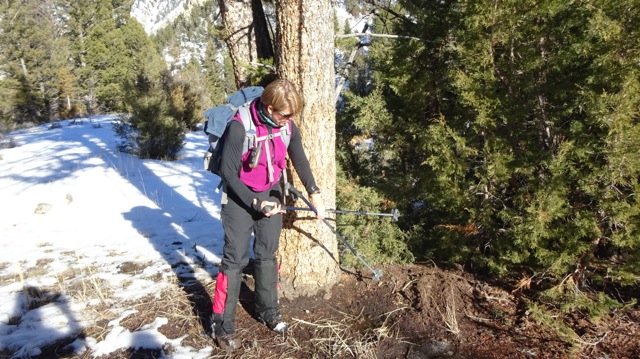
Our outing on day one consisted of snowshoeing down into a steep canyon. We saw no cougar sign, but did find some bear beds.  Toni pointed out what kind of areas we might find scraps.  Scraps, usually made by males to mark territory and also to signal females, consist of a cougar scenting while pushing backwards with his back feet, not unlike a dog might do.  Usually about 12″ long with two distinct marks and a pile at one end.

Where a Scrap might be under a large conifer

Where a Scrap might be under a large conifer

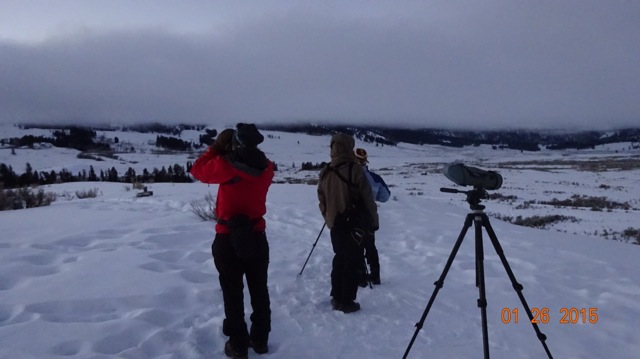
Early the following morning, some of us went out to Slough Creek to find wolves.  Lots of howling and some coyotes and eagles on a kill made it all worthwhile.

Hearing wolf howls

Hearing wolf howls

On the second morning, Dan Stahler spoke about the Yellowstone Cougar Project. During the ‘pre-wolf’ days, over 80 cougars were tagged in the park. Using this as a baseline, Toni Ruth did a cougar study in the park from 1998-2005, tagging 83 cougars of all ages.  During this period, wolf and elk densities were high.  Since 2005, there hasn’t been a study in Yellowstone National Park regarding pumas.  In 2014, Dan began a five year cougar study. This study should reveal some interesting data since elk densities are now much lower.  As wolves, bears and cougars compete for the same food, it will be interesting to see how these top predators deal with one another and their prey base.

Collecting cougar scat the scientific way with tweezers

Collecting cougar scat the scientific way with tweezers

Toni pointed out that cougars need to make a kill approximately every 7 days. Wolf packs need to kill every 3-4 days.  But wolves are feeding an entire pack, whereas cougars are feeding only themselves.  Cougars with kittens would need to kill more often.  Therefore, cougars kill more often than wolves.

One rumor I hear a lot in these parts is that hunting will control cougar numbers.  In fact it is just the opposite.  Adult males are very territorial, with an average territory of 462 sq. miles (220-704 sq. miles) Dispersing juvenile males need to find their own territory and can have a hard time at it.  If they are in another adult males’ territory, they can be injured or killed.  Adult males that have secured their territory will be known to the females in the area.  These females will tolerate them on a kill, and even around their kittens, which may most likely have been fathered by them.  But dispersing males are what are really the threat to females with young, as they might kill the young in order to bring the female into estrus. Therefore, when hunters are killing trophy adult males in an area, they are changing the social structure and creating a constant turnover of young males.  Interestingly Toni pointed out that in her personal experience, houndsmen who have assisted scientific collaring ‘hunts’ (where cougars are tracked by dogs but instead of being killed, they are fitted with GPS collars and released for study purposes), wind up learning so much about cougars that they abandon hunting them.

Cougar hind track measuring 2.75 x 3.25

Cougar hind track measuring 2.75 x 3.25

I asked Toni about the method Wyoming Game & Fish use to set cougar hunting quotas.  WG&F takes a tooth from hunter kills and ‘ages’ it.  Toni said that unless methods have greatly improved recently, tooth aging is not reliable and cannot accurately age a cat.

After an extensive hike with little results on the second day, we spent the entire last day hiking down to and along Hellroaring Creek.  Finally we had the luck we were hoping for.  Some cougar scat and good tracks!  While we were trying to measure the tracks, three bison were trying to stroll down our trail. Never mess with bison; so we gave them the room they wanted and lost our cat tracks.  Toni said since we were backtracking this cat, he was probably watching us the whole time.

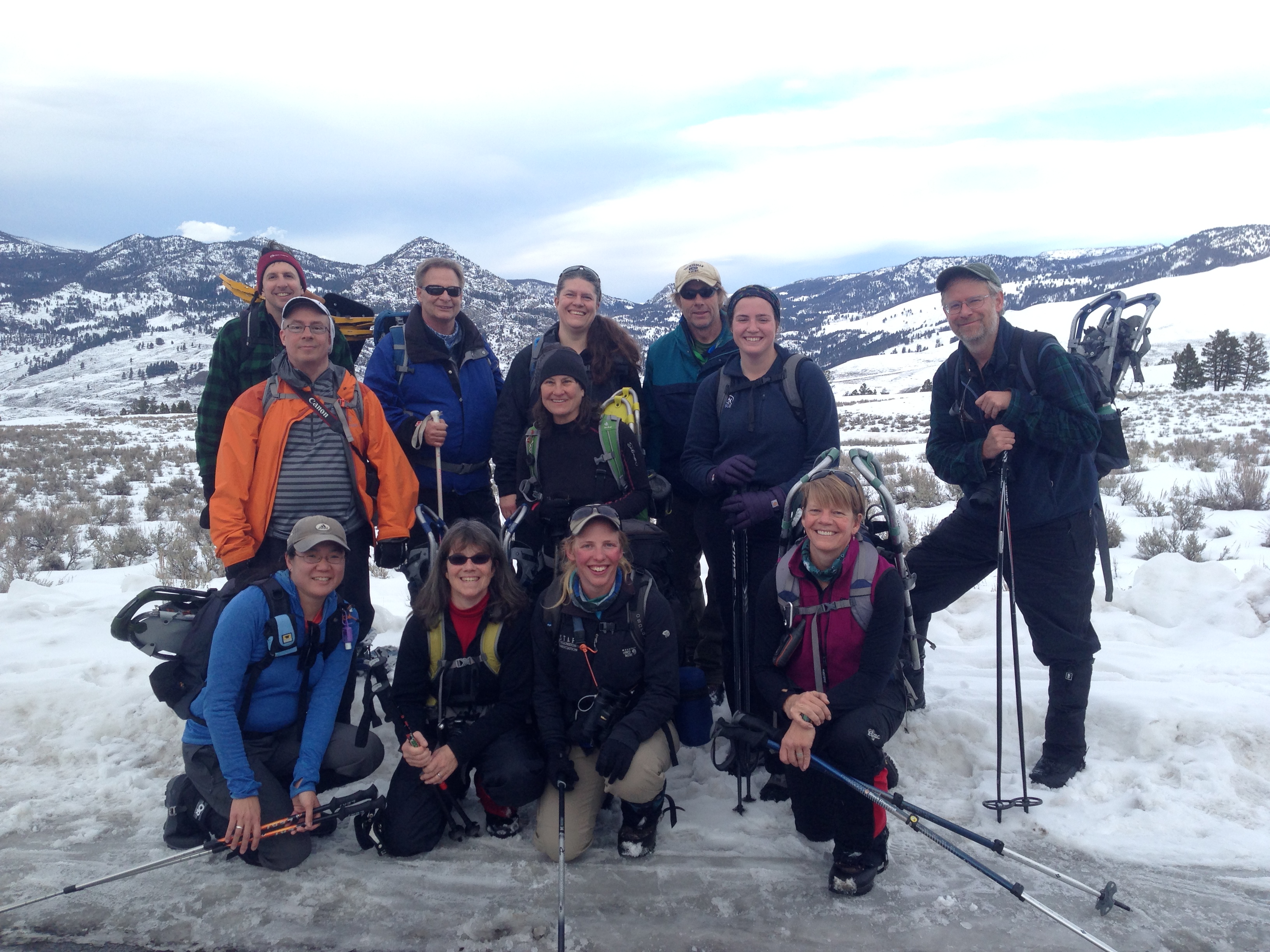
Our class!  We had fun.

Our class! We had fun.

Finally, I put this little video together from stills from my trail camera.  I also recorded the sounds separately on a Zoom recorder in front of my house this January.

What is base line?

Driving the road early morning, looking for wildlife, gives me time to ponder questions like–why is it I see grizzly bears during the daytime in Yellowstone National Park vs. where I live just 20 miles east of the Park where they are basically nocturnal?  Bears have not been hunted outside the Park since 1975, and there are plenty of them in my valley.  Yet bears in my wild valley, like all wildlife, avoid the most unpredictable top predator–Man.

Until the hunt began two years ago in Wyoming, I used to see wolves.  In the winter, I’d see them on kills they made near the dirt road.  In the summer hiking in my valley, I had many close encounters with wolves, none of them eliciting fear.  It was obvious they were simply curious.  But since the hunt, they are no longer curious and they are no longer visible.  A good thing if they want to stay alive.
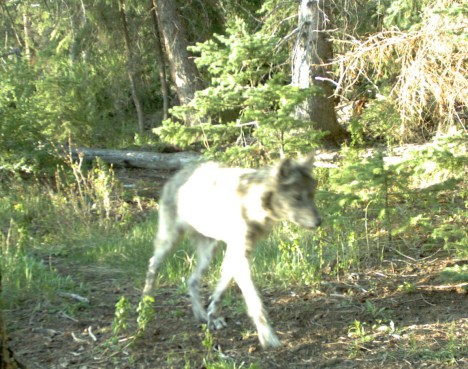
Yearling pup

Yearling pup

Today’s wildlife, and especially predators, are basically nocturnal or crepuscular, feeding, moving, hunting when Man is asleep.  I have to ask:  Has it always been like this?

Reading the journals of Lewis & Clark, they describe seeing herds of bison, wolves, grizzly bears and coyotes in the middle of the day going about their business.

“…we scarcely see a gang of buffaloe without observing a parsel of those faithfull shepherds [wolves] on their skirts in readiness to take care of the mamed & wounded”
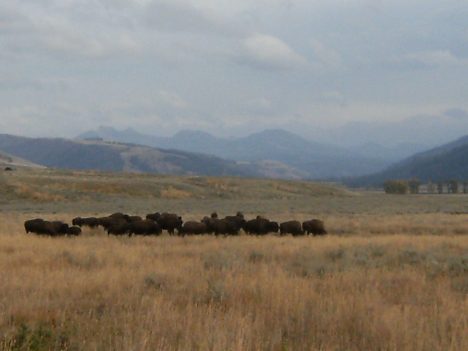
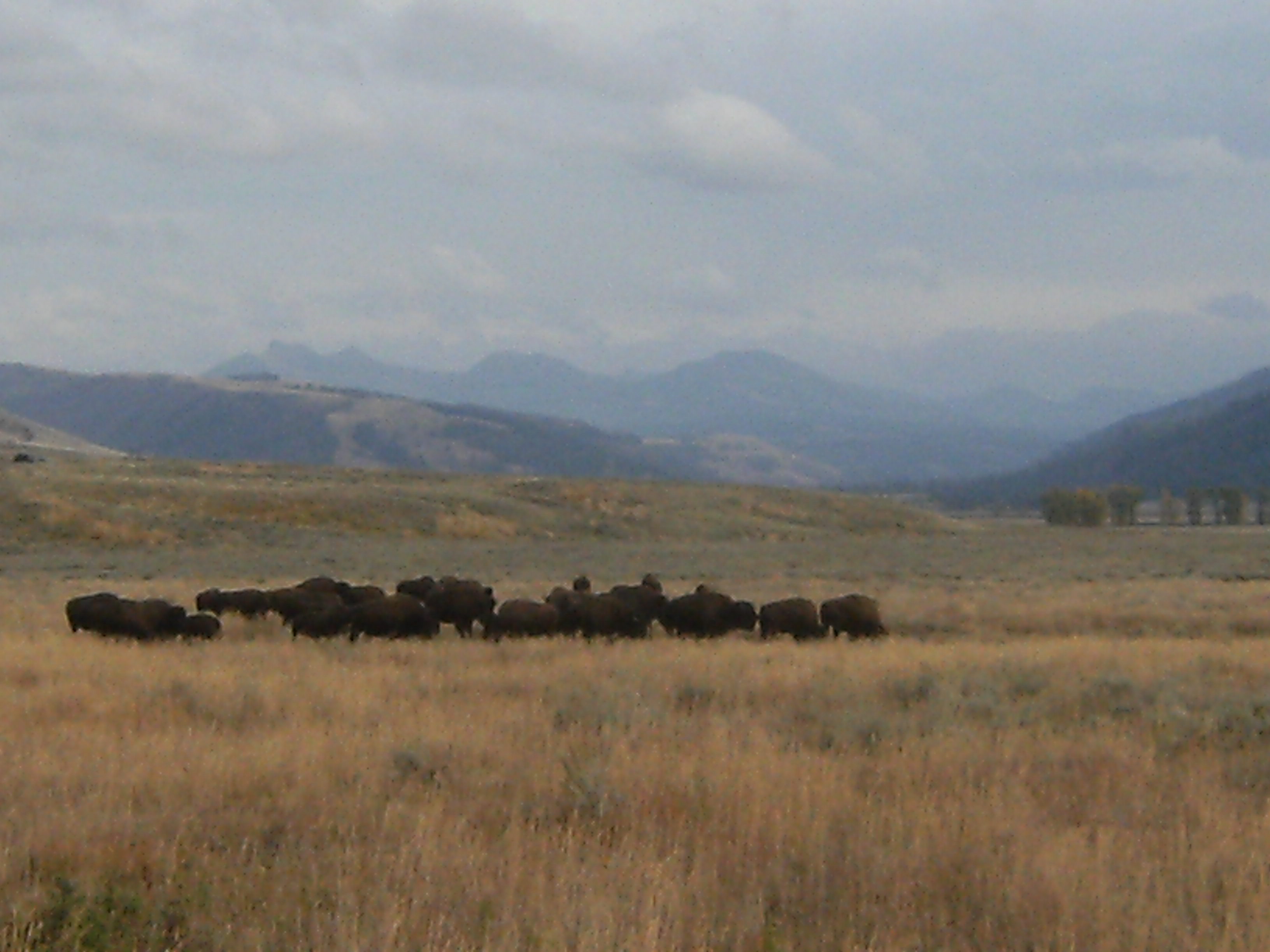
Buffalo in Lamar Valley

Beaver, considered today to be nocturnal, were easily seen during the daytime in the early 1800’s.  A buffalo calf, unfamiliar with humans, followed Lewis around.  Game was “very abundant and gentle”.

“Immence quantities of game in every direction around us as we passed up the river, consisting of herds of Buffaloe, Elk, and Antelopes with some deer and woolves.”

According to Lewis’ account, when the presence of Man is minimized, prey and predator dance together, during the daytime.
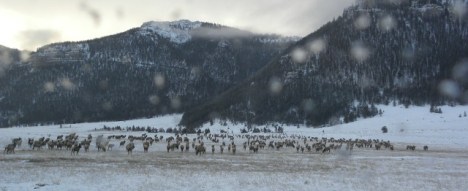
WInter elk herd at dusk

When we study the nature, movements, and habits, of today’s wildlife, how can we know what is baseline?  What are their natural rhythms?

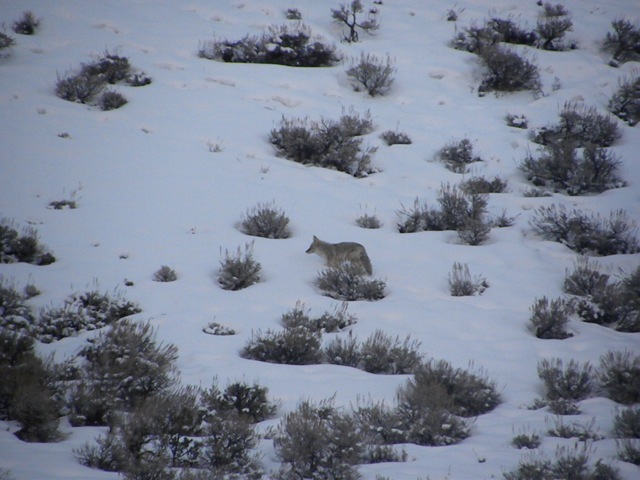
Coyote

Coyote during the daytime in Yellowstone National Park

Wildlife in the Park are confined to a virtual zoo, yet they have not been hunted for over 100 years [on the other hand, they are still being controlled.  For example, bison are under an agreement to be kept to around 3000 animals.  When they leave the Park in winter, they are killed to reduce their numbers.] Wildlife outside the Park are hunted and so, particularly the vilified predators, are rarely seen, moving among the shadows of the night.

Wildlife that live around cities, such as raccoons, coyotes, foxes–what we might call mesopredators–also avoid humans by wandering the streets when the humans are asleep.

Before 1492, New World numbers were estimated to be around 54 million peoples.  The pre-European native impact on the landscape reflected the cumulative effects of a growing population over the previous 15,000 years or more.  European entry into the New World abruptly reversed this trend. The decline of native American populations was rapid and severe, the biggest genocide ever. Old World diseases were the primary killer.  In the basin of Mexico, for instance, the population dropped from 1.6 million in 1519 to 180,000 in 1607 (89 percent); and in North America from 3.8 million in 1492 to 1 million in 1800 (74 percent).

So when Lewis & Clark came West in 1805, were they seeing wildlife baseline? Or just the result of a diminished native population? North American native peoples had their own rise and fall of civilizations–Cahokia, Ancestral Pueblo Culture, Poverty Point, and many others that were as equally sophisticated as the Aztecs or Mayans.  What were wildlife interactions during those times when many ancient peoples in the Americas lived in cities? Was wildlife again moving nocturnally?  Were they being hunted out?

Poverty Point artists rendition

What is baseline?  What is the natural rhythm for elk, or wolves, or grizzly bears? Today’s wildlife biologists use observation methods unknown in the past–GPS collars, trail cameras, plane flyovers, computer mapping–all very sophisticated.  But the interactions amongst predator-prey species are probably dictated more by human pressures than by each other.

When we postulate new wildlife theories, such as “The Landscape of Fear“,  what exactly are we observing?  Certainly not what Lewis observed in 1803 when wolves, coyotes, elk, deer and bison all traveled together–wolves following on the outside of these large herds.  New theories enlarge The Landscape of Fear to include not only top-down but bottom-up where the bottom has to do with beavers providing the habitat for willows and aspen rather than just elk avoiding drainages.  And scientists acknowledge that baseline is a moving target.

And so the answers to these questions will always be uncertain.  One thing I can easily observe–wildlife is more afraid of Man than they are of any other predator.  That, I believe, is an unfortunate thing.  Writer Mary Beck says in her book Seven Half-Miles from Home:

This one species has contrived to make himself feared and hated by most other creatures.  Since this fact is rubbed into my consciousness day after day by many creatures with whom I would be friends, I grow sensitive and ashamed of being one of such feared and hated beings.


Did ‘Limpy’ the Coyote survive?

Many mornings I venture out early and explore who’s been out during the night.

Sunrise

Sunrise

If nothing else, I’m guaranteed to see the elk, deer and moose.  Last night there seemed to be quite a party.  Plenty of coyotes and the wolves were moving around. Yesterday I saw a bald eagle fly into the valley.  There must be a kill around, but I could not find it.

I wish I could figure out the coyote territories in the valley.  I have a guess, based on howling and tracks, but its only a guess.  I suspect there are at least three different packs within the front valley itself.  It appears the pack sizes go up and down and I wonder how much the wolves have an impact on that. Some years there are many more wolves here, other years their numbers are down and the coyote numbers seem to jump up.  When the coyotes increase, I see less fox sign.  The coyotes have definitely gotten bolder over the years relative to their older brother, the wolf. Look at this example:

This coyote ran right over three wolf tracks

This coyote ran right over three wolf tracks

Last winter I spotted a lone coyote several times that had a badly injured left rear foot.

Here's the fellow.  Who knows what happened to his leg.

The lame coyote from last winter

The first time I saw him, he was hobbling through a field.  Then one early morning he was stealing some left-overs from a wolf kill.  No other canines were around.  He ‘ran’ with his prize through the field while I watched.  Leery of my presence, he made his way up the hillside into the trees to eat in peace.  I took some photos of his interesting and sad track.

The arrow points the direction he was headed

Last Year: The arrow points the direction he was headed.  The ‘dot’ is his injured leg’s imprint. One can see the trouble he is having by his difficult gait.


You can see the small imprint of his left hind leg.  The back legs are in front because he is running

Last Year:  You can see the small imprint of his left hind leg. The back legs are in front because he is running

This morning there were several groups of coyotes in different areas.  And one large grouping was around the area where I spotted ‘Limpy’ last year head for the hills with his stolen bone.  About 5 coyotes were running together, and one of them had a bad left rear leg!

Spot the limpy coyote.

This winter:  Can you Spot the limpy coyote?

Coyote running.  rear feet are in front of front feet.  Notice the 2nd print from top.  That is the left rear and its noticeably smaller

This winter:  Coyote running. rear feet are in front of front feet. Notice the 2nd print from top. That is the left rear and its noticeably smaller.  But compare this photo with the one from last winter. A more normal gait!

The foot is turned inward and the print is smaller meaning he can’t put so much weight on it.  Yet given the difference in last year and this year, he is able to put much more weight on it.  Last year that coyote was barely putting his foot on the ground.  Now he is using it!

Of course, I cannot be sure it’s the same coyote. But given that it’s the same rear left leg, and the coyote was spotted in the same general area, its a good possibility.  And if it is ‘Limpy’, now he, or she, is running with a pack instead of alone.  Now maybe he has had a happy ending after all!

The Mysterious Elk

When hunting season is over and the rush for Christmas trees or winter wood dies down, the elk return.  The elk that migrate to this valley are ‘Park’ elk–elk that summer in the high Absarokas of the Lamar drainages.  1500 to 2000 elk travel here when the snows push them to seek easier feed.  It’s in their DNA to make this trek.

Personally, I look forward to them arriving.  And although they are leery of my presence, I enjoy their company.  For many winters now I arise early, before dawn, several times a week and drive the valley’s dirt road.  It’s that early morning time when you have the potential to see wildlife–wolves, coyotes, elk and moose.  The elk and deer feed usually at dawn or dusk.  The predators have learned to travel at night.  Keeps the humans away!

Sunrise at my house

Sunrise at my house

And although these elk have been thoroughly studied, they still contain many mysteries.  For instance, for the past seven years that I’ve lived here, the elk have a ‘usual’ pattern of movement.  In January/February, they spend time in larger herds of up to 700.  They feed dawn and dusk on the flats behind my house and another large herd feeds across the river in various areas.  During the day they retreat to the cover of the trees to digest and rest. They move, but their movements are fairly predictable.  As the weather warms, they break up into smaller herds (are these ‘family’ groups?), feeding in areas that have been opened up from the snows. Usually by late April, they’ve gone to the high country to calve; if the snows linger then I’ve see them calve in the valley.

Coveted elk habitat on property that could be a subdivision

Coveted elk habitat on private property that could be a sold into a subdivision

Last winter the snows were constant and really deep, starting early February.  A large herd of elk stayed by my front yard, feeding in the willows and resting under cover at night.  Although over 70% of an elk’s diet is grasses, when snows are deep, elk will eat shrubbery such as aspens, willows, and even conifer bark.  Last winter was also constantly windy. I noticed the elk preferred a place in the meadows where the topography dipped slightly–a wind buffer.  So intelligent they are!

So far this year is a totally different, and mysterious, story.  Several years ago the large ranch in the valley replaced their 12′ high barrier fence with a low attractive wooden fence.

Elk stuck inside fence and can't get to safety

Elk stuck inside fence and can’t get to safety

The elk used to get trapped inside with only two gates open, ‘sitting ducks’ for wolves.  The ranch irrigated their fields and trucked their cattle in from May through October. Their fields were seriously overgrazed. When the high fences came down, elk moved through but not as much as I thought they would.  I supposed there was little feed left after the cows departed.   This year the ranch hands convinced the owner that the fields needed to rest, maybe as much as five years.  So they stopped irrigating, reduced the cattle to just a few head, and began the resting process.  And guess what?  The elk are herded up there, about 200 every day.

The new fence with lots of elk there this year.  They are resting these grasses so have reduced cattle grazing

The new fence with lots of elk there this year. They are resting these grasses so have reduced cattle grazing and stopped irrigating

Yet this is not what surprises me about this year’s elk movements.  For the first time ever, I’ve watched them graze heavily in an area of high sagebrush cover.  Also their groups are already smaller (not the usual large January herds)–between twenty to two hundred–and they are in all sorts of habitat. Plus the elk appear much more relaxed.   They are feeding beyond dusk or dawn–in fact, at all hours of the day.  The only thing I can figure is that we had such a great winter that the grass is nutritious and rich everywhere.  I just wish I understood what drives them to feed in these sagebrush areas as well–what kind of native grasses are there that they are enjoying compared to the stock grasses they also like on the cattle pastures.

G&F habitat that usually is never grazed by the elk.  This year they are loving it!

G&F habitat that usually is never grazed by the elk. This year they are loving it!

When I told one person about how relaxed the elk appeared, he replied that maybe the wolves are gone.  Not so.  I saw two wolves the other morning.  And these elk are adapted to our wolves who follow them.  Middleton’s own study on these elk showed that only when wolves are around 1 kilometer (1/2 mile) away do elk begin to react.

On the other hand, although I did see 2 wolves, I have seen very few wolf tracks.  If all the elk are here, where are the wolves?

Coyote travels one way while a wolf travels in the opposite direction

Coyote travels one way while a wolf travels in the opposite direction. Taken two days ago

Another mystery:  There is an elk carcass along the road–a young elk maybe 3 years old.  Although the elk was completely eviscerated, she has a lot of meat on her and is still completely intact as far as her skeleton and hide.  I’ve been watching it for five days, and haven’t seen any birds on it, nor any other predators.  A few coyote tracks, a few wolf tracks, and a lot of Koda, my dog, tracks!  Although there is no wolf hunt this year, the wolves never linger to be watched like they used to.  They have quickly learned that humans are their mortal enemies.  It just might be this carcass is too close to the dirt road for their comfort, even at night!

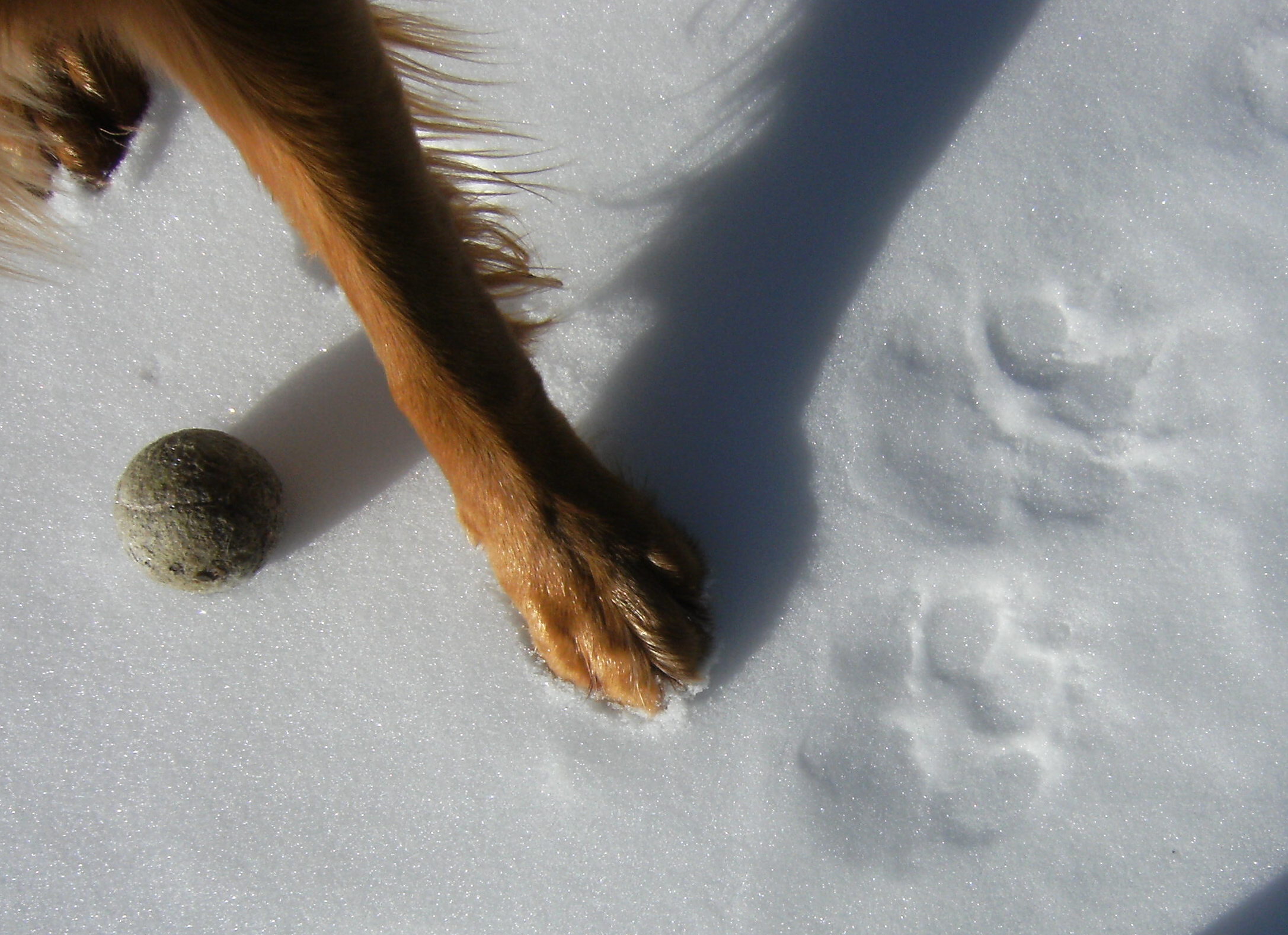
Koda, Koda’s ball, and wolf tracks


Filling out the dialogue on trapping

Last week in Casper, a family was walking their three St. Bernard dogs in a public area within a mile from their home.  The dogs were legally off-lease, and under voice command, but the smell of baited traps drew all three of them into the bush where snares choked them to death.  The family and their kids tried desperately to loosen the cables that constitutes a snare trap, but lacking wire cutters, the dogs died within minutes.

Because more people are using public lands to recreate, more and more dogs are being caught in traps placed near trails and roads.  These and other incidents have produced a groundswell of outrage which is growing across the West.  Organizations like Wyoming Untrapped and Footloose Montana  have sprung up to answer this need. Bobcat trapping around the perimeter of Joshua Tree National Park prompted California to establish the Bobcat Protection Act of 2013 banning trapping around national and state parks and other wildlife preserves.

Most of the conversation in the public or with Game Agencies has centered around protecting dogs and humans recreating on public lands.  This discussion includes new measures such as closures and set-backs. It’s an achievable goal–one that even most Trapping Organizations would agree to.  This is a fine first step.  In fact, my own dog was caught in a trap on a public road in Utah; the baited leg-hold trap was placed on a highly used road and covered with dirt, had no signage, and Koda was 12 feet from me.  Fortunately for Koda, I’d taught myself previously how to release these traps.

See the trap to the right of Koda.  That is the spot it was in, about one foot off the road, covered with dirt and no signage

See the leg-hold trap to the right of Koda. That is the spot it was in, about one foot off the road, covered with dirt and no signage

This trapper had set leg-holds all along the roadside for several miles, hoping to catch coyotes.  $50 for the pelt and another $50 incentive thanks to the Utah legislature that set aside several million dollars of taxpayer’s money to kill coyotes.

All trappers must have their ID or name on their trap.  Look for it and write it down in case it was illegally placed

All trappers must have their ID or name on their trap. Look for it and write it down in case it was illegally placed

But what’s at the heart of all this?   I’ve written about this before, back in a 2011 post. Demand in Russia and China for fur has sky-rocketed.  Current prices for ‘Lynx Cat’ [Bobcats] on the world market are between $400-$1150/pelt!  And this year was a ‘down’ market due to warmer winters in those two countries. (Question:  Will climate change quell the trapping industry?) With that incentive, every Tom,Dick, and Harry is out there setting traps.  And the ethics among these newcomers is low. 19th century laws that favor trappers are still on the books in most states [i.e. do not touch a trap or you will receive a ticket.  In Utah it’s $500. In Wyoming $250].

I haven't seen a bobcat in years since my area has been heavily trapped.  This photo taken 4 years ago in front of my home

I haven’t seen a bobcat in years since my area has been heavily trapped. This photo taken 4 years ago in front of my home

The critical conversation we need to have about trapping includes some of these points:

  • Fur prices world wide are driving the increase in trapping.
  • We are selling our wildlife overseas!  Its illegal to sell the meat of any wild animal, yet we can sell their pelts?  Wildlife are in the public trust.  Selling wildlife–even pelts–to other countries for individual profit takes away from another individual’s right to see wildlife and appreciate them.
  • Trapping is indiscriminate.  ‘Non-target’ animals are killed every year.  During the 2011/2012 Idaho wolf trapping season, for example, 246 non-target species were trapped, including deer, moose, dogs, raptors, lions, and 21 endangered fishers.  In Wyoming, some animals have trapping seasons, yet others, like coyotes, can be trapped year-round on public lands.
  • People are no longer trapping for food, but for personal profit.  We no longer live in the 19th century.  Attitudes towards wildlife has changed.
  • Finally, trapping is cruel.  Animals are not only killed, but maimed and crippled.  Many suffer for days in traps.  Trapping, unlike hunting, is not fair chase. It’s time to put an end to trapping altogether.

This summer I was hiking along the flats 1000′ feet above the Clark’s Fork Canyon.  Its a wet area, where all the moisture drains from the mountains above, funneling through the limestone walls to the river below.  Old beaver dams are tucked among the overgrown forest of spruce and fir–ancient dams because there are no longer beavers here.

View of the river from the flats above where old beaver ponds are

View of the river from the flats above where old beaver ponds are

Hundreds of years ago mountain men came to these lands and trapped the beavers out, their furs sent to Europe for felt hats.  Beavers were estimated at around 600 million before the Europeans arrived.  Almost exterminated by 1900.  Due to conservation efforts, beaver numbers in North America stand around 6-12 million today.  I’ve never seen a beaver dam in these mountains.  Just last year there was a big fuss about a beaver dam spotted south of Cooke City along the Clark’s Fork.

Selling our wildlife…these are old lessons.  Let’s not have to re-learn them again.


Thomas Jaggar visits the Absarokas in 1893

Arnold Hague began the first detailed survey of Yellowstone National Park and surrounding areas in 1883 .  Thomas Jaggar worked as an assistant geologist under Arnold Hague.  In 1893 and 1897 the lands just east of the Park were the territory to be surveyed, most of which was within the Yellowstone Park Forest Reservation [the forerunner of the National Forests].

Jaggar in Yellowstone Park's death gulch where he discovered 8 dead bears killed by the noxious gases.

Jaggar in Yellowstone Park’s death gulch where he discovered 8 dead bears killed by the noxious gases that accumulate in the drainage.  These bears might have been attracted by the smell of elk that had succumbed.

I’ve been reading Jaggar’s diary of the Sunlight/Crandall area where I live, as well as looking at his photos.  His survey notes include geology notes and other tidbits.  He developed his photos right in the field.  Interestingly, Jagger reports seeing antelope in my basin.  There are no antelope here today, yet there is a local geological feature called Antelope Butte.  What happened to them all, and why they haven’t reestablished themselves is a mystery, for there are plenty of antelope in the basin around Cody, as well as the Lamar Valley nearby.

By 1893, bison had been exterminated and there were already a few cattle ranchers here.  Jaggar reports riding over an ancient local Indian connector trail, entering the valley and seeing “sagebrush, elk, buffalo, sheep & horse skulls and horns.”  Instead of bison, grouse and cattle were in the Trail Creek canyon.  Today cattle don’t run there and I’ve never seen grouse in the sagebrush area.

I hiked to a point where Jaggar took a panorama of the valley in 1893.  In the early 20th century, fire suppression became the doctrine of forest management.  But Jagger’s photo was taken when nature was still allowed to take its course.  In Jagger’s photo below, it appears the trees in the foreground were conifers killed in a fire.  In my photo below Jaggars, I could barely find a angle that I could take the photo without trees obstructing the view.  But my photo is taken from basically the exact same location.

1893 Photo

1893 Photo

2014 same location

2014 same location

Aspens are the first trees to regenerate after a fire.  A few years ago I accompanied Larry Todd, a local archaeologist, to survey some old wikiups [Sheep Eater Shoshone houses] in one of the small drainages off the valley.  Although these wikiups were standing in the 1970s, cattle feeding on the Forest Service grazing allotments liked to rub against them, and so knocked them over.  By examining the logs, Larry was able to determine the age of the wikiups was 300-400 years old, and surprisingly, these logs were all aspen.  As you can see from the photo below [wikiup logs are in the pile], the forest is all conifers now.  Aspens live for only 80-100 years.  The next in the succession in this dry area would be Douglas Firs, which can live for many hundreds of years, suppressing any new aspen growth.  Without natural fires, the forest will be dominated by conifers.  So this forest used to be all aspens, and probably was a much wetter environment.  Larry pointed out that the climate 300 years ago was different here.  This wikiup sits are the confluence of two seasonal creeks but at that time these creeks might have run year-round.

300 year old wikiup standing till 25 years ago when destroyed by cattle

300 year old wikiup.  Pile of logs are the remains of an aspen wikiup.


Wandering after a waxing moon

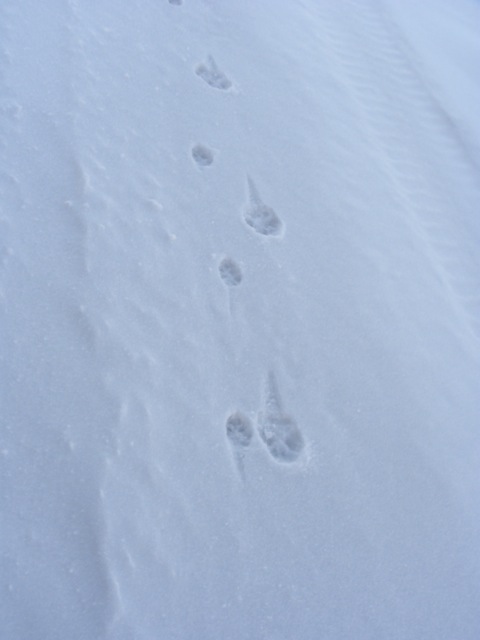
Snowshoe hare tracks and White-tailed Jackrabbit tracks can be easily confused, as I am finding out.  Size of their tracks, front and back overlap.  Their stride and group length overlap.  And even their habitat.

I’ve been doing a lot of research trying to discern the differences and what we have in my area.  And its important because Snowshoes are the primary food for Lynx, a threatened and rare cat around here.

Its always good to take a hike around my mountain after a snowstorm.  We’ve had a few inches of snow and some cold temps, making the snow almost perfect.  The waxing gibbous moon insures more predators are out hunting, and with the snow crusted over, the smaller animals are out and about.

For weeks all I’ve seen are the usual suspects–deer and squirrels.  But today was different.  My first encounter was with weasel tracks.  I’ve asked Jim Halfpenny if one can tell the difference between an ermine and a long-tailed weasel by the trail width. We have both here and Halfpenny notes that its very difficult.  Tracks over 2″ trail width can often indicate a long-tailed weasel, but not for sure.  The ‘dumbbell pattern’ of two dots [the feet], a dash [drag mark], and two dots can be typical for ermines, yet not always.

Weasel tracks next to my footprint

Weasel tracks next to my footprint.  Notice the 2×2 gait

up close

up close

I have a bird feeder near the house and this weasel was taking advantage of the rodents that visit the dropped seeds.

I have been spending quite a bit of time trying to discern vole from mouse tracks. Most mouse tracks are quite obvious as they use a bound, with the back feet in front of the front.  Voles tend to trot but I think they bound more in snow and have a much narrower trail width than a mouse.  I’m still trying to discern the difference.  I think these narrow tracks are typical vole tracks.

Vole

Vole heading into small hole

Typical vole gait on snow

Typical vole gait on snow

Higher up I ran into a Marten.  And later on another Marten.  Martens, like ermines, don’t use animal trails.  They are explorers of every hole, seeking out rodents.

Marten tracks

Marten tracks

Typical marten gait 2x2

Typical marten gait 2×2

And here’s where we come back to the two hares. I came across these tracks, which look like typical Snowshoe hare tracks.  Yet the country puzzled me.  This hare, which I followed up the hillside for some ways, stayed in the small meadows between the forested areas, moving through the trees out of cover, rather than staying in cover like a Snowshoe would.  And although this is Douglas Fir/Limber Pine territory, which Snowshoes like, most of the trees are older so the low browse is sparse.  Yet according to this study conducted in Yellowstone National Park, White-tailed Jackrabbits are much rarer at my elevation and annual snow accumulations–though certainly not impossible.  White-tailed jackrabbits are fairly rare in Yellowstone; even once erroneously thought extinct.  Most of the Park has too much snow and too much tree cover.  In fact, in the study, 3/4 of the few sightings were in the 5000-6000′ range in open sagebrush country [mostly all in the northwest corner of the park around Mammoth], while only 1/4 were in the 6-7000′ range in montane country–country akin to where I live.

I went over my measurements, yet all of them came up that it could be either a Snowshoe or a Jackrabbit.  I remembered that at one point, Halfpenny had said to me “are you sure its not a Jackrabbit” when I described to him some prints I’d found in a deeply wooded area north of here.

I followed these tracks amongst the small forest meadows and down through an open area into the brush.  I came to the uneasy conclusion that this must be a Jackrabbit.

Jackrabbit

DSC00212

DSC00211


And then I looked at a photo from last year, taken at around 6800′ deeper down my valley.  I had my trail cam along an old ditch.  On the upside of the ditch was dense woods, while the downside soon became treeless and led to a very large expanse of meadows.  According to the Yellowstone study above, this was the upper end of White-tailed jackrabbits in the Yellowstone area [although White-tailed Jackrabbits have been reported in places like Colorado as high as 14,000 feet].  Here was my definitive answer that, yes, we have plenty of White-tailed Jackrabbits here.

White tailed Jackrabbit

The ‘Common’ Deer

I recently watched a Nature show on Whitetail Deer.  Deer are probably the most studied wildlife in the United States.  This show revealed some new ‘secrets’.

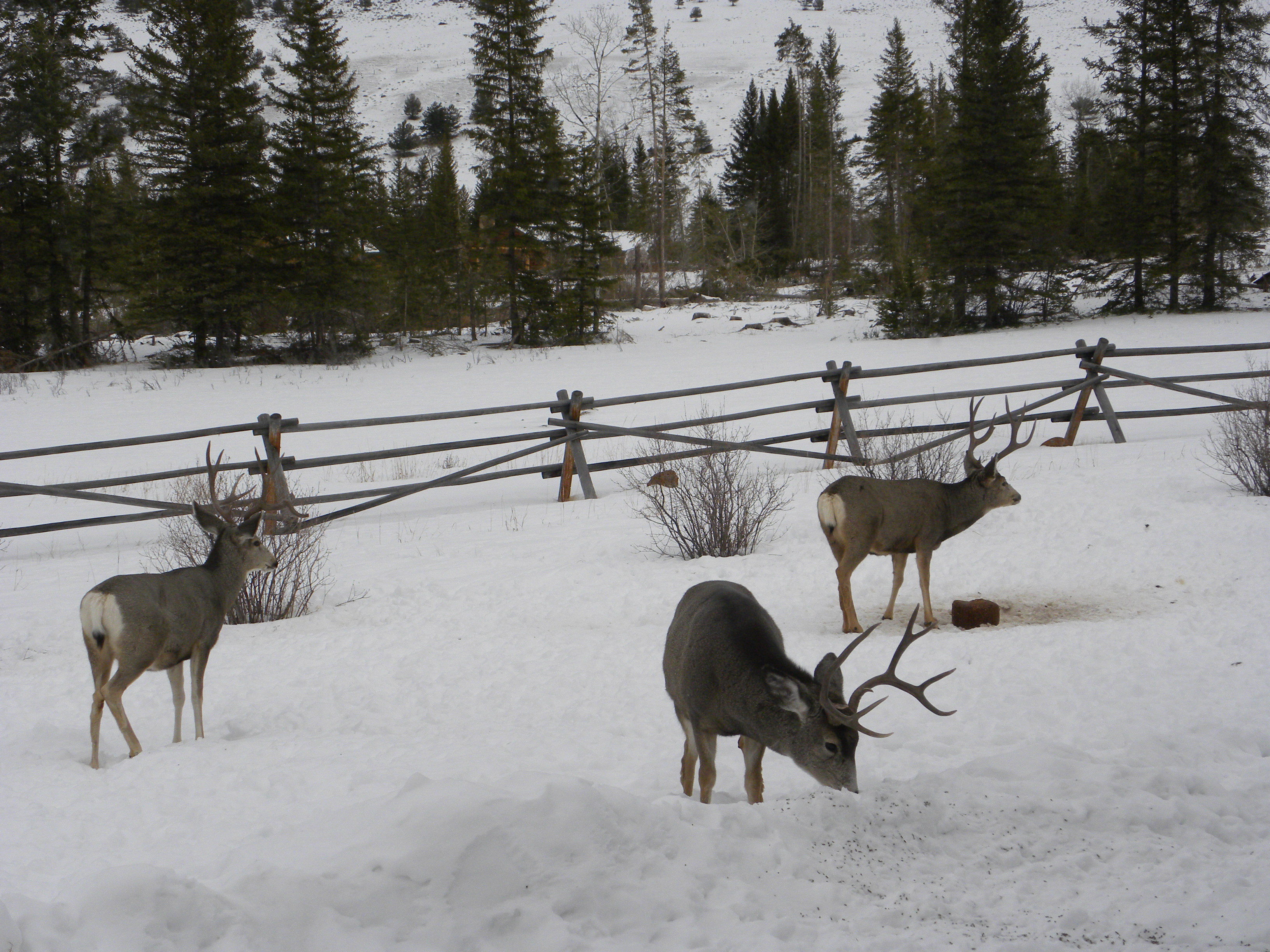
We all know deer.  Whether Mule or White-tail, they frequent our yards and many places are considered ‘pests’ because they eat our vegetation.  But, do we really know deer?Mule deer bucks

Since I no longer care if the local deer eat my flowers, I enjoy watching them and learning from them.  They start to come down now from the high country and stay through the winter.  First the does appear, then around November [the day after hunting season ends!] the bucks appear and come into the rut. You see them following does everywhere.  As winter comes upon us harsher and harsher, they look for food wherever they can find it.

The Nature show says scientists were shocked to learn that does do a lot of in-house fighting.  Yet watching deer in my front yard in winters, I’ve frequently observed does displace not just other does for food, but their own offspring.  A pecking order is obvious.  If a deer block is set out in the snow, the hierarchy is readily observed.  Subordinate does and fawns will sneak up to the block when the dominant doe is distracted, many times only to be kicked by the leader.http://youtu.be/QRPSV998Ma0

The film noted how intelligent deer are. They can evaluate with time which dogs in a neighborhood, for instance, don’t pose a threat.  And they even will run off some dogs.  My own dog, Koda, has been taught not to run after deer or elk.  He sits on the front porch while the deer feed beside him.  One time a truck drove up and observed the deer and dog together; but as soon as the men got out of their truck, the deer scattered.  They said they’d never seen anything like that before. My neighbor, who feeds their horses hay in the winter and sometimes has over 50 deer come to feed at the same time, says the deer almost run her dogs off.  Interestingly, even though the deer know me as well, if the dog goes outside alone, they stick around.  But when I come outside, they scatter.  Humans are just too unpredictable I guess.

Koda observes elk feeding

Koda observes elk feeding

The Nature film spoke a lot about deer social structures and communication. I’ve watched bucks groom one another extensively in the winter, obviously as a form of bonding and communication.

A buck mule deer spends time grooming his friend

A buck mule deer spends time grooming his friend

Although the film was about white-tailed [whom I am not familiar with], mule deer, although they don’t have the tail-waving alerts of white-tail, have their own alert systems.  And those seem too subtle for me to understand.  Deer have incredible hearing and smell.  They rustle up and leave the woods before you even knew they were there.

Since moving to my cabin and simply observing deer, instead of trying to manage them off my landscape plants, I’ve had some very interesting encounters.  Below is a short excerpt from my new book The Wild Excellence:

I was living full time in Wyoming, but continued for several years to do winter design work, November through January, in California to make ends meet. Upon my return one winter, I was beginning to open up the cabin. It’s always a big process. I have to turn on the water, electricity, pump, and get the house heated up when it’s below freezing outside. My friend Gary had come to help with the process. I’d met Gary when he built a fence for my neighbor. He lived in town but watched over their property. I needed help with cutting and hauling firewood, and Gary, a retired forest ranger, was the man for the job. Over time, he had helped me burn slash piles, installed new bathroom cabinets, and built an outhouse for the upper cabin.   Working together, we’d become good friends and today he brought along his dog, so we had two dogs.

We were inside, tending to the business of the cabin, when the dogs outside started barking. It was the kind of bark that means there’s wildlife around. Koda knows not to run after deer, but when he’s in a pack (and two dogs constitute a pack mentality), I have to watch him. Gary and I walked outside. The dogs were barking towards the woods. At first we saw nothing and couldn’t understand what was causing the dogs’ agitation. Then, after we’d quieted the dogs, a large buck came out of the trees and started making his way across the meadow. The snow was soft and deep. We assumed the buck was heading east, away from the cabin. The four of us—two humans and two dogs—watched in silence as the buck walked slowly, deliberately, and regally through the deep snow. The depth of the snow almost made him look wounded as he walked. We stared in amazement as this large buck walked across the meadow, through my gate and into my front yard. He stopped about ten feet directly in front of us. The dogs were quiet. I think, like us, they were mesmerized. Here was the Deer King. He stood before us with his full beautiful rack. His large eyes stared directly into ours for a long time, at least a full two minutes. I wasn’t sure if I should bow or run. Then just as he had come, he turned and slowly walked away. He was done with us.

The Buddha buck, King of the Forest Deer

The Buddha buck, King of the Forest Deer

If you watch wildlife long enough, you see they are separate ‘nations’ unto themselves.  The ‘Deer Nation’ has a lot to teach us humans.

Shoshone National Forest Hosts a Heated Day-long Discussion on their Proposed 20-Year Plan

I want to write a very short blog entry on a special ‘objector’s’ meeting held October 8 of this year.  The Shoshone National Forest held an unprecedented meeting to discuss just a few very contentious issues in their proposed twenty year management plan.  I will provide a link to the transcript of that day-long meeting which I found incredibly interesting and informative to read.

The meeting was restricted to four issues, and only people who had made written comments previously could comment verbally, either on the phone or in person.  But the meeting was open to the general public.  The issues were:

1. The Forest proposes to eliminate goat-packing due to the potential for bighorn sheep to contract diseases.  The northwest quadrant of Wyoming has biggest and best bighorn sheep herd.  There’s over 4000 bighorn sheep on and around the Shoshone National Forest, more than any forest in the national forest system.  Bighorn sheep advocates and goat packing advocates made their case.Rocky Mountain Bighorn sheep

2. Lynx habitat and forest management.   Biologists and conservationists defended the proposed thinning restrictions in certain areas where lynx were known to exist or there is excellent snowshoe hare habitat.  County commissioners and their hired company, Ecosystem Research Group, argued for more thinning in those recommended designated lynx areas.

3. After lunch the two most contentious issues were addressed with lots of people arguing for wilderness preservation.  The Dunior Special Management Area has long had illegal mountain biking and the Forest Service plan is calling for mountain bike specific trails. This was a fascinating discussion with knowledgeable conservationists going back to early 70’s when the Dunior was suggested for SMA and eventual Wilderness designation.  No one from the biking community showed up, but the discussion was passionate, with many locals and wilderness advocates feeling betrayed by years and years of promises from the Forest Service as to Wilderness recommendation for these areas that never appeared, but now it seems to be ‘dewilding’ this area.

Jade Lake near Bonneville pass in the Dunoir

Jade Lake near Bonneville pass in the Dunoir

4. Lastly a heated discussion of increased ATV use in the forest, and in particular Franc’s Peak and how more motorized vehicles will disturb wildlife, destroy soil integrity, and be a hazard to horses and hunting use.

We have a chance to preserve and enhance this special area…the heart of the Greater Yellowstone Ecosystem–one of the few remaining intact ecosystems in the temperate world–and preserve these places for future generations with roadless areas and habitat for elk, grizzlies, wolves, wolverines, and all the iconic species that it contains.

I think you will find this a fascinating and informative discussion.  Click this link, then at the Shoshone Forest page click the link at the top that says ‘Transcripts from October 8 2014 Meeting with Objectors’