• MY BOOKS ON WILDLIFE, GARDENING AND MORE

  • The Wild Excellence

  • True stories of wildlife encounters around the Greater Yellowstone
  • Award winning eBook on Decomposed Granite, tips, how to's, what to watch for
  • Children's book. True stories of a dog and wolves. In a dog's voice
  • Written for dry Mediterranean climates in California, north and south

Edible Low Water Landscapes

The no-brainer of edible landscapes are fruit trees and vegetable boxes.  But there is more, much more, especially for gardeners in temperate climates.  Those are the climates I know and here are some great landscape plants that have edible parts, usually fruits, for your garden design process.

One of my most all-time favorites is Ugni molinae, a Chilean plant that was imported to England in the 1800’s, grown ‘under glass’ and became a favorite food of Queen Victoria.  Hardy to around 10 degrees, its a handsome small leafed evergreen shrub.  Its fruit ripens in the late fall, tiny sweet berries that can be picked and eaten or made into jams.

Ugni molinae…yum yum

The fruit

I’ve already mentioned Ribes sp. in previous posts.  These are edible, though kind of tasteless berries.  Make them into pies, jams, and jellies.

The Genus Prunus, Cherry, has lots of landscape plants with edible fruits.  They are considered landscape plants because the seeds are big, yielding less pulp, but edible they are still and birds love them.  I’ll cover just one here, Prunus lyonii, a native to the Catalina Islands so technically this is a California native.  Its a large shrub or small tree growing 15-20′, drought tolerant once established and hardy to around 15 degrees.  Evergreen, large leaves, this is a very attractive functional shrub that can be used effectively as a screen. The fruits were an important source of food to California Indians.

Prunus lyonii fruit

Another great landscape shrub used for screening that has delicious fruit is the Pineapple guava or Feijoa sellowiana. My guatemalean crew is always collecting the tasty fruit that none of my clients seem to know is edible.  Not only is the fruit edible, but frankly I like the taste of the flowers even more.

Arbutus unedo makes a fine shrub or smallish tree.  It is evergreen with reddish peeling bark.  The tasty fruit makes a nice snack.

Some other low water landscape plants to incorporate are Thornless Blackberries, Citrus of all types, Gingko biloba tree, Italian Stone Pine, Sambucus (Elderberry), Figs and other types of drought tolerant fruit trees that work for your climate.

And don’t forget many ‘weeds’ are edible such as Dandelions (when you pull them in the spring the young ones are delicious), miner’s lettuce, and nettle (must be cooked but better tasting than spinach and highly nutritious).

Veggie gardens are a great addition to gardens but they require water every day.  Why not incorporate plants into your landscape that require little water yet give produce.

For more information on low water edibles as well as low water gardening tips, see my eBook Gardening for a Dry California Future available at Amazon.

What’s happening with the Moose in NW Wyoming

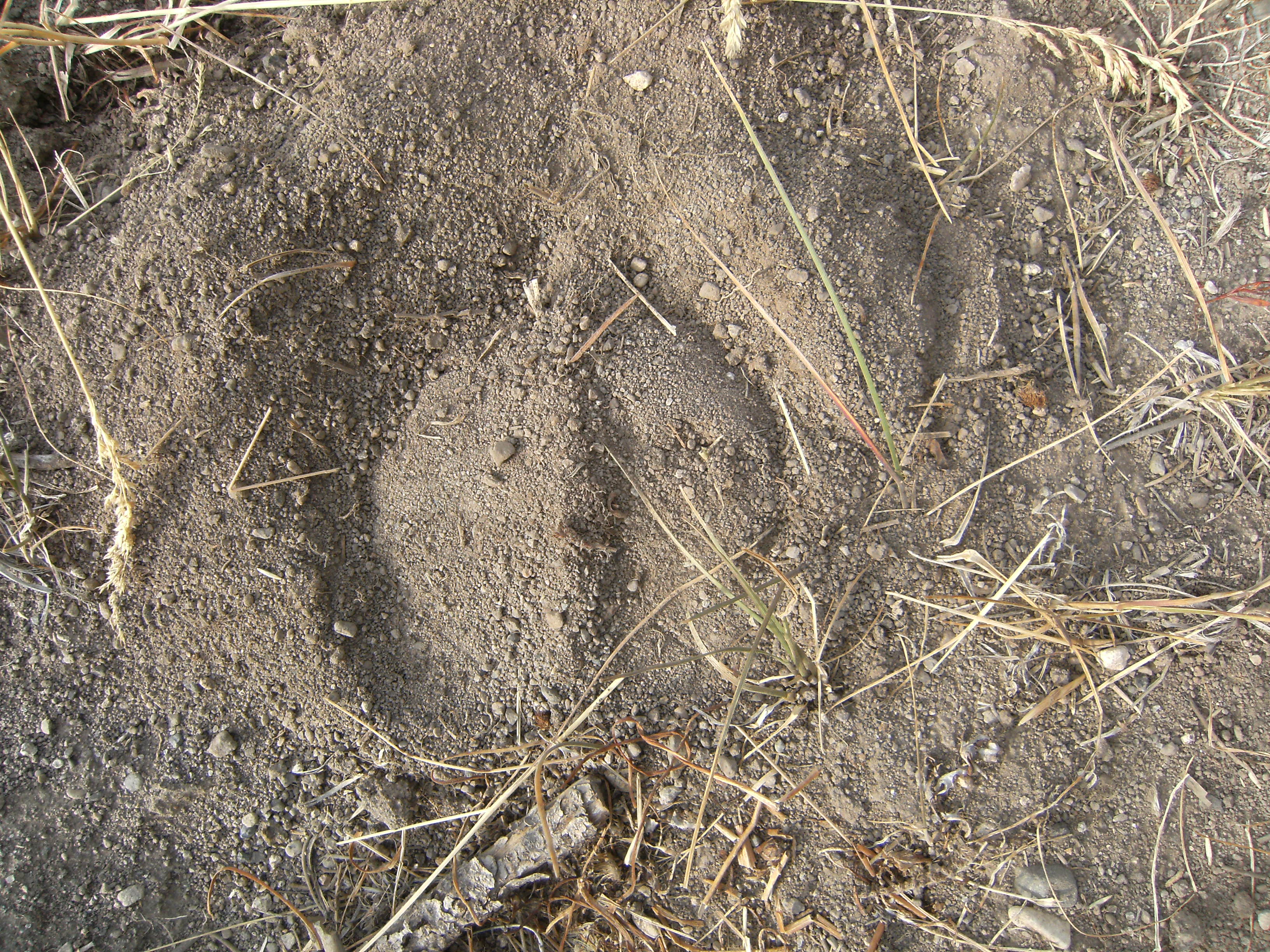
Moose track

Although I’d been hearing from local hands about moose visiting their properties all winter, I’d seen no sign.  But just the other day, on a walk through the springs area of the nearby forest, 2 yearlings watched my neighbor and I casually as we approached on the trail.  I held the dog, who didn’t even notice them, and we all had a few moments of moose/human communion.  Ah, what bliss!

The yearlings went up the hill, we continued along the springs, when I looked down below into the newly logged private lands to catch a glimpse of Mama Moose, big and beautiful, running through the woods.

Yearling moose tracks next to Koda's track

I’d downloaded Scott Becker’s Master Thesis last fall and finally got around to reading it.  He did a study on the moose around the Jackson area, including Dubois, south Yellowstone, and the Tetons.  Here are some of the highlights from his study:

1.  Few, if any, moose existed in Wyoming prior to 1850.  Sporadic observations of moose occurred in NW Wyoming after 1850, but its believed the population didn’t begin to increase and expand until after the establishment of Yellowstone National Park.

2.  Moose suffer heat stress in winter when temperatures are above -5 degrees celsius (23F); 14 degrees celsius in summer provokes heat stress (57F) and above 27C for extended periods of time is unsuitable for moose without refugia (80F)

3.  Migrations between seasonal ranges follow traditional routes and that knowledge is passed from parent to offspring.  Thus it may takes several generations for moose to adapt to habitat alterations that impact seasonal movements and ranges.

4.  Some of the most important elements of habitat quality include coniferous forests, especially during spring when increasing ambient temperatures limit foraging activities of moose during the day.  Moose movement is very concentrated in winter and dependent on coniferous forests.  Moose population density and calf-cow ratios for the north Jackson herd began to decline shortly after the ’88 Yellowstone fires.

5. The north Jackson herd is in a steady decline.  When female moose are healthy, they usually have twins.  The results of Becker’s study indicate that nutritional quality, rather than the availability of habitat may be the most important determinant limiting population growth.

6.  The impact of predators on calf survival appeared to be minimal.  Although wolves did account for some adult female mortalities, the effect of wolf predation on this population appeared to be minimal.  The apparent preference for elk by wolves in the GYE was likely due to the greater abundance of elk in the area.  Also, because elk are in herds, its easier for wolves to follow and find them.  While moose are solitary and the occasional predation is usually due to happenstance.

7.  Management implications:  Mature coniferous forests are an important component of Shiras moose habitat selection in winter and summer.  Thus disturbances that reduce the amount of mature forests could negatively affect moose population performance.

8.  Becker concludes that nutritional quality of habitat is the most important factor in the declining moose population in the northern Jackson herd.  Habitat quality has been affected by large wildfires, insect outbreaks, widespread drought since the 1990’s, and global warming.  Predators are playing a minor role in the decline of moose in northern Wyoming.

Here’s a video taken last fall of a male and female in the willows just down the road.  You can turn the ridiculous narration off if you want.

Error
This video doesn’t exist

The ancient footprints–Dinosaurs

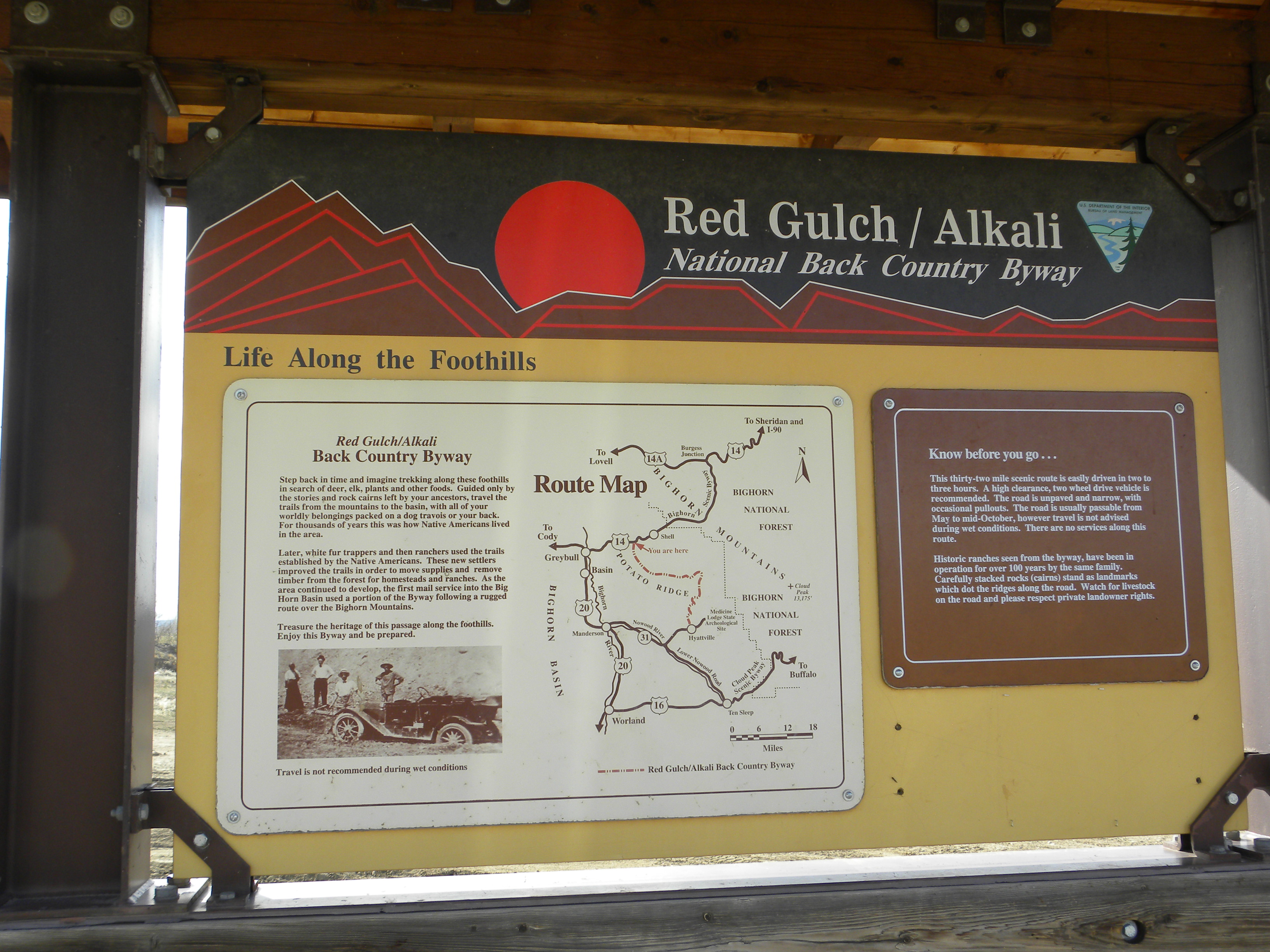
Yesterday I went with some friends to see the Dinosaur footprints at Red Gulch/Alkali.  Located on BLM land outside of Shell, WY,  its about an hour from Cody towards Greybull.  The turnoff is a good dirt road that goes about 35 miles and ends in Hyattville, where there’s an archeological site with petroglyphs. 

Detail of sign at turn off showing map

Today we were just going about 5 miles down the road to some dinosaur tracks, discovered in only 1997 by hikers.

Its a beautiful spot--Badlands against the Big Horns

According to the signage, the discovery changed paleontologists view of the Wyoming landscape 160 million years ago.  Just 15 years ago, it was thought that all of Wyoming was covered by ancient seas in the past.  With the discovery of these footprints, it appears that parts of the landscape had beaches and mudflats.  Of course, 160 million years ago Wyoming was located about the latitude of Cancun, and these dinosaurs were lounging around beaches, eating plants and each other with a nice view of the ocean.

Dinosaur footprint

Sunglasses show scale of footprint

The crazy thing about seeing the footprints was knowing these animals are now gone, long gone, extinct…yet the ghosts of their presence is imprinted in these rocks.

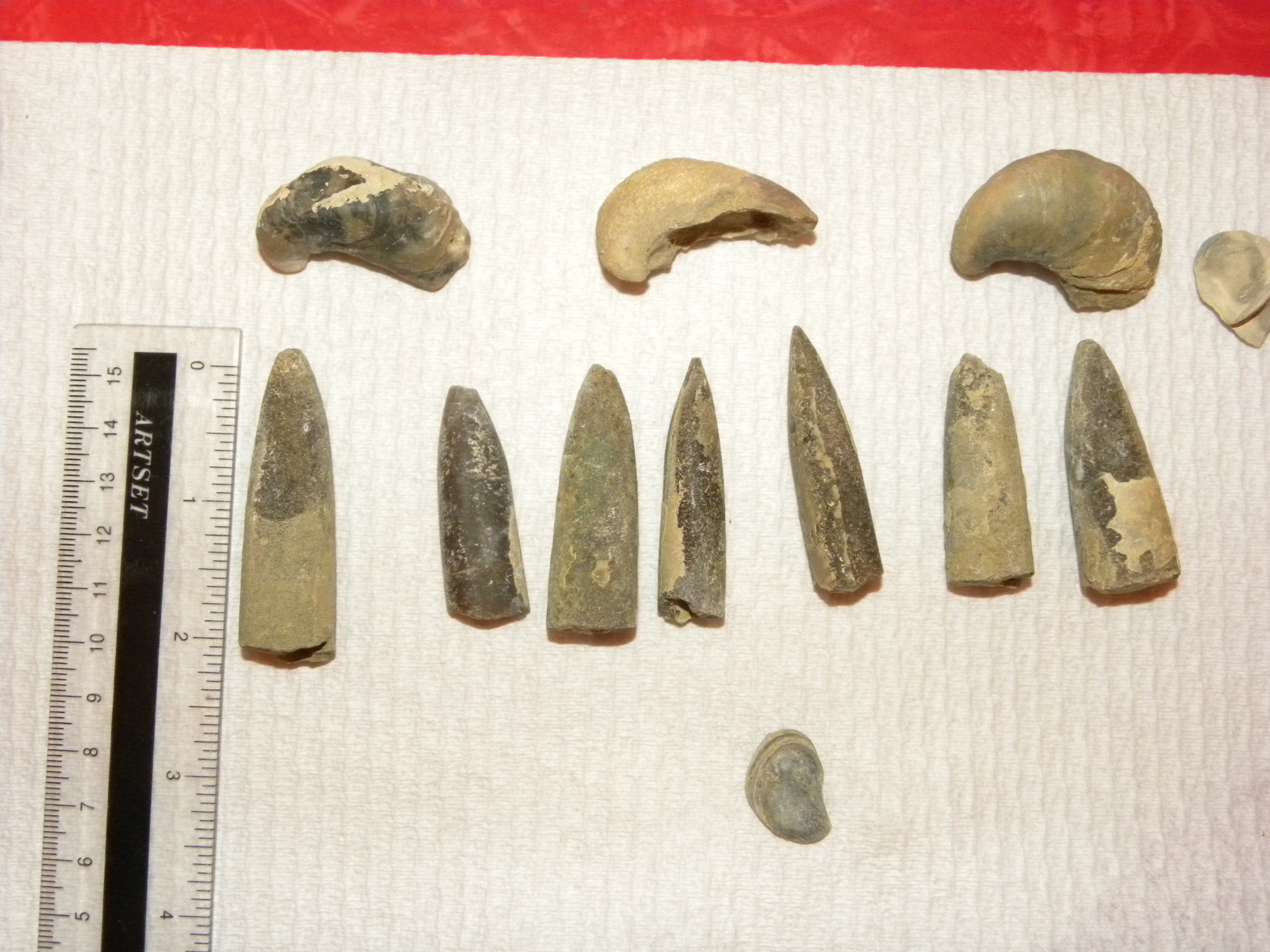
After lunch, a few of us hiked up into the nearby hills.  The whole hillside seemed to made up of fossilized shells.  The shells were in the sandstone cliffs, but also covering the gully and hillsides.  We collected a few shells and some unusual ‘teeth-like’ fossils called Belemnites, ancient squid-like creatures.

Belemnites and Devils toes

As one of my friends’ said, Wyoming is so interesting.  You could be out every day for the rest of your life seeing and doing something new and unique.  This certainly was one of those days.

A Grizzly story

Elk from the trail camera

I set up my trail camera for the last two weeks, hoping to catch some bears or wolves.  Mostly I got a lot of elk.  But I did capture 3 bighorn rams and a coyote.

The crazy part is that on the way up there I was following a grizzly’s perfect tracks in the snow.  The tracks were actually solid ice and super clear.  I was trying to figure out how they turned to ice.  I thought “Maybe he went up in the early morning or evening over thin snow that melted under his heat and then iced over.”  The ranch hand neighbor thought he just melted actual ice with his heat.  But everywhere around the tracks was snow, except for his tracks.  Any enlightening thoughts would be gladly accepted folks.

I chatted with J___ at the nearby ranch on my return.  He told me that that same grizz had walked right through the cows, looking for their mineral lick that they used to keep every year.  Its gone this year but probably its the same grizzly.

Then he told me a great grizzly story:

“You remember last year they were trapping and collaring.  They caught 3 grizzlies on our property all in one morning.  The traps are just 55 gallon barrels.  The bear goes in for the meat and the door closes behind him.  The doors on both ends are just metal grates.”

“Well Mark Bruscino was there (note: he’s the G&F Bear specialist in Wyoming) and asked if I wanted to come see as this was unusual.  They’d never trapped 3 bears all at once and it was 2 sows and one cub, so it was going to be interesting which bear belonged to the cub.  They trap the bears, then dart them with a light sedative.  Mark said ‘look inside that barrel at that grizzly’, so I looked.  And the bear, instead of looking out the grate, was looking sideways at the wall of the can.  I looked from one end, then I looked from the other end.  But each time I looked, the bear looked away, as if shy or something.

” ‘What’s going on?’ ” I asked Mark.

” ‘That bear is embarrassed.  She’s been caught before and she’s embarrassed that she got caught again.’ ”

“Well Mark sedated her and looked at her ear tag.  That bear, Mark said, was the first bear he’d ever caught and collared, 11 years back. She was 3 years old then.”

” ‘That bear has only been handled by people twice, both of them me.  She remembers me.  Bears are smart.  Most people would be shocked to learn how smart bears are,’  Mark said”

“You know the bear can hear you when they’re sedated.  And Mark was talking to that bear saying things like “Hi, you remember me.”  She’d be sure to remember something like being caught in a trap.

“Mark said that that bear had been in Dubois, caught and transferred for cattle killing.  She was put here and didn’t get into any trouble for all those years, until last year when she killed our pigs.  A year later she was tracked, by her collar, down in Dubois, but since then the collar’s fallen off.  When you think about it, how does a bear know, after being trapped in Dubois, then flown here by helicopter, not even driven here, but flown…how can they know how to get back to Dubois.  They don’t go the same route, she had to cross 3 highways, and its really rugged country between here and there.”

“Mark said we had about 1/2 hour before those bears woke up.  I helped them pull them out of the cans.  I was trying to be really gentle so as not to twist her paw or whatever.  Mark said there’s no handles on the bears, you just pull on their fur. ‘Don’t worry about hurting them.  These are massive creatures.  They’ve been over rock cliffs and in all kinds of situations.’

I told J___ that was a great story. Next time they’re trapping I hope to get a photo or maybe even ‘pet’ a sleeping bear.  J___ got too and so did all their dudes that day.

Patios hard and soft

I received a question from someone on using concrete pads underneath a DG patio, instead of prepping the subsurface with baserock material.  That got me thinking about doing a post on patios in general and what, from a designer and installers perspective I know and understand.

First a few words in general regarding different types of patios.  There are lots of different materials out there, some nice, some not, that can be used, and of course, different areas of the country will have different requirements.  As far as drier climates goes, here are the basics:

1.  Use materials like DG (decomposed granite) or concrete pavers (set in sand) when you need a permeable surface.  Many counties are now requiring with new installations a minimum of permeable surfaces to prevent massive run-off problems.  DG is useful as a patio some distance from the house in order to wipe off small bits of granite attached to shoes.  Concrete pavers are set on a sand base and come in all types, from ugly to handsome.

Calstone pavers set in sand

2. For leisure patios with furniture lots of do-it-yourselfers or people on tight budgets like to put pavers and DG together.  This works fine but keep in mind that high heels and furniture will get caught in the cracks of DG.  There are ways to minimize this.  Refer to my DG Patio book for spacing on pavers and proper installation.  You will have to convince your contractor to use my methods because it is more time intensive, but it works.

A proper installation using Arizona flagstone with decomposed granite in between. You will rarely see it done properly like this.

A proper installation using Arizona flagstone with decomposed granite in between. You will rarely see it done properly like this.

3.  For a long lasting patio that will have furniture on it, I prefer to pour a concrete base and put mortared pavers on.  Another alternative is concrete.  There have been lots of advances in concrete in the past few years.  Meaning there are lots of types of decorative concrete looks, with stains and stamps and 2 or 3 dust on colors; finishes with broom, or salt pitting, or hard trowel.  Just keep in mind that concrete is not a controllable substance and colors vary, fade, and cracks will develop no matter what.

This Decomposed Granite with flagstone patio is not done correctly.  Spaces are too big and will catch high heels and chairs

This Decomposed Granite with flagstone patio is not done correctly. Spaces are too big and will catch high heels and chairs

Indian pavers with decorative rock set on concrete base

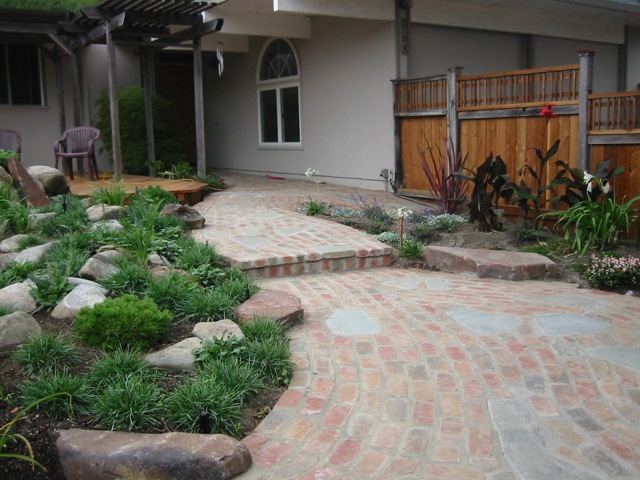
Interesting walkway that incorporates brick, stone and boulders

Interesting walkway that incorporates brick, stone and boulders

A WORD ABOUT PAVERS:  If you decide to go for real stone pavers, I salute you.  Although concrete is cheaper, stone is beautiful and will give you lasting pleasure.  So how do you choose amongst all the choices at the yard.  First, go to a large landscape supply yard and pick out the stones you like.  Get samples and bring them home and live with the samples for a week or more.

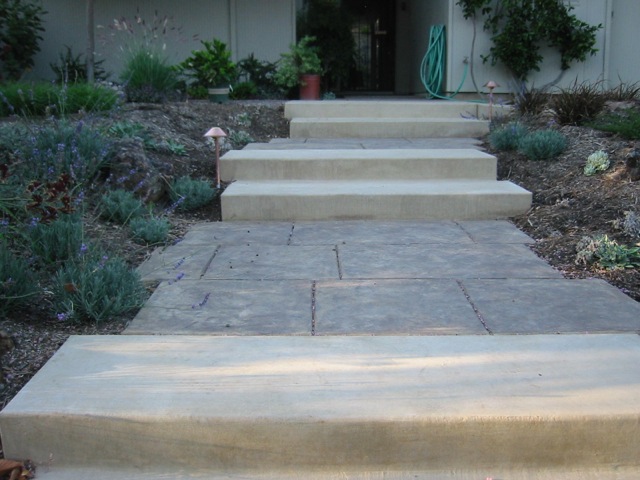
Two types of concrete are in this walkway

Two types of concrete are in this walkway

You must map out your design exactly.  Usually the stone yard will have some basic design patterns for you to work with, or simply obtain some grid paper and go to work.  Indian pavers have flooded the market in recent times.  There are some incredibly beautiful stone and colors amongst the choices, but the stones are not all exactly to size.  You’ll have to work with this when you or your contractor lays it down, which means some of the spacing will be off.

No joints in the perfect paver

Next you must decide on the size of your joints.  Be exact in your communications to your contractor.  If you have uniform stone, you can lay them down with no mortar in between.  If you want joints, or if your stone isn’t perfect as in the Indian pavers pictured below, you must have mortar showing in the joints.

Decomposed Granite patio under willow.

Decomposed Granite patio under willow.

As far as flagstones go, there are many types, some of which I do NOT recommend because you will develop moss in the wet season and you MUST seal these types every year to prevent mold.  I discuss this more in depth in my eBook.

In general choose flagstones that are hard with small pores.  These would be stones that come from places like Montana.  Flagstones come in many names, and what’s called one name in one yard will be named something else in another, even if its the same material.  Just make sure the flagstone is dense.

Another thing you want to watch for in flagstone is how slick it is.  Slate, though gorgeous, is really slippery when wet.  I’ve heard that a little bit of sand in your sealer can help this problem.  Better to avoid it from the start.

For a more in-depth discussion on these topics, see my DG patio book.  In it I discuss all the pros and cons of different materials, as well as give exact instructions for the installation of the different mediums, whether your contractor installs it or you do.

I’ve tried to keep the price to a bare minimum and it includes all the tips I’ve learned from years of experience.  Good luck and do it right from the beginning.  Hardscape, unlike plant material, cannot be picked up and moved, and is expensive!

Also Read:-

Our keystone species: Bison and their restoration

I’m reading a book that, for the first time for me, pops to life what it meant that there were 60 million Bison here before the white man arrived.

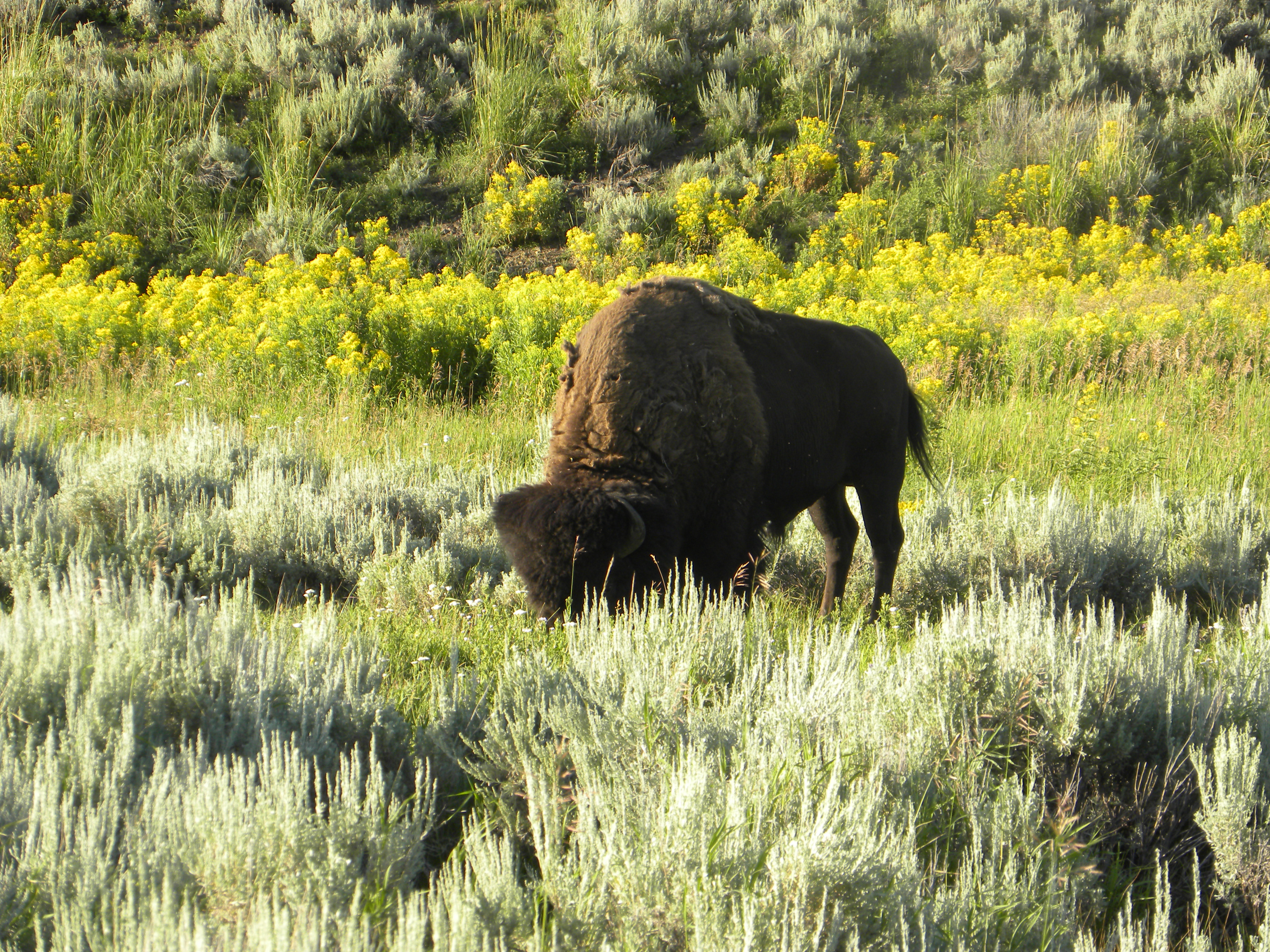
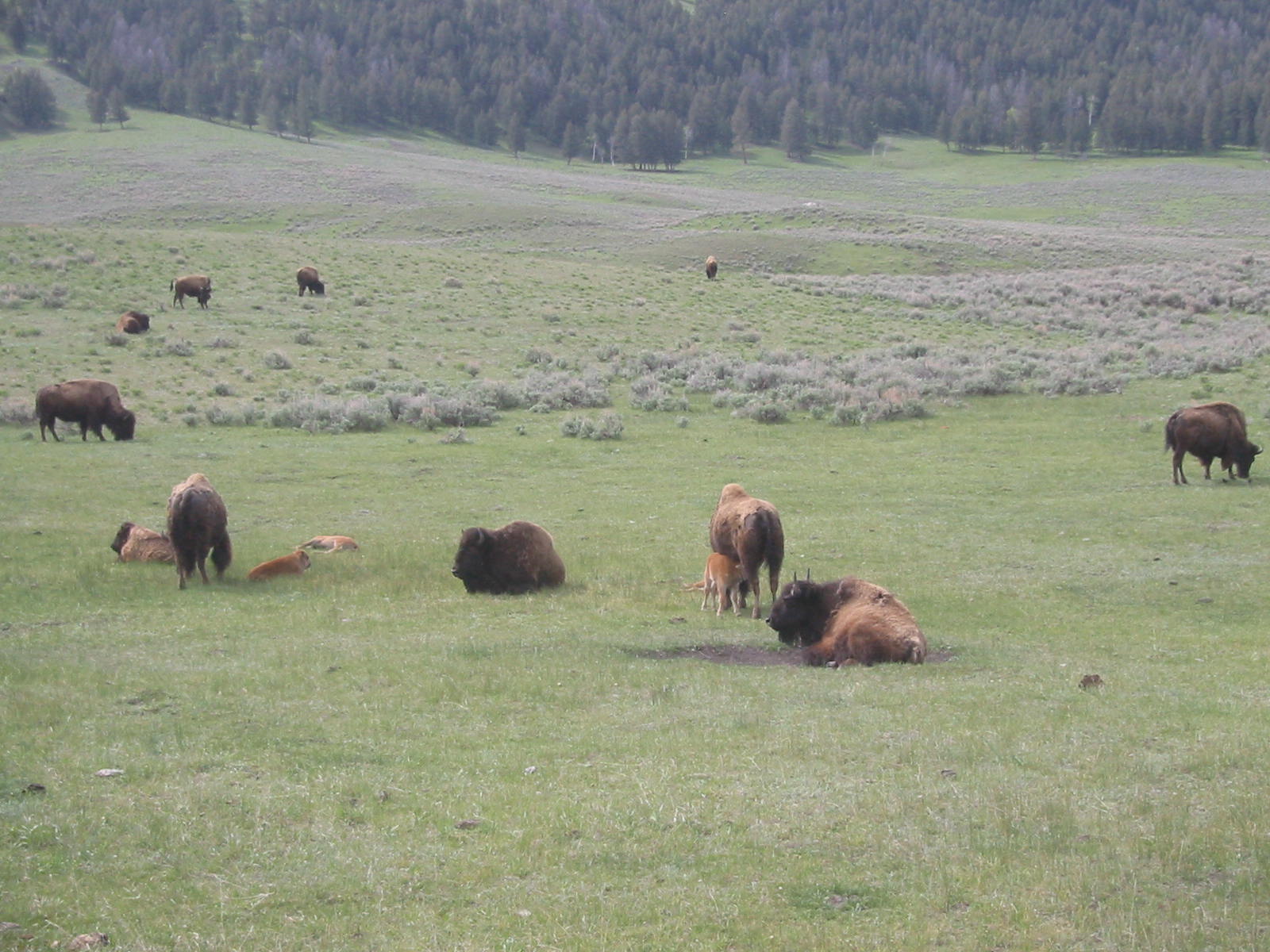
Bison bison, the survivor amongst many large mammals that became extinct in North America, were tough and well suited for this continent.  Surviving -50 degree winters, summer droughts and waterless days where he could drink prickly pear juice if needed.  They lived long and remained fertile into old age, were sure-footed and could swim if needed.  They lived at sea level, on the high plains, and in the high mountains.   A keystone species, their roaming and fertilizing of the soil conditioned it for native grasses as well as provided food for the bears and wolves that freely lived amongst them.

When the Spanish arrived, they found Buffalo north of the Rio Grande and inward into Florida.  Bison covered the continent from Canada to Mexico north.  Bison were in Georgia, along the Mississippi, in Pennsylvania and along the Niagara.

When spring ice floes began, Bison that had fallen through the cracks while crossing the river drowned and were carried downstream.  Thousands of carcasses floated down western rivers.  One trapper counted over 730 until he got tired and stopped counting. Rivers were a continuous brown flow and these carcasses formed complete dams.  Bodies of Bison flowed day and night in the spring.  Grizzlies waited for these spring ‘run-offs’.

Calf loss of Bison was set around 50%.  With 15 million new calves born each year, that meant 7 1/2 million calf carcasses strewn across the country.  Audubon’s party camped on a low island on the Missouri covered with dead Bison calves.

The Bison were so thick that people didn’t count them by individuals.  Instead they counted them by how many days it took to pass one point.  One trapper counted 5 days before the herd passed a point completely.  One man wrote that while traveling up the Arkansas 15 miles a day and able to see for 15 miles on each side of the trail, in 3 days he’d seen about 1350 square miles of land entirely covered with Buffalo.  The herds were “in such immense numbers as to defy computation.”

"Thick as gnats" was one expression used. Native Americans called the country "one robe".

When the buffalo were reduced to only bones covering the plains, people were making money collecting and selling them for fertilizer or glue or for sugar factories.  Railroad cars filled to the brim operated day and night hauling bones.

A few Bison escaped the slaughter by holing up in Yellowstone National Park.  In the early days of the Park, even these few animals were being poached.  By 1902, only 25 or 30 Bison remained in the herd.  An intensive protective breeding program brought these last genetically wild Bison back from the brink.

Controversy remains today.  Bison leaving the Park are subject to slaughter over brucellosis.  Only 3000  of the once 60 million of the wild herd remains, confined within Park boundaries.  If this isn’t a definition of an American tragedy…

Bison footprint

Memory is short.  I suppose it could be touted as a conservation success story, saving the Bison from extinction, running them through a very narrow genetic bottleneck to pop out with 3000 in the Park in 2010.  But what of the other many millions?

An apology from the government is long overdue to the Bison.  A presidential pardon.   And then a place, a very large place in the mid-west they can call their home, should be granted to them, to let them live again and build their numbers as they please.  This idea isn’t new.  Its’ been floating around since the late 1980’s when Drs. Frank and Deborah Popper proposed The Buffalo Common, an area set aside where dying farming communities are.  The Poppers were given a lot of grief over their ideas, but it seems that, with the shrinking of family farms and many towns in the Mid-West folding up, this idea is now being considered as not only realistic, but money making (the key to everything capitalistic!).

There is not one national park in the mid-west.  Imagine herds of thousands of Bison roaming their old habitat.  The short and tall grass prairies would be restored, the soil would sing again, and tourists would come from all over the world to see these magnificent animals, found no where else on earth,  just as they now come to Yellowstone. 

Mountain Goats of the Clarks Fork

Mountain Goat from jasperjournal.com

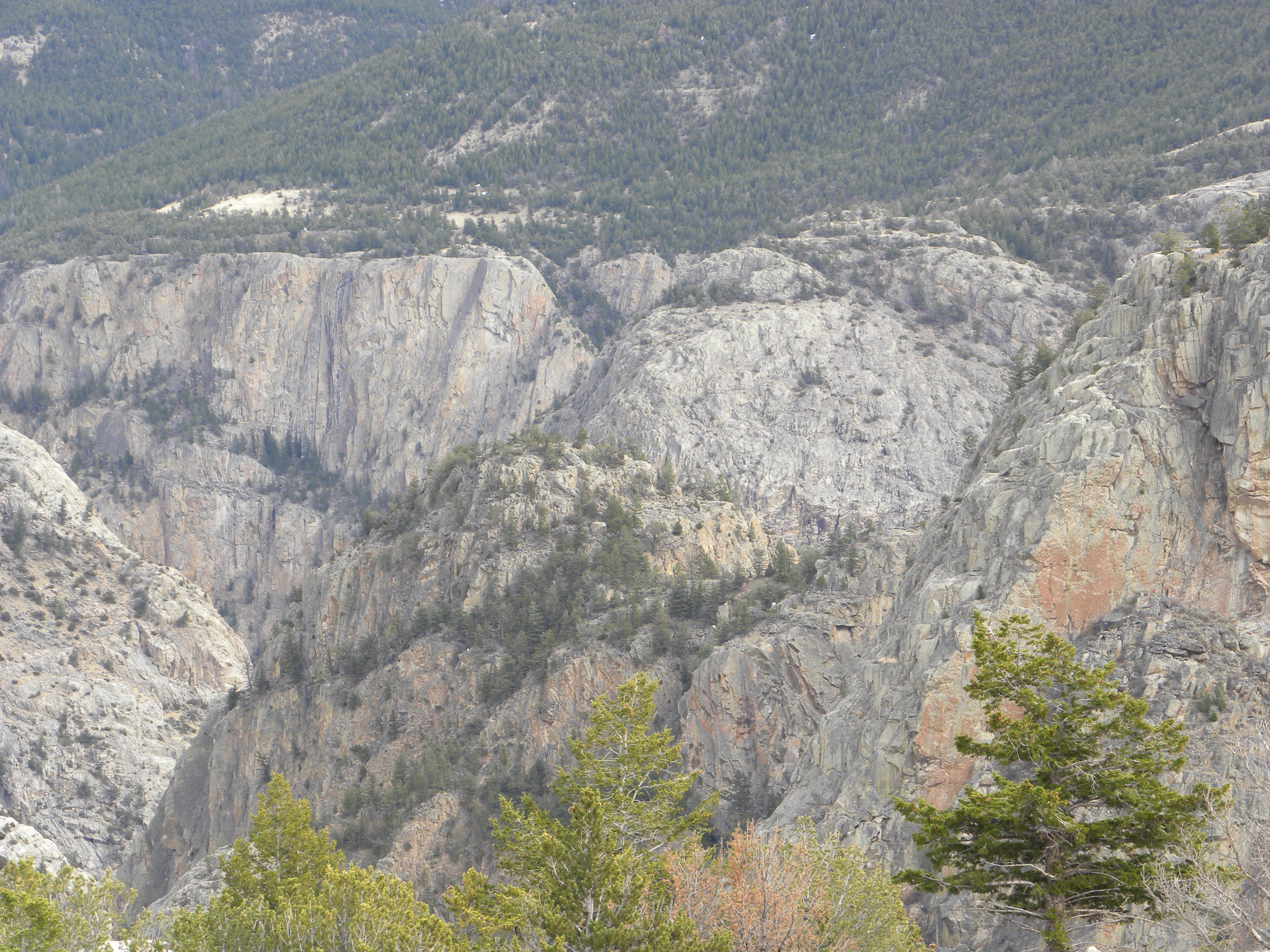
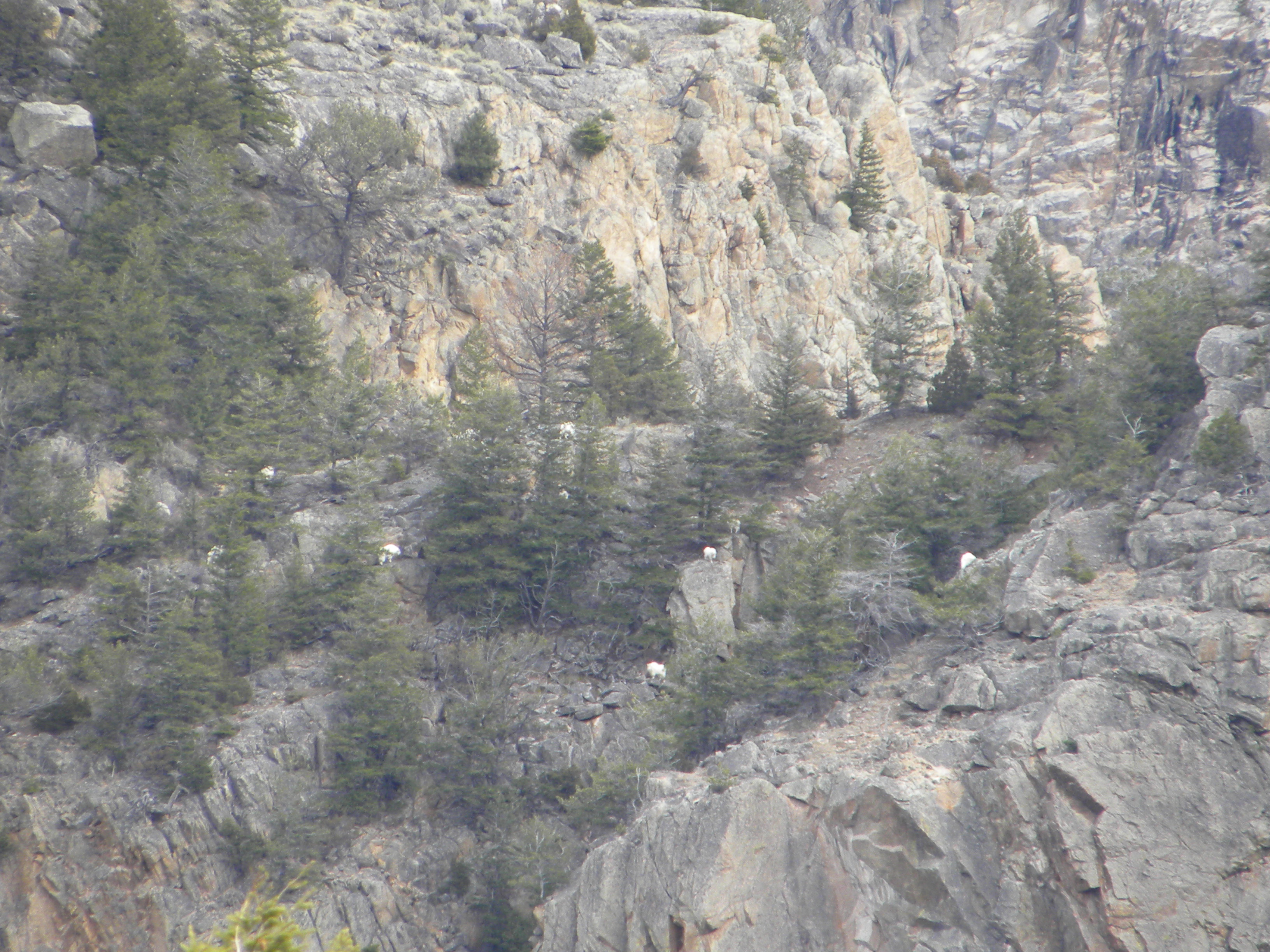
Yesterday I took a walk along the plateau above the Clarks Fork ravine.  The edge is a sheer 1000′ drop tot he river below.  I sat and glassed for the mountain goats that I’d heard ‘hung’ around the cliff edges.  Almost ready to give up, I suddenly saw a small white dot that looked like snow.  I watched it a while and it moved like a white ant.  Pretty soon there were a dozen of these small white dots coming in and out of the trees, hanging on cliff edges that you and I wouldn’t dream of going near.  All I could think of was …”I wanna be a mountain goat!”  Looked like lots of fun, especially to a person like me whose afraid of heights.

The mountain goat controversy remains strong.  Like the fallow and axis deer in Point Reyes that the National Seashore wants to shoot and get rid of, Yellowstone wants to get rid of them.  They are an ‘invasive’ around here, planted by sportsmen for the hunt.  But unlike the Fallow deer which are not from this continent (from India), Rocky Mountain mountain goats do inhabit the high elevations of Montana, Idaho, Colorado, and further north.  Very few prehistoric traces of mountain goats have been seen in these parts, and first hand accounts are few.

Personally, I like them and like seeing them around, especially considering that they are native to areas west of the Park.  It is not inconceivable that they once were around the Absarokas and Beartooths.  That is completely unlike the Fallow deer, which were bought from the San Francisco Zoo in the ’40’s and introduced.  Apparently Rocky Mountain mountain goats were introduced into the Cascades, far out of their native range, with very detrimental effects.

I’m all for eliminating invasive species that ravage the ecosystem and compete with the resources of the natives.  But as long as they are not competing too much with Bighorn forage, I wouldn’t mind keeping them around.  They were a thrill to see.  Gotta figure out a way to get a closer look.

The precipice they are on is in foreground

I counted at least 10 in the area

Look for little white dots!

Wolf etiquette in the backcountry

The local wolf pack has been starting to get into bits of trouble.  I saw the ranch hand from the dude ranch down the way.  His cows have been calving.  They only keep about 30 cows around in the winter, but this morning, early, one of them calved and they got to it just about 10 seconds before two wolves did.  They fired a shot and scared them away. 

Error
This video doesn’t exist

Just a few days ago, the wolves killed an elk right at the pasture line where the cows hang.  And the students told me they saw the small black female hanging near the cow pasture on the bridge yesterday.

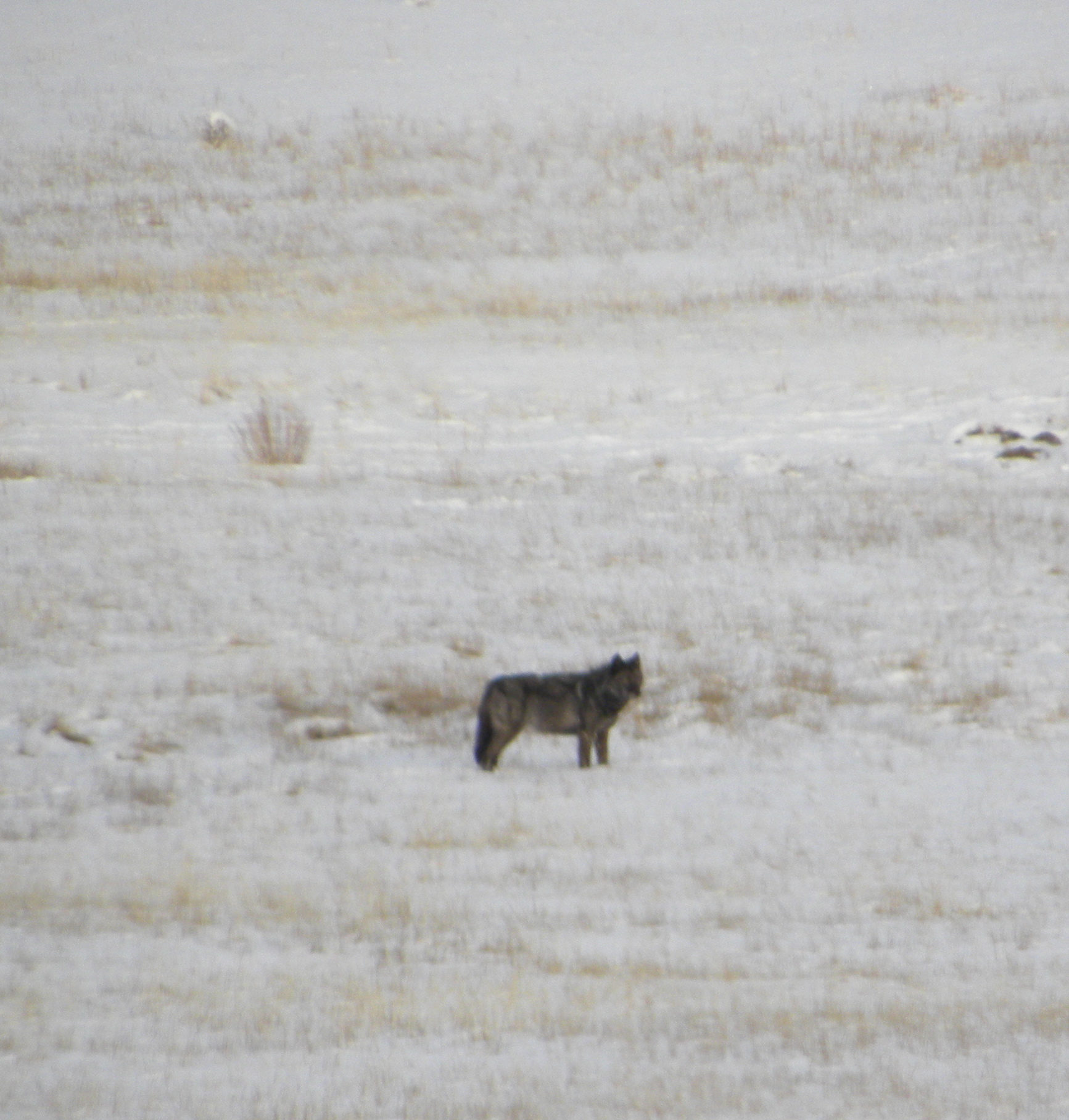
Where all good dogs come from. Black female wolf

The Sunlight Pack has gotten into trouble almost every summer.  In a few weeks, the rancher that owns most of the valley floor will be bringing his cattle up here, maybe over 500 head or more.  They overwinter down near Powell and calf down there.  Last year it was almost all yearlings up here.  Yearlings aren’t too seasoned and are too curious.  Not a good combo for wolf country.

I’m worried for the pack.  This is good wolf country and cattle really shouldn’t be up here anymore.  The open range leases should be retired; ranches for tax write off purposes should be retired as well.  My eternal fantasy is to win the lottery and buy the big ranch.  Then put Bison back on it and don’t worry if the wolves and bears get a few.   Bison belong here.  They used to be here.

Eventually, you can count on the wolves picking off a few cattle.  Wildlife Services, Dept. of Agriculture, can decimate the ‘bad’  packs each year, trying to get them not to have a taste for cows.  But its not that they love cows.  Its sometimes they are handy or easy.  Really, the wolves prefer elk.   You can’t really blame those wolves for hanging around when the cows are calving.  Calves are helpless when they’re first born, and an easy meal.  It’s really a smart strategy.  Just as smart as the little chipmunk who ate a hole in my bucket full of grain for the turkeys.  Easy meal; low expenditure of energy; biology 101 really.

The Valley that Sits in the Middle of the Land

The ranch hand told me his friend went ‘horn hunting’ by horseback last weekend near the ranch in the back country with his two dogs.  The dogs ran off and haven’t been seen since. I showed him the electronic collar I keep Koda on.

“They’re bird dogs, not people dogs like yours.”  We’re both thinking the wolves probably already got them.

Last spring a young experienced hiker and his dog went backpacking up the North Fork near the Park entrance.  There’s a wolf pack up there, and although he kept his dog close, when he went to set up camp in a meadow in the rain, his dog was sniffing around and got attacked a few hundred yards away in the trees by 8 wolves.  There had been a recent human encampment there, probably with some leftovers.  The hiker ran to his dog, the wolves ran off, but the poor dog died.

That hiker didn’t really do anything wrong.  He kept his dog close at least most of the time.  When I told this to a local who hikes with her dog, her reply was telling:  “That’s a risk you take hiking around here.”

I keep Koda close.  I watch him at all times and keep him on a shock collar I got through Cabelas.  He’s a dog’s dog, not really a people dog.  He has come to like people, and he’s loyal to me especially.  When he sees a dog, I can easily control his desire to run up and play.  But his response to a coyote or a wolf is different.  Some ancient wildness overtakes him.  He recognizes the dog part, but he senses the freedom part too.  In a moment he’s off and that could be the difference between life and death for him.  That’s when the shock collar comes in super handy.  But its no guarantee.

Koda with his toy.

Yet I do have to say, those fellows who took their 2 dogs out here, in wolf country, and didn’t watch them, let them run around where ever their noses took them–that is just irresponsible with your dog and certainly you can’t blame the wolves.

However you cut it, with the wolves and grizzlies here, I still prefer that wildness.  One of the students and I were talking about New Zealand.  He did an internship last fall in Antarctica and spent time on the south Island of New Zealand for vacation.

“Compared to Antarctica, it was great to be in a place with plants and trees, lush and fertile, where we could hike.  But to tell you the truth, as a biologist, it lacked.  They have no native animals there, except for a few birds.  The scenery was beautiful, but I missed the wildlife, especially the big animals, those ones that make you aware when you’re hiking around.”

Even if Chief Seattle didn’t really say it, its worth quoting:  “What is man without the beasts?  If all the beasts were gone, men would die from a great loneliness of spirit.”

Amen to that.

We love our dogs. Let's keep them safe.

Pollinators in trouble. What a city dweller can do.

I was disturbed to see yet more articles in the NY Times about bees and colony collapse.  I was a home beekeeper in CA since the mid-90’s.  When I moved to Wyoming, I gave that up in favor of not having lots of grizzlies in my yard. Being a horticulturist and amateur botanist, I was also interested in the general decline of pollinators and wrote an article in 1998 entitled Pollinators under Siege that I posted on my web page.

one of my hives

Honeybees are non-natives.  They are relied upon to pollinate our crops. Native bees and insects, in general, just can’t do as good a job on monocrops.  But honeybees also push out non-native bees.  They are up earlier and go out in mass.  When my honeybees were not doing  well due to mites, I’d always see more native bees move in to take up the space.

And although we need the honeybees, we also desperately need our native pollinators.  What many people don’t realize is that there are a myriad variety of insects that pollinate natives.  When I asked my botany teacher who specialized in California natives about their pollinators, he said that they don’t know what pollinates many California natives.  It’s very difficult to observe.

Death Valley flowering plant

One thing I learned in my profession is that the majority of people don’t even understand the basics of what pollination is.  Insects and flowering plants evolved together. Even some mammals and birds are important pollinators.  Entire ecosystems are built around these relationships.  Pollinators declining world wide means trouble for our planet’s health in ways just as impossible to calculate as climate change.

Frankly, it’s another overwhelming and make-one-feel-powerless problem, once you begin to dig into the complexity of the issue (see my article link or read The Forgotten Pollinators).  I’ve been passionate about this issue for a long time.   Here are my thoughts on what can be done individually and collectively.

1.  Rail against development!  Lack of community planning, lack of empty lots, and cookie cutter housing developments consumes habitat for native plant species and therefore specific pollinators.  Development should be:

a.  clustered

b.  planned so there are ‘hedgerows’ or a continuity of native species weaving in and around the development.  Lack of fencing allows for wildlife to wander about.  Lawns should be eliminated or kept to a minimum or replaced with native bunch grasses and native meadows.

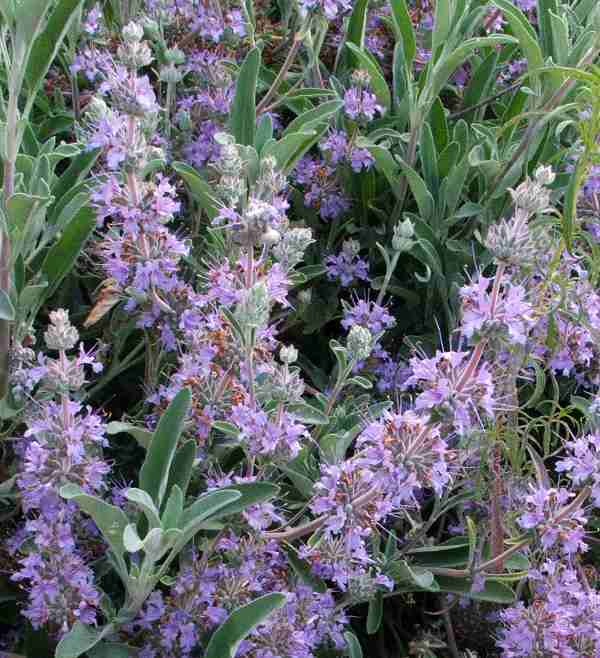
Native Salvia

2.  Ban home vineyards!  I’m sorry, but this is so unnecessary.  Does everyone really need to have their own little home label.  People are cutting down native Oaks, clearing native trees and shrubs to put a monoculture in their backyard.

3.  Encourage large swaths of native trees and shrubs.  You can plant non-native gardens, but include natives.

4.  DO NOT use pesticides.  There is absolutely no need to use pesticides in the home garden.  This includes hiring a pest control service.  When you spray for spiders, you will be eliminating butterflies as well.  If you have a rat problem, encourage your neighborhood to use natural controls such as owl boxes and the old fashioned methods of traps.  Using a pesticide free method for controlling rodents helps the bobcat and mountain lion population as well.

5.  Put a bell on your cat or keep them indoors.  Too many birds are killed by cats yearly.  Hummingbirds are important pollinators.  Songbirds are dispersers of seeds.

6.  Realize that native pollinators cannot work in isolated ‘islands’ of plant communities.  How far can an insect travel to find another plant of the same species?  If plant communities are too spread out because of the concrete jungle, or suburbs full of pristine lawns and non-native species, these plants can’t be sufficiently pollinated to reproduce enough to continue the species.  We must have large enough habitat and/or corridors of habitat for plants and animals to travel through and sustain the ecosystem.  Work to protect large tracts of open space in your community for your own health and sanity, your children and their future enjoyment, and our ecosystems.  This open space should be undeveloped, not browsed by cattle nor full of lawns or athletic fields.

California poppies in bloom

What do the above recommendations have in common?  Working together as a community.  Its a good first step.

Elk, Eagles, and an equinox moon

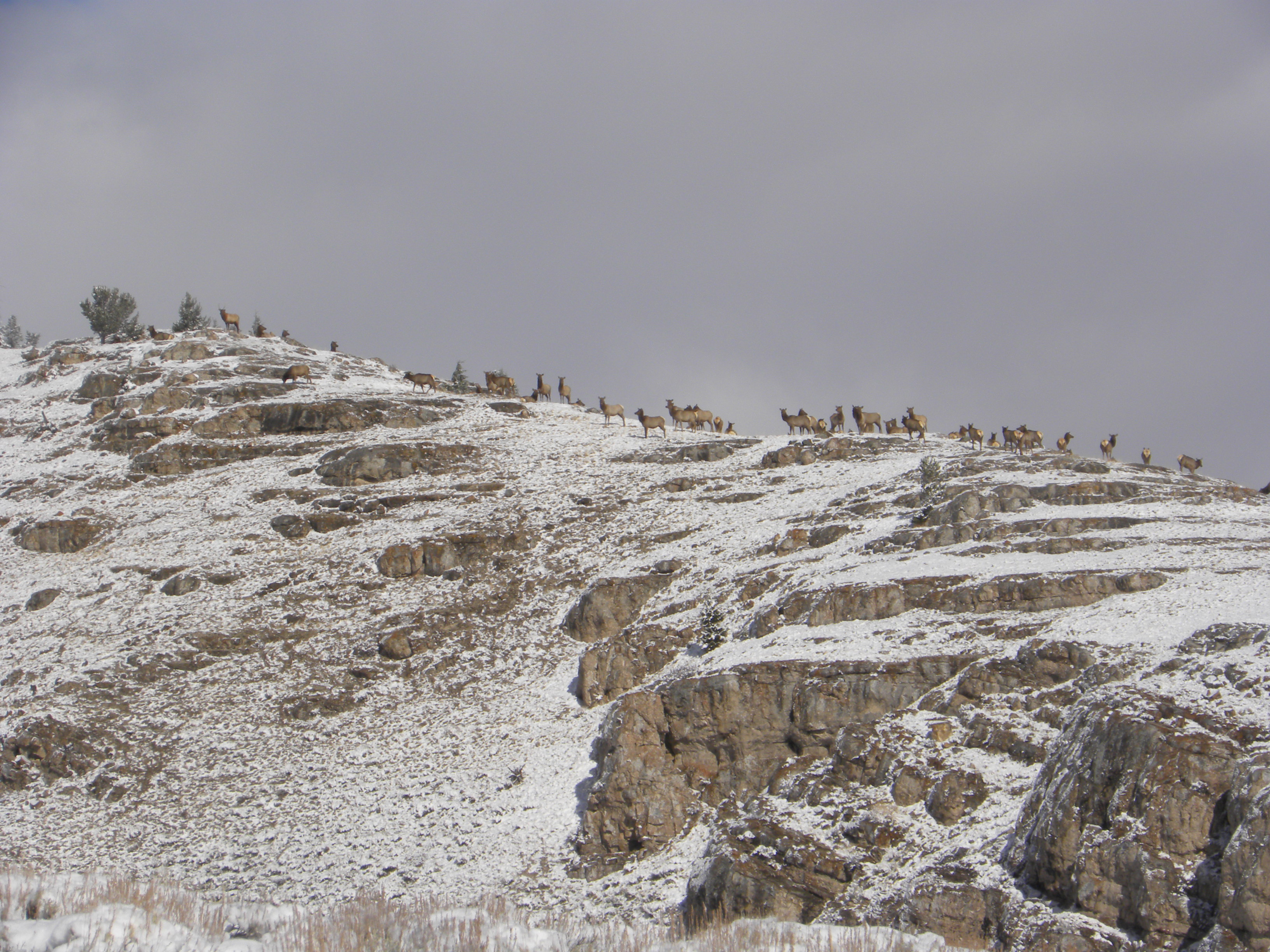
I took a hike up Little Bald Ridge to see the Bighorn Sheep.  They’re usually there in the winter.  On the way I spied a herd of about 700 elk grazing on the hillside.  It was a gorgeous day after a light snow.  The trek up there can be hard if the snow is deep.  Usually in March it is.  But we’ve had so little snow this year, interspersed with warm days where the snow has melted off, that only a few inches were on the ground.

Elk herd resting mid day

Large elk herd

(Here’s is a video I took from inside of my cabin the other day when the herd came through at dusk)

Error
This video doesn’t exist

By the time I got to the top of the ridgeline, there were no sheep to be found.  I walked and glassed all along the top without any luck.  They must have gone elsewhere.

An immature Golden Eagle played on the currents.  I’d seen a nesting pair last year up here.  The Eagles like these cliffs to nest in.  I supposed this was one of their offspring.  Hope he finds a mate this year.

Valley after a light snow

Although I found no sheep, I did find an elk kill in the valley. The kill was made right at the fence line of the local ranch.  At first I wasn’t sure if the elk had gotten caught trying to jump the fence.  This happened last year.  But the ranch manager assured me it was a kill, although we don’t know from what.   He hadn’t seen any wolves on it, and the last kill I’d seen the wolves had been there all week, nibbling.

I parked at dusk close bye and watched, wondering if any wolves might come around.  The crows and magpies were going to town on it.  Suddenly, the immature eagle swooped in and all the smaller birds flew away.  I watched the eagle pick at the remains.

Eagle on kill

Then an odd thing happened.  A group of 5 yearling cows came trotting over.  The eagle, feeling threatened, fled.  The young cows edged slowly over to the carcass and one by one, sniffed at it.  A big mama cow walked over.  Standing right by the carcass, she mooed at the yearlings, over and over, as if to shoo them away.  I liked to imagine her as the wise cow elder, telling these yearlings “If you don’t watch your p’s and q’s, you might end up like that.”

J__, the ranch hand, and I chatted on the road as the crescent moon rose in the equinox evening.

“I saw those cows going over towards the kill and thought I should check on what’s going on with them.  I used to take care of a herd of Bison and I’ve seen them do the same thing—go sniff out a carcass.  Strange.”

Immature Golden eagle

It was a perfect equinox day and night, or is that redundant?