• MY BOOKS ON WILDLIFE, GARDENING AND MORE

  • The Wild Excellence

  • True stories of wildlife encounters around the Greater Yellowstone
  • Award winning eBook on Decomposed Granite, tips, how to's, what to watch for
  • Children's book. True stories of a dog and wolves. In a dog's voice
  • Written for dry Mediterranean climates in California, north and south

The Fox and the Study Area

I’ve been itching to start the rounds in my study area again, but winter hasn’t set in and so there is no consistent snow on the ground.  One day its’ 50 degrees, the next a few inches of snow that melts off.  Last winter I began in earnest a systemic, almost daily, investigation of a specific area near my home.  Using tracking methods, I plotted out where the martens lived, the size of an ermine’s territory, the population of squirrels and voles and deer mice.

Vole bound.  You can see it's tail drag

Vole bound. You can see it’s tail drag

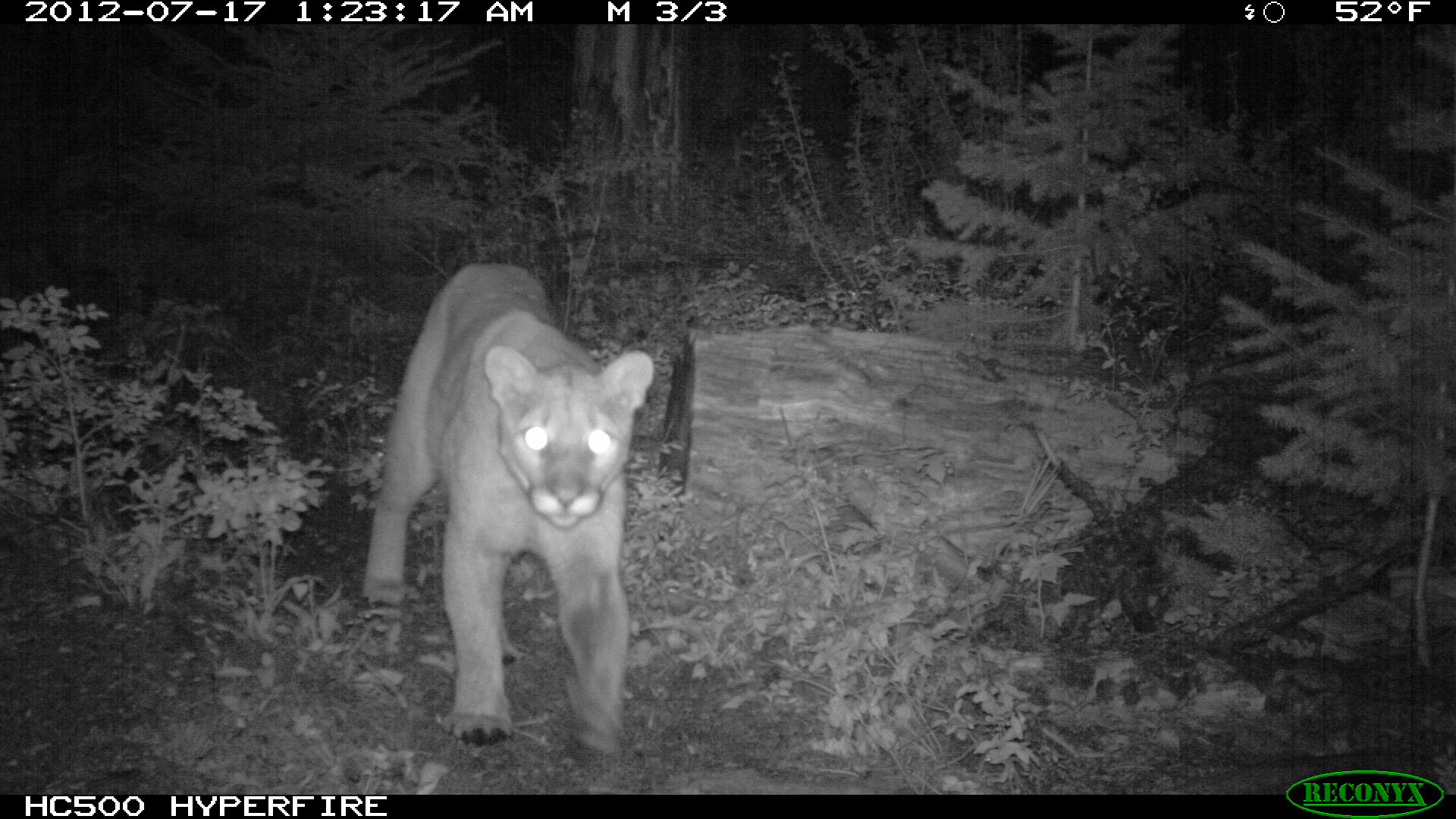
I followed a resident cougar who lead me several times to the end of her trail where a pack of wolves obscured her tracks.  One time at the end of the trail lay a dead deer, maybe killed by the cougar who was driven off her prize by the wolves.

cougar

So I’ve been content to lay out a camera bait trap and see who’s around.  Hunting season is still on, but the general deer season is over here and the quotas for elk and deer are very limited for the next month or two.  The animals will start to come down within the next few weeks as the weather turns and the traffic subsides.

Trapping season has started .  There are a few people who trap martens here.  Bobcat trapping season begins on the 15th.  For these reasons, I would never reveal where my camera traps are set, nor where my study area is.

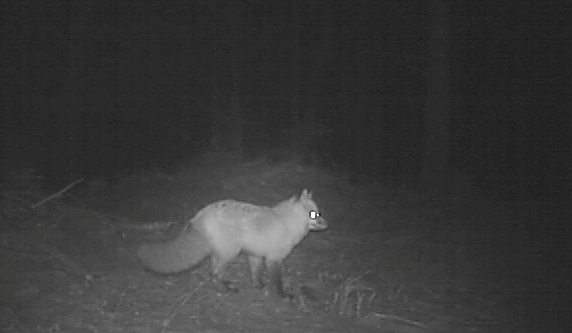
After a week, I went to check my camera trap and was surprised to see a beautiful fox.Here is the link for the fox video.  You can see she’s digging for the deer liver I set in a covered hole.

And a few stills

fox

What a great tail

Red fox

Digging around for the deer liver treats I left

Another positive effect of having wolves in the valley is that they keep the coyote population under control, and by doing that, foxes are returning.  I’ve talked with some old timers here who told me that in all the time they lived here, they never saw foxes.  Yet I’ve seen them, or their sign, now every year. With fewer coyotes, there is room for foxes.

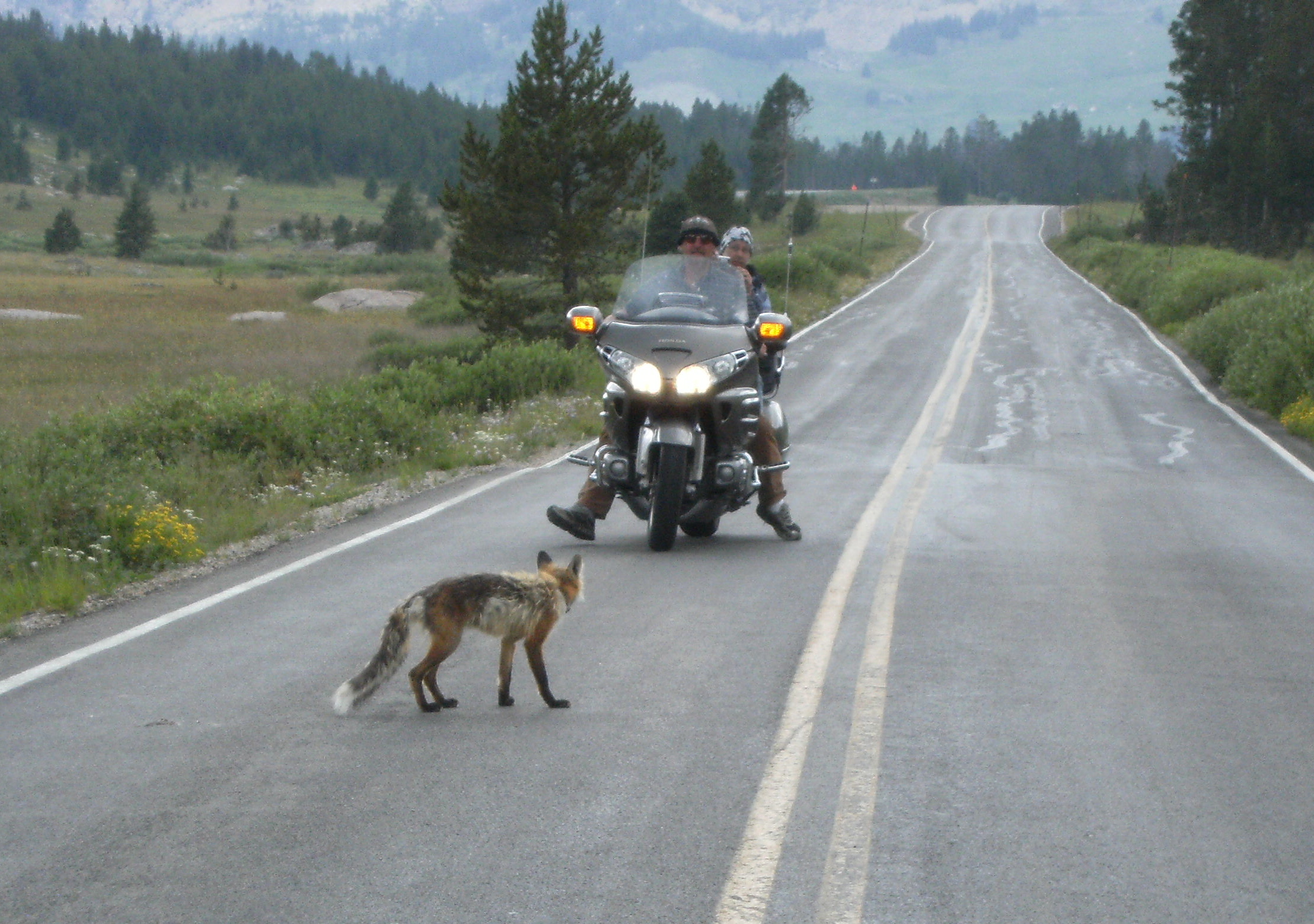
Fox on Beartooth Highway

Fox on Beartooth Highway

Using my study area last year, I began to notice the interrelationships of  wildlife.  Wildlife are all finely attuned to each other.  They know the comings and goings, the patterns of movement, the subtle changes. Even with this camera trap of covered meat, once the fox stole the food, the resident mother deer with her two fawns stopped bye and spent a long time smelling the empty hole and upturned dirt.  Then she walked over and looked at the camera.  Something was just not right for her.   I think she sensed this was a ‘human event’.

Nature is a dance, an interplay of relationships. As humans we’ve disconnected ourselves for so long from the dance that we are no longer  part of the music, no longer have a feeling for its rhythm.  My hope with this study area project is to wander again onto the dance floor and pick up, with some luck and intuition, a bit of the cadence and beat that wildlife so naturally swings to.

Wyoming’s wolf hunt hits hard

I’ve been checking the kill data sheets on the Wyoming Game and Fish predator site every day.  The data is divided into zones, with a quota in each except for the ‘predator zone’.  In the Predator area, which constitutes over 85% of Wyoming, a wolf can be killed, by any means, any time of the year.  In the Trophy Area, its October through December.

My zone is zone 2.  We’ve had early snows, which drives the game further down from the high meadows.  It also makes tracking easier.  Wolves follow elk and so do hunters.  The quota in my zone has been 4 wolves total.wolf

With the large quota of 8 wolves last year that dispersed and mostly destroyed the existing pack, there have been few wolves here.  Park wolves moved in this winter, although their pack was hit hard when several of the members moved outside the Park boundary and were killed, among them the Alpha female. Come spring the Lamar pack dispersed, a few had small litters, and although I’d watched a few lone wolves here and there, the wolf watching here, as well as Lamar valley in the Park, was poor.  Summer in general is a time when wolves are tending their pups and not running in packs.  Fall and winter they ‘pack up’.

This wolf, from my valley, was by the road two years ago.  With the hunts you will no longer see wolves so easily

This morning I looked at the Wyoming Game and Fish ‘harvest’ data (I hate that euphemism.  I ‘harvest’ vegetables and fruits; I ‘kill’ animals), and it appears that over the weekend five (5) wolves were killed in my zone–one over the quota even.  I don’t yet know the details, but I might assume they were running together, adults and pups, and all ‘harvested’ by elk hunters working high up with wolf tags in their pockets.

I find the whole wolf hunt, and how its being handled in Wyoming (as well as Montana and Idaho) a sad state of affairs.  The Wyoming Game and Fish wolf site is extremely lean on data and statistics which makes me distrust what their final count for 2013 will be.  They say they will have, at the end of this hunt, a total of 160 wolves.  Yet with 50 wolves killed this year already in the predator zone and as control, these additional 26 wolves for the hunt amounts to approximately 75 wolves harvested. Wyoming’s final data report for 2012 estimated 186 wolves as of December 2012.  Even with new pups, a kill rate of over 75 wolves will be cutting it close to the agreement with USF&W below:

Under the terms of the delisting agreement between Wyoming and USFWS, the state of Wyoming is required to maintain wolves at or above the minimum delisting criteria of ≥100 wolves and ≥10 breeding pairs in WYO, with YNP and WRR (Wind River Reservation) providing the additional buffer of ≥50 wolves and ≥5 breeding pairs necessary to meet the ≥150 wolf and ≥15 breeding pair requirement for the state.

My valley which is directly adjacent to the Lamar Valley, is a rich corridor that allows for genetic exchange.  The Lamar elk herd migrates here in the winter, returning to the Park in the spring.  The herd has been studied for its low cow-calf ratio, but the results of this study are not being used to make management decisions.  The study shows the biggest impact to this herd has been compressed ‘green-up’ reducing feed quality (think climate change and drought), and to a lesser extent, grizzly take on young as the bears food (specifically cutthroat trout) has been reduced.  With zone 2 as one of the largest quotas in the state for wolves, WG&F is trying to eliminate wolves in this area in order to build up the elk herd population–even though their own studies indicate wolves are not the herd’s main problem.

What must be said, that isn’t being said enough, is what is a landscape devoid of its full suite, bereft of predators, lacking that intricate network of fundamental relationships? Wolves operate as a family unit; they have emotions like ours.  There is something magnificent and whole about having an abundance of wildlife, all of the members of one’s ecosystem, present.  The Land itself becomes alive.  That is why I love living here, and not in a ‘wilderness’ of only pretty views.wolf

I end this post with a quote from Joe Hutto.  He spent a year raising a brood of wild turkeys.  Here he reflects upon his youth when he hunted turkeys for food.  I would like to believe that this is what motivates hunters to kill for trophy or sport, killing an animal that you don’t even eat.  I like to think these wolf hunters are attempting, unknowingly, to touch something magnificent, more alive, and more fully conscious.  And possibly one day they might wake up and instead of killers of wolves, they will be advocates.

“I try to recall whether in my young mind, at that moment, I could have imagined, anticipated, or even longed for the irony of the present moment and this strange continuity.  Like an arrow shot high and blind, it seems as though I have traveled very far although my path was peregrine.  It appears, in retrospect, that my trajectory could only have brought me eventually to this singular experience.  I realize now that as a young hunter, my intent was not merely to kill for food this elusive bird, but was rather my clumsy way of reaching toward something that enchanted and mystified me.”

Bears and wolves

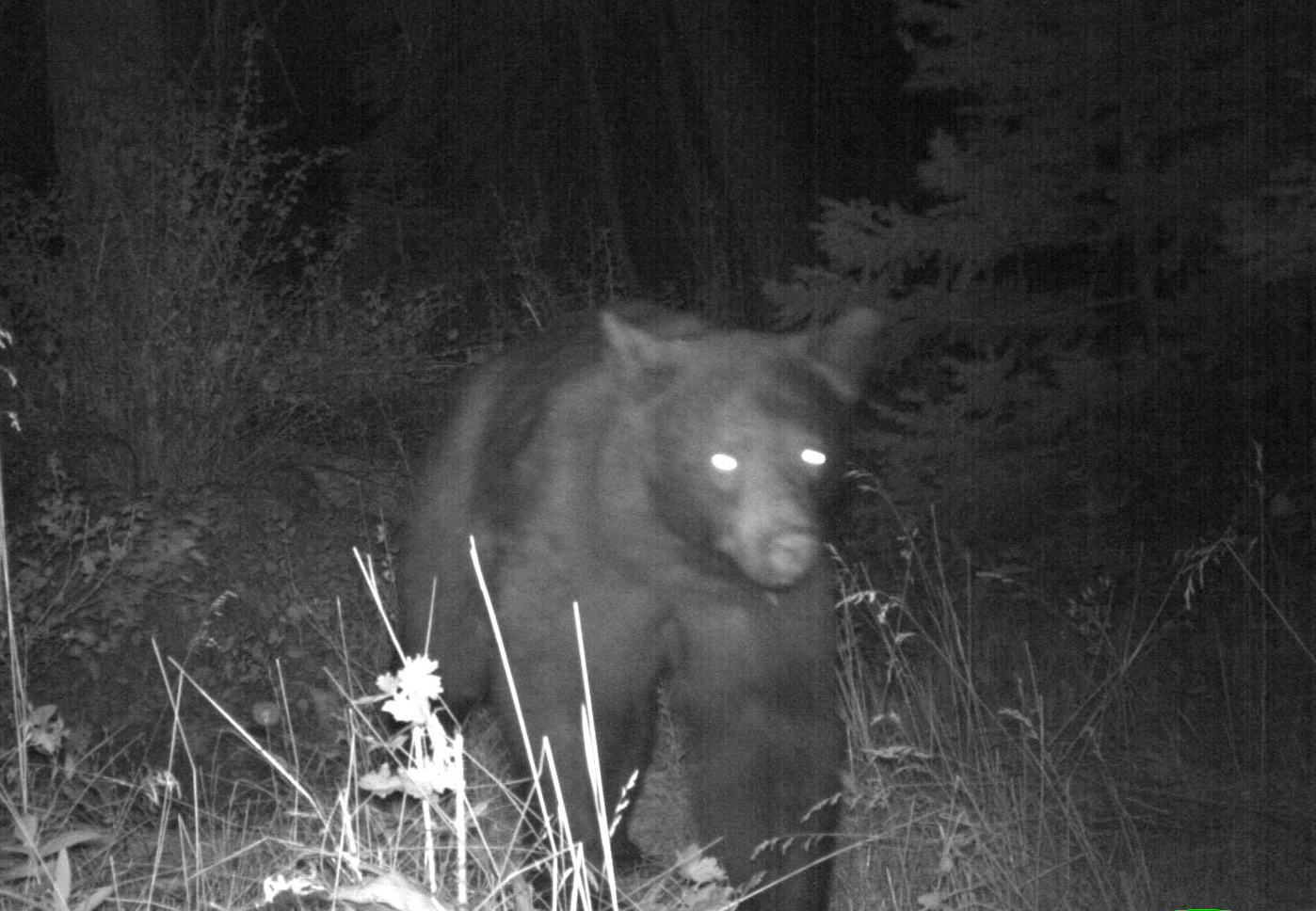
They usually go together–bears and wolves that is.  They’ve adapted and lived with each other for thousands of years; more than we’ve been around.  So it was no surprise when I saw some fairly fresh wolf tracks and then saw a nice looking grizzly bear scouting around for food before his winter slumber.

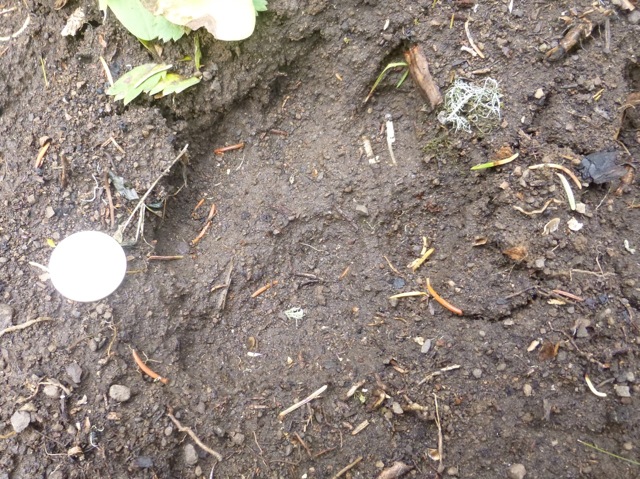
Wolf Print

Wolf Print; Quarter for size at left

Symphoricarpos berries

They say this year’s White Bark Pine crop is down which drives grizzlies elevationally lower looking for food.  Those lower elevations are where we, people that is, like to live.  White Bark Pines grow around 9000 feet or higher.  Their seeds, collected by squirrels and placed in middens, are robbed by bears and provide a lot of fat and nutrition, concentrated in a small seed.  Bears are physiologically driven in the fall to put on weight for their long sleep, during which time they do not eat, drink, urinate or defecate till spring.

I went out yesterday in pursuit of a Sorbus bush to dig up–Mountain Ash. They provide good berry food for critters and I want some in my yard. Although I found no Sorbus, I did find a lot of bear scat, so I knew there was a bear in the neighborhood.  Besides a lot of grass and rose hip seeds in the scat, what surprised me were Snowberries (Symphoricarpos albus).  I’d always read that snowberries (named as such because they are pure white and usually white berries are poisonous) were poisonous and not edible.  On the other hand, in general, 80% of a bear’s diet can be eaten by humans, except grass which we can’t digest.  What I’d been finding in Grizzly and Black Bear scat is A LOT of snowberries, and they looked fairly intact, as if they went through whole and didn’t provide much of anything nutritionally.

Grizzly bear

Grizzly bear

Snowberries are a member of the Honeysuckle family, along with another familiar berry–Elderberries. Their berries contain saponins which is widely found in plants and is a glucoside poison:  it destroys the membranes of red blood cells and releases the hemoglobin. Fortunately, saponin is not easily absorbed by the digestive system, and most of what we eat passes straight through the body.  So plants like beans, spinach, and tomatoes that contain saponin are rendered harmless to us.  Saponins stimulate the digestion and clean out the intestine.  They facilitate the body’s use of certain substances like calcium and silicon.  And they forth or whip up into a white foam that can be used as a soap.  They also can be used (illegally though) as a fish poison because fish assimilate saponin into the blood stream directly through their gills, but won’t harm the fisherman who eats them. Plant books say snowberries are poisonous, causing vomiting and diarrhea.  Yet here are some Native American uses:

Common snowberry fruit was eaten fresh but was not favored by Native Americans in Washington and Oregon. The fruits were also dried for winter use. Common snowberry was used on hair as soap, and the fruits and leaves mashed and applied to cuts or skin sores as a poultice and to soothe sore, runny eyes. Tea from the bark was used as a remedy for tuberculosis and sexually transmitted diseases. A brew made from the entire plant was used as a physic tonic. Arrowshafts and pipestems were made from the stems

And one more thing:  Snowberries make a great garden plant addition.

Climate Change in Action–A Glacial Event at Dinwoody Creek

On August 1st, 2013 a large chunk of underlying ice on Grasshopper Glacier in the Wind River Mountains broke loose and slide into Downs Creek, flooding the entire valley and stranding a family on a pile of boulders.   This is a main trail into the eastern side of Gannett peak, a favorite route for climbers.  The bridge over Downs Creek on the Glacier Trail was overflowing with water and debris, so much so that hikers had to cross the creek waist high there.  Luckily, this is a slow spot on the creek so crossing is safe.

Downstream at Dinwoody Creek, after the confluence of the two rivers, the flow was dangerous.  Usually low and crossable at this time of year (there is an alternate trail to the Ink Wells Lakes at this creek crossing), Dinwoody Creek was a roaring cauldron of milky green waters.

Image

The endless slog up the steep switchbacks

The Glacier Trail is not for the faint-hearted or under prepared physically.  The first ten miles, the trail rises 3,000′ with little potable water.  The old trail, taken out by an avalanche, is now a stock route; while the new trail uses a series of 29 switchbacks to ascend a seemingly vertical rise.  That’s the first day although I broke it up with a stay at Bomber meadows 3 miles up from the trailhead.

Image

At the pass looking down into Burro Flat. 11,000 feet

The trail ascends to an 11,000′ pass which has the illusion of constantly receding it’s so empty and vast.  A short descent after the pass finally takes the hiker to Dinwoody Lakes, a group of pristine lakes held within ice-carved rock and pine walls.  There was a large burn here not long ago and thousands of dead, mostly white-bark pines, stand stark amidst the new undergrowth.

Phillips Lake was heavily burned

Phillips Lake was heavily burned

But you aren’t there yet.

Continue on your journey up to another pass at Star Lake.  I think this lake might be barren as I never saw any fish feeding here.  A Forest Service crew was here for the summer doing trail blasting work.  Although camping was prohibited because of their work, the crew had taken off for the week and I camped at this lovely lake at over 10,000′.  The White Bark pines leading from Double Lake to Star are in good shape. The unfortunate fire that killed so many of these critical pines, whose seeds serve as bear food, probably slowed the beetle infestation on the west side of the fire.

Honeymoon lake on the descent into the valley

Honeymoon lake on the descent into the valley

From Star Lake you begin your 1000′ descent on tight rocky switchbacks into the Dinwoody Valley and Downs Valley area.  I never intended to go to Gannett–I’m not a peak bagger or climber–but I did want to go to the Ink Wells.  I didn’t quite make it there.  I’d already used up five days, and spent the next two days exploring Downs Creek valley and Dinwoody valley.  Then a large storm system blew in. With little food reserves to hunker down with, I made the decision to hike out.  Yet my short stay allowed me to witness the effects of the massive amounts of glacial silt that came pouring out of the icy peaks of the continental divide.

Image

Look at the forest floor. That is all glacial silt.

The 3 mile hike up Downs Creek had glacial silt on the entire forest floor, in places up to two feet deep.  Shrubs that were 3-4′ high had been covered completely with silt until the water had receded.  I was there on August 6th, seven days after the event took place.  By then the water had receded and was flowing furiously in the river channel.  But the silt was still wet, and in the evenings, after the warm days, the river rose higher.  In places I would step into ‘quicksand’, get stuck in the glacial mud above my knees.  When wet, the silt was like a sticky green mud.  Dry, like sand.

Dinwoody Creek.  Koda finds a drink.  The river ran so fast I had to keep him away.

Dinwoody Creek. Koda finds a drink. The river ran so fast I had to keep him away.

8,200 years ago, a lake larger than any in our modern world filled the area around present day Great Lakes and Canada.  Lake Agassiz was, at times, as large as the Black Sea.  When the Hudson Bay ice finally retreated as the climate warmed, Lake Agassiz broke through the dam, quite suddenly, draining completely down through the Mackenzie river drainage into the ocean.  It was a biblical event, probably killing everyone in its path,  rising sea levels up to 9 feet, and changing the world’s climate.

On August 6th 2013 I  stepped into the aftermath of a mini-melt, a micro-glacial event that demonstrated the power of melting water on an ecosystem and people.   Worth noting is that the bridge at Downs Fork, built by the CCC in the 30’s, stood firm until 2003 when Grasshopper Glacial had its first melt event and took the bridge out.  The bridge was rebuilt, but now only ten years later, a second event damaged that bridge again.  The stranded family was rescued by the forest service crew.  Amazingly, no one was injured or killed by the rushing waters.  Yet somewhere between my awe and investigative curiosity lay my real question:  As more of these events occur–bigger than this one–what will our world look like?

Image

Beginning–or ending?–the trailhead.   One way in and out

Fall is a’coming

The Clark’s Nutcrackers are congregating, waiting for the Limber Pine cones to ripen.  You can tell they’ve arrived as they are a noisy bunch.  As Jays, they are super-intelligent birds.  Every year they cache tens of thousands of seeds and are able to memorize the location of their stashes.  Clark Nutcrackers have a distinctive ‘wing-whirl’, which is a loud noise they make when flying.  Although the pine cones aren’t ready yet, they seem anxious, waiting for just the right moment to steal the seeds away from the waiting red squirrels who also cache the cones for winter food.  I’ve been watching the birds  eating insects while they while away their time.

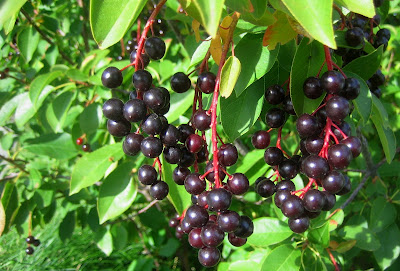
This year is not only a bad cone year for White Bark pines, but the Limber Pine cone production is  down as well.  This bodes poorly for bears.  But the good news is that with all the rain we’ve had, the berry crop is up.  The chokecherry crop is one of the best in years and I’m waiting with my trail cam for some bears to spend time stripping the berries off the branches before the birds get to them.  The bears seem to know the exact time when they’re ripe, and come around for that week only. And with all the beetle kill, the forests are opening up and changing.  I’ve seen new understories packed with chokecherry bushes–all full of cherries.  

Grizzly bears evolved in the plains.  They can’t climb trees like their forest adapted cousins, the black bears, and their massive claws were meant to dig out roots.  Pushed from their native habitat into the mountains, they prefer burn areas and meadows, places that emulate their native past.  Our mountain forests are rapidly changing with all the downed timber, creating good habitat for the Great Bear.

Young bear yesterday coming to look for berries

Young bear yesterday coming to look for berries

The little forest next to my house is a perfect example and a fine study area of a rapidly evolving landscape.  With seven springs emerging from the limestone base, there is sufficient water ground water.  The  old growth Englemann Spruce are dead and dying, falling to the ground and leaving large openings where new chokecherry bushes, dogwoods, raspberries, gooseberries, and aspens are rapidly emerging.  This is an area we specifically asked the Forest Service NOT to put in their logging plans.

In contrast, the lands adjacent to the springs are private and were logged by the homeowners through the State Forestry Office (who were concerned about fire protective barriers) 5 years ago.  Approximately 90% of the trees were cut or were blow downs.  This land too has aspens, gooseberries, and grasses–but much of it has a very high ratio, maybe 10:1, of invasives, particularly Canada Thistle.  The combination of moisture, sun, and rapid disturbance provided a perfect storm for the invasives.  The invasives rob moisture and space for other natives that might get a stronghold.  In the non-logged side, the lesson is clear:   slower is better and the forest can naturally restore itself with little interference by man.


Wind Rivers: Epicenter of Rocky Mountain Archaeology

Rich Adams, former Wyoming State Archaeologist, is rocking the premises of Rocky Mountain Archaeology with his discoveries in the Wind River Mountains of high-rise villages.  In 2006, an ancient village was discovered at over 10,700 feet on the eastern slopes near Whiskey Mountain in Dubois.    This is only one of two high rise villages in North America consisting of forty seven 10×14 dwelling pads, many artifacts including soapstone bowls.

Lake Louise near Whiskey Mountain and Ring Lake

Lake Louise near Whiskey Mountain and Ring Lake

Since then Adams has uncovered over nine high-rise sites in the Winds, with only one or two of them on the western side of the Divide.  But with these sites being over 4000 years old, archaeologists are going to have to rethink their dates of when the Shoshones came here from the Great Basin region.

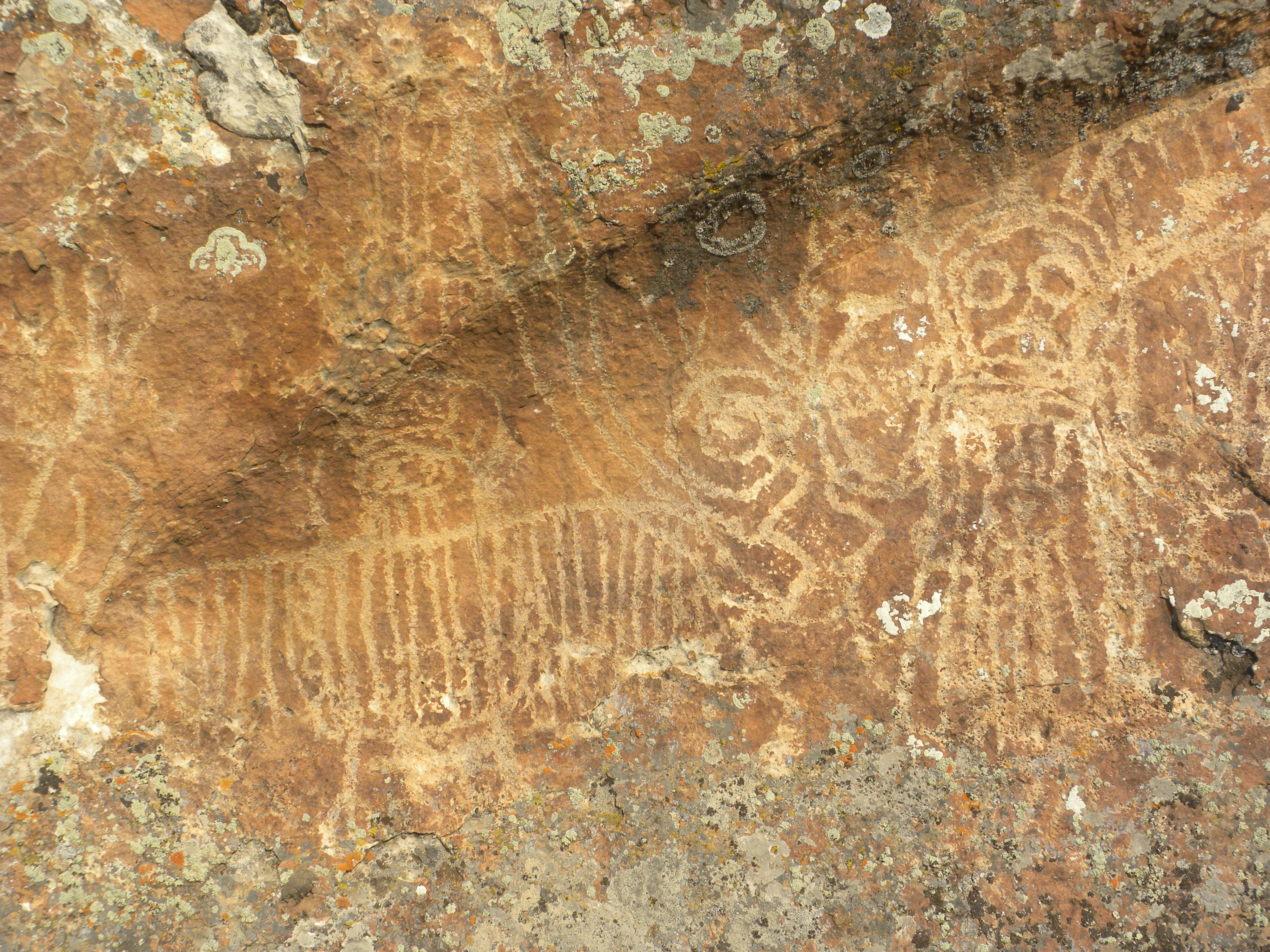
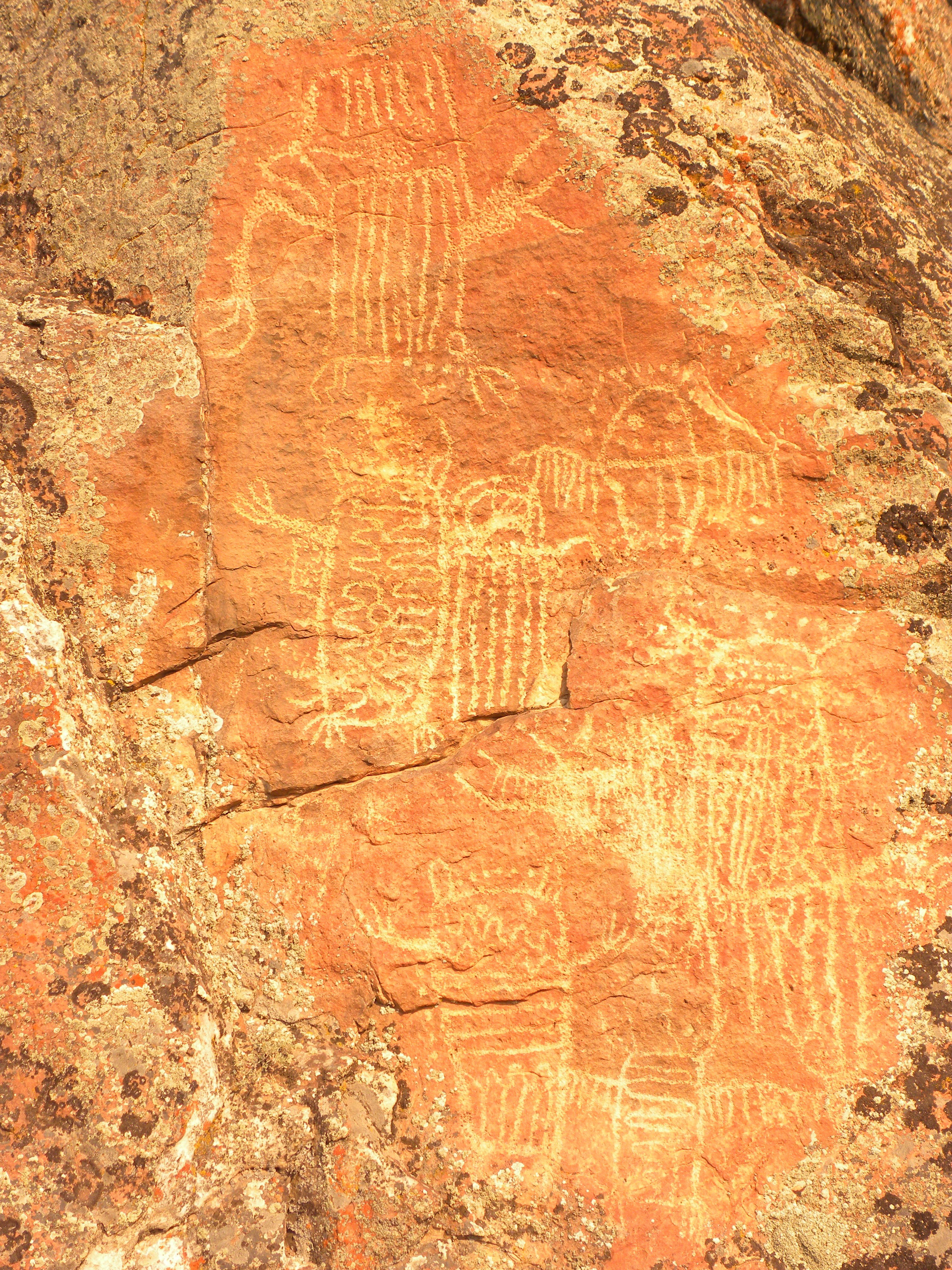
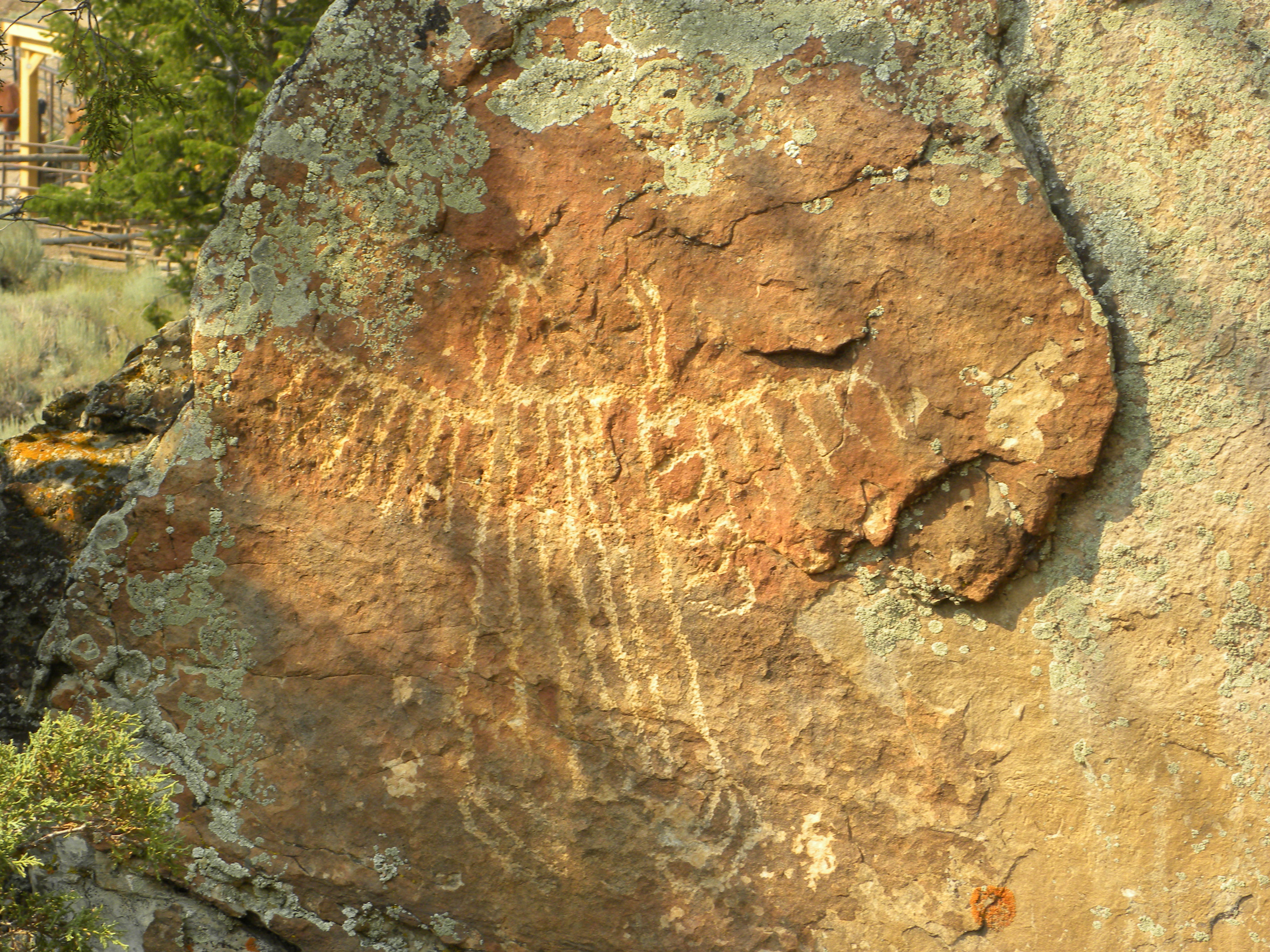
I spent a few weeks backpacking early August in the Winds (next blog will be on that when the photos arrive) and had the opportunity to hear Adams speak and see the amazing petroglyphs on Ring Lake Ranch.  The villages and the glyphs are Sheep Eater Shoshone relics.  On my second backpack on the west side up New Forks, I met a Bridger-Teton archaeologist who was looking for Indian remnants.  Apparently there is an intensive effort now to document whatever can be found before being destroyed by fires or by humans.

Sheep Eater Shoshones lived in the summers at high elevations around 11,000′.  There are plenty of fairly flat sites in the Wind Rivers at this elevation for making a camp.  And although today this would be above timberline with no trees, thousands of years ago the weather was wetter and treeline was higher.  So these villages would be in a nice sparse forest of White Bark Pine.

DSCN1643

They were into flying spirits

Sheep Eaters were there to hunt the Bighorn Sheep that range high up in summer, and come down lower in winter.  They followed the plant bloom and ate roots.  They could gather berries in August and pine nuts in the fall.  By late fall they’d venture down lower to a place like Ring Lake which has little snow throughout the winter and the sheep are nearby.  Their petroglyphs might reflect sacred burial areas, or vision quest sites.  They knew the Land and the landscape and let it dictate their wanderings.

DSCN1661

Panel with a bighorn sheep

DSCN1663

DSCN1647

Lake Louise

The lichen was removed to better reveal these drawings

DSCN1646

DSCN1651

Bird like feet

Wolf Watching

Now that wolf hunting is a reality in Wyoming, I’m always loathe to write a post about wolves.  Frankly, I don’t want to give out any information that will help hunters during the fall hunt season.  Last year, the first wolf hunt season, the Wyoming Game and Fish had a quota of eight wolves in my hunt area.  Eight!  There barely were eight wolves here.  The Hoodoo pack had, the year before, driven off most of the other competing packs and were dominating the valley.  So what happened on that hunt last October-December?  Eight wolves were taken, yes, but three of them were from the Lamar Pack in the Park, including the Alpha female of that pack.  During the winter, the entire Lamar Pack, disrupted after loosing their strongest hunter, spent most of their time here, mostly consuming deer, an easy prey. But come spring and mating season, the Pack fragmented, with only three, sometimes four, returning to the Park full time.

A disrupted Lamar Canyon pack in the valley this winter

A disrupted Lamar Canyon pack in the valley this winter

What used to be the best most reliable wolf watching area in the country, the Lamar Valley of Yellowstone National Park, is now quite lean. Its a rare day in the Lamar when tourists can view wolves there.  Only three, sometimes, four, adult wolves are left in the valley, although they’ve produced a small litter of pups.  The remainder of the pack has dispersed.

Here in the valley, some of those Lamar wolves remain this summer, and a few have pups in various locations.  Its unclear at this point how many are here, and what will happen to them in terms of new pack formations, nor how many of these wolves will venture back into the Park come September.

Wyoming Game and Fish has a much lower quota this year and that’s because they are getting dangerously close to their relisting number of 100 wolves outside the park, and 50 wolves inside.  As of this writing 23 wolves have been killed in the predator zone alone.   Taken together with the 67 wolves killed last fall, that’s almost 100 wolves out of about 212 before the hunt outside the Park.  Between wolves that are killed naturally, and wolves that are killed by WG&F as predator control, even with new pup counts the line is getting thin.

wolf

This years’ quota is set for four wolves in my area.  So far, I’ve seen several lone wolves and a few reports of a wolf with a pup.  Once again, this fall could easily decimate and disrupt the wolf population here.

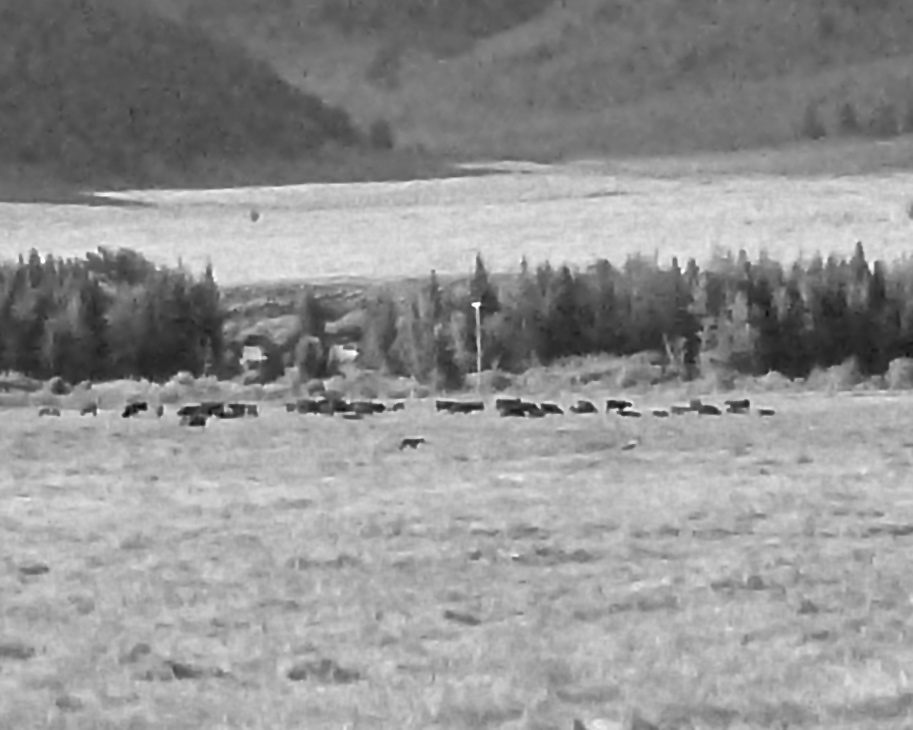
Last week I had a wonderful thrill.  Upon returning from a creek expedition I spied a lone wolf mousing in a field next to over 75 cows with calves.  I watched her for over an hour, deftly reducing the ground squirrel population.  She was incredibly focused on her task and I suspect she would be returning to feed some hungry pups with this small meal.  When she got too close in her endeavor to the cows, a large mama would come over and push her further away.  Otherwise, the cows paid her no mind and went about their business grazing undisturbed.  The good news is that these cows are removed to lower pastures come October when wolves tend to hunt in packs and could easily take down a cow.

Hard to see, but the small dot in the foreground is the wolf mousing amongst the cattle

Hard to see, but the small figure in the foreground is the wolf mousing amongst the cattle

I like wolves; and I like seeing them in the landscape.  They are finally re-inhabiting their old nation where they once roamed freely.  Where there are few problems and livestock conflicts, where the habitat is good, where there is room for genetic exchange, it makes little sense to even hunt wolves in these areas.  The wolves here have self-regulated for a long time.  It’s a tough and short life being a wolf.  They fight and kill for territory, and their territory is defined by how many wolves can actually be sustained.  They also work as a family with a close-knit social order.  Disrupting that order continuously exacerbates problems with livestock.   Given the human social and political climate, I don’t see much change for wolves in the immediate future.

Co-existing with Predators

In helping homeowners over the years deal in natural ways with small critters like moles and gophers, as well as larger animals like deer, I found that there is one necessary ingredient–the homeowner has to want to co-exist rather than resort  to lethal controls.

That same principle applies to larger predators in the landscape such as cougars, wolves, bears, or coyotes.  The wolf reintroduction has generated a lot of fear.  But if we want wolves to remain in the landscape, then ranchers will need to learn new methods.  I have always advocated that, just like the homeowners I helped and educated, ranchers need and deserve a helping hand.  This should include public and private monies for education and training.  Instead of ranchers just given a ‘kill tag’ or being reimbursed ad infinitum for predations, they need to be aided in new protection methods with the goal of incorporating those techniques into their regular routine.

There are several private organizations doing just that:  working with ranchers to discover ways to protect their herds and flocks.  Below is a fantastic informative video I hope you’ll watch.  Well produced with the added benefit of wonderful scenery and wildlife footage, ‘A Season of Predators’ gives you a vision of where we must be headed if we are to have bears and wolves remain in the landscape.

One additional note I’d make:  Although this video concentrates on wolf management, we, the public, are spending millions of dollars a year funding government killing of predators and ‘nuisance’ animals.  This arm of the USF&W is called Wildlife Services and its main job, unlike its title, is killing predators.  One local man who works for WS told me that he trapped and killed 400 raccoons last year for one farmer.  He also had to kill dozens of feral cats as part of his job.  Ironically, he was also killing the local coyotes that would have kept the raccoon and feral cat population in check.  This is the kind of government subsidization that is ‘old school’.  Instead of simply killing wildlife as well as throwing away all that money that not only doesn’t teach the farmer any practices, but doesn’t teach the local wildlife anything, Wildlife Services could have used those dollars exploring new methods and instructing this farmer in sustainable practices in co-existence.

Having worked with over-populations of deer in suburban areas, I know that deer damage can be controlled.  For instance, deer actually are trainable.  Does teach their fawns what to eat.  Deer can be browsing on one type of flower in the landscape, but miles away won’t touch that plant but prefer another.  Through a variety of means that don’t even include fencing, deer can be ‘taught’ not to eat a particular plant.  As you’ll see in this video, wolves can be taught too, but it takes a bit more work than simply a trap, a gun, or a poison.  This is the kind of ‘work’ where your psyche and body meld into the land.  You’ll have some loss, but the goal is to minimize.  You are working with the wild, not against it, and in doing so there is great pleasure and satisfaction, with the rewards being a feeling of oneness with the Land.


Goshawks, Porcupines and Wildflowers

I’ve got a new microscope and am having fun bringing flower samples home to view them.  Its a lot easier than using a hand lens.  My method is simple:  a small plastic baggie with a paper tower.  If I find samples, I wet the towel and wrap the plants.  They’ll stay viable for days until I remember to extract them from my daypack.

While looking for wildflowers, I had some unusual wildlife encounters.  Last week I disturbed a grizzly in his day bed, but he was a good bear and just ran off.  But today I was ‘mobbed’ by a Goshawk whose nest was nearby.  She was quite aggressive, dive-bombing me over and over again on my way up the trail.  But on the return, she was even more pissy and came quite close–I suppose thinking I hadn’t learned my lesson the first time.

Goshawk nest

Goshawk nest

Goshawk resting during dive-bombing me

Goshawk resting during dive-bombing me

I also saw my first porcupine.  Koda was a little ways up the trail from me peering around the corner.  He stopped and was wagging his tail.  I  knew something was up. Thankfully, he decided to just stay put instead of investigate.  I think he learned his lesson when he saw the grizzly bear last week.  I was able to capture the porc waddling away.

Porcupine waddling away

Porcupine waddling away

Here are the wildflowers for today’s post:
Sand Lily

Sand Lily

Twisted stalk

Twisted stalk

Unidentified mountain flower

Unidentified mountain flower

Pedicularis

Pedicularis

Valerian

Valerian

Woodland star

Woodland star

Unusual to see a white pasque flower

Unusual to see a white pasque flower

Round leaved Alumroot

Round leaved Alumroot

Western meadowrue male flowers

Western meadowrue male flowers

Musineon tenufolium/ Wild Parsley

Musineon tenufolium/ Wild Parsley


Meadow of Larkspur and Woodland star

Meadow of Larkspur and Woodland star

Common twinpod

Common twinpod
Nineleaf bisuitroot

Nineleaf bisuitroot

Subalpine fir new cones

Subalpine fir new cones

Sedum sp.

Sedum sp.

Dog Talk

Spring is here, the Park is open, the wildflowers are emerging.  The weather has been on again off again rainy.  But I’m already planning my traditional August trip to the Wind Rivers, with hopefully some shorter backpacks to high country around here.  So when I began to get out my camping gear, I wasn’t surprised when suddenly my big dog started a conversation with me.  Usually he just whines, barks, grunts or groans.  But today he was speaking his mind.  Here’s the conversation.

Great, we’re going backpacking soon cause, you know, I’m working on writing a book.  Humans need real advice when it comes to camping with us canines.  The book?  Oh yes.  It’s called “Every Stream, Every Lake, Every Tarn, a Dogs’ Guide book to the Wind Rivers.

With my person

With my person

With a bit more quizzing, I got Koda to tell me about his pack loads.  Sheep Eater Indians who lived in the Wind River area in the summer used dogs to carry their goods.  I’ve been doing the same.

I’m happy with the canine pack you got me.  Please, no more than 25%-30% of my weight.  I’m 90 pounds so that translates to maximum 25 pounds I’m comfortable with.  I know you’ve been slipping some of your food and gear in with my food in the pack.  I don’t mind.  Makes me feel important.  But just remember–every tarn, every lake…and I’m in it!

I stopped carrying regular dog food quite a while back.  My previous dog, Soona, used to get sick of it by the 5th or 6th day, plus its really heavy.  Some backpacker told me that a bit of cat food is good for dogs as its high protein.  I switched to a lightweight vacuum-sealed food that’s a lot of oats with some dried meats.  Then in the mornings, Koda gets a wet cat food small can with treat or two.

The best part is the beef jerky.  And the cat food.  To change the subject back to water, if you’re going to be in a place where your paws are wet all day, make sure they get dried out good.  We dogs can get a fungal infection between our toes if the hair there doesn’t dry out well.  And for god’s sake, don’t jump in the lake right before dark. I made that mistake once and then it snowed all night and I never dried out.  I would have froze to death if my person didn’t throw that emergency blanket over me.

Watch the paws on this kind of stuff

Watch the paws on this kind of stuff

Because Koda goes into every bit of water with his pack on, this year I’m going to try putting the food in dry sacks, then inside his backpack.  Koda’s an outdoor dog, used to spending his time not on concrete.  But if you have a suburb or city dog, and you are off to the Rockies or Sierras, bring along some dog booties.  One year Soona’s feet got really cut up on talus and I had to give her continual doses of aspirin to get her off the mountain.

And if you take your dog with you backpacking, be sure he or she knows their manners.  Don’t let them run after wildlife, have them stay on the trail, and make sure they are friendly with other people and dogs.

And for goodness sake, remember to just have fun, fun, fun.  And if you need to, push your person over at night in the tent to get more room for yourself.

Canine heaven

Canine heaven