• MY BOOKS ON WILDLIFE, GARDENING AND MORE

  • The Wild Excellence

  • True stories of wildlife encounters around the Greater Yellowstone
  • Award winning eBook on Decomposed Granite, tips, how to's, what to watch for
  • Children's book. True stories of a dog and wolves. In a dog's voice
  • Written for dry Mediterranean climates in California, north and south

The Thompson Cabin

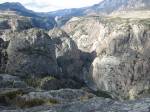
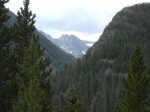
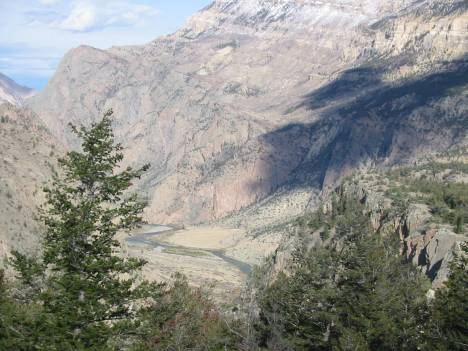
A few summers ago,  my cabin’s original owners’ son, T___, came visiting from West Virginia.  He is a surveyor and had some maps of the Clark’s Fork Canyon.Clarks Fork's Canyon with Sunlight Falls

“There’s a box canyon over here”  he pointed out, “with an old cabin sitting by the river.  They call it ‘the Thompson Cabin’ cause old man Thompson lived there in the 1880’s.  Well, that’s the story I heard.  They say he trapped and made moonshine.  That once a year he took his furs on his mules, and went over Dead Indian pass into Cody.  He’d take them to the trading post and while they decided on what to give him, he’d go drink his money away.”

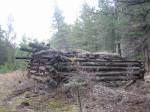
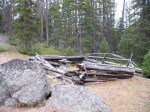
T___ didn’t have time to hike to the cabin, but he gave me a good idea where it might be.  Following his map, the box canyon was easy to find.  The cabin sat on the other side of the river, which was low enough to cross by way of deadfall.  Thompson Cabin

The cabin itself was awfully small.  The windows were gone of course, but the frames were nailed with square nails.  The locals and kids had camped and left bottles there over the years, but a depression still marked the old root cellar.  It was just hard for me to imagine living in such a small little box.  It gave me great respect for those old-timers.Square nails in the window frameDepression at the back is the cellar

Thompson had situated his cabin on the south side of Dead Indian Creek which made sense, because in winter and spring the creek would be hard to cross.  I’m not exactly sure the path he took his horses or mules, but I could scramble up the hillside and be close to the main road.  Of course, there wasn’t a road then, but the road that’s there now follows fairly closely old Indian trails over the pass to Cody or up towards the Park.

I told my friend JB about it.  He’s the old man who grew up in the valley.

“Thompson, I remember him from when I was a kid.  My grandfather used to go visit him.  Thompson would invite him for dinner.  One day he was helping wash the dishes, when Thompson took the dishrag and blew his nose in it. ‘Time to leave’ my grandpa said.”

“Thompson had a big garden there.  He grew potatoes, and carrots, watermelons and lettuce.  Then he’d take his fare up to Cooke City to sell.  Took him two days by horseback.”

Sometimes I run into old cabins.  Once I ran into one in the Beartooths at Stockade Lake, probably an old forest service cabin.  There’s some at the end of my valley that were old mining cabins in the early 20th century.  I know the old ones in Yellowstone are usually destroyed when they’re found.  But the Thompson cabin held an interesting history for me, and at least one that I heard some yarns about.Old miners cabin from early 20th century

I like the area the cabin is in and hike there frequently. Nearby, I found a rose quartz vein and an eagle feather.

On the other side of the river, there’s a small flat open plateau, and that’s where the magic resides.  Its sunny and peaceful.  I like to go over there and explore the cliffs and look under the trees.  Then I heard from another local that the plateau is an old Indian winter campground and he’d found arrowheads there. I supposed I like it for the same reason the Sheepeaters liked it and old man Thompson liked it.  Besides being protected from the wind and snow, having year round water, safety from enemies,  good trapping and fishing, easy trail access– it just has a good feeling.

This is love

“Little things that will change you forever, may appear from way out of the blue, making fools of everybody who don’t understand.”  __George Harrison

When I decided to purchase my cabin, I’d only been on the property for one hour.  It was 3pm and I was about to return to California on a 5pm flight.  The realtor had nothing to show me but one homestead up the South Fork which seemed, in his mind, to fit what I wanted.  But when I saw it, that Land just didn’t speak to me.  It was the only property I’d seen so far.

“Is there anything else?”  I asked him.

“There’s this one place, about 45 minutes north of Cody.  But they’ve been debating for a year whether to sell it or not.”

I hesitated because I wanted to live near town.   “Show it to me.” I said.  ” I’m here and if they market it, then at least I’ve seen it.”

It was love at first sight.  I went back on the plane to San Francisco, made them an offer they accepted, and began the escrow process.  “As is.  Everything comes with it except the mounts,”  I was told."As is.  Everything comes with it."

My water comes from a spring on Forest Service land and the owner told me it was running 12-15 gpm.  Since I closed escrow in December, it was hard to check his accuracy.  All I knew was the cistern was full and water came out of the pipes."My water comes from a spring in the nearby forest."

But come spring, when the snow was melting, I had a carpenter at the cabin doing some work for me.  I was still in San Francisco when he called to tell me the bad news.  “The cistern’s about empty.  Seems like you’re running only 1/2 gpm.”

Since I share that spring with 3 other homes, that was terrible news.  If you don’t have water in the West, you have nothing.  As the saying here goes ‘Whiskey’s for drinking, but water’s for fighting over.”  And historically in Wyoming, people have been shot dead over water wars.I'm the first of 7 springs
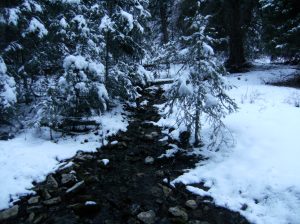
That first May I went to Wyoming to meet my neighbor who shares the spring.   He lives in Powell, an hour away, most of the time.  He and his brother, who is a geologist, had put the system in with their father about 20 years ago.  It was a quick education for me as I have only lived on city water all my life.

H__, the geologist, explained that our side of the valley is limestone base.  All those layers allow for nice underground snow melt runoff .  Seven springs come directly out of the limestone layers in the forest next to me.  In Wyoming, in order to use a spring that’s not directly on your property, you have to file a claim.  If you don’t develop the spring in something like 5 years, you lose your rights.  There are first rights, second rights, even third rights on springs.  My neighbor and I have first rights on this spring.  My other neighbor has second rights; which basically means that if there isn’t enough water (defined in specific gpm’s), I can shut him off.

Across the river on the other side of my valley, the south facing side, that land is mostly granite based and the homes over there either have wells or no water.  A very lucky few have springs.  My side is the desirable side.Across the river its all granite base

My spring box, which in my case is a cistern, takes the water directly from below ground before it spills out of the limestone above ground.  It does this with the equivalent of a drainage system–wrapped perforated pipes laid in a gravel base, that feed into the cistern.  That water then flows into our three properties through 6′ deep pipes.

When one member of my California crew whose from Guatemala, came to help me with some carpentry up here last year, he really wanted to see my spring.  He told me that in Guatemala, in the mountains, whole towns are fed from springs using these kinds of catchment systems.

My underground cistern

As the three of us looked over the spring that was hardly running, and walked up to the other springs that seemed to be flowing faster, H__ offered that given the 7 year drought, and possibly some shifting of the limestone, maybe a few minor quakes here and there, our spring might be running dry.  I choked.  My neighbors have rights to another spring they can use.  I didn’t.  No water and my new venture was worthless.

My options were to haul water in (there are some people on the granite side that do that!), or try and dig a well which is an expensive venture out here.  Both an overwhelming thought. But my first option was to explore this problem much further.Another style.  A spring houseInside the spring house

My neighbors went back to Powell, and my immediate agreed-upon job was to go to the cistern every morning and take measurements.  That way we’d get a good idea of actual flow.

That night I had a powerful and unexpected dream.

In my dream there were no people.  Not even a story.  The dream was just water.  Lots and lots of it. And a voice was saying “Copius amounts of water”.  The word ‘copius’ just rang and rang.  When I awoke, I knew it to be true and decided the spring was not dry, just either clogged or diverted.

That was May.  I went back to California and worried about it a lot.

In July I came back to Wyoming for a few weeks.  That first afternoon I was back, I took a drive down the road.  A badger poked his head out from his hole and walked alongside the road with the car.  I took it as a sign that digging was the right approach to the spring.

My neighbor and I began hand digging alongside the PVC pipe that went into the hillside, trying to expose the drainage catchment system a bit.  We got to the first 45 ell and still there was little water.  The going was hard as the limestone layers were thick.  When they originally dug the system and put down the pipe and gravel, they laid all the limestone back over the top and then covered it with soil.  Apparently, the difference between a regular french drain and a spring system, is that you want to be very careful how you dig.  The layers are sensitive and too much disturbance can cause the spring to divert or clog.

So all that limestone was on top of the pipes, and to get down to the pipes to see if water was running or not, required lifting and heaving these large boulders.  I promised R__ that I’d dig till the next 90 ell over the coming week.

That week another badger appeared in my life and took up residence in the hillside next to my home.  I spent a few hours digging.  I was certain, according to my dream and according to these badgers, that water was there.  When I hit the 90, I dug a bit further and water started spewing out. Sure enough, there was plenty of water; just a clogged system that needed replacing.

I like to think of my valley as my magic.  I like to think that when you follow a scent that draws you as a bliss, when you stand at your center, helping hands appear.

I came here on a songline, a bit of music in the wind that drew me.  I left behind a life because I fell in love–in this case not with a man, but with a mountain.  Magic happens here. Healing happens here.

“Little things that will change you forever may appear way out of the blue, making fools of everybody who don’t understand.   This is love.  This is love.”  George Harrison

When a good fire is a bad fire. Grizzlies and pine nuts

I’ve been working with a small chain saw on the trees around my upper cabin.  Most of my 6 acres is on a plateau above the main cabin.  That arcreage butts up to Shoshone National Forest.  The original owner of my cabin, Doc Firor, deeded that area to Nature Conservancy who gave it to the forest service.  That entire plateau extends for several miles and is prime elk habitat.Riddle Flat from across the river. Prime elk habitat

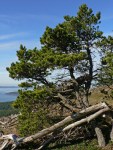
Almost all of the trees up there are Pinus flexilis or Limber Pine.  Limber Pine is a white bark pine, which basically means it has bunches of 5 needles.  The pine whose common name is Whitebark pine is Pinus albicaulis.  That’s the one that everybody is talking about when they say Grizzlies are dependent on the whitebark pine crop.   But Limber Pine seeds are just as tasty, and squirrels cache them just the same.  Whitebark Limber on left; doug fir on right

Pinus albicaulis and Pinus flexilis are both considered keystone species–that is, without them, an ecosystem can just cascade apart.  And both of them are being infected with an imported fungus that is the cause of white pine blister rust.  This fungus can kill a tree, and its killing massive amounts of Whitebark Pines in the Pacific Northwest.  The Rockies have not been quite as vulnerable because its so much drier here.  But with global warming, and the pine beetles, trees that are weakened by the fungus succumb quickly.My one room upper cabin.  No water. No plumbing.  Yes heat!

I was trying to find out if grizzs will eat Limber Pine nuts as well.  That was important to me, because many of my trees have the rust.  And I’m trying to find out how to identify correctly the rust, as well as how to treat the trees.  Avalanche Peak, Yellowstone.  Dead whitebark pines

I went to the National Forest administrative offices last week in Cody. They are all so helpful and nice there.  One of the supervisors lent me a new phamphlet and told me there’s a pheromone for the beetles, but nothing for the rust.  She said its awfully hard to determine the difference on the tree.

What I really want is a source of blister rust-free seedlings to underplant.  The bad news is that whitebarks take 40-50 years to begin to cone.  But I can wait.  The worse news is that if you can even find a source of seedlings, expect 50% mortality in the first few years.  In fact, the booklet has a really complicated formula to determine how many seedlings you need, based on existing site infections and super-overplanting for death.  The thing I think would be smart would be to do successive planting over a period of 5-7 years.  And since I have a test plot that could be a model for the rest of the nearby forest, I’d love it if the Forest Service used me for testing.  Robin at the Ag department told me they do test plots on private land often.

Meanwhile, I’m going on what’s said on the internet and in this phamphlet.  I’ve been limbing up by hand and by machine up to 6-8′ from the ground all of my trees (this is a several year project!), starting with around my upper cabin.  Since the trees are older, most of the bottom limbs are dead anyways.  But limbing up will provide air circulation and light, both will help the trees health.Before pruning; cabin is in the background

Another interesting thing about blister rust is the Ribes (Gooseberry) connection.  When the rust first came to this continent, in the 1930’s, they found that Ribes was a host.  So the government in their wisdom, decided to eliminate all the Ribes in the West.  But there are so many species of Gooseberry native to the West, over 150 in North America.  And Ribes is an important food for wildlife.  You could never eradicate all the Ribes, and that’s just what they found.

As I was doing all my pruning, sure enough, many many trees have Ribes growing right on top of the trunk.  Besides being a host for a nasty disease, I did have to wonder about other types of symbiotic relations between the two, for example nutrient exchange.  I haven’t learned about that yet.

Whitebark pines, including my Limber Pine, are an amazing tree.  Unlike most pines, they are not wind pollinated, but dependent upon the Clark’s Nutcracker for dispersal.  Squirrels too  cache the seeds but not as far.  They grow on thin soils, at high altitudes, and usually are the first to colonize in disturbed sites, such as fires and landslides.  Grizzlies depend on their nutritious content to fatten them up for winter, or satisfy them in the early spring.  Grizzlies can’t climb the trees to get the seed.  Instead, they are experts at finding squirrel caches and robbing them.  When I asked about my Limber Pines, a forester said that grizzlies eat their seeds, but they are rougher so they aren’t number one on the menu.  Obviously my plot as well as the forest next to me is just as important for the grizzly recovery.

The benefits of fire in this care are so mixed.  Whitebarks are fire-dependent.  Where fires have been suppressed, more shade tolerant conifers replace them and there is little opportunity for regeneration.  So they like that clear open ground.  But their cones don’t open with heat.  The seeds are animal dispersed, so there needs to be stands for their new growth, which means they like low- and moderate-intensity fires.  That’s hard to have in areas with so much beetle kill and fire suppression like my valley.  To add fuel to the fire so to speak, scorch or fire damage on trees that would otherwise live, increases their susceptibility to beetle-kill.After pruning.  Cabin is now visible. Deer will love this!

Regardless, I’m thinning away, hoping for more air circulation, light, and in addition all that thinning imitates a ground fire.  Many of the natives I would plant in California requires a good chopping back to the ground every so often to mimic fire.  That’s what I’m doing for now.

Good fires

If you live in the GYE (Greater Yellowstone Ecosystem), you probably know your trees.  You need to, because most people burn wood here for heat.  And each type of wood burns different, with more or less heat and more or less ash.

Being a horticulturist, I know my trees.  But conifers are hard.  I’ve taken three conifer identification courses over the past 20 years.  There’s a place near Mt. Shasta in California that, within a one square mile area, there are 22 different varieties of conifers!

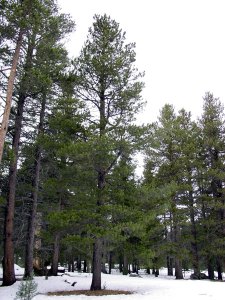
Luckily, there aren’t that many conifers out here.  In the Park, mostly what you’ll see are Lodgepole pines (Pinus contorta) because they grow on thin soils, which the park has because of all the volcanic activity.  Oddly enough, the dominant pine where I lived in California was also Pinus contorta, Shore Pine, but it looks nothing like a lodgepole.  Its twisted and shorter. Lodgepoles are called that because they’re nice and straight for using as a teepee shelter, or a lodge.Lodgepole pine Pinus contorta

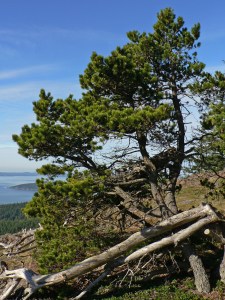
Last year I was looking at some new Shore Pines around 8 or 9 years old that grew after the Point Reyes fire.  They were at least as tall or taller than the Lodgepoles in the Park from the ’88 fires.  Same Genus.  Same Species.  Chalk it up to much more water, esp. in the way of fog.  To distinguish the difference, they’ve added another ‘contorta’ at the end.Shore Pine.  Pinus contorta

In California, if we want a good slow burning wood, we use Oak of course, a hardwood.  But there’s no hardwoods out here, so my friend G___ who was a forester for 20 years, explained some of the differences.

First I went and got a permit to cut wood.  There’s plenty of beetle kill up our road towards the park, and every year more and more.  We’re doing the forest service a favor by cutting down the dead trees.  The main problem as I see it with the beetle kill is that there hasn’t been a good fire here in 100 years.  That and global warming as we don’t get the really extended cold temperatures in winter anymore that kill the overwintering eggs.  Massive amounts of beetle killed trees at the end of my valley

We went far enough up the road to find some lodgepole.  Mostly there’s Engelmann Spruce around my cabin.  That doesn’t burn very hot as there’s not much pitch in it.  The second best is Douglas Fir (not a real fir.  Pseudotsuga menziesii vs. Abies [fir]).  The one to get around here is the Lodgepole.  I suppose its because there’s lots of pitch.  My friend tells me that the old-timers say “Every fifth log, put in an aspen and that will clean your chimney.”

Lodgepoles are fire adapted pines.  They keep their cones tightly on the tree.  These cones need a really hot day (113 degrees) or a fire to release their seeds.   You can age a forest by the diversity of trees.  After a fire, of course you’ll have prime grassland as forage for wildlife.  Within the first 40-200 years, a dense canopy of lodgepoles develops.  As these trees die, or if there are fires, with gaps in the canopy, doug firs and spruces will grow with the increased moisture.  In the drier areas new lodgepoles will sprout up.

Last year we had a fire up the North Fork that burned for over a month.  That whole area is full of beetle kill pines.  As the forest service was closely monitoring it to make sure no structures burned, there was a tremendous amount of controversy over why they weren’t just dowsing it.  My neighbor kept saying “They plan to burn up this whole country.”  The Cody Enterprise  ran critically-toned articles (even though the town was benefitting from the influx of firefighters).  Sweetwater lodge after Gunbarrel fire

G___ had a good explanation for the public’s lack of understanding of the necessity for fire in the west.  “When your neighbor was born here, for instance, this country had already had natural fires and the landscape showed it.  Over time, with fire suppression, the people here came to feel that what they saw was natural.  Its not.”

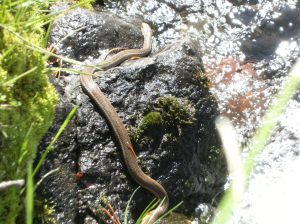
If you live in the West, you better be fire adapted.  The West is fire.  If you buy in the forest, beware.  If you buy up a canyon, beware.  The trees, the plants, the animals and their needs are adapted to fire.Water snake after one month in burn area

The Gunbarrel Fire last year was just about to jump over the pass to my valley, when a freak snowstorm happened over labor day.  I heard the Forest Service was secretly hoping it would come this way.  Not to burn homes, but to help the wildlife.  The elk desperately need better quality grass; the beetle killed trees need to burn up; and the soils and animals need those forbs that only sprout after a fire.

I suppose as a botanist/horticulturist, I can’t help but say to myself when I hike in these woods:  ‘This place needs a good fire.”

Coyotes and Communists

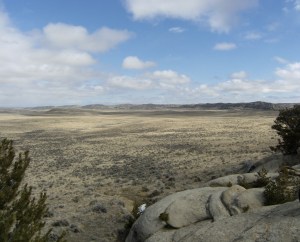
Oregon Basin is sagebrush desert surrounded by sandstone formations outside of Cody.  It’s desert hiking with so many things to explore.  I’ve only been there a few times.  Its a maze of BLM dirt roads, mostly used for oil and gas explorations.  One of the oldest oil fields in Wyoming, coal was also mined here from the late 1890’s to the 1940’s.   Old mines and buildings can still be found. But long before all of this, Native Americans camped and hunted in the basin.

On one of my few explorations here last year, a friend took me to a petroglyph site.  We drove through barbed wire gates, mile upon mile of windy dirt roads, past working derricks, until we parked alongside an abandoned coal mine.  We walked around a sandstone ridge to a small box canyon.  Protected from wind, it was the perfect campsite.  That’s where the petroglyphs were, along with a giant rattlesnake.  Sadly, many of the glyphs were defaced and beer bottles and trash was strewn around.Oregon Basin, Cody

I really like exploring the desert and its formations.  W__  spent 20 years hiking the basin and surrounding badlands.  Today we turned off onto a dirt road from the Meeteetse Hwy.  Someone had been killing coyotes and dumping them there.  Two fresh kills  attracted several Golden Eagles that flew off as we drove bye.  More old coyote carcasses were strewn along the way.  Coyotes rank as predator status.  That’s the status that Wyoming wants for wolves, which means it’s legal anytime to shoot the animal on sight.

I asked W__ why someone would be shooting coyotes around the basin.  There’s no sheep here anymore, just cattle at certain times of the year.

“Because its something to do”, he answered.  “Someone is baiting around here, so watch your dog.  There’s traps.  Do you know what a coyote trap looks like.”

I told him I didn’t.  W__said that by law a trapper is supposed to hang a sign, like a rabbit’s foot, by the trap.  We hiked over the hill and alongside a sandstone ledge.  Almost immediately he said “Here, I’ll show you what to look for” and took me over to a small overhanging rock with a 2×4 piece of wood half buried.  Attached to the wood were two wires.  “This is what they wire their traps to.  I stepped in one once.  They didn’t sign it, and it was half buried in snow.  Luckily, it didn’t get much of my foot and I could wiggle out.”  I tore the wires away from the wood and tossed them.

We talked for a while about random coyote killing with no reason.  W__is my philosopher and preacher friend.  “Always gotta have something to blame your troubles on.  Used to be the ‘communists’.  When I first came to Wyoming, everything you didn’t like got blamed on the communists.  When that went away, it became the coyotes.  With the sheep industry mostly gone, now its the wolves.”

I told him a story about my old neighbor, JB.  Only a few days ago we were talking about something contentious, maybe the economy, when suddenly he said “Its the communists.  They’re the ones doing all this.”  I was certainly puzzled.  Then he looked me dead in the eye and asked “You’re not a communist, are you?”  I had to laugh.  I’ve been accused of a lot of things, but that was so ’50’s!

We walked around ledges, exploring all the niches.  Koda kept busy looking for jackrabbits.  Rabbit scat seemed to cover every inch of the desert.

“I’ve found a few arrowheads in the Basin.  Once I found a scraper.  Never found that much though.”  We came across a ‘boneyard’, an area with a large scattering of small bones from jackrabbits, gophers, and mice.  W___ pointed out a ledge that contained a small cave that looked like a coyote had set up camp there in the past.  I found a perfect gopher skull inside.Sandstone formations

With the desert sun warming and the ground was free of snow, we choose a windless large smooth boulder for a lunch spot.  I passed some time picking sticky bentonite clay from my boot soles.   In the distance, a herd of pronghorn lazed and ate.   I’d just watched an episode last week of Wyoming’s Congresswoman, Cynthia Lummis, tell Stephen Colbert that the Pronghorn is the world’s fastest animal.  Colbert made a big deal out of correcting her, saying that the Cheetah is the fastest.  But in a sense they were both right.  Those Pronghorn can sprint as fast as 60 mph and sustain a speed of 30 mph for miles.  Cheetahs sprint faster but flag out after a few hundred yards.

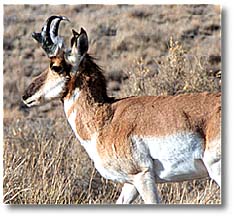
When I first got here, people told me Pronghorn were related to goats.  They’re not.  In fact, they’re not antelope either. They’re completely their own thing.  Antilocapra americana are the sole surviving member of a family dating back 20 million years, which means they’re an ancient animal.  They don’t quite fit into any category.  They have horns that are somewhere between antlers and horns,  that shed and are branched; they lack dew claws, and  can pick up movement 4 miles away. They are super fast and love a good race.  There are many stories of them racing cars at 60 mph and beating them.    At one time they were probably as numerous as the bison, and were slaughtered at the same time.  Today most Pronghorn live in Wyoming and Montana, and probably total around one million.  Male Pronghorn

We  headed back towards the car and I picked up a small old pronghorn horn.  I dropped W__off and did some shopping in Cody.  In the health food store, I noticed at the counter there was notice urging me to call my congressperson about a bill to make organic farming illegal.  The sheet said that Monsanto, the GMO giant, was behind the bill.  I talked with the store owner about it.

“Its’ outrageous.”  he said.  I agreed.  Monsanto are corporate crooks, I added.

“You know who it is, don’t you.”  He looked at me perfectly seriously and said, ” It’s the communists.”

And even I started to think, “Maybe its the communists who were killing those coyotes.”

The bighorn sheep of Little Bald Ridge

The ranch manager told me yesterday that the three wolves who were shot last summer for cattle predation were terribly mangy.  Mange is the latest big problem with wolves in the GYC.  Mange is a mite that burrows into the skin of an animal, causing it to scratch.  It doesn’t kill the wolf, but in a harsh winter they can die with the thin coat.  I heard that mange was brought into this country early last century to kill coyotes but I haven’t been able to verify that.  One of the interns told me he thought that if a wolf can make it through one winter with the mite, he’ll do o.k. after that.  Maybe some kind of resistant or tolerance occurs.

Last summer I did have a fairly close encounter with a wolf.  That black wolf was beautiful and fluffy; no mange there.  I was walking through a lightly wooded area off-trail when my dog stopped about 8 feet in front of me and stared at something in a shallow gully off to my left.  The whole scene took place so fast I barely had time to register what was happening.  I looked to my left and saw a smallish black animal, about the size of my dog but fluffier, about 12 feet away.  I thought it was a small black bear.  By the time I realized it was a wolf (about a millisecond later!),  my dog was gone.  Usually I carry an electric zapper on my dog for just these occasions, but the zapper was still in California from my move.

I think my incessant screaming, and the fact that that wolf was a lone yearling, scared that wolf so much that she ran off, but not before she had thrown up the contents of her stomach which I found later after my dog returned and I had calmed down.  After what seemed like an eternity, Koda came prancing back, with a shit-eating grin on his face.  In the span of those few seconds, I had both surrendered to the idea that my dog might never come back, and if he did come back, decided he was going back to the trainer’s for some additional dog-to-dog training.

Wolves kill other canines in their territory.  Doesn’t matter if its a coyote, another wolf, or a dog.  They don’t eat it, just really tear it to pieces.  Being a dog owner in wolf country means you have to be responsible and watchful.  The ranch hands at a large ranch across the river told me that the winter is really the time they need to be careful.  Although they have wolf activity there year round from the Beartooth Pack, their property is full of elk in the winter and the wolves come down more and the nights are long.  Many of the wealthy ranches here have heated kennels for their dogs.  She told me a story that last winter the dogs were out of the kennel on a cold winter day.  Luckily she was working nearby because she looked over and there was a small pack surrounding their three dogs.  She ran over, made a big ruckus, and scared the wolves away.

Another local told me he was hiking with his five year old Black Lab.  The Lab ran over and behind a large bush where he was attacked by two wolves.  Luckily, the dog lived.  But the next year they were hiking off-trail and the lab started whining and came close to this man’s leg.  In the woods about 50 feet away, several wolves ran through.  Guess that dog learned a lesson.

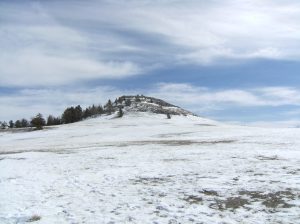
Yesterday I planned to hike up Little Bald Ridge where there’s always sheep.  As I drove down the dirt road, I could see tracks of two large wolves that had run down the road early morning. Climbing up Little Bald Ridge They always like to use the thoroughfare of that spot in the valley to go between two ridges.  As I drove bye, I noticed one of the cows just had a new calf.
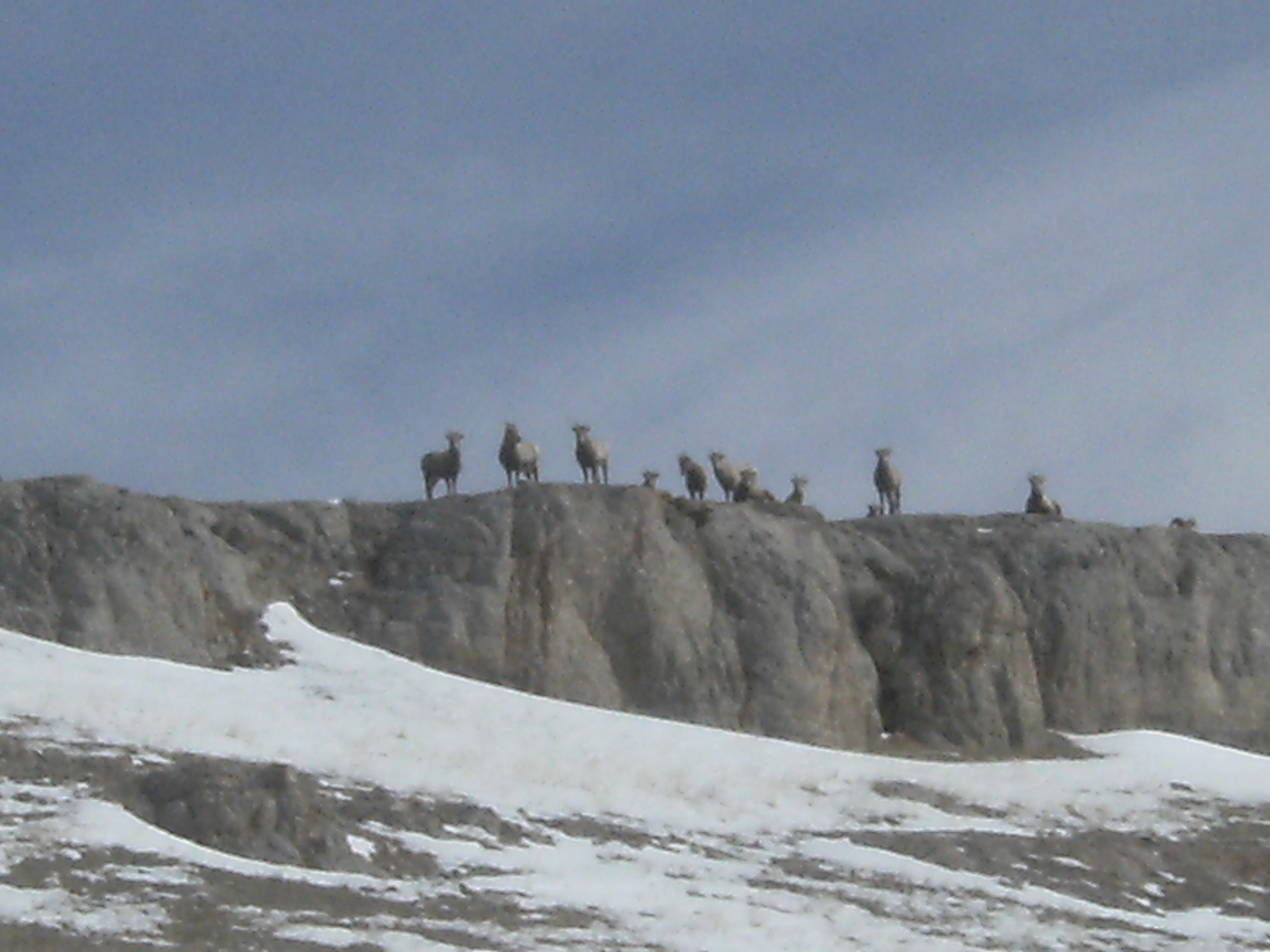
Bighorn Sheep are always up on that ridge.  I tried hiking up there earlier, but the wind and snow got to me.  Today was warm and windless though and some of the drifts would have melted.  As I hiked up to the buttes, I stopped 2/3 up in a small high meadow that looks out over the entire valley below.  No wind, the silence was incredible.  A herd of elk came through the trees farther up and stopped to watch me.  They’re always skittish.  They decided I was something to be afraid of and ran up the mountain and out of sight.

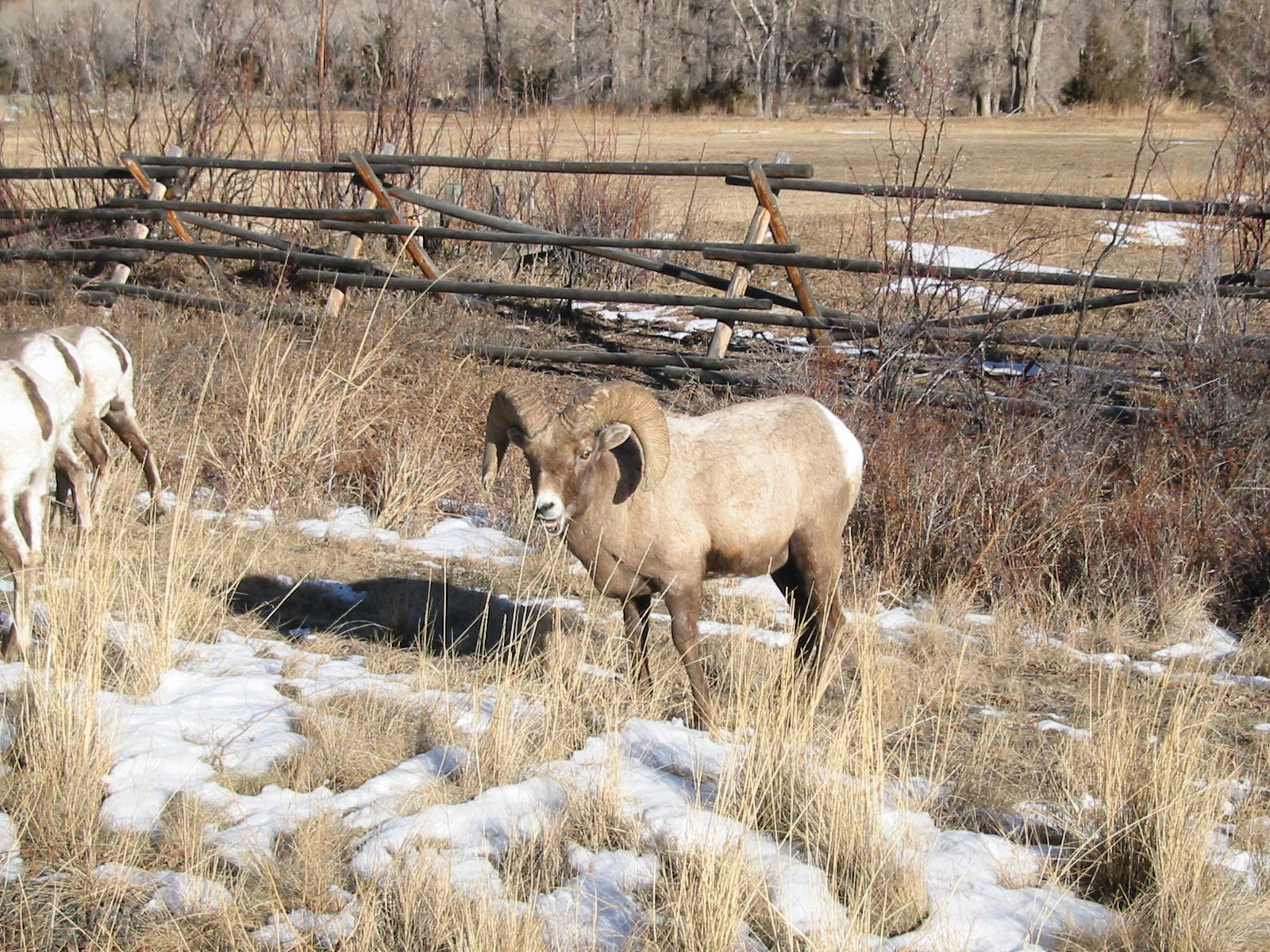
The hike isn’t Annapurna, but its a wind stopper for sure.  Its up, up and up and I hoped that when I got to the top the sheep would be in sight.  As I rounded the bend, there they were.  I kept counting, and then kept counting some more.  There were about 2 dozen sheep.  Mostly young and ewes, but I saw one nice ram.  The ewes kept watch while the ram lazed away–typical!  Bighorn are really ‘cute’.  Every time I go up there, they’re so curious.  Unlike the elk who always just run, the sheep stare and stare the closer you get.  If I didn’t have the dog, I suppose I could almost have walked up to them.

Bighorns depend on their elders to find their wintering grounds.  This small herd is right near the stone sheeptrap that I wrote about the other day.  Of course, to be called Sheepeaters, there had to be so many more sheep around here.  My understanding was that this country was thick with sheep, not just 2 dozen.  The interesting thing is that if you look around, there are plenty of exactly similar buttes right nearby where those sheep could have been.  But every year during the winter, this is the butte they go to.  You can count 100% on finding them there.  To me, this means they have an ancient honing device in them.  They must automatically go to the same forage that their ancestors went to.

I had been wondering for some time what happened to all those sheep.   After some research, I found Bighorns had no immunity to the diseases domesticated sheep carry.  Domesticated sheep grazing on open pastures and private lands were and still are, wiping out the Bighorn population.  And to the Bighorns, domesticated sheep just look like sheep; and being so friendly, Bighorns like to mix it up, unlike wolves.

The Bighorns on Little Bald had several yearlings, but I only saw one baby, at least so far.  After a while they got used to me and Koda, and went back to their business of eating.  The ram finally got curious enough to stand up for me to view him.  The baby ran with his mother.  The yearlings stayed in a small group with some ‘nurse ewes’ who watched over them, nuzzling occassionally.  I would have stayed for hours and watched them, but it was getting pretty cold and windy up there on the ridge.

The Sheepeaters

One of the interns gave me a book of Robert Service poems.  Oh, how I like so many of them.  Here’s a few verses from one of my favorites called ‘The Spell of the Yukon”

The summer — no sweeter was ever;
The sunshiny woods all athrill;
The grayling aleap in the river,
The bighorn asleep on the hill.
The strong life that never knows harness;
The wilds where the caribou call;
The freshness, the freedom, the farness —
O God! how I’m stuck on it all.

The winter! the brightness that blinds you,
The white land locked tight as a drum,
The cold fear that follows and finds you,
The silence that bludgeons you dumb.
The snows that are older than history,
The woods where the weird shadows slant;
The stillness, the moonlight, the mystery,
I’ve bade ’em good-by — but I can’t.

There’s a land where the mountains are nameless,
And the rivers all run God knows where;
There are lives that are erring and aimless,
And deaths that just hang by a hair;
There are hardships that nobody reckons;
There are valleys unpeopled and still;
There’s a land — oh, it beckons and beckons,
And I want to go back — and I will

Its interesting how one can feel a place.  Up the dirt road towards Yellowstone, there’s an area that just feels good.  The wolves like to den there, the Bighorn sheep hang on the cliffs there, and the Sheepeaters had winter camp there for 5000 years.  Keep going farther up that road, about 20 miles, closer to Yellowstone, and the feeling changes.  Something about that area always feels ominous to me.  As the valley narrows, the Absarokas close in.  Volcanic in nature, the mountains tell the story of fire and ice with their knife edge ridges and slopes of scree.  I’m always a little uneasy up there.  Its beauty and wildness belie ancient and ominous secrets.  I’m wondering ‘What happened here?’

But my story is about the area that feels good.  Last summer I spent a long time looking for a ‘sheep trap’.  I’d been told about one that was a small cleft in the rock face.

W___ had told me there was a sheep trap up in the timber, yet everytime I looked I couldn’t find where he said it was at.

Sheeptraps were used by the Native Americans who lived around here.  A sub-group of the Shoshones, they were named Sheepeaters because their primary diet consisted of Bighorn Sheep.  They made the finest bows out of horn, used no horses, and went back and forth into the Park.  These sheeptraps were one of their ways of hunting.  Usually placed along a game trail and on the downhill slope (Sheep always see what’s coming from below, but never tend to look up for danger), the traps had drive lines of dead wood that lead to a pen.  Once in the corral, then animals were usually bludgeoned to death.

I spent many days looking for the trap.  My mistake really was to go on W___ ‘s advice.  There WAS a trap he knew about up there, but it wasn’t the natural rock formation one.  He’d only been there once, and since he didn’t know this area well (he’d gone with another person who did) his directions were weak.  One time I hiked way up the mountain through several meadows.  I was tired and it was getting late. Turned out I was only a few hundred yards from the trap in the woods.  But when W__ did take me there later on, I didn’t feel so badly, for I talked with several hunters who’d walked right by the trap and never saw it.

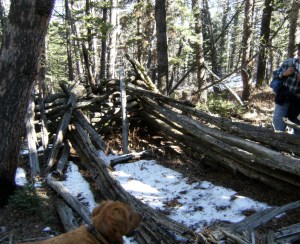
Partially buried sheep trapThe wooden trap was awfully small, but when you looked closely, it was obvious that it was buried deep.  The wood was old and it was amazing the construction was still intact.
I knew that there must be another trap somewhere else.  I decided to walk along the cliffs farther down the meadows.

Fall was in full force and the days were short.  One afternoon I took a few hours and hiked up to the bottom of the cliffline.  I walked its edge.

The view was fabulous from up high and I stopped to investigate a natural arch.  There was nothing inside but packrat remnants.

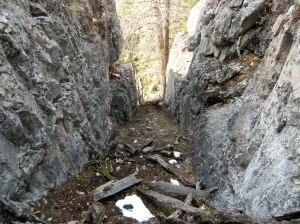
Farther along the wall, I came to an extremely narrow notch in the wall.  Some unknown force drew me to climb up it to the landing above to investigate.  I hesitated.  The light was getting low, I was running out of time, and this seemed like just a curious sidetrack.  But I couldn’t resist.  I scrambled on all fours through some snow and debris up the cleftt to small flat area above.  Walking around on top of the rock, I noticed a second but larger cleft between two gigantic boulders.  The boulders narrowed sharply and a tree was growing at the base.  It was a curious natural formation.  A few pieces of wood and debris were inside.  I looked around but saw no evidence of any drive lines.

I climbed back down the notch and continued making my way along the wall.  In short order I came upon a dry creek bed and an old game trail that led to the landing up above.  It was then that it hit me–That cleft WAS the pen, just a natural one.  It was so obvious.  I raced back up the ravine as the sun was starting to set.  Sure enough, the game trail passed a few hundred feet above that cleft.Looking from above

And now I noticed random wood above the cleft, probably strewn around for the last hundred and fifty years, once used as the drive line.  The whole setup seemed so ingenious to me, with the minimal expenditure of energy.  The ancient game trail right there, the Sheepeaters waiting in the timber above, the natural pen below.  If you walked from the cliff line below, you’d never notice this pen because of the tree and a good amount of debris placed there to block the exit.

I sat down at the top of the rock and watched the setting sun.  I marveled at how by trusting a feeling I found this place.  And the moment of ‘Ah ha’ that came from the inside out.    It was getting cold now.  But I took a little time to sit and say ‘thank you’ to whatever bought me here.

My Friend

I have been pondering some seriously deep mysteries; like why the heck I need to spend 1/2 hour getting dressed to go hiking in 7 degree weather, when Koda can just dash outside stark ‘naked’, from 70 degrees inside.  Maybe we humans just weren’t made for cold.  I’m learning though:  about how the cold can freeze up the deep drifts so I can walk on top of them instead of struggling with each sinking footstep; or how the elk and deer make rutted trails making it easy to hike through the woods; or when the deep cold settles on the landscape, an icy silence settles my soul; or if I feel a bit lonely, I can walk outside and see the evidence of the nights activities as footprints in the snow.

Following an elk trail

Its been cold though for a California girl.  Yesterday the mercury didn’t get above 10 during the day.  In the late afternoon, my 84, going on 85, year old neighbor came to ‘check on me’.  He walked in from down the road, told me he had planned to work on his fence that day but the wind was blowing too hard.  So instead, he got the hay set out for his horses.  He’s pretty hard of hearing, but he likes to talk and his stories are fun, so I just listen mostly.  He was born in this valley.  His family came here around 1915 to homestead.  Considering Wyoming didn’t become a state till 1890,  and that the first homesteaders in my valley came about 1903, and that the road from Cody to this area wasn’t paved until 1993, that’s a long time ago.

Last year he said to me “I’ve got an elk tag and I’m going hunting. You wanna come?”  I sure did and figured that not only does he know this country like I knew my old neighborhood back in California, but his hunting speed was probably about ‘my speed’.

Going hunting

We saddled up the horses and left about 10:30 am.  I always ride his wild horse, Wiley.  Wiley is such a great big guy, really sweet and follows you around like a dog.  My dog, Koda, and him nuzzle each other.  It was October and there’d been a snow a few days before, so we were looking for tracks.  We went up to the next valley and up to the ridgeline.  All the way J___ was pointing out tracks–of black bears, turkeys, moose.  After an hour and a half, we finally got to the ridgeline.  “Let’s rest and have lunch.”  Yep, my kind of hunting for sure.

We sat for an hour and talked.   J___  told me a story about an old timer, who, when J___was six years old, he asked him when he first came to this country.  The old- timer replied “When I got here the mountains were flat!”  We both cracked up.

After lunch J___found some bull elk tracks.  Although all the hunters had gone west along the ridgeline, following the well worn trail,  J___ whispered “There’s a little meadow no one knows about on the east beyond those trees.  I bet they went there.”  The snow was thin, and there was bare ground in most places so it wasn’t easy to track those elk.  We slowly made our way through the timber, and sure enough, there were the elk tracks again, heading down a steep wooded ravine.  J___ said we could get rimrocked that way.

“If I didn’t have the horses, I’d go down there on foot.  But it might be too hard on the horses or get them rimrocked.”  I thought of him hiking downhill.  Yikes!  Glad we had those horses or that old codger might have gone down there.  J___ told me his rifle, which to me just looks like a 22, (As you might have guessed, I know nothing about guns) was a WWI rifle for sniper fire.  He uses sights only.  The thing is heavy.  I kept wondering how close he’d have to be to get a good shot.

We circled around for a few hours, on foot and on horse.  Finally he said “I want to watch this country for a while.”  For a moment I took him to mean “I want to live a bit longer to enjoy this place.” but he meant what he said and we hobbled the horses in an open area and walked back up to a view spot where he could see meadows to the east and west through the timber and just ‘watch this country’.  The view was breathtaking, but after a while I laid down and fell asleep, still tired from the night before, dreaming of all sorts of junk in that maddeningly beautiful country.  It was like the space of all that openness on top of the world was squeezing all the detritus out of me to allow room inside for its’ space.

"I want to look at this country for a while"

A Rant for Wolves

Its hard not to go ‘political’ when I heard about Salazar’s decision to delist wolves in Idaho and Montana (not yet Wyoming). I just need to take a moment to reflect.  Forgive me for putting on hold the post I wanted to write today, which was about the obsidian flintknapping site I found yesterday.

Obama’s penchant for compromise just seems to be getting him in trouble with both sides and no one’s happy.  In this case, compromise isn’t the basis for decision.  And compromise is really just politics.

What wildlife needs here is science melded with stewardship.  To be a steward, you have to be a lover.  As has been said before, ‘you only protect what you love’. One of the wildlife students made an interesting observation.  “I’m afraid it will take the wolf being hunted for it to be truly protected.  Hunters go to great lengths to protect what they hunt to ensure the health of its population.”  Certainly true with elk around here.

In the last few years that I’ve been looking at this issue, it seems to me there are so many areas to be addressed in a ‘delisting’ plan.  Simply putting the wolf on the hunted list with target numbers attached is a copout.

Wolves have a highly organized social system.  Packs in my area are constantly being reduced to numbers that are not viable.  When that happens, without the instruction of the Alpha, inexperienced and outnumbered wolves will go for the easiest prey–calves–in order to eat.  Taking down a larger animal like an elk requires pack coordination and is risky.  Just see my post on the coyote with hubris that was kicked and killed by an elk.  That’s just one factor.

Yesterday I found out a bit more about the calf predation that took place on the ranch down the road last spring.  Apparently, the grazing allotment rotation had been changed by the Forest Service in order to combine two ranches at once.  It was pup season, and the Forest Service told the ranchers to graze in the draw just over the hill from the den.  With the late winter the elk were still around in early May, yet farther down the valley from the den site.  That made it much easier for the wolves to go over the hill and get calves for their pups.  That predation was the forest service’s fault, not the ranchers or the wolves.  But because the forest service wasn’t thinking about the whole picture, 3 wolves were shot, one of them was from the initial introduction to Yellowstone 10 years ago!

A very large ranch over the hill has resident elk on it. In the summer, the elk graze the interface between the forest and the open meadows.  The wolves follow the elk along that ecotone.  All summer long the cattle grazed lower in their valley, while the wolves ate elk.  Then, at the end of the summer the cattle were moved near the interface, and within days some calves were killed.  Next of course came the wiping out of the entire pack by Wildlife Services.  With some responsibility on the part of this rancher, this incident would not have happened.

Delisting should require stewardship of all involved parties.  By simply compensating ranchers with money and killing wolves, there is no incentive to protect their flock, especially since so many of the ranchers in my area are the extreme wealthy looking for a tax write off, or ranching because it sounds neat (there are many ranches here owned by wealthy foreigners).

I don’t profess to understand all the problems or solutions, but I can see a few things:

1.  Requirements for ranchers in wolf areas i.e. shepherding.  I have heard about some ranches experimenting with Shepherding Programs (tourists pay to come out and Shepherd, like going to a Dude Ranch).  That’s a win-win situation.  There are many other methods being experimented with as well.

2.  Open Grazing policies need to be re-looked at.  First of all, they are too cheap. Last I heard it was $1.95/month for a Cow/Calf pair!  Wow, that 1898 prices.  You can’t have your cake and eat it too.  Open Grazing, you’re on your own with the wolves and wolves are protected.  That’s that!

3.  I would like to see some tribal involvement in these issues as well.   I’m not sure what that would look like, but I feel they’ve been stewards here for many thousands of years and the perspective they can provide is unique and in many instances is not obtainable through conventional survey techniques.  One native american said to me a lovely thing “The wolves are herding the elk” and that’s a true observation.  As a plant person, I can see that the effect the wolves have had on the aspen/willow population is only positive.

Wolves are magnificent animals.  I’ve seen them here several times in my valley while hiking around.  They are important in our ecosystem in so many ways, and deserve better.  Since I’ve been here, there is just too much killing going on in my  area of our three packs.  Summer comes, packs are wiped out and reduced, other wolves move in, packs reorganize again and shift around.  Just ‘delisting’ is not a solution.

Teepee Rings and the Spirit Wind

Someone gave me one of those mid-range expensive weather stations, the kind with an indoor readout that talks with an outdoor unit.  It also talks to a satellite for date, time, and moon phases.  There is a feature on it that tells you a forecast: an arrow up or down, sun or clouds.

This morning I looked at the forecast on the readout.  It featured clouds and the arrow was down.  Ten minutes later W___ called and asked about a hike today.  I looked at the readout and the arrow was up.

Frankly, that about says it all for Wyoming weather.  JB, my 84 year old neighbor, tells me the old saying is “If you don’t like the weather in Wyoming, wait 10 minutes.”  I think my digital weather station feels like its riding a bucking bronco sitting on my window sill forecasting mountain weather.

W___ and I decided to meet down the mountain and go for a hike out near the mouth of the Clark’s Fork river.   The Clark’s Fork barrels down the canyon from the Beartooths, carving a deep gorge over a mile deep in places from the high plateau where I live.  Chief Joseph led his people through here, pursued by the army, fleeing to Canada.  The reason he knew the area so well was because the Nez Perce had been coming here every fall to hunt buffalo.  By 1840, the buffalo had disappeared from Idaho.  The Nez Perce had to decide to either change their diet or migrate yearly to Wyoming to hunt.  They used traditional trails through the park and into the Great Basin of Wyoming.  Clark's Fork of the Yellowstone River

Today was incredibly windy.  The winds were traveling at breakneck speed down the canyon.  Sometimes gusts blew me off my feet.  Huge clouds of water blew like ghosts off the river.  W__ said it was a ‘spirit wind’.

We park at the end of a dirt road that once was a Ranch.  W__ tells me that about 12 years ago there was a large drug operation at the ranch, the owners were busted by the Feds, and because it was a Federal operation the ranch became federal property.  Eventually the state took the ranch over.  Now, its just old buildings boarded up.  We walk around in the hurricane force wind.  The main house is all boarded up, but several cabins are still open.  Most are filled with packrat items, but others have old signs and refrigerators in them.  One is filled with rolls of carpet.  The ‘drug ranch’ sits on the flat sagelands, next to the river, with old Cottonwoods surrounding it that some previous owner planted.  Its a perfect movie set.  The story goes that one of the druggies got out of prison early and went back to the ranch in the night to dig up drug money that they’d buried there.  Koda’s running around like crazy after jack rabbit scents.  I humorously instruct him to ‘Look for the money, Koda.”

The river, once roaring and wild, settles down here at the mouth and swings gently along a wide, broad plateau. We walk much further down the old dirt road, off the ranch, and towards the mountains.  W___ points out the numerous teepee rings.  At first I can’t see them well.  They’re old and the rocks are deeper in the dirt than ones I’ve seen before.  I kind of have to squint, unfocus my eyes and let my mind flow.  Soon, I’m spotting them too.  Their openings are to the east.  A few even have old fire rings in the middle.  We’re at the end of the plateau where W___ tells me the rings are large.  I ask him why some of the teepees are smaller and some are larger.  “I’m just guessing here, Old teepee rings.  Can you see them?but my theory is that the larger rings were for families that might have stayed longer; whereas the smaller teepees were temporary hunting parties.”  I like to try and imagine the community spirit that once was here, bustling with excitment and activity for the fall hunt.  Its in sharp contrast to the drug ranch of secrecy and isolation.

Yet all that’s left of both of them are a few signs, a desolate area, and a fierce wind–a ‘spirit wind’.  Newer teepee rings in the Bighorns