


Arnold Hague began the first detailed survey of Yellowstone National Park and surrounding areas in 1883 . Thomas Jaggar worked as an assistant geologist under Arnold Hague. In 1893 and 1897 the lands just east of the Park were the territory to be surveyed, most of which was within the Yellowstone Park Forest Reservation [the forerunner of the National Forests].

Jaggar in Yellowstone Park’s death gulch where he discovered 8 dead bears killed by the noxious gases that accumulate in the drainage. These bears might have been attracted by the smell of elk that had succumbed.
I’ve been reading Jaggar’s diary of the Sunlight/Crandall area where I live, as well as looking at his photos. His survey notes include geology notes and other tidbits. He developed his photos right in the field. Interestingly, Jagger reports seeing antelope in my basin. There are no antelope here today, yet there is a local geological feature called Antelope Butte. What happened to them all, and why they haven’t reestablished themselves is a mystery, for there are plenty of antelope in the basin around Cody, as well as the Lamar Valley nearby.
By 1893, bison had been exterminated and there were already a few cattle ranchers here. Jaggar reports riding over an ancient local Indian connector trail, entering the valley and seeing “sagebrush, elk, buffalo, sheep & horse skulls and horns.” Instead of bison, grouse and cattle were in the Trail Creek canyon. Today cattle don’t run there and I’ve never seen grouse in the sagebrush area.
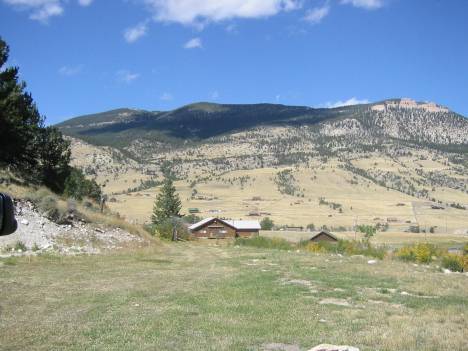
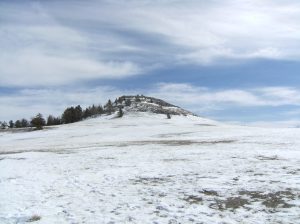
I hiked to a point where Jaggar took a panorama of the valley in 1893. In the early 20th century, fire suppression became the doctrine of forest management. But Jagger’s photo was taken when nature was still allowed to take its course. In Jagger’s photo below, it appears the trees in the foreground were conifers killed in a fire. In my photo below Jaggars, I could barely find a angle that I could take the photo without trees obstructing the view. But my photo is taken from basically the exact same location.

1893 Photo

2014 same location
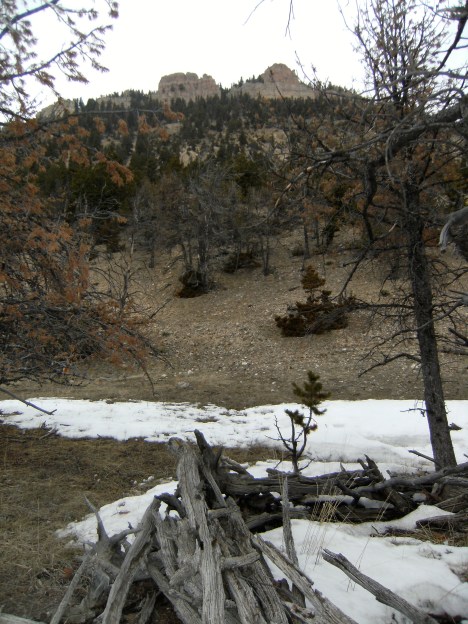
Aspens are the first trees to regenerate after a fire. A few years ago I accompanied Larry Todd, a local archaeologist, to survey some old wikiups [Sheep Eater Shoshone houses] in one of the small drainages off the valley. Although these wikiups were standing in the 1970s, cattle feeding on the Forest Service grazing allotments liked to rub against them, and so knocked them over. By examining the logs, Larry was able to determine the age of the wikiups was 300-400 years old, and surprisingly, these logs were all aspen. As you can see from the photo below [wikiup logs are in the pile], the forest is all conifers now. Aspens live for only 80-100 years. The next in the succession in this dry area would be Douglas Firs, which can live for many hundreds of years, suppressing any new aspen growth. Without natural fires, the forest will be dominated by conifers. So this forest used to be all aspens, and probably was a much wetter environment. Larry pointed out that the climate 300 years ago was different here. This wikiup sits are the confluence of two seasonal creeks but at that time these creeks might have run year-round.

300 year old wikiup. Pile of logs are the remains of an aspen wikiup.
Filed under: Cody Environs | Tagged: Arnold Hague, Sheepeaters, Thomas Jaggar, Yellowstone National Park | Leave a comment »
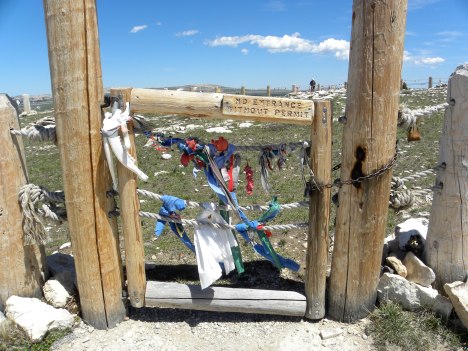
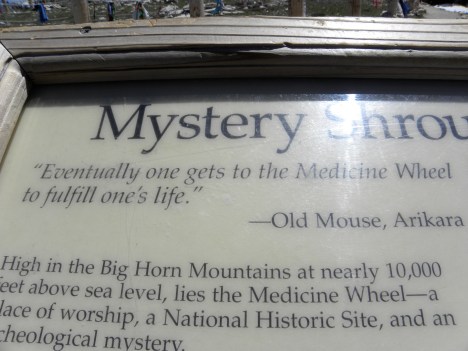 I circumambulated the Wheel three times and left a small gift at the East facing entrance. Its a wonderful and mysterious place. Some say it was constructed by Sheepeaters.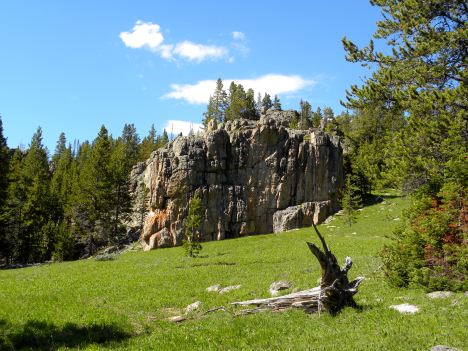


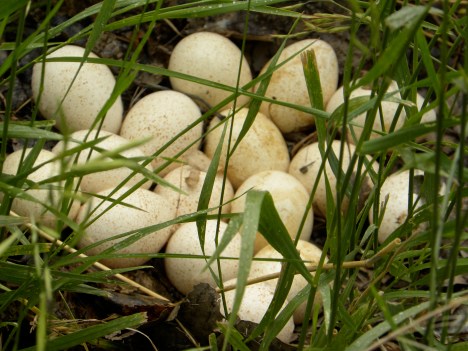

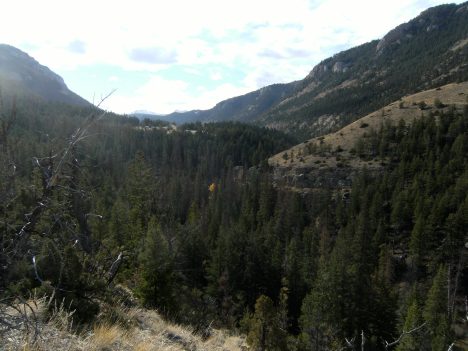
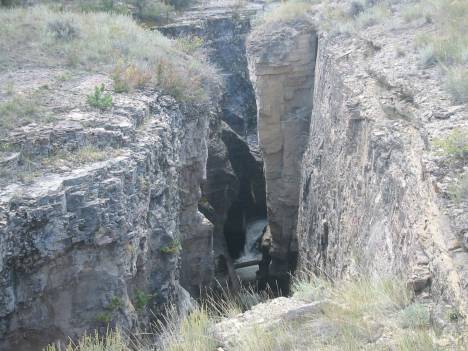
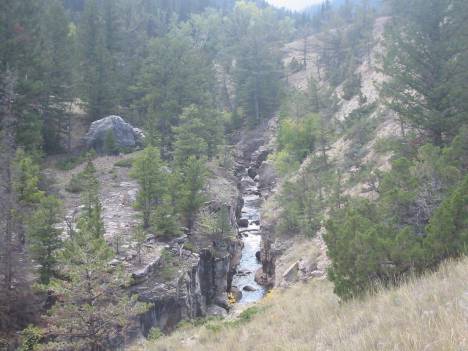
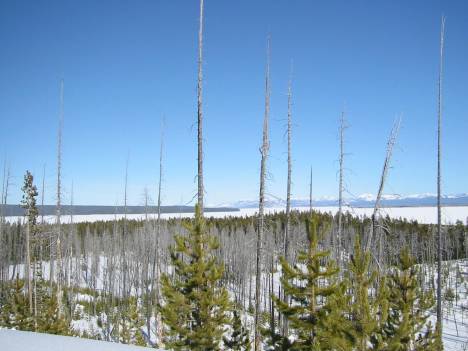
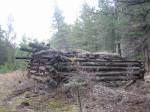
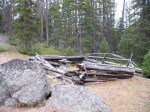
 After a lunch break we began heading back. We descended slightly down to a lower yet still forested level that we hadn’t inspected. Suddenly W__ spotted some old timber. In a flat clearing, butting up against the hillside, was a distinct squared off area constructed of ancient logs.


 Large obsidian flaking sites are around these hillsides. It seems that this site was later than the Dead Indian and they did use large scale trapping.
 As I find out more about what went on in this area east of Yellowstone, I’ll let you know. To imagine this was a major route through the Park, and a large scale occupation area–well, its very quiet here now. Few people live here year round; most choose to live in the lower elevations nearby. People hunt here now, but the people who hunted here in the past also did ceremony to their prey. When I happen to find a small piece of evidence, like a sheep trap or a piece of obsidian, there is a bit of wonder and mystery about it–and sadness. Some principal piece that went on here for thousands of years is gone forever.


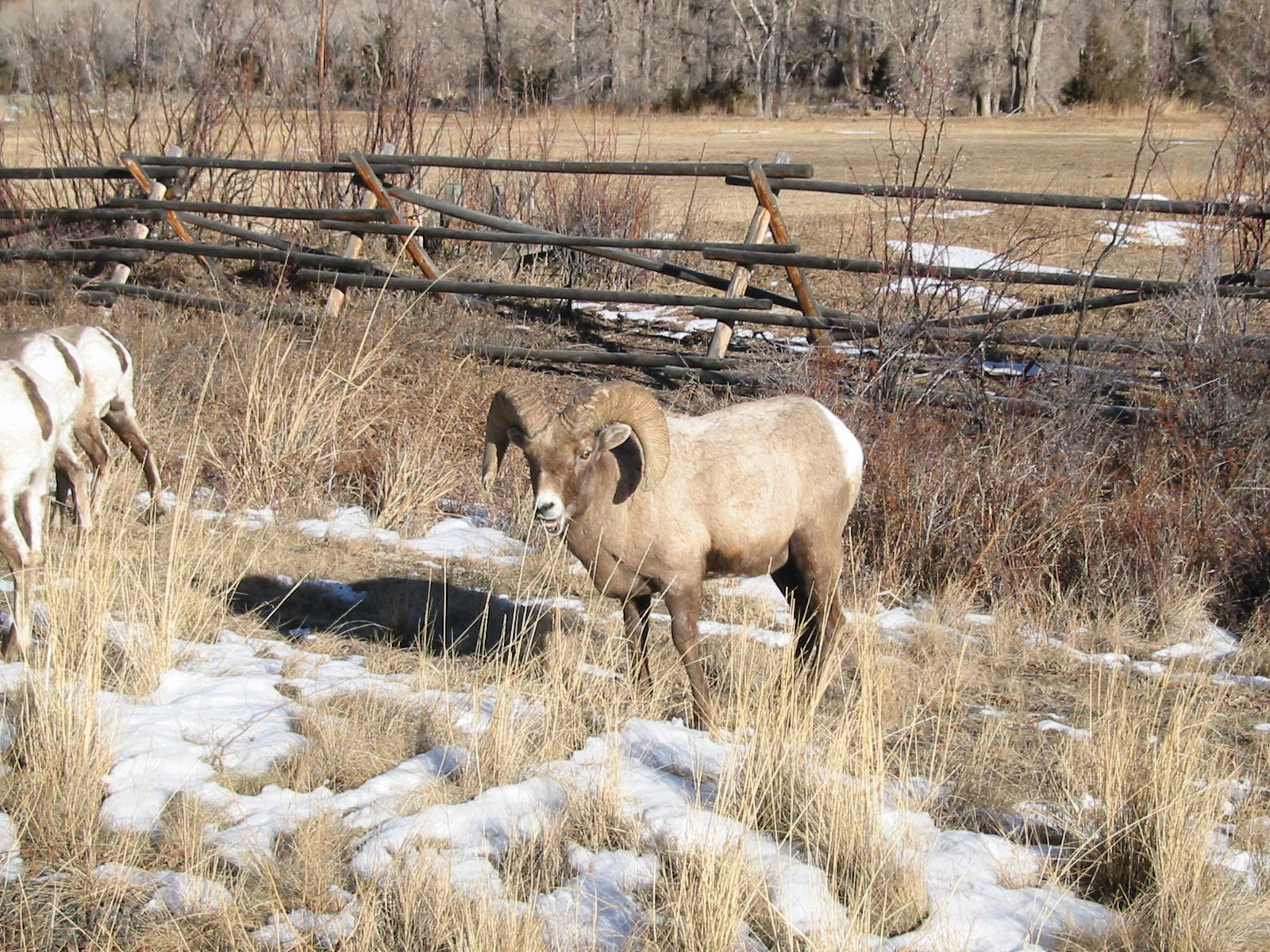
 They always like to use the thoroughfare of that spot in the valley to go between two ridges. As I drove bye, I noticed one of the cows just had a new calf.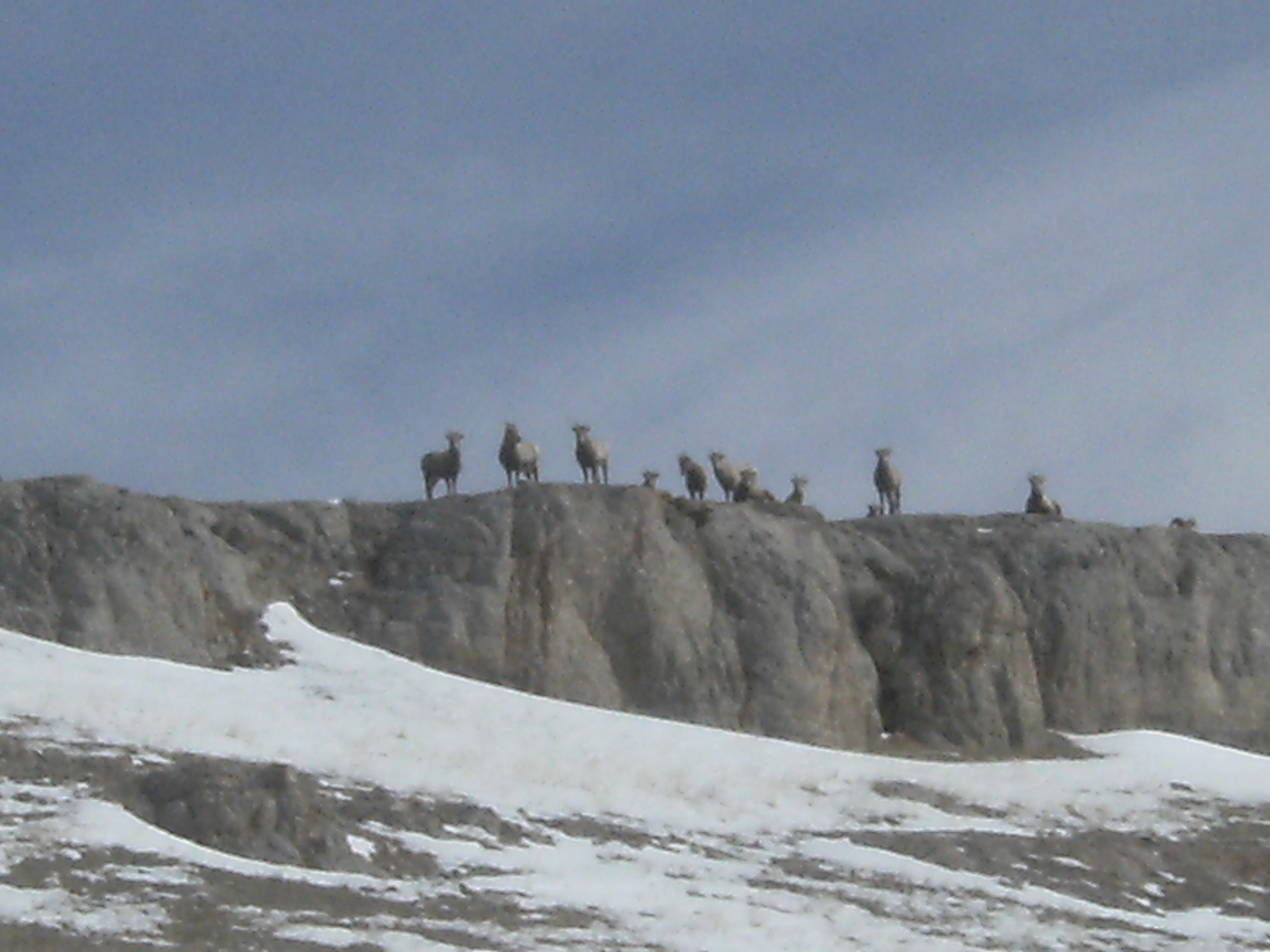



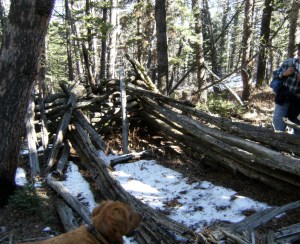 The wooden trap was awfully small, but when you looked closely, it was obvious that it was buried deep. The wood was old and it was amazing the construction was still intact.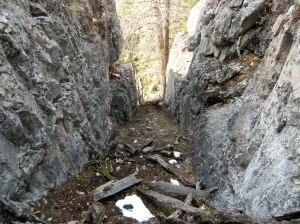
 Leslie Patten Books: Wild Places, Sacred Spaces