• MY BOOKS ON WILDLIFE, GARDENING AND MORE

  • The Wild Excellence

  • True stories of wildlife encounters around the Greater Yellowstone
  • Award winning eBook on Decomposed Granite, tips, how to's, what to watch for
  • Children's book. True stories of a dog and wolves. In a dog's voice
  • Written for dry Mediterranean climates in California, north and south

GYC annual meeting in Jackson

I just returned from Jackson for the annual Greater Yellowstone Coalition meeting.  The convention was at the plush Jackson Lake Lodge.  The lodge lobby sits in Grand Teton National Park overlooking a large wetland where elk are calving, moose are bedding, and grizzlies are eating.  There’s something wonderful and strange about viewing all the wildlife activity from the comforts of the heated lobby.  Of course, you can also go out on the balcony, but if its raining, as it frequently was, I almost felt guilty being so comfortable inside looking out.

View from Jackson Lake lodge

View from Jackson Lake lodge

The Greater Yellowstone Coalition is such a great conservation group.  It’s an organization working within the Greater Yellowstone Ecosystem to solve wildlife/human conflicts.  Its works on issues as diverse as legislation to preserve prime habitat areas to preventing oil and gas leases.  There is a level head to the organization as it attempts to throw out a wider community net and partner groups that might not have otherwise come together.

The annual meeting was fabulous.   This is my third one in four years, and I think it was the best.  Some highlights:  Alexandria Fuller, the keynote speaker, who was charasmatic, witty, and very funny.  She had the crowd laughing over stories from her hometown in Africa and then crying when she discussed her new book about a young man killed in the oil fields because of poor safety procedures.

The other two highlights for me were on Saturday morning.  Kevin Hurley of Wyoming Game and Fish led a round table discussion I joined on Open Grazing on public lands.  His focus was the plight of the bighorn sheep in Idaho.  Afterwards he gave a presentation on the Bighorn Sheep migration around where I live on the Beartooth front.  Just in the last few years, after doing some collaring, they’ve discovered the migration of the bighorns, which follows a peculiar and ancient arc pattern.

Geoffrey O’Gara of Wyoming Public Television followed with a fantastic preview of a new PBS documentary he’s working on about the pronghorn migration and the push to preserve land along their route.  The documentary will raise critical awareness of this pressing issue.

I highly recommend that anyone going to the Tetons take the time to stop and visit the newly opened Laurance Rockefeller Preserve. Donated in 2001, but just opened to the public last year, this was the private residence of the Rockefellers and one of the most pristine places easily accessible by car.  Take the time to walk to the lake.  Laurance used to have his guests park in the parking area and walk the mile and a half to get to the residence by the lake.  That way they’d leave their worries at the gate and begin to experience the wonders of this natural place.

Here is a photo I took of mama moose nursing her calf along the trail to Phelps Lake at the Rockefeller Preserve.

Mama moose nursing calf

Mama moose nursing calf

Mama moose nuzzles her calf

Mama moose nuzzles her calf

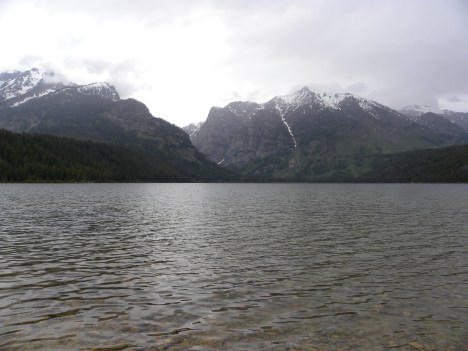
Phelps Lake at the Preserve.  Fabulous!

Phelps Lake at the Preserve. Fabulous!

California gardens are only a Slice of Paradise

The formality of 17th and 18th century European gardens is a reflection of people’s desire to control their environment and the natural forces around them.  They were still surrounded by wildness.  The comfort of a garden with lines, hedges, and geometric shapes was their safety.

Today people yearn for the natural.  We are surrounded by non-nature, non-wildness.  We all want contact with what we cannot control.

That is why my clients, as a general rule, all say they want a ‘natural’ looking garden.

Having lived in northern California for so long, gardening was my salvation.  I spent my childhood summers in the San Bernadino mountains and backpacked the Sierras and Rockies in my teens.  I always yearned for that feeling of being ‘lost in nature’.  I understood my clients deepest longings.

This week visiting some clients and potential clients, I was pleasantly surprised with some of my installations from last spring.  As a general rule, I need to wait at least 3 seasons to take photos.  But here are a few photos from last years installations with comments below.  Besides, I bought a Nikon P90 and I’m loving it and excited to post some of the photos.  Its really lightweight too so I can carry it in my daypack.

For more information on how you can design your own dream garden see my ebook on Design.

This yard began as a flat rectangle.

This yard began as a flat rectangle.

This is a gravel garden.  See Beth Chatto's gravel garden.  Arbor/fence existing

This is a gravel garden. See Beth Chatto’s book on gravel gardens. Arbor/fence existing

Very small patio with grand view

Very small patio with grand view

Decomposed Granite sunken patio edged with stone and Ryerson's header.

Decomposed Granite sunken patio edged with stone and Ryerson’s header.

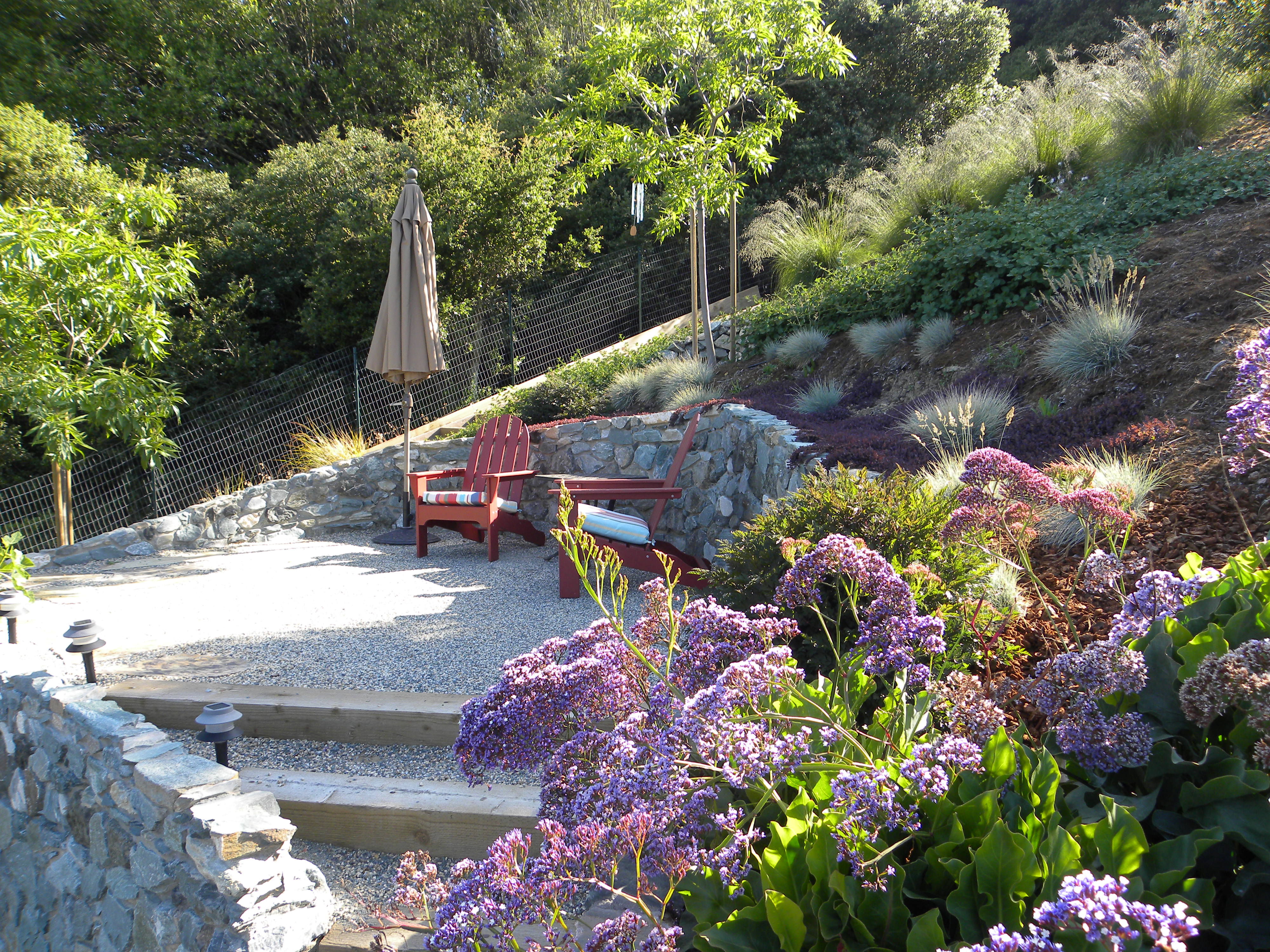
Decomposed granite patio using a creative mix of fines to achieve our color

Decomposed granite patio using a creative mix of fines to achieve our color

Decomposed Granite patio with Lots of natives with view

Decomposed Granite patio with Lots of natives with view

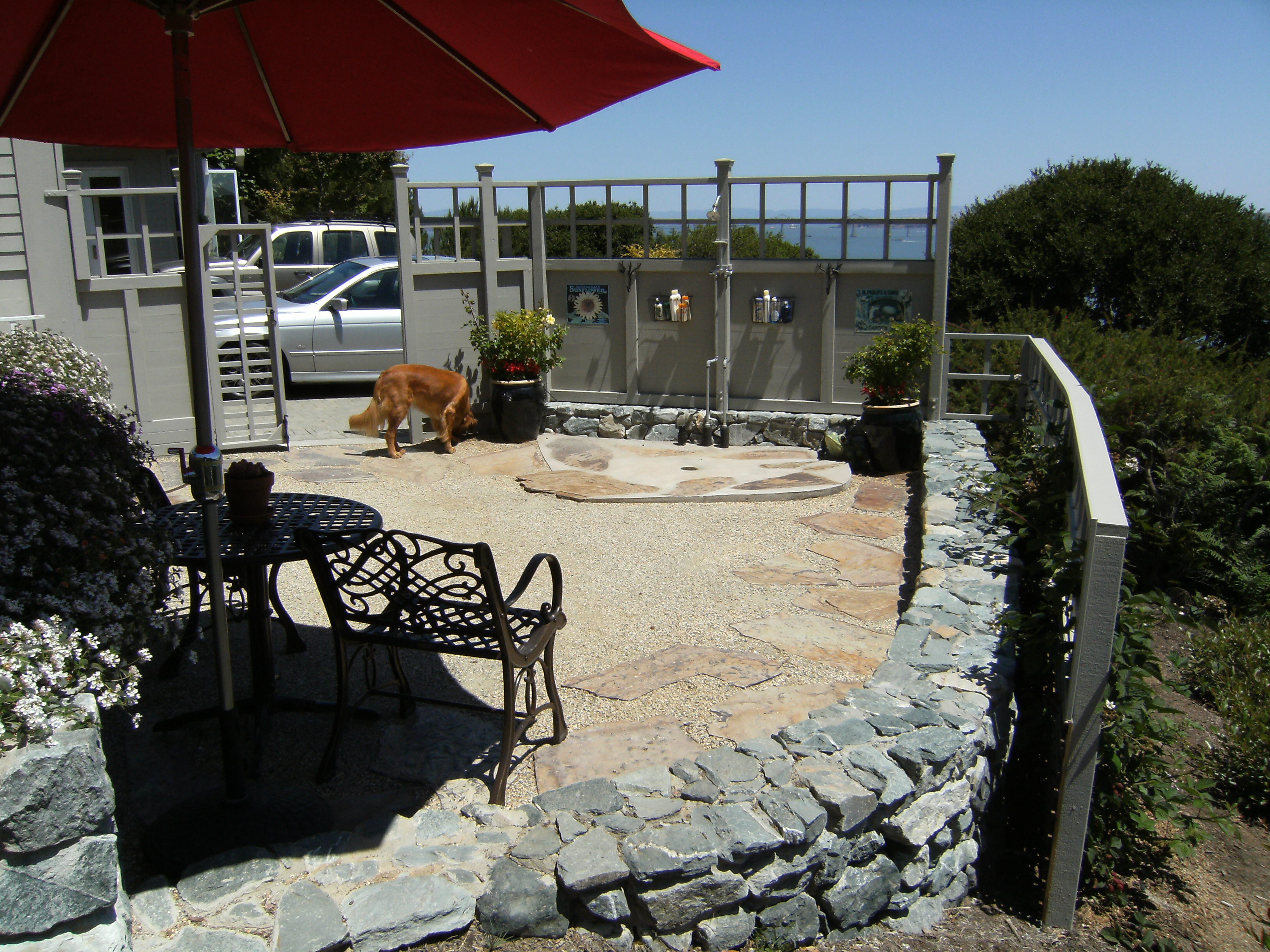
Decomposed granite patio with flagstone shower

Decomposed granite patio with flagstone shower

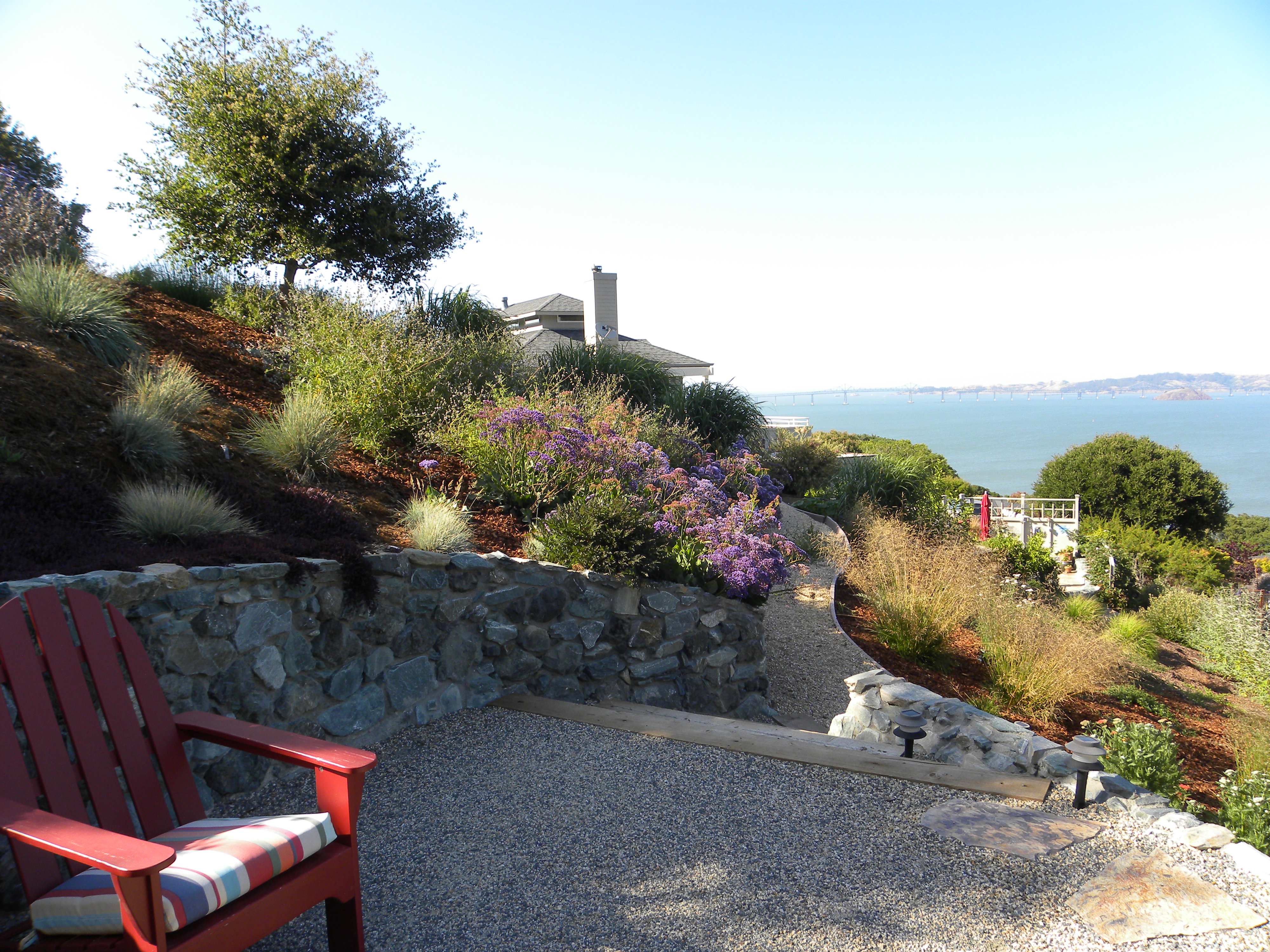
The view from all patios.  These are drought tolerant plants, mostly natives, on an Oak woodland interface

Decomposed Granite steps with headers. The view from all patios. These are drought tolerant plants, mostly natives, on an Oak woodland interface

This is a different property with a great view of SF bay

This is a different property with a great view of SF bay

Plants as Sculpture.  Each pot has a different architectural plant

Plants as Sculpture. Each pot has a different architectural plant

New plantings, the owner choose the chess set.

New plantings, the owner choose the chess set.

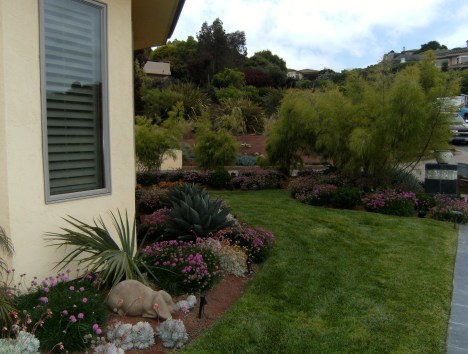
Except the small lawn, the beds are all low water, mostly succulents/natives

Except the small lawn, the beds are all low water, mostly succulents/natives

Coyote the trickster and the real world

Coyote, the trickster.

I am staying in the Bay Area this week, seeing friends, contacting clients. Last January I was here for a month working on a job, staying at Muir Beach, when I had the most unusual coyote experience.

Our house was directly above the beach, with a private walkway down to the Muir Beach parking area. On evening around 5pm, as dusk was settling in, Koda and I walked down the access steps to the beach. On one side of us was a house, on the other side of the walkway was brush and an open lot. Suddenly Koda perked up and started to bolt. I called him and saw a huge German Shephard-looking coyote, probably a coydog.  He’d been watching us.  Being curious why he was so close to these homes, I followed him through the brush.  Right next to the compost bin was a fresh deer kill.  The deer was completely intact except for its hind quarters, which were exposed and Coyote had eaten the entrails out.

The next morning, around 8am, I passed the area on the way to the beach and looked through the brush.  Within those 14 hours, that deer was not only entirely consumed, but the vultures had picked it clean to just bones.  Nothing remained!

That was my last trip.  Yesterday I met a friend for lunch in a busy North Bay town called San Rafael.  After lunch we decided to take a walk, so we drove to a quiet spot I know.  At the end of a road there’s an old cemetery.  We strolled around the manicured grounds when I noticed a coyote luxuriating in the wet, green grass.  Coyote lounged, scratched, bit his fleas, rolled around, and paid us little mind.   We circled around him, passing closer on the way back.  He stood up in a leisurely fashion, eyed us (like ‘oh you humans are disturbing my sleep’), scratched, and walked slowly around a Chinese Elm.  There must have been a nest in that tree, because birds kept dive-bombing him.  Coyote jumped in surprise as if these birds were biting flies.  It was the funniest thing.

Coyote lounging in cemetery

Coyote lounging in cemetery

Coyote the Trickster

Coyote the Trickster

My friend and I parted.  I went to get a haircut.  At the hairdresser’s the woman next to me was talking about teaching a third grade class when suddenly all the children ran to the window to see a coyote walking by.  “I’ve never seen a coyote.  Ever.” she said.

Each time, coyote was at the edge of our busy hustle and bustle.

Hustle and bustle at a farmer's market in Marin County, CA

Hustle and bustle at a farmer's market in Marin County, CA

Like a thin veil separating these two worlds, one dreamlike, the other hard edged and fast paced, coyote stood at the threshold, luring us, enticing us.  The contrast of the calm of the cemetery, isolated on the outskirts of town; the interface between open space and homes, reminded me of where I had just come from in Wyoming.  I too had come from the dreamtime of Sunlight Basin and Yellowstone, where the real world has been marginalized to a protected park.  Here in the city, people say to me:  ‘Welcome back to the real world”.  What is the real ‘real’ anyways?

The Moose

My neighbor just had his 85th birthday.  He’s lived in the Valley all his life.  His father homesteaded here back in the early 1900’s.  I love to hang out with him, help with his two horses, and pick his brain for stories.  He knows this country like I might know all the shortcuts in my old hometown neighborhood.  Except his neighborhood is vast, wild, without roads or trails.

I’ve learned over time that, although his memory for details and names is way better than mine, the time periods and placements of events need to be sorted out.  He might tell a tale like it was last week, until I question him more and find out the events took place in the 30’s.  It took me a while to figure out that most of his Yellowstone stories were from the 50’s (when he worked there) rather than just 10 or 20 years ago.

I’d been seeing quite a few moose lately.  One came into my yard the other day, a resident who likes to hang in the marshy willows nearby.  Moose numbers for Wyoming are really low, only 44% of objective, according to a just published Game and Fish report.  I told this to JB and that got him storytelling.

Moose walking down my road at dusk

Moose walking down my road at dusk

Moose in nearby meadow

Moose in nearby meadow

Young bull moose in front yard

Young bull moose in front yard

“It was a snowy winter and I was at the homestead.  I’d feed the cows at the bottom of the pasture near the trees to get them walking a bit.  That’s good for them you know, especially for the pregnant ones.  One day I was down in the timber when I saw a cow moose and three calves.  There were stuck there in a hole and couldn’t get out, the drifts were so bad.  They were real skinny and starving down there.  When the momma saw me, her hair stood on end.”

“So I brought a few bales of hay on my sleigh over.  Every day I’d come to check on them and the cow moose got used to me.  I’d bring them hay, but each day I’d place it a little bit further out of the timber towards the pasture.  Slowly, they came out.  They spent that entire winter in the pasture with my cows.”

Clarks fork drainage near Russell Creek.

Clarks fork drainage near Russell Creek.

“Another time I was way up Dead Indian, you know where the willows are up there?”

I nodded.  I’d seen moose tracks there.  Its about 3 miles or more up the trail.

“I was up there and saw a bull moose.  He’d been shot and was bleeding from the side.  Some hunter shot him but the moose had run off.  He was in real bad shape and the snows were getting deep.  I hauled 20 bales of hay up to him.  I didn’t put it all in one place.  I put it around in the timber where he was at.  Then I left him for the winter.  Come early spring, I went back to check on him.  You know what I found?  He had a friend.  Another bull had come in there and all that hay was gone.  That bull was all healed up and getting around fine now.  I don’t really know how he survived that wound, cause I think he was bleeding on both sides. There had been blood around.  But he made it.”

Dead Indian Creek

Dead Indian Creek

To begin to get a feeling for what’s going on with moose numbers in Wyoming, this is an excellent thesis by Scott Becker.

A busy spring rolls in

It seems to be busy around here.  There’s a nesting pair of bluebirds in a box right outside my front door.  I was sure they were going to leave last week because of all the noise around here.  I needed to work on my driveway because, surprise, this winter I couldn’t get in.  I was able to plough it initially, but everytime there was a melt, the ruts just got deeper and deeper.  Pretty soon I was parking down the road at my neighbors for the last few months. There’s been some pretty big equipment happening all week, taking giant scopes of limestone and rock from my personal ‘quarry’–my hill–and laying it all along the road.

But this morning a head popped out and there was madame Bluebird.  She must be sitting on her eggs now, because she hasn’t moved.  I’ll be leaving for a few weeks on Monday for California and then the Greater Yellowstone Coalition Annual Meeting in Jackson, so she’ll have some nice peace and quiet.

When I snagged the photo, I didn't see the butterfly till I printed it.

When I snagged the photo, I didn't see the butterfly till I printed it.

Several hawks came through while I was watering today.  A pair of red tails soared by.  I know there’s a nesting pair down the road by the bridge so they might be the ones.  An unidentified buteo–two toned black underneath which I think was a Merlin–visited.  And a kestrel snagged a ground squirrel (or something the equivalent in its mouth) while I watched from the front yard.

Ahh, motherhood

Ahh, motherhood

So cute!

So cute!

A moose popped in this afternoon.  I was working in the shed sanding a table when Koda started barking.  It was the kind of bark you just know its not a person.  I keep Koda on a shock collar usually.  That’s in case a wolf or bear comes along.  But around the house he’s usually off-shock.  Luckily, he responded nicely, came when called, laid down and stopped barking.  The moose seemed pretty unperturbed.  A barking dog is like an annoyance when she’s used to dealing with wolves.  She was alone and I know there’s a pregnant cow down the road in the swampy area.  But this lady was lean. She ambled up from the trees, paused to consider the barbed wire fence, jumped it awkwardly, then slowly made her way up the hillside through the meadow.

Moose eating in marsh nearby

Moose eating in marsh nearby

Yesterday I saw some incredible rams just up the road.  I was hiking up a steep ridge when two white ‘rocks’ appeared on the ridge below.  W__ spotted them.  They were the rumps of two rams with 3/4 curl horns.  I rarely expect to see sheep up here in the summer.  A lot of them head higher up, towards Yellowstone and the Absarokas.  Maybe these guys were just hanging around because of all the snow there still.

The flies are out, the ticks are here, the mosquitos are biting, and the wildflowers are changing everyday.  Spring is here and it is only for a moment. Soon summer will be in full bloom, the rivers will recede enough to be crossable, and the elk will all disappear for higher grounds.

I’ll be back in two weeks and everything will be different.  I’ll certainly be missing all the action.  But I’ll be posting when I can from California and I intend to fully report on the GYC meeting in Jackson.

Some spring shots:

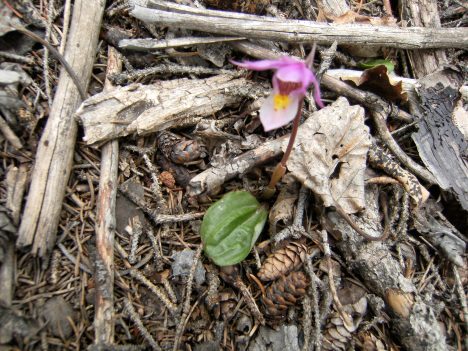
Calypso bulbosa

Calypso bulbosa

Swainson Hawk hunting in irrigated cattle field down the road

Swainson Hawk hunting in irrigated cattle field down the road

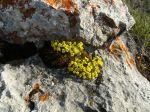
Draba oligosperma...Whitlowgrass

Draba oligosperma...Whitlowgrass

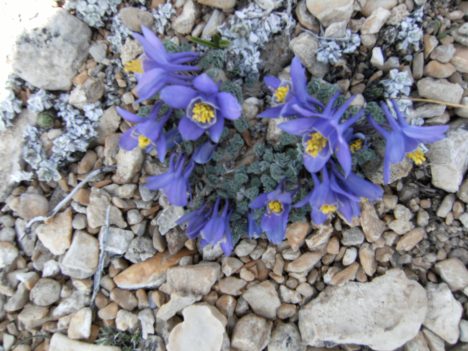
Alpine Forget-me-not, Eritrichum nanum

Alpine Forget-me-not, Eritrichum nanum

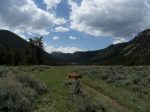
A Glorious spring day.  Koda and I hike up Elk Creek Meadows.

A Glorious spring day. Koda and I hike up Elk Creek Meadows.

Call of the Wilds

I live in a wild place.  In winter there are only a handful of residents.  The wolves howl.  The elk find their way through the snows.  The grizzlies sleep.  In spring the mountains wake and thaw.  On weekends this valley is a favorite spot for locals from Billings and Cody.  ATV’s and RV’s roll in and find their favorite campsites.  Yet the mountains here are vast, the wilderness seems endless.  Its rare to see another person on any given trail.

This country is big enough for all who love it and steward it.

This country is big enough for all who love it and steward it.

This has been my first winter here.  I’d been here almost every month of the year, but only for weeks or a few months at a time.  Living here, knowing that these mountains are what I now call home, I find my rhythms slowly changing.  Life seems to be moving fast when I return to an area I’d just been last week and the snows have melted.  Or how did I miss the day when the rivers suddenly turned muddy and swollen?  Just two weeks ago I drove up that draw, but now its flooded.  Changes seems to be happening at breakneck speed.  What looks static to a visitor is a constantly changing kaleidoscope, an ebb and flow of interactions too great and wonderful to take in all at once.

Swamp Lake as the snows are melting

Swamp Lake as the snows are melting

Aspens starting to bud out.

Aspens starting to bud out.

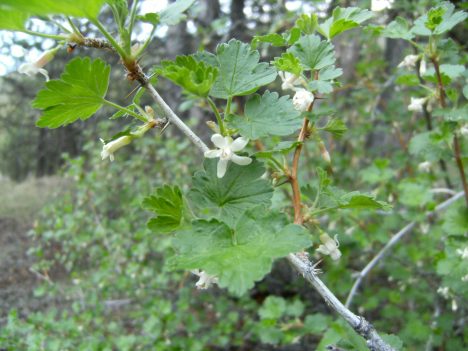
Ribes blooming just the other day

Ribes blooming just the other day

Alpine columbine just blooming today

Alpine columbine just blooming today

I walk the woods and look for wildlife runs and markings, new smells or droppings, nests or homes, what was eaten today and what was killed.  At first I walked or hiked and noticed a few things here or there.  But now I find it difficult to be aware on all the levels I want to be.  There is the forest floor and its sign–scat, droppings, scratchings.  The treetops are where birds and small mammals also live so don’t forget to check up there as well.  The relics and evidence of the past such as buffalo bones or Native American sign.  If you only look for animal sign such as tracks or scat, you miss the wildlife presently around you.

Sandhill Cranes

Sandhill Cranes

Better watch for bears, and be careful with your dog as there are wolves around.  The forest and the meadows are alive.

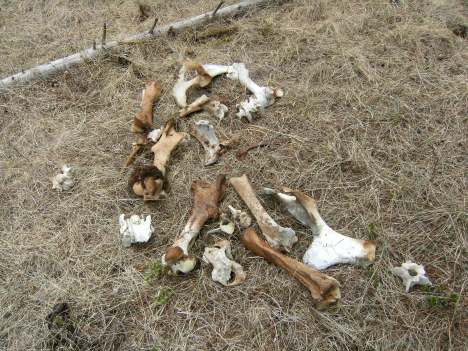
Could these be bison (or cow) found in buried in a depression like a wallow.

Could these be bison (or cow) found in buried in a depression like a wallow.

Simple beauty

Simple beauty

A new awareness has also begun to creep in.  It is an understanding of the nature of life and death, of a circle of existence.  This is not an intellectual notion.  Everyday I find bones and skulls, or fresh kills large and small.  Everybody has to eat and you either eat plants or meat or both.  Death is not wrapped up in a nice package in the frozen section, or shoved off to the edges of society.  It is here and everywhere.

My neighbor H__ who has a horse farm, told me a story about the first horse he had to put down.  He was afraid to do it himself and asked our 85-year-old neighbor, a native to the valley, if he would do the deed for him.  JB replied “Its your horse.  You have to do it.”

“He was right”, H__ told me.  This winter he put two horses down in the upper pasture.  The wolves and coyotes were on it within days.

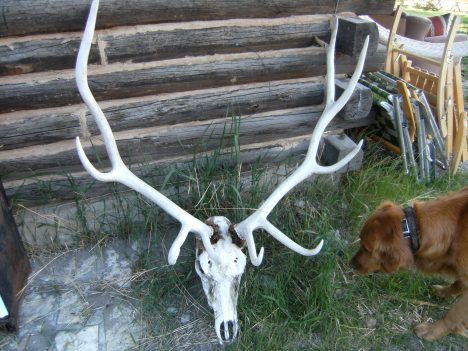
Just as in life, there is beauty and ugliness in death.  I’ve watched the coyote I found this winter in his process of decay.  First the animals ate their fill, but a lot remained and the ground was still frozen and cold.  Now the beetles are finishing him off.  He is food for others, and there is a certain rightness and sadness in that.  There is also a fascination and a repulsion in watching the process.  Yet I find a skull of a winter kill bull elk with both its antlers, the skull already cleaned off and perfectly white, and it looks beautiful to me.

Found winter wolf kill.  Beautiful in death

Found winter wolf kill. Beautiful in death

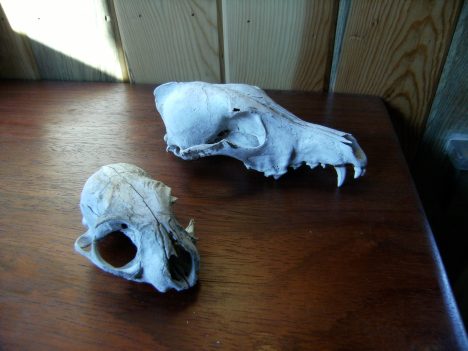
Coyote skull and bobcat skull

Coyote skull and bobcat skull

Old trees that have died are regal in their appearance, and house insects and the birds that feed upon them.  The ground squirrels in the yard are amusing to watch, yet I admire the Swainson’s hawk that deftly swoops and catches them.

Burnt trees.  Beautiful in death

Burnt trees. Beautiful in death

A deeper ‘knowing’ that I too am part of this whole process seeps into my core.  It may seem ugly or cruel to some, but it is only economical and the way things must be.  More than stark, there is a dreamlike quality to it all.  The animals are not bothered.  They have been born into this acceptance.

I walk with Koda.  He is always alert, on the ready, yet happy and relaxed.  His tension comes from awareness, instinct to check for danger, or to check for the fun of a chase with a squirrel.  I am learning here, in this complete ecosystem, with top predators just like me here, that I must walk and be aware, relaxed, and alert.  That life and death walk side-by-side always, only here they are in evidence.  That there are more levels to this dreamtime than I am yet aware, and that the natural world supplies a plethora of synchronicity and sign, if only one can take the time to deepen, relax, and learn to notice.

Beartooth Highway Memorial Day 2009

Took a ride on the Wyoming side of the Beartooth highway yesterday.  Amazingly, with all this snow, its open now.  I live about 20 minutes from the highway, and only drove up to Long Lake.  Its like winter all over again up there, while its fast becoming a distant memory down here at 7500′.  In places, water was flowing fast across the highway.  Large chunks of snow had fallen and blocked a few places, but the crew seemed to clear them pretty fast.  Here are a few photos taken yesterday of the highway Charles Kuralt called the most beautiful highway in America.  If you go, bring your skis.

Only the wind sang

Yesterday I met Larry Todd over at the Dead Indian Campground site.  Larry is an archaeologist working mostly in the Greybull area.  I contacted him several months ago because he was in charge of the dig in the ’80’s at the Bugas-Holding site, a Shoshone winter campground 400 years old.  I had many questions, and Larry graciously invited me to walk around the Dead Indian site with him after he finished an outing there with Cody Middle School.

Next to a creek and protected by mountains, Dead Indian is a 5000 year old winter campground site that had continuous use.  It is one of three archaeological sites in the Cody area on the National Historic Landmarks, the other two being the Horner site and Mummy Cave.  Larry explained that some areas were early Archaic, some middle, and some late, depending upon the topography.  The lower levels around the creek were the latest periods.  He said that when they began work, the entire area had so many artifacts they had to choose specific areas to concentrate on.  The work was done in the 70’s, before he was around to participate.

Topography of the mountains around Dead Indian Historic Landmark

Topography of the mountains around Dead Indian Historic Landmark

We walked over to a large plateau, an early Archaic period.  Larry painted a picture of a campsite with upwards of several hundred people, living in family groups–a small Wyoming town so to speak.  People living in pit houses that came here winter after winter to hunt the game that was plentiful.  Mostly deer and sheep were killed at this site.  Their tools were made from local materials, sharp and new in the fall, but dulled by spring through continuous retooling.  By spring it was time to gather and trade for new raw materials for arrowheads and other necessities.

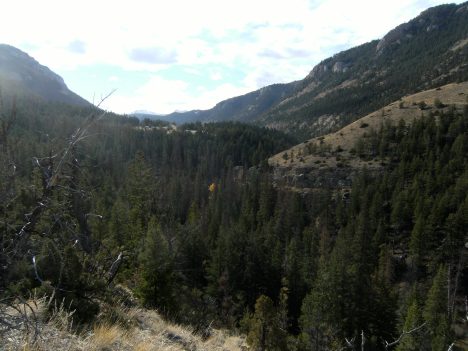
Looking into Dead Indian Valley

Looking into Dead Indian Valley

In this early Archaic period, the big game were gone and more intensive hunting and gathering was necessary  for the equivalent quality of nutrition.  People were settling down for longer periods and returning to the same sites. Deer, much easier to herd and more predictable than elk, were the main large food source, along with sheep.  At Dead Indian, large ceremonies were conducted in honor of this food source.

Larry told me that the Bugas-Holding site was like a still image.  It was used for the duration of one winter only.  Here at Dead Indian the story was more like a novel, with many chapters.  He thought Dead Indian might have gone through periods of heavy use and lighter use.  Having been used continuously for so long, probably many different periods of histories and stories had taken place here.

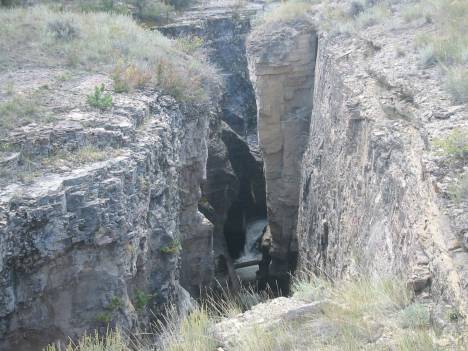
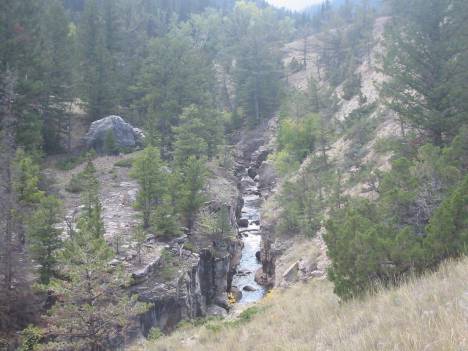
Slot Canyon in Dead Indian

Slot Canyon in Dead Indian

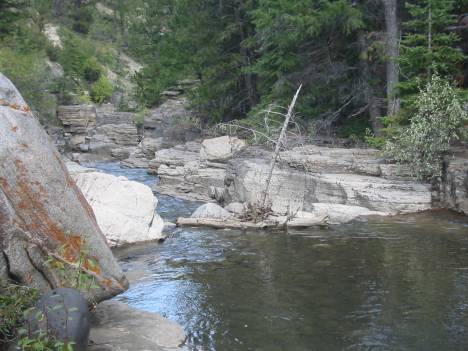
Dead Indian Creek and slot canyon

Dead Indian Creek and slot canyon

Larry talked about the interactions between the land and the peoples.  By the time Lewis and Clark appeared–what we mark as the first interactions with white men in the West–many Native Americans had already been decimated by disease and the landscapes they had shaped were already changed.  The wilderness white people saw at that time was imprinted in their minds as what the land always was. But really it was just a snapshot.   To live winter after winter in these mountains takes an enormous amount of religious, and traditional, training and knowledge.  These practical skills are a cultural phenomenon, passed on generationally.  Thousands of years of accumulated wisdom had been decimated through disease and warfare in a short time.  Larry thought that by the time Lewis and Clark came, enough of that knowledge had been wiped out so that fewer and fewer people could live in these mountains.  The land itself had changed in response. What white men saw as wilderness, was a degeneration of the land through non-use.

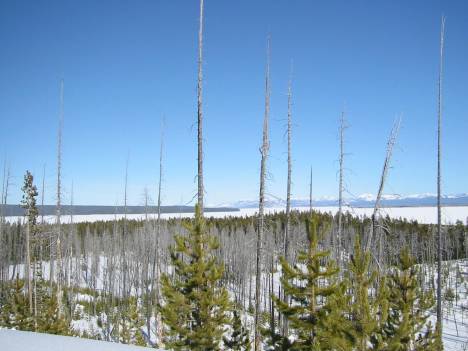
Our idea of wilderness is non-use.  Looking east across Yellowstone lake in winter

Our idea of wilderness is non-use. Looking east across Yellowstone lake in winter

I mentioned that in Australia, after 60,000 years of aboriginals working the land with fire, botanists weren’t sure if the plants had adapted to fire because of human intervention or vice versa.  He told me that Bison antiquus was a good example of that here.  Bison antiquus, the ancestor of our modern Bison, was much larger than today’s Bison and died out about 10,000 years ago.  The theory goes that the smaller, lighter, and more streamlined buffalo could run faster, giving them a decided advantage from the top predator, man.

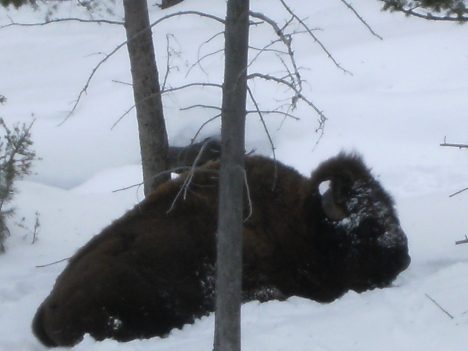
Modern day bison

Modern day bison

As we walked around the site, Larry bent down and showed me how almost every square inch, to the trained eye, contained evidence of habitation.  Chippings from chert, quarzite, chalcedon, pieces of bone, a sheep vertebrae–all this he found within a few square feet.  I hadn’t seen anything until he pointed it all out.  I could feel the vibrancy of the culture once there.  We talked about fire and how it can clear a site. He said that a fire can come through, clear all the duff and topsoil, and the site is exposed just how it was left thousands of years before, including fire pits, chippings and all.

“Its like someone’s found an original map or book that’s going to unlock all these new secrets.  But before we even have a chance to organize and fund an archaeological expedition, the looters are there within weeks, days.  The site is stripped and the information is lost forever.”

We walked back to the road while Larry told me a story about Bison, his specialty.  He said that Native Americans didn’t always use all the meat.  It was common to just take the prime parts after a kill.  One time he was talking with a Blackfoot elder about ancient hunting methods.  When he came to the part about how they left parts of the kill, a student listening nearby said “They wasted parts.”

“Would you take all of it?” asked the elder.  “Would you be that greedy?”

The student replied, “I wouldn’t waste anything.  I’d take it all.”

“You whites are so greedy.  You wouldn’t leave any meat for your brothers–the wolf, coyote, raven.”

I looked back at the site.  Only the wind sang.  I tried to imagine what once was.

Clark’s Fork hike and the vilified wolf

The dump is just up the road about 20 minutes.  Its an auxiliary dump, meaning its for locals and basically a large canister with a locked fence around it.  The whole idea is to prevent bears from getting in, and to help locals with their trash and bear management.  Last year though I did see a horse that was dumped off there outside the bear management fence.  Although the bears couldn’t get into the trash, they sure did get into the horse, along with the wolves.

I really don’t know many people up in the Crandall area yet, nor do I know too many of the hikes.  I hiked with the wolf study gals last fall there a lot, but mostly that was through brush directly to GPS sites where their collared wolf had lingered for more than an hour.

So I stopped and introduced myself at the Hunter Peak Ranch.  Its an old dude ranch that now mostly houses guests and horsebackriding.  The owner, Shelley Cary, was very gracious and I talked for a while with her and her family.  They serve dinner to guests and outsiders with advance notice.  Something good to know for any guests I have.  They also had some great ancient photos on the walls of homesteaders from the Crandall area.  Several names I’d heard of.  One of them, Norman  and Mrs. Dodd, homesteaded in my area.  Apparently people always had to refer to Norman’s wife as Mrs. Dodd.  They lived ten hard miles from the meeting house, which was a one room schoolhouse, and came by a team of mules pulling a buckboard.  Another photo was of the old post office, a long wooden building in disrepair.

I took a short 5 mile hike along the Clark’s Fork trailhead. The Clark’s Fork trail is well marked and well used by horses.  Its in open sagebrush, so if a hiker does encounter a bear, there’d be plenty of room to move.
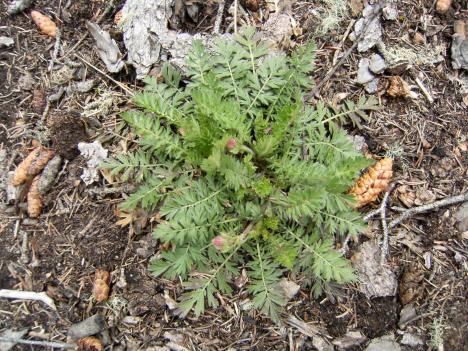
Geum triflorum.  Prairie Smoke
Geum triflorum. Prairie Smoke

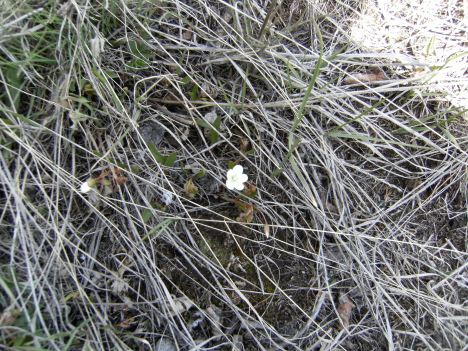
Claytonia lanceolata.  Spring beauties.  Edibles.  Purslane family

Claytonia lanceolata. Spring beauties. Edibles. Purslane family

I’ve been on this trail before and knew of a wonderful secret spot where the river drops into a gorge.
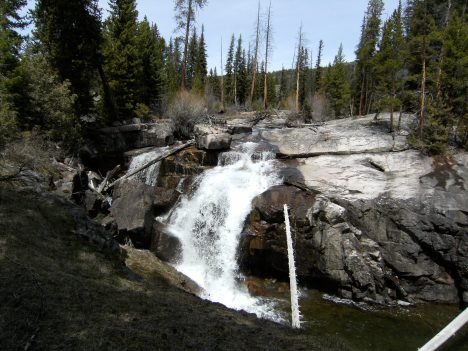
Lunch spot

Lunch spot

I wandered off-trail to the waterfall.

Allium.  Wild onion. Spicy addition to lunch.

Allium. Wild onion. Spicy addition to lunch.

There was plenty of moose sign in the willows around the river, as well as a pair of nesting ospreysKoda and I sat and hung with the fish hawks for a while.  The female was sitting on her nest, although she took some time out to try and scare me off.  The male sat nearby with a piece of fish in his talons.

Female sitting on her nest

Female sitting on her nest

Male osprey nearby nest, with fish in talons

Male osprey nearby nest, with fish in talons

There’s always a plethora of anti-wolf talk in our area.  Besides aggrieved hunters and ranchers, I once talked with a woman whose parents ran an outfitting company.  She was only 16 and hated wolves.  She told me a story about how they had taken their supplies in the fall up to a campsite in anticipation of bringing some hunters up there the next day.  They’d left three dogs with the supplies, alone, overnight, way up near the Yellowstone border.  This was something they were used to doing, for years.  But this year was different.  When they returned the following day, one of their dogs had been killed by wolves.

After lunch, on the way back to the trail, I ran into a fellow resting his horse.  I introduced myself and found out he was a local.

“Find any horns?” he asked.

Horns refers to antlers.  People around here spend lots of time looking for antler sheds in the spring.  They can be worth big money.

“Nope, wasn’t looking for any.” I replied.  “But I did find a pair of nesting ospreys and moose sign.”

“I saw four wolves up on table mountain.  They’ll eat your dog, you know.  Just like that.”

“Yep, that’s why I keep him on that electronic collar.  We have an agreement he and I.  I protect him from wolves and he watches for bears.”

“Those frickin’ wolves, they’ve ruined everything.  There used to be so many bull elk here.  I wish they’d never put them here.”

“I like them.”

“They’re everywhere.  They ran after an elk right through the trailer park the other day.”

I didn’t think he heard me so I said it again.  “I like them here.”

“There’s no more moose anymore.  They’re history.  They’ve frickin’ ruined it all.  Things used to be good.”

“I seem to be seeing a lot of moose this year.  Maybe their numbers are coming back.”

“Oh, where you live maybe, but not here.  Wolves have ruined it all.  Last year we found three bull elk kills up Crandall creek.  They just hone in and kill them.  There’s no more left around here.”

I didn’t bother to tell him that I knew the elk study coordinator had hiked up there this winter and taken samples of the bull kills he’d seen.  He said their marrow was like jelly, an indicator of poor health.  I mentioned all the grizzlies in the area.

“Oh, those grizzlies don’t do much.  Its those damn wolves.”

That’s a typical conversation I’ve had many times.  There is a lot of animosity and anger about the wolf introduction.  These are people who live on the land and know the land, at least in a certain way.  They know where the wolves are denning even though the Game & Fish keep it secret.  They see grizzlies when they’re out. They feel comfortable in the outdoors, but they have been used to not having wolves around for a very long time.  And they resent having to take them into account now.

Its a most controversial matter, wolves.  I tend to be on the side of the wolves, but I also am sympathetic towards the ranchers.  I feel that its’ important to work with ranchers and begin to develop practices that protect their livelihood.   I also know that these large ranches are one of the last ways we can protect the land here.  If the ranches and ranchers are not taken into account, if they loose their land, then those large tracts will be sold and chopped up for development.  That in itself is even more of a death blow to wildlife, especially grizzlies and wolves.  New ranching management practices are critical for wildlife protection as well.  As one of the wolf researchers said to me last year “Something’s got to change. There’s just too much killing going on” in reference to all the wolves killed by Wildlife Services in retaliation for calf predation. (For a video of wolves in my valley, click here)

Wolf on carcass

Wolves on carcass

In contrast, I was reading in the Wind River Reservation Wolf Management Plan about how some of the elders of the tribe view wolves.  There is controversy on the reservation as well, the report says, because many Native Americans have livestock.  But there is magic, wisdom, and most importantly, respect, communicated in their ancient views.   Here is an excerpt from that report.

Traditional views recognize wolves as kin, as strong, as deserving of respect and placed here by the Creator for a purpose. The Shoshone word for wolf means “big coyote.” Wolves lived a long time, were very smart and observant, and listened well. When wolves appeared in a vision, one was to follow what the wolf showed you. The wolf was secretive and special and used to talk with people through telepathy. Wolves were helpers. Wolves were sacred and to be left alone, however sometimes people had to kill them. People were to be careful around them. Wolves could teach virtuous things to people. They were an example of how to care for family members because they took good care of the young as well as the old. The packing behavior of wolves showed people that they should not go out hunting alone. Wolves also showed people to use the entire game animal (the meat, bones, hooves, marrow, skin, etc.) – not to waste any of it. Wolves wandered to wherever the food was, like earlier people did. They did not know boundaries. Now wolves are being confined to certain areas like Native Americans have been confined to Reservations.Gray wolf

More Grizzly news around town

The Wyoming Game and Fish is finally starting their bear trapping and collaring in my valley.  They were supposed to start weeks ago, but the weather was too incremental, with several wet snowstorms, making it impossible to get far enough in to place the traps.  I know this only because one of the students who worked on the elk project this winter was supposed to help with the trapping.  Instead, because the work was delayed, he’s already off to Canada to work with bears there.

Our main dirt road travels directly west, ending about 7 miles from the Yellowstone boundary.  But those seven miles are straight up, through the shale and scree of the Absaroka Mountains.  If you can make it over the pass, you’ll end up in the Hoodoos, one of the most remote areas of Yellowstone.

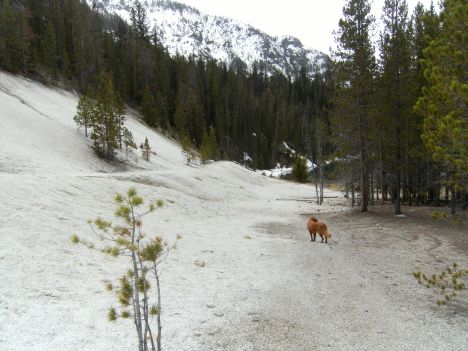
Past the bear gate, the Absarokas are the eastern border of Yellowstone's wilds

Past the bear gate, the Absarokas are the eastern border of Yellowstone's wilds

The dirt road is maintained for about 25 miles from the Chief Joseph Highway.  After that its strictly four-wheel condition, and mostly only ATV’s can cross some of the creeks at the upper ends.

Past the bear gate its rugged and wild country.

Past the bear gate its rugged and wild country.

About 20 miles from the main highway, the road is closed till July 15.  That’s the ‘Bear Gate’.  People ask “Is that so the bears don’t get into the populated part of the valley?”  But the gate is so cars don’t go up there and disturb the bears.  The idea is that the Grizzlies can have their own space, undisturbed by cars, atv’s, people, when they emerge from their dens.  Its a great idea, but of course the grizzlies do what they want and roam free, which means they are up the valley this direction if they please.  But it does help to discourage weekenders and reduce human-bear conflicts.

Where do they go after July 15th?

Just 10 or 15 years ago, no one knew where Grizzlies went when they suddenly disappeared from the Park in early July.  One day a private plane was flying over the Absarokas and saw bears, lots of them, congregating on slopes of scree above timberline.  They were turning over rocks and boulders.  Usually solitary, this was a strange site to see groups of bears together.  It turned out they were looking for cut-worm moths and eating them at the rate of up to 40,000 a day.  I once saw these moths in the Wind River Mountains.  Thousands of them hanging under a rock crevice.  It was a sight I won’t forget.

The moths provide the bears with much needed fat for the winter.  At the end of my valley there is a glacier.  Its not uncommon to find the bears in the talus slopes in August.

Moths at high altitudes attract bears in my valley in late summer

Moths at high altitudes attract bears in my valley in late summer

Today I drove up the valley for a short hike across the river to a Sulphur Lakebed.

Sulphur deposits around the lake.  Lots of grizzly sign here

Sulphur deposits around the lake. Lots of grizzly sign here

On the way, I stopped and chatted with some new young forest rangers.  I asked about the collaring and if it had begun.

“They’re trapping at the bear gate.  Just a bit beyond it.” They informed me.

I said I wished they’d let us residents know so we don’t hike there.  They put carcasses out as bait and I don’t want to be nearby. “I wish they’d tell us”, the young rangers replied.

I suppose its good science to have them counted and collared.  But I can’t help but feel “let the bears be bears.”

My hike today on the south side of the creek, quite a ways down from the bear gate, was full of fresh bear tracks and scat.

Front and back grizzly tracks.

Front and back grizzly tracks. Notice the penny for size. See the straight line of the grass under the toes

On the way back home, I met a neighbor who told me there were fresh tracks behind his ranch and he’d led the G&F fellows up to where they could place their traps.  There was a huge pile of scat on the road as well. Last week I ran into fresh tracks in two drainages on the north side of the road.

Bear scat with trash collected on my hike today.

Bear scat with trash collected on my hike today.

My valley is where ‘problem bears’ are dropped off.  They take them to the bear gate, or beyond, and let them go, with the hopes they’ll go into Yellowstone.  A problem bear was dropped off just last week.  I think we average about 4 or 5 problem bears a summer.

Several years ago, I had the privilege of riding around with Mark Bruscino for an afternoon of bear education up the North Fork.  We didn’t see any bears, but I learned a lot talking with Mark.  Mark is the bear specialist for Wyoming Game and Fish.  He’s been working to restore the Grizzly population for over fifteen years.  I asked about the problem bears.

“Tell people that the bears they really don’t have to worry about are the problem ones we drop off.  Within days they ‘home’ back to where they came from.”

I think the relocation is an exercise in public relations, with a hope and a prayer that the bear learns something once he gets ‘home’.

The cool thing about hiking in grizzly country is the need to stay alert and aware.  In California, I could hike, think, talk, and space out all at the same time.  But hiking here, in the Greater Yellowstone area, I have to stay aware of my environment all the time.  I listen, I slow down, I look around; and so I notice so much more.  That doesn’t mean being tense. It means being conscious.  I think that’s how we’re all meant to be living all the time.  Taking the predators away, well, we’ve just forgotten.

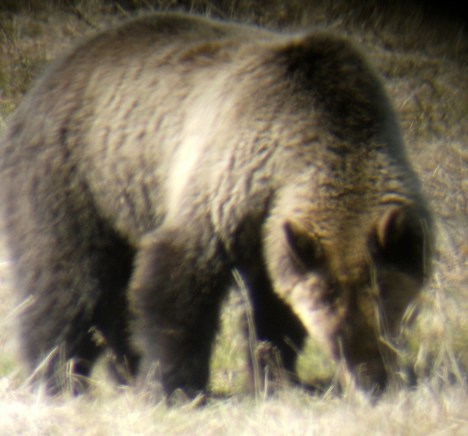
Grizzly photo taken in Lamar Valley last sunday, mother's day

Grizzly photo taken in Lamar Valley last sunday, mother's day